Early Treatment for HIV Act of 2005
Legislative Activity
Stay on top of the latest movement without scrolling through every action
Sponsor introductory remarks on measure. (CR S5486-5487)
June 6, 2006
View full timeline
Introduced in Senate
February 8, 2005
Sponsor introductory remarks on measure. (CR S1119-1122)
February 8, 2005
Read twice and referred to the Committee on Finance. (text of measure as introduced: CR S1122-1123)
February 8, 2005
Sponsor introductory remarks on measure. (CR S1602-1603)
February 17, 2005
Sponsor introductory remarks on measure. (CR S5486-5487)
June 6, 2006
Floor Debate
21 membersWhat members said about S. 311 on the floor
 RDF
RDF BAM
BAM JG
JG BO
BO JC+16
JC+16
Floor Debate
21 membersWhat members said about S. 311 on the floor
Mr. President, I am pleased to reintroduce legislation today that would increase the mileage reimbursement rate for volunteers. Under current law, when volunteers use their cars for charitable…
Mr. President, I am pleased to reintroduce legislation today that would increase the mileage reimbursement rate for volunteers.
Under current law, when volunteers use their cars for charitable purposes, the volunteers may be reimbursed up to 14 cents per mile for their donated services without triggering a tax consequence for either the organization or the volunteers. If the charitable organization reimburses any more than that, they are required to file an information return indicating the amount, and the volunteers must include the amount over 14 cents per mile in their taxable income. By contrast, the mileage reimbursement level currently permitted for businesses is 40.5 cents per mile.
We are asking volunteers and volunteer organizations to bear a greater burden of delivering essential services. But the 14 cents per mile limit is posing a very real hardship for charitable organizations and other nonprofit groups. I have heard from a number of people in Wisconsin on the need to increase this reimbursement limit.
A representative of one organization, the Portage County Department on Aging, explained just how important volunteer drivers are to their ability to provide services to seniors in that county. The Department on Aging reported that dozens of volunteer drivers delivered meals to homes and transported people to medical appointments, meal sites, and other essential services.
As many of my colleagues know, the senior meals program is one of the most vital services provided under the Older Americans Act, and ensuring that meals can be delivered to seniors or that seniors can be taken to meal sites is an essential part of that program. Unfortunately, Federal support for the senior nutrition programs has stagnated in recent years. This has increased pressure on local programs to leverage more volunteer services to make up for lagging Federal support. The 14 cents per mile reimbursement limit, though, increasingly poses a barrier to obtaining those contributions. Portage County reports that many of their volunteers cannot afford to offer their services under such a restriction. And if volunteers cannot be found, their services will have to be replaced by contracting with a provider, greatly increasing costs to the Department, costs that come directly out of the pot of funds available to pay for meals and other services.
And the same is true for thousands of other non-profit and charitable organizations that provide essential services to communities across our Nation.
By contrast, businesses do not face this restrictive mileage reimbursement limit. The comparable mileage rate for someone who works for a business is currently 40.5 cents per mile. This disparity means that a business hired to deliver the same meals delivered by
volunteers for Portage County may reimburse their employees over double the amount permitted the volunteer without a tax consequence.
This doesn't make sense. The 14 cents per mile volunteer reimbursement limit is badly outdated. According to the Congressional Research Service, Congress first set a reimbursement rate of 12 cents per mile as part of the Deficit Reduction Act of 1984, and did not increase it until 1997, when the level was raised slightly, to 14 cents per mile, as part of the Taxpayer Relief Act of 1997.
The bill I am introducing today is identical to a measure I introduced in the 107th Congress and the 108th Congress in nearly every respect. It raises the limit on volunteer mileage reimbursement to the level permitted to businesses. It is essentially the same provision passed by the Senate as part of a tax bill in 1999, and it is essentially the same provision that passed the Senate as part of the CARE Act.
At the time of the 1999 tax bill, the Joint Committee on Taxation (JCT) estimated that the mileage reimbursement provision would result in the loss of $1 million over the five-year fiscal period from 1999 to 2004. The revenue loss was so small that the JCT did not make the estimate on a year by year basis.
Though the revenue loss is small, it is vital that we do everything we can to move toward a balanced budget, and to that end I have included a provision to fully offset the cost of the measure and make it deficit neutral. That provision increases the criminal monetary penalties for individuals and corporations convicted of tax fraud. The provision passed the Senate in the 108th Congress as part of the JOBS bill, but was later dropped in conference and was not included in the final version of that bill.
I urge my colleagues to support this measure. It will help ensure charitable organizations can continue to attract the volunteers that play such a critical role in helping to deliver services and it will simplify the tax code both for nonprofit groups and the volunteers themselves.
I ask unanimous consent that the text of the legislation be printed in the Record.
Mr. President, today I will reintroduce in the Senate the Reasonable Notice and Search Act. This bill is nearly identical to a bill I introduced in the 108th Congress, S. 1701. It addresses Section 213 of the USA-PATRIOT Act, the provision of that important statute passed in the wake of the 9/11 attacks that has caused perhaps the most concern among Members of Congress and the public. Section 213, sometimes referred to as the ``delayed notice search provision'' or the ``sneak and peek provision,'' authorizes the government in limited circumstances to conduct a search without immediately serving a search warrant on the owner or occupant of the premises that have been searched.
Prior to the PATRIOT Act, secret searches for physical evidence were performed in some jurisdictions under the authority of Court of Appeals decisions, but the Supreme Court never definitively ruled whether they were constitutional. Section 213 of the PATRIOT Act authorized delayed notice warrants in any case in which an ``adverse result'' would occur if the warrant were served before the search was executed. Adverse result was defined as including: 1. endangering the life or physical safety of an individual; 2. flight from prosecution; 3. destruction of or tampering with evidence; 4. intimidation of potential witnesses; or 5. otherwise seriously jeopardizing an investigation or unduly delaying a trial. This last catch-all category could apply in virtually any criminal case. In addition, while some courts had required the service of the warrant within a specified period of time, the PATRIOT Act simply required that the warrant specify that it would be served within a ``reasonable'' period of time after the search.
It is interesting to note that this provision of the PATRIOT Act was not limited to terrorism cases. In fact, before the PATRIOT Act passed, the FBI already had the authority to conduct secret searches of foreign terrorists and spies with no notice at all under the Foreign Intelligence Surveillance Act. Furthermore, the PATRIOT Act ``sneak and peek'' authority was not made subject to the sunset provision that will cause many of the new surveillance provisions of the act to expire at the end of this year unless Congress reenacts them. So Section 213 was pretty clearly a provision that the Department of Justice wanted regardless of the terrorism threat after 9/11.
Perhaps that is why this provision has caused such controversy since it was passed. In 2003, by a wide bipartisan margin, the House passed an amendment to the Commerce-Justice-
State appropriations bill offered by Representative Otter from Idaho, a Republican, to stop funding for delayed notice searches authorized under section 213. The size of the vote took the Department by surprise, and it immediately set out to defend the provision aggressively. Clearly, this is a power that the Department does not want to lose.
I raised concerns about the sneak and peek provision when it was included in the PATRIOT Act. I did not, and still do not, believe there had been adequate study and analysis of the justifications for these searches and the potential safeguards that might be included. I did not argue then, however, and I am not arguing now that there should be no delayed notice searches at all and that the provision should be repealed. I simply believe that this provision should be modified to protect against abuse. My bill will do four things to accomplish this.
First, my bill would narrow the circumstances in which a delayed notice warrant can be granted to the following: potential loss of life, flight from prosecution, destruction or tampering with evidence, or intimidation of potential witnesses. The ``catch-all provision'' in section 213, allowing a secret search when serving the warrant would ``seriously jeopardize an investigation or unduly delay a trial'' can too easily be turned into permission to do these searches whenever the government wants.
Second, I believe that any delayed notice warrant should provide for a specific and limited time period within which notice must be given--7 days. This is consistent with some of the pre-PATRIOT Act court decisions and will help to bring this provision in closer accord with the Fourth Amendment to the Constitution. Under my bill, prosecutors will be permitted to seek 7-day extensions if circumstances continue to warrant that the subject not be made aware of the search. But the default should be a week, unless a court is convinced that more time should be permitted.
Third, Section 213 should include a sunset provision so that it expires along with the other expanded surveillance provisions in Title II of the PATRIOT Act, at the end of 2005. This will allow Congress to determine if the balance between civil liberties and law enforcement has been correctly struck.
Finally, the bill requires a public report on the number of times that section 213 is used, the number of times that extensions are sought beyond the 7-day notice period, and the type of crimes being investigated with this power. This information will help the public and Congress evaluate the need for this authority and determine whether it should be retained or modified after the sunset.
These are reasonable and moderate changes to the law. They do not gut the provision. Rather, they recognize the growing and legitimate concern from across the political spectrum that this provision was passed in haste and presents the potential for abuse. They also send a message that Fourth Amendment rights have meaning and potential violations of those rights should be minimized if at all possible. I urge my colleagues to support this bill.
I ask unanimous consent that the text of the bill be printed in the Record.
Mr. President, today I will reintroduce the Library, Bookseller, and Personal Records Privacy Act. The bill is identical to the bill I introduced in the 108th Congress, S. 1507.
This bill would amend Sections 215 and 505 of the USA-PATRIOT Act to protect the privacy of law-abiding Americans. It would set reasonable limits on the Federal Government's access to library, bookseller, medical, and other sensitive, personal information under the Foreign Intelligence Surveillance Act (``FISA'') and related foreign intelligence authority.
I am pleased that several of my distinguished colleagues have joined me as original cosponsors of this important legislation.
Millions of Patriotic Americans love our country and support our military men and women in their difficult missions abroad, but worry about the fate of our Constitution here at home.
Much of our Nation's strength comes from our constitutional liberties and respect for the rule of law. That is what has kept us free for our two and a quarter century history. Our constitutional freedoms, our American values, are what make our country worth fighting for as we strive to win the war on terror.
Here at home, there is no question that the FBI needs ample resources and legal authority to prevent future acts of terrorism. But the PATRIOT Act went too far when it comes to the government's access to personal information about law abiding Americans.
Even though in the end I opposed the PATRIOT Act, there were many provisions that I did support. And even in those provisions I sought to amend when the bill was debated, there was often some change that I supported. For example, Congress was right to expand the category of business records that the FBI could obtain pursuant to the Foreign Intelligence Surveillance Act. Prior to the PATRIOT Act, the FBI could seek a court order to obtain only travel records--such as airline, hotel, and car rental records--and records maintained by storage facilities. The PATRIOT Act allows any business records to be subpoenaed. I don't quibble with that change.
But what my colleagues and I do find problematic--and an increasing number of Americans who value their privacy and First Amendment rights agree with us--is that the current law allows the FBI broad, almost unfettered access to personal information
about law-abiding Americans who have no connection to terrorism or spying.
Section 215 of the PATRIOT Act requires the FBI to show in an application to the court that the documents are ``sought for'' an international terrorism or foreign intelligence investigation. There is no requirement that the FBI make a showing of individualized suspicion that the documents relate to a suspected terrorist or spy.
In other words, under current law, the FBI could serve a subpoena on a library for all the borrowing records of its patrons or on a bookseller for the purchasing records of its customers simply by asserting that they want the records for a terrorism investigation.
Since the passage of the PATRIOT Act, librarians and booksellers have become increasingly concerned by the potential for abuse of this law. I was pleased to stand with the American Booksellers Association and the Free Expression Network over 2 years ago when we first started to raise these concerns.
Librarians and booksellers are concerned that under the PATRIOT Act, the FBI could seize records from libraries and booksellers in order to monitor what books Americans have purchased or borrowed, or who has used a library's or bookstore's internet computer stations, even if there is no evidence that the person is a terrorist or spy, or has any connection to a terrorist or spy.
These concerns are so strong that some librarians across the country have taken the unusual step of destroying records of patrons' book and computer use, as well as posting signs on computer stations warning patrons that whatever they read or access on the internet could be monitored by the federal government.
As a librarian in California said, ``We felt strongly that this had to be done. . . . The government has never had this kind of power before. It feels like Big Brother.''
And as the executive director of the American Library Association said, ``This law is dangerous. . . . I read murder mysteries--does that make me a murderer? I read spy stories--does that mean I'm a spy? There's no clear link between a person's intellectual pursuits and their actions.''
The American people do not know how many or what kind of requests Federal agents have made for library records under the PATRIOT Act. The Justice Department refuses to release that information to the public.
But in a survey released by the University of Illinois at Urbana- Champaign, about 550 libraries around the Nation reported having received requests from Federal or local law enforcement during the past year. About half of the libraries said they complied with the law enforcement request, and another half indicated that they had not.
Americans don't know much about these incidents, because the law also contains a provision that prohibits anyone who receives a subpoena from disclosing that fact to anyone.
In testimony before the Judiciary Committee, Attorney General Ashcroft stated that as of September 18, 2003, the Department of Justice had never used Section 215. The Department has not made that claim in public testimony since then, leading many to speculate that the provision has now been used. Whether it has been used once, or dozens of times, the problem with the section remains--it is too broad and does not permit adequate judicial supervision. There is a potential for overreaching that Congress must address.
David Schwartz, president of Harry W. Schwartz Bookshops, the oldest and largest independent bookseller in Milwaukee, summed up well the American values at stake when he said: ``The FBI already has significant subpoena powers to obtain records. There is no need for the government to invade a person's privacy in this way. This is a uniquely un-American tool, and it should be rejected. The books we read are a very private part of our lives. People could stop buying books, and they could be terrified into silence.''
I would not claim that we have reached the point where people in this country are afraid to buy books, but section 215 is a tool that is unnecessarily broad. And it raises the specter of indiscriminate government snooping into the private lives of innocent citizens, which is an unnecessary distraction from the serious law enforcement work that is needed to fight terrorism.
It is time to reconsider those provisions of the PATRIOT Act that are un-American and, frankly, unpatriotic.
But my concerns with the PATRIOT Act go beyond library and bookseller records. Under section 215 of the PATRIOT Act, the FBI could seek any records maintained by a business. These business records could contain sensitive, personal information--for example, medical records maintained by a doctor or hospital or credit records maintained by a credit agency. All the FBI would have to do is simply assert that the records are ``sought for'' its terrorism or foreign intelligence investigation.
Section 215 of the PATRIOT Act goes too far. Americans rightfully have a reasonable expectation of privacy in their library, bookstore, medical, financial, or other records containing personal information. Prudent safeguards are needed to protect these legitimate privacy interests.
The Library, Bookseller, and Personal Records Privacy Act is a reasonable solution. It would restore a pre-PATRIOT Act requirement that the FBI make a factual, individualized showing that the records sought pertain to a suspected terrorist or spy while leaving in place other PATRIOT Act expansions of this business records power.
My bill will not prevent the FBI from doing its job. It recognizes that the post-September 11 world is a different world. There are circumstances when the FBI should legitimately have access to library, bookseller, or other personal information.
I'd like to take a moment to explain how the safeguard in my bill would be applied. Suppose the FBI is conducting an investigation of an international terrorist organization. It has information that suspected members of the group live in a particular neighborhood. The FBI would like to obtain records from the library in the suspects' neighborhood. Under current law, the FBI could decide to ask the library for all records concerning anyone who has ever borrowed a book or used a computer, and what books were borrowed, simply by asserting that the documents are sought for a terrorism investigation. But under my bill, the FBI could not do so. The FBI would have to set forth specific and articulable facts giving reason to believe that the person to whom the records pertain is a suspected terrorist. The FBI could obtain only those library records--such as borrowing records or computer sign-in logs--that pertain to the suspected terrorists. The FBI could not obtain library records concerning individuals who are not suspected terrorists.
So, under my bill, the FBI can still obtain documents that it legitimately needs, but my bill would also protect the privacy of law- abiding Americans. I might add that if, as the Justice Department says, the FBI is using its PATRIOT Act powers in a responsible manner, does not seek the records of law-abiding Americans, and only seeks the records of suspected terrorists or suspected spies, then there is no reason for the Department to object to my bill.
The second part of my bill would address privacy concerns with another Federal law enforcement power expanded by the PATRIOT Act--the FBI's national security letter authority. The FBI does not need court approval to use this power.
My bill would amend section 505 of the PATRIOT Act. Part of this section relates to the production of records maintained by electronic communications providers. Libraries or bookstores with internet access for customers could be deemed ``electronic communication providers'' and therefore be subject to a request by the FBI under its NSL authority.
As I mentioned earlier, some librarians are so concerned about the potential for abuse by the FBI that they have taken matters into their own hands before the FBI knocks on their door. Some librarians have begun shredding on a daily basis sign-in logs and other documents relating to the public's use of library computer terminals to access the internet.
Again, safeguards are needed to ensure that any individual who accesses the internet at a library or bookstore does not automatically give up all expectations of privacy. Like the section
215 fix I've discussed, my bill would require an individualized showing by the FBI of how the records of internet usage maintained by a library or bookseller pertain to a suspected terrorist or spy.
Yes, the American people want the FBI to be focused on preventing terrorism. And, yes, it may make sense to make some changes to the law to allow the FBI access to the information that it needs to prevent terrorism. But we do not need to change the values that constitute who we are as a Nation in order to protect ourselves from terrorism. We can protect both our Nation and our privacy and civil liberties.
An increasing number of Americans are beginning to understand that the PATRIOT Act went too far. Four States and over 350 cities and counties across the country have now passed resolutions expressing opposition to the PATRIOT Act. And it's not just the Berkeleys and Madisons of this Nation, but other States and communities with strong conservative and libertarian values, such as Alaska and cities in Montana, that have passed such resolutions.
I have many concerns with the PATRIOT Act. I am not seeking to repeal it, in whole or in part. In this bill, my colleagues and I are only seeking to modify two provisions that pose serious potential for abuse.
The privacy of law-abiding Americans is at stake, along with their confidence in their government. Congress should act to protect our privacy and reassure our citizens. The Library, Bookseller, and Personal Records Privacy Act bill is a reasonable approach to do just that. I urge my colleagues to support this legislation.
I ask unanimous consent that the text of the bill be printed in the Record.
Mr. President, I am pleased to introduce the Computer Trespass Clarification Act of 2005, which would amend and clarify section 217 of the USA-PATRIOT Act. This bill is virtually identical to a bill I introduced in the 108th Congress, S. 2783.
Section 217 of the PATRIOT Act addresses the interception of computer trespass communications. This bill would modify existing law to more accurately reflect the intent of the provision, and also protect against invasions of privacy.
Section 217 was designed to permit law enforcement to assist computer owners who are subject to denial of service attacks or other episodes of hacking. The original Department of Justice draft of the bill that later became the PATRIOT Act included this provision. A section by section analysis provided by the Department on September 19, 2001, stated the following: ``Current law may not allow victims of computer trespassing to request law enforcement assistance in monitoring unauthorized attacks as they occur. Because service providers often lack the expertise, equipment, or financial resources required to monitor attacks themselves as permitted under current law, they often have no way to exercise their rights to protect themselves from unauthorized attackers. Moreover, such attackers can target critical infrastructures and engage in cyberterrorism. To correct this problem, and help to protect national security, the proposed amendments to the wiretap statute would allow victims of computer attacks to authorize persons `acting under color of law' to monitor trespassers on their computer systems in a narrow class of cases.''
I strongly supported the goal of giving computer system owners the ability to call in law enforcement to help defend themselves against hacking. Including such a provision in the PATRIOT Act made a lot of sense. Unfortunately, the drafters of the provision made it much broader than necessary, and refused to amend it at the time we debated the bill in 2001. As a result, the law now gives the government the authority to intercept communications by people using computers owned by others as long as they have engaged in some unauthorized activity on the computer, and the owner gives permission for the computer to be monitored--all without judicial approval.
Only people who have a ``contractual relationship'' with the owner allowing the use of a computer are exempt from the definition of a computer trespasser under section 217 of the PATRIOT Act. Many people-- for example, college students, patrons of libraries, Internet cafes or airport business lounges, and guests at hotels--use computers owned by others with permission, but without a contractual relationship. They could end up being the subject of government snooping if the owner of the computer gives permission to law enforcement.
My bill would clarify that a computer trespasser is not someone who has permission to use a computer by the owner or operator of that computer. It would bring the existing computer trespass provision in line with the purpose of section 217 as expressed in the Department of Justice's initial explanation of the provision. Section 217 was intended to target only a narrow class of people: Unauthorized
cyberhackers. It was not intended to give the government the opportunity to engage in widespread surveillance of computer users without a warrant.
I should note that there is no specific evidence that the provision is being abused. But, of course, unless criminal charges are brought against someone as a result of such surveillance, there would never be any notice at all that the surveillance has taken place. The computer owner authorizes the surveillance, and the FBI carries it out. There is no warrant, no court proceeding, no opportunity even for the subject of the surveillance to challenge the assertion of the owner that some unauthorized use of the computer has occurred.
My bill would modify the computer trespass provision in the following ways to protect against abuse, while still maintaining its usefulness in cases of denial of service attacks and other forms of hacking.
First, it would require that the owner or operator of the protected computer authorizing the interception has been subject to ``an ongoing pattern of communications activity that threatens the integrity or operation of such computer.'' In other words, the owner has to be the target of some kind of hacking.
Second, the bill limits the length of warrantless surveillance to 96 hours. This is twice as long as is allowed for an emergency wiretap. With four days of surveillance, it should not be difficult for the government to gather sufficient evidence of wrongdoing to obtain a warrant if continued surveillance is necessary.
Finally, the bill would require the Attorney General to annually report on the use of Section 217 to the Senate and House Judiciary Committees. Section 217 is one of the provisions that is subject to the sunset provision in the PATRIOT Act and will expire at the end of 2005. We in the Congress need to do more oversight of the use of this and other provisions of PATRIOT Act in order to evaluate their effectiveness.
The computer trespass provision now in the law as a result of section 217 of the PATRIOT Act leaves open the possibility for significant and unnecessary invasions of privacy. The reasonable and modest changes to the provision contained in this bill preserve the usefulness of the provision for investigations of cyberhacking, but reduce the possibility of government abuse. We must continually seek to balance the need for effective tools to fight crime and terrorism against the civil liberties of our citizens. The Computer Trespass Clarification Act strikes the right balance, and I urge my colleagues to support it.
I ask unanimous consent that the text of the bill be printed in the Record.
Mr. President, I rise today to join my colleagues in support of Senator Nelson's amendment to protect seniors against the outrageous increases in their Medicare costs. Health care costs are…
Mr. President, I rise today to join my colleagues in support of Senator Nelson's amendment to protect seniors against the outrageous increases in their Medicare costs.
Health care costs are skyrocketing and seniors are paying a greater share out of their pockets for health care each year. Medicare premium increases are outpacing inflation. Prescription drug costs are shooting through the roof.
Other out-of-pocket medical expenses are also increasing. Seniors are facing higher copays and deductibles. Last year's Medicare bill increased deductibles for doctors' visits by 10 percent. Deductibles for hospital and skilled nursing home visits are also rising.
Medicare beneficiaries spend a sizable portion of their income on health care. In 2004, beneficiaries spent about $3,725--nearly one- quarter--of their income on health care costs. Over the last 3 years, Medicare premiums have increased by 50 percent. Compare this to the only 10-percent increase in seniors' cost-of-living adjustments, COLA. Next year, Part B premiums will increase by another 12 percent.
But there is another problem this amendment addresses. The current Medicare physician payment formula, known as the sustainable growth rate, SGR, has serious flaws. The current formula has generated negative updates since 2001. Without congressional intervention, reimbursement rates for physicians in the Medicare Program will decrease by 4.3 percent next year.
I have long supported fixing this flawed formula. With the majority of my colleagues, I have written letters to CMS Commissioner Dr. Mark McClelan and the Director of the Office of Management and Budget, Mr. Joshua Bolten. I have supported legislation trying to address this issue. Without a permanent fix, this uncertainty causes considerable angst among the physician community every year. Although I believe Congress needs to enact a long-term solution, this amendment supports a 1 percent increase in the physician reimbursement rate for the next year.
But this increase in physician payments will also increase overall spending on Medicare Part B. This will in turn increase Medicare premiums, which are set at 25 percent of Part B expenses. While I strongly support the payment change, I believe it is equally important that Medicare beneficiaries not have their premiums unexpectedly increased.
This amendment ensures that Medicare beneficiaries will not have to pay unexpectedly higher premiums in 2007 because of the payment changes for 2006 in the Senate's budget reconciliation bill. This amendment prevents us from having to make a King Solomon-like decision. With this amendment, we do not have to consider ``cutting the baby in half.'' We do not have to decide between this modest increase to physician reimbursement and a further hike to our senior citizens--especially for those who are forced to live on a fixed income.
In addition, the increase necessary to provide for physician reimbursement will not have to come from taxpayers. The offset for this amendment is an expansion of a drug rebate program currently in place since 1990. Drug manufacturers currently pay a rebate to participate in Medicaid. The Nelson amendment would offset the cost of protecting Medicare beneficiaries from the Part B premium increase by providing Medicaid managed care plans access to these drug rebates.
I think it is a good idea to expand the drug rebate program from Medicare fee-for-service to all of Medicaid, including the managed care programs. When we first passed this law, 15 years ago, Medicaid managed care did not have such a strong presence. It now accounts for much of Medicaid services and should be part of this rebate program.
I believe honor thy mother and father is not just a good commandment to live by, it is good public policy to govern by.
That's why I feel so strongly about Medicare. Congress created Medicare to provide a safety net for seniors. In 1965, seniors' biggest fear was the cost of hospital care. One heart attack could have put a family into bankruptcy. That is what Medicare Part A is all about.
Then Congress added Medicare Part B to help seniors pay for doctor visits as an important step to keep seniors healthy and financially secure. Now, Part B premium increases are racing ahead of seniors' ability to pay. So seniors may lose the ability to pay for coverage for their doctor's visits.
This amendment is not an answer to skyrocketing health care costs, but a stopgap measure to give seniors a little breathing room. I am working hard on several bills to fix the Medicare bill that was passed last year. I am fighting to protect seniors' Social Security COLAs from increases in both Part B and Part D premiums.
I am fighting to close the coverage gap to provide a real drug benefit for seniors. I am fighting to allow the Government to negotiate with drug companies to lower the cost of prescription drugs to save money for the Government and for seniors. I am fighting to end the giveaways to insurance companies and use those savings to improve Medicare.
And I could go on.
I am fighting to protect physician reimbursement rates by supporting legislation and writing to government officials who have the authority to make changes to the flawed formula.
And I will continue to fight.
This amendment is a good step down in our constant attempt to reign in Medicare premium costs for seniors while protecting reimbursement rates for physicians.
Seniors cannot afford 17-percent increases in their Medicare premiums. Physicians cannot afford to have their reimbursement rates cut. I urge my colleagues to join me in expressing support for this amendment.
Mr. President, I rise to oppose drilling in the Arctic National Wildlife Refuge. Opening the refuge is not the answer to solving our country's energy needs. We cannot drill our way out of our energy problems.
We need to focus on real solutions not gimmicks--solutions that decrease our dependence of foreign oil, protect the environment and help consumers at a time when the costs to fill up their gas tanks and heat their homes are at all time highs.
If we open the Arctic Refuge for oil and gas drilling, it would provide only about a 6-month supply of oil and would not even be available for 10 or more years. That means that drilling in the wildlife refuge would not affect our current oil and gasoline prices nor will it reduce our country's dependence on foreign oil. Even in 10 or so years when we might get the oil, drilling in the Arctic National Wildlife Refuge will help little if at all.
Rather than trying to get a couple of months of oil supply in 10 years, we need to address the most pressing issues facing our country now: our growing dependence on foreign oil, sky-high oil and gas prices, and global warming. This is what I have been fighting for--real solutions to real problems that would help today's consumers and tomorrow's energy needs.
That is why I fought to include an amendment to the Commerce, Justice, Science Appropriations bill that would provide a million dollars to the Federal Trade Commission to immediately investigate claims of price gouging. While oil companies and refineries report record profits, American consumers shouldn't have to scrimp to buy gasoline to go to work, or church or to buy groceries. I also cosponsored a bill that would place a federal ban on price gouging for oil, gasoline and other petroleum products during times of energy emergencies. To drive this point home, I sent a letter to the chairwoman of the FTC, expressing my concern over the consolidation of oil refineries, resulting in the lack of competition.
I also recently sent a letter to President Bush urging him to convene a White House summit of oil and gas company CEOs to insist that they
lower their sky-high gas and home heating oil prices. These are some of the President's closets political supporters and friends They are also the same men and women who the President called on to write the administration's energy policy in 2001. If the President can call them in to help themselves, he should call them back to help ordinary Americans. Another letter called on the oil and gas company CEOs to temporarily halt unnecessary exports of any home heating oil products that they are currently sending abroad. We cannot expect Americans to pay over $1,000 to heat their homes this winter when U.S. companies are exporting billions of gallons of refined heating oil and propane.
We need to find solutions for tomorrow's energy needs as well as those facing Americans today. I introduced a bill that would provide tax incentives for energy efficient hybrid and fuel cell vehicles, which was included in the Energy bill. I also voted for a proviso in the Senate energy bill that would have required utilities to generate 10 percent of their energy from renewable sources. In addition, I supported a provision in the bill that requires the Federal Government to get at least 7.5 percent of our energy from renewable sources by 2013. I also supported an amendment that would require the U.S. to reduce foreign oil imports by 40 percent in 20 years
Just last week, oil companies reported record third quarter profits, some more than 85 percent higher than last year. As Americans struggle to fill their gas tanks and pay high home heating bills, the oil and gas companies are filling their pockets with historic profits. And now, here we are, in the Senate, giving them the opportunity to drill in federally protected land.
This is not a time to reward oil and gas companies with the promise of more profits. We need to give these companies the opportunity to be patriots--not profiteers. They need to join us by holding down prices, investing in renewable energy, serving the needs of Americans and conserving as much as possible. Together, America can do better.
Mr. President, I was correct then, and that is why we put pay-go into this resolution. The budget resolution does have pay-go in it, and it is the appropriate approach to pay-go because it recognizes…
Mr. President, I was correct then, and that is why we put pay-go into this resolution. The budget resolution does have pay-go in it, and it is the appropriate approach to pay-go because it recognizes there is a difference between tax relief and raising spending. The other side of the aisle has always looked on people's taxes as their money. We don't look at it that way on this side of the aisle. We look at it as the people's money, and they should be able to keep it. We should not have a rule that arbitrarily takes it from them.
For that reason, I oppose the amendment.
I make a point of order that the pending amendment is not germane before the Senate, and I raise a point of order under section 305 of the Budget Act.
I will yield to Senator Enzi.
Madam President, as I understand it, and I am not sure I understand it, I believe there is now still 2 minutes of debate available between the proponent of the second degree and the proponent in opposition. Is that correct?
I presume Senator Enzi and Senator Ensign can continue their discussion.
Madam President, parliamentary inquiry. And I ask unanimous consent that this time not be applied to the time relative to the debate that is available.
As I understand the situation, the 2 minutes of debate has already occurred on the Enzi amendment. We are now under 2 minutes of debate on the second-degree amendment, which is the Ensign amendment. Is that correct?
After this amendment is debated, there will be a vote on the motion to waive the point of order made by Senator Enzi from Wyoming, the motion to waive being made by Senator Ensign relative to the second-degree amendment. Is that correct?
Madam President, if I may respond to the Senator from Massachusetts.
Madam President, I say to the Senator from Massachusetts, because there was a second degree, the way it worked out, the debate on the Enzi amendment occurred as part of that process. So the 2 minutes did occur. However, because this is the first exercise here in this undertaking, I would suggest that, after the Ensign amendment is disposed of, if it is favorably disposed of, that there won't be 2 minutes, but if it is not favorably disposed of we would have another 2 minutes of debate on the Enzi amendment.
Madam President, I think the Senator from Wyoming has made an excellent case. We will try to orchestrate it in that manner, should we get additional second degrees.
At this point, the debate for 2 minutes is on the second-degree amendment, and Senator Ensign has a minute, and whoever claims the opposition has a minute.
Madam President, the next amendment is the Enzi amendment. I ask that we move immediately to a voice vote.
I move to reconsider the vote.
Madam President, the next amendment is the Lincoln amendment. I ask unanimous consent that all votes on additional amendments be 10 minutes.
We are going to clarify the issue of second-degree amendments that we just went through because, under the rule, all time has to expire on debate on the first degree before you can debate a second degree or offer it. That is why we had the confusion before. We are going to adjust that through this unanimous consent request.
I ask unanimous consent that for the purposes of today's votes, all second-degree amendments must be offered prior to beginning the 2 minutes of debate on the underlying first-degree amendment. Before the Chair rules, as a clarification, this will now mandate that second- degree amendments must be offered before we begin the 2-minute debate on the first degree. We would then have 2 minutes of debate on the second degree, both in relationship to the second degree, and then have 2 minutes of debate on the first degree prior to the vote in relationship to that amendment.
I also renew my request that votes on additional amendments be 10-minute votes.
The next amendment is that of Senator Lincoln.
Amendment No. 2356, as Modified
Madam President, this amendment is opposed by the Finance Committee. The Finance Committee has aggressively funded this account with $1.94 billion in this bill, which will cover 1.9 million victims of the hurricane. Therefore, these additional funds, if this amendment were to pass, would basically put the Finance Committee section of the bill out of compliance with the Deficit Reduction Act. Therefore, we oppose it.
I make a point of order that the pending amendment is not germane to the measure now before the Senate. I raise that as a point of order under section 305 of the Budget Act.
I move to reconsider and I move to lay that motion on the table.
Madam President, we are now going to the Inhofe amendment.
I move to lay that motion on the table.
The motion to lay on the table was agreed to.
Amendment No. 2357
Madam President, I ask for the yeas and nays.
Mr. President, I move to reconsider the vote.
Mr. President, we are making progress, but it is slow. The next amendment is the amendment of Senator Cantwell, which is obviously the big polar bear.
Mr. President, I ask for the yeas and nays
Mr. President, we now go to Senator Grassley's amendment.
Mr. President, I would like to second the request of the Senator from North Dakota. I think it is a very appropriate statement.
Amendment No. 2359
Mr. President, I yield to the Senator from Georgia.
Mr. President, I ask unanimous consent that the Byrd amendment, which was to be the next amendment, be moved to be after the Landrieu amendment.
Mr. President, I ask for the yeas and nays.
I move to lay that motion on the table.
The motion to lay on the table was agreed to.
Amendment No. 2360
Mr. President, the next amendment is the Lott amendment, the Amtrak amendment.
Mr. President, I yield 1 minute to the Senator from New Hampshire.
Mr. President, I want to point out for the edification of our colleagues that we still have a lot of amendments to go. The estimate is in the high teens or potentially low twenties. At the pace we are going, we are not going to get them all done today, and we are going to be here on Friday.
I ask, Mr. President, if we can be advised as to how long the last three votes have taken. If we could hear from the clerks, approximately how long? We do not have to be precise.
How long have the votes taken?
At this pace, we are here Friday.
I hope Members will think about their amendments, if they have some they are still talking about, and give serious consideration to allowing a voice vote or allowing it to be worked out.
Amendment No. 2368, Withdrawn
I ask unanimous consent that the Corzine amendment, No. 2368, be withdrawn.
Mr. President, we are now on to Senator Murray's amendment.
Mr. President, CMS has a plan in place, and 6 months ago CMS introduced a strategy for transitioning dual eligibles from Medicaid to Medicare which lays out in great detail the steps CMS will take to ensure the continuity of coverage of this valuable group of beneficiaries. Therefore, the leadership of the Finance Committee strongly opposes this amendment.
I make a point of order that the pending amendment is not germane to the measure now before the Senate, and I raise a point of order under section 305 of the Budget Act.
I yield to the Senator from Louisiana for the purpose of sending a modification to the desk.
Mr. President, I ask unanimous consent that the reading of the amendment be dispensed with.
Mr. President, I ask for a voice vote.
Mr. President, the next item is the Harkin amendment, a sense of the Senate. I ask unanimous consent that we have 2 minutes equally divided on this amendment.
For the information of the Senate, we are now off of the original list, having completed that. So we are into a period where, between myself and the Senator from North Dakota, we have organized a series of amendments to come forward. These will continue to be 10- minute votes, and they are going to be hard 10 minutes. That means that at the end of 10 minutes, I am going to ask the vote to be closed. Secondly, I ask unanimous consent that for all amendments which are brought forward from here on, there be 2 minutes equally divided between the proponent and the opponent.
Of course, we may actually get a voice vote in here, hopefully.
Mr. President, the Senator from Iowa has been kind enough to represent that he will accept a voice vote on this. I move that we proceed to a voice vote.
Mr. President, the next item of business will be Senator Byrd's amendment.
Mr. President, the practical effect of this amendment would be to essentially vitiate the reconciliation process. It would mean we would end up with an event that could be filibustered. The whole purpose of reconciliation is to have a time limit and to get to a vote. Therefore, this amendment would undermine completely the concept of reconciliation which, as is hopefully going to be proven by this
bill and others, is a very constructive way to get legislation through this institution and move forward with the business of the people.
Therefore, I make a point of order that the pending amendment contains matter within the jurisdiction of the Committee on the Budget, and I raise a point of order against the amendment under section 306 of the Budget Act.
Mr. President, I ask unanimous consent that votes on this and all further amendments be 10 minutes.
Madam President, I rise today to speak in favor of fiscal responsibility. This pay-go amendment introduced by Ranking Member Conrad of the Budget Committee, of which I am a cosponsor, seeks to fully…
Madam President, I rise today to speak in favor of fiscal responsibility. This pay-go amendment introduced by Ranking Member Conrad of the Budget Committee, of which I am a cosponsor, seeks to fully reinstate the pay-as-you-go requirement for direct spending and revenue legislation in the Senate through 2010.
This is about restoring responsible budgeting. Previously, pay-go rules applied equally to increases in mandatory spending and decreases in revenue. New spending or tax cuts could only become law if they were offset or found 60 votes in support. This enforced a badly needed budget discipline. It said, either pay for your priorities whether entitlement spending or tax cuts or both or find a supermajority of colleagues willing to override the rule. Simple logic. Simple balance. Common sense. Pay-go worked well in the 1990s to reduce deficits and it can work well today.
Unfortunately, the rules were changed, and the balance was overturned. Now, the requirements of budget discipline apply to only half of the budget. Tax breaks are exempt from the logic and balance and common sense of budget discipline.
The problem is that there is no such thing as half a budget. Budget discipline requires enforcing control over both sides of the ledger. You can't fill a bath tub just by plugging the drain. You can't drive a car just by pressing on the brakes.
The original pay-go rules were abandoned to provide for a series of unfunded tax breaks. And since the tax breaks were unfunded, the Government had to borrow money to pay for them. So we borrowed from countries like Japan and China. And we borrowed from the Social Security trust fund. In the process, our national debt shot up to $8 trillion, and it is still rising. Last year, for example, our national commitments exceeded our national resources by more than $550 billion. And we continue to borrow.
Some have argued that this first chapter of reconciliation is an effort to reduce the deficit. They tout the reductions in spending, many of which I would support. But later this month, the Senate will get to chapter two of reconciliation, which proposes further unfunded tax breaks and guarantees additional deficits and growing debt. So much debt, in fact, that the third chapter of budget reconciliation, which no one really wants to talk about, will involve raising our country's debt ceiling to almost $9 trillion.
Americans deserve better financial leadership. The people I talk to in Illinois are not fooled by what is going on. They know what is happening with higher deficits and reduced levels of government service. They understand that, in this life, you get what you pay for and if you don't pay for it today, it will cost you more tomorrow.
Washington could learn a lot from the American people about fiscal responsibility. The people I have met with know that if you need to spend more money on something, you also
need to make more money, and if your income falls, your spending must fall, too. This is the essence of the pay-go rules we are trying to reinstate in the Senate. Changes in spending must be offset by changes in revenue, and vice versa.
Americans know that when you are already deep in debt, it is not the optimal time to be gutting your revenue stream, whether it's a few hundred dollars in the case of a family or a $70 billion tax break in the case of the Federal Government.
They also understand the difference between a home mortgage, a student loan, a credit card debt for uninsured health care expenses, and an unpaid tab at the bar. They know that some debts are good investments or may be unavoidable. But some debts are irresponsible the result of spending more than you can afford on purchases you could postpone or do without.
The people I have met with know that you do not respond to emergencies by indiscriminately cutting all parts of the family budget. You make choices and forego luxuries before cutting back on essentials like food, heating, education, and healthcare. They understand that across the board cuts are neither fair nor responsible. Such cuts sound bold, but they represent a lack of leadership, not an example of it.
The American people also know that the whole family must share in sacrifice--it is not right to pick on any one member of the family, or any one State in our Union. We are in this together. Singling out Alaska's bridge projects or any one State's earmarked funds is the wrong approach. If Congress is going to eliminate frivolous pork projects, as we should to support the gulf coast, let's eliminate all of them, in all States, together.
Finally, the people I talk to understand that when you have massive costs coming down the road, you need to prepare for them. There is no excuse for ignoring the financial consequences of foreseeable expenses whether it is the rising costs of health care, the retirement of the baby boom generation, or the growing inequality of wealth in our society.
You don't have to be a deficit hawk to be disturbed by the growing gap between revenues and expenses. This makes sense to people because the same principles that apply to our national budget apply to their family budgets as well. Americans are willing to share in the hard choices required to get us back on track, as long as they know that everyone is pulling their weight and doing their fair share.
That is why it is so important that we reinstate pay-go in a way that meaningfully enforces the budget discipline both sides of the aisle need to honestly tackle our short-term and long-term fiscal challenges.
Mr. President, it is time for fiscal responsibility to return to Washington. Adult supervision must return to the budgeting process.
Pay-go provides a necessary tool at a necessary time. I urge my colleagues to support this amendment.
Amendment No. 2352, As Modified
Mr. President, I rise today to speak in favor of the Harkin amendment, which expresses the sense of the Senate that this body will not accept the cuts to the child support program that have been proposed by the Committee on Ways and Means in the House of Representatives. I am proud to be a cosponsor of this amendment.
The child support program is an effective and efficient way to enforce the responsibility of noncustodial parents to support their children. For every public dollar that is spent on collection, more than $4 is collected to support children. That is a good return on our investment in families. Moreover, these families are then less likely to require public assistance and more likely to avoid or escape poverty. This is a program that works.
The evidence is compelling. For example, in 2004, enforcement efforts helped collect almost $22 billion in child support. Our aggressive State and Federal efforts have translated into $1 billion in collected child support payments in Illinois alone this year. That means 386,000 Illinois families will be better equipped to provide for their children.
Preliminary budget estimates suggest the cuts proposed by the Ways and Means Committee will translate into $7.9 billion in lost collections within 5 years, increasing to a loss of over $24 billion within 10 years. This proposal is not even pennywise, and it is certainly pound foolish. Today, the State of Illinois reports a 32 percent child support collection rate. Let's not take a step backwards in the progress that has been made by stripping the States of necessary Federal support. Moreover, the welfare of too many is at stake. Child support is the second largest income source for qualifying low-income families. We cannot balance our budget on the backs of families who rely on child support to remain out of poverty.
This Congress claims that strengthening the family is a priority. Senator Harkin's amendment is a firm expression that we are serious about this worthwhile investment.
I urge my colleagues to support this amendment.
Mr. President, I rise today to introduce the Fairness in Bankruptcy Litigation Act of 2005. This legislation will provide much-needed protection--for consumers, creditors, workers, pensioners,…
Mr. President, I rise today to introduce the Fairness in Bankruptcy Litigation Act of 2005.
This legislation will provide much-needed protection--for consumers, creditors, workers, pensioners, shareholders, and small businesses--by reforming the rules governing venue in bankruptcy cases to combat forum shopping.
Quite simply, my bill will prevent corporate debtors from moving their
bankruptcy cases thousands of miles away from the communities and their workers who have the most at stake. And it will prevent bankrupt corporations from effectively selecting the judge in their own cases-- because picking the judge isn't far off from picking the verdict.
This Act is a positive step for fairness, responsibility, and justice. It implements a major recommendation from the October 1997 National Bankruptcy Review Commission report, and earned the support of prominent bankruptcy law professors and practitioners nationwide. The bill is also supported by Texas Attorney General Greg Abbott (R) and former Massachusetts Attorney General Scott Harshbarger (D); Brady C. Williamson, who served as chairman of the National Bankruptcy Review Commission; and major national bankruptcy organizations like the National Association of Credit Management and the Commercial Law League of America.
With the introduction of this Act, this body will now have an opportunity to consider this growing crisis, which effects so many consumers and workers, just as we are about to examine the issue of comprehensive bankruptcy reform.
Sadly, our current bankruptcy venue law has become a target for enormous abuse. It's a problem that is well documented by academics, most recently in a comprehensive book published just last week by UCLA Law Professor Lynn M. LoPucki, as well as by Harvard Law Professor Elizabeth Warren, who served as the reporter for the National Bankruptcy Review Commission, and Professor Jay L. Westbrook of the University of Texas Law School.
I have personal experience with the worst kind of forum shopping. During my service to the State of Texas as Attorney General, I argued that the Enron Federal bankruptcy court proceedings should be litigated in Houston. That seemed like the common sense argument, of course-- after all, Houston was where the majority of employees and others who were victimized by that corporate scandal called home.
Yet that's not where the case ended up. Instead, Enron was able to exploit a key loophole in bankruptcy law to maneuver their proceedings as far away from Houston as possible. They ended up in their desired forum in New York. See In re Enron Corp., 274 B.R. 327 (S.D.N.Y. Bankr. 2002).
Enron used the place of incorporation of one of its small subsidiaries in order to file a bankruptcy claim in New York, and then used that smaller claim as the basis for shifting all of its much larger bankruptcy proceedings into that same court. The company had 7,500 employees in the Houston headquarters, but they filed for bankruptcy in New York, where Enron had only 57 employees.
This kind of blatant forum shopping makes a mockery of our laws. The common-sense legislation that I've introduced today will combat such egregious forum shopping by requiring that corporate debtors file where their principal place of business or principal assets are located, rather than their state of incorporation, and forbidding parent companies from manipulating the venue by filing first through a subsidiary.
Bankruptcy venue abuse is not just bad for our legal system; it hurts America's consumers, creditors, workers, pensioners, shareholders, and small businesses. Under current law, corporate debtors effectively get to pick the court in which they will file for bankruptcy. As a result, creditors can be forced to litigate far away from the real-world location, where costs and inconveniences associated with travel are prohibitive.
This troubling loophole also serves to unfairly enable corporate debtors to evade their financial commitments. It badly disables consumers, creditors, workers, pensioners, shareholders, and small businesses from pursuing and receiving reasonable compensation from bankruptcy proceedings.
Current law allows debtors to forum shop and thereby to pick jurisdictions likely to rule in their favor. If debtors get to pick the jurisdiction, then bankruptcy judges have a disturbing incentive to compete with other bankruptcy courts for major bankruptcy cases, by tilting their rulings in favor of corporate debtors and their attorneys.
The examples are numerous. Here are three of the most prominent incidents: Polaroid. In October 2001, Boston-based Polaroid filed for bankruptcy in Delaware, listing assets at $1.9 billion. Polaroid's top executives claimed that the company was a ``melting ice cube,'' and arranged a hasty sale for $465 million to a single bidder. The court refused to hear testimony as to the true value of the company and closed the sale in only 70 days. The top executives went to work for the new buyer and received millions of dollars in stock. Meanwhile, disabled employees had their health-care coverage canceled. The so- called ``melting ice cube'' became profitable the day after the sale became final.
K-Mart. In January 2002, failed top executives delivered Michigan- based K-Mart to the bankruptcy court in Chicago, which reportedly had been actively soliciting large corporate debtors to file there. With a workforce of 225,000, K-Mart had more employees than any company that had ever filed bankrupt nationwide. The Chicago judge let the failed executives take tens of millions of dollars in bonuses, perks, and loan forgiveness. Bankruptcy lawyers also profited, pocketing nearly $140 million in legal fees. But some 43,000 creditors received only about ten cents on the dollar.
Worldcom. Worldcom perpetrated one of the biggest accounting frauds in history, inflating its income by $9 billion. Although based in Mississippi, Worldcom followed Enron into the New York bankruptcy court, where its managers received the same lenient treatment. No trustee was appointed; indeed, five months after the case was filed, the directors in office when the fraud occurred still constituted a majority of the board. They chose their own successors. A Top Worldcom executive used money taken from the company to build an exempt Texas homestead, and Worldcom took no action. That executive then used the homestead to buy his way out of his problems with the SEC. Meanwhile, creditors--mostly bondholders--lost $20 billion.
This is not the first time we have addressed this important issue. The House Judiciary Subcommittee on Commercial and Administrative Law held a hearing on July 21, 2004, entitled ``Administration of Large Business Bankruptcy Reorganizations: Has Competition for Big Cases Corrupted the Bankruptcy System?,'' and Congressman Brad Sherman (D-CA) has previously led efforts to champion bankruptcy venue reform in the House. During the 107th Congress, Senator Durbin introduced S. 2798, the Employee Abuse Prevention Act of 2002, joined by Senators Kennedy, Kerry, Leahy, and Rockefeller, while Congressman William D. Delahunt (D-MA) introduced the same bill in the House; section 205 of that legislation would have reformed bankruptcy venue law.
I believe we must take steps to respond to this important problem. The American people deserve better from our legal system. All bankruptcy cases deserve to be handled fairly and justly, and no corporate debtor should be allowed to escape responsibility by fleeing to another venue. It is high time that we take up this much-needed reform.
I ask unanimous consent that letters of support be printed in the Record.
Show 8 more
Mr. President, I rise today to join my colleague, Senator Lautenberg, in both support and the introduction of the Risk- Based Homeland Security Funding Act. I think this is simply urgent. It is…
Mr. President, I rise today to join my colleague, Senator Lautenberg, in both support and the introduction of the Risk- Based Homeland Security Funding Act. I think this is simply urgent. It is fundamental to the recommendations of the 9/11 Commission, as Senator Lautenberg mentioned.
Quoting language that was in that Commission report:
Homeland security assistance should be based strictly on an
assessment of risks and vulnerabilities.
Quoting further:
[F]ederal homeland security assistance should not remain a
program for general revenue sharing.
In fact, I believe we should relabel the bill. I had a little argument with my colleague from New Jersey. I think we ought to call it the Common Sense Homeland Security Act. It is only common sense. I think there is a consensus among all those who seriously contemplate this issue that we need to be smart and strategic about how we allocate our limited homeland security resources.
This is not a local issue, although people will often argue that we are trying to speak only from parochial interests. I think you have to think about this as protecting America where we are most vulnerable. It is a national issue.
Our economic assets are at stake. In New Jersey, that 2-mile stretch Senator Lautenberg spoke about in his comments has the Port of Newark, which is really what is often labeled the Port of New York. Mr. President, 80 percent of all of the incoming cargo containers that come into that east coast port are in Newark and Elizabeth. So you hear about the Port of New York and New Jersey. It is really the Port of New Jersey and Elizabeth. And that is in that 2-mile stretch.
Then on the other end of that 2-mile stretch is Liberty International or Newark Airport, which is, depending on which year and the number of flight landings, the third or fourth busiest airport in America--the busiest airport in the metropolitan region of New York and New Jersey.
In between, there are rail lines, chemical plants, oil refineries, all the economic assets that are important to the economic distribution of assets across the east coast.
It is incredible, as Senator Lautenberg talked about, that this particular area is seeing these cuts. Newark is getting cut 17 percent from 2004 to 2005, and, unbelievably, Jersey City is getting cut 64 percent, from $17 million down to about $6 million in homeland security, State, and local grants. It is very hard to justify. You look at your constituents and say we are talking about the threat-based allocation of risk, and we see these kinds of cuts given the kind of serious concerns that we have.
It is a national issue, it is not just a New Jersey issue because if that airport and that port come down, it has a major long-term impact on the economy of the Nation. It is important. I note, as Senator Lautenberg did, the Senator from Virginia has ports that have a major impact on more than just Virginia's economic well-being. The airports have more than just an economic impact on the individual State. We have to think about what the ripple impact is as we go forward. So we have to prioritize.
I am pleased the President cited almost the same language in his budget yesterday. Concentrating Federal funds for State and local homeland security assistance programs on the highest threats and vulnerabilities and needs is the Presidential goal. We need to translate that into specific legislative authority so we do not come up with formulas that are revenue sharing based.
Forty percent of the funds currently allocated are based on just equal allocation to the States. Nice idea, but we ought to do that in other areas, not with regard to homeland security where we ought to deal with the national economy, the national strategic interests of the country. So I hope we can take this act, this commonsensical approach, and implement it.
By the way, I also wonder why we are cutting 30 percent to our State and local communities. The first responders are the first line of defense in protecting the American people and in responding to these attacks. We certainly saw that in the 9/11 case.
I hope we can have a strong debate in Congress about how we are allocating within the expenditures we have with regard to homeland security. In my view, there is too much ignoring of the reality of the need to fund our local responders, making sure their communications equipment can talk to each other, making sure they have the kinds of equipment that would be able to respond, as was so heroically done by the people who responded to the 9/11 tragedy.
All this has to be put in the context of real-life experiences, though. And Senator Lautenberg talked about that. Seven hundred people in our community died. This is a hot issue in the State of New Jersey because it impacted families, and it still is very much a live part of their community. People want to see action. They want to see changes as we go forward. And they want to see us be particularly focused on those places where there are risks.
It is hard for New Jerseyans to understand when you put the city of Newark on the highest alert, singled out, along with New York City and Washington, DC, one day, and then get your homeland security funds cut by 20 percent or so 6 months later when the allocation comes out according to a formula, as apposed to thinking about where risks are. It is hard for the people not only in Newark, but we have Hamilton, NJ, which had a post office that was the site where all the anthrax letters were sent out. We had to shut it down. We spent $60 million cleaning up that post office, just like we had to clean up the Hart Building here in Washington.
And people say, I do not really understand why we are not concerned about what is going on with regard to risk in New Jersey when we have these kinds of practical realities: 700 of our citizens, orange alerts for Newark, Hamilton post office, and I could go on and on. There are a number of instances--Atlantic City, where the way the formula works is, if you are not a town of 225,000 people, you do not get considered for these grants. We have about 40,000 people in Atlantic City, but that does not take into account the people who come and visit there, which is about 100,000 on average a day; and then all the people who work there, which is about another 40,000. So you are getting up toward those numbers. And on peak days it can be 300,000 people. It is the second highest concentration of casinos in the country.
I think we need to bring common sense to where we are focusing homeland security dollars. I think that is what this act is about. I am thrilled that we have Michael Chertoff who is stepping in as the Secretary of the Department of Homeland Security. I do not think there is a smarter guy, a more objective, intellectually honest individual. I think he will push forward with commonsense approaches to allocation and recommendations.
Finally, this bill does not cover other programs. It does not include the COPS Program, fire grants, other things where you need to be reflective of the needs of general revenue sharing approaches. This is dealing with homeland security the same way we deal
with national security. There we identify what we think the threats are and apply the resources to match those needs.
We need to bring common sense to this. I hope my colleagues will support this legislation. It is very straightforward and a simple reflection of the 9/11 Commission Report, a reflection of the words the President put in his budget report. I think it is appropriate as to how we should move forward with regard to funding for homeland security allocations.
Mr. President, I rise to again introduce a bill that will strengthen U.S. nonproliferation efforts. It is supported by the Administration and several of my colleagues. This bill represents the fourth…
Mr. President, I rise to again introduce a bill that will strengthen U.S. nonproliferation efforts. It is supported by the Administration and several of my colleagues. This bill represents the fourth installment of Nunn-Lugar legislation that I have offered since 1991.
In that year, Sam Nunn and I authored the Nunn-Lugar Act, which established the Cooperative Threat Reduction Program. That program has provided U.S. funding and expertise to help the former Soviet Union safeguard and dismantle their enormous stockpiles of nuclear, chemical and biological weapons, means of delivery and related materials. In 1997, Senator Nunn and I were joined by Senator Domenici in introducing the Defense Against Weapons of Mass Destruction Act, which expanded Nunn-Lugar authorities in the former Soviet Union and provided WMD expertise to first responders in American cities. In 2003, Congress adopted the Nunn-Lugar Expansion Act, which authorized the Nunn-Lugar program to operate outside the former Soviet Union to address proliferation threats. The bill that I am introducing today would strengthen the Nunn-Lugar program and provide it with greater flexibility to address emerging threats.
To date, the Nunn-Lugar program has deactivated or destroyed: 6,564 nuclear warheads; 568 ICBMs; 477 ICBM silos; 17 ICBM mobile missile launchers; 142 bombers; 761 nuclear air-to-surface missiles; 420 submarine missile launchers; 543 submarine launched missiles; 28 nuclear submarines; and 194 nuclear test tunnels.
The Nunn-Lugar program also facilitated the removal of all nuclear weapons from Ukraine, Belarus and Kazakhstan. After the fall of the Soviet Union, these three nations emerged as the third, fourth, and eighth largest nuclear powers in the world. Today, all three are nuclear weapons free as a result of cooperative efforts under the Nunn- Lugar program. In addition, Nunn-Lugar is the primary tool through which the United States is working with Russian authorities to identify, safeguard and destroy Russia's massive chemical and biological warfare capacity.
These successes were never a foregone conclusion. Today, even after more than 12 years, creativity and constant vigilance are required to ensure that the Nunn-Lugar program is not encumbered by bureaucratic obstacles or undercut by political disagreements.
During Secretary Rice's confirmation hearing with the Senate Foreign Relations Committee on January 18, 2005, I asked Dr. Rice if she and the Administration supported this legislation, to which she responded ``Yes we do.'' Secretary Rice and President Bush have long argued that there needs to be maximum flexibility granted to the Administration to execute a global, focused and timely effort to fight proliferation. In view of the Administration's strong support for this bill, I look forward to working with the Armed Services Committee to enact it.
I have devoted much time and effort to overseeing and accelerating the Nunn-Lugar program. Uncounted individuals of great dedication serving on the ground in the former Soviet Union and in our government have made this program work. Nevertheless, from the beginning, we have encountered resistance to the Nunn-Lugar concept in both the United States and Russia. In our own country, opposition often has been motivated by false perceptions that Nunn-Lugar money is foreign assistance or by beliefs that Defense Department funds should only be spent on troops, weapons, or other war-fighting capabilities. Until recently, we also faced a general disinterest in non-proliferation that made gaining support for Nunn-Lugar funding and activities an annual struggle.
The attacks of September 11 changed the political discourse on this subject. We have turned a corner--the public, the media, and political candidates are paying more attention now. In a remarkable moment in the first presidential debate last year, both President Bush and his opponent agreed that the number one national security threat facing the United States was the prospect that weapons of mass destruction would fall into the hands of terrorists.
While the Administration has noted its support for this bill, the 9/ 11 Commission also weighed in last year with another important endorsement of the Nunn-Lugar program, saying that ``Preventing the proliferation of [weapons of mass destruction] warrants a maximum effort--by strengthening counter-proliferation efforts, expanding the Proliferation Security Initiative, and supporting the Cooperative Threat Reduction Program.'' The Report went on to say that ``Nunn-Lugar . . . is now in need of expansion, improvement and resources.''
My bill would underscore the bipartisan consensus on Nunn-Lugar by streamlining and accelerating Nunn-Lugar implementation. It would grant more flexibility to the President and the Secretary of Defense to undertake proliferation projects outside the former Soviet Union. It also would eliminate Congressionally-imposed conditions on Nunn-Lugar assistance that in the past have forced the suspension of time- sensitive nonproliferation projects. The purpose of the bill is to reduce bureaucratic red tape and friction within our government that hinder effective responses to nonproliferation opportunities and emergencies.
For example, recently Albania appealed for help in destroying 16 tons of chemical agent left over from the Cold War. Last August, I visited this remote storage facility. Nunn-Lugar officials are working closely with Albanian leaders to destroy this dangerous stockpile. But this experience also is illustrative of the need to reduce bureaucratic delays. The package of documents related to the mission took some 11 weeks to be finalized and readied for President Bush. From beginning to end, the bureaucratic process to authorize dismantlement of chemical weapons in Albania took more than three months. Fortunately, the situation in Albania was not a crisis, but we may not be able to afford these timelines in future nonproliferation emergencies.
As I said when I introduced this legislation during our November session last year, I wanted to have the benefit of the Administration's views and my colleagues' input. Since then, I am pleased that Senators Domenici, Hagel, Reed, Biden, Levin, Collins, McCain and Obama have all signed on as co-sponsors. The Administration has now stated that they support this bill. I look forward to working in Congress to enact it.

Mr. President, I rise today to introduce The Local Community Radio Act of 2005. This bill would allow the Federal Communications Commission (FCC) to license Low Power FM stations on third adjacent…
Mr. President, I rise today to introduce The Local Community Radio Act of 2005. This bill would allow the Federal Communications Commission (FCC) to license Low Power FM stations on third adjacent channels to full power stations without limitations and eliminate the requirement that the FCC perform further testing on the economic impact of Low Power FM radio. Additionally, the bill seeks to protect stations that provide radio reading services, which some have suggested are more susceptible to interference then other stations because they are carried on a subcarrier frequency. I am pleased to be joined in this effort by Senators Leahy and Cantwell who are co- sponsors of the bill. I thank them for their support. A similar bill was introduced in the 108th Congress and passed out of the Senate Committee on Commerce, Science, and Transportation.
In January 2000, the FCC launched Low Power FM radio service to ``enhance locally focused community-oriented radio broadcasting.'' Low Power FM stations are just that--low power radio stations on the FM band that generally reach an audience within a 3.5 mile radius of the station's transmitter. In rural areas, this signal may not reach many people, but it provides rural citizens with another media outlet-- another voice in the market. In urban areas, this signal may reach hundreds of thousands of people and provide not just local content, but very specific neighborhood news and information.
Localism is increasingly important in today's changing media landscape. Rampant ownership consolidation has taken place in the radio industry since passage of the Telecommunications Act of 1996. Since that time, many Americans have complained that the large media conglomerates fail to serve local communities' interests and seem to use their local station license as a conduit to air national programming. Low Power FM was introduced, in part, to respond to such complaints.
Between May 1999 and May 2000, the Commission received over 3,400 applications for Low Power FM stations from non-commercial educational entities and community organizations. However, before the Commission could act on many of the applications for this new community service, broadcasters frightened legislators into halting the full implementation of Low Power FM. Broadcasters masqueraded their true concerns about competition from a real local radio broadcaster in thinly veiled claims of interference.
Due to the broadcasters' subterfuge, Congress added language to a 2000 appropriations bill requiring the FCC to hire an independent engineering firm to further study broadcasters' claims of interference. I am not happy to report that after spending almost two years and over 2 million dollars, the independent study revealed what the FCC and community groups had said all along: LPFM will do no harm to other broadcasters. Perhaps, we should send a bill to the National Association of Broadcasters.
That brings us to the future of Low Power FM. The FCC, as required by the appropriations language, reported the study's findings to Congress last February and recommended full implementation of Low Power FM. This bill simply follows the FCC's recommendation: begin licensing Low Power FM stations on third adjacent channels to full power stations without limitations. Additionally, the bill seeks to protect full power stations that provide radio reading services. It is estimated that about 1.1 million people in the U.S. are blind, and it is important to ensure this helpful radio reading service remains interference free.
The enactment of this bill will immediately make available a number of Low Power FM frequencies. By some estimates, Congress' legislation delaying the full implementation, which mostly affected metropolitan areas, led to the elimination of half the Low Power FM applications filed during 2000.
For example, Congress' action eliminated the LPFM slot in Fresno applied for by El Comite de los Pobres. The group had hoped to address the dearth of local programming for the Latino community by airing bilingual coverage of local issues. New Orleans' Music Business Institute's application was eliminated as well. The Music Business Institute teaches young people how to get into the music business. The Institute had planned to use the station to help start the musical careers of local artists, and to educate listeners about the city's jazz and blues musical heritage.
There are some wonderful LPFM stations that are up and running. A recent article published in The Nation called these stations, ``beacons of grassroots democracy.'' The article discussed WRFR in Rockland, Maine: ``Shunning the canned programming approach of Rockland's two Clear Channel stations, WRFR offers an array of local talent, tastes and interests, and was recently named Maine station of the year by a state music association. Although country music, a Maine favorite, is heavily represented, hardly any WRFR deejay restricts himself to a single era, genre or Top-40 play list.''
In 2000, the Southern Development Foundation established a Low Power FM station in Opelousas, Louisiana, which sponsors agriculture programs, leases land to farmers, raises money for scholarships for needy kids and helps citizens learn to read. The station director told a local community newsletter: ``You've got local radio stations that are owned by larger companies. There should be some programming concerning the music that is from here, and the people from here. But there's not.''
I ask the broadcasters to come clean and join us in promoting LPFM. More good radio brings about more radio listening--and that's good for all broadcasters. Therefore, in the interests of would-be new broadcasters, existing broadcasters, but most of all, the listening public, I urge the enactment of the Local Community Radio Act of 2005.
I ask unanimous consent that the text of the bill be printed in the Record.
Mr. President, I rise today to speak on a matter of great significance to our State and to many States across the country: protecting our homeland from another terrorist attack. Everyone is aware of…
Mr. President, I rise today to speak on a matter of great significance to our State and to many States across the country: protecting our homeland from another terrorist attack.
Everyone is aware of how difficult the fight is against terrorism, wherever it takes place in the world, and the number of casualties we have experienced in Iraq, that manifests itself in Afghanistan and different countries. But one place we ought to be looking at in terms of protecting ourselves from terror is in the United States. We should not be skimping on the costs or resources available for Homeland Security. My colleague Senator Corzine and I today are introducing a bill to ensure that Federal Homeland Security funds get sent where they are needed most.
On September 11, 2001, 700 of the people who lost their lives were from New Jersey. On that terrible day, people of north Jersey could see the smoke rising from the World Trade Center. From my own home, I look directly at the World Trade Center. In my pre-Senate day, I was commissioner of the Port Authority of New York and New Jersey and had offices in the Trade Center and know what the hustle and bustle of life was there. Thousands and thousands of people were working in those two buildings, destroyed by a terrorist that went beyond the wildest imagination.
The New York-New Jersey region bore the brunt of those attacks on September 11. It continues to be the most at-risk area. We are not the only ones at risk. States such as Virginia, with their military installation, their ports, are also to be included, and a place of some threat, New Mexico, with Los Alamos, and Florida with its ports, and Texas with their ports. All of these States have to be on the alert all the time and need funds with which to protect themselves. So I hope we can all agree that homeland security funding ought to be targeted to those parts of the country most at risk of another terrorist attack.
Now, the 9/11 Commission agrees with this approach. They said:
Homeland security assistance should be based strictly--
``Strictly''--
on an assessment of risks and vulnerabilities.
They further say:
[F]ederal homeland security assistance should not remain a
program for general revenue sharing.
I think we are all agreed they did a splendid job. This was a focal point for them. The 9/11 Commission reported homeland security money is too important to be caught up in porkbarrel politics. Unfortunately, our current homeland security funding is not based on risks and threats.
Under current law, 40 percent of all State homeland security grants, over $1 billion each year, are given out as revenue sharing. The system results in preposterous funding allocations.
For example, this year, New Jersey's homeland security grant was cut, reduced by 34 percent. I remind those who are listening, New Jersey lost 700 of its citizens. Our funding was cut despite the fact that we in New Jersey were under a code orange alert from August 1 to just after the election because of unspecified threats against the Prudential Building in Newark. The Prudential Building is a center of major financial activity and was highlighted as one of five locations that ought to be especially guarded. Yet the city of Newark saw its funding cut by 17 percent. Another high-risk urban area, Jersey City-- which is directly across from where the Trade Centers were in New York, and where so much of the rescue activity was directed, with police from that area, emergency response people--Jersey City saw its funding cut 60 percent. That does not make sense.
The FBI has identified a 2-mile strip between the Port of Newark and Newark-Liberty International Airport as the most at-risk area in the entire country for a terrorist attack--a 2-mile stretch, highly visible. If you fly into Newark-Liberty Airport, you see the bustling port that we have there and the activity that goes on. It is an area, certainly, that would represent, in the FBI's view, one of the most appealing targets for terror. Yet the area's homeland security funding was cut. It defies sense.
The system is broken. That is why my colleague, Senator Corzine, and I are introducing the Risk-Based Homeland Security Funding Act, to require that homeland security grants are allocated solely based on risk and threat to the area.
Our bill would take the 9/11 Commission's recommendations and turn them into law.
President Bush understands that risk and vulnerability must be the principal yardsticks for distributing homeland security funds. In the fiscal year 2006 budget just released, President Bush stated that homeland security funds need to be allocated on risks, threats, and vulnerabilities.
So I hope our colleagues will support the bill Senator Corzine and I are introducing today. Our bill will set the gold standard for determining whether homeland security grants are being properly allocated. I ask my colleagues to think of this as a national interest, to make sure that none of the areas of high vulnerability are open to attack any more than we can possibly do to prevent it because any attack in these areas will have a ripple effect throughout the country. Again, these places are an invitation to the terrorists. As much as we hate them, we know these people are not fools. We know they plan these things. We know they look for the most vulnerable targets. And we should not permit those targets to go without the protection they fully deserve.
So I hope our colleagues will support this bill. It would turn the 9/ 11 Commission's recommendations into law.
I ask unanimous consent that the text of our bill be printed in the Record.
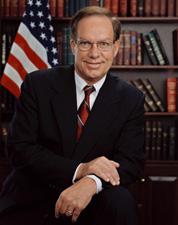
Mr. President, I rise today to introduce the Fort Carson Conservation Act of 2005 and take a moment to explain why this legislation is critical to our national security. Since World War II, hundreds…
Mr. President, I rise today to introduce the Fort Carson Conservation Act of 2005 and take a moment to explain why this legislation is critical to our national security.
Since World War II, hundreds of thousands of soldiers at Fort Carson have trained in relative isolation. With few current residents nearby, the Army has been using Fort Carson's ranges for large-scale training exercises, weapons testing and live fire. This training often occurs at night, a vital capability given the Army's preference to conduct military operations in darkness.
The 140,000 acre Army installation and training facility was once miles from Colorado Springs and Pueblo. As both cities grow closer to the base's fence line, Fort Carson is facing constraints on its training flexibility, impacting military readiness. The issue of training at the post is particularly relevant considering nearly 15,000 soldiers based at Fort Carson have been deployed or are currently employed to Iraq.
The situation is not getting better. Over the last two decades, real estate and industrial development along Colorado's front range has exploded. Hundreds of thousands of people have moved to the Centennial State and settled along the 1-25 corridor. I remember the days when it was possible to drive for miles along the eastern foothills of the Rocky Mountains and encounter few if any residential areas. Today, there seems to be development all along Colorado's front range.
Yet, military readiness at the post is not the only thing at risk. The post's fragile prairie habitat is also in danger. Fort Carson has always prided itself on its conservation of the public trust. Mountain Post has a special office just to ensure environmental compliance and protect the post's biodiversity. The mountain plover, the black-tailed prairie dog, the Arkansas River feverfew, and the Pueblo goldenweed are among the many rare species protected at Fort Carson.
Over the last 3 years Fort Carson has partnered with the Nature Conservancy on a unique plan to address the rising encroachment concerns. This forward-thinking plan calls for the purchase of conservation easements of lands south and southeast of the base for a small number of willing sellers.
If implemented, I believe the plan will preserve the military utility of key Fort Carson training areas while conserving important short grass prairie at a landscape scale, along with the ranching community that sustains it. As much as 82,000 acres of uninhibited, precious prairie would be protected, including four globally rare plant species.
The Army fully supports this plan and has consistently described it as its number one priority under the service's Compatible Use Buffer program. This plan also enjoys widespread support from the local community, including the Colorado Springs Chamber of Commerce. The Colorado Department of Transportation, the Great Outdoors of Colorado, and the Nature Conservancy all support the plan as well.
I be1ieve we need to act now to protect unique training facilities like those at Fort Carson before it is too late. This program makes sense for the soldiers training at Fort Carson who require an isolated environment to conduct their maneuvers. This program makes sense for the environment.
This plan makes too much sense for Congress to pass up. That is why I am introducing the Fort Carson Conservation Act. I am pleased that Congressman Joel Hefley is introducing this landmark legislation in the House of Representatives today as well.
The Fort Carson Conservation Act of 2005 would require the Secretary of the Army to carry out a pilot project that creates a buffer zone out of the property bordering Fort Carson. The objective of this pilot would be to demonstrate the feasibility and effectiveness of utilizing conservation easements and leases to limit enroachment and preserve the environment.
Under the pilot project, the Secretary of the Army would enter into agreements with one or more willing sellers to purchase conservation easements. These agreements would be founded on the authority already provided in section 2684a of title 10 of the United States Code. The pilot project would expire when either the project is completed or within 5 years.
From my perspective, this pilot project is only the beginning. By working closely with the Army and the other military services, the Nature Conservancy has planted the seed for the expansion of this project. I strongly support the Conservancy's effort and believe that key military installations like Fort Bragg, Camp Lejeune, Fort Huachuca, Fort Stewart, and Eglin Air Force Base will soon be in a position to benefit from this proactive conservation effort.
Mr. President, it is a little known secret that the Department of Defense is one of the best stewards of our environment. Almost 350 endangered and threatened species live on military bases across the country--that is more than are found on land managed by the National Park Service, the Fish and Wildlife Service, and the Bureau of Land Management. In an era of rapid growth and urban development, military training areas have become, in many respects, the last refuge for many endangered species.
Creating natural buffer zones that protect fragile habitat and ensure our military readiness is a win-win proposal. It is the right thing to do for the environment. It is the right thing to do for our Nation's Armed Forces. I urge my colleagues to support the Fort Carson Conservation Act.
Thank you for the opportunity to speak on this important matter.
Mr. President, I ask unanimous consent that the text of the bill be printed in the Record.

Mr President, I join with my colleagues in strong opposition to opening the Arctic National Wildlife Refuge, ANWR, to oil drilling. I believe including it in a reconciliation package is a backdoor…
Mr President, I join with my colleagues in strong opposition to opening the Arctic National Wildlife Refuge, ANWR, to oil drilling. I believe including it in a reconciliation package is a backdoor attempt to achieve a shortsighted, environmentally irresponsible outcome. It is little more than a scheme to raise $2.5 billion that will ultimately be used to cover a portion of the cost of tax cuts for the wealthy. Further, it will have a great and lasting cost to the environment with few benefits in terms of affordable energy.
Let me lay out a few reasons why I oppose drilling in ANWR.
The area we are talking about is home to nearly 200 species of wildlife, including polar, grizzly, and black bears, rare musk oxen, and millions of migratory birds. Each year, thousands of caribou travel to the Coastal Plain of the Arctic Refuge to give birth to their calves. It has been protected for decades, during Republican and Democratic administrations. It is not as if we have said no to oil and gas exploration in the entire North Slope. It is only the remaining 5 percent--the Coastal Plain of the Arctic Refuge--that we want placed off limits. If we open this pristine land now, we can never turn the clock back. Setting the process in motion will entail a web of oil platforms, pipelines, production facilities, power facilities, support structures, and roads across the entire area. The administration contention that development would be confined to a 2,000-acre footprint is simply false because the recoverable oil is spread out in small deposits across the entire Coastal Plain.
I firmly believe we need to ensure our country's economic security, but drilling in ANWR will do nothing to reduce our energy price and supply problems in the near term and very little to reduce our dependence on foreign supplies of oil. With transportation accounting for nearly 70 percent of oil use in this country, the Bush administration and many of my colleagues on the other side of the aisle have refused to tackle the issue of automobile fuel efficiency. According to the American Council for an Energy-Efficient Economy, if the Corporate Average Fuel Economy, CAFE, standards are raised by just 5 percent annually until 2012, and by just 3 percent thereafter, more than 1.5 million barrels of oil per day could be saved by 2010, and 67 billion barrels of oil over the next 40 years--more than 10 times what could be recovered in ANWR. In 1998, the U.S. Geological Survey estimated that there is no more than 5.2 billion barrels of economically recoverable oil in ANWR, a number that is equivalent to what the United States consumes in about 6 months.
Any recoverable oil that might be below the Refuge would not begin flowing for at least 10 years and would never meet more than a small percentage of our oil needs at any given time. So, therefore, it would have no impact on my constituents and your constituents for at least a decade. Further, the Energy Information Administration, EIA, has said that because the price of oil is set by the world market, ANWR would have a negligible impact on gasoline prices.
The United States dependence on foreign oil is growing, with current imports at 58 percent. We currently have about 3 percent of the world's oil reserves but consume more than a quarter of the world's oil supply. We simply cannot drill our way out of our problems. Last year, EIA stated that at peak production, oil from ANWR would account for just a fraction of our consumption--no more than 4 percent. Further, there is no guarantee that any oil produced domestically from ANWR would make it to the rest of the country. There is no assurance that it will not all be exported to foreign countries. It is simply too big a risk to take when there are other, less intrusive ways to truly alleviate our dependence on oil--fuel efficiency, renewable and alternative sources of energy, and, dare I say it, conservation, something the Bush administration would have you now believe it wholly endorses.
ANWR drilling proponents are always quick to contend that 735,000 jobs would be created by opening this area to oil extraction. Those estimates are based on figures from 15 years ago that the forecasters have since acknowledged were based on flawed assumptions. In October 2005, the Congressional Research Service reported that full development of the Arctic Refuge would result in 60,000 jobs. Even the three oil companies that stand to reap the most profits by expanding their presence in Alaska--ExxonMobil, BP, and Conoco-Phillips--have been relatively silent this year about their interest in ANWR.
Little oil industry interest, less job creation than anticipated, minimal recoverable oil deposits, no impact on current energy prices and negligible impact on future prices, no reduction in foreign oil dependence, and a web of infrastructure across the Coastal Plain--does that justify pillaging the Arctic Refuge? I think it is irresponsible to do so.
Therefore, I urge my colleagues to support the Cantwell amendment and work with us to enact policies that provide economic relief for residential and business consumers and set our country on a path to energy security.
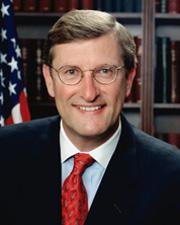
Mr. President, I ask unanimous consent that Senator Biden be added as a cosponsor. Mr. President, the best argument made for my amendment, which is to restore fiscal responsibility, is the argument…
Mr. President, I ask unanimous consent that Senator Biden be added as a cosponsor.
Mr. President, the best argument made for my amendment, which is to restore fiscal responsibility, is the argument made by the chairman of the Budget Committee in 2002. Here is what he said:
The second budget discipline, which is pay-go, essentially
says if you are going to add a new entitlement program, or
you are going to cut taxes, you must offset that event so
that it becomes a budget neutral event. If we don't do this,
if we don't put back in place caps and pay-go, we will have
no budget discipline, and as a result we will dramatically
aggravate the deficit, which, of course, impacts a lot of
important issues but especially impacts Social Security.
The budget chairman was right then. It is the right position now. Support the restoration of the budget discipline of pay-go.
Mr. President, pursuant to section 904 of the Congressional Budget Act of 1974, I move to waive the applicable section of the act for the consideration of the pending amendment.
I ask for the yeas and nays, and I ask my colleagues to support this budget discipline.
The Senate is not in order. The Senator deserves a chance to be heard.
Could we have order, Madam President.
Reserving the right to object, I would say to Senators who are in the back of the Chamber, who are most interested in this question, this is a good time to hear what is being done to correct what occurred previously. What occurred previously was, under the rule, all time had to expire on the first-degree amendment before a second- degree amendment could be offered. Under the interpretation of the Chair, that included the 2 minutes of debate on the first-degree amendment. Now what we are doing is modifying that through unanimous consent agreement so if someone offers a second degree, they have to offer it before the 2 minutes of debate on the first degree. Then we will be able to have 2 minutes of debate on the second degree, a vote on the second degree. Then, in consideration of the first degree, we will be able to have the 2 minutes of debate in conjunction with it. For the interest of our colleagues, that is what is being done.
We should take this moment, as well, to say to our colleagues, we have 35 amendments filed. That would take 12 hours of straight voting. We have to end today at 6 o'clock, which would mean we would be in tomorrow for at least 4 hours. I ask our colleagues to show restraint on calling up amendments that have been filed. We have had a good debate on this matter. It has been an absolutely fair debate in terms of how we have been treated with respect to amendments being offered. We really don't need to have 35 amendments offered to this measure. I urge my colleagues to show restraint.
I will not object.
Madam President, the amendment of the Senator from Oklahoma would freeze spending on veterans, on homeland security, on education, on National Institutes of Health, not just for 1 year but permanently--permanently. Permanently is a long time. The only way you get around it is a supermajority vote of 67 votes in the Senate.
I urge colleagues to oppose the amendment.
Mr. President, will the Senator withhold for one moment?
Mr. President, colleagues, we now have a list of the number of amendments that have been filed and that are pending and that Senators have noticed to us they intend to insist to have a vote on. That is 25 in number. That would take 8 hours. We have to stop at 6 o'clock. There is no way we would complete business today if every one of our colleagues insists on a vote on their amendment.
So I am asking on our side--I am asking, please--if you have an amendment filed that you really don't need a vote on or that you could possibly work out, let's work very hard in the next few hours to try to work it out. I would implore colleagues to not force a vote on every amendment they have filed.
I thank the Chair.
I move to lay that motion on the table.
The motion to lay on the table was agreed to.
Mr. President, just to update our colleagues, we now have 19 amendments still pending. On our current course, that is going to take at least 6\1/2\ hours. That would take us to 8:30. I ask colleagues, please, if you can withhold on your amendment, do so. If you have a chance to work out the amendment, please work hard and diligently to work it out. I urge colleagues, we have a drop-dead time at 6 o'clock tonight. We cannot go beyond that with business. We have less than 4 hours to go through 19 amendments. The only way this is going to happen is if colleagues will give up on some of their amendments. Otherwise, we are here tomorrow. Once we are here tomorrow, we all know what happens: we will be here a long time tomorrow.
Amendment No. 2367
Mr. President, let us repeat the message loud and clear: These next three votes are going to be strict 10-minute votes. At the end of 10 minutes, the manager and I are going to call the vote. That is the only possible, conceivable way we can get done today.
Mr. President, the Senator from Iowa set a very good example. We encourage other Senators to follow that example.

Mr. President, today, I am pleased to be joining with the Senator from Arizona, Mr. McCain, and the Senator from Vermont, Mr. Leahy, as a cosponsor of the Local Community Radio Act of 2005. This…
Mr. President, today, I am pleased to be joining with the Senator from Arizona, Mr. McCain, and the Senator from Vermont, Mr. Leahy, as a cosponsor of the Local Community Radio Act of 2005. This legislation is similar to the version of S. 2505, the Low Power Radio Act of 2004 that was introduced last Congress.
This bill removes once and for all the barriers keeping low power FM service from flourishing in communities of all sizes across the country, while protecting important radio reading services. Under the existing law, my State has only a handful of low power FM stations. If this bill becomes law, the Federal Communication Commission will be able to move forward and license additional low power FM stations to serve communities all across the State of Washington such as Bainbridge Island, Vashon Island and Auburn.
Let me review the history of this issue for the Senate. The Telecommunications Act of 1996 removed completely the ownership caps restricting the number of stations that any one company can own nationwide. The Act has led to an unprecedented level of consolidation and mergers in the U.S. radio industry. Additionally, within a local market, the rules allows ownership of up to eight radio stations, on a sliding scale, depending on total number of stations in the market.
Five years ago, the FCC adopted rules creating a new, low power FM radio service in response to public concerns that the increased consolidation of radio ownership weakened the local character of radio.
Low power FM stations serve the public interest by providing significantly greater opportunities for citizen involvement in broadcasting in communities across the country. Eligible licensees are non-profit, government or educational institutions, public safety or transportations services. No existing broadcasting licensee or media entity can have an ownership interest or any program or operating agreement with any low power FM stations.
In many media markets, the number of independent local voices has dropped significantly, replaced by giant corporations replicating formats and programming from across the country. Voice-tracking, a practice in which a DJ either pre-records part of a program for a local station or for a station out of the immediate market, is not a substitute for true localism.
With fewer independent outlets available for artists to get airplay for a given genre of music, particularly for newer acts, there is a perception in some quarters of the music industry that you need to resort to the reprehensible practices such as payola in order to be heard by the public.
During its proceeding on low power FM, the FCC conducted tests on the effects of these low power stations on full power FM broadcasts for various types of radio receivers. The FCC engineering reports concluded that low power FM signals would not cause interference with the signals to full power FM stations within their service areas. Based on the results of interference testing, LPFM stations were not required to protect stations three channels away from inference as is required for full power stations. These rules allowed radio frequencies for LPFM stations to become available in larger media markets where under the old rules of third adjacent channel separation, there was no space available for them on the crowded radio dial.
While the public reaction to low power FM was positive, the reaction of FM broadcasters, both commercial and non-commercial, was negative. Congress was convinced to add a rider to the 2001 Commerce, Justice, State appropriations law that effectively undid the provisions in the FCC rules, and once again required third adjacent channel separation. Congress also required the FCC to perform a study examining the impact on interference on the third adjacent channel.
Over two million dollars later, the results of the study validated the FCC's original analysis. Last year, I joined the Senator from Arizona, Mr. McCain, and the Senator from Vermont, Mr. Leahy, in sponsoring a bill that would have accepted the results of this latest engineering study to undo the 2001 appropriations rider. It also addressed specific concerns about protecting stations providing reading services over the radio frequencies to assist the blind. Under the Senator from Arizona's (Mr. McCain) leadership, the Commerce Committee reported the low power FM bill out favorably with an amendment, but it did not come to a vote on the floor.
The time has come to move ahead with this proposal. The U.S. radio industry has experienced an unprecedented wave of consolidation and mergers since passage of the 1996 Telecommunications Act. The consolidation trend has raised barriers of both size and cost for new broadcasters. The legislation we introduce today allows new entrants into broadcasting activities and new voices on our public airwaves. I hope the Commerce Committee will again act quickly on this legislation.
Show 11 more
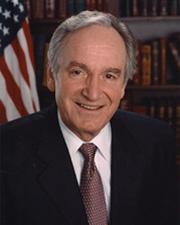
Mr. President, my amendment is a sense-of-the-Senate resolution that the Senate go on record opposing the House's $9 billion cut to child support enforcement programs. It is not reasonable to cut a…
Mr. President, my amendment is a sense-of-the-Senate resolution that the Senate go on record opposing the House's $9 billion cut to child support enforcement programs. It is not reasonable to cut a program that last year served 17,300,000 children. This is money that goes out to States for child support enforcement to go after deadbeat dads to get them to pay the money for child support. As a matter of fact, this is one of the best things that has happened out of welfare reform. For every $1 we spend, we are getting back $4.38, not to the Government but to the families and the kids who need it. This is just a sense-of-the-Senate resolution that says we do not agree with the House 40-percent cut in this program and we won't hold up to it when it goes to the conference. It is a sense-of-the-Senate resolution.
The bill approved by Ways and Means would slash funding for child support enforcement efforts by 40 percent over the next 10 years. The Congressional Budget Office estimates that, as a result of these cuts, more than $24 billion in delinquent payments will go uncollected. And the biggest negative impacts will be felt by children living in poverty and children in low-income households.
And let's be clear: Why is the House doing this? Why is it cutting this essential program that benefits some of the most vulnerable, disadvantaged, neglected children in our society? They are doing this in order to make room for another $70 billion in tax cuts--tax cuts overwhelmingly benefiting our wealthiest citizens.
Indeed, that is what this entire reconciliation process is all about. For 25 years, the budget reconciliation process was used to reduce the deficit. But, today, the majority party has a different idea. They are using reconciliation to increase the deficit. They are cutting child support enforcement, food assistance for the poor, foster care benefits, Medicaid, and other programs for the most disadvantaged Americans. At the same time they are ramming through another $70 billion in tax cuts for the most privileged.
There is no other word for it: This is simply immoral. Last year, more than 17 million children received financial support through the Child Enforcement System, including nearly two-thirds of all children in single-parent households with incomes below twice the poverty line.
Child support helped to lift more than 1 million Americans out of poverty in 2002. As a result of cuts passed by the House, many of those people--mostly children--would be plunged back into poverty. Not only is this cruel, it is also counterproductive. It is penny wise and pound foolish, because those families that are shoved into poverty by the House's action will end up on food stamps, Medicaid, Temporary Assistance for Needy Families, and other forms of public assistance.
This chart shows the State-by-State impact of the cut in child support collection. In my State of Iowa, alone, children would lose some $239 million over the next 10 years. This is a proven program, an effective program. It reduces poverty. It gets resources to children who desperately need them. It is cost effective. Research has shown that the decline in families relying on TANF in recent years is directly linked to improvements in the Child Support Enforcement Program. For all these reasons, this program has enjoyed broad bipartisan support.
In the past, President Bush himself has praised this program, calling it one of our highest performing social services programs. And he is right because for every Government dollar spent, $4.38 is recovered for families in child support payments. With good reason. Reforms over the last decade have made this program even more effective. Since 1996, there has been an 82-percent increase in collections, from $12 billion to $22 billion.
Child Support Enforcement is essential to helping families to achieve self-sufficiency. For families in poverty who receive child support, those payments account for an average of 30 percent of their income. Next to a mother's earnings, child support is the largest income source for poor families receiving assistance. Child support payments are used to pay for food, child care, shelter, and the most basic essentials of life.
If we were smart, if we were compassionate, if we were looking at ways to get maximum bang for the buck, we would be increasing funding for this essential program. But the action of the other body, slashing Child Support Enforcement by 40 percent to make way for more tax cuts, is just unconscionable. It is bad public policy, bad values, and bad priorities.
A strong bipartisan vote for this resolution will send a strong message to the House conferees that this cut is unacceptable to the Senate and that this body will not accept a slash-and-burn attack on a program that lifts more than 1 million people out of poverty every year. I urge my colleagues to support this resolution.
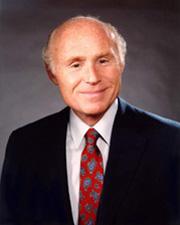
Mr. President, I rise today in strong support of the Child Support Distribution Act 2005, which Senator Snowe and I introduced today. I want to thank Senator Snowe for her hard work and dedication to…
Mr. President, I rise today in strong support of the Child Support Distribution Act 2005, which Senator Snowe and I introduced today. I want to thank Senator Snowe for her hard work and dedication to this important issue and am proud to have worked with her for many years on this legislation. And I'd like to thank Senators Rockefeller and Landrieu for their cosponsorship and support.
Senator Snowe and I have worked, both separately and in tandem, on issues related to child support for more than ten years. On many occasions, we've come close to seeing the positive changes contained in this legislation enacted. In 2000, a House version of this bill passed by an overwhelming bipartisan vote of 405 to 18. In the 108th Congress, our legislation was included in the TANF Reauthorization bill that passed out of the Senate Finance Committee with bipartisan support. This year, S. 6, which was introduced by Senator Santorum, and is supported by Majority Leader Frist and Senators McConnell and Hutchison, contains child support provisions that are almost based entirely on the legislation we're discussing today.
This legislation consistently receives bipartisan support because it takes a common sense approach to child support. By passing through more child support funds directly to low-income families, rather than sending it to the federal government, non-custodial parents are more likely pay, and families see a huge benefit from the additional income.
Currently, approximately 60 percent of poor children who live with their mothers and whose fathers live outside the home do not receive child support. Though there are a variety of reasons why non-custodial parents may not be paying support for then children, many don't pay because the system actually discourages them from doing so.
Under current law, $2.1 billion in child support is retained every year by the State and Federal Governments as repayment for welfare benefits--rather than delivered to the children to whom it is owed. Fifty-six percent of that amount is for families who have left welfare. Since the money doesn't benefit their kids, fathers are discouraged from paying support. And mothers have no incentive to push for payment since the support doesn't go to them.
The current rules withhold a key source of income for low-income families that could help them maintain self-sufficiency. According to the Center for Law and Social Policy, child support constitutes 16 percent of family income for low-income households that receive it. For families who leave welfare, this number almost doubles. A Washington State study of families leaving welfare with regular child support payments found that these families found work faster and kept jobs longer, compared to families without steady child support income.
It's time for Congress to change this system and encourage States to distribute more child support to families. My home State of Wisconsin has been a leader in this practice, which has benefited thousands of working families. In 1997, I worked with my State to institute an innovative program of passing through child support payments directly to families. An evaluation of the Wisconsin program clearly shows that when child support payments are delivered to families, non-custodial parents are more apt to pay, and to pay more. In addition, Wisconsin has found that, overall, this policy does not increase government costs. That makes sense because ``passing through'' support payments to families means they have more of their own resources, and are less apt to depend on public help to meet other needs such as food, transportation or child care.
We now have a key opportunity to encourage all States to follow Wisconsin's example. This legislation gives States options and strong incentives to send more child support directly to families who are working their way off--or are already off--public assistance. Not only will this create the right incentives for non-custodial parents to pay, but it will also simplify the job for States, who currently face an administrative nightmare in following the complicated rules of the current system.
This legislation finally brings the Child Support Enforcement program into the post-welfare reform era, shifting its focus from recovering welfare costs to increasing child support to families so they can sustain work and maintain self-sufficiency. After all, it's only fair that if we are asking parents to move off welfare, stay off welfare, and take financial responsibility for their families, then we in Congress must make sure that child support payments actually go to the families to whom they are owed and who are working so hard to succeed.
It is time for Congress to make this change. It's time that we finally make child support meaningful for families, and make sure that children get the support they need and deserve.
Mr. President, I rise today to introduce the Early Treatment for HIV Act, ETHA, of 2005. Senator Clinton joins me in introducing this bill, and I want to thank her for her steadfast support for…
Mr. President, I rise today to introduce the Early Treatment for HIV Act, ETHA, of 2005. Senator Clinton joins me in introducing this bill, and I want to thank her for her steadfast support for people living with HIV. HIV knows no party affiliation, and I am pleased to say that ETHA cosponsors sit on both sides of the aisle.
Simply stated, ETHA gives States the opportunity to extend Medicaid coverage to low-income, HIV-positive individuals before they develop full-blown AIDS. Today, the unfortunate reality is that most patients must become disabled before they can qualify for Medicaid coverage. Nearly 50 percent of people living with AIDS who know their status lack ongoing access to treatment. In my home State of Oregon, there are approximately 4,500 persons living with HIV/AIDS. It is estimated that approximately 40 percent of these Oregonians are not receiving care for their HIV disease. Not being in care puts these people's own health at risk, and also makes them more infectious. We can do better, and we should do everything possible to ensure that all people living with HIV can get early, effective medical care.
Oregon's Ryan White funded AIDS Drug Assistance Program is nearing maximum enrollment and may need to wait list eligible clients in the near future. The fact of the matter is that safety net programs all over the country are running out of money, and are generally unable to cover all of the people who need assistance paying for their medical care. As other programs are failing, ETHA gives States another way to reach out to low-income, HIV-positive individuals.
With approximately 150 newly detected HIV infections in Oregon annually, my state desperately needs to provide early treatment to these individuals. It has been shown that current HIV treatments are very successful in delaying the progression from HIV infection to AIDS, and help improve the health and quality of life for millions of people living with the disease.
Studies conducted by Pricewaterhouse Cooper have found that providing early intervention care significantly delays the progression of HIV and is highly cost-effective. ETHA reduces by 60 percent the death rate of
persons living with HIV who received coverage under Medicaid. Disease progression is significantly slowed and health outcomes improved. Medicaid offsets alone reduce gross Medicaid costs by approximately 70 percent due to the prevention of avoidable high cost medical interventions. Research determined that over 5 years the true cost of ETHA is $55.2 million. Over 10 years, ETHA saves $31.7 million. It shows that preventing the health of people living with HIV, preventing opportunistic infections, and slowing the progression to AIDS, will save taxpayers dollars. Ultimately, its clear that in implementing ETHA, the United States will take an important step toward ensuring that all Americans living with HIV can get the medical care they need to stay healthy and productive for as long as possible.
Importantly, ETHA also offers States an enhanced Federal Medicaid match, which means more money for States that invest in treatments for HIV. This provision models the successful Breast and Cervical Cancer Treatment and Prevention Act of 2000, which allows States to provide early Medicaid intervention to women with breast and cervical cancer. Even in these difficult times, 45 States are now offering early Medicaid coverage to women with breast and cervical cancer. We can build upon this success by passing ETHA and extending similar early intervention treatments to people with HIV.
HIV/AIDS touches the lives of millions of people living in every State in the Union. Some get the proper medications, but too many do not. This is literally a life and death issue, and ETHA can help many more Americans enjoy long, healthy lives.
I want to thank Senators Clinton, Collins, Bingaman, Coleman, Cantwell, Snowe, Corzine, Feinstein, Murray, Wyden, DeWine, Bayh, Reed, Kerry, Dayton, Schumer, Lincoln, Lieberman, Mikulski, Nelson, Stabenow, Johnson, Sarbanes, Leahy, Kennedy, Feingold and Lautenberg for joining us as cosponsors of ETHA. I also wish to thank all of the organizations around the country that have expressed support for this bill. I have received numerous support letters from those organizations, and I ask unanimous consent that those letters be printed in the Record. In particular, I want to thank the Human Rights Campaign, The AIDS Institute, ADAP Working Group and the Treatment Access Expansion Project, for helping bring so much attention to ETHA. I hope all of my colleagues will join us in supporting this critical, life-saving legislation.
Mr. President, I rise today to introduce the Early Treatment for HIV Act, ETHA, of 2005. Senator Clinton joins me in introducing this bill, and I want to thank her for her steadfast support for…
Mr. President, I rise today to introduce the Early Treatment for HIV Act, ETHA, of 2005. Senator Clinton joins me in introducing this bill, and I want to thank her for her steadfast support for people living with HIV. HIV knows no party affiliation, and I am pleased to say that ETHA cosponsors sit on both sides of the aisle.
Simply stated, ETHA gives States the opportunity to extend Medicaid coverage to low-income, HIV-positive individuals before they develop full-blown AIDS. Today, the unfortunate reality is that most patients must become disabled before they can qualify for Medicaid coverage. Nearly 50 percent of people living with AIDS who know their status lack ongoing access to treatment. In my home State of Oregon, there are approximately 4,500 persons living with HIV/AIDS. It is estimated that approximately 40 percent of these Oregonians are not receiving care for their HIV disease. Not being in care puts these people's own health at risk, and also makes them more infectious. We can do better, and we should do everything possible to ensure that all people living with HIV can get early, effective medical care.
Oregon's Ryan White funded AIDS Drug Assistance Program is nearing maximum enrollment and may need to wait list eligible clients in the near future. The fact of the matter is that safety net programs all over the country are running out of money, and are generally unable to cover all of the people who need assistance paying for their medical care. As other programs are failing, ETHA gives States another way to reach out to low-income, HIV-positive individuals.
With approximately 150 newly detected HIV infections in Oregon annually, my state desperately needs to provide early treatment to these individuals. It has been shown that current HIV treatments are very successful in delaying the progression from HIV infection to AIDS, and help improve the health and quality of life for millions of people living with the disease.
Studies conducted by Pricewaterhouse Cooper have found that providing early intervention care significantly delays the progression of HIV and is highly cost-effective. ETHA reduces by 60 percent the death rate of
persons living with HIV who received coverage under Medicaid. Disease progression is significantly slowed and health outcomes improved. Medicaid offsets alone reduce gross Medicaid costs by approximately 70 percent due to the prevention of avoidable high cost medical interventions. Research determined that over 5 years the true cost of ETHA is $55.2 million. Over 10 years, ETHA saves $31.7 million. It shows that preventing the health of people living with HIV, preventing opportunistic infections, and slowing the progression to AIDS, will save taxpayers dollars. Ultimately, its clear that in implementing ETHA, the United States will take an important step toward ensuring that all Americans living with HIV can get the medical care they need to stay healthy and productive for as long as possible.
Importantly, ETHA also offers States an enhanced Federal Medicaid match, which means more money for States that invest in treatments for HIV. This provision models the successful Breast and Cervical Cancer Treatment and Prevention Act of 2000, which allows States to provide early Medicaid intervention to women with breast and cervical cancer. Even in these difficult times, 45 States are now offering early Medicaid coverage to women with breast and cervical cancer. We can build upon this success by passing ETHA and extending similar early intervention treatments to people with HIV.
HIV/AIDS touches the lives of millions of people living in every State in the Union. Some get the proper medications, but too many do not. This is literally a life and death issue, and ETHA can help many more Americans enjoy long, healthy lives.
I want to thank Senators Clinton, Collins, Bingaman, Coleman, Cantwell, Snowe, Corzine, Feinstein, Murray, Wyden, DeWine, Bayh, Reed, Kerry, Dayton, Schumer, Lincoln, Lieberman, Mikulski, Nelson, Stabenow, Johnson, Sarbanes, Leahy, Kennedy, Feingold and Lautenberg for joining us as cosponsors of ETHA. I also wish to thank all of the organizations around the country that have expressed support for this bill. I have received numerous support letters from those organizations, and I ask unanimous consent that those letters be printed in the Record. In particular, I want to thank the Human Rights Campaign, The AIDS Institute, ADAP Working Group and the Treatment Access Expansion Project, for helping bring so much attention to ETHA. I hope all of my colleagues will join us in supporting this critical, life-saving legislation.
Mr. President, reducing overall Federal spending on farm programs is important if we are to succeed in reducing the Federal budget deficit. The current budget-reconciliation package includes $39…
Mr. President, reducing overall Federal spending on farm programs is important if we are to succeed in reducing the Federal budget deficit. The current budget-reconciliation package includes $39 billion in savings, including $3 billion from agriculture programs. To achieve these savings, the Senate Agriculture Committee cuts farm spending by implementing an-across-the-board 2.5 percent reduction in payments for all farm commodities. I wholeheartedly support these cuts in farm spending.
However, I cannot support waiving the Budget Act to consider the Grassley Dorgan amendment to impose more restrictive payment limits on farm commodities. This amendment is being offered as a substitute to the cost savings achieved by the fair, across-the-board reductions currently in the package. Substituting the Grassley-Dorgan payment limits is eerily reminiscent of the flawed formula in the highway bill: Instead of all States bearing the burden equally, the farm cuts would be achieved on the backs of Arizona farmers and other farmers of capital intensive crops in the West and South.
The advocates of the Grassley-Dorgan amendment claim that reducing payment limits preserves the family farm. What they meant to say is that it preserves family farms in North Dakota, Iowa, and other Midwestern States that grow certain commodities: namely grains and oilseeds such as corn, wheat, and soybeans. Family farmers in Arizona farm cotton. It is a highly capital intensive crop, in fact, one of the two most expensive program crops to grow. To illustrate, cotton program payments represent 39 percent of western farmers' cash costs of production. Corn and wheat program payments represent 49 percent and 50 percent of Midwestern farmers' cash costs, respectively.
Thus, in order to achieve economies of scale and remain competitive, Arizona farms must be large. According the Economic Research Service, over 30 percent of cotton production occurs on farms operating on an average of 3,500 acres. Are we to believe that none of these large farms are owned by Arizona families? I know for a fact that they are.
The average farming operation in Arizona consists of about 7,000 acres. Using a farm in near Buckeye, AZ as an example, this family farm is run by four brothers. Several children are managers of the operation, including performing marketing and financial services. About a third of the farm grows cotton, about a third grows feed grains, and the remaining third alfalfa. The annual budget is $5 million, and the brothers draw an annual salary of about $50,000 each when the farm generates sufficient income. This farm would be hit hard by the payment limitations in the Grassley-Dorgan amendment. Its operators would be forced to cut the amount of acres on which they grow cotton. In years when prices decline at harvest, their cash flow would be restricted and their ability to qualify for financing would be severely hampered.
The Grassley-Dorgan amendment, in equating large with bad, ultimately favors growers of corn, wheat, and soybeans at the expense of farmers of cotton, rice, and peanuts. To further illustrate what I am talking about, let us apply the limitations in the amendment: a farm that produces cotton or rice would, at today's world prices and average yields, hit the limit on payments at about 400 to 600 acres. This acreage is generally deemed to be too small to sustain the investment in the specialized equipment necessary for cotton and rice production. In contrast, a corn farmer with an expected yield of 190 bushels per acre, would not hit the limit on payments until just over 3,100 acres. Clearly, very few corn farmers will ever feel the effects of the Grassley-Dorgan amendment.
It has been further estimated that the more restrictive eligibility rules that are part of the amendment, combined with the limits on direct payments, would reduce direct payments to Arizona growers by $24.6 million. This represents a reduction of 62 percent, the highest of any State. Iowa would see a loss of just 4 percent and North Dakota, 10 percent.
I am not going to argue that the farm law is off limits for the purpose of finding savings for the American taxpayer. However, I encourage my colleagues to look closely at the ways we achieve that savings. It is simply not fair to use a faulty perception of what
constitutes a family farm to favor one farming region of the country at the expense of another. Yet, that is exactly what the Grassley-Dorgan amendment would do. Thus, I cannot support a motion to waive the Budget Act with respect to this amendment and must vote against it.
Mr. President, I discuss a rare strain of HIV that is highly resistant to most antiretroviral drugs and causes a rapid onset of AIDS that was recently discovered in a patient in New York City. The…
Mr. President, I discuss a rare strain of HIV that is highly resistant to most antiretroviral drugs and causes a rapid onset of AIDS that was recently discovered in a patient in New York City. The strain, identified as 3-DCR HIV, is resistant to 3 of the 4 classes of antiretroviral drugs, which means that 19 of the 20 available antiretroviral drug combinations
would be ineffective for a person with this HIV strain.
Although drug-resistant HIV strains are common in patients who have been treated with antiretroviral drugs, multiple-drug-resistant HIV is extremely rare in patients who are newly diagnosed and previously untreated. Moreover, while HIV infection usually takes about 10 years to progress to AIDS, this patient apparently progressed to AIDS in a matter of months. Combination of a highly drug resistant HIV infection and rapid disease progression has the potential to become a very serious public health problem with global health implications.
The ultimate significance of the new strain is still unknown. Only time will tell whether this was an isolated case or part of an outbreak of similar cases. It is imperative, however, that we take action to identify and halt the spread of aggressive, multiresistant HIV/AIDS strains.
We must continue to build upon and fund existing prevention programs and to strengthen our infectious disease monitoring systems. The CDC, in collaboration with community, state, national, governmental and nongovernmental partners, employs a number of programs designed to prevent HIV infection and reduce the incidence of HIV-related illness and death. By providing financial and technical support for disease surveillance; risk-reduction counseling; street and community outreach; school-based education on AIDS; prevention case management; and prevention and treatment of other sexually transmitted diseases that can increase risks for HIV transmission, such programs have played a key role in reducing HIV transmission.
Stopping the spread of this strain is also critical in order to preserve the effectiveness of existing HIV/AIDS therapies. Not only do such therapies prolong and improve the quality of life of those affected by HIV/AIDS, but they also play a vital role in preventing the spread of the disease. A recent study found that HIV therapies reduce infectiousness by 60 percent. Consequently, that is why I recently reintroduced S. 311, the Early Treatment for HIV Act, ETHA. Supported by a bipartisan group of 31 Senators, ETHA redresses a fundamental flaw under the current Medicaid system that provides access to care only after individuals have developed full blown AIDS.
ETHA brings Medicaid eligibility rules in line with Federal Government guidelines on the standard of care for treating HIV. ETHA helps address the fact that increasingly, in many parts of the country, there are growing waiting lists for access to life-saving medications and limited access to comprehensive health care. Access to HIV therapies reduces the amount of HIV virus present in a person's bloodstream, viral load, a key factor in curbing infectiousness and reducing the ability to transmit HIV.
Early access to HIV therapies as provided under ETHA would not only delay disease progression and increase life expectancy, but it would also reduce the need for more expensive treatment and costly hospital stays. According to a study conducted by PricewaterhouseCoopers, ETHA would reduce gross Medicaid costs by 70 percent, saving the Federal Government approximately $1.5 billion over 10 years. With the administration looking for ways to reduce Medicaid costs, passing ETHA would be a good start. It's also the right thing to do.
Madam President, while the Enzi-Kennedy amendment passed on a voice vote, I want the record to reflect my opposition to this amendment. We have all seen the devastation of Hurricanes Katrina and…
Madam President, while the Enzi-Kennedy amendment passed on a voice vote, I want the record to reflect my opposition to this amendment.
We have all seen the devastation of Hurricanes Katrina and Rita, and I certainly understand and share my colleagues' desire to address the needs of displaced school children.
Unfortunately, this amendment, which frankly is more than 2 months overdue, falls far short of the help needed for the affected families and public schools. It falls short financially, since it provides less money than these schools need in order to re-open and serve the children of the Gulf Coast. It also falls short constitutionally by making payments to private religious schools on behalf of students who fled these hurricanes and are now attending such schools across the country.
Now, I understand that these hurricanes did not differentiate between public and private school students, and that we need to be able to provide some assistance for all students affected by them. However, this amendment is not the answer. As my colleagues are very well aware, we currently have a mechanism in current law to provide support to students in private schools. We do it everyday under Title I and Title V of NCLB, and under IDEA.
These children should have been helped over 2 months ago with the funding mechanisms we already have in place. That is why this amendment is not about getting help to these students. This is about using these students' needs as a pawn to further the Republican agenda of vouchers.
In addition, we are doing a disservice to families displaced by Hurricanes Katrina and Rita by not informing them that this assistance is just for this school year. No where in this legislation is there a requirement that parents be notified that this assistance is temporary and that it will not be renewed beyond August 2006. Instead of being fair to these parents by providing them with transparent information, this amendment fails to include a provision to notify parents that this assistance is time-limited. We have an obligation to inform parents receiving this assistance that this funding is a one-time deal. Without clear language on this point, language which I suggested to the sponsors of the amendment, parents will have an unfounded expectation that this aid will be there next year and perhaps even for years to come. These families are settling down in new communities, and they may lack the resources, ability, or desire to go back to the gulf coast.
Of course, we want to help families in their moment of need and distress. I understand my colleague, Senator Landrieu's position on this matter, and her sincere desire to help her constituents. I too believe this assistance to schools, both public and private, is important, needed, and appropriate. But this amendment could and should have been structured in a way that contains clear notification requirements and that mirrors current law.
This legislation is not the direction we should be heading. This legislation is a stalking horse for a national voucher program. At the same time, it provides less funding than is needed to repair and fund our devastated public schools. It provides very little accountability for the use of taxpayers' funds and provides little or no enforcement of the civil rights protections that would exist if money were sent through existing funding mechanisms.
I want to thank Senators Enzi, Alexander, Kennedy, and Dodd, because I know that they have worked very hard to improve this amendment, and I appreciate their efforts. I urge my colleagues to continue to work to address the concerns I have raised as this bill moves forward.
Mr. President, I discuss the recent announcement by the Centers for Disease Control and Prevention that the number of Americans living with HIV has now surpassed 1 million. An estimated 1.039 million…
Mr. President, I discuss the recent announcement by the Centers for Disease Control and Prevention that the number of Americans living with HIV has now surpassed 1 million. An estimated 1.039 million to 1.185 million people nationwide were HIV-positive as of December 2003, an increase over the estimated 850,000 to 950,000 cases at the end of 2002. While the number of persons with HIV in my state of Oregon is small relative to other states, Oregon still saw an 85 percent increase in the number of cases between 2002 and 2003. Not since the height of the AIDS epidemic in the 1980s has there been so many Americans living with this terrible disease.
The latest estimate reveals both our success and failure at combating this disease. On a positive note, the increase reflects the significant advances in antiretroviral drug therapy that have allowed persons diagnosed with HIV to live longer, healthier lives. On the other hand it also reflects our shortcomings in preventing the spread of this disease. Despite the Federal government's goal to cut in half the number of new HIV cases each year, the figure continues to hold steady at about 40,000--the same rate of infection as in the 1990s. Moreover, some researchers believe that the number of new infections may actually be as high as 60,000 a year.
To be fair, responsibility for reducing the spread of HIV does not rest solely with the Federal government. According to the CDC, those at highest risk of contracting HIV have become far too complacent in their behavior, particularly as it relates to the practice of safe sex. Nevertheless, there is much the Federal government can do to help stem the spread of HIV.
One way to reduce the number of new HIV cases is to ensure that those infected with HIV have access to treatment. Such treatments not only prevent individuals from developing full-blown AIDS, but also significantly lower the risk of transmitting the disease to others. Unfortunately, the cost of these treatments is prohibitive, especially for those who are uninsured or underinsured. For this reason, it is critical that Congress reauthorize and bolster the Ryan White Care Act this year. Among other things, the act includes the vitally important AIDS Drug Assistance Program, ADAP, which helps low-income and uninsured HIV/AIDS patients afford their costly drug treatments. An estimated 150,000 people--30 percent of all Americans receiving treatment for HIV currently receive their care through ADAP. Even with this program, however, States and local communities are overwhelmed. That is why I am requesting that Congress provide an additional $300 million for ADAP for the 2006 fiscal year.
As successful as ADAP has been, critical gaps in our approach to HIV treatment and prevention remain. For example, HIV positive individuals have access to treatment under Medicaid only after they have developed full-blown AIDS. To remedy this flaw, I introduced the Early Treatment for HIV Act, ETHA, S. 311, with Senator Hillary Clinton. By providing access to HIV therapies before such persons develop AIDS, ETHA would reduce overall Medicaid costs and, as important, reduce the likelihood of additional infection.
By reducing the amount of virus in the bloodstream, early access to HIV therapies is a key factor in helping curb infectiousness and reducing HIV transmission. Strengthening ADAP and enacting ETHA will help put us on the right track to providing both adequate treatment for those with HIV, as well as reducing the number of new HIV cases.

Madam President, I rise in opposition to the Nelson amendment. I think everybody knows that the taxpayers pay 75 percent of the Part B premium and 25 percent is paid by the individual. Whenever we…
Madam President, I rise in opposition to the Nelson amendment. I think everybody knows that the taxpayers pay 75 percent of the Part B premium and 25 percent is paid by the individual. Whenever we increase doctors' reimbursement--and we do that in this bill by 5.3 percent so that doctors do not lose their money--then, obviously, the 25 percent is going to go up a little bit, just as the 75 percent goes up a little bit when reimbursement is increased.
The Senator from Florida takes offense at the fact that the premium is going to go up in the year 2007 by $1.69. It is the way the formula works. I think every Senator wants to vote to give the doctors fair reimbursement because without doctors senior citizens cannot be served. So we ought to let the formula work.
The offset is very egregious toward managed care as well. Also, do not forget that low-income people, people on
Medicaid, do not pay the Part B and those who are not on Medicaid but below the poverty level have help through the QI program that we passed and the President signed recently to continue that program. So I hope my colleagues will defeat the amendment.
Yes.
Mr. President, how much time do I have?
Mr. President, this is a bipartisan amendment, the Grassley-Dorgan amendment, with a lot of cosponsors. We have a problem in the existing bill that will hurt family farmers. It cuts farm payments across the board for 100 percent of the farmers. It cuts conservation programs, so it harms the environment to a greater extent. What we do is solve a problem and help every family farmer in the process.
Ten percent of the farmers in the United States get 72 percent of the benefit out of the farm program. That is unfair. The farm programs have always been targeted toward medium- and small-sized farmers. So we put in a hard cap of $250,000. Mr. President, $250,000 is all one farm entity can get from the farm program. We redistribute that money so we do not have that 2.5-percent cut. We restore some money for conservation and things of that nature.
So I hope you will support our amendment. The last time it was up, we got 66 votes for it.
Mr. President, pursuant to section 904(c) of the Congressional Budget Act of 1974, I move to waive section 305 of the Budget Act for the consideration of amendment No. 2359, and I ask for the yeas and nays.
Mr. President, I ask Members to vote no on this amendment. There is an odd situation here. We have had a formula in the legislation for 40 years. That formula regularly has some States getting more reimbursement, some States getting less. Next year your State might go up. The next year it might go down. That is the way it has been working. All of a sudden, some States are receiving a reduction, and they want to keep it where it is. I have never had a situation where, when the formula worked to the benefit of the State, their reimbursement went up, that you come in here and ask for us to reduce the reimbursement. No, you accept the formula. If you want to change the formula, Senator Baucus and I have a good plan to change the formula. It would smooth out the peaks and valleys. That is what we ought to be doing instead of piecemeal doing it this way. I ask Members to vote against the amendment.
Amendment No. 2365, as Modified
I hate to debate a second-degree amendment that has not yet been sent to the desk. At the appropriate point in time I will be raising the point of germaneness. This amendment shows the Gordian knot…
I hate to debate a second-degree amendment that has not yet been sent to the desk.
At the appropriate point in time I will be raising the point of germaneness. This amendment shows the Gordian knot we are trying to cut through so we can do the right things for the children of Katrina.
What we have is constitutional. We are not trying, in the amendment that will be up as the original amendment, to resolve vouchers. We are not trying to resolve faith-based initiatives. What we are trying to do is do the right thing to treat the kids of Katrina the right way, and in order to solve this it has to be a very bipartisan way because we also will have to overcome a point of germaneness.
I yield the remainder of my time to Senator Kennedy.
The pending amendment is not germane to the measure now before the Senate. I raise a point of order under section 305 of the Budget Act.
Madam President, to clarify this, why would we have the debate on the overlying motion before we have the debate on the underlying motion and then try to deny a debate on the overlying motion at the appropriate time?
I would ask the chairman and the ranking member to consider this process. It will save a lot of time if the person suggesting a second- degree amendment do the debate on the second-degree amendment. Did anybody here hear the debate on the first-degree amendment? That was debate on the second-degree amendment.
So we disposed with the debate on the second-degree amendment. Now we ought to have the vote on the second-degree amendment, not another debate on the second-degree amendment and then go to the first-degree amendment without debate--or even with debate.
If we are going to limit the time, we need to limit the time each time. And if somebody is going to do a second-degree amendment, they ought to do their debate on the second-degree amendment, face the vote on the second-degree amendment, and move on. But you ought to get your time to debate your motion at the time of the vote on the motion, not an hour later.
Parliamentary inquiry: I think I would have to withdraw that point of germaneness and he would have to withdraw his in order for us to have continuing debate. Is that not true?
Madam President, parliamentary inquiry: Does that mean my point of order was on my amendment and his motion to waive was on my amendment, not on his?
That will be what the debate is on? I thought debate did not happen once the germaneness was entered.
Madam President, I guess there have been a lot of constitutional lawyers involved in all of this. I certainly want people to know we also conferred with constitutional lawyers and found a way to be able to do, on a one-time emergency basis, what needs to be done properly for the kids of Katrina and for any other major event where we have a large number of displaced students. But this one just deals with the one-time emergency event. It is constitutional. It does not, however, as Senator Ensign would like to do, resolve the voucher issue, and it does not resolve the faith-based initiative issue. But it does get help to kids, and that is what we are trying to do with all the education amendments we have today.
I yield the remainder of my time to Senator Kennedy.
Mr. President, I rise today with my friend Senator Kennedy to introduce a bill that will raise the minimum grant amounts given to States and territories under the PATH program. The PATH program…
Mr. President, I rise today with my friend Senator Kennedy to introduce a bill that will raise the minimum grant amounts given to States and territories under the PATH program. The PATH program provides services through formula grants of at least $300,000 to each State, the District of Columbia and Puerto Rico and $50,000 to eligible U.S. territories. Subject to available appropriations, this bill will raise the minimum allotments to $600,000 to each State and $100,000 to eligible US territories.
When the PATH program was established in fiscal year 1991 as a formula grant program, Congress appropriated $33 million. That amount has steadily increased over the years with Congress appropriating $55 million this past year. However, despite these increases, States and territories such as New Mexico that have rural and frontier populations, have not received an increase in their PATH funds. Under the formula, as it currently exists, many states and territories will never receive an increase to their PATH program, even with increasing demand and inflation. This problem is occurring in my home State of New Mexico as well as twenty-five other States and territories throughout the United States.
The PATH program is authorized under the Public Health Service Act and it funds community-based outreach, mental health, substance abuse, case management and other support services, as well as a limited set of housing services for people who are homeless and have serious mental illnesses. Program services are provided in a variety of different settings, including clinic sites, shelter-based clinics, and mobile units. In addition, the PATH program takes health care services to locations where homeless individuals are found, such as streets, parks, and soup kitchens.
PATH services are a key element in the plan to end chronic homelessness. Every night, an estimated 600,000 people are homeless in America. Of these, about one-third are single adults with serious mental illnesses. I have worked closely with organizations in New Mexico such as Albuquerque Health Care for the Homeless and I have seen first hand the difficulties faced by the more than 15,000 homeless people in New Mexico, 35 percent of who are chronically mentally ill or mentally incapacitated.
PATH is a proven program that has been very successful in moving people out of homelessness. PATH has been reviewed by the Office of Management and Budget and has scored significantly high marks in meeting program goals and objectives. Unquestionably, homelessness is not just an urban issue. Rural and frontier communities face unique challenges in serving PATH eligible persons and the PATH program funding mechanisms must account for these differences.
Thank you and I look forward to working with my colleague Senator Kennedy on this important issue.
I ask unanimous consent that the text of the bill be printed in the Record.
Bill Text
Latest available legislative text
        [Congressional Bills 109th Congress]
[From the U.S. Government Publishing Office]
[S. 311 Introduced in Senate (IS)]

109th CONGRESS
1st Session
S. 311

To amend title XIX of the Social Security Act to permit States the
option to provide medicaid coverage for low-income individuals infected
with HIV.

_______________________________________________________________________

IN THE SENATE OF THE UNITED STATES

February 8, 2005

Mr. Smith (for himself, Mrs. Clinton, Ms. Collins, Mr. Bingaman, Ms.
Cantwell, Mr. Coleman, Mr. Corzine, Ms. Snowe, Mrs. Feinstein, Ms.
Landrieu, Mrs. Murray, Mr. DeWine, Mr. Bayh, Mr. Reed, Mr. Kerry, Mr.
Schumer, Mr. Dayton, Mr. Wyden, Mrs. Lincoln, Mr. Lieberman, Ms.
Mikulski, Mr. Nelson of Florida, Ms. Stabenow, Mr. Johnson, Mr. Leahy,
Mr. Kennedy, Mr. Feingold and Mr. Sarbanes) introduced the following
bill; which was read twice and referred to the Committee on Finance

_______________________________________________________________________

A BILL

To amend title XIX of the Social Security Act to permit States the
option to provide medicaid coverage for low-income individuals infected
with HIV.

Be it enacted by the Senate and House of Representatives of the
United States of America in Congress assembled,

SECTION 1. SHORT TITLE.

This Act may be cited as the ``Early Treatment for HIV Act of
2005''.

SEC. 2. OPTIONAL MEDICAID COVERAGE OF LOW-INCOME HIV-INFECTED
INDIVIDUALS.

(a) In General.--Section 1902 of the Social Security Act (42 U.S.C.
1396a) is amended--
(1) in subsection (a)(10)(A)(ii)--
(A) by striking ``or'' at the end of subclause
(XVII);
(B) by adding ``or'' at the end of subclause
(XVIII); and
(C) by adding at the end the following:
``(XIX) who are described in
subsection (cc) (relating to HIV-
infected individuals);''; and
(2) by adding at the end the following:
``(cc) HIV-infected individuals described in this subsection are
individuals not described in subsection (a)(10)(A)(i)--
``(1) who have HIV infection;
``(2) whose income (as determined under the State plan
under this title with respect to disabled individuals) does not
exceed the maximum amount of income a disabled individual
described in subsection (a)(10)(A)(i) may have and obtain
medical assistance under the plan; and
``(3) whose resources (as determined under the State plan
under this title with respect to disabled individuals) do not
exceed the maximum amount of resources a disabled individual
described in subsection (a)(10)(A)(i) may have and obtain
medical assistance under the plan.''.
(b) Enhanced Match.--The first sentence of section 1905(b) of the
Social Security Act (42 U.S.C. 1396d(b)) is amended by striking
``section 1902(a)(10)(A)(ii)(XVIII)'' and inserting ``subclause (XVIII)
or (XIX) of section 1902(a)(10)(A)(ii)''.
(c) Conforming Amendments.--Section 1905(a) of the Social Security
Act (42 U.S.C. 1396d(a)) is amended in the matter preceding paragraph
(1)--
(1) by striking ``or'' at the end of clause (xii);
(2) by adding ``or'' at the end of clause (xiii); and
(3) by inserting after clause (xiii) the following:
``(xiv) individuals described in section 1902(cc);''.
(d) Exemption From Funding Limitation for Territories.--Section
1108(g) of the Social Security Act (42 U.S.C. 1308(g)) is amended by
adding at the end the following:
``(3) Disregarding medical assistance for optional low-
income hiv-infected individuals.--The limitations under
subsection (f) and the previous provisions of this subsection
shall not apply to amounts expended for medical assistance for
individuals described in section 1902(cc) who are only eligible
for such assistance on the basis of section
1902(a)(10)(A)(ii)(XIX).''.
(e) Effective Date.--The amendments made by this section shall
apply to calendar quarters beginning on or after the date of the
enactment of this Act, without regard to whether or not final
regulations to carry out such amendments have been promulgated by such
date.
<all>