A bill to designate the Post Office located at 5755 Post Road, East Greenwich, Rhode Island, as the "Richard L. Cevoli Post Office".
Legislative Activity
Stay on top of the latest movement without scrolling through every action
Became Public Law No: 109-310.
October 6, 2006
View full timeline
Introduced in Senate
May 25, 2006
Sponsor introductory remarks on measure. (CR S5255)
May 25, 2006
Read twice and referred to the Committee on Homeland Security and Governmental Affairs. (text of measure as introduced: CR S5255)
May 25, 2006
Committee on Homeland Security and Governmental Affairs. Ordered to be reported without amendment favorably.
June 14, 2006
Committee on Homeland Security and Governmental Affairs. Reported by Senator Collins without amendment. Without written report.
June 22, 2006
Placed on Senate Legislative Calendar under General Orders. Calendar No. 483.
June 22, 2006
Passed Senate without amendment by Unanimous Consent. (consideration: CR S8091-8092; text as passed Senate: CR S8091)
July 20, 2006
Message on Senate action sent to the House.
July 21, 2006
Received in the House.
July 24, 2006 • 2:03 PM
Referred to the House Committee on Government Reform.
July 24, 2006
Mr. Marchant moved to suspend the rules and pass the bill.
September 28, 2006 • 11:44 PM
Considered under suspension of the rules. (consideration: CR H7895-7896)
September 28, 2006 • 11:45 PM
Passed/agreed to in House: On motion to suspend the rules and pass the bill Agreed to by voice vote.(text: CR H7895)
September 28, 2006 • 11:45 PM
On motion to suspend the rules and pass the bill Agreed to by voice vote. (text: CR H7895)
September 28, 2006 • 11:45 PM
Motion to reconsider laid on the table Agreed to without objection.
September 28, 2006 • 11:45 PM
Presented to President.
October 2, 2006
Signed by President.
October 6, 2006
Became Public Law No: 109-310.
October 6, 2006
Floor Debate
17 membersWhat members said about S. 3187 on the floor
 PJL
PJL JW
JW JDR
JDR TL
TL DF+12
DF+12
Floor Debate
17 membersWhat members said about S. 3187 on the floor
Mr. President, I ask unanimous consent that the text of the five bills on suspending duties be printed in the Record. Mr. President, I am today introducing a bill which can be the catalyst for saving…
Mr. President, I ask unanimous consent that the text of the five bills on suspending duties be printed in the Record.
Mr. President, I am today introducing a bill which can be the catalyst for saving the lives or improving the health of millions of families in impoverished nations.
In far too many nations, thousands of children die needlessly each month.
The concept of my bill--called the Life-Saving Medicines Export Act of 2006--is easy to summarize.
It allows U.S. companies to make low-cost generic versions of patented medicines for export to impoverished nations that face public health crises but cannot produce those life-saving medicines for themselves.
This bill is based on World Trade Organization agreements permitting nations with pharmaceutical industries to help nations in need.
That WTO agreement was labeled by U.S. Ambassador Portman as ``a landmark achievement that we hope will help developing countries devastated by HIV and AIDS and other public health crises.''
Apart from the pressing need for this step in humanitarian terms, passage of this bill could go a long way in improving U.S. relations with large segments of the world's population.
On December 6, 2005, the Office of the U.S. Trade Representative announced that it ``welcomes'' efforts to ``allow countries to override patent rights when necessary to export life-saving drugs to developing countries that face public health crises but cannot produce drugs for themselves.''
I am concerned, however, that the administration has taken no steps whatsoever to begin to implement that agreement. No implementing legislation has been provided to the Hill. I was informed just today that the administration has ``no present plans'' to propose legislation to implement that international agreement. I am disappointed with that answer but am pleased that the administration expressed a willingness to work with me on this important effort. I will forward my bill to them later today.
Indeed, the World Health Assembly and the World Health Organization have adopted resolutions urging all WTO member nations with a generic capability to adopt laws that implement that agreement.
The World Bank recently issued a guide and model documents on how
best to implement that international agreement. My bill follows their model.
Like a generation ago, infectious and parasitic diseases remain the major killers of children in the developing world. Many of these diseases--measles, malaria, river blindness--we can prevent or cure. But those countries still lack the public health systems and the vital medicines.
Every hour, more than 500 African mothers lose a child, mostly from diseases caused by contaminated water.
In some sub-Saharan countries, HIV infection rates range as high as a third of the adult population, and for this reason 35 percent of African children are at higher risk of death than they were a decade ago.
Despite these grim statistics, there is a brighter side.
We are far more aware today of how much our own health depends on what takes place half a world away. Whether it is AIDS, SARS, West Nile Virus, the Avian Flu, or some as yet unknown infectious disease, we are all at risk, and only an airplane flight away, from wherever the outbreak may occur.
Because of this new awareness, global health is finally recognized as an issue of national security. It may seem obvious today, but even ten years ago it was not.
Health threats that once concerned only medical personnel, now receive the attention of the highest levels of governments. We are supporting policies and programs to help the poorest countries conduct better surveillance and respond more quickly to protect their own people, and to prevent the spread of disease.
There is a great deal more we need to do. Today, 15 percent of the world's people consume 91 percent of the world's pharmaceuticals. The high price of many life-saving medicines--medicines that we take for granted in this country--is beyond reach for billions of the world's most vulnerable populations.
President Franklin Roosevelt said: ``The test of our progress is not whether we add more to the abundance of those who have much, it is whether we provide enough for those who have little.''
Imagine if you, or a loved one, were dying and you knew the medicine to cure the disease exists and costs only a few dollars, but you have no way to get it or to pay for it. That is a reality for millions of people today.
Reports by UNICEF, UNAIDS, and Doctors without Borders clearly show that the high price of many life-saving medicines is a significant barrier to their availability in many very low income areas of the world. Indeed, the 4th Global Report of UNAIDS notes the extremely low rate of treatment for HIV/AIDS in those areas by pointing out that of the 5 to 6 million urgently in need of antiretroviral medicines, only some 400,000 were receiving them.
With respect to AIDS, a recent book by Philip Hilts called ``Prescription for Survival'' notes the importance of offering affordable medicines to populations of impoverished nations:
``It was said that the price of the drugs was killing tens of thousands . . .''
Under my bill, U.S. generic manufacturers would be allowed to make generic versions of patented drugs without the consent of the patent holders.
Those patent holders would receive compensation in the form of a royalty payment under a so-called ``compulsory license'' and the generic companies would then be required to sell those less-expensive generic drugs only to least-developed or developing nations.
Use of a compulsory license occurs when Congress determines that there is an important need which should be addressed.
For example, most Americans do not realize that their network television programs received by satellite or by cable are provided under a compulsory license. The program owners receive a royalty for their programs under a formula.
This way American families can watch network TV programming over satellite or cable just like it is made available over-the-air. This same compulsory license approach, except with respect to patented medicines, is employed in this bill.
The WTO agreement contains language designed to protect the interests of the patent holders by focusing its benefits on areas of the world where these important medicines would not otherwise be available except for some of the wealthiest residents.
Thus, implementation of the agreement would not take business away from the companies owning the patents, sometimes referred to as the ``brand-name'' companies, since their medicines are not purchased by low-income families in those impoverished nations.
In addition, the patent holders will receive royalties from the generic companies under the bill. Third, generic versions of products sold under the agreement have to be clearly marked as not for resale to developed nations. This will mean that the bill should not result in undercutting the high-priced sales of those medicines by the brand-name companies in developed nations.
Thus, the bill addresses both the urgent needs of millions of low- income families in impoverished nations while protecting the interests of the patent owners of these life-saving medicines.
There have been significant voluntary efforts made by brand-name pharmaceutical companies, foundations, and non-profits who have donated life-saving medicines and have donated time, personnel and money to help in the fight against deadly diseases in other nations. I commend and greatly appreciate those efforts.
Some funding mechanisms have been started including the Global Fund to Fight AIDS, Tuberculosis and Malaria and President Bush's Millennium Challenge Account. Nonetheless, much remains to be done.
If this bill is enacted it would complement the above efforts and implement the WTO agreements and make low-cost life-saving pharmaceutical products, and other medicines, available to hundreds of thousands of persons without other access to those products.
To provide a little history, I am very pleased that all the member nations of the World Trade Organization, WTO, agreed to this approach to assist people suffering from life-threatening diseases in least- developed or developing nations. Under this international agreement, nations such as the United States with pharmaceutical industries would be allowed to make and sell generic medicines to nations in need even if the patent owners of those medicines refused to authorize such manufacture and sale.
As I said earlier, on December 6, 2005, the United States announced that it ``welcomes'' the WTO amendment to ``allow countries to override patent rights when necessary to export life-saving drugs to developing countries that face public health crises but cannot produce drugs for themselves.'' The amendment will go in effect, for those nations which adopt it, once \2/3\ of the member nations adopt it. The current waiver approach, allowing nations to implement it now, will remain in place until the permanent amendment is adopted. This permits the U.S. to move forward with this effort this year. Indeed, Canada has already passed implementing legislation.
Participation by any nation which wants to export such generic products is voluntary. In order to participate, each country must pass legislation to implement the WTO agreement. The United States needs to act as soon as possible.
This is a moral issue. I am working with a number of religious groups, humanitarian organizations, international assistance groups, and generic drug companies on this effort. I have also received input from some pharmaceutical brand-name companies and hope a few will step forward and be leaders in this effort. I will also reach out across the aisle to try to form a bipartisan coalition.
Two recent World Health Organization annual reports, the World Health Reports for 2003 and 2004, demonstrate the enormous scope of the need for supplying these medicines to needy countries. The ``Life-Saving Medicines Export Act of 2006'' that I am introducing today would allow the U.S. generic industry to respond to these urgent international needs and could save millions of lives in impoverished nations.
Canada, Norway and the Netherlands have already enacted such legislation or rule changes. However, aspects of the Canadian law have been an impediment to the willingness of generic companies to participate. For example,
that law allows Canadian generic companies to provide such medicines for at most only 4 years. The Canadian version permits dilatory and needless litigation, omits important medicines from a complex list of covered drugs, and creates unnecessary bureaucratic hoops.
I have received input from generic companies and my bill addresses all of those concerns. For example, it would provide that a participating generic manufacturer could provide such medicines for up to 14 years which makes it much more likely that U.S. generic companies would make the investments needed to make low-cost medicines for export to impoverished areas.
Under my bill, U.S. generic manufacturers would be allowed to make generic versions of patented drugs without the consent of the patent holders. Those patent holders would receive compensation, a royalty payment, under a so-called ``compulsory license'' and the generic companies would then be required to sell those less-expensive generic drugs only to least-developed or developing nations.
The WTO agreement contains language designed to protect the interests of the patent holders by focusing its provisions on areas of the world where these important medicines would not otherwise be available except for some of the wealthiest residents. Thus, implementation of the agreement would not take business away from the companies owning the patents, sometimes referred to as the ``brand-name patent holders since their medicines are not purchased by low-income families in those impoverished nations. There may be de minimis losses of profits for brand-name patent holders but certainly the humanitarian and self- interest benefits provided by the bill would massively outweigh those concerns.
In addition, the patent holders will receive royalties from the generic companies under the bill. Third, generic versions of products sold under the agreement have to be clearly marked as not for resale to developed nations. This should mean that the bill will not result in undercutting the high-priced sales of the patented medicines in developed nations. Re-exporting of these generic products is prohibited unless it is part of a regional trade alliance among impoverished nations as permitted under the WTO agreements.
Thus, the bill addresses both the urgent needs of millions of low- income families in impoverished nations while protecting the interests of the patent owners of these life-saving medicines and will hopefully help enhance America's image in the world.
For those only interested in self-interest rather than humanitarian aid, note that because of the globalization of travel our Nation is at risk from failure to contain diseases in other nations. America has a strong self-interest in combating diseases in foreign nations. A surprising number of new diseases have emerged in recent years. Some of these new diseases are variations of existing diseases. The volume of people and cargo going to and from distant nations is astounding. According to ``Rx for Survival'' by Philip Hilts, if you count only travel between nations with a heavy burden of disease and those with less disease, more than a million people a week are making the trip.
The more viruses and bacteria mutant inside animals and people, and the more people and goods travel throughout the world, the more residents living in the United States are at risk of being harmed by dangerous diseases.
The National Intelligence Estimate of January 2000, published by the CIA and the National Intelligence Council noted that: ``New and emerging infectious diseases will pose a rising global health threat, and will complicate U.S. and global security over the next 20 years. These diseases will endanger U.S. citizens at home and abroad, threaten United States armed forces deployed overseas and exacerbate social and political instability in key countries and regions.''
I hope all my colleagues will join me in supporting this effort. Here is my section-by-section summary of the bill.
Section 1: Sets forth the name of the Act as the ``Life-Saving Medicines Export Act of 2006.''
Section 2: States that the purpose of the Act is to promote public health under World Trade Organization agreements by permitting the export of generic versions of life-saving patented pharmaceutical products and other medicines including diagnostic tools and vaccines needed to prevent or treat potentially life threatening diseases to residents of impoverished countries with insufficient or no manufacturing capacity to make the medicines. The findings set forth determinations by the World Health Organization concerning the millions of low-income persons without regular access to medicines in lesser- developed or developing nations.
Section 3: This section requires the Director of the United States Patent and Trademark Office to issue a compulsory license (permission to make and sell a patented product under this new Act) to permit generic companies to make and export medicines under the terms of WTO international agreements under several conditions.
The recipient country must be a least-developed nation, as defined by the United Nations, or a developing nation without the ability to manufacture the medicine in question.
The recipient country, called an ``eligible country'' in the bill, must notify the WTO of its interest in participating in this program.
Efforts must have been made by the generic company to buy the right to make and sell the medicine under normal business arrangements with the patent holders.
The medical product exported under this Act must be for life- threatening public health problems and can only be used in least- developed or developing nations, and is not for re-export except in identified circumstances relating to regional trade alliances.
Special labeling and packaging must be used to make clear that the product is sold under the authority of the WTO agreement only for use as allowed under agreement and this bill.
The permission to make and sell the product, the license, can not exceed 7 years, except that the license may be extended once.
The holder of the compulsory license shall pay a royalty to the patent holder, as determined by the Director of the PTO within a limited range of possible rates set forth in the bill, taking into account such factors as humanitarian needs, the economic value to the importing nation, and the need for low-cost pharmaceutical products by persons in the importing nation.
The maximum royalty for any shipment shall not exceed 4 percent times the commercial value of the pharmaceutical products to be exported under this Act under that supply agreement.
An alternative royalty payment approach, modeled after the approach enacted into law by Canada, would also be permitted with the same 4 percent maximum. In addition, the Director may accept combined applications from multiple eligible countries. Note that in emergency situations the Director may waive provisions of the bill in a manner consistent with the WTO agreements.
Section 4: This section makes clear that compulsory licenses issued under this Act shall not be considered an infringement of a patent.
Section 5: This section creates a diverse advisory board of academic, patent, trade, medical, international aid, and industry experts to advise the Director, and to report to the Congress, on ways to improve implementation of the bill to achieve its purposes. Mandatory funding for the board is provided out of the general fund of the U.S. at $1.5 million in fiscal years 2007 and 2008, with modestly declining amounts provided in subsequent years through 2011.
I ask unanimous consent that the text of the bill be printed in the Record.
Mr. President, I ask unanimous consent that the Committee on Banking, Housing, and Urban Affairs be authorized to meet during the session of the Senate on Wednesday, June 14, 2006, at 10 a.m., to…
Mr. President, I ask unanimous consent that the Committee on Banking, Housing, and Urban Affairs be authorized to meet during the session of the Senate on Wednesday, June 14, 2006, at 10 a.m., to mark up S. 418 ``Military Personnel Financial Services Protection Act,'' as amended by the committee print; S. 811 ``Abraham Lincoln Commemorative Coin Act,'' and to vote on the nominations of Ms. Sheila C. Bair, of Kansas, to be a member and chairperson of the Board of Directors of the Federal Deposit Insurance Corporation; Ms. Kathleen L. Casey, of Virginia, to be a member of the Securities and Exchange Commission; Mr. Robert M. Couch, of Alabama, to be President of the Government National Mortgage Association; Mr. Donald L. Kohn, of Virginia, to be vice chairman of the Board of Governors of the Federal Reserve System; and Mr. James B. Lockhart III, of Connecticut, to be the Director of the Office of Federal Housing Enterprise Oversight. Immediately following the mark up, the committee will meet in open session to conduct a hearing on ``FASB's Proposed Standard on `Employers' Accounting for Defined Benefit Pension and Other Postretirement Plans.' ''
Mr. President, I ask unanimous consent that the Committee on Banking, Housing, and Urban Affairs be authorized to meet during the session of the Senate on June 14, 2006, at 2:30 p.m., to conduct a hearing on ``Extension of HUD's Mark-to-Market Program.''
Mr. President, I would like to ask unanimous consent that the Committee on Environment and Public Works be authorized to hold an oversight hearing on Wednesday, June 14, 2006, at 9:30 a.m. to consider whether potential liability deters abandoned hard rock mine clean up.
Mr. President, I ask unanimous consent that the Committee on Homeland Security and Governmental Affairs be authorized to meet on Wednesday, June 14, 2006, at 10 a.m. for a business meeting to consider pending committee business.
Agenda
Legislation
1. S. 2145, Chemical Facility Anti-Terrorism Act of 2005;
2. S. 1554, a bill to establish an intergovernmental grant program to identify and develop homeland security information, equipment, capabilities, technologies, and services to further the homeland security of the United States and to address the homeland security needs of Federal, State, and local governments;
3. S. 1741, Disaster Area Health and Environmental Monitoring Act;
4. S. 1838, Federal and District of Columbia Real Property Act of 2005;
5. S. 2068, a bill to preserve existing judgeships on the Superior Court of the District of Columbia;
6. S. 2146, a bill to extend relocation expenses test programs for Federal employees;
7. S. 2296, Commission on Wartime Relocation and Internment of Latin Americans of Japanese Descent Act;
8. H.R. 3508, 2005 District of Columbia Omnibus Authorization Act.
Post Office Naming Bills
1. S. 2228/H.R. 4456, a bill to designate the facility of the U.S. Postal Service located at 2404 Race Street in Jonesboro, Arkansas, as the ``Hattie W. Caraway Station;''
2. S. 2376/H.R. 3934, a bill to designate the facility of the U.S. Postal Service located at 80 Killian Road in Massapequa, New York, as the ``Gerard A. Fiorenza Post Office Building;''
3. S. 2722, a bill to designate the facility of the U.S. Postal Service located at 170 East Main Street in Patchogue, New York, as the ``Lieutenant Michael P. Murphy Post Office Building;
4. H.R. 4108, a bill to designate the facility of the U.S. Postal Service located at 3000 Homewood Avenue in Baltimore, Maryland, as the ``State Senator Verda Welcome and Dr. Henry Welcome Post Office Building;''
5. H.R. 3440, a bill to designate the facility of the U.S. Postal Service located at 100 Avenida RL Rodriguez in Bayamon, Puerto Rico, as the ``Dr. Jose Celso Barbosa Post Office Building;''
6. H.R. 4786, a bill to designate the facility of the U.S. Postal Service located at 535 Wood Street in Bethlehem, Pennsylvania, as the ``H. Gordon Payrow Post Office Building;''
7. H.R. 4561, a bill to designate the facility of the U.S. Postal Service located at 8624 Ferguson Road in Dallas, Texas, as the ``Franciso `Pancho' Medrano Post Office Building;''
8. H.R. 4688, a bill to designate the facility of the U.S. Postal Service located at 1 Boyden Street in Badin, North Carolina, as the ``Mayor John Thompson `Tom' Garrison Memorial Post Office;''
9. H.R. 4995, a bill to designate the facility of the U.S. Postal Service located at 7 Columbus Avenue in Tuckahoe, New York, as the ``Ronald Bucca Post Office;''
10. H.R. 3549, a bill to designate the facility of the U.S. Postal Service located at 210 West 3rd Avenue in Warren, Pennsylvania, as the ``William F. Clinger Jr. Post Office Building;''
11. H.R. 2977, a bill to designate the facility of the U.S. Postal Service located at 306 2nd Avenue in Brockway, Montana, as the ``Paul Kasten Post Office Building;''
12. S. 2690, a bill to designate the facility of the U.S. Postal Service located at 8801 Sudley Road in Manassas, Virginia, as the ``Harry J. Parrish Post Office;''
13. S. 3187, a bill to designate the Post Office located at 5755 Post Road, East Greenwich, Rhode Island, as the ``Richard L. Cevoli Post Office;''
14. H.R. 5245, a bill to designate the facility of the U.S. Postal Service located at 1 Marble Street in Fair Haven, Vermont, as the ``Matthew Lyon Post Office Building.''
Mr. President, I ask unanimous consent that the Committee on Indian Affairs be authorized to meet on Wednesday, June 14, 2006, at 9:30 a.m. in Room 485 of the Russell Senate Office Building to conduct a hearing on S. 374, the Tribal Parity Act and S. 1535, the Cheyenne River Sioux Tribe Equitable Compensation Amendments Act of 2005.
Mr. President, I ask unanimous consent that the Senate Committee on the Judiciary be authorized to meet to conduct a hearing on ``Judicial Nominations'' on Wednesday, June 14, 2006, at 9:30 a.m. in Dirksen Senate Office Building Room 226.
Witness list:
Panel I: The Honorable F. James Sensenbrenner, Jr. and The Honorable William Kovacic, Commissioner, Federal Trade Commission, Washington,
Mr. President, I ask unanimous consent that the Select Committee on Intelligence be authorized to meet during the session of the Senate on June 14, 2006, at 2:30 p.m. to hold a closed business meeting.
Mr. President, I ask unanimous consent that the Senate Committee on Commerce, Science, and Transportation Subcommittee on Technology, Innovation, and Competitiveness be authorized to meet on Wednesday, June 14, 2006, at 10 a.m. on Alternative Energy Technologies.
Mr. President, every American has the justifiable expectation that the Federal Government will protect their private personal information--information that they are required to provide to a Federal…
Mr. President, every American has the justifiable expectation that the Federal Government will protect their private personal information--information that they are required to provide to a Federal agencies. It is a basic and fundamental responsibility of government to make sure that this sensitive data is handled appropriately, accessed only by authorized personal, and used only for intended purposes.
Earlier this week, the Veterans Administration, VA, announced that computer disks containing as many as 26.5 million veterans' personal information were stolen from an employee who had taken the information home. I, along with many of my colleagues, am outraged at this enormous lapse in security. The Veterans Administration must make sure that veterans are not harmed because of the agency's failure to protect sensitive personal data.
This information includes veterans' social security numbers and dates of birth, the underpinnings of almost all of our financial information. In the wrong hands, this information can be used to steal a person's identity causing substantial harm. All of us have constituents who have been victims of identity theft. When a person's identity is stolen, it can have devastating financial consequences for that person and that family. Even if the financial harm is minimal, it often takes years to clear your name. For our nation's veterans, many of whom are older and disabled, identity theft poses even greater problems.
I understand that the Veterans Administration has launched an internal investigation, but Congress must also conduct a thorough investigation into how this security breach occurred. I want to know why the Veterans Administration waited almost 3 weeks to inform our nation's veterans and Congress of this breach. In my opinion, it is inexcusable that veterans were not notified immediately that their personal information had been stolen and were not given any guidance as to the steps they should take to protect themselves from identity theft. I understand the Veterans Administration Inspector General has cited the agency for poor security policies and procedures. Congress must also begin a comprehensive review of the agency's security protocols and policies and force the agency to adopt stricter security measures to make sure that the personal data our veterans are required to provide the agency is not ever again at risk.
It is for this reason that I am introducing the Veterans' Privacy Protection Act today. Although all Federal agencies need comprehensive data privacy policies, this is a targeted bill to address the security breach at the Veterans Administration on an urgent basis.
Congress has required the Federal Trade Commission to address identity theft and its consequences. The agency has taken an aggressive approach in combating this devastating crime. My bill would require the Federal Trade Commission to develop a hotline explicitly for veterans to provide the information, counseling, and help necessary to allow a veteran to protect himself from the loss of personal data.
At this point, our legislative response must cover all 26.5 million veterans that the Veterans Administration believes may have had their personal information compromised. If further investigations conclusively prove that fewer veterans are at-risk, my bill would target services and support to the affected individuals. To help veterans, my bill would make it easier for them to request a long-term credit alert for their records so credit agencies are aware that their personal information could be being used by others. It is my understanding that a security freeze on an individual's record can have a modest cost, and my bill would have the Veterans Administration cover that cost.
Finally, my bill requires the General Accountability Office to evaluate the Veterans Administration response to this incident and to analyze the agency's security protocols. I believe that an independent investigation could generate a number of recommendations to improve the security of personal information not just in the Veterans Administration but in all Federal agencies.
It is my great hope that a thorough investigation will find the criminals responsible for the theft and determine that they were only after the computer and not the millions of valuable private records of our veterans. If in fact these thieves were after our veterans' data, we will have a major catastrophe on our hands, inexcusably adding more hardship to the lives of those who have so ably served their country.
Mr. President, today the Veterans Administration has failed our Nation's veterans. It is inconceivable to me how any Federal agency could have let this happen. We all have heard the stories during the past year regarding massive breaches of private and confidential data by private entities. The Federal Government acted quickly to respond to these breaches and now it must act just as quickly if not more so to address its own failings. My bill is a critical step in providing the necessary assistance that millions of veterans may require, and I urge my colleagues to act on it with the urgency this situation demands.
I ask unanimous constent that text of the bill be printed in the Record.
I thank again my colleagues on the Judiciary Committee and Senator Craig for allowing us to go ahead and introduce this legislation and make brief statements. It is very generous, and we thank him…
I thank again my colleagues on the Judiciary Committee and Senator Craig for allowing us to go ahead and introduce this legislation and make brief statements. It is very generous, and we thank him for it.
I am delighted to join my colleague, Senator Dayton, tonight in cosponsoring this legislation. He was kind enough to invite me to do so and even said: Why don't you be the lead sponsor? And I said no, but I will be glad to cosponsor it.
I think this is an important statement here tonight. Honesty is the best insurance policy. It has a good ring to it. It is not going to revolutionize the world, but it could make a real difference. This is a time when once again, in many parts of the country and particularly in my home area, we are very sensitive to the threat of disasters because in only 8 days, on June 1, the next hurricane season will begin, and the National Oceanic and Atmospheric Administration predicts four to six major hurricanes in the upcoming season. So once again people are struggling with situations of having lost their homes or having their homes badly damaged and being told: No, your insurance policy didn't cover your damage. You didn't have flood insurance because, well, you weren't in a flood plain, and oh, by the way, your house was washed away. It wasn't blown away even though we had winds of 140 miles per hour with gusts of 160 or 170 miles an hour, so therefore you didn't have any wind damage. I must say it has been a disappointing shock to me, the insensitivity and the decisions of certain insurance companies and the positions they have taken. Sometimes they will say: Well, wait a minute, we told you in the policy we don't cover this, we don't cover that.
I represent a blue-collar community. Most people work in the paper mills and the shipyards and are fishermen in my area. They have high school educations, but they are not lawyers. They get a house insurance policy and they think: I am covered. Now, go back and take a look at your insurance policies. If you really take a look at it, you will find that this is not covered, that is not covered, this is not covered, and the next thing you know, you haven't got much coverage, but your premium still goes forward. The standard policies, for instance, don't cover earthquakes and floods, and depending on where you live, hurricanes may not even be covered. That is going to be determined in legal actions. Sometimes they say: Well, unless the policy specifically says the hurricane was covered, then it is not covered. Well, that is an ingenious argument, too.
So we have found that there are lots of problems here, and it breaks my heart, what I have seen happen to thousands of my constituents and people in the neighboring States of Louisiana, Texas, and Alabama. They are being told: No, you didn't read the small print in your policy, you are not covered, or because it didn't say you were covered, then you are not covered. That is why I have joined in sponsoring this bill. Surely we should have honesty in everything, including insurance coverage. At least we should find a way to help the people understand.
So this is what this bill does. It is not all that complicated. It would require that insurance companies include a noncoverage disclosure box--a noncoverage disclosure box--restating in the body of the policy, in font twice the current size of the text, all conditions, exclusions, and other limitations of coverage under that policy. In other words, make it clear. Don't hide it in legalese and gobbledegook. Make it title size, make it bold, where people can go and see what they are not getting.
Some people say: Wait a minute, this may be damaging to the companies. No, I think it will help the companies. It will increase consumer confidence. It will avoid disagreements or conflicts about what is covered. You will have a clarification here, and if you have questions, then at least you can clear them up. It would be in their interests.
One other criticism, and that is, what is it going to cost the Federal Government? Answer: Nothing. And very little to the companies. They have these exclusions woven in there, but they are quite often way down in the body of some long policy, incomprehensible to the minds of normal and sane men and women.
So I think this is something which would be good. Frankly, I agree with the Consumer Federation of America. This small requirement could have saved many people pain and suffering and hundreds of millions of dollars, maybe even billions, after Katrina. So I think it is a good idea, and it is one I am glad to cosponsor. I hope that as we continue to look at what we do in the aftermath of recent disasters and how we do a better job compared to future disasters, this can be worked into the body of legislation. So I am delighted to join as a cosponsor. I thank Senator Dayton, and I thank Senator Leahy and Senator Cornyn for allowing us to do this.
Mr. President, I rise to introduce legislation that will restore authority to the Forest Service to retain marina permit revenue for local expenditure. Within some National Forests, the Forest…
Mr. President, I rise to introduce legislation that will restore authority to the Forest Service to retain marina permit revenue for local expenditure.
Within some National Forests, the Forest Service has partnered with local small business owners, allowing them to operate houseboat marinas. In exchange, the Forest Service collects occupancy fees from these marina operators. A portion of these fees had, until recently, been kept in the Forest for local recreation and safety enhancement projects. My legislation allows the Forest Service to once again use these fees in the Forest where they were generated, and where their impact will be most direct.
Several units of the National Forest system will benefit from this legislation, but the unit most affected is the Shasta-Trinity National Forest in California. Under the 1996 Recreation Fee Demonstration Program, the Shasta-Trinity Forest developed a recreation enhancement program at Shasta and Trinity Lakes. Forest Service officials used a portion of the revenue from this program for projects like dock repair, improved handicapped access, safety markers for boaters, law enforcement, and campground construction. Over $4 million was invested in the Forest through this program.
However, the program was inadvertently repealed when the Federal Lands Recreation Enhancement Act was passed. My legislation will correct this oversight by amending the Forest Service's Special Use Permit program, returning this recreation and safety project authority to the agency.
Recreation on Federal lands is important to quality of life in my state and throughout the nation. In many rural areas, it also provides a boost to the economy. I urge my colleagues to support this legislation. It is a simple bill correcting an oversight in the Federal Lands Recreation Enhancement Act. Nonetheless, it has important implications both for recreation enhancement and for the local economies around the affected National Forests.
I ask unanimous consent that the text of the bill be printed in the Record.
Mr. President, I rise today to introduce the Redwood Valley County Water District Loan Renegotiation Act of 2006.
This legislation seeks to implement prior congressional action taken in 1988 to require the Secretary of the Interior to renegotiate debts owed by the Redwood Valley County Water District to the United States. It is an absolutely essential step if the Redwood County is to obtain a firm and reliable water supply.
In 1983, the Redwood Valley County Water District completed a project to supply water to a rural agricultural community near Ukiah, in Northern California. Two Bureau of Reclamation loans totaling $7.3 million partially financed this project.
Unfortunately, the District was unable to repay these loans. This occurred for several reasons: The initial use projections developed by the District and reviewed by the Bureau were seriously flawed; the District's ability to raise funds was restricted when a moratorium on new hook-ups was imposed; and concerns for endangered species reduced the District's water allotment by 15 percent.
As a result of this situation, in 1998 Congress passed Section 15 of Public Law 100-516 that indefinitely suspended the District's obligations to repay these Bureau loans and ordered the Secretary of Interior to renegotiate the terms of the loans. This loan renegotiation has never taken place and now the District finds its water supply highly uncertain. The Bureau of Reclamation acknowledged in a 2000 report that the District needs a reliable water supply in order to solve its current financial dilemma.
The District has recently identified two potential new projects, either of which could supply a firm and reliable source. No government funds will be sought for these projects, and the District will rely on private financing, a strategy that the Bureau is encouraging. However, before the District can secure private financing for new projects, it must renegotiate the existing loans to provide for their repayment subsequent to repayment of the new loans.
This legislation requires the District to repay the United States the currently suspended loans once the new loans have been repaid. The new water project will provide enough revenue to allow the District to repay both its private loan and the United States government. By providing a workable and reasonable solution to a longstanding problem, the legislation creates a win-win solution for the Bureau of Reclamation and the Redwood Valley County Water District.
I urge my colleagues to support this bill. I ask unanimous consent that the text of the bill be printed in the Record.
Show 8 more
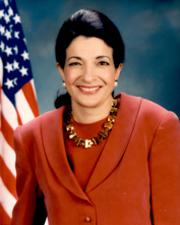
Mr. President, our country has forever prided itself on providing individuals the opportunity to pursue a fair and prosperous existence. Our Nation's free markets enable small business owners to grow…
Mr. President, our country has forever prided itself on providing individuals the opportunity to pursue a fair and prosperous existence. Our Nation's free markets enable small business owners to grow their enterprise and realize their dreams. Yet, small business owners and entrepreneurs are not blind to the costs of maintaining a free and open society. These same small business owners and entrepreneurs play a vital role in protecting freedom, at home and abroad, as members of the U.S. National Guard and Reserve Forces.
In recent years, however, the Department of Defense, DOD, has placed greater reliance on our nation's Guard and Reserve forces. In fact, since Septeber 2001, over 550,000 Guard and Reserve members have been called up in support of current operations, at the same time, making up nearly one-third of deployed service members in Iraq and Afghanistan. In addition, Guard and Reserve members have been charged in assisting with recovery efforts in the Gulf Coast, following some of the most devastating natural disasters in our country's history.
As these brave men and women are called to serve our Nation, the small businesses they temporarily leave behind often suffer. Many affected small buinesses experience slowing production and lost sales or incur additional expenses to compensate for an employee's absence. As a result, self-employed Guard and Reserve members and small businesses that employ Guard and Reserve members are ``paying'' a disproportionate and unfair share of the burden of increased call-ups. This is particularly troubling, because according to the majority of non-government-employed Guard and Reserve members are either self- employed or work for small businesses.
To help stem the ill affects of Guard and Reserve call-ups on small businesses, Senator Craig and I are introducing the Patriot Loan Act of 2006. This legislation improves the U.S. Small Business Administration's Military Reservist Economic Injury Disaster Loan, MREIDL, program. The MREIDL program was created to provide funds to eligible small businesses to meet ordinary and necessary operating expenses that the business cannot meet, because an essential employee was ``called-up'' to active duty in their role as a military reservist.
Specifically, our legislation would raise the maximum military reservist loan amount from $1,500,000 to $2,000,000. A maximum military reservist loan amount of $2,000,000 is the same level as many ofthe SBA's other loan programs, including: the 7(a) loans, international trade loans, and 504 Certified Development Corporation loans that serve a public policy goal.
This bill would allow the SBA Administrator, either directly or through banks to offer loans up to $25,000 without requiring collateral fr a loan applicant. Currently, the BA offers military reservist loans up to $5,000 without requiring collateral. This provision would increase that level to eligible small businesses.
The bill would also require the Administrator to give military reservist loan applications priority for processing and ensure that Guard and Reserve members are adequately assisted with their loan application by incorporating the support and expertise of SBA entrepreneurial development partners, such as Small Business Development Centers.
Finally, the legislation requires the SBA and DOD to develop a joint website and printed materials providing information regarding the MREIDL program for Guard and Reserve members, and that the SBA and DOD jointly conduct a feasibility study on introducing business mobilization and interruption insurance for members of the Guard and Reserve forces, and increased utilization of credit unions affiliated with the DOD.
I thank Senator Craig for working with me to help address this critical issue and I urge my colleagues to support this bill.
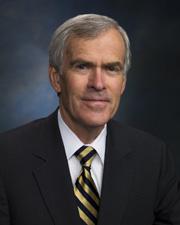
Mr. President, I rise today to introduce ``The United States Direct Investment Act of 2006'' with my colleague from Indiana, Senator Lugar. This legislation is a necessary step towards making our…
Mr. President, I rise today to introduce ``The United States Direct Investment Act of 2006'' with my colleague from Indiana, Senator Lugar. This legislation is a necessary step towards making our country more competitive in encouraging multinational businesses to expand or open new offices, facilities or plants in the United States instead of in another country. While the United States continues to be the premier place in the world to locate a business, we can no longer rely on our inherent advantages alone. This legislation will refocus the Administrations efforts so that we do a better job of reaching out to businesses around the world and convince them that they should expand their current operations or open new facility in the United States instead of somewhere else overseas.
Our legislation creates the United States Direct Investment Administration, USDIA, the Commerce Department to be lead by an Under Secretary. This new administration shall be responsible for collecting and analyzing data related to foreign direct investment flows. They shall create an annual Investment Report and an annual Direct Investment Agenda to be reported and sent to Congress. They will then assume responsibility as the lead agency for advocating and implementing strategic policies to encourage more investment in the United States from abroad. This new administration will manage an investment zone program for communities that have been negatively impacted by trade but want to attract international companies to locate in their area. Finally, this new administration will be empowered to create ten new ``renewal communities'' as currently defined under the Internal Revenue Code.
Many countries, particularly those in Europe, have committed significant resources and energy to recruiting foreign direct investment. In many cases, they have offices in the United States where they meet with U.S. companies to encourage them to consider their country for their next expansion. Right now our country does not have any comparable operation. We leave these efforts to our states, region and cities through economic development agencies and offices. Unlike other countries, we don't provide a Federal umbrella organization to help these people recruit more effectively. Because of their limited resources, this means that many of these economic development agencies are unable to effectively target potential businesses that might be an ideal fit for their city or State. In some cases, these areas may be going through an economic downturn due to the closing of a plant or factory making their limited resources even more scarce. This legislation would give these agencies the assistance and guidance they need to be more successful and effective in their recruiting efforts.
It is important that we focus not only on how to get businesses to stay in this country, but also on how we encourage overseas businesses to come here. In both cases, the end result is the same--more jobs for U.S. workers. Our first responsibility needs to be encouraging companies to stay in the United States, but we need to be cognizant of the fact that we will not always be successful. If we have a robust effort to encourage overseas companies to move facilities to our country we will be able to neutralize any unavoidable losses. Many of the pieces are already in place. We already collect much of the data and have an effective matrix of State, regional and local economic development entities. What this legislation does is put these pieces together in a way that accomplishes the primary job at hand--creating jobs in the United States.
I ask for unanimous consent the text of the bill be printed in the Record.
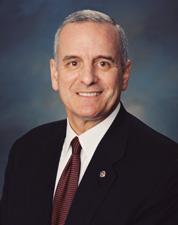
Mr. President, this legislation I am proud to cosponsor, along with my distinguished colleague from Mississippi, is called the Uniform Insurance Noncoverage Disclosure Act. I call it ``honesty is the…
Mr. President, this legislation I am proud to cosponsor, along with my distinguished colleague from Mississippi, is called the Uniform Insurance Noncoverage Disclosure Act. I call it ``honesty is the best insurance policy act.'' It says very simply that all insurance policies--medical, homeowners, whatever they are--must state clearly on the cover page what the policy does not cover.
My colleague from Mississippi can speak eloquently and powerfully about his experiences in his State post-Katrina, but even before that disaster occurred, I have seen similar situations in Minnesota of good people whose lives were devastated by illnesses or natural disasters and then were further devastated by discovering that their losses or expenses were not covered by their insurance policies. For years, they had faithfully paid their premiums believing they had comprehensive coverage, only to find out too late that was untrue.
Insurance companies write the policies, they interpret the policies, they decide what they will and will not cover, and then they handle the appeals and make the final decisions. If they deny the claims, they pocket those dollars in profits. If they honor the claims, they pay them out in losses. Talk about a stacked deck in their favor and against the consumer.
I have had aggrieved constituents show me their homeowners policies. I am an intelligent, well-educated man, but it is impossible to decipher them. They contain cross-references to paragraph numbers in other policies that are not part of the agreement. They cannot be understood, and they are not meant to be understood.
One Minnesota homeowner lost almost everything to a flood. Too late he discovered that his blanket homeowners insurance did not cover losses from a flood. He was protected, according to the policy, if an airplane crashed into his house or if civil insurrection--meaning a revolution--caused damage to his home, but not flooding. What are the chances of those different events possibly occurring?
Another Minnesota family whose father had worked for a company for over 20 years learned that their infant son had been born deaf and needed a Cochlear implant. Two of the insurance companies that carried those policies for the company covered that operation; the other did not, claiming that it was experimental. The family made the unwitting mistake of selecting the wrong policy. No one told them that policy would not pay for Cochlear implant surgery in its comprehensive family coverage, and they, obviously, did not know or could not have known that their unborn son would need this surgery some several years later.
Fortunately, this story has a happy ending. The president of the company, Honeywell, Inc., learning of this injustice, overrode the policy and decreed that Honeywell, the company, would pay for that missing coverage, and that child is now listening to human voices he never would have had the opportunity to otherwise.
But not everyone is in that situation. Not everyone is that fortunate.
So this legislation, again, no costs to it, no bureaucracy, nothing. It simply says that the policy must state clearly, in plain English, understandable on the cover page, what it will not cover. If it is comprehensive, if it is complete, then nothing needs to be said. If it is not, if they experience situations that will not be covered, then it needs to tell the consumer up front on that front page what they will be.
Mr. President, I yield to my distinguished colleague from Mississippi.
Mr. President, today I pay tribute to one of Rhode Island's most highly decorated soldiers, Commander Richard L. Cevoli of East Greenwich. Commander Cevoli served our nation bravely in both World War…
Mr. President, today I pay tribute to one of Rhode Island's most highly decorated soldiers, Commander Richard L. Cevoli of East Greenwich.
Commander Cevoli served our nation bravely in both World War II and the Korean War. In honor of his sacrifices and service to his nation, I am introducing a bill, along with Senator Chafee, to name the post office located at 5775 Post Road in East Greenwich, RI, the ``Richard L. Cevoli Post Office.''
Commander Cevoli was born in East Greenwich, Rhode Island, on October 24, 1919, and died in a tragic plane crash in Florida on January 18, 1955. He went to Rhode Island State College, which is now the University of Rhode Island, and earned a degree in civil engineering. In 1941, after graduation, he moved to New York and began working for the engineering firm of Merritt, Chapman & Scott.
The month after the bombing of Pearl Harbor, Richard Cevoli returned to Rhode Island and entered the Navy. He was sent to flight training in Dallas, Sanford, and Pensacola before being assigned to Squadron VF-18, based on the USS Intrepid in the Pacific.
It was during his service with the VF-18 that Commander Cevoli was awarded the second-highest medal awarded in the Navy--the Navy Cross. This honor was given to Commander Cevoli during the Battle of Leyte Gulf off the Philippines coast in October of 1944. Along with other fighters, Commander Cevoli strafed the largest Japanese ship, silencing many of its guns. The following day, he severely damaged a Japanese aircraft carrier with a 500-pound bomb. On a subsequent attack on the Japanese forces, as is recorded in his medal citation, ``Cevoli disregarded the terrific antiaircraft opposition and scored a near miss on a Kongo class battleship with a 500-pound bomb. Then, pulling out he made a second run to strafe a destroyer, silencing its antiaircraft weapons and thereby contributing to our successful bombing and torpedo attacks which followed. His outstanding courage and determination were in keeping with the highest traditions of the United States Naval Service.''
Following his service during the war, he returned to Rhode Island and continued his Navy career at Naval Air Station, Quonset Point. However, the peace was short-lived. North Korea invaded South Korea, and another major conflict quickly began.
From 1949 until 1951, Commander Cevoli served as the Executive Officer in Squadron VF-18 on board the USS Leyte, seeing action in Korea. In addition to the Navy Cross, Commander Cevoli earned two Distinguished Flying Crosses and eight Air Medals during his active flying career.
Once the conflict in Korea had ended, Commander Cevoli was able to spend more time at home. He took classes at the Naval War College in Newport and in July, 1954 he was placed in command of Squadron VF-73. Tragically, he died serving his country when his plane crashed during a training mission.
Commander Cevoli left behind a wife, Grace, and three children, Steven, Carol, and Elizabeth. A life-long resident of East Greenwich, Commander Cevoli's legacy is memorialized in the Rhode Island Aviation Hall of Fame.
This legislation will pay tribute to this hero of Rhode Island and the United States, and I ask my colleagues to join me in honoring Commander Cevoli by supporting this bill.
Mr. President, I ask unanimous consent that the text of this legislation be printed in the Record.
Mr. President, today I pay tribute to one of Rhode Island's most highly decorated soldiers, Commander Richard L. Cevoli of East Greenwich. Commander Cevoli served our nation bravely in both World War…
Mr. President, today I pay tribute to one of Rhode Island's most highly decorated soldiers, Commander Richard L. Cevoli of East Greenwich.
Commander Cevoli served our nation bravely in both World War II and the Korean War. In honor of his sacrifices and service to his nation, I am introducing a bill, along with Senator Chafee, to name the post office located at 5775 Post Road in East Greenwich, RI, the ``Richard L. Cevoli Post Office.''
Commander Cevoli was born in East Greenwich, Rhode Island, on October 24, 1919, and died in a tragic plane crash in Florida on January 18, 1955. He went to Rhode Island State College, which is now the University of Rhode Island, and earned a degree in civil engineering. In 1941, after graduation, he moved to New York and began working for the engineering firm of Merritt, Chapman & Scott.
The month after the bombing of Pearl Harbor, Richard Cevoli returned to Rhode Island and entered the Navy. He was sent to flight training in Dallas, Sanford, and Pensacola before being assigned to Squadron VF-18, based on the USS Intrepid in the Pacific.
It was during his service with the VF-18 that Commander Cevoli was awarded the second-highest medal awarded in the Navy--the Navy Cross. This honor was given to Commander Cevoli during the Battle of Leyte Gulf off the Philippines coast in October of 1944. Along with other fighters, Commander Cevoli strafed the largest Japanese ship, silencing many of its guns. The following day, he severely damaged a Japanese aircraft carrier with a 500-pound bomb. On a subsequent attack on the Japanese forces, as is recorded in his medal citation, ``Cevoli disregarded the terrific antiaircraft opposition and scored a near miss on a Kongo class battleship with a 500-pound bomb. Then, pulling out he made a second run to strafe a destroyer, silencing its antiaircraft weapons and thereby contributing to our successful bombing and torpedo attacks which followed. His outstanding courage and determination were in keeping with the highest traditions of the United States Naval Service.''
Following his service during the war, he returned to Rhode Island and continued his Navy career at Naval Air Station, Quonset Point. However, the peace was short-lived. North Korea invaded South Korea, and another major conflict quickly began.
From 1949 until 1951, Commander Cevoli served as the Executive Officer in Squadron VF-18 on board the USS Leyte, seeing action in Korea. In addition to the Navy Cross, Commander Cevoli earned two Distinguished Flying Crosses and eight Air Medals during his active flying career.
Once the conflict in Korea had ended, Commander Cevoli was able to spend more time at home. He took classes at the Naval War College in Newport and in July, 1954 he was placed in command of Squadron VF-73. Tragically, he died serving his country when his plane crashed during a training mission.
Commander Cevoli left behind a wife, Grace, and three children, Steven, Carol, and Elizabeth. A life-long resident of East Greenwich, Commander Cevoli's legacy is memorialized in the Rhode Island Aviation Hall of Fame.
This legislation will pay tribute to this hero of Rhode Island and the United States, and I ask my colleagues to join me in honoring Commander Cevoli by supporting this bill.
Mr. President, I ask unanimous consent that the text of this legislation be printed in the Record.
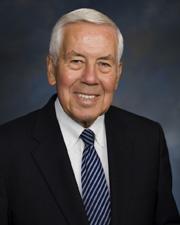
Mr. President, I rise today in support of S. 3171, the United States Direct Investment Act of 2006, introduced by Senator Bingaman and myself. At a time when commerce routinely crosses national…
Mr. President, I rise today in support of S. 3171, the United States Direct Investment Act of 2006, introduced by Senator Bingaman and myself. At a time when commerce routinely crosses national borders, the U.S. should be positioned to compete in all arenas. That means not only strengthening the ability of American business to invest and sell their products in foreign markets, but equally important, attracting foreign companies to the American market. Other nations actively recruit and provide incentives for global companies to set up operations and create new jobs within their borders. We must do the same.
To this end, we propose to establish a framework within the Department of Commerce to specifically study how we can better encourage global companies to invest and set up businesses on our shores. It is essential as well, that we determine where this investment is needed. There are certain communities in the U.S. that are in extreme need of an infusion of economic growth and the opportunity to take part in the global economy. The U.S. has a talented and skilled workforce. We need to lead foreign companies and entrepreneurs to the cities and towns where they can find the resources they require. If this information is readily available, and if we provide incentives for companies to come, we will significantly increase the amount of foreign investment coming into our country.
In 2005, foreign companies accounted for $129 billion worth of investments in the United States. This money translates into jobs and prosperity for Americans. The best way to ensure that this valuable investment is spread more widely throughout the 50 States is by conducting the sort of analysis proposed in this bill. We should keep track of both the quantity of investment attracted to each particular state and region, and as well as the types of investment foreigners make, particularly in the high technology industry. We should conduct an analysis of the industries that are investing in the U.S. compared to the industries that are going to other countries. We also need to assess which policies and programs have had the most success in attracting foreign investment.
It is particularly important to attract research and development and high technology industries. These have a multiplier effect that helps increase the overall competitiveness of the American economy. We should create incentives for high technology companies to develop and invest in a U.S. presence and workforce.
Another key feature of the bill is consultations with local and regional authorities, as well as Congress. The administration should determine the needs of particular localities and what the federal government can do to assist local efforts in attracting foreign investment. Congress should also be consulted so that information can be relayed regarding regions of the country that are suffering from a lack of high wage jobs.
Global business ties are vital tools in shaping our international business and foreign policy. Cooperation on the commercial front enhances our ability to work with nations on other matters, including security and intelligence. This bill offers a positive solution to the concerns over domestic job growth by seeking to ensure that globalization is a two-way street with more investment traffic flowing in our direction.
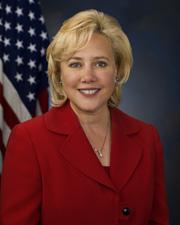
Mr. President, one of the most frequent complaints I have been hearing from people in Louisiana whose homes sustained damage in Katrina and Rita has been about their property insurance. First, it…
Mr. President, one of the most frequent complaints I have been hearing from people in Louisiana whose homes sustained damage in Katrina and Rita has been about their property insurance. First, it took insurance companies a long time to get adjusters into the area after the storm and many people are still waiting for claim payments. This was followed by the shock for many of our homeowners that their property insurance policies covered wind damage, but not flood damage. They could get the roof replaced, but the rest of the house was lost. Many of them were not required to have flood insurance because they either did not live in a flood plain or did not have a mortgage. And now we are beginning to discover that many insurance companies are no longer writing policies in Louisiana.
Our homeowners weathered one, and in some cases two, hurricanes already. However, now it's as if our homeowners have been hit by another hurricane--one causing a flood of red ink, lost homes, ruined lives, and broken communities.
I hope we never see another storm like Katrina. I would not want any of my colleagues' states to face the one-two punch of two hurricanes the way Louisiana was. But hurricane season is coming again, starting next week on June 1. These insurance issues and problems are going to come again. We can rebuild levees and use the lessons of Katrina to better prepare for these storms, but finding a solution to this insurance issue is much harder.
First of all, insurance is regulated at the State level. We do not control it up here. In all fairness, property casualty insurance companies do not cover flood damage because that is covered by the National Flood Insurance Program at FEMA. But the potential for flooding from hurricanes still remains and our insurance system is not ready to handle the amount of uninsured damage a massive storm like Katrina.
I am pleased to join my colleague from Florida, Senator Nelson, as a cosponsor of the Commission on Catastrophic Disaster Risk and Insurance Act of 2006. This bill will not produce major changes in the insurance industry overnight, but it will begin to take a look at this issue to identify the best solution to ensuring that home and business owners will have insurance coverage to help them rebuild after catastrophic natural disasters.
The commission established by this legislation will take the first steps for assessing the casualty insurance market and recommend any necessary legislative changes to ensure that consumers will have readily available and affordable insurance coverage to protect them from natural disasters. Experts from a wide variety of fields in disaster preparedness, construction engineering, the insurance industry, and government will serve on the commission. While the members will be chosen on a bipartisan basis, they will be taking a nonpartisan approach to this subject.
I urge my colleagues to support this legislation. It is a first step--a modest step--toward ensuring the financial security of Americans in the face of catastrophic disasters.
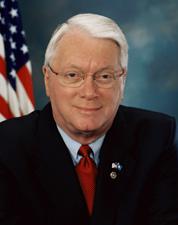
Mr. President, I rise today to introduce a number of bills to provide for relief from duties. It is my intention that some or all of these duty suspension bills will eventually be included in the…
Mr. President, I rise today to introduce a number of bills to provide for relief from duties. It is my intention that some or all of these duty suspension bills will eventually be included in the Miscellaneous Tariff Bill, MTB, that the Senate Finance Committee is expected to consider this year.
As the members of the Senate are aware, Congress on occasion passes a bill, known as the Miscellaneous Tariff Bill or MTB, as a vehicle for enacting pending non-controversial duty suspensions. The rules for the inclusion of a duty suspension in the MTB are straight forward. First and foremost, in order to be included in the MTB, a bill must be non- controversial. A bill will be controversial if it is objected to by a domestic producer of the product for which the duty reduction is being sought. Secondly, the cost for each bill must amount to less than $500,000 of lost revenue per year.
As my colleagues are aware, the MTB provides an opportunity to temporarily eliminate or reduce duties on narrowly defined products that are imported into the United States because there is not available domestic source for the products. These duty suspensions reduce input costs for U.S. businesses and thus ultimately increase the competitiveness of their products.
I have been approached by a number of manufacturers in Kentucky that use imported inputs while making their products. These manufacturers have represented to me that, to their knowledge, there currently exists no American-made source for these inputs.
In an effort to assist these Kentucky manufacturers, I am introducing these duty suspension bills so that the items they address will be able to be considered for inclusion in the MTB prepared by the Senate Finance Committee.
My intention in introducing these bills is to begin the process of public comment and technical analysis by the International Trade Commission (ITC) on the items addressed by the bills. During this review, the ITC will determine which of these bills are necessary and meet the selection criteria. My support for a duty suspension for the items is contingent on a determination by the ITC analysts that the items in question are proper candidates for inclusion in the non- controversial MTB.
I look forward to working with Chairman Grassley, Ranking Member Baucus and my colleagues on the Senate Finance Committee as the process for assembling a final MTB package continues.
Show 5 more
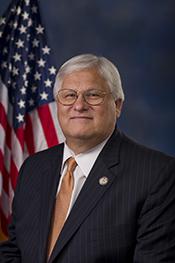
Mr. Speaker, I move to suspend the rules and pass the Senate bill (S. 3187) to designate the Post Office located at 5755 Post Road, East Greenwich, Rhode Island, as the ``Richard L. Cevoli Post…
Mr. Speaker, I move to suspend the rules and pass the Senate bill (S. 3187) to designate the Post Office located at 5755 Post Road, East Greenwich, Rhode Island, as the ``Richard L. Cevoli Post Office''.
Mr. Speaker, I ask unanimous consent that all Members may have 5 legislative days in which to revise and extend their remarks and include extraneous material on the bill now under consideration.
Mr. Speaker, I yield myself such time as I may consume.
Mr. Speaker, born in 1919, U.S. Navy Commander Richard L. Cevoli was a long-time resident of East Greenwich and a student at what is now the University of Rhode Island. He fought bravely in World War II, for which he was awarded the Navy Cross, as well as the Korean War, in which he served as the executive officer of his squadron.
In addition to these honors, Commander Cevoli's courageousness and commitment to his country earned him eight Air Medals and two Distinguished Flying Crosses. His life was taken far too soon on January 18, 1955, when his plane crashed during a training mission. He was rightfully remembered in the Rhode Island Aviation Hall of Fame, and I am pleased to support this bill honoring his great legacy.
Mr. Speaker, I reserve the balance of my time.
Mr. Speaker, I thank the Honorable Mr. Davis. I appreciate having had the opportunity to share these few minutes with him.
Mr. Speaker, I urge that all Members support the passage of S. 3187, and I yield back the balance of my time.
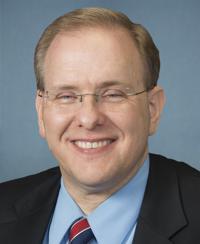
Mr. Speaker, I rise today in support of S. 3187, a bill that would designate a post office located in East Greenwich, R.I., as the ``Richard L. Cevoli Post Office.'' I thank my Rhode Island…
Mr. Speaker, I rise today in support of S. 3187, a bill that would designate a post office located in East Greenwich, R.I., as the ``Richard L. Cevoli Post Office.'' I thank my Rhode Island colleagues in the Senate for introducing this bill to honor U.S. Navy Commander Richard Cevoli, a life-long resident of East Greenwich who proudly served his country in World War II and the Korean War.
Richard Cevoli was born in East Greenwich, R.I. in 1919, and graduated from LaSalle Academy and Rhode Island State College, which is now the University of Rhode Island. In World War II, Commander Cevoli was awarded the prestigious Navy Cross for his bravery during the Battle of Leyte Gulf off the Philippines Coast in 1944. In addition to the Navy Cross, Commander Cevoli earned two Distinguished Flying Crosses and eight Air Medals during his active flying career. He was also inducted into the Rhode Island Aviation Hall of Fame. Commander Cevoli died serving his country when his plane crashed during a training mission on January 18, 1955, leaving behind his wife, Grace, and three children, Steven, Carol, and Elizabeth.
I ask my colleagues to support S. 3187 so that all Rhode Islanders can be reminded of Commander Cevoli's duty to his country and his impressive accomplishments.
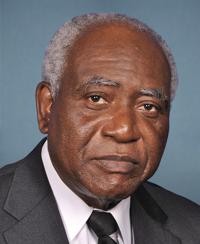
Mr. Speaker, I yield myself such time as I may consume. Mr. Speaker, S. 3187, legislation introduced by Senator Jack Reed of Rhode Island, was unanimously passed by the Senate on July 20, 2006. The…
Mr. Speaker, I yield myself such time as I may consume.
Mr. Speaker, S. 3187, legislation introduced by Senator Jack Reed of Rhode Island, was unanimously passed by the Senate on July 20, 2006. The bill designates the facility of the United States Postal Service located at 5755 Post Road, East Greenwich, Rhode Island, as the Richard L. Cevoli Post Office.
The late Richard Cevoli, a decorated Navy commander, fought bravely in World War II and the Korean War and served at Naval Air Station at Quonset Point. His legacy is memorialized in the Rhode Island Aviation Hall of Fame.
Mr. Speaker, honoring this soldier, this commander, this leader, is certainly appropriate by naming this postal facility in his honor.
Mr. Speaker, I understand this is our last measure. It certainly has been a pleasure for me to work with the gentleman from Texas. I want to wish him a good night's rest as we leave
Mr. Speaker, I yield back the balance of my time.

Mr. President, I ask unanimous consent that the text of these four bills, the Commission on Catastrophic Disaster Risk and Insurance Act of 2006, the Catastrophe Savings Accounts Act of 2006, the…
Mr. President, I ask unanimous consent that the text of these four bills, the Commission on Catastrophic Disaster Risk and Insurance Act of 2006, the Catastrophe Savings Accounts Act of 2006, the Policyholder Disaster Protection Act of 2006, and the Homeowners Protection Act of 2006, be printed in the Record.
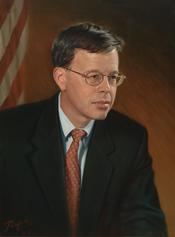
Mr. President, I ask unanimous consent that the text of S. 3061, 3062, and 3063 be printed in the Record.
Mr. President, I ask unanimous consent that the text of S. 3061, 3062, and 3063 be printed in the Record.
Bill Text
6 versions available
        [Congressional Bills 109th Congress]
[From the U.S. Government Publishing Office]
[S. 3187 Enrolled Bill (ENR)]

S.3187

One Hundred Ninth Congress

of the

United States of America

AT THE SECOND SESSION

Begun and held at the City of Washington on Tuesday,
the third day of January, two thousand and six

An Act

To designate the Post Office located at 5755 Post Road, East Greenwich,
Rhode Island, as the ``Richard L. Cevoli Post Office''.

Be it enacted by the Senate and House of Representatives of the
United States of America in Congress assembled,

SECTION 1. RICHARD L. CEVOLI POST OFFICE.

(a) Designation.--The post office located at 5755 Post Road, East
Greenwich, Rhode Island, shall be known and designated as the ``Richard
L. Cevoli Post Office''.
(b) References.--Any reference in a law, map, regulation, document,
paper, or other record of the United States to the post office referred
to in subsection (a) shall be deemed to be a reference to the Richard
L. Cevoli Post Office.

Speaker of the House of Representatives.

Vice President of the United States and
President of the Senate.