A bill to designate the facility of the United States Postal Service located at 301 Commerce Street in Commerce, Oklahoma, as the "Mickey Mantle Post Office Building".
Legislative Activity
Stay on top of the latest movement without scrolling through every action
Referred to the House Committee on Government Reform.
November 13, 2006
View full timeline
Introduced in Senate
September 6, 2006
Sponsor introductory remarks on measure. (CR S9043)
September 6, 2006
Read twice and referred to the Committee on Homeland Security and Governmental Affairs.
September 6, 2006
Senate Committee on Homeland Security and Governmental Affairs discharged by Unanimous Consent.(consideration: CR 9/29/2006 S10804)
September 30, 2006
Senate Committee on Homeland Security and Governmental Affairs discharged by Unanimous Consent. (consideration: CR 9/29/2006 S10804)
September 30, 2006
Passed Senate without amendment by Unanimous Consent.
September 30, 2006
Message on Senate action sent to the House.
October 2, 2006
Received in the House.
November 9, 2006 • 2:08 PM
Held at the desk.
November 9, 2006 • 3:39 PM
Referred to the House Committee on Government Reform.
November 13, 2006
Floor Debate
10 membersWhat members said about S. 3845 on the floor
 TRC
TRC RW
RW LM
LM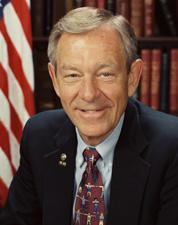 GVV
GVV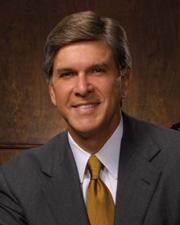 GHS+5
GHS+5
Floor Debate
10 membersWhat members said about S. 3845 on the floor
Mr. President, I rise today to announce the introduction of a piece of legislation that Senator Voinovich of Ohio and I have worked on for a while. It is called the Federal Employees Electronic…
Mr. President, I rise today to announce the introduction of a piece of legislation that Senator Voinovich of Ohio and I have worked on for a while. It is called the Federal Employees Electronic Personal Health Records Act of 2006. This bill makes available--or would make available--electronic personal health records for every enrollee of a Federal health benefits plan who wishes to have one. That is, potentially, as many as 8 million people. That includes those of us who work in Federal agencies, large and small, across the country and, actually, around the world. It includes their families and includes Federal retirees and their families as well.
Our health care sector is the most innovative in the world, but it has not kept up with the information age. Our excessive reliance on paper record keeping makes our health care system less efficient, more costly, and more prone to mistakes. Expanding the use of health information technology shows promise as a way to improve both the cost and the quality of health care in our country.
In 2004, the United States spent some $1.9 trillion on health care costs.
That is more than any other industrialized country on this planet. In 2005, health care premiums continued their upward trend, increasing by an average, I am told, of some 9 percent. We are literally spending trillions of dollars on health care, but I am sorry to say we are not getting the gold standard of treatment or results.
A 2005 survey conducted by the Commonwealth Fund, a private foundation that focuses on improving health care, found that medical error reports rates in the United States far exceed those of western countries. In that survey, one in three Americans reported getting the wrong dosage of medication, incorrect test results, mistakes in treatment, or late notification of test results. That is nearly 15 percent higher than similar results in Britain and Germany.
I believe some of the problems--though certainly not all of them--can be blamed on the fact that health care providers don't have full and real-time access to patients' medical records. Doctors in this country wait days sometimes for couriers to deliver lab tests or x rays. They diagnose patients without knowing their full medical history, what they are allergic to, what kinds of surgeries they have had, or whether they have complained about similar symptoms before.
Time constraints, or medical necessity, often force doctors to perform a quick diagnosis. Sometimes that diagnosis wrong. Sometimes those errors prove to be costly. The widespread use of health information technology, the ability to immediately access one's full medical history from a computer, can help doctors and nurses provide better care less expensively. It has the potential to dramatically transform the way we provide health care in America--saving lives, saving costs.
If we are looking for success stories on how health care professionals have integrated the use of electronic health care records into their daily routines, we don't have to look any further than our own Department of Defense and our Department of Veterans Affairs.
Times have changed since I retired from the Navy some 15 years ago. I remember that as an ensign I used to carry my medical health records in a brown manila folder from duty station to duty station--from the time I left Ohio State, on to Pensacola, Corpus Christi Naval Air Station, out to California, across the seas and back again, and, finally, getting off of active duty and coming to Delaware to enroll in graduate school, on the GI bill, at the University of Delaware in the business school. I went up the road to the VA hospital. I still had my folder with the records. I turned them in and asked: What kind of benefits am I eligible for?
Over a decade ago, the Department of Defense and VA decided there was a better way, and the results have been nothing short of phenomenal. Today, when a patient enrolls in the Department of Defense's military health system, they no longer need the kind of brown manila folder I carried all those years. Instead, we have electronic health care records to keep track of the medical histories of those who serve our country in the military. This health record is managed electronically, and you don't have to remember to pack it up on your next tour of duty, whether it is in Southeast Asia, or Iraq, or Afghanistan.
Instead, one's electronic health care record follows them wherever they go--both during the time they are in the military and when they leave and join our veterans community as a veteran.
The result is that the Department of Defense and VA have been impressive, especially when you consider that they have only used these electronic health records for about a decade or so.
The VA health system has transformed itself from a troubled, sometimes bloated and inefficient operation to one of the best health care operations in the country.
Researchers and doctors now laud the VA for having the foresight to use electronic health records to improve patient care.
What is the cost? That is a good question. It is about $78 per patient. That is roughly the cost of not repeating one blood test. In other words, it is money well spent.
The VA now regularly outperforms Medicare and other private health plans when it comes to providing patient care for diabetes, high blood pressure, and heart attack victims.
In January, the National Quality Research Center concluded that for the sixth consecutive year, the VA health care system outranks the private sector for customer satisfaction.
I have witnessed that new-found satisfaction in my own backyard, at the Veterans Medical Center in Elsmere, DE. That is the place I went in 1973 fresh out of the Navy. Veterans from neighboring States are now coming to our hospital in Elsmere to seek care instead of going to regular civilian hospitals near them.
In 2004, the Elsmere facility, as well as popular satellite clinics in Millsboro and Seaford, DE, served more than 22,000 veterans and had more than 150,000 outpatient visits. Both totals are about 20 percent higher than just 4 years ago.
Normally, you would think the busier a hospital is, the less satisfied customers are because of longer waits and other hassles. But it turned out that the opposite is true. As the workload has climbed, so has patient satisfaction. I might add, so has the satisfaction of those providing the care to the patients.
More than 85 percent of Delaware's VA outpatients said they were ``highly satisfied'' with the care they received. Planning is now underway to open a third outpatient clinic for veterans in Kent County next spring--probably in Dover where we have another 15,000 veterans.
What is keeping the rest of our Nation's health care system from following the lead of the Department of Defense and the VA? The answer is the high cost of implementing the latest information technologies, as well as the lack of uniformity among various technology products.
A physician can spend up to $30,000 implementing an electronic health records system. A hospital can spend up to five times that amount. If that weren't enough of a reason to say no thanks, there is one more reason; that is, we don't have a set of national standards in place to make sure that once health care providers have made the switch, their new system can communicate with the hospital or doctor on the other side of town. The result: Only 15 percent of doctors and about 30 percent of hospitals have fully functional electronic health care systems today.
A new study by a number of health care scholars estimates there will be another 20 years before the majority of physicians are using an electronic health care system.
Let me say this. Our Presiding Officer is from Louisiana where they went through a terrible situation a year ago with Katrina. The folks who happened to be civilians and were in hospitals or nursing homes, for the most part, they had paper health records and they were destroyed. The veterans who were on the gulf coast when Katrina struck--either in nursing homes, VA nursing homes, or VA hospitals-- were evacuated from the area as civilians were; but when the veterans got to another VA facility inland, or a nursing home, or a VA hospital, their electronic health records were available immediately, and whoever provided care for them had access to the records and were able to provide excellent care.
I am sorry to say that the same wasn't true for the civilians whose paper records were largely destroyed at the time of the evacuation.
As a nation, we cannot afford to rely solely on health care providers to bring the health care industry into the 21st century. We must think outside of the box and build on the health information technology issues already underway in other areas of our health care industry.
The Federal Employee Electronic Personal Health Records Act of 2006-- the legislation Senator Voinovich and I introduce today--does just that. How? By requiring all carriers that contract with the Federal Employees Health Benefits Program to make available an electronic personal health record for those of us who are enrolled in that program. As I said earlier, it is some 8 million people.
Electronic personal health records will provide enrollees with a tool to better access and control their health information. Via the Internet, an enrollee will be able to log on to their
electronic personal health record to keep track of such things as their medications, cholesterol, glucose levels, allergies, and immunization records.
An enrollee will also be able to review a comprehensive, easily understood listing of their health care claims. Health care providers, payers, and enrollees will be able to add this information onto the electronic personal health record. Enrollees will benefit, I believe, significantly from such a tool.
An enrollee can easily share sections of the electronic personal health record with their health care provider, ensuring that their provider has the most up-to-date and accurate health information when making clinical decisions.
In the case of an emergency, an enrollee can also grant others the ability to access their electronic personal health record. Again, it is the decision of the patient, the enrollee in the Federal Employee Health Benefits Program, to decide what kind of access to grant to a provider or a member of the family or another person in the wake of an emergency.
Having health information readily available will increase the efficiency and safety of health care for enrollees by eliminating unwarranted tests, procedures, and prescriptions.
Most important, the legislation ensures that the electronic personal health records provided for through this act are kept private and secure.
The electronic personal health records are required to include a number of security features. They include, among other things, user authentication and audit trails.
The legislation also requires that carriers comply with all privacy and security regulations outlined in the Health Insurance Portability and Accountability Act, which we call HIPAA.
Mr. President, what Senator Voinovich and I are introducing today will help demonstrate the importance and utility of health information technology--not just the importance of the technology but the importance of harnessing the technology--in the delivery of health care in this country today. In this case, the potential is as many as 8 million additional Americans.
This bill is designed to jumpstart this new technology by requiring some of the largest health insurance companies to offer these electronic personal health records, which many are beginning to do today. As more insurance companies, health care providers, and consumers use this new technology, I am convinced that more people will recognize its advantages, and we can more quickly move America's health care industry into the 21st century.
We view this initiative as the next necessary step for the Nation's largest employer-sponsored health insurance program that prides itself on being a model for best practices in health care.
I invite my colleagues to join Senator Voinovich and me as we introduce this legislation. We look forward to talking with our colleagues about it. With luck, maybe we will have a hearing. Senator Voinovich may hold one in his subcommittee this month.
Mr. President, Mount Hood is a cherished wild place that is often photographed, visited and enjoyed by scores of Oregonians and many non-Oregonians as well. Today, I am introducing, along with my…
Mr. President, Mount Hood is a cherished wild place that is often photographed, visited and enjoyed by scores of Oregonians and many non-Oregonians as well. Today, I am introducing, along with my colleague Senator Smith, a new bipartisan Oregon Wilderness bill: the ``Lewis and Clark Mount Hood Wilderness Act of 2006.'' In tribute to the great river-dependent journey of Lewis and Clark, our legislation adds nine free-flowing stretches of rivers to the National Wild and Scenic River System. This reflects the Oregonian wish to protect but also actively experience our State's treasures.
This bill contains many elements of the bill I introduced two years ago while incorporating many of the provisions adopted in the House- passed version of Mount Hood Wilderness protections, HR 5025. My bill builds upon the House version by adding more wilderness, more wild and scenic rivers, and providing a recreation area to allow diverse recreational opportunities. It protects the lower elevation forests surrounding Mount Hood and the Columbia River Gorge as Lewis and Clark saw them. These forests embody the natural beauty of Oregon. They provide the clean water necessary for the survival of threatened steelhead, Coho and Chinook salmon. These forests provide critical habitat and diverse ecosystems for elk, deer, lynx and the majestic bald eagle. And these are the forests that provide unparalleled recreational opportunities for Oregonians and our visitors.
But the bill I introduce today differs from the bill I introduced two years ago because it responds to the many comments I heard in the ensuing years. I received thousands of comments on proposed Mount Hood legislation. Some comments came as a result of the general public meetings I held in Oregon. Many of the meetings lasted over 3 hours, and everyone who wanted to speak was given an opportunity to do so. Other comments came from the second Mount Hood Summit held at Timberline Lodge hosted by Representatives Walden and Blumenauer. I and my staff met with over 100 community groups and local governments, the members of the Oregon congressional delegation, the Governor, and the Bush administration. And still more comments came from letters and phone calls from Oregonians.
Overwhelmingly, these comments urged me to protect and build on Oregon's Wilderness system. This goal is as important today as it was in 1804, 1964 or 1984--if not more so. To succeed, we must provide the tools that help us create a planned future on Mount Hood. This bill does both.
The Mount Hood National Forest is the seventh most visited National Forest in the United States. In the 22 years that have elapsed since any new wilderness has been designated in the Mount Hood area, the population in local counties has increased significantly--25 percent in Multnomah County, 24 percent in Hood River County, and 28 percent in Clackamas County.
The predominant public use of this urban forest is non-mechanized activity like hiking, camping, and fishing. With increasing emphasis on wild scenery, unspoiled wildlife habitats, free flowing rivers, wilderness and the need for opportunities for diverse outdoor recreation sometimes it seems we are in jeopardy of ``loving our wild places to death.''
A few years ago, the Forest Service made a proposal to limit the number of people that could hike the south side of Mount Hood and the public outcry was enormous. Seems to me, rather than tell people that they are going to be restricted from using our public lands, part of the solution for the future of the Mountain lies in providing more opportunities for them to enjoy the Mountain's great places. We should ensure the Mount Hood National Forest can meet the increased use and demand for outdoor experiences--my bill will provide those opportunities.
Of the hundreds of people who attended the meetings I held throughout the State of Oregon, the vast majority spoke in favor of more wilderness. Additionally, I have received more than 2,500 written comments supporting additional wilderness for Mount Hood.
This is what I have heard: More Wilderness: First and foremost, I heard that Oregonians in astonishing numbers support protecting Mount Hood and the Columbia River Gorge with additional wilderness. A large number of Oregonians didn't think that enough wilderness areas had been included in the House proposal.
Mountain Biking: Some mountain bikers expressed concerns that their recreation opportunities not be unfairly curtailed.
Fire Protection and Forest Health: Some people were worried about forest health and those living in towns on the mountain and in the gorge were concerned about fire protection for their communities.
Developed Recreation: Some people were worried about maintaining a role for developed recreation, like skiing, on Mt. Hood.
This is what my bill does to address those concerns: More Wilderness: There are currently 189,200 acres of designated wilderness on the Mount Hood National Forest. The House legislation
would have added approximately 77,200 acres of new wilderness on the Mountain. The bill I am introducing today increases wilderness on Mount Hood by designating approximately 128,385 new acres of wilderness-- incorporating all the areas the House bill included and building upon them.
This bill adds the areas surrounding the oldest Mt. Hood Wilderness-- the mountain itself--which was designated in the original Wilderness Act of 1964. These additions include cathedral old growth forests, the historic Tilly Jane trail, lava beds that were created during the Mt. Hood eruptions, and much of the legendary route that Oregon's pioneers used when they were settling our great state. To the north and west of the mountain, I would add the viewshed of the Columbia Gorge to the current Mark O. Hatfield wilderness. These areas encompass the spectacular ridges framing the Gorge that we all marvel at from I-84 and include perhaps the greatest concentration of waterfalls in North America. To the southwest of the mountain I add lands to the current Salmon Huckleberry Wilderness to conserve their diverse wildlife and protect unique recreational areas like those around popular Mirror Lake. These lands include Alder Creek, the source of drinking water for the City of Sandy, which unanimously endorsed the draft proposal. Over to the east are proposed additions to the Badger Creek Wilderness. These areas provide a critical link between Westside forests and Eastside ecosystems. This area is known for beautiful fall color and the best deer and elk hunting in the entire Mount Hood National Forest. Among the areas we are protecting is the newly designated Richard L. Kohnstamm Memorial Area. It is dedicated in honor of Mr. Kohnstamm who restored the historic Timberline Lodge--built originally by the Works Progress Administration in 1937--to its former grandeur.
Wild and Scenic Rivers: My proposal seeks to protect over 81 miles of wild and scenic rivers on nine free flowing rivers. This includes some of the most pristine and beautiful rivers in Oregon. Among those proposed rivers are the picturesque waterfalls and glacial outwash of the East Fork of the Hood River, and the ancestral hunting and fishing grounds of Fish Creek. Over 17 miles of superb salmon and steelhead habitat on the Collowash River have also been proposed for protection. My bill again incorporates all the House proposed protections and builds upon them.
Mountain Biking: I believe that local riders raised some valid concerns, so I did two things. I have proposed Mount Hood National Recreation Area. It will offer greater, permanent environmental protections to those beautiful areas, while providing mountain bikers, and other recreational users, an opportunity to continue to recreate in these areas. Additionally, I made boundary adjustments to ensure all open mountain biking trails were not included in my proposed wilderness.
Fire Protection and Forest Health: I protect wilderness, where there are healthy, older trees that should never be harvested on Mount Hood or in the Gorge. Older, healthy stands are the most resistant to fire and disease. However, there is an enormous backlog of over-crowded, plantation, second-growth that should be thinned. My bill incorporates House provisions that would give the Forest Service a mandate to prepare an assessment for promoting forests resilient to fire, insects and disease. This also includes provisions to study and encourage the development of biomass in conjunction with forest health work. In addition, I added fire safe community zones so that the Secretary will construct a system of fire safe buffer zones around the communities of Cascade Locks and Government Camp.
Developed Recreation: In order to facilitate developed recreation opportunities I have adopted the House provisions establishing a ``fee- retention'' provision that will establish an account for the Mount Hood National Forest. In addition, in order to help address growth while ensuring access to recreational opportunities, I have adopted House provisions directing the Secretary and the State of Oregon to develop an integrated transportation plan for the Mount Hood region.
Local and Tribal Relationships: I have also incorporated the House provisions on local and tribal relationships emphasizing the rich history of the Mount Hood region and affirming the rights of Native peoples to access the mountains resources, as they have for generations.
The protection of these important Oregon places will depend on the hard work and dedication of all Oregonians and particularly that of my Oregon colleagues here in the Congress. I am especially pleased that Senator Smith has joined me in developing this bipartisan legislation and putting forth our proposal for wilderness. I am hopeful everyone will pull together: county Commissioners, environmentalists, entrepreneurs, chambers of commerce, state elected officials, the Governor, and the Oregon delegation here in the Capitol. I look forward to perfecting legislation together in the coming weeks, and seeing its swift adoption by Congress thereafter. Then the grandeur of Mount Hood and other Oregon treasures can be assured for future generations.
Soda Mountain Wilderness: In addition, I wish to offer my cosponsorship of legislation to be presented by Senator Smith, creating the Soda Mountain Wilderness and authorizing the voluntary cancellation of grazing leases in the Cascade-Siskiyou National Monument. This bill would establish a 23,000-acre Soda Mountain Wilderness in the backcountry of the Cascade-Siskiyou National Monument. In addition, it provides for the negotiated voluntary grazing permit lease buyout in the Monument. This proposed wilderness area lies at the intersection of the Siskiyou and Cascade mountain ranges, and the Oregon Desert, California chaparral, High Cascade and coastal Westside forests. It is truly where east meets west meets north meets south. This makes it a truly unique and biodiverse ecosystem and a key wildlife corridor--one that is used by ten rare, threatened or endangered species, including the northern spotted owl, Ashland thistle, and the Siskiyou fritillary. It is also home to populations of trout, elk, bobcats, black bears and falcons. The grazing buyout in this bill also provides a win-win situation. It provides a good deal for the ranchers--the negotiated agreement between the Bureau of Land Management grazing lessees and the conservationists includes an agreed-upon conservationist premium to be paid to the lessees. This premium enhances the compensation lessees receive from the federal government as part of the legislation. It also ensures this special place will be protected. I commend Senator Smith for introducing this legislation and am happy to join him in introducing this bill.
I ask unanimous consent that the text of the bill be printed in the Record.
Mr. President, I rise to introduce legislation to give private developers more time to complete planning and financing for a complex of three high-mountain lake-tap hydroelectric projects that…
Mr. President, I rise to introduce legislation to give private developers more time to complete planning and financing for a complex of three high-mountain lake-tap hydroelectric projects that promise to provide at an electric power for Southeast Alaska and for the Pacific Northwest.
Today, I introduce legislation to extend by a total of six years the time for developers to secure data necessary to determine the feasibility and prepare a development application for three individual hydroelectric projects, all located up Thomas Bay in Southeast
Alaska, near Petersburg, AK. This legislation will give time for construction of the estimated $75 million, 45-megawatt Cascade Creek project, the $56 million, 30-megawatt Scenery Creek, and the $40 million, 20-megawatt Delta Creek hydroelectric projects to be built.
The extensions are needed and justified since the three renewable energy projects can only proceed after a $30 million, 27-mile high- voltage transmission line is constructed in Alaska to the U.S.-Canada border, after another $130 million is spent for 150 miles of new line are built in Canada, after $120 million is spent for 140 miles of transmission line upgrades are finished on the Canadian side of the border to move the excess power to Skeena near Terrace in Canada, and after portions of the proposed Southeast Alaska, Electric, Intertie are finished to also permit excess power from the existing Swan Lake and Tyee Lake hydroelectric projects, and the proposed Mahoney Lake project near Ketchikan, AK, to be shared among Panhandle communities and to connect to export transmission lines.
The developers of the Thomas Bay project, Cascade, LLC., deserve a time extension since the company, so far, has focused all of its planning efforts on winning approval and financing for the vital electrical interconnection between Southeast Alaska and Canada, not on finishing the three individual power projects. The State of Alaska only in early summer 2006 approved a grant of $3.2 million to pay for planning to develop a comprehensive plan and review the economic feasibility of using several of Southeast Alaska's nearly 100 potential hydroelectric sites to provide power for both local needs and for export of the surplus power to the Pacific Northwest power grid to help with financing of the 95 megawatts of installed capacity, 410 gigawatt, power project.
These hydroelectric projects all involve tapping high mountain lakes for power. They do not require the damming of fish streams, so they have no negative environmental impacts. They will produce electricity at substantial savings over the 40- to 50-cents per kilowatt hour cost of generating power from expensive diesel fuel in the region and they will also reduce the effects of local air pollution and reduce carbon dioxide generation through the avoidance of fossil fuel combustion.
Congress routinely extends the three-year deadline for worthy potential FERC-licensed power projects to provide additional time for completion of preliminary planning, financing and design. It is certainly appropriate to grant these three projects that are so interconnected this additional time to work out the contractual and financial planning and to finish the environmental studies needed for construction permits to be obtained.
Developing renewable energy that can be produced without any environmental impacts on streams and the fish and wildlife they support is an increasingly important task of government. This bill will help such environmentally-sensitive development occur and will help reduce the nation's dependence on foreign fossil fuels. I hope for speedy passage of this measure.
Mr. President, I rise to speak about a bill my colleague Senator Carper and I introduced today, the Electronic Personal Health Records Act. The purpose of this legislation is to provide for the…
Mr. President, I rise to speak about a bill my colleague Senator Carper and I introduced today, the Electronic Personal Health Records Act. The purpose of this legislation is to provide for the establishment and maintenance of electronic personal health records for individuals and family members enrolled in the Federal Employee Health Benefits Plan, FEHBP.
The widespread adoption of health information technology, such as electronic health record, (EHR), will revolutionize the health care profession. In fact, the Institute of Medicine, the National Committee on Vital and Health Statistics, and other expert panels have identified information technology as one of the most powerful tools in reducing medical errors and improving the quality of care. Unfortunately, our country's health care industry lags far behind other sectors of the economy in its investment in IT.
The Institute of Medicine estimates that there are nearly 98,000 deaths each year resulting from medical errors. Many of these deaths can be directly attributed to the inherent imperfections of our current paper-based health care system. This statistic is startling and one that I hope will motivate my colleagues to take a close look at the goals of our legislation.
The voluntary EHRs that would be established through the Electronic Personal Health Records Act will provide clinicians with real-time access to their patient's health history. Each EHR would contain claims data, contact information for providers of health care services, and other useful information for diagnosis and treatment. The records will be available cost-free to FEHBP participants and will maintain strict adherence to HIPAA.
Under the bill, the Office of Personnel Management, OPM, would be required to ensure that all carriers who participate in FEHBP educate their members about the implementation of the EHR, as well as give timely notice of the establishment of the record and an opportunity for each individual to elect not to participate in the program.
OPM, through their carriers, would also have to ensure that all records would be available for electronic access through Internet, fax, or printed method for the use of the individual, and that to the extent possible, records could be transferred from one plan to another. The bill would require EHRs to be made available two years after the passage of the legislation or earlier at the discretion of OPM in consultation with the Office of the National Coordinator for Health Information Technology within HHS.
Not only can EHRs save lives and improve the quality of health care, they also have the potential to reduce the cost of the delivery of health care. According to Rand Corporation, the health care delivery system in the United States could save approximately $160 billion annually with the widespread use of electronic medical records. As a result, the private market is already moving toward implementing electronic medical records.
This bill, simply encourages the health care industry to continue in that direction and take their use of technology in the delivery of care to the next step. I urge my colleagues to consider not only the benefit it will provide to the eight million individuals who receive their health care through the FEHBP, but also to our Nation's overall health care system.
Mr. President, I rise today to introduce the ``Bringing Opportunity to Our Small Business Taxpayers Act,'' or ``BOOST Act.'' I am pleased to be joined by my colleague Senator Blanche Lincoln of…
Mr. President, I rise today to introduce the ``Bringing Opportunity to Our Small Business Taxpayers Act,'' or ``BOOST Act.'' I am pleased to be joined by my colleague Senator Blanche Lincoln of Arkansas.
Small businesses represent over 99 percent of all employers and create approximately three-fourths of the new jobs added to the economy. The approximately 23 million small businesses truly are the backbone of our economy.
However, this important engine of job creation and growth for our economy is subjected to unnecessary and unfair financial burdens inflicted by Federal tax policy and other laws. My bill will extend expensing provisions, eliminate tax inequities and encourage retirement plans for small businesses, as well as provide a health insurance tax deduction for the self-employed.
Current law allows small businesses to expense up to $100,000 of the cost of property per year and invest up to $400,000 per year and still be eligible for expensing. My bill will make these expensing provisions, which are set to expire in 2009, permanent.
My legislation also addresses inequitable provisions in the law that affect the approximately 3.2 million S-corporations in the United States. Today, businesses that convert from C-corporation to S- corporation status are penalized for a period of ten years if they sell assets that were held prior to the conversion, even if the proceeds are driven right back into the business. By reducing the holding period subjected to built-in gains tax from ten years to seven years, S- corporations will be able to unload unneeded assets and improve cash flow and create more jobs.
Known as the ``sting tax,'' S-corporations that have converted from C-corporation status are taxed at the maximum corporate tax rate for passive investment income in excess of 25 percent of their gross receipts. This law is burdensome and unfair and needs to be revised. My bill will decrease the amount of income subjected to the tax. The adjustment will relieve S-corporations from an unnecessary tax burden and level the playing field with C-corporations and LLCs.
Saving for retirement is important for all Americans and access to retirement plans is critical in order to build wealth for an individual's golden years. Unfortunately, high costs and taxes discourage many small businesses from providing retirement plans to their employees. Through tax equity and tax credit measures, my bill encourages small businesses to offer retirement benefits to employees so they will have the necessary tools to prepare for their financial future.
I look forward to working with my colleagues on issues affecting small businesses and urge their support of my legislation.
I ask unanimous consent that the text of the bill be printed in the Record.
Show 7 more
Mr. President, I rise today along with my colleague, Tom Coburn, to proudly introduce legislation to designate the facility of the United States Postal Service located at 301 Commerce Street in…
Mr. President, I rise today along with my colleague, Tom Coburn, to proudly introduce legislation to designate the facility of the United States Postal Service located at 301 Commerce Street in Commerce, OK as the ``Mickey Mantle Post Office.''
Mickey Mantle emulates the Oklahoma spirit of hard work, charity, and sportsmanship. He is a shining example of how commitment and dedication can lead to great success. I seek to name the post office in Commerce, OK, in Mickey Mantle's honor. He is still known to Commerce by the nicknames ``Commerce Comet'' or ``Commerce Kid''.
At age 4 Mickey Mantle moved with his family to Commerce where he grew up, having been born in Spavinaw, OK. By his father who was an amateur player and fervent fan, Mickey Mantle was named in honor of Mickey Cochrane, the Hall of Fame catcher from the Detroit Tigers.
Signing with the New York Yankees in 1949, Mantle made his Major League Debut in 1951. He played his entire Major League career with the Yankees. He was a twenty-time All Star and named American League MVP three times. Mantle was a part of 12 pennant winners and 7 World Championship clubs. Some of Mantle's records still hold today. He holds the record for most World Series home runs (18), runs batted in (40), runs (42), walks (43), extra-base hits (26), and total bases (123).
Mantle announced his retirement on March 1, 1969. He actually retired on Mickey Mantle Day, June 8, 1969. In addition to the retirement of his uniform number 7, Mantle was given a plaque that would hang on the center field wall at Yankee Stadium, near the monuments to Babe Ruth, Lou Gehrig and Miller Huggins. In 1974, as soon as he was eligible, he was inducted into the Baseball Hall of Fame demonstrating his importance to baseball and community.
Sadly, Mickey Mantle's father died of cancer at the age of 39, just as his son was starting his career. Mantle said one of the great heartaches of his life was that he never told his father he loved him.
After a bout with liver cancer himself, Mickey Mantle was given a few precious extra weeks of life due to a liver transplant. The baseball great was overwhelmed by the selfless gift of a liver from a stranger; therefore, Mickey became determined to give something back at the end of his life. Thus, in 1995, the year he died, the Mickey Mantle Foundation was established to promote organ and tissue donation, and Mickey Mantle will be remembered for something more than his heroic baseball career.
I encourage my colleagues to join me in support of this legislation as we commemorate an outstanding athlete so that future generations will be as inspired by his example of sportsmanship and charity as we have been.
Mr. President, I rise today along with my colleague, Tom Coburn, to proudly introduce legislation to designate the facility of the United States Postal Service located at 301 Commerce Street in…
Mr. President, I rise today along with my colleague, Tom Coburn, to proudly introduce legislation to designate the facility of the United States Postal Service located at 301 Commerce Street in Commerce, OK as the ``Mickey Mantle Post Office.''
Mickey Mantle emulates the Oklahoma spirit of hard work, charity, and sportsmanship. He is a shining example of how commitment and dedication can lead to great success. I seek to name the post office in Commerce, OK, in Mickey Mantle's honor. He is still known to Commerce by the nicknames ``Commerce Comet'' or ``Commerce Kid''.
At age 4 Mickey Mantle moved with his family to Commerce where he grew up, having been born in Spavinaw, OK. By his father who was an amateur player and fervent fan, Mickey Mantle was named in honor of Mickey Cochrane, the Hall of Fame catcher from the Detroit Tigers.
Signing with the New York Yankees in 1949, Mantle made his Major League Debut in 1951. He played his entire Major League career with the Yankees. He was a twenty-time All Star and named American League MVP three times. Mantle was a part of 12 pennant winners and 7 World Championship clubs. Some of Mantle's records still hold today. He holds the record for most World Series home runs (18), runs batted in (40), runs (42), walks (43), extra-base hits (26), and total bases (123).
Mantle announced his retirement on March 1, 1969. He actually retired on Mickey Mantle Day, June 8, 1969. In addition to the retirement of his uniform number 7, Mantle was given a plaque that would hang on the center field wall at Yankee Stadium, near the monuments to Babe Ruth, Lou Gehrig and Miller Huggins. In 1974, as soon as he was eligible, he was inducted into the Baseball Hall of Fame demonstrating his importance to baseball and community.
Sadly, Mickey Mantle's father died of cancer at the age of 39, just as his son was starting his career. Mantle said one of the great heartaches of his life was that he never told his father he loved him.
After a bout with liver cancer himself, Mickey Mantle was given a few precious extra weeks of life due to a liver transplant. The baseball great was overwhelmed by the selfless gift of a liver from a stranger; therefore, Mickey became determined to give something back at the end of his life. Thus, in 1995, the year he died, the Mickey Mantle Foundation was established to promote organ and tissue donation, and Mickey Mantle will be remembered for something more than his heroic baseball career.
I encourage my colleagues to join me in support of this legislation as we commemorate an outstanding athlete so that future generations will be as inspired by his example of sportsmanship and charity as we have been.
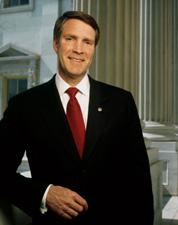
In 5 days we will observe the fifth anniversary of the most vicious act of terror ever perpetrated on American soil. Nearly 3,000 fellow Americans lost their lives on September 11. We have worked…
In 5 days we will observe the fifth anniversary of the most vicious act of terror ever perpetrated on American soil. Nearly 3,000 fellow Americans lost their lives on September 11.
We have worked tirelessly to make America safer from terrorist attacks and to honor the sacrifices of the victims of 9/11 and their families. But the fact remains that we still have more to do.
That is why Senator McConnell and I are proud to introduce legislation on behalf of the President to bring terrorists to justice. The bill authorizes military commissions to prosecute terrorist detainees and addresses the concerns raised by the Supreme Court in the Hamdan decision.
Today, we are a nation at war. Our enemies are terrorists who do not value democracy, freedom, or innocent life.
When we capture them on the battlefield, we have a right to prosecute them for war crimes. And we must establish a system that protects our national security while ensuring a full and fair trial for the detainees.
That is why it is imperative that we quickly move forward on this bill. By formally establishing military commissions to prosecute terrorist detainees, we are creating another tool in the war on terror--and providing a measure of justice to the victims of 9/11.
Under these commissions, terrorist detainees will get a fair trial. They will be tried before impartial military judges. They will have the right to be presumed innocent until proven guilty, the right to counsel, the right to present exculpatory evidence, the right to exclude evidence obtained through torture or coercion, and the right to appeal.
However, these procedures also recognize that because we are at war, we should not try terrorist detainees in the same way as our uniformed military or common civilian criminals. The procedures take great care to protect our national security interests by preventing disclosure of classified information to the detainees themselves.
I urge my colleagues to review this bill carefully. I will consult Chairman Warner and the Armed Services Committee members to ensure the Senate moves expeditiously to meet its responsibility to the American people.
I hope we can move forward in a spirit of bipartisanship even though we are in the middle of a partisan election season. And I hope we can remain focused on the goal of making America safer and continuing to honor the victims of 9/11.
I ask unanimous consent that the text of the bill be printed in the Record.
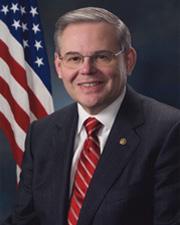
Mr. President, I rise today with my colleagues Senator Ensign and Senator Lautenberg to introduce legislation to award Jerry Lewis with the Congressional Gold Medal of Honor. This well-deserved…
Mr. President, I rise today with my colleagues Senator Ensign and Senator Lautenberg to introduce legislation to award Jerry Lewis with the Congressional Gold Medal of Honor. This well-deserved recognition pays tribute to the many outstanding and enduring contributions Jerry Lewis has made throughout his career.
Born in 1926 in Newark, NJ, this gifted comedian has been a fixture in the entertainment community for more than five decades keeping spirits high and Americans laughing during some of the most turbulent periods in our history--World War II, the Cold War, and the assassinations of President John F. Kennedy and Dr. Martin Luther King Jr. But in addition to his comic persona, Lewis is also an active champion of charitable causes with an undying commitment to finding a cure for muscular dystrophy. Mr. Lewis has served for five decades as the National Chairman of the Muscular Dystrophy Association, which is an incredible organization dedicated to making a difference in the lives of countless families dealing with the challenges associated with muscular dystrophy. Forty years ago, he began the ``Jerry Lewis MDA Labor Day Telethon,'' an annual television program that benefits children and adults affected by muscular dystrophy and related neuromuscular diseases. This year, Mr. Lewis achieved an amazing accomplishment. His annual Labor Day telethon raised a record $61 million to fight this disease.
In September of 1976, this great body adopted a resolution expressing their appreciation of Jerry Lewis' philanthropic endeavors, in particular, his fight to find a cure for muscular dystrophy. Today, I believe a fitting accolade to this larger than life individual would be for him to join the ranks of distinguished Congressional Gold Medal recipients. I urge my colleagues to join me in congratulating Jerry Lewis, supporting the fight to end muscular dystrophy, and co- sponsoring this important legislation.
Mr. President, I am pleased to introduce legislation which would designate the facility of the United States Postal Service located at 110 Cooper Street in Babylon, NY, as the ``Jacob Samuel Fletcher…
Mr. President, I am pleased to introduce legislation which would designate the facility of the United States Postal Service located at 110 Cooper Street in Babylon, NY, as the ``Jacob Samuel Fletcher Post Office Building.''
Jacob Samuel Fletcher sent his first application for military enlistment to the Marines when he was 8 years old. Young Jacob had completed an application he found in a magazine and submitted it through the mail. Though his mother told the Marines recruiter to call back in a few years, it wouldn't be long before Fletcher was wearing a uniform.
Fletcher enlisted in the Army soon after the September 11 terrorist attacks. He told family members that he felt he had a duty to serve his country. This service was nothing new to his family, as both his father and his stepfather served in Vietnam.
His story, however, ends in a tragically different manner than his father's or stepfather's. On November 14, 2003, PFC Jacob Samuel Fletcher was killed when a road side bomb exploded near a bus he was riding in Samara, Iraq. It was 11 days before his 29th birthday. He was posthumously awarded the Bronze Star and the Purple Heart.
While he was close to finishing his tour of duty at the time of his death, Jacob told family and friends that he was not finished serving; he hoped to become a state trooper upon completion of his tour in the military.
I ask that the Senate come together and honor this brave American for his service to our Nation.
Mr. President, I rise today to introduce the Terrorism Prevention Act of 2006. This Act will enhance and improve the statutes governing material support for terrorism, protection of classified…
Mr. President, I rise today to introduce the Terrorism Prevention Act of 2006. This Act will enhance and improve the statutes governing material support for terrorism, protection of classified information, terrorist hoaxes, and terrorist murders and assaults. Specifically, the TPA expands the reach of statutes punishing material support for terrorism, making it a crime to reward the family of a suicide bomber or other terrorist with the intent to facilitate terrorism, and increases penalties for existing material support offenses; clarifies and improves the Classified Information Procedures Act in light of the lessons learned in the Moussaoui trial; expands the reach of the terrorist hoax statute, and increases penalties for hoaxes about the deaths of U.S. soldiers during wartime; increases penalties for terrorist murders, kidnappings, and assaults committed overseas against U.S. nationals, and increases penalties for terrorist crimes resulting in death; and improves the United States's ability to investigate terrorist crimes by protecting the confidentiality of FISA investigations, authorizing multi-district search warrants in terrorism cases, and increasing penalties for obstruction of justice in terrorism cases.
I ask unanimous consent that a section by section analysis of the Terrorism Prevention Act be printed in the Record.
Mr. President, I ask unanimous consent that the Senate proceed to the immediate consideration of Calendar No. 536, S. 3526. Mr. President, I ask unanimous consent that the amendment at the desk be…
Mr. President, I ask unanimous consent that the Senate proceed to the immediate consideration of Calendar No. 536, S. 3526.
Mr. President, I ask unanimous consent that the amendment at the desk be agreed to, the bill, as amended, be read a third time and passed, the motion to reconsider be laid upon the table, and that any statements relating to the bill be printed in the Record
Mr. President, I ask unanimous consent that the Committee on Homeland Security and Governmental Affairs be discharged from further consideration of the following postal-naming bills en bloc: S. 1726, S. 3845, H.R. 4109, H.R. 4805, H.R. 4674, H.R. 4768, H.R. 5428, H.R. 5434, H.R. 5054, H.R. 5664, and H.R. 6033 and the Senate proceed to their immediate consideration.
Bill Text
3 versions available
        [Congressional Bills 109th Congress]
[From the U.S. Government Publishing Office]
[S. 3845 Referred in House (RFH)]

2d Session
S. 3845

_______________________________________________________________________

IN THE HOUSE OF REPRESENTATIVES

November 13, 2006

Referred to the Committee on Government Reform

_______________________________________________________________________

AN ACT

To designate the facility of the United States Postal Service located
at 301 Commerce Street in Commerce, Oklahoma, as the ``Mickey Mantle
Post Office Building''.

Be it enacted by the Senate and House of Representatives of the
United States of America in Congress assembled,

SECTION 1. MICKEY MANTLE POST OFFICE BUILDING.

(a) Designation.--The facility of the United States Postal Service
located at 301 Commerce Street in Commerce, Oklahoma, shall be known
and designated as the ``Mickey Mantle Post Office Building''.
(b) References.--Any reference in a law, map, regulation, document,
paper, or other record of the United States to the facility referred to
in subsection (a) shall be deemed to be a reference to the ``Mickey
Mantle Post Office Building''.

Passed the Senate September 30 (legislative day, September
29), 2006.

Attest:

EMILY J. REYNOLDS,

Secretary.