Terrorism Risk Insurance Extension Act of 2005
Legislative Activity
Stay on top of the latest movement without scrolling through every action
Became Public Law No: 109-144.
December 22, 2005
View full timeline
Introduced in Senate
February 18, 2005
Read twice and referred to the Committee on Banking, Housing, and Urban Affairs. (text of measure as introduced: CR S1723-1724)
February 18, 2005
Sponsor introductory remarks on measure. (CR S9424)
July 29, 2005
Committee on Banking, Housing, and Urban Affairs. Ordered to be reported with an amendment in the nature of a substitute favorably.
November 16, 2005
Committee on Banking, Housing, and Urban Affairs. Reported by Senator Shelby with an amendment in the nature of a substitute. Without written report.
November 16, 2005
Placed on Senate Legislative Calendar under General Orders. Calendar No. 287.
November 16, 2005
Measure laid before Senate by unanimous consent. (consideration: CR 11/17/2005 S13277-13282; text of measure as reported in Senate: CR 11/17/2005 S13277-13278)
November 18, 2005
Passed Senate with an amendment by Unanimous Consent.
November 18, 2005
Received in the House.
November 18, 2005 • 10:33 AM
Message on Senate action sent to the House.
November 18, 2005
Held at the desk.
November 18, 2005 • 4:16 PM
Mr. Oxley moved to suspend the rules and pass the bill, as amended.
December 7, 2005 • 12:05 PM
Considered under suspension of the rules. (consideration: CR H11130-11141)
December 7, 2005 • 12:05 PM
DEBATE - The House proceeded with forty minutes of debate on S. 467.
December 7, 2005 • 12:06 PM
At the conclusion of debate, the Yeas and Nays were demanded and ordered. Pursuant to the provisions of clause 8, rule XX, the Chair announced that further proceedings on the motion would be postponed.
December 7, 2005 • 12:43 PM
Considered as unfinished business. (consideration: CR H11147)
December 7, 2005 • 1:32 PM
Passed/agreed to in House: On motion to suspend the rules and pass the bill, as amended Agreed to by the Yeas and Nays: (2/3 required): 371 - 49 (Roll no. 612).(text: CR H11130-11135)
December 7, 2005 • 2:00 PM
On motion to suspend the rules and pass the bill, as amended Agreed to by the Yeas and Nays: (2/3 required): 371 - 49 (Roll no. 612). (text: CR H11130-11135)
December 7, 2005 • 2:00 PM
Motion to reconsider laid on the table Agreed to without objection.
December 7, 2005 • 2:00 PM
Mr. Oxley moved that the House insist upon its amendment, and request a conference.
December 7, 2005 • 5:43 PM
On motion that the House insist upon its amendment, and request a conference Agreed to without objection.
December 7, 2005 • 5:43 PM
The Speaker appointed conferees - from the Committee on Financial Services for consideration of the Senate bill and the House amendment, and modifications committed to conference: Oxley, Baker, Pryce (OH), Kelly, Kanjorski, Capuano, and Crowley.
December 7, 2005 • 5:44 PM
The Speaker appointed conferees Provided that Mr. Israel is appointed in lieu of Mr. Capuano for consideration of secs. 4, 5, and 7 of the Senate bill, and secs. 103 and 105 of the House amendment, and modifications committed to conference.
December 7, 2005 • 5:44 PM
The Speaker appointed conferees - from the Committee on the Judiciary for consideration of secs. 2 and 6 of the Senate bill and modifications committed to conference: Sensenbrenner, Goodlatte, and Conyers.
December 7, 2005 • 5:44 PM
The Speaker appointed a conferee for consideration of the Senate bill and the House amendment, and modifications committed to conference: Sessions.
December 7, 2005 • 5:44 PM
Message on House action received in Senate and at desk: House amendment to Senate bill.
December 12, 2005
Resolving differences -- Senate actions: Senate concurred in House amendment with an amendment (SA 2689) Unanimous Consent.(consideration: CR S13931-13934; text as Senate agreed to House amendment with amendment: CR S13933)
December 16, 2005
Senate concurred in House amendment with an amendment (SA 2689) Unanimous Consent. (consideration: CR S13931-13934; text as Senate agreed to House amendment with amendment: CR S13933)
December 16, 2005
Message on Senate action sent to the House.
December 16, 2005
Mr. Oxley moved that the House suspend the rules and agree to the Senate amendment to the House amendment. (consideration: CR H12135-12141)
December 17, 2005 • 6:26 PM
DEBATE - The House proceeded with forty minutes of debate on the motion to suspend the rules and agree to the Senate amendment to the House amendment to S. 467.
December 17, 2005 • 6:27 PM
Resolving differences -- House actions: On motion that the House suspend the rules and agree to the Senate amendment to the House amendment Agreed to by voice vote.(text as House agreed to Senate amendment: CR H12136)
December 17, 2005
On motion that the House suspend the rules and agree to the Senate amendment to the House amendment Agreed to by voice vote. (text as House agreed to Senate amendment: CR H12136)
December 17, 2005 • 6:57 PM
Motion to reconsider laid on the table Agreed to without objection.
December 17, 2005 • 6:57 PM
Cleared for White House.
December 17, 2005
Presented to President.
December 19, 2005
Signed by President.
December 22, 2005
Became Public Law No: 109-144.
December 22, 2005
Voting History
1 vote recorded • Roll call available
Floor Debate
15 membersWhat members said about S. 467 on the floor
 JFK
JFK OJS
OJS MGO
MGO RP
RP CES+10
Floor Debate
15 membersWhat members said about S. 467 on the floor
Mr. President, I recently returned from Iraq where I am proud to report that the men and women of the American military continue to perform magnificently. They are the best of America, and we owe…
Mr. President, I recently returned from Iraq where I am proud to report that the men and women of the American military continue to perform magnificently. They are the best of America, and we owe them and their families a special debt of honor and gratitude.
Today, I am introducing legislation to strengthen our military and enact a ``Military Family Bill of Rights.'' My hope is that Congress will act quickly to build the military ready to meet the challenges of this century. That requires a larger Army, a larger Marine Corps, and better policies for Americans in uniform and their families.
We must begin by building a military sized and shaped for the challenges of the future. The military today, in particular the Army and the Marine Corps, is too small for the missions it faces. The evidence is everywhere.
In the past, the Army gave units 2 years to reset, re-train, and prepare between combat deployments. Instead the 3rd Infantry Division is headed back to Iraq after only one year. The 101st Airborne and the 4th Infantry Divisions are headed back later this year after less than 2 years. The First Marine Expeditionary Force is already in the middle of its second deployment to Iraq.
Even with this timetable, we have made ends meet only through large contributions from the National Guard and Reserve. But in planning the next rotation of U.S. forces, we are running out of Guard and Reserve units to call on because they've already been deployed. Fourteen of the National Guard's 15 most combat-ready units are either in Iraq now, recently demobilized, or on alert for duty in the coming year. Of the 205,000 Army Reservists, only about 37,000 remain available for deployment for the types of missions needed in Iraq. Last year the Army dipped into the Individual Ready Reserve. More recently, the Army has even begun to call back military retirees, ranging in age from their mid-40s to their late 60s.
The situation is so grave that Lt. General James Helmly, chief of the Army Reserve, recently warned that the reserves are ``rapidly degenerating into a broken force''--and cautioned that at this rate we will not be able to meet the needs of ``future missions.''
The war on terror--which we know requires a comprehensive approach-- will have a military component. Surprises happen and our armed forces must be ready to meet those challenges, wherever and whenever they occur.
Since the end of the Cold War, every major commitment of American military power, including the ``Air War'' in Kosovo, has required a sizeable commitment of American ground forces, at the very least to provide post-conflict security and stability. There's no technological substitute for boots on the ground, and we must always plan for the worst, so we never expose our troops to the unintended consequences of wishful thinking.
The CIA's internal think-tank, the National Intelligence Council, recently drew an important conclusion about conflict over the next 15 years: ``Weak governments, lagging economies, religious extremism, and youth bulges will align to create a perfect storm for internal conflict in certain regions.'' That's a warning about the danger of failed states--and this should be a wake-up call for American strategy.
Failed states can become havens for terrorists. It was a failed state in Afghanistan that provided a training ground for al-Qaida. It was a failed state where al-Qaida made its plans, grew its forces, and emerged to threaten our national security.
We need a comprehensive foreign policy strategy to deal with failed states, but we must also have a military ready to act if necessary. For the foreseeable future, the United States will need a
larger ground force. Failure to build one now will only diminish our national security in the future.
The war in Iraq proved that a lightning-fast, high-tech force can smash an opposing Army and drive to Baghdad in three weeks. But there is no substitute for a well-trained and equipped infantry to win the peace or secure a failed state. Those missions require an investment in the men and women of the American military--to expand their number, and to increase the number of forces that specialize in certain skills.
To meet these needs, this legislation will expand the Active Duty Army by 30,000 and the Marines by 10,000 personnel.
The men and women of the American military are sustained by the bonds they share within their unit, and by the love and strength they draw from home--from their families, their spouses, their children, their parents. Military families are unsung heroes who receive neither medals nor parades--giving everything they can to the men and women they love, men and women who have been called to war. They answered the call. And so must we--with a new commitment to smarter defense policies, like those I outlined earlier, and better care for military families.
So the legislation I offer today also includes a Military Family Bill of Rights, a set of policies enshrined in law, to provide assistance to the families of the American military.
Investing in military families isn't just an act of compassion--it's a smart investment in America's military. Good commanders know that while you may recruit an individual soldier or Marine, you ``retain'' a family. Nearly 50 percent of America's service members are married today. If we want to retain our most experienced service members, especially the non-commissioned officers that are the backbone of the Army and Marine Corps, we have to keep faith with their families. If we don't, and those experienced, enlisted leaders begin to leave, America will have a broken, ``hollow'' military.
We can begin by increasing the financial support military families receive. We can help them meet the increased expenses every military family faces when a loved-one is deployed. Thousands of reservists, for example, take a cut in pay when called to active duty. Some employers make up the difference in lost wages. We should reward those patriotic business leaders. And since small businesses don't have the workforces that make it possible to spread such costs, we should offer a Small Business Tax Credit to those who make up the difference between a reservist's civilian and military pay. This legislation would also establish Military Reservist Economic Injury Disaster Grants to buttress existing loan programs that help small-businesses survive when a vital employee, or even the owner, is mobilized. It also creates the Reservists Enterprise Transition and Sustainability Task Force to help small businesses prepare for and cope with the mobilization of reservist-employees and owners. For all service members, this legislation permits penalty free withdrawals from Individual Retirement Accounts for deployment-related expenses, such as increased child-care and other costs.
As many as one-in-five members of the National Guard and Reserves don't have health insurance. That is bad policy and bad for our national security. When units are mobilized, they count on all their personnel. But when a member of the National Guard or Reserve is mobilized, and unit members fail physicals because they haven't seen a doctor in 2 years, that's bad for readiness and that's bad for unit effectiveness. As part of the Military Family Bill of Rights, we will extend military health insurance eligibility to all members of the National Guard and Reserve, whether mobilized or not.
One of the unfortunate truths about war is that it takes lives--and mostly young lives. For their survivors, much of life remains, and we must be generous in our efforts to help them put their lives back together. Almost a year ago, I proposed increasing the military's death benefit to $250,000. When combined with the Servicemembers Group Life Insurance, a family would receive $500,000 when a loved-one dies in the service of our nation. No one can ever put a price on a life, but we ought to do what we can to help families coping with the worst of news. The President recently embraced a formula to reach the $500,000 threshold, and I'm glad he has joined this effort.
Our generosity must not stop there. At present, survivors of those killed in action have 180 days to move out of military housing. But for those with young children in school, 180 days may mean starting a school year in one State, and finishing it in another. With all the disruption the loss of a parent will bring to their lives, survivors should have the flexibility to stay in their homes for one year after the death of a service member. It's the least we can do for those who have paid the ultimate price.
But let's be honest: No piece of legislation will ever anticipate all the needs of America's military families. Someone will always fall through the cracks. And the legislation I intend to offer will try to fix that. Take the case of Jay Briseno. Jay was wounded in Iraq and left paralyzed from the neck down. The law authorizes the VA to provide $11,000 to modify a disabled veteran's vehicle, but it doesn't provide the resources a family needs to buy the specially out-fitted vehicle Jay needed. In his case, a generous member of the community donated the van the Briseno's now use to drive Jay to doctors appointments and hospital visits. And we are all grateful for that act of generosity. But no family should ever have to be so dependent on charity to meet a basic need.
Americans will do everything in our power to help military families. But not all Americans can afford to buy modified minivans for wounded veterans, and not all military families have the same needs. So as part of my Military Family Bill of Rights, we will establish a Military Family Relief Fund. Every American who pays taxes will be able to contribute by checking a box on their income tax returns. Just as we let Americans donate a few dollars to finance our presidential elections on their tax forms, we should give them this opportunity to say thank you to our troops. The program will meet the needs we can't expect with the flexibility and responsiveness our service members, veterans, and their families deserve.
Supporting military families must also extend beyond service in uniform--with programs across government to help with jobs, VA benefits, healthcare, and education.
Veterans possess great leadership and technical skills, but they often lack the financial resources to turn that potential into a viable enterprise. A recent report by the Small Business Administration stated that 22 percent of veterans plan to start or are starting a business when they leave the military. For service-disabled veterans, this number rises to 28 percent. So the legislation I introduce today will create a new program, administered by the Small Business Administration, to provide very-low interest loans, up to $100,000, to help veterans start new small businesses.
But in this time of war, we have another obligation to meet the needs of those suffering with the experience of war.
The Pentagon believes that as many as 100,000 new combat veterans across the country will need some level of mental health care. The New England Journal of Medicine has reported as many as 1 in 6 soldiers returning from Iraq show symptoms of post-traumatic stress disorder. Fewer than 40 percent of those sought help. Military officials and mental health providers predict that up to 30 percent of returning soldiers will require psychiatric services associated with their experience in war. Through July of last year, 31,000 veterans of Operation Iraqi Freedom had applied for disability benefits for injuries--and 20 percent of those claims were for psychological conditions. These are levels not seen since the Vietnam War.
Our VA medical facilities are not ready for increased demands for the treatment of Post Traumatic Stress Disorder. In fact only 86 of 163 VA Medical Centers have PTSD treatment centers. We must do better. The wounds of war are not always visible, and we cannot sit back and wait for people to ask for help. We have to be proactive.
Soldiers and Marines returning from war want to go home. They don't want to do anything that could jeopardize
their homecoming. That's what happened to Jeffrey Lucey, a Marine Reservist from Belchertown, MA. When he was leaving Iraq, his first instinct was to report traumatic memories of things he had seen in the war. But someone told him it might delay his return home, so Jeff kept quiet. But the safety, security, and joy of homecoming eluded Jeff. Haunted by the war and what he had seen, he began to drink heavily. He was plagued by recurring nightmares, and began talking about suicide. Last summer, Jeff took his own life. Jeff's story is a preventable tragedy, and a call to action. As part of the legislation I plan, keeping faith with Jeff's family who have become committed advocates in his memory, we will expand PTSD programs within the VA and require outreach efforts to find the veterans who need the care.
Our obligation is to keep faith with the men and women of the American military and their families--whether they are on active duty, in the National Guard or Reserves, or veterans.
Those who have stood for us should know that we stand with them, today and always. Each of us can do something to ease their burden--but truly supporting our troops requires that we act not just as individuals, but as a nation. We owe our troops the opportunity to serve in the best-planned, best-equipped, and best-led military force in the world, and we owe them the peace of mind that comes from knowing that they and their families will be taken care of if they sacrifice life, limb or the ability to sleep without war's nightmares. We owe them not just thanks and best wishes, but action here in Congress. In today's ever-changing and perilous world, there is not a moment to lose.
Mr. President, I rise today to introduce ``The Pathways to Self-Sufficiency Act of 2003.'' I am pleased to be joined in introducing this important legislation by my colleagues Senators Baucus,…
Mr. President, I rise today to introduce ``The Pathways to Self-Sufficiency Act of 2003.'' I am pleased to be joined in introducing this important legislation by my colleagues Senators Baucus, Bingaman, Jeffords and Rockefeller.
This legislation is based upon the highly esteemed Maine program called ``Parents as Scholars''. This program, which uses State Maintenance of Effort, MOE, dollars to pay TANF-like benefits to those participating in post-secondary education, is a proven success in my State and is a wonderful foundation for a national effort.
We all agree that the 1996 welfare reform effort changed the face of this Nation's welfare system to focus it on work. To that end, I believe that this legislation bolsters the emphasis on ``work first''. Like many of my colleagues, I agree that the shift in the focus from welfare to work was the right decision, and that work should be the top priority. However, for those TANF recipients who cannot find a good job that will put them on the road toward financial independence, education might well be the key to a successful future of self-sufficiency.
As we have seen in Maine, education has played a significant role in breaking the cycle of welfare and has given parents the skills necessary to find better paying jobs. And we all know that higher wages are the light at the end of the tunnel of public assistance.
``The Pathways to Self-Sufficiency Act of 2005'' provides States with the option to allow individuals receiving Federal TANF assistance to obtain post-secondary or vocational education. This legislation would give States the ability to use Federal TANF dollars to give those who are participating in vocational or post-secondary education the same assistance as they would receive if they were working.
We all know that supports like income supplements, child care subsidies, and transportation assistance among others, are essential to a TANF recipient's ability to make a successful transition to work. The same is true for those engaged in longer term educational endeavors. This assistance is especially necessary for those who are undertaking the challenge and the financial responsibility of post-secondary education, in the hopes of increasing their earning potential and employability. The goal of this program is to give participants the tools necessary to succeed into the future so that they can become, and remain, self-sufficient.
Choosing to go to college requires motivation, and graduating from college requires a great deal of commitment and work--even for someone who isn't raising children and sustaining a family. These are significant challenges, and that's even before taking into consideration the cost associated with obtaining a Bachelor's degree. This legislation would provide those TANF recipients who have the ability and the will to go to college the assistance they need to sustain their families while they get a degree.
The value of promoting access to education in this manner to get people off public assistance is proven by the success of Maine's ``Parents as Scholars'', PaS, program. Maine's PaS graduates earn a median wage of $11.71 per hour after graduation up from a median of $8.00 per hour prior to entering college. When compared to the $7.50 median hourly wage of welfare leavers in Maine who have not received a post-secondary degree, PaS graduates are earning, on average, $160 more per week. That translates into more than $8,000 per year--a significant difference.
Furthermore, the median grade point average for PaS participants while in college was 3.4 percent, and a full 90 percent of PaS participants' GPA was over 3.0. These parents are giving their all to pull their families out of the cycle of welfare.
Recognizing that work is a priority under TANF, and building upon the successful Maine model, the ``Pathways to Self-Sufficiency Act'' requires that participants in post-secondary and vocational education also participate in work. During the first 2 years of their participation in these education programs, students must participate in a combination of study time, employment or work experience for at least 24 hours per week--the same hourly requirement that the President proposes in his welfare reauthorization proposal.
During the second 2 years--for those enrolled in a four year program--the participant must work at least 15 hours in addition to class and study time, or engage in a combination activities, including study time work or work experience, and training, for an average of 30 hours per week. And all the while, participants must maintain satisfactory academic progress as defined by their academic institution.
The bottom line is that if we expect parents to move from welfare to work and stay in the work force, we must give them the tools to find good jobs. For some people that means job training, for others that could mean dealing with a barrier like substance abuse or domestic violence, and for others, that might mean access to education that will secure them a good job and that will get them off and, importantly, keep them off of welfare.
The experience of several ``Parents as Scholar'' graduates were captured in a publication published by the Maine Equal Justice Partners, and their experiences are testament to the fact that this program is a critically important step in moving towards self- sufficiency. In this report one graduate said of her experience, ``If it weren't for `Parents as Scholars' I would never have been able to attend college, afford child care, or put food on the table. Today, I would most likely be stuck in a low-wage job I hated barely getting by . . . I can now give my children the future they deserve.''
Another said, ``By earning my Bachelor's degree, I have become self- sufficient. I was a waitress previously and would never have been able to support my daughter. I would encourage anyone to better their education if possible.''
These are but a few comments from those who have benefited from access to post-secondary education. Giving States the option use Federal dollars to support these participants will make a tremendous difference in their ability
to sustain these programs which have proven results. In Maine, nearly 90 percent of working graduates have left TANF permanently and isn't that our ultimate goal?
I look forward to working with my colleagues to include this legislation in the upcoming welfare reauthorization. It is a critical piece of the effort to move people from welfare to work permanently and it has been missing from the federal program for too long.
I rise today to reintroduce five different bills important to my State of Maine that were included in the Water Resources Development Act, WRDA, last year. Unfortunately, that larger Corps of Engineers reauthorization legislation did not see action before the Senate adjourned the 108th Congress, but I am pleased that the Chairman of the Senate Environment and Public Works Committee recently stated that WRDA is on the committee's agenda for consideration soon. My hope is that all five bills will once again be included in the WRDA legislation in the 109th Congress.
All of my bills are non-controversial, and, importantly, are supported by the various townspeople and their officials, and State officials, who view these harbor deauthorizations and river improvements as engines for economic development. The bills also have the support of the New England District of the Corps of Engineers.
The first bill, S. 462, pertains to Tenants Harbor, St. George, Maine. Deauthorizing the Federal Navigation Channel, FNC, would be of great help to the town in appropriately managing the Harbor to maximize mooring areas. Over the years there have been mounting problems with the Army Corps of Engineers' mooring permit process as people seeking permits for moorings that have existed for 30 years continue to be notified that the mooring locations are prohibited because they fall within the federal navigational channel.
My second bill, S. 463, concerns Northeast Harbor in Mt. Desert, Maine. The language will not only allow for more recreational moorages and commercial activities, it will also be an economic boost to Northeast Harbor, which is surrounded by Acadia National Park, one of the nation's most visited parks--both by land and by water. The removal of the harbor from the FNC will allow the town to adapt to the high demand for moorings and will allow residents to obtain moorings in a more timely manner. The Harbor has now reached capacity for both moorings and shoreside facilities and has a waiting list of over sixty people, along with commercial operators who have been waiting for years to obtain a mooring for their commercial vessels.
My third bill, S. 464, addresses the Union River in Ellsworth, Maine. The bill supports the City of Ellsworth's efforts to revitalize the Union River navigation channel, harbor, and shoreline. The modification called for in my legislation will redesignate a portion of the Union River as an anchorage area. This redesignation will allow for a greater number of moorings in the harbor without interfering with navigation and will further improve the City's revitalization efforts for the harbor area.
My fourth bill, S. 465, will carry out a project for the mitigation of shore damage at Camp Ellis, Maine, attributable to the Saco River navigation project. The bill authorizes the Secretary of the Army to carry out the project, under the River and Harbor Act of 1968, to mitigate shore damage attributable to the Saco River project, waiving the funding cap requirement for congressional authorization set forth in that Act. The legislation is needed to complete the project as it will cost more than authorized under current law, and is the preferred project by non-Federal interests.
My fifth bill, S. 466, will make the mooring of an historic windjammer fleet in Rockland Harbor a reality. Originally a strong fishing port, Rockland retains its rich marine heritage, and it is one of the fastest growing cities in the Midcoast area. Like many of the port cities on the eastern seaboard, Rockland has been forced to confront an assortment of financial and environmental changes, but happily, the city has been able to respond to these challenges in positive and productive ways.
The City of Rockland has hosted the Windjammer fleet since 1955, earning a well deserved reputation as the Windjammer Capital of the World. Rockland's Windjammers are now National Historic Landmarks, and as such, are vitally important to both the City and the State. The image of The Victory Chimes, one of five vessels slated to be berthed at the new wharf and a vessel whose historical designation I supported, graces the Maine quarter. This beautiful fleet of windjammers symbolizes the great seagoing history of Maine as well as the sense of adventure that we have come to associate so closely with the American experience.
Lermond Cove is perfectly situated in the Rockland Harbor to be the new and permanent home for these cherished vessels. The proposed Windjammer Wharf will also provide a safe harbor from storms, as it is tucked nicely near the Maine State Ferry and Department of Marine Resources piers.
The State of Maine capitalizes on the visual impact of the Windjammers to promote tourism, working waterfronts and the natural beauty that distinguishes our landscape. Over $300,000 is spent yearly by the Maine Windjammer Association to advertise and promote these businesses. Deauthorizing that part of the federal navigational channel will clearly trigger significant and unrealized economic benefits for the region, providing many beneficial dollars to the local area and the State of Maine. According to the Longwood study, which uses a multiplier of 1.5, the economic impact of this spending is $3.8 million a year. Conservatively, the Windjammers spend over If $2.5 million a year in the state.
I want to thank the New England Corps of Engineers for their help in drafting the language and working with the Maine Department of Transportation, which runs the ferry line, and also the Rockland city officials, the Rockland Port District, and the Captains of the Windjammer vessels--Mainers and businesspeople with the vision and commitment we need to complete Windjammer Wharf and create a permanent home for this historic fleet of windjammers in Rockland Harbor.
Mr. Speaker, I move to suspend the rules and pass the Senate bill (S. 467) to extend the applicability of the Terrorism Risk Insurance Act of 2002, as amended. Mr. Speaker, I ask unanimous consent…
Mr. Speaker, I move to suspend the rules and pass the Senate bill (S. 467) to extend the applicability of the Terrorism Risk Insurance Act of 2002, as amended.
Mr. Speaker, I ask unanimous consent that all Members may have 5 legislative days within which to
revise and extend their remarks and include extraneous material on S. 467.
Mr. Speaker, I yield myself such time as I may consume.
Mr. Speaker, in the aftermath of the brutal terrorist attacks on our Nation on September 11, 2001, America's economic and financial security was put at risk. Thousands of innocent people were victimized and our insurance industry was brought to its knees.
Insurers could not predict when or where or how damaging the next attack would be. As a result, the insurance markets pulled back and businesses were unable to obtain terrorism insurance at any price. Business development plans stalled and our economy was put at risk.
President Bush immediately called on Congress to pass legislation that would prevent severe economic disruptions caused by a lack of available terrorism insurance. The Financial Services Committee worked closely with the administration and the Senate to draft the Terrorism Risk Insurance Act of 2002, or TRIA. TRIA provided a temporary Federal backstop to protect against future catastrophic terrorist attacks. This program, by any measure, has been a resounding success.
On June 30, 2005, the Treasury Department submitted a report to Congress on the effectiveness of the TRIA program, the availability and affordability of terrorism insurance for various policyholders, and the likely capacity of the property and causality insurance industry to offer insurance for terrorism risk after TRIA expires on December 31 of this year. According to the report, the removal of TRIA would result in ``less terrorism insurance written by insurers, higher prices, and lower policyholder take-up.''
The administration stated that it wanted to reform the TRIA program and foster the development of a private market for terrorism insurance.
The legislation before us today would temporarily extend the terrorism risk backstop for policyholders, but would also add a number of critical reforms. Perhaps most importantly, this bill is the only proposal providing significant taxpayer protections.
Unlike the current TRIA program which sets a limit on the amount of Federal assistance taxpayers may recoup, this legislation may have full 100 percent taxpayer payback. Every dollar the Federal Government pays out gets repaid over time. This bill also significantly increases industry co-shares, providing further taxpayer relief in the short run.
The bill raises the program trigger from $5 million to $50 million in the first year of the extension and then to $100 million for the second year. It also eliminates commercial automobile insurance from the terrorism insurance program, for a reduction of over $30 billion dollars in covered line premiums. The bill raises the deductibles on all lines of insurance from the current level of 15 percent to an average of over 20 percent, the biggest increase among all of the proposals.
The legislation encourages insurers to make coverage available for nuclear, biological, chemical and radioactive risk attacks, which are currently excluded from most insurance policies. Without these provisions, policyholders will continue to be unprotected for the most catastrophic of events.
Any Federal terrorism insurance program must be temporary. Because terrorism risk will not go away, one of our major goals must be to decrease the role of the Federal Government over time and provide real, lasting market reforms that will increase industry responsibility for terrorism insurance.
It is important that industry have more ``skin in the game'' to ease the transition to the private market for terrorism insurance. In addition to a raised trigger and deductibles, this bill is the only legislation that requires that development of a long-term solution shifting the backstop to the private sector and phasing out the Federal role.
A public-private entity is created and is required to issue specific proposals within a short period of time, and the bill sets up various risk-pooling mechanisms and dedicated terrorism capital accounts to immediately begin the transition. Without these provisions, we will be back here in 12 months arguing over another extension with no improved reforms.
This legislation is identical to the bill that passed our Financial Services Committee overwhelmingly by a vote of 64-3, with the exception of striking certain provisions that are within the jurisdiction of the Judiciary Committee by agreement, a slight change in the definition of exempt commercial purchasers, and other technical and conforming changes.
I applaud my friend and colleague, the gentleman from Louisiana (Mr. Baker), chairman of the Subcommittee on Capital Markets, Insurance, and Government Sponsored Enterprises, for introducing this legislation.
I would also like to thank the gentlewoman from New York (Mrs. Kelly), the gentleman from Texas (Mr. Sessions), the gentlewoman from Ohio (Ms. Price), the gentleman from Kentucky (Mr. Davis), the gentleman from New York (Mr. Fossella), the gentleman from Arizona (Mr. Renzi), the gentleman from New Jersey (Mr. Ferguson), the ranking member from Massachusetts (Mr. Frank), the gentleman from Pennsylvania (Mr. Kanjorski), and the gentleman from Massachusetts (Mr. Capuano) for their leadership and commitment to this important matter.
I urge my colleagues to vote in favor of this bill.
Mr. Speaker, I reserve the balance of my time.
Mr. Speaker, I am pleased to yield 2 minutes to the gentlewoman from New York (Mrs. Kelly), the chairman of the Oversight Subcommittee.
Mr. Speaker, I yield 2 minutes to the gentleman from Georgia (Mr. Price).
If the gentleman would yield, the gentleman has my assurances. I know we had some discussions in the committee, in the markup. Going forward, we have not been able to close that circle yet, but I see the
gentlewoman from Florida there nodding, and the gentleman has my assurances, as do all the other members of the committee, that we will address that issue. I think there were some drafting issues and the like that we will certainly take care of before the conference is concluded.
I thank the gentleman for his support.
Mr. Speaker, I am pleased to yield whatever time he may consume to the gentleman from Louisiana (Mr. Baker), the chairman of the subcommittee.
Mr. Speaker, I am pleased now to yield 2 minutes to the
gentleman from New York (Mr. Reynolds).
(Mr. REYNOLDS asked and was given permission to revise and extend his remarks.)
Mr. Speaker, I yield such time as she may consume to the gentlewoman from New York (Mrs. Kelly).
Mr. Speaker, I thank the gentlewoman for her inquiry, and clearly the committee on the point that she mentioned did not have hearings on the amendment offered, but I think it may be ripe for further exploration by the committee because the gentlewoman raises some interesting issues regarding foreign travel, particularly as it relates to life insurance policies.
I thank the gentlewoman for her interest and expertise.
Mr. Speaker, just in conclusion, I thank the gentleman from Pennsylvania for his kind words, and all the members on the committee who worked so hard on this, particularly Mr. Kanjorski and Mr. Frank on that side, and many, many others.
Mr. Speaker, when we had the hearing on this legislation with the Treasury Secretary after the Treasury report came out, I made the comment it would be irresponsible on the part of this Congress if we did not address the issue of terrorism risk insurance. It was far too important to ignore; it had too many implications for our economy going forward.
And Mr. Frank was right when he said this is not about the insurers. It is about the insured, the people out there creating jobs and making our economy work. And it is also a recognition that an act of terrorism is almost impossible to try to get actuarial information on to be able to set rates. It is virtually impossible. Anybody that knows anything about insurance knows that it is virtually impossible to work that in to any kind of an insurance scheme in which they would charge premiums. So that is why we needed this bottom-up, and that is why we need to continue this bottom-up.
And the idea is to transition during that period to a market-based solution, creating the incentive for insurance companies to create a pool, not unlike what the Brits have, the pool-rate concept, so you have this pool that could guard against losses. It is something that hopefully over the next year, as we finish this Congress, we can set the stage for that transition that will enable our economy to continue to grow and provide a robust insurance protection for those activities at the same time.
This is, in my estimate, as the gentleman from Pennsylvania pointed out, the legislative process at its best and I am very proud of the committee and the job that we have done. I ask for support of the legislation.
Mr. Speaker, I yield back the balance of my time.
Mr. Speaker, 4 years ago, when the Congress considered the bill creating the terrorism insurance program, I urged my colleagues to reject it. One of the reasons I opposed the bill was my concern…
Mr. Speaker, 4 years ago, when the Congress considered the bill creating the terrorism insurance program, I urged my colleagues to reject it. One of the reasons I opposed the bill was my concern that, contrary to the claims of the bill's supporters, terrorism insurance would not be allowed to sunset after 3 years. As I said then:
The drafters of H.R. 3210 claim that this creates a
``temporary'' government program. However, Mr. Speaker, what
happens in 3 years if industry lobbyists come to Capitol Hill
to explain that there is still a need for this program
because of the continuing threat of terrorist attacks. Does
anyone seriously believe that Congress will refuse to
reauthorize this ``temporary'' insurance program or provide
some other form of taxpayer help to the insurance industry? I
would like to remind my colleagues that the Federal budget is
full of expenditures for long-lasting programs that were
originally intended to be ``temporary.''
I am disappointed to be proven correct. I am also skeptical that, having renewed the program once, Congress will ever allow it to expire, regardless of the recommendations made by the commission created by this bill.
As Congress considers extending this program, I renew my opposition to it for substantially the same reasons I stated 4 years ago. However, I do have a suggestion on how to improve the program. Since one claimed problem with allowing the private market to provide terrorism insurance is the difficulty of quantifying the risk of an attack, the taxpayers' liability under the terrorism reinsurance program should be reduced for an attack occurring when the country is under orange or red alert. After all, because the point of the alert system is to let Americans know when there is an increased likelihood of an attack it is reasonable to expect insurance companies to demand that their clients take extra precautionary measures during periods of high alert. Reducing taxpayer subsidies will provide an incentive to ensure private parties take every possible precaution to minimize the potential damage from possible terrorists attack.
While this bill does contain some provisions making it more favorable to taxpayers than the original program, my fundamental objections to the program remain the same as 4 years ago. Therefore, I am attaching my statement regarding H.R. 3210, which created the terrorist insurance program in the 107th Congress:
Mr. Speaker, no one doubts that the government has a role to play in compensating American citizens who are victimized by terrorist attacks. However, Congress should not lose sight of fundamental economic and constitutional principles when considering how best to provide the victims of terrorist attacks just compensation. I am afraid that H.R. 3210, the Terrorism Risk Protection Act, violates several of those principles and therefore passage of this bill is not in the best interests of the American people.
Under H.R. 3210, taxpayers are responsible for paying 90 percent of the costs of a terrorist incident when the total cost of that incident exceeds a certain threshold. While insurance companies technically are responsible under the bill for paying back monies received from the Treasury, the administrator of this program may defer repayment of the majority of the subsidy in order to ``avoid the likely insolvency of the commercial insurer,'' or avoid ``unreasonable economic disruption and market instability.'' This language may cause administrators to defer indefinitely the repayment of the loans, thus causing taxpayers to permanently bear the loss. This scenario is especially likely when one considers that ``avoid . . . likely insolvency, unreasonable economic disruption, and market instability'' are highly subjective standards, and that any administrator who attempts to enforce a strict repayment schedule likely will come under heavy political pressure to be more ``flexible'' in collecting debts owed to the taxpayers.
The drafters of H.R. 3210 claim that this creates a ``temporary'' government program. However, Mr. Speaker, what happens in 3 years if industry lobbyists come to Capitol Hill to explain that there is still a need for this program because of the continuing threat of terrorist attacks. Does anyone seriously believe that Congress will refuse to reauthorize this ``temporary'' insurance program or provide some other form of taxpayer help to the insurance industry? I would like to remind my colleagues that the Federal budget is full of expenditures for long- lasting programs that were originally intended to be ``temporary.''
H.R. 3210 compounds the danger to taxpayers because of what economists call the ``moral hazard'' problem. A moral hazard is created when individuals have the costs incurred from a risky action subsidized by a third party. In such a case individuals may engage in unnecessary risks or fail to take steps to minimize their risks. After all, if a third party will bear the costs of negative consequences of risky behavior, why should individuals invest their resources in avoiding or minimizing risk?
While no one can plan for terrorist attacks, individuals and businesses can take steps to enhance security. For example, I think we would all agree that industrial plants in the United States enjoy reasonably good security. They are protected not by the local police, but by owners putting up barbed wire fences, hiring guards with guns, and requiring identification cards to enter. One reason private firms put these security measures in place is because insurance companies provide them with incentives, in the form of lower premiums, to adopt security measures. H.R. 3210 contains no incentives for this private activity. The bill does not even recognize the important role insurance plays in providing incentives to minimize risks. By removing an incentive for private parties to avoid or at least mitigate the damage from a future terrorist attack, the government inadvertently increases the damage that will be inflicted by future attacks.
Instead of forcing taxpayers to subsidize the costs of terrorism insurance, Congress should consider creating a tax credit or deduction for premiums paid for terrorism insurance, as well as a deduction for claims and other costs borne by the insurance industry connected with offering terrorism insurance. A tax credit approach reduces government's control over the insurance market. Furthermore, since a tax credit approach encourages people to devote more of their own resources to terrorism insurance, the moral hazard problems associated with federally funded insurance is avoided.
The version of H.R. 3210 passed by the Financial Services committee took a good first step in this direction by repealing the tax penalty which prevents insurance companies from properly reserving funds for human-created catastrophes. I am disappointed that this sensible provision was removed from the final bill. Instead, H.R. 3210 instructs the Treasury Department to study the benefits of allowing insurers to establish tax-free reserves to cover losses from terrorist events. The perceived need to study the wisdom of cutting taxes while expanding the federal government without hesitation demonstrates much that is wrong with Washington.
In conclusion, Mr. Speaker, H.R. 3210 may reduce the risk to insurance companies from future losses, but it increases the costs incurred by American taxpayer. More significantly, by ignoring the moral hazard problem this bill may have the unintended consequence of increasing the losses suffered in any future terrorist attacks. Therefore, passage of this bill is not in the long-term interests of the American people.
Mr. President, I ask unanimous consent that Mr. Reid from Nevada be added as a cosponsor of S. 467, the Terrorism Risk Insurance Extension Act of 2005, introduced by my friend, Senator Dodd of…
Mr. President, I ask unanimous consent that Mr. Reid from Nevada be added as a cosponsor of S. 467, the Terrorism Risk Insurance Extension Act of 2005, introduced by my friend, Senator Dodd of Connecticut.
Mr. President, we still live in America, and particularly in my city of New York, in the shadow of 9/11, of the terrorism that occurred. Obviously, the thousands of families who have had a loved one taken from their midst live with it every moment of their remaining lives, but the rest of us live with it, too, not only in empathy for them but also in terms of the economic consequences of terrorism.
The bottom line is very simple, and that is, because of terrorism, the insurance industry, in terms of insuring risk of large structures in America--whether it be large buildings that make us so proud of the Manhattan skyline, or large arenas such as the football stadiums that dot America, or larger facilities such as Disneyland, Disney World, and amusement parks--all have difficulty getting insurance.
Insurers are worried that if, God forbid, another terrorist act occurs it will be so devastating that it will put them out of business. So they either provide no insurance or provide it at such a high rate because of the downside risk. Small as it may be--and we hope it is--it is still possible that an act so enormous that if, God forbid, it occurs, they do not want to be involved.
So 2 years ago, the Senate, House, and the President got together at sort of the end of the day and passed terrorism risk insurance. It has been a large success. Insurance rates have come down, terrorism insurance is available, and insurance companies know if, God forbid, the worst happens there will be a backstop, and they are willing to issue policies. In turn, that means developers, builders who want to build new large structures in America, will do so, employing thousands and thousands of people, creating profits and new businesses as well.
We now come to the fact that this legislation expires--it was passed as an experiment; those who were dubious of it said, Let's see how it works--in December. But the urgency to act is much sooner than December because policies are not written for 6 months. If right now you are a business and you want to renew your insurance against risk for 1 year or 2 years or 3 years, that policy would go beyond December.
What the insurers say to many is, ``I will raise your rate dramatically'', which will raise costs and shut down construction, or ``I will not insure you at all'', which certainly shuts down construction. It means nothing will get built. So we should move this legislation quickly.
I stress we do not need to repeat last year by delaying and delaying. Last year, we began to witness, when we delayed a great deal, a loss in economic activity in the larger cities of this country in particular, even though we were well aware that ultimately this had to be done.
There are really only two alternatives. One is going to be no terrorism insurance. The private market will not fill the gap. That will prevent tens of billions in projects from going forward this summer and this fall, not next year but right now.
The second is that the market will fill the gap but only at such extraordinary prices and only in unique situations that the same thing would happen.
Why are we sitting in the Senate and in the House twiddling our thumbs? Our economy is squishy, oil prices are up, other economies outside of Asia are down, including Japan's actually, and, therefore, we are worried about the economy, and here we are putting another log on the tracks in the way of economic recovery.
There can be no dispute that terrorism insurance works, and there can be no dispute that if we do not renew it, there will be trouble. The ratings agencies have said in no uncertain terms that come December 31, if there is no terrorism insurance, they are not going to be able to give any kind of decent rating to any insurance offer.
These guys are insurers. They look for risk. They live with risk. They wake up in the morning thinking a risk, they go to sleep at night thinking a risk. We can say, oh, well, and have an ideological debate about how much should the Government be involved, or we can say, actually, people are not as worried about terrorism. It does not matter what you think, Mr. President, or what I think, it is what these insurers think. If the rating agencies say they are not going to give a decent rate to insurers, it is over, and we will not have it.
Moody's noted in an insurance brokers report that up to 75 percent of the policies written since January 1 have adopted a conditional endorsement that voids terrorism coverage if TRIA is not renewed. As we go through the year, the number of endorsements, they said, is expected to increase.
The report specifically stated these conditional endorsements appear to be an indication that unless terrorism insurance is renewed, premium spikes or a sharp reduction in the availability of coverage may result.
The report warns--this is very important--that Moody's is unaware of any viable private market initiative that would take the place of TRIA.
There are some who say: Let it expire and let's see what the market does. That is taking a huge risk because if the market does not come in, then we have hurt construction workers, laborers, and all those who would work in these buildings.
Alan Greenspan, the Chairman of the Federal Reserve, is a very well- respected voice around here, as he should be, in my opinion. He is a free-market guy. He does not like Government involvement. Right now, I am going toe to toe with him about Fannie Mae and Freddie Mac. He would like to curb their role because he does not like the Government involved. I think they are needed in the housing market. But on
terrorism insurance, even Alan Greenspan admits it is needed. Here is what he said:
This is a very difficult issue, because remember that the
private markets work exceptionally efficiently in a civilized
society in which domestic violence or violence coming from
abroad is not a central factor.
You cannot have a voluntary market system and the creation
of markets, especially insurance markets, in a society
subject to unanticipated violence. And as a consequence,
there are certain types of costs, which is what we have the
Defense Department protecting us from, which we essentially
choose to socialize.
The less of that we have, the better off society is.
Of course, this is his view, and he wants to make sure you know he does not want us to do this everywhere.
There are, nonetheless, regrettable instances in which
markets do not work, cannot work. And while I think you can
get some semblance of terrorism insurance, I have not been
persuaded that this market works terribly well.
It is pretty clear, we need to renew this legislation, and it is likely we will renew it. What is so incredible is we are waiting and waiting, and every day we wait causes damage to jobs and the economy.
The bottom line is that financial dislocation caused by another possible terrorist attack--God forbid--is too much for our country to risk. I urge the entire Senate to pass this legislation quickly. It is cosponsored by 25 of my colleagues, and we should move it without delay and let the markets, let the insurance world, and, most of all, let jobs and construction go forth.
I yield the floor, Mr. President, and suggest the absence of a quorum.
Show 8 more
Mr President, I rise to lend my strong support for S. 467, the Terrorism Risk Insurance Extension Act of 2005, which I originally introduced with Senator Bennett and 34 cosponsors earlier this year.…
Mr President, I rise to lend my strong support for S. 467, the Terrorism Risk Insurance Extension
Act of 2005, which I originally introduced with Senator Bennett and 34 cosponsors earlier this year. Our legislation was amended in committee with the hard work and leadership of Banking Committee Chairman Shelby and Ranking Member Sarbanes to develop the product before the Senate today.
I would like to commend the members on the Banking Committee: Senators Johnson, Reed, Schumer, Bayh, Carper, Stabenow, Corzine, Hagel, Bunning, and Dole as well as the other cosponsors of the legislation for recognizing--very early on--how important extending the Terrorism Risk Insurance Act, TRIA, was to our Nation's economy and for their efforts on this legislation.
I would especially like to commend Chairman Shelby for his work on this legislation. This is not the bill I would have written, nor is it the bill that he would have written. For example, it was my hope that we could have included group life as a covered line in this legislation. However, I am acutely aware that the chairman has had concerns about the TRIA program and what the role of the Federal Government should be in this area--and I would like to thank him and his staff for helping to craft a compromise that not only adheres to his principles but also satisfies the concerns of so many Members of this body who believe it is imperative to pass an extension of TRIA.
Like many bills, this legislation is a document of compromise. We have carefully taken into consideration the recommendations of policyholders, insurers, consumers, academics, think-tanks, the Treasury Department and others to craft this important extension legislation.
And I think that this product is very good one.
Let me take a few brief moments to provide my colleagues with a little background on TRIA and why it needs to be extended today.
As a result of the tragic terrorist acts of 9/11, we repeatedly heard from businesses, large and small, from labor unions and manufacturers, from hospitals to hotels, from professional sports teams to utility companies, from insurers and the insured about the need for the Federal Government to act to help them receive financial protection from future terrorist attacks.
Congress listened, and we acted--creating the Terrorism Risk Insurance Act--TRIA.
In November 2002, TRIA was passed by both the House and Senate by significant margins and was signed into law. It created 3-year program establishing a Federal backstop against catastrophic losses in the property and casualty insurance marketplace.
And we heard an overwhelming response from policyholders across the country--TRIA has worked. It has achieved its primary goal--continued availability and affordability of insurance against future terrorist attacks.
Industries as diverse as commercial real estate, shipping, construction, manufacturing, and even ``mom and pop'' retailers require insurance to obtain credit, loans, and investments necessary for their normal business operations. TRIA was designed to do just that--restore ``business as usual'' in every State across our Nation.
I believe that the greatest indicator of the success of TRIA is what we have not heard over the past 3 years since the enactment of TRIA public outcry from businesses and workers whose livelihoods are threatened by their inability to purchase coverage against acts of terror.
Construction projects are no longer stalled, mortgages are no longer in doubt, and jobs are no longer in jeopardy as a result of the inability to receive terrorism insurance.
Insurance isn't something we think about every day, yet it is vital to the overall health of our economy. By protecting people and property, goods and services in every sector of America's $10 trillion- plus economy, insurance provides the stability and certainty required to keep our economic engine humming. Every prospective homeowner needs insurance to obtain a mortgage from a bank. Insurance of all types is a critical component of our capital markets.
Not only has TRIA been effective in ensuring that terrorism is available and affordable, and that our economy remains vibrant, it is also an incredibly important taxpayer protection law. With relatively little money necessary to fund the administration of the TRIA program, we have ensured that insurers and policyholders take the first $30 to $40 billion of losses of a potential terrorist attack.
According to a recent study conducted by the RAND Institute, ``Based on our analysis (of TRIA), the role of taxpayers is expected to be minimal, unless there is are several large events in a single year.''
TRIA has essentially provided that in the unfortunate event of a future terrorist attack a $30 to $40 billion check is written to U.S. taxpayers. TRIA has not only worked to help provide available and affordable terrorism risk insurance, it has also protected our Nation's taxpayers.
With the expiration of TRIA in less than 45 days, and this session near completion, it is essential that Congress extend TRIA immediately.
I would like to bring to your attention a letter from 28 Governors across the Nation urging us to extend the TRIA program.
There is one provision in this legislation that I believe is an important component--the mandate for the President's Working Group--our Nation's Federal financial regulators--to do an analysis of the long- term availability and affordability of terrorism risk insurance.
This legislation provides for a 2-year extension of TRIA--and in these next 2 years we need to find a long-term solution to this issue. It may be determined that this is an unwritable risk for the private sector, and that a continued Federal role is needed or we may find that insurers are able to return to underwriting this risk without a Federal backstop. But we need to start work on developing this information and potential solutions as soon as possible.
Since the enactment of TRIA, our Nation has been fortunate enough not to suffer the tremendous loss of life or destruction of property that we endured on September 11, 2001. But by no means has the political climate, either domestically or abroad, returned to a sense of normalcy. We are engaged in a violent conflict in Iraq and we have seen despicable terrorist attacks abroad in Europe and elsewhere.
We have heard repeated dire warnings that terrorism will return to U.S. soil. We must be prepared against this threat. Providing insurance against terrorist attacks, which allows our economy to function, is a critical part of our preparedness.
But we cannot fail to extend TRIA. We cannot afford--and we should do everything in our power to avoid--restoring the tremendous uncertainty and instability to businesses and workers and our economy as a whole.
The enactment of this legislation will ensure that our Nation and its economy are best prepared to deal with a future terrorist attack. I urge the my colleagues to support this legislation.
Mr. Speaker, by direction of the Committee on Rules, I call up House Resolution 623 and ask for its immediate consideration. Mr. Speaker, for the purpose of debate only, I yield the customary 30…
Mr. Speaker, by direction of the Committee on Rules, I call up House Resolution 623 and ask for its immediate consideration.
Mr. Speaker, for the purpose of debate only, I yield the customary 30 minutes to the gentleman from Florida (Mr. Hastings), my friend, pending which I yield myself such time as I may consume. During consideration of this resolution, all time yielded is for the purpose of debate only.
Mr. Speaker, this resolution provides that certain specified measures may be considered under suspension of the rules at any time on the legislative day of Saturday, December 17, 2005.
Mr. Speaker, the Republican leadership of this House has set forth a positive legislative agenda for the remainder of this week and the balance of the first session of the 109th Congress. The goal of this plan is to address a number of outstanding issues remaining on Congress's calendar before we adjourn that maintain our commitment to improving America's economy and national security.
Over the past year, we have passed a number of important new education, health care, tax, trade and national security bills that will keep Americans safer and healthier, create new jobs and improve our economy. This rule will allow the House to consider a number of additional bills today under suspension of the rules that will ensure that Congress can complete some additional important work before we adjourn for the holidays.
This rule makes in order the consideration of nine bills under suspension
of the rules. These bills accomplish necessary and noncontroversial goals, such as extending funding for the operation of State high-risk health insurance pools, providing for collection of human cord blood stem cells for medical treatment and research, and improving the proficiency testing of clinical laboratories.
The suspension authority will also allow us to consideration legislation to authorize appropriations for the Department of Justice, improve medical benefits for patients, extend important educational programs and help NASA to continue its human space flight, aeronautics and science programs.
Perhaps most notably, it provides for consideration of the conference report to extend the applicability of the Terrorism Risk Insurance Act. Extending TRIA is a goal upon which I have worked very closely with my friends and fellow House conferees, Chairman Mike Oxley and Chairman Richard Baker, and I commend them for their hard work in preparing this bill for President Bush's signature.
This legislation represents a fiscally responsible response to the threats that acts of terrorism pose to the American economy. It also includes important taxpayer protections and will ensure that this important program does not expire and leave the marketplace for terrorism insurance in uncertainty.
After the tragedy of September 11, the marketplace for terrorism insurance largely disappeared. This lack of terrorism coverage terminated or delayed billions of dollars in commercial property financing, threatening business operations and development and job creation and our overall economy.
TRIA has proven its ability to stabilize the market, and it will continue to provide essential protection for businesses of all sizes in our country. I urge my colleagues to take the opportunity later today to follow up on this program's successful record and to reauthorize TRIA so that the program does not lapse and hurt businesses and policyholders around this great Nation.
Like TRIA, all of the bills scheduled for consideration by the Republican House leadership on behalf of all Americans enjoy broad support from Members of both the majority and the minority parties. This rule simply provides us with the tools needed to ensure that all of the important work is completed before we adjourn to our families and communities to celebrate for the holidays.
Mr. Speaker, I encourage my colleagues on both sides of the aisle to support this uncontroversial and balanced rule.
Mr. Speaker, I reserve the balance of my time.
Mr. Speaker, I, like my wonderful colleague, Mr. Hastings, am here doing the work of the American people. We are proud of what we are doing. It is just 1 week before Christmas, and we have a lot of work left to do. That is why we are here. We are here to work.
There are a number of my colleagues who showed up for work today prepared and ready. We know they miss their family and friends. Nathan Deal of Georgia, Tom Price of Georgia, and John Shimkus of Illinois are just an example of three Members of Congress who, even on a weekend and even a week before Christmas, show up.
So it is my hope that this same spirit we all talk about today, of accomplishing our work on behalf of the American people, the importance of completing our work because we said we would do it, to be responsible to the people of this whole country, all the people, that that spirit will carry through because that is why we are here today.
Mr. Speaker, I reserve the balance of my time.
Mr. Speaker, the gentleman from Massachusetts has very appropriately talked about this important act, this TRIA legislation; and I would like to take time to thank the ranking member of the Financial Services Committee (Mr. Frank of Massachusetts) for not only his work for a long time on this bill but for working clearly and closely with industry and consumer groups to make sure that what we had control over of here in the House that we passed.
I do admit that there is frustration. There is frustration on my part, too, as the gentleman is well aware. And I will tell you that the process that has taken place may not be perfect, but I want to thank the gentleman not only for his support of the work that we were able to accomplish but for sticking with it.
The good part is there will be a process here today and the gentleman will be able to speak very clearly about his thoughts on that, and we will move forward.
Mr. Speaker, I continue to reserve the balance of my time.
Mr. Speaker, I offer an amendment.
Mr. Speaker, I want to thank my colleagues on both sides of the aisle for their thoughtful comments this morning about the circumstances, as we are here on December 17, almost a week before Christmas. I would like to thank all my colleagues for coming down and speaking clearly.
There is a lot of frustration, but I believe the process is important for us to follow through. I am proud of what we are doing. We can accomplish it all together.
Mr. Speaker, I yield back the balance of my time, and I move the previous question on the amendment and on the resolution.
The previous question was ordered.
Mr. President, I join my colleagues in support of the Terrorism Risk Insurance Extension Act of 2005. Three years ago, we passed the Terrorism Risk Insurance Act to stabilize the insurance…
Mr. President, I join my colleagues in support of the Terrorism Risk Insurance Extension Act of 2005. Three years ago, we passed the Terrorism Risk Insurance Act to stabilize the insurance marketplace after the shock of the September 11 attacks. TRIA, as that Act became known, established a partnership between the insurance industry and the Federal Government to share the risk of significant losses from terrorism. TRIA is scheduled to expire at the end of this year. The bill that is now pending before the Senate would extend TRIA for an additional 2 years while requiring the insurance industry to take on progressively more of the terrorism risk.
This bill is the product of a great deal of effort by the Banking Committee to accommodate the widely differing views of many members on the structure of a TRIA extension. I thank the chairman of the Committee, Senator Shelby, for his willingness to reach across the aisle in developing this bill. Under his skillful guidance, we have been able to develop a product that has won unanimous support in the Banking Committee. I also want to recognize Senator Dodd for his dedication to this issue. He was instrumental in 2002 in the development and passage of the original TRIA legislation, and he has been a strong and effective leader this year as well.
The original TRIA was designed to address the adverse impact on the terrorism insurance marketplace of the sudden lack of terrorism reinsurance after the September 11 attacks. Reinsurance is a mechanism by which insurance companies spread their own risks, allowing them to write more policies. Without it, insurers' capacity to offer coverage for losses due to terrorism shrank considerably. By all accounts, the Federal backstop provided by TRIA achieved its goal of making terrorism insurance coverage available and affordable once again. The Treasury Department reported this summer, ``TRIA was effective in terms of the purposes it was designed to achieve. TRIA provided a transitional period during which insurers had enhanced financial capacity to write terrorism risk insurance coverage. . . . More generally, TRIA provided an adjustment period allowing both insurers and policyholders to adjust to the post-September 11th view of terrorism risk.''
As discussions began over a possible extension of TRIA, it became clear that there are serious disagreements as to what would be the most efficient, effective, and equitable way to assure the continued availability of terrorism insurance. A number of studies have concluded that the reinsurance market has not rebounded to any great extent since the attacks of 2001. These studies conclude that if the backstop provided by the Federal Government does not continue, insurers will write fewer terrorism policies or charge much higher prices for them, creating a drag on our nation's economy and leaving companies uninsured against a terrorist attack. On the other hand, the administration and others argue that the insurance industry is now better prepared to handle the risk of terrorism than it was three years ago, and that any extension of TRIA should therefore be significantly narrower than the current program to avoid crowding out additional private sector activity.
These are issues that deserve careful analysis, which is why this extension bill contains a requirement for a study by the President's Working Group on Financial Markets on the long-term availability and affordability of terrorism risk insurance. I hope that this requirement will result in a thorough examination of the issues which will help us answer the question of how to insure against terrorism over the longterm.
To allow time for that examination to take place, the pending legislation continues the TRIA program for two additional years, with certain modifications, which I will briefly summarize.
This bill narrows the scope of the TRIA program, further targeting the program toward the types of terrorism insurance that are the most difficult to provide. Under the terms of the extension, the Federal backstop will no longer be available for insurance policies covering commercial automobiles, professional liability, burglary and theft, farmowners' multiple peril, and surety.
Just as the original TRIA did, this exteusion places more of the risk on the insurance industry, and correspondingly less on the federal government, in each year. For example, in 2005, under the current program, the amount of terrorism losses that an insurer must cover before Federal assistance becomes available is 15 percent of the premiums collected by that insurer in lines covered by the TRIA program. Under this extension, this ``insurance company deductible'' will rise to 17.5 percent of premiums in 2006, and 20 percent of premiums in 2007. Moreover, the amount that insurers must pay above their deductible also increases, rising from 10 percent of losses in 2006, to 15 percent of losses in 2007.
In addition to the individual insurance companies' deductible, tbe insurance industry as a whole must cover a certain amount of losses before federal assistance becomes available. In 2005, the last year of the current TRIA program, that amount is $15 billion. Under this legislation, that will rise to $17.5 billion in 2006, and $20 billion in 2007.
Also, starting in 2006, no Federal assistance will be available at all under tbe program for a terrorist attack in which total losses do not exceed $50 million, a level which rises to $100 million in 2007.
Finally, I want to emphasize that the extension retains a critically important piece of the current TRIA program: the requirement that insurers make terrorism coverage available to policyholders in all of the lines covered by TRIA.
These provisions follow the framework of the existing TRIA program, keeping the Federal backstop in place so that insurers will continue writing terrorism policies, while placing progressively more of the costs onto the industry itself. I want to take just a moment to acknowledge the hard work that the staff has put into this bill, particularly Sarah Kline from my Banking Committee staff, Alex Sternhell with Senator Dodd, Kathy Casey and Mark Oesterle with Chairman Shelby, and Mike Nielson with Senator Bennett. As with any compromise product, no one would say that the legislation is perfect. But it is a serious effort to address the concerns we have heard raised regarding TRIA and the potential effects of its expiration, and I urge my colleagues to join me in supporting it.
Mr. Speaker, I appreciate the hard work and the candor of the chairman of the committee. It really is disappointing. We did a good bipartisan effort here, put together a bill. There were some…
Mr. Speaker, I appreciate the hard work and the candor of the chairman of the committee. It really is disappointing. We did a good bipartisan effort here, put together a bill. There were some questions about it. It was a comprehensive bill and attacked a number of the issues.
What happened in the Senate was a travesty of the legislative process and a refusal finally by the chairman frankly of the committee to engage us at all. We are left with this Hobson's choice, in the literal sense, that is, no choice at all, that is, we have to pass this bill or else this program expires.
Unfortunately, a number of things were left out. We will hear from the gentlewoman from Florida about her important provision protecting people against unfair discrimination in their travel plans. One of the things that we
will also hear is from the gentleman from New York (Mr. Israel). He worked hard with the families of 9/11.
Mr. Speaker, I will submit for the Record a packet of correspondence to and from the families. They wanted a commission to study this issue as part of this. They wanted representation. And the families of 9/11, after all, are the people out of whom this whole terrorism response grew, the victimization of their loved ones.
They asked for a commission. We in the House worked with them on a bipartisan basis. We have that commission. The Senate simply blatantly ignored them. And they tried. They appealed to the Senate and they appealed to the White House and they were turned away.
Group life is gone. This is kind of like, remember the old neutron bomb? It killed people and left the buildings standing. We have neutron terrorism insurance. It protects the buildings, but it ignores the people. It is both a travesty of the legislative process, what the Senate has done; and I have to say this, despite the fact that we got good bipartisan corporation here, and there were differences, we had differences where ideology got into play, but unfortunately there is a right wing ideological fundamentalism so entrenched in this Capitol in various places that that is why we do not have the kind of terrorism risk insurance bill we ought to have.
I believe in the market. I believe in the market's function, but we have people who believe in the market when it does not exist. And that is the case in terrorism insurance.
Families of September 11, Inc.,
New York, NY, November 3, 2005.
Hon. Michael G. Oxley,
Chair and Co-Sponsor of the House TRIA Bill, House of
Representatives, Committee on Financial Services, Rayburn
House Office Building, Washington, DC.
Hon. Richard Baker,
Co-Sponsor of the House TRIA Bill, House of Representatives,
Committee on Financial Services, Rayburn House Office
Building, Washington, DC.
Hon. Barney Frank
Ranking Democrat, House of Representatives, Committee on
Financial Services, Rayburn House Office Building,
Washington, DC.
Dear Representatives Oxley, Frank and Baker: The
undersigned is Chairman of the Board of Families of September
11, Inc. (FOS11). FOS11 is a nonprofit organization founded
in October 2001 by families of those who died in the
September 11 terrorist attacks. The FOS11 mission is to raise
awareness about the effects of terrorism and public trauma
and to champion domestic and international policies that
prevent, protect against, and respond to terrorist acts. Our
members (over 2,000) reside in 48 states and 20 countries.
Soon after its founding FOS11 began analyzing and
responding to issues raised by the Air Transportation Safety
and System Security Act (the Act), of which the September
11th Victims Compensation Fund of 2001 (the Fund) forms a
part, and subsequent legislation. In June of this year FOS11
submitted to the Justice Department its Final Report on the
Fund, an Executive Summary of which was placed in the
Congressional Record. In that report FOS11 expresses deep
concern about the wide swath of immunity granted by the Act
and subsequent legislation to public and private entities for
the consequences of the September 11 attacks. We observe that
the deterrent goals of our American compensation system--
imposing the cost of harmful acts on those who could and
should have, but did not, prevent them--were not achieved.
Nor could they have been. The reason. The insurance industry
had not (understandably) appreciated and analyzed the
terrorist exploitable vulnerabilities of its insureds and the
magnitude of the exposures and built the reserves and
provided the limits necessary to pay the losses that
resulted.
The FOS11 Final Report on the Fund concludes by urging
Congress to:
a. use the perspectives of time and experience in
implementation of the Victim Compensation Fund to consider
carefully issues it was forced to address hastily in the
immediate aftermath of the terrorist attacks of September 11,
2001;
b. assess how well the rules adopted in 2002 to implement
the legislation met Congressional intent;
c. consider the incentives and disincentives to reducing
the risks of terrorist attacks implicit in the legislation;
and
d. fashion legislation that will reduce those risks and
ensure that victims of future terrorist attacks and their
families are made whole.
Although FOS11 believes that the Terrorism Risk Insurance
Act (TRIA) is not the long term solution to deterring and, if
deterrence fails, paying for future terrorist losses, it does
believe that it is a necessary bridge to comprehensive
forward looking legislation that will allow the insurance
industry to play the vital role of providing remedies to the
casualties of future terrorist attacks and, through risk
assessments and premium allocations, a safer America.
FOS11 joins the Defense Research Institute in its support
of legislation that (1) extends TRIA until December 31, 2007,
to ensure an orderly transition to a long term solution to
the terrorism risk insurance questions and (2) provides for a
Presidential Working Group or Congressional Commission to
develop a viable and solvent program to succeed TRIA.
The unique perspective of FOS11 equips it well to
participate in the creation of solutions to the complex
accountability, responsibility, remedies and related
prevention issues raised by the continuing threat of
terrorist acts and the vital role insurance can (must) play
in these solutions. We ask that FOS11 be a participant in
this crucial debate.
Very truly yours,
Donald W. Goodrich,
Chairman of the Board.

Mr. President, I ask unanimous consent that the order for the quorum call be rescinded. Mr. President, I would like to be recognized as in morning business. Mr. President, I rise to discuss the…
Mr. President, I ask unanimous consent that the order for the quorum call be rescinded.
Mr. President, I would like to be recognized as in morning business.
Mr. President, I rise to discuss the Terrorism Risk Insurance Act, or TRIA. This law is necessary to make our economy function smoothly and effectively and to protect it from the risk of a terrorist attack.
After 9/11, we enacted a number of measures including the Terrorism Risk Insurance Act, to enhance and stabilize the security of our citizens and our economy. TRIA provided a high-level Federal backstop that allowed private insurance and reinsurance markets to return and to allow American businesses to overcome the shock of September 11. TRIA seems to have performed exactly as we intended, but as we all know the program expires at the end of this year. I am getting concerned that we are fast approaching the point where we need to move forward and reauthorize the TRIA. We can't allow this program to expire without a short-term extension or longer term solution to be put in place.
But as we consider whether to extend TRIA, we should look closer at the two main goals we tried to accomplish with the law. First, as I just noted, we wanted to make sure that the market and the economy functioned in the wake of 9/11 and in the face of the threat of terror. After 9/11, the insurance companies looked at their risk for the first time in the context of a mass casualty destructive act that would destroy buildings, that would kill perhaps thousands of people, and they decided that they alone could not take this risk. In light of the new conditions, the passage of TRIA, provided a necessary backstop, and allowed the private insurance companies and the market to function effectively.
One of the areas that I became concerned about was workman's compensation. Most people would say: What does that have to do with a major attack that falls upon a large building or a major city or some other key facility? The point is thousands of workers are covered by workman's compensation. Those deaths and injuries would trigger workman's compensation. That is just one example of the situation caused by 9/11, the situation of uncertainty, the situation of potentially huge losses which never before were fully calculated by the insurance companies. That part of the purpose of TRIA has worked very well. Our insurance markets are functioning smoothly today.
But there is a second important reason, and that second important reason is that many of us felt that we needed to have a policy in place all the time to allow the economy to rebound more quickly in the unfortunate event of another terrorist attack here in the United States.
Let me just remind you, as we left this Chamber yesterday morning, as we moved to assembly areas, as we evacuated all these buildings, the notion of a further terrorist attack was not something hypothetical or remote. For an instant there, there was real concern that we would be struck again. And if we are struck again and we do not have in place a terrorism reinsurance program, the insurance industry will once again face the same dilemma we saw on 9/11: we can't cover these risks; we are overexposed; we can't provide insurance in the future. That slows the economy down and potentially in many different ways. TRIA has to be in place. As long as we are sincerely persuaded that there is a terrorist threat, and I know I am, then we have to have this TRIA program in place.
Some opponents of the extension argue that TRIA should be a temporary program because by ending it private terrorism insurance markets will be forced to stabilize and provide adequate capacity to meet the demand for coverage. I do not think that will happen. I think the markets will stabilize because companies will not write risks. And if you are trying to build a major building in a major city, guess what? Try to get insurance. If you propose to put in a major office complex with thousands of workers, try to get workman's compensation insurance. You will not get it. That is the way the market will respond to the uncertainty caused by the potential attack of terror, and that will hurt our economy grievously. I think we have to recall and realize that we still are under the threat. I think we have to also be conversant with the fact that there will be dramatic economic effect even if a small attack is waged by terrorists because the psychological dimension is just as important in many respects as the physical damage. So we have to have in place this terrorism reinsurance program, and we are running out of time to do it right, carefully, thoroughly, and get it done before the end of the year. As you may know, the Treasury Department is required to report to Congress by June 30 of 2005 on issues associated with the act and its purposes. While I am looking forward to the conclusion of the Treasury Department study, it will have little, if anything, to do with the second aim of the law; namely, having a policy in place in the event there is another attack in the United States.
It is this ``preparedness'' reason that most compels me to believe that we need to continue a Federal terrorism insurance program. This Congress, Senator Dodd and Senator Bennett reintroduced the extension bill, S. 467, the Terrorism Risk Insurance Extension Act of 2005, of which I am an original cosponsor. In addition to extending TRIA to 2007, this bill establishes a Presidential working group on financial markets to submit a report to Congress containing recommendations to address the long-term availability and affordability of terrorism risk insurance.
The administration thus far has been silent on extending TRIA. It is essential that the administration lead rather than follow in this process of legislative deliberation. Furthermore, vacancies in key administration positions have led to a vacuum in leadership and communication needed for good policymaking as we approach deliberations on TRIA. Extending TRIA is absolutely the right thing to protect the economic security of our country. I urge my colleagues to take a close look at this legislation and join us in supporting it.
I thank the Chair. I yield back my time.
Mr. President, this week the Senate Banking Committee reported out S. 467, the Terrorism Risk Insurance Extension Act of 2005 which will extend for 2 years the terrorism risk insurance program that…
Mr. President, this week the Senate Banking Committee reported out S. 467, the Terrorism Risk Insurance Extension Act of 2005 which will extend for 2 years the terrorism risk insurance program that is due to expire on December 31. I suspect the insurance industry is breathing a collective sigh of relief that this bill has finally passed in the Senate. All Americans concerned about economic growth should also feel some relief.
This bill represents a compromise between the very strong views of the administration and the approach originally set forth in the bill as introduced. I must commend Senators Dodd and Bennett and their staffs for their tireless work on this legislation, as well as Chairman Shelby and Ranking Member Sarbanes. I understand that getting to this point was not without its challenges. Nevertheless, we arrived at a bipartisan compromise.
There are still some who believe that we do not need a terrorism insurance program with a Federal backstop; that the capacity of the industry to provide this insurance has improved, and the program has achieved its goals. Frankly, I am not convinced. Because of the random and unpredictable nature of terrorism, I am not yet convinced that the private sector can adequately or accurately assess terrorism risk in the absence of a Federal backstop.
It has been 4 years since the September 11 attacks that prompted the passage of the Terrorism Risk Insurance Act. And while we have been fortunate here in the United States that no events have triggered the use of this Federal backstop, the bombings in London this summer, the Madrid train bombing last year, the nightclub bombing in Bali in 2002, and the alarming increase in suicide bombers in the Middle East serve as painful reminders of the reality of the ongoing war on terror, and the fact that attacks can happen anywhere at anytime.
Prior to September 11, the risk of terrorism was not a factor when insurers wrote policies. However, in the post-9/11 environment, the availability of affordable insurance for terrorism risks has become a necessity. The war on terror involves protecting our homeland and protecting our citizens. In light of the current environment, it would be both unrealistic and premature to conclude that a Federal backstop is no longer necessary. I think it was irresponsible for the administration to suggest that it is now appropriate to shift the burden of insuring against the risk of terrorist attacks solely to the private insurance market.
We accepted the recommendations of the administration by dropping several lines of insurance from the program. However, there is one very critical line that has never been included, and one that I am disappointed is not part of this compromise bill, and that is group life. As I have said on numerous occasions, it is critical that we create conditions that permit the private insurance markets to continue to offer group life insurance coverage to employees at high risk of attack.
Since 2002, I have fought to include group life insurance in the Terrorism Risk Insurance Program. I was disappointed, at that time, that the Bush administration chose to focus its efforts on insuring buildings against terrorism but was dismissive of the critical role that group life insurance plays for tens of thousands of families at the highest risk of terrorist attack.
We saw vividly, post-9/11, the suffering of so many families, and while the most immediate grieving was for the loss of human life, the harsh reality is that many families lost their livelihood as well. In a time of loss, a life insurance policy can mean the difference between having to sell the family home, pulling the kids out of college, or even, in some cases, having enough money to put food on the table.
Moreover, the lack of affordable reinsurance for group life products calls into question the administration's position that TRIA is crowding out innovation that would otherwise enable the industry to offer insurance for terrorism risk without a governmental backstop. Reinsurance has essentially evaporated for the group life sector, which Treasury specifically chose not to include in the Terrorism Risk Insurance Program, and thus was not hindered in its pursuit of market innovations. We ought to be working to create a marketplace where reinsurance can reemerge for group life products, rather than jeopardize the TRIA-facilitated appearance of reinsurance for products, like workers compensation, which are comparable to group life.
I certainly appreciate that innovations within the insurance industry may be part of the long-term solution, and we certainly must facilitate that as we go forward. The time has come for Congress to review the current regulatory landscape of the insurance industry to ensure that it does not unnecessarily restrict innovation. I believe that this legislation is consistent with that objective--extending TRIA for a period of time sufficient for Congress to begin looking at modernizing the regulatory scheme for insurance while it also reviews longer term solutions to the challenge of insuring against acts of terror.
I am pleased that this legislation requires the Presidential Working Group to do a study on the long-term viability and affordability of terrorism insurance and the affordability of inclusion of group life insurance. I look forward to reviewing the Presidential Working Group's recommendations, and it is my hope that it recommends inclusion of group life in the program.
Additionally, I am satisfied with the ``make available'' provisions in this bill. At the end of the day, this program is not about the profits of the insurance industry; it is about the ability of American businesses to have access to insurance protection. That should be the very minimum required of an industry that enjoys the type of protection we have provided.
Estimating the likelihood of attacks or the extent of loss is difficult, if not impossible. Now is not the time for the administration or Congress to leave the private insurers to go it alone. I am pleased that last night the Senate passed this important legislation. Doing nothing would not have been acceptable.
Mr. President, I join my colleagues in support of the Terrorism Risk Insurance Extension Act of 2005. This legislation represents a bipartisan, bi-cameral compromise to extend the Terrorism Risk…
Mr. President, I join my colleagues in support of the Terrorism Risk Insurance Extension Act of 2005. This legislation represents a bipartisan, bi-cameral compromise to extend the Terrorism Risk Insurance Act of 2002 for 2 years, through December 31, 2007. I want to take this opportunity to congratulate my colleagues, as it is through the hard work of Banking Committee Chairman Shelby and Senators Dodd and Bennett, along with the House negotiators, led by Financial Services Committee Chairman Oxley and ranking member Frank, that we have been able to work out this compromise and ensure that TRIA continues.
As I said when the Senate first considered a TRIA extension bill in November of this year, the original TRIA was designed to address the adverse impact on the terrorism insurance marketplace of the sudden lack of terrorism reinsurance after the September 11th attacks. Reinsurance is a mechanism by which insurance companies spread their own risks, allowing them to write more policies; without it, insurers' capacity to offer coverage for losses due to terrorism shrank considerably. By all accounts, the federal backstop provided by TRIA achieved its goal of making terrorism insurance coverage available and affordable once again. The Treasury Department reported this summer, ``TRIA was effective in terms of the purposes it was designed to achieve. TRIA provided a transitional period during which insurers had enhanced financial capacity to write terrorism risk insurance coverage. . . . More generally, TRIA provided an adjustment period allowing both insurers and policyholders to adjust to the post-September 11th view of terrorism risk.''
However, after the Treasury Department released its report, serious disagreements emerged as to what would be the most efficient, effective, and equitable way to assure the continued availability of terrorism insurance. This is an issue that deserves careful analysis, which is why this extension bill contains a requirement for a study by the President's Working Group on Financial Markets on the long-term availability and affordability of terrorism risk insurance. I hope that this requirement will result in a thorough examination of the issues and will include input from all stakeholders, which will help us answer the question of how to insure against terrorism over the long-term.
To allow time for that examination to take place, this compromise legislation continues the TRIA program for 2 additional years, with certain modifications, which I will briefly summarize.
Following the model of the extension bill passed by the Senate in November of this year, this legislation narrows the scope of the TRIA program, further targeting the program toward the types of terrorism insurance that are the most difficult to provide. Under the terms of the extension, the federal backstop will no longer be available for insurance policies covering commercial automobiles, professional liability, burglary and theft, farm owners, multiple peril, and surety.
Just as the original TRIA did, this extension places more of the risk on the insurance industry, and correspondingly less on the Federal Government, in each year. For example, in 2005, under the current program, the amount of terrorism losses that an insurer must cover before federal assistance becomes available is 15 percent of the premiums collected by that insurer in lines covered by the TRIA program. Under this extension, this ``insurance company deductible'' will rise to 17.5 percent of premiums in 2006, and 20 percent of premiums in 2007. Moreover, the amount that insurers must pay above their deductible also increases, rising from 10 percent of losses in 2006, to 15 percent of losses in 2007.
In addition to the individual insurance companies' deductible, the insurance industry as a whole must cover a certain amount of losses before federal assistance becomes available. In 2005, the last year of the current TRIA program, that amount is $15 billion. Under this legislation, that amount will rise to $25 billion in 2006, and $27.5 billion in 2007, an increase from the amounts included in the legislation originally passed by the Senate in November.
Also, after March 31, 2006, no federal assistance will be available at all under the program for a terrorist attack in which total losses do not exceed $50 million, a level which rises to $100 million in 2007. The starting date for this increase in the trigger level is later than it was in the bill passed by the Senate in November, to allow the insurance industry and policyholders a grace period in which to adapt to the new level.
Finally, I want to emphasize that this compromise legislation, like the extension bills passed by both the Senate and the House earlier this year, retains a critically important piece of the current TRIA program: the requirement that insurers make terrorism coverage available to policyholders in all of the lines covered by TRIA.
These provisions follow the framework of the existing TRIA program, keeping the federal backstop in place so that insurers will continue writing terrorism policies, while placing progressively more of the costs onto the industry itself. As with any compromise product, no one would say that
the legislation is perfect. But it is a serious effort to address the concerns we have heard raised regarding TRIA and the potential effects of its expiration, and I urge my colleagues to join me in supporting it.
Mr. Speaker, I move to suspend the rules and concur in the Senate amendment to the House amendment to the Senate bill (S. 467) to extend the applicability of the Terrorism Risk Insurance Act of 2002.…
Mr. Speaker, I move to suspend the rules and concur in the
Senate amendment to the House amendment to the Senate bill (S. 467) to extend the applicability of the Terrorism Risk Insurance Act of 2002.
Mr. Speaker, I ask unanimous consent that all Members may have 5 legislative days within which to revise and extend their remarks on this legislation and to insert extraneous material thereon.
Mr. Speaker, I yield myself such time as I may consume.
Mr. Speaker, on the morning of September 11, 2001, this Nation suffered a series of brutal terrorist attacks. Al Qaeda's terrorists murdered thousands of innocent Americans, caused billions of dollars in damage and placed our financial markets in jeopardy. While the marketplace was ultimately able to survive the more than $30 billion loss, insurance reserves were demolished and solvency was put at risk. Insurers could not predict when another terrorist attack would take place or how damaging the next attack could be and were forced to begin to exclude terrorism coverage from commercial policies, leaving policyholders bare. The resulting lack of terrorism insurance put at risk numerous development projects and threatened our Nation's economy.
To respond to this crisis, the House Financial Services Committee immediately created the Terrorism Risk Insurance Act, or TRIA. A year later, the Senate finally acted and the President signed TRIA into law.
TRIA has provided a Federal backstop protecting policyholders against future catastrophic terrorist attacks. TRIA has been a resounding success in ensuring the availability of terrorism coverage for commercial policyholders.
TRIA is set to expire at the end of the year. Unfortunately, the risks from terrorism remain acute and the private markets cannot function without an appropriate government backstop. The legislation before us today, S. 467, the Terrorism Risk Insurance Extension Act, temporarily extends the terrorism risk backstop for 2 years, while increasing participation of the private sector.
As in our committee legislation, this bill raises the program trigger from $5 million to $50 million in the first year of the extension and then to $100 million for the second year, ensuring that
Federal participation will only happen for large-scale attacks.
It also increases the insurer deductibles by a reasonable amount each year and significantly increases the taxpayer payback to better protect consumers.
Mr. Speaker, it is with some frustration and sadness when I say that Members of Congress and the administration who believe that the risk of terrorism will disappear in 2 years are fooling themselves. It is my firm belief that a TRIA extension should have included some actual reforms to reinvigorate the private sector and replace our Federal program with a permanent private sector solution.
While this legislation is bereft of any reforms to build long-term protections for commercial policyholders, I am confident Congress will be forced to return to this issue before 2 years have expired. It is a sad commentary on our ability to look forward and to be creative, which I think the House legislation clearly did. It is unfortunate that our brethren in the other body saw fit to take such a narrow attitude.
I hope that the Presidential working group that is created by this legislation will examine the need to create dedicated, long-term terrorism reserves and private pooling and risk-sharing facilities to permanently protect our Nation from the economic threat of terrorism.
If such forward thinking and planning is not done as contemplated in our bill, the industry will be back at the Federal trough seeking yet another extension of this program; and make no mistake about it, whatever it is, Congress will respond.
We should give special recognition to the subcommittee chairman, the gentleman from Louisiana (Mr. Baker), for introducing legislation developing a long-term private sector reform to strengthen the private- public sector partnership, to improve terrorism insurance for consumers.
I also applaud my colleagues Mrs. Kelly, Mr. Sessions, Ms. Pryce, Mr. Davis, Mr. Fossella, Mr. Renzi, and Mr. Ferguson for their help and leadership, as well as Ranking Member Frank, Mr. Kanjorski, and Mr. Capuano for their bipartisanship cooperation and commitment to protecting our Nation.
Their leadership is proof that the House can work together to get things done for America. Too bad we did not have better cooperation from the other side. I urge all of my colleagues to vote in favor of this important and necessary legislation.
Mr. Speaker, I reserve the balance of my time.
Mr. Speaker, I yield 2 minutes to the gentlewoman from Ohio (Ms. Pryce).
Mr. Speaker, I yield 2 minutes to the gentlewoman from New York (Mrs. Kelly), who has been one of the leaders on very important issues and chairs the oversight subcommittee.
Mr. Speaker, I yield 2 minutes to the gentleman from Texas (Mr. Neugebauer), a valuable member of the committee.
Mr. Speaker, in closing, I just want to say, and a lot of us have intimated this, we could do better than this that we have before us today. We did better in the House version, and I think all of our committee members know that, and I think most of the Members of the House know that. But there is a time to hold them and a time to fold them.
At this point, I would ask that the House do adopt this conference report.
Mr. Speaker, I yield back the balance of my time.
Show 11 more
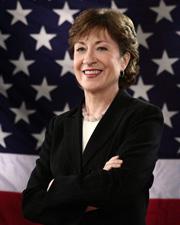
Mr. President, I rise today with my colleague, Senator Russ Feingold, to introduce the ``Purchase Card Waste Elimination Act of 2005,'' to help eliminate wasteful spending that can occur when the…
Mr. President, I rise today with my colleague, Senator Russ Feingold, to introduce the ``Purchase Card Waste Elimination Act of 2005,'' to help eliminate wasteful spending that can occur when the Government neglects to pay attention to where it makes its purchases.
Last year, the Senate Committee on Governmental Affairs, now the Committee on Homeland Security and Governmental Affairs, explored the Government's use of purchase cards and we learned about ways to save an estimated $300 million annually through better management of purchase cards. Purchase cards are, in essence, credit cards that agencies give to its employees for the purpose of obtaining goods and services for the Federal Government. In fact, under Federal acquisition law, purchase cards are the Government's preferred method for making what are known as ``micropurchases''--that is items costing $2,500 or less. Although Government employees spend billions of dollars with purchase cards each year, Federal agencies do very little to analyze the items obtained with purchase cards in an attempt to get a better price for the Government.
The American people have the right to expect the Federal Government to spend their tax dollars carefully and wisely. While this is true at all times, it is never more so than today when the Government is running large budget deficits. The Senate Committee on Homeland Security and Governmental Affairs has a special role to play in reducing wasteful spending, and I have made this role a priority at the Committee. This legislation is one aspect of our committee's efforts to reduce waste, fraud and abuse in Government spending.
Purchase cards came into Federal Government-wide use in 1989. They allow Government employees to easily and efficiently purchase routine items such as office supplies, computers and copying machines. While they are generally used for small purchases, they accounted for more than $16 billion in Federal spending in 2003. In 1994, they accounted for only $1 billion.
This increase in use is good news because it means that more Government spending is being executed in an expeditious manner that reduces red tape and saves on administrative costs. At the same time, the use of purchase cards should enable us to conduct comprehensive analysis of how this $16 billion is spent and where. This information could be analyzed and used to further reduce the Federal Government's costs. At present, however, this is not being done.
Last year, Senator Feingold, Representative Schakowsky and I released a report by the Government Accountability Office identifying missed opportunities for savings. According to that report the missed savings were due to both a lack of training and a lack of management attention and oversight. According to GAO, too many purchase cardholders failed to obtain readily available discounts on purchase cards buys. Even where the Government and the vendor had negotiated a discounted price for items through the General Services Administration schedules, Federal employees with purchase cards failed to take advantage of the discounted prices and their managers were completely unaware of those lost
opportunities to save. One example of a repeated lost opportunity to save was the Department of the Interior's purchases of printer toner cartridges. One GSA schedule vendor offered the toner for only $24.99. Yet, of the Department's 791 toner cartridge purchases, only two were at or below that price. Some cartridges were purchased for $34.99, which is about 40 percent higher than the GSA schedule price.
In addition to failing to use available schedule prices, GAO found that agencies failed to negotiate lower prices with vendors with whom they frequently used purchase cards. In the private sector, most companies that use the same vendor for a lot of purchases would negotiate some sort of volume discount. But before they would attempt to negotiate savings the company would first need to understand its spending patterns. Because Federal agencies lack a comprehensive understanding of where its employees are using Government purchase cards, Federal agencies are unable to replicate this practice.
At my request, GAO analyzed purchase card use at the six Federal agencies that account for 85 percent of Government purchase card usage. As a result of that analysis, GAO estimated that $300 million per year could be saved if agencies improved their purchase card buying practices.
Under our legislation, the Office of Management and Budget, OMB, would direct agencies to better train their cardholders and more effectively analyze their spending data. It would also direct the GSA to increase its efforts to improve its efforts to secure discounts with vendors and provide agencies with more guidance to reduce wasteful spending.
The American people have the right to expect the Federal Government to spend their tax dollars wisely. I urge our colleagues to cosponsor and support this legislation.
Mr. President, I express my unwavering support for S. 467, the Terrorism Risk Insurance Revision Act of 2005, introduced by my friend, Senator Dodd of Connecticut. I would like to commend Senators…
Mr. President, I express my unwavering support for S. 467, the Terrorism Risk Insurance Revision Act of 2005, introduced by my friend, Senator Dodd of Connecticut.
I would like to commend Senators Dodd, Bennett, Shelby, and Sarbanes for getting a bill done that we can all stand here and be proud to support. A bill that is good for this country and good for the State of New York.
At long last builders and insurers of major projects in large cities, particularly New York, can breathe a sigh of relief; terrorism insurance will be renewed. It never should have taken this long, but at least we know this protection will be available for another 2 years.
We still live in America, and particularly in my city of New York, in the shadow of 9/11, of the terrorism that occurred. Obviously, the thousands of families who have had a loved one taken from their midst live with it every moment of their remaining lives, but the rest of us live with it too, not only in empathy for them but also in terms of the economic consequences of terrorism.
The bottom line is very simple, and that is, because of terrorism, the insurance industry, in terms of insuring risk of large structures in America--whether it be large buildings that make us so proud of the Manhattan skyline, or large arenas such as the football stadiums that dot America, or larger facilities such as Disneyland, Disney World, and amusement parks--all have difficulty getting insurance.
Insurers are worried that if, God forbid, another terrorist act occurs it will be so devastating that it will put them out of business.
So 2 years ago, the Senate, House, and the President got together at sort of the end of the day, just like today, and passed terrorism risk insurance.
It has been a large success. That no one can dispute.
Insurance rates have come down, terrorism insurance is available, and insurance companies know if, God forbid, the worst happens there will be a backstop, and they are willing to issue policies.
In turn, that meant developers, builders who wanted to build new large structures in America, did so, employing thousands and thousands of people, creating profits and new businesses as well.
Well today we are all here to do the right thing. Yesterday, the Banking Committee, of which I am member, passed unanimously a bill to extend the TRIA. In this bill we have kept the trigger levels manageable for the policyholder community. We kept the retention levels at a responsible level for the private market, retaining the public/ private nature of the program.
The bottom line is that we have made some necessary modifications to the program without losing the major protections. We did not all agree what should have been in the bill. Many of us felt strongly about including Group Life and protections against nuclear, biological, chemical and radiological attacks. But the beauty of the process is that it is a negotiation where we all give and take.
This bill is a good compromise.
The continuation of this program is vital to our Nation's economic stability. By passing this bill on the floor today, we will be sending a message to the world that our financial markets will be protected. That our country will be able to bounce back in the event of any disruptions or financial dislocation caused by another possible terrorist attack.
It is still my strong belief that there needs to be a long-term solution--a permanent program. The President has continued to say that we are fighting a war on terrorism.
The bombing in Jordan last week, the London bombings this past July, and the recent threat to the New York subway system are a few examples of why we must continue fighting this war on terrorism.
It would have been my preference to get a bill that extended beyond 2 years. But I am at least pleased to know that there was a serious effort to address this concern by including a provision to create a commission that would begin to analyze the long-term availability and affordability of insurance for terrorism risk.
I would particularly like to thank Senators Dodd and Shelby for specifically including the language I requested which directs the President's Working Group to analyze the long-term affordability and availability of coverage for chemical, nuclear, biological and radiological events.
This is an issue of great importance to many New Yorkers. Many retailers and business owners in Lower Manhattan are afraid of a possible dirty bombs attack and the availability of insurance for such an event. This must be addressed and right away.
The bottom line is that financial dislocation caused by another possible terrorist attack--God forbid--is too much for our country to risk. I urge the entire Senate to pass this legislation today. It is only right that we let the markets, let the insurance world, and, most of all, let jobs and construction go forth.
(At the request of Mr. Reid, the following statement was ordered to be printed in the Record.)
Mr. Speaker, the ranking member of the subcommittee, the gentleman from Pennsylvania (Mr. Kanjorski), is on his way over. He has taken the lead for us on this bill. I would just ask at this point…
Mr. Speaker, the ranking member of the subcommittee, the gentleman from Pennsylvania (Mr. Kanjorski), is on his way over. He has taken the lead for us on this bill.
I would just ask at this point unanimous consent for me to turn over to him the management of our time when he arrives.
Mr. Speaker, this is a bill to which my response is, ``Better late than never.'' I wish we would have done this earlier. We have known for some time the deadline was coming. I appreciate the efforts of the chairman of the committee to get the attention of the House to this bill. We passed it in committee some time ago before the break. It frankly could have come to the floor before that.
I say that because I am pleased with this bill in general. I think it is useful that we are producing it. And there are differences between this bill and the one passed by the Senate, and we do need some time to work them out.
None of them is of enormous difficulty, it seems to me, they all have a similar capacity, but it would have been better if we had done this earlier.
Having said that, I want to stress what is so important about this bill to me, and it is it establishes or maintains the principle that we will try to minimize the extent to which terrorists influence decisions that we make here in America. I do not regard this as a favor to the insurance companies. Frankly, terrorism insurance would, I believe, not exist if it were not for this bill or, if it did exist, it would be at very high premiums. The insurance industry would have the option either of walking away from offering this or of charging high premiums. I do not think the insurance industry would be greatly disadvantaged.
The losers, if we do not reenact terrorism risk insurance, are people who want to build and particularly in those cities that are seen as potential targets of terrorism. We have been told by people who want to do large commercial buildings, very important to the big cities of this country, to the areas that would be the targets of terrorism, that they would not be able to get loans that are necessary obviously to build if they are not fully insured. Lenders are telling us, yes, we cannot now lend large amounts of money, tens, hundreds of millions of dollars to a building that might be at risk from terrorism and be uninsured against that risk.
I think we ought to have a responsible insurance system so that where we can minimize risk we can give people an incentive to be responsible in dealing with them. I do not think it is
good public policy to say to people who want to build in New York or Chicago or Los Angeles or here in Washington, D.C., There are terrorists out there and they want to blow things up and you will bear that financial responsibility; that is up to you. That is unfair to the cities, and it gives the terrorists leverage over our economy.
So this is a bill which, in my mind, is not for benefit of the insurers but for the insured, and it is for the benefit of the insured so that we can go forward with the development of our economy.
Indeed, there is one issue here regarding the World Trade Center that we have not yet fully resolved, and I appreciate the chairman showing some interest in this. We were asked, both of us, by Members from the New York area about some provisions to deal with the possibility that the World Trade Center reconstruction will take too long. Frankly, those in charge in New York did not come to us until very late in the process, and it was not possible to accommodate something of that complexity now. I hope we do not rule it out for the future, but if they had come to us earlier, we might have been able to deal with it somewhat differently, but that illustrates the point.
This is a bill to make sure that economic activity in our biggest cities can go on uninterrupted, and the alternative is to let the terrorists put a terrorist tax on building large buildings in our big cities, and we should not allow that.
Let me just say, finally, I want to acknowledge, and my friend from Pennsylvania is here and will be taking this over, but this has been a cooperative effort with the chairman of the committee, the gentleman from New York (Mr. Israel), the gentleman from New York (Mr. Crowley). The gentleman from Massachusetts (Mr. Capuano) has done a lot.
Last point. Some of the consumer groups have raised what I think are misguided objections here. I do not see that this, in any way, impinges on the consumers negatively, but thanks to the gentlewoman from Florida, who will be speaking later, it has a very important proconsumer piece, and I appreciate the chairman's agreeing to add it, that protects Americans from arbitrary treatment if they are traveling to certain parts of the world.
So I am very supportive of this, and I would now turn over the management of the time to the gentleman from Pennsylvania.
Mr President, I rise to lend my strong support for S. 467, the Terrorism Risk Insurance Extension Act of 2005, which I originally introduced with Senator Bennett and 34 cosponsors earlier this year.…
Mr President, I rise to lend my strong support for S. 467, the Terrorism Risk Insurance Extension Act of 2005, which I originally introduced with Senator Bennett and 34 cosponsors earlier this year. The product before the Senate today was amended in committee with the hard work and leadership of Banking Committee Chairman Shelby and Ranking Member Sarbanes. Additionally, S. 467 addresses many of the ideas and concerns raised by the House in its version of the legislation. I would like to thank House Financial Services Committee Chairman Oxley and Ranking Member Frank for their hard work in finding consensus on this measure.
I would like to commend the members on the Banking Committee: Senators Johnson, Reed, Schumer, Bayh, Carper, Stabenow, Corzine, Hagel, Bunning and Dole as well as the other cosponsors of the legislation for recognizing-- very early on--how important extending the Terrorism Risk Insurance Act, TRIA, was to our Nation's economy and for their efforts on this legislation.
I would also like to thank the staff who worked on this legislation, particularly Sarah Kline and Steve Harris from Senator Sarbane's staff, Mike Nielsen from Senator Bennett's staff, Alex Sternhell from my staff and Jim Johnson, Andrew Olmem, Mark Oesterle and Kathy Casey from Senator Shelby's staff.
Like many bills, this legislation is a document of compromise. We have carefully taken into consideration the recommendations of policyholders, insurers, consumers, academics, thinktanks, the Treasury Department and others to craft this important extension legislation.
Let me take a few brief moments to provide my colleagues with a little background on TRIA and why it needs to be extended today.
As a result of the tragic terrorist acts events of 9/11, we repeatedly heard from businesses, large and small, from labor unions and manufacturers, from hospitals to hotels, from professional sports teams to utility companies, from insurers and the insured about the need for the Federal Governmment to act to help them receive financial protection from future terrorist attacks.
Congress listened, and we acted--creating the Terrorism Risk Insurance Act, TRIA.
In November 2002, TRIA was passed by both the House and Senate by significant margins and was signed into law. It created a 3-year program establishing a Federal backstop against catastrophic losses in the property and casualty insurance marketplace.
And we heard an ovehelming response trom policyholders across the country--TRIA has worked. It has achieved its primary goal--continued availability and affordability of insurance against future terrorist attacks.
Industries as diverse as commercial real estate, shipping, construction, manufacturing, and even ``mom and pop'' retailers require insurance to obtain credit, loans, and investments necessary for their normal business operations. TRIA was designed to do just that--restore ``business as usual'' in every State across our Nation.
I believe that the greatest indicator of the success of TRIA is what we have
heard over the past 3 years since the enactment of TRIA--public outcry from businesses and workers whose livelihoods are threatened by their inability to purchase coverage against acts of terror.
Construction projects are no longer stalled, mortgages are no longer in doubt, jobs are no longer in jeopardy as a result of the inability to receive terrorism insurance.
Not only has TRIA been effective in ensuring that terrorism is available and affordable, and that our economy remains vibrant, it is also an incredibly important taxpayer protection law. With relatively little money necessary to fund the administration of the TRIA program, we have ensured that insurers and policyholders take the first $30 to $40 billion of losses of a potential terrorist attack.
Additionally, there is one provision in this legislation that I believe is an important component--the mandate for the President's Working Group--our Nation's Federal financial regulators--to do an analysis of the long-term availability and affordability of terrorism risk insurance.
This legislation provides for a 2-year extension of TRIA--and in these next 2 years we need to find a long-term solution to this issue. It may be determined that this is an unwritable risk for the private sector and that a continued Federal role is needed or we may find that insurers are able to return to underwriting this risk without a Federal backstop. But we need to start work on developing this information and potential solutions as soon as possible.
The enactment of this legislation will extend the TRIA program and will ensure that our Nation and its economy are best prepared to deal with a future terrorist attack. I urge my colleagues to support this important legislation.
Mr. President, I rise today to express my unwavering support for S. 467, the Terrorism Risk Insurance Extension Act of 2005, introduced by my friend, Senator Dodd of Connecticut. I would like to…
Mr. President, I rise today to express my unwavering support for S. 467, the Terrorism Risk Insurance Extension Act of 2005, introduced by my friend, Senator Dodd of Connecticut.
I would like to commend Senators Dodd, Bennett, Shelby and Sarbanes for getting a bill done that we can all stand here and be proud to support. A bill that is good for this country and good for the State of New York.
We still live in America, and particularly in my city of New York, in the shadow of 9/11, of the terrorism that occurred. Obviously, the thousands of families who have had a loved one taken from their midst live with it every moment of their remaining lives, but the rest of us live with it, too, not only in empathy for them but also in terms of the economic consequences of terrorism.
The bottom line is very simple, and that is, because of terrorism, the insurance industry, in terms of insuring risk of large structures in America--whether it be large buildings that make us so proud of the Manhattan skyline or large arenas such as the football stadiums that dot America or larger facilities such as Disneyland, Disney World, and amusement parks--all have difficulty getting insurance.
Insurers are worried that if, God forbid, another terrorist act occurs, it will be so devastating that it will put them out of business.
So 2 years ago, the Senate, House, and the President got together at sort of the end of the day, just like today, and passed terrorism risk insurance.
It has been a large success. That, no one can dispute.
Insurance rates have come down, terrorism insurance is available, and insurance companies know, if, God forbid, the worst happens, there will be a backstop, and they are willing to issue policies.
In turn, that meant developers, builders who wanted to build new large structures in America, did so, employing thousands and thousands of people, creating profits and new businesses as well.
Well, today we are all here to do the right thing. Yesterday, the Banking Committee, of which I am member, passed unanimously a bill to extend the TRIA. In this bill, we have kept the trigger levels manageable for the policyholder community. We kept the retention levels at a responsible level for the private market, retaining the public/ private nature of the program.
The bottom line is that we have made some necessary modifications to the program without losing the major protections. We did not all agree what should have been in the bill. Many of us felt strongly about including group life and protections against nuclear, biological, chemical and radiological attacks. But the beauty of the process is that it is a negotiation where we all give and take.
This bill is a good compromise.
The continuation of this program is vital to our Nation's economic stability. By passing this bill on the floor today, we will be sending a message to the world that our financial markets will be protected, that our country will be able to bounce back in the event of any disruptions or financial dislocation caused by another possible terrorist attack.
It is still my strong belief that there needs to be a long-term solution--a permanent program. The President has continued to say that we are fighting a war on terrorism.
The bombing in Jordan last week, the London bombings this past July, and the recent threat to the New York subway system are a few examples of why we must continue fighting this war on terrorism.
So it would have been my preference to get a bill that extended beyond 2 years. But I am at least pleased to know that there was a serious effort to address this concern by including a provision to create a commission that would begin to analyze the long-term availability and affordability of insurance for terrorism risk.
I would particularly like to thank Chairman Dodd and Shelby for specifically including the language I requested which directs the President's working group to analyze the long-term affordability and availability of coverage for chemical, nuclear, biological, and radiological events.
This is an issue of great importance to many New Yorkers. Many retailers and business owners in Lower Manhattan are afraid of a possible dirty bombs attack and the availability of insurance for such an event. This must be addressed and right away.
The bottom line is that financial dislocation caused by another possible terrorist attack--God forbid--is too much for our country to risk. I urge the entire Senate to pass this legislation today. It is only right that we let the markets, let the insurance world, and, most of all, let jobs and construction go forth.
Mr. Speaker, I yield 2 minutes to the gentleman from New York (Mr. Israel). Mr. Speaker, I yield myself 3 minutes. (Mr. KANJORSKI asked and was given permission to revise and extend his remarks.) Mr.…
Mr. Speaker, I yield 2 minutes to the gentleman from New York (Mr. Israel).
Mr. Speaker, I yield myself 3 minutes.
(Mr. KANJORSKI asked and was given permission to revise and extend his remarks.)
Mr. Speaker, I rise in support of the Terrorism Risk Insurance Revision Act.
The terrorist attacks on the World Trade Center and the Pentagon altered how we each assess risk. This adjustment was especially apparent in the insurance industry.
Terrorism insurance is critical to protecting jobs and promoting America's economic security. Unfortunately, the supply of terrorism reinsurance after the September 11 attacks significantly decreased.
Eventually, we approved the Terrorism Risk Insurance Act to address this problem. At recent hearings, we have learned that this law has worked to increase the availability of terrorism risk insurance, lowered the cost of such insurance, contributed significantly to stabilizing the overall insurance marketplace, and advanced delayed economic development projects.
We also wisely designed this program as a temporary backstop to get our Nation through a period of economic uncertainty until the private sector could develop the models to price for terrorism reinsurance. Unlike hurricanes and fires, acts of terrorism in the American experience currently remain inherently unpredictable in frequency and scale. As a result, the private sector has not yet returned to the terrorism reinsurance marketplace.
Many studies support this finding. The Government Accountability Office, for example, has determined that the industry has made little progress to date in providing terrorism insurance without government involvement. A report by the Rand Corporation also found that TRIA is needed, but because of its gaps, it is not robust enough to protect against evolving threats like those posed by nuclear, biological, chemical and radioactive events.
Many have, therefore, called upon us to modify and extend the life of the terrorism risk insurance program in order to prevent short-term market disruptions and better protect the economy. The consensus bill before us today wisely extends the program up to 3 years and adopts other prudent reforms.
I am especially pleased that the bill includes group life insurance as a covered line. The original TRIA omitted such coverage. This bill fixes that oversight. We need, after all, to insure the people inside the buildings, not just the buildings themselves.
In closing, Mr. Speaker, this is not a Democratic issue or a Republican issue. It is an American issue, a business issue and an economic security issue.
With less than 4 weeks remaining before the current program expires, we need to expeditiously pass this important economic stabilization legislation and move forward with a conference. I urge my colleagues to support this bill.
Mr. Speaker, I reserve the balance of my time.
Mr. Speaker, I yield 2 minutes to the gentleman from Massachusetts (Mr. Capuano).
Mr. Speaker, I yield 2 minutes to the charming gentlewoman from Florida (Ms. Wasserman Schultz).
Mr. Speaker, I yield 2 minutes to the gentlewoman from New York (Mrs. Maloney).
Mr. Speaker, this has been a difficult time, because so many of us over the last year have desired to move this legislation along. But I would be remiss if I did not take this occasion to perhaps illuminate an example for this entire Congress as represented by the financial services industry.
I would have to say, without doing an in-depth study, that the Financial Services Committee of the House of Representatives has proven that even in the 109th Congress we can have bipartisan activity of an extraordinary amount, and that to a large extent is due to the incredibly good leadership of our gentleman friend, the chairman from Ohio, and the ranking member, the gentleman from Massachusetts (Mr. Frank). I also would be remiss if I did not suggest a strong and hard effort by our friend, the subcommittee chairman, Mr. Baker of Louisiana.
Perhaps the full House could take note that in pressing times of need for legislation that can be contentious and has philosophical differences of great order, both sides of the aisle on this piece of legislation, and so many more in this session of Congress, have come together to perform the people's work; and I think the congratulations to a large extent for that effort go to the gentleman from Ohio, the chairman, Mr. Oxley.
With those remarks, Mr. Speaker, and urging all my colleagues in the House to vote ``yes'' on this legislation, I yield back the balance of my time.
Mr. Speaker, on that I demand the yeas and nays.
Mr. Speaker, I have to say I was struck by the gentleman from Texas crediting his fellow Republicans for showing up. Because if it were not for the combination of institutional incompetence and…
Mr. Speaker, I have to say I was struck by the gentleman from Texas crediting his fellow Republicans for showing up. Because if it were not for the combination of institutional incompetence and ideological extremism that dominates the Republican Party, none of us would have had to be here. So I guess we all deserve recognition as victims of that.
I actually think this motion should have been retitled. It should have been called Subversion of the Rules, not Suspension of the Rules, because that is what is happening. We are being at almost gunpoint, the metaphorical, parliamentary equivalent of gunpoint, being asked to debate under very restrictive measures bills that deserve more.
Let me talk about one, the terrorism risk insurance. I think it is an important bill, and I agree substantively with what the gentleman from Texas said. Unfortunately, the right wingers who dominate this administration and much of the congressional leadership in both Houses do not agree. They tried to kill this thing, until finally, at the overwhelming insistence of people who are involved in the economy of this country said that that would be irresponsible, they did the next best thing. They have forced us to deal with it in a constricted and inappropriate way.
We did take it up in the House, and we had a full markup in our committee, and we voted on it on the floor. In the Senate, and let us praise the rule change that now allows us to tell the truth about what goes on in the Senate, the Senate passed a very restricted version of this. The Senate chairman of the banking committee then refused to appoint conferees.
Interestingly, we are going to have to amend this rule, because the rule, reasonably, said let us take up on suspension the conference report on TRIA. And then the Rules Committee had to be reminded that there is no conference report on TRIA, because the Republican Senate chairman, knowing that he would have been outvoted in the conference, refused to allow one and, instead, individually dictated what would be in it.
So we are going to have to amend it, because if we had a vote on a conference report on TRIA, we would have no TRIA. They would not have a conference. The regular order has been totally subverted. Unfortunately, we have to accommodate it because we are up against a December 31 extension.
By the way, if the House Republican leadership had not delayed consideration of this bill, we could have done it months ago and not been vulnerable to that kind of extortion.
What we have now is a bill that leaves out, for example, the commission on how to deal with terrorism insurance that the families of September
11 have asked for. We will go into that further when we debate it, but the families of September 11 asked for a commission. We included it in the House bill. Chairman Oxley and Chairman Baker accommodated that reasonable request. It is not in the Senate Bill. And because of this outrageously high-handed legislative procedure, we do not have a chance to include it.
An important provision was adopted here in the House, sponsored by the gentlewoman from Florida, to prevent people who are traveling to what some insurance companies think are dangerous areas, like Israel, from being denied life insurance. That is not in the bill. Maybe some people do not like it, but we should have been able to have had a forum in which it could be debated and decided.
Instead, we have the right wing that controls the executive branch and both Houses of Congress grudgingly allowing a bare bones and, I think, inadequate form of extension. It is better than nothing. It is important to the economy, and the gentleman from Texas is right. But here is a combination of ideological extremism and a refusal to recognize the legitimacy of a democratic process here.
As we salute democracy in Iraq, and I am glad we saw it yesterday, I guess I am starting to get jealous of the Iraqis, because as of now there is more democracy being practiced under American auspices in Iraq than the leadership here in the House of Representatives is allowing on the floor of this body.
Mr. Speaker, if the gentleman will yield for just a moment, I want to thank the gentleman for his graciousness on that, and I appreciate that.
Mr. President, the Senate is undertaking a long awaited debate on S. 467, Terrorism Risk Insurance Extension Act of 2005. This bill extends the important program that allows for the Federal…
Mr. President, the Senate is undertaking a long awaited debate on S. 467, Terrorism Risk Insurance Extension Act of 2005. This bill extends the important program that allows for the Federal Government to share the risk of loss from future terrorist attacks with the insurance industry for 2 more years, to 2007.
As we all know, terrorism remains a clear and present danger. The need for terrorism insurance is real, pressing, and a long-term issue. In the post-9/11 world, it is important to keep the existing TRIA program in place, while continuing to work with the private sector-- both policyholders and insurers--to craft a longer term program that addresses all the needs of policyholders.
I want to particularly commend Minority Leader Reid, Chairman Shelby, Senators Sarbanes, Dodd, Bennett, and their staffs for their tireless efforts in bringing this issue to the forefront of the Senate's legislative agenda.
The need for terrorism insurance coverage has been widely established as an economic issue, rather than just simply an insurance issue. In the past year, we have heard that many American businesses-- policyholders--are already receiving exclusion notices from insurers informing them that they will not be covered on policies beyond TRIA's sunset date. As a result, there has been increasing uncertainty about the availability of adequate terrorism
coverage beyond 2005. Clearly, a Federal backstop is vital to ensuring the ongoing availability of terrorism risk coverage.
The other key reason to act on this issue is the fact that should another catastrophic event occur, the Federal Government will likely be on the hook for the total amount of the damage.
An important aspect of this debate is making certain that terrorism insurance coverage is available in the workers' compensation market. Workers' compensation is unique insurance coverage in that law requires that it cover acts of terrorism and war. For close to a century now, workers' compensation has been a safety net available to all workers and their families, replacing lost wages, and paying for medical needs and death benefits regardless of the cause of the workplace injury or death. A strong workers' compensation system is integral to helping victims and their families rebuild their lives.
In my State of Rhode Island, the burden of providing workers' compensation falls to one mutual insurance compan, Beacon Mutual, which was created by the State to ensure that there will always be workers' compensation available to companies in the State. With less availability of reinsurance, the concern for one company conceivably underwriting the entire market for workers' compensation was significant and would have created a very tenuous situation for the company, the State, and its residents. Extending TRIA will address the various problems that employers, insurance companies, and State workers compensation pools alike have had to endure in the absence of a Federal backstop.
I would note, however, that although S. 467 is an improvement on the administration's proposal for the trigger for a terrorist incident--$50 million in the first year of the extension and $100 million in the last, down from $500 million, I remain concerned that because of the concentration of risk and their small capitalization, a higher trigger level for State fund companies put these funds uniquely at risk. A number of terrorist targets could create a result where workers' compensation losses could exceed property losses, but still not reach the proposed higher trigger. As we move towards finding a long-term solution to terrorism insurance coverage, I hope we can work to better address this issue.
There remains a great need to do something because, as it has been stated very plainly during this debate, the situation without a Federal terrorism risk insurance program could be very dire. Extending TRIA is absolutely the right thing to do to protect the economic security of our country. I urge my colleagues to support this bill, and I look forward to its speedy adoption and signature into law.
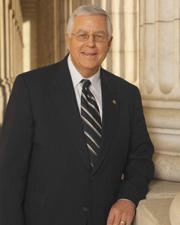
Mr. President, I ask unanimous consent that the Committee on Banking, Housing, and Urban Affairs be authorized to meet during the session of the Senate on Wednesday, November 16, 2005, at 10:30 a.m.…
Mr. President, I ask unanimous consent that the Committee on Banking, Housing, and Urban Affairs be authorized to meet during the session of the Senate on Wednesday, November 16, 2005, at 10:30 a.m. to mark up S. 467, ``Terrorism Risk Insurance Extension Act of 2005,'' and an original bill entitled ``Public Transportation Terrorism Prevention Act of 2005''.
Mr. President, I ask unanimous consent that the Committee on Commerce, Science, and Transportation be authorized to meet on Wednesday, November 16, 2005, at 10 a.m., on the Magnuson-Stevens Fishery Conservation Reauthorization.
Mr. President, I ask unanimous consent that the Committee on Energy and Natural Resources be authorized to meet during the session of the Senate on Wednesday, November 16 at 11:30 a.m. The purpose of this meeting is to consider pending calendar business.
Agenda Item 1: To consider the nomination of Jeffrey D. Jarrett to be Assistant Secretary for Fossil Energy, Department of Energy.
Agenda Item 2: To consider the nomination of Edward F. Sproat III to be
Director, Office of Civilian Radioactive Waste Management, Department of Energy.
In addition, the Committee will consider noncontroversial items that have been agreed to on both sides.
Mr. President, I ask unanimous consent that the Committee on Environment and Public Works be authorized to hold an oversight hearing to examine transportation fuels of the future on November 16, 2005 at 9:30 a.m.
Mr. President, I ask unanimous consent that the Committee on Foreign Relations be authorized to meet during the session of the Senate on Wednesday, November 16, 2005, at 9:30 a.m. to hold a hearing on ``The High Costs of Crude: The New Currency of Foreign Policy.''
Mr. President, I ask unanimous consent that the Committee on Homeland Security and Governmental Affairs be authorized to meet on Wednesday, November 16, 2005, at 10 a.m. for a hearing titled, ``Hurricane Katrina: What Can Government Learn from the Private Sector's Response?''.
Mr. President, I ask unanimous consent that the Committee on the Judiciary be authorized to meet to conduct a hearing on ``Habeas Reform: The Streamlined Procedures Act'' on Wednesday, November 16, 2005 at 9:30 a.m. in the Dirksen Senate Office Building Room 226.
Witness List
Panel I: Ronald Eisenberg, Esq., Deputy District Attorney, Philadelphia District Attorney's Office, Philadelphia, PA; The Honorable Seth Waxman, former Solicitor General of the United States, Partner, Wilmer, Cutler, Pickering, Hale and Dorr, Washington, DC; The Honorable Howard D. McKibben, Senior United States District Judge for the District of Nevada, Chairman of the Judicial Conference Committee on Federal-State Jurisdiction, Reno, NV.
Mr. President, I ask unanimous consent that the Select Committee on Intelligence be authorized to meet during the session of the Senate on November 16, 2005, at 2:30 p.m. to hold a closed briefing.
Mr. President, I ask unanimous consent that the Subcommittee on Administrative Oversight and the Courts be authorized to meet to conduct a hearing on ``Creating New Federal Judgeships: The Systematic or Piecemeal Approach'' on Wednesday, November 16, 2005 at 2:30 p.m. in Room 226 of the Dirksen Senate Office Building.
Witness List
Panel I: The Honorable W. Royal Furgeson, Jr., District Judge for the Western District of Texas, Chairman of the Judicial Conference Committee on Judicial Resources, San Antonio, TX; The Honorable William H. Steele, U.S. District Judge for the Southern District of Alabama, Mobile, AL; Robyn J. Spalter, Esq., President, Federal Bar Association, Miami, FL.
Mr. President, I ask unanimous consent that the Subcommittee on Consumer Affairs, Product Liability, and Insurance be authorized to meet on Wednesday, November 16, 2005, at 2:30 p.m., on Protecting the Consumer from Flooded and Salvage Vehicle Fraud.
Mr. Speaker, I yield myself such time as I may consume. Mr. Speaker, I join my colleague in expressing a little disappointment in the failure of the other body to rise to the occasion. A considerably…
Mr. Speaker, I yield myself such time as I may consume.
Mr. Speaker, I join my colleague in expressing a little disappointment in the failure of the other body to rise to the occasion.
A considerably better piece of legislation was drafted and passed here in the House and sent over to the other body, only to get to this 11th hour and get back some legislation that is less than a good product.
It does several things; and I dare say, I have to rise to support it because it is the only thing flying in town tonight. And since terrorism reinsurance will expire in 2 weeks to an incredible disadvantage of American business and American jobs, I think we have no alternative but to support this piece of legislation tonight.
What it does not do, however, is it does not pass on and consider legislation taking care of nuclear, chemical, biological, radioactive terrorism incidents. What it does not include is allowing for a commission that would sit down and analyze and develop a mechanism so that we can pass the responsibility for the public back to the private sector in a smart and reasonable way.
And it does not extend it nearly for long enough or provide for the continuation of this type of coverage into the future, because as the chairman well said, 2 years is entirely too short. The only thing we are certain of is we will be back in this Chamber within the 2 years to do something over again, having lost 2 years of work product and probably again 2 years of involvement.
Finally, the last thing the bill does not include today that is a great disappointment to me is comprehensive health coverage insurance. It seems that we are willing to insure the buildings, but not the people. Group life was included in the House side of the bill, but has fallen out as the bill has come back from the Senate.
I guess the last sport I would complain about with the Senate is, if I recall, several days ago or maybe a week has gone by, we had the appointment of a conference committee in the House. And our coach was lined up and ready to go. We all went out and bought uniforms and prepared to do battle, and somebody forget to give the referee a whistle. As I understand, the conference never started or ended. This is merely a product sent over as a last-ditch effort, take it or leave it. That is what we are faced with.
But with all of that said, I think it is another example that, at least here on the House side, the Financial Services Committee has had and has displayed a great deal of capacity to work together in trying times.
I wanted to thank and recognize all the folks on the Republican side of the aisle that were so bipartisan in working on this. And I think we were of common mind to get it done, and we got a good product done.
On my side of the aisle, many of the participants in this legislation will have an opportunity to speak, and they can critique the legislation and their own role as they do speak.
Mr. Speaker, I reserve the balance of my time.
Mr. Speaker I yield 2 minutes to the gentleman from Massachusetts (Mr. Frank).
Mr. Speaker, I yield to the gentleman from New York (Mr. Israel) for 3 minutes.
Mr. Speaker, I yield 3 minutes to the gentlewoman from New York (Mrs. Maloney).
Mr. Speaker, I yield 3 minutes to the gentlewoman from Florida (Ms. Wasserman Schultz).
Mr. Speaker, I yield 3 minutes to the gentleman from New York (Mr. Crowley).
Mr. Speaker, I yield 3 minutes to the gentleman from Massachusetts (Mr. Capuano).
Mr. Speaker, I urge all of my colleagues to support this legislation because of its necessity to America's working men and women and the business community of America.
Mr. Speaker, I yield back the balance of my time.
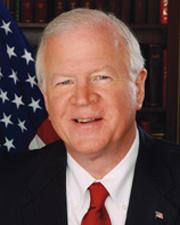
Mr. President, today we are introducing legislation, two bills that I hope will pave the way to correct a half a century of transportation inequity in the Southern United States. First, I am…
Mr. President, today we are introducing legislation, two bills that I hope will pave the way to correct a half a century of transportation inequity in the Southern United States.
First, I am introducing a bill, supported by Senators Isakson, Lott, and Cochran, that proposes a new interstate highway, Interstate 14 or ``I-14,'' linking Augusta, Macon and Columbus, GA connecting through Montgomery, AL and going all the way to Natchez, MS.
Second, my colleague from Georgia, Senator Isakson and I are proposing the creation of Interstate 3 or ``I-3'', linking Savannah and Augusta, GA to Knoxville, TN.
In the 108th Congress, Senator Miller and I introduced these bills. If passed, they would require the Secretary of Transportation to study and report to the appropriate committees of Congress, before December 31, 2005, the steps and estimated funding necessary to designate and construct these new interstate highways.
These proposals are multi-purpose plans. They would naturally improve the interconnectivity and highway safety for those in the Deep South. Also, they would help provide the badly needed economic development to areas of the South ignored by our current interstate grid, and improve the national defense highway linkage for which our interstate system was originally designed. In addition, they could help provide critical environmental improvements for the entire Sunbelt region by reducing the air pollution and traffic congestion in some of our major gridlocked southern cities.
The honorary name of the ``I-14'' plan helps to provide symbolic recognition to the promise of economic parity to freed slaves which was implied with the passage of the 14th Amendment in 1868. As the South struggled to overcome four years of devastating war and find a way to integrate the newly emancipated slaves into the full benefits of citizenship, Congress passed this amendment, guaranteeing equal rights for all Americans.
I am convinced that this area remains largely isolated from the economic expansion that transformed much of the rest of the South starting in the 60s. Many in this region still suffer from the lack of economic parity with America. Eighty percent of jobs in America are located within 10 miles of an interstate. In this case, there are regions where there is no interstate. It is my hope that the addition of I-14 will help bring and provide the promising economic development and much needed jobs to this region.
The 3rd Infantry Division Highway Initiative Act is named for the U.S. Army 3rd Infantry Division of Fort Stewart--division that served as the ``Tip of the Spear'' in the War on Terror in Iraq and whose soldiers conquered Najaf, seized Saddam International Airport and Saddam Hussein's palaces, and led the fighting on the day of Baghdad's historic liberation. The proposed route for ``I-3'' would provide a highway link between strategic defense interests in our region including Fort Gordon, Eisenhower Army Regional Medical Center, the Augusta Veterans Administration Hospitals, Fort Stewart, Hunter Army Airfield, and the Port of Savannah among others. In the process, we will provide long-needed North-South interstate access for Augusta, which happens to be Georgia's second largest city. It will also provide a direct interstate link between Fort Gordon in Augusta and Fort Stewart and Hunter Army Airfield in Savannah, which would serve both facilities well in warding off base closures now and in the future.
It may take a decade to bring these projects to full completion. They are not a quick or easy fix, however they are the necessary, equitable and common sense solution.
Bill Text
7 versions available
        [Congressional Bills 109th Congress]
[From the U.S. Government Publishing Office]
[S. 467 Enrolled Bill (ENR)]

S.467

One Hundred Ninth Congress

of the

United States of America

AT THE FIRST SESSION

Begun and held at the City of Washington on Tuesday,
the fourth day of January, two thousand and five

An Act

To extend the applicability of the Terrorism Risk Insurance Act of 2002.

Be it enacted by the Senate and House of Representatives of the
United States of America in Congress assembled,

SECTION 1. SHORT TITLE.

This Act may be cited as the ``Terrorism Risk Insurance Extension
Act of 2005''.

SEC. 2. EXTENSION OF TERRORISM RISK INSURANCE PROGRAM.

(a) Program Extension.--Section 108(a) of the Terrorism Risk
Insurance Act of 2002 (15 U.S.C. 6701 note; 116 Stat. 2336) is amended
by striking ``2005'' and inserting ``2007''.
(b) Mandatory Availability.--Section 103(c) of the Terrorism Risk
Insurance Act of 2002 (15 U.S.C. 6701 note; 116 Stat. 2327) is
amended--
(1) by striking paragraph (2);
(2) by striking ``AVAILABILITY.--'' and all that follows
through ``each entity'' and inserting ``AVAILABILITY.--During each
Program Year, each entity''; and
(3) by redesignating subparagraphs (A) and (B) as paragraphs
(1) and (2), respectively, and moving the margins 2 ems to the
left.

SEC. 3. AMENDMENTS TO DEFINED TERMS.

(a) Program Years.--Section 102(11) of the Terrorism Risk Insurance
Act of 2002 (15 U.S.C. 6701 note; 116 Stat. 2326) is amended by adding
at the end the following:
``(E) Program year 4.--The term `Program Year 4' means the
period beginning on January 1, 2006 and ending on December 31,
2006.
``(F) Program year 5.--The term `Program Year 5' means the
period beginning on January 1, 2007 and ending on December 31,
2007.''.
(b) Exclusions From Covered Lines.--
(1) In general.--Section 102(12)(B) of the Terrorism Risk
Insurance Act of 2002 (15 U.S.C. 6701 note; 116 Stat. 2326) is
amended--
(A) in clause (vi), by striking ``or'' at the end;
(B) in clause (vii), by striking the period at the end and
inserting a semicolon; and
(C) by adding at the end the following:
``(viii) commercial automobile insurance;
``(ix) burglary and theft insurance;
``(x) surety insurance;
``(xi) professional liability insurance; or
``(xii) farm owners multiple peril insurance.''.
(2) Conforming amendment.--Section 102(12)(A) of the Terrorism
Risk Insurance Act of 2002 (15 U.S.C. 6701 note; 116 Stat. 2326) is
amended by striking ``surety insurance'' and inserting ``directors
and officers liability insurance''.
(c) Insurer Deductibles.--Section 102(7) of the Terrorism Risk
Insurance Act of 2002 (15 U.S.C. 6701 note; 116 Stat. 2325) is
amended--
(1) in subparagraph (D), by striking ``and'' at the end;
(2) by redesignating subparagraph (E) as subparagraph (G);
(3) by inserting after subparagraph (D), the following:
``(E) for Program Year 4, the value of an insurer's direct
earned premiums over the calendar year immediately preceding
Program Year 4, multiplied by 17.5 percent;
``(F) for Program Year 5, the value of an insurer's direct
earned premiums over the calendar year immediately preceding
Program Year 5, multiplied by 20 percent; and''; and
(4) in subparagraph (G), as so redesignated, by striking
``through (D)'' and all that follows through ``Year 3'' and
inserting the following: ``through (F), for the Transition Period
or any Program Year''.

SEC. 4. INSURED LOSS SHARED COMPENSATION.

Section 103(e) of the Terrorism Risk Insurance Act of 2002 (15
U.S.C. 6701 note; 116 Stat. 2328) is amended--
(1) in paragraph (1)--
(A) by inserting ``through Program Year 4'' before ``shall
be equal''; and
(B) by inserting ``, and during Program Year 5 shall be
equal to 85 percent,'' after ``90 percent''; and
(2) in each of paragraphs (2) and (3), by striking ``Program
Year 2 or Program Year 3'' each place that term appears and
inserting ``any of Program Years 2 through 5''.

SEC. 5. AGGREGATE RETENTION AMOUNTS AND RECOUPMENT OF FEDERAL SHARE.

(a) Aggregate Retention Amounts.--Section 103(e)(6) of the
Terrorism Risk Insurance Act of 2002 (15 U.S.C. 6701 note; 116 Stat.
2329) is amended--
(1) in subparagraph (B), by striking ``and'' at the end;
(2) in subparagraph (C), by striking the period at the end and
inserting a semicolon; and
(3) by adding at the end the following:
``(D) for Program Year 4, the lesser of--
``(i) $25,000,000,000; and
``(ii) the aggregate amount, for all insurers, of
insured losses during such Program Year; and
``(E) for Program Year 5, the lesser of--
``(i) $27,500,000,000; and
``(ii) the aggregate amount, for all insurers, of
insured losses during such Program Year.''.
(b) Recoupment of Federal Share.--Section 103(e)(7) of the
Terrorism Risk Insurance Act of 2002 (15 U.S.C. 6701 note; 116 Stat.
2329) is amended--
(1) in subparagraph (A), by striking ``, (B), and (C)'' and
inserting ``through (E)''; and
(2) in each of subparagraphs (B) and (C), by striking
``subparagraph (A), (B), or (C)'' each place that term appears and
inserting ``any of subparagraphs (A) through (E)''.

SEC. 6. PROGRAM TRIGGER.

Section 103(e)(1) of the Terrorism Risk Insurance Act of 2002 (15
U.S.C. note, 116 Stat. 2328) is amended--
(1) by redesignating subparagraph (B) as subparagraph (C); and
(2) by inserting after subparagraph (A) the following:
``(B) Program trigger.--In the case of a certified act of
terrorism occurring after March 31, 2006, no compensation shall
be paid by the Secretary under subsection (a), unless the
aggregate industry insured losses resulting from such certified
act of terrorism exceed--
``(i) $50,000,000, with respect to such insured losses
occurring in Program Year 4; or
``(ii) $100,000,000, with respect to such insured
losses occurring in Program Year 5.''.

SEC. 7. LITIGATION MANAGEMENT.

Section 107(a) of the Terrorism Risk Insurance Act of 2002 (15
U.S.C. 6701 note; 116 Stat. 2335) is amended by adding at the end the
following:
``(6) Authority of the secretary.--Procedures and requirements
established by the Secretary under section 50.82 of part 50 of
title 31 of the Code of Federal Regulations (as in effect on the
date of issuance of that section in final form) shall apply to any
cause of action described in paragraph (1) of this subsection.''.

SEC. 8. ANALYSIS AND REPORT ON TERRORISM RISK COVERAGE CONDITIONS AND
SOLUTIONS.

Section 108 of the Terrorism Risk Insurance Act of 2002 (15 U.S.C.
6701 note; 116 Stat. 2336) is amended by adding at the end the
following:
``(e) Analysis of Market Conditions for Terrorism Risk Insurance.--
``(1) In general.--The President's Working Group on Financial
Markets, in consultation with the National Association of Insurance
Commissioners, representatives of the insurance industry,
representatives of the securities industry, and representatives of
policy holders, shall perform an analysis regarding the long-term
availability and affordability of insurance for terrorism risk,
including--
``(A) group life coverage; and
``(B) coverage for chemical, nuclear, biological, and
radiological events.
``(2) Report.--Not later than September 30, 2006, the
President's Working Group on Financial Markets shall submit a
report to the Committee on Banking, Housing, and Urban Affairs of
the Senate and the Committee on Financial Services of the House of
Representatives on its findings pursuant to the analysis conducted
under subsection (a).''.

Speaker of the House of Representatives.

Vice President of the United States and
President of the Senate.