College Literacy in Finance and Economics (College LIFE) Act
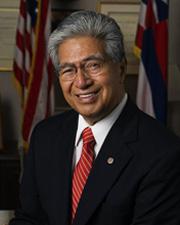 Sen. Daniel K. Akaka (D-HI)
Legislative Activity
Stay on top of the latest movement without scrolling through every action
Read twice and referred to the Committee on Health, Education, Labor, and Pensions.
February 28, 2005
View full timeline
Introduced in Senate
February 28, 2005
Sponsor introductory remarks on measure. (CR S1796-1797)
February 28, 2005
Read twice and referred to the Committee on Health, Education, Labor, and Pensions.
February 28, 2005
Floor Debate
23 membersWhat members said about S. 468 on the floor



 +18
+18
Floor Debate
23 membersWhat members said about S. 468 on the floor
Mr. President, I would like to give what I think will more than likely be the last speech I give on this great floor, this historic floor, in front of this deliberative body. I am grateful for your…
Mr. President, America deserves laws that protect both their security and their civil liberties. This conference report does not. After years of doubt about the PATRIOT Act, this morning Americans…
Mr. President, in the wake of the September 11 terrorist attacks, this body came together--Republicans and Democrats alike--around the shared goal of preventing a similar tragedy from ever occurring…
Mr. President, the well-being of the U.S. population depends to a considerable extent on having access to high quality health care which, in turn, requires the presence of an adequate supply of…
Mr. President, I come to the Chamber today to speak about the PATRIOT Act reauthorization conference report. While this agreement does not give everyone all that they want, it is the result of…
Show 8 more
Mr. President, I ask unanimous consent that following my comments, Senator Stabenow be recognized, then Senator Salazar and Senator Reed be recognized. All of us seek to speak about our colleague,…
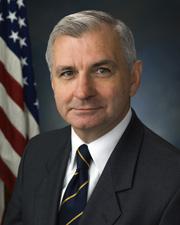
Mr. President, today the Senate was presented with a false choice on the conference report to H.R. 3199, the USA PATRIOT Act. That is why I voted against the motion to invoke cloture. There is a…

I thank my friend from Vermont. Mr. President, when this bill left the Senate, under the leadership of Senators Specter and Leahy, we had a balanced bill with provisions which protected both our…

Mr. President, I rise today to introduce the Fair Access to Clinical Trials, FACT, Act. I want to begin by thanking Senator Grassley, Senator Johnson, and Senator Wyden for joining me in introducing…

Mr. President, today I voted against cloture on the PATRIOT Act reauthorization conference report. I want to make clear that this vote was not about whether I support reauthorizing the PATRIOT Act--I…
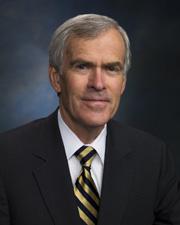
Mr. President, I rise today to speak in opposition to closing off debate on the PATRIOT Act conference report as it has come back to the Senate. The events of September 11 demonstrated various…

Mr. President, I thank the Senator from Vermont for yielding the time and for his leadership on this issue. I voted for the PATRIOT Act. It was a bit of a leap of faith because I was not sure. I did…
Mr. President, I rise to reintroduce comprehensive legislation aimed at addressing the issue of economic and financial illiteracy on college campuses. I am referring to the worrisome problems of…
Show 11 more
Mr. President, I rise to reintroduce comprehensive legislation aimed at addressing the issue of economic and financial illiteracy on college campuses. I am referring to the worrisome problems of…

I yield up to 3 minutes to the distinguished Senator from Idaho. Mr. President, we have only had 2\1/2\ hours of debate on this major matter. We have very little time. I yield up to 3 minutes to the…

Mr. President, I thank the Senator from Vermont, not only for yielding time but for his tremendous leadership on this issue. I am deeply grateful for it. Let me echo what Senator Kennedy said. This…

Mr. President, I ask unanimous consent that the order for the quorum call be rescinded. Mr. President, I rise to express my disappointment with the vote. This is a very important piece of…
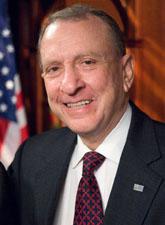
Mr. President, let me agree with Senators who have spoken out very sharply in opposition to the disclosures in the press this morning about ``President Bush Lets U.S. Spy on Callers Without Courts.''…

Mr. President, I compliment the Senator from Pennsylvania on a job exceedingly well done in trying to find a way that we can reauthorize the PATRIOT Act, with very emotional feelings on all sides of…

Mr. President, when the Senate returns in January, we unfortunately will be without one of the finest Senators in this body. Senator Jon Corzine will be moving to New Jersey to serve as its Governor.…

Mr. President, I wasn't here when Jon Corzine arrived in the Senate 5 years ago in fact, he actually took my place at the time. We met to share ideas on an agenda for New Jersey and America and I…

Mr. President, I rise today to join my colleagues in honoring a man I have come to know as a colleague, a dedicated public servant, and a friend. Jon Corzine is a shining example of the American…

Mr. President, earlier today, Senate Bill 470 was introduced. I am pleased to sponsor the Fair Access to Clinical Trials Act of 2005, with Senator Dodd. I am co-sponsoring this legislation as part of…
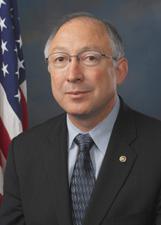
Mr. President, once again I thank the distinguished Senator from Vermont and the distinguished Senator from Pennsylvania for their leadership on this effort. I wish to take this opportunity to once…
Bill Text
Latest available legislative text
        [Congressional Bills 109th Congress]
[From the U.S. Government Publishing Office]
[S. 468 Introduced in Senate (IS)]

109th CONGRESS
1st Session
S. 468

To amend the Higher Education Act of 1965 to enhance literacy in
finance and economics, and for other purposes.

_______________________________________________________________________

IN THE SENATE OF THE UNITED STATES

February 28, 2005

Mr. Akaka (for himself, Mr. Sarbanes, and Mr. Corzine) introduced the
following bill; which was read twice and referred to the Committee on
Health, Education, Labor, and Pensions

_______________________________________________________________________

A BILL

To amend the Higher Education Act of 1965 to enhance literacy in
finance and economics, and for other purposes.

Be it enacted by the Senate and House of Representatives of the
United States of America in Congress assembled,

SECTION 1. SHORT TITLE.

This Act may be cited as the ``College Literacy in Finance and
Economics (College LIFE) Act''.

SEC. 2. AREAS OF EMPHASIS.

Part B of title I of the Higher Education Act of 1965 (20 U.S.C.
1011 et seq.) is amended by adding at the end the following:

``SEC. 123. AREAS OF EMPHASIS.

``In carrying out activities under this Act related to improving
financial and economic literacy, education, and counseling, the
Secretary shall emphasize, among other elements, basic personal income
and household money management and financial planning skills, and basic
economic decision making skills, including how to--
``(1) create household budgets, initiate savings plans, and
make strategic investment decisions for education, employment,
retirement, home ownership, wealth building, or other savings
goals;
``(2) manage credit and debt effectively, including student
financial aid and credit card debt, and understand the merits
of establishing and maintaining excellent credit history;
``(3) understand, evaluate, and compare fair and favorable
financial products, services, and opportunities, and avoid
abusive, predatory, or deceptive financial products, services,
and opportunities;
``(4) complete tax returns and understand tax consequences
when making certain financial decisions, such as placing an
investment or purchasing a home;
``(5) identify economic problems, alternatives, benefits,
and costs;
``(6) analyze the incentives at work in an economic
situation;
``(7) examine the consequences of changes in economic
conditions and public policies;
``(8) collect and organize economic evidence, including
understanding, evaluating, and making strategic decisions using
economic indicators;
``(9) compare benefits with costs; and
``(10) improve financial and economic literacy and
education through all other related skills.''.

SEC. 3. COORDINATION.

In carrying out the financial and economic literacy activities
authorized under this Act and the amendments made by this Act, the
Secretary of Education, to the greatest extent practicable, shall
coordinate such activities with the financial and economic literacy
efforts of the Financial Literacy and Education Commission established
under section 513 of the Fair and Accurate Credit Transactions Act (20
U.S.C. 9702).

SEC. 4. ENHANCEMENT OF FINANCIAL LITERACY AND ECONOMIC LITERACY.

The Higher Education Act of 1965 (20 U.S.C. 1001 et seq.) is
amended--
(1) in section 201(a)(3) (20 U.S.C. 1021(a)(3)), by
inserting ``personal finance,'' after ``economics,'';
(2) in section 311(c) (20 U.S.C. 1057(c))--
(A) by redesignating paragraphs (7) through (12) as
paragraphs (8) through (13), respectively; and
(B) by inserting after paragraph (6) the following:
``(7) Education or counseling services designed to improve
the financial literacy and economic literacy of students and
their parents.'';
(3) in section 316(c)(2) (20 U.S.C. 1059c(c)(2))--
(A) by redesignating subparagraphs (G) through (L)
as subparagraphs (H) through (M), respectively;
(B) by inserting after subparagraph (F) the
following:
``(G) education or counseling services designed to
improve the financial literacy and economic literacy of
students and their parents;''; and
(C) in subparagraph (M), as redesignated by
subparagraph (A), by striking ``subparagraphs (A)
through (K)'' and inserting ``subparagraphs (A) through
(L)'';
(4) in section 317(c)(2) (20 U.S.C. 1059d(c)(2))--
(A) in subparagraph (G), by striking ``and'' after
the semicolon;
(B) in subparagraph (H), by striking the period at
the end and inserting ``; and''; and
(C) by adding at the end the following:
``(I) education or counseling services designed to
improve the financial literacy and economic literacy of
students and their parents.'';
(5) in section 323(a) (20 U.S.C. 1062(a))--
(A) by redesignating paragraphs (7) through (12) as
paragraphs (8) through (13), respectively; and
(B) by inserting after paragraph (6) the following:
``(7) Education or counseling services designed to improve
the financial literacy and economic literacy of students and
their parents.'';
(6) in section 326(c) (20 U.S.C. 1063b(c))--
(A) by redesignating paragraphs (5) through (7) as
paragraphs (6) through (8), respectively; and
(B) by inserting after paragraph (4) the following:
``(5) education or counseling services designed to improve
the financial literacy and economic literacy of students and
their parents;'';
(7) in section 402B(b) (20 U.S.C. 1070a-12(b))--
(A) by redesignating paragraphs (3) through (10) as
paragraphs (4) through (11), respectively;
(B) by inserting after paragraph (2) the following:
``(3) education or counseling services designed to improve
the financial literacy and economic literacy of students and
their parents;''; and
(C) in paragraph (11), as redesignated by
subparagraph (A), by striking ``paragraphs (1) through
(9)'' and inserting ``paragraphs (1) through (10)'';
(8) in section 402C (20 U.S.C. 1070a-13)--
(A) in subsection (b)--
(i) by redesignating paragraphs (2) through
(12) as paragraphs (3) through (13),
respectively;
(ii) by inserting after paragraph (1) the
following:
``(2) education or counseling services designed to improve
the financial literacy and economic literacy of students and
their parents;''; and
(iii) in paragraph (13), as redesignated by
clause (i), by striking ``paragraphs (1)
through (11)'' and inserting ``paragraphs (1)
through (12)''; and
(B) in subsection (e), by striking ``subsection
(b)(10)'' and inserting ``subsection (b)(11)'';
(9) in section 402D(b) (20 U.S.C. 1070a-14(b))--
(A) by redesignating paragraphs (2) through (10) as
paragraphs (3) through (11), respectively;
(B) by inserting after paragraph (1) the following:
``(2) education or counseling services designed to improve
the financial literacy and economic literacy of students and
their parents;''; and
(C) in paragraph (11), as redesignated by
subparagraph (A), by striking ``paragraphs (1) through
(9)'' and inserting ``paragraphs (1) through (10)'';
(10) in section 402E(b) (20 U.S.C. 1070a-15(b))--
(A) by redesignating paragraphs (7) and (8) as
paragraphs (8) and (9), respectively; and
(B) by inserting after paragraph (6) the following:
``(7) education or counseling services designed to improve
the financial literacy and economic literacy of students and
their parents;'';
(11) in section 402F(b) (20 U.S.C. 1070a-16(b))--
(A) by redesignating paragraphs (4) through (10) as
paragraphs (5) through (11), respectively;
(B) by inserting after paragraph (3) the following:
``(4) education or counseling services designed to improve
the financial literacy and economic literacy of students and
their parents;''; and
(C) in paragraph (11), as redesignated by
subparagraph (A), by striking ``paragraphs (1) through
(9)'' and inserting ``paragraphs (1) through (10)'';
(12) in section 404D(b)(2)(A)(ii) (20 U.S.C. 1070a-
24(b)(2)(A)(ii)), by striking ``and academic counseling'' and
inserting ``academic counseling, and financial literacy and
economic literacy education or counseling'';
(13) by striking section 418A(c)(1)(B)(i) (20 U.S.C. 1070d-
2(c)(1)(B)(i)) and inserting the following:
``(i) personal, academic, career, and economic
education or personal finance counseling as an ongoing
part of the program;'';
(14) in section 428F (20 U.S.C. 1078-6), by adding at the
end the following:
``(c) Financial and Economic Literacy.--Where appropriate, each
program described under subsection (b) shall include making available
financial and economic education materials for the borrower.'';
(15) in section 432(k)(1) (20 U.S.C. 1082(k)(1)), by
striking ``and offering'' and all that follows through the
period and inserting ``, offering loan repayment matching
provisions as part of employee benefit packages, and providing
employees with financial and economic education and
counseling.'';
(16) in section 441(c) (42 U.S.C. 2751(c))--
(A) in paragraph (1), by inserting ``financial
literacy and economic literacy,'' after ``social
services,''; and
(B) in paragraph (4)(C), by striking the period at
the end and inserting ``and counseling for the purposes
of improving financial literacy and economic
literacy.'';
(17) in section 485 (20 U.S.C. 1092)--
(A) in subsection (a)(1)(D), by striking the
semicolon at the end and inserting ``, including the
merits of taking a personal finance course, if the
institution offers such a course, and of the student
reviewing the student's personal credit profile not
less frequently than once a year;'';
(B) in subsection (b)--
(i) in paragraph (1)(A)--
(I) in clause (i), by striking
``and'' after the semicolon;
(II) in clause (ii), by striking
the period at the end and inserting ``;
and''; and
(III) by adding at the end the
following:
``(iii) if it is determined during the
counseling that the borrower is not connected
to a mainstream financial institution,
information about low-cost financial services
and the benefits of using such services, and
where and how the borrower could open a low-
cost account in a federally insured credit
union or bank.''; and
(ii) by adding at the end the following:
``(3) Pilot program.--
``(A) Authorization.--
``(i) In general.--The Secretary shall
establish a pilot program that awards a total
of 5 grants to 5 different institutions of
higher education that are located in
geographically different parts of the United
States to enable the institutions to provide
annual personal finance counseling for students
enrolled at such institutions.
``(ii) Minority serving institutions.--In
awarding grants under this paragraph, the
Secretary shall award not less than 2 of the 5
grants to institutions of higher education that
are eligible to receive assistance under title
III or title V.
``(B) Application.--An institution of higher
education that desires to receive a grant under this
paragraph shall submit an application to the Secretary
at such time, in such manner, and containing such
information as the Secretary may require.
``(C) Use of funds.--
``(i) Counseling.--
``(I) In general.--In addition to
making available exit counseling under
paragraph (1), an institution of higher
education that receives a grant under
this paragraph shall through financial
aid officers or otherwise, make
available counseling to borrowers of
loans which are made, insured, or
guaranteed under part B (other than
loans made pursuant to section 428B) of
this title or made under part D or E of
this title at the commencement of the
borrower's course of study at the
institution, not less frequently than
once annually while the borrower is
enrolled at the institution, and not
later than 30 days after completion of
the course of study for which the
borrower enrolled at the institution or
at the time of departure from such
institution.
``(II) Content.--The counseling
required under subclause (I) shall
include the average anticipated monthly
repayments, a review of the repayment
options available, the total amount of
interest that would be paid over a
range of possible interest rates and
the amount of interest in the monthly
payments, information on the
availability and content of a personal
finance course if such course is
offered by the institution and if not
already completed by the individual,
and such debt and management strategies
as the institution determines are
designed to facilitate the repayment of
such indebtedness, which may be
implemented in partnership with State
or local public, private, and nonprofit
entities approved by the local
educational agency that serves schools
in the area where the institution is
located, or a campus committee formed
for the purpose of evaluating the
qualifications of such entities. If it
is determined during the counseling
that the borrower is not connected to a
mainstream financial institution, the
counseling shall include information
about low-cost financial services and
the benefits of using such services,
and where and how the borrower could
open a low-cost account in a federally
insured credit union or bank.
``(ii) Permissive use.--Grant funds
received under this paragraph may be used to
pay for additional financial aid personnel or
for training for existing financial aid
personnel.
``(iii) Study.--
``(I) In general.--An institution
of higher education that receives a
grant under this paragraph shall
conduct a study to evaluate the
impacts, if any, of the financial and
economic literacy and counseling
activities on students' levels of
savings and indebtedness, and
creditworthiness, and such activities'
effectiveness in reducing the incidence
of problems with handling credit,
including bankruptcy filing and student
financial loan default.
``(II) Assistance.--An institution
of higher education may conduct the
study under subclause (I) with the
assistance of appropriate Federal
agencies or other entities approved by
the Secretary.
``(III) Report.--Not later than 6
months after completion of the study
under subclause (I), the institution of
higher education shall report the
results of such study to the Secretary,
the Secretary of the Treasury, the
Committee on Health, Education, Labor,
and Pensions of the Senate, the
Committee on Banking, Housing, and
Urban Affairs of the Senate,
the Committee on Education and the Workforce of the House of
Representatives, and the Committee on Financial Services of the House
of Representatives.
``(D) Duration.--Grants awarded under this
paragraph shall be for a period of 3 years.
``(E) Amount.--The Secretary shall award grants of
not more than $1,000,000 annually to each institution
of higher education awarded a grant under this
paragraph. The Secretary may determine the grant award
amount based on the number of students to be counseled
at the institution of higher education.
``(F) Report.--Not later than 90 days after the
date of completion of the pilot program under this
paragraph, the Secretary shall submit a report to
Congress on the effectiveness of the program.
``(G) Authorization of appropriations.--There is
authorized to be appropriated such sums as may be
necessary to carry out this paragraph for each of
fiscal years 2006 through 2010. Such funds shall remain
available until expended.''; and
(C) in subsection (c), by adding at the end the
following: ``Appropriate Federal agencies shall provide
material developed by such agencies for the purpose of
financial education, to financial assistance
information personnel at institutions of higher
education for the use of such personnel in financial
aid counseling.'';
(18) in section 491(d)(8) (20 U.S.C. 1098(d)(8)), by
inserting ``, including those related to financial literacy
activities,'' after ``resources and services''; and
(19) in section 503(b) (20 U.S.C. 1101b(b))--
(A) by redesignating paragraphs (5) through (14) as
paragraphs (6) through (15), respectively; and
(B) by inserting after paragraph (4) the following:
``(5) Education or counseling services designed to improve
the financial literacy and economic literacy of students and
their parents.''.

SEC. 5. GRANT PROGRAMS.

(a) Innovative Delivery Systems.--
(1) Definitions.--In this subsection:
(A) Delivery system.--The term ``delivery system''
means any range of media or methods that institutions
of higher education use to instruct or to convey
information to the students enrolled at such
institutions.
(B) Eligible entity.--The term ``eligible
entity''--
(i) means an institution of higher
education; and
(ii) includes an institution of higher
education in partnership with a public,
private, or nonprofit entity.
(C) Institution of higher education.--The term
``institution of higher education'' has the meaning
given the term in section 101 of the Higher Education
Act of 1965 (20 U.S.C. 1001).
(D) Secretary.--The term ``Secretary'' means the
Secretary of Education.
(2) Authorization.--From funds appropriated under paragraph
(10), the Secretary shall award grants, on a competitive basis,
to eligible entities to enable such entities to develop or
sponsor experimental financial literacy delivery systems.
(3) Application.--
(A) In general.--An eligible entity that desires to
receive a grant under this subsection shall submit an
application to the Secretary at such time, in such
manner, and containing such information as the
Secretary may require.
(B) Content.--An application submitted under
subparagraph (A) shall include--
(i) a description of the plan for the
development or sponsorship of the financial
literacy delivery system the eligible entity
intends to support with grant funds received
under this subsection;
(ii) information on the students expected
to be served by such system; and
(iii) information on the means by which the
effectiveness of such system will be measured.
(4) Awarding of grants.--In awarding grants under this
subsection, the Secretary shall--
(A) give priority to eligible entities that take
measures to ban or discourage the proliferation of
credit cards and abusive credit marketing practices on
campus; and
(B) consider--
(i) the quality of the proposed financial
literacy delivery system and the degree to
which such system may be used as a model for
adoption by other institutions of higher
education;
(ii) the resources, if any, that the
eligible entity intends to dedicate to the
implementation of the plan for the development
or sponsorship of such system;
(iii) the degree to which technology is to
be used in the implementation of such plan; and
(iv) the degree to which the eligible
entity will collaborate with other entities in
implementing such plan.
(5) Use of funds.--An eligible entity awarded a grant under
this subsection shall use the grant funds--
(A) to develop or sponsor an experimental financial
literacy delivery system; and
(B) for activities that explore and assess the
effectiveness of various delivery systems in delivering
personal financial education and counseling to students
and in increasing student personal financial literacy.
(6) Obligation.--Grant funds received under this subsection
shall be available for obligation for a period of not more than
4 years.
(7) Technical assistance.--From not more than 5 percent of
the funds appropriated to carry out this subsection, the
Secretary shall make technical assistance available to eligible
entities that receive grants under this subsection.
(8) Report.--An eligible entity that receives a grant under
this subsection shall submit a report--
(A) on an annual basis, to the Secretary on the
effectiveness of the financial literacy delivery
system; and
(B) at the end of the grant period, to the
appropriate committees of Congress on the effectiveness
of the financial literacy delivery system.
(9) Regulations.--The Secretary shall promulgate
regulations to carry out this subsection.
(10) Authorization of appropriations.--There is authorized
to be appropriated such sums as may be necessary to carry out
this subsection for each of fiscal years 2006 through 2010.
Such funds shall remain available until expended.
(b) Personal Finance Course.--
(1) Definitions.--In this subsection:
(A) Eligible entity.--The term ``eligible
entity''--
(i) means an institution of higher
education; and
(ii) includes an institution of higher
education in partnership with a public,
private, or nonprofit entity.
(B) Institution of higher education.--The term
``institution of higher education'' has the meaning
given the term in section 101 of the Higher Education
Act of 1965 (20 U.S.C. 1001).
(C) Secretary.--The term ``Secretary'' means the
Secretary of Education.
(2) Authorization.--From funds appropriated under paragraph
(8), the Secretary shall award grants, on a competitive basis,
to eligible entities to enable such entities to--
(A) if such entities do not offer a course in
personal finance, create a course in personal finance;
or
(B) if such entities offer a course in personal
finance, share best practices and related information
with other institutions of higher education about
successful personal finance courses.
(3) Application.--
(A) In general.--An eligible entity that desires to
receive a grant under this subsection shall submit an
application to the Secretary at such time, in such
manner, and containing such information as the
Secretary may require.
(B) Content.--An application submitted under
subparagraph (A) shall include--
(i) if the entity intends to create a
course in personal finance with grant funds
received under this subsection, information on
the number of students who could enroll in such
course and the expected outcomes of the course;
or
(ii) if the entity already offers a course
in personal finance, information on how the
institution will share its best practices with
other institutions.
(4) Awarding of grants.--In awarding grants under this
subsection, the Secretary shall give priority to eligible
entities that take measures to ban or discourage the
proliferation of credit cards and abusive credit marketing
practices on campus.
(5) Obligation.--Grant funds received under this subsection
shall be available for obligation for a period of not more than
3 years.
(6) Report.--An eligible entity that receives a grant under
this subsection shall submit a report--
(A) on an annual basis, to the Secretary on the
effectiveness of the personal finance course in
increasing the personal financial literacy of students
who complete such course; and
(B) at the end of the grant period, to the
appropriate committees of Congress on the effectiveness
of the personal finance course in increasing the
personal financial literacy of students who complete
such course.
(7) Regulations.--The Secretary shall promulgate
regulations to carry out this subsection.
(8) Authorization of appropriations.--There is authorized
to be appropriated such sums as may be necessary to carry out
this subsection for each of fiscal years 2006 through 2010.
Such funds shall remain available until expended.
(c) Integration.--
(1) Authorization.--From funds appropriated under paragraph
(6), the Secretary of Education (referred to in this subsection
as the ``Secretary'') shall award a grant, on a competitive
basis, to a nonprofit organization, or a consortium of
nonprofit organizations, working in partnership with relevant
Federal agencies, educational organizations, and other
nonprofit organizations, to study and recommend the best ways
to integrate personal finance and economics into basic
educational subjects.
(2) Application.--A nonprofit organization, or consortium
of nonprofit organizations, that desires to receive the grant
under this subsection shall submit an application to the
Secretary at such time, in such manner, and containing such
information as the Secretary may require.
(3) Awarding of grants.--In awarding the grant under this
subsection, the Secretary shall--
(A) give priority to an applicant that has as its
primary purpose the improvement of the quality of
student understanding of personal finance and
economics; and
(B) consider--
(i) the previous record of work of the
applicant in improving the quality of student
understanding of personal finance and
economics; and
(ii) the degree to which the applicant has
collaborated with other entities that have as
their primary purpose the improvement of the
quality of student understanding of personal
finance and economics.
(4) Report.--Not later than 2 years after the grant funds
have been distributed under this subsection, the nonprofit
organization, or consortium of nonprofit organizations, that
receives the grant under this subsection shall submit to the
Secretary and the appropriate committees of Congress a report
on the best ways to integrate personal finance and economics
into basic educational subjects.
(5) Regulations.--The Secretary shall promulgate
regulations to carry out this subsection.
(6) Authorization of appropriations.--There is authorized
to be appropriated such sums as may be necessary to carry out
this subsection for each of fiscal years 2006 through 2008.
Such funds shall remain available until expended.
(d) Teacher and Counselor Training.--
(1) Definitions.--In this subsection:
(A) Eligible entity.--The term ``eligible
entity''--
(i) means--
(I) an education department of an
institution of higher education; or
(II) an organization described in
section 501(c)(3) of the Internal
Revenue Code of 1986, that has as its
primary purpose the improvement of the
quality of student understanding of
personal finance and economics through effective teaching; and
(ii) includes a partnership of the entities
described in clause (i).
(B) Institution of higher education.--The term
``institution of higher education'' has the meaning
given the term in section 101 of the Higher Education
Act of 1965 (20 U.S.C. 1001).
(C) Secretary.--The term ``Secretary'' means the
Secretary of Education.
(D) State.--The term ``State'' means each of the 50
States, the District of Columbia, the Commonwealth of
Puerto Rico, the United States Virgin Islands, Guam,
American Samoa, the Commonwealth of the Northern
Mariana Islands, the freely associated states of the
Republic of the Marshall Islands, the Federated States
of Micronesia, and the Republic of Palau.
(2) Authorization.--From funds appropriated under paragraph
(10), the Secretary shall award grants, on a competitive basis,
to eligible entities to enable the entities to fund--
(A) preservice teacher training programs in the
instruction of economics and personal finance in
elementary schools and secondary schools; and
(B) programs to provide preservice and inservice
training of secondary school counselors in advising
students on the importance of improving their economic
and personal financial literacy.
(3) Application.--
(A) In general.--An eligible entity that desires to
receive a grant under this subsection shall submit an
application to the Secretary at such time, in such
manner, and containing such information as the
Secretary may require.
(B) Content.--An application submitted under
subparagraph (A) shall include information on--
(i) the number of individuals who would be
served by the eligible entity if awarded a
grant under this subsection; and
(ii) the expected outcomes of the proposed
training.
(4) Awarding of grants.--
(A) In general.--In awarding grants under this
subsection, the Secretary shall--
(i) give priority to eligible entities that
take measures to ban or discourage the
proliferation of credit cards and abusive
credit marketing practices on campus; and
(ii) consider the applicant's past record
of success in carrying out similar training
programs.
(B) Grants to all states.--For any fiscal year for
which the amount appropriated to carry out this
paragraph is more than $25,000,000, the Secretary shall
award not less than 1 grant to an eligible entity in
each State.
(5) Coordination with existing programs.--In carrying out
programs funded under this subsection, an eligible entity may
coordinate activities with other training programs, including
programs authorized under the Excellence in Economic Education
Act of 2001 (20 U.S.C. 7267 et seq.).
(6) Supplement, not supplant.--Grant funds received under
this subsection shall be used to supplement, and not supplant,
non-Federal funds available to the eligible entity for the
purpose of carrying out similar training programs.
(7) Obligation.--Grant funds received under this subsection
shall be available for obligation for a period of not more than
3 years.
(8) Report.--An eligible entity that receives a grant under
this subsection shall submit a report--
(A) on an annual basis, to the Secretary on the
effectiveness of training teachers and counselors in
instructing and advising students on personal finance;
and
(B) at the end of the grant period, to the
appropriate committees of Congress on the effectiveness
of training teachers and counselors in instructing and
advising students on personal finance.
(9) Regulations.--The Secretary shall promulgate
regulations to carry out this subsection.
(10) Authorization of appropriations.--There is authorized
to be appropriated such sums as may be necessary to carry out
this subsection for each of fiscal years 2006 through 2010.
Such funds shall remain available until expended.

SEC. 6. EVALUATION.

Not later than 6 years after the date of enactment of this Act, the
Comptroller General of the United States shall submit to the Committee
on Health, Education, Labor, and Pensions of the Senate, the Committee
on Banking, Housing, and Urban Affairs of the Senate, the Committee on
Education and the Workforce of the House of Representatives, and the
Committee on Financial Services of the House of Representatives, an
evaluation of the range and effectiveness of financial and economic
education and financial aid counseling activities of institutions of
higher education, lenders, servicers, and guaranty agencies as
emphasized by the Secretary of Education pursuant to section 123 of the
Higher Education Act of 1965.
<all>