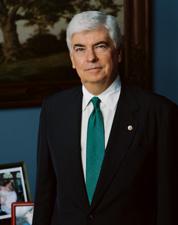
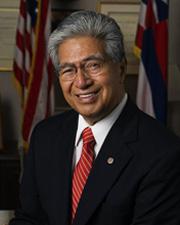
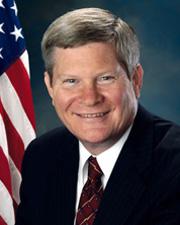
Mr. President, the well-being of the U.S. population depends to a considerable extent on having access to high quality health care which, in turn, requires the presence of an adequate supply of…
Mr. President, the well-being of the U.S. population depends to a considerable extent on having access to high quality health care which, in turn, requires the presence of an adequate supply of health care professionals. The Congress and the President recognized this need when we passed, and President Bush signed, the Nurse Reinvestment Act in the 107th Congress. Just as with nurses, we must also insure an adequate supply of well-prepared allied health professionals. That is why, today, I am introducing the Allied Health Reinvestment Act with my good colleagues, Senator Bingaman of New Mexico and Senator Lieberman of Connecticut.
The allied health professions are many. Those recognized in the act include professionals in the areas of: dental hygiene, dietetics/ nutrition, emergency medical services, health information management, clinical laboratory sciences/medical technology, cytotechnology, occupational therapy, physical therapy, radiologic technology, nuclear medical technology, rehabilitation counseling, respiratory therapy, and speech-language pathology/audiology. This is not an exhaustive list, as the act will leave to the discretion of the Secretary of HHS additional professions deemed eligible.
Today, many allied health professions are characterized by existing workforce shortages, declining enrollments in academic institutions, or a combination of both factors. The American Hospital Association, AHA, reports vacancy rates of 18 percent among radiology technicians, 10 percent among laboratory technologists, 15.3 percent among imaging technicians, and 12.7 percent among pharmacy technicians. In addition, the AHA indicates that hospitals are having increasing difficulties recruiting these same professionals over the preceding 2-year period.
In my own State of Washington, the Washington State Hospital Association reports vacancy rates of 14.3 percent among ultrasound technologists, 11.3 percent among radiology technicians, and 10.9 percent among nuclear medicine technologists. These vacancy rates have a real effect on the hospitals in my State. When I meet with hospital officials back home, they always tell me how the lack of technicians affects patient care.
The Bureau of Labor Statistics projected that in the period 1998- 2008, the United States would need a total of 93,000 new professionals in clinical laboratory science by creating 53,000 new positions and filling the 40,000 existing vacancies. That averages 9,000 openings per year for technicians, and yet academic institutions are producing only 4,990 graduates annually. If these numbers stay constant, we will be short by 43,100 needed technicians in 2008.
According to the American Hospital Association, declining enrollment in health education programs contributes to the critical shortages of health care professionals. Similarly, data from a November 2002 study of 90 institutions by the Association of Schools of Allied Health Professions, ASAHP, shows a 3-year period of decline in enrollment in cardiovascular perfusion technology, cytotechnology, dietetics, emergency medical sciences, health administration, health information management, medical technology, occupational therapy, rehabilitation counseling, respiratory therapy, and respiratory therapy technician programs. As an indication of a worsening situation, data from the 2002-2003 academic year, alone, show that dental hygiene, physician assistant, and speech-language pathology and audiology should be added to this list.
While having an adequate number of health professionals in our country is key to ensuring access to health care for all of us, certainly one of the key populations for whom a healthy supply of health professionals is vitally important for is our senior population.
The U.S. Census Bureau reports that rapid growth of the population age 65 and over will begin in 2011 when the first of the baby boom generation reaches age 65 and will continue for many years. From 1900 to 2000, the proportion of persons 65 and over tripled, going from 4.1 percent to 12.4 percent.
The baby-boom generation's movement into middle age, a period when the incidence of heart attack and stroke increases, will produce a higher demand for therapeutic services. Medical advances now enable more patients with critical problems to survive, but in order to do so and maintain a high quality of life, these patients may need extensive therapy.
Along with the aging of the population came an increase in the number of Americans living with one, and often more than one, chronic condition. Today, it is estimated that 125 million Americans live with a chronic condition, and by 2020 as the population ages, that number will increase to an estimated 157 million, with 81 million of them having two or more chronic conditions. Twenty-five percent of individuals with chronic conditions have some type of activity limitations. Two-thirds of Medicare spending is for beneficiaries with five or more chronic conditions.
Many individuals with chronic conditions rely on family caregivers. Approximately 9 million Americans provide such services, and on the average, they spend 24 hours a week doing so. Caregivers aged 65-74 provide an average of 30.7 hours of care per week and individuals aged 75 and older provide an average of 34.5 hours per week.
Women are more likely than men to have chronic conditions, in part because they have longer life expectancies. These same women are caregivers to other chronically ill persons. In addition, 65 percent of caregivers are female, and of all caregivers, nearly 40 percent are 55 years of age and older.
Physicians report that their training does not adequately prepare them to care for this type of patient by providing education and offering effective nutritional guidance. Those aspects of care can be provided by allied health professionals, but many of them need better preparation to treat and coordinate care for patients with chronic conditions. While much emphasis is placed on curative forms of care, additional efforts must be devoted to slowing the progression of disease and its effects.
One example of the effectiveness of allied health interventions may be illustrated by a study funded by the National Institute on Aging, the National Center for Medical Rehabilitation Research, and the Agency for Health Care Policy and Research--since renamed the Agency for Healthcare Research and Quality. The investigation showed that significant benefits resulted from a 9-month occupational therapy intervention intended to reduce health-related declines urban, multiethnic, independent-living older adults. The majority of study participants, 73 percent, lived alone and 26 percent reported at least one disability. Important health-related benefits attributable to the intervention continued over a 6-month interval in the absence of further treatment.
The bill my colleagues and I introduce today, like the Nurse Reinvestment Act in the 107th Congress, is intended to provide incentives for individuals to seek and complete high quality allied health education and training. Furthermore, the bill will provide additional funding to ensure that such education and training can be provided to allied health students so that the U.S. healthcare industry with have a supply of allied health professionals needed to support the Nation's health care system in this decade and beyond.
The bill offers allied health education, practice, and retention grants. Education grants will be used to expand the enrollment in allied health education programs, especially by underrepresented racial and ethnic minority students, and provide educational opportunities through new technologies and methods, including distance-learning. Practice grants are intended to establish or expand allied health practice arrangements in noninstitutional settings to demonstrate methods that will improve access to primary health care in rural areas and other medically underserved communities. Retention grants are intended to promote career advancement for allied health personnel.
Grants will also be made available to health care facilities to enable them to
carry out demonstrations of models and best practices in allied health for the purpose of developing innovative strategies or approaches for retention of allied health professionals. These grants will be awarded to a variety of geographic regions, and to a range of different types and sizes of facilities, including facilities located in rural, urban, and suburban areas.
Furthermore, this bill will give the Secretary of HHS, acting through the Administrator of HRSA, the authority to enter into an agreement with any institution that offers an eligible allied health education program to establish and operate a faculty loan fund to increase the number of qualified allied health faculty. Loans may be granted to faculty who are pursuing a full-time course of study or, at the discretion of the Secretary, a part-time course of study in an advanced degree program.
I am especially proud of the provisions of this legislation regarding the National Health Service Corps program, the brain child of Senator Warren Magnuson of Washington. The NHSC program, of course, encourages students in the health professions such as doctors and dentists to serve in underserved areas throughout our nation in return for loan repayment assistance. And, like the NHSC program, this Allied Health Reinvestment Act will establish a scholarship program that provides scholarships to individuals seeking allied health education in exchange for service by those individuals in rural and other medically underserved areas with allied health personnel shortages.
There are a number of organizations supporting this bill, and I thank them for that support. Among them, the list includes, but is not limited to:
Washington State Hospital Association
Health Work Force Institute (Seattle, WA)
American Association for Respiratory Care
American Association of Community Colleges
American Clinical Laboratory Association
American Dental Hygienists' Association
American Dietetic Association
American Health Information Management Association
American Hospital Association
American Physical Therapy Association
American Society for Clinical Laboratory Science
American Society for Clinical Pathology
American Society of Radiologic Technologists
Association of Academic Health Centers
College of Health Deans
Midwest Regional Deans Group
Myositis Association
National Association of EMS Educators
National Cancer Registrars Association
National Network of Health Career Programs in Two-Year
Colleges
Northeast Regional Deans Group
In addition to these organizations, I would also like to express my appreciation to the Association of Schools of Allied Health Professions, ASAHP, for its support of the legislation as well as its ongoing efforts to address the need for allied health professionals and allied health faculty.
ASAHP, founded in 1967, has a membership that includes 108 institutions of higher learning throughout the United States, as well as several hundred individual members. ASAHP publishes a quarterly journal and also conducts an annual survey of member institutions. This annual survey, called the ``Institutional Profile Survey,'' is used for, among other purposes, collecting student application and enrollment data. These data substantiate that there is a pressing need to address existing allied health workforce shortages, which have been further exacerbated by declines in enrollment that have occurred for 4 straight years.
In the survey conducted during the period September-November 2004 for the 2004-2005 class starting in fall 2004, the results from 90 academic institutions indicate that in 16 of the 20 professions studied, available classroom seats were not filled. For example, only 33 percent of enrollment capacity was reached for health information management programs in these schools. Given the emphasis on increasing the use of information technology in health care such as conversion to electronic patient records, that figure is disturbingly low.
Similarly, the survey shows that enrollment levels were low in the following professions: rehabilitation counseling, 44 percent, emergency medical sciences, 66 percent, cytotechnology, 69 percent, and medical technology, 77 percent. Severe workforce shortages already exist in the two laboratory professions and emergency medical personnel will play a key role as first responders in dealing with any bioterrorism incident that might occur.
Using data from the Institutional Profile Survey, as well as the General Accounting Office, U.S. Census Bureau, and other sources, ASAHP has compiled what I believe to be a compelling rationale in its support for the Allied Health Reinvestment Act that Senators Bingaman, Lieberman, and I introduce today. I ask unanimous consent that the text of this Rationale for an Allied Health Reinvestment Act from the Association of Schools of Allied Health Professions be printed in the Record.
I ask unanimous consent that the text of the bill be printed in the Record.