Caring for Children Act of 2005
A bill to amend the Child Care and Development Block Grant Act of 1990 to reauthorize the Act, to improve early learning opportunities and promote school preparedness, and for other purposes.
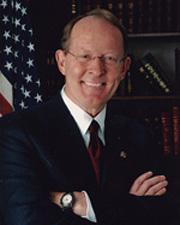 Sen. Lamar Alexander (R-TN)
Legislative Activity
Stay on top of the latest movement without scrolling through every action
Placed on Senate Legislative Calendar under General Orders. Calendar No. 199.
August 31, 2005
View full timeline
Introduced in Senate
March 3, 2005
Sponsor introductory remarks on measure. (CR S2031-2032)
March 3, 2005
Read twice and referred to the Committee on Health, Education, Labor, and Pensions. (text of measure as introduced: CR S2032-2037)
March 3, 2005
Committee on Health, Education, Labor, and Pensions. Ordered to be reported without amendment favorably.
March 9, 2005
Committee on Health, Education, Labor, and Pensions. Reported by Senator Enzi under authority of the order of the Senate of 07/29/2005 with an amendment in the nature of a substitute. With written report No. 109-130.
August 31, 2005
Placed on Senate Legislative Calendar under General Orders. Calendar No. 199.
August 31, 2005
Floor Debate
19 membersWhat members said about S. 525 on the floor

 +14
Floor Debate
19 membersWhat members said about S. 525 on the floor
Mr. President, I ask unanimous consent that the order for the quorum call be rescinded. Mr. President, in a moment I will request unanimous consent that the Senate pass S. 2823, the Ryan White…
I thank the chair. Mental Health Parity Act Mr. President, in just a few weeks while we are in recess, we will mark the fourth anniversary of the untimely death of our former colleague from…
Mr. President, today I am, again, introducing legislation designed to fulfill an important promise made by the Federal Government to the people of my State and my region some 40 years ago. That…
I ask unanimous consent to speak as in morning business. Mr. President, I thank the Senator from New Mexico. He is overly generous. I learned as a staff aide in the Senate that if an idea has many…
Mr. President, in light of the most recent evidence uncovered about Enron's participation in the Western Energy Crisis, I rise today to introduce the Energy Market Oversight Bill with Senators Levin,…
Show 8 more

Mr. President, it is a privilege to join Senator Sessions, Senator Durbin and Senator Dodd in introducing the ``National All Schedules Prescription Electronic Reporting Act.'' Our goal is to help…

Mr. President, today, I am pleased to join with Senators Levin, Stabenow, Reed, and Voinovich to introduce the National Invasive Species Council Act--a bill to permanently establish the National…
Mr. President, I suggest the absence of a quorum. Mr. President, I ask unanimous consent that the order for the quorum call be rescinded. Mr. President, as we wind down this legislative session in…

Mr. President, this is, plain and simple, about whether this Senate is going to allow legislation to go forward to reauthorize Ryan White, that allows the funding to follow the patients. What an…
Mr. President, I ask unanimous consent that the order for the quorum call be dispensed with. Mr. President, earlier today, my colleague, Senator Durbin of Illinois, took the floor to describe a…
Mr. President, the pace of technological innovation offers American consumers an eye-catching array of electronic gadgets. But for every new lap top or HDTV that goes home from the store with a…
Mr. President, today I am here with Senator Dodd and on behalf of Senator Enzi and Senator Kennedy to introduce the Caring for Children Act of 2005 which reauthorizes the Child Care and Development…
Mr. President, today I am here with Senator Dodd and on behalf of Senator Enzi and Senator Kennedy to introduce the Caring for Children Act of 2005 which reauthorizes the Child Care and Development…
Show 11 more
Mr. President, traveling throughout rural Minnesota, I see a very real need for the revitalization and rebuilding of Main Streets, and this is why today I am introducing the Rural Renaissance Act…

Mr. President, today I am introducing the National Women's History Museum Act of 2005. I appreciate the support of my colleagues who have helped in this important effort and who have agreed to be…

Mr. President, I introduced S. 503, the Education Begins At Home Act. It is at the desk. It is cosponsored by Senators Talent and DeWine. I invite my colleagues to look at it and join with me in this…

Mr. President, I thank and commend my friend and colleague, the assistant Democratic leader from Illinois, Senator Durbin, for submitting the Senate resolution honoring the memory of the late Senator…
Mr. President, today I am pleased to be joined by Senators Kennedy, Alexander and Dodd in introducing the ``Caring for Children Act of 2005'' which reauthorizes the Child Care and Development Block…
Mr. President, today I am pleased to be joined by Senators Kennedy, Alexander and Dodd in introducing the ``Caring for Children Act of 2005'' which reauthorizes the Child Care and Development Block…

Mr. President, America is a nation of sports fans and sports players. In fact, it is hard to imagine something more influential in today's society than athletics. As children, we grow up emulating…
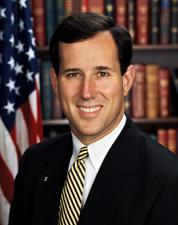
I rise today to introduce with Senator Rockefeller the bipartisan Fire Sprinkler Incentive Act of 2005. Passage of this Act would serve greatly to help reduce the tremendous annual economic and human…
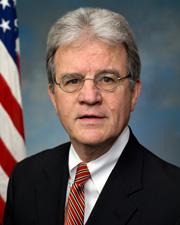
Mr. President, by objecting to moving this bill, we need to look at the real lives that are getting ready to be harmed. Not only is the funding for the program going to be cut to the poorest of the…
Mr. President, today I, along with Senator Smith, introduce the Money Follows the Person Act of 2005. This legislation is needed to truly bring people with disabilities into the mainstream of society…

Mr. President, today I am pleased to be joined by Senators Kennedy, Mikulski, Harkin, Bingaman, Reed, Murray, Lincoln, Kerry and Durbin in introducing the Public Safety Employer-Employee Cooperation…
Bill Text
2 versions available
        [Congressional Bills 109th Congress]
[From the U.S. Government Publishing Office]
[S. 525 Reported in Senate (RS)]

Calendar No. 199
109th CONGRESS
1st Session
S. 525

[Report No. 109-130]

To amend the Child Care and Development Block Grant Act of 1990 to
reauthorize the Act, to improve early learning opportunities and
promote school preparedness, and for other purposes.

_______________________________________________________________________

IN THE SENATE OF THE UNITED STATES

March 3, 2005

Mr. Alexander (for himself, Mr. Dodd, Mr. Enzi, Mr. Kennedy, Mr. Hatch,
Mr. Roberts, and Mr. DeWine) introduced the following bill; which was
read twice and referred to the Committee on Health, Education, Labor,
and Pensions

August 31, 2005

Reported under authority of the order of the Senate of July 29, 2005,
by Mr. Enzi, with an amendment
[Strike out all after the enacting clause and insert the part printed
in italic]

_______________________________________________________________________

A BILL

To amend the Child Care and Development Block Grant Act of 1990 to
reauthorize the Act, to improve early learning opportunities and
promote school preparedness, and for other purposes.

Be it enacted by the Senate and House of Representatives of the
United States of America in Congress assembled,

<DELETED>SECTION 1. SHORT TITLE; TABLE OF CONTENTS.</DELETED>

<DELETED>    (a) Short Title.--This Act may be cited as the ``Caring
for Children Act of 2005''.</DELETED>
<DELETED>    (b) Table of Contents.--The table of contents for this Act
is as follows:</DELETED>

<DELETED>Sec. 1. Short title; table of contents.
<DELETED>TITLE I--CHILD CARE AND DEVELOPMENT BLOCK GRANT ACT OF 1990

<DELETED>Sec. 101. Short title and goals.
<DELETED>Sec. 102. Authorization of appropriations.
<DELETED>Sec. 103. Lead agency.
<DELETED>Sec. 104. State plan.
<DELETED>Sec. 105. Activities to improve the quality of child care.
<DELETED>Sec. 106. Optional priority use of additional funds.
<DELETED>Sec. 107. Reporting requirements.
<DELETED>Sec. 108. National activities.
<DELETED>Sec. 109. Allocation of funds for Indian tribes, quality
improvement, and a hotline.
<DELETED>Sec. 110. Definitions.
<DELETED>Sec. 111. Rules of construction.
<DELETED>TITLE II--ENHANCING SECURITY AT CHILD CARE CENTERS IN FEDERAL
FACILITIES

<DELETED>Sec. 201. Definitions.
<DELETED>Sec. 202. Enhancing security.
<DELETED>TITLE III--REMOVAL OF BARRIERS TO INCREASING THE SUPPLY OF
QUALITY CHILD CARE

<DELETED>Sec. 301. Small business child care grant program.

<DELETED>TITLE I--CHILD CARE AND DEVELOPMENT BLOCK GRANT ACT OF
1990</DELETED>

<DELETED>SEC. 101. SHORT TITLE AND GOALS.</DELETED>

<DELETED>    (a) Heading.--Section 658A of the Child Care and
Development Block Grant Act of 1990 (42 U.S.C. 9801 note) is amended by
striking the section heading and inserting the following:</DELETED>

<DELETED>``SEC. 658A. SHORT TITLE AND GOALS.''.</DELETED>

<DELETED>    (b) Goals.--Section 658A(b) of the Child Care and
Development Block Grant Act of 1990 (42 U.S.C. 9801 note) is amended--
</DELETED>
<DELETED>    (1) in paragraph (3), by striking ``encourage''
and inserting ``assist'';</DELETED>
<DELETED>    (2) in paragraph (4), by striking ``parents'' and
all that follows and inserting ``low-income working
parents;'';</DELETED>
<DELETED>    (3) by redesignating paragraph (5) as paragraph
(8); and</DELETED>
<DELETED>    (4) by inserting after paragraph (4) the
following:</DELETED>
<DELETED>    ``(5) to assist States in improving the quality of
child care available to families;</DELETED>
<DELETED>    ``(6) to promote school preparedness by
encouraging children, families, and caregivers to engage in
developmentally appropriate and age-appropriate activities in
child care settings that will--</DELETED>
<DELETED>    ``(A) improve the children's social,
emotional, and behavioral skills; and</DELETED>
<DELETED>    ``(B) foster their early cognitive, pre-
reading, and language development, and prenumeracy and
mathematics skills;</DELETED>
<DELETED>    ``(7) to promote parental and family involvement
in the education of young children in child care settings;
and''.</DELETED>

<DELETED>SEC. 102. AUTHORIZATION OF APPROPRIATIONS.</DELETED>

<DELETED>    Section 658B of the Child Care and Development Block Grant
Act of 1990 (42 U.S.C. 9858) is amended by striking ``subchapter'' and
all that follows and inserting ``subchapter $2,300,000,000 for fiscal
year 2006, $2,500,000,000 for fiscal year 2007, $2,700,000,000 for
fiscal year 2008, $2,900,000,000 for fiscal year 2009, and
$3,100,000,000 for fiscal year 2010.''.</DELETED>

<DELETED>SEC. 103. LEAD AGENCY.</DELETED>

<DELETED>    Section 658D(a) of the Child Care and Development Block
Grant Act of 1990 (42 U.S.C. 9858b(a)) is amended by striking
``designate'' and all that follows and inserting ``designate an agency
(which may be an appropriate collaborative agency), or establish a
joint interagency office, that complies with the requirements of
subsection (b) to serve as the lead agency for the State under this
subchapter.''.</DELETED>

<DELETED>SEC. 104. STATE PLAN.</DELETED>

<DELETED>    (a) Lead Agency.--Section 658E(c)(1) of the Child Care and
Development Block Grant Act of 1990 (42 U.S.C. 9858c(c)(1)) is amended
by striking ``designated'' and inserting ``designated or
established''.</DELETED>
<DELETED>    (b) Policies and Procedures.--Section 658E(c)(2) of the
Child Care and Development Block Grant Act of 1990 (42 U.S.C.
9858c(c)(2)) is amended--</DELETED>
<DELETED>    (1) in subparagraph (A)(i)(II), by striking
``section 658P(2)'' and inserting ``section
658T(2)'';</DELETED>
<DELETED>    (2) by striking subparagraph (D) and inserting the
following:</DELETED>
<DELETED>    ``(D) Consumer and child care provider
education information.--Certify that the State will--
</DELETED>
<DELETED>    ``(i) collect and disseminate,
through resource and referral services and
other means as determined by the State, to
parents of eligible children, child care
providers, and the general public, information
regarding--</DELETED>
<DELETED>    ``(I) the promotion of
informed child care choices, including
information about the quality and
availability of child care
services;</DELETED>
<DELETED>    ``(II) research and best
practices concerning children's
development, including early cognitive
development;</DELETED>
<DELETED>    ``(III) the availability
of assistance to obtain child care
services; and</DELETED>
<DELETED>    ``(IV) other programs for
which families that receive child care
services for which financial assistance
is provided under this subchapter may
be eligible, including the food stamp
program established under the Food
Stamp Act of 1977 (7 U.S.C. 2011 et
seq.), the special supplemental
nutrition program for women, infants,
and children established by section 17
of the Child Nutrition Act of 1966 (42
U.S.C. 1786), the child and adult care
food program established under section
17 of the Richard B. Russell National
School Lunch Act (42 U.S.C. 1766), and
the medicaid and State children's
health insurance programs under titles
XIX and XXI of the Social Security Act
(42 U.S.C. 1396 et seq. and 1397aa et
seq.); and</DELETED>
<DELETED>    ``(ii) report to the Secretary the
manner in which the consumer education
information described in clause (i) was
provided to parents and the number of parents
to whom such consumer education information was
provided, during the period of the previous
State plan.'';</DELETED>
<DELETED>    (3) by striking subparagraph (E) and inserting the
following:</DELETED>
<DELETED>    ``(E) Compliance with State and tribal
licensing requirements.--</DELETED>
<DELETED>    ``(i) In general.--Certify that
the State (or the Indian tribe or tribal
organization) involved has in effect licensing
requirements applicable to child care services
provided within the State (or area served by
the tribe or organization), and provide a
detailed description of such requirements and
of how such requirements are effectively
enforced.</DELETED>
<DELETED>    ``(ii) Construction.--Nothing in
clause (i) shall be construed to require that
licensing requirements be applied to specific
types of providers of child care
services.'';</DELETED>
<DELETED>    (4) in subparagraph (F)--</DELETED>
<DELETED>    (A) in the first sentence, by striking
``within the State, under State or local law,'' and
inserting ``within the State (or area served by the
Indian tribe or tribal organization), under State or
local law (or tribal law),''; and</DELETED>
<DELETED>    (B) in the second sentence, by striking
``State or local law'' and inserting ``State or local
law (or tribal law)''; and</DELETED>
<DELETED>    (5) by adding at the end the following:</DELETED>
<DELETED>    ``(I) Protection for working parents.--
</DELETED>
<DELETED>    ``(i) Redetermination process.--
Describe the procedures and policies that are
in place to ensure that working parents
(especially parents in families receiving
assistance under a State program funded under
part A of title IV of the Social Security Act
(42 U.S.C. 601 et seq.)) are not required to
unduly disrupt their employment in order to
comply with the State's requirements for
redetermination of eligibility for assistance
under this subchapter.</DELETED>
<DELETED>    ``(ii) Minimum period.--
Demonstrate that each child that receives
assistance under this subchapter in the State
will receive such assistance for not less than
6 months before the State redetermines the
eligibility of the child under this subchapter,
except as provided in clause (iii).</DELETED>
<DELETED>    ``(iii) Period before
termination.--At the option of the State,
demonstrate that the State will not terminate
assistance under this subchapter based on a
parent's loss of work or cessation of
attendance at a job training or educational
program for which the family was receiving the
assistance, without continuing the assistance
for a reasonable period of time, of not less
than 1 month, after such loss or cessation in
order for the parent to engage in a job search
and resume work, or resume attendance of a job
training or educational program, as soon as
possible.</DELETED>
<DELETED>    ``(J) Coordination with other programs.--
Describe how the State, in order to expand
accessibility and continuity of quality early care and
early education, will coordinate the early childhood
education activities assisted under this subchapter
with--</DELETED>
<DELETED>    ``(i) programs carried out under
the Head Start Act (42 U.S.C. 9831 et seq.),
including the Early Head Start programs carried
out under section 645A of that Act (42 U.S.C.
9840a);</DELETED>
<DELETED>    ``(ii)(I) Early Reading First and
Even Start programs carried out under subparts
2 and 3 of part B of title I of the Elementary
and Secondary Education Act of 1965 (20 U.S.C.
6371 et seq., 6381 et seq.);</DELETED>
<DELETED>    ``(II) other preschool programs
carried out under title I of that Act (20
U.S.C. 6301 et seq.); and</DELETED>
<DELETED>    ``(III) the Ready-to-Learn
Television program carried out under subpart 3
of part D of title II of the Elementary and
Secondary Education Act of 1965 (20 U.S.C. 6775
et seq.);</DELETED>
<DELETED>    ``(iii) programs carried out under
section 619 and part C of the Individuals with
Disabilities Education Act;</DELETED>
<DELETED>    ``(iv) State prekindergarten
programs; and</DELETED>
<DELETED>    ``(v) other early childhood
education programs.</DELETED>
<DELETED>    ``(K) Training in early learning and
childhood development.--Describe any training
requirements that are in effect within the State that
are designed to enable child care providers to promote
the social, emotional, physical, and cognitive
development of children and that are applicable to
child care providers that provide services for which
assistance is made available under this subchapter in
the State.</DELETED>
<DELETED>    ``(L) Public-private partnerships.--
Demonstrate how the State is encouraging partnerships
among State agencies, other public agencies, and
private entities, to leverage existing service delivery
systems (as of the date of submission of the State
plan) for early childhood education and to increase the
supply and quality of child care services for children
who are less than 13 years of age.</DELETED>
<DELETED>    ``(M) Access to care for certain
populations.--Demonstrate how the State is addressing
the child care needs of parents eligible for child care
services for which assistance is provided under this
subchapter, who have children with special needs, work
nontraditional hours, or require child care services
for infants and toddlers.</DELETED>
<DELETED>    ``(N) Coordination with title IV of the
Social Security Act.--Describe how the State will
inform parents receiving assistance under a State
program funded under part A of title IV of the Social
Security Act (42 U.S.C. 601 et seq.) and low-income
parents about eligibility for assistance under this
subchapter.''.</DELETED>
<DELETED>    (c) Use of Block Grant Funds.--Section 658E(c)(3) the
Child Care and Development Block Grant Act of 1990 (42 U.S.C.
9858c(c)(3)) is amended--</DELETED>
<DELETED>    (1) in subparagraph (A), by striking ``as required
under'' and inserting ``in accordance with''; and</DELETED>
<DELETED>    (2) in subparagraph (B)--</DELETED>
<DELETED>    (A) by striking ``The State'' and
inserting the following:</DELETED>
<DELETED>    ``(i) In general.--The
State'';</DELETED>
<DELETED>    (B) in clause (i) (as designated in
subparagraph (A)), by striking ``appropriate to realize
any of the goals specified in paragraphs (2) through
(5) of section 658A(b)'' and inserting ``appropriate
(which may include an activity described in clause
(ii)) to realize any of the goals specified in
paragraphs (2) through (8) of section 658A(b)'';
and</DELETED>
<DELETED>    (C) by adding at the end the
following:</DELETED>
<DELETED>    ``(ii) Child care resource and
referral system.--A State may use amounts
described in clause (i) to establish or support
a system of local child care resource and
referral organizations coordinated, to the
extent determined appropriate by the State, by
a statewide private, nonprofit, community-based
lead child care resource and referral
organization. The local child care resource and
referral organizations shall--</DELETED>
<DELETED>    ``(I) provide parents in
the State with information, and
consumer education, concerning the full
range of child care options, including
child care provided during
nontraditional hours and through
emergency child care centers, in their
communities;</DELETED>
<DELETED>    ``(II) collect and analyze
data on the supply of and demand for
child care in political subdivisions
within the State;</DELETED>
<DELETED>    ``(III) submit reports to
the State containing data and analysis
described in clause (II); and</DELETED>
<DELETED>    ``(IV) work to establish
partnerships with public agencies and
private entities to increase the supply
and quality of child care
services.''.</DELETED>
<DELETED>    (d) Direct Services.--Section 658E(c)(3) of the Child Care
and Development Block Grant Act of 1990 (42 U.S.C. 9858c(c)(3)) is
amended--</DELETED>
<DELETED>    (1) in subparagraph (A), by striking ``(D)'' and
inserting ``(E)''; and</DELETED>
<DELETED>    (2) by adding at the end the following:</DELETED>
<DELETED>    ``(E) Direct services.--From amounts
provided to a State for a fiscal year to carry out this
subchapter, the State shall--</DELETED>
<DELETED>    ``(i) reserve the minimum amount
required to be reserved under section 658G, and
the funds for costs described in subparagraph
(C); and</DELETED>
<DELETED>    ``(ii) from the remainder, use not
less than 70 percent to fund direct services
(as defined by the State).''.</DELETED>
<DELETED>    (e) Payment Rates.--Section 658E(c)(4) of the Child Care
and Development Block Grant Act of 1990 (42 U.S.C. 9858c(c)(4)) is
amended--</DELETED>
<DELETED>    (1) in subparagraph (A), by striking ``The State
plan'' and all that follows and inserting the
following:</DELETED>
<DELETED>    ``(i) Survey.--The State plan
shall--</DELETED>
<DELETED>    ``(I) demonstrate that the
State has, after consulting with local
area child care program administrators,
developed and conducted a statistically
valid and reliable survey of the market
rates for child care services in the
State (that reflects variations in the
cost of child care services by
geographic area, type of provider, and
age of child) within the 2 years
preceding the date of the submission of
the application containing the State
plan;</DELETED>
<DELETED>    ``(II) detail the results
of the State market rates survey
conducted pursuant to subclause
(I);</DELETED>
<DELETED>    ``(III) describe how the
State will provide for timely payment
for child care services, and set
payment rates for child care services,
for which assistance is provided under
this subchapter in accordance with the
results of the market rates survey
conducted pursuant to subclause (I)
without reducing the number of families
in the State receiving such assistance
under this subchapter, relative to the
number of such families on the date of
introduction of the Caring for Children
Act of 2005; and</DELETED>
<DELETED>    ``(IV) describe how the
State will, not later than 30 days
after the completion of the survey
described in subclause (I), make the
results of the survey widely available
through public means, including posting
the results on the Internet.</DELETED>
<DELETED>    ``(ii) Equal access.--The State
plan shall include a certification that the
payment rates are sufficient to ensure equal
access for eligible children to child care
services comparable to child care services in
the State or substate area that are provided to
children whose parents are not eligible to
receive child care assistance under any Federal
or State program.''; and</DELETED>
<DELETED>    (2) in subparagraph (B)--</DELETED>
<DELETED>    (A) by striking ``Nothing'' and inserting
the following:</DELETED>
<DELETED>    ``(i) No private right of
action.--Nothing''; and</DELETED>
<DELETED>    (B) by adding at the end the
following:</DELETED>
<DELETED>    ``(ii) No prohibition of certain
different rates.--Nothing in this subchapter
shall be construed to prevent a State from
differentiating the payment rates described in
subparagraph (A) on the basis of--</DELETED>
<DELETED>    ``(I) geographic location
of child care providers (such as
location in an urban or rural
area);</DELETED>
<DELETED>    ``(II) the age or
particular needs of children (such as
children with special needs and
children served by child protective
services);</DELETED>
<DELETED>    ``(III) whether the
providers provide child care during
weekend and other nontraditional hours;
and</DELETED>
<DELETED>    ``(IV) the State's
determination that such differentiated
payment rates are needed to enable a
parent to choose child care that the
parent believes to be of high
quality.''.</DELETED>

<DELETED>SEC. 105. ACTIVITIES TO IMPROVE THE QUALITY OF CHILD
CARE.</DELETED>

<DELETED>    Section 658G of the Child Care and Development Block Grant
Act of 1990 (42 U.S.C. 9858e) is amended to read as follows:</DELETED>

<DELETED>``SEC. 658G. ACTIVITIES TO IMPROVE THE QUALITY OF CHILD
CARE.</DELETED>

<DELETED>    ``(a) In General.--</DELETED>
<DELETED>    ``(1) Reservation.--Each State that receives funds
to carry out this subchapter for a fiscal year shall reserve
and use not less than 6 percent of the funds for activities
provided directly, or through grants or contracts with resource
and referral organizations or other appropriate entities, that
are designed to improve the quality of child care
services.</DELETED>
<DELETED>    ``(2) Activities.--The funds reserved under
paragraph (1) may only be used to--</DELETED>
<DELETED>    ``(A) develop and implement voluntary
guidelines on pre-reading and language skills and
activities, and prenumeracy and mathematics skills and
activities, for child care programs in the State, that
are aligned with State standards for kindergarten
through grade 12 or the State's general goals for
school preparedness;</DELETED>
<DELETED>    ``(B) support activities and provide
technical assistance in Federal, State, and local child
care settings to enhance early learning for preschool
and school-aged children, to promote literacy, to
foster school preparedness, and to support later school
success;</DELETED>
<DELETED>    ``(C) offer training, professional
development, and educational opportunities for child
care providers that relate to the use of
developmentally appropriate and age-appropriate
curricula, and early childhood teaching strategies,
that are scientifically based and aligned with the
social, emotional, physical, and cognitive development
of children, including--</DELETED>
<DELETED>    ``(i) developing and operating
distance learning child care training
infrastructures;</DELETED>
<DELETED>    ``(ii) developing model
technology-based training courses;</DELETED>
<DELETED>    ``(iii) offering training for
caregivers in informal child care settings;
and</DELETED>
<DELETED>    ``(iv) offering training for child
care providers who care for infants and
toddlers and children with special
needs.</DELETED>
<DELETED>    ``(D) engage in programs designed to
increase the retention and improve the competencies of
child care providers, including wage incentive programs
and initiatives that establish tiered payment rates for
providers that meet or exceed child care services
guidelines, as defined by the State;</DELETED>
<DELETED>    ``(E) evaluate and assess the quality and
effectiveness of child care programs and services
offered in the State to young children on improving
overall school preparedness; and</DELETED>
<DELETED>    ``(F) carry out other activities
determined by the State to improve the quality of child
care services provided in the State and for which
measurement of outcomes relating to improved child
safety, child well-being, or school preparedness is
possible.</DELETED>
<DELETED>    ``(b) Certification.--Beginning with fiscal year 2006, the
State shall annually submit to the Secretary a certification in which
the State certifies that the State was in compliance with subsection
(a) during the preceding fiscal year and describes how the State used
funds made available to carry out this subchapter to comply with
subsection (a) during that preceding fiscal year.</DELETED>
<DELETED>    ``(c) Strategy.--The State shall annually submit to the
Secretary--</DELETED>
<DELETED>    ``(1) beginning with fiscal year 2006, an outline
of the strategy the State will implement during that fiscal
year to address the quality of child care services for which
financial assistance is made available under this subchapter,
including--</DELETED>
<DELETED>    ``(A) a statement specifying how the State
will address the activities carried out under
subsection (a);</DELETED>
<DELETED>    ``(B) a description of quantifiable,
objective measures that the State will use to evaluate
the State's progress in improving the quality of the
child care services (including measures regarding the
impact, if any, of State efforts to improve the quality
by increasing payment rates, as defined in section
658H(c)), evaluating separately the impact of the
activities listed in each of such subparagraphs on the
quality of the child care services; and</DELETED>
<DELETED>    ``(C) a list of State-developed child care
services quality targets quantified for such fiscal
year for such measures; and</DELETED>
<DELETED>    ``(2) beginning with fiscal year 2007, a report on
the State's progress in achieving such targets for the
preceding fiscal year.</DELETED>
<DELETED>    ``(d) Improvement Plan.--If the Secretary determines that
a State failed to make progress as described in subsection (c)(2) for a
fiscal year--</DELETED>
<DELETED>    ``(1) the State shall submit an improvement plan
that describes the measures the State will take to make that
progress; and</DELETED>
<DELETED>    ``(2) the State shall comply with the improvement
plan by a date specified by the Secretary but not later than 1
year after the date of the determination.</DELETED>
<DELETED>    ``(e) Construction.--Nothing in this subchapter shall be
construed to require that the State apply measures for evaluating
quality of child care services to specific types of child care
providers.''.</DELETED>

<DELETED>SEC. 106. OPTIONAL PRIORITY USE OF ADDITIONAL FUNDS.</DELETED>

<DELETED>    The Child Care and Development Block Grant Act of 1990 is
amended by inserting after section 658G (42 U.S.C. 9858e) the
following:</DELETED>

<DELETED>``SEC. 658H. OPTIONAL PRIORITY USE OF ADDITIONAL
FUNDS.</DELETED>

<DELETED>    ``(a) In General.--If a State receives funds to carry out
this subchapter for a fiscal year, and the amount of the funds exceeds
the amount of funds the State received to carry out this subchapter for
fiscal year 2005, the State shall consider using a portion of the
excess--</DELETED>
<DELETED>    ``(1) to support payment rate increases in
accordance with the market rate survey conducted pursuant to
section 658E(c)(4);</DELETED>
<DELETED>    ``(2) to support the establishment of tiered
payment rates as described in section 658G(a)(2)(D);
and</DELETED>
<DELETED>    ``(3) to support payment rate increases for care
for children in communities served by local educational
agencies that have been identified for improvement under
section 1116(c)(3) of the Elementary and Secondary Education
Act of 1965 (20 U.S.C. 6316(c)(3)).</DELETED>
<DELETED>    ``(b) No Requirement to Reduce Child Care Services.--
Nothing in this section shall be construed to require a State to take
an action that the State determines would result in a reduction of
child care services to families of eligible children.</DELETED>
<DELETED>    ``(c) Payment Rate.--In this section, the term `payment
rate' means the rate of State payment or reimbursement to providers for
subsidized child care.''.</DELETED>

<DELETED>SEC. 107. REPORTING REQUIREMENTS.</DELETED>

<DELETED>    (a) Heading.--Section 658K of the Child Care and
Development Block Grant Act of 1990 (42 U.S.C. 9858i) is amended by
striking the section heading and inserting the following:</DELETED>

<DELETED>``SEC. 658K. REPORTS AND AUDITS.''.</DELETED>

<DELETED>    (b) Required Information.--Section 658K(a) of the Child
Care and Development Block Grant Act of 1990 (42 U.S.C. 9858i(a)) is
amended to read as follows:</DELETED>
<DELETED>    ``(a) Reports.--</DELETED>
<DELETED>    ``(1) In general.--A State that receives funds to
carry out this subchapter shall collect the information
described in paragraph (2) on a monthly basis.</DELETED>
<DELETED>    ``(2) Required information.--The information
required under this paragraph shall include, with respect to a
family unit receiving assistance under this subchapter,
information concerning--</DELETED>
<DELETED>    ``(A) family income;</DELETED>
<DELETED>    ``(B) county of residence;</DELETED>
<DELETED>    ``(C) the gender, race, and age of
children receiving such assistance;</DELETED>
<DELETED>    ``(D) whether the head of the family unit
is a single parent;</DELETED>
<DELETED>    ``(E) the sources of family income,
including--</DELETED>
<DELETED>    ``(i) employment, including self-
employment; and</DELETED>
<DELETED>    ``(ii) assistance under a State
program funded under part A of title IV of the
Social Security Act (42 U.S.C. 601 et seq.) and
a State program for which State spending is
counted toward the maintenance of effort
requirement under section 409(a)(7) of the
Social Security Act (42 U.S.C.
609(a)(7));</DELETED>
<DELETED>    ``(F) the type of child care in which the
child was enrolled (such as family child care, home
care, center-based child care, or other types of child
care described in section 658T(5));</DELETED>
<DELETED>    ``(G) whether the child care provider
involved was a relative;</DELETED>
<DELETED>    ``(H) the cost of child care for such
family, separately stating the amount of the subsidy
payment of the State and the amount of the co-payment
of the family toward such cost;</DELETED>
<DELETED>    ``(I) the average hours per month of such
care;</DELETED>
<DELETED>    ``(J) household size;</DELETED>
<DELETED>    ``(K) whether the parent involved reports
that the child has an individualized education program
or an individualized family service plan, as such terms
are defined in section 602 of the Individuals with
Disabilities Education Act; and</DELETED>
<DELETED>    ``(L) the reason for any termination of
benefits under this subchapter, including whether the
termination was due to--</DELETED>
<DELETED>    ``(i) the child's age exceeding
the allowable limit;</DELETED>
<DELETED>    ``(ii) the family income exceeding
the State eligibility limit;</DELETED>
<DELETED>    ``(iii) the State recertification
or administrative requirements not being
met;</DELETED>
<DELETED>    ``(iv) parent work, training, or
education status no longer meeting State
requirements;</DELETED>
<DELETED>    ``(v) a nonincome related change
in status; or</DELETED>
<DELETED>    ``(vi) other reasons;</DELETED>
<DELETED>during the period for which such information is
required to be submitted.</DELETED>
<DELETED>    ``(3) Submission to Secretary.--A State described
in paragraph (1) shall, on a quarterly basis, submit to the
Secretary the information required to be collected under
paragraph (2) and the number of children and families receiving
assistance under this subchapter (stated on a monthly basis).
Information on the number of families receiving the assistance
shall also be posted on the website of such State. In the
fourth quarterly report of each year, a State described in
paragraph (1) shall also submit to the Secretary information on
the annual number and type of child care providers (as
described in section 658T(5)) that received funding under this
subchapter and the annual number of payments made by the State
through vouchers, under contracts, or by payment to parents
reported by type of child care provider.</DELETED>
<DELETED>    ``(4) Use of samples.--</DELETED>
<DELETED>    ``(A) Authority.--A State may comply with
the requirement to collect the information described in
paragraph (2) through the use of disaggregated case
record information on a sample of families selected
through the use of scientifically acceptable sampling
methods approved by the Secretary.</DELETED>
<DELETED>    ``(B) Sampling and other methods.--The
Secretary shall provide the States with such case
sampling plans and data collection procedures as the
Secretary determines necessary to produce statistically
valid samples of the information described in paragraph
(2). The Secretary may develop and implement procedures
for verifying the quality of data submitted by the
States.''.</DELETED>
<DELETED>    (c) Period of Compliance and Waivers.--</DELETED>
<DELETED>    (1) In general.--States shall have 2 years from
the date of enactment of this Act to comply with the changes to
data collection and reporting required by the amendments made
by this section.</DELETED>
<DELETED>    (2) Waivers.--The Secretary of Health and Human
Services may grant a waiver from paragraph (1) to States with
plans to procure data systems.</DELETED>

<DELETED>SEC. 108. NATIONAL ACTIVITIES.</DELETED>

<DELETED>    Section 658L of the Child Care and Development Block Grant
Act of 1990 (42 U.S.C. 9858j) is amended to read as follows:</DELETED>

<DELETED>``SEC. 658L. NATIONAL ACTIVITIES.</DELETED>

<DELETED>    ``(a) Report.--</DELETED>
<DELETED>    ``(1) In general.--The Secretary shall, not later
than April 30, 2006, and annually thereafter, prepare and
submit to the Committee on Education and the Workforce of the
House of Representatives and the Committee on Health,
Education, Labor, and Pensions of the Senate, and, not later
than 30 days after the date of such submission, post on the
Department of Health and Human Services website, a report that
contains the following:</DELETED>
<DELETED>    ``(A) A summary and analysis of the data
and information provided to the Secretary in the State
reports submitted under sections 658E, 658G(c), and
658K.</DELETED>
<DELETED>    ``(B) Aggregated statistics on and an
analysis of the supply of, demand for, and quality of
child care, early education, and nonschool-hour
programs.</DELETED>
<DELETED>    ``(C) An assessment and, where
appropriate, recommendations for Congress concerning
efforts that should be undertaken to improve the access
of the public to quality and affordable child care in
the United States.</DELETED>
<DELETED>    ``(D) A progress report describing the
progress of the States in streamlining data reporting,
the Secretary's plans and activities to provide
technical assistance to States, and an explanation of
any barriers to getting data in an accurate and timely
manner.</DELETED>
<DELETED>    ``(2) Collection of information.--The Secretary
may make arrangements with resource and referral organizations,
to utilize the child care data system of the resource and
referral organizations at the national, State, and local
levels, to collect the information required by paragraph
(1)(B).</DELETED>
<DELETED>    ``(b) Grants to Improve Quality and Access.--</DELETED>
<DELETED>    ``(1) In general.--The Secretary shall award
grants to States, from allotments made under paragraph (2), to
improve the quality of and access to child care for infants and
toddlers, subject to the availability of appropriations for
this purpose.</DELETED>
<DELETED>    ``(2) Allotments.--From funds reserved under
section 658O(a)(3) for a fiscal year, the Secretary shall allot
to each State an amount that bears the same relationship to
such funds as the amount the State receives for the fiscal year
under section 658O bears to the amount all States receive for
the fiscal year under section 658O.</DELETED>
<DELETED>    ``(c) Toll-Free Hotline.--The Secretary shall award a
grant or contract, or enter into a cooperative agreement for the
operation of a national toll-free hotline to assist families in
accessing local information on child care options and providing
consumer education materials, subject to the availability of
appropriations for this purpose.</DELETED>
<DELETED>    ``(d) Technical Assistance.--The Secretary shall provide
technical assistance to States on developing and conducting the State
market rates survey described in section 658E(c)(4)(A)(i).''.</DELETED>

<DELETED>SEC. 109. ALLOCATION OF FUNDS FOR INDIAN TRIBES, QUALITY
IMPROVEMENT, AND A HOTLINE.</DELETED>

<DELETED>    (a) In General.--Section 658O(a) of the Child Care and
Development Block Grant Act of 1990 (42 U.S.C. 9858m(a)) is amended--
</DELETED>
<DELETED>    (1) in paragraph (2), by striking ``not less than
1 percent, and not more than 2 percent,'' and inserting ``2
percent''; and</DELETED>
<DELETED>    (2) by adding at the end the following:</DELETED>
<DELETED>    ``(3) Grants to improve quality and access.--The
Secretary shall reserve an amount not to exceed $100,000,000
for each fiscal year to carry out section 658L(b), subject to
the availability of appropriations for this purpose.</DELETED>
<DELETED>    ``(4) Toll-Free hotline.--The Secretary shall
reserve an amount not to exceed $1,000,000 to carry out section
658L(c), subject to the availability of appropriations for this
purpose.''.</DELETED>
<DELETED>    (b) Conforming Amendment.--Section 658O(c)(1) of the Child
Care and Development Block Grant Act of 1990 (42 U.S.C. 9858m(c)(1)) is
amended by inserting ``(in accordance with the requirements of
subparagraphs (E) and (F) of section 658E(c)(2) for such tribes or
organizations)'' after ``applications under this section''.</DELETED>

<DELETED>SEC. 110. DEFINITIONS.</DELETED>

<DELETED>    (a) Eligible Child.--Section 658P(4) of the Child Care and
Development Block Grant Act of 1990 (42 U.S.C. 9858n(4)) is amended--
</DELETED>
<DELETED>    (1) in subparagraph (B), in the matter preceding
clause (i), by striking ``85 percent of the State median income
for a family of the same size'' and inserting ``an income level
determined by the State involved, with priority based on need
as defined by the State''; and</DELETED>
<DELETED>    (2) in subparagraph (C)--</DELETED>
<DELETED>    (A) in clause (i), by striking ``a parent
or parents'' and inserting ``a parent (including a
legal guardian or foster parent) or parents'';
and</DELETED>
<DELETED>    (B) by striking clause (ii) and inserting
the following:</DELETED>
<DELETED>    ``(ii)(I) is receiving, or needs
to receive, protective services (which may
include foster care) or is a child with
significant cognitive or physical disabilities
as defined by the State; and</DELETED>
<DELETED>    ``(II) resides with a parent
(including a legal guardian or foster parent)
or parents not described in clause
(i).''.</DELETED>
<DELETED>    (b) Child With Special Needs.--Section 658P of the Child
Care and Development Block Grant Act of 1990 (42 U.S.C. 9858n) is
amended by inserting after paragraph (2) the following:</DELETED>
<DELETED>    ``(3) Child with special needs.--The term `child
with special needs' means--</DELETED>
<DELETED>    ``(A) a child with a disability, as
defined in section 602 of the Individuals with
Disabilities Education Act;</DELETED>
<DELETED>    ``(B) a child who is eligible for early
intervention services under part C of the Individuals
with Disabilities Education Act; and</DELETED>
<DELETED>    ``(C) a child with special needs, as
defined by the State involved.''.</DELETED>
<DELETED>    (c) Lead Agency.--Section 658P(8) of the Child Care and
Development Block Grant Act of 1990 (42 U.S.C. 9858n(8)) is amended by
striking ``section 658B(a)'' and inserting ``section
658D(a)''.</DELETED>
<DELETED>    (d) Parent.--Section 658P(9) of the Child Care and
Development Block Grant Act of 1990 (42 U.S.C. 9858n(9)) is amended by
inserting ``, foster parent,'' after ``guardian''.</DELETED>
<DELETED>    (e) Native Hawaiian Organization.--Section 658P(14)(B) of
the Child Care and Development Block Grant Act of 1990 (42 U.S.C.
9858n(14)(B)) is amended by striking ``Native Hawaiian Organization, as
defined in section 4009(4) of the Augustus F. Hawkins-Robert T.
Stafford Elementary and Secondary School Improvement Amendments of 1988
(20 U.S.C. 4909(4))'' and inserting ``Native Hawaiian organization, as
defined in section 7207 of the Elementary and Secondary Education Act
of 1965 (20 U.S.C. 7517)''.</DELETED>
<DELETED>    (f) Redesignation.--The Child Care and Development Block
Grant Act of 1990 (42 U.S.C. 9858 et seq.) is amended--</DELETED>
<DELETED>    (1) by redesignating section 658P as section 658T;
and</DELETED>
<DELETED>    (2) by moving that section 658T to the end of the
Act.</DELETED>

<DELETED>SEC. 111. RULES OF CONSTRUCTION.</DELETED>

<DELETED>    The Child Care and Development Block Grant Act of 1990 (as
amended by section 110(f)) is further amended by inserting after
section 658O (42 U.S.C. 9858m) the following:</DELETED>

<DELETED>``SEC. 658P. RULES OF CONSTRUCTION.</DELETED>

<DELETED>    ``Nothing in this subchapter shall be construed to require
a State to impose State child care licensing requirements on any type
of early childhood provider, including any such provider who is exempt
from State child care licensing requirements on the date of enactment
of the Caring for Children Act of 2005.''.</DELETED>

<DELETED>TITLE II--ENHANCING SECURITY AT CHILD CARE CENTERS IN FEDERAL
FACILITIES</DELETED>

<DELETED>SEC. 201. DEFINITIONS.</DELETED>

<DELETED>    In this title:</DELETED>
<DELETED>    (1) Administrator.--The term ``Administrator''
means the Administrator of General Services.</DELETED>
<DELETED>    (2) Corresponding child care facility.--The term
``corresponding child care facility'', used with respect to the
Chief Administrative Officer of the House of Representatives,
the Librarian of Congress, or the head of a designated entity
in the Senate, means a child care facility operated by, or
under a contract or licensing agreement with, an office of the
House of Representatives, the Library of Congress, or an office
of the Senate, respectively.</DELETED>
<DELETED>    (3) Entity sponsoring a child care facility.--The
term ``entity sponsoring'', used with respect to a child care
facility, means a Federal agency that operates, or an entity
that enters into a contract or licensing agreement with a
Federal agency to operate, a child care facility primarily for
the use of Federal employees.</DELETED>
<DELETED>    (4) Executive agency.--The term ``Executive
agency'' has the meaning given the term in section 105 of title
5, United States Code, except that the term--</DELETED>
<DELETED>    (A) does not include the Department of
Defense and the Coast Guard; and</DELETED>
<DELETED>    (B) includes the General Services
Administration, with respect to the administration of a
facility described in paragraph (5)(B).</DELETED>
<DELETED>    (5) Executive facility.--The term ``executive
facility''--</DELETED>
<DELETED>    (A) means a facility that is owned or
leased by an Executive agency; and</DELETED>
<DELETED>    (B) includes a facility that is owned or
leased by the General Services Administration on behalf
of a judicial office.</DELETED>
<DELETED>    (6) Federal agency.--The term ``Federal agency''
means an Executive agency, a legislative office, or a judicial
office.</DELETED>
<DELETED>    (7) Judicial facility.--The term ``judicial
facility'' means a facility that is owned or leased by a
judicial office (other than a facility that is also a facility
described in paragraph (5)(B)).</DELETED>
<DELETED>    (8) Judicial office.--The term ``judicial office''
means an entity of the judicial branch of the Federal
Government.</DELETED>
<DELETED>    (9) Legislative facility.--The term ``legislative
facility'' means a facility that is owned or leased by a
legislative office.</DELETED>
<DELETED>    (10) Legislative office.--The term ``legislative
office'' means an entity of the legislative branch of the
Federal Government.</DELETED>

<DELETED>SEC. 202. ENHANCING SECURITY.</DELETED>

<DELETED>    (a) Coverage.--</DELETED>
<DELETED>    (1) Executive branch.--The Administrator shall
issue the regulations described in subsection (b) for child
care facilities, and entities sponsoring child care facilities,
in executive facilities.</DELETED>
<DELETED>    (2) Legislative branch.--The Chief Administrative
Officer of the House of Representatives, the Librarian of
Congress, and the head of a designated entity in the Senate
shall issue the regulations described in subsection (b) for
corresponding child care facilities, and entities sponsoring
the corresponding child care facilities, in legislative
facilities.</DELETED>
<DELETED>    (3) Judicial branch.--The Director of the
Administrative Office of the United States Courts shall issue
the regulations described in subsection (b) for child care
facilities, and entities sponsoring child care facilities, in
judicial facilities.</DELETED>
<DELETED>    (b) Regulations.--The officers and designated entity
described in subsection (a) shall issue regulations that concern--
</DELETED>
<DELETED>    (1) matters relating to an occupant emergency plan
and evacuations, such as--</DELETED>
<DELETED>    (A) providing for building security
committee membership for each director of a child care
facility described in subsection (a);</DELETED>
<DELETED>    (B) establishing a separate section in an
occupant emergency plan for each such
facility;</DELETED>
<DELETED>    (C) promoting familiarity with procedures
and evacuation routes for different types of
emergencies (such as emergencies caused by hazardous
materials, a fire, a bomb threat, a power failure, or a
natural disaster);</DELETED>
<DELETED>    (D) strengthening onsite relationships
between security personnel and the personnel of such a
facility, such as by ensuring that the post orders of
guards reflect responsibility for the
facility;</DELETED>
<DELETED>    (E) providing specific, clear, and concise
evacuation instructions for a facility, including
instructions specifying who authorizes an
evacuation;</DELETED>
<DELETED>    (F) providing for good evacuation
equipment, especially cribs; and</DELETED>
<DELETED>    (G) promoting the ability to evacuate
without outside assistance; and</DELETED>
<DELETED>    (2) matters relating to relocation sites, such
as--</DELETED>
<DELETED>    (A) promoting an informed parent body that
is knowledgeable about evacuation procedures and
relocation sites;</DELETED>
<DELETED>    (B) providing regularly updated parent
contact information (regarding matters such as names,
locations, electronic mail addresses, and cell phone
and other telephone numbers);</DELETED>
<DELETED>    (C) establishing remote telephone contact
for parents, to and from areas that are not less than
10 miles from such a facility; and</DELETED>
<DELETED>    (D) providing for an alternate site (in
addition to regular sites) in the event of a
catastrophe, which site may include--</DELETED>
<DELETED>    (i) a site that would be an
unreasonable distance from the facility under
normal circumstances; and</DELETED>
<DELETED>    (ii) a facility with 24-hour
operations, such as a hotel or law school
library.</DELETED>

<DELETED>TITLE III--REMOVAL OF BARRIERS TO INCREASING THE SUPPLY OF
QUALITY CHILD CARE</DELETED>

<DELETED>SEC. 301. SMALL BUSINESS CHILD CARE GRANT PROGRAM.</DELETED>

<DELETED>    (a) Establishment.--The Secretary of Health and Human
Services (referred to in this section as the ``Secretary'') shall
establish a program to award grants to States, on a competitive basis,
to assist States in providing funds to encourage the establishment and
operation of employer-operated child care programs.</DELETED>
<DELETED>    (b) Application.--To be eligible to receive a grant under
this section, a State shall prepare and submit to the Secretary an
application at such time, in such manner, and containing such
information as the Secretary may require, including an assurance that
the funds required under subsection (e) will be provided.</DELETED>
<DELETED>    (c) Amount of Grant.--The Secretary shall determine the
amount of a grant to a State under this section based on the population
of the State as compared to the population of all States receiving
grants under this section.</DELETED>
<DELETED>    (d) Use of Funds.--</DELETED>
<DELETED>    (1) In general.--A State shall use amounts
provided under a grant awarded under this section to provide
assistance to small businesses (or consortia formed in
accordance with paragraph (3)) located in the State to enable
the small businesses (or consortia) to establish and operate
child care programs. Such assistance may include--</DELETED>
<DELETED>    (A) technical assistance in the
establishment of a child care program;</DELETED>
<DELETED>    (B) assistance for the startup costs
related to a child care program;</DELETED>
<DELETED>    (C) assistance for the training of child
care providers;</DELETED>
<DELETED>    (D) scholarships for low-income wage
earners;</DELETED>
<DELETED>    (E) the provision of services to care for
sick children or to provide care to school-aged
children;</DELETED>
<DELETED>    (F) the entering into of contracts with
local resource and referral or local health
departments;</DELETED>
<DELETED>    (G) assistance for care for children with
disabilities;</DELETED>
<DELETED>    (H) payment of expenses for renovation or
operation of a child care facility; or</DELETED>
<DELETED>    (I) assistance for any other activity
determined appropriate by the State.</DELETED>
<DELETED>    (2) Application.--In order for a small business or
consortium to be eligible to receive assistance from a State
under this section, the small business involved shall prepare
and submit to the State an application at such time, in such
manner, and containing such information as the State may
require.</DELETED>
<DELETED>    (3) Preference.--</DELETED>
<DELETED>    (A) In general.--In providing assistance
under this section, a State shall give priority to an
applicant that desires to form a consortium to provide
child care in a geographic area within the State where
such care is not generally available or
accessible.</DELETED>
<DELETED>    (B) Consortium.--For purposes of
subparagraph (A), a consortium shall be made up of 2 or
more entities that shall include small businesses and
that may include large businesses, nonprofit agencies
or organizations, local governments, or other
appropriate entities.</DELETED>
<DELETED>    (4) Limitation.--With respect to grant funds
received under this section, a State may not provide in excess
of $500,000 in assistance from such funds to any single
applicant.</DELETED>
<DELETED>    (e) Matching Requirement.--To be eligible to receive a
grant under this section, a State shall provide assurances to the
Secretary that, with respect to the costs to be incurred by a covered
entity receiving assistance in carrying out activities under this
section, the covered entity will make available (directly or through
donations from public or private entities) non-Federal contributions to
such costs in an amount equal to--</DELETED>
<DELETED>    (1) for the first fiscal year in which the covered
entity receives such assistance, not less than 50 percent of
such costs ($1 for each $1 of assistance provided to the
covered entity under the grant);</DELETED>
<DELETED>    (2) for the second fiscal year in which the
covered entity receives such assistance, not less than
66</DELETED>\<DELETED>2/3</DELETED>\ <DELETED>percent of such
costs ($2 for each $1 of assistance provided to the covered
entity under the grant; and</DELETED>
<DELETED>    (3) for the third fiscal year in which the covered
entity receives such assistance, not less than 75 percent of
such costs ($3 for each $1 of assistance provided to the
covered entity under the grant.</DELETED>
<DELETED>    (f) Requirements of Providers.--To be eligible to receive
assistance under a grant awarded under this section, a child care
provider shall comply with all applicable State and local licensing and
regulatory requirements and all applicable health and safety standards
in effect in the State.</DELETED>
<DELETED>    (g) State-Level Activities.--A State may not retain more
than 3 percent of the amount described in subsection (c) for State
administration and other State-level activities.</DELETED>
<DELETED>    (h) Administration.--</DELETED>
<DELETED>    (1) State responsibility.--A State shall have
responsibility for administering a grant awarded for the State
under this section and for monitoring covered entities that
receive assistance under such grant.</DELETED>
<DELETED>    (2) Audits.--A State shall require each covered
entity receiving assistance under the grant awarded under this
section to conduct an annual audit with respect to the
activities of the covered entity. Such audits shall be
submitted to the State.</DELETED>
<DELETED>    (3) Misuse of funds.--</DELETED>
<DELETED>    (A) Repayment.--If the State determines,
through an audit or otherwise, that a covered entity
receiving assistance under a grant awarded under this
section has misused the assistance, the State shall
notify the Secretary of the misuse. The Secretary, upon
such a notification, may seek from such a covered
entity the repayment of an amount equal to the amount
of any such misused assistance plus interest.</DELETED>
<DELETED>    (B) Appeals process.--The Secretary shall
by regulation provide for an appeals process with
respect to repayments under this paragraph.</DELETED>
<DELETED>    (i) Reporting requirements.--</DELETED>
<DELETED>    (1) 2-year study.--</DELETED>
<DELETED>    (A) In general.--Not later than 2 years
after the date on which the Secretary first awards
grants under this section, the Secretary shall conduct
a study to determine--</DELETED>
<DELETED>    (i) the capacity of covered
entities to meet the child care needs of
communities within States;</DELETED>
<DELETED>    (ii) the kinds of consortia that
are being formed with respect to child care at
the local level to carry out programs funded
under this section; and</DELETED>
<DELETED>    (iii) who is using the programs
funded under this section and the income levels
of such individuals.</DELETED>
<DELETED>    (B) Report.--Not later than 28 months
after the date on which the Secretary first awards
grants under this section, the Secretary shall prepare
and submit to the appropriate committees of Congress a
report on the results of the study conducted in
accordance with subparagraph (A).</DELETED>
<DELETED>    (2) 4-year study.--</DELETED>
<DELETED>    (A) In general.--Not later than 4 years
after the date on which the Secretary first awards
grants under this section, the Secretary shall conduct
a study to determine the number of child care
facilities that are funded through covered entities
that received assistance through a grant awarded under
this section and that remain in operation, and the
extent to which such facilities are meeting the child
care needs of the individuals served by such
facilities.</DELETED>
<DELETED>    (B) Report.--Not later than 52 months
after the date on which the Secretary first awards
grants under this section, the Secretary shall prepare
and submit to the appropriate committees of Congress a
report on the results of the study conducted in
accordance with subparagraph (A).</DELETED>
<DELETED>    (j) Definitions.--In this section:</DELETED>
<DELETED>    (1) Covered entity.--The term ``covered entity''
means a small business or a consortium formed in accordance
with subsection (d)(3).</DELETED>
<DELETED>    (2) Small business.--The term ``small business''
means an employer who employed an average of at least 2 but not
more than 50 employees on business days during the preceding
calendar year.</DELETED>
<DELETED>    (k) Authorization of Appropriations.--</DELETED>
<DELETED>    (1) In general.--There is authorized to be
appropriated to carry out this section, $50,000,000 for the
period of fiscal years 2006 through 2010.</DELETED>
<DELETED>    (2) Evaluations and administration.--With respect
to the total amount appropriated for such period in accordance
with this subsection, not more than $2,500,000 of that amount
may be used for expenditures related to conducting evaluations
required under, and the administration of, this
section.</DELETED>
<DELETED>    (l) Termination of Program.--The program established under
subsection (a) shall terminate on September 30, 2010.</DELETED>

SECTION 1. SHORT TITLE; TABLE OF CONTENTS.

(a) Short Title.--This Act may be cited as the ``Caring for
Children Act of 2005''.
(b) Table of Contents.--The table of contents for this Act is as
follows:

Sec. 1. Short title; table of contents.

TITLE I--CHILD CARE AND DEVELOPMENT BLOCK GRANT ACT OF 1990

Sec. 101. Short title and goals.
Sec. 102. Authorization of appropriations.
Sec. 103. Lead agency.
Sec. 104. State plan.
Sec. 105. Activities to improve the quality of child care.
Sec. 106. Optional priority use of additional funds.
Sec. 107. Reporting requirements.
Sec. 108. National activities.
Sec. 109. Allocation of funds for Indian tribes, quality improvement,
and a hotline.
Sec. 110. Definitions.
Sec. 111. Rules of construction.

TITLE II--ENHANCING SECURITY AT CHILD CARE CENTERS IN FEDERAL
FACILITIES

Sec. 201. Definitions.
Sec. 202. Enhancing security.

TITLE III--REMOVAL OF BARRIERS TO INCREASING THE SUPPLY OF QUALITY
CHILD CARE

Sec. 301. Small business child care grant program.

TITLE I--CHILD CARE AND DEVELOPMENT BLOCK GRANT ACT OF 1990

SEC. 101. SHORT TITLE AND GOALS.

(a) Heading.--Section 658A of the Child Care and Development Block
Grant Act of 1990 (42 U.S.C. 9801 note) is amended by striking the
section heading and inserting the following:

``SEC. 658A. SHORT TITLE AND GOALS.''.

(b) Goals.--Section 658A(b) of the Child Care and Development Block
Grant Act of 1990 (42 U.S.C. 9801 note) is amended--
(1) in paragraph (3), by striking ``encourage'' and
inserting ``assist'';
(2) in paragraph (4), by striking ``parents'' and all that
follows and inserting ``low-income working parents;'';
(3) by redesignating paragraph (5) as paragraph (8); and
(4) by inserting after paragraph (4) the following:
``(5) to assist States in improving the quality of child
care available to families;
``(6) to promote school preparedness by encouraging
children, families, and caregivers to engage in developmentally
appropriate and age-appropriate activities in child care
settings that will--
``(A) improve the children's social, emotional, and
behavioral skills; and
``(B) foster the children's early cognitive, pre-
reading, and language development, and prenumeracy and
mathematics skills;
``(7) to promote parental and family involvement in the
education of young children in child care settings; and''.

SEC. 102. AUTHORIZATION OF APPROPRIATIONS.

Section 658B of the Child Care and Development Block Grant Act of
1990 (42 U.S.C. 9858) is amended by striking ``subchapter'' and all
that follows and inserting ``subchapter $2,300,000,000 for fiscal year
2006, $2,500,000,000 for fiscal year 2007, $2,700,000,000 for fiscal
year 2008, $2,900,000,000 for fiscal year 2009, and $3,100,000,000 for
fiscal year 2010.''.

SEC. 103. LEAD AGENCY.

Section 658D(a) of the Child Care and Development Block Grant Act
of 1990 (42 U.S.C. 9858b(a)) is amended by striking ``designate'' and
all that follows and inserting ``designate an agency (which may be an
appropriate collaborative agency), or establish a joint interagency
office, that complies with the requirements of subsection (b) to serve
as the lead agency for the State under this subchapter.''.

SEC. 104. STATE PLAN.

(a) Lead Agency.--Section 658E(c)(1) of the Child Care and
Development Block Grant Act of 1990 (42 U.S.C. 9858c(c)(1)) is amended
by striking ``designated'' and inserting ``designated or established''.
(b) Policies and Procedures.--Section 658E(c)(2) of the Child Care
and Development Block Grant Act of 1990 (42 U.S.C. 9858c(c)(2)) is
amended--
(1) in subparagraph (A)(i)(II), by striking ``section
658P(2)'' and inserting ``section 658T(2)'';
(2) by striking subparagraph (D) and inserting the
following:
``(D) Consumer and child care provider education
information.--Certify that the State will--
``(i) collect and disseminate, through
resource and referral services and other means
as determined by the State, to parents of
eligible children, child care providers, and
the general public, information regarding--
``(I) the promotion of informed
child care choices, including
information about the quality and
availability of child care services;
``(II) research and best practices
concerning children's development,
including early cognitive development;
``(III) the availability of
assistance to obtain child care
services; and
``(IV) other programs for which
families that receive child care
services for which financial assistance
is provided under this subchapter may
be eligible, including the food stamp
program established under the Food
Stamp Act of 1977 (7 U.S.C. 2011 et
seq.), the special supplemental
nutrition program for women, infants,
and children established by section 17
of the Child Nutrition Act of 1966 (42
U.S.C. 1786), the child and adult care
food program established under section
17 of the Richard B. Russell National
School Lunch Act (42 U.S.C. 1766), and
the medicaid and State children's
health insurance programs under titles
XIX and XXI of the Social Security Act
(42 U.S.C. 1396 et seq. and 1397aa et
seq.); and
``(ii) report to the Secretary the manner
in which the consumer education information
described in clause (i) was provided to parents
and the number of parents to whom such consumer
education information was provided, during the
period of the previous State plan.'';
(3) by striking subparagraph (E) and inserting the
following:
``(E) Compliance with state and tribal licensing
requirements.--
``(i) In general.--Certify that the State
(or the Indian tribe or tribal organization)
involved has in effect licensing requirements
applicable to child care services provided
within the State (or area served by the tribe
or organization), and provide a detailed
description of such requirements and of how
such requirements are effectively enforced.
``(ii) Construction.--Nothing in clause (i)
shall be construed to require that licensing
requirements be applied to specific types of
providers of child care services.'';
(4) in subparagraph (F)--
(A) in the first sentence, by striking ``within the
State, under State or local law,'' and inserting
``within the State (or area served by the Indian tribe
or tribal organization), under State or local law (or
tribal law),''; and
(B) in the third sentence, by striking ``State or
local law'' and inserting ``State or local law (or
tribal law)''; and
(5) by adding at the end the following:
``(I) Protection for working parents.--
``(i) Redetermination process.--Describe
the procedures and policies that are in place
to ensure that working parents (especially
parents in families receiving assistance under
a State program funded under part A of title IV
of the Social Security Act (42 U.S.C. 601 et
seq.)) are not required to unduly disrupt their
employment in order to comply with the State's
requirements for redetermination of eligibility
for assistance under this subchapter.
``(ii) Minimum period.--Demonstrate that
each child that receives assistance under this
subchapter in the State will receive such
assistance for not less than 6 months before
the State redetermines the eligibility of the
child under this subchapter, except as provided
in clause (iii).
``(iii) Period before termination.--At the
option of the State, demonstrate that the State
will not terminate assistance under this
subchapter based on a parent's loss of work or
cessation of attendance at a job training or
educational program for which the family was
receiving the assistance, without continuing
the assistance for a reasonable period of time,
of not less than 1 month, after such loss or
cessation in order for the parent to engage in
a job search and resume work, or resume
attendance of a job training or educational
program, as soon as possible.
``(J) Coordination with other programs.--Describe
how the State, in order to expand accessibility and
continuity of quality early care and early education,
will coordinate the early childhood education
activities assisted under this subchapter with--
``(i) programs carried out under the Head
Start Act (42 U.S.C. 9831 et seq.), including
the Early Head Start programs carried out under
section 645A of that Act (42 U.S.C. 9840a);
``(ii)(I) Early Reading First and Even
Start programs carried out under subparts 2 and
3 of part B of title I of the Elementary and
Secondary Education Act of 1965 (20 U.S.C. 6371
et seq., 6381 et seq.);
``(II) other preschool programs carried out
under title I of that Act (20 U.S.C. 6301 et
seq.); and
``(III) the Ready-to-Learn Television
program carried out under subpart 3 of part D
of title II of that Act (20 U.S.C. 6775 et
seq.);
``(iii) programs carried out under section
619 and part C of the Individuals with
Disabilities Education Act (20 U.S.C. 1419 and
1431 et seq.);
``(iv) State prekindergarten programs; and
``(v) other early childhood education
programs.
``(K) Training in early learning and childhood
development.--Describe any training requirements that
are in effect within the State that are designed to
enable child care providers to promote the social,
emotional, physical, and cognitive development of
children and that are applicable to child care
providers that provide services for which assistance is
made available under this subchapter in the State.
``(L) Public-private partnerships.--Demonstrate how
the State is encouraging partnerships among State
agencies, other public agencies, and private entities,
to leverage existing service delivery systems (as of
the date of submission of the State plan) for early
childhood education and to increase the supply and
quality of child care services for children who are
less than 13 years of age.
``(M) Access to care for certain populations.--
Demonstrate how the State is addressing the child care
needs of parents eligible for child care services for
which assistance is provided under this subchapter, who
have children with special needs, work nontraditional
hours, or require child care services for infants and
toddlers.
``(N) Coordination with title iv of the social
security act.--Describe how the State will inform
parents receiving assistance under a State program
funded under part A of title IV of the Social Security
Act (42 U.S.C. 601 et seq.) and low-income parents
about eligibility for assistance under this
subchapter.''.
(c) Use of Block Grant Funds.--Section 658E(c)(3) of the Child Care
and Development Block Grant Act of 1990 (42 U.S.C. 9858c(c)(3)) is
amended--
(1) in subparagraph (A), by striking ``as required under''
and inserting ``in accordance with''; and
(2) in subparagraph (B)--
(A) by striking ``The State'' and inserting the
following:
``(i) In general.--The State'';
(B) in clause (i) (as designated in subparagraph
(A)), by striking ``appropriate to realize any of the
goals specified in paragraphs (2) through (5) of
section 658A(b)'' and inserting ``appropriate (which
may include an activity described in clause (ii)) to
realize any of the goals specified in paragraphs (2)
through (8) of section 658A(b)''; and
(C) by adding at the end the following:
``(ii) Child care resource and referral
system.--A State may use amounts described in
clause (i) to establish or support a system of
local child care resource and referral
organizations coordinated, to the extent
determined appropriate by the State, by a
statewide private, nonprofit, community-based
lead child care resource and referral
organization. The local child care resource and
referral organizations shall--
``(I) provide parents in the State
with information, and consumer
education, concerning the full range of
child care options, including child
care provided during nontraditional
hours and through emergency child care
centers, in their communities;
``(II) collect and analyze data on
the supply of and demand for child care
in political subdivisions within the
State;
``(III) submit reports to the State
containing data and analysis described
in subclause (II); and
``(IV) work to establish
partnerships with public agencies and
private entities to increase the supply
and quality of child care services.''.
(d) Direct Services.--Section 658E(c)(3) of the Child Care and
Development Block Grant Act of 1990 (42 U.S.C. 9858c(c)(3)) is
amended--
(1) in subparagraph (A), by striking ``(D)'' and inserting
``(E)''; and
(2) by adding at the end the following:
``(E) Direct services.--From amounts provided to a
State for a fiscal year to carry out this subchapter,
the State shall--
``(i) reserve the minimum amount required
to be reserved under section 658G, and the
funds for costs described in subparagraph (C);
and
``(ii) from the remainder, use not less
than 70 percent to fund direct services (as
defined by the State).''.
(e) Payment Rates.--Section 658E(c)(4) of the Child Care and
Development Block Grant Act of 1990 (42 U.S.C. 9858c(c)(4)) is
amended--
(1) in subparagraph (A), by striking ``The State plan'' and
all that follows and inserting the following:
``(i) Survey.--The State plan shall--
``(I) demonstrate that the State
has, after consulting with local area
child care program administrators,
developed and conducted a statistically
valid and reliable survey of the market
rates for child care services in the
State (that reflects variations in the
cost of child care services by
geographic area, type of provider, and
age of child) within the 2 years
preceding the date of the submission of
the application containing the State
plan;
``(II) detail the results of the
State market rates survey conducted
pursuant to subclause (I);
``(III) describe how the State will
provide for timely payment for child
care services, and set payment rates
for child care services, for which
assistance is provided under this
subchapter in accordance with the
results of the market rates survey
conducted pursuant to subclause (I)
without reducing the number of families
in the State receiving such assistance
under this subchapter, relative to the
number of such families on the date of
introduction of the Caring for Children
Act of 2005; and
``(IV) describe how the State will,
not later than 30 days after the
completion of the survey described in
subclause (I), make the results of the
survey widely available through public
means, including posting the results on
the Internet.
``(ii) Equal access.--The State plan shall
include a certification that the payment rates
are sufficient to ensure equal access for
eligible children to child care services
comparable to child care services in the State
or substate area that are provided to children
whose parents are not eligible to receive child
care assistance under any Federal or State
program.''; and
(2) in subparagraph (B)--
(A) by striking ``Nothing'' and inserting the
following:
``(i) No private right of action.--
Nothing''; and
(B) by adding at the end the following:
``(ii) No prohibition of certain different
rates.--Nothing in this subchapter shall be
construed to prevent a State from
differentiating the payment rates described in
subparagraph (A) on the basis of such factors
as--
``(I) geographic location of child
care providers (such as location in an
urban or rural area);
``(II) the age or particular needs
of children (such as children with
special needs and children served by
child protective services);
``(III) whether the providers
provide child care during weekend and
other nontraditional hours; or
``(IV) the State's determination
that such differentiated payment rates
are needed to enable a parent to choose
child care that the parent believes to
be of high quality.''.

SEC. 105. ACTIVITIES TO IMPROVE THE QUALITY OF CHILD CARE.

Section 658G of the Child Care and Development Block Grant Act of
1990 (42 U.S.C. 9858e) is amended to read as follows:

``SEC. 658G. ACTIVITIES TO IMPROVE THE QUALITY OF CHILD CARE.

``(a) In General.--
``(1) Reservation.--Each State that receives funds to carry
out this subchapter for a fiscal year shall reserve and use not
less than 6 percent of the funds for activities provided
directly, or through grants or contracts with resource and
referral organizations or other appropriate entities, that are
designed to improve the quality of child care services.
``(2) Activities.--The funds reserved under paragraph (1)
may only be used to--
``(A) develop and implement voluntary guidelines on
pre-reading and language skills and activities, and
prenumeracy and mathematics skills and activities, for
child care programs in the State, that are aligned with
State standards for kindergarten through grade 12 or
the State's general goals for school preparedness;
``(B) support activities and provide technical
assistance in Federal, State, and local child care
settings to enhance early learning for preschool and
school-aged children, to promote literacy, to foster
school preparedness, and to support later school
success;
``(C) offer training, professional development, and
educational opportunities for child care providers that
relate to the use of developmentally appropriate and
age-appropriate curricula, and early childhood teaching
strategies, that are scientifically based and aligned
with the social, emotional, physical, and cognitive
development of children, including--
``(i) developing and operating distance
learning child care training infrastructures;
``(ii) developing model technology-based
training courses;
``(iii) offering training for caregivers in
informal child care settings; and
``(iv) offering training for child care
providers who care for infants and toddlers and
children with special needs;
``(D) engage in programs designed to increase the
retention and improve the competencies of child care
providers, including wage incentive programs and
initiatives that establish tiered payment rates for
providers that meet or exceed child care services
guidelines, as defined by the State;
``(E) evaluate and assess the quality and
effectiveness of child care programs and services
offered in the State to young children on improving
overall school preparedness; and
``(F) carry out other activities determined by the
State to improve the quality of child care services
provided in the State and for which measurement of
outcomes relating to improved child safety, child well-
being, or school preparedness is possible.
``(b) Certification.--Beginning with fiscal year 2006, the State
shall annually submit to the Secretary a certification in which the
State certifies that the State was in compliance with subsection (a)
during the preceding fiscal year and describes how the State used funds
made available to carry out this subchapter to comply with subsection
(a) during that preceding fiscal year.
``(c) Strategy.--The State shall annually submit to the Secretary--
``(1) beginning with fiscal year 2006, an outline of the
strategy the State will implement during that fiscal year to
address the quality of child care services for which financial
assistance is made available under this subchapter, including--
``(A) a statement specifying how the State will
provide for the activities carried out under subsection
(a);
``(B) a description of quantifiable, objective
measures that the State will use to evaluate the
State's progress in improving the quality of the child
care services (including measures regarding the impact,
if any, of State efforts to improve the quality by
increasing payment rates, as defined in section
658H(c)), evaluating separately the impact of the
activities listed in each of the subparagraphs of
subsection (a)(2) on the quality of the child care
services; and
``(C) a list of State-developed child care services
quality targets quantified for such fiscal year for
such measures; and
``(2) beginning with fiscal year 2007, a report on the
State's progress in achieving such targets for the preceding
fiscal year.
``(d) Improvement Plan.--If the Secretary determines that a State
failed to make progress as described in subsection (c)(2) for a fiscal
year--
``(1) the State shall submit an improvement plan that
describes the measures the State will take to make that
progress; and
``(2) the State shall comply with the improvement plan by a
date specified by the Secretary but not later than 1 year after
the date of the determination.
``(e) Construction.--Nothing in this subchapter shall be construed
to require that the State apply measures for evaluating quality of
child care services to specific types of child care providers.''.

SEC. 106. OPTIONAL PRIORITY USE OF ADDITIONAL FUNDS.

The Child Care and Development Block Grant Act of 1990 is amended
by inserting after section 658G (42 U.S.C. 9858e) the following:

``SEC. 658H. OPTIONAL PRIORITY USE OF ADDITIONAL FUNDS.

``(a) In General.--If a State receives funds to carry out this
subchapter for a fiscal year, and the amount of the funds exceeds the
amount of funds the State received to carry out this subchapter for
fiscal year 2005, the State shall consider using a portion of the
excess--
``(1) to support payment rate increases in accordance with
the market rates survey conducted pursuant to section
658E(c)(4);
``(2) to support the establishment of tiered payment rates
as described in section 658G(a)(2)(D); and
``(3) to support payment rate increases for care for
children in communities served by local educational agencies
that have been identified for improvement under section
1116(c)(3) of the Elementary and Secondary Education Act of
1965 (20 U.S.C. 6316(c)(3)).
``(b) No Requirement To Reduce Child Care Services.--Nothing in
this section shall be construed to require a State to take an action
that the State determines would result in a reduction of child care
services to families of eligible children.
``(c) Payment Rate.--In this section, the term `payment rate' means
the rate of State payment or reimbursement to providers for subsidized
child care.''.

SEC. 107. REPORTING REQUIREMENTS.

(a) Heading.--Section 658K of the Child Care and Development Block
Grant Act of 1990 (42 U.S.C. 9858i) is amended by striking the section
heading and inserting the following:

``SEC. 658K. REPORTS AND AUDITS.''.

(b) Required Information.--Section 658K(a) of the Child Care and
Development Block Grant Act of 1990 (42 U.S.C. 9858i(a)) is amended to
read as follows:
``(a) Reports.--
``(1) In general.--A State that receives funds to carry out
this subchapter shall collect the information described in
paragraph (2) on a monthly basis.
``(2) Required information.--The information required under
this paragraph shall include, with respect to a family unit
receiving assistance under this subchapter, information
concerning--
``(A) family income;
``(B) county of residence;
``(C) the gender, race, and age of children
receiving such assistance;
``(D) whether the head of the family unit is a
single parent;
``(E) the sources of family income, including--
``(i) employment, including self-
employment; and
``(ii) assistance under a State program
funded under part A of title IV of the Social
Security Act (42 U.S.C. 601 et seq.) and a
State program for which State spending is
counted toward the maintenance of effort
requirement under section 409(a)(7) of the
Social Security Act (42 U.S.C. 609(a)(7));
``(F) the type of child care in which the child was
enrolled (such as family child care, home care, center-
based child care, or other types of child care
described in section 658T(5));
``(G) whether the child care provider involved was
a relative;
``(H) the cost of child care for such family,
separately stating the amount of the subsidy payment of
the State and the amount of the co-payment of the
family toward such cost;
``(I) the average hours per month of such care;
``(J) household size;
``(K) whether the parent involved reports that the
child has an individualized education program or an
individualized family service plan, as such terms are
defined in section 602 of the Individuals with
Disabilities Education Act (20 U.S.C. 1401); and
``(L) the reason for any termination of benefits
under this subchapter, including whether the
termination was due to--
``(i) the child's age exceeding the
allowable limit;
``(ii) the family income exceeding the
State eligibility limit;
``(iii) the State recertification or
administrative requirements not being met;
``(iv) parent work, training, or education
status no longer meeting State requirements;
``(v) a nonincome related change in status;
or
``(vi) other reasons;
during the period for which such information is required to be
submitted.
``(3) Submission to secretary.--A State described in
paragraph (1) shall, on a quarterly basis, submit to the
Secretary the information required to be collected under
paragraph (2) and the number of children and families receiving
assistance under this subchapter (stated on a monthly basis).
Information on the number of families receiving the assistance
shall also be posted on the website of such State. In the
fourth quarterly report of each year, a State described in
paragraph (1) shall also submit to the Secretary information on
the annual number and type of child care providers (as
described in section 658T(5)) that received funding under this
subchapter and the annual number of payments made by the State
through vouchers, under contracts, or by payment to parents
reported by type of child care provider.
``(4) Use of samples.--
``(A) Authority.--A State may comply with the
requirement to collect the information described in
paragraph (2) through the use of disaggregated case
record information on a sample of families selected
through the use of scientifically acceptable sampling
methods approved by the Secretary.
``(B) Sampling and other methods.--The Secretary
shall provide the States with such case sampling plans
and data collection procedures as the Secretary
determines necessary to produce statistically valid
samples of the information described in paragraph (2).
The Secretary may develop and implement procedures for
verifying the quality of data submitted by the
States.''.
(c) Period of Compliance and Waivers.--
(1) In general.--States shall have 2 years from the date of
enactment of this Act to comply with the changes to data
collection and reporting required by the amendments made by
this section.
(2) Waivers.--The Secretary of Health and Human Services
may grant a waiver from paragraph (1) to States with plans to
procure data systems.

SEC. 108. NATIONAL ACTIVITIES.

Section 658L of the Child Care and Development Block Grant Act of
1990 (42 U.S.C. 9858j) is amended to read as follows:

``SEC. 658L. NATIONAL ACTIVITIES.

``(a) Report.--
``(1) In general.--The Secretary shall, not later than
April 30, 2006, and annually thereafter, prepare and submit to
the Committee on Education and the Workforce of the House of
Representatives and the Committee on Health, Education, Labor,
and Pensions of the Senate, and, not later than 30 days after
the date of such submission, post on the Department of Health
and Human Services website, a report that contains the
following:
``(A) A summary and analysis of the data and
information provided to the Secretary in the State
reports submitted under sections 658E, 658G(c), and
658K.
``(B) Aggregated statistics on and an analysis of
the supply of, demand for, and quality of child care,
early education, and nonschool-hour programs.
``(C) An assessment and, where appropriate,
recommendations for Congress concerning efforts that
should be undertaken to improve the access of the
public to quality and affordable child care in the
United States.
``(D) A progress report describing the progress of
the States in streamlining data reporting, the
Secretary's plans and activities to provide technical
assistance to States, and an explanation of any
barriers to getting data in an accurate and timely
manner.
``(2) Collection of information.--The Secretary may make
arrangements with resource and referral organizations, to
utilize the child care data system of the resource and referral
organizations at the national, State, and local levels, to
collect the information required by paragraph (1)(B).
``(b) Grants To Improve Quality and Access.--
``(1) In general.--The Secretary shall award grants to
States, from allotments made under paragraph (2), to improve
the quality of and access to child care for infants and
toddlers, subject to the availability of appropriations for
this purpose.
``(2) Allotments.--From funds reserved under section
658O(a)(3) for a fiscal year, the Secretary shall allot to each
State an amount that bears the same relationship to such funds
as the amount the State receives for the fiscal year under
section 658O bears to the amount all States receive for the
fiscal year under section 658O.
``(c) Toll-Free Hotline.--The Secretary shall award a grant or
contract, or enter into a cooperative agreement, for the operation of a
national toll-free hotline to assist families in accessing local
information on child care options and providing consumer education
materials, subject to the availability of appropriations for this
purpose.
``(d) Technical Assistance.--The Secretary shall provide technical
assistance to States on developing and conducting the State market
rates survey described in section 658E(c)(4)(A)(i).''.

SEC. 109. ALLOCATION OF FUNDS FOR INDIAN TRIBES, QUALITY IMPROVEMENT,
AND A HOTLINE.

(a) In General.--Section 658O(a) of the Child Care and Development
Block Grant Act of 1990 (42 U.S.C. 9858m(a)) is amended--
(1) in paragraph (2), by striking ``not less than 1
percent, and not more than 2 percent,'' and inserting ``2
percent''; and
(2) by adding at the end the following:
``(3) Grants to improve quality and access.--The Secretary
shall reserve an amount not to exceed $100,000,000 for each
fiscal year to carry out section 658L(b), subject to the
availability of appropriations for this purpose.
``(4) Toll-free hotline.--The Secretary shall reserve an
amount not to exceed $1,000,000 to carry out section 658L(c),
subject to the availability of appropriations for this
purpose.''.
(b) Conforming Amendment.--Section 658O(c)(1) of the Child Care and
Development Block Grant Act of 1990 (42 U.S.C. 9858m(c)(1)) is amended
by inserting ``(in accordance with the requirements of subparagraphs
(E) and (F) of section 658E(c)(2) for such tribes or organizations)''
after ``applications under this section''.

SEC. 110. DEFINITIONS.

(a) Eligible Child.--Section 658P(4) of the Child Care and
Development Block Grant Act of 1990 (42 U.S.C. 9858n(4)) is amended--
(1) in subparagraph (B), by striking ``85 percent of the
State median income for a family of the same size'' and
inserting ``an income level determined by the State involved,
with priority based on need as defined by the State''; and
(2) in subparagraph (C)--
(A) in clause (i), by striking ``a parent or
parents'' and inserting ``a parent (including a legal
guardian or foster parent) or parents''; and
(B) by striking clause (ii) and inserting the
following:
``(ii)(I) is receiving, or needs to
receive, protective services (which may include
foster care) or is a child with significant
cognitive or physical disabilities as defined
by the State; and
``(II) resides with a parent (including a
legal guardian or foster parent) or parents not
described in clause (i).''.
(b) Child With Special Needs.--Section 658P of the Child Care and
Development Block Grant Act of 1990 (42 U.S.C. 9858n) is amended by
inserting after paragraph (2) the following:
``(3) Child with special needs.--The term `child with
special needs' means--
``(A) a child with a disability, as defined in
section 602 of the Individuals with Disabilities
Education Act (20 U.S.C. 1401);
``(B) a child who is eligible for early
intervention services under part C of the Individuals
with Disabilities Education Act (20 U.S.C. 1431 et
seq.); and
``(C) a child with special needs, as defined by the
State involved.''.
(c) Lead Agency.--Section 658P(8) of the Child Care and Development
Block Grant Act of 1990 (42 U.S.C. 9858n(8)) is amended by striking
``section 658B(a)'' and inserting ``section 658D(a)''.
(d) Parent.--Section 658P(9) of the Child Care and Development
Block Grant Act of 1990 (42 U.S.C. 9858n(9)) is amended by inserting
``, foster parent,'' after ``guardian''.
(e) Native Hawaiian Organization.--Section 658P(14)(B) of the Child
Care and Development Block Grant Act of 1990 (42 U.S.C. 9858n(14)(B))
is amended by striking ``Native Hawaiian Organization, as defined in
section 4009(4) of the Augustus F. Hawkins-Robert T. Stafford
Elementary and Secondary School Improvement Amendments of 1988 (20
U.S.C. 4909(4))'' and inserting ``Native Hawaiian organization, as
defined in section 7207 of the Elementary and Secondary Education Act
of 1965 (20 U.S.C. 7517)''.
(f) Redesignation.--The Child Care and Development Block Grant Act
of 1990 (42 U.S.C. 9858 et seq.) is amended--
(1) by redesignating section 658P as section 658T; and
(2) by moving that section 658T to the end of the Act.

SEC. 111. RULES OF CONSTRUCTION.

The Child Care and Development Block Grant Act of 1990 (as amended
by section 110(f)) is further amended by inserting after section 658O
(42 U.S.C. 9858m) the following:

``SEC. 658P. RULES OF CONSTRUCTION.

``Nothing in this subchapter shall be construed to require a State
to impose State child care licensing requirements on any type of early
childhood provider, including any such provider who is exempt from
State child care licensing requirements on the date of enactment of the
Caring for Children Act of 2005.''.

TITLE II--ENHANCING SECURITY AT CHILD CARE CENTERS IN FEDERAL
FACILITIES

SEC. 201. DEFINITIONS.

In this title:
(1) Administrator.--The term ``Administrator'' means the
Administrator of General Services.
(2) Corresponding child care facility.--The term
``corresponding child care facility'', used with respect to the
Chief Administrative Officer of the House of Representatives,
the Librarian of Congress, or the head of a designated entity
in the Senate, means a child care facility operated by, or
under a contract or licensing agreement with, an office of the
House of Representatives, the Library of Congress, or an office
of the Senate, respectively.
(3) Entity sponsoring a child care facility.--The term
``entity sponsoring'', used with respect to a child care
facility, means a Federal agency that operates, or an entity
that enters into a contract or licensing agreement with a
Federal agency to operate, a child care facility primarily for
the use of Federal employees.
(4) Executive agency.--The term ``Executive agency'' has
the meaning given the term in section 105 of title 5, United
States Code, except that the term--
(A) does not include the Department of Defense and
the Coast Guard; and
(B) includes the General Services Administration,
with respect to the administration of a facility
described in paragraph (5)(B).
(5) Executive facility.--The term ``executive facility''--
(A) means a facility that is owned or leased by an
Executive agency; and
(B) includes a facility that is owned or leased by
the General Services Administration on behalf of a
judicial office.
(6) Federal agency.--The term ``Federal agency'' means an
Executive agency, a legislative office, or a judicial office.
(7) Judicial facility.--The term ``judicial facility''
means a facility that is owned or leased by a judicial office
(other than a facility that is also a facility described in
paragraph (5)(B)).
(8) Judicial office.--The term ``judicial office'' means an
entity of the judicial branch of the Federal Government.
(9) Legislative facility.--The term ``legislative
facility'' means a facility that is owned or leased by a
legislative office.
(10) Legislative office.--The term ``legislative office''
means an entity of the legislative branch of the Federal
Government.

SEC. 202. ENHANCING SECURITY.

(a) Coverage.--
(1) Executive branch.--The Administrator shall issue the
regulations described in subsection (b) for child care
facilities, and entities sponsoring child care facilities, in
executive facilities.
(2) Legislative branch.--The Chief Administrative Officer
of the House of Representatives, the Librarian of Congress, and
the head of a designated entity in the Senate shall issue the
regulations described in subsection (b) for corresponding child
care facilities, and entities sponsoring the corresponding
child care facilities, in legislative facilities.
(3) Judicial branch.--The Director of the Administrative
Office of the United States Courts shall issue the regulations
described in subsection (b) for child care facilities, and
entities sponsoring child care facilities, in judicial
facilities.
(b) Regulations.--The officers and designated entity described in
subsection (a) shall issue regulations that concern--
(1) matters relating to an occupant emergency plan and
evacuations, such as--
(A) providing for building security committee
membership for each director of a child care facility
described in subsection (a);
(B) establishing a separate section in an occupant
emergency plan for each such facility;
(C) promoting familiarity with procedures and
evacuation routes for different types of emergencies
(such as emergencies caused by hazardous materials, a
fire, a bomb threat, a power failure, or a natural
disaster);
(D) strengthening onsite relationships between
security personnel and the personnel of such a
facility, such as by ensuring that the post orders of
guards reflect responsibility for the facility;
(E) providing specific, clear, and concise
evacuation instructions for a facility, including
instructions specifying who authorizes an evacuation;
(F) providing for good evacuation equipment,
especially cribs; and
(G) promoting the ability to evacuate without
outside assistance; and
(2) matters relating to relocation sites, such as--
(A) promoting an informed parent body that is
knowledgeable about evacuation procedures and
relocation sites;
(B) providing regularly updated parent contact
information (regarding matters such as names,
locations, electronic mail addresses, and cell phone
and other telephone numbers);
(C) establishing remote telephone contact for
parents, to and from areas that are not less than 10
miles from such a facility; and
(D) providing for an alternate site (in addition to
regular sites) in the event of a catastrophe, which
site may include--
(i) a site that would be an unreasonable
distance from the facility under normal
circumstances; and
(ii) a facility with 24-hour operations,
such as a hotel or law school library.

TITLE III--REMOVAL OF BARRIERS TO INCREASING THE SUPPLY OF QUALITY
CHILD CARE

SEC. 301. SMALL BUSINESS CHILD CARE GRANT PROGRAM.

(a) Establishment.--The Secretary of Health and Human Services
(referred to in this section as the ``Secretary'') shall establish a
program to award grants to States, on a competitive basis, to assist
States in providing funds to encourage the establishment and operation
of employer-operated child care programs.
(b) Application.--To be eligible to receive a grant under this
section, a State shall prepare and submit to the Secretary an
application at such time, in such manner, and containing such
information as the Secretary may require, including an assurance that
the funds required under subsection (e) will be provided.
(c) Amount and Period of Grant.--The Secretary shall determine the
amount of a grant to a State under this section based on the population
of the State as compared to the population of all States receiving
grants under this section. The Secretary shall make the grant for a
period of 3 years.
(d) Use of Funds.--
(1) In general.--A State shall use amounts provided under a
grant awarded under this section to provide assistance to small
businesses (or consortia formed in accordance with paragraph
(3)) located in the State to enable the small businesses (or
consortia) to establish and operate child care programs. Such
assistance may include--
(A) technical assistance in the establishment of a
child care program;
(B) assistance for the startup costs related to a
child care program;
(C) assistance for the training of child care
providers;
(D) scholarships for low-income wage earners;
(E) the provision of services to care for sick
children or to provide care to school-aged children;
(F) the entering into of contracts with local
resource and referral organizations or local health
departments;
(G) assistance for care for children with
disabilities;
(H) payment of expenses for renovation or operation
of a child care facility; or
(I) assistance for any other activity determined
appropriate by the State.
(2) Application.--In order for a small business or
consortium to be eligible to receive assistance from a State
under this section, the small business involved shall prepare
and submit to the State an application at such time, in such
manner, and containing such information as the State may
require.
(3) Preference.--
(A) In general.--In providing assistance under this
section, a State shall give priority to an applicant
that desires to form a consortium to provide child care
in a geographic area within the State where such care
is not generally available or accessible.
(B) Consortium.--For purposes of subparagraph (A),
a consortium shall be made up of 2 or more entities
that shall include small businesses and that may
include large businesses, nonprofit agencies or
organizations, local governments, or other appropriate
entities.
(4) Limitations.--With respect to grant funds received
under this section, a State may not provide in excess of
$500,000 in assistance from such funds to any single applicant.
(e) Matching Requirement.--To be eligible to receive a grant under
this section, a State shall provide assurances to the Secretary that,
with respect to the costs to be incurred by a covered entity receiving
assistance in carrying out activities under this section, the covered
entity will make available (directly or through donations from public
or private entities) non-Federal contributions to such costs in an
amount equal to--
(1) for the first fiscal year in which the covered entity
receives such assistance, not less than 50 percent of such
costs ($1 for each $1 of assistance provided to the covered
entity under the grant);
(2) for the second fiscal year in which the covered entity
receives such assistance, not less than 66\2/3\ percent of such
costs ($2 for each $1 of assistance provided to the covered
entity under the grant); and
(3) for the third fiscal year in which the covered entity
receives such assistance, not less than 75 percent of such
costs ($3 for each $1 of assistance provided to the covered
entity under the grant).
(f) Requirements of Providers.--To be eligible to receive
assistance under a grant awarded under this section, a child care
provider--
(1) who receives assistance from a State shall comply with
all applicable State and local licensing and regulatory
requirements and all applicable health and safety standards in
effect in the State; and
(2) who receives assistance from an Indian tribe or tribal
organization shall comply with all applicable regulatory
standards.
(g) State-Level Activities.--A State may not retain more than 3
percent of the amount described in subsection (c) for State
administration and other State-level activities.
(h) Administration.--
(1) State responsibility.--A State shall have
responsibility for administering a grant awarded for the State
under this section and for monitoring covered entities that
receive assistance under such grant.
(2) Audits.--A State shall require each covered entity
receiving assistance under the grant awarded under this section
to conduct an annual audit with respect to the activities of
the covered entity. Such audits shall be submitted to the
State.
(3) Misuse of funds.--
(A) Repayment.--If the State determines, through an
audit or otherwise, that a covered entity receiving
assistance under a grant awarded under this section has
misused the assistance, the State shall notify the
Secretary of the misuse. The Secretary, upon such a
notification, may seek from such a covered entity the
repayment of an amount equal to the amount of any such
misused assistance plus interest.
(B) Appeals process.--The Secretary shall by
regulation provide for an appeals process with respect
to repayments under this paragraph.
(i) Reporting Requirements.--
(1) 2-year study.--
(A) In general.--Not later than 2 years after the
date on which the Secretary first awards grants under
this section, the Secretary shall conduct a study to
determine--
(i) the capacity of covered entities to
meet the child care needs of communities within
States;
(ii) the kinds of consortia that are being
formed with respect to child care at the local
level to carry out programs funded under this
section; and
(iii) who is using the programs funded
under this section and the income levels of
such individuals.
(B) Report.--Not later than 28 months after the
date on which the Secretary first awards grants under
this section, the Secretary shall prepare and submit to
the appropriate committees of Congress a report on the
results of the study conducted in accordance with
subparagraph (A).
(2) 4-year study.--
(A) In general.--Not later than 4 years after the
date on which the Secretary first awards grants under
this section, the Secretary shall conduct a study to
determine the number of child care facilities that are
funded through covered entities that received
assistance through a grant awarded under this section
and that remain in operation, and the extent to which
such facilities are meeting the child care needs of the
individuals served by such facilities.
(B) Report.--Not later than 52 months after the
date on which the Secretary first awards grants under
this section, the Secretary shall prepare and submit to
the appropriate committees of Congress a report on the
results of the study conducted in accordance with
subparagraph (A).
(j) Definitions.--In this section:
(1) Covered entity.--The term ``covered entity'' means a
small business or a consortium formed in accordance with
subsection (d)(3).
(2) Indian community.--The term ``Indian community'' means
a community served by an Indian tribe or tribal organization.
(3) Indian tribe; tribal organization.--The terms ``Indian
tribe'' and ``tribal organization'' have the meanings given the
terms in section 658T of the Child Care and Development Block
Grant Act of 1990.
(4) Small business.--The term ``small business'' means an
employer who employed an average of at least 2 but not more
than 50 employees on the business days during the preceding
calendar year.
(5) State.--The term ``State'' has the meaning given the
term in section 658T of the Child Care and Development Block
Grant Act of 1990.
(k) Application to Indian Tribes and Tribal Organizations.--In this
section:
(1) In general.--Except as provided in subsection (f)(1),
and in paragraphs (2) and (3), the term ``State'' includes an
Indian tribe or tribal organization.
(2) Geographic references.--The term ``State'' includes an
Indian community in subsections (c) (the second and third place
the term appears), (d)(1) (the second place the term appears),
(d)(3)(A) (the second place the term appears), and
(i)(1)(A)(i).
(3) State-level activities.--The term ``State-level
activities'' includes activities at the tribal level.
(l) Authorization of Appropriations.--
(1) In general.--There is authorized to be appropriated to
carry out this section, $50,000,000 for the period of fiscal
years 2006 through 2010.
(2) Studies and administration.--With respect to the total
amount appropriated for such period in accordance with this
subsection, not more than $2,500,000 of that amount may be used
for expenditures related to conducting studies required under,
and the administration of, this section.
(m) Termination of Program.--The program established under
subsection (a) shall terminate on September 30, 2010.
Calendar No. 199

109th CONGRESS

1st Session

S. 525

[Report No. 109-130]

_______________________________________________________________________

A BILL

To amend the Child Care and Development Block Grant Act of 1990 to
reauthorize the Act, to improve early learning opportunities and
promote school preparedness, and for other purposes.

_______________________________________________________________________

August 31, 2005

Reported with an amendment