Morley Nelson Snake River Birds of Prey National Conservation Area Act

Legislative Activity
Stay on top of the latest movement without scrolling through every action
Referred to the Subcommittee on Forests and Forest Health.
December 2, 2005
View full timeline
Introduced in Senate
April 12, 2005
Sponsor introductory remarks on measure. (CR S3484)
April 12, 2005
Read twice and referred to the Committee on Energy and Natural Resources. (text of measure as introduced: CR S3484)
April 12, 2005
Committee on Energy and Natural Resources Subcommittee on Public Lands and Forests. Hearings held. With printed Hearing: S.Hrg. 109-104.
May 11, 2005
Committee on Energy and Natural Resources. Reported by Senator Domenici without amendment. With written report No. 109-162.
October 27, 2005
Placed on Senate Legislative Calendar under General Orders. Calendar No. 263.
October 27, 2005
Passed Senate without amendment by Unanimous Consent. (consideration: CR S13057-13058; text as passed Senate: CR S13057-13058)
November 16, 2005
Received in the House.
November 17, 2005 • 10:02 AM
Message on Senate action sent to the House.
November 17, 2005
Referred to the House Committee on Resources.
November 17, 2005
Referred to the Subcommittee on Forests and Forest Health.
December 2, 2005
Floor Debate
10 membersWhat members said about S. 761 on the floor
 CSB
CSB JW
JW RB
RB BLD
BLD GVV+5
GVV+5
Floor Debate
10 membersWhat members said about S. 761 on the floor
I rise today to introduce legislation with Senators Mikulski, Talent, Harkin, Roberts and Coleman to establish a division of food and agricultural science within the National Science Foundation to…
I rise today to introduce legislation with Senators Mikulski, Talent, Harkin, Roberts and Coleman to establish a division of food and agricultural science within the National Science Foundation to support fundamental agricultural research of the highest quality. I present this to begin a critical discussion that I believe we must have over the next several months about how we are going to ensure we capitalize on the technology to maximize the benefits and minimize the costs of our agricultural production.
We remain the world leader in food and fiber production. We do it safely and through technology and the hard work of the American farmer. In the past half century, the number of people fed by a single U.S. farm has grown from 19 to 129. We have a tremendously innovative agricultural research program. Our farmers, our farm leaders are on the cutting edge of developing new technology. And we have seen the innovations continue to come down the pike. This has made it possible for one farmer to feed 129 people.
In addition, we export $60 billion worth of agricultural products, and we do so at less cost and at less harm to the environment than any of our competitors around the world, again, because of new practices, diligence on the part of farmers, and new technology.
In a world that has a decreasing amount of soil available for cultivation, we have a growing population and we still have 800 million children who are hungry or malnourished throughout the world. As some have said: A person who is well fed can have many problems. A person who is hungry has but one problem. Unless we maximize technology and new practices, production will continue to overtax the world's natural resources.
Many people legitimately have raised concerns regarding new diseases and pests and related food safety issues. And they are growing. The leading competitiveness of our U.S. producers is only as solid as our willingness to invest in forward-looking investments and build upon our historic successes.
Now, we also know from past experience that with new technology the doors are being opened to novel new uses of renewable agricultural products in the fields of energy, medicine, and industrial products. In the future, we can make our farm fields and farm animals factories for everyday products, fuels, and medicines in a way that is efficient and better preserves our natural resources. Advances in the life sciences have come about, such as genetics, proteomics, and cell and molecular biology. They are providing the base for new and continuing agricultural innovations.
It was only about a dozen years ago that farmers in Missouri came to me to tell me about the potential that genetic engineering and plant biotechnology had for improving the production of food, and doing so with less impact on the environment, providing more nutritious food. Since that time, I have had a wonderful, continuing education, not in how it works but what it can do.
We know now, for example, that in hungry areas of the world as many as half a million children go blind from vitamin A deficiency, and maybe a million die from vitamin A deficiency. Well, through plant biotechnology, the International Rice Research Institute in the Philippines and others have developed Golden Rice, taking a gene from the sunflower, a beta-carotene gene, and they enrich the rice. The Golden Rice now has that vitamin A, and that is going to make a significant difference in dealing with malnutrition.
We also know that in many areas of the world, where agricultural production has overtaxed the land, where drought has cut the production, where virus has plagued production, the way we can make farmers self-sufficient, where we can restore the farm economy in many of these countries, is through plant biotechnology.
But this is just the beginning. This legislation I am introducing today seeks to lay the foundation for tremendous advances in the future.
This legislation stems from findings and recommendations produced by a distinguished group of scientists working on the Agricultural Research, Economics and Education Task Force, which I was honored to be able to include in the 2002 farm bill. The distinguished task force was led by Dr. William H. Danforth, of St. Louis, the brother of our former distinguished colleague, Senator Jack Danforth. Dr. Bill Danforth has a tremendous reputation in science and in education, with a commitment to human welfare and is known worldwide. He was joined by Dr. Nancy Betts, the University of Nebraska; Mr. Michael Bryan, president of BBI International; Dr. Richard Coombe, the Watershed Agricultural Council; Dr. Victor Lechtenbert, Purdue University; Dr. Luis Sequeira, the University of Wisconsin; Dr. Robert Wideman, the University of Arkansas; and Dr. H. Alan Wood, Mississippi State University.
I extend my congratulations and my sincere gratitude to Dr. Danforth and his team for providing the basis and the roadmap to ensure we have the mechanisms in place to solve the problems and capitalize on the opportunities in agricultural research. The full report of the task force can be found at www.ars.usda.gov/research.htm.
In summary, that study concludes that it is absolutely necessary we reinvigorate and forward focus our technology to meet the responsibilities of our time. New investment is critical for the world's consumers, the protection of our natural resources, the standard of living for Americans who labor in rural America, and for the well-being of the hungry people and the needy people throughout the world.
This legislation is supported by the some 22 Member and Associate Member Societies of the Federation of American Societies for Experimental Biology, as well as the Institute of Food Technologists, American Society of Agronomy, Crop Science Society of America, Soil Science Society of America, the Council for Agricultural Research, the National Coalition for Food and Agricultural Research, the American Soybean Association, National Cattlemen's Beef Association, National Chicken Council, National Corn Growers Association, National Farmers Union, National Milk Producers Federation, National Pork Producers Council, National Turkey Federation, Association of American Veterinary Medical Colleges and the United Fresh Fruit and Vegetable Association.
I look forward to pursuing this vision in the 109th Congress. I invite my colleagues who are interested in science and research to review this report, to look at this measure, to join with me and my cosponsors in the next session of Congress to talk about moving forward on what I think will be a tremendous opportunity to improve agriculture and its benefits to all our populations.
Madam President, this, I hope, will be the start of something really big. Today, Congressman Gutknecht is offering companion legislation in the House. I congratulate him on his leadership in promoting science and I am pleased to be working on this with him.
I ask unanimous consent that the text of the bill be printed in the Record.
Mr. President, I rise today to introduce, along with Senator Durbin, an important bipartisan bill related to education and our national, homeland, and economic security. My good friend and colleague…
Mr. President, I rise today to introduce, along with Senator Durbin, an important bipartisan bill related to education and our national, homeland, and economic security. My good friend and colleague in the U.S. House of Representatives, Congressman Frank Wolf, is introducing the same legislation today in the House.
Without a doubt, our ability to remain ahead of the curve in scientific and technological advancements is a key component to ensuring America's national, homeland and economic security in the post 9/11 world of global terrorism.
Yet alarmingly, the bottom line is that America faces a huge shortage of home-grown, highly trained scientific minds.
The situation America faces today is not unlike almost 50 years ago. On October 4, 1957, the Soviet Union successfully launched the first man-made satellite into space, Sputnik. The launch shocked America, as many of us had assumed that we were preeminent in the scientific fields. While prior to that unforgettable day America enjoyed an air of post World War II invincibility; afterwards our Nation recognized that there was a cost to its complacency. We had fallen behind.
In the months and years to follow, we would respond with massive investments in science, technology and engineering. In 1958, Congress passed legislation creating the National Defense Education Act, which was designed to stimulate advancement in science and mathematics. In addition, President Eisenhower signed into law legislation that established the National Aeronautics and Space Administration (NASA). And a few years later, in 1961, President Kennedy set the Nation's goal of landing a man on the moon within the decade.
These investments paid off. In the years following the Sputnik launch, America not only closed the scientific and technological gap with the Soviet Union, we surpassed them. Our renewed commitment to science and technology not only enabled us to safely land a man on the moon in 1969, it spurred research and development which helped ensure that our modern military has always had the best equipment and technology in the world. These post-Sputnik investments also laid the foundation for the creation of some of the most significant technologies of modern life, including personal computers and the Internet.
Why is any of this important to us today? Because, as the old saying goes--he or she who fails to remember history is bound to repeat it.
The truth of the matter is that today America's education system is coming up short in training the highly technical American minds that we now need and will continue to need far into the future.
The 2003 Program for International Student Assessment found that the math, problem solving, and science skills of fifteen year old students in the United States were below average when compared to their international counterparts in industrialized countries. While a little bit better news was presented by the recently released 2003 Trends in International Mathematics and Science Study (TIMSS), it is still nothing we should cheer about. TIMSS showed that eighth grade students in the U.S. had lower average math scores than fifteen other participating countries. U.S. science scores weren't much better.
Our colleges and universities are not immune to the waning achievement in math and science education. The National Science Foundation reports the percentage of bachelor degrees in science and engineering have been declining in the U.S. for nearly two decades. In fact, the proportion of college-age students earning degrees in math, science, and engineering was substantially higher in 16 countries in Asia and Europe than it was in the United States.
In the past, this country has been able to compensate for its shortfall in homegrown, highly trained, technical and scientific talent by importing the necessary brain power from foreign countries. However, with increased global competition, this is becoming harder and harder. More and more of our imported brain power is returning home to their native countries. And regrettably, as they return home, many American high tech jobs are being outsourced with them.
Moreover, in the post 9/11 era, it is more important than ever from a security perspective to have American citizens performing certain tasks. We cannot run the risk of having to out-source the security of this country simply because we don't have enough highly trained U.S. citizens to meet our America's needs.
The legislation we are introducing today is a targeted measure that will help America meet its needs by providing strong incentives to students and graduates to pursue studies and careers in these important scientific and technical fields.
Our bill simply allows the Federal Government to pay the interest on undergraduate student loans for certain graduates of math, science, or engineering programs who agree to work in the United States in these fields for 5 consecutive years. Priority will be given to those students with degrees in majors that are key to protecting our national, homeland and economic security as a nation.
Almost 50 years ago our Nation learned a lesson about the cost of complacency in science and technology. While we responded with immediate vigor and ultimately prevailed, today, new dangers are upon us.
Once again, America must rise to meet a new challenge. In my view, this initiative is an important step forward that will encourage Americans to enter important fields of study that are crucial to the national, homeland, and economic security of this country.
Mr. President, I ask unanimous consent that the Committee on Commerce, Science, and Transportation be authorized to meet on Wednesday, September 28, 2005, at 10 a.m., on S. 1114--Professional…
Mr. President, I ask unanimous consent that the Committee on Commerce, Science, and Transportation be authorized to meet on Wednesday, September 28, 2005, at 10 a.m., on S. 1114--Professional Athletes Drug Testing bill and S. 1334--Professional Sports Integrity and Accountability Act, in Hart 216.
Mr. President, I ask unanimous consent that the Committee on Energy and Natural Resources be authorized to meet during the session of the Senate on Wednesday, September 28, at 11:30 a.m. to consider pending calendar business.
Agenda
Agenda Item 3: S. 166--To amend the Oregon Resource Conservation Act of 1996 to reauthorize the participation of the Bureau of Reclamation in the Deschutes River Conservancy, and for other purposes.
Agenda Item 4: S. 206--To designate the Ice Age Floods National Geologic Trail, and for other purposes.
Agenda Item 5: S. 213--To direct the Secretary of the Interior to convey certain Federal land to Rio Arriba County, NM.
Agenda Item 6: S. 242--To establish four memorials to the Space Shuttle Columbia in the State of Texas.
Agenda Item 7: S. 251--To authorize the Secretary of the Interior, acting through the Bureau of Reclamation, to conduct a water resource feasibility study for the Little Butte/Bear Creek Sub-basins in Oregon.
Agenda Item 8: S. 592--To extend the contract for the Glendo Unit of the Missouri River Basin Project in the State of Wyoming.
Agenda Item 9: S. 652--To provide financial assistance for the rehabilitation of the Benjamin Franklin National Memorial in Philadelphia, PA, and the development of an exhibit to commemorate the 300th anniversary of the birth of Benjamin Franklin.
Agenda Item 11: S. 761--To rename the Snake River Birds of Prey National Conservation Area in the State of Idaho as the Morley Nelson Snake River Birds of Prey National Conservation Area in honor of the late Morley Nelson, an international authority on birds of prey, who was instrumental in the establishment of this National Conservation Area, and for other purposes.
Agenda Item 12: S. 777--To designate Catoctin Mountain Park in the State of Maryland as the ``Catoctin Mountain National Recreation Area,'' and for other purposes.
Agenda Item 13: S. 819--To authorize the Secretary of the Interior to reallocate costs of the Pactola Dam and Reservoir, SD, to reflect increased demands for municipal, industrial, and fish and wildlife purposes.
Agenda Item 14: S. 891--To extend the water service contract for the Ainsworth Unit, Sandhills Division, Pick-Sloan Missouri Basin Program,
Mr. President, I ask unanimous consent that the Committee on Environment and Public Works be authorized to meet Wednesday, September 28, 2005, at 9:30 a.m. to conduct a hearing to discuss the role of science in environmental policy making.
Mr. President I ask unanimous consent that the Committee on Finance be authorized to meet during the session on Wednesday, September 28, 2005, at 10 a.m., to hear testimony on ``Hurricane Katrina: Community Rebuilding Needs and Effectiveness of Past Proposals.''
Mr. President, I ask unanimous consent that the Committee on
Foreign Relations be authorized to meet during the session of the Senate on Wednesday, September 28, 2005, at 9:30 a.m. to hold a hearing on Darfur Revisited: The International Response.
Mr. President, I ask unanimous consent that the Committee on Homeland Security and Governmental Affairs be authorized to meet on Wednesday, September 28, 2005, at 9:30 a.m. for a hearing titled, ``Recovering from Hurricane Katrina: Responding to the Immediate Needs of Its Victims.''
Mr. President, I ask unanimous consent that the Committee Indian Affairs be authorized to meet on Wednesday, September 28, 2005, at 2:30 p.m. in Room 485 of the Russell Senate Office Building to conduct an oversight hearing on Indian Housing.
Mr. President, I ask unanimous consent that the Committee on the Judiciary be authorized to meet to conduct a hearing on ``Protecting Copyright and Innovation in a Post-Grokster World'' on Wednesday, September 28, 2005 at 9:30 a.m. in the Dirksen Senate Office Building Room 226.
Witness List
Panel I: The Honorable Mary Beth Peters, U.S. Register of Copyrights, Copyright Office, Washington, DC; and the Honorable Debra Wong Yang, U.S. Attorney for the Central District of California and Chair of the Attorney General's Advisory Committee on Cyber/Intellectual Property Subcommittee, Los Angeles, CA.
Panel II: Marty Roe, Lead Singer, Diamond Rio, Nashville, TN; Cary Sherman, President, Recording Industry Association of America, Washington, DC; Gary Shapiro, President and Chief Executive Officer, Consumer Electronics Association, Arlington, VA; Mark Lemley, William H. Neukom, Professor of Law, Stanford University Law School and Director Stanford Program in Law, Science and Technology Stanford, CA; Ali Aydar, Chief Operating Officer, SNOCAP, San Francisco, CA; and Sam Yagan, President, MetaMachine, Inc. (developer of eDonkey and Overnet) New York, NY.
Mr. President, I ask unanimous consent that the Subcommittee on Public Lands and Forests be authorized to meet during the session of the Senate on Wednesday, September 28, at 2:30 p.m.
The purpose of the hearings is to review the Grazing programs of the Bureau of Land Management and the Forest Service, including proposed changes to grazing regulations, and the status of grazing regulations, and the status of grazing permit renewals, monitoring programs and allotment restocking plans.
Mr. President, today I am introducing bipartisan legislation to address improvements that need to be made to the Nation's rail tracks and tank cars. I am very pleased to be joined on this bill by…
Mr. President, today I am introducing bipartisan legislation to address improvements that need to be made to the Nation's rail tracks and tank cars. I am very pleased to be joined on this bill by Senator Kay Bailey Hutchison.
It is vital that we address this issue of track and tank car safety. Rail accidents occur in our Nation too frequently, and can cause devastating harm, ranging from economic loss, environmental or health hazards, or the worst tragedy, the loss of human life.
In my own State of North Dakota a terrible derailment took place in Minot, ND in January of 2002. At approximately 1:37 a.m. on January 18, 2002, an eastbound Canadian Pacific Railway freight train, derailed 31 of its 112 cars about \1/2\ mile west of the city limits of Minot, ND.
Five tank cars carrying anhydrous ammonia, a liquefied compressed gas, catastrophically ruptured, and a vapor plume covered the derailment site and surrounding area. About 146,700 gallons of anhydrous ammonia were released from the five cars, and a cloud of hydrolyzed ammonia formed almost immediately. This plume rose an estimated 300 feet and gradually expanded 5 miles downwind of the accident site and over a population of about 11,600 people. One resident was fatally injured, and 60 to 65 residents of the neighborhood nearest the derailment site had to be rescued. Over the next 5 days, another 74,000 gallons of anhydrous ammonia were released from six other anhydrous ammonia tank cars.
As a result of the accident, 11 people sustained serious injuries, and 322 people, including the 2 train crewmembers, sustained minor injuries. Damages exceeded $2 million, and more than $8 million was been spent for environmental remediation. Imagine the devastation that could have occurred if this accident had happened in a more populated area.
The National Transportation Safety Board (NTSB) investigated this terrible derailment, and in its report issued important safety recommendations on track inspections and tank car crashworthiness. The findings by the NTSB raised great concern. NTSB estimated that the pre- 1989 tank cars were insufficiently crashworthy. The cars were estimated to make up approximately 60 percent of the pressure tank cars in the rail system, and with a 50-year lifespan, could continue operating until 2039. The risks posed by these cars are significant, and the NTSB set forth recommendations on addressing these safety issues.
Of further concern is the fact that statistics show that there were more than 1.23 million tank car shipments of hazardous materials in 2000, the last year for which the study had data available, in the United States and Canada. Of the top 10 hazardous materials transported by tank car, 5 were class 2 liquefied compressed gases, LPG, anhydrous ammonia, chlorine, propane, and vinyl chloride, that together accounted for more than 246,600 tank car shipments, or about 20 percent of all hazardous materials shipments by tank car.
Consequently, the NTSB specifically stated concerns about continued transportation of class 2 hazardous materials in pre-1989 tank cars. Because of the high volume of liquefied gases transported in these tank cars and the cars' lengthy service lives, the NTSB concluded that using these cars to transport DOT class 2 hazardous materials under current operating practices poses an unquantified but real risk to the public. The NTSB also concluded that research was needed on improving the crashworthiness of all tank cars.
With regards to track safety, the NTSB also found that improved track inspection, such as visual inspections, and additional oversight by the FRA was necessary. The accident was caused in part because of undetected cracks in the rail tracks, and NTSB concluded that track inspections to identify and remove cracked rail components before the cracks grow to critical size are the primary preventive measure to ensure safety.
The findings from the NTSB's report are extremely troubling, and require immediate action by the Federal Railroad Administration (FRA) to implement the safety recommendations. Our legislation incorporates these recommendations and others on track safety, and sets forth time frames for the FRA to act so that we ensure that these critical and potentially life-saving recommendations will move forward.
It is important to note that the terrible tragedy that took place in Madrid last year demonstrates that tank and track safety are vital to prevent not only against rail accidents, but also against terrorist attacks against our rail system. We cannot delay on investigating improvements to tank cars that travel every day across this country, often carrying dangerous loads of hazardous material. This is a necessary step in improving rail security.
We will now work with the Senate Commerce Committee and the Senate leadership to speed enactment of this important legislation. Last year similar provisions were included in a larger rail security bill that passed the Senate, and I am hopeful that we can proceed along the same route this year, as both measures are vital to protect our rail system. I invite my colleagues to join me in cosponsoring this bill.
I ask unanimous consent that the text of this bill be printed in the Record.
Mr. President, I rise today to introduce the Highway Funding Equity Act of 2005. I am joined on a bipartisan basis by Senators Levin, DeWine, Stabenow, Cornyn, Alexander, DeMint, Dole, Vitter,…
Mr. President, I rise today to introduce the Highway Funding Equity Act of 2005. I am joined on a bipartisan basis by Senators Levin, DeWine, Stabenow, Cornyn, Alexander, DeMint, Dole, Vitter, Martinez, Isakson, Nelson of Florida, Lugar, Burr, Cochran, Lott, Hutchison, Chambliss, Bayh, Allen, and Landrieu.
The Transportation Equity Act for the 21st Century, TEA-21 authorized more than $218 billion for transportation programs and expired in September 2003, but has been extended through May 2005. TEA-21 requires certain States, known as donor States, to transfer to other States a percentage of the revenue from federal highway user fees. Several of these donor States transfer more than 10 percent of every federal highway user fee dollar to other States. As a result, donor States receive a significantly lower rate-of-return on their transportation tax dollars being sent to Washington. Currently, over 25 States, including my State of Ohio, contribute more money to the Highway Trust Fund than they receive back.
My State of Ohio has the Nation's 10th largest highway network, the 5th highest volume of traffic, the 4th largest interstate highway network, and the 2nd largest inventory of bridges in the country. Ohio is a major manufacturing State and is within 600 miles of 50 percent of the population of North America. The interstate highways throughout Ohio and all the donor States provide a vital link to suppliers, manufacturers, distributors, and--consumers.
Maintaining our Nation's highway infrastructure is essential to a robust economy and increasing Ohio's share of federal highway dollars has been a longtime battle of mine. One of my goals when I became Governor 14 years ago was to increase our rate-of-return from 79 percent to 87 percent in the Intermodal Surface Transportation Efficiency Act of 1991, ISTEA. Then, in 1998, as chairman of the National Governors Association, I lobbied Congress to increase the minimum rate-of-return to 90.5 percent. The goal of the Highway Funding Equity Act of 2005 is to increase the minimum guaranteed rate-of-return to 95 percent.
The Highway Funding Equity Act of 2005 has two components. First, the bill would increase the minimum guaranteed rate-of-return in TEA-21 from 90.5 percent of a State's share of contributions to the Highway Trust Fund to 95 percent. The Minimum Guarantee under TEA-21 includes all major Core highway programs: Interstate Maintenance, National Highway System, Bridge, Surface Transportation Program, Congestion Mitigation and Air Quality, Metropolitan Planning, Recreational Trails, and any funds provided by the Minimum Guarantee itself.
Second, the bill uses the table of percentages now in Section 105 of Title 23 to guarantee States with a population density of less the 50 people per square mile a minimum rate-of-return that may exceed 95 percent of that State's share of Highway Account contributions. This provision is intended to ensure that every State is able to provide the quality of road systems needed for national mobility, economic prosperity, and national defense. Under the 2000 Census, this provision would benefit 15 States: Alaska, Arizona, Colorado, Idaho, Kansas, Maine, Montana, Nebraska, Nevada, New Mexico, North Dakota, Oregon, South Dakota, Utah, and Wyoming.
Increasing donor States' rate of return to 95 percent will send more than $60 million back to Ohio for road improvements we sorely need. The interstate system was built in the 1950s to serve the demands and traffic of the 1980s. Today, Ohio's infrastructure is functionally obsolete. Nearly every central urban interstate in Ohio is over capacity and plagued with accidents and congestion. Ohio's critical roadways are unable to meet today's traffic demands, much less future traffic which is expected to grow nearly 70
percent in the next 20 years. Like all the donor states, we need these funds in Ohio.
States can no longer afford to support others that are already self- sufficient. Each State has its own needs that far outweigh total available funding, especially in light of the so called ``mega projects'' coming due in the next decade. For example, the Brent Spence Bridge that carries Interstates 71 and 75 across the Ohio River into Kentucky is in need of replacement within the next 10 years at a cost of about $500 million. With the inclusion of the approach work, the total project could cost close to $1 billion.
The goal of this legislation is to improve the rate-of-return on donor States' dollars to guarantee that Federal highway program funding is more equitable for all States. Donor States seek only their fair share, and I look forward to working with my colleagues to improve highway funding equity during the upcoming surface transportation reauthorization process. I am pleased with the strong bipartisan support this legislation has received. In addition, I am hopeful that the highway bill will be brought to the Senate floor quickly, so that we can move to a conference. It is vital that our Nation's highway infrastructure needs be properly addressed to ensure continued economic growth.
I ask unanimous consent that the text of the bill be printed in the Record.
Show 7 more
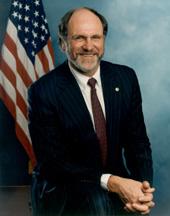
Mr. President, I rise today along with my colleague, Senator Lautenberg, to introduce legislation, the Preserving Access to Affordable Drugs (PAAD) Act. This legislation is essential to ensuring that…
Mr. President, I rise today along with my colleague, Senator Lautenberg, to introduce legislation, the Preserving Access to Affordable Drugs (PAAD) Act. This legislation is essential to ensuring that our most vulnerable seniors who have existing prescription drug coverage do not see a reduction or disruption in their coverage once the Medicare prescription drug program goes into effect.
Hundreds of thousands of seniors, including 190,000 in my State, currently enrolled in state pharmacy assistance programs (SPAPs) will be forced out of those programs and into a private drug plan under the Medicare prescription drug benefit. Additionally, approximately six million seniors, including 140,000 in New Jersey, who are dually eligible for Medicare and Medicaid will lose access to their Medicaid prescription drug benefits, which are more generous and provide greater access to a variety of drugs than the Medicare benefit will.
No senior should be made worse off by the new Medicare law. The law should expand benefits--not reduce them. The PAAD Act will make critical changes to the Medicare law to ensure that the above-mentioned benefits are safeguarded.
The PAAD Act will allow States to automatically enroll SPAP and dually eligible Medicaid beneficiaries into one or more preferred prescription drug plans to ensure that these beneficiaries are enrolled in a Medicare drug plan that maximizes both their Federal and State prescription drug coverage and ensures for a seamless transition to the new Medicare Part D drug benefit.
The PAAD Act will ensure that New Jersey seniors who currently receive prescription drug benefits under PAAD or through the State's Medicaid program are not made worse off by the new Medicare law.
The PAAD Act will allow New Jersey to provide supplemental Medicaid prescription drug benefits to low-income seniors and disabled who currently receive generous prescription drug benefits under the Medicaid program and who will now receive their prescription drug benefits through Medicare.
One of the goals of medicine is to do no harm. The manner in which the Bush Administration has chosen to implement the Medicare law violates that tenet. The Medicare legislation signed by the President created the State Pharmaceutical Assistance Transition Commission specifically to address the coordination of benefits between SPAPS, State Medicaid drug programs, and the new Medicare drug plan. The Commission was explicit in its recommendation to CMS that states be permitted to automatically enroll these beneficiaries in preferred prescription drug plans to ``enhance benefits to enrollees, encourage enrollment, and promote coordination between Medicare Part D and [states].'' Members of the Commission recognized that many blind, disabled, and aged beneficiaries, those who most need coverage, would not be able to navigate the plan selection process and could face gaps in coverage. Yet, CMS recently denied New Jersey's request to automatically enroll those Medicare beneficiaries currently enrolled in New Jersey's PAAD and Medicaid programs into a preferred Medicare prescription drug plan. This ruling effectively blocks New Jersey's efforts to preserve the generous prescription drug coverage the state currently provides to the 190,000 seniors enrolled in New Jersey's PAAD program and the 140,000 seniors and disabled enrolled in the state's Medicaid program when the new Medicare prescription drug benefit goes into effect on January 1, 2006.
Yesterday, I was joined by Senator Lautenberg in writing to the President to express our sincere dismay over the recent CMS ruling. It is clear that permitting states to automatically enroll these beneficiaries would guarantee that these seniors continue to receive the same level of prescription drug coverage, which is more generous than the coverage that will be available under the new Medicare benefit. Furthermore, auto enrollment would relieve beneficiaries from the anxiety of selecting the appropriate plan to ensure that their drug coverage is maximized. Certainly, beneficiaries who prefer to select their own prescription drug plan should have that choice, but those who want the state to act on their behalf to ensure that they receive the most comprehensive and seamless coverage should be afforded that option.
This legislation is critical to preserving and protecting existing prescription drug coverage while expanding it to those who currently lack such coverage. States like New Jersey, Pennsylvania, and New York, States that have well-established, generous prescription drug plans for seniors and the disabled, should not be prevented from continuing to provide the same level of coverage under the new Medicare law. I look forward to working with my colleagues to pass this legislation and preserve prescription drug benefits for all seniors.
Mr. President, I ask unanimous consent that the text of the bill be printed in the Record.
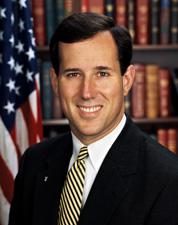
Mr. President, I am introducing the ``Good Samaritan Volunteer Firefighter Assistance Act of 2005.'' Amazingly, every year quality firefighting equipment worth millions of dollars is wasted. In order…
Mr. President, I am introducing the ``Good Samaritan Volunteer Firefighter Assistance Act of 2005.'' Amazingly, every year quality firefighting equipment worth millions of dollars is wasted. In order to avoid civil liability lawsuits, heavy industry and wealthier fire departments destroy surplus equipment, including hoses, fire trucks, protective gear and breathing apparatus, instead of donating it to volunteer fire departments.
The basic purpose of this legislation is to induce donations of surplus firefighting equipment by reducing the threat of civil liability for organizations, most commonly heavy industry, and individuals who wish to make these donations. The bill eliminates civil liability barriers to donations of surplus firefighting equipment by raising the liability standard for donors from ``negligence'' to ``gross negligence.'' By doing this, the legislation saves taxpayer dollars by encouraging donations, thereby reducing the taxpayers' burden of purchasing expensive equipment for volunteer fire departments.
The Good Samaritan Volunteer Firefighter Assistance Act of 2005 is modeled after a bill passed by the Texas state legislature in 1997 and signed into law by then-Governor George W. Bush which has resulted in more than $10 million in additional equipment donations from companies and other fire departments for volunteer departments which may not be as well equipped. Now companies in Texas can donate surplus equipment to the Texas Forest Service, which then certifies the equipment and passes it on to volunteer fire departments that are in need. The donated equipment must meet all original specifications before it can be sent to volunteer departments. Alabama, Arizona, Arkansas, California, Florida, Illinois, Indiana, Missouri, Nevada, South Carolina, and Pennsylvania have passed similar legislation at the State level.
In the 108th Congress, Representative Castle introduced the Good Samaritan Volunteer Firefighter Assistance Act, which had 64 bipartisan cosponsors in the House of Representatives. It is also supported by the National Volunteer Fire Council, the Firemen's Association of the State of New York, and a former director of the Federal Emergency Management Agency, FEMA, James Lee Witt. The legislation passed overwhelmingly in the House by a vote of 397-3. The bill has been reintroduced as H.R. 1088 in the 109th Congress and already has garnered 64 cosponsors. I introduced the Good Samaritan Volunteer Firefighter Assistance Act of 2004 in the 108th Congress that also enjoyed support from the National Volunteer Fire Council.
Federally, precedent for similar measures includes the Bill Emerson Good Samaritan Food Act, Public Law 104-210, named for the late Representative Bill Emerson, which encourages restaurants, hotels and businesses to donate millions of dollars worth of food. The Volunteer Protection Act of 1997, Public Law 105-101, also immunizes individuals who do volunteer work for non-profit organizations or governmental entities from liability for ordinary negligence in the course of their volunteer work. I have also previously introduced three Good Samaritan measures in the 106th Congress, S. 843, S. 844 and S. 845. These provisions were also included in a broader charitable package in S. 997, the Charity Empowerment Act, to provide additional incentives for corporate in-kind charitable contributions for motor vehicle, aircraft, and facility use. The same provision passed the House of Representatives in the 107th Congress as part of H.R. 7, the Community Solutions Act, in July of 2001, but was not signed into law.
Volunteers comprise approximately 73 percent of firefighters in the United States. Of the total estimated 1,078,300 firefighters across the country, 784,700 are volunteers. Of the more than 30,000 fire departments in the country, approximately 22,600 are all volunteer; 4,800 are mostly volunteer; 1,600 are mostly career; and 2,000 are all career. In 2000, 58 of the 103 firefighters who died in the line of duty were volunteers.
This legislation provides a commonsense incentive for additional contributions to volunteer fire departments around the country and would make it more attractive for corporations to give equipment to fire departments in other States. All of America has witnessed the heroic acts of selflessness and sacrifice of firefighters in New York City, Northern Virginia, and Pennsylvania. I urge my colleagues to join me in supporting this incentive for the provision of additional safety equipment for volunteer firefighters who put their lives on the line every day throughout this great Nation.
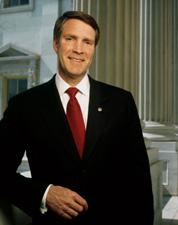
Mr. President, I ask unanimous consent that the Committee on Armed Services be authorized to meet during the session of the Senate on Wednesday, May 11, 2005 at 2:30 p.m., in closed session to mark…
Mr. President, I ask unanimous consent that the Committee on Armed Services be authorized to meet during the session of the Senate on Wednesday, May 11, 2005 at 2:30 p.m., in closed session to mark up the National Defense Authorization Act for fiscal year 2006.
Mr. President, I ask unanimous consent that the Committee on Commerce, Science, and Transportation be authorized to meet on Wednesday, May 11, 2005, at 10 a.m., on Spyware.
Mr. President, I ask unanimous consent that the Committee on Energy and Natural Resources be authorized to meet during the session of the Senate on Wednesday, May 11, 2005 at 10 a.m.
The purpose of the hearing is to receive testimony on S. 895 a bill to direct the Secretary of the Interior to establish a rural water supply program in the reclamation States to provide a clean, safe, affordable, and reliable water supply to rural residents.
Mr. President, I ask unanimous consent that the Committee on Foreign Relations be authorized to meet during the session of the Senate on Wednesday, May 11, 2005 at 2:30 p.m., to hold a hearing on U.S.-E.U. Regulatory Cooperation on Emerging Technologies.
Mr. President, I ask unanimous consent that the Committee on Indian Affairs be authorized to meet on Wednesday, May 11, 2005, at 9:30 a.m. in room 106 of the Dirksen Senate Office Building to conduct an oversight hearing on Federal Recognition of Indian Tribes.
Mr. President, I ask unanimous consent that the Committee on the Judiciary be authorized to meet to conduct a markup on Wednesday, May 11, 2005, at 9:30 a.m., in SD226.
Agenda
I. Bills
S. 852, A bill to Create a Fair and Efficient System to Resolve Claims of Victims for Bodily Injury Caused by Asbestos Exposure, and for Other Purposes. [Specter, Leahy, Hatch, Feinstein, Grassley, DeWine.]
Mr. President, I ask unanimous consent that the Select Committee on Intelligence be authorized to meet during the session of the Senate on May 11, 2005, at 2:30 p.m. to hold a hearing.
Mr. President, I ask unanimous consent that the Subcommittee on Bioterrorism Preparedness and Public Health, be authorized to hold a hearing during the session of the Senate on Wednesday, May 11, 2005, at 2 p.m. in SD-430.
Mr. President, I ask unanimous consent that the Subcommittee on Personnel be authorized to meet during the session of the Senate on Wednesday, May 11, 2005 at 10 a.m. in closed session to markup the personnel programs and provisions contained in the National Defense Authorization Act for fiscal year 2006.
Mr. President, I ask unanimous consent that the Subcommittee on Public Lands and Forests be authorized to meet during the session of the Senate on Wednesday, May 11, 2005 at 2 p.m.
The purpose of the hearing is to receive testimony on S. 100, to authorize the exchange of certain land in the state of Colorado; S. 235 and H.R. 816, to direct the Secretary of Agriculture to sell certain parcels of federal land in Carson City and Douglas County, NV; S. 404, to make a technical correction relating to the land conveyance authorized by Public Law 108-67; S. 741, to provide for the disposal of certain forest service administrative sites in the State of Oregon, and for other purposes; S. 761, to rename the Snake River Birds of Prey National Conservation Area in the State of Idaho as the Morley Nelson Snake River Birds of Prey National Conservation Area in honor of the late Morley Nelson, an international authority on birds of prey, who was instrumental in the establishment of this National Conservation Area, and for other purposes; and H.R. 486, to provide for a land exchange involving private land and Bureau of Land Management land in the vicinity of Holloman Air Force Base, NM, for the purpose of removing private land from the required safety zone surrounding munitions storage bunkers at Holloman Air Force Base.
Mr. President, I ask unanimous consent that the Subcommittee on Readiness and Management Support be authorized to meet during the session of the Senate on Wednesday, May 11, 2005 at 11:30 a.m. in closed session to mark up the readiness and management support programs and provisions contained in the National Defense Authorization Act for fiscal year 2006.
Mr. President, I ask unanimous consent that the Subcommittee on Strategic Forces be authorized to meet during the session of the Senate on Wednesday, May 11, 2005 at 9 a.m. in closed session to mark up the strategic forces programs and provisions contained in the National Defense Authorization Act for fiscal year 2006.
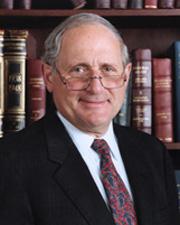
Mr. President, today I join Senator Voinovich in introducing the Highway Funding Equity Act of 2005. Our bill will allow States to get back a fairer share of what they contribute in gas taxes to the…
Mr. President, today I join Senator Voinovich in introducing the Highway Funding Equity Act of 2005.
Our bill will allow States to get back a fairer share of what they contribute in gas taxes to the highway trust fund. We do this by increasing the Federal minimum guaranteed funding level for highways to 95 percent from the current 90.5 percent of a State's share of contributions made to the Federal Highway Trust Fund in gas tax payments.
Increasing this minimum guarantee to 95 percent will bring us one step closer to achieving fairness in the distribution of Federal highway funds to States.
Historically about 20 States, including Michigan, known as ``donor'' States, have sent more gas tax dollars to the Highway Trust Fund in Washington than were returned in transportation infrastructure spending. The remaining 30 States, known as ``donee'' States, have received more transportation funding than they paid into the Highway Trust Fund.
This came about in 1956 when a number of small States and large Western States banded together to develop a formula to distribute Federal highway dollars that advantaged themselves over the remaining States. They formed a coalition of about 30 States that would benefit from the formula and, once that formula was in place, have tenaciously defended it.
At the beginning there was some legitimacy to the large low- population predominately Western States getting more funds than they contributed to the system in order to build a national interstate highway system. Some arguments remain for providing additional funds to those States to maintain the national system and our bill will do that. However, there is no justification for any State getting more than its fair share.
Each time the highway bill is reauthorized the donor States that have traditionally subsidized other States' road and bridge projects have fought to correct this inequity in highway funding. It has been a long struggle to change these outdated formulas. Through these battles, some progress has been made. For instance, in 1978, Michigan was getting around 75 cents on our gas tax dollar. The 1991 bill brought us up to approximately 80 cents per dollar and the 1998 bill guaranteed a 90.5 cent minimum return for each State.
We still have a long way to go to achieve fairness for Michigan and other States on the return on our Highway Trust Fund contributions. At stake are tens of millions of dollars a year in additional funding to pay for badly needed transportation improvements in Michigan alone and the jobs that go with it. Based on FHWA data, we calculate that Michigan would have received over $55 million in additional funds in FY 2004 under the Voinovich-Levin 95 percent minimum guarantee bill. That's a critically important difference for Michigan each year. The same is true for other donor States that stand to get back millions more of their gas tax dollars currently being sent to other States. There's no logical reason for some States to be forced to continue to send that money to other states to subsidize their road and bridge projects and to perpetuate this imbalance is simply unfair and unjustifiable.
With the national interstate system completed, the formulas used to determine how much a State will receive from the Highway Trust Fund are antiquated and do not relate to what a State's real needs or contributions are.
The Voinovich-Levin bill is a consensus bill developed with the help of donor State Department of Transportation agencies and their coalition working group. This legislation would increase the minimum guarantee from 90.5 percent to 95 percent for all States. With this legislation, we intend to send a strong message to our colleagues and the authorizing Committee about the need to address the equity issue in the highway reauthorization bill. We are determined to make progress in this bill to distribute the highway funds in a more equitable manner so that every State gets its fair share.
This is simply an issue of fairness and we will not be satisfied until we achieve it.
Mr. President, I would like to announce for the information of the Senate and the public that a hearing has been scheduled before the Subcommittee on Public Lands and Forests of the Committee on…
Mr. President, I would like to announce for the information of the Senate and the public that a hearing has been scheduled before the Subcommittee on Public Lands and Forests of the Committee on Energy and Natural Resources.
The hearing will be held on Wednesday, May 11, 2005, at 2 p.m., in Room SD-366 of the Dirksen Senate Office Building.
The purpose of the hearing is to receive testimony on S. 100, to authorize the exchange of certain land in the State of Colorado; S. 235 and H.R. 816, to direct the Secretary of Agriculture to sell certain parcels of Federal land in Carson City and Douglas County, NV; S. 404, to make a technical correction relating to the land conveyance authorized by Public Law 108-67; S. 741, to provide for the disposal of certain Forest Service administrative sites in the State of Oregon, and for other purposes; S. 761, to rename the Snake River Birds of Prey National Conservation Area in the State of Idaho as the Morley Nelson Snake River Birds of Prey National Conservation Area in honor of the late Morely Nelson, an international authority on birds of prey, who was instrumental in the establishment of this National Conservation Area, and for other purposes; and H.R. 486, to provide for a land exchange involving private land and Bureau of Land Management land in the vicinity of Holloman Air Force Base, NM, for the purpose of removing private land from the required safety zone surrounding munitions storage bunkers at Holloman Air Force Base.
Because of the limited time available for the hearing, witnesses may testify by invitation only. However, those wishing to submit written testimony for the hearing record should send two copies of their testimony to the Committee on Energy and Natural Resources, United States Senate, Washington, DC, 20510-6150.
Mr. President, I rise today to introduce, along with my colleague, Mr. Crapo, a bill to rename a National Conservation Area in the State of Idaho after the late Morley Nelson. This bill renames it…
Mr. President, I rise today to introduce, along with my colleague, Mr. Crapo, a bill to rename a National Conservation Area in the State of Idaho after the late Morley Nelson. This bill renames it the Morley Nelson Snake River Birds of Prey National Conservation Area.
After returning home as a decorated veteran of World War II, having served with the famed 10th Mountain Division in Italy, Morley Nelson recognized the unique importance of the Snake River area for birds of prey. He worked for its protection and various designations, culminating in its establishment by Congress as a National Conservation Area.
Starting in the 1950s, Morley Nelson spent decades convincing ranchers and farmers not to shoot raptors, but rather to accept them as an integral part of the ecosystem.
Morley Nelson raised public awareness about birds of prey through scores of speeches with an eagle on his fist, and through dozens of movies and TV specials starring his eagle or hawks, including seven films for Disney.
Morley Nelson recognized the long-standing problem with raptor electrocution from power lines and the associated power outages and even resulting wildfires. In cooperation with Idaho Power, and later with other utilities, he helped develop guards and redesigned power transmission lines to reduce raptor electrocution. This technology has since spread throughout the world.
Morley Nelson once said, ``This is where the wind and the cliffs and the birds are. This is where I'll always be.'' It seems only fitting that the Snake River Birds of Prey National Conservation Area should bear his name.
I ask unanimous consent that the text of the bill be printed in the Record.
Mr. President, I rise today to introduce, along with my colleague, Mr. Crapo, a bill to rename a National Conservation Area in the State of Idaho after the late Morley Nelson. This bill renames it…
Mr. President, I rise today to introduce, along with my colleague, Mr. Crapo, a bill to rename a National Conservation Area in the State of Idaho after the late Morley Nelson. This bill renames it the Morley Nelson Snake River Birds of Prey National Conservation Area.
After returning home as a decorated veteran of World War II, having served with the famed 10th Mountain Division in Italy, Morley Nelson recognized the unique importance of the Snake River area for birds of prey. He worked for its protection and various designations, culminating in its establishment by Congress as a National Conservation Area.
Starting in the 1950s, Morley Nelson spent decades convincing ranchers and farmers not to shoot raptors, but rather to accept them as an integral part of the ecosystem.
Morley Nelson raised public awareness about birds of prey through scores of speeches with an eagle on his fist, and through dozens of movies and TV specials starring his eagle or hawks, including seven films for Disney.
Morley Nelson recognized the long-standing problem with raptor electrocution from power lines and the associated power outages and even resulting wildfires. In cooperation with Idaho Power, and later with other utilities, he helped develop guards and redesigned power transmission lines to reduce raptor electrocution. This technology has since spread throughout the world.
Morley Nelson once said, ``This is where the wind and the cliffs and the birds are. This is where I'll always be.'' It seems only fitting that the Snake River Birds of Prey National Conservation Area should bear his name.
I ask unanimous consent that the text of the bill be printed in the Record.
Bill Text
4 versions available
        [Congressional Bills 109th Congress]
[From the U.S. Government Publishing Office]
[S. 761 Referred in House (RFH)]

109th CONGRESS
1st Session
S. 761

_______________________________________________________________________

IN THE HOUSE OF REPRESENTATIVES

November 17, 2005

Referred to the Committee on Resources

_______________________________________________________________________

AN ACT

To rename the Snake River Birds of Prey National Conservation Area in
the State of Idaho as the Morley Nelson Snake River Birds of Prey
National Conservation Area in honor of the late Morley Nelson, an
international authority on birds of prey, who was instrumental in the
establishment of this National Conservation Area, and for other
purposes.

Be it enacted by the Senate and House of Representatives of the
United States of America in Congress assembled,

SECTION 1. SHORT TITLE.

This Act may be cited as the ``Morley Nelson Snake River Birds of
Prey National Conservation Area Act''.

SEC. 2. RENAMING OF SNAKE RIVER BIRDS OF PREY NATIONAL CONSERVATION
AREA.

(a) Renaming.--Public Law 103-64 is amended--
(1) in section 2(2) (16 U.S.C. 460iii-1(2)), by inserting
``Morley Nelson'' before ``Snake River Birds of Prey National
Conservation Area''; and
(2) in section 3(a)(1) (16 U.S.C. 460iii-2(a)(1)), by
inserting ``Morley Nelson'' before ``Snake River Birds of Prey
National Conservation Area''.
(b) References.--Any reference in a law, map, regulation, document,
paper, or other record of the United States to the Snake River Birds of
Prey National Conservation Area shall be deemed to be a reference to
the Morley Nelson Snake River Birds of Prey National Conservation Area.
(c) Technical Corrections.--Public Law 103-64 is further amended--
(1) in section 3(a)(1) (16 U.S.C. 460iii-2(a)(1)), by
striking ``(hereafter referred to as the `conservation
area')''; and
(2) in section 4 (16 U.S.C. 460iii-3)--
(A) in subsection (a)(2), by striking
``Conservation Area'' and inserting ``conservation
area''; and
(B) in subsection (d), by striking ``Visitors
Center'' and inserting ``visitors center''.

Passed the Senate November 16, 2005.

Attest:

EMILY J. REYNOLDS,

Secretary.