A bill to designate the facility of the United States Postal Service located at 123 W. 7th Street in Holdenville, Oklahoma, as the "Boone Pickens Post Office".

Legislative Activity
Stay on top of the latest movement without scrolling through every action
Became Public Law No: 109-51.
August 2, 2005
View full timeline
Introduced in Senate
April 13, 2005
Sponsor introductory remarks on measure. (CR S3562-3563)
April 13, 2005
Read twice and referred to the Committee on Homeland Security and Governmental Affairs.
April 13, 2005
Committee on Homeland Security and Governmental Affairs. Ordered to be reported without amendment favorably.
June 22, 2005
Senate Committee on Homeland Security and Governmental Affairs discharged by Unanimous Consent.(consideration: CR S7550-7551)
June 29, 2005
Senate Committee on Homeland Security and Governmental Affairs discharged by Unanimous Consent. (consideration: CR S7550-7551)
June 29, 2005
Passed Senate without amendment by Unanimous Consent. (text: CR S7551)
June 29, 2005
Received in the House.
June 29, 2005 • 8:53 PM
Message on Senate action sent to the House.
June 29, 2005
Referred to the House Committee on Government Reform.
June 29, 2005
Mr. Issa moved to suspend the rules and pass the bill.
July 25, 2005 • 3:02 PM
Considered under suspension of the rules. (consideration: CR H6395)
July 25, 2005 • 3:02 PM
DEBATE - The House proceeded with forty minutes of debate on S. 775.
July 25, 2005 • 3:02 PM
Passed/agreed to in House: On motion to suspend the rules and pass the bill Agreed to by voice vote.(text: CR H6395)
July 25, 2005 • 3:06 PM
On motion to suspend the rules and pass the bill Agreed to by voice vote. (text: CR H6395)
July 25, 2005 • 3:06 PM
Motion to reconsider laid on the table Agreed to without objection.
July 25, 2005 • 3:06 PM
Cleared for White House.
July 25, 2005
Presented to President.
July 29, 2005
Signed by President.
August 2, 2005
Became Public Law No: 109-51.
August 2, 2005
Floor Debate
13 membersWhat members said about S. 775 on the floor
 CL
CL SMC
SMC BLD
BLD OJSJMI+8
Floor Debate
13 membersWhat members said about S. 775 on the floor
Mr. President, today my colleague from Maine, Senator Collins and I are very pleased to introduce the National Aquatic Invasive Species Act of 2005. This bill, which reauthorizes the Nonindigenous…
Mr. President, today my colleague from Maine, Senator Collins and I are very pleased to introduce the National Aquatic Invasive Species Act of 2005. This bill, which reauthorizes the Nonindigenous Aquatic Nuisance Prevention and Control Act, takes a comprehensive approach towards addressing aquatic nuisance species to protect the nation's aquatic ecosystems. Invasive species are not a new problem for this country, but what is so important about this bill is that this is the first real effort to take a comprehensive approach toward the problem of aquatic invasive species. The bill deals with the prevention of introductions, the screening of new aquatic organisms that do come into the country, the rapid response to invasions, and the research to implement the provisions of this bill.
During the development of this country, there were more than people immigrating to this country. More than 6,500 non-indigenous invasive species have been introduced into the United States and have become established, self-sustaining populations. These species--from microorganisms to mollusks, from pathogens to plants, from insects to fish to animals--typically encounter few, if any, natural enemies in their new environments and wreak havoc on native species. Aquatic nuisance species threaten biodiversity nationwide, especially in the Great Lakes.
In fact, the aquatic nuisance species became a major issue for Congress back in the late eighties when the zebra mussel was released into the Great Lakes. The Great Lakes still have zebra mussels, and now, 20 States are fighting to control them. The Great Lakes region spends about $30 million per year to keep water pipes from becoming clogged with zebra mussels.
Zebra mussels were carried over from the Mediterranean to the Great Lakes in the ballast tanks of ships. The leading pathway for aquatic invasive species was and still is maritime commerce. Most invasive species are contained in the water that ships use for
ballast to maintain trim and stability. Aquatic invaders such as the zebra mussel and round goby were introduced into the Great Lakes when ships, often from nations, pulled into port and discharged their ballast water. In addition to ballast water, aquatic invaders can also attach themselves to ships' hulls and anchor chains.
Because of the impact that the zebra mussel had in the Great Lakes, Congress passed legislation in 1990 and 1996 that has reduced, but not eliminated, the threat of new invasions by requiring ballast water management for ships entering the Great Lakes. Today, there is a mandatory ballast water management program in the Great Lakes, and the Coast Guard is in the rule-making process to turn the voluntary ballast water exchange reporting requirement into a mandatory ballast water exchange program for all of our coasts. The current law requires that ships entering the Great Lakes must exchange their ballast water, seal their ballast tanks or use alternative treatment that is ``as effective as ballast water exchange.'' Unfortunately, alternative treatments have not been fully developed and widely tested on ships because the developers of ballast technology do not know what standard they are trying to achieve. This obstacle is serious because ultimately, only on-board ballast water treatment will adequately reduce the threat of new aquatic nuisance species being introduced through ballast water.
Our bill addresses this problem. First, this bill establishes a deadline for the Coast Guard and EPA to establish a standard for ballast water management and requires that the standard reduce the number of plankton in the ballast water by 99 percent or the best performance that technology can provide. This way, technology vendors and the maritime industry know what they should be striving to achieve and when they will be expected to achieve it. After 2011, all ships that enter any U.S. port after operating outside the Exclusive Economic Zone of 200 miles will be required to use a ballast water treatment technology that meets this standard.
I understand that ballast water technologies are being researched, and some are currently being tested on-board ships. The range of technologies include ultraviolet lights, filters, chemicals, deoxygenation, ozone, and several others. Each of these technologies has a different price tag attached to it. It is not my intention to overburden the maritime industry with an expensive requirement to install technology. In fact, the legislation states that the final ballast water technology standard must be based on the best performing technology that is economically achievable. That means that the Coast Guard must consider what technology is available, and if there is no economically achievable technology available to a class of vessels, then the standard will not require ballast technology for that class of vessels, subject to review every three years. I do not believe this will be the case, however, because the approach of this bill creates a clear incentive for treatment vendors to develop affordable equipment for the market.
Technology will always be evolving, and we hope that affordable technology will become available that completely eliminates the risk of new introductions. Therefore, it is important that the Coast Guard regularly review and revise the standard so that it reflects what the best technology currently available is and whether it is economically achievable.
There are other important provisions of the bill that also address prevention. For instance, the bill encourages the Coast Guard to consult with Canada, Mexico, and other countries in developing guidelines to prevent the introduction and spread of aquatic nuisance species. The Aquatic Nuisance Species Task Force is also charged with conducting a pathway analysis to identify other high risk pathways for introduction of nuisance species and implement management strategies to reduce those introductions. And this legislation, for the first time, establishes a process to screen live organisms entering the country for the first time for non-research purposes. Organisms believed to be invasive would be imported based on conditions that prevent them from becoming a nuisance. Such a screening process might have prevented such species as the Snakehead, which has established itself in the Potomac River here in the DC area, from being imported.
The third title of this bill addresses early detection of new invasions and the rapid response to invasions as well as the control of aquatic nuisance species that do establish themselves. If fully funded, this bill will provide a rapid response fund for states to implement emergency strategies when outbreaks occur. The bill requires the Army Corps of Engineers to construct and operate the Chicago Ship and Sanitary Canal project which includes the construction of a second dispersal barrier to keep species like the Asian carp from migrating up the Mississippi through the Canal into the Great Lakes. Equally important, this barrier will prevent the migration of invasive species in the Great Lakes from proceeding into the Mississippi system.
Lastly, the bill authorizes additional research which will identify threats and the tools to address those threats.
Though invasive species threaten the entire Nation's aquatic ecosystem, I am particularly concerned with the damage that invasive species have done to the Great Lakes. There are now roughly 180 invasive species in the Great Lakes, and it is estimated that a new species is introduced every 8 months. Invasive species cause disruptions in the food chain, which is now causing the decline of certain fish. Invasive species are believe to be the cause of a new dead zone in Lake Erie. And invasive species compete with native species for habitat.
This bill addresses the ``NOBOB'' or No Ballast on Board problem which is when ships report having no ballast when they enter the Great Lakes. However, a layer of sediment and small bit of water that cannot be pumped out is still in the ballast tanks. So when water is taken on and then discharged all within the Great Lakes, a new species that was still living in that small bit of sediment and water may be introduced. By requiring technology to be installed, this bill addresses a very serious issue in the Great Lakes.
All in all, the bill would cost between $160 million and $170 million each year. This is a lot of money, but it is a critical investment. As those of us from the Great Lakes know, the economic damage that invasive species can cause is much greater. However, compared to the annual cost of invasive species, the cost of this bill is minimal. Therefore, I urge my colleagues to cosponsor this legislation and work to move the bill swiftly through the Senate.
Mr. President, from Pickerel Pond to Lake Auburn, from Sebago Lake to Bryant Pond, lakes and ponds in Maine are under attack. Aquatic invasive species threaten Maine's drinking water systems,…
Mr. President, from Pickerel Pond to Lake Auburn, from Sebago Lake to Bryant Pond, lakes and ponds in Maine are under attack. Aquatic invasive species threaten Maine's drinking water systems, recreation, wildlife habitat, lakefront real estate, and fisheries. Plants, such as Variable Leaf Milfoil, are crowding out native species. Invasive Asian shore crabs are taking over Southern New England's tidal pools and have advanced well into Maine--to the potential detriment of Maine's lobster and clam industries.
I rise today to join Senator Levin in introducing legislation to address this problem. The National Aquatic Invasive Species Act of 2005 would create the most comprehensive nationwide approach to date for combating alien species that invade our shores.
The stakes are high when invasive species are unintentionally introduced into our Nation's waters. They endanger ecosystems, reduce biodiversity, and threaten native species. They disrupt people's lives and livelihoods by lowering property values, impairing commercial fishing and aquaculture, degrading recreational experiences, and damaging public water supplies.
In the 1950s, European Green Crabs swarmed the Maine coast and literally ate the bottom out of Maine's soft-shell clam industry by the 1980s. Many clam diggers were forced to go after other fisheries or find new vocations. In just one decade, this invader reduced the number of clam diggers in Maine from nearly 5,000 in the 1940s to fewer than 1500 in the 1950s. European green crabs currently cost an estimated $44 million a year in damage and control efforts in the United States.
Past invasions forewarn of the long-term consequences to our environment and communities unless we take steps to prevent new invasions. It is too late
to stop European green crabs from taking hold on the East Coast, but we still have the opportunity to prevent many other species from taking hold in Maine and the United States.
Senator Levin and I introduced an earlier version of this legislation in March of 2003. Just a few months earlier, one of North America's most aggressive invasive species hydrilla--was found in Maine for the first time. This stubborn and fast-growing aquatic plant had taken hold in Pickerel Pond in the Town of Limerick, ME, and threatened recreational use for swimmers and boaters. At the time, we warned that unless Congress acted, more and more invasive species would establish a foothold in Maine and across the country.
Unfortunately, Congress failed to act on our legislation and new invasions have continued. In December, for the first time, the Maine Department of Environmental Protection detected Eurasian Milfoil in the State. Maine was the last of the lower 48 States to be free of this stubborn and fast-growing invasive plant that degrades water quality by displacing native plants, fish and other aquatic species. The plant forms stems reaching up to 20 feet high that cause fouling problems for swimmers and boaters. In total, there are 24 documented cases of aquatic invasive species infesting Maine's lakes and ponds.
When considering the impact of these invasive species, it is important to note the tremendous value of our lakes and ponds. While their contribution to our quality of life is priceless, their value to our economy is more measurable. Maine's Great Ponds generate nearly 13 million recreational user days each year, lead to more than $1.2 billion in annual income for Maine residents, and support more than 50,000 jobs.
With so much at stake, Mainers are taking action to stop the spread of invasive species into our State's waters. The State of Maine has made it illegal to sell, posses, cultivate, import or introduce eleven invasive aquatic plants. Boaters participating in the Maine Lake and River Protection Sticker program are providing needed funding to aid efforts to prevent, detect and manage aquatic invasive plants. Volunteers are participating in the Courtesy Boat Inspection program to keep aquatic invasive plants out of Maine lakes. Before launch or after removal, inspectors ask boaters for permission to inspect the boat, trailer or other equipment for plants. More than 300 trained inspectors conducted upwards of 30,000 courtesy boat inspections at 65 lakes in the 2004 boating season.
While I am proud of the actions that Maine and many other States are taking to protect against invasive species, all too often their efforts have not been enough. As with national security, protecting the integrity of our lakes, streams, and coastlines from invading species cannot be accomplished by individual States alone. We need a uniform, nationwide approach to deal effectively with invasive species. The National Aquatic Invasive Species Act of 2005 will help my State and States throughout the Nation detect, prevent and respond to aquatic invasive species.
The National Aquatic Invasive Species Act of 2005 would be the most comprehensive effort ever undertaken to address the threat of invasive species. By authorizing $836 million over 6 years, this legislation would open numerous new fronts in our war against invasive species. The bill directs the Coast Guard to develop regulations that will end the easy cruise of invasive species into U.S. waters through the ballast water of international ships, and would provide the Coast Guard with $6 million per year to develop and implement these regulations.
The bill also would provide $30 million per year for a grant program to assist State efforts to prevent the spread of invasive species. It would provide $12 million per year for the Army Corps of Engineers and Fish and Wildlife Service to contain and control invasive species. Finally, the Levin-Collins bill would authorize $30 million annually for research, education, and outreach.
Mr. President, the most effective means of stopping invading species is to attack them before they attack us. We need an early alert, rapid response system to combat invading species before they have a chance to take hold. For the first time, this bill would establish a national monitoring network to detect newly introduced species, while providing $25 million to the Secretary of the Interior to create a rapid response fund to help States and regions respond quickly once invasive species have been detected. This bill is our best effort at preventing the next wave of invasive species from taking hold and decimating industries and destroying waterways in Maine and throughout the country.
One of the leading pathways for the introduction of aquatic organisms to U.S. waters from abroad is through transoceanic vessels. Commercial vessels fill and release ballast tanks with seawater as a means of stabilization. The ballast water contains live organisms from plankton to adult fish that are transported and released through this pathway. Last week, a Federal judge ruled that the Government can no longer allow ships to dump, without a permit from the Environmental Protection Agency, any ballast water containing nonnative species that could harm local ecosystems. The court case and subsequent decision indicates that there are problems with our existing systems to control ballast water discharge and signals a need to address invasive hitchhikers that travel to our shores aboard ships. Our legislation would establish a framework to prevent the introduction of aquatic invasive species by ships.
The National Aquatic Invasive Species Act of 2005 offers a strong framework to combat aquatic invasive species. I call on my colleagues to help us enact this legislation in order to protect our waters, ecosystems, and industries from destructive invasive species--before it's too late.
Mr. President, today I'm joined by Senator Levin of Michigan in introducing legislation that we believe will help the Internal Revenue Service (IRS) combat offshore tax-haven abuses and ensure that…
Mr. President, today I'm joined by Senator Levin of Michigan in introducing legislation that we believe will help the Internal Revenue Service (IRS) combat offshore tax-haven abuses and ensure that U.S. multinational companies pay the U.S. taxes that they rightfully owe.
Tens of millions of taxpayers will be rushing to file their tax returns in the next few days in order to fulfill their taxpaying responsibility by the April 15 filing deadline. Some tax experts estimate that taxpayers will spend over $100 billion and more than 6 billion hours this year trying to comply with their federal tax obligation. It's no wonder that many Americans are frustrated with the current tax system and would gladly welcome substantive efforts to simplify it.
However, this frustration changes to anger when the taxpayers who pay their taxes on time each year discover that many corporate taxpayers are shirking their tax obligations by actively shifting their profits to foreign tax havens or using other inappropriate tax avoidance techniques. The bill that Senator Levin and I are introducing today is a simple and straightforward way to try to tackle the offshore tax- haven problem.
Specifically, our legislation denies tax benefits, namely tax deferral, to U.S. multinational companies that set up controlled foreign corporations in tax-haven countries by treating those subsidiaries as domestic companies for U.S. income tax purposes. This tracks the same general approach embraced and passed by the Congress in other tax legislation designed to curb the problem of corporate inversions.
We have known for many years that some very profitable U.S. multinational businesses are using offshore tax havens to avoid paying their fair share of U.S. taxes. But Congress has really done very little to stop this hemorrhaging of tax revenues. In fact, recent evidence suggests that the tax-haven problem is getting much worse and may be draining the U.S. Treasury of tens of billions of dollars every year.
The New York Times got it right when it suggested that ``instead of moving headquarters offshore, many companies are simply placing patents on drugs, ownership of corporate logos, techniques for manufacturing processes and other intangible assets in tax havens . . . The companies then charge their subsidiaries in higher-tax locales, including the U.S., for the use of these intellectual properties. This allows the companies to take profits in these havens and pay far less in taxes.''
How pervasive is the tax-haven subsidiary problem? Last year, the Government Accountability Office (GAO), the investigative arm of Congress, issued a report that Senator Levin and I requested that gives some insight to the potential magnitude of this tax avoidance activity. The GAO found that 59 out of the 100 largest publicly-traded federal contractors in 2001--with tens of billions of dollars of federal contracts in 2001--had established hundreds of subsidiaries located in offshore tax havens.
According to the GAO, Exxon-Mobil Corporation, the 21st largest publicly traded federal contractor in 2001, has some 11 tax-haven subsidiaries in the Bahamas. Halliburton Company reportedly has 17 tax- haven subsidiaries, including 13 in the Cayman Islands, a country that has never imposed a corporate income tax, as well as 2 in Liechtenstein and 2 in Panama. And the now infamous Enron Corporation had 1,300 different foreign entities, including some 441 located in the Cayman Islands.
More recently, former Joint Committee on Taxation economist Martin Sullivan released a study that looked at the amount of profits that US. companies are shifting to offshore tax havens. He found that U.S. multinationals had moved hundreds of billions of profits to tax havens for years 1999-2002, the latest years for which IRS data is available.
Although Congress passed legislation, which I supported, that addresses the problem of corporate expatriates that reincorporate overseas, that legislation did nothing to deal with the problem of U.S. companies that are setting up tax-haven subsidiaries to avoid their taxpaying responsibilities in this country.
The legislation that we are introducing builds upon the good work of Senators Grassley and Baucus and other members of the Senate Finance Committee by extending similar tax policy changes to cover the case of U.S. companies and their tax-haven subsidiaries.
Specifically, our legislation would do the following: 1. Treat U.S. controlled foreign subsidiaries that are set up in tax-haven countries as domestic companies for U.S. tax purposes. In other words, we would simply treat these companies as if they never left the United States, which is essentially the case in these tax avoidance motivated transactions.
2. List specific tax-haven countries subject to the new rule (based upon the previous work by the Organization for Economic Cooperation and Development) and give the Secretary of the Treasury the ability to add or remove a foreign country from this list in appropriate cases.
3. Provide an exception where substantially all of a U.S. controlled foreign corporation's income is derived from the active conduct of a trade or business within the listed tax-haven country.
4. Make these proposed changes effective beginning after December 31, 2007. This will give businesses ample time to restructure their tax- haven operations if they so choose.
This legislation will help end the tax benefits for U.S. companies that shift income to offshore tax-haven subsidiaries. For example, any efforts by a U.S. company to move profits to the subsidiary through transfer pricing schemes will not work because the income earned by the subsidiary would still be immediately taxable by the United States. Likewise, any efforts to move otherwise active income earned by a U.S. company in a high-tax foreign country to a tax haven would cause the income to be immediately taxable by the United States. Companies that try to move intangible assets--and the income they produce--to tax havens would be unsuccessful because the income would still be immediately taxable by the United States.
Let me be very clear about one thing. This legislation will not adversely impact U.S. companies with controlled foreign subsidiaries that are located in tax havens and doing legitimate and substantial business. The legislation expressly exempts a U.S.-controlled foreign subsidiary from its tax rule changes when substantially all of its income is derived from the active conduct of a trade or business within a listed tax-haven country.
In 2002, then-IRS Commissioner Charles Rossotti told Congress that ``nothing undermines confidence in the tax system more than the impression that the average honest taxpayer has to pay his or her taxes while more wealthy or unscrupulous taxpayers are allowed to get away with not paying.'' Last week, IRS Commissioner Everson echoed similar sentiments at a Senate Transportation-Treasury Appropriations Subcommittee hearing I attended on the IRS's FY 2006 budget request.
They are absolutely right. It's grossly unfair to ask our Main Street businesses to operate at a competitive disadvantage to large multinational businesses simply because our tax authorities are unable to grapple with the growing offshore tax avoidance problem. It is outrageous that tens of millions of working families who pay their taxes on time every year are shouldering the tax burden of large profitable U.S. multinational companies that use tax-haven subsidiaries.
I hope that Congress will act promptly to enact legislation to curb these tax-haven subsidiary abuses. I urge my colleagues to cosponsor this bill.
Mr. President, as Chair of the Senate Committee on Small Business and Entrepreneurship, regulatory fairness remains one of my top priorities. In 1996, I was pleased to support, along with all of my…
Mr. President, as Chair of the Senate Committee on Small Business and Entrepreneurship, regulatory fairness remains one of my top priorities. In 1996, I was pleased to support, along with all of my colleagues, the Small Business Regulatory Enforcement Fairness Act, SBREFA, which made the Regulatory Flexibility Act more effective in curtailing the impact of regulations on small businesses. One of the most important provisions of SBREFA compels agencies to produce compliance assistance materials to help small businesses satisfy the requirements of agency regulations. Unfortunately, over the years, agencies have failed to achieve this requirement. Consequently, small businesses have been forced to figure out on their own how to comply with these regulations. This makes compliance that much more difficult to achieve, and therefore reduces the effectiveness of the regulations.
The Government Accountability Office, GAO, found that agencies have ignored this requirement or failed miserably in their attempts to satisfy it. The GAO also found that SBREFA's language is unclear in some places about what is actually required. That is why today, I am introducing The Small Business Compliance Assistance Enhancement Act of 2005, to close those loopholes, and to make it clear that we were serious when we first told agencies, and that we want them to produce quality compliance assistance materials to help small businesses understand how to deal with regulations.
My bill is drawn directly from the GAO recommendations and is intended only to clarify an already existing requirement--not to add anything new. Similarly, the compliance guides that the agencies will produce will be suggestions about how to satisfy a regulation's requirements, and will not impose further requirements or additional enforcement measures. Nor does this bill, in any way, interfere or undercut agencies' ability to enforce their regulations to the full extent they currently enjoy. Bad actors must be brought to justice, but if the only trigger for compliance is the threat of enforcement, then agencies will never achieve the goals at which their regulations are directed.
The key to helping small businesses comply with these regulations is to provide assistance--showing them what is necessary and how they will be able to tell when they have met their obligations. Too often, small businesses do not maintain the staff, or possess the resources to answer these questions. This is a disadvantage when compared to larger businesses, and reduces the effectiveness of the agency's regulations. The SBA's Office of Advocacy has determined that regulatory compliance costs small businesses with less than 20 employees almost $7,000 per employee, compared to almost $4,500 for companies with more than 500 employees. If an agency can not describe how to comply with its regulation, how can we expect a small business to figure it out? This is the reason the requirement to provide compliance assistance was originally included in SBREFA. That reason is as valid today as it was in 1996.
Specifically, my bill would do the following:
Clarify how a guide shall be designated: Section 212 of SBREFA currently requires that agencies ``designate'' the publications prepared under the section as small entity compliance guides. However, the form in which those designations should occur is not clear. Consistent use of the phrase ``Small Entity Compliance Guide'' in the title could make it easier for small entities to locate the guides that the agencies develop. This would also aid in using on line searches--a technology that was not widely used when SBREFA was passed. Thus, agencies would be directed to publish guides entitled ``Small Entity Compliance Guide.''
Clarify how a guide shall be published: Section 212 currently states agencies ``shall publish'' the guides, but does not indicate where or how they should be published. At least one agency has published the guides as part of the preamble to the subject rule, thereby requiring affected small entities to read the Federal Register to obtain the guides. Agencies would be directed, at a minimum, to make their compliance guides available through their websites in an easily accessible way. In addition, agencies would be directed to forward their compliance guides to known industry contacts such as small businesses or associations with small business members that will be affected by the regulation.
Clarify when a guide shall be published: Section 212 does not indicate when the compliance guides should be published. Therefore, even if an agency is required to produce a compliance guide, it can claim that it has not violated the publishing requirement because there is no clear deadline. Agencies would be instructed to publish the compliance guides simultaneously with, or as soon as possible after, the final rule is published, provided that the guides must be published no later than the effective date of the rule's compliance requirements.
Clarify the term ``compliance requirements'': The term ``compliance requirements'' also needs to be clarified. At a minimum, compliance requirements must identify what small
businesses must do to satisfy the requirements and how they will know that they have met these requirements. This should include a description of the procedures a small business might use to meet the requirements. For example, if, as is the case with many OSHA and EPA regulations, testing is required, the agency should explain how that testing might be conducted. The bill makes clear that the procedural description should be merely suggestive--an agency would not be able to enforce this procedure if a small business was able to satisfy the requirements through a different approach.
It is time we get serious about ensuring that small businesses have the assistance they need to deal with the maze of Federal regulations we expect them to handle on a daily basis. The Small Business Compliance Assistance Enhancement Act of 2005 will make a significant contribution to that effort.
I ask unanimous consent that the text of the bill be printed in the Record.
Mr. President, I ask unanimous consent that the committee on Agriculture, Nutrition and Forestry be authorized to conduct a hearing during the session of the Senate on Wednesday, June 22, 2005 at 10…
Mr. President, I ask unanimous consent that the committee on Agriculture, Nutrition and Forestry be authorized to conduct a hearing during the session of the Senate on Wednesday, June 22, 2005 at 10 a.m. in SR-328A, Russell Senate Office Building. The purpose of this hearing will be to consider the nomination of Dr. Richard A. Raymond to be Under Secretary for food safety at the United States Department of Agriculture.
Mr. President, I ask unanimous consent that the committee on Agriculture, Nutrition and Forestry be authorized to conduct a hearing during the session of the Senate at 10:30 a.m. on Wednesday, June 22, 2005, in SR-328A, Russell Senate Office Building. The purpose of this hearing will be to review the Livestock Manadatory Reporting Act 1999.
Mr. President, I ask unanimous consent that the Committee on Foreign Relations be authorize to meet during the session of the Senate on Wednesday, June 22, 2005 at 9:30 a.m. to hold a business meeting.
Mr. President, I ask unanimous consent that the Committee on Homeland Security and Governmental Affairs be authorized to meet on Wednesday, June 22, 2005, at 10 a.m. to hold a business meeting to consider pending committee business.
Agenda
legislation
S. 662, Postal Accountability Enhancement Act; S. 457, Purchase Card Waste Elimination Act; S. 611, Emergency Medical Services Support Act; S. 37, a bill to extend the special postage stamp for breast cancer research for two years.
post office naming bills
H.R. 1460, a bill to designate the facility of the U.S. Postal Service located at 6200 Rolling Road in Springfield, VA, as the ``Captain Mark Stubenhofer Post Office Building''.
S. 590/H.R. 1236, a bill to designate the facility of the U.S. Postal Service located at 750 4th Street in Sparks, NV, as the ``Mayor Tony Armstrong Memorial Post Office''.
S. 571, a bill to designate the facility of the U.S. Postal Service located at 1915 Fulton Street in Brooklyn, NY, as the ``Congresswoman Shirley A. Chisholm Post Office Building''.
S. 892/H.R. 324, a bill to designate the facility of the U.S. Postal Service located at 321 Montgomery Road in Altamonte Springs, FL, as the ``Arthur Stacey Mastrapa Post Office Building''.
S. 867/H.R. 289, a bill to designate the facility of the U.S. Postal Service located at 8200 South Vermont Avenue in Los Angeles, CA, as the ``Sergeant First Class John Marshall Post Office Building''.
S. 1207/H.R. 120, a bill to designate the facility of the U.S. Postal Service located at 20777 Rancho California Road in Temecula, CA, as the ``Dalip Singh Saund Post Office Building''.
S. 775, a bill to designate the facility of the U.S. Postal Service located at 123 West 7th Street in Holdenville, OK, as the ``Boone Pickens Post Office''.
S. 1206/H.R. 504, a bill to designate the facility of the U.S. Postal Service located at 4960 West Washington Boulevard in Los Angeles, CA, as the ``Ray Charles Post Office Building''.
H.R. 1001, a bill to designate the facility of the U.S. Postal Service located at 301 South Heatherwilde Boulevard in Pflugerville, TX, as the ``Sergeant Byron W. Norwood Post Office Building.''
HR. 1072, a bill to designate the facility of the U.S. Postal Service located at 151 West End Street in Goliad, TX, as the ``Judge Emilio Vargas Post Office Building.''
S. 904, a bill to designate the facility of the U.S. Postal Service located at 1560 Union Valley Road in West Milford, NJ, as the ``Brian P. Parrello Post Office Building.''
HR. 1542, a bill to designate the facility of the U.S. Postal Service located at 695 Pleasant Street in New Bedford, MA, as the ``Honorable Judge George N. Leighton Post Office Building.''
H.R. 1082, a bill to designate the facility of the U.S. Postal Service located at 120 East Illinois Avenue in Vinita, OK, as the ``Francis C. Goodpaster Post Office Building.''
H.R. 1524, a bill to designate the facility of the U.S. Postal Service at 12433 Antioch Road in Overland Park, KS, as the ``Ed Eilert Post Office Building.''
H.R. 627, a bill to designate the facility of the U.S. Postal Service located at 40 Putnam Avenue in Hamden, CT, as the ``Linda White-Epps Post Office.''
H.R. 2326, a bill to designate the facility of the U.S. Postal Service located at 614 West Old County Road in Belhaven, NC, as the ``Floyd Lupton Post Office.''
Nominations
Linda M. Combs to be Controller, Office of Federal Financial Management, Office of Management and Budget.
Linda M. Springer to be Director, Office of Personnel Management.
Laura A. Cordero to be Associate Judge, Superior Court of the District of Columbia.
Noel Anketell Kramer to be Associate Judge, District of Columbia Court of Appeals.
Mr. President, I would like to announce that the Committee on Indian Affairs will meet on Wednesday, June 22, 2005, at 9:30 a.m. in Room 216 of the Hart Senate Office Building to conduct an oversight hearing on the In Re Tribal Lobbying Matters, et al.
Those wishing additional information may contact the Indian Affairs Committee at 224-2251.
Mr. President, I ask unanimous consent that the Select Committee on Intelligence be authorized to meet during the session of the Senate on June 22, 2005 at 2:30 p.m. to hold a closed briefing.
Show 8 more
Mr. President, today I am reintroducing legislation to re-designate Catoctin Mountain Park as the Catoctin Mountain National Recreation Area. This measure was unanimously approved by the full Senate…
Mr. President, today I am reintroducing legislation to re-designate Catoctin Mountain Park as the Catoctin Mountain National Recreation Area. This measure was unanimously approved by the full Senate during the 108th Congress, but unfortunately, was not considered in the House.
I spoke during the 108th Congress about the need to enact this legislation and I want to underscore some of the key reasons today. Catoctin Mountain Park is a hidden gem in our National Park System. Home to Camp David, the Presidential retreat, it has been aptly described as ``America's most famous unknown park.'' Comprising nearly 6000 acres of the eastern reach of the Appalachian Mountains in Maryland, the park is rich in history as well as outdoor recreation opportunities. Visitors can enjoy camping, picnicking, cross-country skiing, fishing, as well as the solitude and beauty of the woodland mountain and streams in the park.
Catoctin Mountain Park had its origins during the Great Depression as one of 46 Recreational Demonstration Areas (RDA) established under the authority of the National Industrial Recovery Act. The Federal Government purchased more than 10,000 acres of mountain land that had been heavily logged and was no longer productive to demonstrate how sub-marginal land could be turned into a productive recreational area and help put people back to work. From 1936 through 1941, hundreds of workers under the Works Progress Administration and later the Civilian Conservation Corps were employed in reforestation activities and in the construction of a number of camps, roads and other facilities, including the camp now known as Camp David, and one of the earliest--if not the oldest--camp for disabled individuals. In November 1936, administrative authority for the Catoctin RDA was transferred to the National Park Service by Executive Order.
In 1942, concern about President Roosevelt's health and safety led to the selection of Catoctin Mountain, and specifically Camp Hi-Catoctin as the location for the President's new retreat. Subsequently approximately 5,000 acres of the area was transferred to the State of Maryland, becoming Cunningham Falls State Park in 1954. The remaining 5,770 acres of the Catoctin Recreation Demonstration Area was renamed Catoctin Mountain Park by the Director of the National Park Service in 1954. Unfortunately, the Director failed to include the term ``National'' in the title and the park today remains one of eleven units in the National Park System--all in the National Capital Region-- that do not have this designation.
The proximity of Catoctin Mountain Park, Camp David, and Cunningham Falls State Park, and the differences between national and state park management, has caused longstanding confusion for visitors to the area. Catoctin Mountain Park is continually misidentified by the public as containing lake and beach areas associated with Cunningham Falls State Park, being operated by the State of Maryland, or being closed to the public because of the presence of Camp David. National Park employees spend countless hours explaining, assisting and redirecting visitors to their desired destinations.
My legislation would help to address this situation and clearly identify this park as a unit of the National Park System by renaming it the Catoctin Mountain National Recreation Area. The Maryland State Highway Administration, perhaps in anticipation of the enactment of this bill, has already changed some of the signs leading to the Park. This bill would make the name change official within the National Park Service and on official National Park Service maps. Moreover, the mission and characteristics of this park--which include the preservation of significant historic resources and important natural areas in locations that provide outdoor recreation for large numbers of people--make this designation appropriate. This measure would not change access requirements
or current recreational uses occurring within the park. But it would assist the visiting public in distinguishing between the many units of the State and Federal systems. It will also, in my judgment, help promote tourism by enhancing public awareness of the National Park unit.
I urge approval of this legislation and ask unanimous consent that the full text of the legislation be printed in the Record.

Mr. President, today I am introducing ``The Pharmacy Consumer Protection Act of 2005'' to ensure that our Nation's pharmacies fill all valid prescriptions without unnecessary delay or interference.…
Mr. President, today I am introducing ``The Pharmacy Consumer Protection Act of 2005'' to ensure that our Nation's pharmacies fill all valid prescriptions without unnecessary delay or interference.
We are hearing more and more stories about pharmacists refusing to fill prescriptions for contraceptives because of their personal beliefs, not their medical concerns. Some of my constituents have told me about their experiences. One woman in Merced County was turned away by a pharmacist who said ``we don't do that here,'' but, less than two hours later, another pharmacist in the store filled the same prescription for another customer immediately. It's not just in California, of course.
In Menomonie, WI, a pharmacist told a woman he wouldn't fill her prescription for birth control pills or even transfer her prescription to another pharmacy. In Fabens, TX, a married woman had just had a baby. It had been a C-section. Her doctor told her not to get pregnant again in the near future, and prescribed birth control pills. She went to get her prescription refilled while visiting her mother in Fabens. Unfortunately, the cashier told her that the pharmacist wouldn't be able to refill her prescription because birth control was ``against his religion'' and was a form of ``abortion.''
The American people do not think this is right. According to a November 2004 CBS/New York Times poll, 8 out of 10 Americans believe that pharmacists should not be permitted to refuse to dispense birth control pills, including 70 percent of Republicans. They know that contraceptives are a legal and effective way to reduce unintended pregnancies and abortions.
But this challenge is not just about contraceptives. It's about access to health care. It's about making decisions based on science and medicine. Tomorrow, pharmacists could refuse to dispense any drug for any medical condition. Access to pharmaceuticals should depend on medical judgments, not personal ideology.
The Pharmacy Consumer Protection Act requires pharmacies that receive Medicare and Medicaid funding to fill all valid prescriptions for FDA- approved drugs and devices without unnecessary delay or interference. That means, if the item is not in stock, the pharmacy should order it according to its standard procedures, or, if the customer prefers, transfer it to another pharmacy or give the prescription back.
There are medical reasons why a pharmacy wouldn't want to fill prescriptions including problems with dosages, harmful interactions with other drugs, or potential drug abuse. This bill would not interfere with those decisions.
I know some are concerned about those pharmacists who do not want to dispense particular medications because of their personal beliefs, including their religious values. I believe that is between the pharmacist and his or her employer. In this bill, it is the responsibility of the pharmacy, not the pharmacist, to ensure that prescriptions are filled. Pharmacies can accommodate their employees in any manner that they wish as long as customers get their medications without delay, interference, or harassment.
Most of our pharmacies receive reimbursements through Medicaid. When the prescription drug program goes into full effect in January, a growing number will be part of Medicare. If a pharmacy contracts with our Medicaid or Medicare programs, directly or indirectly, they should fulfill their fundamental duty to the patients they serve.
Most pharmacists work hard and do right by their patients every day. They believe in science. They believe that if a doctor writes a valid prescription, it should be filled. But, unfortunately, some have put their personal views over the health of their patients. That is wrong. When people walk into a pharmacy, they should have confidence that they will get the medications they need, when they need them. The Pharmacy Consumer Protection Act of 2005 will help ensure just that.
Mr. President, today I am introducing legislation, the Extremely Hazardous Materials Rail Transportation Act of 2005, to ensure the safety and security of toxic chemicals that are transported across…
Mr. President, today I am introducing legislation, the Extremely Hazardous Materials Rail Transportation Act of 2005, to ensure the safety and security of toxic chemicals that are transported across our nation's 170,000 mile rail network.
On January 6, 2005, a freight car carrying toxic chlorine gas derailed in South Carolina. The derailment caused a rupture that released a deadly gas cloud over the nearby community of Graniteville. As a result of this accident, nine people died and 318 needed medical attention. Many of those needing medical attention were first responders who arrived at the scene of the accident unaware that a tank car containing chlorine gas had ruptured. As one responder described it, ``I took a breath. That stuff grabbed me. It gagged me and brought me down to my knees. I talked to God and said, `I am not dying here.''' In the aftermath of the chlorine release, more than 5,000 area residents needed to be evacuated from their homes.
The Graniteville accident was the deadliest accident involving the transport of chlorine. But it was not the first. Since the use of rail for chlorine transport began in 1924, there had been four fatal accidents involving the release of chlorine, according to the Chlorine Institute. Thirteen people have died. In addition, the National Transportation Safety Board has investigated 14 derailments from 1995 to 2004 that caused the release of hazardous chemicals, including chlorine. In those instances, four people died and 5,517 were injured.
The Graniteville accident exposes fundamental failings in the transport of hazardous materials on America's rail system. These failings include pressurized rail tank cars that are vulnerable to rupture; lack of sufficient training for transporters and emergency responders; lack of sufficient notification to the communities that hazardous material train run through and a lack of coordination at the federal level between the many agencies that are involved in rail transport of hazardous materials.
Because of these failings, our Nation's freight rail infrastructure remains vulnerable to the release of hazardous materials either by accident or due to deliberate attack. The ``Extremely Hazardous Material Rail Transportation Act addresses these
safety and security issues. My legislation would require the DHS to coordinate Federal, State and local efforts to prevent terrorist acts and to respond to emergencies in the transport by rail of extremely hazardous materials. It requires the DHS to issue regulations that address the integrity of pressurized tank cars, the lack of sufficient training for transporters and emergency responders, and the lack of sufficient notification for communities. It would also require the DHS to study the possibility of reducing, through the use of alternate routes, the risks of freight transportation of extremely hazardous material; except in the case of emergencies or where such alternatives do not exist or are prohibitively expensive. Finally, it contains protections for employees who report on the safety and security of transportation by rail of extremely hazardous materials.
I hope my colleagues will support this legislation, and I ask unanimous consent that the text of the bill be printed in the Record.
Mr. President, I rise today to introduce legislation to ensure that rural America's aviation network benefits from the same level of service and safety as America's busiest airports. Whether moving…
Mr. President, I rise today to introduce legislation to ensure that rural America's aviation network benefits from the same level of service and safety as America's busiest airports. Whether moving products and services as part of the global economy, or shepherding sick patients for medical care, rural communities require the same basic air infrastructure network. By ensuring that Flight Service Stations remain in rural areas, general aviation pilots will continue to be able to serve regions that may otherwise be neglected.
Flight Service Stations currently provide general aviation pilots with weather briefings, temporary flight restrictions, emergency information, and aid in search and rescue situations. Flight Service Station Specialists use their expertise of regional weather, landscape, and flight conditions to ensure pilots reach their destinations safely. Their work has kept general aviation running smoothly and has literally saved lives.
On February 1, 2005, the Federal Aviation Administration announced that operations conducted by Flight Service Stations would be performed by a private contractor. Under the Administration's proposal, the contractor will eliminate 38 of the 58 stations across the country. Work currently conducted by these stations will then be done by employees located in the remaining 20 stations.
The Federal Aviation Administration's proposal will lead to decreased safety for pilots of small planes because they will no longer be talking to personnel familiar with regional weather and topography. The consolidated system will strain service capability because fewer employees will be responsible for a growing system of general air traffic. The proposed plan will be especially harmful to rural areas that more heavily rely upon smaller aircraft.
The Federal Aviation Safety Security Act would ensure that these facilities can continue to preserve and protect general aviation in the United States. This legislation is supported by a large number of general aviation pilots and others who depend on their regional Flight Service Station. The bill already enjoys significant bipartisan support, and I will continue to work with members of both parties to preserve aviation safety.
I ask unanimous consent that the text of the Federal Aviation Safety Security Act be printed in the Record.
Mr. President, I rise today to proudly introduce legislation to designate the facility of the United States Postal Service located at 123 W. 7th Street in Holdenville, OK, as the ``Boone Pickens Post…
Mr. President, I rise today to proudly introduce legislation to designate the facility of the United States Postal Service located at 123 W. 7th Street in Holdenville, OK, as the ``Boone Pickens Post Office''.
Thomas Boone Pickens, Jr. emulates the Oklahoma spirit of hard work, entrepreneurship and philanthropy. He is an excellent example of the potential to achieve success in our American free enterprise system. I honor, I proudly seek to name the post office in his hometown of Holdenville, OK, where he was born in 1928.
As the son of a landman, Pickens quickly appreciated the business potential of oil exploration. Oklahoma State University awarded Pickens a bachelor of science in geology in 1951. He grew frustrated with the bureaucracy of working for a large company and decided to start his own in 1956. This company was the basis for what became one of the leading oil and gas exploration and production firms in the nation, Mesa Petroleum Company.
Not only did Pickens lead in the energy industry itself, he possessed the unique ability to recognize and acquire undervalued companies. Repeatedly, markets eventually realized the worth of these companies, and shareholder profits soared.
His innovative thinking and business skills amassed the fortune and wisdom he unselfishly shares with others. Oklahoma State University has benefited from his generous investment in academics and athletics. He is also a dedicated supporter of a wide range of medical research initiatives. He is an energetic advocate for the causes he believes in, devoting his time to serve on numerous boards and receiving recognition through countless awards.
He often said, ``Be willing to make decisions. That's the most important quality in a good leader. Don't fall victim to what I call the ready-aim-aim-aim-aim syndrome.
You must be willing to fire.'' That is exactly the Oklahoma mentality of leadership, the ability to make tough decisions and stick to them.
I encourage my colleagues to join me in support of this legislation as we commemorate an outstanding citizen so that future generations will be challenged by his example, just as we have been.
Mr. President, I rise today to proudly introduce legislation to designate the facility of the United States Postal Service located at 123 W. 7th Street in Holdenville, OK, as the ``Boone Pickens Post…
Mr. President, I rise today to proudly introduce legislation to designate the facility of the United States Postal Service located at 123 W. 7th Street in Holdenville, OK, as the ``Boone Pickens Post Office''.
Thomas Boone Pickens, Jr. emulates the Oklahoma spirit of hard work, entrepreneurship and philanthropy. He is an excellent example of the potential to achieve success in our American free enterprise system. I honor, I proudly seek to name the post office in his hometown of Holdenville, OK, where he was born in 1928.
As the son of a landman, Pickens quickly appreciated the business potential of oil exploration. Oklahoma State University awarded Pickens a bachelor of science in geology in 1951. He grew frustrated with the bureaucracy of working for a large company and decided to start his own in 1956. This company was the basis for what became one of the leading oil and gas exploration and production firms in the nation, Mesa Petroleum Company.
Not only did Pickens lead in the energy industry itself, he possessed the unique ability to recognize and acquire undervalued companies. Repeatedly, markets eventually realized the worth of these companies, and shareholder profits soared.
His innovative thinking and business skills amassed the fortune and wisdom he unselfishly shares with others. Oklahoma State University has benefited from his generous investment in academics and athletics. He is also a dedicated supporter of a wide range of medical research initiatives. He is an energetic advocate for the causes he believes in, devoting his time to serve on numerous boards and receiving recognition through countless awards.
He often said, ``Be willing to make decisions. That's the most important quality in a good leader. Don't fall victim to what I call the ready-aim-aim-aim-aim syndrome.
You must be willing to fire.'' That is exactly the Oklahoma mentality of leadership, the ability to make tough decisions and stick to them.
I encourage my colleagues to join me in support of this legislation as we commemorate an outstanding citizen so that future generations will be challenged by his example, just as we have been.
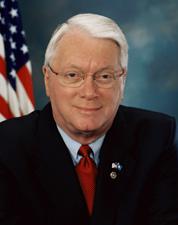
Mr. President, today, I am introducing the Social Security Benefits Tax Relief Act of 2005, which repeals the 1993 income tax increase on Social Security benefits that went into effect in 1993. When…
Mr. President, today, I am introducing the Social Security Benefits Tax Relief Act of 2005, which repeals the 1993 income tax increase on Social Security benefits that went into effect in 1993.
When Social Security was created, beneficiaries did not pay federal income tax on their benefits. However, in 1983, Congress passed legislation requiring that 50 percent of Social Security benefits be taxed for seniors whose incomes were above $25,000 for an individual and $32,000 for a couple. This additional revenue was credited back to the Social Security trust funds.
In 1993, Congress and President Clinton expanded this tax. A provision was passed as part of a larger bill requiring that 85 percent of a senior's Social Security benefit be taxed if their income was above $34,000 for an individual and $44,000 for a couple. This additional money is credited to the Medicare program.
I was in Congress in 1993, and fought against this provision. This is an unfair tax on our senior citizens who worked year after year paying into Social Security, only to be taxed on their benefits once they retired.
My bill, the Social Security Benefits Tax Relief Act, would repeal the 1993 tax increase on benefits and would replace the money that has been going to the Medicare program with general funds. This legislation is identical to the legislation I introduced in the 108th Congress.
Recently during debate on the Budget Resolution, I introduced an amendment that provides the Finance Committee with the tax cuts to finally repeal the 1993 tax increase on Social Security benefits. My amendment passed by a vote of 55 yeas to 45 nays. The legislation I am introducing today provides the legislative blueprint for repealing this unfair tax.
The 1993 tax was unfair when it was signed into law, and it is unfair today. I hope my Senate colleagues can support this legislation to remove this burdensome tax on our seniors.
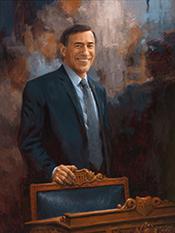
Mr. Speaker, I move to suspend the rules and pass the Senate bill (S. 775) to designate the facility of the United States Postal Service located at 123 W. 7th Street in Holdenville, Oklahoma, as the…
Mr. Speaker, I move to suspend the rules and pass the Senate bill (S. 775) to designate the facility of the United States Postal Service located at 123 W. 7th Street in Holdenville, Oklahoma, as the ``Boone Pickens Post Office''.
Mr. Speaker, I yield myself such time as I may consume, and I rise in support of S. 775, a bill to name the postal facility at 123 W. 7th Street in Holdenville, Oklahoma, as the Boone Pickens Post Office.
Well-known businessman Boone Pickens has personified the American Dream through his hard work and determination. Early in his professional life and career, Pickens grew frustrated working at a large impersonal company. Instead of enduring the daily struggle through the organizational red tape, he decided to start his own business in 1956 at age 28. This nascent company ultimately evolved into one of the leading oil and gas exploration firms in the Nation, the Mesa Petroleum Company.
But more important, the House is considering this honor for Boone Pickens not because of his business success but for his philanthropy. Over the years, Pickens has generously invested in his alma mater, Oklahoma State University, supported a wide range of medical research initiatives, and several other scientific and social causes.
Boone Pickens has contributed his time, energy, and resources to make America a better place to live and work; and for these reasons, I support S. 775 today, and I ask my colleagues to support the bill.
Mr. Speaker, I reserve the balance of my time.
Mr. Speaker, I yield myself such time as I may consume to urge all my colleagues to support the effort to name the post office in Holdenville, Oklahoma, where Boone Pickens was born in 1928; and I congratulate our distinguished Senator and my friend, Senator Jimmy Inhofe, on recognizing the importance of T. Boone Pickens in both business and philanthropy.
Mr. Speaker, I yield back the balance of my time.
Show 3 more
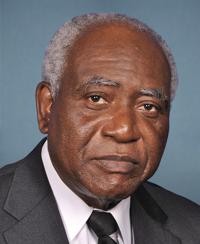
Mr. Speaker, I yield myself such time as I may consume. Mr. Speaker, as a member of the House Committee on Government Reform, I am pleased to join my colleague in consideration of S. 775, legislation…
Mr. Speaker, I yield myself such time as I may consume.
Mr. Speaker, as a member of the House Committee on Government Reform, I am pleased to join my colleague in consideration of S. 775, legislation designating a postal facility in Holdenville, Oklahoma, after Boone Pickens.
This measure, which was introduced by Senator James Inhofe on April 13, 2005, was unanimously passed by the Senate on July 29, 2005.
T. Boone Pickens is known worldwide as the founder of Mesa Petroleum, the Nation's largest independent producer of domestic oil and gas. T. Boone is well respected in Texas for his willingness to spend time and money to improve the lives of those around him. In 1986, he started a nonprofit organization called the United Shareholders Association to fund a newspaper informing shareholders of corporate abuses, and he has served as the chairman of the board of West Texas A&M University business school.
Mr. Speaker, I urge swift passage of this bill.
Mr. Speaker, I yield back the balance of my time.

Mr. President, I ask unanimous consent that the Committee on Homeland Security and Governmental Affairs be discharged from further consideration, and the Senate proceed to the immediate consideration…
Mr. President, I ask unanimous consent that the Committee on Homeland Security and Governmental Affairs be discharged from further consideration, and the Senate proceed to the immediate consideration of the following postal naming bills en bloc: S. 571, S. 775, S. 904, H.R. 120, H.R. 289, H.R. 324, H.R. 504, H.R. 627, H.R. 1001, H.R. 1072, H.R. 1082, H.R. 1236, H.R. 1460, H.R. 1524, H.R. 1542, and H.R. 2326.
Mr. President, I ask unanimous consent that these bills be read the third time and passed, the motions to reconsider be laid upon the table en bloc, and that any statements relating to the bills be printed at this point in the Record.
Mr. Speaker, I ask unanimous consent that all Members may have 5 legislative days within which to revise and extend their remarks and include extraneous material on H.J. Res. 59, H. Con. Res. 181, H.…
Mr. Speaker, I ask unanimous consent that all Members may have 5 legislative days within which to revise and extend their remarks and include extraneous material on H.J. Res. 59, H. Con. Res. 181, H. Res. 329, H. Res. 289, H. Res. 294, H.R. 2977, H.R. 2894, S. 775, S. 571, and H.R. 3339.
Bill Text
5 versions available
        [Congressional Bills 109th Congress]
[From the U.S. Government Publishing Office]
[S. 775 Enrolled Bill (ENR)]

S.775

One Hundred Ninth Congress

of the

United States of America

AT THE FIRST SESSION

Begun and held at the City of Washington on Tuesday,
the fourth day of January, two thousand and five

An Act

To designate the facility of the United States Postal Service located at
123 W. 7th Street in Holdenville, Oklahoma, as the ``Boone Pickens Post
Office''.

Be it enacted by the Senate and House of Representatives of the
United States of America in Congress assembled,

SECTION 1. BOONE PICKENS POST OFFICE.

(a) Designation.--The facility of the United States Postal Service
located at 123 W. 7th Street in Holdenville, Oklahoma, shall be known
and designated as the ``Boone Pickens Post Office''.
(b) References.--Any reference in a law, map, regulation, document,
paper, or other record of the United States to the facility referred to
in subsection (a) shall be deemed to be a reference to the ``Boone
Pickens Post Office''.

Speaker of the House of Representatives.

Vice President of the United States and
President of the Senate.