Material Support to Terrorism Prohibition Improvements Act of 2005
Legislative Activity
Stay on top of the latest movement without scrolling through every action
Read twice and referred to the Committee on the Judiciary. (text of measure as introduced: CR S3656-3657)
April 14, 2005
View full timeline
Introduced in Senate
April 14, 2005
Sponsor introductory remarks on measure. (CR S3655-3656)
April 14, 2005
Read twice and referred to the Committee on the Judiciary. (text of measure as introduced: CR S3656-3657)
April 14, 2005
Floor Debate
17 membersWhat members said about S. 783 on the floor
 CJD
CJD LM
LM OGH
OGH RDF
RDF JT+12
JT+12
Floor Debate
17 membersWhat members said about S. 783 on the floor
Mr. President, I rise with my colleague from Virginia, Senator Warner, to introduce the Safe Teen and Novice Driver Uniform Protection (STAND UP) Act of 2005--an important piece of legislation that…
Mr. President, I rise with my colleague from Virginia, Senator Warner, to introduce the Safe Teen and Novice Driver Uniform Protection (STAND UP) Act of 2005--an important piece of legislation that seeks to protect and ensure the lives of the 20 million teenage drivers in our country.
We all know that the teenage years represent an important formative stage in a person's life. They are a bridge between childhood and adulthood--the transitional and often challenging period during which a person will first gain an inner awareness of his or her identity. The teenage years encompass a time for discovery, a time for growth, and a time for gaining independence--all of which ultimately help boys and girls transition successfully into young men and women.
As we also know, the teenage years also encompass a time for risk- taking. A groundbreaking study to be published soon by the National Institutes of Health concludes that the frontal lobe region of the brain which inhibits risky behavior is not fully formed until the age of 25. In my view, this important report implies that we approach teenagers' behavior with a new sensitivity. It also implies that we have a societal obligation to steer teenagers towards positive risk- taking that fosters further growth and development and away from negative risk-taking that has an adverse effect on their well-being and the well-being of others.
Unfortunately, we see all too often this negative risk-taking in teenagers when they are behind the wheel of a motor vehicle. We see all too often how this risk-taking needlessly endangers the life of a teenage driver, his or her passengers, and other drivers on the road. And we see all too often the tragic results of this risk-taking when irresponsible and reckless behavior behind the wheel of a motor vehicle causes severe harm and death.
According to the National Transportation Safety Board, motor vehicle crashes are the leading cause of death for Americans between 15 and 20 years of age. In 2002, teenage drivers, who constituted only 6.4 percent of all drivers, were involved in 14.3 percent of all fatal motor vehicle crashes. In 2003, 5,691 teenage drivers were killed in motor vehicle crashes and 300,000 teenage drivers suffered injuries in motor vehicle crashes.
The National Highway Traffic Safety Administration reports that teenage drivers have a fatality rate that is four times higher than the average fatality rate for drivers between 25 and 70 years of age. Furthermore, teenage drivers who are 16 years of age have a motor vehicle crash rate that is almost ten times the crash rate for drivers between the ages of 30 and 60.
Finally, the Insurance Institute for Highway Safety concludes that the chance of a crash by a driver either 16
or 17 years of age is doubled if there are two peers in the motor vehicle and quadrupled with three or more peers in the vehicle.
Crashes involving teenage injuries or fatalities are often highprofile tragedies in the area where they occur. However, when taken together, these individual tragedies speak to a national problem clearly illustrated by the staggering statistics I just mentioned. It is a problem that adversely affects teenage drivers, their passengers, and literally everyone else who operates or rides in a motor vehicle. Clearly, more work must be done to design and implement innovative methods that educate our young drivers on the awesome responsibilities that are associated with operating a motor vehicle safely.
One such method involves implementing and enforcing a graduated driver's license system, or a GDL system. Under a typical GDL system, a teenage driver passes through several sequential learning stages before earning the full privileges associated with an unrestricted driver's license. Each learning stage is designed to teach a teenage driver fundamental lessons on driver operations, responsibilities, and safety. Each stage also imposes certain restrictions, such as curfews on nighttime driving and limitations on passengers, that further ensure the safety of the teenage driver, his or her passengers, and other motorists.
First implemented over ten years ago, three-stage GDL systems now exist in 38 States. Furthermore, every State in the country has adopted at least one driving restriction for new teenage drivers. Several studies have concluded that GDL systems and other license restriction measures have been linked to an overall reduction on the number of teenage driver crashes and fatalities. In 1997, in the first full year that its GDL system was in effect, Florida experienced a 9 percent reduction in fatal and injurious motor vehicle crashes among teenage drivers between 15 and 18 years of age. After GDL systems were implemented in Michigan and North Carolina in 1997, the number of motor vehicle crashes involving teenage drivers 16 years in age decreased in each State by 25 percent and 27 percent, respectively. And in California, the numbers of teenage passenger deaths and injuries in crashes involving teenage drivers 16 years in age decreased by 40 percent between 1998 and 2000, the first three years that California's GDL system was in effect. The number of ``at-fault'' crashes involving teenage drivers decreased by 24 percent during the same period.
These statistics are promising and clearly show that many States are taking an important first step towards addressing this enormous problem concerning teenage driver safety. However, there is currently no uniformity between States with regards to GDL system requirements and other novice driver license restrictions. Some States have very strong initiatives in place that promote safe teenage driving while others have very weak initiatives in place. Given how many teenagers are killed or injured in motor vehicle crashes each year, and given how many other motorists and passengers are killed or injured in motor vehicle crashes involving teenage drivers each year, Senator Warner and I believe that the time has come for an initiative that sets a national minimum safety standard for teen driving laws while giving each State the flexibility to set additional standards that meet the more specific needs of its teenage driver population. The bill that Senator Warner and I are introducing today--the STANDUP Act--is such an initiative. There are four principal components of this legislation about which I would like to discuss.
First, The STANDUP Act mandates that all States implement a national minimum safety standard for teenage drivers that contains three core requirements recommended by the National Transportation Safety Board. These requirements include implementing a three-stage GDL system, implementing at least some prohibition on nighttime driving, and placing a restriction on the number of passengers without adult supervision.
Second, the STANDUP Act directs the Secretary of Transportation to issue voluntary guidelines beyond the three core requirements that encourage States to adopt additional standards that improve the safety of teenage driving. These additional standards may include requiring that the learner's permit and intermediate stages be six months each, requiring at least 30 hours of behind-the-wheel driving for a novice driver in the learner's permit stage in the company of a licensed driver who is over 21 years of age, requiring a novice driver in the learner's permit stage to be accompanied and supervised by a licensed driver 21 years of age or older at all times when the novice driver is operating a motor vehicle, and requiring that the granting of an unrestricted driver's license be delayed automatically to any novice driver in the learner's permit or intermediate stages who commits a motor vehicle offense, such as driving while intoxicated, misrepresenting his or her true age, reckless driving, speeding, or driving without a fastened seatbelt.
Third, the STANDUP Act provides incentive grants to States that come into compliance within three fiscal years. Calculated on a State's annual share of the Highway Trust Fund, these incentive grants could be used for activities such as training law enforcement and relevant State agency personnel in the GDL law or publishing relevant educational materials on the GDL law.
Finally, the STANDUP Act calls for sanctions to be imposed on States that do not come into compliance after three fiscal years. The bill withholds 1.5 percent of a State's Federal highway share after the first fiscal year of non-compliance, three percent after the second fiscal year, and six percent after the third fiscal year. The bill does allow a State to reclaim any withheld funds if that State comes into compliance within two fiscal years after the first fiscal year of non- compliance.
There are those who will say that the STAND UP Act infringes on States' rights. I respectfully disagree. I believe that working to protect and ensure the lives and safety of the millions of teenage drivers, their passengers, and other motorists in this country is national in scope and a job that is rightly suited for Congress. I also believe that the number of motor vehicle deaths and injuries associated with teenage drivers each year compels us to address this important national issue today and not tomorrow.
The teenage driving provisions within the STANDUP Act are both well- known and popular with the American public. A Harris Poll conducted in 2001 found that 95 percent of Americans support a requirement of 30 to 50 hours of practice driving within an adult, 92 percent of Americans support a six-month learner's permit stage, 74 percent of Americans support limiting the number of teen passengers in a motor vehicle with a teen driver, and 74 percent of Americans also support supervised or restricted driving during high-risk periods such as nighttime. Clearly, these numbers show that teen driving safety is an issue that transcends party politics and is strongly embraced by a solid majority of Americans. Therefore, I ask my colleagues today to join Senator Warner and myself in protecting the lives of our teenagers and in supporting this important legislation.
I ask unanimous consent that the text of this legislation be printed in the Record.
Mr. President. I am today reintroducing a very important bill on a subject that was not resolved last year, and which continues to be an outstanding issue for those of us who are dependent on healthy…
Mr. President. I am today reintroducing a very important bill on a subject that was not resolved last year, and which continues to be an outstanding issue for those of us who are dependent on healthy and productive natural populations of ocean fish and shellfish.
Simply put, this bill prohibits further movement toward the development of aquaculture facilities in federal waters until Congress has had an opportunity to review all of the very
serious implications, and make decisions on how such development should proceed.
Some people are calling for a moratorium on offshore aquaculture. Frankly, Mr. President, we need more than a delay--we need a very comprehensive discussion of this issue and a serious debate on what the ground-rules should be.
For years, some members of the federal bureaucracy have advocated going forward with offshore aquaculture development without that debate. Doing so, would be an extraordinarily bad idea.
We are now being told that the Administration is in the final stages of preparing a draft bill to allow offshore aquaculture development to occur, and that it plans to send a draft to the Hill in the very near future. The problem is, that draft has been prepared in deep secrecy. We have only rumors about what may be in that draft bill. The administration has had meetings on the general topic of aquaculture, but has done little to nothing to work with those of us who represent constituents whose livelihoods might be imperiled and states with resources that might be endangered if the administration gets it wrong.
Scientists, the media and the public are awakening to the serious disadvantages of fish raised in fish farming operations compared to naturally healthy wild fish species such as Alaska salmon, halibut, sablefish, crab and many other species.
It has become common to see news reports that cite not only the general health advantages of eating fish at least once or twice a week, but the specific advantages of fish such as wild salmon, which contains essential Omega-3 fatty acids that may help reduce the risk of heart disease and possibly have similar beneficial effects on other diseases.
Educated and watchful consumers have also seen recent stories citing research that not only demonstrates that farmed salmon fed vegetable- based food does not have the same beneficial impact on cardio-vascular health, but also that the demand for other fish to grind up and use as feed in those fish farms may lead to the decimation of those stocks.
Those same alert consumers may also have seen stories indicating that fish farms may create serious pollution problems from the concentration of fish feces and uneaten food, that fish farms may harbor diseases that can be transmitted to previously healthy wild fish stocks, and that fish farming has had a devastating effect on communities that depend on traditional fisheries.
It is by no means certain that all those problems would be duplicated if we begin to develop fish farms that are farther offshore, but neither is there any evidence that they would not be. Yet despite the uncertainties, proponents have continued to push hard for legislation that would encourage the development of huge new fish farms off our coasts.
Not only do the proponents want to encourage such development, but reports indicate they may also want to change the way decisions are made so that all the authority rests in the hands of just one federal agency. I believe that would be a serious mistake. There are simply too many factors that should be evaluated--from hydraulic engineering, to environmental impacts, to fish biology, to the management of disease, to the nutritional character of farmed fish, and so on--for any existing agency.
We cannot afford a rush to judgment on this issue--it is far too dangerous if we make a mistake. In my view, such a serious matter deserves the same level of scrutiny by Congress as the recommendations of the U.S. Commission on Ocean Policy for other sweeping changes in ocean governance.
The ``Natural Stock Conservation Act'' I am introducing today lays down a marker for where the debate on offshore aquaculture needs to go. It would prohibit the development of new offshore aquaculture operations until Congress has acted to ensure that every federal agency involved does the necessary analyses in areas such as disease control, engineering, pollution prevention, biological and genetic impacts, economic and social effects, and other critical issues, none of which are specifically required under existing law.
I strongly urge my colleagues to understand that this is not a parochial issue, but a very real threat to the literal viability of natural fish and shellfish stocks as well as the economic viability of many coastal communities.
I sincerely hope that this issue is taken up seriously in the context of reauthorizing the Magnuson-Stevens Act, which governs fishery management, and responding to the recommendations of the U.S. Oceans Commission and the Pew Oceans Commission.
We all want to make sure we enjoy abundant supplies of healthy foods in the future, but not if it means unnecessary and avoidable damage to wild species, to the environment generally, and to the economies of America's coastal fishing communities.
I ask unanimous consent that the text of my bill be printed in the Record.
Mr. President, I am today reintroducing legislation to clarify the status of villages participating in the federally established Community Development Quota (CDQ) program created to assist economically disadvantaged communities around the edge of the Bering Sea.
The CDQ program is one of the youngest but most successful of a variety of programs intended to improve economic opportunities in some of my State's most challenged communities.
The CDQ Community Preservation Act is intended to maintain the participation of all currently eligible communities along the shore of the Bering Sea in Alaska's Community Development Quota program. It is necessary because inconsistencies in statutory and regulatory provisions may require a reassessment of eligibility and the exclusion of some communities from the program. This was not the intent of the original program, nor of any subsequent changes to it. In order to clarify that fact, a legislative remedy is needed.
Senator Stevens joined me in introducing just such a remedy last year, but work on it was not completed and we were forced to settle for only temporary relief. It is time we dealt with this matter more appropriately.
Alaska has been generously blessed with natural resources, but due to its location and limited transportation infrastructure it continues to have pockets of severe poverty. Nowhere is this more evident than in the villages around the rim of the Bering Sea.
The Community Development Quota Program began in 1992, at the recommendation of the North Pacific Fishery Management Council, one of the regional councils formed under the Magnuson-Stevens Fishery Conservation and Management Act. Congress gave the program permanent status in the 1996 reauthorization of the Act. The program presently includes 65 communities within a 50 nautical-mile radius of the Bering Sea, which have formed six regional non-profit associations to participate in the program. The regional associations range in size from one to 20 communities. Under the program, a portion of the regulated annual harvests of pollock, halibut, sablefish, Atka mackerel, Pacific cod, and crab is assigned to each of the associations, which operate under combined Federal and State agency oversight. Almost all of an association's earnings must be invested in fishing-related projects in order to encourage a sustainable economic base for the region.
Typically, each association sells its share of the annual harvest quotas to established fishing companies in return for cash and agreements to provide job training and employment opportunities for residents of the region. The program has been remarkably successful.
Since 1992, approximately 9,000 jobs have been created for western Alaska residents with wages totaling more than $60 million. The CDQ program has also contributed to fisheries infrastructure development in western Alaska, as well as providing vessel loan programs; education, training and other CDQ-related benefits.
The CDQ program has its roots in the amazing success story of how our offshore fishery resources were Americanized after the passage of the original Magnuson Act in 1976. At the time, vast foreign fishing fleets were almost the only ones operating in the U.S. 200-mile Exclusive Economic Zone. American fishermen simply did not have either the vessels or the expertise to participate.
The Magnuson-Stevens Act changed all that. It led to the adoption of what we called a ``fish and chips'' policy that provided for an exchange of fish allocations for technological and practical expertise. Within the next few years, harvesting fell almost exclusively to American vessels. Within a few years after that, processing also became Americanized. Today, there are no foreign fishing or processing vessels operating in the 200-mile zone off Alaska, and the industry is worth billions of dollars each year.
The CDQ program helps bring some of the benefits of that great industry to local residents in one of the most impoverished areas of the entire country. It is a vital element in the effort to create and maintain a lasting economic base for the region's many poor communities, and truly deserves the support of this body.
I ask unanimous consent that the text of my bill be printed in the Record.
Mr. President, it is with a sense of honor that my friend and colleague, Senator Feinstein, and I rise to introduce a bipartisan constitutional amendment that would allow Congress to prohibit the…
Mr. President, it is with a sense of honor that my friend and colleague, Senator Feinstein, and I rise to introduce a bipartisan constitutional amendment that would allow Congress to prohibit the physical desecration of the American flag.
I am proud and privileged to be working again with my California colleague on this important proposal. Among our principal cosponsors are our colleagues Senator Thune and Senator Talent. It is heartening to us to see some of the Senate's newest Members come to this issue with the same passion that its original supporters still feel.
This amendment is truly bipartisan. Today, we count 51 original cosponsors of this resolution. And, nearly two-thirds of the Members of this body have indicated their support. Those numbers seem to grow with each passing year.
No doubt, some will still argue that this amendment is unnecessary. Fortunately, that refrain is gradually losing its punch.
When this amendment eventually passes the Senate, as I believe that it will, our victory will not be attributed to the passions of the moment. Rather, it will be due to the tireless efforts of citizens committed to convincing their elected representatives that this amendment matters.
I have heard from some Utahans who love our country's flag but are opposed to amending the Constitution. To them I would say, amending the Constitution should never be taken lightly. Yet after serious study of the issue, I have concluded there is no other way to guarantee that our flag is protected, as I will discuss in a few minutes.
And, indeed, guaranteeing the physical integrity of the flag is a cause worth fighting for. The American people seem to understand what the opponents of this amendment fail to grasp. This amendment is a necessary statement that citizens still have some control over the destiny of this Nation and in maintaining the traditions and symbols that have helped to bind us together in all our diversity for over 200 years.
Those who oppose protecting the flag through a constitutional amendment are probably not aware of our constitutional history. Indeed, for most of America's history, our Nation's laws guaranteed the physical integrity of the American flag.
These were laws no one questioned. No one every questioned that the simple act of providing legal protection for the flag, a unique symbol of our ties as a Nation, could somehow violate the Constitution.
We should take a moment and recall what we were taught about the flag as schoolchildren. Our flag's 13 stripes show our origins. We started as 13 separate colonies that first became separate States and then one Nation through the Declaration of Independence and the American Revolution. The 50 stars on the field of blue represent what we have become: a Nation unified. And over the past 230 years, we have become ever more united in our commitment to the extension of liberty and equality.
Among all of our differences, differences frequently reflected in this body, we do remain one Nation undivided and indivisible, and our flag is a simple but profound statement of that union. That is why we open the Senate each day by pledging our allegiance to the flag. It is a reminder of all that we have in common.
Supreme Court Justice John Paul Stevens understood the significance of the flag's status when he wrote:
A country's flag is a symbol of more than nationhood and
national unity. It also signifies the ideas that characterize
the society that has chosen that emblem as well as the
special history that has animated the growth and power of
those ideas . . . So it is with the American flag. It is more
than a proud symbol of the courage, the determination, and
the gifts of a nation that transformed 13 fledgling colonies
into a world power. It is a symbol of freedom, of equal
opportunity, of religious tolerance, and of goodwill for
other peoples who share our aspirations.
There is a certain wisdom to Justice Stevens' statement that our constituents immediately grasp. Some polls show that over 80 percent of the American people support an amendment to protect the flag.
Its unique character is represented in the diversity of the groups that have worked over the years to bring this amendment to fruition. Veterans, police, African Americans, Polish Americans, farmers, and so many more diverse groups see in the flag a symbol of our Nation; they understand that it is perfectly consistent with our constitutional traditions for us to protect it.
Unfortunately, in 1989 the Supreme Court intervened and ovrrode every State law barring desecration of the American flag.
None of these States has restricted first amendment political speech in any way.
Their laws did not lead us down some slippery slope that would result in restraints on political opinions.
These States drew reasonable distinctions between political speech and inflammatory and frequently violent acts.
Yet in Texas v. Johnson, the Supreme Court held that a Texas statute, and others like it, that barred desecration of the American flag, violated core first amendment principles. That certainly would have been news to those who wrote the Constitution and our Bill of Rights.
It was news, bad news, to the American people as well.
So in response to this imprudent decision, the Senate acted quickly and passed The Flag Protection Act. It became law on October 28, 1989.
Then, in 1990, the Court struck down even this legislation in United States v. Eichman.
And that is why a constitutional amendment has become necessary.
With due respect to our courts, and to my colleagues who continue to support these decisions, these legal arguments against flag protection just do not hold water.
Detractors of our amendment contend that the first amendment guarantees the right to burn the American flag. It does no such thing.
They contend it would carve out an exception to the first amendment as some say. It would not. Rather, it would reaffirm what was understood not only by those who ratified the Constitution but also by citizens of today: that the first amendment never guaranteed such expressive conduct. Whether one is an originalist or whether one believes in a living Constitution, this argument falls short.
The American people have long distinguished between the first amendment's guarantee of an individual's right to speak his or her mind and the repulsive expression of desecrating the flag. For many years, the people's elected representatives in Congress and 49 State legislatures passed statutes prohibiting physical desecration of the flag, and our political speech thrived. It was just as robust as it is today.
Yet in 1989, the Supreme Court's novel interpretation of the first amendment concluded that the people, their elected legislators, and the courts are no longer capable of making these reasonable distinctions, distinctions that we frequently make in this body such as when we prohibit speeches or demonstrations of any kind, even in the silent display of signs or banners, in the public galleries.
The American people created the Constitution, and they reserved to themselves the right to amend the Constitution when they saw fit. Is it wrong to give the American people the opportunity to review whether the Supreme Court got it right in this case? I think not.
The fact is, a Senator does not take an oath to support and defend the holdings of the Supreme Court. We take an oath to support the Constitution. And, it is entirely appropriate that when we think the Court gets it wrong, we correct it through proper constitutional devices, devices set out in the Constitution itself . . . Though it has been forgotten over the years, this is hardly a radical idea. It was one supported by the founders of both the Republican and Democratic parties, Thomas Jefferson and Abraham Lincoln.
As some in this body have noted, our courts are now frequently attempting to identify a national consensus to justify contemporary interpretations of our constitutional guarantees. The progress of this amendment to protect the flag demonstrates to me at least just how such a consensus is supposed to develop. Through argument, through give and take, through debate--over time the American people, as reflected in the actions of their representatives, have become more sure than ever that they should have the opportunity to protect their flag through moderate and reasonable legislation.
After September 11, citizens proudly flew the flag, defying the terrorist challenge to our core values of liberty and equality, and confirming its unique status as a symbol of our nation's strength and purpose. In the struggle that has followed, our flag stands as a reminder of the many personal sacrifices made to protect and strengthen our nation.
And so, to protect this symbol, I am today introducing this amendment.
I thank my colleagues, Senators Feinstein, Thune, and Talent for their work on this. I urge those who are not cosponsors of this amendment to keep an open mind as we debate this resolution.
It is my hope that the Judiciary committee will move the resolution to the floor.
And, in turn, I ask that our leadership ensure this resolution gets a vote on the floor.
Mr. President, today I introduce legislation on behalf of myself and Senators Corzine, Dayton, Durbin, Lautenberg, Mikulski, and Murray, that would bring a small measure of relief to the families of…
Mr. President, today I introduce legislation on behalf of myself and Senators Corzine, Dayton, Durbin, Lautenberg, Mikulski, and Murray, that would bring a small measure of relief to the families of our brave military personnel who are being deployed for the ongoing fight against terrorism, the war in Iraq, and other missions in this country and around the world. It is legislation that the Senate adopted unanimously when I offered it as an amendment to the fiscal year 2004 Iraq supplemental spending bill and I think it would be very fitting for my colleagues to join me in supporting this measure again during this, the National Month of the Military Child.
The men and women of our Armed Forces undertake enormous sacrifices in their service to our country. They spend time away from home and from their families in different parts of the country and different parts of the world and are placed into harm's way in order to protect the American people and our way of life. We owe them a huge debt of gratitude for their dedicated service.
The ongoing deployments for the fight against terrorism and for the campaign in Iraq are turning upside down the lives of thousands of active duty, National Guard, and Reserve personnel and their families as they seek to do their duty to their country and honor their commitments to their families, and, in the case of the reserve components, to their employers as well. Today, there are more than 180,000 National Guard and Reserve personnel on active duty.
Some of my constituents are facing the latest in a series of activations and deployments for family members who serve our country in the military. Others are seeing their loved ones off on their first deployment. All of these families share in the worry and concern about what awaits their relatives and hope, as we do, for their swift and safe return.
Many of those deployed in Iraq have had their tours extended beyond the time they had expected to stay. This extension has played havoc with the lives of those deployed and their families. Worried mothers, fathers, spouses, and children expecting their loved ones home after more than a year of service have been forced to wait another three or four months before their loved ones' much-anticipated homecoming. The emotional toll is huge. So is the impact on a family's daily functioning as bills still need to be paid, children need to get to school events, and sick family members must still be cared for.
Our men and women in uniform face these challenges without complaint. But we should do more to help them and their families with the many things that preparing to be deployed requires.
During the first round of mobilizations for operations in Afghanistan and Iraq, military personnel and their families were given only a couple of days' notice that their units would be deployed. As a result, these dedicated
men and women had only a very limited amount of time to get their lives in order. For members of the National Guard and Reserve, this included informing their employers of the deployment. I want to commend the many employers around the country for their understanding and support when their employees were called to active duty.
In preparation for a deployment, military families often have to scramble to arrange for child care, to pay bills, to contact their landlords or mortgage companies, and to take care of other things that we deal with on a daily basis.
The legislation I introduce today would allow eligible employees whose spouses, parents, sons, or daughters are military personnel who are serving on or called to active duty in support of a contingency operation to use their Family and Medical Leave Act (FMLA) benefits for issues directly relating to or resulting from that deployment. These instances could include preparation for deployment or additional responsibilities that family members take on as a result of a loved one's deployment, such as child care.
But don't just take my word for it. Here is what the National Military Family Association has to say in a letter of support:
(The National Military Family Association) has heard from
many families about the difficulty of balancing family
obligations with job requirements when a close family member
is deployed. Suddenly, they are single parents or, in the
case of grandparents, assuming the new responsibility of
caring for grandchildren. The days leading up to a deployment
can be filled with pre-deployment briefings and putting legal
affairs in order.
In that same letter, the National Military Family Association states that, ``Military families, especially those of deployed service members, are called upon to make extraordinary sacrifices. (The Military Families Leave Act) offers families some breathing room as they adjust to this time of separation.''
On July 21, 2004, then-Governor Joseph Kernan of Indiana testified before a joint hearing of the Senate Health, Labor, Education, and Pensions and Armed Services committees that Congress should revise FMLA to include activated National Guard families, as recommended by the National Governors' Association. The legislation I introduce today would give many military families some of the assistance Governor Kernan spoke of.
Let me make sure there is no confusion about what this legislation does and does not do. This legislation does not expand eligibility for FMLA to employees not already covered by FMLA. It does not expand FMLA eligibility to active duty military personnel. It simply allows those already covered by FMLA to use those benefits in one additional set of circumstances--to deal with issues directly related to or resulting from the deployment of a family member.
I was proud to cosponsor and vote for the legislation that created the landmark Family and Medical Leave Act (FMLA) during the early days of my service to the people of Wisconsin as a member of this body. This important legislation allows eligible workers to take up to 12 weeks of unpaid leave per year for the birth or adoption of child, the placement of a foster child, to care for a newborn or newly adopted child or newly placed foster child, or to care for their own serious health condition or that of a spouse, a parent, or a child. Some employers offer a portion of this time as paid leave in addition to other accrued leave, while others allow workers to use accrued vacation or sick leave for this purpose prior to going on unpaid leave.
Since its enactment in 1993, the FMLA has helped more than 35 million American workers to balance responsibilities to their families and their jobs. According to the Congressional Research Service, between 2.2 million and 6.1 million people took advantage of these benefits in 1999-2000.
Our military families sacrifice a great deal. Active duty families often move every couple of years due to transfers and new assignments. The twelve years since FMLA' s enactment has also been a time where we as a country have relied more heavily on National Guard and Reserve personnel for more and more deployments of longer and longer duration. The growing burden on these service members' families must be addressed, and this legislation is one way to do so.
This legislation has the support of a number of organizations, including the Wisconsin National Guard, the Military Officers Association of America, the Enlisted Association of the National Guard of the United States, the Reserve Enlisted Association, the Reserve Officers Association, the National Military Family Association, the National Council on Family Relations, and the National Partnership for Women and Families. The Military Coalition, an umbrella organization of 31 prominent military organizations, specified this legislation as one of five meriting special consideration during the fiscal year 2004 Iraq supplemental debate.
We owe it to our military personnel and their families to do all we can to support them in this difficult time. I hope that this legislation will bring a small measure of relief to our military families and I urge my colleagues to support it.
I ask unanimous consent that the text of my bill be printed in the Record.
Mr. President, today, it is my distinct honor and privilege to rise and speak on behalf of Senator Hatch, Senator Feinstein, Senator Talent, myself, and 47 other senators, as we introduce bipartisan…
Mr. President, today, it is my distinct honor and privilege to rise and speak on behalf of Senator Hatch, Senator Feinstein, Senator Talent, myself, and 47 other senators, as we introduce bipartisan legislation we believe to be long overdue. It is not reform legislation. It does not authorize new government programs, create new sources of tax revenue, or provide incentives to stimulate our economy. It is none of those things, but it is a matter of great importance. The events of 9/11 have reminded us all of that. It is, instead, legislation that speaks to the core of our beliefs and hopes as a Nation, and as a people. It is about a national treasure and a symbol of our country that the vast majority of Americans--and the majority of this great body, I might add--believe is worth special status and worthy of protection. It is about the American flag.
Our American flag is more than mere cloth and ink. It is a symbol of the liberty and freedom that we enjoy today thanks to the immeasurable sacrifices of generations of Americans who came before us.
It represents the fiber and strength of our values and it has been sanctified by the blood of those who died defending it.
I rise today to call upon all members of this body to support a constitutional amendment that would give Congress the power to prohibit the physical desecration of the American flag. It would simply authorize, but not require, Congress to pass a law protecting the American flag.
This amendment does not affect anyone's right to express their political beliefs.
It would only allow Congress to prevent our flag from being used as a prop, to be desecrated in some ways simply not appropriate to even mention in these halls.
This resolution and similar legislation have been the subject of debate before this body before. There is, in fact, a quite lengthy legislative history regarding efforts to protect the American flag from desecration. In 1989, the Supreme Court declared essentially that burning the American flag is ``free speech.'' That is a decision the American people should make, particularly when this country finds itself fighting for democracy and expending American lives for that cause, on battlefields overseas.
South Dakota veterans and members of the armed forces from my State know exactly what I'm talking about, as I'm sure they do from every state represented in the Senate. In recent months, units of the 147th field artillery and 153rd engineer battalions of the South Dakota National Guard returned home after spending a difficult year in Iraq. Likewise, the 452nd ordinance company of the United States Army Reserve is preparing to depart for Iraq in September.
My father, like many other veterans of World War II, understands the importance of taking this step. Veterans from across South Dakota have asked me to step up and defend the flag of this great Nation and today I am answering that call.
Today, members of both political parties will introduce a proposed constitutional amendment that would give back to the American people the power to prevent the desecration of the American flag. We know the gravity of this legislation. There is nothing complex about this amendment, nor are there any hidden consequences. This amendment provides Congress with the power to outlaw desecration of the American flag, a right that is widely recognized by Madison, Jefferson, and Supreme Court Justice Hugo Black, one of the foremost advocates of first amendment freedoms.
Most states officially advocate Congress passing legislation to protect the flag. Frankly, I do not see this as a first amendment issue.
It is an attempt to restore the traditional protections to the symbol cherished so dearly by our Government and the people of the United States. Some acts are not accepted as ``free speech'' even in societies like ours where we consider free speech a cherished right. For example, an attempt to burn down this Capitol building as a political statement would never be viewed as someone's right of free speech. Our laws would not tolerate the causing of harm to other's property or life as an act of ``free speech.'' This flag happens to be the property of the American people, in my opinion, and this question should be put before the States and their people to decide how and if to protect it. I think the answer will come back as a resounding ``yes''.
There is little doubt that the debate over state ratification will trigger a tremendous discussion over our values, beliefs and whether we will ultimately bestow a lasting honor on our traditions. Importantly, it will be an indication of how we recognize our servicemen and women who are sacrificing--right now--in Iraq and Afghanistan, to protect those traditions and values for us. Will we honor them, and all the veterans who served and died in wars for this country and our flag over the last 200 years? That's not a question which a court should hold the final answer.
I believe the time has finally come. I believe our country wants this debate. The majority of this Senate, I believe, wants this amendment. We begin it here, and we begin it now. Let the debate begin.
Show 8 more
Mr. President, I rise to introduce the National Weather Services Duties Act of 2005 to clarify the responsibilities of the National Weather Service (NWS) within the National Oceanic and Atmospheric…
Mr. President, I rise to introduce the National Weather Services Duties Act of 2005 to clarify the responsibilities of the National Weather Service (NWS) within the National Oceanic and Atmospheric Association, NOAA. This legislation modernizes the statutory description of NWS roles in the national weather enterprise so that it reflects today's reality in which the NWS and the commercial weather industry both play important parts in providing weather products and services to the Nation.
Back in 1890 when the current NWS organic statute was enacted, and all the way through World War II, the public received its weather forecasts and warnings almost exclusively from the Weather Bureau, the NWS's predecessor. In the late 1940s, a fledging weather service industry began to develop. From then until December 2004, the NWS has had policies sensitive to the importance of fostering the industry's expansion, and since 1948 has had formal policies discouraging its competition with industry. Fourteen years ago the NWS took the extra step of carefully delineating the respective roles of the NWS and the commercial weather industry, in addition to pledging its intention not to provide products or services that were or could be provided by the commercial weather industry. This longstanding non-competition and non- duplication policy has had the effect of facilitating the growth of the industry into a billion dollar sector and of strengthening and extending the national weather enterprise, now the best in the world.
Regrettably, the parent agency of the NWS, NOAA, repealed the 1991 non-competition and non-duplication policy in December 2004. Its new policy only promises to ``give due consideration'' to the abilities of private sector entities. The new policy appears to signal the intention of NOAA and the NWS to expand their activities into areas that are already well served by the commercial weather industry. This detracts from NWS's core missions of maintaining a modem and effective meteorological infrastructure, collecting comprehensive observational data, and issuing warnings and forecasts of severe weather that imperils life and property.
Additionally, NOAA's action threatens the continued success of the commercial weather industry. It is not an easy prospect for a business to attract advertisers, subscribers, or investors when the government is providing similar products and services for free. This bill restores the NWS non-competition policy. However, the legislation leaves NWS with complete and unfettered freedom to carry out its critical role of preparing and issuing severe weather warnings and forecasts designed for the protection of life and property of the general public. I believe it is in the best interest of both the government and NWS to concentrate on this critical role and its other core missions. The beauty of a highly competent private sector is that services that are not inherently involved in public safety and security can be carried out with little or no expenditure of taxpayer dollars. At a time of tight agency budgets, the commercial weather industry's increasing capabilities offer the Federal Government the opportunity to focus its resources on the governmental functions of collecring and distributing weather data, research and development of atmospheric models and core forecasts, and on ensuring that NWS meteorologists provide the most timely and accurate warnings and forecasts of life-threatening weather.
The National Weather Service Duties Act also addresses the potential misuse of insider information. Currently, NOAA and the NWS are doing little to safeguard the NWS information that could be used by opportunistic investors to gain unfair profits in the weather futures markets, in the agriculture and energy markets, and in other business segments influenced by government weather outlooks, forecasts, and warnings. No one knows who may be taking advantage of this information. In recent years there have been various examples of NWS personnel providing such information to specific TV stations and others that enable those businesses to secure an advantage over their competitors. The best way to address this problem is to require that NWS data, information, guidance, forecasts and warnings be issued in real time and simultaneously to all members of the public, the media and the commercial weather industry. This bill imposes just such a requirement, which is common to other Federal agencies. The responsibilities of the commercial weather industry as the only private sector producer of weather information, services and systems deserve this definition to ensure continued growth and investment in the private sector and to properly focus the government's activities.
We have every right to expect these agencies to minimize unnecessary, competitive, and commercial-type activities, and to do the best possible job of warning the public about impending flash floods, hurricanes, tornadoes, tsunamis, and other potentially catastrophic events. I encourage my colleagues to support this important piece of legislation.

Mr. President, I ask unanimous consent that the text of the bill be printed in the Record. Madam President, I rise today to introduce the Conserve by Bike Act to promote energy conservation and…
Mr. President, I ask unanimous consent that the text of the bill be printed in the Record.
Madam President, I rise today to introduce the Conserve by Bike Act to promote energy conservation and improve public health. I am pleased to be joined by my colleague from Maine, Senator Susan Collins, in introducing this measure. This legislation addresses one part of our Nation's energy challenges. Although there is no single solution to solve our energy problems, I believe that every possible approach must be considered.
Our Nation would realize several benefits from the increased use of bicycle transportation, including lessened dependence on foreign oil and prevention of harmful air emissions. Currently, less than one trip in one hundred, .88 percent, is by bicycle. If we can increase cycling use to one and a half trips per hundred, which is less than one bike trip every two weeks for the average person, we will save more than 462 million gallons of gasoline in a year, worth more than $721 million. That is the equivalent of one full day per year in which the U.S. will not need to import any foreign oil.
In addition to fostering greater energy security, this bill will help mitigate air quality challenges, which can be harmful to public health and the environment. Unlike automotive transportation, bicycling is emission-free.
The Conserve by Bike Act encourages bicycling through two key components: a pilot program and a research project. The Conserve by Bike Pilot Program established by this legislation would be implemented by the U.S. Department of Transportation. The Department would fund up to ten pilot projects throughout the country that would utilize education and marketing tools to encourage people to convert some of their car trips to bike trips. Each of these pilot projects must: (1) document project results and energy conserved; (2) facilitate partnerships among stakeholders in two or more of the following fields: transportation, law enforcement, education, public health,
and the environment; (3) maximize current bicycle facility investments; (4) demonstrate methods that can be replicated in other locations; and (5) produce ongoing programs that are sustained by local resources.
This legislation also directs the Transportation Research Board of the National Academy of Sciences to conduct a research project on converting car trips to bike trips. The study will consider: (1) what car trips Americans can reasonably be expected to make by bike, given such factors as weather, land use, and traffic patterns, carrying capacity of bicycles, and bicycle infrastructure; (2) what energy savings would result, or how much energy could be conserved, if these trips were converted from car to bike, (3) the cost-benefit analysis of bicycle infrastructure investments; and (4) what factors could encourage more car trips to be replaced with bike trips. The study also will identify lessons we can learn from the documented results of the pilot programs.
The Conserve by Bike Program is a small investment that has the potential to produce significant returns: greater independence from foreign oil and a healthier environment and population. The Conserve by Bike Act authorizes a total of $6.2 million to carry out the pilot programs and research. A total of $5,150,000 will be used to implement the pilot projects; $300,000 will be used by the Department of Transportation to coordinate, publicize, and disseminate the results of the program; and $750,000 will be utilized for the research study.
The provisions in this bill enjoy strong, bipartisan support and have passed by unanimous consent as an amendment to a previous Senate energy package. The measure is endorsed by the League of American Bicyclists, which has over 300,000 affiliates, as well as the Association of Pedestrian and Bicycle Professionals, Rails to Trails Conservancy, Thunderhead Alliance, Bikes Belong Coalition, Adventure Cycling, International Mountain Bicycling Association, Chicagoland Bicycle Federation, and the League of Illinois Bicyclists.
I ask that the text of the legislation be printed in the Record.
Mr. President, I rise today in support of bipartisan National Drought Preparedness Act of 2005. For the last 5 years a devastating drought has forced many families across South Dakota and the United…
Mr. President, I rise today in support of bipartisan National Drought Preparedness Act of 2005. For the last 5 years a devastating drought has forced many families across South Dakota and the United States to make difficult life-changing decisions about their future in agriculture. Many of our Nation's hard-working producers have had to abandon their farms, and the family farm life has been threatened for too many people.
I was hopeful that the drought measures I have helped pass in the last 5 years would assist producers in weathering the current drought. With my support, the Senate, and ultimately Congress, agreed to legislation providing either or agriculture disaster assistance packages for 2001-2002 and 2003-2004. While this assistance is greatly appreciated by those suffering from this natural disaster, I am concerned for our future prospects for drought aid. Given the President's reluctance to fund crucial USDA farm bill programs in his proposed fiscal year 2006 budget, his insistence on cannibalizing $3 billion from the Conservation Security Program, CSP to fund the 2003- 2004 package, which should in fact be recognized as an uncapped entitlement provision, and a historically high budgetary deficit, I am concerned at our prospects of securing substantive monies for future disasters. I will continue to work with my Senate colleagues to ensure adequate dollars for South Dakota, but we must examine more comprehensive measures for addressing drought.
That National Drought Preparedness Act will help us better prepare for future droughts and reduce the need for large ad hoc disaster programs that may cannibalize funds from other agricultural programs. I am fully prepared to support special disaster assistance when it is necessary, but with this act made law, producers, tribes, States, and Federal agencies will be much better prepared for future droughts.
This act will do several things that will significantly increase our ability to deal with drought conditions. The bill establishes, in the office of the Secretary of Agriculture, a National Drought Council to oversee the development of a national drought policy action plan. This plan will be the blueprint for dealing with and preparing for drought. The Federal government has plans for dealing with floods and hurricanes, and we need the same kind of plan for the slow, dry disaster that is drought. This bill recognizes drought as the natural disaster it is.
The act also creates the National Office of Drought Preparedness. This would be the permanent body that assists the National Drought Council in the formulation and carrying out of the national drought policy action plan.
A drought assistance fund will be established by this act, to assist State and local governments in their development and implementation of drought preparedness plans. The act will also provide assistance for the rapid response to wildfires, which is critical to mitigating the effects of a prolonged drought in forested areas, like we have in western South Dakota.
Lastly, the act provides for the development of a national drought forecasting and monitoring network, that will help forecast the onset of droughts better and improve reporting on current droughts.
I am encouraged by what the National Drought Preparedness Act of 2005 has to offer to the farmers and ranchers of our great country. We must treat drought like all other disasters are treated, and take an aggressive stance toward minimizing its effect on communities across America. That is why I am pleased to be an original cosponsor of this important bipartisan piece of legislation.

Mr. President, I am pleased to join with my colleague from Illinois in reintroducing the Conserve by Bike Act to recognize and promote bicycling's important impact on energy savings and public…
Mr. President, I am pleased to join with my colleague from Illinois in reintroducing the Conserve by Bike Act to recognize and promote bicycling's important impact on energy savings and public health.
With America's dependence on foreign oil, it is vital that we look to the contribution that bike travel can make toward solving our Nation's energy challenges. The legislation we are reintroducing today would establish a Conserve by Bike pilot program that would oversee pilot projects throughout the country designed to conserve energy resources by providing education and marketing tools to convert car trips into bike trips. Right now, fewer than 1 trip in 100 nationwide is by bicycle. If we could increase this statistic to 1\1/2\ trips per 100, we could save over 462 million gallons of gasoline per year, worth nearly $1 billion.
While more bike trips would benefit our energy conservation efforts, additional bicycling activity would also help improve the Nation's public health. According to the U.S. Surgeon General, fewer than one- third of Americans meet Federal recommendations to engage in at least 30 minutes of moderate physical activity 5 days a week. Even more disturbing is the fact that approximately 300,000 American deaths a year are associated with obesity. By promoting biking, we are working to ensure that Americans, young and old, will increase their physical activity.
In my home State of Maine, citizen activists have led the way in encouraging their fellow Mainers to use bicycling as an alternative mode of transportation. Founded in 1992, the Bicycle Coalition of Maine, BCM, has grown substantially in its first decade plus of operation. In 1996, when BCM hired its current executive director, Jeffrey Miller, the organization had 200 individual and family memberships. Today, it has over 1,700. For a State of less than 1.3 million residents--many of them elderly--BCM's broad membership is especially impressive.
Over the years, this group has advocated increased bicycle access to Maine's roads and bridges, organized the first ``Bike to Work Day'' in our State, initiated bicycle safety education in our classrooms-- teaching more than 60,000 schoolchildren in over 500 Maine schools--and produced ``Share the Road'' public service announcements for television stations statewide, among numerous other accomplishments.
No matter how energetic, committed, and organized BCM and other bicycle activists are, however, these groups cannot accomplish their mission alone. There is an important role for Government to play in encouraging more individuals to make bicycling their alternative mode of transportation. In Maine, BCM has built strong, active partnerships with local governments and the State's Department of Transportation. These key relationships have benefitted bicyclists throughout Maine and, in doing so, have encouraged more Mainers to ride their bikes on a regular basis. Indeed, more than 4 percent of Maine's commuters currently bike or walk, ranking the State 14th in that category nationwide. I believe the Federal Government needs to become more engaged in encouraging bicycling as a means of alternative transportation, and the Conserve by Bike Act would contribute to the worthy goal of convincing more Americans to travel by bicycle.
The Senate is already on record in support of this bill. In the previous
Congress, during consideration of the Energy bill, identical legislation was accepted by voice vote as an amendment. I urge my colleagues to maintain their support for the Conserve by Bike Act.

Mr. President, I rise on behalf of myself and the distinguished ranking member of the Veterans Committee, Senator Akaka, to introduce legislation providing a traumatic injury protection rider for…
Mr. President, I rise on behalf of myself and the distinguished ranking member of the Veterans Committee, Senator Akaka, to introduce legislation providing a traumatic injury protection rider for servicemembers. I urge all my colleagues to review this important legislation and support its enactment, and I ask unanimous consent that the text of the bill be printed in the Record.
Mr. President, I rise today to introduce the Enhanced Safety from Wildfire Act of 2005. I am joined by my colleagues Mr. Crapo and Mr. Smith.
The legislation we are introducing would amend the Federal Land Policy and Management Act of 1976 to make it possible for non-federal land owners to receive compensation for a loss of property as a result of wildfire spreading from Federal land that has not been managed as Condition Class 1.
As we all know, in recent years, there has been a significant amount of injury and loss of property resulting from the spread of wildfire from Federal forested lands to non-Federal lands. Recent wildfires on federal forested lands have shown that lands managed under approved forest health management practices are less susceptible to wildfire, or are subjected to less severe wildfire, than similarly forested lands that are not actively managed.
There is a continuing and growing threat to the safety of communities, individuals, homes and other property, and timber on non- Federal lands that adjoin Federal forested lands because of the unnatural accumulation of forest fuels on these Federal lands and the lack of active Federal management of these lands.
The use of approved forest health management practices to create forest fire ``buffer zones'' between forested Federal lands and adjacent non-Federal lands would reduce the occurrence of wildfires on forested federal lands or, at least, limit their spread to non-Federal lands and the severity of the resulting damage.
This legislation requires the agencies to manage a ``buffer zone'' on Federal land, greater than 6,400 acres, that is adjacent to non-Federal land. When forested Federal lands adjacent to non-Federal lands are not adequately managed with a ``buffer zone'' and wildfire occurs, the legislation states the owners of the non-Federal lands are eligible for compensation for damages resulting from the spread of wildfire to their lands. The legislation sets minimum criteria for non-Federal land to be eligible for compensation.
Our federal land management agencies need to take responsibility for the impacts that occur on non-Federal land as a result of a lack of management on federal land. As a society, we have come to expect that our neighbors take responsibility for their actions and I feel the federal land management agencies should not escape this responsibility either.
In the next few weeks, the weather will heat up, the drought ridden West will become drier, wildfire danger will rise, and I fear we will once again hear reports regarding the loss of property.
I know this legislation may not be the answer to solving our Federal land management problems and I am willing to discuss other options, but I know that until we address the heart of this issue, homes, private land, and communities will continue to be at risk because of poor Federal land management. Being a good neighbor means being responsible for your actions.

Mr. President, today I am introducing the Access to Legal Pharmaceuticals Act (ALPhA). I want to thank Senators Corzine and Boxer for cosponsoring this important piece of legislation. This bill is…
Mr. President, today I am introducing the Access to Legal Pharmaceuticals Act (ALPhA). I want to thank Senators Corzine and Boxer for cosponsoring this important piece of legislation.
This bill is simple. It ensures timely access to contraception and is crucial to protecting a woman's health and autonomy, and to keeping pharmacists and politicians out of personal, private matters.
This bill would protect an individual's access to legal contraception by requiring that if a pharmacist has a personal objection to filling a legal prescription for a drug or device, the pharmacy would be required to ensure that the prescription is filled by another pharmacist employed by the pharmacy who does not have a personal objection.
I came to the Senate 22 years ago. We've made a lot of progress, in women's health and women's rights since then. But today it seems like we're fighting to keep from sliding backward in some areas.
An individual's fundamental right of access to birth control is being attacked. Reports of some pharmacists refusing to fill prescriptions have been documented in twelve states.
The women that were denied were young and old; married and single; with children and without. Even women who were using birth control for other medical reasons aside from preventing conception have been denied access to the birth control pill.
If you told me 10 years ago that a woman's right to use contraception would be in jeopardy, I probably wouldn't have believed it. Today I have to believe it--because it's happening.
In Texas last year, a pharmacist refused to fill a legal prescription for the ``morning after'' contraceptive for a woman who had been raped. First she was assaulted and violated--then her rights were violated by a self-righteous pharmacist who didn't want to do his job.
In Milwaukee, a married woman in her mid-40s with four children got a prescription from her doctor for a morning-after pill. A pharmacist refused to do his job. He wouldn't fill the prescription.
A handful of pharmacists are saying they have a ``right'' to ignore prescriptions written by medical doctors.
Well, they do have a right. They have a right to get a new job if they don't want to fill legal prescriptions.
But nobody has a right to come between any person and their doctor. Not the government . . . not an insurance company . . . and not a pharmacist.
The American Pharmaceutical Association has adopted an ``Oath of Pharmacists.'' The last part of the oath states: I take these vows voluntarily with the full realization of the responsibility with which I am entrusted by the public.
People trust pharmacists to fill the prescriptions that are written by their doctors. If pharmacists are allowed to pick and choose which prescriptions get filled, everyone's health will be at risk. Today they might not fill prescriptions for birth control pills. Tomorrow it could be painkillers for a cancer patient. Next year it could be medicine that prolongs the life of a person with AIDS or some other terminal disease.
I'm going to fight to protect all Americans against this radical assault on our rights.
I'm proud to introduce a bill that will require pharmacists to do one simple thing: their job.
I ask unanimous consent that the text of the bill be printed in the Record.

Mr. President, America is facing a major public health problem because of the epidemic of obesity in the nation's children. Nine million children today are obese. Over the past three decades, the…
Mr. President, America is facing a major public health problem because of the epidemic of obesity in the nation's children. Nine million children today are obese. Over the past three decades, the rate of obesity has more than doubled in preschool children and adolescents, and tripled among all school-age children. The health risks are immense. If the current rates do not decrease, 30 percent of boys and 40 percent of girls born in 2000 will develop diabetes, which can lead to kidney failure, blindness, heart disease and stroke.
Obese children are 80 percent likely to become obese adults, with significantly greater risk for not only diabetes, but heart disease, arthritis and certain types of cancer. The economic impact of obesity- related health expenditures in 2004 reached $129 billion, a clear sign of the lower quality of life likely to be faced by the growing number of the nation's youth.
Childhood obesity is the obvious result of too much food and too little exercise. Children are especially susceptible because of the dramatic social changes that have been taking place for many years. Children are exposed to 40,000 food advertisements a year one food commercial every minute--urging them to eat candy, snacks, and fast food. Vending machines are now in 43 percent of elementary schools and 97 percent of high schools, offering young students easy access to soft drinks and snacks that can double their risk of obesity. Many schools have eliminated physical education classes, leaving children less active throughout the school day. More communities are built without sidewalks, safe parks, or bike trails. Parents, who worry about the safety of their children in outside play, encourage them to sit and watch television. Fast food stores are nearby, grocery stores and farmers markets with fresh fruits and vegetables are not.
According to the Institute of Medicine, prevention of obesity in children and youth requires public health action at its broadest and most inclusive level, with coordination between federal and state governments, within schools and communities, and involving industry and media, so that children can make food and activity choices that lead to healthy weights.
The Prevention of Childhood Obesity Act makes the current epidemic a national public health priority. It appoints a federal commission on food policies to promote good nutrition. Guidelines for food and physical activity advertisements will be established by a summit conference of representatives from education, industry, and health care. Grants are provided to states to implement anti-obesity plans, including curricula and training for educators, for obesity prevention activities in preschool, school and after-school programs, and for sidewalks, bike trails, and parks where children can play and be both healthy and safe.
Prevention is the cornerstone of good health and long, productive lives for all Americans. Childhood obesity is preventable, but we have to work together to stop this worsening epidemic and protect our children's future. Congress must to do its part and I urge my colleagues to support this legislation.
I ask unanimous consent that the text of the bill be printed in the Record.
Mr. President, I am pleased to rise today to introduce the ``Seniors Mental Health Access Improvement Act of 2005'' with my distinguished colleague from Arkansas, Mrs. Lincoln. Specifically, the…
Mr. President, I am pleased to rise today to introduce the ``Seniors Mental Health Access Improvement Act of 2005'' with my distinguished colleague from Arkansas, Mrs. Lincoln. Specifically, the ``Seniors Mental Health Access Improvement Act of 2005'' permits mental health counselors and marriage and family therapists to bill Medicare for services provided to seniors. This will result in an increased choice of mental health providers for seniors and enhance their ability to access mental health services in their communities.
This legislation is especially crucial to rural seniors who are often forced to travel long distances to utilize the services of mental health providers currently recognized by the Medicare program. Rural communities have difficulty recruiting and retaining providers, especially mental health providers. In many small towns, a mental health counselor or a marriage and family therapist is the only mental health care provider in the area. Medicare law--as it exists today-- compounds the situation because only psychiatrists, clinical psychologists, clinical social workers and clinical nurse specialists are able to bill Medicare for their services.
It is time the Medicare program recognized the qualifications of mental health counselors and marriage and family therapists as well as the critical role they play in the mental health care infrastructure. These providers go through rigorous training, similar to the curriculum of masters level social workers, and yet are excluded from the Medicare program.
Particularly troubling to me is the fact that seniors have disproportionally higher rates of depression and suicide than other populations. Additionally, 75 percent of the 518 nationally designated Mental Health Professional Shortage Areas are located in rural areas and one-fifth of all rural counties have no mental health services of any kind. Frontier counties have even more drastic numbers as 95 percent do not have a psychiatrist, 68 percent do not have a psychologist and 78 percent do not have a social worker. It is quite obvious we have an enormous task ahead of us to reduce these staggering statistics. Providing mental health counselors and marriage and family therapists the ability to bill Medicare for their services is a key part of the solution.
Virtually all of Wyoming is designated a mental health professional shortage area and will greatly benefit from this legislation. Wyoming has 174 psychologists, 37 psychiatrists and 263 clinical social workers for a total of 474 Medicare eligible mental health providers. Enactment of the ``Seniors Mental Health Access Improvement Act of 2005'' will more than double the number of mental health providers available to seniors in my State with the addition of 528 mental health counselors and 61 marriage and family therapists currently licensed in the State.
I believe this legislation is critically important to the health and well-being of our Nation's seniors and I strongly urge all my colleagues to become a cosponsor.
I ask unanimous consent that the text of the bill be printed in the Record.
Show 5 more
Mr. President, I rise today to introduce the Material Support to Terrorism Prohibition Improvements Act of 2005. Mr. Barry Sabin, the Chief of the Counterterrorism Section of the Justice Department's…
Mr. President, I rise today to introduce the Material Support to Terrorism Prohibition Improvements Act of 2005.
Mr. Barry Sabin, the Chief of the Counterterrorism Section of the Justice Department's Criminal Division, testified as to the importance of the material support statute at a September 13 hearing before the Terrorism Subcommittee last year. He emphasized that:
a key element of the [Justice] Department's strategy for
winning the war against terrorism has been to use the
material support statutes to prosecute aggressively those
individuals who supply terrorists with the support and
resources they need to survive. The Department seeks to
identify and apprehend terrorists before they can carry out
their plans, and the material support statutes are a valuable
tool for prosecutors seeking to bring charges against and
incapacitate terrorists before they are able to cause death
and destruction.
The bill that I introduce today expands current law's exclusion from the United States of persons who give material support to terrorism by training at a terrorist camp. The bill makes such persons inadmissible to the United States, they now only are deportable, and applies these exclusions to pre-enactment terrorist training. Mr. Sabin described at last year's hearing the threat posed by persons who have receive training at a terrorist camp:
A danger is posed to the vital foreign policy interests and
national security of the United States whenever a person
knowingly receives military-type training from a designated
terrorist organization or persons acting on its behalf. Such
an individual stands ready to further the malicious intent of
the terrorist organization through terrorist activity that
threatens the security of United States nationals or the
national security of the United States.
My bill would ensure that such persons not only are removed from the United States once they are found
here, but also are prevented from entering this country in the first place.
Today's bill also repeals a 2006 sunset on several recent clarifications that were made to the material-support statute in order to address vagueness concerns expressed by some courts. At the September 13 Terrorism Subcommittee hearing, George Washington University law professor Jonathan Turley said of the original legislative proposal to clarify the statute: ``[t]his proposal would actually improve the current federal law by correcting gaps and ambiguities that have led to recent judicial reversals. In that sense, the proposal can be viewed as a slight benefit to civil liberties by removing a dangerous level of ambiguity in the law.''
There is no reason why this important provision, and other improvements to the material-support statute made in last year's 9/11 Commission bill, should be allowed to expire at the end of this Congress. This bill would make these improvements permanent.
I ask unanimous consent that the text of the bill and a section by section analysis be printed in the Record.
Mr. President, I rise today to introduce the Material Support to Terrorism Prohibition Improvements Act of 2005. Mr. Barry Sabin, the Chief of the Counterterrorism Section of the Justice Department's…
Mr. President, I rise today to introduce the Material Support to Terrorism Prohibition Improvements Act of 2005.
Mr. Barry Sabin, the Chief of the Counterterrorism Section of the Justice Department's Criminal Division, testified as to the importance of the material support statute at a September 13 hearing before the Terrorism Subcommittee last year. He emphasized that:
a key element of the [Justice] Department's strategy for
winning the war against terrorism has been to use the
material support statutes to prosecute aggressively those
individuals who supply terrorists with the support and
resources they need to survive. The Department seeks to
identify and apprehend terrorists before they can carry out
their plans, and the material support statutes are a valuable
tool for prosecutors seeking to bring charges against and
incapacitate terrorists before they are able to cause death
and destruction.
The bill that I introduce today expands current law's exclusion from the United States of persons who give material support to terrorism by training at a terrorist camp. The bill makes such persons inadmissible to the United States, they now only are deportable, and applies these exclusions to pre-enactment terrorist training. Mr. Sabin described at last year's hearing the threat posed by persons who have receive training at a terrorist camp:
A danger is posed to the vital foreign policy interests and
national security of the United States whenever a person
knowingly receives military-type training from a designated
terrorist organization or persons acting on its behalf. Such
an individual stands ready to further the malicious intent of
the terrorist organization through terrorist activity that
threatens the security of United States nationals or the
national security of the United States.
My bill would ensure that such persons not only are removed from the United States once they are found
here, but also are prevented from entering this country in the first place.
Today's bill also repeals a 2006 sunset on several recent clarifications that were made to the material-support statute in order to address vagueness concerns expressed by some courts. At the September 13 Terrorism Subcommittee hearing, George Washington University law professor Jonathan Turley said of the original legislative proposal to clarify the statute: ``[t]his proposal would actually improve the current federal law by correcting gaps and ambiguities that have led to recent judicial reversals. In that sense, the proposal can be viewed as a slight benefit to civil liberties by removing a dangerous level of ambiguity in the law.''
There is no reason why this important provision, and other improvements to the material-support statute made in last year's 9/11 Commission bill, should be allowed to expire at the end of this Congress. This bill would make these improvements permanent.
I ask unanimous consent that the text of the bill and a section by section analysis be printed in the Record.
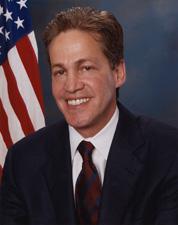
Mr. President, I am pleased to introduce the Help Expand Access to Recovery and Treatment (HEART) Act of 2005 with my friend and colleague, Senator Clinton of New York. By passing this life-saving…
Mr. President, I am pleased to introduce the Help Expand Access to Recovery and Treatment (HEART) Act of 2005 with my friend and colleague, Senator Clinton of New York.
By passing this life-saving legislation, Congress would provide equitable access to substance abuse treatment services for 23 million adults and children who need treatment for the disease of alcoholism and other drug dependencies.
HEART would put the decision of whether or not consumers are granted substance abuse treatment services in the hands of doctors and trained addiction professionals, and patients. At least 75 percent of individuals who suffer from alcoholism have access to private health insurance. However, fewer than 70 percent of employer-provided health plans cover alcoholism and drug treatment at the same level as other medical conditions.
Our bill eliminates this inequitable coverage of medical conditions so those who need treatment receive it.
I look forward to working with my colleagues to pass this legislation that is not just important to our nation's economy and the health of our workforce but to the quality of life for millions of Americans and their families.
I ask unanimous consent that the text of the bill be printed in the Record.

Mr. President, I come to the floor today to voice my support for the flag amendment. The flag of the United States of America is a symbol of freedom. The flag of the United States of America has been…
Mr. President, I come to the floor today to voice my support for the flag amendment.
The flag of the United States of America is a symbol of freedom. The flag of the United States of America
has been sanctified by the blood of thousands of U.S. soldiers who have fought across the world, and it must be protected from desecration. This proposed constitutional amendment would overturn the 1989 U.S. Supreme Court's 5-4 ruling which held that laws banning desecration of the U.S. flag were unconstitutional infringements on free speech and therefore a violation of the first amendment.
I am proud of the first amendment right to free speech and will always ensure all Americans maintain that right. I am also proud of the American flag and the values behind it. The American flag flies over this great country as a symbol of liberty and patriotism. Desecration of the flag would be destruction of the core principles on which this great Nation was founded. I will continue to be an advocate on behalf of the American flag and the values the flag represents.
I encourage my colleagues to support this measure and join me in ensuring the everlasting integrity of the American flag.
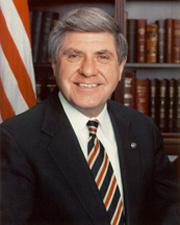
Mr. President, today I rise to introduce a bill designating a Jacksonville courthouse as the John Milton Bryan Simpson United States Courthouse. John Milton Bryan Simpson was born in Kissimmee, FL,…
Mr. President, today I rise to introduce a bill designating a Jacksonville courthouse as the John Milton Bryan Simpson United States Courthouse.
John Milton Bryan Simpson was born in Kissimmee, FL, in 1903. He was nominated to the Southern District Court of Florida by President Truman in 1950 and to the Federal court of appeals by President Johnson in 1966.
Designating this courthouse after the late Judge Simpson is a fitting tribute to a man whose judicial decisions were instrumental in desegregating public facilities in Jacksonville, Orlando, and Daytona Beach.
It is important that we remember not only his name but also his legacy of courage during that period of our history.
I hope that other members of the Senate will join me in honoring Judge Simpson, a man who was not only a hero to the state of Florida, but a national hero.
Bill Text
Latest available legislative text
        [Congressional Bills 109th Congress]
[From the U.S. Government Publishing Office]
[S. 783 Introduced in Senate (IS)]

109th CONGRESS
1st Session
S. 783

To repeal the sunset on the 2004 material-support enhancements, to
increase penalties for providing material support to terrorist groups,
to bar from the United States aliens who have received terrorist
training, and for other purposes.

_______________________________________________________________________

IN THE SENATE OF THE UNITED STATES

April 14, 2005

Mr. Kyl (for himself, Mr. Cornyn, and Mr. Coburn) introduced the
following bill; which was read twice and referred to the Committee on
the Judiciary

_______________________________________________________________________

A BILL

To repeal the sunset on the 2004 material-support enhancements, to
increase penalties for providing material support to terrorist groups,
to bar from the United States aliens who have received terrorist
training, and for other purposes.

Be it enacted by the Senate and House of Representatives of the
United States of America in Congress assembled,

SECTION 1. SHORT TITLE.

This Act may be cited as the ``Material Support to Terrorism
Prohibition Improvements Act of 2005''.

SEC. 2. REPEAL OF SUNSET ON 2004 MATERIAL-SUPPORT ENHANCEMENTS.

Section 6603(g) of the Intelligence Reform and Terrorism Prevention
Act of 2004 (18 U.S.C. 2332b note) is repealed.

SEC. 3. BARRING ENTRY TO THE UNITED STATES FOR REPRESENTATIVES AND
MEMBERS OF TERRORIST GROUPS AND ALIENS WHO HAVE RECEIVED
MILITARY-TYPE TRAINING FROM TERRORIST GROUPS.

Section 212(a)(3)(B) of the Immigration and Nationality Act (8
U.S.C. 1182(a)(3)(B)) is amended--
(1) in clause (i)--
(A) in subclause (IV), by amending item (aa) to
read as follows:
``(aa) a terrorist organization as
defined in clause (vi), or''.
(B) by striking subclause (V) and inserting the
following:
``(V) is a member of a terrorist
organization--
``(aa) described in subclause (I)
or (II) of clause (vi); or
``(bb) described in clause
(vi)(III), unless the alien can
demonstrate by clear and convincing
evidence that the alien did not know,
and should not reasonably have known,
that the organization was a terrorist
organization,''.
(C) in subclause (VI), by striking ``or'' at the
end;
(D) in subclause (VII), by inserting ``or'' at the
end; and
(E) by inserting after subclause (VII) the
following:
``(VIII) has received military-type
training (as defined in section 2339D(c)(1) of
title 18, United States Code) from, or on
behalf of, any organization that, at the time
the training was received, was a terrorist
organization,''; and
(2) in clause (vi), by striking ``clause (i)(VI)'' and
inserting ``subclauses (VI) and (VIII) of clause (i)''.

SEC. 4. EXPANDED REMOVAL FROM THE UNITED STATES OF ALIENS WHO HAVE
RECEIVED MILITARY-TYPE TRAINING FROM TERRORIST GROUPS.

Section 237(a)(4)(E) of the Immigration and Nationality Act (8
U.S.C. 1227(a)(4)(E)) is amended to read as follows:
``(E) Recipient of military-type training.--Any
alien who has received military-type training (as
defined in section 2339D(c)(1) of title 18, United
States Code) from or on behalf of any organization
that, at the time the training was received, was a
terrorist organization (as defined in section
212(a)(3)(B)(vi)), is deportable.''.

SEC. 5. BARRING ENTRY TO AND REMOVING TERRORIST ALIENS FROM THE UNITED
STATES BASED ON PRE-ENACTMENT TERRORIST CONDUCT.

The amendments made by sections 3 and 4 of this Act shall apply
to--
(1) all aliens subject to removal, deportation, or
exclusion at any time; and
(2) acts and conditions constituting a ground for
inadmissibility, excludability, deportation, or removal
occurring or existing before, on, or after the date of
enactment of this Act.

SEC. 6. INCREASED PENALTIES FOR PROVIDING MATERIAL SUPPORT TO TERRORIST
GROUPS.

(a) Providing Material Support to Terrorists.--Section 2339A(a) of
title 18, United States Code, is amended by striking ``, imprisoned not
more than 15 years,'' and all that follows through ``life.'' and
inserting ``and imprisoned for not less than 5 years and not more than
25 years, and, if the death of any person results, shall be imprisoned
for not less than 15 years or for life.''.
(b) Providing Material Support or Resources to Designated Foreign
Terrorist Organizations.--Section 2339B(a) of title 18, United States
Code, is amended by striking ``or imprisoned not more than 15 years,''
and all that follows through ``life.'' and inserting ``and imprisoned
for not less than 5 years and not more than 25 years, and, if the death
of any person results, shall be imprisoned for not less than 15 years
or for life.''.
(c) Receiving Military-Type Training From a Foreign Terrorist
Organization.--Section 2339D of title 18, United States Code, is
amended by striking ``or imprisoned for ten years, or both.'' and
inserting ``and imprisoned for not less than 3 years and not more than
15 years.''.
<all>