A joint resolution proposing an amendment to the Constitution of the United States relative to the reference to God in the Pledge of Allegiance and on United States currency.
Legislative Activity
Stay on top of the latest movement without scrolling through every action
Read twice and referred to the Committee on the Judiciary. (text of measure as introduced: CR S10047)
September 14, 2005
View full timeline
Introduced in Senate
September 14, 2005
Sponsor introductory remarks on measure. (CR S10046-10047)
September 14, 2005
Read twice and referred to the Committee on the Judiciary. (text of measure as introduced: CR S10047)
September 14, 2005
Floor Debate
7 membersWhat members said about S.J.Res. 24 on the floor
 JFK
JFK PJL
PJL AS
AS RGL
RGL BLD+2
BLD+2
Floor Debate
7 membersWhat members said about S.J.Res. 24 on the floor
Mr. President, this week world leaders are meeting at the United Nations to reaffirm the commitments made five years ago under the United Nations Millennium Declaration, including the commitment to…
Mr. President, this week world leaders are meeting at the United Nations to reaffirm the commitments made five years ago under the United Nations Millennium Declaration, including the commitment to halt and begin to reverse by the year 2015 the spread of HIV/AIDs, malaria, and other major diseases that claim the lives of millions of people around the world every year. We still have a long way to go if we are going to meet this challenge.
AIDS, which has already claimed the lives of 20 million people, continues to be the leading cause of premature death in sub-Saharan Africa. An estimated 39 million people worldwide are infected with HIV. Last year alone, 4.9 million people were newly infected with HIV, and 3.1 million died. For years, the epidemic was focused on sub-Saharan Africa, but now HIV is spreading fastest in Central Europe and in parts of Asia.
Although the AIDS pandemic has gripped the world's notice, other diseases such as malaria and tuberculosis have drawn less attention-- but they too are deadly, particularly for those in the world's poorest countries. Malaria claims the lives of a million people annually, many of them young children; ninety percent of these deaths occur among people living in sub-Saharan Africa. Tuberculosis, once thought to be eradicated, has reemerged in new and more drug resistant strains. An estimated 1.7 million people now die annually from TB. Because those living
with HIV or AIDS are particularly vulnerable, the number of TB cases has been growing rapidly in sub-Saharan Africa and Central Europe.
Taken together HIV/AIDS, TB and malaria kill over 5 million people annually. A human crisis of this proportion demands that we respond with urgency and thoughtfulness. We must continue to support robust prevention, treatment and care programs. But we must also recognize that vaccines are the most effective weapons in the arsenal of modern medicine to stop the threat of AIDS and other infectious diseases that are decimating the developing world. Pharmaceutical and biotechnology companies, however, are reluctant to invest in research for vaccines for these diseases because they fear that the market will not be lucrative enough to cover the costs of research and development
The bill that I am introducing today, Vaccines for the New Millennium Act of 2005, is designed to address this problem by providing incentives for these companies to accelerate their efforts to develop vaccines and microbicides to prevent HIV/AIDS, TB, malaria and other neglected diseases. It builds upon legislation that I introduced in 2001 with Senator Frist. I am pleased that the Chairman of the Foreign Relations Committee, Senator Lugar, is joining me in introducing this new, expanded bill.
The bill provides a variety of economic incentives. First, it mandates that the Secretary of the Treasury enter into negotiations with the World Bank, the International Development Association, the Global Alliance for Vaccines and Immunizations, and other interested parties in order to establish advanced market commitments, AMCs, for the purchase of vaccines and microbicides to combat neglected diseases. Research has shown that the major obstacle to the development of vaccines for these diseases is the absence of a market because these diseases hit hardest in poor countries that cannot afford to buy the vaccines. Advanced market commitments AMCs are designed to remove this obstacle by creating the market ahead of time. AMCs would be legally binding contracts to purchase a vaccine or microbicide at a fair market price for a guaranteed number of treatments, thereby creating a market incentive for a company to invest in the development and production of vaccines for these diseases. The international framework for the AMCs would also include clearly defined requirements for eligible vaccines to ensure that they are safe and effective as well as clearly defined and transparent rules of competition. The bill also mandates that the Secretary establish a purchase fund in the Treasury as soon as a vaccine to combat one of these diseases is available.
Second, the bill supplements the market incentive with a variety of tax incentives designed to provide appropriate and equitable incentives to both large pharmaceutical and small private sector companies to stimulate vaccine development. The bill provides a 30 percent tax credit each year on qualified research expenses to develop microbicides for HIV and vaccines for HIV, TB, malaria and other neglected diseases that kill more than 1 million people annually. This is an expansion of the existing R&D tax credit and can be applied to clinical trials outside of the United States, since the majority of those infected with these diseases are beyond our borders.
It provides a refundable tax credit to small biotechnology companies based on the amount of qualified research that they do in a given year. This credit is designed to stimulate research among the firms that are the most innovative and to ensure that assistance is given to those small companies that need it the most. Increased research efforts by these firms could be instrumental to the effort to develop effective vaccines for neglected diseases, particularly for HIV/AIDS.
And it provides a 100 percent tax credit on contracts and other arrangements for research and development of these vaccines and microbicides. This credit, which is an increase over the 65 percent credit now in the tax code, is designed to serve as an incentive to larger pharmaceutical companies to work hand in hand with the smaller biotech companies to pick up the pace of vaccine development.
Once vaccines are developed, it is imperative that they be widely distributed. The bill that I am introducing today with Senator Lugar also addresses the distribution side of the equation. It provides a 100 percent tax credit to companies on the sales of new vaccines and microbicides as long as those sales are made to a qualified international health organization or foreign government for distribution in developing countries
Finally, the bill sets up a pilot program under the Small Business Act to encourage the development of vaccines and microbicides by eligible companies under the auspices of the Small Business Innovation Research, SBIR, and the Small Business Technology Transfer, STTR, programs in US government agencies with a global health or disease prevention mission. Under this pilot program, these agencies have new authority to undertake outreach activities to eligible biotech firms and other small business to promote the objectives of the pilot program.
In recent years, a number of pharmaceutical companies have taken steps to help in the treatment of those infected with AIDS by providing life-extending therapies to the developing world at reduced costs. These drugs are critically important but the war against AIDS cannot be won unless we develop vaccines against the HIV virus and other neglected diseases. The pharmaceutical and biotech companies hold the key
Many steps need to be taken in the war against these diseases. This bill focuses on only one area but a critically important one: vaccine development and distribution. If the public and private sectors work together with energy and commitment, I believe we can develop the vaccines, and once developed, we will win the war against these deadly diseases that victimize so many in the developing world.
I ask unanimous consent that the text of the bill be printed in the Record.
There being no objection the bill was ordered to be printed in the Record as follows:
Mr. President, today I am introducing the Communications Security Act of 2005. The events of 9/11 uncovered manifest structural weaknesses in our communications system, which were then highlighted by the 9/11 Commission. At the time, public safety and emergency response officials were not able to communicate at a basic level. We have not taken adequate steps to fix that dangerous problem, and Hurricane Katrina has bluntly demonstrated that. Much of the communications system was knocked off-line along the Gulf Coast. It was remarkable to watch as the television news crews had better luck communicating than our first responders. As the disaster unfolded, our first responders and emergency officials repeatedly cited communications failures as a major obstacle to the disaster response effort.
We need a redundant communications system that will work in times of emergency. Dramatic advances in technology and the availability of new spectrum as part of the DTV transition offer opportunities to address this problem. The Communications Security Act of 2005 requires the technical experts at the Department of Homeland Security and the Federal Communications Commission evaluate the feasibility and cost of deploying a back-up emergency communications system. The agencies will evaluate all reasonable options, including satellites, wireless and terrestrial-based systems. They will evaluate all available public and private resources that could provide such a system and submit a report to Congress detailing the findings. The DHS is then authorized to request appropriations to implement the system. Congress would then be in position to put in place whatever programs and funding are needed to get the job done.
This proposal will not resolve all of our long-term needs in preparedness and interoperability, and I am pleased that many of my colleagues are working on the various pieces of this puzzle. However, in the interim, we must ensure that we can respond in emergency situations with an eye toward building a reliable, redundant system for the long term.
I ask unanimous consent that the text of the bill be printed in the Record.
Counterfeiting is a threat to America. It wreaks real harm on our economy, our workers, and our consumers. Today, Senator Specter and I introduce the ``Stop Counterfeiting in Manufactured Goods…
Counterfeiting is a threat to America. It wreaks real harm on our economy, our workers, and our consumers. Today, Senator Specter and I introduce the ``Stop Counterfeiting in Manufactured Goods Act,'' a tough bill that will give law enforcement improved tools to fight this form of theft. The bill is short and straightforward, but its impact should be profound and far-reaching.
It is all too easy to think of counterfeiting as a victimless crime, a means of buying sunglasses or a purse that would otherwise strain a monthly budget. The reality, however, is far different. According to the Federal Bureau of Investigation, counterfeiting costs the U.S. between $200 billion and $250 billion annually. In Vermont, companies like Burton Snowboards, Vermont Tubbs, SB Electronics, and Hubbardton Forge--all of which have cultivated their good names through pure hard work and creativity--have felt keenly the damage of intellectual property theft on their businesses. This is wrong. It is simply not fair to the businesses who innovate and to the people whose economic livelihoods depend on these companies.
The threat posed by counterfeiting is more than a matter of economics. Inferior products can threaten the safety of those who use them. When a driver taps a car's brake pedals there should be no uncertainty about whether the
brake linings are made of compressed grass, sawdust, or cardboard. Sick patients should not have to worry that they will ingest counterfeit prescription drugs and, at best, have no effect. The World Health Organization estimates that the market for counterfeit drugs is about $32 billion each year. Knock-off parts have even been found in NATO helicopters. What's more, according to Interpol, there is an identifiable link between counterfeit goods and the financing of terrorist operations.
This is a global problem, and it demands global solutions. Earlier this year at a Judiciary Committee hearing on international piracy, the General Counsel for the United States Trade Representative reported that China continues to see piracy rates of about ninety percent in nearly all industries. Russia is a growing concern too, even as that country seeks membership in the World Trade Organization. Both countries were added to USTR's Priority Watch List this year. Such lists are useful, but they are meaningless without concrete steps by the countries singled out by USTR. We know that counterfeiting can be fought when a country treats it as a priority. China, for example, flexed its intellectual property enforcement muscle recently in protecting logos related to Beijing's 2008 Summer Olympic Games. In a Newsweek International article last January, one vendor who was fined for selling Olympic t-shirts noted that the crackdown was concerted: `` `They are,' she says, `very serious.' ''
I am very serious as well. Even as we work toward better international enforcement, there is much we can do, and much that we have done, to improve domestic law. In 1996, I worked with Senator Hatch to pass the Anticounterfeiting Consumer Protection Act, which strengthened our criminal and tariff codes and applied federal racketeering laws to counterfeiting. And earlier this year, Senator Cornyn and I introduced S. 1095, the Protecting American Goods and Services Act. That bill would criminalize possession of counterfeit goods with intent to traffic, expand the definition of ``traffic,'' and criminalize the importing and exporting of counterfeit goods.
The bill that Senator Specter and I are introducing today also makes several improvements to the U.S. Code. The bill strengthens 18 U.S.C. 2318, the part of the criminal code that deals with counterfeit goods and services, to make it a crime to traffic in counterfeit labels or packaging, even when counterfeit labels or packaging are shipped separately from the goods to which they will ultimately be attached. Savvy counterfeiters have exploited this loophole to escape liability. This bill closes that loophole.
The bill will also make counterfeit labels and goods, and any equipment used in facilitating a crime under this part of the code, subject to forfeiture upon conviction. Any forfeited goods or machinery would then be destroyed, and the convicted infringer would have to pay restitution to the lawful owner of the trademark. Finally, although the bill is tough, it is also fair. It states that nothing ``shall entitle the United States to bring a cause of action under this section for the repackaging of genuine goods or services not intended to deceive or confuse.'' It is truly just the bad actors we want to punish.
Those who profit from another's innovation have proved their creativity only at escaping responsibility for their actions. As legislators it is important that we provide law enforcement with the tools needed to capture these thieves. It is a task to which Senator Specter and I are both committed. I would like to thank Senator Bayh, Senator Brownback, Senator Cornyn, Senator DeWine, Senator Feingold, Senator Hatch, Senator Levin, Senator Reed, and Senator Stabenow for cosponsoring this important legislation.
Mr. President, on behalf of myself, Senator Leahy, and my colleagues Senators Hatch, DeWine, Cornyn, Brownback, Voinovich, Feingold, Levin, Bayh, Reed, and Stabenow, I seek recognition to introduce…
Mr. President, on behalf of myself, Senator Leahy, and my colleagues Senators Hatch, DeWine, Cornyn, Brownback, Voinovich, Feingold, Levin, Bayh, Reed, and Stabenow, I seek recognition to introduce the Stop Counterfeiting in Manufactured Goods Act, a bill that amends title 18 of the United States Code to provide criminal penalties for trafficking in counterfeit marks.
This legislation closes a loophole in Federal trademark law, which currently criminalizes the trafficking in counterfeit trademarks ``on or in connection with goods or services.'' This language, however, does not extend criminal liability to those persons who manufacture and/or traffic the counterfeit marks themselves, marks which are later applied to a product or service. In other words, Federal law does not prohibit a person Tom selling counterfeit labels bearing otherwise protected trademarks within the United States.
This current loophole was created in large part by the Tenth Circuit's opinion in United States v. Giles, 213 F.3d 1247 (10th Cir. 2000). In this case, the United States prosecuted the defendant for manufacturing and selling counterfeit Dooney & Bourke labels that third parties could later affix to generic purses. Examining Title 18, section 2320, of the United States Code, the Tenth Circuit held that persons who sell counterfeit trademarks that are not actually attached to any ``goods or services'' do not violate the Federal criminal trademark infringement statute. And because the defendant did not attach the counterfeit mark to a ``good or service,'' the court found that the defendant did not run afoul of the criminal statute as a matter of law. Thus, an individual, caught red-handed with counterfeit trademarks, walked free. Congress must act now to close this loophole, which this legislation being introduced today will most certainly do. Specifically, the bill will prohibit the trafficking, or attempt to traffic, in ``labels, patches, stickers'' and generally any item to which a counterfeit mark has been applied.
In addition to closing the loophole, the Stop Counterfeiting in Manufactured Goods Act strengthens the criminal code's forfeiture provision by providing enhanced penalties for those trafficking in counterfeit marks, goods and services bearing counterfeit marks. Current law does not provide for the seizure and forfeiture of goods and services bearing counterfeit marks. As such, many times such counterfeit goods are seized one day, only to be returned and sold to an unsuspecting public. To ensure that individuals engaging in the practice of trafficking in counterfeit marks cannot reopen their doors, this bill provides procedures for the mandatory seizure, forfeiture, and destruction of counterfeit marks pre-conviction. Further, it provides for procedures for the mandatory forfeiture and destruction of property derived from or used to engage in the trafficking of counterfeit marks.
The trade in counterfeit marks is only part of a much larger problem. The Bureau of Customs and Border Protection estimates that trafficking in counterfeit goods costs the United States approximately $200 million annually. With each passing year, the United States loses millions of dollars in tax revenues to the sale of counterfeit goods. Further, counterfeit items manufactured overseas and distributed in the United States cost American workers tens of thousands of jobs. This is a problem that we can no longer ignore.
The trafficking in counterfeit goods and marks is not limited to those of the popular designer goods that we have all seen sold on corners of just about every major metropolitan city in the United States. Counterfeited products can range from children's toys to clothing to Christmas tree lights. More disturbing are the potentially hazardous counterfeit automobile parts, batteries, and electrical equipment that are being manufactured and placed into the stream of commerce by the thousands with each passing day.
This legislation closes a loophole in the current criminal trademark infringement statute and ensures that it is a crime not only to traffic in goods or services bearing counterfeit marks, but also in the counterfeit marks themselves. Further, this legislation ensures that counterfeit goods and marks seized in violation of this statute are properly disposed of and do not make their way back onto the street. I am pleased to introduce this piece of legislation with my colleagues and hope that it will receive the support that it is due.
Mr. President, I rise to introduce with Senator Kerry the Vaccines for a New Millennium Act of 2005. The AIDS crisis is devastating sub-Saharan Africa. According to the latest figures from UNAIDS,…
Mr. President, I rise to introduce with Senator Kerry the Vaccines for a New Millennium Act of 2005.
The AIDS crisis is devastating sub-Saharan Africa. According to the latest figures from UNAIDS, there are approximately 40 million people living with HIV/AIDS around the world. An estimated 4.9 million people were newly infected last year. This means that every day, some 14,000 people contract HIV/AIDS. Last year, an estimated 3 million people died from AIDS.
The AIDS crisis in sub-Saharan Africa has profound implications for political stability, development, and human welfare that extend far beyond the region. In addition to the current crisis in Africa, public health experts warn of a ``second wave'' of countries on the verge of potential AIDS crises, such as China, India, Russia, Nigeria, and Ethiopia.
Despite efforts through programs like the President's Emergency Plan for AIDS Relief PEPFAR, the Global Fund to Fight AIDS, Tuberculosis, and Malaria, and the Bill and Melinda Gates Foundation to treat those living with HIV/AIDS and to prevent new infections, the disease is outpacing us. While prevention programs are critical in the struggle to slow the spread of the disease, over the long term, the most effective way to defeat this pandemic is through the development of an effective HIV vaccine.
In addition to AIDS, malaria and tuberculosis continue to kill many in the developing world. More than 300 million people are infected with malaria annually, and an estimated 1 million people--mostly children under the age of five--die from malaria. Combined, AIDS, tuberculosis, and malaria kill an estimated 5 million people a year. Yet
there are no vaccines for these diseases. While we must remain committed to current prevention and treatment programs, we must also look toward the future to see what hope science has for preventing the spread of these diseases.
Historically, vaccines have led to some of the greatest achievements in public health and are among the most cost-effective health interventions. During the 20th century, global immunization efforts have led to the eradication of smallpox and the elimination of polio from the Western Hemisphere, Europe and most of Asia. Vaccines for diseases such as measles and tetanus have dramatically reduced childhood mortality worldwide, and vaccines for diseases such as influenza, pneumonia, and hepatitis now help prevent sickness and death of adults, too.
Vaccines for these diseases would play an important role in saving lives in developing countries. Governments, private foundations, and the private sector have made enormous strides. Public-private partnerships have also contributed to scientific advances in this area. However, much more needs to be done.
Because of the promise that vaccines hold, Senator Kerry and I are introducing the ``Vaccines for the New Millennium Act of 2005.'' Representative Pete Visclosky is introducing a companion bill in the House of Representatives. Our bill would require the United States to develop a comprehensive strategy to accelerate research and development in vaccines for HIV/AIDS, tuberculosis, malaria, and other infectious diseases that are major killers in the developing world. The strategy would require an increase in public-private partnerships, whereby public entities such as governments, team up with companies or private foundations to conduct research or vaccine trials. The bill would require the United States government to commit to purchase vaccines for these diseases once they are developed through ``advance market commitments.'' Finally, the legislation would create a tax credit for companies that invest in research and development for vaccines for these diseases.
I am hopeful that Senators will join Senator Kerry and me in supporting this legislation.
Earlier this year, the Supreme Court ruled in Kelo vs. New London that it was permissible for a government to use the power of eminent domain simply for the purpose of economic development. I am…
Earlier this year, the Supreme Court ruled in Kelo vs. New London that it was permissible for a government to use the power of eminent domain simply for the purpose of economic development.
I am greatly troubled by this case. I do not believe that the government can or should take property for a non-governmental purpose simply because it will generate additional tax revenue.
This court decision stands logic on its head--and it is a dangerous precedent as well.
I understand that there will be times when it is essential for the government to use eminent domain for the public good. For example, eminent domain is appropriate in order to build a flood control project to protect a city. Or to construct a highway or lay a water line.
But it makes no sense for the Court to allow a city--or a state or even the federal government--to use its power to allow private developers to acquire property under the takings clause. Once you start down that path, whose private property is safe? Could my home be condemned because a larger, more expensive house could be built on that lot? Can a local cafe be seized in order to provide space for a new, high-end French restaurant?
Government at all levels should be protecting and strengthening private property rights--not diminishing them.
So today I am introducing legislation to clarify and strengthen private property rights and ensure that government cannot abuse its power of eminent domain in the name of ``economic development.''
First, my bill prevents the use of Federal funds for any economic development project that uses property that was subject of an eminent domain taking. This would cut off the spigot of Federal dollars to these questionable projects. Frankly, most economic development projects rely in some way on Federal dollars so this provision would have the practical effect of sharply curtailing this practice.
Second, my bill is explicit that traditional public use and public purpose projects are still permitted. I am not trying to end the use of eminent domain in order to protect public health and safety or in order to build important infrastructure in our communities. My bill makes this clear.
Finally, this bill clearly lays out that the funding prohibition includes takings of private property for the use of, or ownership of, another private individual or entity. One of the most troubling trends in this area is the use of eminent domain by a government that then turns the property over to a private person or group for their private gain.
This issue also demands attention at the state level. I commend the efforts of a number of leaders in North Dakota to make changes to our state constitution in a way that will protect private property owners.
Our former state attorney general, Heidi Heitkamp, is spearheading an effort to prevent the use of eminent domain at the State level for economic development purposes regardless of whether Federal funds are used. This is an important initiative and I fully support it. It is an important complement to the bill I am introducing today. In fact, much of the language in my bill reflects the language in the initiated measure in North Dakota.
Strong private property rights are a fundamental part of our country's heritage and I believe that we should take steps to protect those rights. This bill will afford all Americans better protection against inappropriate uses of eminent domain and seizure of property.
I ask unanimous consent that the text of the bill be printed in the Record.
Show 2 more
Mr. President, a Federal District Court judge in the Ninth Circuit has once again declared that the reference to God in the Pledge of Allegiance is unconstitutional. Just a couple of years ago, the…
Mr. President, a Federal District Court judge in the Ninth Circuit has once again declared that the reference to God in the Pledge of Allegiance is unconstitutional. Just a couple of years ago, the Ninth Circuit Court of Appeals reached a similar conclusion in the case of Newdow v. U.S. Congress. I am now, as I was then, surprised and disappointed with this new ruling by the District Court.
Today I am reintroducing a proposed constitutional amendment that simply says that references to God in the Pledge of Allegiance and on our currency do not affect an establishment of religion under the First Amendment. References to God are found in every
one of our founding documents from the Declaration of Independence to the Constitution, as well as in the Pledge of Allegiance. The phrase ``In God We Trust'' appears on all of our currency and on many public buildings. Every day, we begin Senate sessions with a prayer and the Pledge. I firmly believe that the framers of the Constitution and the First Amendment did not want to ban all references to God from public discourse when they wrote the Establishment Clause. What they wanted to prevent was the establishment of an official national religion and to keep the government from getting intimately involved in the organization of one religion over another.
These references to God are ceremonial. Certainly, they do have meaning, but individuals are free to put whatever meaning on the word they choose. Indeed, I fully respect and support the rights of people not to participate in the Pledge or in ceremonial prayer and my amendment will not coerce anyone to recite the Pledge of Allegiance in public or in school.
I had hoped that the Supreme Court, which took the Newdow case up on appeal, would have settled this question once and for all. It did not. The Court dismissed the case saying Mr. Newdow lacked standing. The Supreme Court may have the opportunity to hear arguments in this case later on. If the Supreme Court should decide not to hear the case or to overrule the lower court, then Congress should restore the appropriate balance between church and state that I believe was the intent of the framers.
I urge my colleagues to support this joint resolution and I ask unanimous consent that the text of the resolution be printed in the Record.
There being no objection the bill was ordered to be printed in the Record as follows.
S.J. Res. 24
Resolved by the Senate and House of Representatives of the
United States of America in Congress assembled (two-thirds of
each House concurring therein), That the following article is
proposed as an amendment to the Constitution of the United
States, which shall be valid to all intents and purposes as
part of the Constitution when ratified by the legislatures of
three-fourths of the several States within 7 years after the
date of its submission by the Congress:
``Article --
``Section 1. A reference to God in the Pledge of Allegiance
or on United States currency shall not be construed as
affecting the establishment of religion under the first
article of amendment of this Constitution.
``Section 2. Congress shall have the power to enforce this
article by appropriate legislation.''.
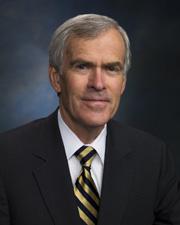
Mr. President, Senator Smith and I are introducing legislation today that would allow more students in our Nation to take full advantage of the Hope Scholarship Tax Credit. Since it was signed into…
Mr. President, Senator Smith and I are introducing legislation today that would allow more students in our Nation to take full advantage of the Hope Scholarship Tax Credit.
Since it was signed into law by President Clinton in 1997, the Hope Scholarship Tax Credit has annually helped millions of students reduce the cost of going to college. In 2003 alone, more than 7.3 million college students claimed this and the Lifetime Learning tax credit. This credit, which can be as much as $1,500, has helped families offset the increasing cost of college--costs that have gone up 51 percent at public 4-year colleges, 36 percent at private 4-year colleges and 26 percent at public 2-year colleges over the past decade.
Unfortunately, many students and their families are unable to take advantage of the maximum amount of the credit because it is limited to covering ``tuition and related expenses.'' Students that attend colleges with lower tuition costs, such as those at many of our Nation's community colleges, are not entitled to the maximum amount of the credit. As we all know, tuition is just one of the many expenses associated with going to college. Room, board, books, supplies, equipment and fees can be prohibitively expensive for those who attend colleges that have reasonable tuition charges.
The bill addresses this inequity, by allowing the Hope scholarship tax credit to cover expenses associated with fees, books, supplies, and equipment. To limit the bill's cost, a student's room, board and related expenses would remain excluded. It is important to note that the Tax Code commonly recognizes non-tuition expenses, including substantial living expenses, in programs such as section 529 plans and tax-exempt, pre-paid tuition plans. Our bill, reasonably, covers a much more limited subset of these same expenses.
In addition, the legislation changes the Tax Code so that any Federal Pell grants and Federal Supplemental Educational Opportunity Grants students receive are not counted against their eligible expenses when Hope eligibility is calculated. This change will provide some assistance to needier students, especially those attending 4-year public colleges. However, since the Hope tax credit will remain non- refundable, the costs of these changes will remain low.
Both of these modest changes will make college more affordable to many students and families that do not currently benefit from many of the other tax provisions that are targeted to more wealthy families. For many of these students, the ability to get the maximum amount of the tax credit may be the difference in the student being able to take an additional class or not having to sit out a semester.
This legislation is supported by the American Council on Education, the United States Student Association, the American Association of Community Colleges, the American Association of State Colleges and Universities, the National Association of State Universities and Land Grant Colleges, the Association of Jesuit Colleges and Universities, the Hispanic Association of Colleges and Universities, and a number of other prominent higher education organizations.
Bill Text
Latest available legislative text
        [Congressional Bills 109th Congress]
[From the U.S. Government Publishing Office]
[S.J. Res. 24 Introduced in Senate (IS)]

109th CONGRESS
1st Session
S. J. RES. 24

Proposing an amendment to the Constitution of the United States
relative to the reference to God in the Pledge of Allegiance and on
United States currency.

_______________________________________________________________________

IN THE SENATE OF THE UNITED STATES

September 14, 2005

Ms. Landrieu introduced the following joint resolution; which was read
twice and referred to the Committee on the Judiciary

_______________________________________________________________________

JOINT RESOLUTION

Proposing an amendment to the Constitution of the United States
relative to the reference to God in the Pledge of Allegiance and on
United States currency.

Resolved by the Senate and House of Representatives of the United
States of America in Congress assembled (two-thirds of each House
concurring therein), That the following article is proposed as an
amendment to the Constitution of the United States, which shall be
valid to all intents and purposes as part of the Constitution when
ratified by the legislatures of three-fourths of the several States
within 7 years after the date of its submission by the Congress:

``Article--

``Section 1. A reference to God in the Pledge of Allegiance or on
United States currency shall not be construed as affecting the
establishment of religion under the first article of amendment of this
Constitution.
``Section 2. Congress shall have the power to enforce this article
by appropriate legislation.''.
<all>