A joint resolution proposing an amendment to the Constitution of the United States relative to the line item veto.
Legislative Activity
Stay on top of the latest movement without scrolling through every action
Read twice and referred to the Committee on the Judiciary.
September 27, 2005
View full timeline
Introduced in Senate
September 27, 2005
Read twice and referred to the Committee on the Judiciary.
September 27, 2005
Floor Debate
13 membersWhat members said about S.J.Res. 26 on the floor
 DF
DF RCS
RCS PM
PM KBH
KBH RGL+8
RGL+8
Floor Debate
13 membersWhat members said about S.J.Res. 26 on the floor
Mr. President, I rise today to introduce legislation amending the Constitution to permit direct popular elections for the Presidency and Vice Presidency of the United States. I am mindful of the fact…
Mr. President, I rise today to introduce legislation amending the Constitution to permit direct popular elections for the Presidency and Vice Presidency of the United States.
I am mindful of the fact that altering the text of one of our country's most sacred documents requires careful thought, study and debate. But for me the status quo raises too many problems and questions.
The Electoral College is an archaic system. It may have been suitable during the founding years of the Republic. But it is hardly appropriate for the 21st century modern democracy that we have become.
Fundamental fairness dictates that we have a single, nationwide count of popular votes. Hopefully my proposal represents the starting point for how best to structure a system to accomplish that.
My approach is simple: the President is elected through a direct popular vote of the American people. Every American's vote counts the same, whether they live in Florida, Maine, California, or Nebraska. All the complexities of the current electoral college system are swept away. With my legislation the winner of the presidency is the individual who tallies the most votes cast in the election.
For those who believe the Electoral College is a reasonable basis for electing the President, consider the following: would a foreign country today, creating a new democratic election system from scratch, rely on the U.S. Electoral College as a model? Not likely.
Let me begin by offering a few facts and observations about the current system: the Electoral College allows a candidate to lose 39 States in a general election but still win the Presidency; the Electoral College allows a candidate to lose a general election, by 10 million popular votes or more, yet still be elected President; in a recent presidential election a candidate received nearly 20 million popular votes, roughly 19 percent of all votes cast, but that translated into 0 electoral votes; the Electoral College allows an elector to refuse to represent the majority of popular votes cast for a presidential candidate in his State's election--he can arbitrarily switch sides and throw his lot in with an alternative candidate, which has happened nine times since 1820; when a presidential election produces a 269 to 269 tie in electoral votes between candidates, the President is chosen through a ``contingent'' election conducted by the House of Representatives with each state's delegation casting a single vote--which unfairly grants equal status to California, whose population is 35.5 million, and Wyoming, whose population is 500,000; making matters worse, when such a ``contingent election'' occurs, House members are not bound to support the candidate who won the popular vote in the State they collectively represent--they are free to vote as they see fit; the two ``constant'' or ``senatorial'' electors automatically assigned to each State give less populous states a disproportionate advantage in the Electoral College vote count compared to States with more sizable populations; the winner-take-all concept for awarding a State's electoral votes disenfranchises all voters in a State who supported a losing candidate in that State; and finally, the Electoral College undermines national campaigns by causing presidential candidates to focus on a handful of contested States and ignore the concerns of tens of millions of Americans living in other States.
The political and substantive utility of this system, full of pitfalls and loopholes, is very hard to discern. Voter apathy is a function of a system signaling to people that their vote does not count, and the Electoral College manages that in spades.
Now, I don't take this effort on lightly, because we have amended the Constitution a mere twenty-seven times since the founding of the nation. But as a matter of practical necessity, fairness and common sense, we need to consider the inherent inequities involved with the Electoral College.
My hope is that we can treat this in a bipartisan and nonparochial manner that benefits the whole of the country. I appreciate that states and regions are affected differently, California among them, but my motivations derive from improving the American federalist system in a way that eliminates undue consequences.
I have not been solicited by any particular interest group, constituency, or voting bloc to amend the Constitution. At bottom, I believe this is a matter of serious import. Good public policy demands that we give this subject sustained attention and I intend to do that through the Senate hearing process.
There was a time, of course, when the Electoral College adequately represented the voting needs of the country. In the 1780s there were no formal political parties as such, no experience with conducting national campaigns for office, and no lack of mistrust among States large and small about protecting their interests.
The Founding Fathers understood: first, the social, economic and political disconnectedness that existed among the States; second, the federalist system of governance was only beginning to take root; third, the dearth of news and communications networks across the country made national campaigning difficult; and fourth, the likelihood that a local ``favorite son'' or regional candidate would prevail in a national presidential election.
This combination of factors justified an indirect election of the President through a College of Electors.
Inimical reasons existed for going this route as well. Had the Framers of the Constitution adopted the one man, one vote system, Northern States that permitted blacks to vote in popular national elections could have exercised greater influence in electing the President than southern states. And States that independently extended rights of suffrage to women also could have gained an advantage.
The 15th Amendment in 1870 extending voting rights to Black men and many years later women gaining those same rights laid these issues to rest. With the obstacles of racism and sexism now gone as reasons justifying the creation, of the Electoral College, the puzzlement over why we haven't updated the presidential election system only continues.
Regardless, as a means to reconcile the interests of State governments and the Federal government, of northern and southern states, of majority and minority interests groups, and to let all these voices be heard come election time, the Electoral College was considered a just compromise. Its basic form was adopted during the Constitutional Convention of 1787.
Political events occurred soon thereafter, though, prompting passage of the 12th Amendment and the first major changes in the Electoral College system. The presidential election of 1800, between Thomas Jefferson and Aaron Burr, ended in a tie of electoral votes, causing the House of Representatives to break the deadlock through a ``contingent election''. A messy political imbroglio ensued. It was only after many rounds of negotiations that Jefferson won the Presidency.
Importantly, the 12th Amendment to the Constitution passed in 1804 to streamline the process of contingent elections. I would observe that passage of the 12th Amendment confirmed that the Electoral College system was, and remains, appropriately subject to change.
Legislators in 1804 did not delay in amending the Constitution for reasons of fairness and practicality, and nor should we in 2004 fail to address the imperfect design that thwarts the will of the American public.
Even with the 12th Amendment in place, the Electoral College managed to turn logic on its head in presidential elections throughout the 19th century. Minority presidents, so-called for winning the electoral vote but losing the popular vote, were elected three times--John Quincy Adams in 1824, Rutherford B. Hayes in 1876, and Benjamin Harrison in 1888.
And in 2000 the same problem re-surfaced, the fourth time in our Nation's short history, with Vice President Al Gore edging George Bush by 537,895 popular votes, but losing the electoral college by a mere 5 votes.
The Nation can be thankful, frankly, that we have only had disputed elections in just these four instances. A shift of a few thousand votes from one candidate to another in past presidential elections could have ordained similar disarray. Some noteworthy examples include: despite losing the popular vote by the sizable margin of 1.7 million votes, Gerald Ford in 1976 needed only 5,559 more votes in Ohio and 3,687 in Hawaii to reach the magical number of 270 electoral votes and he would have been returned to the White House.
And had California, Illinois and Ohio posited 29,000 more votes in Thomas Dewey's column, he lost the over popular vote by a wide margin, 2.1 million, in 1948, the face of history may have been changed forever with Harry Truman never returning to the White House.
And most recently, a shift of a mere 68,000 votes in Ohio from President George Bush's column to John Kerry would have allowed the Democrat to
win the electoral vote count, 271 to 267, and the Presidency, even though Bush enjoyed a sizable 3.5 million margin in popular votes cast.
According to some estimates, we have had no fewer than 22 near misses, all of which could have ended up as contentious as the 2000 contest. We are tempting fate by ignoring this problem: sooner or later a dramatic incongruity will occur between an electoral vote winner contrasted against a different popular vote winner whose margin of victory runs into the millions.
Electoral College anomalies don't end with disparities between the electoral and popular vote winners. The phenomenon of the ``Faithless Elector'' reflects a further structural defect in the Electoral College System.
History shows that electors have not been faithful to the presidential and vice presidential tickets winning the most votes in their respective states. They may initially pledge to the winning candidate, but enjoy individual discretion to change their vote when electoral votes are formally counted.
Contemporary examples are as follows: in 1968, Dr. Lloyd Bailey, a North Carolina elector initially pledged to Republican Richard Nixon, switched his vote to George Wallace of the American Independent Party; in 1972, Roger MacBride, a Virginia elector for Richard Nixon switched his vote to John Hospers of the Libertarian Party; in 1976, Mike Padden, a Washington elector for Gerald Ford voted for Ronald Reagan; in 1988, Margarat Leach, a West Virginia elector for Michael Dukakis, voted instead for Lloyd Bentsen, an unusual decision to exchange the positions of the Presidential and Vice Presidential candidates; and in 2000, Barbara Lett-Simmons, a District of Columbia elector for Democrat Albert Gore Jr., cast a blank ballot.
These arbitrary decisions did not affect the outcome in each of those presidential election years. But they all flouted the electoral will of the people.
The fact that such capricious switching is permitted, irrespective of the outcomes of the popular vote results in the states in question, is cause for great concern. What might happen if electors break their pledges to a particular candidate en masse? Is that possible and legally enforceable? The answer appears to be yes.
In this vein, it does not require a stretch of the imagination to envision three or more candidates splitting the electoral tally of votes such that none received the requisite majority of 270 to win the White House.
In that situation, what prevents one of the candidates directing his electors to another candidate, before the formal meeting of the Electors to count and certify the electoral votes occurs in the month following the November election, to allow him to gain the necessary majority of 270 in exchange for policy concessions or worse, a massive cash payment? Would that kind of corrupt transaction be allowed? What element of the current Electoral College system prevents such an unfortunate outcome?
This may not be likely, given our strong two party system, but it is possible. Yet we tolerate the risk of it happening, year after year, because we assume it will never occur. Someday we may regret our indecision to fix what we know is wrong with the Electoral College system.
Twenty-five years ago in the 96th Congress, a majority of the Senate voted 51 to 48 to support abolishing the Electoral College and replace it with direct popular elections. That legislation, S.J. Res. 26, fell short of the necessary two-thirds required for a constitutional amendment, but I am encouraged that more than half the body supported the concept.
A few years before that, the House voted overwhelmingly in the 91st Congress, by a vote of 338 to 70, for the direct popular election of the President. Alas, the effort fell short in the Senate.
I am prepared to press the case for this idea, on a bipartisan basis, through extensive committee deliberations and onto the Senate floor. The time has come for the Senate to reconsider the essential building blocks of our democracy.
Some might claim that offering a constitutional amendment is a political gambit to overcome my own State's weak position in the Electoral College voting system. It is a fact that smaller States, such as South Dakota, Wyoming, and others, maintain disproportionate influence in the process compared to California.
I would respond to that as follows: my approach does equate the vote of a Californian, Rhode Islander and South Dakotan as being equal. But it also means that millions of votes cast for Republican candidates in future presidential races in my home state will have meaning and value. Their votes will count for something.
In the 2000 race, George Bush received over 4.5 million votes in California. That should have counted for something--but it did not. All 54 of California's electoral votes went to Vice President Al Gore.
Given the domination of Democratic presidential candidates in California in the modern era, it is clear that my party would not benefit from a direct popular election in California.
But for me, this is about principle over politics. It is the right thing to do, even if it gives renewed life to Republican presidential candidates in my home State.
As it stands now, California is not a place where Republican and Democratic presidential candidates genuinely compete for votes. They come to California to fill their campaign coffers but take a pass with real voters. That needs to change--for California, yes, but also for New York, Texas, for Utah and for so many other States in the country.
I have tried to understand the counterarguments to a nationwide popular vote. They reflect a desire to empower both regional and rural interests, and deny major population centers from having excessive power. I appreciate the notion that we don't want clusters of cities and particular regions where the greatest numbers of Americans reside, New York City, Chicago, Los Angeles, to dominate the electoral landscape.
At the same time, a presidential candidate's priorities, record and vision for the country will determine how far he goes in the nominating and general election process. Stitching together a cross section of American voters, who represent different economic and social backgrounds, professions, parts of the country, religious faiths, and so much more holds the key to attaining a winning plurality or majority of votes in presidential races.
I would contend that it is up to the candidates to appeal to the broadest group of Americans but to level the playing field in doing so. In that process each American's vote, regardless of where that person lives in the country, should be counted equally.
Right now, that is just not the case. Our system is not undemocratic, but it is imperfect, and we have the power to do something about it.
I ask unanimous consent that the text of the Electoral College Abolition Resolution be printed in the Record.
Mr. President, as we continue to debate the Federal Government's fiscal year 2006 budget, I can think of no better time to discuss the need for a balanced budget amendment to the Constitution. It is…
Mr. President, as we continue to debate the Federal Government's fiscal year 2006 budget, I can think of no better time to discuss the need for a balanced budget amendment to the Constitution. It is for that reason that I stand before you today--to
introduce a balanced budget amendment to the Constitution.
This is the same amendment that I have introduced every Congress since the 97th Congress. Throughout my tenure in Congress, during good economic times and bad, I have devoted much time and attention to this idea because I believe that one of the most important things the Federal Government can do to enhance the lives of all Americans and future generations is to balance the Federal budget.
Our Founding Fathers, wise men indeed, had great concerns regarding the capability of those in government to operate within budgetary constraints. Alexander Hamilton once wrote that: ``. . . there is a general propensity in those who govern, founded in the constitution of man, to shift the burden from the present to a future day.'' Thomas Jefferson commented on the moral significance of this ``shifting of the burden from the present to the future.'' He said: ``the question whether one generation has the right to bind another by the deficit it imposes is a question of such consequence as to place it among the fundamental principles of government. We should consider ourselves unauthorized to saddle posterity with our debts and morally bound to pay them ourselves.''
I completely agree with these sentiments. History has shown that Hamilton was correct. Those who govern have, in fact, saddled future generations with the responsibility of paying for their debts. Over the past 30 years, annual deficits have become routine and the Federal Government has built up massive debt. Furthermore, Jefferson's assessment of the significance of this is also correct: intergenerational debt shifting is morally wrong.
Over the years, we have witnessed countless ``budget summits'' and ``bipartisan budget deals,'' and we have heard, time and again, the promises of ``deficit reduction.'' But despite all of these charades, the Federal budget remains severely out of balance today. The truth is, it will never be balanced as long as the President and the Congress are allowed to shortchange the welfare of future generations to pay for current consumption. This is evidenced by the fact that I stood in this same place, introducing this same legislation during both the 106th and the 107th Congresses while the Federal budget was actually in balance. But alas, I stand here today with an enormous Federal deficit and a ballooning Federal debt.
A balanced budget amendment to the Constitution is the only certain mechanism to break the cycle of deficit spending and ensure that the Government does not continue to saddle our children and grandchildren with the current generation's debts. A permanently balanced budget would have a considerable impact in the everyday lives of the American people. A balanced budget would dramatically lower interest rates thereby saving money for anyone with a home mortgage, a student loan, a car loan, credit card debt, or any other interest rate sensitive payment responsibility. Simply by balancing its books, the Federal Government would put real money into the hands of hard working people. Moreover, if the governments demand for capital is reduced, more money would be available for private sector use, which in turn, would generate substantial economic growth and create thousands of new jobs.
More money in the pockets of Americans and more job creation by the economy can become a reality with a simple step--a balanced budget amendment. On the other hand, without a balanced budget amendment, the Government will continue to waste the taxpayers' money on unnecessary interest payments. In fiscal year 2004, the Federal Government spent more than $321 billion just to pay the interest on the national debt. That is more than the amount spent on all education, job training, and crime programs combined.
We might as well be taking these hard-earned tax dollars and pouring them down the drain. I believe that this money could be better spent on improving education, developing new medical technologies, finding a cure for cancer, or even returning it to the people who earned it in the first place. But instead, about 15 percent of the Federal budget is being wasted on interest payments because advocates of big government continue to block all efforts to balance the budget.
A balanced budget amendment to the Constitution can be the solution to this perpetual problem. A balanced budget amendment will put us on a path to paying off our national debt, which is currently almost $8 trillion. This amendment will help ensure that taxpayers' money will no longer be wasted on interest payments.
Opponents of a balanced budget amendment treat it as if it is something extraordinary. They are right, a balanced Federal budget would be extraordinary. And I believe that adopting an amendment that would require the Federal Government to do what every American already has to do--balance their checkbook--is exactly what this country needs to prove that Washington is serious about accomplishing this extraordinary feat. A balanced budget amendment is simply a promise to the American people that the Government will spend their hard-earned tax dollars responsibly. I think that we owe our constituents and future generations of Americans that much.
We do not need any more budget deals or false promises from Washington to reduce the deficit. What we need is a hammer to force Congress and the President to agree on a balanced budget, not just this year, but forever. A constitutional amendment to balance the Federal budget is the only hammer forceful enough to make that happen.
I urge my colleagues to join with me in supporting this important legislation.
I ask unanimous consent that the text of the bill be printed in the Record.
Mr. President, I rise today to introduce legislation that will greatly enhance Federal participation in financing and improving our Nation's ferry transportation system. Today I again introduce the…
Mr. President, I rise today to introduce legislation that will greatly enhance Federal participation in financing and improving our Nation's ferry transportation system.
Today I again introduce the Ferry Transportation Enhancement Act, or Ferry-TEA. I am proud to have Senators Collins, Boxer, Cantwell, Clinton, Corzine, Feinstein, Kennedy, Schumer, Snowe, and Stevens as original cosponsors. This bill will provide significantly more resources to State governments, public ferry systems, and public entities responsible for developing facilities for ferries.
Specifically, the bill would: provide $150 million a year for the Federal Highway Administration's Ferry Boat Discretionary Program. This is approximately four times the $38 million a year that is currently being provided under this program; add ``ferry maintenance facilities'' to the list of allowable use of funds under this program; add ``ferries'' to the Clean Fuels Program; establish a Ferry Joint Program Office to coordinate federal programs affecting ferry boat and ferry facility construction, maintenance, and operations and to promote ferry service as a component of the nation's transportation system; establish an information database on ferry systems, routes, vessels, passengers and vehicles carried; and establish an institute for ferries to conduct R&D, conduct training programs, encourage collaborative efforts to promote ferry service, and preserve historical information. This will parallel institutes that now exist for highways, transit, and rail.
Currently, the Federal investment in ferries is only one-tenth of one percent of the total Surface Transportation Program. There is virtually no coordination at the federal level to encourage and promote ferries as there are for other modes of transportation.
We need better coordinated ferry services because it's the sole means of surface transportation in many areas of the country, including, Hawaii, Alaska and my home State of Washington.
Ferries are also the preferred, and the only feasible, method of commuting from home to work in places like Washington State, New York/ New Jersey, North Carolina, Hawaii and Alaska.
Finally, in many States like my home State of Washington they are an important part of the tourism industry and represent a part of our cultural identity.
The symbol of ferries moving people and vehicles on the waterways of the Puget Sound is as much a part of our cultural identity as computers, coffee, commercial aircraft and the Washington Apple.
Ferry use is growing.
In Washington State our ferry system--the Nation's largest-- transports approximately 26 million passengers each year and carries 11 million vehicles. This is more passengers in my one state than Amtrak transports on a yearly basis nationwide.
Other systems that serve New York/New Jersey, North Carolina, San Francisco, and Alaska also have significant numbers of passengers using the ferries.
The Nation's six largest ferry systems recently carried 73 million people and 13 million vehicles in just one year.
The growth projection for ferry use is very high. For these larger systems, it is projected that by 2009 there will be a 14-percent increase in passengers and a 17-percent increase in vehicles being carried by ferries compared to 2002.
In San Francisco, that projection is a 46-percent increase.
It is clear that many people are using ferries and more will be using them in the future.
This is all with very little help from the Federal Government.
Our investment in ferries pails in comparison to the federal investments in highways and other forms of mass transit.
Our bill would provide the needed funding for these growing systems for new ferry boat construction, for ferry facilities and terminals, and for maintenance facilities.
The bill also would make ferries eligible under the Clean Fuels Program.
Like busses, ferries are a form of mass transit that is environmentally cleaner than mass use of cars and trucks. Making them eligible for the Clean Fuels Program will encourage boat makers to design cleaner and more efficient vessels in the future. This will make ferry travel an even more environmentally friendly means of transportation than it already is today.
During the 108th Congress, I, with the help of several of my colleagues, was able to attach an amendment to the surface transportation reauthorization bill--SAFETEA. That amendment would have increased the funding for the Ferry Boat Discretionary Program from $38 million per year to $120 million per year and make other changes.
I thank Chairman Inhofe, Chairman Bond, and Senators Jeffords and Reid for working with us to include that important amendment.
As we again move to the Senate consideration of the reauthorization bill in the near future, I look forward to working with my cosponsors and the leaders of the Committee, which now includes Senator Baucus, to see all the elements of Ferry-TEA is included in the bill.
I ask unanimous consent that the text of the bill be printed in the Record.
Mr. President, I rise today to acknowledge the lifetime achievements of Dr. Michael Ellis DeBakey, a public servant and world-renowned cardiologist, by offering legislation to award him the…
Mr. President, I rise today to acknowledge the lifetime achievements of Dr. Michael Ellis DeBakey, a public servant and world-renowned cardiologist, by offering legislation to award him the Congressional Gold Medal.
Throughout his life Dr. DeBakey has made numerous advances in the field of medicine. When he was only 23 years of age and still attending medical school, Dr. DeBakey developed a roller pump for blood transfusions--the precursor and major component of the heart-lung machine used in the first open-heart operation. This device later led to national recognition for his expertise in vascular disease. His service to our country did not stop there.
Dr. DeBakey put his practice on hold and volunteered for military service during World War II with the Surgeon General's staff. During this time, he received the rank of Colonel and Chief of Surgical Consultants Division.
As a result of his military and medical experience, Dr. DeBakey made numerous recommendations to improve the military's medical procedures. His efforts led to the development of mobile army surgical hospitals, better known as MASH units, which earned him the Legion of Merit in 1945.
After WWII, Dr. DeBakey continued his hard work by proposing national and specialized medical centers for those soldiers who were wounded or needed follow-up treatment. This recommendation evolved into the Veterans Affairs Medical Center System and the establishment of the commission on Veterans Medical Problems of the National Research Council.
In 1948, Dr. DeBakey joined the Baylor University College of Medicine, where he started its first surgical residency program and was later elected the first President of Baylor College of Medicine.
Adding to his list of accomplishments Dr. DeBakey performed the first successful procedure to treat patients with anyeurysms. In 1964, Dr. DeBakey performed the first successful coronary bypass surgery, opening the doors for surgeons to perform preventative procedures to save the lives of many people with heart disease. He was also the first to successfully use a partial artificial heart. Later that same year, President Lyndon B. Johnson appointed Dr. DeBakey as Chairman of the President's Commission on Heart Disease, Cancer and Stroke, which led to the creation of Regional Medical Programs. These programs coordinate medical schools, research institutions and hospitals to enhance research and training.
Dr. DeBakey continued to amaze the medical world when he pioneered the field of telemedicine by performing the first open-heart surgery transmitted over satellite and then supervised the first successful multi-organ transplant, where a heart, both kidneys and a lung were transplanted from a single donor into four separate recipients.
These accomplishments have led to national recognition. Dr. DeBakey has received both the Presidential Medal of Freedom with Distinction from President Johnson and the National Medal of Science from President Ronald Reagan.
Recently, Dr. DeBakey worked with NASA engineers to develop the DeBakey Ventricular Assist Device, which may eliminate the need for some patients to receive heart transplants.
I stand here today to acknowledge Dr. DeBakey's invaluable work and significant contribution to medicine by offering a bill to award him the Congressional Gold Medal. His efforts and innovative surgical techniques have since saved the lives of thousands, if not millions, of people. I ask my Senate colleagues to join me in recognizing the profound impact this man has had on medical advances, the delivery of medicine and how we care for our Veterans. Although, Dr. DeBakey is not a native of Texas, he has made Texas proud. He has guided the Baylor College of Medicine and the city of Houston into becoming a world leader in medical advancement. On behalf of all Texans, I thank Dr. DeBakey for his lifetime of commitment and service not only to the medical community but to the world. I ask unanimous consent that the text of the bill be printed in the Record.
Mr. President, I rise today in support of a bill that I have introduced authorizing the extension of permanent normal trade relations treatment. Ukraine is still subject to the provisions of the…
Mr. President, I rise today in support of a bill that I have introduced authorizing the extension of permanent normal trade relations treatment. Ukraine is still subject to the provisions of the Jackson-Vanik amendment to the Trade Act of 1974, which sanctions nations for failure to comply with freedom of emigration requirements. Our bill would repeal permanently the application of Jackson-Vanik to Ukraine.
In the post Cold War era, Ukraine has demonstrated a commitment to meet these requirements, and in addition, has expressed a strong desire to abide by free market principles and good governance. Last November, I served as President Bush's personal representative to the runoff election between Prime Minister Yanukovich and Victor Yushchenko. During that visit, I promoted free and fair election procedures that would strengthen worldwide respect for the legitimacy of the winning candidate. Unfortunately, that was not possible. The Government of Ukraine allowed, or aided and abetted, wholesale fraud and abuse that changed the results of the election. It is clear that Prime Minister Yanukovich did not win the election.
In response, the people of Ukraine rallied in the streets and demanded justice. After tremendous international pressure and mediation, Ukraine repeated the runoff election on December 26. A newly named Central Election Commission and a new set of election laws led to a much improved process. International monitors concluded that the process was generally free and fair. This past weekend Victor Yushchenko was inaugurated as President of Ukraine.
Extraordinary events have occurred in Ukraine over the last three months.
A free press has revolted against government intimidation and reasserted itself. An emerging middle class has found its political footing. A new generation has embraced democracy and openness. A society has rebelled against the illegal activities of its government. It is in our interest to recognize and protect these advances in Ukraine.
The United States has a long record of cooperation with Ukraine through the Nunn-Lugar Cooperative Threat Reduction. Ukraine inherited the third largest nuclear arsenal in the world with the fall of the Soviet Union. Through the Nunn-Lugar Program the United States has assisted Ukraine in eliminating this deadly arsenal and joining the Nonproliferation Treaty as a non-nuclear state.
One of the areas where we can deepen U.S.-Ukrainian relations is bilateral trade. Our trade relations between the U.S. and Ukraine are currently governed by a bilateral trade agreement signed in 1992. There are other economic agreements in place seeking to further facilitate economic cooperation between the U.S. and Ukraine, including a bilateral investment treaty which was signed in 1996, and a taxation treaty signed in 2000. In addition, Ukraine commenced negotiations to become a member of the World Trade Organization in 1993, further demonstrating its commitment to adhere to free market principles and fair trade. In light of its adherence to freedom of emigration requirements, democratic principles, compliance with threat reduction and several agreements on economic cooperation, the products of Ukraine should not be subject to the sanctions of Jackson-Vanik.
There are areas in which Ukraine needs to continue to improve. These include market access, protection of intellectual property and reduction of tariffs. The U.S. must remain committed to assisting Ukraine in pursuing market economic reforms. The permanent waiver of Jackson Yanik and establishment of permanent normal trade relations will be the foundation on which further progress in a burgeoning economic partnership can be made.
I am hopeful that my colleagues will join me in supporting this important legislation. It is essential that we act promptly to bolster this burgeoning democracy and promote stability and in this region.I ask unanimous consent that the text of the bill be printed in the Record.
Show 8 more
Mr. President, I am pleased to announce that my Senate colleagues and I will be introducing the ``Support Our Scouts Act of 2005'' today. This legislation will ensure that the Defense Department can…
Mr. President, I am pleased to announce that my Senate colleagues and I will be introducing the ``Support Our Scouts Act of 2005'' today.
This legislation will ensure that the Defense Department can and will continue to provide the Scouts the type of support it has provided in the past, such as at Jamborees and on bases. This bill also ensures Scouts have equal access to public facilities, forums, and programs that are open to a variety of other youth or community organizations.
Why am I introducing this legislation? Since the Supreme Court decided Boy Scouts of America v. Dale, Boy Scouts of America's relationship with government at all levels has been the target of multiple lawsuits.
The Federal Government is defending a lawsuit brought by the ACLU aimed at severing ties between Boy Scouts and the Department of Defense and the Department of Housing and Urban Development. The effect of these attempts at exclusion at the Federal, State, and local levels are far-reaching and has had a discernible ``chilling'' effect on government support for our Scouts.
This is the greatest legal challenge facing Boy Scouts today. Boy Scouts of America, like other non-profit youth organizations, depend, on its ability to use public facilities and participate in these programs and forums. The Support Our Scouts Act of 2005 addresses these issues by removing any doubt that Federal agencies may welcome Scouts to hold meetings and go camping on Federal property.
The Boy Scouts of America is a congressionally chartered organization. Pentagon support for Scouts is authorized in U.S. law. It serves a patriotic, charitable, and educational purpose. Since 1910, Boy Scout membership has totaled more than 110 million young Americans.
Today, more than 3.2 million youths and 1.2 million adults are members of the Boy Scouts and are dedicated to fulfilling the Boy Scouts' mission. That number includes more than 40
members of the United States Senate and more than 150 members of the House of Representatives who have been involved in Scouting. I was a Boy Scout, and all three of my sons were as well. This unique American institution is committed to preparing our youth for the future by instilling in them values such as honesty, integrity, and character.
Through exposure to the outdoors, hard work, and the virtues of civic duty, the Boy Scouts have developed millions of Americans into superb citizens and future leaders.
The Support Our Scouts Act ratifies our longstanding commitment to this valued civic organization. It clarifies that no Federal law, including any rule, regulation, directive, instruction, or order, shall be construed to limit any Federal agency from providing any form of support to the Boy Scouts of America or the Girl Scouts of the United States of America or any organization chartered by the Boy Scouts of America or the Girl Scouts of the United States of America.
Activities supported include holding meetings, jamborees, camporees, or other scouting activities on Federal property, or hosting or sponsoring any official event of such organization. The Scouts Act is also being introduced by a bipartisan group of Members in the House. I believe this bill will receive broad, bipartisan support in both chambers of Congress and that we will pass it this year. It is common sense legislation that all fair and reasonable people can support. I encourage Scout supporters--indeed, all Americans--to contact their Senators and Representatives and ask them to support the ``Support Our Scouts Act of 2005.''
I ask unanimous consent that the text of the bill be printed in the Record.
Mr. President, many innocent human beings are forced from their homes and separated from their families because of war and civil strife. We are seeing it right now in Darfur, Sudan where over 2…
Mr. President, many innocent human beings are forced from their homes and separated from their families because of war and civil strife. We are seeing it right now in Darfur, Sudan where over 2 million have been displaced from their homes due to the conflict and ongoing genocide. It is frightening to think that some of those people are still susceptible to persecution just for being a woman or a child. I have heard stories that the refugees and internally displaced persons (IDPs) are still not safe from being persecuted by their attackers. Today, I am pleased to introduce legislation that will save the lives of some of the world's most vulnerable populations.
The Widows and Orphans Act of 2005, similar to the one I introduced last Congress, will benefit women and children fleeing war and civil strife, who are often vulnerable and in grave danger. They may not be fleeing political persecution--something that would allow them to apply for refugee status--but they may nevertheless be subjected to violence or exploitation. When a culture does not recognize female heads of households, when a young child loses his or her family structure, or when a woman's home community will not allow her to return at the end of hostilities, abuse and exploitation often follow.
For example, a widow fleeing an armed conflict risks being raped, being sold into sexual slavery or becoming a victim of violence. In another example, a child who loses his or her parents when fleeing a conflict is in grave danger of sexual exploitation and forced servitude. The child could even be forced into service as a child soldier, as we have seen happen to scores of children in Northern Uganda. Even within a refugee camp--a place that might otherwise be thought of as safe--women and children face forced prostitution and involuntary servitude.
U.S. and international law does not currently provide refugee protection for age and sex-based violence. The Widows and Orphans Act of 2005 is much-needed legislation which would fill this void by admitting as special immigrants children and females at risk of harm. Under this bill, government officials, the United Nations High Commissioner for Refugees (UNHCR), and appropriate non-governmental organizations will be able to identify vulnerable women and children for consideration as special immigrants who then can gain permanent residence in the United States.
This legislation will allow officials in the field--those monitoring armed conflict and civil strife and those in refugee camps--to identify women and children who face harm because of their sex or age and refer them for consideration as special immigrants. The bill will essentially speed up the acceptance process by allowing officials with first-hand knowledge of cases to step in and identify those in dire need. With reliable security measures, it will also help eliminate fraud and abuse from those who wish to do us harm.
For widows and orphans, abuse and exploitation are immediate dangers. This legislation provides officials at the grass-roots level the ability to prevent further harm from coming upon those who have already faced terrible situations.
More than 80 percent of the world's displaced people are women and children, and thousands of them are waiting patiently for the OK to enter our country. While they wait, they are often victimized; some even die waiting. We must not stand by as they are left to die.

Mr. President, today I am re-introducing a bill directing the Inspector General of the Department of Justice to submit semi-annual reports regarding settlements relating to false claims and fraud…
Mr. President, today I am re-introducing a bill directing the Inspector General of the Department of Justice to submit semi-annual reports regarding settlements relating to false claims and fraud against the United States.
The False Claims Act, 31 U.S.C. Sec. 3729 et seq., is the government's single most effective program for recouping money improperly obtained from the United States by false claims and fraud. Initially passed during the Civil War at President Abraham Lincoln's request to suppress fraud against the Union Army, the FCA was modernized and updated in 1986. Since President Ronald Reagan signed the 1986 amendments into law, settlements and judgments in FCA cases have exceeded $13 billion. No other anti-fraud program of the Federal Government can match this result.
Despite the significance of these results, the Congress does not have a way to evaluate the performance of the FCA program. While the program, which is overseen by the Civil Division of the Department of Justice, appears to be doing well, it is not known at this time how the program is performing as compared to its potential. What percentage of the various frauds perpetrated against the United States is recouped in False Claims Act cases? How effectively does DoJ capture the multiple damages and penalties provided for by the act? How quickly does DoJ move FCA cases? How effectively does DoJ use the tools provided to it by the FCA, such as civil investigative demands? How effectively does DoJ use relators and how well does it reward them?
The purpose of this bill is to answer these questions. The bill requires DoJ to submit certain information that will allow Congress to evaluate the Department's performance in managing FCA cases. Thus, under this bill the Department of Justice will be required to describe its settlements of FCA cases. The report to Congress shall include a
description of the estimated damages suffered by the United States, the amount recouped, the multiplier used to calculate the settlement amount, the criminal fines collected and whether the defendants were held liable in previous cases. The report will also inform Congress as to whether the defendants have been required to enter into corporate integrity agreements.
In addition, in order to understand how the program is working, the Department of Justice will be required to inform Congress as to whether civil investigative demands were issued. The Department will also be required to provide certain information about the conduct of qui tam cases initiated by whistleblowers. For example, Congress will receive information about the length of time cases are under seal, whether whistleblowers (technically termed ``relators'') sought a fairness hearing regarding a settlement and what share of the settlement they received. The Congress would also receive information about whether the agency that suffered from the fraud involved participated in the settlement.
In regard to cases involving Medicaid Fraud, the report will provide Congress with the details of how much money was returned to each state participating in the settlement. In a time when many states are struggling with their Medicaid budgets, the Congress needs to know how effectively DoJ is in suppressing Medicaid fraud and returning money to the states.
I ask unanimous consent that the text of the bill be printed in the Record.
Mr. President, I rise today to introduce legislation lowering the retirement age for National Guard and Reserves from 60 to 55. This legislation, which I introduced last year, is an extremely modest…
Mr. President, I rise today to introduce legislation lowering the retirement age for National Guard and Reserves from 60 to 55. This legislation, which I introduced last year, is an extremely modest step toward treating our reservists fairly and in accordance with the enormous sacrifices they are making. This bipartisan legislation is co-sponsored by Senators Cochran, Lautenberg, Lincoln, Leahy, Reid, Kerry, Johnson, Ben Nelson and Dayton.
This bill merely brings the retirement age for reservists down to the Federal civil servant retirement age, as was intended when the reservist retirement age was set fifty years ago. Our reservists are making enormous sacrifices, risking their lives in combat zones, and, in far too many instances, dying for their country. At the very least, they should have the same benefits as Federal civil servants.
But, there are other, bigger reasons for giving our reservists more equitable benefits. America has never placed greater demands on its reservists than it does now. Since September 11, 2001, more than 412,000 Guard and Reserve members have been called up, including 6,800 New Jersey National Guard members and 2,240 New Jersey Reservists. Many of them have been sent for yearlong combat tours in Iraq or Afghanistan.
We have entered a new era in which our reservists are no longer ``weekend warriors.'' They are accepting the lengthy deployments and combat roles previously reserved to regular active duty forces. Well over forty percent of the troops currently serving in Iraq are members of the National Guard and Reserves. It is time that their benefits more closely reflect those granted to active duty servicemembers. Lowering the retirement age for reservists to 55, when active duty servicemembers receive retirement benefits after 20 years, regardless of age, is a modest step toward fairness and equity.
At a time when reservist recruitment is falling short, an improvement in benefits will help fill critical gaps. According to recent reports, the Army Guard missed its recruiting goal by 12 percent in the last fiscal year. For the first four months of fiscal 2005, recruitment is 24 percent behind. Just a few weeks ago, on February 24, Lt. Gen. Roger Schultz, director of the Army Guard, was quoted in the Dallas Morning News saying ``No doubt, if we kept up this pace for extended periods, our force would come apart.'' And, as the Baltimore Sun reported, the head of the Army Reserve, Lt. Gen. James Helmly, told the Army Chief of Staff that his arm of the service was in danger of becoming a ``broken force'' under the current operations tempo.
By providing our reservists with the benefits they deserve, we can help reverse this course. We will also be sending a powerful message: that we value your service and recognize the incredible sacrifices you are making. And we will truly be honoring our heroes.
This bill has broad support and has been endorsed by key members of the Military Coalition, including the Reserve Officers Association, Veterans of Foreign Wars, the Military Officers Association of America, the Air Force Sergeants Association, the Air Force Association, the Retired Enlisted Association, the Fleet Reserve Association, the Naval Reserve Association, and the National Guard Association.
I ask unanimous consent that the text of the bill be printed in the Record.
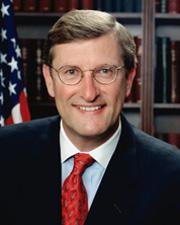
Mr. President, I rise today in support of the Kidney Care Quality Act, which Senator Santorum and I introduce today. With all of the attention now being paid to improving the quality of health care…
Mr. President, I rise today in support of the Kidney Care Quality Act, which Senator Santorum and I introduce today. With all of the attention now being paid to improving the quality of health care Americans receive, we believe it is important for Congress to reaffirm our commitment to patients with kidney failure.
As part of this commitment, Congress should ensure that these patients receive high quality care and should take steps to improve the Medicare End Stage Renal Disease, ESRD, program. This bill would do just that. First, it establishes a quality demonstration project to reward high quality dialysis providers. It also establishes education programs to assist patients with kidney disease to learn important self-management skills that will help them manage their disease more effectively and improve their quality of life. The bill also seeks to help individuals before they develop irreversible kidney failure by teaching individuals about the factors that lead to chronic kidney disease, the precursor to kidney failure, and how to prevent it, treat it, and, most importantly, avoid it.
Additionally, we recognize that some patients who currently receive dialysis in dialysis facilities and hospitals could benefit by receiving the treatments in their homes. Even though home dialysis can improve patients' quality of life by allowing them to remain employed and to participate in other activities that promote well-being, only a small number of patients select the home dialysis option. According to the U.S. Renal Data System, less than one percent of all ESRD patients relied on home dialysis in 2001. The bill we are introducing today would require the Department of Health and Human Services to identify barriers patients face in choosing home dialysis benefits and take steps toward eliminating them.
Improving the ESRD program payment system is also a critical component of promoting high quality care for patients with kidney failure. Medicare established the first prospective payment system, PPS, in the ESRD program in the early 1980s. Since that time, we have learned a great deal about how the PPS methodology works. Yet, the ESRD program remains the only Medicare PPS that does not receive an annual update. As a result, dialysis facilities have difficulty hiring qualified health care professionals because they simply cannot match the salaries offered by hospitals and other providers that do receive an annual update. For 2005, MedPAC has calculated a projected margin on dialysis services of -0.03 percent when combining the composite rate and injectible drugs. Without a fair reimbursement rate, providers face significant hurdles in attracting high quality health care professionals. Our bill addresses this ongoing problem to ensure that providers receive fair payment for the services they provide.
Congress must reaffirm its commitment to Americans with kidney failure by improving the program through new educational programs, quality initiatives, and payment reform. The Kidney Care Quality Act is a comprehensive bill that moves the program in that direction. I urge my colleagues to join with me in supporting this important legislation.
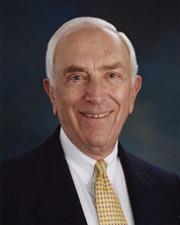
Mr. President, I rise to speak about a common sense bill that will protect American citizens and law enforcement officers. The Assault Weapons Ban and Law Enforcement Protection Act is designed to…
Mr. President, I rise to speak about a common sense bill that will protect American citizens and law enforcement officers. The Assault Weapons Ban and Law Enforcement Protection Act is designed to restore and strengthen the ban on assault weapons that expired on September 13, 2004.
The Government Accountability Office recently reported that 47 people on the terrorist watch list legally purchased firearms in this country last year. I personally believe that a person on the terrorist watch list, who isn't allowed to board a commercial airliner, should not be able to purchase any weapon. But they especially shouldn't be able to buy assault weapons, which possess unique, military-bred, anti- personnel design characteristics. These features, taken together, make it easy for a shooter to simply point a weapon--as opposed to taking careful aim--and quickly spray a wide area with a lethal hail of bullets.
These features make assault weapons especially attractive to terrorists and criminals, and virtually useless to hunters or sport shooters.
Before the previous ban on assault weapons expired last November, some attempted to justify that expiration by saying that it wasn't working as intended.
That is true. Some gun manufacturers were exploiting loopholes in the law by selling kits that made it possible to modify legal firearms into assault-style weapons, or by changing a few features of a weapon so it would slip through the legal definition of an assault rifle. The proper response to these abuses was not to let the ban expire, however. Instead, we should have fixed the ban so it really kept assault-style weapons out of the hands of criminals and terrorists. This bill will do that.
It improves and simplifies the definition of assault weapons; expands the scope of the ban to include conversion parts kits that can be purchased through the mail and used to build an assault weapon; regulates the transfer of grandfathered assault weapons; clarifies definitions of assault weapon characteristics; and enhances tracing of assault weapons.
Keeping assault weapons out of the hands of terrorists and criminals is simply a matter of common sense. Innocent lives are at stake-- including the lives of law enforcement officers who are our last line of defense against terrorists who would attack our communities. Make no mistake--military-style assault weapons are a threat to cops on the street.
An analysis of FBI data found that one in five law enforcement officers slain in the line of duty between January 1, 1998, and December 31, 2001, were killed with assault weapons. How many of those officers would be alive today if criminals hadn't been able to get their hands on assault weapons?
Hundreds of organizations are on record in support of a ban on assault weapons, including the Anti-Defamation League, Brady Campaign to Prevent Gun Violence united with the Million Mom March, Consumer Federation of America, National Coalition Against Domestic Violence, National League of Cities, and Voices for America's Children. I urge all of my colleagues to support this common-sense measure.
I ask unanimous consent that the text of the bill be printed in the Record.
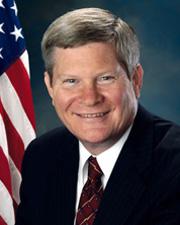
Mr. President, I rise today to introduce the American Veterans Disabled for Life Commemorative Coin Act of 2005. This bill will authorize the Secretary of the Treasury to mint a commemorative coin…
Mr. President, I rise today to introduce the American Veterans Disabled for Life Commemorative Coin Act of 2005.
This bill will authorize the Secretary of the Treasury to mint a commemorative coin (500,000) honoring the millions of veterans of the United States Armed Forces who were disabled while serving our country. Revenues from the surcharge on the coin would go to the Disabled Veterans' LIFE Memorial Foundation to help cover the costs of building the American Veterans Disabled for Life Memorial in Washington, DC. The mint date is scheduled for January 1, 2010.
In its own distinctive way, the American Veterans Disabled for Life Memorial will also allow the American people to show their appreciation to those who died defending freedom by honoring the disabled veterans who still live among us. It is not only appropriate, but necessary, to recognize the special sacrifices that disabled veterans have made to this country. It has been said that ``poor is the Nation which has no heroes. Poorer still is the Nation which has them, but forgets.'' The creation of this memorial will ensure that we, as a Nation, do not forget those who have been forever changed in service to our country.
The three-acre site for the Memorial is located on Washington Avenue at 2nd Street, SW., across from the U.S. Botanic Gardens, and in full view of the U.S. Capitol building. Federal legislation for the Memorial, Public Law 106-348, was signed into law by President Bill Clinton on October 24, 2000. Sponsors included Senator John McCain, Senator Max Cleland, Congressman Sam Johnson, and Congressman Jack Murtha. The National Capital Planning Commission unanimously approved the Capitol Hill location on October 10, 2001.
We have an obligation to assure that the men and women who each day endure the costs of freedom are never forgotten. The American Veterans Disabled for Life Commemorative Coin Act of 2005 will honor these veterans and help fund the American Veterans Disabled for Life Memorial.
The Disabled Veterans LIFE Memorial Foundation was co-founded in 1996 by the Lois Pope Life Foundation and the Disabled American Veterans. Lois Pope, one of America's leading philanthropists, is the founder and President of the Lois Pope Leaders in Furthering Education Foundation. In addition to supporting veterans programs, this organization provides awards for medical research, scholarships, and summer camp programs. Formed in 1920, the Disabled American Veterans is a nonprofit organization representing America's disabled veterans, their families, and survivors.
The drive to build the Memorial, which is scheduled for completion within the next several years, is well under way, but has a long way to go. Prominent national figures including Retired Army General H. Norman Schwarzkopf, Poet Laureate Dr. Maya Angelou, and New York Giants star defensive end Michael Strahan are lending their support to this effort. I ask my colleagues in the Senate to join me in supporting America's disabled veterans with this important legislation.
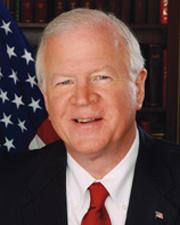
Mr. President, today I rise to introduce legislation to reverse the unilateral change by the Department of Treasury's Office of Foreign Assets Control (OFAC) that threatens future sales of U.S.…
Mr. President, today I rise to introduce legislation to reverse the unilateral change by the Department of Treasury's Office of
Foreign Assets Control (OFAC) that threatens future sales of U.S. agricultural products to Cuba.
Four years ago, Congress passed the Trade Sanctions Reform and Export Enhancement Act (TSREEA), allowing sales of food and medicine to Cuba for the first time in nearly four decades. The Act did not signal an end to the embargo or efforts to do so but merely exempted food and medicine from unilateral sanctions that harm local populations.
Cuba first purchased U.S. agricultural products under the new authorities in December 2001. Since that time, Cuba has contracted to purchase approximately $1.25 billion worth of U.S. agricultural goods. According to the U.S. Department of Agriculture, U.S. agriculture, fish and forest product exports to Cuba in fiscal year 2004 totaled $402 million, up 115 percent from a year earlier. The leading export items last year were rice, $65 million, poultry meat, $62 million, wheat, $57 million, corn, $51 million, and soybeans, $38 million, from more than 40 States in this country. Although U.S. agricultural trade with Cuba experienced tremendous growth in the past four years, the future is now in doubt.
Late last year, OFAC and the State Department started considering actions to further tighten trade requirements on Cuba. At issue is the term ``cash in advance'' and the sale of licensed agricultural products. On February 22, 2005, after repeated urgings by Members of Congress to the contrary, OFAC amended the Cuban Assets Control Regulations to clarify the term whereby goods cannot leave the U.S. port at which they are loaded until payment is received by the seller or the seller's agent. The interpretation by OFAC runs counter to general trade practices and will likely shut down U.S. agricultural exports to Cuba.
Currently, U.S. exporters require payment before turning over title and control of the goods. The exporters routinely ship U.S. goods to Cuba where they remain under the custody of the seller until such time as the seller certifies full payment. Only then are the goods released to Cuba. At no time is credit extended in any form to Cuba. This standard method of doing business has been in practice since sales to Cuba began.
TSREEA was meant to expand access for agricultural producers to the Cuban market. By taking into consideration the unique nature of agriculture trade with Cuba, my legislation intends to overturn OFAC's new definition of ``cash in advance''. We should not be making it harder to export agricultural products when the United States is experiencing a massive trade deficit. I am committed to helping expand opportunities at home and abroad for our nation's farmers and ranchers. I look forward to working with my colleagues in the Senate on this important issue.
Bill Text
Latest available legislative text
        [Congressional Bills 109th Congress]
[From the U.S. Government Publishing Office]
[S.J. Res. 26 Introduced in Senate (IS)]

109th CONGRESS
1st Session
S. J. RES. 26

Proposing an amendment to the Constitution of the United States
relative to the line item veto.

_______________________________________________________________________

IN THE SENATE OF THE UNITED STATES

September 27, 2005

Mrs. Dole introduced the following joint resolution; which was read
twice and referred to the Committee on the Judiciary

_______________________________________________________________________

JOINT RESOLUTION

Proposing an amendment to the Constitution of the United States
relative to the line item veto.

Resolved by the Senate and House of Representatives of the United
States of America in Congress assembled (two-thirds of each House
concurring therein), That the following article is proposed as an
amendment to the Constitution of the United States, which shall be
valid to all intents and purposes as part of the Constitution when
ratified by the legislatures of three-fourths of the several States
within seven years after the date of its submission by the Congress:

``Article--

``Section 1. Congress shall have the power to enact a line-item
veto.''.
<all>