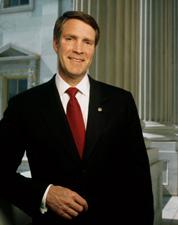
Mr. President, I ask unanimous consent that the Senate now proceed to the consideration of S. Res. 377, which was submitted earlier today. Mr. President, S. Res. 377 is the resolution honoring the…
Mr. President, I ask unanimous consent that the Senate now proceed to the consideration of S. Res. 377, which was submitted earlier today.
Mr. President, S. Res. 377 is the resolution honoring the life of Dr. Norman Shumway and expressing condolences on behalf of this body.
I wish to pay tribute to a medical pioneer, a man who inaugurated a new era of medicine, my mentor in surgery and friend. Sadly, Dr. Shumway passed away late last week at the age of 83. He left behind a legacy as an inspirational leader, a healer, a guiding spirit who made my own professional field of heart transplants a reality. When all those around him said it was impossible, said it was a pipe dream, said it couldn't be done, his vision and his determination and his unrelenting commitment and pioneer attitude has saved thousands and thousands of lives.
I had the distinct honor of studying under the tutelage of Dr. Shumway at Stanford University Medical Center in the early 1980s. I witnessed his rare gifts. Those gifts included a blend of long-term thinking, a love of medicine and healing, and a true pioneering spirit that inspired and attracted like-minded individuals from across the country and, indeed, around the world.
He was fond of remarking that his role as a surgeon was comparable to that of being the world's greatest first surgical assistant in the operating room. When you are treating a patient, when you are operating on a patient, the surgeon stands on one side of the table and the first assistant across the way on the other side. It is that image of Dr. Shumway, on the other side, instructing, teaching, cultivating that expertise in the young surgeon, that stands out most vividly in my mind, the constant cajoling and instructing in very gentle, humble ways, the certainty of that guiding hand which would reach over if there was a slightly wrong move or a hesitant move that was made. I think his comment about being the world's greatest first assistant reflects that humility but also that comfort level and that competence that, coupled with his pioneering spirit, has proved to be revolutionary in the field of medicine and surgery. Now his humble, yet visionary, work is reflected in surgical programs all over the world because he was that first assistant, as he instructed and taught and inspired. Those surgeons he trained are now literally populating academic and clinical programs all over this country and indeed throughout the world. He loved his role as healer, and he cherished the opportunity not only to operate and to innovative but to inspire and to plant seeds, all a part of his mode of inspirational teaching.
I have worked with a lot of cardiac surgeons, heart surgeons, in programs around the world, including Boston, MA, over in England, out on the west coast, down in the South at Vanderbilt and, more than anybody I interacted with over the 20 years I have spent in medicine, Dr. Shumway was the one, was the single one, who had the broadest, as well as the deepest, influence because of his unparalleled commitment to teaching in an inspirational way that encouraged others to go out and teach and to spread the word and to spread the technique and to spread what he indeed pioneered: heart transplantation, lung transplantation, heart-lung transplantation.
He was a brilliant man, a pioneering spirit. Yet he was always accessible. He was always there on rounds. He believed in the team approach, of relying on the technician running the heart-lung machine, relying on the nurses who, with him, made rounds each morning and each evening to see his patients.
His teachings were filled with turns of phrases and catchy one-liners and, in my own mind, as I stand here and recall listening to him, he would say things such as: Never be afraid to double dribble. I think about it a lot because what he was saying was if that first stitch you are about ready to put in isn't perfect, put in another stitch; don't be so bold, don't be so confident,
don't be so cocky, where if you have a question you don't make absolutely sure that something is perfect. Never be afraid to double dribble.
Dr. Shumway looked for somebody who had the passion for healing, and he would encourage their active pursuits. It is almost as if he had a sixth sense, both for inspiration but also in recognizing in others an ability or a desire to be innovative, to create, to think outside of the box in order to benefit humanity.
He considered it part of his mission to nurture and cultivate his trainees' ambition and their drive and their desire. It didn't matter what your age was. It didn't matter what schools you had gone to. It didn't matter whether you were a first-year resident, an intern, or a fifth-year resident; if you had a good idea, if you had a creative idea, he would nurture it and he would put an environment around you to allow that idea to grow, to prove itself, to go down in defeat. He would even set up a laboratory around an intern or a first-year resident who had a creative idea that he thought just may work.
It was a very different mentality than most people in his field of surgery in medicine. The traditional medical establishment, as I mentioned earlier, thought heart transplantation could never be done. Yet that sort of ``a little bit out of the box'' thinking, that pioneering spirit, did inspire some of the great innovations in medicine in the 20th century: Heart transplants, which he is known for, with the first successful heart transplant in our country--it came at the era I was there--the combined heart-lung transplant, where essentially you remove all of the organs from the top of the chest down to the diaphragm, taking that heart-lung out to transplant and repair and to have it replaced to give life to individuals with otherwise fatal diseases; the early work with left ventricular assist devices; the invention of the cardiac biopsy, where the catheter is inserted through the neck and you can actually sample pieces of the heart with a technique that takes literally about 2 or 3 minutes but allows you to determine whether a patient is rejecting that heart or has inflammation of that heart; the immunosuppressive protocols which made heart transplantation possible. These were all pioneering fields he jumped into, that he created, that he explored, and he did so with a disciplined approach, a scientific approach, an approach characterized by perseverance over a long period of time, in spite of a lot of people questioning and putting forth doubts as he went forward.
In talking to a number of people who asked about this man and what his contributions have been, it has come to my attention, as I reflect upon it, that he has also encouraged people to go out and explore new fields. Some of the cardiac surgeons he trained--one went into public service for a period of time, but others went on to become lawyers, to become heads of the great universities of the country and, indeed of the world. Given the unique type of drive that inspired a person to study with Dr. Shumway, it is probably not all that unexpected because he did encourage people to figure out what their strengths were and how they could better humanity--whether it is the scientist in the laboratory, whether it is the clinical surgeon, whether it is the academic surgeon, whether it is the lawyer who ultimately best understood the delivery of health care and went off to participate in legal aspects of health care today.
He also encouraged people to take risks, and to take risks in a very positive way, because if people did not work outside of their comfort zone he felt progress could never be made. But encouraging people to take those risks, he did so with science, with a strong foundation, with a good understanding of what limitations are, with a strong understanding of cost and risk and benefits. But that element of risk taking, calculated risk taking, is a legacy he has left many of us, and many of the people who have trained with him--thinking and saying and believing that is the only way progress in society takes place.
Dr. Shumway was a legend in his field and his presence will be sorely missed. As I look back, I would never have had that blessing, and it is a blessing, to be able to transplant the human heart and I would have never transplanted a human heart if I had not had the opportunity to study under Dr. Norman Shumway. I would have never in my life been able to transplant the human lung, to give life to people who have an otherwise fatal disease, if I had not trained with and studied under Dr. Norman Shumway. I would have never put in any left ventricular assist devices for struggling, ailing hearts when people have had massive heart attacks. I would have never been able to do neonatal transplants on little infants. I mention those only because without that man and his vision, his philosophy of conceiving something and believing in it and doing it, it would have affected my life greatly. Indeed, in all likelihood I would not be on the floor of the Senate today if I had not had that exposure to Dr. Norman Shumway.
Having had the honor of working with him, he was an inspirational leader. He was the guiding light who seemed to be able to pull it all together with his vision and with his determination and his dedication. He has affected the lives of thousands and indeed hundreds of thousands of people through his teaching and through his training around the world.
He was my mentor, he was a great surgeon and a true friend, and someone I will miss dearly.
I ask unanimous consent that the resolution be agreed to, the preamble be agreed to, and the motion to reconsider be laid upon the table.