Mr. President, 6\1/2\ years ago the Senate acted to ensure that the desk of Henry Clay would forever stay in the family of Kentucky Senators. Henry Clay, the greatest statesman that my home State…
Mr. President, 6\1/2\ years ago the Senate acted to ensure that the desk of Henry Clay would forever stay in the family of Kentucky Senators.
Henry Clay, the greatest statesman that my home State ever produced, served the people as speaker of the Kentucky House of Representatives, Speaker of the U.S. House of Representatives, Secretary of State under
President John Quincy Adams, and of course as one of the greatest Senators to ever walk through the Capitol.
He was also honored to receive his party's nomination for President three times, in 1824, 1832 and 1844.
The essence of legislating in the Senate, as 100 viewpoints are brought together to create one law, is compromise. Henry Clay became known as the Great Compromiser by forging the compromise that would keep his precious Union together.
Clay did not compromise in the sense of forsaking his principles. Rather, his skill was to bring together disparate ideas and forge a consensus among his colleagues. That is a skill we could certainly use more of now.
We recognize his dedication and service to our Nation by displaying his portrait just off the Senate floor as one of history's most outstanding Senators.
In the 106th Congress, the Senate unanimously resolved that the Senate desk once used by Henry Clay would be assigned to the senior Senator from Kentucky, to maintain the Clay legacy.
Only two other desks are so honored. In the 94th Congress, the Senate assigned the desk of Daniel Webster to the senior Senator from New Hampshire. And in the 104th Congress, the Senate assigned the desk of Jefferson Davis to the senior Senator from Mississippi.
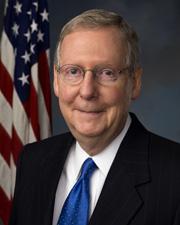
Since 1999 I have been honored to use the Clay desk, and would have been honored to do so for the remainder of my Senate career. However, in January I will begin service as the 15th Republican leader.
With the Republican leader's position comes the Republican leader's desk--a desk equally steeped in tradition. First used by Republican Leader Charles McNary of Oregon in 1937, it has been passed to nearly every Republican leader since.
Leaders such as Robert Taft, William Knowland, and Everett Dirksen have sat behind it. So have leaders I have been fortunate to know and work with, men like Howard Baker, Bob Dole, Trent Lott and, currently, Bill Frist.
In fact, Senator Lott spoke on the floor on behalf of my resolution of 1999, and he also had some very kind words for me that I have not forgotten. I want to thank my good friend, the Senator from Mississippi, for that kindness.
So I was faced with a decision, the same decision that faced Senator Styles Bridges of New Hampshire when he was elected Republican leader in 1952.
At that time, Senator Bridges was using the famed Daniel Webster desk. Rather than give up that desk, he chose to have it moved to the front row of the Chamber, and he became the only Republican leader since Senator McNary to not use the Republican leader's desk. In fact, the Congressional Directory lists the desk as unassigned during 1952.
I can understand Senator Bridges's decision to keep the Webster desk in the family of New Hampshire Senators.
And yet it would be a shame not to follow the custom set by the Republican leaders I have just named, as well. So today, I come to the floor to offer a resolution to keep both of these venerable traditions alive.
This resolution will amend the resolution of 1999 by adding that, if the senior Senator from Kentucky is also a floor leader, then the Henry Clay desk will go to the junior Senator from Kentucky. That way, we can ensure the Bluegrass State will maintain its link to a tradition symbolized by this mahogany desk.
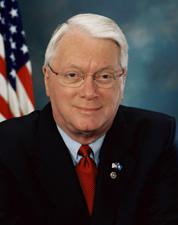
I am sure my colleague and friend Senator Bunning will honor and keep the legacy of the Henry Clay desk--a legacy I have been proud to help continue. Mr. President, I ask unanimous consent that a list of every Republican leader to have used the Republican leader's desk be printed the Record.
Mr. President, I ask unanimous consent the Senate now proceed to the consideration of S. Res. 630 which was submitted earlier today.
Mr. President, I ask unanimous consent that the resolution be agreed to and the motion to reconsider be laid upon the table.
Mr. President, I have passed the baton, if you will, of the Henry Clay desk to my colleague from Kentucky, Senator Bunning, who is also here.
I yield the floor and look forward to hearing his remarks.