Expressing the sense of the Congress that there should be established a Bebe Moore Campbell National Minority Mental Health Awareness Month to enhance public awareness of mental illness, especially within minority communities.
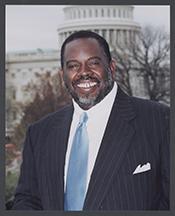 Rep. Albert Russell Wynn (D-MD)
Legislative Activity
Stay on top of the latest movement without scrolling through every action
Received in the Senate and referred to the Committee on Health, Education, Labor, and Pensions.
June 2, 2008
View full timeline
Introduced in House
April 30, 2007
Referred to the House Committee on Energy and Commerce.
April 30, 2007
Mr. Wynn moved to suspend the rules and agree to the resolution, as amended.
May 19, 2008 • 5:00 PM
Considered under suspension of the rules. (consideration: CR H4121-4123)
May 19, 2008 • 5:01 PM
DEBATE - The House proceeded with forty minutes of debate on H. Con. Res. 134.
May 19, 2008 • 5:01 PM
At the conclusion of debate, the chair put the question on the motion to suspend the rules. Mr. Smith (NJ) objected to the vote on the grounds that a quorum was not present. Further proceedings on the motion were postponed. The point of no quorum was withdrawn.
May 19, 2008 • 5:07 PM
Considered as unfinished business. (consideration: CR H4433)
May 21, 2008 • 9:36 PM
Passed/agreed to in House: On motion to suspend the rules and agree to the resolution, as amended Agreed to by voice vote.(text: CR 5/19/2008 H4121-4122)
May 21, 2008 • 9:36 PM
On motion to suspend the rules and agree to the resolution, as amended Agreed to by voice vote. (text: CR 5/19/2008 H4121-4122)
May 21, 2008 • 9:36 PM
Motion to reconsider laid on the table Agreed to without objection.
May 21, 2008 • 9:37 PM
Received in the Senate and referred to the Committee on Health, Education, Labor, and Pensions.
June 2, 2008
Floor Debate
3 membersWhat members said about H.Con.Res. 134 on the floor
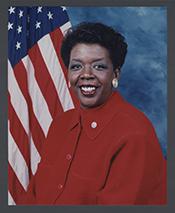
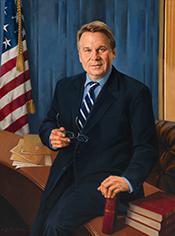
Floor Debate
3 membersWhat members said about H.Con.Res. 134 on the floor
Mr. Speaker, I move to suspend the rules and agree to the concurrent resolution (H. Con. Res. 134) expressing the sense of the Congress that there should be established a Bebe Moore Campbell National…
Mr. Speaker, as the House of Representatives debates H. Con. Res. 134, a resolution expressing the sense of the Congress that there should be established a Bebe Moore Campbell National Minority…
Mr. Speaker, today I rise in support of H. Con. Res. 134, to establish July as Bebe Moore Campbell National Minority Mental Health Awareness Month. The plight of families suffering from mental…
Mr. Speaker, I yield myself such time as I may consume. Let me begin by thanking my good friend and colleague, Mr. Wynn, for authoring this very important resolution. I rise today in strong support…
Bill Text
3 versions available
        [Congressional Bills 110th Congress]
[From the U.S. Government Printing Office]
[H. Con. Res. 134 Referred in Senate (RFS)]

2d Session
H. CON. RES. 134

_______________________________________________________________________

IN THE SENATE OF THE UNITED STATES

June 2, 2008

Received and referred to the Committee on Health, Education, Labor, and
Pensions

_______________________________________________________________________

CONCURRENT RESOLUTION

Expressing the sense of the Congress that there should be established a
Bebe Moore Campbell National Minority Mental Health Awareness Month to
enhance public awareness of mental illness, especially within minority
communities.

Whereas mental illness is one of the leading causes of disabilities in the
United States, affecting one out of every four families in America and
victimizing both those with the illness and those who care for and love
those afflicted;
Whereas according to the National Alliance for Mentally Ill (NAMI), the direct
and indirect costs to the

workplace resulting from mental illness total over $34,000,000 annually;

Whereas the National Institute of Mental Health has reported that many people
suffer from more than one mental disorder at a given time and 45 percent
of those with any mental disorder meet criteria for two or more
disorders, with severity strongly related to comorbidity (including
diabetes, cardiovascular disease, HIV/AIDS, and cancer);
Whereas according to the 1999 Surgeon General's Report on Mental Illness, more
than 54,000,000 Americans have a mental disorder in any given year,
although fewer than 8,000,000 seek treatment;
Whereas according to the same Surgeon General's Report on Mental Illness, adult
Caucasians who suffer from depression or an anxiety disorder are more
likely to receive treatment than adult African Americans with the same
disorders even though the disorders occur in both groups at about the
same rate, when taking into account socioeconomic factors;
Whereas according to a report from the Office of Minority and National Affairs
for the American Psychiatric Association, although mental illness
impacts all people, African Americans experience a much greater unmet
need for mental health services and receive a lesser quality of care,
thereby resulting in mental health disparities;
Whereas the three major brain diseases--schizophrenia, bipolar disorder, and
depression--adversely affect the economy, contribute to the rise in
incarceration rates, and erode the quality of family life of those
involved;
Whereas nearly two-thirds of all people with a diagnosable mental illness do not
seek mental health treatment due to stigma, lack of community-based
resources, inadequate diagnosis, or no diagnosis;
Whereas communities of color are in need of culturally competent mental health
resources and the training of all health care providers to serve multi-
ethnic consumers;
Whereas advocacy for traditional mental health organizations must be encouraged
to incorporate and integrate minority mental health education and
outreach within their respective portfolios;
Whereas other research studies estimate that 50 to 70 percent of all youth in
the juvenile justice system have mental health problems that are usually
undiagnosed, misdiagnosed, untreated, or badly treated, thus leaving
those incarcerated in vulnerable conditions;
Whereas minority mental health consumers often fall into the category of the
``working poor'', facing additional challenges because they are
underinsured or uninsured, which often leads to late diagnosis or no
diagnosis of mental illness;
Whereas the faith, customs, values, and traditions of a variety of ethnic groups
should be taken into consideration when attempting to treat and diagnose
mental illnesses;
Whereas a small percentage of African Americans receive mental health treatment,
and a significant percentage refuse treatment or view mental health
treatment as the ``treatment of last resort'', due to the stigma
associated with mental illness;
Whereas according to the 1999 Surgeon General's Report on Mental Illness,
African Americans are misdiagnosed at a higher rate within the mental
health delivery system, and greater effort must be made to accurately
assess the mental health of African Americans;
Whereas there is a need to improve public awareness of mental illness and to
strengthen local and national awareness of brain diseases in order to
assist with advocacy for persons of color with mental illness, so that
they may receive adequate and appropriate treatment that will result in
their becoming fully functioning members of society;
Whereas community mobilization of resources is needed to educate, advocate for,
and train mental health providers to help remove barriers to treatment
of mental disorders;
Whereas access to mental health treatment and services is of paramount
importance;
Whereas there is a need to encourage primary care physicians to offer screening,
partner with mental health providers, and seek the appropriate referral
to specialists and to encourage timely and accurate diagnosis;
Whereas the late Bebe Moore Campbell (mother, grandmother, wife, friend,
advocate, celebrated writer and journalist, noted author, radio
commentator, community activist, co-founder of National Alliance for the
Mentally Ill Urban Los Angeles, University of Pittsburgh Trustee and
educator, and recipient of numerous awards and honors) was recognized
for her tireless advocacy and fight to bring awareness and attention to
mental illness among minorities with the release of her New York Times
best selling novel, ``72 Hour Hold'', and her children's book
``Sometimes My Mommy Gets Angry'', which both bring awareness to the
plight of those with brain disorders;
Whereas Bebe Moore Campbell through her dedication and commitment sought to move
communities to support mental wellness through effective treatment
options, open access to mental health treatment and services, and
improve community outreach and support for the many loved ones who are
unable to speak for themselves; and
Whereas July would be an appropriate month to recognize as Bebe Moore Campbell
National Minority Mental Health Awareness Month: Now, therefore, be it
Resolved by the House of Representatives (the Senate concurring),
That it is the sense of Congress that--
(1) improved access to mental health treatment and services
and public awareness of mental illness are of paramount
importance;
(2) there is an important need for improved access to care,
treatment, and services for those diagnosed with severe and
persistent mental health disorders and improved public
awareness of mental illness; and
(3) an appropriate month should be recognized as Bebe Moore
Campbell National Minority Mental Health Awareness Month to
enhance public awareness of mental illness and mental illness
among minorities.

Passed the House of Representatives May 21, 2008.

Attest:

LORRAINE C. MILLER,

Clerk.

By Robert F. Reeves,

Deputy Clerk.