Expressing the sense of Congress that Congress and the President should increase basic pay for members of the Armed Forces.
Legislative Activity
Stay on top of the latest movement without scrolling through every action
Received in the Senate and referred to the Committee on Armed Services.
November 8, 2007
View full timeline
Introduced in House
May 24, 2007
Referred to the House Committee on Armed Services.
May 24, 2007
Referred to the Subcommittee on Military Personnel.
June 28, 2007
Mr. Murphy, Patrick moved to suspend the rules and agree to the resolution, as amended.
November 6, 2007 • 11:08 AM
Considered under suspension of the rules. (consideration: CR H12750-12752)
November 6, 2007 • 11:09 AM
DEBATE - The House proceeded with forty minutes of debate on H. Con. Res. 162.
November 6, 2007 • 11:09 AM
At the conclusion of debate, the Yeas and Nays were demanded and ordered. Pursuant to the provisions of clause 8, rule XX, the Chair announced that further proceedings on the motion would be postponed.
November 6, 2007 • 11:24 AM
Considered as unfinished business. (consideration: CR H12798-12799)
November 6, 2007 • 6:12 PM
Passed/agreed to in House: On motion to suspend the rules and agree to the resolution, as amended Agreed to by the Yeas and Nays: (2/3 required): 409 - 0 (Roll no. 1041).(text: CR H12750-12751)
November 6, 2007 • 6:18 PM
On motion to suspend the rules and agree to the resolution, as amended Agreed to by the Yeas and Nays: (2/3 required): 409 - 0 (Roll no. 1041). (text: CR H12750-12751)
November 6, 2007 • 6:18 PM
Motion to reconsider laid on the table Agreed to without objection.
November 6, 2007 • 6:18 PM
Received in the Senate and referred to the Committee on Armed Services.
November 8, 2007
Voting History
1 vote recorded • Roll call available
Floor Debate
23 membersWhat members said about H.Con.Res. 162 on the floor
 JLM
JLM EBJ
EBJ JLOPJM
 CM+18
CM+18
Floor Debate
23 membersWhat members said about H.Con.Res. 162 on the floor
Mr. Speaker, a parliamentary inquiry. My only parliamentary inquiry is, in fact, that we are now in fact taking up the WRDA veto override, and that debate will take up 1 hour, and the time has been…
Mr. Speaker, a parliamentary inquiry.
My only parliamentary inquiry is, in fact, that we are now in fact taking up the WRDA veto override, and that debate will take up 1 hour, and the time has been equally divided.
Is that the correct parliamentary procedure or order of business?
Thank you.
Mr. Speaker, let me say at the outset, I have supported President Bush on many occasions. In fact, I pulled a list of some 43 measures on which I supported the President in an attempt to sustain a veto.
But today, my colleagues, I must respectfully disagree with President Bush's veto of this important and long overdue Water Resources Development Act. I believe it's far too important for both our Nation and for my State of Florida and, again, for all the projects that are in the backlog. I'm disappointed the President and the White House have decided to veto this legislation that includes many critically
needed infrastructure and restoration projects.
For the first time, you've heard this since 2000, the year 2000, Congress will enact legislation authorizing, and this is authorizing, we are setting Congress's priorities for authorization. All of these projects in this bill must come back for approval for funding.
But this particular bill includes all of the water resource projects to restore our endangered ecosystems across the country, construct new levees, dams, rebuild our beaches, and work on other important water resources projects.
A significant portion of the bill, I might say, deals with Everglades restoration, something that we've been working on for years. And also another significant portion of this legislation deals with work and reconstruction of some of our water resources projects in the damaged gulf of the United States.
There's been, as you've heard, a water resources bill introduced in every Congress since 2000; however, controversies always dash the hopes of approving a measure.
After I assumed responsibility for ranking member of the House Republican leader on the Transportation and Infrastructure Committee, I met with the new chairman, Mr. Oberstar, and I sat down and we tried to decide what were our priorities. And this is a great example of how this body should work. This is a bipartisan measure. Mr. Oberstar, this was one of his priorities. He worked on it for a number of years. I came new to my leadership position, but pledged to work with him; and we did work together on this.
Let me say also, ironically, I feel sad today that Mr. Oberstar is not joining us. Our hearts, our thoughts and our prayers are with him. He's recovering from surgery yesterday which he had scheduled some time in advance.
But he served this House for 32 years before he became the chairman of T & I. He made a commitment, a bipartisan commitment to work together, and we did that. And when you do that in this House, you can achieve anything. And in a few minutes we will achieve an override of the President's veto because we worked together in a bipartisan manner to rebuild our Nation's water resources.
Let me say also that earmarks, and this contains a number of projects, earmarks have gotten a somewhat tainted reputation and were criticized. But what we did, and what I tried to do on the Republican side, was make certain that this was a transparent process. Every Republican House project was publicly submitted, publicly available for review, and very carefully vetted. In fact, Mr. Oberstar and I cut more than 100 projects from the 2005 proposed House-passed WRDA proposal that did not pass.
The 2007 WRDA bill addresses what I believe are the important needs of our Nation. Again, I think this is a good bill that represents investment in America. These investments will improve trade, protect our homes, our businesses from flood damages, and from other ravages of Mother Nature we've seen. They'll enhance our quality of life by restoring aquatic ecosystems like in the State of Florida with the Everglades restoration.
This legislation ensures our ports and waterways remain viable in the international marketplace by authorizing critical navigational deepening projects. Maritime commerce is absolutely essential to the future of our economy. Congestion at an outdated port or waterway is becoming a national economic issue, and this bill addresses that economic problem. Products moving into our waterways aid our environment and lessen highway and rail congestion.
Efficient waterways must be, in fact, an integral part of America's intermodal transportation system, and this bill helps do that.
To maintain our place in the global economy, the United States must have modern ports and waterways. Our ports and waterways need to be improved to handle additional traffic. And what's coming are mega- ships, a new class of larger liners and freighters that are coming. We have almost no ports that can handle that type of traffic. This conference report addresses these needs in several ways, including improvements to waterways in my State of Florida, as well as in Texas, Louisiana, Virginia, and other areas.
In addition, this bill authorizes seven new locks and other navigational improvements on the upper Mississippi River.
The WRDA conference report authorizes critical projects to provide flood protection to millions of Americans. And we've all seen that if we neglect our waterway infrastructure or our water protection system, you've heard that adage, we pay now or we pay later. Well, I can tell you we'll pay much later if we don't protect ourselves from, again, reducing the potential flood damage that we've seen.
This bill includes many projects that protect our cities from floods and also from those coastal storms we've experienced.
The Corps of Engineers is the leader in planning and carrying out our environmental restoration projects. And this conference report that we will override a veto on in a few minutes is by far the greenest, most environmentally friendly Water Resources Development Act ever passed by Congress. This bill's major new focus is environmental restoration, and again, it contains the first work. In 2000 we authorized study of cleaning up the Everglades. This bill authorizes work on the Everglades.
Everglades restoration, as I said, has been talked about for years. And it is a national ecological treasure that must be protected for future generations of Americans.
I might say too that the restoration of the Everglades is in partnership with the State of Florida. And I have a message from a Republican Governor, Charlie Crist, was handed to me earlier: Greetings from Brazil, where he's now with 200 businessmen. And the Republican Governor of the State of Florida is urging that we override the President's veto, basically because of what I said about the Everglades and other critical water infrastructure projects in the State of Florida.
This bill does not, as I said, guarantee funding. Money will have to be appropriated to meet these authorization levels; but it represents a critical commitment by this Congress to restore, again, an ecological jewel in Florida and water resources projects throughout the United States.
Also addressed in the bill are policy issues that will improve how the Corps of Engineers actually conducts projects, and that's also important. There's a peer review process that I think is critical to monitoring and protecting whether the projects perform as designed.
I know the President is concerned that the conference report authorizes more projects than could actually be funded. All of those projects may not ultimately receive funding from Congress. They have to come back to Congress, even after this authorization. But it is important that we authorize, through this conference report, a good list of investments from which the Congress can later prioritize funding.
Finally, I know the White House has expressed concerns with this bill. However, again, the House bill in 2005 contained 784 projects. The House bill in 2007 that we worked to examine in a transparent manner the projects, contains 682. Over 100 projects were cut out of the previous House bill. Again, this was, I believe, an open and transparent and a bipartisan process that, hopefully, will restore some of the public's confidence in this process.
And, finally, we have to realize that this bill, since we haven't passed one since 2000, represents the equivalent of three WRDA bills. When we had a backup in 1986 we, in fact, funded $11 billion worth of projects back in 1986 because we hadn't passed a bill in a long time.
So while I wholeheartedly respect the President's veto, we, as Congress have a responsibility to provide for our Nation's resources and infrastructure, provide the leadership to get that job done. And I urge Members to support overriding the President's veto.
I reserve the balance of my time.
Mr. Speaker, I am pleased to yield 2\1/2\ minutes to one of the leaders in the Transportation and Infrastructure Committee, the gentlewoman from Michigan (Mrs. Miller).
Mr. Speaker, I am pleased to yield 2 minutes to another leader on the Transportation and Infrastructure Committee on the Republican side, the gentleman from Louisiana (Mr. Boustany).
Mr. Speaker, I am pleased to yield 1\1/2\ minutes to one of the true fiscal conservatives of the House, the gentleman from Arizona (Mr. Flake).
Mr. Speaker, I am pleased to yield 1\1/2\ minutes to another fiscal watchdog in the House, a leader in the Republican Study Group, the gentleman from Indiana (Mr. Pence).
Mr. Speaker, I am pleased to yield 3 minutes at this time to the senior member of the Transportation and Infrastructure Committee and the former immediate past chair of the committee, the distinguished gentleman from Alaska (Mr. Young).
(Mr. YOUNG of Alaska asked and was given permission to revise and extend his remarks.)
Mr. Speaker, I am pleased at this time to yield to a gentleman for whom I have the greatest respect; he is also the ranking member of the Water Resources Committee, has done an excellent job on this bill working in a bipartisan effort. It is my honor to yield 5 minutes to our ranking member, the gentleman from Louisiana (Mr. Baker).
Mr. Speaker, first, I want to yield myself one-half minute for the purpose of an introduction, and then I am going to yield 3 minutes to the individual I want to introduce.
Mr. Speaker, and my colleagues, it is now one of the greatest pleasures I have had to introduce a gentleman who I got to know for a brief period of time. He came into this House, and he has done an incredible job of representation in a difficult time for his State of Louisiana. I had the chance to go down with him and look at infrastructure projects after the damage. I think the people of Louisiana recognized, in an unprecedented historic fashion, his leadership, in electing him Governor in a tide that was historic in proportions.
So, Mr. Speaker, my colleagues, the gentleman and future Governor of the State of Louisiana, our colleague, Mr. Jindal, the gentleman from Louisiana, again, I recognize for 3 minutes.
I will continue to reserve until the last speaker.
Understanding that Ms. Johnson will close, I yield myself the balance of our time.
Now, Mr. Speaker and my colleagues, we come to the close of the debate on overriding the Presidential veto. Today, indeed, has been a strange day. That is the interesting thing about politics and government in the United States of America. Look at the people who have spoken here; a future Governor. We have heard people who have had their homes destroyed, their property. We had a strange day here today. My side of the aisle ended up voting not to end a particular debate on a possible impeachment resolution of the Vice President. Here I am, a staunch supporter of the President's effort to maintain fiscal responsibility, supporting override of his veto.
But this is a very difficult job. It is a difficult job for me. It is a difficult job for the President. I think we like to do everything we can. I think it is in the heart of the other side of the aisle, and I know in the heart of my fellow Republican Members to do as good a job
as we can in representing people. I know the President has had to make some difficult choices coming into office with the events of September 11 and the terrorist threat that we face and the line drawn in the sand by al Qaeda and Iraq. And national security is our primary responsibility, but we also have responsibility to our infrastructure.
So we have tried to sort out those priorities in this process. We do need an investment in our infrastructure.
The President is right in, probably, his stance. I think we are right in our stance. This is an authorization bill. This is not a spending bill. It does prioritize for the Congress bills that have been carefully considered and projects that have been considered by Members, and Members make very sincere requests based on the conditions of their particular districts.
It is a great system and it does work. I understand the President's commitment to fiscal responsibility, and I think we have tried to act in a responsible and good-steward fashion.
In closing, I again want to thank Mr. Oberstar. Unfortunately, he is not with us today, on this day that he worked so hard for. I thank Ms. Johnson. I want to thank Mr. Baker, our ranking member, and all of those who have worked, particularly the staff: Jim Coon, our staff director; David Heymsfeld on the Democrat staff side; John Anderson and Ryan Seiger; all of the staff, those named and others, who have worked to bring this bill together, all with the same intent, to improve the lives, the resources and the condition of our Nation.
Mr. Speaker, I yield back the balance of my time.
Mr. Speaker, for purposes of debate only, I yield 30 minutes to the gentleman from Florida (Mr. Mica). General Leave Mr. Speaker, I ask unanimous consent that all Members have 5 legislative days in…
Mr. Speaker, for purposes of debate only, I yield 30 minutes to the gentleman from Florida (Mr. Mica).
General Leave
Mr. Speaker, I ask unanimous consent that all Members have 5 legislative days in which to revise and extend their remarks and to include extraneous material on the matter under consideration.
I will.
Mr. Speaker, I yield myself such time as I may consume.
Mr. Speaker, it was a little over 2 years ago that Hurricanes Katrina and Rita tore through the gulf coast leaving a trail of tragedy and despair in their wake.
Endless news reports documented the disaster, the catastrophe, the misfortune and the heartbreak of the affected communities. Even some of our colleagues lost their homes. Many wondered how they could help these victims, whose homes, families and livelihoods were destroyed in a matter of hours.
Washington may be geographically far from Mississippi, Louisiana, Alabama and Texas, but it gives us no excuse to dismiss the travails of those States. We cannot merely look at these events through protective glass, ruling on the fates of these communities from far away. We must be on the ground, planning recovery and reconstruction to ensure the devastation experienced never happens again.
Most of us have traveled to New Orleans since Hurricane Katrina to try and understand what needs to be done to help the region prepare for the future.
I have seen firsthand the devastation faced by the citizens of New Orleans and the surrounding region.
On September 15, 2005, President Bush stood in New Orleans, Louisiana, in the dark of the night and stated, ``Throughout the area hit by the hurricane, we will do what it takes, we will stay as long as it takes, to help citizens rebuild their communities and their lives.''
How is vetoing the Water Resources Development Act consistent with this pledge? We need to change how we deal with these events.
Our Federal emergency planning should not consist of after-the-fact recovery. We must institute prevention. We cannot simply wait for tragedy after tragedy and then hastily truck in meals ready to eat or trucks of bottles of water. We need to truck in reform now.
Prior to the hurricanes, the gulf coast had but a patchwork of protection. The wetlands had disappeared. The buffer that could have reduced the wrath of the winds and storm surge of Katrina and Rita had been vanishing. This legislation authorizes the Army Corps of Engineers to begin to replenish the water coastline.
WRDA 2007 also closes the Mississippi River Gulf Outlet, commonly known as ``Mr. Go,'' taking a proactive step to help the people and the businesses of Louisiana, Mississippi and the entire Gulf Coast States. The Mississippi River Gulf Outlet was authorized to provide a shorter shipping channel from the Gulf of Mexico to New Orleans; yet the projected traffic for this corridor never materialized. Unfortunately, the outlet may have substantially contributed to the severe flooding of the City of New Orleans and the lower Ninth Ward during Hurricane Katrina.
WRDA 2007 is also essential to fulfill the President's commitment to rebuild New Orleans even better and stronger than before the storm. Unfortunately, by vetoing this legislation, the President is turning his back on the commitment to rebuild this great city, vetoing the authorization for the Corps to raise enhanced flood protection levees surrounding the City of New Orleans and to achieve a 100-year level of protection.
Some may think that investment in our Nation's infrastructure should have a cost ceiling. We will never be able to contain this cost until we do some of the work. That investment in our Nation's future should only cost so much. Well, for those who make this argument concerning this bill, I urge them to study the recent past of this legislative body.
This bill is not new. As many times as we don't finish it, cost goes up. WRDA 2007 contains water resource projects that have been pending in the halls of this Chamber for far too long. Water resources legislation is most effective when authorized every 2 years. Even the executive branch department indicated that we need $19 billion every other year to bring this, all the infrastructure, up to par. This hasn't happened.
The last bill was signed in 2000 by President Clinton. This bill clears a 7-year logjam. A larger bill is necessary to carry a larger load.
When President Bush states that this bill is too costly, he is not considering the time lag. This debate is not about whether this legislation could cost $14 billion or $15 billion, but about whether this legislation authorizes projects that reinvest in the Nation's crumbling infrastructure.
We do right by this country when we invest in its infrastructure. Regrettably, we are falling miserably behind. China spends 9 percent of its gross domestic product on infrastructure. India spends 3.5 percent and the U.S. spends a meager .93 percent. We must do better.
We don't want a situation where our beaches remain contaminated with open sewage or other contaminants. We passed this particular conference report on August 1, 2007, the same day that the highway bridge I-35 collapsed in Minnesota. We stood on this floor considering investment in infrastructure at the same time that emergency personnel were working the wreckage of a structure that unexpectedly is unstable. Our country cannot continue to put an arbitrary cost ceiling on investment in our public works.
If we do this on a regular basis, we won't have to do that.
Simply put, this legislation is about meeting our commitments to the Nation on protecting lives and livelihoods, ensuring economic competitiveness in the global marketplace, and restoring the Nation's ecological treasures.
For example, WRDA 2007 authorizes the first three projects in the Comprehensive Everglades Restoration Plan, the Picayune Strand, Indian River Lagoon, and the Site 1 Impoundment Project.
Since 2000, all 15 components of the Comprehensive Everglades Restoration Plan have been delayed. Costs have decreased, and even in my paper this weekend, there was an article on how the Everglades were disappearing.
Florida's Big Cypress National Preserve and Everglades National Park continue to be listed in the directories of our country's most endangered parks. As the population of the State of Florida has boomed, land management has not kept pace. This bill begins the journey to a better Florida.
If safety and human protection are not good enough reasons to secure the passage of this legislation, I urge the President to consider our industry. WRDA 2007 seeks to improve our waters for our industry and our environment. This bill authorizes seven locks and dams in the Upper Mississippi River, as well as the ecosystem restoration projects in the Midwest region.
This bill doesn't just address large water resources projects. Many smaller projects are contained within this legislation, seeking to improve cities and small towns across the Nation. We'd like very much for drinking bottled water to continue to be a selection and a choice, rather than a necessity.
These projects do not make national headlines, but they make a difference in the quality of life for those who live in these vicinities. Without these projects, many communities would be without necessary flood control, ecosystem restoration, and economic and public health necessities.
Lastly, Mr. Speaker, I'd be remiss if I failed to mention the flood control needs of my district in Dallas. The Dallas Floodway accepts 1,600 square miles of Trinity River watershed runoff and safely moves the flood waters through the City of Dallas by virtue of levees that form both sides of the 2,000 foot-wide floodway. The flooding has been projected to flood the downtown area where all of the basis of our economy is. The floodway levees protect the downtown Dallas vicinity from a potential flood damage loss to property and infrastructure of $8 billion or more.
The 23 miles of levees for the Dallas Floodway were originally constructed by local interests in 1932 and reconstructed by the Corps in 1960. Since 1960, the upstream watershed has experienced the exploding population growth, which has significantly increased run-off, overwhelmed our antiquated interior drainage pumps, and greatly reduced the flood protection afforded by the levee system.
My district's flood control needs are great; and like other communities across the Nation, they are anxiously anticipating the resumption of a predictable, consistent and 2-year WRDA cycle.
Mr. Speaker, it is imperative that this Congress send a message to the American people today that we intend to make our Nation's infrastructure a priority.
I urge my colleagues to join with me and vote ``yes'' in making our infrastructure a priority, vote ``yes'' for your districts, and vote ``yes'' to override the ill-advised veto.
I reserve the balance of my time.
Mr. Speaker, I yield 2 minutes to the gentleman from South Carolina, our majority whip, Mr. Clyburn.
Mr. Speaker, I yield 3 minutes to the gentleman from Illinois (Mr. Costello), senior member of the committee.
Mr. Speaker, I yield 2 minutes to the gentlewoman from California (Ms. Matsui).
Mr. Speaker, I yield 2\1/2\ minutes to the gentleman from New York (Mr. Bishop).
Mr. Speaker, I now yield 1 minute to our majority leader from Maryland (Mr. Hoyer).
Mr. Speaker, I now yield 2 minutes to the distinguished senior member of the committee from Florida (Ms. Corrine Brown).
Mr. Speaker, I yield 2\1/2\ minutes to the gentleman from Louisiana (Mr. Melancon).
Mr. Speaker, how much time do we have left?
Mr. Speaker, I yield 2 minutes to Mrs. Tubbs Jones from the State of Ohio.
(Mrs. JONES of Ohio asked and was given permission to revise and extend her remarks.)
Mr. Speaker, I now yield 1 minute to the gentlewoman from Texas (Ms. Jackson-Lee).
(Ms. JACKSON-LEE of Texas asked and was given permission to revise and extend her remarks.)
Mr. Speaker, I have no further requests for time, so I rise to close.
I would like to thank Mr. Oberstar for his tremendous leadership, Mr. Young, Mr. Duncan, Mr. Baker, and, of course, Mr. Mica. We have worked together for the last 6 years, actually, a little longer, 7 years, on a bill to try to address these infrastructure problems throughout our Nation. This is the first opportunity that we have really had to begin to address the many massive problems that we do have.
It gives no one pleasure to override any President because I was always taught to listen to both sides. This time, Mr. Speaker, I believe it's a necessity. We simply must begin to address these many, many problems that we are facing. If we had done what the executive branch had recommended, we would have had at least $19 billion in 2001; another $19 billion in 2003; and another $19 billion in 2005; then the $19 billion due this year. As it is, $23 billion is short $55 billion.
So we are not addressing every problem, but we are trying our best to prioritize; and hopefully we can get back on schedule and address these problems every 2 years so that we won't have to deal with more floods like Katrina and Rita; we won't have to do without our Everglades as they begin to disappear.
So thank you very much to the staff, to all of the Members, both minority and majority, because we have all been one or the other. We have been majority and we have been minority. We still work together. This bill hasn't changed that much, no matter who was in the majority or no matter who was in the minority, because we know that problems of this sort are really simply not Democrat or Republican; these are people's problems and we simply have the responsibility to address them.
Mr. Speaker, I would ask everyone to vote to override this veto.
Mr. Speaker, the President's veto of the Water Resources Development Act was pointless and unnecessary. This legislation, which authorizes project authorizations, modifications, and studies for the…
Mr. Speaker, the President's veto of the Water Resources Development Act was pointless and unnecessary.
This legislation, which authorizes project authorizations, modifications, and studies for the breadth of authorities for the United States Army Corps of Engineers and for the entirety of the United States, represents a culmination of seven years of bipartisan, bicameral consensus to invest in our nation's future.
The Water Resources Development Act is vital for our nation's economic growth.
It is essential to maintaining the nation's competitiveness in the international marketplace.
It is necessary for the lives of our families, our neighbors, and our nation through the authorization of flood control structures, and hurricane and storm damage reduction projects throughout the country-- but most notably for those living in the Gulf Coast region.
It is necessary for crucial navigation projects and studies, including the modernization of a portion of the largest inland waterway system in the United States--the Upper Mississippi River and Illinois Waterway System.
It is prudent for sustaining economic growth in our nation's industries--such as the revitalized iron ore and steel industries of the Great Lakes.
Finally, it is critical for the long-term, environmental health of the nation's ecosystems, including fulfilling our commitment to restore the Florida Everglades.
Enactment of the Water Resources Development Act is also significant because it represents the culmination of many years of debate on programmatic changes to the economic and environmental policies of the Corps of Engineers.
These changes, which have colloquially been referred to as ``Corps reform'', are noteworthy because they signify what can be accomplished when industry and the environmental community sit down, talk through their concerns, and mutually agree upon a set of changes to the way the Corps of Engineers formulates and carries out projects and studies within its missions. These programmatic changes will result in better studies, better projects, and hopefully, less controversy over the final recommendations of the Chief of Engineers.
Mr. Speaker, the Water Resources Development Act of 2007 was approved by both bodies of Congress--the U.S. House of Representatives and the United States Senate--with overwhelming, bipartisan consensus. How can this legislation merit a Presidential veto?
For six years, this administration has done nothing to assist in the passage of a water resources bill.
For six years, there have been no draft administration proposals for a water resources bill.
For six years, this administration has done nothing to advance of the cause of investment
in our nation's water related infrastructure--its navigation projects, its flood damage reduction projects, and its environmental restoration projects.
For six years, this administration has been entirely disengaged from the water resources development process. Yet, at this late hour, and espoused to a newfound, self-ordained fiscal conservatism, the President comes to Congress to veto this legislation? This veto is an affront to the needs of the American people.
During the years of consensus building in Congress, there has been no participation by this administration to craft legislation to address the water resources needs of the nation.
The President says ``[This] bill lacks fiscal discipline.'' Yet, the administration will have an opportunity to influence future funding of projects and studies contained in this legislation through the annual President's budget request to Congress.
The President says ``[This] bill does not set priorities.'' Yet, the conference report to accompany H.R. 1495 authorizes several, high- priority projects for investment and restoration of the nation's water resources needs.
First, for farmers and other agricultural industries, internationally disadvantaged by aging and inferior locks and dams on the Upper Mississippi River and Illinois Waterway System, this legislation authorizes the construction of seven new, 1,200-foot locks and other navigational improvements that will help move grains and other agricultural commodities to market faster and at a reduced cost.
For the environment, this legislation realizes the decades-long dream of restoring the Florida Everglades ecosystem by taking the first steps toward undoing the mistakes of the past and ensuring the vitality of this internationally recognized environmental treasure for generations to come.
For the communities devastated by Hurricanes Katrina and Rita, this legislation is essential to fulfilling the President's commitment to rebuild the Gulf Coast communities ``even better and stronger than before the storm.'' The Water Resources Development Act of 2007 authorizes the reconstruction of the flood walls and improvements to the interior drainage of the City of New Orleans, the closure of the Mississippi River Gulf Outlet (``MRGO''), and the initial steps to restore the coastal wetlands surrounding the Gulf Coast region.
For the Great Lakes region, this legislation is crucial to sustain and improve the movement of ores from the Iron Range of Minnesota through the Great Lakes to international markets. In addition, this legislation authorizes the construction of two barriers to halt the northward movement of the Asian Carp--one at the Chicago Sanitary and Ship Canal, and the other at Lock and Dam 11 on the Upper Mississippi River System. These two barriers will help control the movements of this voracious fish, and sustain the fisheries of the Great Lakes communities.
This legislation also creates a rapid response authority for the Corps and other Federal agencies to control and prevent further spreading of viral hemorrhagic septicemia, or the VHS virus in the Great Lakes. VHS is an infectious viral disease of fish that has been linked to a multiplicity of fish kills. The virus has been a prolonged problem in Europe and Japan, and has now been confirmed in Lake Ontario, Lake St. Clair, Lake Erie, and the St. Lawrence River. Just this past January, it was detected in Lake Huron. With four different strains, the VHS virus spreads rapidly. However, it is unclear exactly how it spreads. We must study and attack this threat immediately, or else we face fish kills in the Great Lakes, a decline in the fishing industry, and economic repercussions.
Mr. Speaker, there are many national priorities in this legislation, as well as countless priorities for our local towns, communities, and constituents. Yet, why has the President chosen to veto this bill?
I can only surmise that the President has so far distanced himself from the water resources needs of this nation that he fails to recognize the importance of this legislation to the American people.
I urge my colleagues to quickly vote in support of this legislation, notwithstanding the Presidential veto, so that we may fulfill the commitments that the Federal Government has made to so many, and ensure the economic, environmental, and public health of this nation.
Madam Speaker, I move to suspend the rules and agree to the concurrent resolution (H. Con. Res. 162) expressing the sense of Congress that Congress and the President should increase basic pay for…
Madam Speaker, I move to suspend the rules and agree to the concurrent resolution (H. Con. Res. 162) expressing the sense of Congress that Congress and the President should increase basic pay for members of the Armed Forces, as amended.
Madam Speaker, I ask unanimous consent that all Members have 5 legislative days within which to revise and extend their remarks on the concurrent resolution under consideration.
Madam Speaker, I yield myself such time as I may consume.
Madam Speaker, I rise today for a simple yet important purpose. I rise alongside my colleagues on both sides of the aisle to say that we support a 3.5 percent pay increase for the brave men and women of our Armed Forces.
Madam Speaker, when I was serving in Baghdad, I fought alongside Specialist Juan Arevalo, or ``RV'' to his friends and fellow paratroopers. RV is a quick-witted and fearless Texan who had the trust of everyone in our brigade and would say things to make us laugh or make us think, even during war.
We used to joke that RV signed up for active duty in the Army without even knowing that soldiers got paid. The joke was that he was so innocent, he thought the only compensation he received was training, housing, and three square meals a day. Serving in Iraq and making just over $15,000 a year, RV told everybody he was the richest man in Iraq.
Even though RV would have worked for free in our military, he shouldn't have to, and neither should the families who depend on their loved ones overseas.
More than 1.6 million soldiers, sailors, airmen, and marines have been deployed to Iraq and Afghanistan. Many of them multiple times. These are the brave men and women whose pay we seek to raise today, a pay raise that is long overdue.
Madam Speaker, there are more than 3 million family members who count on someone serving on active duty in the wars in Iraq and Afghanistan. Today we fight not just for those soldiers but for their families as well.
Our resolution points out that there is currently a 4 percent pay gap between members of the Armed Forces and those in civilian life. At a time when our Armed Forces are stretched so thin, we need to offer more comparable pay to the private sector to retain the most qualified service men and women. Our resolution also gives thanks for their valiant service to our Nation.
Madam Speaker, this is a commonsense measure. But, unfortunately, our President has called this pay increase ``unnecessary.'' And yet 2 weeks ago President Bush said, ``America should do what it takes to support our troops.'' The President criticizes the spending priorities of this Congress but stands in the way of a pay increase for our troops.
I say the President should do what it takes to support our troops. This pay raise is long overdue and it is necessary, and President Bush's opposition to it is simply unconscionable.
Madam Speaker, with a 3.5 percent pay increase, we aren't talking about a lot of money. But for a private in Iraq making less than $16,000 a year in basic pay, that small increase would make all the difference in the world. For enlisted men with bills to pay and young children to support, several hundred dollars a year more is a big deal.
Madam Speaker, I want to thank the gentleman from North Carolina (Mr. Jones) for his courageous support, Chairman Murtha, Chairman Obey, Chairman Snyder, as well as Chairwoman Davis and Chairman Skelton for their leadership on this issue.
Madam Speaker, I reserve the balance of my time.
Madam Speaker, I yield 3 minutes to my friend and colleague, the gentlelady from New Hampshire. There is no greater advocate in the House of Representatives than Ms. Shea-Porter, a proud Member, and a fellow member of the House Armed Services Committee.
Madam Speaker, I now yield 3 minutes to my friend and colleague, the gentleman from Wisconsin (Mr. Kagen).
Madam Speaker, this is the last speaker on our side. And I now yield 3 minutes to my friend and colleague, a fellow Blue Dog, the gentleman from Indiana, Mr. Joe Donnelly.
Madam Speaker, I yield myself such time as I may consume.
Thank you to my colleague, Mr. Walter Jones. I appreciate that. I appreciate the gentleman's service for the citizens of our country and the citizens in North Carolina.
We owe it to those protecting our Nation and fighting for our rights to make sure that we support them and their families who are waiting at home.
This pay raise may mean less than $1,000 for some enlisted men and women, but for those with bills to pay and young children to feed, several hundred dollars is a big deal.
Madam Speaker, I strongly support this pay raise, and I urge my colleagues to do the same. By passing this bill, we tell our troops that we support them, and send a message to the President that this pay raise is not only necessary, it's our responsibility.
Madam Speaker, on that I demand the yeas and nays.
Mr. Speaker, I would like to associate myself with the words of my colleague from Louisiana (Mr. Baker), and I thank you for that because he, like the people that have not been affected by Katrina…
Mr. Speaker, I would like to associate myself with the words of my colleague from Louisiana (Mr. Baker), and I thank you for that because he, like the people that have not been affected by Katrina and Rita have been supportive of Louisiana.
Today I ask everyone to join in supporting one of the most critical bills for Louisiana's recovery in the future. The Water Resources and Development Act contains several critical authorizations for hurricane protections throughout south Louisiana. WRDA authorizes the closure of the Mississippi River-Gulf outlet, also known as the hurricane corridor after Katrina, which funneled deadly waters into the heart of New Orleans and St. Bernard Parish, destroying thousands upon thousands of homes and businesses.
Also authorized in WRDA is the comprehensive hurricane protection system known as Morganza to the Gulf, a 64-mile system of levees, locks, floodgates, and they are all planned to help the people of this region. Morganza would offer hurricane protection to about 120,000 people in south Louisiana who currently have no defense against storms and are like sitting ducks in the path of the next hurricane.
This hurricane protection system is so critical and the local communities have been taxing themselves for years to build this system. It is eminent that we get this bill passed. But they need the Federal Government to be a partner in this project and have anxiously followed the progress of WRDA for years, hoping for full authorization for Morganza.
WRDA also authorizes funding to bring the Federal levees in South Lafourche Levee District up to the 100-year protection level, creating better hurricane protection to residents in Lafourche Parish, which is home to one of the largest energy corridors in this country. This area has also been taxing itself for years.
In addition to these vital hurricane protection projects, WRDA includes a comprehensive coastal restoration plan that will authorize projects to rebuild protective wetlands along Louisiana's coast. When I travel across south Louisiana, I see with my own eyes how our rich marshes and wetlands are disappearing. Louisiana loses a football field-sized piece of land to the sea every 35 minutes. During hurricane season and Katrina and Rita, we lost over 200 miles. Our State is literally washing away into the Gulf of Mexico.
Let me close, because I have more, and I will put the words into the Record, but let me just close by saying that I am appreciative for everything that the Members of Congress who have supported our needs in south Louisiana and the gulf coast of the United States. I ask for one big favor today, and please vote to override the veto of this all- important piece of legislation.
In addition to these vital hurricane protection projects, WRDA includes a comprehensive coastal restoration plan that will authorize projects to rebuild the protective wetlands along Louisiana's coast.
When I travel across south Louisiana, I see with my own eyes how our rich marshes and wetlands are disappearing. Louisiana loses a football field-sized piece of land to the sea every 35 minutes. During Hurricanes Katrina and Rita, we lost over 200 square miles of coastline. Our state is literally washing away into the Gulf of Mexico.
The Louisiana Coastal Area (LCA) authorized by WRDA is a responsible plan that ensures the marshes and wetlands that buffer our coast from storms are protected, as well as the infrastructure that provides over 30% of the nation's oil and gas supply and the habitat for marine species that supplies 30% of the seafood consumed in the United States.
This Congress must override the President's veto today.
Every day WRDA is delayed is another day that 120,000 Americans in south Louisiana remain unprotected from storms because we haven't broken ground on Morganza-to-the-Gulf.
Every year that we don't pass a WRDA bill is another year that Louisiana's coastal wetlands wash away, even further, because we haven't begun work on the LCA (LA Coastal Area) comprehensive coastal restoration plan.
And every hurricane season that goes by without WRDA becoming law is another season that the citizens of St. Bernard/Plaquemines, Jefferson, New Orleans remain and all of S. LA remain more vulnerable to deadly storm surges.
We can't wait any longer.
Congress has come up short in finishing a WRDA bill for seven years now, and today we are so close we can't allow it to be stopped.
Louisiana's hurricane protection and coastal restoration needs must not be pushed aside any longer.
Finally, I would like to thank the committee members and staff for their steadfast dedication to this legislation and I urge my colleagues to support the successful recovery of Louisiana and the rest of the Gulf Coast by voting to override the President's veto and
passing WRDA with an overwhelming bipartisan vote.
Show 8 more

I thank the gentlewoman for yielding. The previous speaker I have great respect for; I think he's one of the very conscientious, very able Members of this House, and I think he is one of the fiscal…
I thank the gentlewoman for yielding.
The previous speaker I have great respect for; I think he's one of the very conscientious, very able Members of this House, and I think he is one of the fiscal conservatives that follows a consistent policy. I don't think that's true
of all his colleagues. I think they talk a fiscally conservative game sometimes, but don't play a fiscally conservative game. But let me tell my friend this: expenditures are both domestic and non-domestic. And my friend is leaving, Mr. Flake. I guess I'm not going to talk to him about it. But the previous speaker spoke about fiscally conservative actions. This President has sent down to us a request for $196.4 billion in expenditures, not in Anchorage, not in Baltimore and not in Mississippi or California, $196.4 billion for Baghdad and Kabul. But, he says, water resources development is too much for America. He doesn't pay for a single cent of that $196.4 billion, not a cent, but he says in order to develop the levees to save New Orleans, it has cost us billions of dollars because they weren't adequate; or to build bridges that don't fall down in Minnesota, he says this is too much money. And I understand that WDRA doesn't cover bridges. But the point is it covers investment in our country.
Mr. Speaker, like most of our House colleagues, I am deeply disappointed that the President has chosen to veto the Water Resources Development Act. It is critical to the health of our people, to economic development in this country, and the safety of our communities.
The WDRA conference report, which passed the House and Senate by overwhelming bipartisan votes, 381 Members of this House said this investment is good for America, and in the Senate, 81 Senators said this investment is good for America, because it makes critical investments in our Nation's water resources and infrastructure.
In short, this conference report will enable the Army Corps of Engineers to maintain our Federal shipping channels, preserving jobs and bolstering the economy. It will allow the Corps to work with States and local communities on necessary environmental restoration projects, and it will permit the Corps to ensure the safety of our citizens by shoring up our aging levees, dams, and reducing the possibility of flooding.
Furthermore, this conference report makes specific investments in the gulf coast, which was so damaged by Hurricanes Katrina and Rita. I see my friend, Mr. Melancon, on the floor of this House. He knows how critical this funding is for his region and for America. For example, it would restore Louisiana's coastal wetlands, which provide increased hurricane and storm damage protection which ultimately will save us billions of dollars. It would raise and enhance flood protection levees surrounding the City of New Orleans, and it would make improvements to the drainage canals that significantly contributed to the flooding of New Orleans during Hurricane Katrina. Many of us have been there and have seen that damage.
Unfortunately, despite the beneficial investments called for in this conference report, the President has chosen to stand in the way of this bipartisan legislation, this overwhelmingly bipartisan legislation, in an attempt to claim the mantle of fiscal responsibility. Fiscally responsible people invest in their future. Fiscally responsible people maintain their infrastructure. Fiscally responsible people know that clean water and safe harbors aid our commerce and the health of our people. That is conservative investment. Let us be clear, the President wants to make a stand on fiscal responsibility. This is the wrong bill to have done so.
The WRDA conference report is a multi-year authorization through which Congress would appropriate about $2 billion a year for the Corps to undertake important projects. Furthermore, this conference report reflects a backlog of 7 years of project requests because the 107th, 108th and 109th Congresses failed to enact a water resources bill.
Ladies and gentlemen of this House, let us fulfill our promise to communities all across this Nation, not to Baghdad, not to Kabul, but to the cities and States that I've mentioned. Let us meet our responsibility, the vital fiscally responsible investments in projects that facilitate commerce and economic development, provide eco-system restoration, and protect human life and property.
Let us exercise the responsibility that the Constitution of the United States gives to us, and that is to set policy and invest the resources of our public in a better future for our country.
Vote to override this mistaken veto.

Mr. Speaker, I do not think the House should take up today the question of whether we will exercise our Constitutional authority to impeach the Vice President and to ask the Senate to try him on…
Mr. Speaker, I do not think the House should take up today the question of whether we will exercise our Constitutional authority to impeach the Vice President and to ask the Senate to try him on charges that, if proved, would result in his removal from office.
That does not mean I support the policies advocated by Vice President Cheney or that I think his official conduct has been above reproach. On the contrary, I think that he has helped create many of the most serious problems our country now faces and that he is continuing to advocate policies that would make those problems worse and bring further difficulties upon us.
With President Bush, the vice president spearheaded the unfortunately successful effort to persuade Congress to authorize a rush to war in Iraq--which I opposed. He also was among those in the Bush Administration who refused to listen to the many well-informed people who argued that it was imperative that adequate measures be taken to prevent the disintegration of Iraq's social and governmental fabric that otherwise predictably would follow the equally predictable successful military action to remove the Saddam Hussein regime. And now he clearly is among those who seem to prefer again rushing to use military force--this time to respond to the potential danger of a nuclear-armed Iran--before other options have been exhausted. I strongly oppose that, and have introduced legislation--H.R. 3119--to prohibit funds from being obligated or expended for military operations or activities within or above Iran's territory or within Iran's territorial waters except pursuant to a new, specific congressional authorization.
But the question now before the House is not whether we think the vice president's actions have been helpful to the national interest, as his supporters presumably would contend, or whether they have had or could have adverse consequences--as I myself think. Instead, we are being asked whether we should now, today, proceed to charge that the vice president has violated his constitutional oath to faithfully execute the duties of his office and to defend the Constitution and thus should be impeached.
The resolution sets forth what its author says are the specific statements and actions of the vice president that constitute violations of his oath. I agree that those statements and actions are deeply troubling and raise serious questions about the way the vice president has used his position, both in communicating with the American people and in participating in the shaping of Bush Administration policies. But at this moment I am not prepared to say that there are adequate grounds to conclude that those statements and actions in fact constitute grounds for impeachment--and I do not think that Members of the House should be called upon to reach that conclusion today.
I think that before the House is asked to reach that conclusion, the vice president should have an opportunity to respond to the resolution's charges and the statements and actions it cites in support of those charges. I also think that before we are asked to vote on the resolution, we should have the benefit of hearing from appropriate legal experts and other qualified witnesses and that the Judiciary Committee should prepare a report that will provide the basis for any debate here on the floor of the House.
Impeachment is not entirely a legal question. It is partly political, which is why the Constitution entrusts it to Congress and not the courts. But I think it is essential that any decision to impeach any federal official should come only through a careful, thorough process that provides adequate due process for the accused and that will lay the proper foundation for a sound decision. I think to do otherwise, as the author of this resolution seeks to do, would further weaken the civility toward our colleagues and respect for those with whom we disagree that should be the basis for our service in Congress and would only add to the polarization and rancor that are all too prevalent in the Nation's political debates.
For these reasons, Mr. Speaker, I must oppose consideration of this resolution at this time.

I thank the gentleman for his courtesy in yielding time. And I certainly want to express appreciation to my chairman of the subcommittee for her good work and her bipartisan work in this and many…
I thank the gentleman for his courtesy in yielding time. And I
certainly want to express appreciation to my chairman of the subcommittee for her good work and her bipartisan work in this and many other subjects, as well as extending our best wishes to Chairman Oberstar and his speedy recovery.
I am particularly pleased to have the opportunity to speak on this matter as a Member from Louisiana. In fact, it reminds me of a circumstance where a fellow went to the lumberyard to buy some 2 by 4s, and when the vendor at the lumberyard asked, How long do you need them? The fellow said, Well, I'm going to need them for a long time, I'm building a house. That's the way we feel about the WRDA bill, we've been wanting this for a very, very long time.
There are many Members whose handiwork is evident in this bill preceding me, many members of our delegation, but I certainly want to acknowledge the work of Mr. Boustany from southwest Louisiana who has been so adversely impacted by the storm many have forgotten called Rita. He has worked mightily to make sure his constituents' needs are met.
I wish to put a different face on the adoption of this bill than perhaps others have characterized. There will be many in the aftermath to say, Well, if you throw pork in front of a Congressman, you know what's going to happen. And that's unfortunate.
In the case of Louisiana, this is not a matter of political convenience. Many people who will benefit from the $7 billion or so that is in this bill would never be able to vote for me anyway.
The bill provides for construction of 16 different hurricane and coastal reclamation projects which have literally been vetted for over decades.
So these have been subject to public discussion, local governments, State government, Corps of Engineers examination, and we have been ready to go for many, many years. This is not about a matter of political convenience or economic development. This is really about preservation of a culture in our country that is so vital in our oil and gas and natural resources development. From the Rockies to the Appalachians, every drop of water runs through the Mississippi system and runs right through the Bayou of Louisiana out into the open waters of the gulf. In order to protect people from the ravages of the river's annual flooding, the Corps constructed enormous levees which throw all that sediment now out into the deep waters of the gulf. The result of man's own engineering is that we are now subject to the ravages of coastal destruction, particularly in the heights of the hurricane season. One storm does more damage in a few hours than a decade long of natural forces. We are at our rope's end. Some estimate we have less than 10 years to act.
The bill before us, although merely an authorization, will make available to us a wide scope of projects which will take decades to complete. But I, for one, and I am sure other members of the Louisiana delegation will state to this Congress, we are deeply indebted to this Congress for taking this action. And as to the disagreement with the President, I have had many disagreements with my President. I have had disagreements with other Presidents. That is nothing new for us. This is just a difference of opinion. I am sure we will all have differences of opinion as we move forward through the legislative process. I am glad that in this instance we have found a way to act from committee to floor to the United States Senate in a bipartisan manner and produce a product that is beneficial to the entire country.
I hope you will join with me in overriding this veto and sending this important measure on to the Corps of Engineers and to the States for implementation as soon as is practical.
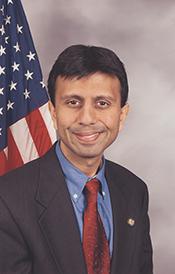
Mr. Speaker, I thank my colleague from Florida for that generous introduction, for yielding time as well. Mr. Speaker, we have heard now from I think every member of Louisiana's delegation. We have…
Mr. Speaker, I thank my colleague from Florida for that generous introduction, for yielding time as well.
Mr. Speaker, we have heard now from I think every member of Louisiana's delegation. We have heard from both parties telling you how important this bill is for Louisiana's future. So many of us saw after the disastrous storms of 2005 Hurricanes Rita and Katrina, both storms, so many people wondered wouldn't it have been more effective to have prevented, to have defended against that damage in the first place? Indeed, we heard and recited numbers that are familiar to residents of Louisiana; for example, knowing that every couple of miles of healthy wetlands reduces tidal surges by a foot. We heard, for example, for years there have been projects in the works to raise the levees around New Orleans. We heard, for example, that for years there have been studies after studies on the Morganza-Gulf and other hurricane protection projects. And what we saw that awful year was incredible destruction, incredible loss of life. We also have learned, and we have seen, that every year Louisiana loses 30 miles a year off our coast. That year alone we lost 200 miles off our coast. Many of the Nation's best environmental scientists say that now is the time to act, not just for Louisiana but for America.
Louisiana is home to 30 percent of the Nation's fisheries. Thirty percent of the Nation's energy production comes off of Louisiana's coast. Investing in restoring Louisiana's coast is important for the people of Louisiana. But it is also important for the people of the entire country all over the United States.
Now, as we rebuild from the storms, I certainly want to thank my colleagues on both sides for their continued support, for their generosity. But that is the reason I stand today, to ask for your continued support by voting to override this veto of this very important piece of legislation.
In terms of Louisiana's ongoing recovery, passing the WRDA bill is one of our three top priorities, in addition to full funding of the Road Home program, as well as continued support of offshore revenue sharing so that we can repair our coast, repair our levees, make our people safe. I have heard several colleagues on this House floor, Democrat and Republican, talk about the need to encourage people to come back to south Louisiana and talk about the need to help businesses come back, help hospitals and medical offices open their doors, help schools reopen. Again, we are thankful for the help that has already been provided to make those things possible. More help is needed.
But all of that is dependent on making people safe. All of that is dependent on guaranteeing to the people of south Louisiana that they can be safe living and working in their communities. The WRDA bill takes a huge step forward, whether it is the 100-year flood protection authorization for the greater New Orleans area, whether it is the Morganza-Gulf project, whether it is the port projects. These are incredibly important hurricane and flood protection projects.
This is a bill long overdue. This House is accustomed to passing a WRDA bill every couple of years. This bill is over 7 years overdue. I would encourage my colleagues to vote to override the veto of this very important legislation.
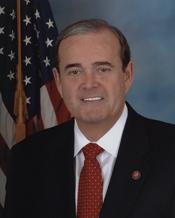
I thank the gentlewoman, the Chair of the subcommittee, for yielding time to me, and I thank her for all of her hard work on this legislation, as well as Chairman Oberstar, Ranking Member Mica, and…
I thank the gentlewoman, the Chair of the subcommittee, for yielding time to me, and I thank her for all of her hard work on this legislation, as well as Chairman Oberstar, Ranking Member Mica, and the ranking member of the subcommittee.
Mr. Speaker, I rise today in strong support of the resolution to override the President's veto of the Water Resources Development Act.
Overriding the President's veto is extremely important, as this legislation addresses what the Congress and administration failed to do in previous years: enact a WRDA bill that addresses the critical infrastructure needs of our country.
WRDA authorizes projects from major flood control, navigation, environmental restoration, and other water resource projects, as well as includes authorizations of several important projects to restore and enhance the Nation's environmental infrastructure.
The United States transportation system has an extensive system of highways, ports, locks and dams, and airports; yet we continue to neglect upgrading and modernizing our infrastructure. We shouldn't build our infrastructure and then walk away without maintaining and modernizing it as it becomes antiquated, like we have done with the upper Mississippi and the Illinois Waterways lock and dam system.
In this WRDA bill, we are authorizing the Upper Mississippi and Illinois Waterway System. The bill authorizes the replacement of 600- foot navigation locks with seven new 1,200-foot locks to bring more efficiency and effectiveness to our water transportation system.
Our current system looses about 10 percent of its capacity due to the system failure and breakdowns because it has exceeded its life expectancy by over 20 years. It can't handle the traffic in an efficient and cost-effective manner, and it's costing taxpayers tens of millions of dollars to patch it together every year, let alone the cost in time and money to its users.
At a time when we continue to spend $12 billion of the U.S. taxpayers' money every month in Iraq, I can't understand why the President would veto this important legislation. You have to ask the question, how can we afford to spend billions of U.S. taxpayer dollars to rebuild the infrastructure in Iraq but can't afford to invest in our own infrastructure right here at home?
This bill is 7 years overdue. Our infrastructure needs are growing. The President's veto message talks about priorities. I believe that the future of the U.S. economy and the living standards of our people should be our top priorities. This bill will help our farmers get their crops to market, protect critical habitat, and provide flood protection for our people.
Modernizing our infrastructure is the right thing to do. It is a necessity for our economy and commerce, and we, therefore, must override the President's veto today.
Mr. Speaker, I strongly support overriding the President's veto of WRDA and urge my colleagues to do the same.
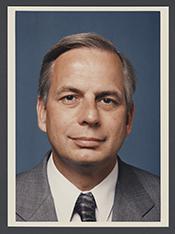
Mr. Speaker, its unfortunate we have to be here today to override the president's veto of H.R. 1495 (WRDA), a bill which has such overwhelming support in our districts across the country. Now is not…
Mr. Speaker, its unfortunate we have to be here today to override the president's veto of H.R. 1495 (WRDA), a bill which has such overwhelming support in our districts across the country.
Now is not the time for inaction on our nation's infrastructure and environment. The previous three Congresses have failed to do so, and because of that, much needed flood control projects in Houston, Texas have been delayed.
WRDA includes language for the Halls Bayou Federal Flood Control Project in Houston which will allow the Harris County Flood Control District (HCFCD) to start work on this project in the near future.
Historic flooding along Halls Bayou has been severe and frequent in some neighborhoods. During Tropical Storm Allison in June 2001, Halls Bayou was hit very hard, with more than 8,000 homes flooding within the watershed. No project can keep all homes from flooding but a project can help reduce the risk of flooding for a significant number of families, reducing the need for federal assistance, property damage, and loss of life.
The purpose of section 5157 of this legislation which pertains to Halls Bayou is to allow the HCFCD to conduct the General Reevaluation Review (GRR) and any subsequent federal interest project on Halls Bayou. The Corps is limited in its staff, resources, and time with the many projects in the Galveston District and the Southwest Division. Local project sponsors with the necessary expertise, like Harris County, can provide efficiency by becoming more involved.
Halls Bayou, a major tributary of Greens Bayou, was authorized in WRDA 1990 as part of the Buffalo Bayou and Tributaries Project. The original Halls Bayou authorization assumed the Greens Bayou project in place, which is now finishing a GRR. Results indicate that the work on Greens Bayou downstream of Halls Bayou will not have federal work although it will have significant local projects. Therefore, a GRR is now needed for Halls Bayou as well.
While conducting the GRR to find a possible federal interest, Harris County can begin project implementation in order to reduce future flood damage as soon as possible. Adding Halls Bayou to Section 211(f) allows Harris County to be reimbursed if the project is later approved by the Secretary. I want to thank the Chairman of the Transportation and Infrastructure Committee, Chairman Obey, and my good friend from Texas, Subcommittee Chairwoman Eddie Bernice Johnson, for including this and other meritorious projects for Harris County.
I support this bill and the balance that it strikes between the need to improve water resources for human purposes and to preserve our water uses for the environment and future generations. The projects in this bill are much needed, and I hope the Senate will also soon vote to override the President's veto so these projects can become law.
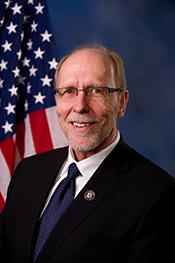
Madam Speaker, I rise today to echo the vital message of this resolution. Earlier this year, the House of Representatives passed the Fiscal Year 2008 Defense Authorization bill with overwhelming…
Madam Speaker, I rise today to echo the vital message of this resolution.
Earlier this year, the House of Representatives passed the Fiscal Year 2008 Defense Authorization bill with overwhelming bipartisan support. Included in that bill is a 3.5 percent pay raise for the men and women who wear our country's uniform.
While we will never be able to fully repay the debt we owe to our troops and their families for their service and sacrifice on behalf of our Nation, this pay raise is the very least that we can do in recognition of their commitment to our country.
Today our servicemembers and our military families are answering their call to duty with dedication and honor, despite lengthy deployments and little time at home. I recently returned from visiting our troops in Iraq--including the Iowa National Guard 833rd Engineer Battalion based in my District. What I heard overwhelmingly from our servicemembers is that they take pride in serving their country but are concerned about the hardship placed on their families at home. The 833rd was redeployed to Iraq after only 14 months at home. These citizen soldiers have paid a high price in their civilian and family lives in order to serve their country. The pay raise provided by the Defense Authorization bill is well deserved and a token of the appreciation of a grateful Nation.
Unfortunately the Administration has deemed the .5 percent added by Congress to its request for a 3 percent raise to be ``unnecessary.'' I, and many others in this Congress, say it is necessary. I am a cosponsor of this resolution because I strongly believe we have a responsibility to provide for our servicemembers both on the battlefield and throughout their lives.
This resolution also highlights the importance of a provision in the Defense Authorization bill that provides the families of fallen soldiers with a $40 per month special survivor indemnity allowance in relief of the ``Military Families Tax.'' The Administration also opposes this provision. Its opposition is once again misplaced. This tax is unfairly placed on more than 60,000 survivors of those who have paid the ultimate sacrifice for our country.
I am proud that as a Freshman Member of the House Armed Services Committee, I helped shape a Defense Authorization bill that recognizes the dedication and honor of our troops. I urge my colleagues to support this resolution and to send a strong message that the United States Congress recognizes the sacrifices made by our men and women in uniform and is committed to providing lifelong support to our servicemembers and our military families.
Madam Speaker, at this time I have no further requests for time, and I yield back the balance of my time.
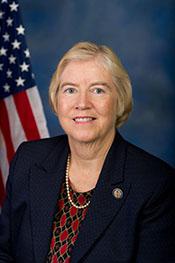
Mr. Speaker, I certainly thank the gentleman for yielding and I appreciate his very hard work on this bill, as well as the chairperson of T & I, who, unfortunately, as has been mentioned, has not…
Mr. Speaker, I certainly thank the gentleman for yielding and I appreciate his very hard work on this bill, as well as the chairperson of T & I, who, unfortunately, as has been mentioned, has not been able to be with us today. But we have got great leadership, and to the chairperson of the Water Resources Subcommittee as well.
Mr. Speaker, I rise to express my incredible disappointment of the President's veto of the Water Resources Development Act because there was an enormous amount of bipartisan work that went into crafting this bill, as was demonstrated actually by the overwhelming support it received in both Chambers for final passage.
The President says this bill spends too much. Well, fair enough, until you consider that this bill actually spends nothing; it simply authorizes, and the actual appropriations for every project will have plenty of time for discussion on the merits before approval.
The Congress has not passed a WRDA bill since 1999. It is long overdue, and it addresses critical water projects and related infrastructure throughout our Nation that I believe we need to invest in to keep America strong and healthy.
Members are talking today about various projects in their part of the country, so let me just mention a few in my area. The great State of Michigan, also known as the Great Lakes State, not just because our magnificent Great Lakes are a huge economic impetus for us or because our quality of life is predicated on them, but, in fact, because they are our very identity.
Keep in mind that the Great Lakes actually comprise 20 percent, or one-fifth, of the fresh water supply on the entire planet and that they are facing historic low water levels, that they are being inundated with invasive species, and that they are suffering from chemical spills and billions of gallons of raw sewage that are being dumped into them.
This bill authorizes funding for the Lake St. Clair-St. Clair River Management Plan. It authorizes building an electronic barrier at the Chicago Diversionary Canal to keep the Asian carp from coming in to Lake Michigan from the Mississippi River. It authorizes funding to stop the spread of VHS, which is an Ebola-like virus that is infecting some of the fish in the Great Lakes. And it authorizes studies on how water diversions may be contributing to the historic low lake levels.
Mr. Speaker, I like to think of myself as a fiscal conservative, but part of that, I believe, means being able to clearly make choices about priority spending. In my mind these types of projects are priorities for our Nation.
I urge a ``yes'' vote to override the President's veto.
Show 11 more
Mr. Speaker, I supported this legislation when the House considered it originally, and supported it again in the revised form resulting from the conference with the Senate. And I will support it…
Mr. Speaker, I supported this legislation when the House considered it originally, and supported it again in the revised form resulting from the conference with the Senate.
And I will support it again today because I think the president's veto was misguided.
Enactment of H.R. 1495, the ``Water Recourses Development Act,'' will ensure that important work to protect our lands and water will move forward while improving operations of the Corps of Engineers.
State and local governments in Colorado desperately need the funding authorized in this bill for environmental restoration, flood control, water supply studies and environmental infrastructure. Unless it is overridden, the president's veto will delay or prevent progress on important projects including environmental restoration on the South Platte River, development of water supply infrastructure in Boulder County and the watershed study of Fountain Creek, near Pueblo.
For the record, I am including a list of all the Colorado projects included in the conference report.
Mr. Speaker, Congress failed to pass a reauthorization of WRDA in the 107th, 108th, and 109th Congresses. Congress needs to pass this vital legislation so we can invest in the necessary long term resources to create jobs and address the critical water infrastructure and environmental challenges facing Colorado and the nation. I urge my colleagues to join me in supporting this legislation and overriding the veto of this bill.
Colorado Projects Threatened by President's Veto: Environmental restoration South Platte River in Denver, Colorado; Expedited completion of the Watershed study, Fountain Creek, north of Pueblo, Colorado; $10,000,000 for the Arkansas Valley Conduit, Colorado; $10,000,000 for water supply infrastructure, Boulder County, Colorado; $1,000,000 for water and wastewater related infrastructure for the Ute Mountain project, Montezuma and La Plata Counties, Colorado; $35,000,000 for water transmission infrastructure in Otero, Bent, Crowley, Kiowa, and Prowers Counties, Colorado; $34,000,000 for water transmission infrastructure, Pueblo and Otero Counties, Colorado.
A requirement for the United States Geological Survey, in consultation with State water quality and resource and conservation agencies, to conduct regional and watershed-wide studies to address selenium concentrations in the State of Colorado, including studies-- (1) to measure selenium on specific sites; and (2) to determine whether specific selenium measures studied should be recommended for use in demonstration projects.
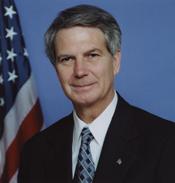
Madam Speaker, I yield myself such time as I may consume. Madam Speaker, I want to thank Mr. Murphy for his service to this Nation and for introducing H. Con. Res. 162. Throughout the history of this…
Madam Speaker, I yield myself such time as I may consume.
Madam Speaker, I want to thank Mr. Murphy for his service to this Nation and for introducing H. Con. Res. 162.
Throughout the history of this great Nation, men and women have chosen to put on the uniform and defend the principles upon which this country was built. The dedication of our men and women to our Nation should never be overlooked, and we, as a Congress, should encourage the next generation of Americans to do the same.
However, there exists an inequity in pay between those who serve in our Armed Forces and those in the civilian sector.
For several years, the civilian pay increase rate has remained 4 percent, which Congressman Murphy mentioned, above that of the military. It is time to end this inequity. H. Con. Res. 162 will help bring this inequity to a close by calling on Congress to voice their support for our servicemembers.
This Nation relies on our military to defend its citizens against enemies both foreign and domestic, and have done so with honor and integrity; but they do not fight these battles alone. Our military families provide them much-needed support in these difficult times. As was said earlier, nearly 40 percent of the members of the Armed Forces who are deployed leave their families and children behind them. There are more than 3 million family members and dependents of those serving on active duty and in the Reserve.
For far too long, Congress has not made this a top priority. That is why I join with my colleague, Representative Patrick Murphy, and all of those in both parties who want this to be a number one issue for those in uniform and their families. Matching the increase is not sufficient. We must close the gap.
Madam Speaker, I reserve the balance of my time.
Madam Speaker, again, I want to thank Congressman Murphy.
The stress of war on our men and women and their families is enormous. We cannot do much to help with the stress of war, but Mr. Murphy's resolution can help the military family as they try to balance their own budget. So thank you, Mr. Murphy, for this legislation, this resolution.
And with that, Madam Speaker, I hope that each and every Member will vote in support of this resolution.
Madam Speaker, I yield back the balance of my time.
Madam Speaker, I rise today in strong support of House Concurrent Resolution 162. By doing this, I rise in strong support of our men and women who deserve a pay raise. As part of the Defense…
Madam Speaker, I rise today in strong support of House Concurrent Resolution 162. By doing this, I rise in strong support of our men and women who deserve a pay raise.
As part of the Defense authorization, the House passed a 3.5 percent pay increase for our troops, half a percent larger than the President's budget. This means an E-4 would earn $200 a year difference in this, just $200 a year difference, but the President opposed this increase, calling it unnecessary. I don't think it's unnecessary to provide a decent wage for the brave men and women who sacrifice for our country. I once lived on military pay, and I can assure you that a decent wage is a requirement for military men and women and their families.
I find it ironic that the President thinks a pay raise for our troops is unnecessary, but he thinks it is necessary to pay contractors billions of dollars with no accountability at all. The President keeps sending our troops back again and again, and the President should at least be willing to give them a decent paycheck to do this job.
Madam Speaker, standing up for our troops must also mean standing up for their families. More than half of all servicemembers who are deployed to Iraq are married, and more than 40 percent of them have left children behind. While a half percent increase may seem small, when you're caring for a family, every little bit of support helps. This is not only the right thing to do for our troops; it's the right thing to do for our national security.
There is currently a 4 percent pay gap in pay between the military and the private sector. If we want to make sure that our armed services can recruit and retain the best, most talented, most highly qualified people, we need to provide them with comparable pay. This is especially critical now when we face new and emerging threats from around the world. And the Army began this year with the lowest number of recruits signed up for basic
training since the end of the draft in 1973.
I urge my colleagues to join me in supporting this resolution, supporting our national security, and supporting our troops and their families by giving them the pay increase they have earned.
I thank the gentlewoman for yielding, and I also thank her for her leadership on this very important bill. Mr. Speaker, a congressional override of this Presidential veto is absolutely imperative to…
I thank the gentlewoman for yielding, and I also thank her for her leadership on this very important bill.
Mr. Speaker, a congressional override of this Presidential veto is absolutely imperative to ensure the safety and viability of our Nation's water infrastructure.
For the President to veto this legislation under the guise of fiscal responsibility is hypocritical at best. The tab for the President's endless war in Iraq is now in excess of $600 billion and counting. Just the interest on the amount we have borrowed to fund the war is $25 billion per year, an amount that exceeds the authorized level of this legislation. This veto is a stark reminder that the hundreds of billions of dollars spent on the war in Iraq has been at the expense of pressing priorities here at home.
In the 5 years since the war began, over $45 billion has been spent on restoring the infrastructure in Iraq. This is double the $23 billion price tag a bipartisan majority of Congress seeks now to address a 7- year backlog of much-needed projects.
When it comes to domestic priorities, the President has decided against investing in America. He has vetoed expanding health care for children, he has vetoed research for life-threatening diseases, he has vetoed benchmarks for Iraq, and has threatened vetoes on investments ranging from education to law enforcement. Are these vetoes the priorities of America, or are they the misplaced priorities of an administration hopelessly out of step with the American people?
Mr. Speaker, the Water Resources Development Act benefits all Americans and their families who use and enjoy our Nation's waterways. My district benefits from the good work that the Army Corps of Engineers does for coastal communities by helping small towns deal with multiple concerns ranging from erosion to longstanding environmental challenges.
Mr. Speaker, H.R. 1495 will go a long way towards supplying the Corps with the resources it needs to protect coastal communities by modernizing project planning and approval. We simply cannot afford to let another year go by without passing this legislation.
I urge my colleagues to override the President's veto.

Mr. Speaker, I rise today to express my strong support for the Water Resources Development Act of 2007 and to encourage all of my colleagues to vote to override the President's veto for this long…
Mr. Speaker, I rise today to express my strong support for the Water Resources Development Act of 2007 and to encourage all of my colleagues to vote to override the President's veto for this long overdue legislation.
We have not had a WRDA bill in over 7 years. If Hurricane Katrina taught us anything, it is that investing in our infrastructure is a crucial component of preparing for emergencies. Seven years is perilously close to an entire generation without a national overarching water policy.
In my hometown of Sacramento, we are all too aware of the importance of investing in water projects. We live at the confluence of two great rivers: the American and Sacramento.
Sacramento is the most at-risk river city in the Nation, and we know that we must be vigilant in our efforts to increase our flood protection. This bill marks a significant step in our efforts to increasing the security of our Nation for generations to come. To be clear, Mr. Speaker, we need this bill in Sacramento and the Nation needs this bill.
After years of inaction, the bipartisan WRDA bill we have passed comes not a moment too soon. There should be a WRDA bill coming out of Congress and signed by the President every 2 years. Unfortunately, the President has turned his back on assuring the safety and security of the American people. This strong, bipartisan legislation will take significant steps to improve our flood protection and invest in the future health of our communities.
In Sacramento we know exactly how important this bill is to our safety, and I look forward to voting to override the President's veto today.
I want to commend Chairman Jim Oberstar, Ranking Member Mica, Subcommittee Chairwoman Johnson, and Ranking Member Baker for their strong bipartisan leadership in making WRDA 2007 a reality.

I thank the gentleman for yielding. Mr. Speaker, I rise in support of this Water Resources Development Act and urge all Members of this Chamber to vote to override the Presidential veto. When…
I thank the gentleman for yielding.
Mr. Speaker, I rise in support of this Water Resources Development Act and urge all Members of this Chamber to vote to override the Presidential veto.
When Benjamin Franklin stated ``An ounce of prevention is worth a pound of cure,'' he very well could have been speaking about the Louisiana coastline. For years, years, we have been losing acres of coastline.
Now, why is this important? The Louisiana coastline is critical for our energy infrastructure in this country. It's critical to support the maritime industry that supports this energy infrastructure. And without a Water Resources Development Act, which is 7 years overdue, we are seeing our coastline disappear.
This bill is a start. It's a start to help us to ensure that we can protect our coastline from future storm surges, to protect this coastline and energy infrastructure that is so necessary for this country.
Some have said that the bill is too expensive. Well, it is a 7-year bill and it's an authorization. It helps Congress set priorities, working with our States, working with local officials and the scientific community particularly in my State of Louisiana who set these priorities so as to preserve our coastline and valuable water infrastructure throughout the country.
I am very much pleased as well to see that the bill has peer review measures in it to make sure that we have independent peer review of major Corps projects. The threshold, I think, was set at $45 million. But it also allows the chief to have certain flexibilities so as to not create unnecessary delays to these very valuable projects.
This is a critically important bill. I urge all colleagues to support this bill, support an override of the Presidential veto.
Mr. Speaker, I rise in strong support of the Water Resources Development Act. The benefits that this bill provides are not only long overdue, but much needed by communities all across our great…
Mr. Speaker, I rise in strong support of the Water Resources Development Act. The benefits that this bill provides are not only long overdue, but much needed by communities all across our great Nation.
The importance of this bill is highlighted throughout my congressional
district and this country. Part of my district has been labeled by some as a ``corridor of shame,'' communities bisected by Interstate 95. This region of South Carolina has some of the most serious health problems to be found anywhere in this country.
I have consulted the experts trying to ascertain why these health disparities exist in my district.
And they have said that the problems originate in the water that my constituents are drinking. In fact, they tell me that at the turn of the last century, the life expectancy in this country was less than 50 years. At the turn of this century, life expectancy has reached over 70 years. They say that this extension of life is directly attributed to the water that my constituents or the people in this country drink.
And beyond the health issue, this is also a safety and natural disaster issue. This bill authorizes funds for our coastal communities throughout the country that are susceptible to hurricanes and flooding. This legislation also reaffirms this Congress's commitment to helping our brothers and sisters who had their lives shattered by Hurricanes Katrina and Rita. This bill authorizes close to $2 billion for coastal restoration initiatives along the gulf coast.
So I encourage my colleagues to vote to override this veto because in doing so, you are safeguarding the health and physical well-being of millions of Americans.
I want to thank the ranking member, Mr. Mica, and congratulate him on his good work on this legislation. This is a good bill. I want to thank Mr. Oberstar and Ms. Johnson for the work that you've…
I want to thank the ranking member, Mr. Mica, and congratulate him on his good work on this legislation.
This is a good bill. I want to thank Mr. Oberstar and Ms. Johnson for the work that you've done on this bill.
This bill has been passed out of this House approximately three times, two times while I was chairman, and now Mr. Mica and Mr. Oberstar have got the bill to the President's desk. All the previous speakers are not here to beat up the President. I am here to say this bill should be passed; we should override the President's veto because it's right for America.
It is an investment, and we are way behind in this investment. Some have said, well, we started out with a certain amount of money on the House side, the Senate had a certain amount, and we came out with more. Frankly, I think it should be about $40 billion. And I say this from a little bit of experience. We did the same thing in the Highway bill, it should have been $375 billion, not $285 billion, because it is an investment in the future and the infrastructure to provide the economy for this country that creates the jobs and makes us competitive worldwide.
Without this bill, we will lose. Without this bill, we will not be able to achieve those goals. We will not save people's lives. But more than that, the next crisis we will face in this country is our water, the use of our water, the water to be used correctly, for transportation, for recreation and for the good of man.
This bill is right. Let's override the President. Let's do something for America.
Mr. Speaker, I want to thank the gentlewoman for yielding the time. Usually I stay within the subject matter of my committee. But 30 years ago, I used to work for something called the Cleveland…
Mr. Speaker, I want to thank the gentlewoman for yielding the time.
Usually I stay within the subject matter of my committee. But 30 years ago, I used to work for something called the Cleveland Regional Sewer District. It was actually water development. I thought I was going to be an environmental lawyer. I saw how much money and how much help was brought to the City of Cleveland by the Federal Water Pollution Control Act where we were able to build sewage treatment plants to treat water all across northeast Ohio.
This is a comparable bill. It gives communities an opportunity to make better what is not in such good shape. At a point back in those days, we had a river that was suffering, a lot of things that were going on. The money that came into northeast Ohio made a real change about how water, how Lake Erie was given an opportunity.
So I rise today to encourage my colleagues across the aisle, all of my colleagues, to support this important legislation and override the veto. Not only in Louisiana do we need this help, but we need it in northeast Ohio where we have erosion occurring on properties and small communities. We need it in Michigan. We need it all across the country. What better way to do this job and also put America back to work? Let's invest in our infrastructure. Ladies and gentlemen, all my colleagues, I encourage you to vote to override the veto and support this Water Resources Development Act.
I want to thank Chairman Oberstar and my friend, Chairwoman Johnson, as well as Mr. Mica and Mr. Duncan, for their hard work in completing this long-awaited bill. These water projects are extremely…
I want to thank Chairman Oberstar and my friend, Chairwoman Johnson, as well as Mr. Mica and Mr. Duncan, for their hard work in completing this long-awaited bill.
These water projects are extremely important to my home State of Florida and for the Nation as a whole and have been held hostage for far too long.
Like all transportation projects, Mr. Oberstar always said that our committee, the Committee on Infrastructure, is the committee that actually put America to work. And this bill will put America back to work, improve our communities, and create economic activity.
This legislation will also ensure that workers are paid a fair rate for their hard work. It is these workers' taxes that pay for these projects, and they deserve a fair wage that allows them to adequately provide for their families.
By delaying the passage of this much-needed legislation any further, we are doing a disservice to the people we represent.
Like so many Americans, it is hard for me to understand how President Bush can spend $600 billion on his never-ending war, but yet veto $23 billion in vital water and civil work projects for the cities and towns right here in America. This is just one more example of how out of touch this administration is. They live in a bubble.
I encourage my colleagues to support this veto override and let's move forward and work on the next WRDA bill so we don't have to wait 6 more years.

Mr. Speaker, farmers in Missouri and throughout the Midwest depend upon our rivers for the transportation of agricultural goods and other products important to their businesses. Rivers afford…
Mr. Speaker, farmers in Missouri and throughout the Midwest depend upon our rivers for the transportation of agricultural goods and other products important to their businesses. Rivers afford producers greater market access, so it is essential that our river transportation system runs smoothly and efficiently.
Earlier this year, the House and Senate approved the Water Resources Development Act, a bipartisan bill to authorize funding for America's navigation, flood control, and environmental restoration projects. Important for Missouri's agricultural community, this long-overdue measure would modernize outdated locks and dams along the Mississippi River in order to facilitate the movement of commodities to the domestic and global marketplace.
On Friday, the President vetoed the Water Resources Development Act. I was extremely disappointed that the President chose to veto this bill, which is an investment in rural Missouri and in the sound water infrastructure of our entire country.
On behalf of the Show-Me State farmers I am privileged to represent, I am pleased to cast my vote in support of overriding the President's veto. I am hopeful it will garner the necessary two-thirds vote and that the Other Body will act swiftly so that Congress will enact; the water infrastructure bill despite the President's objections to it.
Mr. Speaker, I yield back the balance of my time.
Bill Text
3 versions available
        [Congressional Bills 110th Congress]
[From the U.S. Government Publishing Office]
[H. Con. Res. 162 Referred in Senate (RFS)]

1st Session
H. CON. RES. 162

_______________________________________________________________________

IN THE SENATE OF THE UNITED STATES

November 8, 2007

Received and referred to the Committee on Armed Services

_______________________________________________________________________

CONCURRENT RESOLUTION

Expressing the sense of Congress that Congress and the President should
increase basic pay for members of the Armed Forces.

Whereas the United States continues to rely extensively upon the members of the
Army, Navy, Marine Corps, Air Force, and Coast Guard who are deployed
overseas and stationed at military support installations within the
United States;
Whereas members of the Armed Forces, regardless of branch of service or whether
serving in an active or a

reserve component, have carried out their mission objectives with valor,
distinction, and steadfast dedication to the cause of liberty and
democracy;

Whereas more than 1,600,000 members of the Armed Forces have deployed to Iraq or
Afghanistan, and many of these members have served multiple deployments;
Whereas there are more than 3,000,000 family members and other dependents of the
members of the Armed Forces serving on active duty and in reserve
components;
Whereas nearly 50 percent of the members of the Armed Forces, who are deployed
away from their permanent duty stations, have left families with
children behind;
Whereas over 50 percent of the members of the Armed Forces who are currently
deployed in Iraq are married;
Whereas military families have persevered in the face of challenges and continue
to provide critically important comfort and care and numerous other
contributions to their loved ones deployed overseas or stationed within
the United States;
Whereas there currently is a 4 percent gap between the pay increases provided to
members of the Armed Forces and the pay increases provided to private
sector employees; and
Whereas it is in the national interest of the United States to offer to the
members of the Armed Forces comparable pay to that which the civilian
sector provides in order to retain highly qualified men and women in
uniform and to faithfully reward their valiant service to the United
States: Now, therefore, be it
Resolved by the House of Representatives (the Senate concurring),
That it is the sense of Congress that--
(1) Congress and the President should increase basic pay
for members of all components of the Army, Navy, Air Force,
Marine Corps, and Coast Guard by 3.5 percent, effective January
1, 2008; and
(2) Congress and the President should increase the basic
pay for members of all components of the Army, Navy, Air Force,
Marine Corps, and Coast Guard during fiscal years 2009 through
2012 by at least \1/2\ of 1 percent more than the raise
calculated under the Employment Cost Index (ECI).

Passed the House of Representatives November 6, 2007.

Attest:

LORRAINE C. MILLER,

Clerk.