Reserved for Speaker.
Legislative Activity
Stay on top of the latest movement without scrolling through every action
Introduced in House
January 4, 2007
Floor Debate
23 membersWhat members said about H.R. 10 on the floor
 TGT
TGT DD
DD MK
MK JPM
JPM ALH+18
Floor Debate
23 membersWhat members said about H.R. 10 on the floor
Mr. Speaker, I come to the floor tonight to speak on a subject that I have spoken on many, many times over the course of my career in this Congress. This will be the last time I will be able to…
Mr. Speaker, I come to the floor tonight to speak on a subject that I have spoken on many, many times over the course of my career in this Congress. This will be the last time I will be able to address this body in a Special Order on this particular issue.
I am reminded of nearly a decade ago when I arrived in the House of Representatives in 1999 and there was really no organized effort to facilitate a discussion on the critical issue of immigration and immigration reform. The task I felt at that time was to bring it to the Nation's attention any way I could, being one Member of the House and as a freshman, there are relatively few ways to accomplish that goal. One way was to address the House through the Special Order process, and I did that night after night after night.
I would sometimes walk away from here thinking it may have been a futile gesture. I would leave here and it would be quite late walking across to my office in Longworth, and I would look back at the Capitol dome and I would see the light shining on it and I would think about the importance of what I was trying to accomplish here. And at my office, there were always lights on the phones, I could see people calling and hear the fax machine going, and I knew there were people out there who were listening to this discussion and who were responding to it and that always gave me the energy to continue the discussion, to come back the next night and do whatever I could to get people to focus on what I considered to be and what I still consider to be one of the most serious problems facing the Nation. Certainly it is one of the most serious domestic problems facing the Nation.
Now we are talking about a financial crisis and it has sucked up all of the energy in the room and all of the energy on Capitol Hill. All of the oxygen has been sucked up by this discussion, and I understand why. It is a crucial issue, crucial to our constituents and enormously important throughout the world, as a matter of fact.
It is important I think also to recognize there is an aspect of this discussion which does go back to the original issue of illegal immigration into the country, and it is no small part of the problem that we now face.
Several months ago in my own county, Jefferson County, Colorado, the district attorney indicted several realtors and mortgage brokers for fraudulently developing documents for people who were here illegally so they could buy homes. By the way, it is not necessarily illegal in the United States, as peculiar as this may sound, it is not illegal for someone who is here illegally to purchase a home, but it is certainly illegal to doctor the documents, to falsify the Social Security and tax records. Now this is a tiny story. How does it relate to this issue.
One county in Colorado, three or four realtors, three or four mortgage brokers, accounted for 250 homes being sold in just that county in Colorado. Across the Nation, this phenomenon accounts for hundreds of thousands of homes that have been sold to people who are here illegally. There have been major industries, certainly major banks in this country that were devoted to trying to identify illegal aliens as a niche market to both make them loans, to identify them as potential bank customers so they can get the mortgage.
We saw hundreds of millions, in fact hundreds of billions of dollars flow into these mortgages. Now what has happened? The economy has gone sour. Immigration reform efforts have gotten to the point where we actually are now conducting raids at some of the major factories and meat packing plants across the country. And also States have taken on this responsibility themselves and have passed laws. Because the Federal Government has been so lax, we have States taking up the burden and passing laws to do something about illegal immigration in their State, and local communities doing the same thing.
The result is lots of people are leaving, going home. To the extent so much so that in Mexico, the president of Mexico issued an urgent plea for us to do something to stop the flow of illegal aliens back to Mexico because they couldn't handle it. They wanted us to secure our border, maybe to build a fence. There were so many returning that they could not handle the influx.
What does that mean for us and the issue of this mortgage problem that we are having? It means that all of those people simply walked away from those mortgages, those hundreds of thousands of homes that were on the market. They walked away because of course they had nothing at stake. They were given 100 percent loans, sometimes even more than that. Their names were oftentimes falsified. They had nothing at stake, were illegally in the country, so it was easy to walk away. They walked away from the homes and we are stuck with the mortgages, and they are now part of this huge bailout we are trying to focus on and deal with as the Congress of the United States.
We haven't talked about that as an issue, but I suggest to you it is an enormous issue. No one wants to talk about it, just like no one wanted to talk about this issue for the last 10 years.
Only recently have we seen a bit of a change. In 1999, I founded the Congressional Immigration Reform Caucus, and six people agreed to join initially. The task I felt again was something that I had to undertake. It was one of those things that I decided to add to the repertoire, if you will, of talking about it here at night, forming an immigration reform caucus and trying to get people to pay attention.
Well, there have been--I don't know--hundreds of speeches, literally thousands of radio spots that I have done and interviews that I have done on this particular issue, thousands of speeches that I have given around the country.
Things have begun to change, and I am extremely happy about that. We certainly have more members of the caucus now headed by Brian Bilbray, over 100 members, both Republicans and Democrats, and a number of things have happened around the country that are worthy of note.
The Minuteman Project showed the Nation how a few hundred concerned citizens could shut down border traffic with lawn chairs and cell phones, just doing what they could do in their spare time as American citizens looking for a lawful way to address the issue of illegal immigration. Thousands of people did it. It was a wonderful thing to observe even though, by our own President, they were called vigilantes, and of course, they were the people who were actually enforcing the law as opposed to the President, who was ignoring it.
We've had governors of southern border States, Democrats and Republicans alike, declare states of emergency in their individual States because of the massive number of illegal immigrants who have come across the borders. We've had small towns, communities all over this country do what Mayor Barletta did in the small town of Hazleton, Pennsylvania when he passed ordinances against hiring or renting to illegal aliens. He earned national attention and a crucial battle with the ACLU for that.
Of course, I mentioned earlier there are other States, States like Arizona, Oklahoma, Georgia, that have taken up this issue themselves because, again, they looked for help from the Federal Government and could not find it, but they have passed wonderful bills to deal with this, saying that employers in their respective States have to use the E-Verify system to make sure that the people they have hired are here legally.
Legislatively, we've seen other things that seemed impossible a while back. In October of 2004, Speaker Hastert's H.R. 10, which came out of the 9/11 Recommendations Implementation Act, was passed in the House, and it substantially targeted immigration-related weaknesses related to terrorist travel.
The following month, I used a rarely employed conference rule to force a Republican Conference meeting and postpone a vote on the Intelligence reform bills because immigration-related provisions had been stripped from the conference report. The shutdown resulted in the promise that became the Real ID Act, which became the law the following year. It mandates standards for the issuance of driver's licenses that would preclude the eligibility of illegal aliens.
In 2006, the Secure Fence Act became law, mandating the construction of approximately 800 miles of fencing and infrastructure on the U.S.- Mexico border. Three hundred miles of that fence have been completed.
The most important tool in forcing Congress to deal with immigration is the amendment process that we have here. In 2003, I began offering amendments to spending bills, seeking to enforce Federal laws that prohibit sanctuary cities. This was a new strategy, and I began to build a record for all of my colleagues. No longer could Members just speak in platitudes about immigration. They had to put their money where their mouths were and cast a vote up or down on these real issues.
I brought amendments on the sanctuary policy's temporary protected status by removing reimbursements for illegal alien health care, by repealing food stamps for immigrants, by suspending the Visa Waiver Program, by revoking visas for countries that refuse reparations.
As the votes began to pile up, the voting habits of my colleagues began to change. The first sanctuary amendment I offered in 2003 got 102 votes. Now we regularly pass these amendments. The real catalyst was President Bush's speech in 2004, which caused widespread outrage with the amnesty proposal. Our constituents showing the vast disconnect between themselves and the beltway elite started making their views known with the benefits of high-paid lobbyists.
Like most Americans, I was delighted to watch the immigration proposal go down to defeat in the U.S. Senate. First and foremost, it demonstrated how widely unpopular the notion of granting amnesty to illegal aliens is with the American people. More importantly, however, Congress' rejection of the bill may have signified the high watermark for advocates of ever increasing levels of immigration, both legal and illegal, into the United States.
Supporters of the President's immigration plan were forced to even change the rhetoric of the debate as they tried desperately to invent a nonoffensive euphemism for amnesty. We heard it referred to as ``earned legalization,'' as ``comprehensive reform'' and
as ``regularization.'' Despite their efforts, however, Americans made it quite clear that they opposed amnesty.
It's not surprising, but the amnesty proposal contained within the bill isn't the only fuel that fueled the grassroots brush fire that killed that bill. Dramatic increases in legal immigration levels proved to be nearly as unpopular as amnesty, and it also contributed to the demise of the legislation.
Public concerns about dramatically increased levels of legal immigration helped to derail a similar Senate proposal in 2006 after Robert Rector of the Heritage Foundation analyzed how many foreigners the bill would allow into the United States over the next 20 years, some 60 million people. Sheer numbers began to transcend anecdotal stories about friendly immigrant neighbors on the minds of the American public.
Indeed, the protracted debate over immigration has voters increasingly focused on what is a very reasonable question: What kind of immigration policy serves our national interest? Not surprisingly, few have stepped forward to defend the status quo or the massive increases proposed by the Senate leadership or the President. Mr. Rector penned a report applicable to that year's Senate concoction. Despite all the talk about how critical low-skilled immigrants are to economic growth, his study confirmed what many already knew, that low- skilled legal and illegal immigrants are a net cost to taxpayers, not a net gain, just as their native-born counterparts are.
The Senate bill would have cost our children and grandchildren $2.5 trillion due to amnesty provisions and increased levels of legal immigration authorized by the legislation. Again, it was Mr. Rector's analysis that deeply shook the public's confidence in the Senate's credibility in handling the issue. Once more, the question about legal immigration became relevant in light of that information.
Now, I'm not saying that America is ready to install a ``no vacancy'' sign on the Statue of Liberty. At the same time, we cannot discount the increasingly disconcerting public feeling that honoring our tradition of immigration while decreasing the yearly total of immigrants to more sustainable levels are not mutually exclusive goals. A significant decrease similar to that one in the Commission on Immigration Reform advocated in the mid-1990s would be a good first step toward creating a more orderly and sustainable immigration policy in America, such as, by the way, eliminating chain migration and the visa lottery. I continue to believe that a return to traditional immigration levels as well as stepped up enforcement can be won in a matter of months and years, not decades.
For one reason I believe that this is what will happen in this seminal legislative moment in my House tenure is that Mr. Sensenbrenner, the chairman of the Judiciary Committee, began the process in late 2005 of crafting a comprehensive immigration reform bill--the Border Protection, Antiterrorism, and Illegal Immigration Control Act. It passed 239 to 182. Not only did the enforcement bill first receive broad bipartisan support on the final passage but so did stand-alone amendments to build border fencing and to reduce legal immigration by eliminating the Visa Diversity program.
Our immigration caucus played a vital role in making sure that not so much as a sense of Congress was allowed to suggest that we needed guest workers.
There is still, of course, much to do. I am proud of the accomplishments of the caucus. I am proud of the accomplishments that my colleagues and I, who have fought for immigration reform, have made to this point in time.
Certainly, it is the reason, by the way, that I ran for the Presidency of the United States, for the Republican nomination for the Presidency of the United States. With little idea, in fact no idea, that I would actually become the President of the United States in that process, I was nonetheless inspired to do what I did and run for the nomination for President in order to force the people who were on the stage with me during that period of time to address this issue. There was a reluctance in doing so. I know I started the process out in February of last year and ended it in December, and between that time that I started in February to December, there was a complete change in the way each person who was running for that nomination addressed the issue of immigration. Finally, every single person, including the present nominee of the party, agreed that we had to secure the borders first. We must do that. There was no longer ambiguity in their statements about this. Our borders have to be secure.
Now, I hope of course that the rhetoric turns into action. I commend to my colleagues here who will be returning next year that their task will be ahead of them to make sure that that is what is done.
So we have done a great many things. There are still a lot of concerns that most of us have about where we go from here. It is imperative that we stay strong in our opposition to amnesty of any kind. It is imperative that we push for a border fence and for one that is, in fact, a real deterrent to the flow of illegal immigrants into the country.
It is imperative that we never, ever do to anybody else what we've done to Agents Ramos and Compean, who are still imprisoned for essentially doing what they were hired to do in protecting our borders.
There are threats to our sovereignty like the Security and Prosperity Partnership and the North American Union. They continue to exist in some form or other. Legal immigration is still at an historical high. The effects of our language and of our culture threaten not only what kind of a nation we will be but whether we will be a nation at all.
This leads me to the next part of this discussion and, perhaps, even to the more serious part that we must begin to work with as we have now accomplished a number of goals that we have set and that I have set, essentially, for myself here, which is one of the reasons why I chose not to run again. I mean, when I look back at where I started in this process and where we are now 10 years later, I feel like I have accomplished many of the goals I set for myself in this body. There are many people here who I can turn to now and hand the baton to and know that they will take it up--it's wonderful--to Judge Poe and to Steve King. I could go on and on with the number of people who are here today who are committed to doing something about true immigration reform. Hence, I feel very comfortable in taking my leave of this place at this time, but I do so with this caveat:
We must never forget the real threat that exists as a result of massive immigration, both legal and illegal, into this country when it merges with what I have often called the cult of multiculturalism. It permeates our society, this cult does. It is an emphasis on all of the things that pull us apart as a society--an emphasis on creating linguistic and cultural enclaves, on turning us into a cultural and linguistic Tower of Babel. It is a focus on all of the negative aspects of Western civilization and the United States' exemplification of Western civilization's greatest attributes.
The colleges and institutions of higher education and certainly even our high schools and our K-12 educational system is fraught with this idea of this cult of multiculturalism and the attitude about America and about the west. It permeates all of the textual materials of most of the professors who are at these institutions, who always confront the issue of America and the west and western society in the most negative terms, who are always tearing us down--who we are, what we've built, what we're all about. This is the cult of multiculturalism. When millions of people come into this country, either legally or illegally, who are also interested in ideas and who are interested in things other than becoming an American, we become susceptible to a disease that really will destroy us. It is a disease that works its way from within the body politic in this country, and it is susceptible to an attack from without.
We see what's happening today. We have been calling it a war on terror. It is a misnomer. It is incorrect to label it that way. It is not a war on terror that we face and that we are trying to advance. It is a war against radical Islam. Terror is a tactic of radical Islamists. It is not the entity with which we are at war.
Lao Tzu, of course, is a famous Chinese philosopher, and he has stated and
has been quoted over the years because of his insight into both the nature of war and into the nature of human beings. He said at one point that there are two things that are desperately needed in order to be successful in any clash. One is the knowledge of who your enemy really is. Who are they? What makes them tick? Why do they do the things they are doing? The other is, he says, a knowledge of who you are. We have to understand who it is we are fighting. Again, it is not simply terrorists.
It is radical Islam. Islam's hostility towards the West has nothing to do with American troops in Muslim lands or America's support for Israel or the plight of the Palestinians. The first thing we must understand is that Muslims believe the Koran is the word of god as dictated to Mohammed. It cannot be interpreted by man. This is troubling because the book's passages call for the destruction of opposing religions, the extermination of non-Muslims, and the imposition of a worldwide caliphate.
Among other things, the Koran tells Muslims: those who disbelieve we shall roast them in fire, they may feel the punishment. When you meet the unbelievers, smite them, and when you have caused a bloodbath among them, bind a bond firmly on them. Take the infidels captive and besiege them, and prepare for them each ambush. They that reject faith, take not friends from their ranks and make them flee in the way of Allah . . . seize them and kill them wherever you find them and take no friends from their ranks. Fight them until there is no dissension, and religion is entirely Allah's. Instill terror into the hearts of the unbelievers. Prepare for disbelievers chains, yokes, and a blazing fire. Cast terror into the hearts of those who disbelieve and strike off their heads and fingertips.
This is Islam's instruction book, and the instructions are quite clear.
So whether we want to admit it or not, the Western world is locked in a struggle against this form of Islam--a religion whose practitioners and adherents are inextricably linked to terrorism. And if we are to successfully defend ourselves against the desire of our enemies to impose a caliphate on the world, we must first be willing to openly identify them, say who they are.
Politically correct politicians in the United States, Europe, and elsewhere are quick to dispute notions that Islam is inherently violent, and they flatly reject that Islam is engaged in a global struggle to dominate the world. But a quick look around the globe tells a different story.
While the most obvious clashes between Islam and the West are taking place in the streets of Israel, in the mountains of Afghanistan, and in the deserts of Iraq, Islam's foot soldiers are waging their war against non-Muslims in all corners of the world.
In Sudan, the conflict between the north and the south was basically a conflict between Arab Muslims and southern black Christians.
A visiting teacher from Denmark was jailed for insulting Islam after she let her class name a teddy bear ``Mohammad.''
In Thailand, a nation of more than 60 million that is more than 95 percent Buddhist--a nation that is known worldwide for its friendly people and enduring spirit of hospitality--some 3,000 Thais have been killed in brutal uprisings by Muslims who are determined to replace Thailand's democratic kingdom with an Islamic State.
Last week, Islamic militants in the southern Thai town of Pattani shot a state official some 30 times with a machine gun as he arrived to visit a school. After the attack, the gunman dragged his body out of the truck and chopped off his head in front of the horrified students and teachers.
In the Philippines--a former U.S. territory known more for its food and cathedrals than for Islamic extremism--the government has also been struggling with Islamic militants seeking to overthrow the democratic system and ``return'' the country to its ``pre-Christian 'Moor' national identity.''
This insurgency has gone on for decades and claimed more than 120,000 lives. Over the last few years, Filipino soldiers, priests, other Christians, and non-Muslims have been routinely captured and beheaded.
In Indonesia--which is struggling to maintain a democratic system amid calls for the imposition of Sharia law--dozens of demonstrators recently attacked the local ``Playboy'' magazine office, injuring police officers and damaging property. Keep in mind that the Indonesian version of the magazine does not even contain nudity, and is primarily dedicated to Western pop culture and fashion.
After the incident, it was not the militants, but Erwin Arnada--the magazine's editor--who was arrested and forced to face charges of violating the country's indecency laws and faces a long prison sentence.
For more than 40 years, Malaysia--a former British colony--has successfully balanced its democratic secular form of government with the plurality of its citizens' Muslim roots. Slowly, however, these roots are ripping up the fabric of freedom in this country.
In 2005, the country's Federal court system dismissed appeals by four Muslims who were sentenced to 3 years in jail for wrongfully attempting to convert from Islam. Despite the Malaysian constitution's guarantee to all people the right to profess and practice one's own religion, the court disregarded the Federal constitution and ceded jurisdiction of the case to a Sharia court.
In 2007, over the objections of his Hindu wife and family, Emm Moorthy--part of the first Malaysian team to climb Mount Everest and an army commando--was declared a Muslim after his death and buried as one.
In another case, local authorities refused to recognize the conversion of a Muslim woman to become a Catholic. In addition, the local registrar refused her application for marriage to a Catholic man because Islam prohibits Muslims from marrying non-Muslims. Courageously, she filed suit, optimistic that the Malaysian constitution's provisions for equal protection and freedom would win the day. Unfortunately, amid Islamist protestors' shouts of ``Allah-o- Akbar'' inside the courtroom, a judge dismissed her application finding that ``ethnic Malays'' are constitutionally defined as ``Muslims,'' making conversion from Islam and her marriage to a Catholic man illegal.
The judge went on to say that he could not allow her to change her religion because granting her such an exemption would encourage future converts.
That's part of the world that we seldom hear about but where actions like this are everyday occurrences. These developments in Asia and Africa are problematic, but the wave of Islam is also washing over Europe's shores. While Islamists work to eliminate legal protections for free speech and free association in Asia and Africa in order to replace pluralism with Islam, they are using these freedoms and the legal system in Europe in order to determine democratic institutions and replace them with Sharia Law, undermining democratic institutions.
Sharia Law calls for brutal punishment, such as the stoning of women who are accused of adultery or having children out of wedlock, cutting off the hands of petty thieves, lashings for the casual consumption of alcohol and a failure of women to wear a veil or head-scarf.
Muslims in the UK recently used a loophole in the Federal arbitration law to make Islamic Sharia Law and the decisions of the Sharia court legally binding in civil cases in the United Kingdom.
A recent poll conducted by the Centre for Social Cohesion in the United Kingdom found that some 40 percent of Muslim students in the United Kingdom support the introduction of Sharia law there, and 33 percent support the imposition of an Islamic Sharia-based government worldwide. Another 32 percent of the British Muslim youth living believe that killing for the religion is acceptable, while 20 percent are unsure.
Just days after the London subway attack, Tariq Ali, a prominent British Muslim activist, was quick to suggest that London residents ``paid the price'' for British support in the Iraqi campaign.
Another academic, George Hajjar, went even further proclaiming, ``I hope every patriotic and Islamic Arab will participate in this war and will shift the war not only to America but to . . . wherever America may be.'' He added, ``There are no innocent people,'' and referred to the victims of the attack as ``collateral casualties.''
In the Netherlands, the number of Muslims has grown from just 54 in 1909 to almost 1 million in 2004. These changes have not come without costs.
2002, Pim Fortoon, a politician who expressed concern about the rapid influx of Muslim immigration, was shot six times in the head as he walked to his car. During his court appearance, the killer told the judge in killing Fortoon he ``acted on behalf of the country's Muslims.''
2004. Theo Van Gogh, Dutch filmmaker who had the temerity to make a movie critical of Islam's treatment of women, was shot and killed by a 26-year old Dutch born Muslim in broad daylight in a busy Amsterdam street. After shooting Van Gogh, the jihadist pinned a note to his body threatening the co-author of the script. Then he began the task of decapitating Mr. Van Gogh's lifeless body.
Another Dutch politician who has raised concerns about the danger of Islam's rise in Holland, Geert Wilders, has received numerous death threats and is forced to travel with 24-hour day security. According to Mr. Wilders, the Dutch government has completely capitulated to Islamists in the wake of these politically motivated murders.
He recently told the Hudson Institute, ``We have gone from calls by one cabinet members to turn Muslim holidays into official state holidays to statements by another cabinet member that Islam is part of Dutch culture,'' to an affirmation by the Christian Democrat Attorney General that he is willing to accept Sharia Law in the Netherlands. And there is another majority.
We now have cabinet members who pass with passports from Morocco and Turkey. More alarming still, one half of Dutch Muslims say they understand the 9/11 attacks.
Before I go on, going back to the United Kingdom for a moment. The largest mosque in the world is being built outside London. Recently Archbishop of Canterbury said they should have two tracks, a two-track system in England: one Sharia Law and one traditional English law. Mohammed is now the most popular name in England for a child.
France is also gripped by the crisis. Muslim rioting gripped the country for weeks last year resulting in death and unprecedented destruction of private property. There are hundreds of areas inside Paris and inside and around Paris where police do not go. They are entirely Muslim areas, and the police are essentially afraid to go in there.
The PEW Research Center reported that more than half of all French Muslims loyal to Islam is greater than their loyalty to France, and one in three do not object to suicide attacks.
The demographics, of course, are significant, and that is what is causing a significant change in the entire attitude of Western Europe about such things as Islam and the changing of Western laws.
That is the point of this, that all of this comes with a cost. There is a challenge to western civilization. We have a system that was established by the concept of the rule of law and many other things that unite us as a Nation in the past and united the West in the past are being threatened and destroyed.
Before liberals in America roll out the Islamic welcome mat any farther, they ought to look closely at Europe. As I noted, many Muslims in Europe openly expressed a desire to replace secular democracies there with Islamic caliphates. Hardly surprising when you have an immigration policy that allows for the importation of millions of radical Muslims, you are also importing the radical ideology, an ideology that is fundamentally hostile to the foundations of Western democracy, such as gender equity, pluralism, and individual liberty.
These lessons are unfolding in plain sight across the Atlantic in Europe, but what many Americans don't realize is that these same problems are beginning to manifest themselves here in the United States in parts of Michigan, New York, and Virginia. Yes, yet America's political leaders remain asleep at the switch.
The PEW Research Center, for example, asked American Muslims between the ages of 18 and 29, When are suicide bombings justified? Twenty-six percent said that they were always justified. Another 15 percent said they were often justified.
Another potential threat, settlement poses to the United States is made worse by the fact of the sheer volume of both legal and illegal immigration into our country. Combine that with the rise of culture relativism, political correctness, and the lefts' obsession with diversity, and you have a recipe for disaster as immigrants are prevented from assimilating and separate ethnic cultural communities spring up all over the United States.
We are again confronted with this situation, and we are made less able to deal with it because of this, the political correctness that-- and this multicultural society that we are creating here. It makes us weaker as a society to deal with this.
We are told constantly, as I said earlier, about the deficiencies of the West and that we are not really a country at all, that the United States isn't just a Nation of sovereign people, it is just a place on the planet. Just a place on the continent.
It's called America, and if you live here, you're an American. There are no other ties that should bind us, certainly not a linguistic tie, certainly not the English language. That's what they say. I say it is the imperative tie that must bind us. It is the glue that holds our society together. It is the thing that allows us to communicate with each other. And it is imperative that we have something because we have so many things in this country that pull us apart, it is imperative that we have something, anything, that pulls us together. Language is that one thing.
Our people come from everywhere around the world from every different kind of culture, religion, color, historical background, and language. We have--something when they come here has got to begin the process of assimilation because immigration without assimilation is creating a phenomena that is like putting a gun to our heads.
Examples of this kind of political correctness go on and on. Los Angeles Roosevelt High School. An 11th grade teacher told a nationally syndicated radio program that she hates the textbooks that she's been told to use and the State-mandated history curriculum because they ignore students of Mexican ancestry. Because the students don't see themselves in the curriculum, the teacher has chosen to ``modify the curriculum'' by replacing it with activities like mural walks intended to open the students' eyes to their indigenous culture.
A friend of the teacher invited to help with the mural walk went on to tell the students, ``Your education has been one big lie after another.''
In a textbook called, ``Across the Centuries,'' which is used widely across America for the teaching of 7th grade history, the term ``jihad'' is defined as ``to do one's best to resist temptation and overcome evil.''
In 2002, the new guidelines for teaching history in the New Jersey public schools failed to mention America's Founding Fathers, the Pilgrims, or the Mayflower. After this became public, New Jersey changed the guidelines.
In a Prentice Hall history textbook used by students in Palm Beach County high schools, titled ``A World Conflict,'' the first five pages of the World War II chapter cover such topics as discrimination against women in the Armed Forces, racial segregation during the war, and internment of Japanese Americans, far fewer than are dedicated to the 292,000 Americans who died in the conflict, fighting against totalitarianism and genocide.
A Washington State teacher substituted the word ``winter'' for the word ``Christmas'' in a carol to be sung at a school program so as not to appear to be favoring one faith over another.
In a school district in New Mexico, the introduction to a textbook called ``500 Years of Chicano History in Pictures'' states that it was written ``in response to the Bicentennial celebration of the 1776 American Revolution and its lies.'' Its stated purpose was to ``celebrate our resistance to being colonized and absorbed by racist empire builders.'' The chapter headings include ``Death to the Invader,'' ``U.S. Conquest and Betrayal,'' ``We Are Now a U.S. Colony,'' ``In Occupied America,'' and ``They Stole Our Land.'' This is a textbook in a New Mexico school district.
Nicholas DeGenova, an assistant professor of anthropology at Columbia
University, told students that he wanted to see ``a million Mogadishus''--a reference to an operation in Somalia in 1993 in which elite U.S. Army personnel were pinned down in a fierce firefight. Eighteen Americans were killed and 84 wounded. DeGenova added that, ``The only true heroes are those who find ways to help defeat the U.S. military.'' Administrators at Columbia University expressed regret, saying they were ``appalled by the statements,'' but took no action to dismiss DeGenova, who is still teaching. Teaching, by the way, is a liberal way to interpret his activity.
At Royal Oak Intermediate School in Covina, California, students in Len Cesene's seventh grade history class fasted last week--this was some time ago, last week was the quote from the article--last week to celebrate the Muslim holy month of Ramadan. His letter to parents explained that ``in an attempt to promote a greater understanding and empathy towards the Muslim religion and toward other cultures, I am encouraging students to participate in an extra credit assignment. Students may choose to fast for one, two, or three days. During this time, students may only drink water during daylight hours.''
A Federal judge in Brooklyn interpreted New York City policy on holiday displays in public schools allow for the display of the Jewish Menorah and the Muslim Crescent--but not the display of a Christian Nativity scene. The judge based his decision on the notion that the Muslim Crescent and Jewish Menorah are ``secular'' symbols, while the Christian Nativity scene is not, and the list goes on and on.
Certainly, many people have heard about the professor from the University of Colorado who claimed that all the people that were killed in the Twin Towers deserved to be killed; they were little Eichmanns. Again, it goes on and on.
And individually, these kinds of incidents may seem regrettable and harmless. They are just examples of Americans' tolerance for diversity and multiculturalism. Collectively, they will subject our Nation to death by a thousand cuts.
Islamic leaders have seen the inability of our government institutions to maintain cultural cohesion, and despite the mainstream media's attempt to report it because of political correctness, they are no longer shy about expressing their own intentions.
According to the Manifesto of the Muslim Brotherhood in America, ``Our work in America is a kind of grand jihad in eliminating and destroying the Western civilization from within.''
According to Professor Hatem Bazian of the University of California at Berkeley, ``It's about time that we have an intifada in this country, that changes, fundamentally the political dynamics here.''
Yousef Khattab, of the U.S.-based Islamic Thinkers Society, recently said in an interview that ``Islam will dominate, that's what it will be. We want to see Sharia Law here, and it will be. The flag of Islam will be, God willing, on the White House, if that's where we choose it to be.''
According to a co-founder of the Council on American Islamic Relation, CAIR, Abdul Rahman Alamoudi, ``We Muslims have a chance, in America, to be the moral leadership in America. The problem is when? It will happen, I have no doubt in my mind. It depends on me and you, either we do it now or we do it after a hundred years, but this country will become a Muslim country.''
The head of another Muslim group, Coordinating Council of Muslim Organizations, Imam Johari Abdul Malik, told a crowd, ``Before Allah closes our eyes for the last time you will see Islam move from being the second largest religion in America--that's where we are now--to the first religion in America.''
Muslim ``activist'' Abu Waleed told a crowd of reporters, ``We are not Muslims . . . who are simply here to integrate and become part of democracy and freedom and adopt these values. Rather, what we hope to do is to engage with the . . . society to . . . one day implement the Sharia over manmade law and sharia over . . . Washington, D.C.''
A Muslim man recently told CNN's Anderson Cooper, ``We are bound by the rules of Islam. If a woman runs away, she must be killed.''
Our essentially ``open door'' policy of unlimited legal and illegal immigration may seem like a harmless manifestation of our national tradition of welcoming newcomers with open arms, but it is an invitation to our destruction.
For example, the American left's dogmatic adherence to the idea of ``diversity'' and their tendency to elevate it above all other values also led them to establish the visa lottery, or ``Diversity Visa'' program in 1990. Hundreds of thousands of people have come with these kinds of programs throughout the United States, and we do this at our peril.
We were a Nation that was identifiable. It was identifiable by the kind of language that we spoke, the religion that we observed. Just an example of what we were at one time and what we must think about as what held us together, the ideas, the attitude, yes, the religion, yes, the language. They were something that at one point in time held us together as a Nation.
The Trinity Church case in 1892 said, ``If we pass beyond these matters to a view of American life, as expressed by its law, its business, its customs, and its society, we find everywhere a clear recognition of the same truth . . . this is a Christian Nation.'' Justice Brewer.
``We are a Christian people, according to one another the equal right of religious freedom and acknowledging with reverence the duty of obedience to the will of God,'' Justice Sutherland, 1931, the Macintosh case.
1983, ``To invoke divine guidance on a public body entrusted with making the laws is not . . . a violation of the Establishment Clause; it is simply a tolerable acknowledgment of beliefs widely held among the people of this country.''
And then, of course, later decisions began to erode that concept of religious similarity in this country.
Who we were, this is something that I want to read and will tell you at the end who wrote this; although, probably the content of it will let us know. It was written on June 6, 1944.
``Almighty God: Our sons, pride of our Nation, this day have set upon a mighty endeavor, a struggle to preserve our republic, our religion, and our civilization, and to set free a suffering humanity.
``Lead them straight and true; give them strength to their arms, stoutness to their hearts, steadfastness in their faith.
``They will need Thy blessings. Their road will be long and hard. For the enemy is strong. He may hurl back our forces. Success may not come with rushing speed, but we shall return again and again; and we know that by Thy grace, and by the righteousness of our cause, our sons will triumph.
``They will be sore tried, by night and by day, without rest-until the victory is won. The darkness will be rent by noise and flame. Men's souls will be shaken with the violences of war.
``For these men are lately drawn from the ways of peace. They fight not for the lust of consequence. They fight to end conquest. They fight to liberate. They fight to let justice arise, and tolerance and goodwill among all Thy people. They yearn but for the end of battle, for their return to the haven of home.
``Some will never return. Embrace these, Father, and receive them, Thy heroic servants, into Thy kingdom.
``And for us at home--fathers, mothers, children, wives, sisters, and brothers of brave men overseas--whose thoughts and prayers are ever with them--help us, Almighty God, to rededicate ourselves in renewed faith in Thee in this hour of great sacrifice.
``Many people have urged that I call the Nation into a single day of special prayer. But because the road is long and the desire is great, I ask that our people devote themselves in a continuance of prayer. As we rise to each new day, and again when each day is spent, let words of prayer be on our lips, invoking Thy help to our efforts.
``Give us strength, too--strength in our daily tasks, to redouble the contributions we make in the physical and the material support of our Armed Forces.
``And let our hearts be stout, to wait out the long travail, to bear sorrow that may come, to impart our courage unto our sons wheresoever they may be.
``And, O Lord, give us Faith. Give us Faith in Thee; Faith in our sons; Faith
in each other; Faith in our united crusade. Let not the keenness of our spirit ever be dulled. Let not the impacts of temporary events, of temporal matters of but fleeting moment let not these deter us in our unconquerable purpose.
``With Thy blessing, we shall prevail over the unholy forces of our enemy. Help us to conquer the apostles of greed and racial arrogancies. Lead us to the saving of our country, and with our sister Nations into a world unity that will spell a sure peace, a peace invulnerable to the schemings of unworthy men. And a peace that will let all of men live in freedom, reaping the just rewards of their honest toil.
``Thy will be done, Almighty God.
``Amen.''
That, of course, was the prayer of Franklin Delano Roosevelt as our men embarked upon D Day. This prayer, I wonder if it could be said today by the leader of this country. I wonder if the President of the United States would have the courage to start off a prayer asking for the Lord to help protect our religion, our civilization, our Republic, and to set free a suffering humanity. Would we add the words ``our civilization,'' ``our religion''? Could we? Do they mean anything? What do they describe today to anyone? Or are we too afraid to mention this for fear that it will be perceived by someone as narrow-minded?
And so, therefore, we do not discuss who we are or at least who we were. But just as dangerous an event as D Day was and just as much as we needed prayer to protect the men who were going across that channel, we find ourselves in a world that's equally dangerous. We find ourselves daily facing events that challenge us in so many ways and are as dangerous and as threatening to our very existence as was the threat posed by Nazi Germany and the Empire of Japan.
They come from a different source, those threats. They are not identifiable as a single nation. It makes it harder for us to deal with it. But we as a country must do so.
And this is my parting thought for this Congress, for this Nation. Pray for the same thing that Franklin Delano Roosevelt prayed for: strength, courage to defeat an enemy that has every intention of defeating us and destroying Western civilization. Do not walk quietly into the night of a dark age. Know who we are. Know who the enemy is. Hold up this Nation's flag. Take back our country.
Mr. Speaker, I rise as the designee of the Republican leader. Mr. Speaker, we have spent a great deal of time this afternoon focusing on the fact that we have the first female Speaker of the United…
Mr. Speaker, I rise as the designee of the Republican leader.
Mr. Speaker, we have spent a great deal of time this afternoon focusing on the fact that we have the first female Speaker of the United States House of Representatives in our Nation's history. And I think it is also very important for us to note today that we have the first female Chair of the House Rules Committee in my good friend, Ms. Slaughter, and I would like everyone to join in extending congratulations to Ms. Slaughter.
Now, let me say, Mr. Speaker, that I look forward to working in a bipartisan way in the spirit that was outlined by Speaker Pelosi, and I, of course, will treat the new Chair of the Rules Committee with the dignity that she deserves.
I will say, Mr. Speaker, that I do rise with mixed emotions today. I was very proud to join with you as we came down the center aisle escorting the new Speaker of the House, my fellow Californian. And I am very pleased that we have the first woman, the first Californian, and the first Italian American as Speaker of the House of Representatives.
I have mixed emotions because, while I am very, very proud of Speaker Pelosi, and the new Rules Chair, Ms. Slaughter, and others who are assuming leadership positions, I also am very disappointed.
I am disappointed as I look at this package that we are about to consider, because I do join with you, Mr. Speaker pro tempore, the distinguished majority leader, and Speaker Pelosi, as we have discussed privately and publicly, in our quest, and I think Speaker Pelosi put it extraordinarily well, focusing on the priorities that we have. We are, first and foremost, Americans. We are here to do the people's business and they sent a very strong message last November, and I believe we have an opportunity to do just that.
I will say that I remember very well the opening days of the 104th Congress, 12 years ago. I remember the very heady feeling that came from knowing that, for the first time, at that juncture, in almost half a century, we Republicans were in the majority of the House of Representatives, and we were going to do all that we had promised the American people.
We were that optimistic, quite frankly, because we didn't know any better. None of us had ever served in the majority and we were blissfully unaware of the pressures and problems associated with trying to govern this institution.
During the 109th Congress, the Democratic Caucus, many of whom actually served in the majority before 1995, made a lot of promises about how they would run this place if they ever achieved the majority again. Of course, they, unlike Republicans in 1994, had the experience of having run this place, having served in the majority. And I have a great deal of admiration for my colleagues, because they know exactly what they are facing. Knowing that, knowing exactly what they would face in the majority, they made a commitment to minority rights, should they regain the majority.
And that, Mr. Speaker, is why I said I am disappointed. The resolutions before us bear very little resemblance to the rhetoric on this floor and on the campaign trail. The much ballyhooed commitment to minority rights is virtually nonexistent in the measures before us today. They undermine minority rights that were constantly guaranteed when we were in the majority. The rights of the minority are undermined. Their promises are for a delivery date at some later point, if we agree to be cooperative, according to one Member on the other side of the aisle. And we have, as an IOU now, a wink and a nod and a gentle ``trust us.''
Mr. Speaker, trust is something that is in short supply in this House, and the actions of the incoming majority are, based on the package that has been brought before us early last evening, certainly less than 24 hours before we are considering it here on the House floor, are not doing a lot to bolster our reserves when it comes to the issue of trust. Despite an oft repeated commitment to provide Members with, as I said, at least 24 hours to review legislation before voting on the floor, we received this package at 6:15 last night, 6:15 only after that package was delivered to our friends up in the press gallery.
Now, Mr. Speaker, despite Speaker Pelosi's principle that we need to return to regular order for legislation, including a full committee process of hearings and markups and, I quote Ms. Pelosi here when she said we need an ``open, full and fair debate consisting of a full amendment process that grants the minority the right to offer its alternatives, including a substitute.''
Now, we, in spite of that great directive that came forward, we have a rules package that actually self-executes closed rules for bills that haven't even been introduced, and won't even be going through the committee process. The section of the package that includes those closed rules is debatable for just 10 minutes. This is the polar opposite, the polar opposite of how the Republicans opened the 104th Congress, when our priorities were considered in regular order and under an open amendment process.
Mr. Speaker, also providing a stark contrast is the fact that we put in place, from day one, a guaranteed bite at the apple for the minority in the form of a motion to recommit. We felt so strongly about the fact that when we were in the minority we were denied that chance. So that is why at the beginning of the 104th Congress we put into place that guarantee for the minority.
But I must remind my Democratic colleagues on the Rules Committee that, time and time again, they have made clear their view that the motion to recommit is an insufficient opportunity to articulate their alternative. That argument was propounded constantly as we were dealing with public policy questions. So you can imagine how surprised I was when the Speaker recently replied to a reporter's question about Republican alternatives to
the Democratic priorities by saying, ``They'll have a motion to recommit.''
Even worse than five closed rules, Mr. Speaker, is the rollback of one of the most essential elements of transparency that Republicans put into place back at the beginning of the 104th Congress; that is, the right to know how a member of a committee votes on legislation.
Mr. Speaker, this rules package exempts the Committee on Rules from the requirement to publish the votes of its members on its committee reports, something required of every other committee except the Ethics Committee.
Now, in my 12 years as a member of the Rules Committee majority, we took more than 1,300 votes in committee, every single one of which was accurately reported in the committee's report.
Mr. Speaker, at best, this is a solution in search of a problem. At worst, it is an attempt to shield the Rules Committee from the public scrutiny of its actions.
We were told by the distinguished Chair of the Rules Committee that ethics reform and rules reform were not just election year issues for Democrats. Now, Mr. Speaker, sadly, this document says something quite different than that. Promises were made, and they are not being kept. That is the thing that I find to be most troubling. We intend to explain the many inconsistencies for the record and as the debate moves forward.
At the same time, Mr. Speaker, we want to work with our democratic colleagues. Even with this treatment of minority rights, we stand here determined to work in a bipartisan way to confront the challenges that we all know face this country. Unfortunately, this rules package shuts us out from the start. It is my hope that the promises made will, indeed, be kept. But, Mr. Speaker, this package does not inspire a great deal of hope in that they in any way will.
And so, Mr. Speaker, I rise with a great deal of disappointment and a great deal of concern about the first actions that we are taking here.
Mr. Speaker, with that I reserve the balance of my time.
Mr. Speaker, at this time I am happy to yield 2 minutes to my very distinguished colleague on the Rules Committee, Mr. Lincoln Diaz-Balart from Florida.
Mr. Speaker, I want to first congratulate Ms. Castor and certainly welcome her to the Rules Committee and look forward to serving with her.
Parliamentary Inquiry
I have a parliamentary inquiry, Mr. Speaker.
My parliamentary inquiry is, may I ask of the Chair exactly what it is we are debating and considering at this point. The Chair of the Rules Committee stood up and said, after I gave my opening remarks, that we were in the midst of a debate on the last year's rules package. I was wondering if the Chair might enlighten us as to exactly what it is that we are considering.
For the consideration of the rules package for the 110th Congress, am I correct?
Thank you very much for that clarification, Mr. Speaker.
Mr. Speaker, at this time I am very happy to yield 2 minutes to the very distinguished gentleman from Georgia (Mr. Price).
Mr. Speaker, at this time I am very happy to yield 2 minutes to the very distinguished gentleman from Cherryville, North Carolina (Mr. McHenry).
Madam Speaker, may I inquire of the Chair how much time is remaining on both sides.
Madam Speaker, at this juncture I am very pleased to yield 2 minutes to a very, very hardworking Member of the House, the Chair of the Republican Study Committee, the gentleman from Dallas (Mr. Hensarling).
Madam Speaker, at this time I am happy to yield 2 minutes to the very distinguished gentleman from Marietta, Georgia (Mr. Gingrey), a hardworking former member of the Rules Committee.
Madam Speaker, at this time I am happy to yield 2 minutes to our very distinguished chief deputy whip, my good friend from Richmond (Mr. Cantor).
I yield myself such time as I may consume to respond that I never used the words ``pain,'' I never said ``hurt.'' I said ``disappointment.'' I said disappointment, Madam Speaker, because I am very disappointed.
I will tell you this: I am prepared at this moment to take my three Republican colleagues and go right upstairs to the Rules Committee and go to work at this moment so that we don't have closed rules in the opening day rules package for consideration of measures that have not gone through the committee process and have not had any opportunity to even have our amendments denied in the Rules Committee.
I yield to the gentlewoman from New York.
Let me just say, we are prepared at this moment, Madam Speaker, we will send a resolution right now so the Rules Committee can begin meeting upstairs.
Madam Speaker, I yield 2 minutes to my friend from Nebraska (Mr. Terry).
Madam Speaker, may I inquire of the Chair how much time we have remaining?
Madam Speaker, I will yield an additional minute to the gentleman from Cherryville, North Carolina who would like to be recognized.
Madam Speaker, may I inquire of the distinguished Chair of the Rules Committee now, are there any further speakers on the majority side?
Madam Speaker, I yield myself the balance of the time.
Madam Speaker, I am actually very enthused and excited about the great new opportunity that lies ahead for every single one of us. We have heard speeches today from our distinguished Republican leader, and we are all very proud that my fellow Californian has become the first woman to preside over the greatest deliberative body known to man. And, as I said earlier, I am particularly proud of the fact that I am being succeeded by the distinguished chairwoman from New York (Ms. Slaughter), as the first woman to chair the Rules Committee.
I am enthused about the challenges that lie ahead, and I am very encouraged by the words that we heard from our new Speaker about the need for civility, about the need for us to make sure that we recognize that we are first and foremost Americans, and that the message from last November's election was a very clear one. It was a message that we should come together, work together, Democrats and Republicans alike, to solve the challenges that we face so that we can in fact do the people's business.
We are very proud of the accomplishments that we have had over the past 12 years, and I believe we can work with the new majority to build on those successes, the successes of ensuring that we have an economy that is second to none, an unemployment rate that is at near-record lows at 4.5 percent, strong domestic product growth, more Americans working than ever before in our Nation's history, more Americans owning their own homes, and more minority Americans owning their own homes.
I also am particularly proud of the fact that working together, Madam Speaker, we have been able to ensure that since that tragic day of September 11, 2001, we have not faced another attack on our soil.
The fact that we have not faced another attack is not an accident. It is because of good public policy and the leadership that we have had. Now we do have a change in leadership here in this institution, and there have been a wide range of promises that were made by Members who formerly served in the majority and now are coming back to majority status. As members of the minority, they talked about the need for enhanced minority rights. And I believe many of those things are very, very important. I believed them before, and I believe them now.
One of the things that I think is very important is for us to have an opportunity for consideration of measures here on the House floor that allow for a greater opportunity for Member participation. The thing that troubles me most is if we don't defeat this previous question and then defeat this rule that allows us to move forward, we will be proceeding with a package that will bring forward five closed rules, preventing the Rules Committee from having an opportunity to in any way consider the chance to bring forward amendments.
Never before, never before in our Nation's history have we seen an opening day Rules Committee that would allow for the consideration of five closed rules in the opening-day package. And one of the things, of course, that was discussed widely by our colleagues on the other side of the aisle which we have strongly supported is the notion of transparency, accountability, and disclosure.
One of the most troubling aspects of this measure is that we would move to prevent the Record from showing the votes that are cast in the Rules Committee.
We were very proud that we eliminated proxy voting when we came to majority status. Why? Because we wanted Members to show up to work, and we wanted the American people to see their work product.
Well, unfortunately, the American people understand what it means to show up to work. They understand what it means for greater disclosure and accountability and transparency. We heard the opening remarks during this rule debate on letting the sunshine in. The sun is shining outside today, and it is going to shine in. Under this provision, we see a prevention for the opportunity for the sun to shine in the Rules Committee, and I find it very troubling.
Madam Speaker, I will be asking Members to vote ``no'' on the previous question so we can amend this rule to make in order to consider the Speaker's minority bill of rights as was outlined on May 25, 2006, in her document ``New House Principles: A Congress For All Americans.'' We need to give the new majority an opportunity to live up to those commitments that were made.
Madam Speaker, I ask unanimous consent to insert the text of my amendment and extraneous materials in the Record immediately prior to the vote on the previous question.
Madam Speaker, I yield back the balance of my time.
Madam Speaker, on that I demand the yeas and nays.
Madam Speaker, I offer a motion to commit.
I object.
Mr. Speaker, on that I demand the yeas and nays.
Mr. Speaker, I yield myself such time as I may consume.
I would like to begin by extending my compliments to my very good friend from Maryland, the distinguished majority leader, Mr. Hoyer. In fact, Mr. Hoyer just quoted John F. Kennedy and I believe that he was right on target in focusing on that brilliant quote of President Kennedy's where he said that we should not seek the Republican answer, we should not seek the Democratic answer, we should seek the right answer. I was struck with that, Mr. Speaker, and I believe that we should join in strong support of this resolution, of support of this title; and I am going to urge my colleagues to join in voting in support of this title which uses the rules base of the 109th Congress as the basis for which these proposed changes are being offered.
But I think it is very important for us to note that if we are going to, in fact, seek the right answer as opposed to the Republican answer or the Democratic answer, we need to do that by vigorously pursuing the deliberative process about which we all speak. And I know that during the past several years, my very distinguished colleagues on the other side of the aisle raised concerns about a lack of deliberation that existed in this House and the fact that more amendments could have been made in order. I will acknowledge that we could have made more amendments in order. That was clearly an option there. But as my friend, having served in the majority, knows very well, there are challenges that need to be addressed when you are in the majority, challenges of managing this institution. I see him sitting there very comfortably and I am glad that he is comfortable at this point, but I know full well that he, Mr. Speaker, is going to face many management challenges in the days and weeks and months ahead.
But during the past couple of years, what we have heard is a commitment to minority rights made by those who were formerly in the majority, who were in the minority at that time and are now back in the majority. And so I would argue that the words of President Kennedy can best be implemented if we in fact do increase the level of deliberation, and that is why as we look at the proposed changes that we are going to be considering, I have to say that when it comes to the actual management, I am concerned. I am concerned about the prospect of, for the first time in the history of this institution, taking prospectively five closed rules and placing that in the opening-day rules package.
Similarly, Mr. Speaker, I am concerned about the prospect of taking this issue of transparency, accountability, and disclosure about which we on both sides of the aisle regularly talk because we are here to represent all of the American people, the notion of now saying again for the first time in the history of this great institution that we are going to create an opportunity whereby we will not have accountability and transparency in our very important deliberations that will take place in the Rules Committee.
And so again I would say in response to the brilliant words of President John F. Kennedy, as outlined by our distinguished majority leader, Mr. Hoyer, that we do seek the right answer; and I believe that the best way to seek the right answer is through enhanced deliberation, and we have a chance to do that.
Now, I will when it comes to this vote urge my colleagues to vote in favor of title I. Title I, as you know, Mr. Speaker, simply provides a chance to use the opening rules package of the 109th Congress, and I think that that is a correct thing for us to do; and I hope the Democrats and Republicans alike, and the majority leader has just called for support of title I and I will urge the colleagues on our side of the aisle to join so that again we will be coming together and I think having the right answer on that.
With that, Mr. Speaker, I reserve the balance of my time.
Mr. Speaker, will the gentleman yield?
I thank my friend for yielding. I really am very hesitant to interrupt the brilliance of my good friend from Fort Lauderdale.
Now that I have interrupted it, I just couldn't hesitate to interrupt when I heard that I somehow had a draft by virtue of knowing what the rules package that was put into place for the operation of the 109th Congress was? That was all we had. We had nothing whatsoever beyond the rules of the House and that is it.
I thank my friend for yielding.
Mr. Speaker, before I yield to my good friend from Pasco, I would simply like to ask unanimous consent to enter into the Record at this point a copy of the draft that we received that is dated January 2, 2007. The time stamp on that is 5:45 p.m. I was informed that we had it last night at 6:10 p.m., and it had already been circulated to those in the press gallery by that point.
I would be happy to yield to my friend.
The section that we are talking about right now is simply implementation----
It is simply implementation of the rules that have existed for the 109th Congress. I clearly was talking about the rules for the 110th Congress. In fact, if the gentleman was here when I had an exchange with the distinguished new Chair of the Rules Committee when she tried to argue that we somehow were debating the rules for the 109th Congress, the Chair confirmed the fact that we are in fact considering in toto the package for the 110th Congress using as base text the 109th.
What I have here and if I am able to gain unanimous consent for this, Mr. Speaker, to include in the Record, is the draft which uses the 109th base text and has the proposed changes, the different titles for the proposed changes for the rules of the 110th Congress.
I would ask unanimous consent to include this draft with the date and the time on it showing that it did not fall within the 24-hour notification period of time that my friends have consistently insisted on.
The gentleman objects to my including the draft?
Mr. Speaker, the simple point that I am trying to make is that we all know what the rules for the 109th Congress were. We have lived under those rules for the last 2 years. Yes, I was proud to have crafted those, working with my colleagues on this side of the aisle, and we passed those at the beginning of the Congress and we are going to have a chance in just a few minutes to vote on those again.
The point is, it is not the rules of the 109th Congress that we didn't have a draft of. We did not have a draft until January 3 at 5:45 p.m., which clearly did not comply with that 24-hour requirement that has been put forward. And that is the only point that I am trying to make.
Mr. Speaker, I yield 3 minutes to the gentleman from Pasco, Washington.
Mr. Speaker, I yield myself the balance of the time.
Mr. Speaker, I am very pleased that we can, in fact, join in a bipartisan way in supporting implementation of title I of this provision. And I believe that it is great that my friend from Florida (Mr. Hastings) began heaping praise on the many accomplishments of the 104th Congress when we implemented things like an end to proxy voting, term limits on committee chairmen, and the other items which we have which go on and on and on, increased transparency and accountability and disclosure.
I will say that, as I have said, I am very, very troubled and saddened by the inconsistency when it comes to the issue of transparency and disclosure in light of the discussion that Mr. Hastings of Pasco, Washington and I have had about closing down transparency in the Rules Committee now.
My friend from Florida mentioned the fact that I may be the champion of closed rules. I will admit that as chairman of the Rules Committee, I did bring more than a few closed rules here, primarily on bills that related to tax issues, which was done under the Democratic majorities of the past and I suspect will be done in the future as well. But I will say this: Never before, never before have I, as chairman of the Rules Committee, prevented the Rules Committee from having an opportunity to deliberate and including in an opening day rules package five closed rules. I am concerned as we move forward with that. We will have that debate later on. But I look forward to urging my colleagues to join in support of title I.
Mr. Speaker, I yield back the balance of my time.
Mr. Speaker, I yield myself such time as I may consume.
Mr. Speaker, I rise in support of this package. Once again, I think we will have an opportunity for bipartisanship. The issue of ethics and lobbying reform is something that we believe is very, very important. As I sit here today, I am reminded of the fact that 1 year ago this month, Speaker Hastert and I stood right upstairs in the press gallery and unveiled a package for lobbying and ethics reform, which was maligned by many of our colleagues, unfortunately.
But I will say that I am very pleased with the fact that we were ultimately able to pass out of the House our measure, which did a number of things that I am happy to see are incorporated in this provision that is coming forward from the new majority.
The thing that troubles me most, Mr. Speaker, is the fact that this was done in a unilateral way. We are all very proud of the fact that we have a working, strong, vibrant bipartisan Ethics Committee. It would have been great if we could have had the Ethics Committee come forward with these recommendations.
There has been no consultation whatsoever between the majority and the minority, although I will say, again, I congratulate those Members of the new majority for including, including many of the items that were either incorporated in H.R. 4975, which was our lobbying and disclosure act that we passed out of the House last year, and some of the provisions that Speaker Hastert and I outlined a year ago this month: free clearance of travel, a ban on travel and an end to gifts. An end to the K Street Project. These are all very important reforms that I do think are essential.
I will say this, Mr. Speaker, as I listen to my very good friend from Massachusetts, and I congratulate him on his new position in the majority on the Rules Committee, what happens between today and March 1 of this year? Well, let us see, we have the month of January and the month of February, and, guess what, under this package, the status quo in the 110th Congress, under the Democratic majority, remains in place without any kind of reform or change.
So I have got to ask rhetorically, anyone who wants to answer as to why we are waiting until March 1 before we see any kind of implementation here. They want to see guidelines put forward, maybe by the Ethics Committee. If that is what they would like to do, why don't we impose an immediate ban until they come up with recommended guidelines?
So I will say that as I listen to these proposals, they are interesting, I am very pleased that they have incorporated them. I don't believe they go far enough. In a few minutes, my colleagues, Mr. Kirk and Mr. Shadegg, will be talking about concern on the pension issue, which unfortunately has been left out of this, but I do believe that by and large this is a measure that is going to be worthy of bipartisan support, and I am going to urge my colleagues to support it.
Mr. Speaker, I reserve the balance of my time.
Will the gentleman yield? If you will recall, we passed
Mr. Speaker, I yield 3 minutes to the distinguished gentleman from Omaha, Nebraska (Mr. Terry).
Mr. Speaker, let me, again, say that we look forward to supporting this package, much of which, the items that the gentlewoman just outlined, were included in H.R. 4975, which passed this House last May with strong bipartisan support.
Mr. Speaker, with that, I yield 2 minutes to my very good friend from Highland Park, Illinois (Mr. Kirk).
Mr. Speaker, let me just, before yielding to the gentleman from Marietta, say very quickly again, the legislation that passed the House, H.R. 4975, specifically banned the K Street Project. Look at the language. It is virtually identical. We focused on the issue of lobbyist travel and gifts. And I believe that we can come together in a bipartisan way. We want to work in a civil tone, as was outlined by Speaker Pelosi today.
Mr. Speaker, with that I am happy to yield 3 minutes to my very good friend, former member of the Rules Committee, the gentleman from Marietta, Dr. Gingrey.
Mr. Speaker, I yield myself such time as I may consume to congratulate the gentleman from New Hampshire. We welcome him here. Unfortunately, this package doesn't start today and start now. It starts March 1 of 2007, 2 months from now.
I also want to say to my very good friend from Massachusetts once again that if you look at the package that we passed in May of last year, it is a package that enjoyed bipartisan support. It is one of which we are very proud. And I believe that if you look at the fact that we did go beyond preventing registered lobbyists from coming onto the House floor and the gym, we are doing many of those same things here. It has been done before.
And that is why we are proud to be here in support of this effort, which, again, some of us believe does not go far enough and there are some problems with it, but we do believe it is a positive step. Why? Because it is a reaffirmation of what Speaker Hastert led us to last year.
With that, Mr. Speaker, I am very happy to yield 4 minutes to my good friend from Arizona (Mr. Shadegg).
Mr. Speaker, may I inquire of the Chair how much time is remaining on both sides.
Mr. Speaker, I yield myself such time as I may consume to say that I do congratulate my colleagues. I want to begin by saying as a Californian that I am very proud of the fact that California has provided the first female Speaker of the House of Representatives. Similarly, I have congratulated our colleague, Ms. Slaughter, who will be the first woman to chair the Rules Committee in our Nation's history.
This has been a historic day and I believe a very exciting day for us. I am pleased that we have been able to do a number of things already in a bipartisan way, and I think this issue of ethics and lobbying reform, building on the reforms that we passed in the 109th Congress, utilizing those very positive provisions, is exactly what we are about to vote on here in just a few minutes; and I think that it is a time when we can be civil.
And I will say to all of my friends on both sides of the aisle, the American people want us to deal with these problems, and I will reaffirm my commitment to my colleagues on the Rules Committee that I will continue to strive to comport myself in the most dignified way possible in dealing with my colleagues, and I urge support of this very important measure.
I yield back the balance of my time.
Madam Speaker, I would like to place in the Record the measuring sticks against which I will weigh any proposal brought before this Congress to bail out Wall Street investment houses. Number one,…
Madam Speaker, I would like to place in the Record the measuring sticks against which I will weigh any proposal brought before this Congress to bail out Wall Street investment houses.
Number one, financial reform must come first. America needs reform, not a bailout. Over the last 20 years, legislation has been passed by this Congress, H.R. 1278 in 1989 called FIRREA, interstate banking in 1994 which created those big mega banks, and H.R. 10/S. 900 in 1999, which overturned the Glass-Steagall Act that allowed banking, real estate and insurance all to be under the roof of the same firm.
Well all those bills together have created a highly concentrated financial system, particularly in housing finance, rather than a decentralized one like that which we had for most of the 20th century. This bailout is the result of high-risk misbehavior by distant financial giants. They have sucked equity out of local communities and turned local markets into derivative, debt-ridden communities rather than independent, robust, credit markets with prudent savings and lending practices.
Reform should restore those prudent and transparent banking practices defining the difference between banks and investment houses and protecting and restoring the protections that existed prior to 1999 when that Glass-Steagall Act was eliminated. Conflicts of interest at bond rating agencies should be addressed by such agencies becoming public. Reform, as I say, and regulation should come first out the door before the money, not later.
Number two, Main Street housing market deflation must be stabilized as step one. A moratorium should be placed on all home foreclosures for 120 days. That will take us into the new year. And deflation in the housing market really is what has triggered this credit crunch. The Federal Reserve could use its influence through its regionalized structure to bring parties together to work out affected loans in places like Ohio to stabilize local real estate and housing markets. That is where the real assets are and where the markets must clear and adjust.
What a crime it would be if people are thrown out of their homes and an institution somewhere over in England like Barclays becomes the owner of those assets and gets them at fire-sale prices. We need to put those assets back in the hands of the American people.
The traditional home loan backed by savings deposits was converted into a bond during the 1990s and then securitized into those international markets. The time-tested loan standards of character, collateral and collectibility were shelved, and therefore to reform this system it must be decentralized again, with the community savings and home loan bank system being reestablished with an emphasis on increasing savings deposits with enhanced local mortgage origination and oversight, as opposed to concentration of activity in Wall Street investment houses.
Number three, a new Financial Assets Management Board should be formed to manage this mortgage refinancing and workouts at the local level, similar to FDR's Homeowner Loan Corporation.
Fourth, the Department of Justice should be authorized to investigate the wrongdoers, to track down the fraud, misrepresentation of asset value, insider trading and related crimes in this scandal. There should be over 500 attorneys and accountants and support staff to conduct thorough investigations, forensic accounting and prosecution.
Fifth, any Federal dollar that is expended must result in equity to our taxpayers. If our people are going to be forced to fund unlimited private sector bad debt, our people must receive an equity share in every Wall Street financial company proportional to the amount of bad debt held that is shifted to the taxpayer.
Our people are being asked to take 100 percent of the risk. They should be afforded the benefit of any future profits. A 0.25 percent transaction fee should be charged on every Wall Street trade or Chicago Board of Trade transaction, and that $150 billion a year that will be yielded should pay the American people back over time.
Sixth, a select congressional committee should be established to hold hearings, do proper oversight and advise the next President and Congress on mortgage and financial recovery operations and additional means to assure any necessary repayment of public investment.
Seven, standards for executives and compensation structure in the financial services industry should be established. Those outlandish salaries that they get should be curbed, and all bonuses, stock options and exceptional compensation for those individuals and their boards of directors should be discouraged. We should help to pay the bill by going after some of their assets.
Finally, Madam Speaker, I would like to place this in the Record, and also include bankruptcy reform as one of the major changes that we need to make in any measure. These are the steps that would actually result in market recovery, not just bailing out unknown assets and bad debts from Wall Street.
Kaptur: Real Reform or Nothing--Financial Reform Must Come First
America needs real financial reform first, not a bailout.
Over the last 20 years, legislation passed by Congress (HR
1278 in 1989, HR 3841 in 1994, and HR 10/S 900 in 1999) has
highly concentrated financial activities on Wall Street--
particularly housing finance--rather than decentralized them.
This bailout is the result of high risk misbehavior by
distant financial giants. They have sucked equity out of
local communities and turned local markets into derivative,
debt-ridden communities rather than independent robust credit
markets with prudent savings and lending practices.
Such reform should restore prudent and transparent banking
practices. Reform of the deregulated financial structure
should start with defining the difference between banks and
investment houses and restoring protection that existed prior
to 1999 when the Glass-Steagall Act was eliminated. Each
should have defined activities and be regulated separately.
Conflicts of interest at bond rating agencies should be
addressed by such agencies becoming public.
Reform and regulation should come first, not later.
Franklin Delano Roosevelt invented the basic framework that
served
America well for the last century. Congress should adapt it
to current challenges on a Jeffersonian model, not the
proposed Hamiltonian approach.
main street housing market deflation must be stabilized as step one
Legislation should mandate a moratorium on all home
foreclosures for 120 days. Deflation in the housing market
has triggered this credit crunch. The Federal Reserve must
use its influence through its regionalized structure to bring
parties together to work out affected loans to stabilize
local real estate and housing markets. That is where the real
assets are and where the market must clear and adjust. Before
the Federal Reserve and Treasury, or its consultants, can
foreclose upon any home, it must first certify under criminal
penalty that a workout was attempted with the mortgage. A
workout certification on every home will be required.
Additionally, a 120-day moratorium will drastically reduce
the amount of capital needed. Otherwise, millions more of our
citizens will be foreclosed and financial giants like
Barclay's will pick up local real estate at fire sale prices.
The cowboy banking that accelerated in the last 20 years
concentrated financial power on Wall Street and huge regional
mega-banks. The traditional home loan, backed by savings
deposits, was converted into a bond that was securitized into
international markets. The time tested loan standards of
character, collateral, and collectibility were shelved. They
must be restored. To reform the system, it must be
decentralized, with the community savings and home loan bank
system being reestablished, with an emphasis on increasing
savings deposits, enhanced local mortgage origination and
oversight, as opposed to concentration of activity in Wall
Street investment houses. These local institutions should be
empowered to do workouts and supported through any housing
finance provided. The federal incentives for savings and home
loan institutions, as existed pre-FIRREA, should be restored.
In a letter to Congress the CEO of BB&T states, ``The
primary beneficiaries of the proposed rescue are Goldman
Sachs and Morgan Stanley.'' This is essentially unfair and
improperly focused. Attention must be placed on restoring
value to local housing real estate markets.
a new financial assets management board should be formed to manage
mortgage refinancing and workouts (similar to fdr's home owner loan
corporation)
Board Members: Secretary of Treasury, Federal Reserve
Chairman, Comptroller General of the United States,
Appointees of House Speaker, House Minority Leader, Senate
Majority Leader, and Senate Minority Leader, Appointee from
the States Attorneys General, U.S. Attorney General.
Department of Justice Should Be Authorized to Investigate
Creation of a Special Prosecutor position at the U.S.
Department of Justice with authority and adequate funding to
track down the fraud, misrepresentation of asset value,
insider trading, and related crimes in this scandal.
Funds should be allocated to hire 500 or more attorneys and
accountants and support staff to conduct thorough
investigation, forensic accounting, and prosecution.
Recovery of assets fraudulently or illegally obtained by
individuals, Boards of Directors, and institutions involved
shall be required retroactive to the decade of the 1990s to
the present.
equity to taxpayers must be mandated
If U.S. taxpayers are forced to fund unlimited private
sector bad debt, they must receive an equity share in every
Wall Street financial company proportional to the amount of
bad debt held that is shifted to the government.
Since taxpayers are assuming 100 percent of the risk, they
should be afforded the benefit of any future profits. Those
profits should be placed in a special lock box account for
Social Security. The trustee should be restrained to
investments in AAA state and local bonds.
Taxpayers who have been up-do-date on home mortgage
payments but who will be required to help fund the bailout
should be afforded lower interest rates on their existing
home mortgages to total the amount being borrowed from them.
A .25 percent transaction fee should be charged on every
Wall Street or Chicago Board of Trade transaction and the
funds yielded should be used to pay back the loan for U.S.
taxpayers, this fee will yield about $150 billion annually.
a select congressional committee should be established
A cross-jurisdictional Select Committee of Congress should
be established in both chambers to hold hearings, do proper
oversight, and advise the next Congress and President on
mortgage and financial recovery operations and additional
means to assure any necessary repayment of the public
investment.
standards for executives and compensation structure in the financial
services industry established
Compensation for financial executives at all levels should
be limited to five year rolling average, made public on a
quarterly basis, similar to Securities and Exchange
Commission filings.
Alternatively, compensation for top executives at financial
houses should not exceed the salary of the President of the
United States until such time as the federal government
recovers or receives repayment for any financing that may be
provided.
Anyone who had major responsibility for buying or selling
these junk bonds should be permanently banned from holding
any position in any company dealing with financing of any
sort.
All bonuses, stock options, and exceptional compensation
(present and post for 10 years) for those individuals and
their Boards of Directors should be disgorged. This should be
a responsibility of the Department of Justice's
investigations. Since executives and Boards of Directors were
paid for fraudulent transactions and likely insider trading,
their earnings were assumed under false pretenses.
New leverage ratios should be devised and incorporated with
this law, probably 10:1, not 30:1.
Anyone or any company involved in leveraging or selling any
sub-par mortgages involved in the bailout should be banned
from employment by Treasury to help in these workouts.
Secretary Paulson and all political appointees in the U.S.
Treasury and the Federal Reserve should be required to renew
their public disclosure statements as circumstances have
changed since their original filings.
All financial institutions and executives that will benefit
from this bailout in any way should be banned from making any
political contributions this election cycle and during the
111th Congress.
Additional Financial System Reporting and Transparency Requirements
Must be Required
The Financial industry, including hedge funds, shall comply
with new regulations involving disclosure, capital
requirements, conflicts of interest, and market manipulation.
All hedge funds must immediately disclose holdings.
Hedge fund profits must be taxed at the sane rate as other
financial corporations, their current rate is 15% on current
income with a capital gains rate of only 5%.
Consumer credit debt must be reported quarterly to assure
Congress has complete information on market conditions that
may impact future solvency.
The source of the bailout money must be explicitly
identified as well as the costs and nature of the financing
agreement. If foreign nations, banks, or sovereign wealth
funds provide monies, and trade or defense concessions are
inherent in the agreement, Congress shall require
certification from Treasury and the Federal Reserve that no
side deals were transacted as a part of the agreement.
A provision should be included that if such side deals of
any kind that may be implied or thought to exist, the United
States is not bound by it.
As part of the legislation, the Secretary of Treasury and
the Federal Reserve Chairman are required to provide a
statement as to how the arrangement will be executed in order
to avoid fueling inflation and rising interest rates.
Bankruptcy Reform
Bankruptcy law should be changed to give bankruptcy judges
the authority to: Reset primary mortgages during personal
bankruptcies; and Release credit card holder from that debt
in personal bankruptcy.
Our nation, our taxpayers, and our communities need real
reform or nothing.
Mr. Speaker, I yield myself 4 minutes. Mr. Speaker, it may seem like the November elections took place ages ago, but the sentiments that created new majorities in the House and Senate are still…
Mr. Speaker, I yield myself 4 minutes.
Mr. Speaker, it may seem like the November elections took place ages ago, but the sentiments that created new majorities in the House and Senate are still strong.
The American people spoke loud and clear on November 7. Together, Republicans and Democrats and independents from across this great Nation voted for change. They voted to end the cycle of corruption, pay to play, and junkets.
Today, Mr. Speaker, the new Democratic majority is fulfilling the pledge we made to the voters. We are going to clean up Washington, D.C. We are going to give the people their House back.
Two years ago my friends on the other side of the aisle brought forward a rules package that, in my opinion, did not go nearly far enough in upholding the highest ethical standards. Today we offer a package that is based on real change. Members of Congress are elected to serve the American people, not their own individual private interests. And I am proud to say that today, this House of Representatives will enact a reform package that ends the culture of corruption once and for all. The days of the K Street project are over. No longer will Members of this House be able to dictate to any private entity the hiring or firing of anyone based on their political affiliation.
This rules package prohibits Members of Congress from traveling on corporate jets. My constituents in Massachusetts don't have the opportunity to get cheap travel on corporate jets and neither should Members of Congress.
Mr. Speaker, this rules package also changes the way Members of Congress and staff can travel for official business. I strongly believe that overseas trips and other travel can be important tools to helping Members of Congress understand complex domestic and international issues.
But the days of lobbyist-sponsored golf junkets will be relics of the past. The actions this package takes are simple and straightforward: no more junkets, no more gifts from lobbyists, no more travel on corporate jets.
This rules package is comprehensive, and it is historic. We are going to change the way this place is run, and we are going to change the way people look at the Congress. The American people don't want to pick up their morning newspapers and read about golf junkets to St. Andrews. They don't want to hear stories about how their Congressman or Congresswoman was wined and dined with $100 steak dinners.
Mr. Speaker, this is not complicated. These are commonsense items that should have been dealt with years ago. The time has come to do what is right, to hold Members of this House to the highest ethical standards.
With the election of Nancy Pelosi as Speaker of the House, the first woman Speaker in the history of the United States, Democrats are ushering in a new era and putting an end to the culture of corruption. We are changing the tone in Washington, and we are changing the way we conduct business.
Now, I know full well that the ethical problems of the past were not limited to one side of the aisle, and the solutions to those problems can and should come from both Democrats and Republicans. I know that many of my Republican friends agree that change is needed, and they wish that their leadership in the past would have moved forward on some of these changes. I look forward to working closely with them in the weeks and the months ahead.
Mr. Speaker, the American people demand, and they deserve, a higher standard of conduct from their elected officials. Today, we are raising the bar for how Members of the 110th Congress will carry out their duties and do their jobs.
Mr. Speaker, I reserve the balance of my time.
Mr. Speaker, I yield myself such time as I may consume.
Mr. Speaker, let me just say to my good friend from California, whom I have a lot of respect for, there is a big difference between what his leadership proposed in terms of higher ethical standards and what is being proposed here today. I have got to say to the gentleman that we include a little bit more than just banning lobbyists from the locker rooms. They are banned
from the locker rooms in this bill, but there is a heck of a lot more.
I am in the middle of my statement. I would also say to the gentleman that his party has been in control for 12 years, and there has been ample opportunity to change the status quo. The gentleman's party not only embraced the status quo, but we saw a proliferation of the culture of corruption, and that is what this is a response to. In answer to the gentleman's question as to this March 1 deadline, that is to give the Committee on Standards of Official Conduct ample time to put the rules and regulations and the disclosure requirements into place so that this can be an effective change.
So this is real historic change. We are going to end the culture of corruption in this Congress today. I am glad that the gentleman has said that he is going to support it. I hope that this is a bipartisan vote.
Mr. Speaker, I yield 5 minutes, for the purpose of debate, to the gentleman from Ohio (Mr. Space).
Mr. Speaker, I yield myself such time as I may consume.
Let me just educate the gentleman that the change that he is asking for requires a statutory change. Today we are dealing with the House rules. I will assure the gentleman and his constituents in Nebraska and people all over the United States who agree with him that we will have the opportunity to do that. We will go through House Administration and you will have the opportunity to do that. We will hopefully have a unanimous vote on that.
I am also happy to hear the gentleman and others on the other side of the aisle all of a sudden speak in favor of ethics reform and real change and ending the culture of corruption in this House. It is amazing what an election will do.
With that, Mr. Speaker, I yield 4 minutes to the gentlewoman from Ohio (Ms. Sutton), a new member of the Rules Committee.
Mr. Speaker, let me just respond to the gentleman from Illinois (Mr. Kirk) by saying I know I am from Massachusetts, and you may think I have a funny accent and you have trouble understanding me. But let me repeat what I said before. In order to make the changes on the pension issue that he is asking for, which we all support, it requires a statutory change. And I think the staff over there will help clarify that. We are all for that.
In H.R. 4011, which Ms. Pelosi supported that you mentioned was a statute. We are going to do that.
Let me just say one other thing to the gentleman. You keep on referring to your ethics reform package as if it was some kind of this monumental change and reform.
You didn't ban the K Street Project, which has really resulted in so much outrage across the country. You had a temporary suspension on the issue of travel, and you had no ban on lobbyists' gifts.
This is real reform. We are going to end the culture of corruption.
With that, Mr. Speaker, I yield for the purpose of debate only 2 minutes to the gentlewoman from New York (Mrs. Gillibrand).
Mr. Speaker, I yield myself such time as I may consume.
Let me just say, respond to my good friend from Georgia (Mr. Gingrey), who I am going to miss on the Rules Committee, if he thinks that the Republican reform package was meaningful reform, I will lend you my bifocals so you can read it more carefully. What ended up happening, what you ended up enacting essentially, after 12 years in the majority, was banning lobbyists from the locker room. That is all that became law.
You controlled the House of Representatives. You controlled the Congress. And you controlled the United States Senate, and that is basically all that you did.
So I would just say to the gentleman, if he wants to vote ``no'' on this, he can go right ahead and vote ``no'' on it. But that is defending the status quo.
I think the American people made it very clear during the last election that they are sick of the culture of corruption; that they want a ban on lobbyists' gifts; that they want an end to the K Street Project. They want a ban on Members using corporate jets to fly around the country. And so if you want to vote for the status quo, vote ``no'' on this. If you want to vote for real meaningful change, vote ``yes.''
Mr. Speaker, for the purpose of debate only, I yield 2 minutes to the gentleman from New Hampshire (Mr. Hodes).
Mr. Speaker, I yield myself such time as I may consume, and I will commit to the gentleman from Arizona that we are going to enter into that exchange, and I look forward to having that statute on the floor where he can speak in favor of it and we can speak in favor of it too.
Let me also, Mr. Speaker, correct the record. The distinguished former chairman of the Rules Committee said none of this ethics reform takes place for 4 months. That is true on the travel, and I clarified that earlier as to why that is the case, so we had time to implement the rules and regulations of disclosure. But everything else, I will assure him, takes place immediately.
So once this ethics package passes, I would urge my colleague from California not to go out to dinner with any of his lobbyist friends because he might be breaking the law.
Mr. Speaker, I yield for purposes of debate only 2 minutes to the distinguished gentleman from Florida (Mr. Mahoney).
Mr. Speaker, at this time it is my privilege to yield 2 minutes to the gentleman from Maryland (Mr. Sarbanes).
Mr. Speaker, I want to say to my colleague from California (Mr. Dreier) that I appreciate his words of cooperation and bipartisanship, and I do hope, and it is my belief, that you will see a change in terms of more outreach across the aisle and more respect, quite frankly, for the opinions of every single Member of this House.
I agree this is a historic day. This is not only a historic day because we have elected the first woman Speaker of the House in the history of the United States of America, but this is also a historic day for what we are about to vote on. We are about to change the way we do business here in Washington. We are responding to what the American people made very clear on election day, that they are tired of the ethical lapses of their leaders in government; that they want an end to the culture of corruption; that they want a government that has high ethical standards; that they want Members of Congress to adhere to those high ethical standards and, if they do not, that they will be held accountable. So what we are doing today in this ethics package, I think, is also an important moment in our history.
What we are doing is we are doing what is right. We are holding the Members of this House to the very highest ethical standards. And I want to say to my colleague from Arizona (Mr. Shadegg) that I agree with him on the pension issue. So do, I think, everybody on our side of the aisle. And we are going to address that and we are going to hopefully get a unanimous vote on that issue, because he is right on that issue. But, again, we are not dealing with that. That requires a statutory change, and today we are dealing with the House rules.
Mr. Speaker, what we are doing here today, I will remind my colleagues again, is very important. We are ending gifts by lobbyists to Members of Congress, we are banning the use of corporate jets for Members of Congress for a minimal price so that they can take a corporate jet and fly anywhere in this country. No one else can do that, yet that has been a practice by too many Members in this Congress. That will be banned.
We will end the lobbyist-sponsored golf junkets. They will be relics of the past. This is a new day. This is a day where ethics and where integrity are going to hold a very, very high place. We are going to end the culture of corruption with this vote, and I urge my colleagues on both sides of the aisle to vote ``yes'' on that.
Mr. Speaker, on that I demand the yeas and nays.
Mr. Speaker, I thank the majority leader for yielding me time. Mr. Speaker, House rules allowing for cosponsors have yet to be adopted. Therefore, I would submit this list of cosponsors for House…
Mr. Speaker, I thank the majority leader for yielding me time.
Mr. Speaker, House rules allowing for cosponsors have yet to be adopted. Therefore, I would submit this list of cosponsors for House Resolution 6 for the Record.
Pursuant to clause 7 of Rule XII of the Rules of the House
of Representatives, the following sponsors are hereby added
to H. Res. 6.
Louise Slaughter, David Obey, John Spratt, Zach Space,
Chris Carney, Baron Hill, Heath Shuler, Steny Hoyer, James
Clyburn, Rahm Emanuel, John Larson, Xavier Becerra, Chris Van
Hollen, Rosa DeLauro, George Miller, Jim McGovern, Alcee
Hastings, Doris Matsui, Kathy Castor, Betty Sutton, Peter
Welch.
Gary Ackerman, Tom Allen, Jason Altmire, Rob Andrews,
Michael Arcuri, Joe Baca, Brian Baird, Tammy Baldwin, Melissa
Bean, Shelley Berkley, Howard Berman, Marion Berry, Tim
Bishop, Earl Blumenauer, Madeleine Bordallo, Leonard Boswell,
Nancy Boyda, Robert Brady, Bruce Braley.
G.K. Butterfield, Lois Capps, Mike Capuano, Dennis Cardoza,
Russ Carnahan, Ben Chandler, Donna Christensen, Yvette
Clarke, Emanuel Cleaver, Steve Cohen, John Conyers, Jim
Cooper, Joe Courtney, Joe Crowley, Henry Cuellar, Elijah
Cummings, Susan Davis, Danny Davis, Artur Davis, Lincoln
Davis.
Peter DeFazio, Diana DeGette, Bill Delahunt, Norm Dicks,
John Dingell, Lloyd Doggett, Joe Donnelly, Mike Doyle, Keith
Ellison, Brad Ellsworth, Anna Eshoo, Bob Etheridge, Eni
Faleomavaega, Sam Farr, Chaka Fattah, Bob Filner, Barney
Frank, Gabby Giffords, Kirsten Gillibrand, Bart Gordon.
Al Green, Gene Green, Raul Grijalva, John Hall, Phil Hare,
Jane Harman, Stephanie Herseth, Brian Higgins, Maurice
Hinchey, Mazie Hirono, Paul Hodes, Tim Holden, Michael Honda,
Darlene Hooley, Jay Inslee, Steve Israel, Jesse Jackson,
Sheila Jackson-Lee, Eddie Bernice Johnson, Hank Johnson.
Steve Kagen, Marcy Kaptur, Patrick Kennedy, Dale Kildee,
Ron Kind, Ron Klein, Dennis Kucinich, Nick Lampson, Jim
Langevin, Tom Lantos, Richard Larsen, Barbara Lee, Sander
Levin, John Lewis, Dan Lipinski, Dave Loebsack, Zoe Lofgren,
Stephen Lynch, Tim Mahoney, Carolyn Maloney.
Ed Markey, Carolyn McCarthy, Betty McCollum, Jim McDermott,
Mike McIntyre, Jerry McNerney, Mike McNulty, Martin Meehan,
Kendrick Meek, Michael Michaud, Juanita Millender-McDonald,
Harry Mitchell, Dennis Moore, Jim Moran, Chris Murphy,
Patrick Murphy, Jerry Nadler, Grace Napolitano, Eleanor
Holmes Norton, James Oberstar.
John Olver, Frank Pallone, Bill Pascrell, Ed Pastor, Donald
Payne, Ed Perlmutter, Collin Peterson, Earl Pomeroy, David
Price, Nick Rahall, Charlie Rangel, Silvestre Reyes, Ciro
Rodriguez, Mike Ross, Steve Rothman, Lucille Roybal-Allard,
Dutch Ruppersberger, Bobby Rush, Tim Ryan, John Salazar.
Linda Sanchez, John Sarbanes, Jan Schakowsky, Adam Schiff,
Allyson
Schwartz, David Scott, Jose Serrano, Joe Sestak, Carol Shea-
Porter, Brad Sherman, Albio Sires, Ike Skelton, Adam Smith,
Vic Snyder, Hilda Solis, Pete Stark, Ellen Tauscher, Bennie
Thompson, Mike Thompson, John Tierney.
Stephanie Tubbs Jones, Mark Udall, Tom Udall, Nydia
Velazquez, Tim Walz, Debbie Wasserman Shultz, Maxine Waters,
Diane Watson, Henry Waxman, Anthony Weiner, Robert Wexler,
Charlie Wilson, Lynn Woolsey, David Wu, Al Wynn, John
Yarmuth, Rush Holt, Bobby Scott.
Mr. Speaker, I yield myself such time as I may consume.
I enjoyed listening to my colleague and good friend, and he is my good friend, former chairman of the Rules Committee, speak about closed rules. Since he is the master of closed rules, I know he knows of what he speaks.
Title I of our rules package is, or at least should be, the least controversial part, as the ranking member has said, of what we are going to discuss over the next few hours. Title I is very simply the rules of the 109th Congress. We are taking the Republican rules from the last Congress and using this as our base. The changes we will make to improve on the previous Congress's rules will come later and will be discussed by the members of the Rules Committee. This section of the House rules package makes it clearer that the former chairperson of the Rules Committee, my friend from California, was being just a bit disingenuous when he said the other day that, and I quote him, we have not received even a draft, unquote, of the Democrats' rules. Of course he had, Mr. Speaker. They were the rules of the House that he helped draft as Chair of the Rules Committee 2 years ago. All we have done is taken the old House rules and improved them to make the House a more ethical, more democratic, more open institution.
Of course I will yield to my friend.
Now that you have.
Well, you helped make those rules, my good friend. Perhaps you didn't utilize the fact that you did as a draft. But in either event, I take it that I have made my point and you have made yours.
Frankly, Mr. Speaker, many of the changes to House rules that our Republican colleagues did make in 1995 and subsequently, in my opinion, were good ones and some of them we have kept. Proxy voting in committees was eliminated. That was an excellent reform. We have kept it. It is in our rules package. You gave the Speaker emergency power to recess the House and convene in another place in case of a terrorist incident. That was a good reform, and it is in the package that we have offered. You prohibited public works projects being named for serving Members of Congress. That always kind of bothered me, and I am glad that you got rid of it, and it was a good reform and it is in our package.
So, Mr. Speaker, title I, I think, is pretty straightforward. I think we should all be able to agree on it, and the distinguished ranking member of the Rules Committee has indicated he agrees. They are the Republican rules of last Congress that today's majority agrees with, draft or no draft. We will get to the changes later. But title I are the rules that today's minority wrote 2 years ago.
Mr. Speaker, I reserve the balance of my time.
I am glad my friend yields. You do agree that the rules that you wrote are the rules that are being adopted in this section that we are talking about?
Can I get a yes or no?
I object, and I reserve the right to object.
I just wish to share with Mr. Dreier in the spirit of bipartisanship that mincing words with reference to whether or not you knew that this portion of the draft of the 109th rules are those of the 110th actually don't even get to the level of substance that we ought be dealing with, with something as important as the rules.
You know the rules. I agree with you that that draft that you are talking about came from the 109th; but all I am suggesting to you is that you are not surprised by anything in title I, because you participated in writing it and, therefore, I think that the record should reflect that, notwithstanding the fact.
Now, I assure you, having served on the Rules Committee with you with distinction and respecting you greatly, that you can reasonably expect that you are not only going to have 24 hours notice, you are going to have a lot of notice regarding a lot of measures that we were never accorded. And, toward that end, in the spirit of bipartisanship, I will not object to your offer.
I yield to the gentleman from California.
Reclaiming my time, I think the gentleman has made his point.
Mr. Speaker, I withdraw my reservation of objection.
Mr. Speaker, I yield 1\1/4\ minutes to the distinguished chairman of the Agriculture Committee.
I want to assure my colleagues that this is not the intent of this provision. It is not intended to apply to a Member who is using her or his own airplane, whether or not it is on his personal campaign or official business. Specifically, it is not intended to apply to the use of the Members' representational allowance to reimburse a Member for mileage on his or her own airplane. We will work closely with the Ethics Committee and the Committees on House Administration to ensure that this is how these committees will interpret the rule.
Mr. Speaker, for the purpose of debate only, I yield 2 minutes to the distinguished gentlewoman from Florida, my good friend, Kathy Castor, who is the first new Member to speak in the 110th Congress.
Mr. Speaker, at this time I am very pleased to yield 1\1/4\ minutes to the distinguished gentleman from Florida, who is my neighbor, Mr. Ron Klein, who I believe is speaking for the first time.
Show 8 more
Mr. Speaker, H.R. 1, the ``Fully Implementing the 9/11 Commission Recommendations Act,'' does not achieve what it advertises. In fact, in many cases, it inhibits our Nation's ability to secure our…
Mr. Speaker, H.R. 1, the ``Fully Implementing the 9/11 Commission Recommendations Act,'' does not achieve what it advertises. In fact, in many cases, it inhibits our Nation's ability to secure our citizens against attack. This bill neglects to address many recommendations, including classified oversight of the Homeland Security Department, declassification of the intelligence budget, and a shift of paramilitary operations from the CIA to the Defense Department. There are other provisions inserted in this bill, that do not appear anywhere in the 9/11 Commission Report, including unionization of Transportation Security Administration (TSA) employees, 100 percent screening of cargo containers, and several foreign policy initiatives, some of which have already been passed into law.
Incredibly, a provision in this bill would cede one of our Nation's most critical and effective national security initiatives to regulation by the United Nations. The Proliferation Security Initiative (PSI) is a 4-year-old program created and run by the United States to coordinate nonproliferation efforts by ourselves and our allies. This program's effectiveness was a key deterrent to Libya's nuclear program, and was directly responsible to uncovering the large Pakistani nuclear black market ring run by A.Q. Khan. Transferring this program to the United Nations would require participants in the program to seek the approval of these foreign governments prior to interdicting illicit WMD material, creating yet another hurdle that agencies would have to overcome prior to intercepting illegal WMD shipments.
This program relies heavily on shared intelligence, which is the primary reason it must not be handed over to the UN Security Council. This would jeopardize the intelligence, routes, methods and sources used by U.S. and allied forces to prevent proliferation of WMDs by rogue regimes and terrorist organizations. Allowing members of the United Nations Security Council, which in the past has counted Syria and Pakistan as members, will compromise operations, cripple the program's effectiveness and endanger our citizens.
In yet another disparity, the 9/11 Commission does not recommend 100 percent screening of cargo containers. However, the last Congress determined that greater security was a need, and therefore passed, with bipartisan support, the SAFE Ports Act. Under these expanded security measures, all cargo entering the country is assessed for risk long before it reaches our shores, and when designated as questionable, those shipments are thoroughly inspected. In fact, current best practices by the Customs and Border Patrol also includes random inspections both at dockside during loading and unloading, and of the trucks as they leave the port.
This 100 percent mandate is also incredibly burdensome financially. House Democrats expect industry, and possibly foreign governments, to cover the costs of ensuring 100 percent cargo screening of containers entering the United States by air or sea. The airlines would be expected to pay for air cargo inspections; while foreign port terminal operators would be expected to pay for scanning U.S. bound sea cargo. The bill does not estimate how much this will cost, but DHS is already spending $60 million a year to scan sea cargo at six foreign ports. According to DHS, there are more than 700 I seaports that ship to the U.S., raising estimates of the costs of this program into the tens of billions.
Funding for Homeland Security must be split to address a wide array of threats against the United States to minimize risk as best possible. To allocate funding on any program that has little likelihood of effectiveness is egregiously irresponsible. Container-screening technology is improving, but is not yet proficient enough to scan all of those containers in a useful, accurate, and speedy manner. That is why in the SAFE Ports Act, Congress included provisions to conduct feasibility studies of the 100% container-screening proposal and of emerging screening technology. The results of these studies have not even been reported, and yet the Democratic leadership insists on pushing through this incredibly ill advised mandate without the full information, without hearings and without mark-up sessions in committee. This illogical, ill-informed approach to our national security is being pursued with only one discernable purpose, political clout by achieving passage of the Democrats' ``100 hours agenda''.
There is also the extraordinarily troubling provision that would grant collective bargaining rights to TSA employees. On the surface, this may seem reasonable, but it poses a clear danger to our national security. Granting unionization rights to TSA employees would allow them to strike when negotiating their contracts. Imagine a strike of TSA screeners at airports across the nation at Thanksgiving, or the during the Fourth of July holiday. It would be a nightmare--airport operations would cease or the security of our flights would be threatened from lack of adequate passenger and luggage screening. That is one reason why federal employees in positions impacting National Security were purposely excluded from collective bargaining rights when Congress passed the Labor-Management Relations Act in 1947, and affirmed again when the TSA was re-established under the Department of Homeland Security in 2002.
DHS must have the flexibility to move and retrain employees at will in response to the changing nature of threats against the United States. Following last July's intelligence revelation that terrorists were plotting action against U.S. flights from the United Kingdom, one critical advantage that DHS cited was the ability to shift employees to respond to this new emerging threat. Should TSA employees unionize, DHS would no longer have this speed and flexibility, weakening our responses to terrorist threats.
This bill is touted by democrats to implement many of the recommendations of the 9/11 Commission, but not only does it not accomplish this, it fails to identify funding for the initiatives. In fact, only one provision in the entire bill contains a defined funding authorization: the checkpoint screening security fund, which would authorize $250 million for FY2008. Therefore, this legislation could end up only as an exercise in futility should appropriators not allocate funds for these programs. House Homeland Security Chairman Bennie Thompson conceded that he may have included more authorization levels had there been more time, ``But, in the spirit of `let's get it done,' we'll work it out.'' Ramming through legislation with the expectation that legitimate concerns and problems with legislation will be addressed at some later date is not the way to protect our citizens, and it is certainly a haphazard manner in which to pass laws.
National security is not an issue that should hinge on ``rough drafts'' of proposals awaiting future refinement. If there is a need to reform our nationals security procedures, which I believe there is, it is imperative that we thoroughly consider these issues in Committee with hearings and legislation mark-up sessions. We must always consider national security issues with due deference and the humbling knowledge that every initiative we pass here in Washington will directly impact the security of our constituents at home.

Mr. Speaker, I rise in strong support of Title II of H.R. 6, the Rules of the House of Representatives for the 110th Congress. With the adoption of this title, we begin to make good on our pledge to…
Mr. Speaker, I rise in strong support of Title II of H.R. 6, the Rules of the House of Representatives for the 110th Congress. With the adoption of this title, we begin to make good on our pledge to ``drain the swamp'' and end the ``culture of corruption'' that pervaded the 109th Congress.
Mr. Speaker, it is critically important that we adopt the ethics rules contained in Title II because Americans are paying for the cost of corruption in Washington with skyrocketing prices at the pump, spiraling drug costs, and the waste, fraud and no-bid contracts in the Gulf Coast and Iraq, for Administration cronies like Halliburton.
Ethics and legal scandals plagued the Republican Congress--from the resignation of Reps. Tom DeLay and Duke Cunningham to
the admission of illegal or improper conduct by Reps. Bob Ney and Mark Foley.
The cozy relationship between Congress and special interests we saw during the 109th resulted in serious lobbying scandals, such as those involving Republican super lobbyist Jack Abramoff. In this scandal, a former congressman pleaded guilty to conspiring to commit fraud-- accepting all-expense-paid trips to play golf in Scotland and accepting meals, sports and concert tickets, while providing legislative favors for Abramoff's clients.
But that is not all. Under the previous Republican leadership of the House, lobbyists were permitted to write legislation, 15-minute votes were held open for hours, and entirely new legislation was sneaked into signed conference reports in the dead of night.
The American people registered their disgust at this sordid way of running the Congress last November and voted for reform. Democrats picked up 30 seats held by Republicans and exits polls indicated that 74 percent of voters cited corruption as an extremely important or a very important issue in their choice at the polls.
Ending the culture of corruption and delivering ethics reform is one of the top priorities of the new majority of House Democrats. That is why as our first responsibility in fulfilling the mandate of this critical election, Democrats are offering an aggressive ethics reform package. We seek to end the excesses we witnessed under the Republican leadership and to restore the public's trust in the Congress of the United States.
Mr. Speaker, I commend Chairman Slaughter and the members of the Rules Committee for their excellent work in preparing this ethics reform package. The reforms contained in the package are tough but not nearly too tough for persons elected to represent the interests of the 600,000 constituents in their congressional districts. Indeed, similar bipartisan lobbying and government reform proposals were debated and passed by the House and Senate in 2006 but the Congress failed to reconcile the two versions.
Mr. Speaker, I support each element of the ethics reform package, which bans gifts from lobbyists; bans lobbyist financed trips and travel; requires pre-approval and certification for travel financed by outside groups; prohibits use of corporate aircraft; ends the notorious K Street Project; and mandates ethics training for all House employees.
bans gifts from lobbyists
Members of Congress are paid enough by the taxpayers to afford to pay for their own meals. Lobbyists can make their case by providing Members of Congress accurate, reliable, and persuasive information. Thus, it is appropriate that the House rules should ban gifts, including meals and tickets, from lobbyists and the organizations that employ them, and require that tickets to sporting and other events given to Members and staff by non-lobbyists are valued at market price.
bans lobbyist travel
Another reform that I support is the ban on lobbyists and the organizations that employ them from financing travel for Members or staff, except for one-day travel to visit a site, attend a forum, participate in a panel, or give a speech. As the scandal involving Jack Abramoff revealed, lobbyist financed travel led to serious abuse. The new rules do not ban such travel altogether but directs the Committee on Standards of Official Conduct to develop guidelines for minimal lobbyist involvement for one-day/one-night travel. It should be noted, however, that travel provided by a private university is not to be affected by anything in the rules package.
requires certification and pre-approval for travel paid for by outside
groups
I also support the travel certification and pre-approval provisions. The new ethics rules require sponsors of all other permitted travel to certify that they have abided by all restrictions on lobbyist involvement and requires Members and staff to obtain pre-approval from the ethics committee for travel to ensure trips are connected to official duties, the amount spent is limited to reasonable expenses, and the destination is related to the purpose of the trip. The rules require the full disclosure of all travel within 15 days after the trip. Travel provisions take effect beginning on March 1, 2007.
prohibits use of company planes
Next, the new rules prohibit the use of official, personal or campaign funds to pay for the use of non-commercial, corporate jets. This provision does not apply to charter plane services or to airplanes owned by Members.
ends the k street project
Clarifies that no Member can take or withhold an official act, or influence, or offer or threaten to influence, the official act of another with the intent to influence on the basis of partisan political affiliation an employment decision or employment practice of any private entity.
mandates ethics training
Finally, and effective March 1, 2007, the new rules require the Committee on Standards of Official Conduct to offer annual ethics training to members, delegates, the resident commissioner, officers and employees of the House. This training would be required to involve the classes of employees deemed appropriate by the committee and must include the aspects of the Code of Official Conduct and related House rules deemed appropriate.
The required training is to be provided to new officers or employees within 60 days of their employment, and each officer or employee is to file a certification with the committee by January 31 certifying that they have attended training in the past year.
Conclusion
Mr. Speaker, it is wholly fitting and proper that the Members of this House, along with all of the American people, paid fitting tribute to the late President Gerald R. ``Jerry'' Ford, a former leader in this House, who did so much to heal our Nation in the aftermath of Watergate. Upon assuming the presidency, President Ford assured the Nation: ``My fellow Americans, our long national nightmare is over.'' By his words and deeds, President Ford helped turn the country back on the right track. He will be forever remembered for his integrity, good character, and commitment to the national interest.
This House today faces a similar challenge. To restore public confidence in this institution we must commit ourselves to being the most honest, most ethical, most responsive Congress in history. We can end the nightmare of the last 6 years by putting the needs of the American people before those of the lobbyists and special interests. To do that, we must start by adopting Title II of H.R. 6, the ethics reforms to the Rules of the House of Representatives for the 110th Congress.
Madam Speaker, I too am deeply disappointed today. I think part of the message from the electorate was that they want us to work together, that they want us to cooperate for the greater good. And,…
Madam Speaker, I too am deeply disappointed today. I think part of the message from the electorate was that they want us to work together, that they want us to cooperate for the greater good. And, yes, that people were, at least in Nebraska, very upset with the examples of those who violated the public's trust.
We need to work together on an ethics plan. I am pleased that in this rule there are ethics measures that, by the way, the Republicans helped put together many months ago in reaction to the ethics violations we have seen from some of our colleagues.
So, as the people want us to work together in a partnership and not in partisanship, what we received was a partisan slap across the face. It is the mismatch between words and actions of which we are speaking today.
I have had a bill that was incorporated into the ethics package that we passed last May that the Democrats almost en banc opposed because it wasn't tough enough. The reality is that the package in today's rule, which we had no participation in, is, in many ways, weaker. And one of the examples is the fact that, as I worked on with our Speaker, that if you have violated the rules of this House and the public trust and you took money, you found $90,000 of cold hard cash or you took limousines or whatever the violations were, that you shouldn't be able to leave in the public disgust with the benefits of public service, i.e., a pension. That was in the ethics package passed months ago but isn't in this one. So this is a weaker package.
Now, I too wish I would have had the opportunity to take the bill that I have introduced today and did last year and work with our friends on the other side, but, in the partisan slap, have been denied the ability to do so.
Thank you, I appreciate this opportunity.
Mr. Speaker, to the gentleman from Ohio, the new Member who just spoke, I appreciate and respect his point of view. I will add, though, that the disgust, the frustration with the ethics violation, the disregard for the public's trust in this body because of a few of our colleagues isn't relegated to one side of the aisle or the other, nor one district or the other.
I think all of us in this institution today that took the oath of office are disgusted by the past; and that is why this body that last May passed a comprehensive ethics bill, which mostly was incorporated in this one, ironically, I think, it is fairly humorous, that most of our colleagues on the other side voted against it because it was not good enough, yet substantially similar to the one that is brought forward without our input into the process today.
Now I stand here today saying this isn't good enough. We could have done a better job of tightening down with lobbyists and gifts. Frankly, I don't know how to interpret the plane part, but I am concerned about establishing the public trust when someone accepts bribes.
In our package that was voted against by a lot of our colleagues from the other side of the aisle that are pounding their chests today, in that was saying that you cannot receive the fruits that you earned during your tenure in this office if you have violated the public's trust.
That is not part of the bill that stands before us today. If you have accepted a bribe, you are convicted of a felony and are sitting in jail, you should not be able to accept the part of the government- funded pension or other government-funded benefits that you earned while you were here. You just simply cannot do that.
My folks back in Nebraska think that is absolutely absurd. I just wish we had a process in place where we could have worked in a partnership to improve this bill, to make it better. But we didn't have that opportunity, and I don't have the opportunity on behalf of my Nebraskans, who feel that it is absurd that you have cash in a freezer, that you can accept bribes like we had in a California or in an Ohio district, and still accept your pension. I think it is absurd that we don't have that opportunity today.
Frankly, the fact that those folks that voted against a comprehensive ethics reform package introduced one without Republican input to improve the bill smacks of partisanship to me. I thought we were going to clear the decks of that and start working together for the public good, and it just doesn't seem like it is happening today.
That is a poor start for civility in this body.
Mr. Speaker, I rise today to express my deep disappointment in the rules package we are considering today.
The message from the American public last fall was ``we want Republicans and Democrats to work together.'' We all had high expectations for a ``new way of doing business in Washington.''
This past week during the Nation's remembrance of former President Gerald Ford, we were all reminded of the way Republicans and Democrats were able to find common ground to solve the country's problems. There was a time when the two parties could come together in the national interest.
Where, Mr. Speaker, did all of those grand and high-minded promises of bipartisanship go? I hope this is not a precedent for how the House will operate during the rest of the 110th Congress. Our constituents expect us to work together and get things done for the good of the country.
Included in this rules package are a number of ethics reforms, but they do not go far enough. We must have tougher and stronger ethics reform.
Today, there are Members serving in the House who have contributed to the American public's loss of confidence in this body. One Member was found to have $90,000 in cash in his freezer; another Member of the Appropriations Committee established separate entities that were recipients of appropriation funds. Yet, this rules package and the ethics reforms in it do nothing to punish such behavior.
We must adopt tougher and stronger measures if we are going to regain the trust of the American public. In my District, Nebraskans sent a clear message that said if Members take bribes and abuse the public's trust, they should not be protected and should not be allowed to reap the benefits of their House service such as a pension paid for by the taxpayers. Under this new Congressional leadership, Nebraska's voice will not be heard. I won't be allowed to even offer an amendment to be denied by the Rules Committee.
Mr. Speaker, I am introducing today legislation that I introduced last year--to deny pension benefits to any Member or government official who is convicted of a crime that violates the public trust. Because of the lack of a fair and open process in this House, I have been denied the opportunity to offer this legislation as an amendment.
This is not what American voters wanted to see after last fall's election. We are being denied the chance to work together. We need to restore the public's confidence in this House and one way to do that is to work together to solve the problems facing this Nation.
Mr. Speaker, I yield back the balance of my time.
Mr. Speaker, for the last 4 years I have worked to ensure that no shipping container should be put on a ship bound for the United States until it is scanned for radiation and density, and sealed with…
Mr. Speaker, for the last 4 years I have worked to ensure that no shipping container should be put on a ship bound for the United States until it is scanned for radiation and density, and sealed with a tamper-proof seal. The 9/11 Commission insisted on better port security measures.
Last year, along with Mr. Oberstar, I introduced the Sail Only if Scanned Act. We tried to insert into the SAFE Port Act, but the Republican leadership opposed this provision with near party-line votes in committee and on the floor.
But now, Title V of this bill will implement the Sail Only if Scanned Act, and require that every container be scanned and sealed with a tamper-proof seal before being placed on a ship bound for the U.S. We phase in the requirement, within 3 years for large ports, 5 years for small. But it must be done.
We must be serious about protecting ourselves against the terrorists. Studies are not enough. This bill finally takes the threat seriously.
The cost to scan each container is only about $6.50. The startup cost to purchase and install the scanning equipment world wide is about $1.5 billion. Foreign ports can recover the cost by charging about $20 per container. Given the fact that it costs about $4,000 to ship a container from Asia to the United States and a container might hold $50,000 or $100,000 worth of goods, that is a drop in the bucket.
This bill also includes critical provisions to strengthen aviation security, to distribute homeland security grants based on risk, and it will strengthen the Cooperative Threat Reduction Program to secure nuclear materials in the former Soviet Union. For years, some of us have been pushing to accelerate counter-proliferation programs. This bill will go a long way toward securing loose nuclear materials around the world.
I congratulate the new leadership of this House for pressing this bill. I urge all my colleagues to vote for this and finally implement the key recommendations of the 9/11 Commission and make this country safer.
Madam. Speaker, for the last four years, I have worked to insure that no shipping container should be put on a ship bound for the U.S. until it is scanned for radiation and density, and sealed with a tamper-proof seal. The 9/11 Commission insisted on better port security measures.
Last year, along with Chairman Oberstar, I introduced the Sail Only if Scanned (SOS) Act. We then tried to insert it into the SAFE Port Act. Unfortunately, the Republican leadership opposed this provision, with near party-line votes in committee and on the floor.
But now, Title V of this bill will implement the Sail Only if Scanned Act, and require that every container be scanned and sealed with a tamper-proof seal before being placed on a ship bound for the U.S. We phase in the requirement--within three years for large ports, five years for small. But it must be done.
We know our port security system is vulnerable. The 9/11 Commission said the opportunities to do harm are as great, or greater, in maritime transportation than in our aviation system.
Luckily, the Democratic Leadership is willing to follow through on our promise to scan 100 percent of shipping containers so that we can prevent nuclear weapons from being smuggled into the United States through our ports. We recognize that it is time for Congress to catch up to the rest of the World. In Hong Kong, the Integrated Container Inspection System (ICIS) pilot program has successfully achieved 100 percent scanning, proving that the technology works without slowing down commerce. Many other ports are already starting to purchase this equipment, and many in the shipping industry realize that it is in their best interest to secure their cargo before, G-d forbid, someone uses our ports to cause harm, and the system has to be completely shut down.
We must be serious about protecting ourselves against the terrorists. Studies are not enough. This bill, finally takes the threat seriously.
The cost to institute this system is minimal. It could be folded into the cost of doing business and the consumer would never even notice. The cost to scan each container is only about $6.50. The startup cost to purchase and install the scanning equipment worldwide is about $1.5 billion. Foreign ports can recover the cost by charging about $20 per container. This is a drop in the bucket given that it costs about $4,000 to ship a container from Asia to the United States, and that container might hold $50,000-$100,000 or more worth of goods. We waste billions of dollars in Iraq and on other Defense Programs, such as ``Star Wars,'' but we can protect ourselves against this very real threat to our port security system with virtually no cost to the U.S. Government.
We must not wait to impose security measures until containers reach the United States.
If there is a bomb inside a container, and it is detected in Newark, or Miami, or Los Angeles, it may be too late. Reading the cargo manifest is not enough. Trusting the shippers is not enough. We must verify the contents of the containers at the point of origin, before they are loaded onto a ship destined for America. This bill will do just that.
This bill also includes critical provisions to strengthen aviation security, to distribute homeland security grants based on risk, and it will strengthen the Cooperative Threat Reduction Program to secure nuclear materials in the former Soviet Union. For years, I have been pushing to accelerate counter proliferation programs, and this bill will go a long way toward securing loose nuclear materials around the world.
I urge all my colleagues to vote for H.R. 1 and finally implement all of the recommendations of the 9/11 Commission.
Mr. Speaker, pursuant to the resolution just adopted, I call up House Resolution 6 and ask for its immediate consideration. Mr. Speaker, I yield myself such time as I may consume. First, Mr. Speaker,…
Mr. Speaker, pursuant to the resolution just adopted, I call up House Resolution 6 and ask for its immediate consideration.
Mr. Speaker, I yield myself such time as I may consume.
First, Mr. Speaker, let me say, this is truly a proud and historic moment for this institution, the people's House in our Nation. Today, for the first time in our history, the Members of this great body have elected a woman, the gentlewoman from California (Ms. Pelosi), to serve as our Speaker. I want to offer my heartfelt congratulations to Speaker Pelosi, as well as her husband Paul, and her children and all of her family.
Last November 7, the American people delivered a resounding message that was heard in every corner of this Nation. They want change and a new direction in our Nation. Today, as we open this new 110th Congress, with hope and great optimism, we will take the first steps in offering the voters precisely that by changing the way business is done in Washington.
As we open this new chapter in American history, we will seek to elevate results over rhetoric and put progress before partisanship as we affirm our commitment to transparency, accountability, and civility.
Mr. Speaker, this rules package includes sweeping ethics reforms that begin to address some of the most egregious transgressions of the recent past. Among other things, we will ban gifts, including meals and tickets, from lobbyists and the organizations that employ them. We will ban lobbyists and the organizations that employ them from financing travel for Members or their staffs, except for one-day travel to visit a site, attend a forum, participate in a panel, or give a speech, all obviously in the pursuance of the Members' duties. We will require Members and staff to obtain preapproval from the Ethics Committee for permitted travel; and, Mr. Speaker, we will end the K Street Project, a practice that brought shame on this House when some Members promised access in return for patronage hiring.
Now let me say, very frankly, as importantly as these rules changes are, they alone will not ensure the integrity of this institution. Rather, the Members of this House will ensure the integrity of this institution when we conduct ourselves with integrity and hold accountable those who fail to abide by these rules and the highest ethical standards.
Thus during the next 2 years, we have an obligation, each and every one of us, to ensure that the Ethics Committee does the job that it was constituted to perform. The implementation of rules, while vital, must be followed by effective, real enforcement.
Through this rules package, Mr. Speaker, we also signal our sincere intent to foster an environment in which civility, consensus, and compromise are nurtured. The American people are tired of partisanship. They are rightfully demanding progress on the critical priorities that face our Nation. Surely we will disagree on many issues, but that does not require us to be disagreeable, and we surely can disagree without impugning or questioning the motives, the character of our colleagues.
In addition, Mr. Speaker, this rules package restores fiscal discipline by reinstating the budget rules that helped us produce record budget surpluses in the 1990s and which previously were supported on a bipartisan basis.
Mr. Speaker, we simply cannot continue on our current fiscal course. In the last 72 months, our Nation has turned a projected 10-year budget surplus of $5.6 trillion into a deficit of
more than $3 trillion. It is, in my opinion, Mr. Speaker, immoral of this generation of Americans to force our children and grandchildren to pay our bills. Our current course threatens our economic as well as our national security. Pay-as-you-go budget rules will help us restore the fiscal discipline that the American people demand. These measures represent the foundation of our mission and the basis for the good work we will do together as one body with the best interests of those we serve at heart.
Mr. Speaker, we have a profound responsibility to fulfill and make hard choices. However, we also share an extraordinary opportunity that is distinctive in the American experience, to heal a deeply divided Nation, to conquer national doubt and restore public confidence in the United States Congress. I look forward, Mr. Speaker, to working with each and every one in this body in our pursuit of that progress.
In conclusion, let me leave you with the words of our 35th President, John Kennedy, who said this: ``Let us not seek the Republican answer or the Democratic answer, but the right answer. Let us not seek to fix the blame for the past. Let us accept our own responsibility for the future.''
Mr. Speaker, let us now embrace our responsibility and fulfill the trust that the American people have placed in us to lead, to govern effectively, and to make the greatest Nation on Earth even greater. I urge my colleagues to support this resolution.
Mr. Speaker, at this time I would ask unanimous consent that the remaining time allocated to me be controlled by Mr. Hastings of Florida, a member of the Rules Committee.
Mr. Speaker, may I inquire of the gentleman from Mississippi as to how many speakers he has? Mr. Speaker, I reserve the balance of my time. Mr. Speaker, I yield myself the balance of the time. Mr.…
Mr. Speaker, may I inquire of the gentleman from Mississippi as to how many speakers he has?
Mr. Speaker, I reserve the balance of my time.
Mr. Speaker, I yield myself the balance of the time.
Mr. Speaker, as I said at the outset of the debate, I commend the gentleman from Mississippi (Mr. Thompson) on his elevation to the position of chairman. He is an outstanding Member of this House, and I look forward to working with him in a bipartisan manner throughout the next 2 years.
I must say, however, that I am deeply disappointed in the manner in which this bill was brought to the floor today and, indeed, with many of the provisions that are in this bill. I say that as someone who lost more than 150 friends, neighbors and constituents on September 11th, who has a number of staff members working for me who lost relatives on September 11th, so no issue is more important to me than getting homeland security right and making it work.
But during the previous 2 years, certainly during the 15 months that I was chairman of the Homeland Security Committee, it was bipartisan. Every bill that came to the floor went through subcommittee and went through the full committee. Port security legislation, FEMA restructuring, chemical plant security bill, all went through the subcommittee, full committee and were adopted by this House and were signed into law.
In addition to that, we had the risk-based funding bill which went through the committee and again passed on the House floor. It was blocked in the Senate. But the fact is, we got results, and we got them in a bipartisan basis. No bill came to the floor without full bipartisan cooperation from day one.
Now, unfortunately, for whatever reason, as part of the 100 hours show, the leadership refuses to allow any bipartisan input, no committee involvement at all, no subcommittee involvement and no amendments. And in doing that, it is not just a shot at us. We can survive that. We will be back in 2 years. But what I am concerned about is, what this does for the next 2 years and what it does to the Homeland Security Committee, because the 9/11 Commission specifically stated that a committee should be given primary jurisdiction. That should be the Homeland Security Committee.
The Democrats could have taken care of that in their rules package. They refused to do it. So the most important recommendation of the 9/11 Commission is not being enacted today. It is not being done at all. In fact, they are weakening the committee by bypassing the committee process.
I will use as one example what happens when a bill is rushed to the floor without the proper deliberative process. We talk about 100 percent scanning of all cargo coming into our ports. The fact is in the port security bill, which passed the House, passed the Senate and was enacted into law, we set up pilot projects around the world to find a scanning process that works.
The fact is there is no current technology that works at 100 percent. We don't have it. We want to find what works the best. Nowhere in the 9/11 Commission report do they call for 100 percent scanning. All of us want to have it. The fact is we are not going to be able to scan 11 million containers coming into our shores.
Now, last year when this was first raised by the Democratic Party, the Washington Post said it is a terrible idea. It is a slogan, not a solution. We hope lawmakers resist the temptation to use it in the election season to come.
Now, the Washington Post is not exactly an advocate of the Republican Party. Today in their editorial, they talk about what a tough job it is to bring about homeland security. They say it will not be done by wasting money on the kind of political shenanigans written into the sprawling Democratic bill introduced on the House floor today.
The Democrats don't offer a realistic cost estimate for the mandate they will propose, but the cost to the government and the economy is sure to be in the tens of billions of dollars and quite possibly hundreds of billions annually.
Luckily, the Senate will give more thought to its homeland security bill, the Washington Post says, but House Democrats can figure those odds as well as anyone, but why not score some easy political points in your first 100 hours.
Well, the fact is you shouldn't be scoring political points on the issue of homeland security. That is too important an issue to be trivialized the way you are doing it here today. Now I will, in the end, I will vote for this bill despite its faults, because I want to send a bipartisan message that the House stands behind homeland security.
But I will hope that in the future, we will have a Homeland Security Committee which is empowered the way it should be by the Democratic leadership, that a Homeland Security Committee, which I know the chairman wants to do, will work in a bipartisan way so we can address the scourge of Islamic terrorism as Republicans and Democrats and Americans and not having something rammed through to score cheap political points in the 100-hour circus.
Mr. Speaker, I yield back the balance of my time.

Mr. Speaker, after more than 2 years of needless delay, the House is finally taking action on the balance of the recommendations made by the 9/11 Commission. This is a large bill that tackles a range…
Mr. Speaker, after more than 2 years of needless delay, the House is finally taking action on the balance of the recommendations made by the 9/11 Commission.
This is a large bill that tackles a range of critical issues, but I want to comment on three areas in particular: risk-based funding for homeland security needs, making our first responder's communications truly interoperable, and measures we need to take overseas to stop the terrorist from getting here in the first place.
For the past several years, I've sponsored a series of homeland security grant writing workshops for first responder organizations in my district. These workshops are always well attended and I'm pleased that they've been of value in helping various fire, EMS, and police departments cross central New Jersey become competitive in applying for these grants. However, the one question I get most often from these professionals is ``Why aren't these grants allocated on the basis of risk?'' I know many of my colleagues were hearing the same thing from their first responders, which is why last year I joined a number of my colleagues in sending a letter to Secretary of Homeland Security Michael Chertoff asking him to make grant award decisions on the basis of risk. While DHS has made some progress in this area, it hasn't come far enough quickly enough. That's why I'm pleased that this bill requires DHS to use a risk-based funding formula when allocating these grants. New Jersey is at far greater risk of attack--and it has more infrastructure targets, like chemical plants--than more rural, less densely populated states. Our vulnerabilities require commensurately greater resources.
Another critical fix contained in this bill is a grant program dedicated to communications interoperability. As incredible as it may seem, 5 years after the 9/11 attacks, and one year after Hurricanes Katrina and Rita, the Department of Homeland Security still does not allocate funds specifically for the purpose of helping local first responders coordinate in an emergency. As a result, states and localities are forced to rob Peter to pay Paul by using large chunks of homeland security grant funding--in some instances 80 percent--to purchase communications equipment. As a result, fewer resources are spent securing bridges, ports, and buildings. This is a false choice being forced upon local officials. Today's legislation is a down payment on those needs.
Importantly, the federal grants can be used only for equipment, technology, and systems that have been determined by the Secretary of Homeland Security to meet emergency communications equipment and technology standards. Therefore, State and local governments will be protected from relying solely on the claims of vendors, and can use the grants to invest in emerging technologies, not the same dinosaur systems that first responders historically have been forced to rely on. Also, this bill also takes steps to ensure the completion of a National Emergency Communication Plan. Such a plan will help to ensure that Federal, State, and local governments are developing plans and systems to improve multi-jurisdictions communications in an emergency that is truly ``National'' in scope.
Finally, while this bill includes useful provisions for strengthening our outreach to the Islamic world, we have to recognize that defensive measures at home are necessary in part because of a failure of our policies abroad.
For decades, our government has had a devil's bargain with a number of corrupt, despotic regimes in the Middle East and South Asia: they help us maintain order in the region, and we help them maintain order at home. We don't like to talk about this hypocritical double standard, but it exists, and it is impossible to truly quantify how much damage that hypocrisy and our support for such dictatorial regimes has cost us.
This is another legacy of the Cold War, where any country--no matter how brutal its government--was a potential ally for us against the Soviets. The same misguided approach is now being applied in our relationships with various countries with corrupt, brutal governments that ruthlessly suppress dissent at home even as they proclaim their solidarity with us in the war against Al Qaeda and like-minded groups.
The reality is that by viciously obliterating the voices of moderation in their societies, these despotic regimes are paving the way for Al Qaeda. By eliminating those calling for a free press and free elections, these governments are driving ever-greater numbers of Muslims into bin Laden's ranks. So long as we stand by and let them repress or destroy the voices of moderation in these countries, will we be complicit in the creation of the next generation of people who reject democracy in favor of the Kalishnikov rifle or the car bomb.
Mr. Speaker, I'm pleased that the House will pass this bill today and I will gladly support it. But we must know that even if this bill becomes law, the work of protecting our citizens and restoring our country's standing in the world has only begun.
Madam Speaker, I thank the gentleman, the former chairman of the Rules Committee, my colleague from California, and also congratulate the new chairman of the Rules Committee, our friend from New York…
Madam Speaker, I thank the gentleman, the former chairman of the Rules Committee, my colleague from California, and also congratulate the new chairman of the Rules Committee, our friend from New York (Ms. Slaughter).
I just want to point out to the gentleman from Massachusetts, the gentleman that just spoke, this ethics reform package, which we are not opposed to in the totality of it, but many, if not most of these provisions, Madam Speaker, were a part of H.R. 4975, the Republican ethics reform package which we passed in this House in May of this past year with only eight, count them, Madam Speaker, eight votes from the other side. There was total opposition to everything that we wanted to do in regard to ethics reform.
I will remind my colleagues in regard to the so-called K Street Project, that very provision, that is, Members not being able to put pressure on companies in regard to hiring practices, in regard to granting of any legislative favors, was part of that package. But yet our colleagues in the majority party now want to come forward and say ``the K Street Project.''
Now, where is the sense of fairness and fair play and bipartisanship in sticking it in the eye of the new minority, when we tried to change that very thing that they voted against?
I would say furthermore in regard to this overall package of rules, what is this business about not holding a vote open for the sole purpose of changing a vote? If that is in fact a good policy, not being able to do that, and I tend to agree with the new majority that we shouldn't be able to break people's arms with favors for earmarks or special committee assignments which may not be appropriate, then why use the word ``sole?'' Putting in ``sole purpose'' would allow them or anybody to lock a Member in the bathroom and say we are holding the vote open because they are stuck in traffic. So I would suggest let's eliminate ``sole'' and say for the purpose of pressuring a Member to change their vote against their will.
Last and not least, and maybe the chairman of the Rules Committee, Ms. Slaughter, can address this point of this unbelievable idea that members of the Rules Committee, the new members, maybe to protect the freshman members, are not allowed to have a roll call vote in the light of day.
Mr. Speaker, I was surprised when reading title II of this resolution, as it looks conspicuously like the ethics package passed by the Republican majority last Congress; the ethics package that only eight Democrats voted to support. I suspect today more than eight Democrats will finally agree with the Republicans that meaningful ethics reform is a priority of the American people.
In fact, the most obvious change in the Democratic package is the overly partisan and adversarial tone, adding headlines like ``Ending the K Street Project'' to language that was included in the Republican legislation. And for what purpose other than a partisan poke in the minority's eye?
Democrats campaigned on the promise of a more open and inclusive government, assuring us of their bipartisan intentions. Well, today, on the first day of the 110th, that promise has
been broken. Indeed, it has been smashed.
Additionally, as the focus of title II is on fostering a spirit of civility, I find it particularly troubling that the Democrats have decided to allow only 10 minutes of debate, 5 minutes on each side, on title V of this resolution, which we will take up tomorrow.
During this brief 10 minutes of debate, we will dramatically change the way the Rules Committee does business and outline the process by which five bills, including stem cell research, the 9/11 Commission recommendation, and minimum wage legislation will be considered. That is not even 2 minutes per proposal.
So this is hardly, Mr. Speaker, the tone of civility my colleagues on the other side of the aisle are promising to foster in the 110th Congress.
The American people and the Members of this body expect more from the Democrats. Their false promises of bringing a new age of bipartisanship and transparency to the halls of this Congress have clearly not materialized, despite the insistence on this by my former colleague, Mr. McGovern, while a minority member of the Rules Committee who stated, on September 28, 2006, while discussing the Electronic Surveillance Modernization Act, and I quote, ``If my Republican friends want that trend of closed rules and no amendments, of no democracy in the House to continue, then, by all means, vote for this. Just go along to get along. But if you believe, as I do, that the monopoly on good ideas is not held by a few members of the leadership in a closed room, then vote ``no.'' Have the guts to vote ``no.'' End quote.
Mr. Speaker, I know why the Democratic leadership is trying to limit debate on these liberal bills, but the American people deserve to have a voice in this process, the voice of their elected representatives. Today, it is clear we have been denied that voice.
Show 11 more
Mr. Speaker, I offer a privileged resolution (H. Res. 5) and ask for its immediate consideration. Mr. Speaker, for the purposes of debate only, I yield the customary 30 minutes to the minority leader…
Mr. Speaker, I offer a privileged resolution (H. Res. 5) and ask for its immediate consideration.
Mr. Speaker, for the purposes of debate only, I yield the customary 30 minutes to the minority leader or his designee, pending which I yield myself such time as I may consume. During consideration of this resolution, all time yielded is for the purpose of debate only.
The resolution that I am calling up on this historic day, H. Res. 5, provides for the consideration of a rules package, H. Res. 6, that we hope will begin to return this Chamber to its rightful place as the home of democracy and deliberation in our great Nation.
The resolution we are now debating will allow the House to consider and vote on the Democratic rules package in five separate parts. The first title contains the rules package our Republican colleagues adopted in the 109th Congress, while the second through fifth titles contain amendments that will begin a reformation of this body that is long overdue.
I also include for the Record at this time a detailed summary of the changes H. Res. 6 will make to the standing House rules of the 109th Congress.
Summary of House Rules Package, Opening Day of the 110th Congress,
Prepared by the Rules Committee, Louise M. Slaughter, Chairwoman-
Designate
Mr. Speaker, I would like to yield myself about 30 seconds, 45 perhaps, just to respond for a moment, to remind my friend that what we are voting on is the Republican package of the last term. If it was so bad, we thought it was pretty bad then as well, but we will have time to debate all these things. We will have open debate. And what we have said about fairness is what we are dedicated to do.
General Leave
Mr. Speaker, before I yield to the next speaker, I ask unanimous consent that all Members be given 5 legislative days in which to revise and extend their remarks on H. Res. 5 and H. Res. 6.
Mr. Speaker, I am pleased, for the purpose of debate only, to yield 3 minutes to the gentleman from Texas (Mr. Doggett).
Mr. Speaker, for the purposes of debate only, I yield 2\1/2\ minutes to the gentlewoman from Florida (Ms. Castor), one of our brilliant freshmen and a new member of the Rules Committee.
Mr. Speaker, for purposes of debate only, I am pleased to yield 2 minutes to the gentleman from Oregon (Mr. Blumenauer).
Mr. Speaker, for the purpose of debate only, I yield 2 minutes to the gentleman from Maine (Mr. Allen).
Madam Speaker, for the purpose of debate only, I yield 3 minutes to the gentleman from Massachusetts (Mr. Meehan).
Madam Speaker, for the purpose of debate only, I yield 2 minutes to the gentleman from Texas (Mr. Lampson), and we welcome you home.
Madam Speaker, I yield myself 45 seconds.
I understand your pain, I understand the hurt, and I understand that you are not really sure that we are going to be fair and honest. But if you look back on the 40 years here before, and I remember on the Rules Committee, that when a bill was coming up to rules, always the chairman and the ranking member came together. They worked together on everything. If it was an oversight committee, I recall that both the chair and the ranking member signed the subpoenas. There was such a series of cooperation we have never, as far as I know, dealt with retribution or underhandedness or hatefulness.
We know we have an awful lot of work to do. We have got a country to save; we have got a reputation to try to get back in the world; we have got the worst deficit we have ever seen; and, we have got to do something about a war. Let me pledge to you, we have no time for vindication or revenge, and it would be so nice if all the Members in this vote for a change would roll in the same direction.
Madam Speaker, I reserve the balance of my time.
Madam Speaker, will the gentleman yield?
I simply want to say there is no point going up to Rules. The Rules Committee has not been constituted yet. This is being brought under privileged communication.
Madam Speaker, for the purpose of debate only, I will yield 2 minutes to the gentleman from California (Mr. McNerney), one of the freshmen of which we are so proud.
Madam Speaker, for the purposes of debate only, I am pleased to yield 2 minutes to the gentleman from South Carolina, the chairman of the Budget Committee, Mr. Spratt.
There are not. And I will reserve the balance of my time.
Madam Speaker, I ask unanimous consent to insert in the Record a jurisdictional memorandum of understanding between the chairmen-designate from the Committee on Transportation and the Committee on Homeland Security.
Madam Speaker, I yield back the balance of my time, and I move the previous question on the resolution.
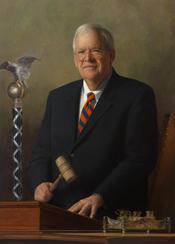
Mr. Speaker, our Government has no greater responsibility to the American people than national security. It is one of the few prescribed duties specifically outlined in both the preamble and body of…
Mr. Speaker, our Government has no greater responsibility to the American people than national security. It is one of the few prescribed duties specifically outlined in both the preamble and body of the United States Constitution.
It has been over 5 years since the terrorist attacks of September 11 and America is safer and much more alert to the dangers that lurk in our world. Since 9/11, our military and our intelligence services have thwarted dozens of attacks. Their efforts have saved countless lives. These successes were possible because of the tools we armed them with through the passage of laws on the floor of this House.
Mere days after September 11, Republicans responded by approving the USA PATRIOT Act to address the ways in which American law enforcement agencies can combat terrorism. By making necessary changes such as modernizing wiretapping laws and allowing more information sharing between law enforcement agencies, we increased the likelihood of catching terrorists and punishing them accordingly. This law, which we recently reauthorized, has enabled the Federal Government to effectively deter and punish terrorist acts in the U.S. and around the world.
Following the release of the 9/11 Commission's report and recommendations. Members of the House and Senate met to discuss these issues. At times, our views differed significantly regarding the changes we believed were necessary, but, in the end, we were able to find common ground on many of these issues and did what was right for America.
This culminated in the passage of the Intelligence Reform and Terrorism Prevention Act. This legislation provided the largest overhaul in the structure of the U.S. intelligence community since the creation of the CIA and incorporated most of the recommendations offered by the 9/11 Commission. Furthermore, this legislation allowed the intelligence community to focus its efforts on 21st century threats and was a tremendous step to further protecting the safety of the American people.
As we learned, access to timely and accurate information is critical to defeating terrorists and protecting our Nation from other threats. As such, the bill created the Office of the National Intelligence Director who acts as the unifying central point bringing together U.S. intelligence efforts. In addition, the bill addressed the loop-holes that existed in our national security structure by making improvements to law enforcement, defense intelligence, emergency preparedness, and border and aviation security.
The Intelligence Reform Act also addressed the issue of communications interoperability for first responders. The act required the Secretary of Homeland Security to establish a national strategy for public safety interoperability communications, and required the Secretary to establish two pilot projects to serve as national models. In addition, we passed subsequent legislation to establish an Office of Emergency Communications within the Department of Homeland Security.
Furthermore, we included provisions in the Deficit Reduction Act to plan for the release of radio frequency spectrum, and create a fund to receive spectrum auction proceeds. Among other things, the fund establishes a grant program of up to $1 billion for public safety agencies to deploy interoperable systems.
Nonetheless, we still had important border security and immigration provisions to be addressed. To that end, the House passed the REAL ID Act of 2005. A key 9/11 Commission recommendation, the REAL ID Act federally standardizes the requirements for applying and issuing State identification cards. According to the 9/11 Commission, the 19 hijackers responsible for the 9/11 terrorist attacks carried between them 13 valid drivers' licenses and 21 State-issued ID cards. The Commission recommended Congress establish Federal standards for sources of identification in order to target terrorist travel and better prevent another terrorist attack on American soil. This legislation addressed that.
And that's not all--over the past 5 years, this House has passed legislation to address maritime and port security, aviation security, and research and development of biomedical countermeasures to potential biological attacks.
As President John F. Kennedy once said, ``In the long history of the world, only a few generations have been granted the role of defending freedom in its hour of maximum danger.'' This is a responsibility we have never shied away from. America must continue to be vigilant and prepared for terrorist threats and attacks. And we will continue to work together to that end.
Mr. Speaker, on July 22, 2004, the 9/11 Commission released its final report on the 2001 terrorist attacks. That was 2 \1/ 2\ years ago. Since that time, we have had two elections and two Congresses.…
Mr. Speaker, on July 22, 2004, the 9/11 Commission released its final report on the 2001 terrorist attacks. That was 2 \1/ 2\ years ago. Since that time, we have had two elections and two Congresses. Yet only today are we beginning to enact most of the recommendations of the 9/11 Commission.
This is a long and complicated bill that is far from perfect. The scope of the bill's language must be addressed before it is finalized into law. This is, however, an important step forward.
The inaction of the previous Congress and the current administration has left America vulnerable, with the American people questioning its leadership. Cargo remains largely unscreened. Not all first responders can communicate effectively. International alliances against terrorism are in shambles. Civil protections have been weakened. Any bill that attempts to hold the administration accountable for this state of affairs is indeed welcome.
The legislation calls for vulnerability assessments of our Nation's infrastructure and seeks to prioritize threats. It establishes grant programs involving the private sector and public safety officials, for communications, intelligence, and border protection, and encourages a common set of criteria for private sector preparedness efforts.
Some of these functions already occur within Federal agencies that regulate sectors of our economy, including energy, public health, telecommunications, information technology, drinking water, chemical and transportation systems, as well as other commercial facilities. We must ensure the bill will not result in wasteful or duplicative efforts that may cause further confusion, or compromise our national security.
H.R. 1 establishes a new grant program at DHS to improve communications among public safety organizations during emergencies. But true interoperability requires more than just spectrum and technology. Stepped-up coordination and planning among public safety personnel, accompanied by greater funding, are critical.
Congress directed the Department of Commerce to use its spectrum and communications expertise to administer a $1 billion interoperable communications grant program, which is currently underway. Recognizing the value of such a grant program, this legislation now seeks to emulate this approach within DHS. I hope that doing so will properly focus DHS on ways to achieve widespread communications interoperability.
In addition, given the Government Accountability Office's cyber security concerns, I fully expect nothing in this bill will distract DHS or other Federal agencies from properly preparing for and reacting to cyber threats.
Additionally, my home State of Michigan has one of the busiest--and most peaceful--border crossings in the world. Businesses on both sides of the border are dependent on smooth and regular transit between the U.S. and Canada. We need to consider the costs to the economy of northern border States as we strike a balance between open borders and security.
In the weeks following 9/11, the delays at the Ambassador Bridge-- Detroit's only crossing with Canada--cost Michigan billions and forced factories to suspend production. Hopefully this legislation can speed the technological enhancements and personnel expansion we desperately need.
I also appreciate the independence this legislation provides to the Privacy and Civil Liberties Oversight Board, whose membership will be confirmed by the Senate. This should go a long way toward ensuring that civil liberties of Americans are truly protected. Without independence, opportunities for chicanery will persist.
I look forward to working with my colleagues to improve upon this important first step. As this legislation moves into conference, members of the Committee on Energy and Commerce with extensive expertise on these matters including issues as diverse as nuclear energy, the reliability of our communications systems, and the safety of our food supply and drinking water, will enhance these policies for the betterment of the American people.
Mr. Speaker, I am pleased to offer, along with my distinguished fellow Floridian, and the new rules chairwoman, Ms. Slaughter, an ethics champion in her own right, this legislation extending the…
Mr. Speaker, I am pleased to offer, along with my distinguished fellow Floridian, and the new rules chairwoman, Ms. Slaughter, an ethics champion in her own right, this legislation extending the rules of the 109th Congress, with ethics reforms to
follow in the 110th Congress. These rules will serve as a baseline for the rules of the 110th Congress, and then we shall add the needed ethics reforms, fiscal responsibility reforms, and rules on civility.
After recent tumultuous events, we can all agree that our neighbors back home expect the highest ethical standards from the Members of Congress, the people's House. This rules package includes some of the very good rules changes made in the 109th Congress, including the end of proxy voting in committees and the emergency power granted to the Speaker to recess the House and convene in another location in the case of a terrorist incident. But our Democratic package goes further, instituting ethics reforms that prohibit Members from accepting gifts from registered lobbyists, restricting Members' travel on corporate airplanes, and offering ethics training to Members and staff.
I come to the House from local government; and like many of my reform-minded freshmen colleagues, I championed ethics reform on the local level, particularly in the Tampa Bay area, where it was needed in the inner workings of county government. Well, it is needed here in the Halls of Congress now more than ever.
The new rules will include a fair and open process for the Congress: no holding open votes to change the outcome and clear guidelines for the operation of conference committees and final conference committee reports. Provisions for more stringent fiscal responsibility and pay- as-you-go budgeting requirements ultimately will aid our neighbors back home in reducing their own debt load while the Federal Government begins to do its part to ease the financial crunch so many of us feel across the country.
The proposed transparency in the earmark process and the additional requirement that Members certify that neither their spouses nor their relatives will have any personal financial interest in an earmark request will show and assure our neighbors back home that Congress is indeed operating in a way that best serves the needs and interests of every American.
I am humble and proud to be part of this new historic Congress and am glad to stand in support of the ethics reform package led by Ms. Pelosi for high ethical standards in government.
Mr. Speaker, I thank my fellow Floridian very much. And I am proud to stand here with many other new Members who are very reform- minded, and let me assure you we are ready to chart the new direction for America.
The election is over, and it is time for us to keep our commitment for honest leadership and open government rules changes. During this first 100 hours of the 110th Congress, all of us in this Congress must work together to pass key measures affecting the everyday lives of all Americans. We will begin by adopting the rules of the 109th Congress. This is the baseline proposal that is before us now. But then we shall continue on, on other proposals to clean up Washington, to sever unethical ties between lawmakers and lobbyists. We will start by banning travel and gifts from lobbyists, requiring full transparency to end the abuse of special interest earmarks, and ending the abusive processes that have undermined democracy in this House. These measures are the first steps to ensure that the Congress upholds the highest ethical standards.
Americans have paid the cost of corruption in Washington with skyrocketing prices at the pump, spiraling drug costs, and the waste and fraud of
no bid contracts in the Gulf and Iraq. No more. Reform is a top priority for this House because reform is a top priority for the American people.
As our first responsibility in fulfilling the mandate of this critical election, the Democrats are offering an aggressive reform package to restore the public trust. So, let's begin.
Mr. Speaker, I offer a motion to recommit with instructions. I am, Mr. Speaker. I object. Mr. Speaker, since its creation by this administration in the year 2002, the Proliferation Security…
Mr. Speaker, I offer a motion to recommit with instructions.
I am, Mr. Speaker.
I object.
Mr. Speaker, since its creation by this administration in the year 2002, the Proliferation Security Initiative, known as PSI, has quickly become one of this country's most valuable tools in helping to stop spread the weapons of mass destruction and preventing them falling into the hands of terrorist countries.
Our PSI partners, working at times with others, have stopped the transshipment of materials and equipment that have been bound for Iran's ballistic missiles programs and also has prevented Iran from procuring goods to support its WMD programs, including its nuclear program. Again, it was PSI cooperation between the United States, Britain and other European partners that began the demise of the Dr. A.Q. Khan network, an action that also contributed to the decision of the Libyan Government to stop and abandon its nuclear weapons and longer-range missile program.
However, despite this extraordinary record of success, some of our Democratic colleagues tell us, as noted in the Dear Colleague that they have circulated today, that securing United Nations authorization under international law would persuade countries that are not currently cooperating with us in the United States to prevent this illicit trade in items of proliferation concern to somehow cooperate with us.
They dismissed a coalition of the willing, on which the PSI is based as an ad hoc assembly. But the PSI has been a success precisely because it is a coalition of the willing.
Countries that might wish to slow or limit its activities have no means of doing so. The fact is that no country that genuinely wishes to cooperate with the United States, another PSI participant, is prevented from doing so. The idea that there is a need for the United Nations to provide legitimacy to the PSI under international law to permit countries to cooperate is nonsense.
I do not share the sentiments of my Democratic colleagues who have the surprising faith in the United Nations' desire to advance the interests of the United States. Whether it is Iran, Syria, terrorism, Middle East peace, the U.N. is rarely a help and more often than not a hindrance to the advancement of the goals of the United States. Rather, the desire for consensus, an agreement for agreement's sake, as a result, is a race to the bottom.
We have seen this with the so-called Human Rights Council, Mr. Speaker. If we allow the section cited in the motion to remain in the bill, a similar result is likely to happen with PSI. Some of my Democratic colleagues appear to regard U.N. authorization under international law as something upon which U.S. action must be predicated, that it is a higher authority to which we must turn in order to secure authorization for all our actions, a permission which may be granted or held as the U.N. sees fit.
We must reject that interpretation. I am certain that many of our constituents do reject it. What troubles me most are statements that begin with the phrase ``international law does not allow.''
We on this side of the aisle do not believe that international law controls what the U.S. can and cannot do, what it must do to protect the interests of the American people. That is why I have included language in this motion to recommit stating that simple truth.
Mr. Speaker, I would like to yield the remaining time to Mr. Wolf of Virginia, a man who understands the failures of the United Nations. And I strongly urge my colleagues to vote for this restatement of the fundamental principle upon which our Constitution and the foreign policy of our country is based.
Mr. Speaker, I demand a recorded vote.
Mr. Speaker, I rise today in support of H.R. 1, legislation to fully implement the remaining recommendations of the 9/11 Commission. I am pleased the new House leadership has made this one of the…
Mr. Speaker, I rise today in support of H.R. 1, legislation to fully implement the remaining recommendations of the 9/11 Commission. I am pleased the new House leadership has made this one of the first major pieces of legislation debated in the 110th Congress.
In the 5 years since the appalling acts of September 11, our country has been fighting terrorism to protect America and our friends and allies. On July 22, 2004, the independent and bipartisan 9/11 Commission provided to Congress and the American public 41 recommendations to improve homeland security.
At the end of the 108th Congress, legislation was passed and signed into law that implemented some of the recommendations of the 9/11 Commission. I was disappointed that the bill did not implement all of the Commission's recommendations. That is why I am pleased to support the bill before us today which includes all of the remaining recommendations.
One of the most important subjects the bill addresses is how the U.S. Government interacts with the Arab and Muslim world. The United States must extend our preemptive strategy to include winning the hearts and minds in the developing world; I believe this can be achieved through education reform. H.R. 1 would significantly enhance the International Arab and Muslim Youth Opportunity Fund, which is designed to improve educational opportunities for these youth, by calling for greater funding and outlining specific purposes for the fund.
Education reform in the Arab and Muslim world is of great importance to me. In fact during the 109th Congress I introduced the Universal Education Act to reform education in the developing world. Despite strong evidence that education can make nations more prosperous, healthy, stable, and democratic, the total amount spent each year on foreign aid directed at education could not even build 20 American high schools. If one of our strategic goals is to defeat terrorism around the world, we need to drastically increase our foreign aid spending, and to help developing nations improve their education systems.
Additionally, the bill before us improves the capabilities of the Human Smuggling and Trafficking Center by authorizing additional funding and hiring intelligence analysts experienced in the fields of human trafficking and terrorist travel. Cutting off the ability for terrorist to leave their country of origin is a first good step to stopping another attack on U.S. soil.
Further, the legislation strengthens several Federal non- proliferation initiatives so that weapons of mass destruction, WMD, do not fall into the hands of terrorists. Moreover, H.R. 1 would enact the Nuclear Black Market Counter-Terrorism Act. This bill requires the President to impose sanctions on any foreign person who trades nuclear enrichment technology to a non-nuclear weapons state or provides items that contribute to the development of a nuclear weapon by a non-nuclear weapons state or any foreign person. This action sends a clear message to would be terrorists that if they do attempt to arm themselves there will be serious consequences.
I praise the Commission for its excellent work, leadership, patriotism, and service to our country. We owe it to the families of the victims of 9/11 and to the citizens of our country to use the report's recommendations to make certain such attacks never happen again.
Again, I would like to congratulate and thank the House leadership for making one of the first tasks of the 110th Congress implementing the wise reforms suggested by the 9/11 Commission. I urge my colleagues to vote ``yes'' on H.R. 1.
Mr. Speaker, I rise in strong support of H.R. 1, which provides for the implementation of remaining recommendations by the bipartisan 9/11 Commission. Implementation of the 9/11 Commission's…
Mr. Speaker, I rise in strong support of H.R. 1, which provides for the implementation of remaining recommendations by the bipartisan 9/11 Commission.
Implementation of the 9/11 Commission's recommendations is long overdue. In 2004, the 9/11 Commission submitted 41 recommendations to the Bush Administration and Congress to fill critical gaps in our nation's homeland security. More than two years later, many of these recommendations have only been partially implemented and others not at all. Troubling gaps in our homeland security still exist. As the Co- Chairmen of the Commission stated last August, ``we are not as safe as we should be.''
As just one example, the 9/11 Commission found that the inability of first responders to communicate with each other and their commanders resulted in a loss of life after the planes hit the World Trade Center towers five years ago. In an emergency situation, first responders in a unit--and across departments--must be able to talk to each other. In response, one of the Commission's recommendations stated that establishing and funding interoperable communications for first responders had to be given a high priority. This hasn't happened; indeed, after Hurricane Katrina slammed into New Orleans last year, the communications network in that city simply collapsed.
Securing funding for interoperable radios is the number one homeland security priority for my district, but the high cost of establishing the required infrastructure and acquiring the necessary equipment has greatly slowed this vital effort. For smaller communities, the tens of thousands of dollars needed to upgrade their systems is simply too great. The stand-alone interoperability grant program included in this legislation is a great step forward, and I look forward to working to secure appropriations for this critical effort in the future.
The Commission also criticized the current funding system for federal first responder funding--which guarantees States a large portion of baseline funding with some additional funding distributed on the basis of population--arguing that homeland security assistance should be based ``strictly on an assessment of risks and vulnerabilities.''
One result of the current funding formula is that States at low risk of terrorist attack receive far more money per capita than states at much higher risk from terrorism. For example, under the current formula, Wyoming received $18.06 per capita in Department of Homeland Security grants in 2006 while Michigan, whose border crossings are the busiest on the northern border and conduct about $450 million in trade every day, received $5.13 per capita.
The legislation before the House significantly increases that share of state homeland security grants provided on the basis of risk. Under the bill, most States would be guaranteed a minimum of 0.25 percent of Homeland Security grant money, down from 0.75 percent. Eighteen states that have international borders, including Michigan, would get a higher guaranteed amount of 0.45 percent of the total. The rest of the money would be distributed based on the Homeland Security Department's assessment of risk and need. I agree with this approach. We must focus our resources on high-threat areas where the risk from terrorist attack are greatest.
The most basic job of government is to be ready to respond in the event of a disaster, whether natural or man-made. We can't afford another response like the one following Hurricane Katrina. I urge all my colleagues to join me in voting for this important legislation.
Mr. Speaker, I rise today to commend this body for considering legislation which with finally get us back on track to fully implement all of the recommendations made by the bipartisan 9/11 Commission…
Mr. Speaker, I rise today to commend this body for considering legislation which with finally get us back on track to fully implement all of the recommendations made by the bipartisan 9/11 Commission in 2004.
The 9/11 Commission provided our nation an objective and eye-opening assessment of how terrorists were able to exploit our security vulnerabilities on September 11th and made 41 key recommendations to address these shortcomings.
Unfortunately, two and a half years after the Commission's recommendations, there are still glaring threats that remain to be addressed. In fact, just over a year ago, the 9/11 Public Discourse Project issued a report card that gave the Administration D's and F's in some of the most critical areas.
Today, we finally have an opportunity to ensure that the 9/11 Commission's tireless efforts were not in vain. The legislation before us would shore up remaining vulnerabilities and implement recommendations that have been ignored completely or only partially addressed until now.
As the former Ranking Member of the Subcommittee on Prevention of Nuclear and Biological Attack, I am particularly pleased that this bill contains several provisions to make our nation more secure from the threat of a nuclear attack. H.R. 1 strengthens our most effective global non-proliferation programs, like Cooperative Threat Reduction and the Global Threat Reduction Initiative. These programs have proven successful in securing the most dangerous nuclear material abroad, before it can get into the hands of those who would do us harm.
Additionally, this measure gives the United States the power to sanction individuals involved in the illegal trade of nuclear material. It also builds upon the recently enacted SAFE Ports Act by requiring all cargo containers be scanned before leaving their port of origin and improves the quality of their inspections.
Today we are also taking a long-overdue, comprehensive approach to the vulnerabilities that remain in our aviation system. Under this measure, we will finally screen 100 percent of cargo on passenger planes and improve airline screening checkpoints to detect explosives. This measure will also create a redress process for passengers misidentified against the ``No Fly'' or ``Selectee'' watchlists who have been wrongfully delayed or prohibited from boarding a flight.
This measure provides significant support to first responders, who place their lives on the line each day, by funding state and local efforts to obtain the interoperable communication systems essential for emergency response. Additionally, our bill will considerably improve information sharing, which is one of our most effective forms of defense. H.R. 1 will strengthen fusion centers across the country, helping state and local law enforcement build relationships across every level and discipline of government and with the private sector to help ensure that criminal intelligence and other information is shared with those who can put it to the best use.
Finally, this legislation will protect the privacy and civil liberties of Americans, while effectively combating terrorism. Under this measure, the Privacy and Civil Liberties Oversight Board will be reestablished as an independent agency, which will greatly enhance the Board's oversight functions and help to ensure that we do not sacrifice freedom in the name of security.
The best way to honor those who died in the attacks of September 11th is to learn from the lessons of that tragic day, and this bill brings us much closer towards achieving this goal.
Mr. Speaker, because her time was accidentally cut off earlier, I yield 2 minutes to the gentlewoman from New York (Mrs. Maloney). Mr. Speaker, I have one speaker, and I will be prepared to close…
Mr. Speaker, because her time was accidentally cut off earlier, I yield 2 minutes to the gentlewoman from New York (Mrs. Maloney).
Mr. Speaker, I have one speaker, and I will be prepared to close after that.
Mr. Speaker, I yield 1\1/2\ minutes to the gentleman from New York (Mr. Nadler).
Mr. Speaker, I yield myself the remainder of the time.
First of all, I would like to set a couple of things straight for the record. For my ranking member, these 9/11 recommendations are not cheap political tricks; they are very serious and things that we all take very seriously because of that.
With respect to the 100 percent port cargo screening, it says take the lessons learned from the pilots and then implement what you learned from the pilots, not go forward, like you say.
You talk about not bringing bills before the committee. You brought a fence bill straight to the floor without going through a subcommittee or a committee.
So I might say to my colleague, I look forward to working with him over the next 2 years on making sure that we keep America safe from bad people, but also that we are able to respond to natural disasters and other things.
Mr. Speaker, it is fitting and proper that this bill, the first bill voted upon by the new Congress, gets the record straight on the 9/11 Commission's report. We finished the job. Yesterday, former Vice Chair Lee Hamilton of the 9/11 Commission made it very clear why we are here today.
He said in his view, ``The terrorists are plotting today on how best to strike the United States. They will not wait, and it has been a source of very considerable frustration to the members of the 9/11 Commission that so many of our recommendations, which really are commonsense recommendations, like the ability of the first responders to communicate with one another, the allocation of funds on the basis of risk and not politics, and many other recommendations, are simply common sense. It has puzzled us and frustrated us that they have not been enacted into law.''
Let us be very clear, Mr. Speaker, today's bill fixes these problems and fulfills many of the 9/11 Commission's recommendations. In short, as 9/11 Vice Chair Lee Hamilton said yesterday, if this bill is enacted, funded and implemented, the American people will be safer.
I urge support of the bill.
Mr. Speaker, I would like to take the opportunity to make reference to the fact that H.R. 1 includes provisions in which the Judiciary Committee has a jurisdictional interest. Specifically, I am speaking of provisions that touch on the following aspects of the bill: the Human Smuggling and Trafficking Center, the Fusion and Law Enforcement Education and Teaming Grant Program, the Privacy and Civil Liberties Oversight Board, the Federal Advisory Committee Act, and the treatment of detainees.
I appreciate the assistance of my colleague from Michigan, Mr. Conyers, in assuring the expedited consideration of this important legislation on the House floor, given his Committee's jurisdictional interest in the legislation. While it is important to note that I do not control the entire process, as there are other House Committees involved and the Senate will likely have its own positions on a variety of these issues, I am glad to work with the gentleman from Michigan and other Members of the Judiciary Committee as this legislation moves forward.
Mr. Speaker, I yield back the balance of my time.
Mr. Speaker, I rise in strong support of the Honest Leadership and Open Government rules package currently before the House. Reform of the way this House conducts its business is not an option. It is…
Mr. Speaker, I rise in strong support of the Honest Leadership and Open Government rules package currently before the House.
Reform of the way this House conducts its business is not an option. It is an absolute necessity. A recent poll found that only 37 percent of Americans approve of how Congress is doing its job. Does anyone here doubt that the ethical scandals and procedural abuses of recent years are a major factor for this low public approval rating? In 2006 alone, four Members of the House resigned their seats under a cloud. Two of these former Members have already been convicted for unethical and illegal ties to lobbyists.
I do not believe that these specific abuses represent the majority of Members, but I do believe it is the responsibility of the Majority party to set out strong rules that can begin to regain the trust of the American people in their institution of Congress.
For many years now, our constituents have been bombarded by media reports of cozy relationships between Congress and special interests lobbyists. They are incensed by news reports of Members accepting all- expense-paid trips to play golf in Scotland, the flagrant abuse of House rules to hold I5-minute votes open for hours for the sole purpose of affecting the outcome, the widening Jack Abramoff lobbying scandal, and the lack of accountability and transparency in how congressional earmarks are awarded.
I mentioned that our constituents learned about these abuses from the media, in their morning newspapers and on the nightly news. Too often in recent years, it is also from the media that rank-and-file Members of Congress have learned about special interest provisions that were secretly inserted into legislation in the dead of night and brought up for a vote before Members had an opportunity to read what they were being asked to vote on. This form of secret legislating has got to stop, and it will stop under this reform package.
The reform package before the House will also curb a large number of the other abuses that have come to light. These reforms will ban gifts from lobbyists, expand and tighten the restrictions on congressional travel paid for by outside groups, prohibit travel on corporate jets, and require greater public disclosure of targeted special interest legislation. The reforms will also prohibit the practice of holding votes open for the sole purpose of affecting the outcome.
There are many other needed reforms contained here, but the one I want to single out is the provision that restores pay-as-you-go budgeting. Pay-as-you-go budgeting simply means that Congress will not consider any legislation to boost entitlement spending or cut taxes unless it is fully paid for. Before they were abandoned in 2002, the pay-as-you-go rules helped to turn record deficits into record surpluses in the 1990s. Since abandoning pay-as-you-go, the cumulative deficit for the past four years has totaled over $1.36 trillion. We simply cannot continue to pile up more and more debt and pass it along to our children and grandchildren.
For all these reasons, I urge all my colleagues to join me in voting for the House rules reform package before the House.
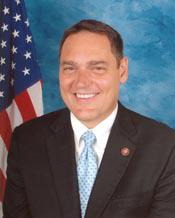
Mr. Speaker, I rise today to ask you to support this historic rules package. The winds of change have brought me here. I don't think it is too much to say that my very presence before you constitutes…
Mr. Speaker, I rise today to ask you to support this historic rules package. The winds of change have brought me here. I don't think it is too much to say that my very presence before you constitutes a message to this body, a message sent from the good people of Ohio's 18th District. By these presence, I wish to deliver this message on behalf of my constituents.
The message is that the legislative process is broken. Rather than serving the needs of working families, this Congress has shown through past actions a preference for serving interests of the privileged few. Nowhere has this been more clear than in the influence wielded by lobbyists. The influence of lobbyists has compromised the reputation and even the health of this body.
In order to restore the integrity to this Chamber and restore America's faith in its elected officials, we must undertake substantial ethics reform. Our actions today will not only enhance the most fundamental principles of a democratic society; they will remind our constituents that we are a body of the people and not above the people.
The package before you will breach the circle of deceit between lobbyists, their wealthy clients, and this body. It represents long overdue real ethics reform. It bans House Members and their employees from accepting gifts from lobbyists and the organizations that hire them. It prohibits lobbyists from paying for or organizing Member travel, and it eliminates the all-too-common practice of legislative jet-setting. In short, the ethics package is the first step toward restoring integrity and beginning the process necessary to restore faith in our system of government.
Coming from a district whose previous Congressman became mired, and then consumed, by scandal, my fellow district residents and I understand all too intimately the perils associated with weak and loosely monitored ethics regulations.
We have suffered the frustration, disappointment, and anger associated with betrayal. We have suffered from not having a Member of Congress available to attend to the needs of the citizens of our district. But we are not alone. Other districts have suffered similar letdowns. That is inexcusable, and it is unconscionable.
At a moment in time when our Nation needs truly heroic leadership, as the challenges of the changing world continue to grow, this body has failed to step up and lead. The institution of Congress has failed to make clear its commitment to the principles of democracy; and it has frustrated, disappointed, and angered the American public.
The winds of change have, indeed, blown many among us into this Chamber, and there is much work to do.
We cannot begin our work in good faith without this declaration today that we are of, and not above, the American people. The time to act is now. We have an extraordinary burden to prove to those who have given us this honor. We must make clear to them that we are representing their interests, not bartering legislative favors in order to gain gifts and trips.
I ask my colleagues to join me in supporting this important ethics reform package.
Bill Text
Legislative text isn't available for this bill yet.