Mr. Speaker, I ask unanimous consent that all Members have 5 legislative days within which to revise and extend their remarks on the subject of my special order. Mr. Speaker, I thank the Speaker for…
Mr. Speaker, I ask unanimous consent that all Members have 5 legislative days within which to revise and extend their remarks on the subject of my special order.
Mr. Speaker, I thank the Speaker for the opportunity to serve as moderator for this special designated time for recognition under Special Orders for celebration of health care, and, in particular, the uninsured.
Tonight I have several colleagues who will be joining me to speak on different topics with respect to health care issues affecting minority communities. Just to give you a brief summary of some of the topics we will touch on, obviously reauthorization of SCHIP, language access, obesity, diabetes, cancer, tobacco, HIV and AIDS, health professions, community health workers, environmental health and Medicaid citizenship.
Mr. Speaker, tonight I rise to recognize National Minority Health Month. This week is Covering the Uninsured Week. Tonight you are going to hear from some of my colleagues representing the Congressional Black Caucus, the Congressional Hispanic Caucus and the Congressional Asian Pacific Islander Caucus and their efforts to improve health care in our communities.
Did you know that life expectancy and overall health have improved in recent years for large numbers of Americans due to an increase in and focus on preventive medicine and new advances in medical technology? However, not all Americans are faring that well, particularly communities of color, which continue to suffer from significant disparities in overall rate of disease incidence, prevalence, morbidity, mortality and survival rates in the population, as compared to the health status of the general population.
The National Minority Health Month was launched in an effort to eliminate health disparities and to improve health status of minority populations across the country. This month was created in response to Healthy People 2010, a set of comprehensive health objectives established by the U.S. Department of Health and Human Services. Disparities continue to persist, and we must eliminate health disparities by identifying significant opportunities to improve health care.
There are disparities in the burden of illness and death experienced by African Americans, Hispanic Americans, Asian Americans, Pacific Islanders, and American Indian and Alaskan Natives as compared to the U.S. population as a whole.
I am pleased to once again be working with my colleagues in the Congressional Black Caucus, the Hispanic Caucus, and the Congressional Asian Pacific Islander Caucus to develop a comprehensive tri-caucus health disparities bill. Our bill will address the importance of language access, health professions, training, data collection and health coverage for immigrants. Our colleagues in the Senate are also working on a disparities bill, and I hope that they too will pass legislation that will truly save the lives of millions of minorities. We must do more to better the health of our population, which includes all communities of color.
With that, I want to just briefly touch on this issue of the uninsured. Today marks the start of the fifth year of Covering the Uninsured Week. Although the United States has one of the best health care systems in the world, not everyone has the means to access our health care system. The number of uninsured people affects us all and is a national problem that needs a national solution.
We all know that lack of health insurance results in reduced access to care. Access can be defined as the ability to get to health services, receive service at the right time, and obtain the appropriate services necessary to promote the best health outcomes possible.
Reduced access could mean that someone is less likely to have regular sources of care, less likely to receive preventive services and more likely to use emergency departments as primary sources of care. The long-term consequences of reduced access to care include lower quality of life, higher mortality rates and the decline of the population's overall health.
Despite the growth of our economy, the number of uninsured persons continues to increase. In 2005, more than 44 million people were uninsured, and of that number, 14 million were Latinos.
The cost of private health insurance continues to rise astronomically, and we hear that every single day when we go back home to our districts. Health insurance premiums continue to rise by double- digit rates each year, and over 80 percent of the uninsured come from working families, people who are working and getting a paycheck. While two-thirds of uninsured children are eligible for public programs such as Medicaid and the SCHIP program, most are still uninsured.
These adults also are low-income populations who are not eligible for public programs but have incomes below 200 percent of the Federal poverty level. This group is composed predominantly of parents and childless adults who work but may have difficulty in obtaining and affording coverage. Due to the low Medicaid eligibility level for parents, many uninsured parents have children who qualify for public coverage but do not qualify, themselves, as parents. What an irony.
Members of racial and ethnic minority groups make up a large number, a disproportionate share, of the uninsured population. The uninsured rate for Latinos was 33 percent in 2005, 20 percent for African Americans and 18 percent for Asians and 30 percent for Native Americans. They lack health care coverage.
In addition to impacting health and the finances of the uninsured themselves, the lack of health care coverage has had repercussions for all of us in America. Many hospitals, as you know, are currently struggling under the strain of providing uncompensated emergency care to uninsured individuals.
In my own district in California, community health centers bear the brunt of responsibility for treating the uninsured. These community health centers are often the first place that the uninsured turn to when seeking health care services. These community health centers are a vital part of our health care safety net.
Poor health leads to poor financial status, and a never-ending cycle of low socioeconomic status often leads to poor health. The core values for a strong and secure America should include the right to universal access to affordable, high-quality health care for all.
In a country that prides itself on equality, it is evident that our health
care system is broken when people suffer from a lack of access to health insurance and to quality care. We must make health care services affordable and provide quality through linguistically and culturally competent services for all Americans. That must be our national priority.
I want to refer myself to the State Children's Health Insurance program, known by many as SCHIP, which covers currently 6 million children, building on Medicaid's coverage of 28 million children. However, statistically speaking, 9 million children remain uninsured.
Over the past decade, SCHIP and Medicaid together have reduced the uninsured rate among low-income children by one-third. We know that uninsured children are more likely to receive cost-effective preventive services and are healthier, which leads to greater success in school and life. Although programs such as SCHIP and Medicaid have decreased the number of uninsured children, the lack of funding and outreach efforts have left millions of those children ineligible without any coverage. Reducing disparities in children's access to health care is extremely important and should be one of our biggest priorities here in Congress.
For example, uninsured African American and Latino children are less likely to have a personal doctor and are more likely to forego needed medical care than any other group of uninsured children. More than half of insured African American children, 51 percent, and insured Latino children, 50 percent, are covered by Medicaid and SCHIP. Nearly 95 percent of eligible but uninsured children live in families with incomes below 200 percent of the Federal poverty level, which is $33,200 for a family of three, and over 40 percent of this population is Latino.
Enrollment in SCHIP has proven to reduce disparities in access to health care services as well as reducing the coverage gap for minority children. More than 80 percent of African American children and 70 percent of uninsured Latino children appear to be eligible for this public coverage, but currently are not enrolled.
Additional funding for SCHIP, as you know, is necessary for the coverage of all uninsured. SCHIP plays a critical role for children of color. After SCHIP was created back in 1997, the percent of uninsured children steadily declined from a high of 15.4 percent in 1998 to a low of 10 percent in 2004, and for racial and ethnic minorities the decline was remarkable. In 1998, roughly 30 percent of Latino children, 20 percent of African American, and 18 percent of Asian Pacific Islander children were uninsured. In 2004, those numbers had dropped to about 21 percent, 12 percent and 8 percent respectively.
In addition to reducing the coverage gap for minority children, SCHIP enrollment has helped to reduce disparities in access to health care services. For example, a study of children enrolled in New York's SCHIP program for one year found an almost complete elimination of these disparities and the number of children with unmet health care needs decreased. A study from California's SCHIP population confirmed those results as well. Across racial and ethnic groups, SCHIP enrollment was associated with a significant reduction in disparities and access to needed care.
We need adequate SCHIP reauthorization. Currently there is insufficient Federal funding for SCHIP to cover the children currently enrolled. We need additional money to cover them and to expand coverage to uninsured children who are eligible.
In order to expand health coverage for minority children, we also need to address the underlying barriers to enrollment in Medicaid and SCHIP that minorities are more likely to face; as an example, the distrust of government and a health care system where language may not be spoken adequately to the different groups that are affected. And misinformation about eligibility rules is often complicating the process for many who don't understand the paperwork.
Enrollment strategies targeted to minority communities, including the use of community health workers, known as promotoras, could help guide families through the enrollment process and have been proven to increase enrollment and reduce disparities. We must improve outreach efforts and simplify enrollment in order to reach the millions of unenrolled children from communities of color who are eligible for Medicaid and the SCHIP program. This year, with the reauthorization of SCHIP, this is an opportunity for us to address racial and ethnic disparities in children's access to health care. I hope that we can work together with our colleagues across the aisle to begin the debate and see that we reauthorize these programs that are so vitally needed.
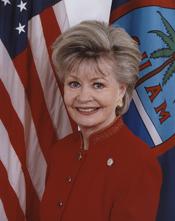
I am very pleased this evening to have one of my colleagues, the gentlewoman from Guam, who has chaired the Congressional Asian Pacific Islander Caucus Task Force on Health who has joined me this evening. She has been a pioneer on health care access and will give us, I am sure, very informative data regarding the problems that are faced currently in the Asian Pacific Islander community. I welcome her this evening.
I gladly yield to the gentlewoman.
I thank the gentlewoman from Guam, and I would like to at this time thank her for her hard work and deliberations in the past few years as a strong member of the tri-caucus working on health care issues. I know she is going to continue to lead and be a voice for those underrepresented communities.
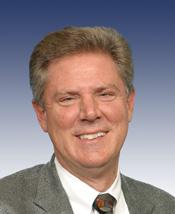
I would like to now recognize a very special individual who is Chair of our Subcommittee on Health on Energy and Commerce, but also plays a very important role in representing the Native Americans in our great country and that is the gentleman from New Jersey (Mr. Pallone).
I thank the gentleman from New Jersey for his kind words and knowledge and always helping Members to better organize their messages, particularly when it comes to health care and the need to improve access for all people in our great country.
As the gentleman says, the fact is that we are undergoing a change where our populations are exploding, our minority populations have increased, and we don't see more services provided, one of which is the Native American population. I have a significant Native American population in L.A. County and there is one center available for them. It is just horrifying to think that people have to travel so many counties just to get there. Lord help them if they have an episode of some sort, that they get there in time to receive the necessary care. To know that this is not a priority with the administration is very alarming. We need to prioritize this issue.
I again want to recognize my colleague from Guam to talk about some other very pressing health care issues that affect not just Asian Pacific Islanders but these other minority populations. So I would yield to her.
Mr. Speaker, I thank the gentlewoman for joining us this evening and representing the caucus so well, the Asian Pacific Islander Caucus, and demonstrating a willingness to work across the aisle and in a coalition so that we can better improve access to health care for all underrepresented groups.
I want to talk very briefly before I recognize one of our other colleagues who has joined us here from the Congressional Black Caucus, Sheila Jackson-Lee.
I want to talk about diabetes because diabetes, in my opinion, is one of the major chronic illnesses. It does not just affect ethnic minority or underrepresented groups, but many, many people in our country.
One of the goals that I mentioned earlier of the Healthy People 2010 program, a campaign underway, by the way, by the Department of Health and Human Services, is to reduce the disease and economic burden of diabetes and to improve the quality of life for all people who have or are at risk of getting diabetes.
Diabetes, as you know, is a chronic disease affecting both children, Type I, and adults, Type II. The number of people with diabetes has increased steadily in the past decade, and the increase has occurred within certain racial and ethnic groups.
Today, approximately 20.8 million Americans have diabetes, and of these people, an estimated 6.2 million individuals have not even been diagnosed. According to the Centers for Disease Control and Prevention, another 54 million people have pre-diabetes.
Complications of diabetes include heart disease, stroke, blindness, kidney
failure, dental disease, pregnancy complications and amputations. These are very serious illnesses, and diabetes is now the sixth leading cause of death in the United States and costs the Nation over $132 billion per year in direct and indirect costs.
Diabetes, as you know, is the leading cause of nontraumatic amputations, and about 150 amputations per day are due to diabetes.
Two million Latinos have been diagnosed with diabetes, and Latinos are 1.5 times more likely to have diabetes than whites, on the average, and many children with Type II diabetes are Latino or African American.
Reducing the incidence of diabetes and thus reducing racial and ethnic disparities involves diet and lifestyle changes. However, strategies to manage the disease and prevent the disease also need to be culturally sensitive and targeted to specific populations.
The number of overweight minority children has increased in recent years, and more of them are being diagnosed with adult-type diabetes. It is estimated that now at least 40,000 children now have Type II diabetes, which is the type of diabetes associated with adult obesity.
Regular diets of low-cost, high-calorie fast food and sodas, in addition to inadequate daily physical activity, have contributed to the prevalence of diabetes. Health education, as you know, is extremely important, and we need to teach people how to prevent diabetes because it is preventable. For people who already have diabetes, we need to teach them how to manage that disease.
In order to prevent or delay complications and early death from diabetes, patients need to understand the disease, take charge of blood glucose management, comfortably talk to their provider about diabetes care, and have access to equipment, supplies and prescriptions. Cultural competence and access to health care play a very large role in preventing deaths due to diabetes.
Sixty percent of my district, as you know, is Latino, and I have seen firsthand the community clinics that have helped my constituents who are diagnosed with this deadly but preventable disease. A large proportion of the people who visit these clinics in my district are uninsured. When I see the packed waiting rooms, I understand how hard it is to manage this chronic illness. Even with appointments, people can have waiting times of several hours, resulting in loss of work.
A 2005 Commonwealth Fund study of public hospitals also found that African American and Latino patients were less likely than their white counterparts to have well-controlled diabetes, and uninsured patients received even less care. Public hospitals serve a high number of patients at high risk for not receiving access to needed health care. In the study, about two out of five patients with diabetes were uninsured, and two-thirds were members of racial and ethnic minority groups, and up to two-thirds of patients primarily spoke a language other than English.
Insurance status and race influences health care use and outcomes for diabetes patients. Uninsured patients have the worst diabetes control, and 33 percent do not have their condition under control now, which is almost double the rate for Medicare patients.
The routine costs for managing diabetes, to test and control glucose levels, can reach hundreds of dollars per month. Uninsured patients have difficulties paying for equipment to effectively manage their treatment. Consequently, the higher prevalence of diabetes and the inability to manage diabetes leads to more diabetes-related deaths in communities of color.
This is just one example of how social determinants impact our health care status, and I wanted to draw your attention to that.
This evening we have been joined by two members of the Congressional Black Caucus, and I would first like to recognize the gentlewoman from Texas (Ms. Jackson-Lee). Thank you for joining us this evening.
I thank the gentlewoman from Texas for joining us this evening.
Before I conclude with our discussion on the uninsured and celebrating, actually, a call to action, a call to action
for all people of color and all Americans, that we have a balanced health care system that serves all of us, one last item I would like to bring up, before I recognize the gentlewoman from the Virgin Islands for the last 5 minutes is to talk a little bit about one of the biggest killers in our community, and it is about tobacco. Each year tobacco use kills more than 400,000 Americans and costs our country more than $96 billion in health care costs.
According to the Centers for Disease Control and Prevention, tobacco use by pregnant women alone costs at least $400 million per year due to complications such as low birth weight, premature birth and sudden infant death syndrome. Every day, 1,000 kids become regular smokers, one-third of whom will die prematurely as a result. Smoking is responsible for 87 percent of lung cancer deaths in the U.S.
Tobacco-related cancers are disproportionately higher among low- income and ethnic-minority communities. Because these groups have been repeatedly targeted by the tobacco industry, they unfairly carry a greater weight of the health and economic burden tobacco has in our country. For communities of color, tobacco addiction brings a disproportionate amount of death and disease to communities with low rates of health insurance coverage. Lung cancer is the leading cause of cancer among Latino men and second leading cause of death among Latinas.
Approximately 25,000 Latinos will die from smoking-related illnesses this year, surpassing all other causes of cancer. Each year, approximately 45,000 African Americans die from smoking-caused illness.
Native American adults have the highest tobacco use rates for all major ethnic groups. The prevalence of smoking is 37.5 percent among Native American, 26.7 among African American, and 24 percent among white men. This year it is expected that the rate of lung and cancer deaths for white males will be 73.8 per 100,000, while for African Americans it will be 98.4 per 100,000. Tobacco use is an important risk factor for coronary heart disease, the leading cause of death among Latinos.
Unfortunately, tobacco companies have increased their marketing to our minority communities, and I have seen advertisements in magazines popular with Latino youth. RJ Reynolds is running ads for Kool cigarettes with images that appeal to Latinos.
I recently learned that the Kool Mixx campaign focused its marketing images around music and hip-hop, which appeals to African American and Latino youth. The Kool Mixx campaign included 14 music concerts around the country and a DJ competition, as well as a special theme park with cartons displayed on them.
In addition, the tobacco company placed advertisements in publications popular with Latino youth, like this one here, including ``Latina'' and ``Cosmopolitan en Espanol.'' The ads include slogans like: ``It's about pursuing your ambitions and staying connected to your roots.'' To reach everybody in our community, they not only use attractive Latino models, but they also make sure ads are in English and Spanish.
The cigarette companies have focused on African American populations as well. One company created a line of cigarette flavors like Caribbean Chill and Mocha Taboo and used images of African Americans to promote their cigarettes. This targeted marketing is having an impact on the rates that we are seeing, higher number of people smoking. In 2005, 22 percent of Latino high school students smoked, a 19 percent increase over 2003, when the smoking rate was down to 18 percent.
Smoking continues to be a huge public health risk for us, and we must not tolerate it in our communities. We have to stand up to these big corporations and say, enough advertising, let's speak the truth, let's talk about prevention, let's talk about awareness, let's talk about alternative lifestyles so we can have healthier communities.
I am pleased that we were able to entertain this discussion on the uninsured, the celebration of Uninsured Week and to talk about the disparities that exist in our communities and communities of color.
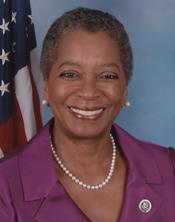
I am pleased to give the remainder of my time to the distinguished woman from the Virgin Islands, who is chairperson of the task force for the Black Caucus, the Congressional Black Caucus.