Mr. Speaker, I move to suspend the rules and pass the Senate bill (S. 254) to award posthumously a Congressional gold medal to Constantino Brumidi. Mr. Speaker, I ask unanimous consent that all…
Mr. Speaker, I move to suspend the rules and pass the Senate bill (S. 254) to award posthumously a Congressional gold medal to Constantino Brumidi.
Mr. Speaker, I ask unanimous consent that all Members have 5 legislative days within which to revise and extend their remarks on this legislation and to insert extraneous material thereon.
Mr. Speaker, I yield myself such time as I may consume.
Mr. Speaker, I rise in strong support of S. 254 which would posthumously award the Congressional Gold Medal to Constantino Brumidi and would authorize the striking of duplicate medals for sale to the public.
Mr. Speaker, for those of us who work here in the Capitol, we are very fortunate to be surrounded by Constantino Brumidi's genius every day. Brumidi's awesome, inspiring murals and frescos are remarkable as they are ubiquitous. Constantino Brumidi's works can be found in three Senate Appropriations Committee rooms, the House Appropriations Committee room, the Senate Democratic Policy Committee room, the Brumidi corridors, the Senate reception area, the Office of the Vice President and, of course, the Rotunda. Like his masterful works throughout the Capitol, Constantino Brumidi's story is uniquely American.
Brumidi was born in Rome in 1805 to an Italian mother and a Greek father. His artistic ability was cultivated at an early age. In his early years, he was commissioned to paint frescos and murals in various Roman palaces. And then in 1849, as did so many of our ancestors, Brumidi, who was already an established artist in Italy and who spent 3 years working for Pope Gregory XVI in the Vatican, migrated to the United States and began a new life in New York City. There he proudly became a naturalized American citizen in 1852.
It was on a return trip from Mexico that Constantino Brumidi first saw the U.S. Capitol. It was a fortuitous twist of fate: at a time when Congress and President Franklin Pierce were preparing to expand the Capitol, a word-class Italian American artist, who just happened to be passing through Washington, inspired by both the freedoms and liberties represented by the seat of Congress and the vast open spaces in the Capitol that seemed to invite frescos and murals, offered his services to Quartermaster General Montgomery C. Meigs. Wisely, Meigs commissioned Brumidi to become the artist of the Capitol.
Brumidi's first work was in the Agricultural Committee room. This masterpiece received such favorable attention that he was given a raise and tasked with painting other larger works culminating with the works in the Capitol Rotunda.
There is no work in the Capitol more impressive or more renowned than ``The Apotheosis of Washington.'' Brumidi completed the fresco in 11 months at the end of the Civil War, soon after the new dome was completed. This absolutely stunning work soars 180 feet above the Rotunda floor. To compensate for the distance from the floor to the ceiling, Brumidi, who spent years mastering depth and scale, painted 15-foot tall figures so that the work could be appreciated from the Rotunda floor.
Another Brumidi masterpiece, ``The Frieze of American History,'' appears just underneath the dome and spans the entire 360 degrees of the Capitol Rotunda. The frieze, which initially looks to be carved or sculpted, as all who view it believe it to be three dimensional, was, in actuality, meticulously painted with the use of scaffolding. While Brumidi first sketched a design of the frieze in 1859, Congress did not authorize work to begin on this piece until 18 years later, in 1877.
The work masterfully displays America's history, beginning with the landing of Christopher Columbus and continuing to the discovery of gold in California. While many visitors to the Capitol have seen Brumidi's genius in the frieze over the years, they may not realize that he nearly lost his life while painting it. While working on a figure of William Penn, 76-year-old Brumidi fell from the scaffolding, but saved himself by clinging to the rung of a ladder for 15 long minutes before he was rescued. While he subsequently ascended the scaffolding once more to continue his work, he died a few months later in 1880. It took two additional artists and 73 years to finish the masterpiece that Constantino Brumidi first began.
Mr. Speaker, Constantino Brumidi's service to the Capitol, and our country, span the administration of six, six Presidents: Franklin Pierce, James Buchanan, Abraham Lincoln, Andrew Johnson, Ulysses S. Grant, Rutherford B. Hayes. On and on, Brumidi worked. All of us here in the Capitol that have the privilege of working in this living museum, as well as the millions of visitors that tour our building each year, who admire and relish Brumidi's works, but precious few know the story of the artist of the Capitol.
In addition to awarding Constantino Brumidi with the Congressional Gold Medal, S. 254 directs the Architect of the Capitol to display the gold medal as an exhibition in the new visitor's center dedicated to Brumidi's life and work. I believe such an exhibit is long past due and would be to the benefit of future generations of Americans who come to see the Capitol and admire the brilliant works of Constantino Brumidi, reminding us yet again that we are a Nation built by immigrants.
Mr. Speaker, Constantino Brumidi was a great son of Italy and a great American. His achievements are a
great source of pride for Italian Americans, and S. 254 would bestow Brumidi, and the Italian American community, with the recognition the artist's great contributions so rightly deserve.
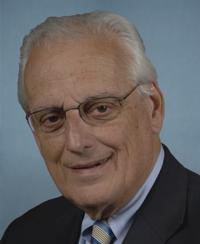
Special thanks are due to Representative Bill Pascrell from New Jersey, the main sponsor of this bill that we have before us in the House today.
And I'd like to acknowledge the hard work and dedication of somebody who visits us here in the gallery today, Mr. Speaker, Joseph Grano, who's the president of the Constantino Brumidi Society, for his long and tireless efforts on this behalf.
Mr. Speaker, this is a great day for those who love fine art, creativity, American history, and who appreciate the contributions of Italian American immigrants and all immigrants for the culture and history of our country.
I reserve the balance of my time.
Mr. Speaker, I yield 6 minutes to the sponsor of the bill, Bill Pascrell of New Jersey.
Mr. Speaker, at this time, I yield 3 minutes to the gentlewoman from New York (Mrs. Maloney).
Mr. Speaker, I yield back the balance of my time.