To direct the Assistant Secretary of Homeland Security (Transportation Security Administration) to address vulnerabilities in aviation security by carrying out a pilot program to screen airport workers with access to secure and sterile areas of airports, and for other purposes.
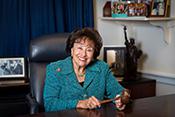 Rep. Nita M. Lowey (D-NY)
Legislative Activity
Stay on top of the latest movement without scrolling through every action
Received in the Senate and Read twice and referred to the Committee on Commerce, Science, and Transportation.
December 12, 2007
View full timeline
Introduced in House
March 8, 2007
Referred to the House Committee on Homeland Security.
March 8, 2007
Referred to the Subcommittee on Transportation Security and Infrastructure Protection.
March 19, 2007
Subcommittee Consideration and Mark-up Session Held.
April 24, 2007
Forwarded by Subcommittee to Full Committee (Amended) by Unanimous Consent .
April 24, 2007
Committee Consideration and Mark-up Session Held.
April 24, 2007
Ordered to be Reported (Amended) by Voice Vote.
April 24, 2007
Sponsor introductory remarks on measure. (CR H7052)
June 25, 2007
Committee Consideration and Mark-up Session Held.
August 1, 2007
Ordered to be Reported (Amended) by Voice Vote.
August 1, 2007
Reported (Amended) by the Committee on Homeland Security. H. Rept. 110-482.
December 11, 2007
Placed on the Union Calendar, Calendar No. 297.
December 11, 2007
Mrs. Lowey moved to suspend the rules and pass the bill, as amended.
December 11, 2007 • 4:38 PM
Considered under suspension of the rules. (consideration: CR H15270-152773)
December 11, 2007 • 4:39 PM
DEBATE - The House proceeded with forty minutes of debate on H.R. 1413.
December 11, 2007 • 4:39 PM
Passed/agreed to in House: On motion to suspend the rules and pass the bill, as amended Agreed to by voice vote.(text: CR H15270-15271)
December 11, 2007 • 4:51 PM
On motion to suspend the rules and pass the bill, as amended Agreed to by voice vote. (text: CR H15270-15271)
December 11, 2007 • 4:51 PM
Motion to reconsider laid on the table Agreed to without objection.
December 11, 2007 • 4:51 PM
The title of the measure was amended. Agreed to without objection.
December 11, 2007 • 4:51 PM
Received in the Senate and Read twice and referred to the Committee on Commerce, Science, and Transportation.
December 12, 2007
Floor Debate
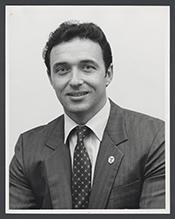
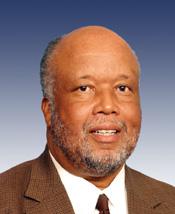
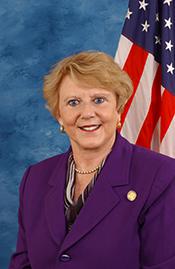
6 membersWhat members said about H.R. 1413 on the floor


 +1
+1
Floor Debate
6 membersWhat members said about H.R. 1413 on the floor
Mr. Speaker, I rise in support of H.R. 5982. As a Californian, the State that was once known as the Bear Republic, and proud resident of the State of California, which has the bear flag, I rise in…
Mr. Speaker, I move to suspend the rules and pass the bill (H.R. 5982) to direct the Secretary of Homeland Security, for purposes of transportation security, to conduct a study on how airports can…
I thank the distinguished gentleman from Mississippi, the chairman of the committee, and I want to thank him and applaud him for this legislation. As has been indicated on the floor, the importance…
Mr. Speaker and my colleagues, I had the honor and privilege of chairing the House Aviation Subcommittee for some 6 years. I inherited that responsibility some months after September 11 and concluded…
Mr. Speaker, I rise in strong support of H.R. 1413, to direct the Assistant Secretary of Homeland Security (Transportation Security Administration) to address vulnerabilities in aviation security by…
Show 7 more
Mr. Speaker, I yield myself such time as I may consume. I rise in strong support of H.R. 1413, legislation sponsored by my good friend and fellow New Yorker, Nita Lowey, and me that seeks to close an…
Madam Speaker, I rise in strong support of H.R. 1413, which would create a pilot program testing the effectiveness of physically screening 100 percent of airport workers with access to secure and…
Mr. Speaker, I rise today in strong support of H.R. 1413. H.R. 1413 was introduced by Representatives Lowey and Brown-Waite to establish a pilot program to test the viability of physically screening…
Mr. Speaker, I rise today in support of H.R. 5982, Chairman Thompson's legislation that would take an important step toward improving airport security. Since 9/11, Congress and the airline industry…
Mr. Speaker, I move to suspend the rules and pass the bill (H.R. 1413) to direct the Assistant Secretary of Homeland Security (Transportation Security Administration) to address vulnerabilities in…
Mr. Speaker, America recently got a wake-up call when we learned that law enforcement had thwarted a Muslim extremist plot to blow up Kennedy Airport and the surrounding neighborhoods. This is not…
I wanted to rise to thank our chairman for your important work on this issue. We have worked together on 100 percent screening of workers at airports, and now, there is a pilot project in place for…
Bill Text
4 versions available
        [Congressional Bills 110th Congress]
[From the U.S. Government Publishing Office]
[H.R. 1413 Referred in Senate (RFS)]

1st Session
H. R. 1413

_______________________________________________________________________

IN THE SENATE OF THE UNITED STATES

December 12, 2007

Received; read twice and referred to the Committee on Commerce,
Science, and Transportation

_______________________________________________________________________

AN ACT

To direct the Assistant Secretary of Homeland Security (Transportation
Security Administration) to address vulnerabilities in aviation
security by carrying out a pilot program to screen airport workers with
access to secure and sterile areas of airports, and for other purposes.

Be it enacted by the Senate and House of Representatives of the
United States of America in Congress assembled,

SECTION 1. ENHANCED PERIMETER SECURITY AND ACCESS CONTROL THROUGH
COMPREHENSIVE SCREENING OF AIRPORT WORKERS.

(a) Pilot Program.--Not later than 120 days after the date of the
enactment of this Act, the Assistant Secretary of Homeland Security
(Transportation Security Administration) shall carry out a pilot
program at 7 service airports to screen all individuals with unescorted
access to secure and sterile areas of the airport in accordance with
section 44903(h) of title 49, United States Code.
(b) Participating Airports.--At least 2 of the airports
participating in the pilot program shall be large hub airports (as
defined in section 40102 of title 49, United States Code). At least 1
of the airports participating in the pilot program shall be a category
III airport. Each of the remaining airports participating in the pilot
program shall represent a different airport security risk category (as
defined by the Assistant Secretary).
(c) Screening Standards.--
(1) In general.--Except as provided under paragraphs (2)
and (3), screening for individuals with unescorted access under
the pilot program shall be conducted under the same standards
as apply to passengers at airport security screening
checkpoints and, at a minimum of 1 airport, shall be carried
out by a private screening company that meets the standards in
accordance with section 44920(d) of title 49, United States
Code. That airport shall be an airport that uses such a private
screening company to carry out passenger screenings as of the
date of the enactment of this Act.
(2) Designated screening lane.--In addition to the
requirements under paragraph (1), each airport participating in
the pilot program shall designate at least one screening lane
at each airport security screening checkpoint to be used to
screen individuals with unescorted access on a priority basis
under the pilot program. Such lane may also be used to screen
passengers.
(3) Alternative means of screening.--At 1 of the 7 airports
participating in the pilot program, the Assistant Secretary
shall deploy, instead of the screening standards required under
paragraphs (1) and (2), alternative means of screening all
individuals with unescorted access to secure and sterile areas
of the airport. Alternative means of screening may include--
(A) biometric technology for airport access
control;
(B) behavior recognition programs;
(C) canines to screen individuals with unescorted
access to secure and sterile areas of the airport;
(D) targeted physical inspections of such
individuals;
(E) video cameras; and
(F) increased vetting, training, and awareness
programs for such individuals.
(d) Vulnerability Assessments.--As part of the pilot program under
this section, the Assistant Secretary shall conduct a vulnerability
assessment of each airport participating in the pilot program. Each
such assessment shall include an assessment of vulnerabilities relating
to access badge and uniform controls.
(e) Technology Assessments.--Airport operators at each airport at
which the pilot program under this section is implemented shall conduct
an assessment of the screening technology being used at that airport
and submit the results of the assessment to the Assistant Secretary.
The Assistant Secretary shall compile the results of all the
assessments and provide them to each airport participating in the pilot
program.
(f) Operational Assessments.--As part of the pilot program under
this section, the Assistant Secretary shall conduct an operational
assessment at each airport participating in the pilot program. Each
such assessment shall include an evaluation of--
(1) the effect on security of any increase in terminal
congestion created as a result of screening individuals with
unescorted access under the pilot program;
(2) the average wait times at screening checkpoints for
passengers and individuals with unescorted access;
(3) any additional personnel required to screen individuals
with unescorted access;
(4) the effect of screening individuals with unescorted
access on other security-related activities at the airport;
(5) any lost productivity of individuals with unescorted
access associated with airport participation in the pilot
program; and
(6) the rate at which ``prohibited items'' are detected and
confiscated from individuals with unescorted access.
(g) Duration.--The pilot program shall be carried out for a period
of not less than 180 days.
(h) Authorization of Appropriations.--There are authorized to be
appropriated such sums as may be necessary to carry out this section.
(i) Report.--
(1) In general.--Not later than 90 days after the last day
of the pilot program, the Assistant Secretary shall submit to
the Committee on Homeland Security of the House of
Representatives and the Committee on Commerce, Science, and
Transportation of the Senate a report on the results of the
pilot program.
(2) Contents of report.--The report shall include the
following:
(A) An assessment of the effect of screening all
airport workers with access to secure and sterile
airport areas on screening and logistical resources.
(B) An assessment of the security improvements that
are achieved from screening such workers.
(C) An assessment of the costs of screening such
workers.
(D) The results of the vulnerability assessments
conducted under subsection (d).
(E) An estimate of the infrastructure and personnel
requirements necessary to implement a screening program
for individuals with unescorted access at all
commercial service airports in the United States in
order to process each such individual and each
passenger through each screening checkpoint in fewer
than 10 minutes.

Passed the House of Representatives December 11, 2007.

Attest:

LORRAINE C. MILLER,

Clerk.