Mercury Export Ban Act of 2007
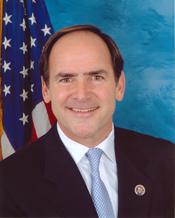
 Rep. Thomas H. Allen (D-ME)
Legislative Activity
Stay on top of the latest movement without scrolling through every action
Committee on Environment and Public Works. Hearings held.
May 13, 2008
View full timeline
Introduced in House
March 15, 2007
Referred to the House Committee on Energy and Commerce.
March 15, 2007
Referred to the Subcommittee on Environment and Hazardous Materials.
March 16, 2007
Subcommittee Hearings Held.
June 22, 2007
Subcommittee Consideration and Mark-up Session Held.
August 2, 2007
Forwarded by Subcommittee to Full Committee (Amended) by Voice Vote .
August 2, 2007
Committee Consideration and Mark-up Session Held.
October 30, 2007
Ordered to be Reported (Amended) by the Yeas and Nays: 45 - 2.
October 30, 2007
Reported (Amended) by the Committee on Energy and Commerce. H. Rept. 110-444.
November 13, 2007
Placed on the Union Calendar, Calendar No. 275.
November 13, 2007
Mr. Wynn moved to suspend the rules and pass the bill, as amended.
November 13, 2007 • 2:24 PM
Considered under suspension of the rules. (consideration: CR H13549-13554)
November 13, 2007 • 2:24 PM
DEBATE - The House proceeded with forty minutes of debate on H.R. 1534.
November 13, 2007 • 2:24 PM
Passed/agreed to in House: On motion to suspend the rules and pass the bill, as amended Agreed to by voice vote.(text: CR H13549-13551)
November 13, 2007 • 2:41 PM
On motion to suspend the rules and pass the bill, as amended Agreed to by voice vote. (text: CR H13549-13551)
November 13, 2007 • 2:41 PM
Motion to reconsider laid on the table Agreed to without objection.
November 13, 2007 • 2:41 PM
The title of the measure was amended. Agreed to without objection.
November 13, 2007 • 2:41 PM
Received in the Senate and Read twice and referred to the Committee on Environment and Public Works.
November 14, 2007
Committee on Environment and Public Works. Hearings held.
May 13, 2008
Floor Debate
8 membersWhat members said about H.R. 1534 on the floor



 +3
+3
Floor Debate
8 membersWhat members said about H.R. 1534 on the floor
I thank the gentleman for yielding and thank him for his outstanding work on this piece of legislation. Mr. Speaker, I rise in support of my legislation, H.R. 1534, the Mercury Export Ban Act. I want…
Madam Speaker, I would like to thank my good friend, Mr. Cardoza, the gentleman from California, for the time; and I yield myself such time as I may consume. Madam Speaker, on the opening day of this…
Mr. Speaker, I move to suspend the rules and pass the bill (H.R. 1534) to prohibit the sale, distribution, or transfer of mercury, to prohibit the export of mercury, and for other purposes, as…
Madam Speaker, by direction of the Committee on Rules, I call up House Resolution 1491 and ask for its immediate consideration. Madam Speaker, for the purpose of debate only, I yield the customary 30…
Mr. Speaker, I thank the gentleman from Illinois for giving me a few moments to speak on this bill. I want to congratulate the sponsor of this bill, as well as the Chairman and Ranking Member of the…
Show 3 more

Mr. Speaker, I yield myself such time as I may consume. I want to thank, in particular, Mr. Allen, Mr. Shimkus, Mr. Dingell, Mr. Barton, obviously Mr. Wynn for helping to manage this bill this…
I thank the gentleman for yielding. All I want to do is rise to raise some concerns, because I think this is a case where clearly these motives of this legislation are meritorious, worthy. But at the…

Mr. Speaker, I rise today in support of H.R. 1534, the Mercury Export Ban of 2007. This bill is a bipartisan effort that will effectively reduce the amount of elemental mercury in the atmosphere.…
Bill Text
4 versions available
        [Congressional Bills 110th Congress]
[From the U.S. Government Publishing Office]
[H.R. 1534 Referred in Senate (RFS)]

1st Session
H. R. 1534

_______________________________________________________________________

IN THE SENATE OF THE UNITED STATES

November 14, 2007

Received; read twice and referred to the Committee on Environment and
Public Works

_______________________________________________________________________

AN ACT

To prohibit certain sales, distributions, and transfers of elemental
mercury, to prohibit the export of elemental mercury, and for other
purposes.

Be it enacted by the Senate and House of Representatives of the
United States of America in Congress assembled,

SECTION 1. SHORT TITLE.

This Act may be cited as the ``Mercury Export Ban Act of 2007''.

SEC. 2. FINDINGS.

Congress finds that--
(1) mercury is highly toxic to humans, ecosystems, and
wildlife;
(2) as many as 10 percent of women in the United States of
childbearing age have mercury in the blood at a level that
could put a baby at risk;
(3) as many as 630,000 children born annually in the United
States are at risk of neurological problems related to mercury;
(4) the most significant source of mercury exposure to
people in the United States is ingestion of mercury-
contaminated fish;
(5) the Environmental Protection Agency reports that, as of
2004--
(A) 44 States have fish advisories covering over
13,000,000 lake acres and over 750,000 river miles;
(B) in 21 States the freshwater advisories are
statewide; and
(C) in 12 States the coastal advisories are
statewide;
(6) the long-term solution to mercury pollution is to
minimize global mercury use and releases to eventually achieve
reduced contamination levels in the environment, rather than
reducing fish consumption since uncontaminated fish represents
a critical and healthy source of nutrition worldwide;
(7) mercury pollution is a transboundary pollutant,
depositing locally, regionally, and globally, and affecting
water bodies near industrial sources (including the Great
Lakes) and remote areas (including the Arctic Circle);
(8) the free trade of elemental mercury on the world
market, at relatively low prices and in ready supply,
encourages the continued use of elemental mercury outside of
the United States, often involving highly dispersive activities
such as artisinal gold mining;
(9) the intentional use of mercury is declining in the
United States as a consequence of process changes to
manufactured products (including batteries, paints, switches,
and measuring devices), but those uses remain substantial in
the developing world where releases from the products are
extremely likely due to the limited pollution control and waste
management infrastructures in those countries;
(10) the member countries of the European Union
collectively are the largest source of elemental mercury
exports globally;
(11) the European Commission has proposed to the European
Parliament and to the Council of the European Union a
regulation to ban exports of elemental mercury from the
European Union by 2011;
(12) the United States is a net exporter of elemental
mercury and, according to the United States Geological Survey,
exported 506 metric tons of elemental mercury more than the
United States imported during the period of 2000 through 2004;
and
(13) banning exports of elemental mercury from the United
States will have a notable effect on the market availability of
elemental mercury and switching to affordable mercury
alternatives in the developing world.

SEC. 3. PROHIBITION ON SALE, DISTRIBUTION, OR TRANSFER OF ELEMENTAL
MERCURY.

Section 6 of the Toxic Substances Control Act (15 U.S.C. 2605) is
amended by adding at the end the following:
``(f) Mercury.--
``(1) Prohibition on sale, distribution, or transfer of
elemental mercury by federal agencies.--Except as provided in
paragraph (2), effective beginning on the date of enactment of
this subsection, no Federal agency shall convey, sell, or
distribute to any other Federal agency, any State or local
government agency, or any private individual or entity any
elemental mercury under the control or jurisdiction of the
Federal agency.
``(2) Exception.--Paragraph (1) shall not apply to a
transfer between Federal agencies of elemental mercury for the
sole purpose of facilitating storage of mercury to carry out
this Act.''.

SEC. 4. PROHIBITION ON EXPORT OF ELEMENTAL MERCURY.

Section 12 of the Toxic Substances Control Act (15 U.S.C. 2611) is
amended--
(1) in subsection (a) by striking ``subsection (b)'' and
inserting ``subsections (b) and (c)''; and
(2) by adding at the end the following:
``(c) Prohibition on Export of Elemental Mercury.--
``(1) Prohibition.--Effective January 1, 2010, the export
of elemental mercury from the United States is prohibited.
``(2) Inapplicability of subsection (a).--Subsection (a)
shall not apply to this subsection.
``(3) Report to congress on mercury compounds.--
``(A) Report.--Not later than one year after the
date of enactment of the Mercury Export Ban Act of
2007, the Administrator shall publish and submit to
Congress a report on mercuric chloride, mercurous
chloride or calomel, mercuric oxide, and other mercury
compounds, if any, that may currently be used in
significant quantities in products or processes. Such
report shall include an analysis of--
``(i) the sources and amounts of each of
the mercury compounds imported into the United
States or manufactured in the United States
annually;
``(ii) the purposes for which each of these
compounds are used domestically, the amount of
these compounds currently consumed annually for
each purpose, and the estimated amounts to be
consumed for each purpose in 2010 and beyond;
``(iii) the sources and amounts of each
mercury compound exported from the United
States annually in each of the last three
years;
``(iv) the potential for these compounds to
be processed into elemental mercury after
export from the United States; and
``(v) other relevant information that
Congress should consider in determining whether
to extend the export prohibition to include one
or more of these mercury compounds.
``(B) Procedure.--For the purpose of preparing the
report under this paragraph, the Administrator may
utilize the information gathering authorities of this
title, including sections 10 and 11.
``(4) Essential use exemption.--(A) Any person residing in
the United States may petition the Administrator for an
exemption from the prohibition in paragraph (1), and the
Administrator may grant by rule, after notice and opportunity
for comment, an exemption for a specified use at an identified
foreign facility if the Administrator finds that--
``(i) nonmercury alternatives for the specified use
are not available in the country where the facility is
located;
``(ii) there is no other source of elemental
mercury available from domestic supplies (not including
new mercury mines) in the country where the elemental
mercury will be used;
``(iii) the country where the elemental mercury
will be used certifies its support for the exemption;
``(iv) the export will be conducted in such a
manner as to ensure the elemental mercury will be used
at the identified facility as described in the
petition, and not otherwise diverted for other uses for
any reason;
``(v) the elemental mercury will be used in a
manner that will protect human health and the
environment, taking into account local, regional, and
global human health and environmental impacts;
``(vi) the elemental mercury will be handled and
managed in a manner that will protect human health and
the environment, taking into account local, regional,
and global human health and environmental impacts; and
``(vii) the export of elemental mercury for the
specified use is consistent with international
obligations of the United States intended to reduce
global mercury supply, use, and pollution.
``(B) Each exemption issued by the Administrator pursuant
to this paragraph shall contain such terms and conditions as
are necessary to minimize the export of elemental mercury and
ensure that the conditions for granting the exemption will be
fully met, and shall contain such other terms and conditions as
the Administrator may prescribe. No exemption granted pursuant
to this paragraph shall exceed three years in duration and no
such exemption shall exceed 10 metric tons of elemental
mercury.
``(C) The Administrator may by order suspend or cancel an
exemption under this paragraph in the case of a violation
described in subparagraph (D).
``(D) A violation of this subsection or the terms and
conditions of an exemption, or the submission of false
information in connection therewith, shall be considered a
prohibited act under section 15, and shall be subject to
penalties under section 16, injunctive relief under section 17,
and citizen suits under section 20.
``(5) Consistency with trade obligations.--Nothing in this
subsection affects, replaces, or amends prior law relating to
the need for consistency with international trade obligations.
``(6) Export of coal.--Nothing in this subsection shall be
construed to prohibit the export of coal.''.

SEC. 5. LONG-TERM STORAGE.

(a) Establishment of Program.--Not later than January 1, 2010, the
Secretary of Energy (in this section referred to as the ``Secretary'')
shall accept custody, for the purpose of long-term management and
storage, of elemental mercury generated within the United States and
delivered to a facility of the Department of Energy designated by the
Secretary.
(b) Fees.--
(1) In general.--After consultation with persons who are
likely to deliver elemental mercury to a designated facility
for long-term management and storage under the program
prescribed in subsection (a), and with other interested
persons, the Secretary shall assess and collect a fee at the
time of delivery for providing such management and storage,
based on the pro rata cost of long-term management and storage
of elemental mercury delivered to the facility. The amount of
such fees--
(A) shall be made publically available not later
than October 1, 2009;
(B) may be adjusted annually; and
(C) shall be set in an amount sufficient to cover
the costs described in paragraph (2).
(2) Costs.--The costs referred to in paragraph (1)(C) are
the costs to the Department of Energy of providing such
management and storage, including facility operation and
maintenance, security, monitoring, reporting, personnel,
administration, inspections, training, fire suppression,
closure, and other costs required for compliance with
applicable law. Such costs shall not include costs associated
with land acquisition or permitting of a designated facility
under the Solid Waste Disposal Act or other applicable law.
Building design and building construction costs shall only be
included to the extent that the Secretary finds that the
management and storage of elemental mercury accepted under the
program under this section cannot be accomplished without
construction of a new building or buildings.
(c) Report.--Not later than 60 days after the end of each Federal
fiscal year, the Secretary shall transmit to the Committee on Energy
and Commerce of the House of Representatives and the Committee on
Environment and Public Works of the Senate a report on all of the costs
incurred in the previous fiscal year associated with the long-term
management and storage of elemental mercury. Such report shall set
forth separately the costs associated with activities taken under this
section.
(d) Management Standards for a Facility.--
(1) Guidance.--Not later than October 1, 2009, the
Secretary, after consultation with the Administrator of the
Environmental Protection Agency and all appropriate State
agencies in affected States, shall make available, including to
potential users of the long-term management and storage program
established under subsection (a), guidance that establishes
procedures and standards for the receipt, management, and long-
term storage of elemental mercury at a designated facility or
facilities, including requirements to ensure appropriate use of
flasks or other suitable shipping containers. Such procedures
and standards shall be protective of human health and the
environment and shall ensure that the elemental mercury is
stored in a safe, secure, and effective manner. In addition to
such procedures and standards, elemental mercury managed and
stored under this section at a designated facility shall be
subject to the requirements of the Solid Waste Disposal Act,
including the requirements of subtitle C of that Act, except as
provided in subsection (g)(2) of this section. A designated
facility in existence on or before January 1, 2010, is
authorized to operate under interim status pursuant to section
3005(e) of the Solid Waste Disposal Act until a final decision
on a permit application is made pursuant to section 3005(c) of
the Solid Waste Disposal Act. Not later than January 1, 2012,
the Administrator of the Environmental Protection Agency (or an
authorized State) shall issue a final decision on the permit
application.
(2) Training.--The Secretary shall conduct operational
training and emergency training for all staff that have
responsibilities related to elemental mercury management,
transfer, storage, monitoring, or response.
(3) Equipment.--The Secretary shall ensure that each
designated facility has all equipment necessary for routine
operations, emergencies, monitoring, checking inventory,
loading, and storing elemental mercury at the facility.
(4) Fire detection and suppression systems.--The Secretary
shall--
(A) ensure the installation of fire detection
systems at each designated facility, including smoke
detectors and heat detectors; and
(B) ensure the installation of a permanent fire
suppression system, unless the Secretary determines
that a permanent fire suppression system is not
necessary to protect human health and the environment.
(e) Indemnification of Persons Delivering Elemental Mercury.--
(1) In general.--(A) Except as provided in subparagraph (B)
and subject to paragraph (2), the Secretary shall hold
harmless, defend, and indemnify in full any person who delivers
elemental mercury to a designated facility under the program
established under subsection (a) from and against any suit,
claim, demand or action, liability, judgment, cost, or other
fee arising out of any claim for personal injury or property
damage (including death, illness, or loss of or damage to
property or economic loss) that results from, or is in any
manner predicated upon, the release or threatened release of
elemental mercury as a result of acts or omissions occurring
after such mercury is delivered to a designated facility
described in subsection (a).
(B) To the extent that a person described in subparagraph
(A) contributed to any such release or threatened release,
subparagraph (A) shall not apply.
(2) Conditions.--No indemnification may be afforded under
this subsection unless the person seeking indemnification--
(A) notifies the Secretary in writing within 30
days after receiving written notice of the claim for
which indemnification is sought;
(B) furnishes to the Secretary copies of pertinent
papers the person receives;
(C) furnishes evidence or proof of any claim, loss,
or damage covered by this subsection; and
(D) provides, upon request by the Secretary, access
to the records and personnel of the person for purposes
of defending or settling the claim or action.
(3) Authority of secretary.--(A) In any case in which the
Secretary determines that the Department of Energy may be
required to make indemnification payments to a person under
this subsection for any suit, claim, demand or action,
liability, judgment, cost, or other fee arising out of any
claim for personal injury or property damage referred to in
paragraph (1)(A), the Secretary may settle or defend, on behalf
of that person, the claim for personal injury or property
damage.
(B) In any case described in subparagraph (A), if the
person to whom the Department of Energy may be required to make
indemnification payments does not allow the Secretary to settle
or defend the claim, the person may not be afforded
indemnification with respect to that claim under this
subsection.
(f) Terms, Conditions, and Procedures.--The Secretary is authorized
to establish such terms, conditions, and procedures as are necessary to
carry out this section.
(g) Effect on Other Law.--
(1) In general.--Except as provided in paragraph (2),
nothing in this section changes or affects any Federal, State,
or local law or the obligation of any person to comply with
such law.
(2) Exception.--(A) Elemental mercury that the Secretary is
storing on a long-term basis shall not be subject to the
storage prohibition of section 3004(j) of the Solid Waste
Disposal Act (42 U.S.C. 6924(j)). For the purposes of section
3004(j) of the Solid Waste Disposal Act, a generator
accumulating elemental mercury destined for a facility
designated by the Secretary under subsection (a) for 90 days or
less shall be deemed to be accumulating the mercury to
facilitate proper treatment, recovery, or disposal.
(B) Elemental mercury that is stored at a facility with
respect to which a permit has been issued under section 3005(c)
of the Solid Waste Disposal Act (42 U.S.C. 6925(c)) shall not
be subject to the storage prohibition of section 3004(j) of the
Solid Waste Disposal Act (42 U.S.C. 6924(j)) if--
(i) the Secretary is unable to accept the mercury
at a facility designated by the Secretary under
subsection (a) for reasons beyond the control of the
owner or operator of the permitted facility;
(ii) the owner or operator of the permitted
facility certifies in writing to the Secretary that it
will ship the mercury to the designated facility when
the Secretary is able to accept the mercury; and
(iii) the owner or operator of the permitted
facility certifies in writing to the Secretary that it
will not sell, or otherwise place into commerce, the
mercury.
This subparagraph shall not apply to mercury with respect to
which the owner or operator of the permitted facility fails to
comply with a certification provided under clause (ii) or
(iii).
(h) Study.--Not later than July 1, 2011, the Secretary shall
transmit to the Congress the results of a study, conducted in
consultation with the Administrator of the Environmental Protection
Agency, that--
(1) determines the impact of the long-term storage program
under this section on mercury recycling; and
(2) includes proposals, if necessary, to mitigate any
negative impact identified under paragraph (1).

SEC. 6. REPORT TO CONGRESS.

At least 3 years after the effective date of the prohibition on
export of elemental mercury under section 12(c) of the Toxic Substances
Control Act (15 U.S.C. 2611(c)), as added by section 4 of this Act, but
not later than January 1, 2014, the Administrator of the Environmental
Protection Agency shall transmit to the Committee on Energy and
Commerce of the House of Representatives and the Committee on
Environment and Public Works of the Senate a report on the global
supply and trade of elemental mercury, including but not limited to the
amount of elemental mercury traded globally that originates from
primary mining, where such primary mining is conducted, and whether
additional primary mining has occurred as a consequence of this Act.

Passed the House of Representatives November 13, 2007.

Attest:

LORRAINE C. MILLER,

Clerk.