Mr. Speaker, pursuant to House Resolution 818, I call up the bill (H.R. 4156) making emergency supplemental appropriations for the Department of Defense for the fiscal year ending September 30, 2008,…
Mr. Speaker, pursuant to House Resolution 818, I call up the bill (H.R. 4156) making emergency supplemental appropriations for the Department of Defense for the fiscal year ending September 30, 2008, and for other purposes, and ask for its immediate consideration.
Mr. Speaker, I yield myself 10 minutes.
Mr. Speaker, we hear so many voices in this country and in this Chamber who are willing to fight to the last drop of someone else's blood. Those of us who are supporting this resolution today are being accused of being for ``precipitous withdrawal.'' I hardly think that seeing this war continue for another 14 months constitutes precipitous withdrawal.
Mr. Speaker, it is 56 months since the United States first launched its attack against Iraq. It is 4\1/2\ years since the President appeared before his ``Mission Accomplished'' banner on that carrier. It is almost 5 years since the administration ignored the advice of General Shinseki. It is 2\1/2\ years since Vice President Cheney said that he thought the insurgency was in its last throes. Since that time, we have had 3,800 Americans killed and 28,000 wounded. We have had 8,000 Iraqi military personal killed and 38,000 civilians killed. We have had 4 million Iraqis displaced. 2.3 million of them have been displaced internally in the country. One and a half million have fled to Syria, 1 million to other countries. Not a pretty picture.
This war is the most colossal blunder in modern U.S. history. It is a mistake that has shattered our influence in the region, and it has made the one country in the region that we did not want to see strengthened, Iran, it has made them infinitely stronger in that region. We are in the process of borrowing $600 billion and we are not having the guts to pay the bill ourselves.
There is no sense of shared sacrifice in this country. The only families being asked to sacrifice are military families and they're being asked to sacrifice again and again and again and again. We aren't even willing to tax ourselves to pay for the cost of this war, so we're shoving off the cost to our kids. Shame on every one of us for making that decision.
In November, the public tried to send two messages to this Congress. The first was that they wanted a change in policy in Iraq. The second is that they wanted a change in domestic policy. And yet after blowing $600 billion in Iraq, after signing a Defense bill which adds $39 billion to spending levels over last year, the President has yesterday blocked our efforts to add $6 billion to pay for investments in education, health and medical research here at home.
The President is telling the American people, ``Forget what message you think you sent in November in the election.'' He is stiffing the American people. He is saying, ``Forget what message you thought you were sending to Washington; I am the `Great Decider' and we are going to do things my way.'' That is what we are getting out of the White House. Instead of compromise and instead of searching for common ground, the President is making clear that he prefers to govern through confrontation, he prefers to go it alone, with one-third support in the country and one-third support in the Congress.
The same is true in Iraq. This is the same President who decided to go it alone, with almost no allies, who decided to go it alone when it came to evaluating intelligence, ignoring the caution alerts that were sent by the State Department intelligence people and the CIA analysts. He bulldozed through. When Baker-Hamilton was produced to offer an opportunity for change, the President simply used that as an opportunity to say ``full steam ahead, no change in course'', and he has deepened and intensified our involvement in Iraq.
At home, he insists that Congress cuts 50 percent out of vocational education; he insists that we cut 1,100 grants out of medical research at the National Institutes of Health; he insists that we cut rural health programs by 54 percent; he insists that we cut low-income heating assistance programs by 18 percent; he insists that we cut financial support for programs under No Child Left Behind that he mandated in the first place. He insists that we cut all of that, and yet he demands $200 billion more for Iraq. I say enough is enough.
He gave a speech to the American people which was designed for the purpose of public deception, in my view, because it was designed to leave the impression that the President intended to reduce steadily our troop commitment in Iraq, when in reality it was intended to assure that 6 months from now we have the same number of troops we have there that we had 6 months ago.
Mr. Speaker, the President is asking for $200 billion more, and as chairman of the Appropriations Committee, I announced that I had no intention of providing that money, but I made it clear I'd be happy to provide it all, provided that the President would recognize that we needed a policy change and would get on board with the determination to have a goal of removing our troops from combat operations by the end of next year. That is hardly precipitous.
So what this measure does, instead of giving the President $200 billion to continue the war, it gives him $50 billion to shut the war down. Instead of having troops there for the next 10 years, as the President indicated in his speech, we want to have them out by December of 2008. It requires redeployment to begin in 60 days, and it ends the authority for any agency of the United States Government whatsoever to engage in torture.
We are mired, Mr. Speaker, in Iraq because of the self-important illusions of hopeless romantics in the administration. We hear tell these days that the President talks a lot about Teddy Roosevelt and Winston Churchill. If that is the case, he is harboring dangerous illusions. He ought to heed the advice of a statesman 80 years ago who wrote the following. I will read excerpts from this letter.
``I am deeply concerned about Iraq. The task you have given me is becoming really impossible. Incompetent Arab officials are disturbing some of the provinces and failing to collect revenue. We overpaid on last year's account, which it is almost certain Iraq will not be able to pay this year, thus entailing a supplementary estimate. . . I have had to maintain troops in Mosul all through the year in consequence of the Angora quarrel. This has upset the program of relief and will certainly lead to further expenditures. . . . I do not see what political strength there is to face a disaster of any kind, and I certainly cannot believe that in any circumstances any large reinforcements would be sent . . . In my own heart, I do not see what we are getting out of it. I think we should now put definitely to the assembly the position that unless they beg us to stay, and stay on our own terms in regard to efficient control, we shall actually evacuate before the close of the financial year. I would put this issue in the most brutal way, and if they are not prepared to urge us to stay and to cooperate in every manner, I would actually clear out. . . .
``I think I must ask you for definite guidance at this stage as to what you wish and what you are prepared to do. At present, we are paying millions a year for the privilege of living on an ungrateful volcano out of which we are in no circumstances to get anything worth having.''
That was the real Winston Churchill speaking in 1922 in a letter to Lloyd George. It seems to me that the President in the White House today ought to heed the words of Winston Churchill so long ago and at long last reconsider a policy change in Iraq. That is what this legislation is designed to stimulate.
Mr. Speaker, I reserve the balance of my time.
Mr. Speaker, I yield 3 minutes to the distinguished gentleman from Tennessee (Mr. Lincoln Davis).
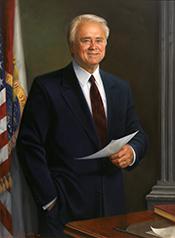
Mr. Speaker, I yield 5 minutes to the distinguished gentleman from Pennsylvania (Mr. Murtha), the chairman of the Defense appropriations subcommittee.
Mr. Speaker, I yield 2\1/2\ minutes to the gentlewoman from California (Ms. Lee).
Mr. Speaker, I ask unanimous consent all Members may have 5 legislative days in which to revise and extend their remarks and include tabular and extraneous material on H.R. 4156.
I yield 1 minute to the gentleman from Pennsylvania (Mr. Murtha).
I yield 2 minutes to the distinguished gentlewoman from California (Ms. Woolsey).
Mr. Speaker, after that very thoughtful statement, I would like to yield 1 minute to the distinguished gentleman from Wisconsin (Mr. Kagen).
I yield 1 minute to the distinguished gentlewoman from New Hampshire (Ms. Shea-Porter).
I yield 1 minute to the distinguished gentleman from Illinois (Mr. Hare).
Mr. Speaker, I yield 1 minute to the distinguished gentleman from California (Mr. Farr).
Mr. Speaker, I yield 2 minutes to the distinguished gentlewoman from California (Ms. Waters).
Mr. Speaker, I yield 1 minute to the gentlewoman from Illinois (Ms. Schakowsky).
Mr. Speaker, I yield myself 1\1/2\ minutes.
Mr. Speaker, we have heard significant discussion tonight about al Qaeda. And people seem to think that Iraq, the Iraq war was necessary in order to tackle al Qaeda. Well, that's backwards.
I can recall being out at CIA headquarters after 9/11. I can recall sitting out at CIA headquarters watching the Predator aircraft as they flew over Afghanistan, transmitting pictures back here in the search for bin Laden and al Qaeda. And I remember what those CIA people out there said, and the frustration they expressed because half of their resources were being diverted from the search for bin Laden and al Qaeda to prepare for the attack on Iraq.
It isn't that the war in Iraq was necessary to get at al Qaeda. The war in Iraq diverted us from concentrating on al Qaeda and bin Laden.
And we are still suffering the consequences today.
So let's keep the facts straight. Let's keep history straight. And let's keep our heads straight. The fact is that Iraq got in the way of our effort to get at al Qaeda and we have been suffering from that fact ever since.
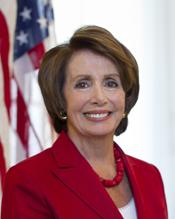
I yield 1 minute to the gentlewoman from California (Ms. Pelosi), the distinguished Speaker of the House.
Mr. Speaker, I yield 1 minute to the gentleman from Missouri (Mr. Skelton), the distinguished chairman of the Armed Services Committee.