Wakefield Act
 Rep. Jim Matheson (D-UT)
Legislative Activity
Stay on top of the latest movement without scrolling through every action
Received in the Senate and Read twice and referred to the Committee on Health, Education, Labor, and Pensions.
April 9, 2008
View full timeline
Introduced in House
May 23, 2007
Referred to the House Committee on Energy and Commerce.
May 23, 2007
Forwarded by Subcommittee to Full Committee (Amended) by Voice Vote .
March 11, 2008
Committee Consideration and Mark-up Session Held.
March 13, 2008
Ordered to be Reported (Amended) by Voice Vote.
March 13, 2008
Reported (Amended) by the Committee on Energy and Commerce. H. Rept. 110-568.
April 8, 2008
Placed on the Union Calendar, Calendar No. 350.
April 8, 2008
Mrs. Capps moved to suspend the rules and pass the bill, as amended.
April 8, 2008 • 3:14 PM
Considered under suspension of the rules. (consideration: CR H2027-2029)
April 8, 2008 • 3:14 PM
DEBATE - The House proceeded with forty minutes of debate on H.R. 2464.
April 8, 2008 • 3:14 PM
At the conclusion of debate, the Yeas and Nays were demanded and ordered. Pursuant to the provisions of clause 8, rule XX, the Chair announced that further proceedings on the motion would be postponed.
April 8, 2008 • 3:25 PM
Considered as unfinished business. (consideration: CR H2046-2047)
April 8, 2008 • 7:00 PM
Passed/agreed to in House: On motion to suspend the rules and pass the bill, as amended Agreed to by the Yeas and Nays: (2/3 required): 390 - 1 (Roll no. 162).(text: CR H2027-2028)
April 8, 2008 • 7:07 PM
On motion to suspend the rules and pass the bill, as amended Agreed to by the Yeas and Nays: (2/3 required): 390 - 1 (Roll no. 162). (text: CR H2027-2028)
April 8, 2008 • 7:07 PM
Motion to reconsider laid on the table Agreed to without objection.
April 8, 2008 • 7:07 PM
Received in the Senate and Read twice and referred to the Committee on Health, Education, Labor, and Pensions.
April 9, 2008
Voting History
1 vote recorded • Roll call available
Floor Debate
13 membersWhat members said about H.R. 2464 on the floor


 +8
+8
Floor Debate
13 membersWhat members said about H.R. 2464 on the floor
I thank the distinguished whip for yielding. On Monday, the House is not in session. On Tuesday, the House will meet at 12:30 for morning hour and 2 p.m. for legislative business, with votes…
Madam Speaker, during the week of February 25-29, 2008, I was unavoidably absent from rollcall votes 69-87. Had I been present I would have voted ``yea'' on rollcall vote 69, H. Res. 978, ``yea'' on…
Madam Speaker, for the information of our colleagues and my constituents, I want the Record to reflect how I would have voted on the following votes I missed this session. On rollcall 134, to pass S.…
Mr. Speaker, I ask to address the House for one minute for the purpose of inquiring about next week's schedule. Mr. Speaker, I yield to my friend, the majority leader, for information about the…
Madam Speaker, I rise today to speak in support of H.R. 2464, the Wakefield Act. I am the lead sponsor of this legislation, along with Representative Peter T. King on the other side of the aisle.…
Show 8 more

Madam Speaker, I move to suspend the rules and pass the bill (H.R. 2464) to amend the Public Health Service Act to provide a means for continued improvement in Emergency Medical Services for…
Madam Speaker, I would like to state for the Record my position on the following votes I missed on April 8 and 9, 2008. On Tuesday, April 8, and Wednesday, April 9, 2008, I was unable to be present…

I thank the gentlelady for yielding, and I am also very pleased to speak in favor of H.R. 2464, the Wakefield Act. I wanted to bring you just a little bit of perspective in terms of the difference…
Madam Speaker, today I rise as a strong supporter of H.R. 2464, the Wakefield Act, which will reauthorize the Emergency Medical Services for Children program for an additional 4 years. Since the…
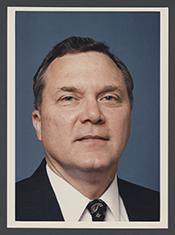
Madam Speaker, I yield myself such time as I may consume. Madam Speaker, I, too, rise in support of H.R. 2464, which reauthorizes the Emergency Medical Services for Children program. It is, indeed,…
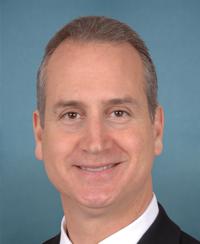
Madam Speaker, on Tuesday, April 8, 2008, I was unavoidably detained due to a death in the family and thus I missed rollcall votes No. 161 through 163. Had I been present, I would have voted in the…
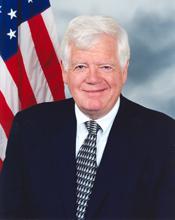
Madam Speaker, on April 8, 2008, I was inadvertently delayed and unable to vote. Had I been present I would have voted ``aye'' on the following: rollcall No. 161 on passage of H.J. Res. 70,…
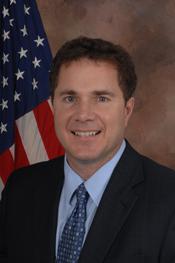
Madam Speaker, on rollcall 161, H.J. Res. 70, I was not present. If I had been there, I would have voted ``yea.'' On rollcall 162, H.R. 2464, I was not present. If I had been there, I would have…
Bill Text
4 versions available
        [Congressional Bills 110th Congress]
[From the U.S. Government Printing Office]
[H.R. 2464 Referred in Senate (RFS)]

2d Session
H. R. 2464

_______________________________________________________________________

IN THE SENATE OF THE UNITED STATES

April 9, 2008

Received; read twice and referred to the Committee on Health,
Education, Labor, and Pensions

_______________________________________________________________________

AN ACT

To amend the Public Health Service Act to provide a means for continued
improvement in emergency medical services for children.

Be it enacted by the Senate and House of Representatives of the
United States of America in Congress assembled,

SECTION 1. SHORT TITLE.

This Act may be cited as the ``Wakefield Act''.

SEC. 2. FINDINGS AND PURPOSE.

(a) Findings.--Congress makes the following findings:
(1) There are 31,000,000 child and adolescent visits to the
Nation's emergency departments every year.
(2) Over 90 percent of children requiring emergency care
are seen in general hospitals, not in free-standing children's
hospitals, with one-quarter to one-third of the patients being
children in the typical general hospital emergency department.
(3) Severe asthma and respiratory distress are the most
common emergencies for pediatric patients, representing nearly
one-third of all hospitalizations among children under the age
of 15 years, while seizures, shock, and airway obstruction are
other common pediatric emergencies, followed by cardiac arrest
and severe trauma.
(4) Up to 20 percent of children needing emergency care
have underlying medical conditions such as asthma, diabetes,
sickle-cell disease, low birth weight, and bronchopulmonary
dysplasia.
(5) Significant gaps remain in emergency medical care
delivered to children. Only about 6 percent of hospitals have
available all the pediatric supplies deemed essential by the
American Academy of Pediatrics and the American College of
Emergency Physicians for managing pediatric emergencies, while
about half of hospitals have at least 85 percent of those
supplies.
(6) Providers must be educated and trained to manage
children's unique physical and psychological needs in emergency
situations, and emergency systems must be equipped with the
resources needed to care for this especially vulnerable
population.
(7) Systems of care must be continually maintained,
updated, and improved to ensure that research is translated
into practice, best practices are adopted, training is current,
and standards and protocols are appropriate.
(8) The Emergency Medical Services for Children (EMSC)
Program under section 1910 of the Public Health Service Act (42
U.S.C. 300w-9) is the only Federal program that focuses
specifically on improving the pediatric components of emergency
medical care.
(9) The EMSC Program promotes the nationwide exchange of
pediatric emergency medical care knowledge and collaboration by
those with an interest in such care and is depended upon by
Federal agencies and national organizations to ensure that this
exchange of knowledge and collaboration takes place.
(10) The EMSC Program also supports a multi-institutional
network for research in pediatric emergency medicine, thus
allowing providers to rely on evidence rather than anecdotal
experience when treating ill or injured children.
(11) The Institute of Medicine stated in its 2006 report,
``Emergency Care for Children: Growing Pains'', that the EMSC
Program ``boasts many accomplishments ... and the work of the
program continues to be relevant and vital''.
(12) The EMSC Program has proven effective over two decades
in driving key improvements in emergency medical services to
children, and should continue its mission to reduce child and
youth morbidity and mortality by supporting improvements in the
quality of all emergency medical and emergency surgical care
children receive.
(b) Purpose.--It is the purpose of this Act to reduce child and
youth morbidity and mortality by supporting improvements in the quality
of all emergency medical care children receive.

SEC. 3. REAUTHORIZATION OF EMERGENCY MEDICAL SERVICES FOR CHILDREN
PROGRAM.

Section 1910 of the Public Health Service Act (42 U.S.C. 300w-9) is
amended--
(1) in subsection (a), by striking ``3-year period (with an
optional 4th year'' and inserting ``4-year period (with an
optional 5th year'';
(2) in subsection (d)--
(A) by striking ``and such sums'' and inserting
``such sums''; and
(B) by inserting before the period the following:
``, $25,000,000 for fiscal year 2009, $26,250,000 for
fiscal year 2010, $27,562,500 for fiscal year 2011,
$28,940,625 for fiscal year 2012, and $30,387,656 for
fiscal year 2013'';
(3) by redesignating subsections (b) through (d) as
subsections (c) through (e), respectively; and
(4) by inserting after subsection (a) the following:
``(b)(1) The purpose of the program established under this section
is to reduce child and youth morbidity and mortality by supporting
improvements in the quality of all emergency medical care children
receive, through the promotion of projects focused on the expansion and
improvement of such services, including those in rural areas and those
for children with special healthcare needs. In carrying out this
purpose, the Secretary shall support emergency medical services for
children by supporting projects that--
``(A) develop and present scientific evidence;
``(B) promote existing and innovative technologies
appropriate for the care of children; or
``(C) provide information on health outcomes and
effectiveness and cost-effectiveness.
``(2) The program established under this section shall--
``(A) strive to enhance the pediatric capability of
emergency medical service systems originally designed primarily
for adults; and
``(B) in order to avoid duplication and ensure that Federal
resources are used efficiently and effectively, be coordinated
with all research, evaluations, and awards related to emergency
medical services for children undertaken and supported by the
Federal Government.''.

Passed the House of Representatives April 8, 2008.

Attest:

LORRAINE C. MILLER,

Clerk.