



I
110th CONGRESS
1st Session
H. R. 2910
IN THE HOUSE OF REPRESENTATIVES
June 28, 2007
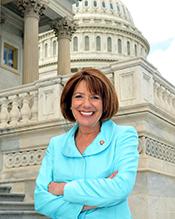
Mrs. Davis of California (for herself, Mr. Mitchell, and Mr. Walz of Minnesota) introduced the following bill; which was referred to the Committee on Veterans’ Affairs
A BILL
To amend the Servicemembers Civil Relief Act to provide for reimbursement to members of the Armed Forces of tuition for programs of education delayed by military service, for deferment of students loans and reduced interest rates for members of the Armed Forces during periods of military service, and for other purposes.
Short title
This Act may be cited as the
Veterans Education Tuition Support Act
of 2007
or the VETS Act of 2007
.
Findings and purposes
Findings
Congress makes the following findings:
There is no more important cause than the defense of the United States.
Since 2003, nearly 1,300,000 members of the Armed Forces have served in Iraq or Afghanistan and over 420,000 members of the Armed Forces in the National Guard and Reserve have been called to active duty.
The men and women of the Armed Forces put their lives on hold, leave their families, jobs, and postsecondary education in order to serve the United States, and do so with distinction.
In 2005, 500,000 veterans claimed education benefits from the Department of Veterans Affairs and approximately 47,000 of those veterans are members of the National Guard or Reserve and recently returned from serving in the Armed Forces in Iraq or Afghanistan.
Many members of the Armed Forces depend on various forms of financial aid in addition to their Montgomery GI Bill benefits to help fund their college education.
The 6 percent interest rate cap on all debts of members of the Armed Forces called to active duty guaranteed by the Servicemembers Civil Relief Act (50 U.S.C. App. 501 et seq.) has been interpreted narrowly by the Secretary of Education not to apply to Federal student loans.
Members of the Armed Forces who return from deployment overseas in the Armed Forces and who are unable to continue immediately a program of education that they were forced to discontinue because of such deployment are being forced to begin making payments on their private students loans only 1 month after such return.
The transition from service in the Armed Forces in a combat theater to a classroom is a difficult challenge and should not be rushed merely to avoid paying back student loans.
As of the date of the enactment of this Act, colleges are not required to make reasonable accommodations for students who are called to active duty in the Armed Forces, such as tuition reimbursement and relaxation of requirements for reenrollment.
Members of the Armed Forces who return from deployment overseas and attempt to reenroll in a program of education are overwhelmed with bureaucracy.
Studies have shown that symptoms of post-traumatic stress disorder (PTSD) and other non-apparent injuries may take up to a year to manifest.
Members of the Armed Forces deserve to have at least a full academic year to reintegrate into society before they are required to begin paying back student loans.
Members of the Armed Forces who fight to protect the United States deserve a Government that fights to protect them.
Purposes
The purposes of this Act are—
to assist members of the Armed Forces who return from a deployment to transition from military service to civilian life and to undertake programs of education they were forced to discontinue because of such deployment;
to provide a 13-month transition period for such members to reenroll in such a program of education and to begin paying back student loans undertaken for such program of education;
to institute a 6 percent interest rate cap on student loans of a member of the Armed Forces while such member is deployed on active duty; and
to require providers of programs of education to provide reasonable accommodations to their students who are members of the Armed Forces and who discontinue a program of education because of a deployment.
Relief for students who are members of Armed Forces during period of military service
In general
Title VII of the Servicemembers Civil Relief Act (50 U.S.C. App. 591 et seq.) is amended by adding at the end the following new section:
Tuition, reenrollment, and student loan relief for postsecondary students called to military service
Tuition and reenrollment
Whenever a servicemember is called, activated, or ordered to military service and withdraws or takes a leave of absence from the institution of higher education in which the servicemember is enrolled, the institution shall—
refund to such servicemember the tuition and fees paid by such servicemember (other than from the proceeds of a grant or scholarship) for the portion of the program of education for which such servicemember did not receive academic credit after such withdrawal or leave; and
provide such servicemember an opportunity to reenroll with the same educational and academic status in such program of education that the servicemember had when activated for military service.
Deferment of repayment of loans
Whenever a servicemember is called, activated, or ordered to military service and withdraws or takes a leave of absence from the institution of higher education in which the servicemember is enrolled, the following rules shall apply to a provider of students loans who has provided a student loan to such a servicemember that is not in repayment status on the date the period of military service begins:
If the servicemember reenrolls in the program of education (or a comparable program) within 13 months following the period of military service, the provider shall disregard the entire period the program of education was discontinued in determining the date on which repayment of the student loan is to begin.
If the servicemember does not so reenroll, the provider shall not require repayment of the student loan to begin before the later of the last day of such 13-month period or the date the repayment was to begin without regard to this subsection.
Definitions
In this section:
The term Federal financial aid program means a program providing loans made, insured, or guaranteed under part B, D, or E of title IV of the Higher Education Act of 1965 (20 U.S.C. 1077 et seq., 1087a et seq., 1087aa et seq.).
The term institution of higher education means a 2-year or 4-year institution of higher education as defined in section 102 of the Higher Education Act of 1965 (20 U.S.C. 1002).
The term student loan means any loan, whether Federal, State, or private, to assist an individual to attend an institution of higher education, including a loan made, insured, or guaranteed under part B, D, or E of title IV of the Higher Education Act of 1965 (20 U.S.C. 1077 et seq., 1087a et seq., 1087aa et seq.).
.
Exemption of student debts from creditor protection based on income level
Section 207(c) of the Servicemember’s Civil Relief Act (50
U.S.C. App. 527(c)) is amended by adding at the end the following new sentence:
This subsection shall not apply with respect to an obligation or
liability that is incurred by a servicemember who, at the time the
servicemember is called to military service, is a student enrolled within six
months of activation at an institution of higher education on a full-time
basis, as determined by that institution.
Clerical amendment
The table of contents in section (1)(b) of such Act is amended by adding at the end the following new item:
Sec. 707. Tuition, reenrollment, and student loan relief for postsecondary students called to military service.
.
Effective date
The amendments made by this section shall take effect for periods of military service beginning after the date of the enactment of this section.