To amend the U.S. Troop Readiness, Veterans' Care, Katrina Recovery, and Iraq Accountability Appropriations Act, 2007, to strike a requirement relating to forage producers.
Legislative Activity
Stay on top of the latest movement without scrolling through every action
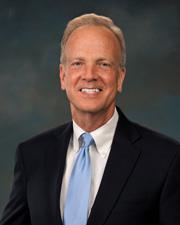
Sponsor introductory remarks on measure. (CR E1719)
August 3, 2007
View full timeline
Introduced in House
July 23, 2007
Referred to the House Committee on Agriculture.
July 23, 2007
Sponsor introductory remarks on measure. (CR E1719)
August 3, 2007
Floor Debate
7 membersWhat members said about H.R. 3131 on the floor
 PS
PS DOM
DOM SG
SG JB
JB JH+2
JH+2
Floor Debate
7 membersWhat members said about H.R. 3131 on the floor
Mr. Speaker, I rise again today in strong opposition to this unnecessarily restrictive rule that completely closes down the legislative process to every single Republican amendment that was offered…
Mr. Speaker, I rise again today in strong opposition to this unnecessarily restrictive rule that completely closes down the legislative process to every single Republican amendment that was offered in hopes of bettering this bill before the Rules Committee. This modified closed rule is being offered by the broken-promise Democrat majority, is wrong on both process and on policy.
Yesterday evening, in the Rules Committee, the place where democracy goes to die in the House of Representatives, the chairman of the Financial Services Committee, the gentleman from Massachusetts (Mr. Frank) stated that he welcomed debating any substantive amendment so long as the committee did not make in order multiple amendments with similar goals. Despite the chairman's wishes to allow for a fair and open debate on substantive amendments to this bill, Rules Committee Democrats, once again, instead chose to further solidify our committee's growing reputation as ``the graveyard of good ideas'' in the House of Representatives by rejecting five times each time, along straight party lines, attempts to improve this rule by including substantive amendments offered by Republicans.
Chairman Frank also testified that no amendment had been offered to the legislation that reflected the administration's opposition to this legislation, an inaccurate statement that I would like to clear up. First, my good friend from Georgia, the gentleman, Dr. Tom Price, electronically submitted a timely amendment to this bill that dealt with the substantive concerns raised by the administration. Dr. Price was then turned away from the Rules Committee and denied the opportunity to even offer this amendment when the paper copies reached the Rules Committee door 5 minutes after the arbitrary deadline that was set by the Rules Committee staff.
Next, Mr. Speaker, when it became obvious that the Rules Committee was going to silence Dr. Price, my good friend and Texas colleague, Congressman Jeb Hensarling, modified one of his amendments to address the substantive concerns over the addition of wind coverage to the National Flood Insurance Program that he shared in common with Dr. Price and President Bush. Unfortunately, Mr. Hensarling, too, has been shut out by this rule.
Despite numerous campaign promises by the highest-ranking Democrats in the House to run the most transparent, open and honest House in history, this Democrat majority has once again provided the House with the rule where none of this would be available.
Out of 26 amendments offered to this legislation, not one of the seven Republican amendments offered is made in order under the rule. It can't be for lack of time. There is simply no good reason to rush reauthorization for this legislation which doesn't even expire until next year. And the Democrats certainly found time enough to provide 13 Democrat amendment sponsors enough time to come to the floor to try
and change this legislation. It can't be because these Republican amendments are not substantive. The Hensarling and Price amendments would have addressed the most substantive and contentious part of this legislation: the inclusions of wind coverage into a flood insurance program. However, the Democrat majority, once again, decided that political expediency is more important than allowing the representatives of half of this country to be heard. I wish I could say that I was surprised by the Democrat leadership allowing politics to triumph over policy or fair procedure. Unfortunately, this is precisely what we have come to expect from the new broken-promise Democrat majority.
What is worse, Mr. Speaker, is that this bill's real-world impact is as bad or worse as the process that brings us here to the floor today. It would expand the flood program to include a new risk before the effects of this policy have even been studied. Both the GAO, the Government Accountability Office, and the Congressional Budget Office, the CBO, have reported to us that the program is already not financially sound. That means that, as the program exists that the new Democrat majority wants to put in place, we already know that it is not financially sound. And the addition of this new and untested liability threats to derail much of the much-needed reforms of this program, while vastly increasing taxpayer exposure for losses from natural disasters unrelated to flooding.
Mr. Speaker, I oppose this rule. I oppose its exclusion of every single Republican amendment that was offered to improve it in the Rules Committee. I oppose the raw, political gain represented by the ill- conceived underlying legislation that puts our National Flood Insurance Program in jeopardy. Most of all, Mr. Speaker, I oppose the new earmark loophole, uncovered last night, that provides the broken-promise Democrat majority with yet another opportunity to waive their already loose earmark rules on every bill as they see fit.
While this new development made here to the strict letter of the smoke-and-mirrors earmark rule the Democrats rushed sloppily through the House at the beginning of the Congress, it certainly does not meet the spirit of that rule either. I encourage all of my colleagues to join me in opposing this rule, particularly Chairman Frank, who argued so eloquently for the inclusion of substantive amendments so that the new rule can be passed that would finally keep the Democrat promise of openness and inclusion alive.
Mr. Speaker, I reserve the balance of my time.
Mr. Speaker, at this time I would like to yield 3 minutes to the distinguished gentlewoman from Michigan (Mrs. Miller).
Mr. Speaker, once again, in line with what we have stated earlier, that the 13 Republican amendments, which were presented to the Rules Committee, of course, there were others that were rejected because they were 1 or 2 minutes late, need to be discussed. The Rules Committee voted on a party line not to let them be on the floor today. But our Members represent important not only States, but important districts and important ideas. Another one of the persons who was denied the opportunity to have his amendment to be made in order is here with us today.
Mr. Speaker, I yield 5 minutes to the gentleman from New Jersey (Mr. Garrett) for that purpose.
Mr. Speaker, if the gentleman will yield, I heard the gentleman say that he had spent time working with the chairman of the committee on this inequity to make sure that if you brought forward that amendment, that he would not oppose it.
Mr. Speaker, once again the Republican team that is on the floor today wishes to continue our voice of representation of millions of Americans for better ideas, to be included not only on this floor but in the Rules Committee for consideration and agreement to debate and vote on these good ideas.
We know that last night that there were 13 amendments that were made in order, all Democrat amendments, no Republican amendments. We know that several Republican amendments were rejected based upon being just minutes late, even though they had been electronically submitted.
So as a result of that, we are here on the floor today doing appropriately, properly, what we should be doing; we are talking about the good ideas that we have. You heard already a good idea from the gentleman from New Jersey. You heard already a good idea from the gentlewoman from Michigan.
At this time I would like to yield 4 minutes to the gentlewoman from Illinois (Mrs. Biggert).
Mr. Speaker, part of what our last three colleagues who have been to the floor spoke about was that as members of the Committee on Financial Services they worked very diligently, not only in their States, not only within their delegation, not only within the committee, but also with the chairman on trying to make sure that these good ideas might be included.
Now, the Rules Committee, which I have only served on for 9 years, always finds itself in a difficult position. Always. That is part of the dilemma of being on the committee, in particular when a committee chairman and a member show up before the Rules Committee and they talk about working together, finding a bit of compromise, working together to get a bill and thoughts and ideas to where they are not only germane, but to where they better the bill. The Rules Committee just sits back and we say, boy, that is such a wonderful thing. We are so happy and so pleased, Republicans and Democrats.
Something has happened, something has happened since January that has poisoned that well. Not only time after time after time did we see yesterday when Republicans showed up and said to the committee, oh, I have worked very carefully with my Governor, or I have worked very carefully with people back home, I've worked with the administration, I have put in a lot of time, this is a thoughtful amendment, I've tried to gain the concurrence of working through the committee; and, oh, by the way, I have even worked with my committee chairman, which says something also about the committee chairman, the gentleman from Massachusetts (Mr. Frank), who yesterday on his own standing said, by and large, look, I understand every issue that is related to this. I don't mind if any amendment, as long as they are not duplicative, and as long as they have substance, I think they ought to be made in order. Once again, one of those times when the members of the committee, Republicans and Democrats, say, boy, that is great. Thank you so much, Chairman Frank.
Something's happened, however, where people who were from the committee working with the committee chairman come and agree, and all of a sudden every single Republican amendment was rejected. It wasn't because they were duplicative; it wasn't because they didn't have substance. I don't know what it is.
We have tried this morning to have several people who have come to the floor to say I'd like to engage the new Democrat majority, Rules Committee members, to find out--what is it--Why was every single Republican amendment rejected while 13 Democrat amendments were made in order? What is it?
There's a change. I don't think it's open, I don't think it's transparent, and I question some other things behind the decisionmaking that is being made.
Mr. Speaker, the gentleman from Texas (Mr. Hensarling) also took time to not only have thoughtful amendments, he not only sits on the committee, but also came to the Rules Committee, is here today also, because he believes, we believe, as Republicans we may get shut out, as we were in the Rules Committee; but we are still going to come to the floor and stand for the things which we believe in that would better the bill.
I would like to yield 4 minutes to the gentleman from Texas (Mr. Hensarling).
Mr. Speaker, I will be asking Members to oppose the previous question to give the Democrats yet another opportunity to live up to their broken promises and amend the rule to allow for consideration of H.
Res. 479, a resolution that I like to call the ``earmark accountability rule.''
Mr. Speaker, this Congress continues to see nondisclosed earmarks appearing in all sorts of bills. These rule changes would simply allow the House to openly debate and be honest about the validity and accuracy of earmarks contained in all bills, not just appropriation bills. If we defeat the previous question, we can address that problem today and restore this Congress's nonexistent credibility when it comes to the enforcement of its own rules.
Mr. Speaker, I ask unanimous consent to have the text of the amendment and extraneous material appear in the Record just before the vote on the previous question.
Mr. Speaker, by direction of the Committee on Rules, I call up House Resolution 683 and ask for its immediate consideration. Mr. Speaker, for purposes of debate only, I yield the customary 30 minutes…
Mr. Speaker, by direction of the Committee on Rules, I call up House Resolution 683 and ask for its immediate consideration.
Mr. Speaker, for purposes of debate only, I yield the customary 30 minutes to the gentleman from Texas (Mr. Sessions). All time yielded during consideration of the rule is for debate only.
I yield myself such time as I may consume. I also ask unanimous consent that all Members be given 5 legislative days in which to revise and extend their remarks on House Resolution 683.
Mr. Speaker, House Resolution 683 provides for consideration of H.R. 3121, the Flood Insurance Reform and Modernization Act of 2007, under a structured rule. As the Clerk reported, the rule provides 1 hour of general debate controlled by the Committee on Financial Services.
The rule waives all points of order against consideration of the bill, except clauses 9 and 10 of rule XXI. The rule also makes in order a substitute reported by the Committee on Financial Services modified by the amendment in part A of the Rules Committee report as an original bill for the purpose of amendment. The self-executing amendment in part A would ensure that the bill complies with the new PAYGO requirements.
The rule makes in order the 13 amendments printed in the Rules Committee report, with each amendment debatable for 10 minutes.
As yesterday's debate in the Rules Committee demonstrated, Members on both sides of the aisle are focused on getting this bill to conference and onto the President's desk, and this bill reflects that consensus.
As a Representative of a district in a floodplain, I understand the need for a healthy flood insurance program. My hometown of Sacramento is the most at-risk river city in the Nation. Whenever I talk about our efforts to improve Sacramento's level of flood protection, I also mention the importance of flood insurance. If you live behind a levee, you should have flood insurance. And the Federal Government has the responsibility to promote this kind of coverage.
I also recognize that to accomplish this, we need a healthy and robust national flood insurance program. That is why legislation we debate today, the Flood Insurance Reform and Modernization Act, is so significant. Through this legislation, we will meet our responsibilities, we will ensure coverage is available to those at risk, and we will educate those same individuals as to the benefits of flood insurance. This bill, which was reported out of the Financial Services Committee by a bipartisan majority of 38-29, takes us in that positive direction.
In the aftermath of Hurricane Katrina, the deficiencies in the program were laid bare. What remained was a program $25 million in debt with a questionable future. It is imperative that we rebuild and reform the Federal flood insurance program.
For many Americans, owning insurance to protect against a flood is more valuable than coverage in case of fire. That is because homes in a designated special flood hazard area are almost three times as likely to be destroyed by a flood as by fire, and this is a case for almost three-fourths of all homes in Sacramento. This is an important program that must be reformed to ensure its long-term stability and solvency.
The bill we are considering today makes reasonable reforms and lays the foundation for a stronger and improved flood insurance program, and for that I would like to thank Chairman Barney Frank and Chairwoman Waters for their leadership on the bill.
This bill takes important steps to modernize the flood insurance program. It raises maximum coverage limits to keep up with inflation. It provides new coverage for living expenses if you have to vacate your home. And it also provides optional coverage for basements and business interruption coverage for commercial properties. These are all positive steps that will allow the program to continue to provide peace of mind to those impacted when a flood occurs.
In moving forward, Congress is also making the flood insurance program sustainable. The bill tightens enforcement of purchase requirements and adds subsidies on vacation homes, second homes, and businesses. While these actions may not be popular, this will help invigorate the program in the long run.
In addition to helping homeowners, this measure will also benefit taxpayers nationwide by preventing insurance companies from putting their liability on the Federal Government at the expense of the American public.
By identifying flood hazards, managing floodplains via land use controls and building requirements, and providing insurance protections, this essential program reduces flood loss expenses to the Federal Government, saving taxpayers an estimated $1 billion a year.
This measure provides much-needed reforms to restore solvency to a program that has faced unprecedented financial strain in the wake of the 2005 hurricanes. This bill increases accountability of federally regulated lenders by imposing stricter penalties on those lenders that fail to enforce mandatory flood insurance purchase requirements on mortgage holders. This takes our country in the right direction by encouraging individuals to purchase flood insurance, while also addressing the needs of the program.
I would also like to express my sincere thanks for Chairman Frank for working with me this past year on issues that I believe make this a stronger overall bill. I appreciate the chairman including my legislation, the Flood Insurance Community Outreach Grant Program Act of 2007, in this bill.
This grant program works. A little over two years ago, with the support of a $162,000 FEMA grant, my local flood protection body, the Sacramento Area Flood Control Agency, conducted just a flood insurance outreach initiative. SAFCA reached out to more than 45,000 NFIP policyholders in the American River floodplain with impressive results. After a year, 74 percent maintained their flood insurance policies. Of this group, 43 percent now carry preferred risk flood insurance. Preferred risk policies provide property owners who are protected by a levee or other flood mitigation method with full flood insurance at a reduced price. Because of their lower price, these preferred-risk policies have a higher level of policy retention.
To put this success in perspective, FEMA more than recouped its investment. SAFCA exceeded its target for policies retained more than 20 times over, adding millions to the flood insurance program's bottom line.
Extending these grants to other floodplains will only strengthen and build the solvency of the National Flood Insurance Program.
In short, I truly believe we must encourage greater participation in NFIP rather than providing loopholes for people not to participate. On that note, I would also like to thank the chairman for including language that authorizes a study for future participation of low-income individuals who live in a floodplain. We have an obligation to make sure that everyone has an opportunity to be insured and has access to affordable flood insurance. This is an important issue that I look forward to working on with the chairman, the committee, and many of my colleagues in further addressing this policy issue.
I think it is important that we continue to modernize our flood insurance program. I am pleased that the committee kept the amendment from last Congress' flood insurance bill, language that simply asks that FEMA utilize emerging weather forecasting technology as they update our national flood maps. Moving forward, we must make the investment in weather forecasting technology so that we have the tools to adjust to the changing climate. FEMA needs to be prepared to utilize this technology as it becomes available to us. We must ensure that FEMA has the highest quality information when it works to determine the level of risk for vulnerable geographies. This policy initiative takes us in a positive direction.
Finally, the bill we are debating today is a vital tool to be used after a flooding incident occurs. We need this bill; however, I want to close by saying that flood insurance is one piece of what should be a national comprehensive flood protection approach. Congress must continue to provide the tools and policy for prevention. We must continue to provide the funding for our flood protection infrastructure projects, and we must continue to provide the authorization for the projects that provide the protection for our communities.
With these policies of prevention in place, it will make communities safer and reduce the likelihood of our communities having to utilize their flood insurance policies.
Mr. Speaker, I strongly urge my colleagues to support this rule and final passage of the underlying Flood Insurance Reform and Modernization Act of 2007.
Mr. Speaker, I reserve the balance of my time.
Mr. Speaker, I just want to point out that the Rules Committee made 13 amendments in order that we believe will benefit the discussion and debate on this very important issue. I would like to point out that three of these amendments were, in fact, bipartisan amendments.
Mr. Speaker, I reserve my time.
I would just like to comment that we had a discussion yesterday. I must say that the Rules Committee is different this year than it was last year. I was in the minority last year. We have vigorous discussions in our committee. We have made in order 13 amendments.
Mr. Speaker, we made amendments in order last night, and I stand by the Rules Committee product. It might be that later on down the road you may want to work with the Financial Services Committee; but at this point in time, we did make 13 amendments in order.
Mr. Speaker, I just want to make clear that of these 13 amendments, three are bipartisan amendments.
With that, I reserve the balance of my time.
Mr. Speaker, I thank the gentleman for yielding. Mr. Speaker, we come today on the floor in September, 9 months into the 110th Congress under Democrat control where they promised us the most open,…
Mr. Speaker, I thank the gentleman for yielding.
Mr. Speaker, we come today on the floor in September, 9 months into the 110th Congress under Democrat control where they promised us the most open, honest and transparent Congress in U.S. history. And looking back at yesterday on their last rules decision, what have they wrought? Just the opposite.
I come to the floor today, as well, to oppose this rule and to oppose the closed-door proceedings and partisanship that the other side has exhibited yesterday with the way that they handled their rule. Their methodology is basically closing out the voices of almost half of Americans when they want to have their voice heard here in this Congress. I, too, came and submitted an amendment to the committee. Although the other side indicates that 13 amendments were approved, there were no single Republican-initiated amendments approved last night. That is because, as I said, half of America's voices were silenced.
Now, the amendment to the rule that I proposed is quite simple, to try to bring back fairness to this flood program, a flood program that most Americans would support in a bipartisan approach. Picture this, if you will, out on
perhaps the California Coast you have a mansion, a PreFIRM home, a mansion owned by some megastar, a movie star millionaire in that home. He is paying one rate for insurance. Next door, literally across the street, is this little 1970s home, a little bungalow, owned by a poor widow. She now is paying higher rates for her insurance. She, in essence, is subsidizing that multimillionaire movie star on the other side in this lavish megamansion that he may own by this poor widow.
Can't we do something about that? Yes. I propose an amendment that would bring actuarial fairness to this system. And I should say this, too. This was discussed in committee. The chairman of the committee said that he would work with me. My staff did work with his staff. I did work with the chairman. And the chairman even agreed with our language. The chairman even agreed, and I believe testified before the Rules Committee, that what we were doing here was bringing fairness to the committee and the rules process last night.
So, at this time, in my closing comments, I would just ask if the gentlewoman would be willing to enter into a colloquy to explain why is it that she will not, and the Rules Committee would not, enter into a discussion on this bill in Rules, and why is it that they wish to exclude this rule, and why would the gentlewoman in the Rules Committee decide that we should not have fairness, and why should the poor widow be subsidizing the rich and the millionaires in this country?
Mr. Speaker, I yield to the gentlewoman if she can explain why this amendment was excluded last night.
Reclaiming my time, I appreciate the fact that the Rules Committee is different this year from last year, and that is obviously apparent, because only Democrat amendments would come through, and last year both Democrat and Republican amendments would go through.
If the gentlewoman could explain on the merits? I would gladly yield to the gentlewoman if the gentlewoman could address the point as to why this particular amendment was not considered to be appropriate to be considered for this rule, and why it is that we should have the poor and the infirm and those people who have been living in their homes for decades have to subsidize the rich and the wealthy in this country.
I would yield to the gentlewoman, if she would explain why the inequity should continue.
Mr. Speaker, reclaiming my time, I appreciate the fact that the Rules Committee under Democrat control has included 13 Democrat amendments to their Democrat-proposed legislation here today. And if that is the new openness and the change in the process that they are presenting to us, should we anticipate that there is no need for Republicans to present any amendments to the Rules Committee in the future because they will only consider Democrat amendments? That is a sorry state for us today.
That is exactly the case. I presented this amendment in committee and presented it and discussed it in committee. At that time, we entered into a colloquy in committee and the chairman said that perhaps we could work through this because there were some other technical aspects that needed to be changed. I was more than willing to take the chairman at his word, and he lived up to his word to the extent that for the next several weeks and months following the committee hearing, we did have a back-and-forth between staff and also the chairman on the floor, literally himself, and he was supportive of the final product we had.
I thank the gentleman for yielding. Mr. Speaker, I rise today in strong opposition to this rule governing the consideration of H.R. 3121. I had hoped that the committee would see the wisdom in…
I thank the gentleman for yielding.
Mr. Speaker, I rise today in strong opposition to this rule governing the consideration of H.R. 3121. I had hoped that the committee would see the wisdom in providing an open rule on this important legislation, and in the absence of an open rule, that it would at least make in order amendments that both sides of the aisle took the time and effort to draft.
Unfortunately, as has been said repeatedly, of the 26 amendments filed with the Rules Committee, only 13, half of the amendments filed, were made in order, and of those 13 amendments that the Rules Committee made in order, not one, not one Republican amendment was made in order.
Has the majority again gone back on its promises to have an open, fair, and bipartisan operation of the House floor? On December 5, 2006, Majority Leader Hoyer was quoted in Congress Daily PM as saying, ``We intend to have a Rules Committee that gives opposition voices and alternative proposals the ability to be heard and considered on the floor of this House.'' Clearly, today, the leadership of this Congress has again turned its back on its promises.
The original Flood Insurance Reform Bill, H.R. 1682, which Chairman Frank and I introduced together earlier this year, enjoyed substantial bipartisan support in the Financial Services Committee. However, due to political pressure, a bill was introduced by my friend from the other side of the aisle, Congressman Taylor, to add wind to the National Flood Insurance Program.
The flood reform bill turned partisan. So the majority introduced a new flood reform bill, H.R. 3131, and expanded the flood insurance program to include wind. While nine out of 13 witnesses, insurance experts, testified before the Financial Services Committee that wind should not be added to NFIP, the majority did it anyway.
The new flood-plus-wind insurance passed out of the committee; and in July, at a hearing on adding wind to the NFIP, the National Association of Insurance Commissioners, insurance experts, environmental groups, floodplain management groups, the Treasury, and FEMA all opposed this expansion. That is why we are concerned about not having these amendments come to the floor.
Members on our side of the aisle had hoped to be given the same opportunity to debate important issues on the House floor. The amendments filed by my colleagues Mrs. Miller, Mr. Garrett, Mr. Hensarling, Mr. Pearce and Mr. Rohrabacher were not made in order, and Mr. Price's amendment was not even considered.
In particular, I wanted to say something about Mr. Hensarling's amendment. This should have been allowed. This is a hugely important issue. The other side has added a whole new Federal commitment on wind to flood insurance. At the Rules Committee, where I presented the majority request
for an open rule, Mr. Frank stated that he would welcome all amendments that address significant issues.
Now, it is the prerogative of the Rules Committee, and we had a great discussion on that at the committee, and it seemed to talk more about SCHIP, but it is the prerogative of the committee to make amendments in order. But when they hear from the chairman of the committee, Financial Services, in this case, they did not follow his suggestion. There was no more significant issue than adding wind to the flood insurance.
So I guess that Republicans don't deserve the right to participate in the amendment process, whether it is as a member of the committee of jurisdiction or as a Member of the U.S. House of Representatives. Only through an open rule is that possible. For this reason, I rise in strong opposition to the rule being considered here today.
I thank my dear friend for yielding. Mr. Speaker, I rarely come to the floor of the House to complain about process. It's a little bit like complaining about the refereeing in the football game. At…
I thank my dear friend for yielding.
Mr. Speaker, I rarely come to the floor of the House to complain about process. It's a little bit like complaining about the refereeing in the football game. At the end of the day, it doesn't do a whole lot of good. But the irony, the irony of what I see today is so powerful, I must share it with my colleagues.
It was just in the last Congress that our now chairwoman of the Rules Committee, the gentlewoman from New York, said, ``Here we go again, another important issue, another closed rule. The majority is arrogant and out of control. Their unethical assault on our democratic values must stop.''
That is what the gentlewoman from New York, the chairwoman of the Rules Committee, said when she didn't like closed rules when Republicans were in the majority. Well, here we have a closed rule. At least it's closed to Republicans. This Republican offered three amendments, three amendments that were very substantive amendments, none of which were found in order. So I am curious whether this closed rule, now that the Democrats are in the majority, Mr. Speaker, whether they consider it arrogant of themselves, whether they consider it an unethical assault on our democratic values to sit here and bring us a rule which is closed to Republicans.
I would certainly yield to the gentlewoman from California if she would like to answer whether or not it's arrogant and unethical to have a closed rule.
Apparently she doesn't wish to answer the question.
Our Speaker, before she became Speaker, said, ``We are going to have the most honest and open Congress in history.'' Nancy Pelosi, January 18, 2006. She also said, ``Bills should generally come to the floor under a procedure that allows open, full and fair debate consisting of a full amendment process that grants the minority the right to offer its alternatives, including a substitute.'' Speaker of the House, Nancy Pelosi.
So I am curious, did she not mean it when she said it? Does she not mean it now? Is there some carefully crafted, clever little loophole by which we can explain the Speaker's rules why there is no full amendment process?
And I would be happy to yield to the gentlewoman from California if she would like to explain if the Speaker doesn't mean her words.
Apparently she doesn't care to offer an explanation.
Let's get into the substance of the bill, Mr. Speaker. We are looking at an insurance program run by the Federal Government, not run particularly well, since supposedly premiums were supposed to support this program; and now, now it owes the taxpayers, $20 billion of which it admits it has no way, no chance whatsoever to pay back. None whatsoever.
We have a National Flood Insurance Program run by the Federal Government that subsidizes overtly certain properties, many of which are condos and vacation homes, not all, many of which are. And so we have this anomaly where a factory worker in Mesquite, Texas, in my district, who may be pulling down $50,000, $60,000 a year as a taxpayer, subsidizes the flood insurance for somebody who is making a half a million dollars and has a condo on the beach.
One, this is a program that is not fiscally sound. It is a program that is not fair. It is a program that screams out for reforms. And so what does the Democrat majority do? It wants to expand its coverage. It wants to create a huge, new mandatory wind policy. These are serious issues, Mr. Speaker.
Show 2 more
I thank the gentleman for yielding. Mr. Speaker, yesterday I went to the Rules Committee to offer an amendment to this bill that would have given the people of Michigan and other Great Lakes States…
I thank the gentleman for yielding.
Mr. Speaker, yesterday I went to the Rules Committee to offer an amendment to this bill that would have given the people of Michigan and other Great Lakes States fundamental fairness in the Federal flood insurance program. Unfortunately, the Democrat majority on the Rules Committee did not allow the people of Michigan to have their case heard on the floor of this House. I want to stress what I do understand about this bill; that this is an insurance program and that some will pay more than they take out, and that the idea is to have a broad spectrum of the Nation share the risk of natural disasters.
But when it comes to States like Michigan and the Federal flood insurance program, the people of my State are repeatedly being sucked dry by a mandated program that forces so many property owners into floodplains and into the program when they never, or almost never, flood. The net result is that Michigan property owners, by far, pay much, much more than their fair share.
Recent hurricanes, of course, have depleted FEMA funds. The Federal Government appropriately has stood up to help these States recover. But now the Federal flood insurance program is looking for even more money. And people in Michigan, where natural disasters are rare, are being forced to kick in more than their fair share.
I would say this, if it is the policy of the United States Government to continue to encourage property owners to live in areas that repeatedly suffer from natural disasters by offering heavily subsidized insurance, then we should just set up a fund for that purpose. We should not have property owners, like people that live in my State of Michigan, carry the burden of that policy. In fact, water levels in our magnificent Great Lakes are at historic lows. If you believe in the climate change theory, those levels are going to continue to fall. Yet property owners currently in floodplains are faced with increased premiums, and new maps will force even more homeowners in areas where we have never seen a flood into this plan. One thing about Michigan is that, instead of other States where they actually look up at the water, in Michigan, we look down at the water.
I would certainly agree that FEMA needs to do what Congress has asked them to do, to update the maps utilizing satellite and digitized elevation. They need to use the new technology. But we should base elevations on sound science. That is not being done now. Currently, the baseline for the FEMA plan is based on 1986 lake levels, which was at a time of historically high lake levels; 20-year-old data is what they are going to base this on now. I would simply suggest that we wait until the International Joint Commission, the IJC, completes its very extensive and exhaustive study that they are currently doing of the lake levels. I think they are now into the third or fourth year of a 5- year study. Then FEMA will have sound science to use on which to base their floodplain maps.
Mr. Speaker, because the Rules Committee would not allow my amendment to be heard, I intend to vote against this rule. I urge all of my colleagues to also oppose the rule. I will also be recommending to our Governor in the great State of Michigan to consider options that are fair to the residents of the State of Michigan, like self-insuring or actually opting out of the Federal flood insurance program.
Point of order, Mr. Speaker. Mr. Speaker, I raise a point of order against consideration of the rule. I raise a point of order against consideration of the resolution because it violates clause 9(b)…
Point of order, Mr. Speaker.
Mr. Speaker, I raise a point of order against consideration of the rule.
I raise a point of order against consideration of the resolution because it violates clause 9(b) of House rule XXI, which states that it shall not be in order to consider a rule or order that waives the application of clause 9(a) of House rule XXI, the earmark disclosure rule.
The rule waives the application of the earmark disclosure rule against the amendment printed in part A of the committee report. The amendment is self-executed by the rule and, therefore, evades the application of clause 9.
I doubt that the self-executed amendment contains any earmarks; however, there is no statement in accordance with rule 9 that it does not.
I look forward to your ruling, Mr. Speaker.
Bill Text
Latest available legislative text
        [Congressional Bills 110th Congress]
[From the U.S. Government Publishing Office]
[H.R. 3131 Introduced in House (IH)]

110th CONGRESS
1st Session
H. R. 3131

To amend the U.S. Troop Readiness, Veterans' Care, Katrina Recovery,
and Iraq Accountability Appropriations Act, 2007, to strike a
requirement relating to forage producers.

_______________________________________________________________________

IN THE HOUSE OF REPRESENTATIVES

July 23, 2007

Mr. Moran of Kansas introduced the following bill; which was referred
to the Committee on Agriculture

_______________________________________________________________________

A BILL

To amend the U.S. Troop Readiness, Veterans' Care, Katrina Recovery,
and Iraq Accountability Appropriations Act, 2007, to strike a
requirement relating to forage producers.

Be it enacted by the Senate and House of Representatives of the
United States of America in Congress assembled,

SECTION 1. CONTRACT WAIVER.

The U.S. Troop Readiness, Veterans' Care, Katrina Recovery, and
Iraq Accountability Appropriations Act, 2007 (Public Law 110-28; 121
Stat. 112) is amended by striking section 9012.
<all>