Mr. Speaker, I want to thank the gentleman from California (Mr. Cardoza) for yielding me the customary 30 minutes, and I yield myself as much time as I may consume. (Mr. HASTINGS of Washington asked…
Mr. Speaker, I want to thank the gentleman from California (Mr. Cardoza) for yielding me the customary 30 minutes, and I yield myself as much time as I may consume.
(Mr. HASTINGS of Washington asked and was given permission to revise and extend his remarks.)
Mr. Speaker, the largest overall industry in my State is agriculture and food processing. I represent the central part of Washington State where a wide variety of agriculture products are produced, including apples, cherries, pears, wheat, dairy hops, wine grapes and potatoes, just to name a few. In addition, our farmers and ranchers are stewards of the land, and many of them participate in conservation programs that fall under the farm bill. For these reasons, my constituents have a lot at stake when it comes to farm policy.
The Committee on Agriculture has historically worked in a bipartisan manner, especially on such important issues as the farm bill. Just over a year ago, I was pleased that the Agriculture Committee came to my district and held a farm bill hearing in Yakima, in my district. Mr. Cardoza, now Chairman Peterson and Ranking Member Goodlatte were all there. I appreciate their having traveled to my corner of the country to hear directly from the farmers in central Washington.
They heard firsthand the importance of specialty crops, fruits and vegetables to the overall ag economy. I'm pleased that the underlying bill, the Farm, Nutrition and Bioenergy Act, as approved by the committee, recognizes the needs of specialty crop producers by increasing investments in the Market Access Program, the Specialty Crop Block Grant Program, the Fruit and Vegetable Snack Program, and establishes a much needed National Clean Plant Network. These are all important steps in the right direction.
Unfortunately, all of the good things in this bill and the spirit of bipartisan cooperation were completely overturned by a last-minute addition of a multi-billion dollar tax increase. This surprise offset is totally unacceptable because it will cost American jobs, and it has completely bypassed the public process of discussions and hearings in the respective committees of jurisdiction, and it has disrupted the tradition of bipartisan cooperation on farm policies.
I have many speakers, Mr. Speaker, on my side who will be discussing the impact of these surprise tax increases, again, that were not subject to hearings or markups by the appropriate committees. The full scope of these tax hikes and fees just appeared at the Rules Committee this morning at 8 a.m., with no one willing to testify about them or disclose the full impact of these measures on our economy. And we are talking about multi-billion dollar increases.
Mr. Speaker, I also want to take this opportunity to express my disappointment that a bipartisan amendment I submitted to the Rules Committee with the support of Mr. McNerney from California, Mr. Hoekstra of Michigan, was not made in order to help American asparagus growers. Under the Andean Trade Preferences Act of 1991, the Congress gave Peru duty-free access to the U.S. market on a unilateral basis. This was done in the hope that it would encourage the Peruvians to develop alternatives to growing narcotic-producing crops.
Unfortunately, it led to a flood of Peruvian asparagus imports, which has devastated the asparagus growers and processors in my home State of Washington, Michigan and in California. The U.S. International Trade Commission has repeatedly cited U.S. asparagus as the one farm commodity substantially harmed by the Andean Trade Preferences Act.
My amendment would have simply given the Secretary of Agriculture the option of providing transition payments to these growers. After all, American asparagus growers were not harmed by their own actions, but rather by government's antidrug policies. They should not have to pay the full brunt of the price.
Unfortunately, the leadership of this House has decided that these growers don't deserve a place at the table. We are poised to give billions away under this bill, but the House leadership can't find time to help these small farmers who were harmed by their own government.
Mr. Speaker, the rule denies Members the opportunity to represent their constituents by coming to the floor and offering amendments to this bill. It prohibits a separate vote on whether or not to include billions of dollars in tax increases, and it denies open debate on those issues. Therefore, I urge my colleagues to vote against this restrictive rule.
Mr. Speaker, I reserve the balance of my time.
Mr. Speaker, I am pleased to yield 2 minutes to the ranking member of the Rules Committee, Mr. Dreier of California.
(Mr. DREIER asked and was given permission to revise and extend his remarks.)
Mr. Speaker, I am pleased to yield 3 minutes to the ranking member of the Budget Committee and a member of the Ways and Means Committee, Mr. Ryan of Wisconsin.
Mr. Speaker, I yield myself 15 seconds.
I have a letter in front of me from a number of companies that are subsidiaries of companies that are based abroad, and they say in this letter to oppose the tax increase and vote against the rule on H.R. 2419. And one of the signatories of this letter is Ben and Jerry's Homemade from my friend's home State of Vermont.
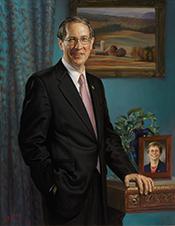
Mr. Speaker, I yield 3 minutes to the ranking member on the Committee on Agriculture, Mr. Goodlatte.
(Mr. GOODLATTE asked and was given permission to revise and extend his remarks.)
Mr. Speaker, I am pleased to yield 1 minute to a classmate of mine, a member of the Ways and Means Committee, Mr. Weller from Illinois.
Mr. Speaker, I am pleased to yield 1 minute to the gentleman from Texas, a member of the Ways and Means Committee, Mr. Brady.
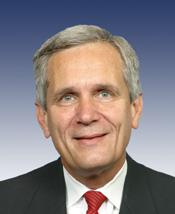
Mr. Speaker, I am pleased to yield 1 minute to the gentleman from Georgia, a member of the Ways and Means Committee, Mr. Linder.
Mr. Speaker, I inquire of my friend from California, we have a number of requests for time, and I'm not sure that I have enough time. I wonder if the gentleman would entertain a chance to expand our time on both sides.
If the gentleman would, I would like to ask unanimous consent that each side get an additional 10 minutes.
Mr. Speaker, I would just communicate with my friend to at least keep his options open, if he wouldn't mind, later on and maybe we can revisit this.
With that, Mr. Speaker, I'm pleased to yield 1 minute to the gentleman from Michigan, a member of the Ways and Means Committee, Mr. Camp.
Mr. Speaker, at this time I would like to insert into the Record a letter that I referenced earlier in which the signature to this letter is Ben and Jerry's Homemade, Inc.
Dear Member of Congress: As U.S. subsidiaries of companies
based abroad, we are writing to express our strong opposition
to including Rep. Lloyd Doggett's bill, H.R. 3160 in the farm
bill. This measure is a discriminatory tax targeted
specifically at companies insourcing jobs into the U.S. We
urge you to vote against the Rule on H.R. 2419 to demonstrate
that you oppose targeting companies with significant
employment in the United States.
Companies like ours play an important role in the growth
and vitality of the U.S. economy, provide high-paying jobs
for five million Americans and account for almost one-fifth
of all U.S. exports. Discriminatory measures, like the
Doggett legislation, send a hostile signal to our companies
and other international investors. This bill will certainly
dissuade companies like ours from choosing the United States
as a location for job creating investment.
The provision under consideration would violate many of our
bilateral tax treaties and could lead to retaliatory actions
by other countries or withdrawal by our treaty partners from
exiting treaties, harshly affecting U.S.-based businesses.
Congress has not held any hearings on this issue. There is
no evidence that existing safeguards in current treaties are
not effective. Further, if material tax abuses were evident;
Treasury Secretary Paulson would not have strongly opposed
this proposal.
We urge you to vote against the Rule on H.R. 2419 and to
demonstrate your opposition to discriminatory tax increases
on companies that support employment in the United States.
AEGON USA, Inc, Akzo Nobel, Alcatel-Lucent, Alcon
Holdings, Inc, Allianz of America, BASF, Ben & Jerry's
Homemade, Inc., Honda North America, Inc, ING Americas,
Inc, Panasonic Corporation of North America, Suez
Energy North America, Swiss Re, Thomson Corporation,
Unilever.
Mr. Speaker, I am pleased to yield 2 minutes to the gentleman from Illinois (Mr. Manzullo).
Mr. Speaker, I want to once again inquire of my friend from California if we can have extended time on this. I would ask unanimous consent for 5 additional minutes on both sides.
Mr. Speaker, I am disappointed that that happened, because we have seen the passion on this side of people talking about tax policy that has not had a hearing in the committees of jurisdiction in both cases, and we are restricted to only 1 hour to talk about that, without any extension at all.
With that, Mr. Speaker, I would like to yield 1 minute to my friend from Texas, a member of the Agriculture Committee, Mr. Conaway.
Mr. Speaker, I certainly associate myself with my friend from Oregon's remarks.
We have different issues. But I think the issue is exactly the same.
With that, I yield 1 minute to my friend from Louisiana (Mr. Boustany).
Mr. Speaker, I yield 1 minute to the gentleman from Michigan (Mr. Walberg).
Mr. Speaker, I yield 1 minute to a former member of the Rules Committee, the gentlewoman from Ohio (Ms. Pryce).
Mr. Speaker, I yield 1 minute to a member of the Agriculture Committee, the gentleman from Nebraska (Mr. Smith).
Mr. Speaker, I am pleased to yield 3 minutes to the gentleman from Louisiana (Mr. McCrery), the ranking member of the Ways and Means Committee.
I have more speakers than I have time, and I would like to inquire of my friend if he would like to entertain the proposition I offered a moment ago.
Mr. Speaker, I ask unanimous consent for 5 additional minutes for each side.
Mr. Speaker, I am pleased to yield 1 minute to the gentleman from New Mexico (Mr. Pearce), a member of one of the committees that was denied any opportunity to talk about the tax provisions.
Mr. Speaker, I yield 1 minute to the gentleman from Georgia (Mr. Gingrey), a former member of the Rules Committee.
Mr. Speaker, I yield the balance of my time to the gentleman from Kentucky, a classmate of mine, Mr. Whitfield.