Plain Language in Government Communications Act of 2008
Legislative Activity
Stay on top of the latest movement without scrolling through every action
Read twice. Placed on Senate Legislative Calendar under General Orders. Calendar No. 929.
August 1, 2008
View full timeline
Introduced in House
September 17, 2007
Referred to the House Committee on Oversight and Government Reform.
September 17, 2007
Referred to the Subcommittee on Information Policy, Census, and National Archives.
October 1, 2007
Subcommittee Consideration and Mark-up Session Held.
January 29, 2008
Forwarded by Subcommittee to Full Committee by Voice Vote .
January 29, 2008
Committee Consideration and Mark-up Session Held.
March 13, 2008
Ordered to be Reported (Amended) by Voice Vote.
March 13, 2008
Reported (Amended) by the Committee on Oversight and Government. H. Rept. 110-580.
April 10, 2008
Placed on the Union Calendar, Calendar No. 358.
April 10, 2008
Mr. Braley (IA) moved to suspend the rules and pass the bill, as amended.
April 14, 2008 • 3:09 PM
Considered under suspension of the rules. (consideration: CR H2237-2239)
April 14, 2008 • 3:09 PM
DEBATE - The House proceeded with forty minutes of debate on H.R. 3548.
April 14, 2008 • 3:09 PM
At the conclusion of debate, the Yeas and Nays were demanded and ordered. Pursuant to the provisions of clause 8, rule XX, the Chair announced that further proceedings on the motion would be postponed.
April 14, 2008 • 3:24 PM
Considered as unfinished business. (consideration: CR H2245)
April 14, 2008 • 7:07 PM
Passed/agreed to in House: On motion to suspend the rules and pass the bill, as amended Agreed to by the Yeas and Nays: (2/3 required): 376 - 1 (Roll no. 185).(text: CR H2237)
April 14, 2008 • 7:14 PM
Motion to reconsider laid on the table Agreed to without objection.
April 14, 2008 • 7:14 PM
On motion to suspend the rules and pass the bill, as amended Agreed to by the Yeas and Nays: (2/3 required): 376 - 1 (Roll no. 185). (text: CR H2237)
April 14, 2008 • 7:14 PM
Received in the Senate.
April 15, 2008
Read twice. Placed on Senate Legislative Calendar under General Orders. Calendar No. 929.
August 1, 2008
Voting History
1 vote recorded • Roll call available
Floor Debate
21 membersWhat members said about H.R. 3548 on the floor
 OJS
OJS TMR
TMR JFKBLB
 EP+16
EP+16
Floor Debate
21 membersWhat members said about H.R. 3548 on the floor
Mr. President, today I am introducing a bill to increase the number of full-time personnel of the Consumer Product U.S. Safety Commission assigned to duty stations at U.S. ports of entry or to…
Mr. President, today I am introducing a bill to increase the number of full-time personnel of the Consumer Product U.S. Safety Commission assigned to duty stations at U.S. ports of entry or to inspect overseas production facilities to ensure that the Consumer Product Safety Commission has the personnel necessary to adequately address the growing problem of import safety. This bill would more than triple the current number of commission staff assigned to U.S. ports of entry, by requiring that no less than 50 full-time import inspectors be in place at the beginning of the next fiscal year. Additionally, it would expressly authorize the CPSC to send such inspectors to examine the operations at overseas factories which manufacture consumer products destined for the U.S.
This legislation is critically necessary, given that an ever- increasing number of the consumer products now sold on our shelves are manufactured in countries with appalling safety and quality control standards, such as China. Sine the year 2000, foreign imports to the U.S. have increased 67 percent by value, with imports from China nearly tripling, growing from $100 billion in 2000 to $288 billion last year. Almost 20 percent of consumer products sold in the U.S. today were made in China. Particularly troubling is that Chinese manufacturers have cornered the U.S. market on toys, with over 80 percent of all toys sold in the U.S. coming from China. Since March 2007, over 8 million pieces of these Chinese-made toys have been recalled due to lead contamination alone.
Outrageously, the number of CPSC personnel dedicated to monitoring import compliance with U.S. health and safety requirements has been slashed along with other Commission resources during the very period in which trade liberalization has allowed foreign producers greater access to our markets. With over 60 percent of CPSC staff having been cut over the past 27 years--from almost 1,000 employees in 1980 to a record low of 420 employees in 2007--there remain only 15 full-time Commission personnel assigned to inspect imports at U.S. ports. According to a September 2, 2007, New York Times article, this handful of import inspectors ``are hard pressed to find dangerous cargo before it enters the country; instead, they rely on other Federal agents, who mostly act as trademark enforcers.'' Similarly unacceptable is the fact that the CPSC lacks the staff to send a single inspector to the foreign factories making the goods that we put on our kitchen counters and in the hands of our children.
These facts unquestionably reveal, as a Consumers Union official told the Senate Committee on Finance earlier this month, that the CPSC has not kept up with the globalization of the marketplace. That is why I have proposed this bill, which would rapidly shore-up the commission's import inspection staff, who are so critical to protecting us from dangerous foreign products. I urge my colleagues to support this common-sense solution to an urgent problem.
Mr. President, I rise today with Senator Kerry to introduce the Small Business Lending Oversight and Program Performance Improvements Act of 2007. I truly appreciate Senator Kerry's leadership on small business issues and his bipartisan work with me on this bill.
Small businesses have propelled our Nation's economic growth, producing more than 50 percent of our Gross Domestic Product, GDP, and creating between 60 to 80 percent of all new jobs annually. The Small Business Administration's loan guarantee programs are a vital source of financing for many of these small start-up firms, entrepreneurs seeking working capital, and small businesses that must purchase larger office space or secure factory equipment so they can continue to expand.
At the same time, the SBA's 7(a) and 504 lending programs will not endure if careless oversight, and a lack of standards, allow scandal to tarnish the good names of these programs. The 7(a) and 504 lending programs will not survive if we cannot prove to taxpayers that the money spent to guarantee small business loans actually produces economic vitality, opportunity, and new jobs, for our Nation. Make no mistake, the only way to protect these integral programs and demonstrate their effectiveness and economic growth capacity is through the use of concrete measurements.
In order for the SBA's lending portfolios to grow and allow more small firms to secure the capital they require, the SBA must quantify both quality and performance by establishing the specific criteria it will examine and then assess changes in these factors over time. Additionally, these benchmarks must be codified and transparent so that lenders and small businesses understand what is being measured.
The problem is this: although the SBA evaluates portfolio quality, and uses these assessments to conduct lender oversight, the SBA has failed to provide participating lenders with some of the criteria or formulas the Agency uses to determine if their portfolios are sound or substandard. This lack of transparency not only hinders the SBA's lender oversight capabilities, it causes participating 7(a) and 504 lenders to be critical of the SBA's ability to accurately assess portfolio quality. Regrettably, the SBA's current oversight and portfolio quality assessment methods have not prevented recent high- profile scandals from occurring.
Currently, the SBA has roughly $60 billion in outstanding loans issued to small businesses. Yet incredulously it does not track these businesses' economic performance. While the SBA's total loan volume has increased substantially over the last 10 years, the agency has no way to show how these loans benefitted the U.S. economy. Ultimately, the SBA is unaware of how many jobs these loans have created, whether company net-sales or revenues have increased after securing capital, or how many of these companies prepay, default, or go out of business. Though the purpose of these loans is to spur economic growth, the SBA does not assess the actual economic outcomes these loans help make possible. Without these measurements, how can the SBA attest to the incredible economic lift and vitality these loans help generate?
Two recent Government Accountability Office reports, one from July of this year and one from June of 2004, recommended that the SBA improve its economic performance and portfolio quality measurements. Our bill would implement the GAO's recommendations and improve the performance measures for 7(a) and 504 loans. Among other things, the bill would require the SBA to: create standards for lenders' portfolio quality; increase the transparency of the SBA's lender oversight evaluation measures; report on borrowers' economic performance; and create a 7(a) and 504 portfolio default rate that can be compared directly to commercial lenders' default rates.
We have an obligation not only to maintain, but to strengthen and improve the SBA's key loan programs that I have heard time and again are a critical lifeline to the job generators we call small businesses. The remedies that Senator Kerry and I are proposing today are necessary for the SBA's lending programs to expand, and reach all of the small businesses that must have access to capital.
I urge my colleagues to strongly support the Small Business Lending Oversight and Program Performance Improvements Act.
Mr. President, I ask unanimous consent that the text of the bill be printed in the Record.
Mr. President, I rise today to introduce legislation that would require the Federal Communications Commission to fulfill its obligation of conducting an economic study on the impact low-power FM stations have on full-power commercial stations. The reason it is imperative the FCC perform this study is because we don't have a comprehensive understanding as to the effect that low-power FM stations have on their full-power counterparts.
When Congress imposed the three-adjacent-channel restriction on low- power licensees in 2001, we tasked the FCC with conducting two studies because we were concerned about the interference LPFM stations could cause with being too close in frequency to full-power commercial stations. The two studies were to determine the impact that the presence of a low-power channel would have with respect to interference with a nearby full-power station and the economic impact the presence of low power stations would bring to the commercial licensees. However, the FCC completed only one study--the interference analysis.
My legislation calls for the FCC to complete an economic study on the impact LPFM stations have on full-power commercial radio stations within 18 months and report its findings to Congress.
Volunteer, non-profit LPFM stations have found a niche but they also provide competition to full-power stations without having to incur the same costs as those commercial stations, particularly with the absence of licensing fees and employees' salaries. Most of us have raised serious concerns about the continued media consolidation that is occurring and negatively affecting localism and diversity.
Part of the reason for this consolidation is because local, independently owned stations are seeing lower profit margins, which are making it more and more difficult to continue broadcasting. Due to shrinking profit, these stations either go out of business or are sold out to larger, nationwide companies. The buy-out of local stations by out-of-town firms does more to harm diverse and locally oriented broadcasting than anything else. So we must actively investigate this trend and determine what is contributing to the diminishing returns of independently owned stations.
Some may question why perform this study since Mitre Corporation, the company that performed the initial interference study, recommended the FCC should not undertake the additional expense of a formal listener test program or a Phase II economic analysis. The reason is because the Phase II economic analysis was only on the potential radio interference impact of LPFM on incumbent full-power stations and did not take into account other economic impacts that were outside the scope of that effort. The Government must ensure that by opening up low-power FM broadcast opportunities we are not causing any undue harm to the full- power radio stations, which we have obligations to as the issuer of their licenses.
I hope my colleagues join me in supporting the critical legislation.
Mr. President, I rise today to introduce legislation that would preserve the Federal Communications Commission's right to deny a low-power FM license if the applicant has run afoul of basic, longstanding Federal restrictions on the transmission of radio waves, such as if the applicant has been previously fined for running an unlicensed ``pirate'' radio station.
Before the issuance of low-power licenses, numerous individuals and entities operated low-power FM stations without a broadcast license. These ``pirate'' stations many times broadcasted in open defiance of the Commission's initial ban on LPFM broadcasts. From January 1998 to February 2000, the Commission shut down, on average, more than a dozen unlicensed radio stations each month. On several separate occasions, these unlicensed radio stations actually disrupted air traffic control communications.
Congress, through the enactment of the Radio Broadcast Preservation Act of 2000, directed the FCC to modify its low-power FM rules to ``prohibit any applicant from obtaining a low-power FM license if the applicant has engaged in any manner in the unlicensed operation of any station in violation of section 301 of the Communications Act of 1934'' so the Commission could curtail these pirate stations and disruption occurrence.
My concern is by completely repealing section 632, which pending legislation proposes, it hinders the ability of the FCC to prohibit applicants from receiving low-power FM licenses. The Commission is responsible for making sure broadcasters follow the basic rules and regulations that are inherently essential to having a broadcast service that serves public interest since broadcasters are utilizing public spectrum. This legislation retains a targeted response to the problem of pirate broadcasting.
The commission is to grant a broadcast license only if the ``public interest, convenience, and necessity would be served.'' Completely repealing Section 632 could hinder the FCC from upholding this responsibility with respect to low-power FM broadcasters. For this
reason, we must act to preserve the FCC's authority to be able to prohibit low-power FM licenses to applicants that have violated basic tenets of broadcast policy--it is only logical that we do this to ensure businesses that use the public spectrum, in any capacity, adhered to laws government has put in place to serve and protect the public interest.
I hope my colleagues join me in supporting the critical legislation.
Mr. President, I rise today to introduce legislation that I believe is vital to the prosperity and competitiveness of an element of agriculture that is often overlooked: American aquaculture. Some experts estimate that to meet the demand for healthy, fresh aquacultural products, global production will have to double in the next 40 years. Yet in spite of this skyrocketing demand, America is at risk of being left behind by other nations who have thus far exhibited greater foresight than we have; putting into place a comprehensive infrastructure for sustainable seafood. While it is true that American aquaculture sales exceeded an impressive one billion dollars in 2005, this was a pittance when compared to the $70 billion market worldwide. In fact, in 2006 the U.S. had a trade deficit in seafood production of $9.1 billion. With demand rising so dramatically globally and, in particular, here at home, we cannot afford to fall behind any further.
That is why I have taken this opportunity to introduce the National Aquatic Animal Health Act. This legislation will begin the process of creating a national infrastructure that will attract investment, protect the valuable stocks of our aquaculture farmers from disease, and create a unique, flexible partnership between the Federal Government, State agencies, and industry groups. Dedicated to proactively monitoring seafood stocks for disease, this program will employ the resources and vast field experience of the Animal and Plant Health Inspection Service, or APHIS, coupled with experts on disease at various State agriculture and marine agencies and industry professionals to certify the health of all participating aquaculture species.
Modeled after similar animal monitoring programs already in place at APHIS, this program will provide a nationwide set of standards, the kind of uniformity that is currently absent in the aquaculture community. Instead, a myriad of jurisdictional conflicts and competing regulations among various states creates uncertainty and erects impediments to interstate commerce. But this bill is not a set of onerous regulations imposed upon the private sector by a federal agency; under the legislation, states are required to opt-in to the program. They must choose to utilize the assets available in this legislation to assist in preserving that state's particular aquaculture products.
My home State of Maine has tremendously benefited from aquaculture. There are nearly three dozen hatcheries in the State, handling both finfish and shellfish. Our 3,500 miles of coastline has served as an ideal incubator for the expansion of the aquaculture industry. The total economic activity generated from the industry State-wide was over $130 million last year, providing jobs for over 1,000 hard-working Mainers. This sort of productivity was not always the case. In 2001, nearly all the salmon stocks in Maine had to be eliminated due to an outbreak of a crippling, infectious disease known as ISA. It took the industry years to recover. Now, the Great Lakes face the threat of the virulent pathogen known as VHS. It is my hope that with swift passage of this legislation, we will no longer have to fear this kind of widespread disease and the subsequent containment costs that could cause inestimable damage to an industry that is struggling to catch up to its global competitors. I urge my colleagues to support this legislation as we move forward on debating Federal farm policy.
Mr. President, as Ranking Member of the Senate Committee on Small Business and Entrepreneurship, I rise today to introduce, with Chairman Kerry, the Small Business Contracting Revitalization Act of 2007. This critical legislation is a product of consensus-building and compromise over the past few years and truly reflects the bipartisan nature of our Committee. Thank you, Chairman Kerry, for working to make this a truly bipartisan bill.
This legislation addresses the numerous barriers facing small businesses in securing their fair share of Federal contracting dollars. Currently, small businesses are eligible for $340 billion in Federal contracting dollars, yet receive only $77 billion. Regrettably, the Federal Government consistently fails to satisfy its 23 percent small business goal resulting in small businesses losing billions of dollars in contracting opportunities.
I am dismayed by the myriad ways that Government agencies have time and again egregiously failed to achieve
most of their small business statutory ``goaling'' requirements. For example, in fiscal year 2006, the Historically Underutilized Business Zone, HUBZone, program met only 2.1 percent of its three percent goal, while our Nation's service-disabled, veteran-owned small businesses received a Government-wide, paltry total of only 0.9 percent of its three percent small business goal. This longstanding area of concern is coupled with a litany of deficiencies that include ``contract bundling,'' sub-contracting misrepresentations, inaccurate small business size determinations, flawed reporting data, and under- utilization of key small business contracting programs.
As the Chairman is well aware, these problems are not new, and our Committee has held countless hearings on various contracting concerns throughout the years. Business opportunities through Federal contracts provide vital economic benefits for small businesses, which is why last year, my Small Business Administration Reauthorization Bill, which passed our Committee unanimously, contained a robust package of small business contracting initiatives.
Our legislation builds on the contracting provisions of that bill, by improving all of the small business contracting programs--including the HUBZone, small disadvantaged business, women-owned small business, and service-disabled veteran-owned small business programs. It equips the SBA with additional tools to meet the demands of an ever-changing 21st century contracting environment.
This bipartisan measure also includes several other priorities that I have long championed--most notably, enhancing the HUBZone program. In my home state of Maine, only 118 of 41,026 small businesses are qualified HUBZone businesses. HUBZones represent a tremendous tool for replacing lost jobs for our Nation's declining manufacturing and industrial sectors--clearly, this program should be better utilized.
I look forward to working with my colleagues in the Senate to pass this bipartisan small business contracting legislation to ensure that all small business ``goals'' are not only met--but exceeded.
Madam Speaker, I yield myself so much time as I may consume. (Mr. REYNOLDS asked and was given permission to revise and extend his remarks.) Today is Tax Day, Madam Speaker, and all across the…
Madam Speaker, I yield myself so much time as I may consume.
(Mr. REYNOLDS asked and was given permission to revise and extend his remarks.)
Today is Tax Day, Madam Speaker, and all across the country, millions of Americans will wait patiently, or not so patiently, in line at the local post office, making sure that their taxes are postmarked by the midnight deadline.
Having recently struggled through the process of filling out my own tax forms, I share the frustrations of millions of American taxpayers, not just with the amount of taxes that we have to pay, but with the dizzying maze of forms, worksheets and calculations required by the IRS as well.
But instead of working together in a bipartisan way to simplify the process and enhance taxpayers rights, the majority has chosen to bring forward a partisan, political bill that has already drawn a veto threat from the administration, and is almost certainly ``dead on arrival'' in the other body.
To be sure, this legislation does contain a number of positive, pro- taxpayer provisions, most of which have already passed the House last year in an overwhelmingly bipartisan basis as part of H.R. 1677. Unfortunately for this House, and for taxpayers across the country, the majority has now abandoned that commonsense bipartisan approach that we brought to last year's bill.
Instead the majority has included a pair of highly controversial proposals that kill any hope of bipartisan cooperation, one imposing a new substantiation requirements on withdrawals from health savings accounts, and another cutting off the ability of carefully selected private businesses to assist the IRS in collecting delinquent tax debt.
Over the course of today's debate, we'll hear much more about the concerns that many Members have about the HSA provision, a provision that was not subject to a single hearing in the Ways and Means Committee, and was inserted into the bill just prior to mark-up without any real understanding of the potential consequences.
So let me take a moment to focus on the other provision of concern, the proposal to repeal the IRS's authority to work with private collection agencies to ensure that acknowledged tax debt is actually paid.
For some Members of this body on both sides of the debate, this particular issue is simple and is simply about policy. For them, it's an abstract question about whether these private collection agencies, so called PCAs, should be able to play a limited supplementary role in ensuring that undisputed tax debts are, in fact, paid.
As we debate this particular issue yet again this afternoon, we'll hear again persuasive evidence making clear just how successful the PCA program has already been in narrowing the tax gap, and while carefully protecting taxpayers rights. And we will also hear how much additional promise this program holds for the future if it's allowed to continue.
But for me and the area I represent, Western New York, the issue is much more than an abstract policy debate. It's also about jobs. As the Member of Congress who represents rural Wyoming County in Western New York, I'm actually more familiar than most Members with the work that PCAs do. After all, the largest single private employer in Wyoming County, Pioneer Credit Recovery, is one of the only two companies nationwide that the IRS has selected to help get this important program underway.
Madam Speaker, Pioneer Credit is a highly respected local business that has created more than 1,400 high-paying jobs for families living in either my district or neighboring districts around Buffalo and Rochester. And as my fellow Members of Western New York's Congressional Delegation know, these jobs have been created in a region that has faced serious economic challenges.
This IRS contract has allowed Pioneer Credit to turn an empty warehouse in Perry, New York into a thriving job center for newly hired employees. In short, it's been a great economic success story in part of Western New York that has desperately needed it.
As someone who fought to give the IRS the authority to partner with these private companies in the first place, I am deeply troubled that the new majority is once again threatening to deauthorize this important program just as it's getting underway.
If this program is allowed to continue, Pioneer Credit will have the opportunity to compete for future IRS contracts that could create many additional jobs in the area of Western New York that I represent. Killing this program, on the other hand, would cost my constituents real jobs at a time when Congress should be working to expand employment opportunities, particularly in hard-hit areas that are struggling economically.
I would also like to note, Madam Speaker, that under the Democrats convoluted PAYGO rules, proposals that reduce anticipated Federal revenues must be offset by other provisions that raise revenue. As a result, today's
proposal to eliminate the PCA program, a program that is currently expected to bring in more than a half billion dollars to the Federal Treasury, over the next decade, also requires them to raise Federal revenue or taxes by the same amount somewhere else. That's right. The majority is raising taxes by a half a billion dollars today in order to eliminate the very program that's helping us to collect undisputed tax debts, more effectively. Only in Washington, Madam Speaker, only in Washington.
This bill is wrong on policy, it's wrong on job creation and it's on the way to mark April 15 for America's hard-working taxpayers.
I urge a ``no'' vote.
I reserve the balance of my time.
Madam Speaker, I yield 3 minutes to my distinguished colleague on the Ways and Mean Committee from Wisconsin (Mr. Ryan), an expert on HSAs and other matters for consideration today.
Madam Speaker, I've been listening to some of my colleagues, and I'm sure we'll have more on the Democratic side of the aisle that have been such proponents of doing away with the collection. I just want to remind some of them of a couple of things that we should look at.
First, this is money that the IRS will not go after. It is part of the goal that Congress said we will pursue to get this money, and it was going to show a $1 billion over 10-year revenue.
Now, we have seen the start-up of PCAs, one in Iowa and one in New York, after a very clear scrutiny by the IRS and by strong oversight of the Congress. And there are start-up costs of the $50 million, as we're beginning to see the program come under way, to pursue money that the IRS either hasn't collected, can't collect, will not collect as the PCAs are pursuing it.
And I have listened to a lot of people describe what they think they understand of a PCA, but they have never really been in tune with it. It kind of reminds me of somebody debating ATM legislation and never actually used an ATM.
Madam Speaker, I yield 2 minutes to the distinguished senior member of the Ways and Means Committee from California (Mr. Herger).
Madam Speaker, I would like to yield 2 minutes to my colleague, the distinguished ranking member of the Health Committee of Ways and Means from Michigan (Mr. Camp).
I yield the gentleman an additional minute.
Madam Speaker, may I inquire as to how much time is remaining on both sides.
Madam Speaker, I yield myself as much time as I may consume.
Well, I just want to make sure at least the taxpayers from the countryside I come from realize that H.R. 5719, which we're considering, the Taxpayer Assistance and Simplification Act of 2008, really sounds good. It sounds real good on Tax Day, as I open my remarks by saying that taxpayers are in line now or will be until midnight tonight to have a postmarked April 15 date. But we know that this legislation will face a steep consideration of some saying ``dead on arrival'' in the other body. We've seen the administration have its advisers threaten veto. And yet, while there were so many things that we agreed upon in the Ways and Means Committee, Republicans and Democrats, we have a bill that brings controversy, that brings another one-House bill. It gets tough, as we move towards November of an election year, to explain that we didn't get much done, but boy did we have a lot of action on one-House bills.
I want to just share for the record here on this body what I did in the Ways and Means hearing. Because I think there's two important documents that my colleagues, as this debate goes today, and some of the consideration of what will be difficult on seeing PCAs, as the legislation may come to pass from this body, we will see difficult sledding in the other body, as well as the administration, are two reports.
The Treasury Inspector General for Tax Administration wrote one on March 26, only weeks ago, that had inadequate security controls over routers and switches that jeopardize sensitive taxpayer information. It was done by the Inspector General. And I want to just report, because we had it confirmed by representatives of the administration under our examination that this, in fact, has occurred and it's in the report which was submitted to the Ways and Means Committee. And it says, ``Impact to the Taxpayer: Because the IRS sends sensitive taxpayer and administrative information across its networks, routers on the networks must have sufficient security controls to deter and detect unauthorized use. Access controls for IRS routers were not adequate, and reviews to monitor security configuration changes were not conducted to identify inappropriate use. A disgruntled employee, contractor or a hacker could reconfigure routers and switches to disrupt computer operations and steal taxpayer information in a number of ways, including diverting information to unauthorized systems.''
Madam Speaker, that same very day, on March 26, the same Treasury Inspector General for Tax Administration issued a second report called, ``The Private Collection Agencies Adequately Protected Taxpayer Data.'' And this information also was confirmed under examination as we made inquiries to the administration that confirmed that the reports exist, and they were well aware of these findings as well. And on page 2 of the Inspector General's report it said, ``We reviewed the computer security controls over taxpayer data provided to the two current PCAs,'' or private collection agencies for those maybe not following the debate, ``and determined that the controls were adequate. In particular, files were securely transmitted from the IRS to the contractors and adequately secured on the contractor systems. In addition work stations used by contractor collection personnel were adequately controlled to prevent unauthorized copying of taxpayer information to removable media or transfer via e-mail. The contractors also maintained adequate audit trails and performed periodic reviews, including reviews to identify unauthorized access to taxpayer data.''
Now, the response from the IRS, contained also on page two of the Treasury Inspector General said, ``The key IRS management officials reviewed the report prior to issuance and agreed to the results of the review.''
We know that in the operation of PCAs, we are going to see the collection pursuit of $500 million over that over the next 10 years. And we know that if this legislation prevails, there is going to be a tax increase of $500 million to pay for this under the majority's PAYGO rules. And so as we continue the debate, make it clearly understood that the pursuit of these PCAs was on proceeds that were not collected, could not be collected, needed to be collected in order to put into the Treasury this money owed by taxpayers to the government. And that as
we look at this legislation, what has brought the controversy to uncontroversial legislation, legislation that both parties could agree to, was the adding of HSA changes and dealing with the PCAs. My colleagues need to consider the type of consequences we're seeing in what will be a misguided change on PCA legislation.
Madam Speaker, I reserve the balance of my time.
Madam Speaker, I yield myself such time as I may consume.
I have listened very carefully to my friend and colleague from New York as he sees his views.
I thought maybe I might for the record just outline that I have a copy of a letter that numerous groups sent in opposition to this legislation, primarily due to HSAs, to both Chairman Rangel and Ranking Member McCrery. And it leads off with the NFIB and goes down to the National Taxpayers Union, and it has the U.S. Chamber and it has the Retail Industry
Leaders Association, the National Retail Federation, the National Restaurant Association, the National Association of Manufacturers, and so many others. And I will make it available in case some of my colleagues haven't seen it.
This isn't something Republicans on this side of the aisle just kind of dreamed up that there are problems that make this legislation controversial with HSA legislation or with the PCAs. It's well documented by the experts that are using the program.
I also think, rather than some of my colleagues interpreting what the administration may have for support or rejection of the legislation, maybe I should read into the Record exactly what the Statement of Administration Policy is on H.R. 5719 so that we all know what the administration's concerns are.
And for the record: ``The administration strongly opposes H.R. 5719, the so-called `Taxpayer Assistance and Simplification Act of 2008.' The bill includes provisions that would impose new administrative burdens on the trustees of health savings accounts. These new burdens on HSA administrators are unnecessary for efficient tax administration, inconsistent with the flexibility purposely afforded HSAs at their inception, and could undermine efforts by employers, individuals, and insurers to reduce health care costs and improve health outcomes by empowering consumers to take greater control of health care decision making. If H.R. 5719 were presented to the President with these provisions, his senior advisers would recommend he veto the bill.
``Also, the administration strongly opposes provisions of the bill that would repeal the current statutory authorization for the Internal Revenue Service private debt collection program. As of February 2008, over 98,000 cases have been referred to contractors, representing over $910 million in delinquent accounts. Terminating this program would result in a loss of $578 million in revenue over the next 10 years, according to Congress' Joint Committee on Taxation. These are tax dollars that are legally owed to the government and are otherwise very unlikely to be collected by the IRS due to workload demands. As noted in previous Statements of Administration Policy, the administration strongly opposes elimination of this program, which is not consistent with the administration's commitment to a balanced approach toward improving taxpayer compliance and collecting outstanding tax liabilities. If H.R. 5719 were presented to the President with these provisions, his senior advisers would recommend that he veto the bill.''
That is a Statement of Administration Policy on the record relative to this.
I now would yield to my colleague from New York for a question.
Well, I will ask you to look that up, and at a later time I will yield and you can point it out in my record.
One more time.
Reclaiming my time, Madam Speaker, I thank the gentleman.
I just think it's important we look at this. First, I heard the debate coming from the majority, from the gentleman, that outlined his interpretation of why the administration was opposed to the bill. I listened carefully. I made a decision to read into the Record exactly what the administration's policy position was on this so that it was no longer an interpretation from a Member of Congress but exactly in written word what the administration said relative to this bill.
And I think while we're looking at other aspects of this legislation, we do know the following: That the administration is going to veto this legislation, that we also know it has difficult sledding in the other body. And it has in the past because there's a track record, that it appears just with PCA alone, let alone some of the concerns that have been put forth in the letter that I read from earlier on HSAs, that we now have another one-House bill being trumped up and laid out on Tax Day.
And I will say the majority is superb in showmanship. We seem to be able to move legislation to the floor on significant days. Today is tax legislation on Tax Day, April 15.
But I also know that the public is not going to be confused by the fact that while we trump up an extravaganza of legislation on special days, today tax legislation on April 15, that the voters are going to take a real hard look at what really got done, what has gotten through, what was made better for America. And, again, we have another one-House bill that just, sadly, had too much partisanship in it and fell away.
Madam Speaker, I reserve the balance of my time.
Madam Speaker, I think I heard my colleague when he said that Democrats are in the majority in this body, Democrats are in the majority in the other body, but it's the Republicans' fault that this legislation isn't going to happen.
Now, I have explained a lot of tough, challenging things to my constituents, but I don't think they're going to buy that. It's just another one-House bill that is going to the other body and going to see death. It isn't going to see the light of day.
Now, moving to my colleague from New York who asked me the question. I didn't think I could provide the answer to his question quite as soon as I could, and saving him looking it up, because I assume as he went off the floor, he might be looking up this. I want to go back again to the statement of administration policy. The bill includes provisions that would impose new administrative burdens on the trustees of health savings accounts. That is what the administration said in their veto threat.
Now on the bill as reported out of committee by the majority, page 22, line 7, 8 and 9 to my colleagues, says the trustee of the health savings account shall make a report regarding such account to the Secretary and account beneficiary setting forth. So I want everyone to know, including my colleague who asked the question, it is clear in your bill that you set forth that the HSA trustees would have new administrative burdens.
I reserve the balance of my time.
Madam Speaker, may I inquire on the amount of time left, please.
Madam Speaker, I am prepared to close if the gentleman is. I would proceed and then have you close if you are ready.
I thank the gentleman from Georgia who has done a magnificent job of managing his time, and I've enjoyed working with him.
Madam Speaker, today represents yet another missed opportunity on the floor of this House. We could have approached the issues of taxpayer rights and tax simplification in a bipartisan way just as we did last year. But with the election season now in full swing, the majority seems more interested in staging political theater than in actually getting something done for hardworking, middle-class taxpayers. This House and this country deserve more, especially on April 15, Tax Day. I urge a ``no'' vote.
I yield back the balance of my time.
Madam Speaker, I demand a recorded vote.
Mr. President, I am pleased today to be introducing legislation, the Small Business Contracting Revitalization Act of 2007, designed to protect the interests of small businesses in the Federal…
Mr. President, I am pleased today to be introducing legislation, the Small Business Contracting Revitalization Act of 2007, designed to protect the interests of small businesses in the Federal marketplace.
As the Chairman of the Senate Committee on Small Business and Entrepreneurship, I have focused a considerable amount of energy promoting the interests of small businesses in the Federal marketplace. The legislation that we are introducing today marks a critical step forward in this process.
It is no secret that the Committee on Small Business and Entrepreneurship places a great deal of importance on moving legislation forward in a bipartisan manner, the members of my Committee understand we represent the interests of all of our Nation's small businesses, the most important and dynamic segment of our economy. And nowhere is the bipartisan consensus stronger than in the area of Federal procurement and ensuring that our Nation's small businesses receive their fair share of procurement opportunities. I am pleased to once again be introducing bipartisan legislation with the Committee's ranking member, Senator Olympia Snowe. Regardless of who has chaired the Committee during our tenure together, we have both worked hard to improve small business Federal procurement opportunities.
The legislation we are introducing today has one ultimate purpose, to expand opportunities for small businesses to contract with the Federal government. And the reality is that small businesses need all the help they can get with respect to accessing the Federal marketplace. In fiscal year 2006 according to Eagle Eye Publishing, the Federal Government missed its 23 percent contracting goal by 3 percent. That 3 percent represents more than $12 billion in lost contracting dollars for small businesses. Service-disabled veterans fared the worst when it came to Federal contracting with only 0.87 percent of Federal dollars going to their firms. Women-owned firms only took in 2.57 percent of Federal dollars while they make up more than 30 percent of all privately held firms. Minority-owned firms continue to face barriers to Federal contracting. The SDB and 8(a) program only accounted for 6.75 percent of Federal contracting. These numbers tell the stark story of why this legislation is so important. If small business is the engine that drives our economy when it comes to Federal procurement that engine needs an overhaul. Our bill looks to make that overhaul as we look at making improvements in five key areas.
The first area we attempt to make improvements in is the area of contract bundling. Although contracting bundling may have started out as a good idea it has now become the prime example of the old saying that too much of a good thing can be very, very bad. The proliferation of bundled contracts coupled with a decimation of contracting professionals within the Government threatens to kill small businesses' ability to compete for Federal contracts. In our hearing on July 18, 2007, on contracting, we heard testimony about the damage to opportunities for small businesses because of the lack of oversight and contract bundling.
Our bill looks to address those issues by ensuring: accountability of senior agency management for all incidents of bundling; timely and accurate reporting of contract bundling information by all Federal agencies; and improved oversight of bundling regulation compliance by the Small Business Administration.
The bill also ensures that contract consolidation decisions made by a department or agency, other than the Defense Department and its agencies, provide small businesses with appropriate opportunities to participate as prime contractors and subcontractors.
The second area that this bill attempts to address is subcontracting. The Committee heard in the July 18 hearing and in a May 22, 2007, hearing on minority business about the challenges that many small business subcontractors face when dealing with
prime contractors. Witnesses related that the way subcontracting compliance is calculated creates opportunity for abuse. They also related that many small businesses will spend time, money and effort preparing bid proposals to be a part of a bid team and that once the contract is won they never hear from the prime contractor again. Many also complain about lack of timely payments after they have completed work.
This bill attempts to deal with some of these issues by including provisions designed to prevent misrepresentations in subcontracting by prime contractors. To accomplish this, the bill: provides guidelines and procedures for reviewing and evaluating subcontractor participation in prime contracts; authorizes agency pilot programs that will grant contractual incentives to prime contractors who exceed their small business goals; and requires prime contractors who fail to comply with subcontracting plans to fund mentor-protege assistance programs for small businesses.
The third area that our legislation attempts to address is the updating of the socioeconomic programs administered by the SBA. In our first hearing of the year on January 31, 2007, we heard veterans with service connected disabilities speak about the difficulty that they are having accessing the Federal marketplace. It is clear that the Government is not doing enough. In fiscal year 2006, service-disabled veteran-owned businesses only got 0.87 percent of all Federal procurement--well short of the 3 percent statutory goal.
Our bill will assist service-disabled veteran-owned small businesses in obtaining Government contract and subcontract opportunities by expanding the authority for sole-source awards to SDV firms. In addition, the bill will allow: the surviving spouse of a service- disabled veteran to retain the business's SDV designation for up to 10 years following the veteran's death; the SBA to accept SDV firm certifications from the Department of Veterans Affairs; and the establishment of an SDV mentor-protege program by the SBA. Our veterans are returning from Iraq and Afghanistan, and we owe it to them to give them every opportunity at fulfilling the dream of entrepreneurship.
We heard from women business owners in our September 20, 2007, hearing, on women's entrepreneurship that the time has come to implement the women's procurement program. The administration has continually postponed implementing a women's procurement program that became law 7 years ago. This bill tells SBA to get it done within 90 days.
Another program sorely needing our attention is the 8(a) program. This program was created to assist socially and economically disadvantaged small businesses, but, as we heard during the May 22, 2007, hearing, the financial threshold for inclusion in the program is out-dated and too restrictive. The net-worth thresholds have not been updated since 1989. This bill allows for an inflationary adjustment to be made to the threshold and it excludes qualified retirement accounts from consideration while calculating the threshold so that businesses that belong in this program won't be shut out.
This bill also makes a number of changes to the HUBZone program. The bill would expand HUBZones to areas adjacent to military installations affected by BRAC. It will also make other changes that will expand the HUBZone program to subcontracting as well as creating a mentor protege program. I understand the stated goal of this program is to develop areas of poverty through government contracting. And while I agree that this is a laudable goal I also remember the controversy that surrounded the creation of this program in 1996. I am keenly aware that the HUBZone program was created to supplant race-conscious programs like 8(a) and the small disadvantaged business program. I fought hard to preserve those programs then and I will continue to preserve and strengthen those programs in the future. In the interests of moving this bill forward and improving all of the programs I have agreed to include these priorities for Ranking Member Snowe. I look forward to working with her to move the priorities that are important to all of the socio-economic groups in this legislation.
The fourth area that we intend to update is the acquisition process. This bill aims to increase the number of small business contracting opportunities by including additional provisions to reduce bundled contracts and by reserving more contracts for small business concerns. The bill accomplishes this by: authorizing small business set-asides in multiple-award, multi-agency contracting vehicles; and requiring that agencies include advance plans on small business spending in their budgets and submit a report describing the impact of each bundled contract awarded by an agency. The bill also directs the SBA to annually report to Congress on small business participation in overseas Government contracts.
The last area that we tackle in this legislation is small business size and status integrity. The Committee has heard from a number of small businesses about large businesses parading as small businesses. During our July hearing we looked at the list of the top 25 small businesses doing Federal contracting. On that list at least six clearly recognizable multi-billion dollar corporations were among the top 25 small businesses listed including SAIC at number two. I have been adamant that small business contracts must go to small businesses. Small businesses are losing billions of dollars in opportunities because of these size standard loopholes.
This bill attempts to address these issues by adding a new section, Sec. 38, to the Small Business Act that is designed to strengthen the Government's ability to enforce the size and status standards for small business certification. To achieve this, the new section establishes procedures for protests, through the SBA, of small business set-aside awards made to large businesses; requires the development of training programs for small business size standards; requires a government-wide policy on prosecutions of size and status fraud; and requires a detailed review of the size standards for small businesses by the SBA within 1 year.
In closing, I want to reiterate that this has been a truly bi- partisan effort and we look forward to working with the rest of the Senate as we move this legislation forward. It is well past time to provide greater opportunities for the thousands of small business owners who wish to do business with the Federal government. I believe that this legislation is a good step toward opening those doors of opportunity.
I hope all of my colleagues will join us in supporting this bill Mr. President, ask unanimous consent that the text of the bill be printed in the Record.
Mr. Speaker, I move to suspend the rules and pass the bill (H.R. 3548) to enhance citizen access to Government information and services by establishing plain language as the standard style for…
Mr. Speaker, I move to suspend the rules and pass the bill (H.R. 3548) to enhance citizen access to Government information and services by establishing plain language as the standard style for Government documents issued to the public, and for other purposes, as amended.
Mr. Speaker, I ask unanimous consent that all Members may have 5 legislative days in which to revise and extend their remarks.
Mr. Speaker, I yield myself such time as I may consume.
Mr. Speaker, last September, I introduced H.R. 3548, the Plain Language in Government Communications Act, and I rise today to talk about the responsibility of this government to communicate effectively with its constituents.
I know that lawyers are often blamed for the legalese that makes government documents so difficult to read and understand. Some might find it unusual that this ``Plain Language'' bill was introduced by someone who practiced law for 23 years before being elected to Congress. They might be surprised to learn that the use of clear,
concise language in communications has been a passion of mine since I began practicing law in 1983, when the Iowa Supreme Court adopted plain language requirements for jury instructions. Since that time, I have been writing and speaking about the importance of using plain language to improve both written and spoken communications.
I was proud to introduce the Plain Language in Government Communications Act, a bill that requires the Federal Government to write documents such as letters from the Social Security Administration or a notice from the Department of Veterans Affairs in simple, easy-to- understand language. This bill has been endorsed by a broad array of organizations, including the AARP, National Federation of Independent Businesses, Disabled American Veterans, the Small Business Association, Women Impacting Policy, the American Nurses Association, and the American Library Association.
I want to thank the Information Policy Subcommittee Chairman William Lacy Clay and Ranking Member Michael Turner, as well as Oversight and Government Reform Chairman Henry Waxman and Ranking Member Tom Davis for their support of this important legislation. I am pleased that this bill has such strong bipartisan support and passed unanimously in both of these committees.
Anyone who has done their own taxes knows the headache of trying to understand pages and pages of confusing forms and instructions. There is no reason why the Federal Government can't write tax documents and other public documents in language we can all understand.
Writing government documents in plain language will increase government accountability and will save Americans time and money. Plain, straightforward language makes it easy for taxpayers to understand what the Federal Government is doing and what services it's offering.
Small businesses will also see substantial benefits by eliminating Federal gobbledygook. Small businesses often have limited resources and are forced to hire lawyers and outside consultants to navigate the maze of Federal paperwork and convoluted language.
The National Federation of Independent Businesses estimates that the average per hour cost of paperwork and record keeping for small businesses is $48.72 per hour. The use of clear, easy-to-understand language in government paperwork will substantially reduce burdens on small businesses.
The Plain Language in Government Communications Act will require the Federal Government to write new publications, forms and publicly distributed documents in a clear, concise, well organized manner that follows the best practices of plain language writing.
I have in my hand the Plain Language Handbook that's already being used by the Securities Exchange Commission, along with the Federal Plain Language guidelines which were adopted under another plain language initiative that began under President Clinton. These guidelines make it clear that the ultimate purpose of any communication from the Federal Government should be to reach the intended audience, the constituents and citizens of this country, in language they can understand and act upon.
Using complex language in government forms, letters, notices and instructions imposes unnecessary hardships on citizens. Replacing complex language with plain language will improve services to the public, save time agencies spend answering questions about what documents mean, and make it easier to hold government agencies accountable for their work.
This document to my right is a perfect example of what I'm talking about when I talk about the problem posed by using gobbledygook in Federal communications. This is a quote from a former Secretary of Defense, and it says, ``There are known knowns. These are things we know we know. There are known unknowns. That is to say, there are some things we know we don't know. But there are also unknown unknowns. These are things we don't know we don't know.''
That is the problem we are trying to address with this bill.
One other example is this language from a Federal contract requiring investigations of contracts to make sure that they are living up to the purpose that they were intended to perform. This is the original language that was contained in the contracting compliance document, and it covers almost an entire page. The plain language version of that same admonition says simply: ``We will take two steps to look at this matter. We will find out if it was an error or a fraud, and we will let you know the result.'' Clear, concise, and directed to the intended audience.
Finally, one of the best examples of the cost-savings potential is this Veterans Administration form that was used to respond to concerns raised by veterans seeking assistance with their benefits. An old letter that was not drafted in plain language generated an average of 91.4 calls per month, a total of 10,968 calls in a year. After that same form was drafted using these very basic plain language guidelines, they resulted in only 16 calls per month and a total of 1,900 calls for the entire year. You can imagine the enormous savings of time at the Veterans Administration responding to concerns from veterans seeking assistance when you reduce it by that much.
Mr. Speaker, it's important to clarify that nothing in this bill is intended to impact the Civil Rights Act of 1964, Executive Order 13166, Department of Justice LEP Guidance, any agency LEP guidance, or any other statute, executive order, agency guidance, regulation, or court order regarding language access.
I hope this bill makes it easier for Americans and small businesses to work with and understand their government. I also hope that in some small way, this bill honors the memory of our former colleague, Maury Maverick, Sr., who served two terms in the House from 1935 to 1939. Congressman Maverick invented the term ``gobbledygook'' to describe bureaucratic language that was as hard to understand as the call of wild turkeys in his native South Texas.
I want to thank all of my colleagues on both sides of the aisle who join me today in standing up for plain language, in standing up for effective communications with our constituents, in standing up for small business owners, and in standing up for taxpayers, who will see significant cost savings when this bill is signed into law.
Mr. Speaker, I reserve the balance of my time.
Mr. Speaker, I yield myself such time as I may consume.
I want to thank my colleague from Idaho for working to improve this bill and also for sharing my passion for making sure that the Federal Government is doing everything it can to communicate clearly and effectively with the citizens and taxpayers of this country.
I also want to thank my colleague from North Carolina for her excellent point that adopting plain language requirements does nothing to dumb down the intent and purpose of these Federal documents. In fact, the whole point of adopting plain language guidelines is to improve the effectiveness and the clarity of these documents so that the average person who interacts with them on a daily basis is able to respond directly to the responsibilities laid out under the Federal statutes and regulations and perform the obligations that they are required to by law.
So I want to thank my colleagues on both sides of the aisle for having enormous opportunities to make this a bill that I think we can all be proud of, one that our constituents back home will benefit from, and one that will save, most significantly, the taxpayers of this country, in my belief, millions and millions of dollars.
Mr. Speaker, I reserve the balance of my time.
Mr. Speaker, at this time I would just like to remind everyone that one of the points of the bill is it to save taxpayers money. The example that I used earlier from the Jackson, Mississippi, Veterans Benefits Administration where they changed the form that allowed them to reduce substantially the number of requests they got from veterans seeking help with their disability benefits saved $10,000 in one year, just that one form. And if you think about the multiplier effect of applying plain language guidelines to documents in every Federal agency that are being sent out to citizens and taxpayers, the enormous potential at savings is something that I think we will all be proud of once this bill is signed into law by the President.
With that, I urge its passage.
Mr. Speaker, I yield back the balance of my time.
Mr. Speaker, on that I demand the yeas and nays.
Madam Speaker, I appreciate very much the gentleman from Georgia's leadership of the Oversight Subcommittee on the Ways and Means Committee. A couple of things to respond to. The matter before us…
Madam Speaker, I appreciate very much the gentleman from Georgia's leadership of the Oversight Subcommittee on the Ways and Means Committee.
A couple of things to respond to.
The matter before us involves a pay-for, because unlike much of the work of my friend, the ranking member of the Budget Committee, this majority pays for things that cost the Treasury.
Now, the HSA issue he just raised involves tax-free accounts and savings accounts to be used for health care. We ask that there be some verification to show the money withdrawn was spent for health care. That's all. What drives us to this is a report that we had from one account manager that shows these funds being withdrawn for everything from body shop repair to fast food restaurants.
Sure I will yield.
Reclaiming my time, and I only have 2 minutes, this HSA, I believe the gentleman would agree, in fact I think he said it in his comments, is for the cost of health care. It gives a tax incentive cost, a tax assistance to taxpayers for health care costs, not for body shop costs. We don't tax incent body shop costs. So we would like to shut that abuse down.
The question is legitimately raised. Is this too onerous? Absolutely not. Many of us have flex savings accounts that are used for medical costs. Now,
all we ask is that the same verification any Federal employee uses when they make a withdrawal in their flex savings account would be used to substantiate withdrawal from the health savings account. This isn't inventing something new. We've done it. It works well.
Another feature of the bill that's drawn such objection is this business of putting out of business the whole notion of private bill collectors being loosed on our taxpayers to collect revenues owed the Federal Government.
Madam Speaker, I refer my colleagues to the Washington Post, the front page story today, ``Collectors cost IRS more than they raise.''
We have had, in fact, kind of the bill collection version of the $600 toilet seat for the old Pentagon contract procurements. This was advertised to cost very little, $10 to $14 million, well now up to $70 million and counting, a multiple of what was initially advertised. That's the set-up cost. They said it was going to bring all of this money. Well, the reality is it has brought in only a fraction of the money advertised.
And so on a net basis, this whole initiative to bring in money owed us has cost us money. We've been shipping more money to contractors. This is an administration and this is a minority that loves private contractors. And if it costs the Federal Government on the net balance, it doesn't matter because they just so ideologically love private contractors.
We should pass this bill and end this failed experiment of private debt collection.
I thank the chairman for yielding.
I want to begin my remarks by commending the fine job Mr. Reynolds has done today. He has indicated that this legislation uniquely affects him because many of the people at the Pioneer Call Center, a private debt collector hired to collect this debt, are in his district. And I think we all recognize he has done a fine job in fighting for that business activity in his district today. He has given it everything he has, and I commend him for the job he has done.
But the reality in the policy context is summed up in a simple headline in today's Washington Post, ``Collectors Cost IRS More Than They Raise.'' Why in the world would we want to continue with an arrangement like that? But there are many other parts of this bill that are simplifying the process and are helpful to taxpayers. And that is why we have the support of the American Institute of Certified Public Accountants, the National Association of State Auditors, Comptrollers and Treasurers, the National League of Cities, U.S. Conference of Mayors, Citizens for Tax Justice, National Consumer League, Consumer Federation of America, and a late-breaking one. In fact, this organization has been mentioned on both lists, the NFIB.
Mr. Reynolds has indicated they were opposed to the bill. This is probably a development that broke later than Mr. Reynolds' information. But in fact, they are for the bill and indicate in a ``key vote alert'' that they will be scoring this as a key vote. They indicate that the ``provisions in this legislation seek to enact simpler tax rules and reduce the paperwork burden associated with tax compliance.''
They talk about a few provisions. One of them is that right now we have an onerous paperwork requirement on employers providing cell phones to employees for business purposes. I commend my Republican colleague on Ways and Means, Sam Johnson, for bringing this to our attention. I was pleased to cosponsor legislation with him now included in the bill that
makes this paperwork requirement go away.
I thank the gentleman for yielding.
And so including the Pomeroy-Johnson or the Johnson-Pomeroy bill in this I think was an important feature to the NFIB deliberation that this is indeed lessening paperwork requirements on small employers, and therefore they support it. They do cite a couple of other provisions, another provision of this legislation amending a recent change to the Tax Code that helps tax preparers better assist their clients by changing an established higher standard of reporting for preparers. That creates a potential conflict of interest between clients and themselves. That is addressed in this legislation.
And they also talk about the legislation including a 1-year delay of the implementation of the 3 percent withholding requirement by Federal, State and local governments on payments for goods and services which puts both an administrative burden on all parties involved and a strain on the daily operating cash flow of small businesses. There are other provisions, as well, but I appreciate the NFIB's laying them out as they have done on this letter.
In balance, this is a bill designed to help taxpayers. That is why we passed it out of the Ways and Means Committee. That is why it is before us on Tax Day. We urge its adoption.
Madam Speaker, I rise in opposition to the motion to recommit.
Madam Speaker, we have just obtained the motion in terms of trying to sort through the tax provisions, with an eye, among other things, to wondering whether or not people holding bonds of municipalities could suddenly find themselves with taxes they didn't think they were going to have when they bought these bonds.
Trying to work our way through these, one word jumped out on this motion to recommit that really has shut down all further analysis by us, and that is the word ``promptly,'' because this is yet another one of those motions to recommit that is designed for one purpose and one purpose only, and that is to kill the bill they are trying to attach it to. That is because this would take the Taxpayer Assistance and Simplification Act that we want to pass than April 15th and pack it off back to the Ways and Means Committee, dispensing any possibility of passing it off the floor today. It is a procedural move by the minority to try and stop us from moving forward with this legislation.
What is unfortunate about that is there are taxpayers that are going to be benefited, benefited substantially, by this legislation, small businesses that right now are subject to IRS audit exposure if they are not keeping detailed call records on cell phones that they give their employees. We want to take this relief away through this motion to recommit? I don't think so.
We go through so many positive, taxpayer-friendly provisions in this bill, provisions that have received the support of so many diverse organizations, from the League of Cities, Association of Mayors, NFIB and Consumers Federation of America, it would take that and take it off the table today, preventing the House from moving this forward.
Now, you think, why? What is the motive behind a motion like this? Why would they not want this taxpayer bill to move forward? Well, my friends, you can find it on the front page of today's Washington Post. Basically, they are trying everything they can to preserve private bill collectors hired by the IRS to chase after taxpayers.
So here on Tax Day, April 15th, we are trying to stop private bill collectors from going after taxpayers on behalf of the IRS, an endeavor that has cost taxpayers millions and brought in not enough by any measure to cover the cost; a forgone revenue opportunity of $81 million, testified by the Taxpayer Advocate, if we simply took the money we sent to these private contractors and hired employees to go ahead and collect that debt. But they are so completely convinced that they have got to pull every trick out of their hat to try and stop our efforts to rein in these private bill collectors that they brought this motion to recommit.
I would yield such time as I have remaining to the gentleman from New York (Mr. Crowley).
I yield back the balance of my time.
Parliamentary Inquiry
Show 8 more
I want to thank my good friend from Georgia (Mr. Lewis) for yielding me this time. My colleagues, this is a good bill, and I ask all my colleagues to support this worthy effort. And Chairman Lewis, I…
I want to thank my good friend from Georgia (Mr. Lewis) for yielding me this time.
My colleagues, this is a good bill, and I ask all my colleagues to support this worthy effort.
And Chairman Lewis, I want to thank you personally, and your staff. You went out of your way to include language that I had concerns of and wanted to include in this bill to increase the access of eligible taxpayers to the EITC, the earned income tax credit. So I want to personally thank you and your staff for your outreach to our office and including that. Ronald Reagan himself referred to the EITC as the greatest anti-poverty program in the history of our country, so I think it deserves worthy bipartisan support.
Madam Speaker, we heard in testimony last week in the Committee on Ways and Means from the Taxpayer Advocate of the United States that identity fraud against taxpayers is skyrocketing. This bill establishes some of the strongest protections for taxpayers against identity theft scams, especially those at greatest risk of fraud, our seniors and veterans filing this year to claim the economic stimulus rebate check. But my colleagues on the other side of the aisle, my Republican colleagues and the Bush Administration, are adamantly opposed to this taxpayer protection act because they're opposed to the offset that we provide.
No one can argue that some of my Republican colleagues philosophically oppose paying for anything and support the continuation of what I believe was 7 years of Republican economic theory of ``borrow and spend.'' And in case you're keeping count, the results of the Republican borrow and spend credit card economic policy is a $30,000 birth tax on every person born in this country today. In fact, in my own home, it's at $90,000 because I have an 8-, 7-, and 2-year-old. I can't imagine that they would be very happy if they understood what the birth tax was that was placed upon them by irresponsible and reckless fiscal policies over the last 7 years.
Madam Speaker, that's why Democrats are trying to be responsible and we implemented the pay-as-you-go principles, meaning all new tax cuts and new spending increases need to be paid for as we move forward.
In regards to the health savings account, I really don't understand the opposition here. What we're simply asking for is accountability. We know that health savings accounts have been spent for country club membership, massage parlors, women's lingerie shops, casinos and gambling, dating and escort services.
Let's really put this all in perspective. What we're talking about is accountability in health savings accounts. We're not saying they shouldn't be used for health purposes, but they should be held accountable.
People right now, hardworking, honest, faith-loving Americans that want to donate to a charity or to their church with after-tax payments have to account for that charitable contribution before they can take a tax deduction. When it comes to health savings accounts, there is not that requirement. And we're talking about pretax dollars on health savings accounts. There's something wrong here. I wish my Republican colleagues would better understand it. It's simply absurd that they don't support simple accountability.
It is simply absurd to me that my Republican colleagues can't understand that we're simply asking for accountability, that we're not looking to eliminate them, that if they are using it for legitimate health purposes, that's fine.
Now, I did note that the HSA, the Health Savings Account Council, says that the IRS has the authority to audit these accounts. Are they suggesting that the IRS audit every health savings account to make sure that health savings accounts are being used for health reasons? I daresay that the IRS is looking at probably more often than not the charitable contributions that hardworking Americans make and making sure that those are legitimate charities before they're able to deduct them from their taxes.
So what we are looking for is a little balance here in terms of what really are legitimate tax savings purposes in health savings accounts. That's really simply what the Democrats are looking for.
Thank you.
Madam Speaker, I note that the gentleman made reference to the fact that the legislation, or at least the interpretation of the administration, that the legislation places onerous responsibilities on the trustees of the HSAs.
Where in the legislation does it say that?
Will the gentleman continue to yield?
I just would point to the record that, in fact, it is not the responsibility of the trustees but of the individual who opens an HSA account that we're placing the burden on, that they prove that the HSA account is for legitimate medical purposes.
I thank the gentleman.
I perused the motion to recommit by Mr. Herger. I think it is interesting, the other side has pointed out we have chosen today, Tax Day, to bring this bill to the floor. It is also interesting they take this motion to recommit the same day that the Pope has arrived here in the United States, who is with the President right now at the White House; the same Pope who has decried the xenophobic nature of some of the legislation that has been coming out of this House by the other side of the aisle.
I think it is interesting to note that no illegal aliens will be hurt by this motion to recommit. In fact, it will be the elderly woman who relies upon her opportunities to buy these bonds for their income later in life. I would also point out it is quite possible that New York State and California, the States of two of the gentleman here today, could potentially be hurt by this motion to recommit.
I think it is foolhardy. It obviously is an attempt to kill the bill by requiring it be promptly reported back to committee, and therefore the attempt is clear, once again to use anti-immigrant rhetoric to kill the bill and to use ``promptly'' to kill the bill.
I urge my colleagues to reject this motion to recommit and to vote for the underlying legislation.

Mr. President, today I am very pleased to be joined by Senators Cantwell and Feinstein in introducing legislation to eliminate from the Federal tax code the ``Percentage Depletion Allowance'' for…
Mr. President, today I am very pleased to be joined by Senators Cantwell and Feinstein in introducing legislation to eliminate from the Federal tax code the ``Percentage Depletion Allowance'' for hardrock minerals mined on Federal public lands. Elimination of this double subsidy will produce estimated savings of at least $500 million over 5 years, based on the most recent year for which figures are available from the Joint Committee on Taxation and the Clinton administration's fiscal year 2001 budget proposal. These savings will help fund the reclamation and restoration of abandoned mines through an Abandoned Mine Reclamation Fund, that my bill creates, and the remaining \3/4\ of savings will be returned to the Federal treasury.
Percentage depletion allowances were initiated by the Corporation Excise Act of 1909. That is right, these allowances were initiated nearly 100 years ago. Provisions for a depletion allowance based on the value of the mine were made under a 1912 Treasury Department regulation, but difficulty in applying this accounting principle to mineral production led to the initial codification of the mineral depletion allowance in the Tariff Act of 1913. The
Revenue Act of 1926 established percentage depletion much in its present form for oil and gas. The percentage depletion allowance was then extended to metal mines, coal, and other hardrock minerals by the Revenue Act of 1932, and has been adjusted several times since.
Percentage depletion allowances were historically placed in the tax code to reduce the effective tax rates in the mineral and extraction industries far below tax rates on other industries, providing incentives to increase investment, exploration, and output. The problem, however, is that percentage depletion also makes it possible to recover many times the amount of the original investment.
There are two methods of calculating a deduction to allow a firm to recover the costs of its capital investment: cost depletion and percentage depletion. Cost depletion allows for the recovery of the actual capital investment--the costs of discovering, purchasing, and developing a mineral reserve--over the period during which the reserve produces income. Under the cost depletion method, the total deductions cannot exceed the original capital investment.
Under percentage depletion, however, the deduction for recovery of a company's investment is a fixed percentage of ``gross income,'' namely, sales revenue from the sale of the mineral. Under this method, total deductions typically exceed the capital that the company invested. The set rates for percentage depletion are quite significant. Section 613 of the Internal Revenue Code contains depletion allowances for more than 70 metals and minerals, at rates ranging from 10 to 22 percent.
There is no restriction in the tax code to ensure that over time companies do not deduct more than the capital that a company has invested. Furthermore, a Percentage Deduction Allowance makes sense only so long as the deducting company actually pays for the investment for which it claims the deduction.
The result is a double subsidy for hardrock mining companies: first they can mine on public lands for free under the General Mining Law of 1872, and then they are allowed to take a deduction for capital investment that they have not made for the privilege to mine on public lands. My legislation would eliminate the use of the Percentage Depletion Allowance for mining on public lands, resulting in an estimated savings of $450 million over 5 years, while continuing to allow companies to recover reasonable cost depletion.
My bill would also create a new fund, called the Abandoned Mine Reclamation Fund. One-fourth of the revenue raised by the bill, or approximately $110 million, would be deposited into an interest-bearing fund in the Treasury to be used to clean up abandoned hardrock mines in states that are subject to the 1872 Mining Law. Though there is no comprehensive inventory of abandoned mines, estimates put the figure at upwards of 100,000 abandoned mines on public lands.
There are currently no comprehensive federal or state programs to address the need to clean up old mine sites. Reclaiming these sites requires the enactment of a program with explicit authority to clean up abandoned mine sites and the resources to do it. My legislation is a first step toward providing the needed authority and resources.
In today's budget climate, we are faced with the question of who should bear the costs of exploration, development, and production of natural resources: the taxpayers, or the users and producers of the resource? For more than a century, the mining industry has been paying next to nothing for the privilege of extracting minerals from public lands and then abandoning its mines. Now those mines are adding to the nation's environmental and financial burdens. We face serious budget choices this fiscal year, and one of those choices is whether to continue the special tax breaks provided to the mining industry.
The measure I am introducing is straightforward. It eliminates the Percentage Depletion Allowance for hardrock minerals mined on public lands while continuing to allow companies to recover reasonable cost depletion.
Though at one time there may have been an appropriate role for a government-driven incentive for enhanced mineral production, there is now sufficient reason to adopt a more reasonable depletion allowance that is consistent with depreciation rates given to other businesses. This corporate subsidy is simply not justified.
Mr. President, I ask unanimous consent that the text of the bill be printed in the Record.

Mr. President, I rise today to introduce the Plain Language in Government Communications Act of 2007. I am pleased that Senators Claire McCaskill, Tom Carper, and Carl Levin have joined me as…
Mr. President, I rise today to introduce the Plain Language in Government Communications Act of 2007. I am pleased that Senators Claire McCaskill, Tom Carper, and Carl Levin have joined me as original co-sponsors of this bill.
Our bill is very similar to H.R. 3548, introduced by Representative Bruce Braley in September, along with original co-sponsors Representatives Todd Akin, Dan Burton, James McGovern, and Nancy Boyda.
This bill would establish plain language as the standard writing style for Government documents issued to the public. Plain language is language that the intended audience can readily understand and use because it is clear, concise, well-organized, and follows other best practices of plain language writing.
This bill would extend an initiative that President Bill Clinton and Vice President Al Gore started nearly a decade ago as part of the Reinventing Government initiative. In 1998 President Clinton directed agencies to write in plain language. Although many agencies have made progress in writing
more clearly, the requirement never was fully implemented, and in recent years, the focus on writing in plain language has flagged. This legislation will renew that focus.
The benefits of requiring the Government to write in plain language are numerous.
For example, using plain language improves customer service. Veterans, taxpayers, senior citizens, and others who need to understand Government instructions and fill out Government forms should not have to wade through complicated, bureaucratic language. Needlessly complicated Government documents waste countless hours of taxpayers' time and cause unnecessary errors. The Federal Government works best for the American people if Government documents are clear and straightforward. Filling out Government forms should not be like solving a complex crossword puzzle.
Writing in plain language also will make the Government more efficient and cost effective. Agencies that write in plain language spend less time answering customer service questions, and they obtain better compliance because people make fewer mistakes.
Furthermore, using plain language makes Government more transparent. The American people cannot hold their Government accountable if no one can understand the information that the Government provides about its actions and its requirements.
Numerous organizations have called on Congress to require the Federal Government to use plain language. For example, the AARP wrote a letter in support of this legislation stating that every day AARP members contact AARP staff because they do not understand letters that they received from the Federal Government. The confusion is not the readers' fault. It is because many Federal Government letters are written in dense, complicated language that few people who are not lawyers could be expected to understand. Certainly, anyone who has ever filled out their own tax forms can sympathize.
Additionally, several small business organizations--including the National Small Business Association, the Small Business Legislative Council, and Women Impacting Public Policy--support the need for plain language. The reason is simple. Small businesses waste considerable time, effort, and money trying to decipher what the Federal Government requires of them.
This bill addresses two important elements for ensuring that use of plain language becomes standard in Federal agencies: training and oversight.
Each agency will report their plans to train employees to write in plain language. Writing in plain, clear, concise, and easily understandable language is a skill that Congress and Federal agencies must foster. As Thomas Jefferson once said, ``The most valuable of all talents is that of never using two words when one will do.'' As a former teacher and principal, I understand that even very smart people must be trained to write plainly.
Additionally, strong congressional oversight will ensure that agencies implement the plain language requirements. Agencies will be required to designate a senior official responsible for implementing plain language requirements. Each agency will be required to report to Congress how it will ensure compliance with the plain language requirement and on its progress.
A few examples of the documents that will be covered by the plain language requirement are Federal tax forms; veterans' benefit forms; information for workers about Federal health, safety, overtime pay, and medical leave laws; Social Security and Medicare benefit forms; and Federal college aid applications. These documents help the American people obtain important Government benefits and improve their quality of life.
To avoid imposing an unmanageable burden on agencies, agencies will not be required to re-write existing documents in plain language. Only new or substantially revised documents will be covered. Similarly, this bill does not cover regulations, so that agencies can focus first on improving their every day communications with the American people. We recognize that it will be more challenging to write regulations--which by their nature often will be complex and technical--in plain language.
Requiring agencies to write in plain language is an important step in improving the way the Federal Government communicates with the American people.
Mr. President, I ask unanimous consent that the text of the bill be printed in the Record.
Madam Speaker, today the House considers legislation related to the burdens placed on everyday taxpayers--the Taxpayer Assistance & Simplification Act. This bill includes a number of good provisions,…
Madam Speaker, today the House considers legislation related to the burdens placed on everyday taxpayers--the Taxpayer Assistance & Simplification Act. This bill includes a number of good provisions, of which I am supportive. However, the bill also includes a provision which would cost Eastern Iowa hundreds of jobs. While there are various, well-thought-out taxpayer protections in this bill, they do not outweigh the negative impact this bill would have on jobs in the First District. For this reason, I intend to oppose H.R. 5719.
Currently, the Internal Revenue Service is allowed to contract with outside agencies for assistance in collecting overdue taxes. After a rigorous competitive bidding process for these contracts, an Eastern Iowa company was fortunate enough to receive one of the contracts, and has been hard at work ever since. While nobody likes to defend the tax man, the fact is, this company employs more than 625 people in Waterloo and another 200 in West Des Moines.
Unfortunately, the bill on the floor today includes a provision that would threaten these Waterloo and West Des Moines jobs. This provision would disallow any future contracts, which could directly result in the loss of hundreds of Iowa jobs. As the Representative of Iowa's First District, I cannot support the elimination of these jobs.
While I intend to vote against this bill due to this provision, I would like to stress my support for other provisions in this bill:
I am supportive of the provision in this bill that requires the IRS to notify taxpayers who may have had their identity stolen. It is unfortunate that the IRS does not already provide this notification, and I believe that protecting the identities of American taxpayers should be a primary goal of government.
I am supportive of the provisions in this bill that strengthen additional protections against identity theft, by increasing the penalties for those who mislead our citizens in order to steal private information. Identity theft is a very serious problem, and I am glad Congress is working to help protect Americans from this growing epidemic.
I am supportive of the provision in this bill that ensures elderly and disabled individuals receiving in-home care are not subject to employment tax provisions. This is a much-needed change that helps protect our senior citizens and disabled citizens.
I am supportive of the provision in this bill to establish a grant program to expand and improve income tax assistance programs to provide services to taxpayers. I am also glad to see that the bill allows IRS employees to refer taxpayers needing assistance with tax cases to taxpayer clinics. As an ardent supporter of tax simplification, this provision ensures help is available to those having trouble with the very complicated process of filing taxes. Just last night I passed H.R. 3548, the Plain Language in Government Communications Act, out of the House. This bill would greatly simplify income tax forms and documents, but until my bill becomes law, these taxpayer assistance clinics will continue to provide valuable services to taxpayers as tax day approaches.
I am supportive of the provision in this bill that requires the IRS to notify taxpayers if they are potentially eligible for the Earned Income Tax Credit. This is a good tax credit that should be utilized by everyone who qualifies, and I believe the IRS should help make sure that those who are eligible receive the full benefit.
I am supportive of the provision in this bill that looks into the feasibility of providing tax refunds on debit cards. This could create a more convenient process of receiving tax refunds for many taxpayers.
I am supportive of the provision in this bill which delays the requirement that Federal, State, and local governments withhold 3 percent from many government payments for goods or services. This 3 percent withholding is bad for small businesses and creates a bureaucratic mess, and I believe this withholding should be eliminated. I am also a cosponsor of H.R. 1023, which would completely repeal the 3 percent withholding.
I am supportive of the provision in this bill that eliminates the requirement for individuals and small businesses to keep onerous records of calls made on cell phones to substantiate business use of such devices. I have heard from employers in Iowa's First District about the administrative burden that this creates, and I am glad Congress is reducing this burden.
I am supportive of closing the loophole that allows foreign subsidiaries of U.S. companies, performing services as American companies, to avoid paying taxes. This loophole results in a higher tax burden being placed on America's working families, so I am glad this bill takes this action.
Finally, I am supportive of the provision that helps protect against predatory lending by barring the IRS from providing certain services to companies that offer refund anticipation loans, if the IRS determines that the company charges predatory rates.
Again, I believe that many of the provision in the Taxpayer Assistance & Simplification Act will help protect American taxpayers and simplify the process of filing taxes. However, these good parts of the bill do not outweigh the direct, negative impact that the bill would have on jobs in Iowa's First District, which is why I oppose this legislation.

Mr. President. I rise to introduce the National Bombing Prevention Act of 2007, an important measure to strengthen our domestic defenses against terrorist attacks using explosives. Terror bombings…
Mr. President. I rise to introduce the National Bombing Prevention Act of 2007, an important measure to strengthen our domestic defenses against terrorist attacks using explosives.
Terror bombings have a long and bloody history around the world and here in the United States. In 1920, for example, an anarchist bombing in front of the New York Stock Exchange killed 38 people and wounded hundreds more. More recently, the 1990s bombings of the World Trade Center and the Murrah Federal Building in Oklahoma City, and attacks in Indonesia, Spain, and Great Britain remind us of the vicious and indiscriminate threat posed by bombs. As Secretary of Homeland Security Michael Chertoff has noted, they are the weapon of choice for terrorists.
The FBI and the Department of Homeland Security tell us that threat from these devices is not only real, but growing. Furthermore, the National Intelligence Estimate has identified improvised explosive devices or IEDs as a significant homeland-security threat.
As recent years' bombings demonstrate, the costs of inadequate precautions can be horrendous. And as the threat of bomb attacks by home-grown terrorist rises--witness the plot to bomb the JFK airport in New York--we must be increasingly on guard. Much effort and much funding has been directed to train and equip law-enforcement and other personnel to detect and disrupt bomb plots, yet we still lack a formal, full-fledged national strategy to coordinate and improve the effectiveness of those efforts.
The legislation I introduce today will improve our defenses against these weapons. I am proud to be working again with the bill's chief co- sponsor, Senator Joe Lieberman, on this new effort to protect our nation.
The bill has also won the support of people directly involved in the fight against the threat of terrorist bombings. They include the U.S. Department of Homeland Security; the National Bomb Squad Commanders Advisory Board; the National Tactical Officers Association; the International Association of Bomb Technicians and Investigators; the Maine Emergency Management Agency; and the police departments of Bangor and Portland, Maine.
The National Bombing Prevention Act of 2007 has three main elements: First, the bill will clarify the responsibilities of the DHS Office of Bombing Prevention and authorize $25 million funding in both FY 2009 and 2010, up from the current Senate-passed funding level of $10 million in the Homeland Security Appropriations bill now pending at conference.
Our national fight against terrorist bombings is a large and multi- faceted undertaking. It includes screening airline passengers, checking cargo, securing dangerous chemicals, protecting critical infrastructure, promoting research and development of anti-IED technology, and sharing information among Government and private-sector partners. The DHS Office of Bombing Prevention is a leader in this fight.
The Collins-Lieberman bill builds on the Office's past efforts. Among other things, the bill designates the Office of Bombing Protection as the lead agency in DHS for combating terrorist explosive attacks; tasks OBP with coordinating national and intergovernmental bombing-prevention activities; and assigns it responsibility for assisting state and local governments and cooperating with the private sector.
A key element of Federal assistance is training. Last week, for example, members of several Maine and Connecticut police departments received DHS training and briefings here in Washington, as well as an FBI update, and fresh information on improvised explosive devices. My bill will bring more of that training to the States and make it more accessible to local law-enforcement officers.
Second, the bill directs the President to accelerate the release of the National Strategy for Bombing Prevention and to update it every four years. As terrorists' tactics change, we must review and adjust our counter-measures to defeat them.
Third, the bill will promote more research and development of counter-explosive technologies and facilitate the transfer of military technologies for domestic anti-terror use.
My legislation is badly needed. We need to make sure that bomb squads have the latest and most accurate information on bombing threats. We need to raise awareness of the signs of possible threats, including purchases of pre-cursor materials and other suspicious activities. We need to improve information sharing and coordination of activities among all levels of government as well as the private sector.
Under my legislation, the Department of Homeland Security will have the legal authority, the responsibility, and the resources to ensure that state and local law-enforcement personnel receive the training and information they need to protect us.
The National Bombing Prevention Act of 2007 will give our country important new protections. The need for that protection has been amply demonstrated by repeated acts of savagery, and the threat of terrorist bombs continues to grow. I urge my colleagues to support this measure.

Mr. President, today, I am introducing the Thunder Bay National Marine Sanctuary and Underwater Preserve Boundary Modification Act to expand the boundaries of the existing sanctuary. Created as a…
Mr. President, today, I am introducing the Thunder Bay National Marine Sanctuary and Underwater Preserve Boundary Modification Act to expand the boundaries of the existing sanctuary.
Created as a unique Federal-State partnership in October 2000, the Thunder Bay National Marine Sanctuary has been a resounding success. It has preserved the proud maritime history of the Great Lakes, offered educational opportunities to children and researchers, and provided a fascinating site for divers and snorklers to explore. Expanding the sanctuary will bring even greater benefits.
When the National Oceanic and Atmospheric Administration originally considered the Sanctuary, it recommended an area that was twice as big as what was eventually established. That proposal was scaled back to address concerns raised by some state and local communities who wanted to begin cautiously. Some of the doubters and most cautious at the beginning have now become the biggest supporters of the sanctuary. Today, the expansion has broad support throughout the area.
Specifically, this bill would extend the sanctuary's boundaries to include the waters off Alcona, Alpena and Presque Isle Counties in Michigan and
would extend the sanctuary east to the International boundary. This would be a significant increase in total area. The current sanctuary includes 448 square miles of water and 115 miles of shoreline, and the expansion would include 3,722 square miles and include 226 miles of shoreline.
This expansion is needed to protect the maritime history of Michigan and the Great Lakes. Historically, this region was influenced by the demand for natural resources. Because local roads were so inadequate, the Great Lakes became an important passageway and trading route for settlement and industrialization. The geography of Thunder Bay and the weather patterns in the lakes, however, caused dozens of ships to perish in what mariners call ``Shipwreck Alley.'' Many of these shipwrecks are well-preserved because they are in freshwater and of great interest to researchers and students.
The current sanctuary holds 116 shipwrecks though many, many more shipwrecks in this area have been mentioned in historical records. In addition to shipwrecks, the sanctuary protects and interprets the remains of commercial fishing sites, historic docks, and other underwater archaeological sites.
Expanding the boundaries as provided for in this bill will protect an estimated 178 additional shipwrecks. For example, it would protect the Cornelia B. Windiate, which is a three-mast wooden schooner and one of the Great Lakes' most intact shipwrecks. The ship sank in December 1875 when bound from Milwaukee to Buffalo with a cargo of wheat, and was featured in an episode of Deep Sea Detectives on the History Channel. Expansion would also cover the H.P. Bridge, a three-mast wooden barkentine, containing many artifacts such as pottery, clothing, and ship tackle and hardware.
These shipwrecks are not only historically important, they are very popular with divers. Deep water wrecks are popular for technical divers, and because the sites are often well preserved in the cold freshwater, they contain many artifacts and provide a treasure of information about the past. Many of the shallow water wrecks are accessible by snorkelers, boaters and kayakers. These sites offer a tremendous amount of archaeological data on ship architecture and are generally easier to document.
The sanctuary is also making important contributions to research and education. Using real-time video links, students in Alpena interact with divers exploring underwater worlds with people who are thousands of miles away. In the near future, students from around the country will be able to control remote submarines that allow them to explore the E.B. Allen or the steamship Montana. Visitors to Thunder Bay can also view artifacts and interpretive exhibits and watch films about Thunder Bay and all of our Nation's Maritime Sanctuaries. Scientists from around the world dock their vessels in the Thunder Bay River as they use the facility for their research.
The sanctuary has also been a real asset for the local community, and the community has responded in kind. Since the establishment of the sanctuary, the community has worked with it to improve the Alpena County George N. Fletcher Library, to provide volunteers at festivals and outreach events, and to help digitize the Thunder Bay Sanctuary Research Collection.
The Thunder Bay National Marine Sanctuary deserves to be expanded. Doing so will preserve important maritime history and will continue the success of the current Sanctuary. It is a unique treasure that needs our support. I hope my colleagues will join me in supporting this bill.

Mr. President, I rise today to join my Ranking Member on the Homeland Security and Governmental Affairs Committee, Senator Collins, in introducing bipartisan legislation to strengthen our Nation's…
Mr. President, I rise today to join my Ranking Member on the Homeland Security and Governmental Affairs Committee, Senator Collins, in introducing bipartisan legislation to strengthen our Nation's ability to deter, detect, prevent, and respond to attacks using improvised explosive devices, IED, in the U.S.
As we have seen in Iraq, London, and Germany, IEDs are a weapon of choice for terrorists. The reality is that an IED is relatively easy and inexpensive to make and can cause mass casualties, even to armored military personnel. IEDs are a global threat, and the American public, here at home, is not immune.
Federal efforts to address this threat, however, have not been adequate. The Department of Homeland Security, Office of Bombing Prevention, which is the Department's lead agent for IED countermeasure coordination, is currently operating with a substantially reduced budget of $5 million, down from the $14 million it received in fiscal years 2005 and 2006. Only $6 million has been requested for 2008. By contrast, the DHS Office of Health Affairs, which has a similar coordination responsibility for biosecurity and medical preparedness, has a proposed budget for personnel and coordination activities of $28 million for 2008. Given the likelihood of an IED attack, we need to make a comparable commitment in this area. As Secretary Chertoff said in an October 19 speech, ``although we can conceive of a terrorist attack that would be focused on a biological infection or some kind of a chemical spray, the reality is the vast majority of terrorist attacks are conducted with bombs. And of those, the vast majority are improvised explosive devices.''
The National Bombing Prevention Act of 2007, NBPA, would formally authorize the Office of Bombing Prevention, OBP, and increase its budget to $25 million. In addition to leading bombing prevention activities within DHS, OBP would be directed to coordinate with other Federal, State, and local agencies and fill the existing gaps that are not covered by another Federal agency's current bombing prevention efforts. For example, OBP would work with state and local officials to conduct a national analysis of bomb squad capabilities. This type of comprehensive assessment does not currently exist at any level of government, yet it is integral to understanding what resources are available in the event of an explosion and where we should invest in order to better prepare the Nation as a whole. OBP would also improve information sharing with state and local bomb squads by providing regular updates on terrorist tactics, techniques, and procedures.
The NBPA would require the President to deliver a long awaited National Strategy for Improvised Explosive Devices. This Strategy was supposed to be delivered to Congress by DHS in January 2007 but was then reassigned to the Department of Justice by presidential directive. Turf battles have caused further delay. This is simply unacceptable. Regardless of who takes the lead, the Nation must have a coherent strategy guiding its counter IED efforts that will clarify the roles and responsibilities of all Federal agencies.
Finally, our legislation would require DHS to establish a program expediting
the transfer of counter IED technology to first responders. Under this program, the Department would work with other Federal agencies, including the Department of Defense, the private sector, and state and local bomb experts to identify existing technologies that could help deter, detect, prevent, or respond to an explosive attack. Often, there is a significant lag time between the research and development of such technologies and deployment by the end user. This bill would hold DHS accountable for seeing products through to the deployment phase. Specifically, DHS would be required to develop an electronic countermeasures capability to disable radio controlled bombs. Radio ``jammers'' have been developed by DoD for Iraq and Afghanistan, but that technology needs to be significantly modified for the civilian environment.
Improvised explosive devices are one of the most popular weapons terrorists are using today. They can be easily assembled from instructions available on the Internet with readily available chemicals such as peroxide or ammonium nitrate. And, most importantly, terrorists all over the world have demonstrated their intent and ability to use these weapons to kill and maim large numbers of people. If DHS is to plan effectively for future attacks here at home, it must have a cohesive and robust defense against the most likely threats. I ask my colleagues to join us in ensuring DHS and its partners have the necessary tools to protect the U.S. from an improvised explosive device.

Madam Speaker, I rise today in support of H.R. 5719, ``Taxpayer Assistance and Simplification Act of 2008'', introduced by my good friend from New York, Representative Charles Rangel. Cost as…
Madam Speaker, I rise today in support of H.R. 5719, ``Taxpayer Assistance and Simplification Act of 2008'', introduced by my good friend from New York, Representative Charles Rangel.
Cost as Compared to the War in Iraq
This bill is estimated to cost $22 million dollars over the next 10 years. Before my Republican colleagues balk at this number I want to remind them over the past year, the Administration requested a total of $195.5 billion for FY 2008 emergency war funds at three times--in its original FY 2008 request in February 2008, in an amendment for Mine Resistant Ambush Program (MRAP) vehicles on July 31, 2008, and in an amended request to cover
additional costs submitted on October 22, 2008. Thus far, we have appropriated $90.4 billion for war-related costs of the Defense Department, State/U.S. Agency for International Development, USAID, and the Veterans' Administration including funds in both regular and emergency appropriations acts. As of the enactment of the FY 2008 Consolidated Appropriations, this brings the total for funds appropriated to date to $700 billion for the wars in Iraq, Afghanistan and enhanced security.
Let me be clear, we must support our troops and we must defend our Nation, but at a time when this country's economy is spiraling downward, this tax bill will impact Americans regardless of their political affiliation providing assistance at time when they most need it.
Summary of H.R. 5719
Taxpayer Assistance and Simplification Act of 2008--Amends the Internal Revenue Code to: (1) modify penalty provisions for tax return preparers who take an unreasonable position in the preparation of a tax return causing an underpayment of tax; (2) eliminate certain restrictions on the tax deduction for employee use of cellular telephones; (3) exempt recipients of home care services from liability for employment taxes for payments made to home care service providers; (4) authorize the Secretary of the Treasury to make grants for volunteer income tax assistance programs; (5) require written notice to taxpayers of eligibility for the earned income tax credit; (6) place restrictions on information relating to refund anticipation loans; (7) require the Secretary to notify a taxpayer of any unauthorized use of such taxpayer's identity (suspected identity theft) uncovered during an tax investigation; (8) repeal the authority of the Internal Revenue Service, IRS, to enter into private debt collection contracts; (9) extend the period during which the IRS may return property seized in a wrongful tax levy; and (10) increase penalties for failures to provide correct tax information and to file partnership or S corporation tax returns.
This bill delays until 2012 the 3 percent withholding requirement on government payments to contractors providing goods and services. It also directs the Secretary of the Treasury to conduct a feasibility study on alternative means of delivering tax refunds. H.R. 5719 seeks to expand the prohibitions against the misuse of Department of the Treasury names and symbols to include misuse on an Internet domain address.
Programs for the Benefit of Low-Income Taxpayers
There are parts of this tax bill that help the working poor and our elderly, making this tax bill truly live up to its name of being one of Taxpayer Assistance . . . not just a credit to the top 2 percent of Americans. This bill would authorize an annual $10 million grant for Volunteer Income Tax Assistance, VITA, programs, increasing the annual aggregate limitation authorized on grants to qualified low-income taxpayer clinics to $10 million.
This bill would allow IRS employees to refer taxpayers needing assistance with tax cases to qualified low-income taxpayer clinics so they can get the help they need. Many people are struggling with how to manage complicated tax cases when they can barely afford to pay their mortgage. This portion of the bill will alleviate the fear that is sometimes associated with IRS tax cases particularly among people who cannot afford legal counsel.
Elderly and Disabled Individuals Receiving In-Home Care
This bill would make the administrators of State and local government programs liable for paying the employment taxes on amounts paid by government programs to in-home care workers provided to elderly and disabled persons. This is yet another provision of the bill that benefits our most vulnerable populations.
Conclusion
Madam Speaker, I urge my colleagues on both sides of the aisle to examine this bill in its entirety and recognize that it benefits all Americans. I fully support what Representative Rangel and the Committee on Ways and Means has done to alleviate some of the burden on taxpayers.
Show 11 more

Madam Speaker, for the information of our colleagues and my constituents, I want the Record to reflect how I would have voted on the following votes I missed this session. On rollcall 134, to pass S.…
Madam Speaker, for the information of our colleagues and my constituents, I want the Record to reflect how I would have voted on the following votes I missed this session.
On rollcall 134, to pass S. 2733, to temporarily extend the programs under the Higher Education Act of 1965, 1 would have voted ``yes.''
On rollcall 154, on ordering the previous question on H. Res. 1605, providing for the consideration of H.R. 5501, the Tom Lantos and Henry J. Hyde United States Global Leadership Against HIV/AIDS, Tuberculosis, and Malaria Reauthorization Act, I would have voted ``no.''
I would have done so because defeating the previous question would have allowed the House to consider an amendment dealing with the appropriations earmark process. I support reforming that process and think that the House should at least debate changes to it, although I reserve judgment on whether I would have supported the specific language of the amendment since it was not debated.
On rollcall 158, passage of H.R. 5501, Tom Lantos and Henry J. Hyde United States Global Leadership Against HIV/AIDS, Tuberculosis, and Malaria Reauthorization Act of 2008, I would have voted ``yes.''
On rollcall 162, passage of H.R. 2464, The Wakefield Act--I would have voted ``yes.''
On rollcall 163, passage of S. 793, Reauthorization of the Traumatic Brain Injury Act--I would have voted ``yes.''
On rollcall 182, on the Flake amendment to H.R. 2537, to bar use of funds provided under that bill for Congressional earmarks, I would have voted ``yes.''
On rollcall 183, to suspend the rules and pass H. Res. 886, Expressing sympathy to the victims and families of the tragic acts of violence in Colorado Springs, Colorado and Arvada, Colorado, as a cosponsor of the resolution I would have voted ``yes.''
As the resolution reminds us all, on Sunday, December 9, 2007, a troubled individual was responsible for killing several innocent people and injuring others at, first, the Youth With a Mission facility in Arvada and, a few hours later, at the New Life Church in the Colorado Springs area--where he was fatally shot by Jeanne Assam, a volunteer private security guard.
The resolution rightly commends Ms. Assam and the quick response of local first responders in the city of Arvada and in Jefferson County as well as those in EI Paso County and Colorado Springs who, assisted by Federal authorities and medical professionals limited the danger to the church and local community. And it offers the heartfelt condolences of the House of Representatives to the victims and families of these tragic acts of violence in Colorado and coveys our gratitude to Jeanne Assam, city and county officials, as well as the police, fire, sheriff, Federal authorities, and
emergency medical teams whose quick response saved lives.
On rollcall number 185, to suspend the rules and pass H.R. 3548, as amended, the Plain Language in Government Communications Act, as a cosponsor of that measure I would have voted ``yes.''
H.R. 3548 requires Federal agencies to use plain language in Government documents related to obtaining a service or a benefit. It responds to the fact that Government documents often are complex and difficult to understand, particularly when they are not written clearly. To address this problem, President Clinton in 1998 issued a memorandum that, in part, required Federal agencies to use plain language in all documents that explain how to obtain a benefit or service. However, while a few agencies still maintain plain language programs, efforts to promote plain language have waned. H.R. 3548 defines plain language and requires agencies to use plain language in any new document that explains how to obtain a service or a benefit or that is relevant to obtaining a service or a benefit. The bill ensures that many of the letters, forms, and other documents that people receive from the Government will be written in a clear, understandable way. Under this bill, for example, the Social Security Administration would be required to use plain language in letters that provide beneficiaries information about Social Security.
I joined in cosponsoring the bill because I think it is important for those of us in Government to do more to communicate clearly with our employers, the American people, and I hope that the Senate will join the House in giving prompt approval to the legislation.
On rollcall number 331, to pass H.R. 6081, the Heroes Earnings Assistance and Relief Tax Act, I would have voted ``yes.''
On rollcall number 332, to pass H.R. 6074, the Gas Price Relief for Consumers Act, I would have voted ``yes.''
Madam Speaker, as Americans send their checks to the IRS today, they have a number of concerns. There are the dozens of tax provisions that expired last year and have not yet been extended adding to…
Madam Speaker, as Americans send their checks to the IRS today, they have a number of concerns. There are the dozens of tax provisions that expired last year and have not yet been extended adding to economic uncertainty. There is the inefficiency of many Federal agencies resulting in waste of hard-earned tax dollars, and there are the entitlement programs that threaten to double the Federal tax burden over the coming decades if they are not reformed. All of these issues Congress should be considering this Tax Day.
One complaint I have never heard from my constituents is that the IRS doesn't ask them for enough information. Yet the legislation before us would impose burdensome new reporting requirements on 5 million Americans with health savings accounts. Although Congress has held no hearings to determine whether misuse of HSA funds is a real problem, these requirements would make HSAs less convenient for consumers and could lead financial institutions to stop offering HSAs.
Ironically, this bill would also repeal a program that collects bad tax debts. The majority's message seems to be that if you're not paying your taxes, we will let you off the hook, but if you follow the rules, we will increase your burden of compliance.
Madam Speaker, that is the wrong message to send this Tax Day. I urge a ``no'' vote.
Madam Speaker, I have a motion to recommit at the desk.
I am opposed to the bill in its current form.
Madam Speaker, Federal law requires local governments to cooperate with the Department of Homeland Security's Immigration and Customs Enforcement. Local law enforcement authorities may turn over individuals who have been apprehended if the police believe they are not legally present in the United States.
Unfortunately, many local governments flaunt this requirement and openly boast that they refuse to cooperate with the Federal Government in helping to enforce our immigration laws establishing an irresponsible precedent and frustrating our shared goal of having safe and secure borders.
As you know, taxpayers all across the country subsidize local governments through a provision of Federal law that permits States and localities to issue debt that is exempt from Federal taxes.
The motion presents the Members of Congress with a simple question: Is it reasonable to put some strings on this subsidy?
If adopted, the motion would clarify that the Federal tax subsidy does not apply to new debt issued by States or localities that declare themselves by statute or other manner to be a sanctuary city for illegal immigrants. In other words, having self-helped themselves out of helping the Federal Government address the growing burden of illegal immigrants, then they should not expect American taxpayers to subsidize their debt.
Madam Speaker, on April 15, we are reminded again about the many Americans who are playing by the rules, yet still feel the squeeze on their family budgets, particularly at tax time. Isn't it only fair that we ask our city mayors and county boards to do the same?
This brings me to the second piece of our motion to recommit. Many American families benefit from the Earned Income Tax Credit. It has helped millions of low-income families help make ends meet, though its cost to the Treasury is not insubstantial. Studies have often showed that the earned income tax credit is overclaimed by as much as 30 percent. In other words, many of those who receive the benefit are not actually entitled to it.
As the underlying bill includes a provision directing the IRS to conduct outreach to inform individuals that they may be eligible for the earned income tax credit, the motion would add language directing the IRS to improve its efforts to identify individuals who may be ineligible for the EITC on account of their citizenship status.
Madam Speaker, I encourage all of my colleagues to vote for this motion to recommit. While I am greatly concerned about the message sent by the underlying bill that somehow we are going to take away an effective tool to ensure we all pay our fair share of taxes, this motion helps correct that wrong-headed tilt by trying to prevent tax benefits from going to illegal aliens and cities and States who shelter them from our immigration laws.
I urge passage of the motion.
Madam Speaker, I yield back the balance of my time.
Madam Speaker, I object to the vote on the ground that a quorum is not present and make the point of order that a quorum is not present.

Madam Speaker, pursuant to House Resolution 1102, I call up the bill (H.R. 5719) to amend the Internal Revenue Code of 1986 to conform return preparer penalty standards, delay implementation of…
Madam Speaker, pursuant to House Resolution 1102, I call up the bill (H.R. 5719) to amend the Internal Revenue Code of 1986 to conform return preparer penalty standards, delay implementation of withholding taxes on government contractors, enhance taxpayer protections, assist low-income taxpayers, and for other purposes, and ask for its immediate consideration.
Madam Speaker, I yield myself as much time as I may consume.
Madam Speaker, on Tax Day, it is so important that we bring H.R. 5719 to the floor of the House. Taxpayers must be treated fairly, and they deserve all the help we can give them.
This bill draws, in part, on legislation authored by myself and many members of the Ways and Means Committee. Most of the pieces of this bill enjoy bipartisan support.
This bill will assist victims of identity theft and prevent the misuse of the IRS name in schemes that defraud the public.
The bill helps low-income taxpayers by allowing IRS employees to refer them to low-income taxpayer clinics, expanding earned income tax credit outreach, and authorizing funding for low-income taxpayer programs.
It would, once and for all, repeal the authority of the IRS to enter into private debt collection contracts. This program violates the public trust and must end.
The bill also protects elderly and disabled persons from tax liability on workers provided to them under government programs.
H.R. 5719 enhances the fairness of our tax code and deserves this House's total support.
Madam Speaker, I reserve the balance of my time.
Madam Speaker, I yield 2 minutes to the gentleman from Maryland (Mr. Van Hollen), a member of the Ways and Means Committee.
Madam Speaker, I yield 2 minutes to the gentleman from North Dakota (Mr. Pomeroy), a wonderful friend who is a member of the Ways and Means Committee.
Madam Speaker, I yield the gentleman an additional minute.
Madam Speaker, no one on this side of the aisle is suggesting that we all shouldn't pay our fair share.
Madam Speaker, I now yield 2 minutes to the gentleman from Illinois (Mr. Emanuel), a member of the Ways and Means Committee.
Madam Speaker, I yield the gentleman an additional 30 seconds.
Madam Speaker, I yield 2 minutes to the gentleman from Oregon (Mr. Blumenauer), a member of the Ways and Means Committee.
Madam Speaker, I am delighted to yield 2 minutes to the gentlewoman from Nevada, my good friend, Congresswoman Berkley, a member of the Ways and Means Committee.
I yield the gentlelady 15 seconds.
Madam Speaker, I am delighted to yield 2 minutes to the gentleman from New York, a member of the Ways and Means Committee, my good friend, Mr. Crowley.
Madam Speaker, I yield an additional minute to the gentleman from New York.
I yield to the gentleman an additional minute.
Madam Speaker, I would like to note that the NFIB has endorsed and supported H.R. 5719. Passage of H.R. 5719 will be considered a key vote for the NFIB.
Madam Speaker, I would like to yield 2 minutes to the gentleman from New Jersey (Mr. Rothman), a member of the Appropriations Committee.
(Mr. ROTHMAN asked and was given permission to revise and extend his remarks.)
Madam Speaker, I yield the gentleman an additional 1 minute.
Madam Speaker, I yield the gentleman another 30 seconds.
Madam Speaker, I am pleased to yield 2 minutes to the gentleman from Georgia, a member of the Financial Services Committee, my friend, Mr. Scott.
Madam Speaker, I am pleased to yield an additional 1 minute to the gentleman from Georgia.
Madam Speaker, I am pleased to yield 2 minutes to the gentleman from North Dakota, (Mr. Pomeroy), a member of the Ways and Means Committee.
Madam Speaker, we are ready to close.
Madam Speaker, I want to thank the gentleman from New York. I enjoyed working with him on this bill. There being no more speakers, I will close, Madam Speaker.
Madam Speaker, H.R. 5719 is good. It is good. It is good for the taxpayers. And today, when so many people are filing their tax return, we should let them know that we are looking out for them, giving them protections they need and support that they deserve.
This is a good bill. This is a necessary bill.
The private debt collection program is an insult to the American taxpayers and our Federal tax system. It violates the public trust, and this bill will bring it to an end. It must end.
I urge all of my colleagues to support this important bill.
Madam Speaker, I yield back the balance of my time.
I object.
Madam Speaker, I rise in support of this very timely and important measure. Its enactment will make a number of worthwhile changes in the current tax laws and the policies of the Internal Revenue…
Madam Speaker, I rise in support of this very timely and important measure. Its enactment will make a number of worthwhile changes in the current tax laws and the policies of the Internal Revenue Service, IRS.
To protect people against identity theft, it will require the IRS to notify a taxpayer if IRS finds that someone else may have made unauthorized use of the taxpayer's identity.
It will increase both the civil and criminal penalties that can be imposed on those who use misleading websites that imitate to seek to get personal information. This is important because people are losing thousands of dollars in tax refunds to such frauds.
It will strengthen IRS outreach to make sure that people know that they are entitled to tax refunds or to payments under the Earned Income Tax Credit, EITC. It would also permit the IRS to refer these taxpayers to low income tax clinics and increase funding for those clinics, and strengthen taxpayer protections from ``predatory'' providers of refund anticipation loans. And it clarifies that the IRS can use its website to publicize unclaimed taxpayer refunds.
To help small businesses, the bill will eliminate the outdated requirement to maintain and submit detailed call records to substantiate business use of employer-provided cell phones.
Of great importance to State and local governments--including every county in Colorado--it will delay for one year the imposition of a 3 percent withholding requirement on government payments for goods and services made after December 31, 2010.
Further, to protect all of us, the bill includes the ``Fair Share Act,'' which closes a loophole that now allows government contractors to avoid paying Social Security and Medicare taxes.
An example of how the current law could permit this was recently reported in the press account of how a company operating under Federal contracts for reconstruction work in Iraq has listed the people doing that work as being employees of a subsidiary company based in the Cayman Islands. As a result, while people formally employed by the company with the Federal contract would be subject to the 15.3 percent payroll tax for Social Security and Medicare (half technically paid by the employer, the other half technically paid by employees), that is not the case with people who are counted as working for a foreign company. This is not fair or just. It should not be permissible, and this bill would stop it by closing the loophole.
In addition, the bill would strengthen accountability and protect taxpayers by repealing the authorization for the Internal Revenue Service to use private contractors to collect Federal income taxes.
Just today, the press is reporting that this program, while perhaps well-intentioned, has cost the government--that is, the taxpayers--some $37 million more than the total amount of taxes it has collected, while the contractors have collected commissions of up to 24 percent for their efforts. The program has been marked by harassment, abusive calling, and violations of taxpayer rights and disclosure protections. The Government Accountability Office has reported that debt collectors placed over one million calls, many to innocent people, trying to reach 35,000 taxpayers and the Federal Trade Commission reports that as of last year it had received 130 complaints and the National Taxpayer Advocate has counted many more. The House has already twice voted to end this private collection program, and we should do so again today.
Madam Speaker, some have criticized this bill because it includes measures to implement the requirement that taxes be paid on funds withdrawn from a Health Savings account for purposes other than those related to health care. I think the purpose of these provisions is appropriate, but it may be that they could be more finely-tuned in order to achieve that purpose in a better way--something that may occur as the legislative process proceeds. In any event, I am not convinced that whatever shortcomings there may be in that or other parts of the bill are sufficient to outweigh the benefits of the rest of the legislation.
Overall, this is a good bill that will help the taxpayers and our country, and I urge its passage.
Madam Speaker, on February 6, 2008, I was unable to vote on the following votes: rollcall No. 29: On motion to suspend the rules and agree to H. Res. 867. Had I been present, I would have voted…
Madam Speaker, on February 6, 2008, I was unable to vote on the following votes: rollcall No. 29: On motion to suspend the rules and agree to H. Res. 867. Had I been present, I would have voted ``yes''; rollcall No. 30: On motion to suspend the rules and agree to H. Res. 942. Had I been present, I would have voted ``yes'', and rollcall No. 31: On motion to suspend the rules and agree to H. Res. 943. Had I been present, I would have voted ``yes''.
Madam Speaker, on February 7, 2008, I was unable to vote on the following votes: rollcall No. 32: On ordering the previous question for H. Res. 956. Had I been present, I would have voted ``yes''; rollcall No. 33: On agreeing to H. Res. 956. Had I been present, I would have voted ``yes''; rollcall No. 34: On motion to suspend the rules and agree to H. Con. Res. 283, as amended. Had I been present, I would have voted ``yes''; rollcall No. 35: On motion to suspend the rules and pass H.R. 4848, as amended. Had I been present, I would have voted ``yes''; rollcall No. 36: On agreeing to the amendment numbered 4 to H.R. 4137. Had I been present, I would have voted ``yes''; rollcall No. 37: On agreeing to the amendment numbered 5 to H.R. 4137. Had I been present, I would have voted ``yes''; rollcall No. 38: On agreeing to the amendment numbered 7 to H.R. 4137. Had I been present, I would have voted ``no''; rollcall No. 39: On motion to Recommit H.R. 4137 with Instructions. Had I been present, I would have voted ``no''; rollcall No. 40: On passage of H.R. 4137. Had I been present, I would have voted ``yes''; rollcall
No. 41: On motion to suspend the rules and agree to H. Res. 947. Had I been present, I would have voted ``yes'', and rollcall No. 42: On agreeing to the Senate amendment to H.R. 5140. Had I been present, I would have voted ``no.''
Madam Speaker, On March 11, 2008, I was unable to vote on the following vote: rollcall No. 111: On motion to adjourn. Had I been present, I would have voted ``no.''
Madam Speaker, on April 14, 2008, I was unable to vote on the following votes: rollcall No. 183: On motion to suspend the rules and agree to H. Res. 886, as amended. Had I been present, I would have voted ``yes''; rollcall No. 184: On motion to suspend the rules and agree to H. Res. 994, as amended. Had I been present, I would have voted ``yes''; and rollcall No. 185: On motion to suspend the rules and agree to H.R. 3548, as amended. Had I been present, I would have voted ``yes.''
Madam Speaker, on May 5, 2008, I was unable to vote on the following votes: rollcall No. 240: On motion to suspend the rules and agree to H. Res. 952. Had I been present, I would have voted ``yes''; rollcall No. 241: On a motion to table the motion to reconsider H. Res. 952. Had I been present, I would have voted ``yes''; rollcall No. 242: On motion to suspend the rules and agree to H. Res. 1011, as amended. Had I been present, I would have voted ``yes''; rollcall No. 243: On a motion to table the motion to reconsider H. Res. 1011. Had I been present, I would have voted ``yes''; and rollcall No. 244: On a motion to adjourn. Had I been present, I would have voted ``yes.''
Madam Speaker, on May 6, 2008, I was unable to vote on the following vote: rollcall No. 260: On motion to adjourn. Had I been present, I would have voted ``yes.''
Madam Speaker, on June 3, 2008, I was unable to vote on the following votes: rollcall No. 367: On motion to suspend the rules and agree to H. Con. Res. 138, as amended. Had I been present, I would have voted ``yes''; rollcall No. 368: On motion to suspend the rules and agree to H. Res. 923. Had I been present, I would have voted ``yes''; rollcall No. 369: On motion to suspend the rules and agree to H. Res. 1114. Had I been present, I would have voted ``yes.''
Madam Speaker, on July 17, 2008, I was unable to vote on the following votes: rollcall No. 510: On agreeing to the resolution to H. Res. 1350. Had I been present, I would have voted ``yes''; rollcall No. 539: On motion to suspend the rules and agree to H. Res. 1370, as amended. Had I been present, I would have voted ``yes.''

Mr. President, today, joined by Senator Whitehouse, I am introducing the Voter Confidence and Increased Accessibility Act of 2007. As we enter the month of November, next year's national election is…
Mr. President, today, joined by Senator Whitehouse, I am introducing the Voter Confidence and Increased Accessibility Act of 2007. As we enter the month of November, next year's national election is just one year away, and we must act now to ensure that the next time Americans go to the polls nationwide, they have the chance to cast their vote and have their vote counted as intended.
Our bill will require all voting machines--beginning in the 2008 election--to produce a paper record of each ballot that can be verified by the voter before a ballot is submitted to be counted. This also is the first bill to propose a nationwide ban, by 2012, on the use of touch-screen voting machines in Federal elections.
We are introducing this bill to address the problems that have plagued the accuracy and integrity of our voting systems. We know all too well the problems that have occurred in Florida--in the 2000 election and, most recently in the 2006 congressional election in the 13th Congressional District--but my State is not alone. Recent studies in California and elsewhere have demonstrated that touch-screen voting machines are unreliable and vulnerable to error.
The bottom line is we have to ensure that every vote is counted--and counted properly. Citizens must have confidence in the integrity of their elections.
Florida, under the leadership of Governor Charlie Crist and Secretary of State Kurt Browning, has acted decisively, and on a bipartisan basis, to require the replacement of paperless touch-screen voting machines throughout the State with optical scan equipment. By using op- scan machines, voters will have the opportunity to complete a paper ballot that will be verified by the voter before it is electronically counted. By 2012, touchscreen voting machines will be a thing of the past in Florida. Using Florida's model, the bill I am filing today will phase out touch-screen voting machines in Federal elections nationwide by 2012.
This morning I met with Secretary Browning to discuss my intent to file legislation modeled on Florida's initiative. Secretary Browning indicated his support for a ban on touch-screen voting machines.
In addition to banning touch-screen machines by 2012, and requiring a voter-verified paper ballot for every vote that is cast, beginning in November 2008, other highlights of the bill are as follows.
It will require and fund routine random audits to be conducted by hand count in 3 percent of precincts in all Federal elections. If the vote is very close, that percentage goes up to 5 or 10 percent. On the other hand, if the winning candidate received more than 80 percent of the vote, no audit of that race will be necessary.
The bill will authorize adequate funding--$1 billion--for replacing and upgrading voting equipment.
Our legislation will require that every voter has the opportunity to vote by paper ballot if the voting machine in their precinct is broken, and beginning in 2012, for any reason.
Finally, the bill will establish an arms-length relationship between test labs and voting machine vendors, to prevent any efforts, malicious or otherwise, to compromise the accuracy and integrity of voting machines.
A companion version of our bill was introduced in the House by Representative Rush Holt of New Jersey, and was passed out of Committee. The bill now awaits a vote by the full Chamber. I hope my colleagues in the House will act to pass this important legislation, and I invite my colleagues in the Senate to join me by co-sponsoring our bill in the Senate. Florida not only provides a model for what can be done to increase our confidence in the integrity of elections, it provides a model for
how to do it--on a bipartisan basis, with the support of election officials, voting integrity groups and, most importantly, the millions of voters in my state who have a constitutional right to vote and want to be sure that their votes are counted--and counted accurately.
Mr. President, I ask unanimous consent that the text of the bill be printed in the Record.
I thank the chairman for the time. Madam Speaker, I rise today in strong support of H.R. 5719, the Taxpayer Assistance and Simplification Act of 2008. Let me tell my colleagues that this bill simply…
I thank the chairman for the time.
Madam Speaker, I rise today in strong support of H.R. 5719, the Taxpayer Assistance and Simplification Act of 2008.
Let me tell my colleagues that this bill simply closes a lot of loopholes that were created when my Republican friends controlled this Congress in the majority years ago and it also addresses some of the disastrous Bush administration policies that were adopted by my friends the Republicans when they were in the majority. But they're no longer in the majority this year.
Let me tell you what this is all about. My Republican friends and the Bush administration love to privatize. They wanted to privatize Social Security. Remember that? They wanted to privatize prescription drugs, and they got away with it, and that's why it's so expensive and convoluted. They wanted to privatize health care at Walter Reed Hospital, and you know the disasters that happened there. Trying to privatize the delivery of the United States mail; privatize security in Iraq by letting private contractors handle these things for the U.S. Army. Blackwater and Halliburton, sound familiar?
Well, one of the things that this bill that we're passing today in the House will do will be to eliminate one of the disastrous Bush and Republican policies that they inserted in a 2004 bill. That policy was where they slashed the number of IRS tax collectors, and then they said, oh, my gosh, we can't collect enough taxes; so you know what we'll do? We'll privatize the collection of taxes. This was after they removed the number of IRS tax collectors. They said we'll hire private folks to collect taxes, but we'll pay them eight times more than it would cost a Federal Government employee.
I thank the gentleman.
So can you imagine, Madam Speaker, they slashed IRS collectors from people who owed taxes, slashed the tax collectors, and wanted to privatize it and pay eight times more to their friends in private industry to do it. Eight times more. It only took now when the Democrats are in control of the House that we are able now to pass this bill today to end that program.
And when my friend from New York on the other side of the aisle says, well, you know, it's only a one-House bill because the Senate won't approve this, ask yourself why that is. Because there are only 51 Democrat Senators in the Senate, and you need 60 votes in the Senate to overcome a filibuster. We
only have 51 Democrats in the Senate. We can't get 9 Republicans to get rid of this ridiculously wasteful program of privatizing tax collection. So it's like that terrible story of the kid who kills his parents and pleads for mercy from the Court because he's an orphan. They slashed the tax collectors. Then they gave it to their cronies. Now they say they can't get Republicans to help us fix this problem that they created. Fortunately, the House has a majority that will.
So do you get, my colleagues, the hypocrisy? They slashed the tax collectors, paid eight times more to this private contractor cronies, and then when we get a Democratic majority in the House to pass this to eliminate this wasteful program, they say it won't pass the Senate. Because the Republicans in the Senate won't do it, and we need them to add up to the 60 votes to avoid the Republican filibuster, which they expect to do, to filibuster getting rid of this privatization of tax collection.
I urge the passage of this bill.
Madam Speaker, why are we here? We're here because it's Tax Day and the majority decided they had to have a tax bill to come to the floor to pass on Tax Day. There are some good provisions in this…
Madam Speaker, why are we here? We're here because it's Tax Day and the majority decided they had to have a tax bill to come to the floor to pass on Tax Day.
There are some good provisions in this bill. I want to talk about one provision that is not a good provision. That's what we call HSA substantiation. What that basically means is without a single hearing, the majority wants to bring these new red-taped complicated rules to health savings accounts so that every time somebody goes and makes a health care purchase that's under the deductible, they have to first get permission from their banker or from the government before they do it. That's essentially what substantiation does.
Now, we've heard from banks, from the credit unions, from the NFIB and the small businesses. They're all saying, we're not going to do it anymore. We're not going to offer HSAs to our clients.
Madam Speaker, the key with health savings accounts is that people can save tax free for their out-of-pocket health care savings. Why on earth would we want to bring a bill to the floor which we know will reduce the use of health savings accounts?
The goal of this Congress ought to be to make health care more accessible and more affordable. Unfortunately, this bill goes in the wrong direction. So we want to inflict all of this red tape that we don't inflict on individual retirement accounts or on home equity lines of credits on this, and this will make it harder for people to save tax free for health care. It will tie them up in red tape. It will say to the banks and credit unions that offer these things, don't offer them anymore, and more to the point, we're doing this clumsy legislating without having had one hearing in the Ways and Means Committee.
More to the point, Madam Speaker, is this. The market is already fulfilling the need to have better recordkeeping. The market is already showing us they can do this without this law. But if you impose this law, as this bill does, guess what's going to happen? People in rural America, people in some small towns, people in Janesville, Wisconsin, they won't be able to subscribe to this law. Their retailers don't have the technology that's being required here. So you're going to leave rural America, small town America out, and only urban areas can comply with this.
This is not good legislating. This has not been seen through. No foresight. No hearings. More to the point, it's going to make it harder for people in rural and small towns to save tax tree for health care. It's going to make it harder for anybody to save tax free for health care. This is going to raise health care costs, and it is going to make it harder for patients to really get control of their health care destiny.
And that is why this bill should be defeated. For this piece of policy alone, this bill should be defeated because it was not thought through. It was slammed in there at the last minute, and that is enough of a reason that on this day, on Tax Day, we should not be telling the American people, we're going to raise your taxes if you want to go buy health care. That's wrong, but that's what this bill does; and I think we should reject this bill for that reason alone.
Madam Speaker, will the gentleman yield?
As the gentleman knows, this is their money, and if they choose to withdraw their money for non-health care reasons, they pay taxes.
Madam Speaker, I rise today to express my opposition to H.R. 5719, the Taxpayer Assistance and the Simplification Act of 2008. While this bill has some good provisions, such as the delayed…
Madam Speaker, I rise today to express my opposition to H.R. 5719, the Taxpayer Assistance and the Simplification Act of 2008. While this bill has some good provisions, such as the delayed implementation of the 3-percent withholding on Government contracts, the bad provisions simply outweigh the good. Specifically, I am troubled by the section that would alter reporting requirements for Health Savings Account, HSA, owners.
This bill would require individuals using HSAs to provide exhaustive documentation of their medical expenses in order to qualify as a tax- exempt expense. More than 5 million Americans are taking advantage of these accounts, and approximately 25 percent of HSA owners had no health insurance prior to their participation. Currently, every HSA account holder must file specific tax forms to provide details about spending from the account. We must expand this program so we can help families afford healthcare coverage and bring healthcare costs down. Requiring unnecessary and duplicative paperwork is not the right way to accomplish this goal.
HSAs are a very valuable asset to many of my constituents. The manufacturing industry is one of the premier sources of jobs in my district, and most of these manufacturing entities are small in nature. In fact, approximately 93 percent of the more than 1,500 manufacturing firms in my district employ less than 100 people. Employees of these small businesses are the primary beneficiaries of HSAs. In a time when the cost of health care is sharply rising, it is crucial for us to promote the use of innovative health care products such as HSAs, helping families afford the health care they
need. I am concerned that we will inevitably deter these families from utilizing HSAs by adding such draconian reporting requirements for HSA owners. This will ultimately increase the cost of health care for a large number of my constituents who currently take advantage of this valuable product.
It is also worth noting that the best assistance we could provide to taxpayers is to protect them from the largest tax increase in American history. Sadly, many of my colleagues are more interested in dealing with minutia in the Tax Code rather than addressing the looming massive tax hike. Families in my district in Michigan, home of this country's worst economy, simply cannot afford to pay any more in taxes. A tax increase of this size would devastate families struggling with sky-high unemployment, the mortgage crisis, and rising gas prices. It would add insult to injury to ask them to pay more to this Government as well.
A tax increase of this scope would also be devastating for job providers and small businesses, This Congress should be doing everything it can to be helping our economy by creating jobs and encouraging growth. Dramatically raising taxes would do just the opposite.
Madam Speaker, implementing the largest tax increase in American history is a slap in the face to all the families currently struggling to make ends meet. It has been made abundantly clear today who stands with working families and who stands with wasteful Washington spending. I, for one, stand with the hard working men and women of Michigan and across this great land.
Madam Speaker, I was unable to be present for three rollcall votes on April 14th. If I had been present for those votes, I would have voted as follows: First, on rollcall No. 183, to suspend the…
Madam Speaker, I was unable to be present for three rollcall votes on April 14th. If I had been present for those votes, I would have voted as follows:
First, on rollcall No. 183, to suspend the rules and pass H. Res. 886, Expressing sympathy to the victims and families of the tragic acts of violence in Colorado Springs, Colorado and Arvada, Colorado, as a cosponsor of the resolution I would have voted ``yes.''
As the resolution reminds us all, on Sunday, December 9, 2007, a troubled individual was responsible for killing several innocent people and injuring others at, first, the Youth With a Mission facility in Arvada and, a few hours later, at the New Life Church in the Colorado Springs Area--where he was fatally shot by Jeanne Assam, a volunteer private security guard.
The resolution rightly commends Ms. Assam and the quick response of local first responders in the city of Arvada and in Jefferson County as well as those in El Paso County and Colorado Springs who, assisted by Federal authorities and medical professionals limited the danger to the church and local community. And it offers the heartfelt condolences of the House of Representatives to the victims and families of these tragic acts of violence in Colorado and conveys our gratitude to Jeanne Assam, city and county officials, as well as the police, fire, sheriff, Federal authorities, and emergency medical teams whose quick response saved lives.
Second, on rollcall No. 184, to suspend the rules and pass H. Res. 994, regarding National Glanzmann's Thrombasthenia Awareness Day, I would have voted ``yes.''
And, third, on rollcall No. 185, to suspend the rules and pass H.R. 3548, as amended, the Plain Language in Government Communications Act, as a cosponsor of that measure I would have voted ``yes.''
H.R. 3548 requires Federal agencies to use plain language in government documents related to obtaining a service or a benefit. It responds to the fact that government documents often are complex and difficult to understand, particularly when they are not written clearly. To address this problem, President Clinton in 1998 issued a memorandum that, in part, required Federal agencies to use plain language in all documents that explain how to obtain a benefit or service. However, while a few agencies still maintain plain language programs, efforts to promote plain language have waned. H.R. 3548 defines plain language and requires agencies to use plain language in any new document that explains how to obtain a service or a benefit or that is relevant to obtaining a service or a benefit. The bill ensures that many of the letters, forms, and other documents that people receive from the government will be written in a clear, understandable way. Under this bill, for example, the Social Security Administration would be required to use plain language in letters that provide beneficiaries information about Social Security.
I joined in cosponsoring the bill because I think it is important for those of us in government to do more to communicate clearly with our employers, the American people, and I hope that the Senate will join the House in giving prompt approval to the legislation.
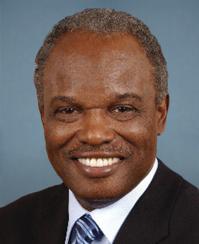
To my distinguished colleague from Georgia, I want to commend you on your excellent leadership on this very, very important and timely piece of legislation. A lot has been said here today. The two…
To my distinguished colleague from Georgia, I want to commend you on your excellent leadership on this very, very important and timely piece of legislation. A lot has been said here today. The two points of contention that the other side has brought have been in two areas. And let me just speak to those directly so that we can get to the facts of the matter.
Now the other side says that they are opposed to the health savings accounts compliance. Now, what we are saying on our side is this: The health savings accounts are set up for the purpose of helping our constituents with health care services. Now if that is the case, then it is very important that we set up a mechanism so that we can check the abuses of that. They are not set up for them to go and to use those accounts for massage parlors, for country clubs, for other issues and areas, and escort services.
So it is important for us to be able to simply do this. The bill simply requires the reporting of a holder of the health service account of any funds used for nonhealth care purposes in order to reduce the tax gap. That's simple.
Now, ladies and gentlemen, the American people are holding on by their fingernails in this terrible economy. And you may laugh and scorn about this being April 15. Of course it is April 15. And it is a day that the American people's minds are totally focused on their personal finances. And it is important that this House of Representatives respond in a way that responds to that interest. And so we are closing the gap.
So it is very important. And let me get to the other area very quickly, and that is the area of these private contractors. We have received complaint after complaint after complaint from your constituents and our constituents who have been abused by calls. Let me give you one example of an elderly couple that was called 150 times, Madam Speaker, including five times in one day, asking for a taxpayer. And it comes to find out that they are innocent.
Again, the GAO found out that debt collectors were placing over 1 million calls to innocent people just to reach 35,000 taxpayers. The Federal Trade Commission had 130 complaints as of last year giving unaccountable private tax collectors the right to look into and examine personal financial information of our taxpayers. It is wrong.
Now let me tell you this, that the commissioner of the IRS himself, Mr. Douglas Sherman, has asked for this legislation. Madam Speaker, I just simply say that if the IRS is asking for this, that they could do a better job, they are the ones who we are holding responsible. We should make sure we pass this legislation and let the IRS do their job of collecting the taxes and not hand it off to these private bounty hunters.
Bill Text
4 versions available
        [Congressional Bills 110th Congress]
[From the U.S. Government Printing Office]
[H.R. 3548 Placed on Calendar Senate (PCS)]

Calendar No. 929
110th CONGRESS
2d Session
H. R. 3548

_______________________________________________________________________

IN THE SENATE OF THE UNITED STATES

April 15, 2008

Received

August 1, 2008

Read twice and placed on the calendar

_______________________________________________________________________

AN ACT

To enhance citizen access to Government information and services by
establishing plain language as the standard style for Government
documents issued to the public, and for other purposes.

Be it enacted by the Senate and House of Representatives of the
United States of America in Congress assembled,

SECTION 1. SHORT TITLE.

This Act may be cited as the ``Plain Language in Government
Communications Act of 2008''.

SEC. 2. PURPOSE.

The purpose of this Act is to improve the Federal Government's
effectiveness and accountability to the public by promoting clear
communication that the public can understand and use.

SEC. 3. DEFINITIONS.

In this Act:
(1) Agency.--The term ``agency'' means an Executive agency,
as that term is defined in section 105 of title 5, United
States Code.
(2) Plain language.--The term ``plain language'' means
language that the intended audience can readily understand and
use because it is clear, concise, well-organized, and follows
other best practices of plain language writing.

SEC. 4. RESPONSIBILITIES OF FEDERAL AGENCIES.

(a) Requirement to Use Plain Language in New Documents.--Within one
year after the date of the enactment of this Act, each agency--
(1) shall use plain language in any covered document of the
agency issued or substantially revised after the date of the
enactment of this Act;
(2) may use plain language in any revision of a covered
document issued on or before such date; and
(3) shall, when appropriate, use the English language in
covered documents.
(b) Guidance.--In implementing subsection (a), an agency may follow
either the guidance of the Plain English Handbook, published by the
Securities and Exchange Commission, or the Federal Plain Language
Guidelines. If any agency has its own plain language guidance, the
agency may use that guidance, as long as it is consistent with the
Federal Plain Language Guidelines, the Plain English Handbook,
published by the Securities and Exchange Commission, and the
recommendations made by the Comptroller General under section 5(c).
(c) Additional Provisions Relating to Use of English Language.--
Nothing in this Act shall be construed--
(1) to prohibit the use of a language other than English;
(2) to limit the preservation or use of Native Alaskan or
Native American languages (as defined in the Native American
Languages Act);
(3) to disparage any language or discourage any person from
learning or using a language;
(4) to impact or affect protections regarding language
access; or
(5) to be inconsistent with the Constitution of the United
States.
(d) Covered Document.--In this section, the term ``covered
document''--
(1) means any document that explains how to obtain a
benefit or service or file taxes, or that is relevant to
obtaining a benefit or service or filing taxes; and
(2) includes, whether in paper or electronic form, a
letter, publication, form, notice, or instruction but does not
include a regulation.
(e) Use of Plain Language by Agencies.--Each agency should, to the
extent practicable and appropriate, use plain language in any
collection of information (as defined in section 3502(3)(A)(i) of title
44, United States Code).
(f) Incorporation of Comptroller General Recommendations.--
(1) Reports.--
(A) Federal aviation administration.--The
Administrator of the Federal Aviation Administration,
acting through the Plain Language Action and
Information Network, shall submit to the committees
described in paragraph (2) a report on whether the
recommendations made by the Comptroller General in the
report under section 5(c) have been incorporated into
the Federal Plain Language Guidelines described in
subsection (b), and, if such recommendations have not
been incorporated, an explanation of why they have not
been incorporated.
(B) Securities and exchange commission.--The
Securities and Exchange Commission shall submit to the
committees described in paragraph (2) a report on
whether the recommendations made by the Comptroller
General in the report under section 5(c) have been
incorporated into the Plain English Handbook described
in subsection (b), and, if such recommendations have
not been incorporated, an explanation of why they have
not been incorporated.
(2) Committees.--The committees described in this paragraph
are the Committee on Oversight and Government Reform of the
House of Representatives and the Committee on Homeland Security
and Governmental Affairs of the Senate.
(3) Deadline.--The reports required under paragraph (1)
shall be submitted within six months after the issuance of the
report provided by the Comptroller General under section 5(c).

SEC. 5. REPORTS TO CONGRESS.

(a) Initial Report.--Within six months after the date of the
enactment of this Act, the head of each agency shall submit to the
Committee on Oversight and Government Reform of the House of
Representatives and the Committee on Homeland Security and Governmental
Affairs of the Senate a report that describes how the agency intends to
meet the following objectives:
(1) Communicating the requirements of this Act to agency
employees.
(2) Training agency employees to write in plain language.
(3) Meeting the deadline set forth in section 4(a).
(4) Ensuring ongoing compliance with the requirements of
this Act.
(5) Designating a senior official to be responsible for
implementing the requirements of this Act.
(6) Using, to the extent practicable and appropriate, plain
language in regulations promulgated by the agency.
(b) Annual and Other Reports.--
(1) The head of each agency shall submit to the Committee
on Oversight and Government Reform of the House of
Representatives and the Committee on Homeland Security and
Governmental Affairs of the Senate a report on--
(A) compliance with this Act; and
(B) the agency's continued efforts to meet the
objectives specified in subsection (a).
(2) A report under this subsection shall be submitted--
(A) annually for the first two years after the date
of the enactment of this Act; and
(B) once every three years thereafter.
(c) Evaluation and Report by Comptroller General.--Within six
months after the date of the enactment of this Act, the Comptroller
General shall evaluate existing guidance for agencies on writing in
plain language, including the guidance listed in section 4(b), and
provide to the Office of Management and Budget, the Committee on
Oversight and Government Reform of the House of Representatives, and
the Committee on Homeland Security and Governmental Affairs of the
Senate a report providing recommendations on--
(1) plain language guidelines; and
(2) best practices for plain language.

Passed the House of Representatives April 14, 2008.

Attest:

LORRAINE C. MILLER,

Clerk.
Calendar No. 929

110th CONGRESS

2d Session

H. R. 3548

_______________________________________________________________________

AN ACT

To enhance citizen access to Government information and services by
establishing plain language as the standard style for Government
documents issued to the public, and for other purposes.

_______________________________________________________________________

August 1, 2008

Read twice and placed on the calendar