Mortgage Forgiveness Debt Relief Act of 2007
Legislative Activity
Stay on top of the latest movement without scrolling through every action
Became Public Law No: 110-142.
December 20, 2007
View full timeline
Introduced in House
September 25, 2007
Referred to the House Committee on Ways and Means.
September 25, 2007
Committee Consideration and Mark-up Session Held.
September 26, 2007
Ordered to be Reported (Amended) by Voice Vote.
September 26, 2007
Reported (Amended) by the Committee on Ways and Means. H. Rept. 110-356.
October 1, 2007
Placed on the Union Calendar, Calendar No. 220.
October 1, 2007
Rules Committee Resolution H. Res. 703 Reported to House. Rule provides for consideration of H.R. 3648 with 1 hour of general debate. Previous question shall be considered as ordered without intervening motions except motion to recommit with or without instructions. Measure will be considered read. Bill is closed to amendments. The amendment in the nature of a substitute recommended by the Committee on Ways and Means now printed in the bill, modified by the amendment printed in the report of the Committee on Rules accompanying this resolution, shall be considered as adopted.
October 2, 2007 • 6:46 PM
Rule H. Res. 703 passed House.
October 4, 2007 • 12:18 PM
Considered under the provisions of rule H. Res. 703. (consideration: CR H11287-11298; text of measure as introduced: CR H11287-11288)
October 4, 2007 • 1:48 PM
Rule provides for consideration of H.R. 3648 with 1 hour of general debate. Previous question shall be considered as ordered without intervening motions except motion to recommit with or without instructions. Measure will be considered read. Bill is closed to amendments. The amendment in the nature of a substitute recommended by the Committee on Ways and Means now printed in the bill, modified by the amendment printed in the report of the Committee on Rules accompanying this resolution, shall be considered as adopted.
October 4, 2007 • 1:48 PM
DEBATE - The House proceeded with one hour of debate on H.R. 3648.
October 4, 2007 • 1:50 PM
The previous question was ordered pursuant to the rule. (consideration: CR H11296)
October 4, 2007 • 2:36 PM
Mr. Cantor moved to recommit with instructions to Ways and Means. (consideration: CR H11296-11297; text: CR H11296)
October 4, 2007 • 2:36 PM
DEBATE - The House proceeded with ten minutes of debate on the Cantor motion to recommit with instructions. The instructions contained in the motion seek to require the bill to be reported back to the House with an amendment striking sections 5 and 6 from the bill.
October 4, 2007 • 2:36 PM
The previous question on the motion to recommit with instructions was ordered without objection. (consideration: CR H11296)
October 4, 2007 • 2:44 PM
On motion to recommit with instructions Failed by the Yeas and Nays: 201 - 212, 1 Present (Roll no. 947). (consideration: CR H11297)
October 4, 2007 • 3:08 PM
Passed/agreed to in House: On passage Passed by recorded vote: 386 - 27 (Roll No. 948).(text: CR H11288-11289)
October 4, 2007 • 3:16 PM
On passage Passed by recorded vote: 386 - 27 (Roll No. 948). (text: CR H11288-11289)
October 4, 2007 • 3:16 PM
Motion to reconsider laid on the table Agreed to without objection.
October 4, 2007 • 3:16 PM
Received in the Senate and Read twice and referred to the Committee on Finance.
October 4, 2007
Senate Committee on Finance discharged by Unanimous Consent.
December 14, 2007
Measure laid before Senate by unanimous consent. (consideration: CR S15642-15643)
December 14, 2007
Passed Senate with an amendment by Unanimous Consent.
December 14, 2007
Message on Senate action sent to the House.
December 14, 2007
Mrs. Jones (OH) moved that the House suspend the rules and agree to the Senate amendment. (consideration: CR H16768-16772)
December 18, 2007 • 3:59 PM
DEBATE - The House proceeded with forty minutes of debate on the motion to suspend the rules and agree to the Senate amendment to H.R.3648.
December 18, 2007 • 3:59 PM
Resolving differences -- House actions: On motion that the House suspend the rules and agree to the Senate amendment Agreed to by voice vote.(text as House agreed to Senate amendment: CR H16768-16770)
December 18, 2007
On motion that the House suspend the rules and agree to the Senate amendment Agreed to by voice vote. (text as House agreed to Senate amendment: CR H16768-16770)
December 18, 2007 • 4:23 PM
Motion to reconsider laid on the table Agreed to without objection.
December 18, 2007 • 4:23 PM
Cleared for White House.
December 18, 2007
Presented to President.
December 19, 2007
Signed by President.
December 20, 2007
Became Public Law No: 110-142.
December 20, 2007
Voting History
2 votes recorded • Roll call available
Floor Debate
21 membersWhat members said about H.R. 3648 on the floor
 MK
MK SC
SC KC
KC LD
LD EB+16
EB+16
Floor Debate
21 membersWhat members said about H.R. 3648 on the floor
With a heavy heart, I rise in opposition to this rule and the Wall Street rescue bill. Why? The key provision added over the weekend amounts to a huge elephant galloping over the American people with…
With a heavy heart, I rise in opposition to this rule and the Wall Street rescue bill. Why? The key provision added over the weekend amounts to a huge elephant galloping over the American people with its blank check to Wall Street. In exchange, the American people get to cling to fool's gold--a few billion dollars to cities and States which are facing hundreds of billions of dollars of loss. Ohio alone needs the total amount of meager funds allocated to workouts. Sadly, less than one percent of the assistance in this bill is targeted to those local communities! We need a bill that strengthens each community's real estate values through Federal bond guarantees to them, not to the big investment banks and uninsured housing enterprises that caused this problem in the first place. I thank the gentleman very much for yielding.
Introduction
President Franklin Roosevelt aptly gave a name to the Wall Street financial manipulators who, time and again, put our nation in enormous financial peril. He called them ``malefactors of wealth''-- ``malefactors,'' from the Latin ``mal'' meaning ``bad,'' and ``factor,'' meaning ``makers'' . . . makers of bad. That is, people who do great harm with the use of wealth.
As a scion of old wealth himself, Roosevelt knew them well. He knew the lengths to which
they would go to satisfy their cravings for more, and more, and more-- as if reason and prudence didn't apply. And they did not care who they ran over in their quest. Their deeds have placed our nation at risk, time and again. Now, with the mortgage foreclosure crisis, they have done it again--this time, the damage is so huge it dwarfs the savings and loan fiasco of the 1980's when they ponzi-schemed up housing markets, saw them crash, and then ran to Congress to bail them out. Back then, the perpetrators centered their attention on California, Texas, Arizona, and the hot housing markets. Yet all Americans, from all states--like Ohio which was not one of the epicenters of their gluttony--were forced to pay the bills for their bad deeds.
Today, Congress will vote to burden the American people with another blank check, totaling hundreds of billions of dollars lasting three generations, to Wall Street brokerages and the shareholders of Freddie Mac and Fannie Mae. It is times like this that my heart feels very heavy for my fellow countrymen and women, as I cannot save us from this wrongful debt being imposed. This bailout of Wall Street giants never had a hearing in Committee.
Why should our people be made to pay for them? What will our communities get for this added, massive debt obligation?
The Legislation
The Foreclosure ``Rescue'' bill we're being asked to vote on today won't live up to its name. I challenge any Member to tell me how much help your district will receive from this trickle down to turn around local housing markets. This bill does not measure up to the challenge
The Congressional Budget Office under estimates that the bailout package will cost the American public $25 billion. This estimate isn't a good indication of the potential cost since $25 billion is just an estimate based on many faulty assumptions. The potential cost to the public actually is several hundred billion dollars. Fannie Mae and Freddie's current debts total $5.2 trillion, which equals our national debt of $5 trillion.
The fig leaf offered--and that our communities are clinging to is the promise of a mere $4 billion in community aid plus $10 billion for state housing authorities to counteract the nearly $356 billion loss in property values and property taxes in 2007 and 2008. $4 billion doesn't even meet the City of Cleveland's needs; Ohio alone is estimated to need $164.2 billion, just the gap for the state housing authority is $20 billion. With blocks of abandoned, vandalized, and stripped homes to contend with, along with an onslaught of displaced families, our communities are being asked to do more than ever, with fewer and fewer resources.
This bill asks taxpayers to issue a blank check with the words ``stand by authority''--to Wall Street--for the first time to federally uninsured investment houses and secondary market housing agencies. This critical provision never went through Committee, there were no hearings. This was a Boardroom deal.
The former head of Goldman Sachs is now the Secretary of Treasury under a Republican administration; under the former Democratic administration, the Secretary of Treasury was from Goldman Sachs. Just this week, Goldman Sachs' top banker, Ken Wilson, will take a leave from his job there to join his former boss at Treasury, Secretary Paulson. Who's running whose show here? Is Treasury serving the American people or simply Goldman Sachs, IndyMac Bank, and Bears Stearns?
Further, under this bill the Department of Treasury that failed to regulate, examine, and audit is now going to be given even more power to create another bureaucracy to regulate the Department that didn't regulate. This house of cards only gets more topsy.
Last year, Freddie Mac Chairman and Chief Executive Richard Syron received $19.8 million in compensation--even though the company's stock lost half its value. During the same period, Fannie Mae President and Chief Executive Daniel Mudd was paid $12.2 million, including a $2.2 million bonus. But curbing their excess doesn't even come close to offsetting the huge debt this bill anticipates for the American people.
Our cities are left holding the bag, yet the greedy corporations that blew through town are being made whole. Meanwhile, homeowners have lost decades of savings and equity. Once tight-knit communities are left shattered, shuttered, and dangerous. In order to make things even worse, big banks like Citigroup are now plundering our local communities even more by offering land contracts. How much lower can these banks sink? And yet Congress rewards them?
Savings and Loan Crisis Background
Even worse than the proposed no strings attached bailout is the fact that this is deja vu all over again. The Savings and Loan bailout of the 1980s cost the American taxpayers upwards of half a trillion dollars. The American people were asked to grin and bear it for the good of the Nation. States like Ohio were not among the worst abusers, yet our taxpayers were forced to bear this debt load too.
The savings and loan scandal destroyed an entire class of community banks, moved more power to Wall Street and money center banks, and exploded our public debt. Back then, they told Americans that if they were bailed out, such catastrophes would never happen again. They claimed a new money instrument was being developed by Wall Street called the mortgage backed security. Through its magic, the public would never have to worry again about greedy bankers in the housing market. Your mortgage would be safer, as it would be packaged with others and sold through securities Wall Street would invent, like an anonymous piece of paper.
Meanwhile, face to face community banking, and necessary underwriting and regulation first enacted for home lending in the Great Depression, were destroyed. Financing became more and more hot wired, more absentee, even over the phone and internet. A deluge of promotional materials from the banks arrived at our doorsteps, almost daily, urging mortgagees to borrow more and more against their shrinking home equity, to borrow for almost anything--a vacation, a car, to put on a roof. Few cautioned against it, and the debt pushers pushed on.
Home values inflated beyond their worth. But the regulators, like FNMA and Freddie, the OTS and FDIC stood frozen in place. The mortgage itself--which is a debt that must be repaid--was rolled up and packaged with thousands of other mortgages and, as America itself is in debt, sold into the international market for the first time to foreign buyers. Try to work out a loan when your financier is located in China.
Sadly, their entire modus operandi is an old trick--create a house of cards with money by pushing risk beyond what can be considered prudent, leverage the money pyramids where the underlying asset is purposely poorly appraised, and voila--the perpetrators make billions until the market they have created busts. Then blame the American people and run to Congress to close the gap by borrowing, borrowing, and borrowing from the very people they thought so little of. Oh yes, and then, blame the whole washout on ``them,'' the public.
Wall Street's money grabbers are back, this time stretching their long arms even deeper into your pockets to cover their latest craze-- draining out our home equity and home values. Americans have built their equity over decades in their mortgages. Yet Wall Street set its sights on families' home equity, and went after it with a vengeance. It was the only major savings pool America had left other than our public assets like roads, water systems, and public works. Millions of families succumbed to the snake oil.
Overall, home equity in our nation, our largest source of savings-- has now dipped below fifty percent for the first time in modern history. Millions of Americans have negative equity in their homes, they own more on their homes than their homes are worth.
So, to fill the gap, Wall Street wants the American taxpayer--the people they bilked--to bail them out, again. Bear Stearns succeeded to the tune of $30 billion. So now there is a longer line of bankers lined up to prop up their profligacy. This bill legitimizes their behavior and gets crumbs in return for the American people. The malefactors wealth manipulated and created panic in the market. They got the Bush Administration to propose an ``emergency'' bailout plan. And then they got Congress to ``limit'' executive pay as a fig leaf to cover over their real motherload in this bill. Not a bad bit of insider dealing.
But what about the American people? What about their interests?
Meeting the Needs and Strengthening of Our Communities
Let's get something real for the taxpayer. And let's get it now. As the Economist proposed this week, Fannie Mae and Freddie Mac could issue their own debt and exchange it for loans from the government-- this way, our taxpayers who are on the hook at least get something if markets recover. Otherwise, all this bill does is hand over the U.S. Mint to Wall Street.
I ask any Member: how much of this bill is going to your district relative to what it is going to cost to turn your local real estate market around?
If you don't know the details, you shouldn't vote for the bill.
And how do you know when the help will arrive? This bill is a trickle down from Wall Street; communities across this nation will be left holding an empty bag.
Our communities need expanded bonding power at the grass roots, not more rewards for Wall Street brokers who got us into this sorry situation in the first place.
We need trickle up, not trickle down.
Our communities need expanded bonding power at the grassroots level to raise the funds to combat this crisis, not more rewards to the very institutions and people who created this mess.
I have a better idea. Rather than Congress vowing to borrow more money--plus interest--from the American taxpayer for three generations to come, to make Wall Street whole, why not instead design a refinancing approach that benefits the taxpayer, and the communities they live in? Rescue local real estate markets. Give the bulk of assistance there. Let any refinancing medium reach deep into every affected community across this country. Stop the hemorrhage. Accelerate workouts now to save real estate values from plummeting even further-- including on families who own properties that had nothing to do with this ponzi scheme.
Strengthen each community's real estate values through federal bond guarantees to local countries and cities, not Wall Street. Empower local people. Empower local housing authorities' ability to respond. Democratize this bond offering. The largesse of the American people should not trickle down from the big bond houses on Wall Street who caused the problem, traffic in debt, and operate far from home. The bill being proposed in Congress is weighted WAY too heavily in their favor. For affected localities, less than 1 percent of this proposed aid is targeted to them; Wall Street gets the lion's share. Imagine a bill that strengthens local real estate markets NOW, and into the future through additional federal bond guarantee authority to those same communities. The ability of hundreds of affected jurisdictions to do refinancing and workouts will be direct, local and not just through Wall Street. Direct support to localities should be at a level commensurate with the scale of the foreclosure crisis--not just one percent of the largesse while Wall Street cleans up.
Conclusion
This approach makes sense as real estate markets are local. There is a greater likelihood that units will be turned around more responsibly and expeditiously at the local level. Wall Street is too far away. And they are already hawking their disgusting ``land contracts'' to move foreclosed units which are further blighting troubled neighborhoods.
Let's democratize this bond offering in community after community. Let's not give it away to the same Wall Street crowd that bleeds us time and again, but pays us no respect. Franklin Roosevelt understood the difference between money and wealth. He was about creating wealth in community after community, household after household, not letting Wall Street raid us dry. This Congress should remember how his policies built a middle class. We should champion that democratic vision of capitalism. It's long overdue. As this bill moves to the Senate, perhaps someone there will remember what representative democracy is all about and make this a much better bill. My vote is cast for the American people and against the malefactors of wealth.
Addendum
Fannie Mae and Freddie Mac
A Better Approach: Based upon Treasury Secretary Paulson's
emergency announcement and proposal on July 13, 2008, ``The
two companies could issue their own debt and exchange it for
loans from the government--at least the American people might
yield something rather than giving wall street the equivalent
of having access to the printing press.'' (Source: The
Economist, July 19th-25th, 2008)
Additional Facts: According to a Federal Reserve economist,
because the U.S. government has essentially guaranteed Fannie
Mae and Freddie Mac's debt, the ability of home buyers to
borrow has remained difficult, while the savings Fannie and
Freddie have realized--about $79 billion--instead went
straight to their shareholders. (Source: The Economist, July
19th-25th, 2008)
Current regulation, ``allowed Fannie and Freddie to operate
with tiny amounts of capital. Their capital reserves (as
defined by the regulator, Office of Federal Housing
Enterprise Oversight [OFHEO]) of $83.2 billion at the end of
2007 supported $5.2 trillion of debt and guarantees, a ratio
of 65 to one.'' Imagine if a household earned $83,000 a year
and was able to borrow $5.2 billion on that salary.
In 1998 Freddie Mac owned $25 billion of other securities,
according to OFHEO and by the end of 2007 it had $267
billion. Fannie Mae's outside portfolio grew from $18.5
billion in 1997 to $127.8 billion at the end of 2007. This
shift in investing in outside securities does not meet Fannie
and Freddie's core mission of increasing home ownership.
OFHEO as recently as July 10th said that both Fannie Mae
and Freddie Mac had enough capital.
Freddie Mac lost $3.5 billion in 2007; Fannie Mae reported
a $2.2 billion loss in the first quarter, having lost $2.05
billion in 2007. Each had credit-related write-downs of
between $5 billion and $5 billion last year.
Currently, Freddie Mac only has a market value of $5.3
billion.
On a fair-value basis, Freddie Mac had a negative net worth
of $5.2 billion at the end of the first quarter.
fannie mae and freddie mac's debt and foreign ownership
``Paulson said the Fannie and Freddie have issued $5
trillion in debt and mortgage backed securities. Of that
amount more than $3 trillion is held by U.S. financial
institutions and over $1.5 trillion is held by foreign
institutions.'' (AP; Crutsinger, July 22, 2008)
Fannie Mae and Freddie Mac's foreign debt has tripled from
$504 billion in 2001 to $1.5 trillion in 2007. Fannie Mae and
Freddie Mac's $1.5 trillion foreign debt is owned by China
$376 billion, Japan $228 billion, Russia $75 billion, South
Korea $63 billion, and Middle Eastern Oil-Exporters $29
billion. Now, both interest and principal is owed to foreign
bondholders.
The current proposal will allow Bank of America to purchase
Countrywide's portfolio. Then if Bank of America works out a
refinancing, FHA stands ready to insure it. If the owner
fails to make payments, FHA assumes the unit. This is a great
bonanza for Bank of America.
what the legislation needs
A better solution would be to let Fannie Mae and Freddie
Mac issue debt and then exchange that for a government loan.
At least our people would get something back on the upside--
just as America did when Chrysler Corporation was refinanced
through redeemable warrants.
Democratize the bond offerings by diverting some of the
securitized debt that is intended to prop up Wall Street,
Fannie Mae, and Freddie Mac. Direct it to Main Street--our
counties, our cities, our housing agencies and authorities.
Make the approach more equitable to the taxpayer. This
approach allows communities, not only corporations, mega-
banks, and investment houses, to actually own something.
Isn't that a value worth fighting for?
Mr. Speaker, the subject of my Special Order today is the birthday of one of America's greatest citizens, Dr. Martin Luther King, Jr. Dr. King's birthday will be celebrated next week with the…
Mr. Speaker, the subject of my Special Order today is the birthday of one of America's greatest citizens, Dr. Martin Luther King, Jr.
Dr. King's birthday will be celebrated next week with the national holiday on Monday, one of the only men or women to have a holiday named for them in this country. At one time, of course, we celebrated the birthdays of George Washington and Abraham Lincoln, and now we celebrate Presidents Day. But we celebrate Dr. King's Day, a great American and an individual who changed this country for the better and whose life is a testament to fortitude and courage, faith, and a desire to make America better.
On April 4, 1968, 40 years ago this year, Dr. Martin Luther King, Jr. was assassinated in my hometown of Memphis, Tennessee. That was a defining moment in the history of America, indeed, in the history of the world. While Dr. King's death should not and will not ever be forgotten, I think that today on what would have been his 79th
birthday, we should remember his life because it was his life, his actions and his eloquent words, that truly challenged us as a Nation to consider where we were and where we could go.
Martin Luther King, Jr. was born in Atlanta, Georgia, on January 15, 1929, the son of the Reverend Martin Luther King, Sr. and Alberta King. As we all know, Dr. King followed in his father's footsteps and became a minister at the age of 24 in Montgomery, Alabama, where just 2 years later Rosa Parks refused to comply with the Jim Crow laws, which required her to give up her seat on the bus to a white man. The subsequent Montgomery Bus Boycott, led by Rev. King, changed America. The boycott lasted over a year but resulted in the Supreme Court decision outlawing racial discrimination on public transportation. Only in his mid-20s, Martin Luther King's passion and commitment were already affecting the laws of our Nation.
During his life, Dr. King's house was bombed and his government wiretapped his conversations. But Dr. King never wavered from his commitment to nonviolent change. Dr. King turned a mirror on America, and the reflection was not good. It was ugly. America was not the land of the free but it was a land built by the enslaved. The very Capitol Building in which I speak and in which we make our laws was built by slaves. Dr. King pulled back the quasi-fiction that has so often been touted as patriotism as if to say, ``but what about these Americans?'' And those are his words: ``But what about these Americans?'' Jim Crow laws, which had created two Americas, which had denied access and opportunity for so long were held up for examination, and they failed the examination, as they should have.
We are not there, ladies and gentlemen. I wish we were. I wish we had achieved the dream where the content of one's character is what each person is judged by, not by the color of one's skin. We are not there, but the good news, the positive message that Dr. King has etched into our national conscience is that one man can make a difference. One young man can step forward and live his life with purpose and dignity, can become the voice of all those whose voices have been stilled, whose hope has been lost. No assassin's bullet could stop what Martin Luther King had begun. Today, as we celebrate a birth which has changed us and which continues to challenge us, let us remember his dream.
Dr. King's words are what he's best remembered for. And in his hometown of Memphis, Tennessee, his words will be played constantly over the weekend and through Monday as we remember how he challenged us, how he inspired us in the 1950s and in the 1960s. Radio station WLOK will be, I know, having a tribute to him in Memphis, and other places all over the country will do the same. And in Memphis there will be a basketball game, a national basketball game, that will celebrate civil rights victories of this country. Particularly Bob Lanier will be there and Kareem Abdul-Jabbar and others. And we look at the steps which we have taken in this country to make the country better through sports and basketball, and I commend David Stern and the NBA for having that game in Memphis on Dr. King's birthday.
At this time I would like to read some quotes from Dr. Martin Luther King, Jr., as will be read and as will be heard throughout this country in the coming week and the coming weekend. Many of them resonate with the issues of today.
``A genuine leader is not a searcher for consensus but a molder of consensus.'' And we need more leaders like that today who mold consensus.
``A nation that continues year after year to spend more money on military defense than on programs of social uplift is approaching spiritual doom.'' Remember, Mr. Speaker, Dr. King was speaking during the time of the Vietnam War. We have another Vietnam, I think, today in Iraq, and we are spending more money not on military defense but on military offense and leaving programs of social importance behind. And I question the spirituality of where this country presently is, spending so much in Iraq and so little in America.
``A right delayed is a right denied.'' And there are so many rights which have not been granted to people and not just on the basis of race and religion and national origin but also of sexual orientation. ``A right delayed,'' Dr. King said, ``is a right denied.''
Dr. King said, ``Almost always the creative, dedicated minority has made the world better.'' And indeed they have. We are a country of minorities making for a great majority, and when we don't respect the rights of the minorities, we endanger ourselves.
Dr. King said, ``An individual has not started living until he can rise above the narrow confines of his individualistic concerns to the broader concerns of all humanity.'' And I would ask each of my colleagues to hold that thought in their minds when they vote and to realize it's not just the nature of their districts and their individual concerns which are important but the broader concerns of this country, as Dr. King said, ``the broader concerns of all humanity.''
Dr. King said, ``An individual who breaks a law that conscience tells him is unjust and who willingly accepts the penalty of imprisonment in order to arouse the conscience of the community over its injustice is in reality expressing the highest respect for the law.''
Dr. King and many civil rights workers violated the law, the law of the country, mostly in the South, Jim Crow laws, that said people were separate and inherently unequal. He did that with Rosa Parks when they challenged the laws that said African Americans were to ride on the back of the bus. And he challenged, along with President Johnson and this Nation in the 1960s, the law that said there could be separate establishments and would be by law for people based on race for entertainment, different public facilities, eating establishments, hotels and motels, colleges and schools. Those were wrong laws. They needed to be challenged, and they were challenged by Dr. King and many civil rights leaders, and the world changed in the 1960s.
Dr. King said, ``At the center of nonviolence stands the principle of love.'' He also said, ``Have we not come to such an impasse in the modern world that we must love our enemies or else? The chain reaction of evil, hate begetting hate, wars producing more wars, must be broken or else we shall be plunged into the dark abyss of annihilation.'' And, Mr. Speaker, I reflect on this when I think about what we are doing in the Middle East. Hate begets hate. Wars produce more wars. And we are in an abyss.
Dr. King said, ``He who passively accepts evil is as much involved in it as he who helps perpetrate it. He who accepts evil without protesting against it is really cooperating with it.'' One must actively oppose evil. And oftentimes in the debates in Congress, you have to remember Dante, and Dr. King has a quote similar to Dante, that the warmest spots in hell are reserved for people who in times of controversy stand on the sidelines. Certainly something Dr. King did not do.
In Dr. King's great speech just outside the Capitol on the mall, which I recall watching on television and which I am thrilled to be a Member of this House of Representatives so near to the mall where Dr. King gave his ``I have a dream'' speech, he said, ``I have a dream that my four little children will one day live in a Nation where they will not be judged by the color of their skin but by the content of their character.
``I have a dream that one day every valley shall be exalted, every hill and mountain shall be made low, the rough places will be made straight, and the glory of the Lord shall be revealed, and all flesh shall see it together.
``I have a dream that one day on the red hills of Georgia, the sons of former slaves and the sons of former slave owners will be able to sit down together at the table of brotherhood.''
As I said earlier, Dr. King's dream has not totally been achieved, but we are getting closer to it. We are engaged in a Presidential debate where his words and actions are subject of much debate. But I have no doubt that Dr. King would be proud of all the candidates in the Democratic column who are running for this office and know that they are children of Dr. King's dream. To see an African American gentleman have a legitimate chance to be President of the United States and to see a woman have that same opportunity is what Dr. King talked about.
And they should be judged not by the color of their skin or by their gender but by the content of their character.
``Injustice anywhere is a threat to justice everywhere,'' Dr. King said. And that's something to be remembered when we see nooses hung in small towns or people being shot, tied behind cars because of aspects of their personage of which they had no choice.
``It may be true,'' Dr. King said, ``that the law cannot make a man love me, but it can keep him from lynching me, and I think that's pretty important.'' And that is important. We have a Senate and a House that passed a condemnation of the lynching that took place in this country in the 20th century. And this House, hopefully, will pass another proposition that says that we apologize for having been part of a Nation that allowed for slavery to occur and had laws that permitted it and for Jim Crow laws that saddled this country with unjustice for 100 years thereafter.
Dr. King said, ``Life's most persistent and urgent question is what are you doing for others?'' And that's a question that my friend Irbin Salky has often said to me, that the purpose of why we are here on Earth is to help others. And it's part of the Judeo-Christian religion and creed to care for others, and that's why we are here.
Again, Iraq and Vietnam, they are parallels, and Dr. King's words ring true today. He said, ``One of the greatest casualties of the war in Vietnam is the Great Society shot down on the battlefield of Vietnam.''
Indeed, many of the hopes of people in our inner cities, people that are left behind by what has been considered a great economic opportunity for many Americans, mostly the richest, have been left behind because of the moneys we have spent in Iraq rather than spending them on the people in this country.
There are many parallels, and I think I know where Dr. King would be on the issue of war and peace, on the issue of choosing Iraq rather than choosing America, the cities that have been neglected, the inner cities, Appalachia, Katrina victims, and others. Dr. King said: ``The moral arc of the universe bends at the elbow of justice.'' He always felt that the arc was bending in the right direction, although slowly. And justice and change do move slowly but they do move. We have change. Change is not revolutionary; it's evolutionary. It happens, but it happens in increments. But Dr. King and people like him made it move at a stronger pace, and it's necessary to have agents of change. Agents of change have moved the society forward.
One of the most prophetic quotes that I think I saw, and there are so many to review in thinking about Dr. King, he said: ``The Negro needs the white man to free him from his fears. The white man needs the Negro to free him from his guilt.'' I know from my sponsorship of an apology for slavery and Jim Crow and some of the comments I have read, there's a lot of guilt in this country and it's making it difficult for people to engage in a dialog and understand and honestly see what slavery did for many people's lives. Not only did it cause the African Americans and have them be enslaved, but it caused a lot of people to make a lot of money and have a lot of great economic fortune at the expense of the enslaved, and then of the Jim Crow citizen that served their needs for 100 years.
The quality, not the longevity, of one's life is what is important. I think about Martin Luther King, who died at the age of 39; I think of John Kennedy, who served in this House and lived to the age of 46; I think of his brother, Robert Kennedy, who died at age 42, but affected so many of us. All of these three men affected me in a great way. Their assassinations in 1963 and 1968 affected this world, but it affected me in a great way. It was the quality, not the longevity, of their lives that was important. And they didn't wait for tomorrow. They had the fierce urgency of now that Dr. King talked about to make a change, to make a change and a difference while they were on this Earth and to affect their fellow man and fellow woman.
``The ultimate measure of a man is not where he stands in moments of comfort and convenience, but where he stands at times of challenge and controversy.'' Once again, Dr. King implores us to have moral character and fiber and to stand up for what is important for America. And he said: ``We must learn to live together as brothers or perish together as fools.''
Dr. Martin Luther King was a special man. He took his talents and he used them for his fellow man. He inspired us all. This country and this world is much the greater for his life. It is indeed a testament to him that this Congress under the unyielding leadership of Representative John Conyers passed a bill to make his birthday a national holiday. It's a national holiday that should be held in high esteem by all men and women in this country, because Dr. King was special and unique and stood up for all people and stood for the height of American ideals.
I hope that everybody will take a moment over the weekend and on Monday on the celebration of his birthday to think about some of the things that Dr. King stood for: challenging the system to make it better; for peace; for people who have been left behind in our society; doing for the least of these and trying to make the world a better place.
My city bears great scars for his death having taken place there. There was nothing unique to my city. It was something wrong with this country that somebody out there put a reward up for Dr. King's death and that somebody wanted to claim that reward and didn't have a regard for the humanity of Dr. King. In Memphis now there's a National Civil Rights Museum dedicated to the civil rights movement and to Dr. King's life and ideals, and I invite and encourage everyone to come to Memphis to visit the civil rights museum, which is at the spot where Dr. King was killed at the Lorraine Motel, which has been preserved, and to celebrate his life and to celebrate his values, not only on his birthday but on every day, for Dr. King was a great American. I am just lucky, as we all are, that he came my way.
Mr. Speaker, I thank you for the time, and I know that you, like me, will reflect on Dr. King's works and will keep him in our hearts as we try to do what's right for America in this 110th Congress.
Madam Speaker, by direction of the Committee on Rules, I call up House Resolution 1363 and ask for its immediate consideration. Madam Speaker, I rise today in strong support. For the purpose of…
Madam Speaker, by direction of the Committee on Rules, I call up House Resolution 1363 and ask for its immediate consideration.
Madam Speaker, I rise today in strong support. For the purpose of debate only, I will yield the customary 30 minutes to the gentleman from Texas (Mr. Sessions). All time yielded during consideration of the rule is for debate only.
General Leave
I ask unanimous consent that all Members be given 5 legislative days in which to revise and extend their remarks on House Resolution 1363.
I yield myself such time as I might consume.
Madam Speaker, House Resolution 1363 provides for consideration of the Senate amendment to H.R. 3221, the American Housing Rescue and Foreclosure Prevention Act of 2008. The rule makes in order a motion by the chairman of the Committee on Financial Services to concur in the Senate amendment, with the text of the House amendment printed in the Rules Committee report.
The rule provides 2 hours of debate on the motion, with 80 minutes controlled by the Committee on Financial Services, and 40 minutes controlled by the Committee on Ways and Means.
Madam Speaker, I rise today in strong support of the American Housing Rescue and Foreclosure Prevention Act and this rule. Our landmark legislation today throws a lifeline to families who are struggling to maintain the American dream of home ownership during this housing crisis and the economic downturn.
Families across America are being forced to make heart-wrenching decisions in order to stay in their homes. What will they pay for in this day and age, with rising gas prices, property insurance rates escalating, the cost of health care rising? But nothing is more fundamental than having a safe and clean home for your family.
The good news is that many of us in the Congress understand, and we are going to stand up for families and ensure that if you work hard and you play by the rules, the tools and resources will be made available to you to help you stay in your home.
The American people have a number of champions here in Congress that understand the importance of a safe, clean and affordable home. Chairman Barney Frank has spent countless hours in providing the tools necessary for families across this country to have a safe, affordable place to live.
Chairwoman Maxine Waters of California has spent a great part of her career dedicated to affordable housing for American families.
Speaker Pelosi and the Chairwoman of the Rules Committee, Louise Slaughter, are champions of American families and affordable housing as well.
Madam Speaker, today three million to four million families are expected to lose their homes to foreclosure. And when a home in your neighborhood ends up in foreclosure it affects everyone. It is usually sold at a reduced rate, and the values of homes throughout the neighborhood are affected. We have all seen these eyesores with overgrown grass, broken windows and in disrepair.
Well, that is why we are all in this together. It is vital that we fight to maintain the property values of our communities.
Madam Speaker, just a few weeks ago I had my first foreclosure workshop to get families together with lenders to try to get to a point where they could work out their loans. We were very surprised. We had over 600 individuals show up who were either in foreclosure, had fallen a month or two behind, or could see on the horizon, because of an adjustable rate loan or some family circumstance like the loss of a job or the kids going off to college, that they needed a little bit of help.
Well, we have been very active in this Congress because while this is a problem that, yes, critically affects a State like Florida, in the Tampa Bay area that I have the privilege to represent, and it affects California desperately, Ohio, Nevada, no part of the country has been immune from the sub prime lending crisis.
Fortunately, this American Housing Rescue and Foreclosure Prevention Act comes at an important time. But, you know, this Congress has been working on this for over a year and a half. So many of the initiatives contained in this package have been passed by the House of Representatives. This ``New Direction Congress'' has worked, in a bipartisan way, to pass most of the initiatives that are contained in the act today.
Families should know that H.R. 3648, the Mortgage Forgiveness Debt Relief Act, was passed and did become law at the end of last year; passed by a margin of 386-27 here in the House. It provides that over the next 3 years, families who have had to sell their homes in foreclosure will be spared from getting hit by a larger tax bill, in addition to the pain of losing their homes.
There are a number of other critical components in the Housing Rescue Package that were previously passed by the House. And I would like everyone to note, because we will probably hear a great deal of debate here today on the housing package. Everyone should note that almost all the initiatives contained in the bill today were passed over the last year and a half by wide, bipartisan margins.
First, the Neighborhood Stabilization Act. That was approved in May by a vote of 239-188. It provides grants to the States and local governments to purchase and rehabilitate foreclosed properties and turn them into safe, affordable places for folks to live.
And I would like to recognize and thank the White House for removing its veto threat. It had threatened to veto this entire package that had been negotiated with the White House over this small section that provides important tools to our State and local governments to tackle those properties that are up for foreclosure, the ones that are overgrown, that have the broken windows, allows them to go in and purchase those properties and turn them into affordable housing for families who are in need.
The package also includes the important provisions of the Federal Housing Finance Reform Act that we passed in May of 2007 by a vote of 313-104. This is vital legislation today because it establishes new and extensive oversight and regulatory authority over the Federal National Mortgage Association, Fannie Mae, and the Federal Home Loan Mortgage Corporation, Freddie Mac.
To protect the taxpayers, we are instituting new requirements for the safety and soundness of the portfolio operations of these regulated entities. We need to make sure that we have oversight on the effects of the financial and housing finance markets of all these alternatives and provide an alternative to the current secondary market system for housing finance.
Madam Speaker, last September we also passed an important part of this package, the Expanding Home Ownership Act of 2007, by a margin of 348-72 here in the House. This is a critical piece because it expands access to the middle class to the low interest, low fee loans provided by the Federal Housing Administration. These FHA loans are a much better option to the sub prime loans. We are going to take a proactive step here to allow families facing foreclosure to qualify for the
low interest, no fee loans offered by the FHA.
The housing package today also includes the National Affordable Housing Trust Fund Act of 2007. That was passed here in the House last October by a vote of 264-148. This creates a new, innovative fund that will be used to build more affordable housing for hard working families and families who have lost their homes due to foreclosure. The new trust fund will focus on construction, rehabilitation and preservation of affordable housing in our hometowns. It will pool monies to target housing for families with the greatest economic need.
And our efforts come at a critical time if we can get this trust fund up and running. See, the Federal money for affordable housing has largely disappeared under the current administration over the past 7 years.
In many communities like mine, housing agencies have thousands on the waiting list. In my hometown of Tampa, Florida, during a 1-week open enrollment session, more than 10,000 seniors, veterans and families indicated a need for housing. But instead of receiving housing, they are placed on a waiting list, and the waiting list takes up to 4 years, and it is so long that the Tampa Housing Authority is unable to help others that need it.
Madam Speaker, another important part of this housing package is the Mortgage Reform and Anti-Predatory Lending Act of 2007. Yes, we passed this here in the House last November by a vote of 291-127. It requires States to license all mortgage professionals and mandate criminal background checks, requires exams and a ban on felons participating in the mortgage loan industry.
We all know that the predatory lending was rampant during the sub prime loan run up. And I would like to draw your attention to anyone that would like to examine in depth the details of predatory lenders and how they worked. Go to the MiamiHerald.com Web site and review their series on predatory lending that they have run over the past couple of days. It is outstanding.
They reviewed thousands of pages of court documents, State industry reports, internal e-mails, and police reports from 2000 to 2007 and they discovered that over 5,000 people with criminal histories during that time became loan originators, a rate of nearly two a day. Worse, those include over 2,000 who had committed financial crimes such as fraud, money laundering, and grand theft. Too many of our neighbors were outright lied to and steered into unaffordable, exploding adjustable-rate mortgages without being given an option for a fixed rate and are now facing foreclosure which harms their families and all of us in their community.
To accompany this extensive package, what has been added that really has not been voted on by the House today is a request by the Treasury Secretary for new standby authority to buy stock or debt in the GSEs if it is determined that an emergency exists. This is something of an insurance policy against broader losses in the housing market that could bubble up.
Mr. Speaker, our efforts here today are absolutely necessary. Families across this country are depending on us. It's unfortunate that while the House and the new-direction Congress has been focused on affordable housing over the past year and a half and has passed terrific, substantive legislation, that it's taken a few months to get it enacted and passed in the end.
Thanks again to Chairman Barney Frank for headlining our negotiations with the other body and with the White House. And I feel secure that a large bipartisan vote here today will prove that we can stand up and address this housing crisis across this country.
I reserve the balance of my time.
Mr. Speaker, I am privileged to yield 5 minutes to the distinguished chairwoman of the Rules Committee, Ms. Slaughter of New York.
I yield the gentlewoman an additional 1 minute.
Mr. Speaker, I'm very pleased to yield 2 minutes to the gentlewoman from California (Ms. Waters), a champion for affordable housing and America's families.
Mr. Speaker, I'd like to correct the record here because this House of Representatives has been working in a bipartisan way for almost 2 years now on housing legislation. In fact, in my opening statement, I chronicled the number of bills starting last year that have been passed in this House by substantial bipartisan margins and sent over to the Senate where they waited. To say that there's been no opportunity for amendment or debate, that's wholly inaccurate.
Out of this package, it contains at least five or six bills that had committee hearings, extensive hearings, the opportunity for amendment in committee, the opportunity for debate, previous debate, debate on the floor, amendments here on the floor, debate in the Rules Committee.
So I think it's important that the record reflect that reality.
And at this time, I'd like to yield 5 minutes to the chairman of the Financial Services Committee, the gentleman from Massachusetts (Mr. Frank).
I yield the gentleman 30 additional seconds.
Mr. Speaker, we reserve the balance of our time.
Mr. Speaker, at this time I yield 1 minute to the gentlewoman from California (Ms. Lee).
I will have to object to that. I will note that the rule does provide for an extended amount of debate on the legislation, itself.
Mr. Speaker, I yield 1 minute to the gentlewoman from Texas (Ms. Jackson-Lee).
Mr. Speaker, I have the right to close, so I will reserve the balance of my time until the gentleman from Texas has made his closing statement.
Mr. Speaker, I urge adoption of the American Housing Rescue and Foreclosure Prevention Act and this rule, as families across America are in the grips of a housing crisis and it demands expeditious action.
The President of the United States says it's necessary. The Governors in this great Nation say it's necessary, and I will submit their statements into the Record.
Foreclosures are way up, and the options for safe, clean, and affordable housing are down. In my home town of Tampa, Florida, one in 280 homes is in foreclosure. Now, as Rules Committee Chairwoman Slaughter said, we're going to clean up this mess because America's hardworking families are depending on us, but we will also need to follow up and hold those accountable who have created this mess.
Now, the House of Representatives over the past 1\1/2\ years have passed bills to help homeowners avoid foreclosure, provide resources to local communities to build new, safe and affordable housing, and crack down on predatory lenders. It has all come to fruition here today.
Our efforts will keep the American dream of homeownership available to more American families, thanks to the efforts of Speaker Nancy Pelosi, Chairman Barney Frank and Chairwoman Maxine Waters, and the other champions for America's families who are going to continue to side with them, and our commitment to affordable housing and safe and healthy communities.
Mr. Speaker, I urge a ``yes'' vote on the previous question and the rule.
Executive Office of the President, Office of Management
and Budget,
Washington, DC., July 23, 2008.
Statement of Administration Policy
H.R. 3221--Housing and Economic Recovery Act of 2008, (Rep. Frank (D)
Mr. Speaker, I yield back the balance of my time and I move the previous question on the resolution.
Thank you, Mr. Speaker. I would like to thank my friend, the gentleman from California, for the time and I yield myself such time as I may consume. In August, over 165,000 properties in Florida alone…
Thank you, Mr. Speaker. I would like to thank my friend, the gentleman from California, for the time and I yield myself such time as I may consume.
In August, over 165,000 properties in Florida alone entered foreclosure, 50 percent more than the previous month. The situation is most acute in the part of Florida that I am honored to represent. Miami-Dade County ranks in the top five counties in the Nation among major metropolitan areas where homes are entering some stage of foreclosure. Broward County ranks third in the Nation. This great cause for concern in the housing market has prompted anxiety over the tax consequences associated with discharges of indebtedness, debt forgiveness, in connection with restructuring acquisition indebtedness and home foreclosures.
As the gentleman from California pointed out, under current law, when a lender forgives some or all of the mortgage debt, Mr. Speaker, the borrower is required to treat the forgiven debt as taxable income, taxed at ordinary rates. In today's marketplace, declining property values have left some sellers in the position of having to sell their homes for less than the outstanding balance on the mortgage. Even if the loss of value occurs through no fault of their own, if the lender forgives the shortfall, that amount is taxable income for sellers. This phantom income tax places a heavy burden on a family that has incurred a significant economic loss. This legislation will help protect those homeowners from an unexpected and unfair tax bill.
The bill also extends the deduction for private mortgage insurance for 7 years. Current law limits the deduction for private mortgage insurance to payments made prior to the end of 2007. This provision will be helpful, especially to young families purchasing their first home.
There is some concern that the bill may go beyond what is needed during this time. The administration and some in the minority here in Congress have stated that the relief should be temporary to assist homeowners during the current mortgage market transition period, avoiding as much as possible distorting consumer and lender decisions on new mortgage loans. But, Mr. Speaker, there can be no doubt that the underlying legislation being brought forth today for consideration by this House is an example of what can happen, the good that can happen, the progress that can be made when the congressional majority decides to work with the administration, with the President and the minority in Congress on an important issue such as this. Much of the legislation that we will be considering today was proposed, the substance of that legislation was proposed by President Bush. And so this is an example of what progress can be made on important issues when the congressional majority decides to work with the minority and the administration.
Now, on process, Mr. Speaker, in a document called The New Direction for America, the new congressional majority laid out its campaign promises to
the American people last year. Included in that document was a promise, and I quote, that bills should generally come to the floor under a procedure that allows open, full and fair debate consisting of a full amendment process that grants the minority the right to offer its alternatives, including a substitute.
But with this rule today that, as you know, Mr. Speaker, the rule is what brings to the floor the underlying substantive legislation that will be considered subsequently by the House; with this rule today, the majority has broken its own promise in two ways. First, they denied the minority the ability to offer a substitute amendment. My colleague, the distinguished ranking member, Mr. Dreier, offered two amendments Tuesday in Rules to allow Ways and Means Ranking Member McCrery the ability to offer a substitute amendment on this legislation. But on a party-line vote, the majority rejected the minority's ability to offer a substitute.
The majority claims that they are running the House in a more open manner than we did in the 109th Congress, but this rule today once again demonstrates that they are not moving toward a more open process, but instead moving backwards. This rule closes out all amendments. So every Member of the House is precluded from in any way offering their ideas to improve this bill.
So far this year, the majority has offered 34 closed rules on bills, closing out all amendments, far surpassing the number from the 109th Congress at this point, as a matter of fact, more than double the amount of closed rules. At this point in the 109th Congress there had been 16 closed rules. And remember the promise: the promise was to move in the other direction, and instead, more than double the amount of closed rules; clearly, moving backwards.
What this rule today really represents, Mr. Speaker, is a missed opportunity. If the majority had offered an open rule, the majority could have doubled their number of open rules on nonappropriations bills to a whopping two; instead, they've permitted only one open rule on nonappropriations bills, thus continuously violating their claim to be a more open and bipartisan Congress.
Mr. Speaker, at this time I reserve the balance of my time.
Mr. Speaker, in response to my good friend Mr. Cardoza's point about the tradition with tax bills, yes, there has been a tradition to bring tax bills to the floor under a restricted rule. That has not precluded in the past, as we did often, the ability of the minority to offer a substitute amendment.
So what I was talking about with regard to process is that there was a clear promise to move in a more open direction, to move toward more openness and more transparency and more rights for the minority. And what has happened is exactly the opposite, a doubling by the majority of closed rules that absolutely close out, in other words, prohibit, all Members from proposing amendments on this floor. So that great contrast between the promise and the performance is what I was alluding to, that unfortunate contrast.
Now, on substance, again, I think that today is an example of something very positive. The congressional majority has decided to work with the minority and the President on an issue that is of importance to this legislation. And so we see legislation, much of
which was proposed by the President of the United States, coming to the floor today to solve a major problem facing the American people.
So while I reiterate the great disappointment that we in the minority feel with regard to the lack of performance by the majority with regard to its promise to open this House to more fairness on substance, I think it's commendable that for once there is an issue of importance to the American people that the congressional majority has decided to work with the President on and with the minority in Congress.
I will be asking for a ``no'' vote on the previous question, Mr. Speaker, so that we can amend this rule and allow the House to consider a change to the rules of the House to restore accountability and enforceability to the earmark rule.
Under the current rule, so long as the chairman of a committee of jurisdiction includes either a list of earmarks contained in the bill or report, or a statement that there are no earmarks, no point of order lies against the bill. This is the same as the rule in the last Congress. However, under the rule as it functioned under the Republican majority in the 109th Congress, even if the point of order was not available on the bill, it was always available on the rule as a question of consideration. But because the Democratic Rules Committee specifically exempts earmarks from the waiver of all points of order, they deprive Members of the ability to raise the question of earmarks on the rule or on the bill.
I would like to direct our distinguished colleagues, Mr. Speaker, to a letter that the House Parliamentarian, the distinguished John Sullivan, recently sent to the distinguished chairman of the Rules Committee, Ms. Slaughter, which confirms what we have been saying since January, that the Democratic earmark rule contains loopholes. In his letter to Chairwoman Slaughter, the Parliamentarian stated that the Democratic earmark rule ``does not comprehensively apply to all legislative propositions at all stages of the legislative process.''
House of Representatives,
Office of the Parliamentarian,
Washington, DC, October 2, 2007.
Hon. Louise McIntosh Slaughter,
Committee on Rules, House of Representatives,
Washington, DC.
Dear Chairwoman Slaughter: Thank you for your letter of
October 2, 2007, asking for an elucidation of our advice on
how best to word a special rule. As you also know, we have
advised the committee that language waiving all points of
order ``except those arising under clause 9 of rule XXI''
should not be adopted as boilerplate for all special rules,
notwithstanding that the committee may be resolved not to
recommend that the House waive the earmark-disclosure
requirements of clause 9.
In rule XXI, clause 9(a) establishes a point of order
against undisclosed earmarks in certain measures and clause
9(b) establishes a point of order against a special rule that
waives the application of clause 9(a). As illuminated in the
rulings of September 25 and 27, 2007, clause 9(a) of rule XXI
does not comprehensively apply to all legislative
propositions at all stages of the legislative process.
Clause 9(a) addresses the disclosure of earmarks in a bill
or joint resolution, in a conference report on a bill or
joint resolution, or in a so-called ``manager's amendment''
to a bill or joint resolution. Other forms of amendment--
whether they be floor amendments during initial House
consideration or later amendments between the Houses--are not
covered. (One might surmise that those who developed the rule
felt that proposals to amend are naturally subject to
immediate peer review, though they harbored reservations
about the so-called ``manager's amendment,'' i.e., one
offered at the outset of consideration for amendment by a
member of a committee of initial referral under the terms of
a special rule.)
The question of order on September 25 involved a special
rule providing for a motion to dispose of an amendment
between the Houses. As such, clause 9(a) was inapposite. It
had no application to the motion in the first instance.
Accordingly, Speaker pro tempore Holden held that the special
rule had no tendency to waive any application of clause 9(a).
The question of order on September 27 involved a special rule
providing (in pertinent part) that an amendment be considered
as adopted. Speaker pro tempore Blumenauer employed the same
rationale to hold that, because clause 9(a) had no
application to the amendment in the first instance, the
special rule had no tendency to waive any application of
clause 9(a).
The same would be true in the more common case of a
committee amendment in the nature of a substitute made in
order as original text for the purpose of further amendment.
Clause 9(a) of rule XXI is inapposite to such an amendment.
In none of these scenarios would a ruling by a presiding
officer hold that earmarks are or are not included in a
particular measure or proposition. Under clause 9(b) of rule
XXI, the threshold question for the Chair--the cognizability
of a point of order--turns on whether the earmark-disclosure
requirements of clause 9(a) of rule XXI apply to the object
of the special rule in the first place. Embedded in the
question whether a special rule waives the application of
clause 9(a) is the question whether clause 9(a) has any
application.
In these cases to which clause 9 of rule XXI has no
application in the first instance, stating a waiver of all
points of order except those arising under that rule--when
none can so arise--would be, at best, gratuitous. Its
negative implication would be that such a point of order
might lie. That would be as confusing as a waiver of all
points of order against provisions of an authorization bill
except those that can only arise in the case of a general
appropriation bill (e.g., clause 2 of role XXI). Both in this
area and as a general principle, we try hard not to use
language that yields a misleading implication.
I appreciate your consideration and trust that this
response is to be shared among all members of the committee.
Our office will share it with all inquiring parties.
Sincerely,
John V. Sullivan,
Parliamentarian.
This amendment, Mr. Speaker, will restore the accountability and enforceability of the earmark rule to where it was at the end of the 109th Congress, to provide Members with an opportunity to bring the question of earmarks before the House for a vote. I urge my colleagues to close this loophole by opposing the previous question.
Mr. Speaker, I ask unanimous consent to insert the text of the amendment and extraneous materials immediately prior to the vote on the previous question.
And at this time, Mr. Speaker, I yield back the balance of my time.
Mr. Speaker, on that I demand the yeas and nays.
Mr. Speaker, I recognize myself for 2\1/2\ minutes. It is not often I find myself disagreeing with my esteemed friend, the ranking member of the Ways and Means Committee, but I would like to briefly…
Mr. Speaker, I recognize myself for 2\1/2\ minutes.
It is not often I find myself disagreeing with my esteemed friend, the ranking member of the Ways and Means Committee, but I would like to briefly address his concerns.
As our esteemed chairman, Mr. Rangel, pointed out, this is a serious program that all agree needs a serious solution to avoid having people who lose their homes end up having their loss become a taxable event. Our legislation solves this.
Where I take modest exception to the ranking member and, in fact, had a rather spirited debate before the Rules Committee with Ranking Member Dreier that this is somehow a temporary problem and just requires a temporary solution, we are in a situation now where the majority would argue that there is never a good time to have people who lose their homes have that loss be a taxable event. Second, unlike the Bush administration thinks this is going to be solved in the next year or two, the fact is, in 2006, 20 percent of the first-lien mortgages were in the subprime market.
We are going to see exploding adjustable rate mortgages for years. Those people shouldn't have uncertainty if there are people who assume control who think that their loss should be a taxable event.
As it speaks to the pay-for, the Democrats have made a commitment that we are going to pay for our actions. We are not going to add to the deficit. This is an entirely appropriate pay-for. There was never an intent with the $500,000 per couple exclusion from capital gains on the sale of their homes to string these together.
I came to Congress committed to enacting that relief to protect them. But under the provisions that, as it has worked out, some extraordinarily wealthy people can string these together and have a $500,000 tax-free gain three times in 6 years.
Our amendment, our pay-for, gives everybody the protection for their principal home and allows them to get the capital gains exclusion to the extent that a second home is their principal home. It's reasonable, it's balanced, it's paid for. I urge its adoption.
Mr. Speaker, I reserve the balance of my time.
Mr. Speaker, I yield 2 minutes to the distinguished Chair of the Trade Subcommittee, and a senior member of the Ways and Means Committee, Mr. Levin.
(Mr. LEVIN asked and was given permission to revise and extend his remarks.)
Mr. Speaker, I yield 2 minutes to the distinguished Chair of the Select Revenue Measures Committee and a champion of tax fairness, Mr. Neal from Massachusetts.
(Mr. NEAL of Massachusetts asked and was given permission to revise and extend his remarks.)
Mr. Speaker, I yield myself 15 seconds to clarify that there's no luxury tax on second or third homes. It preserves the tax exemption for the $500,000 capital gain on a residence, and it permits people to claim an additional benefit to the extent to which it is their primary residence in the future.
I would at this point, Mr. Speaker, recognize a distinguished member of the Ways and Means Committee, Mrs. Tubbs Jones from Ohio, whose experience helped shape this legislation, for 2 minutes.
(Mrs. JONES of Ohio asked and was given permission to revise and extend her remarks.)
Mr. Speaker, I yield 2 minutes to the distinguished Ways and Means Committee member, Mr. Pascrell from New Jersey, a former mayor who has firsthand experience about the significance of this legislation.
Mr. Speaker, I yield 2\1/4\ minutes to the distinguished Ways and Means member from Nevada (Ms. Berkley), who has represented an area that is facing this problem and has been so generous in sharing with us the consequences.
Mr. Speaker, it is my honor to yield 2 minutes to the distinguished gentleman from New Jersey (Mr. Andrews), who has been acknowledged as one of the prime drivers in shaping this legislation.
(Mr. ANDREWS asked and was given permission to revise and extend his remarks.)
Mr. Speaker, I yield 1 minute to the distinguished gentleman from Rhode Island (Mr. Langevin).
(Mr. LANGEVIN asked and was given permission to revise and extend his remarks.)
Mr. Speaker, I yield 1 minute to the gentleman from Ohio (Mr. Space).
Mr. Speaker, I yield 1 minute to the distinguished gentleman from Indiana (Mr. Donnelly).
Mr. Speaker, I yield 1 minute to the gentlewoman from Arizona (Ms. Giffords).
Mr. Speaker, I would recognize the gentleman from California (Mr. McNerney) for 1 minute.
Mr. Speaker, I yield myself such time as I may consume.
I would like to commend my colleague for the work that he has done on this measure, Mr. McCrery, and our leadership because at core there is bipartisan understanding and support for the elimination of what has been referred to as a phantom and unfair tax on the poor souls who lose their homes and who receive no net increase to them.
Where we have modest disagreement is in two specific areas: one, the bill that is before us recognizes that there is never a good time to tax American homeowners on this phantom benefit of having their loan forgiven on a foreclosed property. There no circumstances under which we could conceive that we wanted to penalize them for something that they didn't receive, so we made it permanent. Unlike the minority, unlike the Bush administration, we don't think there is ever a good reason to tax them on something that they don't receive.
Second, we're paying for the cost that is associated with it because, sadly, even a tax provision that makes no sense carries value, and under our rules, we need to pay for it. And what we did was not to implement any additional tax, but to clarify the benefit that is given to owners of principal residences that they have a $500,000 tax-free gain if they occupy that as their principal residence for 2 out of 5 years. That's something that we broadly agree upon.
Now, we've always agreed that that ought to occur to the homeowner. Now we're hearing that somehow our friends on the other side of the aisle think that an additional tax benefit, so that people could string this together over the course of 6 years and get $500,000 three times as a tax benefit, is somehow, some way a tax increase. It is not. The purpose of that tax provision was never to reward people who could game the system and string together tax increases two or three times over a relatively short period of time.
So we have clarified it: as long as it is their principal home, their principal residence, they can claim the exclusion. And to the extent that a second home, after they've gotten $500,000 tax free, the extent to which they occupy a second home for an additional period of time, they can claim the proportion that it is actually their principal residence. I would dare say that was the intent for the majority people of why that provision was implemented in the first place. It's reasonable, it's sound, and I would strongly suggest that that's why people in this industry, Realtors, mortgage bankers, homebuilders, support the bill that we brought forward.
I suggest that this bill is something that all of us ought to support. I strongly urge its passage.
Mr. Speaker, it is estimated that, before this housing slump is over, 2 million homeowners will lose their homes due to skyrocketing interest rates on their mortgages.
Increased foreclosures have adverse effects on the values of neighboring properties. For example, research indicates that, for each foreclosed home in a given neighborhood, the prices of nearby homes could fall by 1 percent to 1.5 percent.
Nationally, housing prices have stopped rising. In fact, some measures of home prices have already declined, by more than 3 percent since the beginning of 2007. Some economists predict that real housing prices are likely to decline by more than 15 percent over the next 2 years.
We want to prevent thousands of Americans from getting hit by the double whammy of (1) losing their homes to foreclosure, and (2) getting slapped with a tax bill when the debt on their home is discharged by the lender.
Even taxpayers that restructure their mortgages to avert foreclosure face this risk of triggering large tax bills.
It doesn't seem right for individuals in this circumstance to face a tax bill when they really have no increase in their net worth.
As I see it, their house went down in value, and the individuals couldn't meet their mortgage requirements, resulting in foreclosure. The amount of the income that they would recognize without regard to this bill would be equal to or less than the decline in value of their home. So, absent this legislation, homeowners in this situation would be slapped with a tax liability for no net increase in wealth.
H.R. 3648 would correct that result so that if a person's principal residence lost value, that loss won't give rise to a tax liability.
Mr. Speaker, I yield back the balance of my time.
Mr. Speaker, I rise to oppose the motion to recommit.
First of all, as the gentleman mentions, using the term ``promptly'' means that it is kicked back to the committee to an uncertain future.
This has been before the committee for some time. There is broad bipartisan support that we need to solve this problem. And I have listened to my friends, they haven't come forward with any reasonable suggestion about an alternative pay-for. They had an opportunity in the Rules Committee; they had an opportunity before the committee. If we follow their course, we're going to be in limbo, I don't know how long, but unnecessarily.
The minority has been interested in the past in making it temporary. That was the Bush administration's position; that's what Republicans argued before the Rules Committee. We don't want to put it back to an uncertain future.
The one proposal that has come forward today for a pay-for was itself a long-term revenue loser. Using a Roth-style approach to government employee accounts, I think they're 457s, is a long-term revenue drain which uses an accounting gimmick in the short term to have people pay a little tax so they save a whole lot of tax in the future. That will add to the deficit over time.
Now, contrary to what my distinguished friend from Virginia says, it does not disadvantage people. The exclusion for residential property for a prime residence was just that, it was to give people a $500,000 exclusion from capital gain on the sale of the property. It doesn't foreclose other people from stringing it forward to get more than $500,000. It just means the extent to which it's not your primary residence, you don't get a percentage increase above that. If it's your primary residence for one-third of that time, you get one-third of the benefit, in addition to $500,000 that you get with your first bite of the apple. It means you don't get two it means you don't get three in 6 years; you get one full bite, and then you get a percentage on top of that. It's reasonable; it's fiscally responsible.
I strongly urge the rejection of this proposal that puts this legislation in limbo. There is broad bipartisan support for the concept. The permanent support of a permanent nature of it is sound, the pay-for is reasonable. I urge rejection of the motion to recommit.
Mr. Speaker, I yield back the balance of my time.
Show 8 more
Mr. Speaker, I rise in strong opposition to this rule and to the underlying legislation, which is proof of not only the Democrat majority's careless disregard for the American taxpayer but also their…
Mr. Speaker, I rise in strong opposition to this rule and to the underlying legislation, which is proof of not only the Democrat majority's careless disregard for the American taxpayer but also their complete disregard for the energy crisis facing Americans today. Mr. Speaker, today you will hear the other side of the story.
This legislation--submitted late last night after the House had already finished its business for the day--is proof that when the Democrats want to bring legislation to the floor in a hurry, they're very capable of that. It's just too bad that we aren't seeing some energy legislation which would make a difference to consumers all across America.
Mr. Speaker, despite the pleas of working families and small businesses across the country, Democrats have failed on every occasion to treat the serious issue of high energy costs with the same level of urgency that they're bringing to this debate over this massive bailout of two private companies.
This is not to say that there are not good parts to this hastily negotiated legislation. While I believe that Congressman Lee Terry, myself, and other Republicans had a better, more effective proposal, the inclusion of the first-time home buyer credit is wise and has the potential to help reinvigorate our slumping housing and homebuilding markets.
Additionally, I support the establishment of a more robust and competent regulator of the GSEs which will restore competence to the marketplace and ensure that these entities operate in a safe, sound, effective manner maintaining adequate capital and internal controls and ``contribute to the liquid, efficient, competitive, and resilient national housing financial markets that minimize the cost of housing finance.''
If this were all that the bill did, I'm confident that the bill would pass this House unanimously. Unfortunately, there are a number of extraneous provisions--cynically added by the Democrat majority to an emergency bill that they are bringing to the floor today under a rushed and closed process--that either weaken the financial position of the GSEs that they claim to be helping, provide a taxpayer bailout of reckless financial behavior, or simply don't make logical sense.
Most perplexing of all is the logical inconsistency underlying the entire bill. On the one hand, this Congress is being asked to declare an emergency and authorize the use of unlimited taxpayer funds to become a part of the Fannie Mae and Freddie Mac problem while also raising the debt limit by $800 billion to lend these companies as much money as they may need. On the other hand, this bill creates an affordable housing trust fund that taxes the GSEs to support questionably effective low-income housing activities and to cover the losses that the FHA will surely incur after the Federal Government accepts financial responsibility for the most toxic loans in the marketplace.
So, Mr. Speaker, I will ask my Democrat colleagues that drafted this legislation, which is it? Are Fannie and Freddie private companies teetering on the brink of financial disaster thereby justifying this unprecedented taxpayer exposure and government intervention into the marketplace? Or are they cash cows that can and should be forever milked to provide financial support to every low-income housing whim that this Congress can dream of? I ask this because the answer simply cannot be both.
Mr. Speaker, because this lockdown rule provides the minority with only 60 minutes to debate this 694-page bill, I'm going to use the little time that I have to let my Republican colleagues come to the floor and use this limited opportunity to discuss all of the shortcomings associated with this bailout of mortgage lenders, investors, and speculators. I will leave it to my Republican colleagues to talk about all of their problems associated with the creation of this permanent housing slush fund, this $800 billion debt-ceiling increase, and this new $4 billion liability that will allow local governments to expose themselves to the up-and-down risks of the real estate market. And perhaps most of all, I will leave it to my colleagues to let them explain why the multibillion-dollar tax increase included in this bill to fund all of the bad ideas I've just described and certainly many more is a bad idea.
Mr. Speaker, I reserve the balance of my time.
Mr. Speaker, there are lots of reasons to oppose this bill. We've talked about the things that we have in common with the bill. But I think it's important that we talk about what this bill actually does.
First of all, the GSE bailout. The 18-month term of authority for the Treasury to extend Fannie Mae and Freddie Mac's line of credit and purchase their equity is too long, we believe. Six months should be the limit. Not 18 months. The conditions under which a bailout is allowed should be clearly stated and should restrict the unlimited authority of the Treasury Secretary to act. The amount of Federal investment authorized should not be unlimited.
We've just given two great ideas, ideas that, because of a closed rule, you will not see on this floor of the House of Representatives. The conditions under which a bailout is allowed should be clearly stated and should restrict the unlimited authority of the Treasury Secretary to act.
Mr. Speaker, we believe the amount of Federal investment authorized should not be unlimited, and perhaps most importantly, we see that what Congress is doing is abdicating completely our authority and our role to the executive branch.
That's bad policy, and we should not be doing that on this floor of the House of Representatives today.
Secondly, the Affordable Housing Trust Fund, this legislation would place a permanent Affordable Housing Trust Fund mandate on the GSEs. In light of their current liquidity and capital conditions, taking money from Fannie or Freddie is a bad policy. Taking money from two of these instruments should not be done.
Moreover, the Affordable Housing Trust Fund could be used as a slush fund for political activity purposes. We see one of the housing groups that actively engages in open partisanship on a regular basis, and yet, they quite likely will qualify for a lot of taxpayer money. For what purpose? More politics.
Mr. Speaker, once again, the Republican Party is on the floor offering alternatives to this bad piece of legislation. We are not just saying ``no.''
What we're saying is this is an open slush fund and should not be allowed.
Mr. Speaker, we reserve our time.
Mr. Speaker, at this time, I'd like to yield 4 minutes to the distinguished gentleman from Georgia, Dr. Price.
(Mr. PRICE of Georgia asked and was given permission to revise and extend his remarks.)
I would like to give the gentleman an additional 30 seconds.
Mr. Speaker, at this time I would like to yield 4 minutes to the gentleman from Dallas, Texas (Mr. Hensarling).
I yield the gentleman 30 additional seconds.
Mr. Speaker, at this time I would like to yield 2 minutes to the distinguished gentleman from Arizona (Mr. Flake).
Mr. Speaker, if I could inquire upon the time remaining on both sides.
Mr. Speaker, I would like to inquire of the gentlewoman from Florida if we could ask unanimous consent to extend on both sides, 15 additional minutes. We have a lot of speakers that are here on the floor, and it seems like a reasonable thing to do.
Well, Mr. Speaker, we tried to get additional debate on this issue, but I know the closed rule we have got is intended entirely to squeeze down time and the amount of debate that would take place, confirming that again.
Mr. Speaker, at this time I would like to yield 2 minutes to the gentleman from California (Mr. Campbell).
Mr. Speaker, at this time, I yield 2 minutes to the gentleman from Connecticut (Mr. Shays).
Mr. Speaker, at this time, I yield 2 minutes to the gentlewoman from Minnesota (Mrs. Bachmann).
Mr. Speaker, at this time, I yield 1 minute and 45 seconds to the gentleman from New Jersey (Mr. Garrett).
I give the gentleman an additional 15 seconds.
Mr. Speaker, I will go ahead and close with the understanding that the gentlewoman is at that point in her presentation, also. Seeing an affirmation, I will go ahead and close.
Mr. Speaker, since taking control of this House, this Democrat Congress has totally neglected its responsibilities to address the domestic supply issues that have created the skyrocketing gas, diesel and energy costs that American families today are facing.
Today, they are proving that they can move a bill--like this housing bill--quickly when they choose to do so. However, they do not believe that the energy crisis facing American families and businesses is important enough to treat it with the same level of seriousness.
So today I urge my colleagues to vote with me to defeat the previous question so this House can finally consider real solutions to the rising energy costs in addition to this housing and GSE legislation.
If the previous question is defeated, I will move to amend the rule to allow for additional consideration of H.R. 6566, the American Energy Act. This bill would increase the supply of American-made energy, improve conservation and efficiency, and promote new and expanded energy technologies to help lower the price at the pump and help reduce America's increasing costly and dangerous dependence on foreign sources of energy.
I encourage everyone that believes that a comprehensive solution to solving this energy crisis and achieving energy independence includes increasing the supply of American energy should vote to defeat this rule and the previous question.
I ask unanimous consent to have the text of this amendment and extraneous material inserted in the Record prior to the vote on the previous question.
Mr. Speaker, we have given lots of reasons about ways we can make this bill better. The ways we can make it better is to make sure that what we do today is carefully understood, that we do not pass on to future taxpayers billions of dollars, and to any administration the opportunity simply to hand out money without an understanding and an expectation of performance.
Mr. Speaker, we've outlined our reasons today. We need to make sure that the Members of Congress who will vote today understand that opposing this bill and sending it back and making it better is the right thing to do. We also need to make sure that we take care of the American consumer who is having
increasing problems paying their bills, not just their housing bills, but also at the gas pump.
Mr. Speaker, I yield back the balance of my time.
Mr. Speaker, on that I demand the yeas and nays.
Mr. Speaker, by direction of the Committee on Rules, I call up House Resolution 703 and ask for its immediate consideration. Thank you, Mr. Speaker. For the purpose of debate only, I yield the…
Mr. Speaker, by direction of the Committee on Rules, I call up House Resolution 703 and ask for its immediate consideration.
Thank you, Mr. Speaker.
For the purpose of debate only, I yield the customary 30 minutes to the gentleman from Florida (Mr. Lincoln Diaz-Balart). All time yielded during consideration of the rule is for debate only.
General Leave
I ask unanimous consent that all Members have 5 legislative days within which to revise and extend their remarks on House Resolution 703.
Mr. Speaker, I yield myself such time as I may consume.
Mr. Speaker, House Resolution 703 provides for consideration of H.R. 3648, the Mortgage Forgiveness Debt Relief Act of 2007 under the traditional closed rule. The rule provides 1 hour of general debate equally divided and controlled by the chairman and ranking member of the Committee on Ways and Means. The rule waives all points of order against consideration of the bill except for clauses 9 and 10 of rule XXI. Finally, the rule provides one motion to recommit with or without instructions.
Mr. Speaker, as we have heard from countless media reports and I have seen in my own congressional district, the housing market is in crisis. Subprime mortgages and predatory lending practices are more prominent than ever. Home values have plunged 15 to 20 percent this year and foreclosures in the first 6 months of this year alone have surged 55 percent over the same period in 2006.
Sadly, Mr. Speaker, I know these situations all too well. I represent communities that have been dubbed the Foreclosure Capital of the United States of America by the national media because of foreclosure rates of about one in 27 homes. I have seen the joy in families' eyes when they have been able to purchase their first home and achieve the American Dream. I have seen the tears when they struggle to make their payments and their dream is taken away.
Mr. Speaker, losing your home to foreclosure is an unthinkable ordeal. The way I see it, if you are unfortunate enough to lose your home to foreclosure because you are struggling, you have suffered enough. You shouldn't be punished further by being taxed on what you no longer own. But that's exactly what's happening. Under current tax law, the IRS counts as income the amount of the mortgage debt that you have been forgiven by a lender as it is considered a ``gift'' and therefore subject to tax. This means that when many Americans lose their home to foreclosure, they are slapped with a tax bill when a lender discharges the debt on their home. Families are shocked--and frankly so am I--when they receive a tax bill for something they no longer own simply because of phantom income that is created when the so-called gift is forgiven. This double whammy, as Chairman Rangel likes to say, of someone losing their home to foreclosure, often because of circumstances beyond their control, and then facing a tax bill on top of that is neither fair nor equitable, and it has to stop.
The bill before us today, H.R. 3648, addresses this very issue. The bill is quite simple. First, it exempts forgiven mortgage debt from being counted as income for tax purposes. This will prevent countless Americans from receiving a tax bill after they have lost their home to foreclosure. Second, H.R. 3648 provides for a 7-year extension of the tax deduction for private mortgage insurance, which is scheduled to end at the end of 2007. The deduction for PMI, as it is most commonly known, is critical to many low- and moderate-income families and first- time homebuyers who lack the traditional down payment. The PMI deduction allows them to purchase a home at lower cost while avoiding risky subprime or predatory second loans that would need to be made for them to make a down payment. Third, the bill makes it easier for owners of co-op housing units to qualify as a cooperative housing institution. H.R. 3648 also addresses a tax loophole regarding capital gains treatment from the sale of certain homes. Closing this unintended loophole will prevent people from switching back and forth between a primary and secondary residence to get a double tax benefit that was never intended.
Mr. Speaker, the bipartisan bill before us today, H.R. 3648, was unanimously approved by the Ways and Means Committee, and it has the strong support of organizations such as the National Association of Home Builders, the Mortgage Bankers Association and the National Association of Realtors. I would like to thank Chairman Rangel and the Ways and Means Committee for their hard and thoughtful work in bringing this legislation to the floor today.
Mr. Speaker, this bill provides more opportunities for people to buy a home, more options for families to keep their home, and eliminates an unfair tax bill should they in fact lose their home through unfortunate circumstances. I am proud to join many organizations and my colleagues on both sides of the aisle in supporting this commonsense legislation today.
Mr. Speaker, I reserve the balance of my time.
Mr. Speaker, I would like to remind my friend and colleague from Florida that tax bills have traditionally been handled under closed rules, including when Mr. Dreier was chairman of the committee and when Mr. Diaz-Balart was the vice chairman of the committee.
Mr. Speaker, I yield 5 minutes to the gentlewoman from Florida (Ms. Castor), a distinguished member of the committee.
Mr. Speaker, I would just like to correct my colleague, the gentleman from Florida, my friend and great colleague on the committee, that on page 19 of the committee report issued after the bill was written, I would like to read section G, which reads: ``Pursuant to clause 9 of rule XXI of the rules of the House of Representatives, the Ways and Means Committee has determined that the bill as reported contains no congressional earmarks, limited tax benefits, or limited tariff benefits within the meaning of that rule.''
Further, Mr. Speaker, the gentleman has mentioned that Mr. McCrery had offered a substitute and that the majority had denied the minority the ability to bring that substitute up. That's correct, for good cause. The substitute was not paid for under the House PAYGO rules, and in fact violated the House PAYGO rules, and so was not deemed appropriate to be brought to the floor.
Finally, that same substitute only made these very important tax loophole corrections and changes enabled for 3 years. We believe that this particular provision needs to be permanent in Federal law and that homeowners need to be protected if they lose their homes permanently.
So, Mr. Speaker, we did not make Mr. McCrery's substitute in order. And, in fact, it has been the tradition that tax bills come to the floor under closed rules, even when Mr. Dreier and the Republicans were in charge, because of the complexity of tax law. If you amend that bill on the floor, we don't know how it will affect other clauses within that bill. So it has been the tradition, because of tax law complexity, that bills coming to the floor that deal with the Federal Tax Code do, in fact, come under closed rules.
Mr. Speaker, declining property values and rapid increases in the number of foreclosures are causing a national housing and mortgage crisis. This is a commonsense bill. It is a bill that takes key steps in stabilizing the housing market. H.R. 3648 eliminates the double whammy of someone losing their home to foreclosure and then facing an additional tax bill right when they are down on their knees anyway. It reduces mortgage costs, making it easier for families to purchase a home while avoiding high-risk loans. Most importantly, it will help countless families avoid foreclosure and to stay in their homes.
Mr. Speaker, the bill before us today, H.R. 3648, the Mortgage Forgiveness Debt Relief Act of 2007, is a necessary bill. Once again, it shows that the Democratic Congress is committed to addressing the mortgage crisis sweeping across our Nation. I want to thank Mr. Rangel and his committee for bringing this bill to the floor.
Mr. Speaker, I urge a ``yes'' vote on the rule and on the previous question.
Mr. Speaker, I yield back the balance of my time, and I move the previous question on the resolution.
Mr. President, I now ask unanimous consent the Committee on Finance be discharged from further consideration of H.R. 3648, and the Senate proceed to its immediate consideration. Mr. President, I ask…
Mr. President, I now ask unanimous consent the Committee on Finance be discharged from further consideration of H.R. 3648, and the Senate proceed to its immediate consideration.
Mr. President, I ask unanimous consent that the amendment at the desk be agreed to, the bill as amended be read a third time and passed, the motion to reconsider be laid upon the table, and any statements relating to the measure be printed in the Record.
Mr. President, this is a very important measure we have adopted in the Senate. In fact, today is a very important day for families all across the United States who find themselves in this mortgage crisis that we have been hearing about, that we have been talking about, that we have been meeting about. Two important actions have taken place that will make a real difference in people's lives today. The first was, earlier today, modernization of the Federal Housing Authority, the FHA.
This had not been updated since the 1930s when people were in another time of tremendous crisis, losing their homes.
We have come together today and put forward modernization that will allow more people to be able to get refinancing, to be able to get help and support from the FHA, to be able to keep their homes. That is what we all want, the American dream of keeping our homes, of making sure our families have a roof over their head, that we can invest in equity in a home as part of creating that middle-class dream for ourselves, for our families, and it is how we strengthen the community when we have home ownership.
That is an important piece, and we just adopted the other piece that is very significant, particularly time-sensitive, and that is to make sure that no one who finds themselves in a mortgage foreclosure this year, in 2007, or finds themselves having to refinance their home below the value of their mortgage or through a short sale find themselves in a situation where, on top of losing their home or losing money, they have another tax bill.
Right now, up until the action we took a few moments ago, taxpayers, families across America, would find themselves, for example, in a situation of, if they had a $100,000 mortgage and they refinanced at $80,000 or the bank sold their home on a foreclosure at $80,000, they would find themselves paying taxes on that difference between $100,000 and $80,000, that $20,000 difference. If it was forgiven by the lender, they would pay taxes on that as if it were income. That makes no sense when families are challenged, facing the loss of their homes, struggling to make ends meet--we are coming up to Christmas now--when families are struggling to make sure they have what we all want, to be able to give our children a wonderful Christmas, to be able to have a home for them, a place for the Christmas tree.
There are too many families who now find themselves in a real crisis. I am very grateful to everyone who has been involved in getting us to this point. We have now said loudly and clearly that we understand and we are not going to allow families to have an additional
tax burden as a result of being in a foreclosure or in the middle of the mortgage crisis. And the FHA reform that we passed earlier today says: We want to make it better by providing you alternatives and help to be able to keep your home.
I particularly want to thank, first, my cosponsors of the legislation that is the underlying legislation that has resulted in this action today--my Republican cosponsor, Senator Voinovich, who has been just terrific. Both of us come from the Midwest, Michigan and Ohio. We both find ourselves in many similar situations economically, with families who have been faced with the issues of mortgage foreclosure and challenging refinancing situations. I want to thank Senator Voinovich, who is key to the place we are today, in getting to this point. He has played an incredibly important role, and I am grateful to him for that. Senator John Kerry has also been very helpful, and his staff; Senator Levin, my partner, who is always there, both of us working on behalf of Michigan; and Senators Snowe, Brown, Hatch, Coleman, Schumer, Harry Reid, Nelson, Klobuchar, Lieberman, Harkin, and Salazar.
Of course, we would not be here without our leader, Senator Harry Reid. I know this is a personal concern to him in Nevada. I know that in his State there is a real challenge, as in mine, as it relates to the mortgage crisis, and he has made this a personal priority, and I am very grateful for his support.
Of course, Senator Baucus, our chairman of the Finance Committee, without whom, also, we would not be here, if it was not for his leadership, and his partner, Senator Grassley, without their bipartisan working relationship--they are so extraordinary--we would not have an opportunity to address this issue and pass this legislation.
We held a hearing earlier this week, and I want to thank again our Finance Committee chairman for focusing a bright light on this mortgage crisis, what is happening not only in the subprime lending market but in the general economy as it relates to the ripple effect in the housing crisis, and his commitment has brought us to this point. I want to thank him.
I also want to thank Senator Judd Gregg, who brought this issue to the debate on the farm bill and, frankly, was very instrumental in bringing this focus to the Senate floor, very articulate in explaining what the problems are that families are facing, and he, too, deserves a lot of credit for being a part of the effort to get us to this point and getting the actual bill passed this year.
Finally, I want to thank the White House. I think it is fair to say that there are not a lot of issues in which I find myself on the same side as our President, but this is one of those on which we have worked very well together. I appreciate his staff's good will in working with us to be able to get this done.
This was an important bipartisan effort from top to bottom, and I think we can all be pleased and grateful that we have the opportunity to work together to really get something done. That is what people want us to do. I know our Presiding Officer understands that, that people want us to work together, they want us to understand what is going on in their lives and that it is not just a game, that there are real things that need to be fixed, that we need to solve problems. I know that is why we have come here. The examples today, working together on the Mortgage Debt Forgiveness Act and FHA, are two examples of what happens when we work together.
I am a member of the Agriculture Committee and proudly have worked with our chairman and ranking member and all of the members of the committee to get a farm bill passed, a Food and Energy Security Act that is good for the country, not just for rural America but for all Americans and for our economy.
So this is a day--we have the Department of Defense authorization that was passed--this is a day of good cheer, a day of showing what we can do with the right kind of leadership, and I again thank Senator Reid for providing that leadership. He and Senator McConnell, working together on the efforts that we were able to pass today, have made a real difference.
We have, in fact, as it relates to families who find themselves in a very difficult crisis or on the verge of a crisis related to losing their homes, said to them: We not only hear you, but we are going to step up and we are going to help. That is what this bill does. That takes away the tax liability for families. That is what we did earlier today with FHA modernization, and it is a good way to end a very hard- fought week, a very difficult, challenging week, to come together on this Friday to be able to get work done for the American people, and I am very proud we have been able to do that.
I yield the floor.

I certainly thank the gentlelady for yielding and for her exemplary service on the Rules Committee. Mr. Speaker, we know today that we are in a crisis without question. Families all across this great…
I certainly thank the gentlelady for yielding and for her exemplary service on the Rules Committee.
Mr. Speaker, we know today that we are in a crisis without question. Families all across this great Nation are wondering if they're going to lose their house, what they're going to do next, burdened by a mortgage crisis that we have not seen in a generation, and it makes me angry.
As America's families call out for relief, we have this bipartisan bill before us today to try to address it. As we consider this legislation, we have to ask ourselves why are we in this position and how did we get into this situation in the first place? If we don't know the answer to that, we're not going to be sure that the next generation is not going to be asked to bail out the wealthy.
Mr. Speaker, the past 7 years brought some of the most egregious financial blunders this country has ever seen. On a daily basis we discover new evidence of incompetence. Americans have been blindsided by the mortgage crisis just as they were blinded by the savings and loan crisis. Due to the lack of oversight by this administration and the previous Congresses believing that most businesses and agencies should simply police themselves, American families are paying the price at the same time as the cost of gasoline and groceries skyrocket and foreclosure rates continue to climb.
We're seeing the evidence of this administration's failed policies play out in neighborhoods across the country. From California to New York, from Texas to Michigan, millions of hardworking families, mothers, fathers, daughters, sons, grandmothers, and grandfathers have had their homes foreclosed, their dreams shattered, and many of them find themselves homeless.
Mr. Speaker, recent reports estimate that 1.4 million homes will enter into foreclosure this year alone. It was reported in May that there were 157 new mortgage foreclosures filed every day in New York City. In my district in New York, the housing vacancy rate in Buffalo has risen 46 percent over the past 6 years, and soon the city will own one out of every 12 or 13 homes. That is 7,000 to 8,000 homes.
Despite these staggering numbers, our President, the optimist, continues to insist that our financial systems are ``basically sound.'' I have to wonder if the Americans who poured their lives and savings into their homes feel the same way.
Make no mistake about it, this crisis didn't jump out of the woodwork yesterday. It has been years in the making. But instead of taking meaningful action to protect Americans, their investments, their livelihood, and the American economy, the administration and the previous Congress has insisted the problem didn't exist. They told Americans a story of a healthy robust economy while the reality they were living told them something quite different.
Pervasive greed has replaced the public good. This is the administration that led us into war in Iraq, that won't address global warming, and built an energy policy based on the Enron loophole. Insisting upon living in a dreamworld, this administration failed to take any meaningful action to rein in the housing crisis until it was spiraling completely out of control. The failure to accept the reality of the situation has led us to this problem we're in today.
Crucial opportunities were missed to investigate the risky lending practices that Americans are suffering the consequences of today. Opportunities to instill safeguards to ensure that Americans are able to afford their mortgages were lost.
Mr. Speaker, the mortgage crisis is complex, and there is enough blame to go around. But it is clear that the lack of oversight allowed, if not encouraged, this crisis, and at the same time, the heads of the GSEs were paid millions of dollars in salary and millions of dollars in bonuses every year for not overseeing the work they were hired to do.
At the very least, thorough oversight would have uncovered how risky the lending and investment practices at the root of this crisis actually are--serving as a warning sign to the likely participants. Instead of oversight, they encouraged deregulation. Instead of holding hearings, they allowed big business to run rampant over protecting the most vulnerable Americans. Instead of strengthening our critical safeguards, they looked the other way while our Nation entered into a mortgage meltdown. For the past 7 years, this administration has ignored the needs and security of the American people.
Should Americans working every day pay the price for this recklessness? Should retired Americans who depend on their homes for their retirement pay the price for their troubling risks? Should future generations lose their shot at the American dream because of this incompetence?
Mr. Speaker, the Congress is not going to stand for it. Like President Franklin Roosevelt, who led this Nation out of our last great economic crisis, this Democrat-led Congress is committed to helping families out of this crisis and ensuring the situation never happens again.
Sadly after 1929, all the safeguards that President Roosevelt put on to have no more bank failures in the United States have almost all been removed. He recognized, President Roosevelt did, the strength of a great nation depends on the strength of its working families, and our strength is about exhausted.
Everything that he did, as I say, has been done away in the past 7 years, and I think that restoring some of the safeguards that he put on financial institutions would be a start.
The legislation we are considering today was forged by bipartisan consensus, and it will take bipartisan consensus to focus on future legislation to address the issues. This is a short-term solution today to a large and long-term problem. In these troubled times, righting the housing crisis is an important first step to getting our country back on track.
Quite simply, ladies and gentlemen, we need stronger regulations, we need real teeth, we need oversight, and we have to clean up the mess. I'm happy that Members on both sides are dedicated to doing that. I implore my colleagues to commit to increased oversight. Together we have to make sure this does not happen again.
Mr. Speaker, I move to suspend the rules and concur in the Senate amendment to the bill (H.R. 3648) to amend the Internal Revenue Code of 1986 to exclude discharges of indebtedness on principal…
Mr. Speaker, I move to suspend the rules and concur in the Senate amendment to the bill (H.R. 3648) to amend the Internal Revenue Code of 1986 to exclude discharges of indebtedness on principal residences from gross income, and for other purposes.
Mr. Speaker, I yield myself such time as I may consume.
I am happy that the Congress is doing its part today to alleviate the pressure Americans all over the country are feeling due to the subprime mortgage crisis. It is estimated that before this housing slump is over, almost 2 million homeowners will lose their homes due to skyrocketing interest rates on their mortgages.
In September of this year, the House passed the Mortgage Relief Debt Forgiveness Act of 2007 without controversy. The Members of the House agreed on a bipartisan basis that this relief is necessary to give homeowners peace of mind as they navigate the current difficulties in the housing market. The Senate amendment to this bill further demonstrates Congress's support for this relief.
Many Americans are getting hit by the double whammy of, one, losing their homes to foreclosure and, two, getting slapped with a tax bill when the debt on their home is discharged by the lender. In situations where a lender forgives outstanding debt, it is considered income and, thus, is taxable.
I believe that our Tax Code, above all, should promote fairness and equity. Under current law, if your House is under foreclosure and the bank discharges your debt, you receive a tax bill. I don't think that's fair or equitable. It doesn't seem right for individuals in this circumstance to face a tax bill when they really have no increase in their net worth. As I see it, their house went down in value, and the individuals couldn't meet their current requirements, resulting in foreclosure. The resolution we consider today rectifies that disconnect so that if a person's principal residence lost value, that loss won't give rise to a tax liability. The provision would sunset in 3 years.
In addition, H.R. 3648, as amended, would provide a 3-year extension of the deduction for private mortgage insurance. The deduction makes it easier for homebuyers to avoid having to take out a risky high-interest second loan in order to make a down payment.
Finally, the bill includes provisions to make it easier for taxpayers to form housing cooperation corporations.
I hope this whole House can join the Ways and Means Committee members in strong support of this resolution. H.R. 3648 restores some fairness to the Tax Code by preventing the unexpected tax consequences of foreclosure from hurting homeowners already smarting from the loss of their homes. Passage today will direct this bill to the President's desk and clear the path for this important legislation to become law.
Mr. Speaker, I reserve the balance of my time.
Mr. Speaker, I want to thank our Chair, Mr. Rangel, and our ranking member for the hard work that they've done on this legislation.
It gives me great pleasure to yield 2 minutes to the gentleman from Michigan (Mr. Levin).
(Mr. LEVIN asked and was given permission to revise and extend his remarks.)
Mr. Speaker, I want to thank our chairman, Mr. Rangel, for allowing me to manage this bill because he knows that in Ohio, the foreclosure epidemic has gone from bad to worse, with new cases growing by nearly 24 percent from 2005.
Another colleague of mine on this great committee, in my same class, I yield 2 minutes to Mr. Larson of Connecticut.
Mr. Brady, we're happy you got a wake-up call. Maybe you could bring us a few other Members over here to our side.
It gives me great pleasure to recognize now my colleague and good friend from the committee, Mr. Blumenauer, for 2 minutes.
I join with my colleague to say I hope that at some point we will be able to extend this so it has no sunsetting provisions.
I yield 2 minutes to my colleague from New Jersey (Mr. Andrews).
(Mr. ANDREWS asked and was given permission to revise and extend his remarks.)
Mr. Speaker, I ask unanimous consent that all Members have 5 legislative days to submit remarks for the Record.
It gives me great pleasure at this time to yield 2 minutes to the gentlewoman from New York (Ms. Clarke). She is a freshman in Congress and has been a leader in working on a lot of issues, particularly this one; and I yield to her particularly because this bill expands some of the coverages for cooperative housing corporations which I am confident is an issue for the gentlelady from Brooklyn.
Mr. Speaker, almost all of us dream of a day when we can have a place of our own. For most Americans, buying a home is the single best investment they will ever make. It is the first step to building wealth and can provide financial leverage for a family for a variety of things, including starting a business or funding an education. Therefore, we must put safeguards in place to ensure that people are able to keep their homes and not be thrown into further debt.
That is one reason why I am pleased to rise in support of this piece of legislation that will allow taxpayers to exclude from their income debt that which was forgiven by a financial institution or lender. We cannot sit by as Congress and add insult to injury to our most vulnerable taxpayers. That is why I am so pleased to stand with my colleagues on the other side of the aisle in support of this very strong legislation in support of the American people.
I yield back the balance of my time.
I thank the gentlewoman. Mr. Speaker, we confront here one of those moments in which there is a certain degree of confusion, and we are here, in substantial part, today at the urgent request of the…
I thank the gentlewoman.
Mr. Speaker, we confront here one of those moments in which there is a certain degree of confusion, and we are here, in substantial part, today at the urgent request of the Bush administration.
This package has several pieces. Three of them, in fact, are urgent requests of the Bush administration, and indeed, the Bush administration does have a criticism to make of the pace with which we are doing this. They think it is too slow.
Well, Members on the other side, some of them have complained that we're moving too rapidly. The Secretary of the Treasury has been a little frustrated that we were moving so
slowly. Clearly, we have here an example of the classic situation in which the right hand does not know what the far right hand is doing.
We are dealing today with legislation that has, with one exception, already passed this House. As to the ability to amend and debate, one of the high priorities of this administration has been significantly increasing the regulatory structure for Fannie Mae, Freddie Mac, and the Federal home loan banks. This House passed it last April of 2007. It was very much debated in committee, and it came to the floor of the House with many amendments. Well, that piece has already been debated on the floor of the House and amended, subject to a fairly open rule, not totally open.
We have the modernization of the Federal Housing Administration, another high priority of the Bush administration. Several months ago, the head of the FHA, the Bush appointee, Mr. Montgomery, the head of the FHA lamented the fact that we hadn't acted. Despite that, the senior Republican on the Financial Services Committee sent me a letter last week saying don't act on it. So we have the head of the FHA a couple of months ago complaining that we had not acted on this urgent administration priority, and then I get a letter from the senior Republican of this committee saying don't do that piece, leave that piece out. He talks about doing only 1 piece, that one's left out.
So we have the administration's request for GSE reform, already voted on and debated last year; FHA modernization, already voted on and debated by the House. This is a re-passage to accommodate, frankly, some of the problems we've had with the Senate.
We did have the FHA rescue plan that was voted on on the floor of the House, and that one was not amendable, and I acknowledge that.
All of the things I've talked about, by the way, these three pieces that have already been voted on, all passed the House by very large majorities. All had significant Republican support. All were fully debated in committee and amendments offered. This is a repackaging.
Now, the gentleman who preceded me said what are we afraid of. I guess I do have a certain fear of being caught in this Republican crossfire, with the administration telling us move more quickly and the Republican members of the committee saying how dare you move so quickly; and the Secretary of the Treasury saying we'll have confidence undermined in the market, and the Republicans saying we didn't have enough time to read the bill.
Again, almost everything in here has previously been debated in committee and voted on on the floor of the House. There's one new element, and I agree that did not go to committee. We didn't have a public hearing on it. The Secretary of the Treasury asked us not to have a public hearing, said he thought it would be damaging to the market if we had a public hearing. We have had a week and a half to talk about it, to discuss it, including in informal ways, and I've been open to discuss it with anyone who wanted to. But the Secretary of the Treasury did say that he thought the hearing would be a problem.
So what are we afraid of? Well, I had a certain fear of rebuffing the Secretary of the Treasury, President Bush's appointee, on the matter that he thought was so important as to how we handled it. So that's why we are here.
This is a balanced bill that includes a significant increase in the reform of Fannie Mae and Freddie Mac. It does give to the administration the ability to make some loans to them or maybe buy shares with an instruction that they protect the taxpayer with various mechanisms and with a requirement that the compensation of the CEOs and the top officials of those agencies be strictly regulated.
But it doesn't do that in isolation. It does it only as part of a bill which significantly tightens the increase, that tightens and increases the regulatory structure.
So just to summarize, this bill again responds to an urgent request by the Bush administration that we enacted in April, we passed it in the House in April. We tried to put it in the stimulus. The administration said not yet. That's already been voted on and debated.
It has the FHA modernization that's been voted on and debated. It has the FHA rescue plan, voted on and debated. All of those have already been in the bill, and three of these pieces in this bill are urgent requests of the Bush administration.
It does do some things for affordable housing, and I understand that many on the other side are ideologically opposed to that. But they were ideologically opposed to it when we debated it on the floor. And on the affordable housing trust fund, we have already voted about 10 times on the floor of the House.
I thank my colleague from California, who continues to be a leader for homeowners across this country as they face very troubling times. Mr. Speaker, I rise today in strong support of the Mortgage…
I thank my colleague from California, who continues to be a leader for homeowners across this country as they face very troubling times.
Mr. Speaker, I rise today in strong support of the Mortgage Debt Relief Act of 2007 and this rule. I would like to thank Chairman Rangel and the House Ways and Means Committee for moving quickly on this critical legislation.
Our efforts today will help families across America who have had to bear the unfortunate burden of their homes going into foreclosure. You see, under current law, after a homeowner loses their home to foreclosure, they are forced to pay income tax on that debt forgiveness. So although the homeowner has lost their assets, they must suffer the immeasurable strain of a tax bill that they are often unable to pay.
When a family has lost their home to foreclosure or has been unable to renegotiate their loan with their lender to reflect the current value of their home, homeowners under current law are being confronted with an unfair and, frankly, unaffordable tax bill. Our legislation on the floor of the House today will help.
This is simply an issue of fairness for struggling families and homeowners. It is unfair for a family to pay a tax on their income that they actually do not receive. When a bank forgives some amount of debt for a homeowner, either to avoid foreclosure or simply to forgive a debt to a homeowner already in the foreclosure process, the amount of the forgiven debt is treated by the IRS as income, which is then taxed. For families already struggling to make ends meet, the phantom income and resulting tax burden generated by this can endanger their financial health even further. This bill will fix this double whammy.
With the current housing crisis that exists in our country, especially from the subprime lending market, it is no wonder that so many families have found themselves in unfortunate situations when it comes to their homes. Relieving families of this tax burden is the least we can do to help our families and all that they are trying to do in their everyday lives.
My colleague from Florida is correct: in August, the State of Florida had the second highest total of foreclosure filings, up 77 percent from the previous month. Florida is ranked third in the United States for overall foreclosures this year, and nationwide foreclosures up are 115 percent.
In my home district in the Tampa Bay area, over 10,000 of my neighbors have found their homes falling into foreclosure within the first 6 months of this year. Well, we are going to extend a lifeline today, and believe me, it matters.
Last month, I visited with one of my neighbors, Isaline Wyatt. She is a single mother of two in east Tampa who was very close to losing her home to foreclosure. Fortunately, she was able to keep her home with the help of Neighborworks, a community action group. But many of our neighbors are in similar situations, and they do not have the same prospects. I promised Isaline and our neighbors throughout the Tampa Bay area that we would work to ensure that help is within reach.
I am proud to say that today we will keep that promise and help bring relief to my hardworking neighbors. We will keep them from being faced with unaffordable, large tax bills as a result of foreclosure or renegotiating mortgages.
In the city of St. Petersburg, Florida, the talented and caring staff at the local Neighborworks center work hard every day to keep homeowners in their home. Since January, they have assisted 65 families. Homeowners like Joann Carnaham of St. Petersburg are working desperately with Neighborworks so they don't lose their homes. Joann fell behind on her mortgage payment because she lost her job. The house she lived in belonged to her parents. She refinanced for $80,000. Her father was still there, but he passed away, and she had to pay all of his bills. Due to lack of income and her father's death, she was unable to negotiate a payment plan with her mortgage company. Under current law, if Joann's home goes into foreclosure, she will be hit with an income tax bill that she is in absolutely no position to pay.
Mr. Speaker, the Mortgage Forgiveness Debt Relief Act of 2007 will aid families and people like Joann in St. Petersburg and help them get back on their feet after foreclosure. With the whirlwind of problems in the mortgage finance system, this bill will help stabilize families in our neighborhood, and I urge adoption today.
Mr. Speaker, I thank my friend from Texas for yielding. There are so many remarkable aspects of this bill that deserve debate and discussion, but it's not going to happen. So the question that I…
Mr. Speaker, I thank my friend from Texas for yielding.
There are so many remarkable aspects of this bill that deserve debate and discussion, but it's not going to happen. So the question that I would ask is, what on Earth are the Democrats afraid of? What on Earth is the new majority afraid of? This majority, the Democrat majority, promised the Nation a fair and open process, and again, they've failed to live up to their promises.
This bill, we received the final language of almost 700 pages in this bill at 6:30 p.m. last night, 6:30 p.m., Mr. Speaker, and we were told that the Rules Committee was meeting at 7:30 p.m., 1 hour later. The bill itself increases the debt limit by $800 billion. Mr. Speaker, by my calculation, that is $1.3 billion a minute to allow Members an opportunity to look at the bill and determine whether or not amendments ought be in order. But the Rules Committee didn't accept any amendments.
The bill has the potential to increase the national debt by 50 percent, by $5 trillion. Don't you think the taxpayers of this Nation deserve an open and an honest debate about that?
The bill gives unprecedented and unchecked authority to the Treasury Department to put taxpayers on the hook for Fannie Mae and Freddie Mac. And we've been given 2 hours to debate it, with no amendments, no opportunity for change? What are you afraid of? What are you afraid of?
The most sweeping changes to housing law in a generation were circulated to our offices just 16 hours prior to floor consideration. Now, this is in contrast to what the leadership, the Democrat leadership, said just 2 short years ago before they became leaders.
Speaker Pelosi said in June of 2006, ``Because the debate has been limited and Americans' voices silenced by this restrictive rule, I urge my colleagues to vote against the rule.''
Well, I agree with the Speaker. But what's changed? What's changed for her? Is it political expediency or is it a broken promise?
In December of 2006, following the election, now-Majority Leader Steny Hoyer bragged to the media. He said, ``We intend to have a Rules Committee . . . that gives opposition voices and alternative proposals the ability to be heard and considered on the floor of the House.''
What happened, Mr. Speaker? What are they afraid of? What are they afraid of? Here we are considering a rule in which the majority didn't even bother to post a process by which Members could submit amendments. What's changed, Mr. Speaker? What are they afraid of? What debate would be so scary that they wouldn't even allow an amendment or an alternative on the floor?
The chairwoman of the Rules Committee, Ms. Slaughter, said, ``If we want to foster democracy in this body, we should take the time and thoughtfulness to debate all major legislation under an open rule, not just appropriations bills, which are already restricted. An open process should be the norm and not the exception.''
What changed, Mr. Speaker? What changed? What are they so afraid of?
The Democratic Caucus Chair Rahm Emanuel said, ``Let us have an up- or-down vote. Do not be scared. Do not hide behind some little rule. Come on out here. Put it on the table, and let us have a vote. So do not hide behind the rule. If this is what you want to do, let us have an up-or-down vote. You can put your vote's right up there . . . and then the American people can see what it is all about.''
Mr. Speaker, what's so scary about an open rule? Such heavy-handed tactics effectively silence half of the American people. How can that be consistent with the campaign promises that we heard from this new majority?
A number of Republicans, including myself, submitted amendments to the bill. I submitted two thoughtful and substantive amendments.
But my two amendments were not even given an opportunity to come to the floor for a vote.
So this, just like energy, Mr. Speaker, just like energy, we are unable to bring the American people's desires to the floor to have a vote. That's all we ask for.
Mr. Speaker, what's so scary? What are they afraid of? Are they afraid of the American people?
Will the gentleman yield?
I appreciate your perspective on this. It's not one with which I agree, but I appreciate your perspective.
But wouldn't the gentleman agree that under this rule, shouldn't this be a rule where all amendments are debated?
Show 11 more
Mr. President, last week, I was pleased to support passage of the FHA Modernization Act, S. 2338. This legislation will update the FHA program so that it once again is better able to provide many…
Mr. President, last week, I was pleased to support passage of the FHA Modernization Act, S. 2338. This legislation will update the FHA program so that it once again is better able to provide many low-income and first-time homebuyers another option as they try to secure a mortgage for a new home or to refinance an existing mortgage under more affordable terms.
As some consumers experience credit tightening in the home mortgage and other financial markets, a byproduct of issues in the subprime mortgage market, the availability of stable financing alternatives is critically important to reducing the negative effects of the current market turmoil.
While the FHA Modernization Act is not a silver bullet, it represents a responsible step the federal government can take to benefit thousands of borrowers around the country.
Additionally, in the last several days Congress passed a measure, which I cosponsored, that encourages homeowners and their lenders to work out alternative payment plans that prevent individuals from losing their homes. The Mortgage Forgiveness Debt Relief Act, H.R. 3648, will protect taxpayers from an IRS tax bill in the event they have a portion of their mortgage debt forgiven. Under current law, homeowners entering foreclosure or refinancing their mortgage at a lower loan value due to a drop in housing prices, face an unfair and unwarranted tax. The last thing someone struggling to stay in their home needs is a huge tax obligation on income that they never saw. I expect the President to sign this legislation into law in the coming days.
In addition to the legislation recently advanced by Congress, the Federal Reserve proposed a rule this week that would prohibit lenders from making so-called ``no documentation'' loans where a borrower's income or assets are not verified; prohibit lenders from engaging ``in a pattern or practice'' of lending without considering a borrower's ability to repay a loan; restrict prepayment penalties on certain
loans; and require lenders to establish escrow accounts for property taxes and homeowners insurance.
The proposed rule would also restrict ``yield spread premiums'' that exceed the amount a consumer had agreed to in advance; prohibit coercion of an appraiser to misrepresent the value of a home; prohibit certain deceptive advertising practices; and improve certain truth-in- lending disclosures.
While I look forward, as a member of the Banking Committee, to reviewing the Fed's proposed regulations in the coming weeks, the committee should proceed cautiously as it considers more aggressive attempts to address current issues in the housing market. With the housing correction already under way and with the restricted credit availability that we are now experiencing, some of the proposals that have been floated may have the unintended consequence of exacerbating reduced credit availability at exactly the wrong time. Others may unnecessarily use taxpayer dollars to encourage unwise behavior in the future.
Any further legislation in this area needs to be thoroughly reviewed to ensure that it will have a positive effect on homeownership in this country, both now and in the future, and not simply rushed through Congress for the sake of political expediency.
One piece of legislation that the Senate Banking Committee should address as soon as possible is GSE reform. The House passed legislation earlier this year that strengthens the oversight of Fannie Mae and Freddie Mac. With the ongoing difficulties in the housing market, now more than ever it is imperative that Congress act to guard against threats to our capital markets and to protect against any possible negative consequences for taxpayers that could arise without proper oversight of these institutions. Fannie and Freddie have had a number of problems over the past several years and are so centrally important to the mortgage market that any further problems could have serious repercussions that could spread throughout our financial markets.
The GSE's regulator needs to be strengthened so that Fannie and Freddie can continue their important role in supporting the mortgage market. Any efforts to enhance their role in the mortgage market must not move forward until fundamental regulatory reform is enacted.
Mr. Speaker, I yield myself such time as I may consume. I rise today in strong support for the Mortgage Forgiveness Debt Relief Act of 2007. I have heard concerns from many homeowners in my district…
Mr. Speaker, I yield myself such time as I may consume.
I rise today in strong support for the Mortgage Forgiveness Debt Relief Act of 2007. I have heard concerns from many homeowners in my district about the serious situation in the mortgage market. A recent University of Michigan study of homeowners indicated that at least 26 percent of those surveyed had experienced a loss of equity in their home during the past year. These declining prices have led some families to sell their homes for less than they paid for them.
On August 31, President Bush spoke from the Rose Garden and called on Congress to address a crisis in the mortgage market. Included in the President's priorities was a bill that Congressman Rob Andrews and I introduced in April to relieve tax obligations on those who sell homes that have lost equity and have been forgiven a portion of outstanding mortgage debt.
Our measure was later incorporated into the larger bipartisan committee bill that we are debating today, just a little over a month since the President's remarks. This legislation, although not perfect, is a piece of legislation that I asked my colleagues to take a close look at and the intent of the bill before casting your vote.
You will see that this legislation delivers real help to our constituents. Under current law, only two categories of individuals pay taxes when selling the principal residence: those who have been able to realize a capital gain of more than $250,000 or $500,000 on a joint return and those who lose the equity in their home and are forced to pay tax if the lender forgives some portion of the mortgage debt.
It is unfair to tax people on phantom income, particularly when they have suffered serious economic loss and had less ability to pay the tax. The Mortgage Forgiveness Debt Relief Act would relieve this tax burden.
The Andrews-Lewis provision states that no tax will be collected when a lender forgives part of the mortgage on the sale or disposition of a principal residence. This proposal has earned the support of the National Association of Home Builders, the National Association of Realtors, and the United States Department of the Treasury.
Addressing this Tax Code inequity and other long-term issues in the housing market cuts to the core of our national economic stability as we seek to calm financial markets, aid local communities, and support one of our most basic American aspirations, and that's homeownership.
I would like to thank my colleague, Congressman Andrews, for his commitment to this issue. I also appreciate the time and effort of my chairman, Congressman Rangel, Ranking Member McCrery, and their staffs for moving this important measure to the House floor.
The bill before us is a good first step toward addressing the mortgage situation. But more important, this bill is an example of what happens when both parties work together to produce good policy that will benefit millions of Americans.
Mr. Speaker, I reserve the balance of my time.
Mr. Speaker, I yield 2 minutes to my friend from Pennsylvania (Mr. English).
Mr. Speaker, I yield 2 minutes to Mr. Sam Johnson from Texas.
(Mr. SAM JOHNSON of Texas asked and was given permission to revise and extend his remarks.)
Mr. Speaker, I yield 3 minutes to Mr. Brady from Texas.
Mr. Speaker, I yield myself 15 seconds.
I want to thank Mr. Andrews for this bill, and I certainly have appreciated working with him on this.
And this is a good time. This is good for the American people to see that we can come together when a problem, a serious problem, is affecting them and we can come up with a solution. Instead of pointing fingers and talking about a problem, we have actually come up with a solution. So thank you for your work.
Mr. Speaker, I just want to say that this isn't a perfect bill, I don't guess there has ever been a perfect bill on this floor, but it's a good bill and it does provide a solution to a real problem for Americans. I am very happy that we have a good bipartisan bill that I encourage all of my colleagues to vote for and help out in this very tough time for a lot of homeowners in this country.
Mr. Speaker, I yield back the balance of my time.

I thank the gentleman for yielding. Mr. Speaker, I listened very carefully to the distinguished gentleman from Massachusetts, the chairman of the Financial Services Committee, who indicated that part…
I thank the gentleman for yielding.
Mr. Speaker, I listened very carefully to the distinguished gentleman from Massachusetts, the chairman of the Financial Services Committee, who indicated that part of the package before us was a request of the Bush administration.
It may be a request of the Bush administration, but it was necessitated by that gentleman and by others who for years have forestalled any type of reform of Fannie and Freddie, neither man nor beast, half private, half public. You can go back, Mr. Speaker, and look at the record.
Before I arrived here almost 6 years ago, the debate has been ensuing how can you have these entities that essentially are able to privatize their profits but socialize their losses and not put the taxpayers at risk?
Now we were told, well, there is no taxpayer guarantee here. There's nothing to worry about. I've got a press release here dated '01 from the chairman of the Capital Market Subcommittee who says that the new GSE bill is a solution in search of a problem; that OFHEO has developed and implemented a robust and comprehensive and continuous examination program that works.
Well, many of us have said, no, that is wrong. I have got language from, again, the distinguished gentleman from Massachusetts who says, dating back to a hearing in 2003, ``I believe there has been more alarm raised about potential unsafety and unsoundness than, in fact, exists.''
Well, I think what we discovered today is perhaps there is a lot of unsafety. Perhaps there is a lot of unsoundness that has to be addressed.
So now we are being asked to take--really this is a historic moment-- we are being asked to take a terribly flawed housing bill that could put the taxpayer on the line for $300 billion to help bail out people on Wall Street who made bad bets, and then couple that with an absolutely breathtaking bailout of Fannie and Freddie that in its worst-case scenario, which admittedly is unlikely, but in its worst- case scenario could add $5 trillion to the national debt at the snap of a finger. That's an increase of 50 percent in the national debt overnight.
That's what would happen, Mr. Speaker, if you have the Federal taxpayer underwrite all the debts of Fannie and Freddie. I mean, this will help establish this particular Congress as having, perhaps, the worst record on fiscal responsibility in our Nation's history. They have had lots of competition.
There are so many different reasons why we should not pass the bill today. Let's look, number one, at the underlying housing bill. You have 95 percent of America that either rents their home, owns their home outright and are current in their mortgage, and they are being asked to bail out the other 5 percent. Now out of that 5 percent, some are very deserving. Some were victims of mortgage fraud, predatory lending. Some had bad reverses in the economy that were beyond their control. But others are not so deserving. Many were speculators. Many engaged in mortgage fraud themselves. There's been an explosion of mortgage fraud in the market.
Finally, some people just didn't exercise personal responsibility. When people are struggling to pay their own mortgages, who acted responsibly, they shouldn't be forced to pay for their neighbors as well, much less bail out Wall Street.
Let's look at the Fannie and Freddie package.
Mr. Speaker, I regrettably admit that today Fannie and Freddie are too big to fail. The repercussions to our economy could be dire.
But we should not pass any legislation that doesn't ensure the taxpayers are never here again. Not only does this legislation not ensure that, it makes it worse.
I mean, even the Washington Post, not exactly a bastion of conservative thought said, ``Strangely, though, both the Senate and House versions of the bill potentially increase the very risks Mr. Paulson's plan is intended to mitigate.''
Don't give these people a blank check. Vote this down.
Mr. Speaker, I yield myself as much time as I may consume. I rise today in strong support of the Mortgage Forgiveness Debt Relief Act of 2007. I've heard concerns from many homeowners in my district…
Mr. Speaker, I yield myself as much time as I may consume.
I rise today in strong support of the Mortgage Forgiveness Debt Relief Act of 2007. I've heard concerns from many homeowners in my district about the serious situation in the mortgage market. These declining prices have led some families to sell their homes for less than they paid.
On August 31, President Bush spoke from the Rose Garden and called on Congress to address the crisis in the mortgage market. Included in the President's priorities was a bill that Congressman Rob Andrews and I introduced in April. Our legislation would relieve tax obligations on those who sell homes that have lost equity and had been forgiven a portion of outstanding mortgage debt. Our measure is the cornerstone of the larger bipartisan bill that we are considering here today.
Under current law, only two categories of individuals pay taxes when selling their principal residence: those who have been able to realize a capital gain of more than $250,000, or $500,000 on a joint return, and those who lose the equity in their home and are forced to pay taxes if the lender forgives some portion of the mortgage debt.
It is unfair to tax people on phantom income, particularly when they have suffered serious economic loss and have less ability to pay the tax. The Mortgage Forgiveness Debt Relief Act would relieve this tax burden. The Andrews-Lewis provision states that no tax will be collected when a lender forgives part of the mortgage on the sale or disposition of a principal residence. This proposal has earned the support of the National Association of Home Builders, the National Association of Realtors and the United States Department of the Treasury.
Addressing this Tax Code inequity and other long-term issues in the housing market goes to the core of our national economic stability. Today, we advance a bill to the President that seeks to calm financial markets, aid local communities, and support one of our most basic American aspirations: homeownership.
I would like to thank my colleague Congressman Andrews for his commitment to this issue. I also appreciate the time and effort of my chairman, Congressman Rangel, Ranking Member McCrery and their staffs for moving this important measure to the House floor.
The bill before us is a good first step toward addressing the mortgage situation. But more importantly, this bill is an example of what happens when both parties work together to produce good policy that will benefit millions of Americans.
Mr. Speaker, I reserve the balance of my time.
Mr. Speaker, I yield 2 minutes to my good friend from Texas, Sam Johnson.
Mr. Speaker, I yield 2 minutes to the gentleman from Texas (Mr. Brady).
I reserve my time.
I continue to reserve my time.
General Leave
In closing, I want to, again, thank Chairman Rangel and Ranking Member McCrery. Jim and the chairman have certainly done a good job in working together to bring about this piece of legislation. Also I would like to thank the majority and the minority staff for their hard work and effort on this. And, too, I would like to thank Kevin Modlin on my staff. He has worked hard to help move this legislation through the process. This is a good day for those homeowners that are in much need of some help. And of course, Congressman Andrews, thank you so much for your hard work on this and putting it forward.
I yield back the balance of my time and ask for a ``yea'' vote on this important piece of legislation.
Mr. Speaker, 75 million American households own their home. About 68 percent of these homeowners have a mortgage, and about 26 percent of those also carry a second mortgage, a home equity line, or…
Mr. Speaker, 75 million American households own their home. About 68 percent of these homeowners have a mortgage, and about 26 percent of those also carry a second mortgage, a home equity line, or both. In total, Americans have about $10.4 trillion of mortgage debt outstanding.
The large majority of families are paying their mortgage payments on time, but many families are having a difficult time meeting their monthly mortgage payments as the interest rates on their loans are being reset to higher levels. Missed payments can mean high added fees also apply.
In this last year, more families have found that they just can not keep up and end up loosing their home in foreclosure. Both foreclosures and their precursor, delinquencies, shot upward. By August 2007, foreclosures were up 115 percent from last year, and up 36 percent from July. Since economic research shows that a single foreclosure within a city block lowers the value of homes in the area by 0.9 percent, many lenders want to help families stay in their homes. These families work out a new loan with their lender revising the home loans by forgiving some of the debt caused by the decline in housing prices.
The last thing these families need is a tax bill for the ``phantom income'' arising from the loss in the value of their home or the amount of debt forgiveness. Today, Congress rips up that tax bill for struggling families as we pass the Mortgage Forgiveness Debt Relief Act of 2007. This bill provides relief to those families by permanently excluding debt forgiven under these circumstances from tax liability.
Housing is an important job creator in our economy. We still need to keep home ownership a reachable part of the American Dream. With recent reports in the Wall Street Journal showing that demand for previously owned homes tumbled in August to the lowest level in 5 years, we know that the trouble in the mortgage market hurts sales. Home resales fell to a 5.5 million annual rate, a 4.3 percent decline from July, according to the National Association of Realtors. Help for new home buyers is in H.R. 3648.
Solid Midwest values helped keep folks in my state North Dakota out of the subprime mortgage fallout, by and large. Yet, we all know that it is hard for young families to scrape together the money to make a significant down payment on their first home. Many of them are not able to purchase their home with a 20 percent down payment. Mortgage insurance protects these buyers that the market
needs, while insuring against the loss in home value in the event of default.
H.R. 3648 would help our kids and other would-be homeowners secure their first homes through a long-term extension of the tax deduction for private mortgage insurance. Mortgage insurance keeps new homeowners from taking out second and riskier loans to buy their first home. Extending this tax deduction until 2015 treats mortgage insurance as a cost of homeowners hip in the same way as mortgage interest.
The bottom line is that foreclosures do not help the taxpayers. It does not help the economy and it does not help our communities. H.R. 3648 is another step that this Congress is taking to restore strength to the Nation's floundering housing market. Providing help to keep families in their homes and to improve the ability of young families to buy their first home from those houses on the market would help ease the crisis we face.
Mr. Speaker, I rise in support of this legislation, though not without some reservations. I share the concern of my chairman and my colleagues about the subprime mortgage crisis. While we are all…
Mr. Speaker, I rise in support of this legislation, though not without some reservations. I share the concern of my chairman and my colleagues about the subprime mortgage crisis.
While we are all ultimately responsible for the contracts we sign, there were clearly failures in the market that led people to buy homes larger or more expensive than they could really afford, or to accept mortgage terms that might quickly become unsustainable.
The result has been a growing number of foreclosures, which, in turn, puts downward pressure on other home prices. Moreover, when a bank forgives some or all of the mortgage, that cancelled debt is treated as income and is subject to tax. Too many people are learning the hard way about this ``kick-'em-when-they're-down'' feature of the tax code.
In August, President Bush recognized the seriousness of this crisis and proposed a temporary provision exempting from tax the income that individuals receive when a bank reduces or eliminates the mortgage on a primary residence.
I think that his proposal, a temporary solution to a temporary crisis, is appropriate, and asked the Rules Committee to make in order a substitute which did just that. As my colleagues know, however, we were not given that opportunity, and so we are not debating such a proposal.
Nevertheless, there are good policy arguments for making this provision permanent, just as there are for making it temporary. But the important thing is that we do something to help. I am glad the chairman of the Ways and Means Committee decided to move a bill dealing with this crisis.
The bill does, however, contain revenue offsets that I do find troubling. Generally, I continue to oppose PAYGO rules that require us to raise taxes in one place in order to provide tax relief in another. Nonetheless, those are the rules that this House has adopted, so I understand the majority's need to include an offset in the bill.
The offset being used today will deny part of the capital gains exemption to families who sell a second home which was not always their primary residence. During committee markup, I expressed concerns that the proposal could undercut housing prices in areas of the country where second-home purchases form a large share of the housing market. I understand the chairman's desire to identify an offset within the housing market, and that certainly constrained our choices.
I also appreciate the chairman's efforts to include transition relief to limit the effect of this provision on families who may already own more than one home. As has been noted already and will surely be noted again, the bill, including this offset, has been endorsed by several leading real estate
groups, and that calms, although it doesn't eliminate, my concerns about the impact the offset may have.
Thus, while I do support the positive tax relief in this bill for those with cancellation of indebtedness income, I would prefer to do so without this objectionable offset. It is my hope that as this legislation moves forward, as I believe it should today, we will have an opportunity to reconsider the revenue raises attached to it.
Mr. Speaker, I reserve the balance of my time and request unanimous consent that the gentleman from Kentucky (Mr. Lewis), who coauthored the original legislation similar to the bill before us today with Mr. Andrews, be allowed to allocate the remainder of the time.
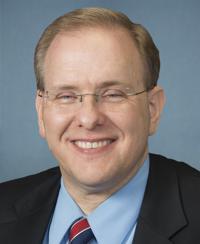
Mr. Speaker, I rise in strong support of the Mortgage Forgiveness Debt Relief Act. I commend the sponsors. I believe that this is a necessary and compassionate step in helping families recover from…
Mr. Speaker, I rise in strong support of the Mortgage Forgiveness Debt Relief Act. I commend the sponsors. I believe that this is a necessary and compassionate step in helping families recover from problems caused by the continuing mortgage crisis.
Let's face it. Unscrupulous lending practices have taken their toll as hardworking families struggle to keep pace with ballooning mortgage payments.
Under current law any debt forgiven by a lender is treated as phantom income and subject to taxation. At a time when so many families are already in crisis, it is fundamentally unfair to penalize them by taxing money they may recover through refinancing their mortgage or foreclosure of their homes.
The Mortgage Forgiveness Debt Relief Act will change the Tax Code to prevent forgiven mortgage debts from being assessed as gross income. This critical measure will help address the persistent problems in the housing market that have resulted from unfair lending practices. And I urge my colleagues to join me in supporting it.
Mr. Speaker, I rise in strong support of the Mortgage Forgiveness Debt Relief Act of 2007 (H.R. 3648). This measure is a necessary and compassionate step in helping individuals and families recover from the problems caused by the continuing mortgage crisis.
Unscrupulous lending practices have taken their toll on hard-working families, who are increasingly unable to keep pace with their ballooning mortgage payments. We have all seen how the skyrocketing interest rates associated with nontraditional mortgages, such as adjustable-rate mortgages, have devastated families nationwide. These families are often left with few options. They may either try to renegotiate the terms of their mortgage for fixed interest rates, or be forced to foreclose on their homes. Both options can be emotionally difficult and are further complicated by the hefty taxes that may result.
Under current law, when a lender forgives all or part of a loan, it is required to report the amount of debt forgiven to the IRS and to the homeowner. That amount is subsequently treated as ``phantom income'' and is subject to taxation by the IRS. At a time when families are already in financial dire straits, it is fundamentally unfair to penalize them by taxing the money they recover through either refinancing their mortgage or foreclosure of their homes.
I am proud to support the Mortgage Forgiveness Debt Relief Act, which will change the Tax Code to prevent forgiven mortgage debts from being assessed as gross income. This improvement will limit the financial penalties families incur when refinancing their homes at fixed rates and could even keep some families on the brink of foreclosure from losing their homes. I am also pleased that, under this legislation, people would not be unfairly taxed when a lender voluntarily agrees to waive prepayment penalty fees.
The Mortgage Forgiveness Debt Relief Act is a critical measure that will help address the persistent problems in the housing market resulting from unfair lending practices. This legislation is another important step toward fixing the mortgage crisis nationwide, and will help stabilize families throughout the Nation and our economy as a whole.

Mr. Speaker, I offer a motion to recommit. Yes, in its current form. Mr. Speaker, this motion to recommit is very simple. It strikes the tax hike from the bill. A vote for this motion to recommit…
Mr. Speaker, I offer a motion to recommit.
Yes, in its current form.
Mr. Speaker, this motion to recommit is very simple. It strikes the tax hike from the bill. A vote for this motion to recommit gives us all an opportunity to vote for the underlying bill whose purpose is to provide relief to homeowners impacted by the subprime crisis without raising taxes on America's families. I, for one, don't believe we should raise taxes on one family to cut taxes for another.
Contrary to the remarks made by my friend from Oregon who alleges that some are gaming the system, which could or could not be true, there is an instance, and plenty of which occur, that will impact real families. If we don't pass this motion to recommit, there will be a real cost to real people and real families who are relying on the equity built up in their greatest asset, their home.
Take, for example, a family that moves to a new area in search of a job. If that family currently lives in an area with a depressed housing market and the family intends to return in the future, they may make the reasonable decision to rent their home instead of selling it. They would do so in hopes of recovering some of the home's value in the next few years.
Under existing law, if they later move back to their home and, having lived at least 2 years in the home for the last 5, any gains realized from the eventual sale of the home would be excluded from the tax up to $500,000. The underlying bill, however, will change that. Families that move back into their old house after several years and then intend to sell it could be facing tens of thousands of dollars in additional tax bills when they later sell that home. This is nothing more than a tax increase on those American families, an additional burden on families that are trying to put their children through school, provide health care and live the American Dream.
This provision adds another level of complexity to an already complicated Tax Code. Bottom line, Mr. Speaker, the net effect is to take away from some American families a tax benefit that they are currently enjoying.
We, in this House, should be making it easier for the American people to comply with the Tax Code, and we should strive to make it easier for them to provide for their families.
Now, Mr. Speaker, the opponents of this motion will argue that because the motion directs the committee to report back promptly that somehow this kills the bill; that simply is not true. Instead, it directs the committee to reconsider the bill.
Now, Mr. Speaker, the Senate is in recess next week and the House schedule is extremely light. If this motion passes, we will have plenty of time next week to improve the bill. And I, for one, pledge to work with the chairman, as I'm sure our leadership will and our ranking member, so that we can have a good bill waiting for the Senate when they return from their week-long recess.
So, Mr. Speaker, the underlying bill has a tax increase in it. I urge support of this motion to recommit.
Mr. Speaker, I yield back the balance of my time.
Mr. Speaker, on that I demand the yeas and nays.
Mr. Speaker, I rise today in support of H.R. 3648, the Mortgage Forgiveness Debt Relief Act of 2007, a much-needed bill that will provide relief to homeowners facing foreclosure on their homes. I…
Mr. Speaker, I rise today in support of H.R. 3648, the Mortgage Forgiveness Debt Relief Act of 2007, a much-needed bill that will provide relief to homeowners facing foreclosure on their homes. I appreciate the leadership of the Ways and Means Committee Chairman, Charlie Rangel. I also applaud the Members from both sides of the aisle who are supporting this critical piece of legislation for homeowners. I cannot think of a more bipartisan issue than basic shelter.
It comes as a surprise to most Americans that when debt is forgiven by a lending institution in a foreclosure, that this amount must be included as income on their tax statement. In a time of rising foreclosures I cannot imagine anything more upsetting to a family than this scenario. The situation usually occurs when the family cannot pay their mortgage and then must give up their home. Then they must pay tax on phantom income when the lender forgives some part of the homeowner's mortgage.
In my home State of Ohio, the foreclosure epidemic went from bad to worse last year as the number of new cases grew by nearly 24 percent from 2005. Cuyahoga County led the state in new cases with 13,610 new filings last year. This ranking has attracted national attention with Ohio's foreclosure rate currently at 18 percent which is higher than the national average of 17 percent.
I must also point out that predatory lenders often target low-income and minority communities. Subprime loans are three times more likely in low-income neighborhoods than in high-income neighborhoods and five times more likely in minority neighborhoods than in white neighborhoods. This is an outrage.
Nothing is more symbolic of the American Dream than the ownership of our homes. Almost all of us dream of the day when we can have a place of our own. For most Americans, home ownership is the single biggest investment they will ever make. That is why the loss of one's home is also one of the most humiliating and debilitating experiences that anyone can go through. It is, at its core, an issue of humanity.
That is why I am pleased to rise in support of this piece of legislation that will allow taxpayers to exclude from their income debt that was forgiven by a financial institution or lender. We cannot sit by as a Congress and add insult to injury to our most vulnerable taxpayers.
Many of the homeowners in my district in Cleveland--which has some of the highest foreclosure rates in the Nation--need relief, not rhetoric. This is the same relief all Americans see and to which we must provide access. This bill provides some relief, but need I remind my colleagues that much more must be done on this front, and I look forward to working on other legislative initiatives that 5 will help to address the plight of the American homeowner.
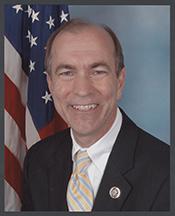
I thank the gentleman. I rise to the floor to oppose this rule and to also oppose the underlying bill, a bill that would, as the hurricanes that are going across this country, devastate this country…
I thank the gentleman.
I rise to the floor to oppose this rule and to also oppose the underlying bill, a bill that would, as the hurricanes that are going across this country, devastate this country financially and put the American taxpayer on the hook, not for $10 billion, not for $20 million, we're upwards to $5 trillion.
I commend the hearing that we had last night on this bill, which was over 1 hour. That's an hour more than we've had any discussion whatsoever on this potential of putting the American taxpayer on the hook for $5 trillion. Chairman Frank did not hold one single hearing to discuss how this would impact the American public nor the American financial system; hearing after hearing that we held on all sorts of other things, but never could we get to this topic.
In fact, the chairman last night called ``nonsensical'' the idea that the American public could be put on the hook for upwards to $300 billion. Well, remember this; that was the same chairman, unfortunately, who told us 5 years ago and 3 years ago and 1 year ago, nonsensical was the idea that Fannie Mae and Freddie Mac could ever fail. In fact, that's the same chairman who told us that he would never support the bailing out of the GSEs. In fact, if I looked into the transcripts of our past hearings where the gentleman from Massachusetts spoke, he said repeatedly, ``I would never support the bailout of Fannie Mae or Freddie Mac or the GSEs.'' Well, sir, here we are today, upwards to a $5 trillion bailout for the GSEs. In fact, this will make the savings and loan scandals of a few years ago pale by comparison.
And I remind the American public, how did that unfold? First, it was a $10 billion request to the American taxpayer that they used to bail out the savings and loan. Then it was $50, $70--finally, $200 billion plus was asked for the American taxpayer to bail out the American savings and loans in this country. That's the exact same thing that's potentially going to occur here today as we bail out Fannie Mae and Freddie Mac for their exclusively bad decisionmaking.
I appreciate the additional 15 seconds, and I would yield those 15 seconds to the gentlelady from Ohio (Ms. Kaptur).
I thank the gentlelady from Ohio for supporting this measure to make sure that this rule does not pass and that the American taxpayer is not put on the hook for $5 trillion.
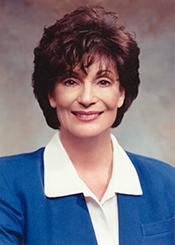
Mr. Speaker, I thank Mr. Blumenauer for his leadership on this issue. I rise today in support of the Mortgage Forgiveness Debt Relief Act. This legislation represents an important step in helping…
Mr. Speaker, I thank Mr. Blumenauer for his leadership on this issue.
I rise today in support of the Mortgage Forgiveness Debt Relief Act. This legislation represents an important step in helping homeowners caught in our Nation's housing crisis. The people I represent have been hardest hit by this crisis. It pains me to say that the State of Nevada currently has the highest rate of foreclosure in the Nation. In Nevada there is one foreclosure for every 163 households. That is three times the national average.
Unfortunately, many of those who lose their homes to foreclosure are hit with the added insult of a surprise tax bill. This occurs when a home has decreased in value and the amount owed is more than the current value of the home. The difference between the amount owed and the actual value of the home is considered forgiven debt and, therefore, taxed at regular income. With interest rates on hundreds of thousands of mortgages about to reset and home values in decline in many areas, this foreclosure tax is likely to be a growing problem.
This bill will help protect homeowners from this tax by providing a permanent exclusion of the discharged debt as long as the mortgage was on the primary residence.
And for those who fear that this legislation will bail out wealthy land speculators who have made bad investments, let me assure you that the relief provided in this bill is targeted towards those losing the very roofs over their heads, their family's home, and not to real estate speculators who made bad bets.
Additionally, this bill will extend the tax deduction on private mortgage insurance to provide an additional measure of tax relief to homeowners. Lowering the cost of mortgage insurance by keeping this tax deductible will help ensure that more borrowers are choosing mortgages they can actually afford. For some of my constituents this tax savings will mean the difference between being able to stay in their homes or becoming one of thousands facing foreclosure and loss of their family home.
For those on the other side of the aisle who are criticizing the pay- for in this bill, not one, not one of them has come up with a sensible and honest alternative or solution to the pay-for that is included here.
I think this is a good piece of legislation. I urge support for this legislation.
Bill Text
7 versions available
        [Congressional Bills 110th Congress]
[From the U.S. Government Publishing Office]
[H.R. 3648 Enrolled Bill (ENR)]

H.R.3648

One Hundred Tenth Congress

of the

United States of America

AT THE FIRST SESSION

Begun and held at the City of Washington on Thursday,
the fourth day of January, two thousand and seven

An Act

To amend the Internal Revenue Code of 1986 to exclude discharges of
indebtedness on principal residences from gross income, and for other
purposes.

Be it enacted by the Senate and House of Representatives of the
United States of America in Congress assembled,

SECTION 1. SHORT TITLE.

This Act may be cited as the ``Mortgage Forgiveness Debt Relief Act
of 2007''.

SEC. 2. DISCHARGES OF INDEBTEDNESS ON PRINCIPAL RESIDENCE EXCLUDED FROM
GROSS INCOME.

(a) In General.--Paragraph (1) of section 108(a) of the Internal
Revenue Code of 1986 is amended by striking ``or'' at the end of
subparagraph (C), by striking the period at the end of subparagraph (D)
and inserting ``, or'', and by inserting after subparagraph (D) the
following new subparagraph:
``(E) the indebtedness discharged is qualified principal
residence indebtedness which is discharged before January 1,
2010.''.
(b) Special Rules Relating to Qualified Principal Residence
Indebtedness.--Section 108 of such Code is amended by adding at the end
the following new subsection:
``(h) Special Rules Relating to Qualified Principal Residence
Indebtedness.--
``(1) Basis reduction.--The amount excluded from gross income
by reason of subsection (a)(1)(E) shall be applied to reduce (but
not below zero) the basis of the principal residence of the
taxpayer.
``(2) Qualified principal residence indebtedness.--For purposes
of this section, the term `qualified principal residence
indebtedness' means acquisition indebtedness (within the meaning of
section 163(h)(3)(B), applied by substituting `$2,000,000
($1,000,000' for `$1,000,000 ($500,000' in clause (ii) thereof)
with respect to the principal residence of the taxpayer.
``(3) Exception for certain discharges not related to
taxpayer's financial condition.--Subsection (a)(1)(E) shall not
apply to the discharge of a loan if the discharge is on account of
services performed for the lender or any other factor not directly
related to a decline in the value of the residence or to the
financial condition of the taxpayer.
``(4) Ordering rule.--If any loan is discharged, in whole or in
part, and only a portion of such loan is qualified principal
residence indebtedness, subsection (a)(1)(E) shall apply only to so
much of the amount discharged as exceeds the amount of the loan (as
determined immediately before such discharge) which is not
qualified principal residence indebtedness.
``(5) Principal residence.--For purposes of this subsection,
the term `principal residence' has the same meaning as when used in
section 121.''.
(c) Coordination.--
(1) Subparagraph (A) of section 108(a)(2) of such Code is
amended by striking ``and (D)'' and inserting ``(D), and (E)''.
(2) Paragraph (2) of section 108(a) of such Code is amended by
adding at the end the following new subparagraph:
``(C) Principal residence exclusion takes precedence over
insolvency exclusion unless elected otherwise.--Paragraph
(1)(B) shall not apply to a discharge to which paragraph (1)(E)
applies unless the taxpayer elects to apply paragraph (1)(B) in
lieu of paragraph (1)(E).''.
(d) Effective Date.--The amendments made by this section shall
apply to discharges of indebtedness on or after January 1, 2007.

SEC. 3. EXTENSION OF TREATMENT OF MORTGAGE INSURANCE PREMIUMS AS
INTEREST.

(a) In General.--Subclause (I) of section 163(h)(3)(E)(iv) of the
Internal Revenue Code of 1986 (relating to termination) is amended by
striking ``December 31, 2007'' and inserting ``December 31, 2010''.
(b) Effective Date.--The amendment made by this section shall apply
to amounts paid or accrued after December 31, 2007.

SEC. 4. ALTERNATIVE TESTS FOR QUALIFYING AS COOPERATIVE HOUSING
CORPORATION.

(a) In General.--Subparagraph (D) of section 216(b)(1) of the
Internal Revenue Code of 1986 (defining cooperative housing
corporation) is amended to read as follows:
``(D) meeting 1 or more of the following requirements for
the taxable year in which the taxes and interest described in
subsection (a) are paid or incurred:
``(i) 80 percent or more of the corporation's gross
income for such taxable year is derived from tenant-
stockholders.
``(ii) At all times during such taxable year, 80
percent or more of the total square footage of the
corporation's property is used or available for use by the
tenant-stockholders for residential purposes or purposes
ancillary to such residential use.
``(iii) 90 percent or more of the expenditures of the
corporation paid or incurred during such taxable year are
paid or incurred for the acquisition, construction,
management, maintenance, or care of the corporation's
property for the benefit of the tenant-stockholders.''.
(b) Effective Date.--The amendment made by this section shall apply
to taxable years ending after the date of the enactment of this Act.

SEC. 5. EXCLUSION FROM INCOME FOR BENEFITS PROVIDED TO VOLUNTEER
FIREFIGHTERS AND EMERGENCY MEDICAL RESPONDERS.

(a) In General.--Part III of subchapter B of chapter 1 of the
Internal Revenue Code of 1986 (relating to items specifically excluded
from gross income) is amended by inserting after section 139A the
following new section:

``SEC. 139B. BENEFITS PROVIDED TO VOLUNTEER FIREFIGHTERS AND EMERGENCY
MEDICAL RESPONDERS.

``(a) In General.--In the case of any member of a qualified
volunteer emergency response organization, gross income shall not
include--
``(1) any qualified State and local tax benefit, and
``(2) any qualified payment.
``(b) Denial of Double Benefits.--In the case of any member of a
qualified volunteer emergency response organization--
``(1) the deduction under 164 shall be determined with regard
to any qualified State and local tax benefit, and
``(2) expenses paid or incurred by the taxpayer in connection
with the performance of services as such a member shall be taken
into account under section 170 only to the extent such expenses
exceed the amount of any qualified payment excluded from gross
income under subsection (a).
``(c) Definitions.--For purposes of this section--
``(1) Qualified state and local tax benefit.--The term
`qualified state and local tax benefit' means any reduction or
rebate of a tax described in paragraph (1), (2), or (3) of section
164(a) provided by a State or political division thereof on account
of services performed as a member of a qualified volunteer
emergency response organization.
``(2) Qualified payment.--
``(A) In general.--The term `qualified payment' means any
payment (whether reimbursement or otherwise) provided by a
State or political division thereof on account of the
performance of services as a member of a qualified volunteer
emergency response organization.
``(B) Applicable dollar limitation.--The amount determined
under subparagraph (A) for any taxable year shall not exceed
$30 multiplied by the number of months during such year that
the taxpayer performs such services.
``(3) Qualified volunteer emergency response organization.--The
term `qualified volunteer emergency response organization' means
any volunteer organization--
``(A) which is organized and operated to provide
firefighting or emergency medical services for persons in the
State or political subdivision, as the case may be, and
``(B) which is required (by written agreement) by the State
or political subdivision to furnish firefighting or emergency
medical services in such State or political subdivision.
``(d) Termination.--This section shall not apply with respect to
taxable years beginning after December 31, 2010.''.
(b) Clerical Amendment.--The table of sections for such part is
amended by inserting after the item relating to section 139A the
following new item:

``Sec. 139B. Benefits provided to volunteer firefighters and emergency
medical responders.''.

(c) Effective Date.--The amendments made by this section shall
apply to taxable years beginning after December 31, 2007.

SEC. 6. CLARIFICATION OF STUDENT HOUSING ELIGIBLE FOR LOW-INCOME
HOUSING CREDIT.

(a) In General.--Subclause (I) of section 42(i)(3)(D)(ii) of the
Internal Revenue Code of 1986 (relating to certain students not to
disqualify unit) is amended to read as follows:

``(I) single parents and their children and such
parents are not dependents (as defined in section 152,
determined without regard to subsections (b)(1),
(b)(2), and (d)(1)(B) thereof) of another individual
and such children are not dependents (as so defined) of
another individual other than a parent of such
children, or.''.

(b) Effective Date.--The amendment made by this section shall apply
to--
(1) housing credit amounts allocated before, on, or after the
date of the enactment of this Act, and
(2) buildings placed in service before, on, or after such date
to the extent paragraph (1) of section 42(h) of the Internal
Revenue Code of 1986 does not apply to any building by reason of
paragraph (4) thereof.

SEC. 7. APPLICATION OF JOINT RETURN LIMITATION FOR CAPITAL GAINS
EXCLUSION TO CERTAIN POST-MARRIAGE SALES OF PRINCIPAL
RESIDENCES BY SURVIVING SPOUSES.

(a) Sale Within 2 Years of Spouse's Death.--Section 121(b) of the
Internal Revenue Code of 1986 (relating to limitations) is amended by
adding at the end the following new paragraph:
``(4) Special rule for certain sales by surviving spouses.--In
the case of a sale or exchange of property by an unmarried
individual whose spouse is deceased on the date of such sale,
paragraph (1) shall be applied by substituting `$500,000' for
`$250,000' if such sale occurs not later than 2 years after the
date of death of such spouse and the requirements of paragraph
(2)(A) were met immediately before such date of death.''.
(b) Effective Date.--The amendment made by this section shall apply
to sales or exchanges after December 31, 2007.

SEC. 8. MODIFICATION OF PENALTY FOR FAILURE TO FILE PARTNERSHIP
RETURNS; LIMITATION ON DISCLOSURE.

(a) Extension of Time Limitation.--Section 6698(a) of the Internal
Revenue Code of 1986 (relating to failure to file partnership returns)
is amended by striking ``5 months'' and inserting ``12 months''.
(b) Increase in Penalty Amount.--Paragraph (1) of section 6698(b)
of such Code is amended by striking ``$50'' and inserting ``$85''.
(c) Limitation on Disclosure of Taxpayer Returns to Partners, S
Corporation Shareholders, Trust Beneficiaries, and Estate
Beneficiaries.--
(1) In general.--Section 6103(e) of such Code (relating to
disclosure to persons having material interest) is amended by
adding at the end the following new paragraph:
``(10) Limitation on certain disclosures under this
subsection.--In the case of an inspection or disclosure under this
subsection relating to the return of a partnership, S corporation,
trust, or an estate, the information inspected or disclosed shall
not include any supporting schedule, attachment, or list which
includes the taxpayer identity information of a person other than
the entity making the return or the person conducting the
inspection or to whom the disclosure is made.''.
(2) Effective date.--The amendment made by this subsection
shall take effect on the date of the enactment of this Act.
(d) Effective Date.--The amendments made by subsections (a) and (b)
shall apply to returns required to be filed after the date of the
enactment of this Act.

SEC. 9. PENALTY FOR FAILURE TO FILE S CORPORATION RETURNS.

(a) In General.--Part I of subchapter B of chapter 68 of the
Internal Revenue Code of 1986 (relating to assessable penalties) is
amended by adding at the end the following new section:

``SEC. 6699. FAILURE TO FILE S CORPORATION RETURN.

``(a) General Rule.--In addition to the penalty imposed by section
7203 (relating to willful failure to file return, supply information,
or pay tax), if any S corporation required to file a return under
section 6037 for any taxable year--
``(1) fails to file such return at the time prescribed therefor
(determined with regard to any extension of time for filing), or
``(2) files a return which fails to show the information
required under section 6037,
such S corporation shall be liable for a penalty determined under
subsection (b) for each month (or fraction thereof) during which such
failure continues (but not to exceed 12 months), unless it is shown
that such failure is due to reasonable cause.
``(b) Amount Per Month.--For purposes of subsection (a), the amount
determined under this subsection for any month is the product of--
``(1) $85, multiplied by
``(2) the number of persons who were shareholders in the S
corporation during any part of the taxable year.
``(c) Assessment of Penalty.--The penalty imposed by subsection (a)
shall be assessed against the S corporation.
``(d) Deficiency Procedures Not To Apply.--Subchapter B of chapter
63 (relating to deficiency procedures for income, estate, gift, and
certain excise taxes) shall not apply in respect of the assessment or
collection of any penalty imposed by subsection (a).''.
(b) Clerical Amendment.--The table of sections for part I of
subchapter B of chapter 68 of such Code is amended by adding at the end
the following new item:

``Sec. 6699. Failure to file S corporation return.''.

(c) Effective Date.--The amendments made by this section shall
apply to returns required to be filed after the date of the enactment
of this Act.

SEC. 10. MODIFICATION OF REQUIRED INSTALLMENT OF CORPORATE ESTIMATED
TAXES WITH RESPECT TO CERTAIN DATES.

The percentage under subparagraph (B) of section 401(1) of the Tax
Increase Prevention and Reconciliation Act of 2005 in effect on the
date of the enactment of this Act is increased by 1.50 percentage
points.

Speaker of the House of Representatives.

Vice President of the United States and
President of the Senate.