Mr. Speaker, I rise as the designee of the Republican leader. Mr. Speaker, we have spent a great deal of time this afternoon focusing on the fact that we have the first female Speaker of the United…
Mr. Speaker, I rise as the designee of the Republican leader.
Mr. Speaker, we have spent a great deal of time this afternoon focusing on the fact that we have the first female Speaker of the United States House of Representatives in our Nation's history. And I think it is also very important for us to note today that we have the first female Chair of the House Rules Committee in my good friend, Ms. Slaughter, and I would like everyone to join in extending congratulations to Ms. Slaughter.
Now, let me say, Mr. Speaker, that I look forward to working in a bipartisan way in the spirit that was outlined by Speaker Pelosi, and I, of course, will treat the new Chair of the Rules Committee with the dignity that she deserves.
I will say, Mr. Speaker, that I do rise with mixed emotions today. I was very proud to join with you as we came down the center aisle escorting the new Speaker of the House, my fellow Californian. And I am very pleased that we have the first woman, the first Californian, and the first Italian American as Speaker of the House of Representatives.
I have mixed emotions because, while I am very, very proud of Speaker Pelosi, and the new Rules Chair, Ms. Slaughter, and others who are assuming leadership positions, I also am very disappointed.
I am disappointed as I look at this package that we are about to consider, because I do join with you, Mr. Speaker pro tempore, the distinguished majority leader, and Speaker Pelosi, as we have discussed privately and publicly, in our quest, and I think Speaker Pelosi put it extraordinarily well, focusing on the priorities that we have. We are, first and foremost, Americans. We are here to do the people's business and they sent a very strong message last November, and I believe we have an opportunity to do just that.
I will say that I remember very well the opening days of the 104th Congress, 12 years ago. I remember the very heady feeling that came from knowing that, for the first time, at that juncture, in almost half a century, we Republicans were in the majority of the House of Representatives, and we were going to do all that we had promised the American people.
We were that optimistic, quite frankly, because we didn't know any better. None of us had ever served in the majority and we were blissfully unaware of the pressures and problems associated with trying to govern this institution.
During the 109th Congress, the Democratic Caucus, many of whom actually served in the majority before 1995, made a lot of promises about how they would run this place if they ever achieved the majority again. Of course, they, unlike Republicans in 1994, had the experience of having run this place, having served in the majority. And I have a great deal of admiration for my colleagues, because they know exactly what they are facing. Knowing that, knowing exactly what they would face in the majority, they made a commitment to minority rights, should they regain the majority.
And that, Mr. Speaker, is why I said I am disappointed. The resolutions before us bear very little resemblance to the rhetoric on this floor and on the campaign trail. The much ballyhooed commitment to minority rights is virtually nonexistent in the measures before us today. They undermine minority rights that were constantly guaranteed when we were in the majority. The rights of the minority are undermined. Their promises are for a delivery date at some later point, if we agree to be cooperative, according to one Member on the other side of the aisle. And we have, as an IOU now, a wink and a nod and a gentle ``trust us.''
Mr. Speaker, trust is something that is in short supply in this House, and the actions of the incoming majority are, based on the package that has been brought before us early last evening, certainly less than 24 hours before we are considering it here on the House floor, are not doing a lot to bolster our reserves when it comes to the issue of trust. Despite an oft repeated commitment to provide Members with, as I said, at least 24 hours to review legislation before voting on the floor, we received this package at 6:15 last night, 6:15 only after that package was delivered to our friends up in the press gallery.
Now, Mr. Speaker, despite Speaker Pelosi's principle that we need to return to regular order for legislation, including a full committee process of hearings and markups and, I quote Ms. Pelosi here when she said we need an ``open, full and fair debate consisting of a full amendment process that grants the minority the right to offer its alternatives, including a substitute.''
Now, we, in spite of that great directive that came forward, we have a rules package that actually self-executes closed rules for bills that haven't even been introduced, and won't even be going through the committee process. The section of the package that includes those closed rules is debatable for just 10 minutes. This is the polar opposite, the polar opposite of how the Republicans opened the 104th Congress, when our priorities were considered in regular order and under an open amendment process.
Mr. Speaker, also providing a stark contrast is the fact that we put in place, from day one, a guaranteed bite at the apple for the minority in the form of a motion to recommit. We felt so strongly about the fact that when we were in the minority we were denied that chance. So that is why at the beginning of the 104th Congress we put into place that guarantee for the minority.
But I must remind my Democratic colleagues on the Rules Committee that, time and time again, they have made clear their view that the motion to recommit is an insufficient opportunity to articulate their alternative. That argument was propounded constantly as we were dealing with public policy questions. So you can imagine how surprised I was when the Speaker recently replied to a reporter's question about Republican alternatives to
the Democratic priorities by saying, ``They'll have a motion to recommit.''
Even worse than five closed rules, Mr. Speaker, is the rollback of one of the most essential elements of transparency that Republicans put into place back at the beginning of the 104th Congress; that is, the right to know how a member of a committee votes on legislation.
Mr. Speaker, this rules package exempts the Committee on Rules from the requirement to publish the votes of its members on its committee reports, something required of every other committee except the Ethics Committee.
Now, in my 12 years as a member of the Rules Committee majority, we took more than 1,300 votes in committee, every single one of which was accurately reported in the committee's report.
Mr. Speaker, at best, this is a solution in search of a problem. At worst, it is an attempt to shield the Rules Committee from the public scrutiny of its actions.
We were told by the distinguished Chair of the Rules Committee that ethics reform and rules reform were not just election year issues for Democrats. Now, Mr. Speaker, sadly, this document says something quite different than that. Promises were made, and they are not being kept. That is the thing that I find to be most troubling. We intend to explain the many inconsistencies for the record and as the debate moves forward.
At the same time, Mr. Speaker, we want to work with our democratic colleagues. Even with this treatment of minority rights, we stand here determined to work in a bipartisan way to confront the challenges that we all know face this country. Unfortunately, this rules package shuts us out from the start. It is my hope that the promises made will, indeed, be kept. But, Mr. Speaker, this package does not inspire a great deal of hope in that they in any way will.
And so, Mr. Speaker, I rise with a great deal of disappointment and a great deal of concern about the first actions that we are taking here.
Mr. Speaker, with that I reserve the balance of my time.
Mr. Speaker, at this time I am happy to yield 2 minutes to my very distinguished colleague on the Rules Committee, Mr. Lincoln Diaz-Balart from Florida.
Mr. Speaker, I want to first congratulate Ms. Castor and certainly welcome her to the Rules Committee and look forward to serving with her.
Parliamentary Inquiry
I have a parliamentary inquiry, Mr. Speaker.
My parliamentary inquiry is, may I ask of the Chair exactly what it is we are debating and considering at this point. The Chair of the Rules Committee stood up and said, after I gave my opening remarks, that we were in the midst of a debate on the last year's rules package. I was wondering if the Chair might enlighten us as to exactly what it is that we are considering.
For the consideration of the rules package for the 110th Congress, am I correct?
Thank you very much for that clarification, Mr. Speaker.
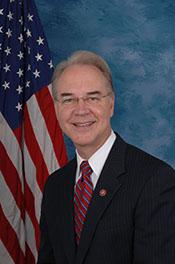
Mr. Speaker, at this time I am very happy to yield 2 minutes to the very distinguished gentleman from Georgia (Mr. Price).
Mr. Speaker, at this time I am very happy to yield 2 minutes to the very distinguished gentleman from Cherryville, North Carolina (Mr. McHenry).
Madam Speaker, may I inquire of the Chair how much time is remaining on both sides.
Madam Speaker, at this juncture I am very pleased to yield 2 minutes to a very, very hardworking Member of the House, the Chair of the Republican Study Committee, the gentleman from Dallas (Mr. Hensarling).
Madam Speaker, at this time I am happy to yield 2 minutes to the very distinguished gentleman from Marietta, Georgia (Mr. Gingrey), a hardworking former member of the Rules Committee.
Madam Speaker, at this time I am happy to yield 2 minutes to our very distinguished chief deputy whip, my good friend from Richmond (Mr. Cantor).
I yield myself such time as I may consume to respond that I never used the words ``pain,'' I never said ``hurt.'' I said ``disappointment.'' I said disappointment, Madam Speaker, because I am very disappointed.
I will tell you this: I am prepared at this moment to take my three Republican colleagues and go right upstairs to the Rules Committee and go to work at this moment so that we don't have closed rules in the opening day rules package for consideration of measures that have not gone through the committee process and have not had any opportunity to even have our amendments denied in the Rules Committee.
I yield to the gentlewoman from New York.
Let me just say, we are prepared at this moment, Madam Speaker, we will send a resolution right now so the Rules Committee can begin meeting upstairs.
Madam Speaker, I yield 2 minutes to my friend from Nebraska (Mr. Terry).
Madam Speaker, may I inquire of the Chair how much time we have remaining?
Madam Speaker, I will yield an additional minute to the gentleman from Cherryville, North Carolina who would like to be recognized.
Madam Speaker, may I inquire of the distinguished Chair of the Rules Committee now, are there any further speakers on the majority side?
Madam Speaker, I yield myself the balance of the time.
Madam Speaker, I am actually very enthused and excited about the great new opportunity that lies ahead for every single one of us. We have heard speeches today from our distinguished Republican leader, and we are all very proud that my fellow Californian has become the first woman to preside over the greatest deliberative body known to man. And, as I said earlier, I am particularly proud of the fact that I am being succeeded by the distinguished chairwoman from New York (Ms. Slaughter), as the first woman to chair the Rules Committee.
I am enthused about the challenges that lie ahead, and I am very encouraged by the words that we heard from our new Speaker about the need for civility, about the need for us to make sure that we recognize that we are first and foremost Americans, and that the message from last November's election was a very clear one. It was a message that we should come together, work together, Democrats and Republicans alike, to solve the challenges that we face so that we can in fact do the people's business.
We are very proud of the accomplishments that we have had over the past 12 years, and I believe we can work with the new majority to build on those successes, the successes of ensuring that we have an economy that is second to none, an unemployment rate that is at near-record lows at 4.5 percent, strong domestic product growth, more Americans working than ever before in our Nation's history, more Americans owning their own homes, and more minority Americans owning their own homes.
I also am particularly proud of the fact that working together, Madam Speaker, we have been able to ensure that since that tragic day of September 11, 2001, we have not faced another attack on our soil.
The fact that we have not faced another attack is not an accident. It is because of good public policy and the leadership that we have had. Now we do have a change in leadership here in this institution, and there have been a wide range of promises that were made by Members who formerly served in the majority and now are coming back to majority status. As members of the minority, they talked about the need for enhanced minority rights. And I believe many of those things are very, very important. I believed them before, and I believe them now.
One of the things that I think is very important is for us to have an opportunity for consideration of measures here on the House floor that allow for a greater opportunity for Member participation. The thing that troubles me most is if we don't defeat this previous question and then defeat this rule that allows us to move forward, we will be proceeding with a package that will bring forward five closed rules, preventing the Rules Committee from having an opportunity to in any way consider the chance to bring forward amendments.
Never before, never before in our Nation's history have we seen an opening day Rules Committee that would allow for the consideration of five closed rules in the opening-day package. And one of the things, of course, that was discussed widely by our colleagues on the other side of the aisle which we have strongly supported is the notion of transparency, accountability, and disclosure.
One of the most troubling aspects of this measure is that we would move to prevent the Record from showing the votes that are cast in the Rules Committee.
We were very proud that we eliminated proxy voting when we came to majority status. Why? Because we wanted Members to show up to work, and we wanted the American people to see their work product.
Well, unfortunately, the American people understand what it means to show up to work. They understand what it means for greater disclosure and accountability and transparency. We heard the opening remarks during this rule debate on letting the sunshine in. The sun is shining outside today, and it is going to shine in. Under this provision, we see a prevention for the opportunity for the sun to shine in the Rules Committee, and I find it very troubling.
Madam Speaker, I will be asking Members to vote ``no'' on the previous question so we can amend this rule to make in order to consider the Speaker's minority bill of rights as was outlined on May 25, 2006, in her document ``New House Principles: A Congress For All Americans.'' We need to give the new majority an opportunity to live up to those commitments that were made.
Madam Speaker, I ask unanimous consent to insert the text of my amendment and extraneous materials in the Record immediately prior to the vote on the previous question.
Madam Speaker, I yield back the balance of my time.
Madam Speaker, on that I demand the yeas and nays.
Madam Speaker, I offer a motion to commit.
I object.
Mr. Speaker, on that I demand the yeas and nays.
Mr. Speaker, I yield myself such time as I may consume.
I would like to begin by extending my compliments to my very good friend from Maryland, the distinguished majority leader, Mr. Hoyer. In fact, Mr. Hoyer just quoted John F. Kennedy and I believe that he was right on target in focusing on that brilliant quote of President Kennedy's where he said that we should not seek the Republican answer, we should not seek the Democratic answer, we should seek the right answer. I was struck with that, Mr. Speaker, and I believe that we should join in strong support of this resolution, of support of this title; and I am going to urge my colleagues to join in voting in support of this title which uses the rules base of the 109th Congress as the basis for which these proposed changes are being offered.
But I think it is very important for us to note that if we are going to, in fact, seek the right answer as opposed to the Republican answer or the Democratic answer, we need to do that by vigorously pursuing the deliberative process about which we all speak. And I know that during the past several years, my very distinguished colleagues on the other side of the aisle raised concerns about a lack of deliberation that existed in this House and the fact that more amendments could have been made in order. I will acknowledge that we could have made more amendments in order. That was clearly an option there. But as my friend, having served in the majority, knows very well, there are challenges that need to be addressed when you are in the majority, challenges of managing this institution. I see him sitting there very comfortably and I am glad that he is comfortable at this point, but I know full well that he, Mr. Speaker, is going to face many management challenges in the days and weeks and months ahead.
But during the past couple of years, what we have heard is a commitment to minority rights made by those who were formerly in the majority, who were in the minority at that time and are now back in the majority. And so I would argue that the words of President Kennedy can best be implemented if we in fact do increase the level of deliberation, and that is why as we look at the proposed changes that we are going to be considering, I have to say that when it comes to the actual management, I am concerned. I am concerned about the prospect of, for the first time in the history of this institution, taking prospectively five closed rules and placing that in the opening-day rules package.
Similarly, Mr. Speaker, I am concerned about the prospect of taking this issue of transparency, accountability, and disclosure about which we on both sides of the aisle regularly talk because we are here to represent all of the American people, the notion of now saying again for the first time in the history of this great institution that we are going to create an opportunity whereby we will not have accountability and transparency in our very important deliberations that will take place in the Rules Committee.
And so again I would say in response to the brilliant words of President John F. Kennedy, as outlined by our distinguished majority leader, Mr. Hoyer, that we do seek the right answer; and I believe that the best way to seek the right answer is through enhanced deliberation, and we have a chance to do that.
Now, I will when it comes to this vote urge my colleagues to vote in favor of title I. Title I, as you know, Mr. Speaker, simply provides a chance to use the opening rules package of the 109th Congress, and I think that that is a correct thing for us to do; and I hope the Democrats and Republicans alike, and the majority leader has just called for support of title I and I will urge the colleagues on our side of the aisle to join so that again we will be coming together and I think having the right answer on that.
With that, Mr. Speaker, I reserve the balance of my time.
Mr. Speaker, will the gentleman yield?
I thank my friend for yielding. I really am very hesitant to interrupt the brilliance of my good friend from Fort Lauderdale.
Now that I have interrupted it, I just couldn't hesitate to interrupt when I heard that I somehow had a draft by virtue of knowing what the rules package that was put into place for the operation of the 109th Congress was? That was all we had. We had nothing whatsoever beyond the rules of the House and that is it.
I thank my friend for yielding.
Mr. Speaker, before I yield to my good friend from Pasco, I would simply like to ask unanimous consent to enter into the Record at this point a copy of the draft that we received that is dated January 2, 2007. The time stamp on that is 5:45 p.m. I was informed that we had it last night at 6:10 p.m., and it had already been circulated to those in the press gallery by that point.
I would be happy to yield to my friend.
The section that we are talking about right now is simply implementation----
It is simply implementation of the rules that have existed for the 109th Congress. I clearly was talking about the rules for the 110th Congress. In fact, if the gentleman was here when I had an exchange with the distinguished new Chair of the Rules Committee when she tried to argue that we somehow were debating the rules for the 109th Congress, the Chair confirmed the fact that we are in fact considering in toto the package for the 110th Congress using as base text the 109th.
What I have here and if I am able to gain unanimous consent for this, Mr. Speaker, to include in the Record, is the draft which uses the 109th base text and has the proposed changes, the different titles for the proposed changes for the rules of the 110th Congress.
I would ask unanimous consent to include this draft with the date and the time on it showing that it did not fall within the 24-hour notification period of time that my friends have consistently insisted on.
The gentleman objects to my including the draft?
Mr. Speaker, the simple point that I am trying to make is that we all know what the rules for the 109th Congress were. We have lived under those rules for the last 2 years. Yes, I was proud to have crafted those, working with my colleagues on this side of the aisle, and we passed those at the beginning of the Congress and we are going to have a chance in just a few minutes to vote on those again.
The point is, it is not the rules of the 109th Congress that we didn't have a draft of. We did not have a draft until January 3 at 5:45 p.m., which clearly did not comply with that 24-hour requirement that has been put forward. And that is the only point that I am trying to make.
Mr. Speaker, I yield 3 minutes to the gentleman from Pasco, Washington.
Mr. Speaker, I yield myself the balance of the time.
Mr. Speaker, I am very pleased that we can, in fact, join in a bipartisan way in supporting implementation of title I of this provision. And I believe that it is great that my friend from Florida (Mr. Hastings) began heaping praise on the many accomplishments of the 104th Congress when we implemented things like an end to proxy voting, term limits on committee chairmen, and the other items which we have which go on and on and on, increased transparency and accountability and disclosure.
I will say that, as I have said, I am very, very troubled and saddened by the inconsistency when it comes to the issue of transparency and disclosure in light of the discussion that Mr. Hastings of Pasco, Washington and I have had about closing down transparency in the Rules Committee now.
My friend from Florida mentioned the fact that I may be the champion of closed rules. I will admit that as chairman of the Rules Committee, I did bring more than a few closed rules here, primarily on bills that related to tax issues, which was done under the Democratic majorities of the past and I suspect will be done in the future as well. But I will say this: Never before, never before have I, as chairman of the Rules Committee, prevented the Rules Committee from having an opportunity to deliberate and including in an opening day rules package five closed rules. I am concerned as we move forward with that. We will have that debate later on. But I look forward to urging my colleagues to join in support of title I.
Mr. Speaker, I yield back the balance of my time.
Mr. Speaker, I yield myself such time as I may consume.
Mr. Speaker, I rise in support of this package. Once again, I think we will have an opportunity for bipartisanship. The issue of ethics and lobbying reform is something that we believe is very, very important. As I sit here today, I am reminded of the fact that 1 year ago this month, Speaker Hastert and I stood right upstairs in the press gallery and unveiled a package for lobbying and ethics reform, which was maligned by many of our colleagues, unfortunately.
But I will say that I am very pleased with the fact that we were ultimately able to pass out of the House our measure, which did a number of things that I am happy to see are incorporated in this provision that is coming forward from the new majority.
The thing that troubles me most, Mr. Speaker, is the fact that this was done in a unilateral way. We are all very proud of the fact that we have a working, strong, vibrant bipartisan Ethics Committee. It would have been great if we could have had the Ethics Committee come forward with these recommendations.
There has been no consultation whatsoever between the majority and the minority, although I will say, again, I congratulate those Members of the new majority for including, including many of the items that were either incorporated in H.R. 4975, which was our lobbying and disclosure act that we passed out of the House last year, and some of the provisions that Speaker Hastert and I outlined a year ago this month: free clearance of travel, a ban on travel and an end to gifts. An end to the K Street Project. These are all very important reforms that I do think are essential.
I will say this, Mr. Speaker, as I listen to my very good friend from Massachusetts, and I congratulate him on his new position in the majority on the Rules Committee, what happens between today and March 1 of this year? Well, let us see, we have the month of January and the month of February, and, guess what, under this package, the status quo in the 110th Congress, under the Democratic majority, remains in place without any kind of reform or change.
So I have got to ask rhetorically, anyone who wants to answer as to why we are waiting until March 1 before we see any kind of implementation here. They want to see guidelines put forward, maybe by the Ethics Committee. If that is what they would like to do, why don't we impose an immediate ban until they come up with recommended guidelines?
So I will say that as I listen to these proposals, they are interesting, I am very pleased that they have incorporated them. I don't believe they go far enough. In a few minutes, my colleagues, Mr. Kirk and Mr. Shadegg, will be talking about concern on the pension issue, which unfortunately has been left out of this, but I do believe that by and large this is a measure that is going to be worthy of bipartisan support, and I am going to urge my colleagues to support it.
Mr. Speaker, I reserve the balance of my time.
Will the gentleman yield? If you will recall, we passed
Mr. Speaker, I yield 3 minutes to the distinguished gentleman from Omaha, Nebraska (Mr. Terry).
Mr. Speaker, let me, again, say that we look forward to supporting this package, much of which, the items that the gentlewoman just outlined, were included in H.R. 4975, which passed this House last May with strong bipartisan support.
Mr. Speaker, with that, I yield 2 minutes to my very good friend from Highland Park, Illinois (Mr. Kirk).
Mr. Speaker, let me just, before yielding to the gentleman from Marietta, say very quickly again, the legislation that passed the House, H.R. 4975, specifically banned the K Street Project. Look at the language. It is virtually identical. We focused on the issue of lobbyist travel and gifts. And I believe that we can come together in a bipartisan way. We want to work in a civil tone, as was outlined by Speaker Pelosi today.
Mr. Speaker, with that I am happy to yield 3 minutes to my very good friend, former member of the Rules Committee, the gentleman from Marietta, Dr. Gingrey.
Mr. Speaker, I yield myself such time as I may consume to congratulate the gentleman from New Hampshire. We welcome him here. Unfortunately, this package doesn't start today and start now. It starts March 1 of 2007, 2 months from now.
I also want to say to my very good friend from Massachusetts once again that if you look at the package that we passed in May of last year, it is a package that enjoyed bipartisan support. It is one of which we are very proud. And I believe that if you look at the fact that we did go beyond preventing registered lobbyists from coming onto the House floor and the gym, we are doing many of those same things here. It has been done before.
And that is why we are proud to be here in support of this effort, which, again, some of us believe does not go far enough and there are some problems with it, but we do believe it is a positive step. Why? Because it is a reaffirmation of what Speaker Hastert led us to last year.
With that, Mr. Speaker, I am very happy to yield 4 minutes to my good friend from Arizona (Mr. Shadegg).
Mr. Speaker, may I inquire of the Chair how much time is remaining on both sides.
Mr. Speaker, I yield myself such time as I may consume to say that I do congratulate my colleagues. I want to begin by saying as a Californian that I am very proud of the fact that California has provided the first female Speaker of the House of Representatives. Similarly, I have congratulated our colleague, Ms. Slaughter, who will be the first woman to chair the Rules Committee in our Nation's history.
This has been a historic day and I believe a very exciting day for us. I am pleased that we have been able to do a number of things already in a bipartisan way, and I think this issue of ethics and lobbying reform, building on the reforms that we passed in the 109th Congress, utilizing those very positive provisions, is exactly what we are about to vote on here in just a few minutes; and I think that it is a time when we can be civil.
And I will say to all of my friends on both sides of the aisle, the American people want us to deal with these problems, and I will reaffirm my commitment to my colleagues on the Rules Committee that I will continue to strive to comport myself in the most dignified way possible in dealing with my colleagues, and I urge support of this very important measure.
I yield back the balance of my time.