PACT Act
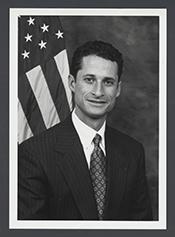 Rep. Anthony D. Weiner (D-NY)
Legislative Activity
Stay on top of the latest movement without scrolling through every action
Read twice. Placed on Senate Legislative Calendar under General Orders. Calendar No. 1115.
October 2, 2008
View full timeline
Introduced in House
November 5, 2007
Referred to the House Committee on the Judiciary.
November 5, 2007
Referred to the Subcommittee on Crime, Terrorism, and Homeland Security.
December 3, 2007
Subcommittee Hearings Held.
May 1, 2008
Subcommittee on Crime, Terrorism, and Homeland Security Discharged.
July 16, 2008
Reported (Amended) by the Committee on Judiciary. H. Rept. 110-836.
September 9, 2008
Placed on the Union Calendar, Calendar No. 537.
September 9, 2008
Mr. Scott (VA) moved to suspend the rules and pass the bill, as amended.
September 9, 2008 • 5:56 PM
Considered under suspension of the rules. (consideration: CR H7918-7928)
September 9, 2008 • 5:56 PM
DEBATE - The House proceeded with forty minutes of debate on H.R. 4081.
September 9, 2008 • 5:56 PM
At the conclusion of debate, the Yeas and Nays were demanded and ordered. Pursuant to the provisions of clause 8, rule XX, the Chair announced that further proceedings on the motion would be postponed.
September 9, 2008 • 6:14 PM
Considered as unfinished business. (consideration: CR H7987-7988)
September 10, 2008 • 7:21 PM
Passed/agreed to in House: On motion to suspend the rules and pass the bill, as amended Agreed to by the Yeas and Nays (2/3 required): 379 - 12 (Roll No. 584).(text: CR 9/09/2008 H7918-7924)
September 10, 2008 • 7:41 PM
On motion to suspend the rules and pass the bill, as amended Agreed to by the Yeas and Nays (2/3 required): 379 - 12 (Roll No. 584). (text: CR 9/09/2008 H7918-7924)
September 10, 2008 • 7:41 PM
Motion to reconsider laid on the table Agreed to without objection.
September 10, 2008 • 7:41 PM
Received in the Senate.
September 11, 2008
Read twice. Placed on Senate Legislative Calendar under General Orders. Calendar No. 1115.
October 2, 2008
Voting History
1 vote recorded • Roll call available
Floor Debate
12 membersWhat members said about H.R. 4081 on the floor


 +7
+7
Floor Debate
12 membersWhat members said about H.R. 4081 on the floor
I thank the chairman of the subcommittee and the ranking member of the full committee for not only his sponsorship of the legislation, but the great work of him and his staff to try to bring this to…
Mr. Speaker, I move to suspend the rules and pass the bill (H.R. 4081) to prevent tobacco smuggling, to ensure the collection of all tobacco taxes, and for other purposes, as amended. Mr. Speaker, I…
Madam Speaker, I have a motion to recommit at the desk. Yes, in its current form. Madam Speaker, today, millions of Americans will go to work, and the overwhelming majority of them will drive. No…
Mr. Speaker, I rise today in support of the Prevent All Cigarette Trafficking Act of 2007, referred to as the ``PACT Act,'' introduced by my colleague from New York, Mr. Weiner. As we approach the…
Madam Speaker, due to illness that required hospitalization, I missed the following votes. I would have voted as follows: Rollcall vote 567--S. 2403--A bill to designate the new Federal Courthouse,…
Show 7 more

Mr. Speaker, I rise today in support of this Act. The Prevent All Cigarette Trafficking Act, or PACT Act, introduced by Congressman Bob Weiner of New York, strengthens our law enforcement…

Madam Speaker, I have a motion to recommit at the desk. I am. Madam Speaker and my colleagues, on behalf of all my Republican colleagues, I want to welcome my Democrat colleagues back to the House.…

Mr. Speaker, I yield myself such time as I may consume. Mr. Speaker, I am an original cosponsor of H.R. 4081, the Prevent All Cigarette Trafficking (PACT) Act. And I want to thank Congressman Weiner…

Madam Speaker, I reserve a point of order on the motion. Madam Speaker, I make a point of order that the motion to recommit contains nongermane instructions in violation of clause 7 of rule XVI. Let…

Mr. Speaker, I rise in support of H.R. 4081 because of the important difference it will make in reducing young people's access to cigarettes. The tobacco industry has long targeted the nation's…
Mr. Speaker, I rise today in support of H.R. 4081, the Prevent All Cigarette Trafficking, PACT, Act of 2008, and commend Mr. Weiner and Mr. Smith for their hard work on this important bill. By some…
Madam Speaker, due to personal matters, today I missed rollcall vote No. 576 on ordering the previous questions to provide for consideration of H.R. 3667, rollcall vote No. 577 on passage of H. Res.…
Bill Text
4 versions available
        [Congressional Bills 110th Congress]
[From the U.S. Government Printing Office]
[H.R. 4081 Placed on Calendar Senate (PCS)]

Calendar No. 1115
110th CONGRESS
2d Session
H. R. 4081

_______________________________________________________________________

IN THE SENATE OF THE UNITED STATES

September 11, 2008

Received

October 2 (legislative day, September 17), 2008

Read twice and placed on the calendar

_______________________________________________________________________

AN ACT

To prevent tobacco smuggling, to ensure the collection of all tobacco
taxes, and for other purposes.

Be it enacted by the Senate and House of Representatives of the
United States of America in Congress assembled,

SECTION 1. SHORT TITLE; FINDINGS; PURPOSES.

(a) Short Title.--This Act may be cited as the ``Prevent All
Cigarette Trafficking Act of 2008'' or ``PACT Act''.
(b) Findings.--Congress finds that--
(1) the sale of illegal cigarettes and smokeless tobacco
products significantly reduces Federal, State, and local
government revenues, with Internet sales alone accounting for
billions of dollars of lost Federal, State, and local tobacco
tax revenue each year;
(2) Hezbollah, Hamas, al Qaeda, and other terrorist
organizations have profited from trafficking in illegal
cigarettes or counterfeit cigarette tax stamps;
(3) terrorist involvement in illicit cigarette trafficking
will continue to grow because of the large profits such
organizations can earn;
(4) the sale of illegal cigarettes and smokeless tobacco
over the Internet, and through mail, fax, or phone orders, make
it cheaper and easier for children to obtain tobacco products;
(5) the majority of Internet and other remote sales of
cigarettes and smokeless tobacco are being made without
adequate precautions to protect against sales to children,
without the payment of applicable taxes, and without complying
with the nominal registration and reporting requirements in
existing Federal law;
(6) unfair competition from illegal sales of cigarettes and
smokeless tobacco is taking billions of dollars of sales away
from law-abiding retailers throughout the United States;
(7) with rising State and local tobacco tax rates, the
incentives for the illegal sale of cigarettes and smokeless
tobacco have increased;
(8) the number of active tobacco investigations being
conducted by the Bureau of Alcohol, Tobacco, Firearms, and
Explosives rose to 452 in 2005;
(9) the number of Internet vendors in the United States and
in foreign countries that sell cigarettes and smokeless tobacco
to buyers in the United States increased from only about 40 in
2000 to more than 500 in 2005; and
(10) the intrastate sale of illegal cigarettes and
smokeless tobacco over the Internet has a substantial effect on
interstate commerce.
(c) Purposes.--It is the purpose of this Act to--
(1) require Internet and other remote sellers of cigarettes
and smokeless tobacco to comply with the same laws that apply
to law-abiding tobacco retailers;
(2) create strong disincentives to illegal smuggling of
tobacco products;
(3) provide government enforcement officials with more
effective enforcement tools to combat tobacco smuggling;
(4) make it more difficult for cigarette and smokeless
tobacco traffickers to engage in and profit from their illegal
activities;
(5) increase collections of Federal, State, and local
excise taxes on cigarettes and smokeless tobacco; and
(6) prevent and reduce youth access to inexpensive
cigarettes and smokeless tobacco through illegal Internet or
contraband sales.

SEC. 2. COLLECTION OF STATE CIGARETTE AND SMOKELESS TOBACCO TAXES.

(a) Definitions.--The Act of October 19, 1949 (15 U.S.C. 375 et
seq.; commonly referred to as the ``Jenkins Act'') (referred to in this
Act as the ``Jenkins Act''), is amended by striking the first section
and inserting the following:

``SECTION 1. DEFINITIONS.

``As used in this Act, the following definitions apply:
``(1) Attorney general.--The term `attorney general', with
respect to a State, means the attorney general or other chief
law enforcement officer of the State, or the designee of that
officer.
``(2) Cigarette.--
``(A) In general.--For purposes of this Act, the
term `cigarette' shall--
``(i) have the same meaning given that term
in section 2341 of title 18, United States
Code; and
``(ii) include `roll-your-own tobacco' (as
that term is defined in section 5702 of the
Internal Revenue Code of 1986).
``(B) Exception.--For purposes of this Act, the
term `cigarette' does not include a `cigar', as that
term is defined in section 5702 of the Internal Revenue
Code of 1986.
``(3) Common carrier.--The term `common carrier' means any
person (other than a local messenger service or the United
States Postal Service) that holds itself out to the general
public as a provider for hire of the transportation by water,
land, or air of merchandise, whether or not the person actually
operates the vessel, vehicle, or aircraft by which the
transportation is provided, between a port or place and a port
or place in the United States.
``(4) Consumer.--The term `consumer' means any person that
purchases cigarettes or smokeless tobacco, but does not include
any person lawfully operating as a manufacturer, distributor,
wholesaler, or retailer of cigarettes or smokeless tobacco.
``(5) Delivery sale.--The term `delivery sale' means any
sale of cigarettes or smokeless tobacco to a consumer if--
``(A) the consumer submits the order for such sale
by means of a telephone or other method of voice
transmission, the mails, or the Internet or other
online service, or the seller is otherwise not in the
physical presence of the buyer when the request for
purchase or order is made; or
``(B) the cigarettes or smokeless tobacco are
delivered to the buyer by common carrier, private
delivery service, or  other method of  remote delivery,
or the seller is not in the physical presence of the
buyer when the buyer obtains possession of the
cigarettes or smokeless tobacco.
``(6) Delivery seller.--The term `delivery seller' means a
person who makes a delivery sale.
``(7) Indian country.--The term `Indian country' means--
``(A) Indian country as defined in section 1151of
title 18, United States Code, except that within the
State of Alaska that term applies only to the
Metlakatla Indian Community, Annette Island Reserve;
and
``(B) any other land held by the United States in
trust or restricted status for one or more Indian
tribes.
``(8) Indian tribe.--The term `Indian tribe', `tribe', or
`tribal' refers to an Indian tribe as defined in section 4(e)
of the Indian Self-Determination and Education Assistance Act
(25 U.S.C. 450b(e)) or as listed pursuant to section 104 of the
Federally Recognized Indian Tribe List Act of 1994 (25 U.S.C.
479a-1).
``(9) Interstate commerce.--The term `interstate commerce'
means commerce between a State and any place outside the State,
commerce between a State and any Indian country in the State,
or commerce between points in the same State but through any
place outside the State or through any Indian country.
``(10) Person.--The term `person' means an individual,
corporation, company, association, firm, partnership, society,
State government, local government, Indian tribal government,
governmental organization of such government, or joint stock
company.
``(11) State.--The term `State' means each of the several
States of the United States, the District of Columbia, the
Commonwealth of Puerto Rico, or any territory or possession of
the United States.
``(12) Smokeless tobacco.--The term `smokeless tobacco'
means any finely cut, ground, powdered, or leaf tobacco, or
other product containing tobacco, that is intended to be placed
in the oral or nasal cavity or otherwise consumed without being
combusted.
``(13) Tobacco tax administrator.--The term `tobacco tax
administrator' means the State, local, or tribal official duly
authorized to collect the tobacco tax or administer the tax law
of a State, locality, or tribe, respectively.
``(14) Tribal enterprise.--The term `tribal enterprise'
means any business enterprise, incorporated or unincorporated
under federal or tribal law, of an Indian tribe or group of
Indian tribe.
``(15) Use.--The term `use', in addition to its ordinary
meaning, means the consumption, storage, handling, or disposal
of cigarettes or smokeless tobacco.''.
(b) Reports to State Tobacco Tax Administrators.--Section 2 of the
Jenkins Act (15 U.S.C. 376) is amended--
(1) by striking ``cigarettes'' each place it appears and
inserting ``cigarettes or smokeless tobacco'';
(2) in subsection (a)--
(A) in the matter preceding paragraph (1)--
(i) by inserting ``Contents.--'' after
``(a)''
(ii) by striking ``or transfers'' and
inserting ``, transfers, or ships'';
(iii) by inserting ``, locality, or Indian
country of an Indian tribe'' after ``a State'';
(iv) by striking ``to other than a
distributor licensed by or located in such
State,''; and
(v) by striking ``or transfer and
shipment'' and inserting ``, transfer, or
shipment'';
(B) in paragraph (1)--
(i) by striking ``with the tobacco tax
administrator of the State'' and inserting
``with the Attorney General of the United
States and with the tobacco tax administrators
of the State and place''; and
(ii) by striking ``; and'' and inserting
the following: ``, as well as telephone numbers
for each place of business, a principal
electronic mail address, any website addresses,
and the name, address, and telephone number of
an agent in the State authorized to accept
service on behalf of such person;'';
(C) in paragraph (2), by striking ``and the
quantity thereof.'' and inserting ``the quantity
thereof, and the name, address, and phone number of the
person delivering the shipment to the recipient on
behalf of the delivery seller, with all invoice or
memoranda information relating to specific customers to
be organized by city or town and by zip code; and'';
and
(D) by adding at the end the following:
``(3) with respect to each memorandum or invoice filed with
a State under paragraph (2), also file copies of such
memorandum or invoice with the tobacco tax administrators and
chief law enforcement officers of the local governments and
Indian tribes operating within the borders of the State that
apply their own local or tribal taxes on cigarettes or
smokeless tobacco.'';
(3) in subsection (b)--
(A) by inserting ``Presumptive Evidence.--'' after
``(b)'';
(B) by striking ``(1) that'' and inserting
``that''; and
(C) by striking ``, and (2)'' and all that follows
and inserting a period; and
(4) by adding at the end the following:
``(c) Use of Information.--A tobacco tax administrator or chief law
enforcement officer who receives a memorandum or invoice under
paragraph (2) or (3) of subsection (a) shall use such memorandum or
invoice solely for the purposes of the enforcement of this Act and the
collection of any taxes owed on related sales of cigarettes and
smokeless tobacco, and shall keep confidential any personal information
in such memorandum or invoice not otherwise required for such
purposes.''.
(c) Requirements for Delivery Sales.--The Jenkins Act is amended by
inserting after section 2 the following:

``SEC. 2A. DELIVERY SALES.

``(a) In General.--With respect to delivery sales into a specific
State and place, each delivery seller shall comply with--
``(1) the shipping requirements set forth in subsection
(b);
``(2) the recordkeeping requirements set forth in
subsection (c);
``(3) all State, local, tribal, and other laws generally
applicable to sales of cigarettes or smokeless tobacco as if
such delivery sales occurred entirely within the specific State
and place, including laws imposing--
``(A) excise taxes;
``(B) licensing and tax-stamping requirements;
``(C) restrictions on sales to minors; and
``(D) other payment obligations or legal
requirements relating to the sale, distribution, or
delivery of cigarettes or smokeless tobacco; and
``(4) the tax collection requirements set forth in
subsection (d).
``(b) Shipping and Packaging.--
``(1) Required statement.--For any shipping package
containing cigarettes or smokeless tobacco, the delivery seller
shall include on the bill of lading, if any, and on the outside
of the shipping package, on the same surface as the delivery
address, a clear and conspicuous statement providing as
follows: `CIGARETTES/SMOKELESS TOBACCO: FEDERAL LAW REQUIRES
THE PAYMENT OF ALL APPLICABLE EXCISE TAXES, AND COMPLIANCE WITH
APPLICABLE LICENSING AND TAX-STAMPING OBLIGATIONS'.
``(2) Failure to label.--Any shipping package described in
paragraph (1) that is not labeled in accordance with that
paragraph shall be treated as nondeliverable matter by a common
carrier or other delivery service, if the common carrier or
other delivery service knows or should know the package
contains cigarettes or smokeless tobacco. If a common carrier
or other delivery service believes a package is being submitted
for delivery in violation of paragraph (1), it may require the
person submitting the package for delivery to establish that it
is not being sent in violation of paragraph (1) before
accepting the package for delivery. Nothing in this paragraph
shall require the common carrier or other delivery service to
open any package to determine its contents.
``(3) Weight restriction.--A delivery seller shall not
sell, offer for sale, deliver, or cause to be delivered in any
single sale or single delivery any cigarettes or smokeless
tobacco weighing more than 10 pounds.
``(4) Age verification.--
``(A) In general.--Notwithstanding any other
provision of law, a delivery seller who mails or ships
tobacco products--
``(i) shall not sell, deliver, or cause to
be delivered any tobacco products to a person
under the minimum age required for the legal
sale or purchase of tobacco products, as
determined by the applicable law at the place
of delivery;
``(ii) shall use a method of mailing or
shipping that requires--
``(I) the purchaser placing the
delivery sale order, or an adult who is
at least the minimum age required for
the legal sale or purchase of tobacco
products, as determined by the
applicable law at the place of
delivery, to sign to accept delivery of
the shipping container at the delivery
address; and
``(II) the person who signs to
accept delivery of the shipping
container to provide proof, in the form
of a valid, government-issued
identification bearing a photograph of
the individual, that the person is at
least the minimum age required for the
legal sale or purchase of tobacco
products, as determined by the
applicable law at the place of
delivery; and
``(iii) shall not accept a delivery sale
order from a person without--
``(I) obtaining the full name,
birth date, and residential address of
that person; and
``(II) verifying the information
provided in subclause (I), through the
use of a commercially available
database or aggregate of databases,
consisting primarily of data from
government sources, that are regularly
used by government and businesses for
the purpose of age and identity
verification and authentication, to
ensure that the purchaser is at least
the minimum age required for the legal
sale or purchase of tobacco products,
as determined by the applicable law at
the place of delivery.
``(B) Limitation.--No database being used for age
and identity verification under subparagraph (A)(iii)
shall be in the possession or under the control of the
delivery seller, or be subject to any changes or
supplementation by the delivery seller.
``(c) Records.--
``(1) In general.--Each delivery seller shall keep a record
of any delivery sale, including all of the information
described in section 2(a)(2), organized by the State, and
within such State, by the city or town and by zip code, into
which such delivery sale is so made.
``(2) Record retention.--Records of a delivery sale shall
be kept as described in paragraph (1) in the year in which the
delivery sale is made and for the next 4 years.
``(3) Access for officials.--Records kept under paragraph
(1) shall be made available to tobacco tax administrators of
the States, to local governments and Indian tribes that apply
their own local or tribal taxes on cigarettes or smokeless
tobacco, to the attorneys general of the States, to the chief
law enforcement officers of such local governments and Indian
tribes, and to the Attorney General of the United States in
order to ensure the compliance of persons making delivery sales
with the requirements of this Act.
``(d) Delivery.--
``(1) In general.--Except as provided in paragraph (2), no
delivery seller may sell or deliver to any consumer, or tender
to any common carrier or other delivery service, any cigarettes
or smokeless tobacco pursuant to a delivery sale unless, in
advance of the sale, delivery, or tender--
``(A) any cigarette or smokeless tobacco excise tax
that is imposed by the State in which the cigarettes or
smokeless tobacco are to be delivered has been paid to
the State;
``(B) any cigarette or smokeless tobacco excise tax
that is imposed by the local government of the place in
which the cigarettes or smokeless tobacco are to be
delivered has been paid to the local government; and
``(C) any required stamps or other indicia that
such excise tax has been paid are properly affixed or
applied to the cigarettes or smokeless tobacco.
``(2) Exception.--Paragraph (1) does not apply to a
delivery sale of smokeless tobacco if the law of the State or
local government of the place where the smokeless tobacco is to
be delivered requires or otherwise provides that delivery
sellers collect the excise tax from the consumer and remit the
excise tax to the State or local government, and the delivery
seller complies with the requirement.
``(e) List of Unregistered or Noncompliant Delivery Sellers.--
``(1) In general.--
``(A) Initial list.--Not later than 90 days after
this subsection goes into effect under the Prevent All
Cigarette Trafficking Act of 2008, the Attorney General
of the United States shall compile a list of delivery
sellers of cigarettes or smokeless tobacco that have
not registered with the Attorney General, pursuant to
section 2(a) or that are otherwise not in compliance
with this Act, and--
``(i) distribute the list to--
``(I) the attorney general and tax
administrator of every State;
``(II) common carriers and other
persons that deliver small packages to
consumers in interstate commerce,
including the United States Postal
Service; and
``(III) at the discretion of the
Attorney General of the United States,
to any other persons; and
``(ii) publicize and make the list
available to any other person engaged in the
business of interstate deliveries or who
delivers cigarettes or smokeless tobacco in or
into any State.
``(B) List contents.--To the extent known, the
Attorney General of the United States shall include,
for each delivery seller on the list described in
subparagraph (A)--
``(i) all names the delivery seller uses in
the transaction of its business or on packages
delivered to customers;
``(ii) all addresses from which the
delivery seller does business or ships
cigarettes or smokeless tobacco;
``(iii) the website addresses, primary e-
mail address, and phone number of the delivery
seller; and
``(iv) any other information that the
Attorney General determines would facilitate
compliance with this subsection by recipients
of the list.
``(C) Updating.--The Attorney General of the United
States shall update and distribute the list at least
once every 4 months, and may distribute the list and
any updates by regular mail, electronic mail, or any
other reasonable means, or by providing recipients with
access to the list through a nonpublic website that the
Attorney General of the United States regularly
updates.
``(D) State, local, or tribal additions.--The
Attorney General of the United States shall include in
the list under subparagraph (A) any noncomplying
delivery sellers identified by any State, local, or
tribal government under paragraph (5), and shall
distribute the list to the attorney general or chief
law enforcement official and the tax administrator of
any government submitting any such information and to
any common carriers or other persons who deliver small
packages to consumers identified by any government
pursuant to paragraph (5).
``(E) Accuracy and completeness of list of
noncomplying delivery sellers.--In preparing and
revising the list required by subparagraph (A), the
Attorney General shall--
``(i) use reasonable procedures to ensure
maximum possible accuracy and completeness of
the records and information relied on for the
purpose of determining that such delivery
seller is noncomplying;
``(ii) not later than 14 days prior to
including any delivery seller on the list under
paragraph (1), make a reasonable attempt to
send notice to the delivery seller by letter,
electronic mail, or other means that the
delivery seller is being placed on such list or
update, with that notice citing the relevant
provisions of this Act and the specific reasons
for being placed on such list;
``(iii) provide an opportunity to such
delivery seller to challenge placement on such
list;
``(iv) investigate each such challenge by
contacting the relevant Federal, State, tribal,
and local law enforcement officials, and
provide the specific findings and results of
such investigation to such delivery seller not
later than 30 days after the challenge is made;
and
``(v) upon finding that any placement is
inaccurate, incomplete, or cannot be verified,
promptly delete such delivery seller from the
list as appropriate and notify each appropriate
Federal, State, tribal, and local authority of
such finding.
``(F) Confidentiality.--The list distributed
pursuant to subparagraph (A) shall be confidential, and
any person receiving the list shall maintain the
confidentiality of the list but may deliver the list,
for enforcement purposes, to any government official or
to any common carrier or other person that delivers
tobacco products or small packages to consumers.
Nothing in this section shall prohibit a common
carrier, the United States Postal Service, or any other
person receiving the list from discussing with the
listed delivery sellers the delivery sellers' inclusion
on the list and the resulting effects on any services
requested by such listed delivery seller.
``(2) Prohibition on delivery.--
``(A) In general.--Commencing on the date that is
60 days after the date of the initial distribution or
availability of the list under paragraph (1)(A), no
person who receives the list under paragraph (1), and
no person who delivers cigarettes or smokeless tobacco
to consumers, shall knowingly complete, cause to be
completed, or complete its portion of a delivery of any
package for any person whose name and address are on
the list, unless--
``(i) the person making the delivery knows
or believes in good faith that the item does
not include cigarettes or smokeless tobacco;
``(ii) the delivery is made to a person
lawfully engaged in the business of
manufacturing, distributing, or selling
cigarettes or smokeless tobacco; or
``(iii) the package being delivered weighs
more than 100 pounds and the person making the
delivery does not know or have reasonable cause
to believe that the package contains cigarettes
or smokeless tobacco.
``(B) Implementation of updates.--Commencing on the
date that is 30 days after the date of the distribution
or availability of any updates or corrections to the
list under paragraph (1), all recipients and all common
carriers or other persons that deliver cigarettes or
smokeless tobacco to consumers shall be subject to
subparagraph (A) in regard to such corrections or
updates.
``(C) Exemptions.--Subparagraphs (A) and (B),
subsection (b)(2), and any other requirements or
restrictions placed directly on common carriers
elsewhere in this subsection, shall not apply to a
common carrier that is subject to a settlement
agreement relating to tobacco product deliveries to
consumers.   For the purposes of this section,
`settlement agreement' shall be defined to include the
Assurance of Discontinuance entered into by the
Attorney General of New York and DHL Holdings USA, Inc.
and DHL Express (USA), Inc. on or about July 1, 2005,
the Assurance of Discontinuance entered into by the
Attorney General of New York and United Parcel Service,
Inc. on or about October 21, 2005,  and the Assurance
of Compliance entered into by the Attorney General of
New York and Federal Express Corporation and Fed Ex
Ground package Systems, Inc. on or about February 3,
2006,  so long as  each is  honored nationwide to block
illegal deliveries of cigarettes or smokeless tobacco
to consumers, and also includes any other active
agreement between a common carrier and the states that
operates nationwide to ensure that no deliveries of
cigarettes and smokeless tobacco shall be made to
consumers  for illegally operating Internet or mail-
order sellers and that any such deliveries to consumers
shall not be made to minors or without payment to the
states and localities where the consumers are located
of all taxes on the tobacco products.
``(3) Shipments from persons on list.--
``(A) In general.--In the event that a common
carrier or other delivery service delays or interrupts
the delivery of a package it has in its possession
because it determines or has reason to believe that the
person ordering the delivery is on a list distributed
under paragraph (1)--
``(i) the person ordering the delivery
shall be obligated to pay--
``(I) the common carrier or other
delivery service as if the delivery of
the package had been timely completed;
and
``(II) if the package is not
deliverable, any reasonable additional
fee or charge levied by the common
carrier or other delivery service to
cover its extra costs and inconvenience
and to serve as a disincentive against
such noncomplying delivery orders; and
``(ii) if the package is determined not to
be deliverable, the common carrier or other
delivery service shall, in its discretion,
either provide the package and its contents to
a Federal, State, or local law enforcement
agency or destroy the package and its contents.
``(B) Records.--A common carrier or other delivery
service shall maintain, for a period of 5 years, any
records kept in the ordinary course of business
relating to any deliveries interrupted pursuant to this
paragraph and provide that information, upon request,
to the Attorney General of the United States or to the
attorney general or chief law enforcement official or
tax administrator of any State, local, or tribal
government.
``(C) Confidentiality.--Any person receiving
records under subparagraph (B) shall use such records
solely for the purposes of the enforcement of this Act
and the collection of any taxes owed on related sales
of cigarettes and smokeless tobacco, and the person
receiving records under subparagraph (B) shall keep
confidential any personal information in such records
not otherwise required for such purposes.
``(4) Preemption.--
``(A) In general.--No State, local, or tribal
government, nor any political authority of 2 or more
State, local, or tribal governments, may enact or
enforce any law or regulation relating to delivery
sales that restricts deliveries of cigarettes or
smokeless tobacco to consumers by common carriers or
other delivery services on behalf of delivery sellers
by--
``(i) requiring that the common carrier or
other delivery service verify the age or
identity of the consumer accepting the delivery
by requiring the person who signs to accept
delivery of the shipping container to provide
proof, in the form of a valid, government-
issued identification bearing a photograph of
the individual, that such person is at least
the minimum age required for the legal sale or
purchase of tobacco products, as determined by
either State or local law at the place of
delivery;
``(ii) requiring that the common carrier or
other delivery service obtain a signature from
the consumer accepting the delivery;
``(iii) requiring that the common carrier
or other delivery service verify that all
applicable taxes have been paid;
``(iv) requiring that packages delivered by
the common carrier or other delivery service
contain any particular labels, notice, or
markings; or
``(v) prohibiting common carriers or other
delivery services from making deliveries on the
basis of whether the delivery seller is or is
not identified on any list of delivery sellers
maintained and distributed by any entity other
than the Federal Government.
``(B) Relationship to other laws.--Except as
provided in subparagraph (C), nothing in this paragraph
shall be construed to prohibit, expand, restrict, or
otherwise amend or modify--
``(i) section 14501(c)(1) or 41713(b)(4) of
title 49, United States Code;
``(ii) any other restrictions in Federal
law on the ability of State, local, or tribal
governments to regulate common carriers; or
``(iii) any provision of State, local, or
tribal law regulating common carriers that
falls within the provisions of sections
14501(c)(2) or 41713(b)(4)(B) of title 49 of
the United States Code.
``(C) State laws prohibiting delivery sales.--
Nothing in the Prevent All Cigarette Trafficking Act of
2008, the amendments made by that Act, or in any other
Federal statute shall be construed to preempt,
supersede, or otherwise limit or restrict State laws
prohibiting the delivery sale, or the shipment or
delivery pursuant to a delivery sale, of cigarettes or
other tobacco products to individual consumers or
personal residences.
``(5) State, local, and tribal additions.--
``(A) In general.--Any State, local, or tribal
government shall provide the Attorney General of the
United States with--
``(i) all known names, addresses, website
addresses, and other primary contact
information of any delivery seller that offers
for sale or makes sales of cigarettes or
smokeless tobacco in or into the State,
locality, or tribal land but has failed to
register with or make reports to the respective
tax administrator, as required by this Act, or
that has been found in a legal proceeding to
have otherwise failed to comply with this Act;
and
``(ii) a list of common carriers and other
persons who make deliveries of cigarettes or
smokeless tobacco in or into the State,
locality, or tribal lands.
``(B) Updates.--Any government providing a list to
the Attorney General of the United States under
subparagraph (A) shall also provide updates and
corrections every 4 months until such time as such
government notifies the Attorney General of the United
States in writing that such government no longer
desires to submit such information to supplement the
list maintained and distributed by the Attorney General
of the United States under paragraph (1).
``(C) Removal after withdrawal.--Upon receiving
written notice that a government no longer desires to
submit information under subparagraph (A), the Attorney
General of the United States shall remove from the list
under paragraph (1) any persons that are on the list
solely because of such government's prior submissions
of its list of noncomplying delivery sellers of
cigarettes or smokeless tobacco or its subsequent
updates and corrections.
``(6) Deadline to incorporate additions.--The Attorney
General of the United States shall--
``(A) include any delivery seller identified and
submitted by a State, local, or tribal government under
paragraph (5) in any list or update that is distributed
or made available under paragraph (1) on or after the
date that is 30 days after the date on which the
information is received by the Attorney General of the
United States; and
``(B) distribute any such list or update to any
common carrier or other person who makes deliveries of
cigarettes or smokeless tobacco that has been
identified and submitted by another government,
pursuant to paragraph (5).
``(7) Notice to delivery sellers.--Not later than 14 days
prior to including any delivery seller on the initial list
distributed or made available under paragraph (1), or on any
subsequent list or update for the first time, the Attorney
General of the United States shall make a reasonable attempt to
send notice to the delivery seller by letter, electronic mail,
or other means that the delivery seller is being placed on such
list or update, with that notice citing the relevant provisions
of this Act.
``(8) Limitations.--
``(A) In general.--Any common carrier or other
person making a delivery subject to this subsection
shall not be required or otherwise obligated to--
``(i) determine whether any list
distributed or made available under paragraph
(1) is complete, accurate, or up-to-date;
``(ii) determine whether a person ordering
a delivery is in compliance with this Act; or
``(iii) open or inspect, pursuant to this
Act, any package being delivered to determine
its contents.
``(B) Alternate names.--Any common carrier or other
person making a delivery subject to this subsection
shall not be required or otherwise obligated to make
any inquiries or otherwise determine whether a person
ordering a delivery is a delivery seller on the list
under paragraph (1) who is using a different name or
address in order to evade the related delivery
restrictions, but shall not knowingly deliver any
packages to consumers for any such delivery seller who
the common carrier or other delivery service knows is a
delivery seller who is on the list under paragraph (1)
but is using a different name or address to evade the
delivery restrictions of paragraph (2).
``(C) Penalties.--Any common carrier or person in
the business of delivering packages on behalf of other
persons shall not be subject to any penalty under
section 14101(a) of title 49, United States Code, or
any other provision of law for--
``(i) not making any specific delivery, or
any deliveries at all, on behalf of any person
on the list under paragraph (1);
``(ii) not, as a matter of regular practice
and procedure, making any deliveries, or any
deliveries in certain States, of any cigarettes
or smokeless tobacco for any person or for any
person not in the business of manufacturing,
distributing, or selling cigarettes or
smokeless tobacco; or
``(iii) delaying or not making a delivery
for any person because of reasonable efforts to
comply with this Act.
``(D) Other limits.--Section 2 and subsections (a),
(b), (c), and (d) of this section shall not be
interpreted to impose any responsibilities,
requirements, or liability on common carriers.
``(f) Presumption.--For purposes of this Act, a delivery sale shall
be deemed to have occurred in the State and place where the buyer
obtains personal possession of the cigarettes or smokeless tobacco, and
a delivery pursuant to a delivery sale is deemed to have been initiated
or ordered by the delivery seller.''.
(d) Penalties.--The Jenkins Act is amended by striking section 3
and inserting the following:

``SEC. 3. PENALTIES.

``(a) Criminal Penalties.--
``(1) In general.--Except as provided in paragraph (2),
whoever violates any provision of this Act shall be guilty of a
felony and shall be imprisoned not more than 3 years, fined
under title 18, United States Code, or both.
``(2) Exceptions.--
``(A) Governments.--Paragraph (1) shall not apply
to a State, local, or tribal government.
``(B) Delivery violations.--A common carrier or
independent delivery service, or employee of a common
carrier or independent delivery service, shall be
subject to criminal penalties under paragraph (1) for a
violation of section 2A(e) only if the violation is
committed intentionally--
``(i) as consideration for the receipt of,
or as consideration for a promise or agreement
to pay, anything of pecuniary value; or
``(ii) for the purpose of assisting a
delivery seller to violate, or otherwise
evading compliance with, section 2A.
``(b) Civil Penalties.--
``(1) In general.--Except as provided in paragraph (3),
whoever violates any provision of this Act shall be subject to
a civil penalty in an amount not to exceed--
``(A) in the case of a delivery seller, the greater
of--
``(i) $5,000 in the case of the first
violation, or $10,000 for any other violation;
or
``(ii) for any violation, 2 percent of the
gross sales of cigarettes or smokeless tobacco
of such person during the 1-year period ending
on the date of the violation.
``(B) in the case of a common carrier or other
delivery service, $2,500 in the case of a first
violation, or $5,000 for any violation within 1 year of
a prior violation.
``(2) Relation to other penalties.--A civil penalty under
paragraph (1) for a violation of this Act shall be imposed in
addition to any criminal penalty under subsection (a) and any
other damages, equitable relief, or injunctive relief awarded
by the court, including the payment of any unpaid taxes to the
appropriate Federal, State, local, or tribal governments.
``(3) Exceptions.--
``(A) Delivery violations.--An employee of a common
carrier or independent delivery service shall be
subject to civil penalties under paragraph (1) for a
violation of section 2A(e) only if the violation is
committed intentionally--
``(i) as consideration for the receipt of,
or as consideration for a promise or agreement
to pay, anything of pecuniary value; or
``(ii) for the purpose of assisting a
delivery seller to violate, or otherwise
evading compliance with, section 2A.
``(B) Other limitations.--No common carrier or
independent delivery service shall be subject to civil
penalties under paragraph (1) for a violation of
section 2A(e) if--
``(i) the common carrier or independent
delivery service has implemented and enforces
effective policies and practices for complying
with that section; or
``(ii) an employee of the common carrier or
independent delivery service who physically
receives and processes orders, picks up
packages, processes packages, or makes
deliveries, takes actions that are outside the
scope of employment of the employee in the
course of the violation, or that violate the
implemented and enforced policies of the common
carrier or independent delivery service
described in clause (i).''.
(e) Enforcement.--The Jenkins Act is amended by striking section 4
and inserting the following:

``SEC. 4. ENFORCEMENT.

``(a) In General.--The United States district courts shall have
jurisdiction to prevent and restrain violations of this Act and to
provide other appropriate injunctive or equitable relief, including
money damages, for such violations.
``(b) Authority of the Attorney General.--The Attorney General of
the United States shall administer and enforce the provisions of this
Act.
``(c) State, Local, and Tribal Enforcement.--
``(1) In general.--
``(A) Standing.--A State, through its attorney
general (or a designee thereof), or a local government
or Indian tribe that levies a tax subject to section
2A(a)(3), through its chief law enforcement officer (or
a designee thereof), may bring an action in a United
States district court to prevent and restrain
violations of this Act by any person (or by any person
controlling such person) or to obtain any other
appropriate relief from any person (or from any person
controlling such person) for violations of this Act,
including civil penalties, money damages, and
injunctive or other equitable relief.
``(B) Sovereign immunity.--Nothing in this Act
shall be deemed to abrogate or constitute a waiver of
any sovereign immunity of a State or local government
or Indian tribe against any unconsented lawsuit under
this Act, or otherwise to restrict, expand, or modify
any sovereign immunity of a State or local government
or Indian tribe.
``(2) Provision of information.--A State, through its
attorney general, or a local government or Indian tribe that
levies a tax subject to section 2A(a)(3), through its chief law
enforcement officer (or a designee thereof), may provide
evidence of a violation of this Act by any person not subject
to State, local, or tribal government enforcement actions for
violations of this Act to the Attorney General of the United
States or a United States attorney, who shall take appropriate
actions to enforce the provisions of this Act.
``(3) Use of penalties collected.--
``(A) In general.--There is established a separate
account in the Treasury known as the `PACT Anti-
Trafficking Fund'. Notwithstanding any other provision
of law and subject to subparagraph (B), an amount equal
to 50 percent of any criminal and civil penalties
collected by the United States Government in enforcing
the provisions of this Act shall be transferred into
the PACT Anti-Trafficking Fund and shall be available
to the Attorney General of the United States for
purposes of enforcing the provisions of this Act and
other laws relating to contraband tobacco products.
``(B) Allocation of funds.--Of the amount available
to the Attorney General under subparagraph (A), not
less than 50 percent shall be made available only to
the agencies and offices within the Department of
Justice that were responsible for the enforcement
actions in which the penalties concerned were imposed
or for any underlying investigations.
``(4) Nonexclusivity of remedy.--
``(A) In general.--The remedies available under
this section and section 3 are in addition to any other
remedies available under Federal, State, local, tribal,
or other law.
``(B) State court proceedings.--Nothing in this Act
shall be construed to expand, restrict, or otherwise
modify any right of an authorized State official to
proceed in State court, or take other enforcement
actions, on the basis of an alleged violation of State
or other law.
``(C) Tribal court proceedings.--Nothing in this
Act shall be construed to expand, restrict, or
otherwise modify any right of an authorized Indian
tribal government official to proceed in tribal court,
or take other enforcement actions, on the basis of an
alleged violation of tribal law.
``(D) Local government enforcement.--Nothing in
this Act shall be construed to expand, restrict, or
otherwise modify any right of an authorized local
government official to proceed in State court, or take
other enforcement actions, on the basis of an alleged
violation of local or other law.
``(d) Persons Dealing in Tobacco Products.--Any person who holds a
permit under section 5712 of the Internal Revenue Code of 1986
(regarding permitting of manufacturers and importers of tobacco
products and export warehouse proprietors) may bring an action in a
United States district court to prevent and restrain violations of this
Act by any person (or by any person controlling such person) other than
a State, local, or tribal government.
``(e) Notice.--
``(1) Persons dealing in tobacco products.--Any person who
commences a civil action under subsection (d) shall inform the
Attorney General of the United States of the action.
``(2) State, local, and tribal actions.--It is the sense of
Congress that the attorney general of any State, or chief law
enforcement officer of any locality or tribe, that commences a
civil action under this section should inform the Attorney
General of the United States of the action.
``(f) Public Notice.--
``(1) In general.--The Attorney General of the United
States shall make available to the public, by posting such
information on the Internet and by other appropriate means,
information regarding all enforcement actions undertaken by the
Attorney General or United States attorneys, or reported to the
Attorney General, under this section, including information
regarding the resolution of such actions and how the Attorney
General and the United States attorney have responded to
referrals of evidence of violations pursuant to subsection
(c)(2).
``(2) Reports to congress.--The Attorney General shall
submit to Congress each year a report containing the
information described in paragraph (1).''.

SEC. 3. TREATMENT OF CIGARETTES AND SMOKELESS TOBACCO AS NONMAILABLE
MATTER.

(a) In General.--Chapter 83 of title 18, United States Code, is
amended by inserting after section 1716D the following:
``Sec. 1716E. Tobacco products as nonmailable
``(a) Prohibition.--All cigarettes (as that term is defined in
section 1 of the Act of October 19, 1949, commonly referred to as the
Jenkins Act) and smokeless tobacco (as that term is defined in section
1 of the Act of October 19, 1949, commonly referred to as the Jenkins
Act) are nonmailable and shall not be deposited in or carried through
the mails.
``(b) Orders.--
``(1) If the Postal Service has reasonable cause to believe
that any person is engaged in the sending of mail matter which
is nonmailable under this section, the Postal Service may issue
an order which--
``(A) directs any postmaster, to whom any mailing
originating with such person or his representative is
tendered for transmission through the mails (other than
a mailing that consists only of one or more sealed
letters), to refuse to accept any such mailing, unless
such person or his representative first establishes to
the satisfaction of the postmaster that the mailing
does not contain any matter which is nonmailable under
this section; and
``(B) requires the person or his representative to
cease and desist from mailing any mail matter which is
nonmailable under this section.
``(2) For the purposes of paragraph (1) reasonable cause
includes--
``(A) a statement on a publicly available website,
or an advertisement, by any person that such person
will mail matter which is nonmailable under this
section in return for payment; and
``(B) the placement of the person on the list
created under section 2A(e) of the Jenkins Act.
``(3) Whoever fails to comply with an order issued under
this subsection shall be liable to the United States for a
civil penalty--
``(A) not to exceed $10,000 for each mailing of
fewer than 10 pieces;
``(B) not to exceed $50,000 for each mailing of 10
to 50 pieces; and
``(C) not to exceed $100,000 for each mailing of
more than 50 pieces.
``(4) An order under this subsection may be enforced in the
same manner as an order under section 3005 of title 39.
``(c) Exceptions.--This section shall not apply to the following:
``(1) Cigars.--Cigars (as that term is defined in section
5702(a) of the Internal Revenue Code of 1986).
``(2) Geographic exception.--Mailings within the State of
Alaska or within the State of Hawaii.
``(3) Business purposes.--Tobacco products mailed only for
business purposes between legally operating businesses that
have all applicable State and Federal government licenses or
permits and are engaged in tobacco product manufacturing,
distribution, wholesale, export, import, testing,
investigation, or research, or for regulatory purposes between
any such businesses and State or Federal Government regulatory
agencies, if the Postal Service issues a final rule
establishing the standards and requirements that apply to all
such mailings and which includes the following:
``(A) The Postal Service shall verify that any
person submitting an otherwise nonmailable tobacco
product into the mails as authorized by this paragraph
is a business or government agency permitted to make
such mailings pursuant to this section and the related
final rule.
``(B) The Postal Service shall ensure that any
recipient of an otherwise nonmailable tobacco product
sent through the mails pursuant to this paragraph is a
business or government agency that may lawfully receive
such product.
``(C) The mailings shall be sent through the Postal
Service's systems that provide for the tracking and
confirmation of the delivery.
``(D) The identities of the business or government
entity submitting the mailing containing otherwise
nonmailable tobacco products for delivery and the
business or government entity receiving the mailing
shall be clearly set forth on the package and such
information shall be kept in Postal Service records and
made available to the Postal Service, the Attorney
General,  and to persons eligible to bring enforcement
actions pursuant to section 3(d) of the Prevent All
Cigarette Trafficking Act of 2008 for a period of at
least three years.
``(E) The mailings shall be marked with a Postal
Service label or marking that makes it clear to Postal
Service employees that it is a permitted mailing of
otherwise nonmailable tobacco products that may be
delivered only to a permitted government agency or
business and may not be delivered to any residence or
individual person.
``(F) The mailings shall be delivered only to
verified adult employees of the recipient businesses or
government agencies who shall be required to sign for
the mailing.
``(4) Certain individuals.--Tobacco products mailed by
individual adult people for noncommercial, nonbusiness and non-
money making purposes, including the return of a damaged or
unacceptable tobacco product to its manufacturer, if the Postal
Service issues a final rule establishing the standards and
requirements that applies to all such mailings and which
includes the following:
``(A) The Postal Service shall verify that any
person submitting an otherwise nonmailable tobacco
product into the mails as authorized by this section is
the individual person identified on the return address
label of the package and is an adult.
``(B) For mailings to individual persons the Postal
Service shall require the person submitting the
otherwise nonmailable tobacco product into the mails as
authorized by this subsection to affirm that the
recipient is an adult.
``(C) The package shall not weigh more than 10
ounces.
``(D) The mailings shall be sent through the Postal
Service's systems that provide for the tracking and
confirmation of the delivery.
``(E) No package shall be delivered or placed in
the possession of any individual person who is not a
verified adult. For mailings to individual persons, the
Postal Service shall deliver the package only to the
verified adult recipient at the recipient address or
transfer it for delivery to an Air/Army Postal Office
(APO) or Fleet Postal Office (FPO) number designated in
the recipient address.
``(F) No person shall initiate more than ten such
mailings in any thirty-day period.
``(5) Definition of adult.--For the purposes of paragraphs
(3) and (4), the term `adult' means an individual person of at
least the minimum age required for the legal sale or purchase
of tobacco products as determined by the applicable law at the
place the individual person is located.
``(d) Seizure and Forfeiture.--Any cigarettes or smokeless tobacco
made nonmailable by this subsection that are deposited in the mails
shall be subject to seizure and forfeiture, pursuant to the procedures
set forth in chapter 46 of this title. Any tobacco products so seized
and forfeited shall either be destroyed or retained by Government
officials for the detection or prosecution of crimes or related
investigations and then destroyed.
``(e) Additional Penalties.--In addition to any other fines and
penalties imposed by this chapter for violations of this section, any
person violating this section shall be subject to an additional civil
penalty in the amount of 10 times the retail value of the nonmailable
cigarettes or smokeless tobacco, including all Federal, State, and
local taxes.
``(f) Criminal Penalty.--Whoever knowingly deposits for mailing or
delivery, or knowingly causes to be delivered by mail, according to the
direction thereon, or at any place at which it is directed to be
delivered by the person to whom it is addressed, anything that this
section declares to be nonmailable matter shall be fined under this
title, imprisoned not more than 1 year, or both.
``(g) Definition.--As used in this section, the term `State' has
the meaning given that term in section 1716(k).''.
(b) Use of Penalties.--There is established a separate account in
the Treasury of the United States, to be known as the ``PACT Postal
Service Fund''. Notwithstanding any other provision of law, an amount
equal to 50 percent of any criminal and civil fines or monetary
penalties collected by the United States Government in enforcing the
provisions of this subsection shall be transferred into the PACT Postal
Service Fund and shall be available to the Postmaster General for the
purpose of enforcing the provisions of this subsection.
(c) Coordination of Efforts.--In the enforcement of this section,
the Postal Service shall cooperate and coordinate its efforts with
related enforcement activities of any other Federal agency or of any
State, local, or tribal government, whenever appropriate.
(d) Actions by State, Local or Tribal Governments Relating to
Certain Tobacco Products.--
(1) A State, through its attorney general (or a designee
thereof), or a local government or Indian tribe that levies an
excise tax on tobacco products, through its chief law
enforcement officer (or a designee thereof), may in a civil
action in a United States district court obtain appropriate
relief with respect to a violation of section 1716E of title
18, United States Code. Appropriate relief includes injunctive
and equitable relief and damages equal to the amount of unpaid
taxes on tobacco products mailed in violation of that section
to addressees in that State.
(2) The State (or designee) shall serve prior written
notice of any action under paragraph (1) upon the Postal
Service and provide the Postal Service with a copy of its
complaint, except in any case where such prior notice is not
feasible, in which case the State (or designee) shall serve
such notice immediately upon instituting such action. The
Postal Service, in accordance with section 409(g)(2) of title
39, United States Code, shall have the right (A) to intervene
in the action, (B) upon so intervening, to be heard on all
matters arising therein, and (C) to file petitions for appeal.
(3) Nothing contained in this section shall be construed to
prohibit an authorized State official from proceeding in State
court on the basis of an alleged violation of any general civil
or criminal statute of such State.
(4) Whenever the Postal Service institutes a civil action
for violation of section 1716E of title 18, United States Code,
no State may, during the pendency of such action instituted by
the Postal Service, subsequently institute a separate civil
action for any violation of such section against any defendant
named in the Postal Service"s complaint.
(5) Nothing in this section shall be deemed to abrogate or
constitute a waiver of any sovereign immunity of a State or
local government or Indian tribe against any unconsented
lawsuit under paragraph (1), or otherwise to restrict, expand,
or modify any sovereign immunity of a State or local government
or Indian tribe.
(6) A State, through its attorney general, or a local
government or Indian tribe that levies an excise tax on tobacco
products, through its chief law enforcement officer (or a
designee thereof), may provide evidence of a violation of
paragraph (1) for commercial, business or money-making purposes
by any person not subject to State, local, or tribal government
enforcement actions for violations of paragraph (1) to the
Attorney General of the United States or a United States
attorney, who shall take appropriate actions to enforce the
provisions of this subsection.
(7) The remedies available under this subsection are in
addition to any other remedies available under Federal, State,
local, tribal, or other law. Nothing in this subsection shall
be construed to expand, restrict, or otherwise modify any right
of an authorized State, local, or tribal government official to
proceed in a State, tribal, or other appropriate court, or take
other enforcement actions, on the basis of an alleged violation
of State, local, tribal, or other law.
(e) Clerical Amendment.--The table of sections at the beginning of
chapter 83 of title 18 is amended by adding after the item relating to
section 1716D the following new item:

``1716E. Tobacco products as nonmailable.''.

SEC. 4. COMPLIANCE WITH MODEL STATUTE OR QUALIFYING STATUTE.

(a) In General.--A Tobacco Product Manufacturer or importer may not
sell in, deliver to, or place for delivery sale, or cause to be sold
in, delivered to, or placed for delivery sale in a State that is a
party to the Master Settlement Agreement, any cigarette manufactured by
a Tobacco Product Manufacturer that is not in full compliance with the
terms of the Model Statute or Qualifying Statute enacted by such State
requiring funds to be placed into a qualified escrow account under
specified conditions, or any regulations promulgated pursuant to such
statute.
(b) Jurisdiction To Prevent and Restrain Violations.--
(1) In general.--The United States district courts shall
have jurisdiction to prevent and restrain violations of
subsection (a) in accordance with this subsection.
(2) Initiation of action.--A State, through its attorney
general, may bring an action in the United States district
courts to prevent and restrain violations of subsection (a) by
any person (or by any person controlling such person).
(3) Attorney fees.--In any action under paragraph (2), a
State, through its attorney general, shall be entitled to
reasonable attorney fees from a person found to have willfully
and knowingly violated subsection (a).
(4) Nonexclusivity of remedies.--The remedy available under
paragraph (2) is in addition to any other remedies available
under Federal, State, or other law. No provision of this Act or
any other Federal law shall be held or construed to prohibit or
preempt the Master Settlement Agreement, the Model Statute (as
defined in the Master Settlement Agreement), any legislation
amending or complementary to the Model Statute in effect as of
June 1, 2006, or any legislation substantially similar to such
existing, amending, or complementary legislation hereinafter
enacted.
(5) Other enforcement actions.--Nothing in this subsection
shall be construed to prohibit an authorized State official
from proceeding in State court or taking other enforcement
actions on the basis of an alleged violation of State or other
law.
(6) Authority of the attorney general.--The Attorney
General of the United States may administer and enforce
subsection (a).
(c) Definitions.--In this section the following definitions apply:
(1) Delivery sale.--The term ``delivery sale'' means any
sale of cigarettes or smokeless tobacco to a consumer if--
(A) the consumer submits the order for such sale by
means of a telephone or other method of voice
transmission, the mails, or the Internet or other
online service, or the seller is otherwise not in the
physical presence of the buyer when the request for
purchase or order is made; or
(B) the cigarettes or smokeless tobacco are
delivered to the buyer by common carrier, private
delivery service, or  other method of  remote delivery,
or the seller is not in the physical presence of the
buyer when the buyer obtains possession of the
cigarettes or smokeless tobacco.
(2) Importer.--The term ``importer'' means each of the
following:
(A) Shipping or consigning.--Any person in the
United States to whom nontaxpaid tobacco products
manufactured in a foreign country, Puerto Rico, the
Virgin Islands, or a possession of the United States
are shipped or consigned.
(B) Manufacturing warehouses.--Any person who
removes cigars or cigarettes for sale or consumption in
the United States from a customs-bonded manufacturing
warehouse.
(C) Unlawful importing.--Any person who smuggles or
otherwise unlawfully brings tobacco products into the
United States.
(3) Master settlement agreement.--The term ``Master
Settlement Agreement'' means the agreement executed November
23, 1998, between the attorneys general of 46 States, the
District of Columbia, the Commonwealth of Puerto Rico, and 4
territories of the United States and certain tobacco
manufacturers.
(4) Model statute; qualifying statute.--The terms ``Model
Statute'' and ``Qualifying Statute'' means a statute as defined
in section IX(d)(2)(e) of the Master Settlement Agreement.
(5) Tobacco product manufacturer.--The term ``Tobacco
Product Manufacturer'' has the meaning given that term in
section II(uu) of the Master Settlement Agreement.

SEC. 5. INSPECTION BY BUREAU OF ALCOHOL, TOBACCO, FIREARMS, AND
EXPLOSIVES OF RECORDS OF CERTAIN CIGARETTE AND SMOKELESS
TOBACCO SELLERS; CIVIL PENALTY.

Section 2343(c) of title 18, United States Code, is amended to read
as follows:
``(c)(1) Any officer of the Bureau of Alcohol, Tobacco, Firearms,
and Explosives may, during normal business hours, enter the premises of
any person described in subsection (a) or (b) for the purposes of
inspecting--
``(A) any records or information required to be maintained
by such person under the provisions of law referred to in this
chapter; or
``(B) any cigarettes or smokeless tobacco kept or stored by
such person at such premises.
``(2) The district courts of the United States shall have the
authority in a civil action under this subsection to compel inspections
authorized by paragraph (1).''
``(3) Whoever violates paragraph (1), or an order issued under
paragraph (2), shall be subject to a civil penalty in an amount not to
exceed $10,000 for each violation.''.

SEC. 6. EXCLUSIONS REGARDING INDIAN TRIBES AND TRIBAL MATTERS.

(a) In General.--Nothing in this Act or the amendments made by this
Act is intended nor shall be construed to affect, amend, or modify--
(1) any agreements, compacts, or other intergovernmental
arrangements between any State or local government and any
government of an Indian tribe (as that term is defined in
section 4(e) of the Indian Self-Determination and Education
Assistance Act (25 U.S.C. 450b(e)) relating to the collection
of taxes on cigarettes or smokeless tobacco sold in Indian
country;
(2) any State laws that authorize or otherwise pertain to
any such intergovernmental arrangements or create special rules
or procedures for the collection of State, local, or tribal
taxes on cigarettes or smokeless tobacco sold in Indian
country;
(3) any limitations under Federal or State law, including
Federal common law and treaties, on State, local, and tribal
tax and regulatory authority with respect to the sale, use, or
distribution of cigarettes and smokeless tobacco by or to
Indian tribes, tribal members, tribal enterprises, or in Indian
country;
(4) any Federal law, including Federal common law and
treaties, regarding State jurisdiction, or lack thereof, over
any tribe, tribal members, tribal enterprises, tribal
reservations, or other lands held by the United States in trust
for one or more Indian tribes; and
(5) any State or local government authority to bring
enforcement actions against persons located in Indian country.
(b) Coordination of Law Enforcement.--Nothing in this Act or the
amendments made by this Act shall be construed to inhibit or otherwise
affect any coordinated law enforcement effort by 1 or more States or
other jurisdictions, including Indian tribes, through interstate
compact or otherwise, that--
(1) provides for the administration of tobacco product laws
or laws pertaining to interstate sales or other sales of
tobacco products;
(2) provides for the seizure of tobacco products or other
property related to a violation of such laws; or
(3) establishes cooperative programs for the administration
of such laws.
(c) Treatment of State and Local Governments.--Nothing in this Act
or the amendments made by this Act is intended, and shall not be
construed to, authorize, deputize, or commission States or local
governments as instrumentalities of the United States.
(d) Enforcement Within Indian Country.--Nothing in this Act or the
amendments made by this Act is intended to prohibit, limit, or restrict
enforcement by the Attorney General of the United States of the
provisions herein within Indian country.
(e) Ambiguity.--Any ambiguity between the language of this section
or its application and any other provision of this Act shall be
resolved in favor of this section.

SEC. 7. SENSE OF CONGRESS CONCERNING THE PRECEDENTIAL EFFECT OF THIS
ACT.

It is the sense of Congress that unique harms are associated with
online cigarette sales, including problems with verifying the ages of
consumers in the digital market and the long-term health problems
associated with the use of certain tobacco products. This Act was
introduced recognizing the longstanding interest of Congress in urging
compliance with States' laws regulating remote sales of certain tobacco
products to citizens of those States, including the passage of the
Jenkins Act over 50 years ago, which established reporting requirements
for out-of-State companies that sell certain tobacco products to
citizens of the taxing States, and which gave authority to the
Department of Justice and the Bureau of Alcohol, Tobacco and Firearms
to enforce the Jenkins Act. In light of the unique harms and
circumstances surrounding the online sale of certain tobacco products,
this Act is intended to help collect cigarette excise taxes, to stop
tobacco sales to underage youth, and to help the States enforce their
laws that target the online sales of certain tobacco products only.
This Act is in no way meant to create a precedent regarding the
collection of State sales or use taxes by, or the validity of efforts
to impose other types of taxes on, out-of-State entities that do not
have a physical presence within the taxing State.

SEC. 8. EFFECTIVE DATE.

(a) In General.--Except as provided in subsection (b), this Act
shall take effect on the date that is 90 days after the date of
enactment of this Act.
(b) BATFE Authority.--Section 5 shall take effect on the date of
enactment of this Act.

SEC. 9. SEVERABILITY.

If any provision of this, or an amendment made by this Act or the
application thereof to any person or circumstance is held invalid, the
remainder of the Act and the application of it to any other person or
circumstance shall not be affected thereby.

Passed the House of Representatives September 10, 2008.

Attest:

LORRAINE C. MILLER,

Clerk.
Calendar No. 1115

110th CONGRESS

2d Session

H. R. 4081

_______________________________________________________________________

AN ACT

To prevent tobacco smuggling, to ensure the collection of all tobacco
taxes, and for other purposes.

_______________________________________________________________________

October 2 (legislative day, September 17), 2008

Read twice and placed on the calendar