Mr. Speaker, I move to suspend the rules and pass the Senate joint resolution (S.J. Res. 45) expressing the consent and approval of Congress to an interstate compact regarding water resources in the…
Mr. Speaker, I move to suspend the rules and pass the Senate joint resolution (S.J. Res. 45) expressing the consent and approval of Congress to an interstate compact regarding water resources in the Great Lakes--St. Lawrence River Basin.
Mr. Speaker, I ask unanimous consent that all Members have 5 legislative days to revise and extend their remarks and include extraneous material on the bill under consideration.
I yield myself such time as I may consume.
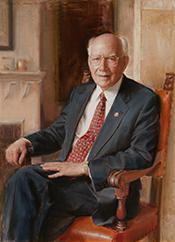
Mr. Speaker, this legislation gives congressional consent to the Great Lakes-St. Lawrence River Basin Water Resources Compact. Before I continue, I would like to commend the distinguished chairman of the Transportation and Infrastructure Committee, Mr. James Oberstar, who sponsored the House version of this legislation, as well as the senior Senator from Michigan, Carl Levin, for their hard work in spearheading this effort. I would also like to thank the distinguished chairman of the Judiciary Committee, Congressman John Conyers, for his support.
Today, Congress considers this legislation pursuant to our duty in article I, section 10, clause 3 of the Constitution, the ``compacts clause,'' to review and approve agreements between States or between States and foreign governments to ensure that they are consistent with the broader national interests.
In the case before us, there is no question that the compact designed and agreed to by eight States is in our national interest. The Great Lakes Compact will help to preserve and improve this important natural resource, our Great Lakes, for years to come. The Great Lakes are one of our greatest treasures, an important natural asset that we must never take for granted and that we must always protect.
With one-fifth of the world's fresh water, the Great Lakes attracted the early settlers to the legion, and today nearly 33 million people live and work within the basin, spanning eight States: Minnesota, Wisconsin, Illinois, Indiana, Michigan, Pennsylvania, New York and my home State of Ohio.
Mr. Speaker, the Great Lakes are not only a source of drinking water, but they are also essential for recreation, jobs and the overall health of our economy. Lake Erie alone supports 240,000 jobs and $5.8 billion in wages. The Great Lakes are also highways, moving goods, people and services throughout the region. In addition, the Great Lakes support a multi-billion dollar a year sport fishing and recreational boating industry, and also support travel and tourism throughout the region.
However, the Great Lakes are vulnerable to depletion. Each year, rainfall and snowmelt replenish only about 1 percent of the water in the basin. Uncontrolled and careless diversions of water could thus be highly detrimental to the health of the Great Lakes. This compact will bring an end to destructive diversions of water from the basin.
The purpose of this compact is to formalize cooperation among the Great Lakes States, to develop and implement regional goals and objectives for water conservation while preserving the States' flexibility regarding their water management programs.
New or increased diversions of water from the basin will be banned and community rights will be respected as long as appropriately rigorous standards are met. In addition, every 5 years the regional goals and objectives for water conservation will be reviewed to deal with any new issues that arise.
As is routinely the case, Mr. Speaker, Congress expressly reserves the right to alter, amend or repeal this resolution in the future and to strengthen the compact, if necessary.
The people of the eight States have worked diligently to craft this compact to preserve this vital resource, and it is urgent that we approve it now to ensure that our Great Lakes are here for future generations.
I urge all of my colleagues to support this important legislation.
Mr. Speaker, I reserve the balance of my time.
Mr. Speaker, before I yield to the distinguished gentleman from Michigan, at this time I would like to insert into the Record correspondence between Representatives Peter Visclosky and David Hobson and Governor Jim Doyle, Chair of the Council of Great Lakes Governors. This correspondence clarifies the Council's intent and interpretation of section 4.11.2 of the Compact's decisionmaking standard relating to the scale and scope of impacts that would be deemed sufficiently significant such to preclude approval of a withdrawal proposal.
I would like to thank Representatives Visclosky and Hobson for their dedicated efforts on this matter and their continued dedication to preserving our Great Lakes.
Congress of the United States,
House of Representatives,
Washington, DC, August 25, 2008.
Hon. Jim Doyle,
Chairman, Council of Great Lakes Governors, East Wacker
Drive, Chicago, Illinois.
Dear Governor Doyle: We write regarding H.R. 6577, a
measure to approve the Great Lakes-St. Lawrence River Basin
Water Resources Compact.
It has been brought to our attention that there are
concerns regarding the scope and scale of impacts considered
in the Decision-Making Standard under Section 4.11.2 of H.R.
6577. As the House proceeds forward with action to approve
the Compact, we are writing to clarify and confirm the
interpretation of this provision.
As you are aware, as part of the criteria governing review
and approval of proposals for water withdrawals, Section
4.11.2 of the Compact requires a demonstration that
``Withdrawal or Consumptive Use will be implemented so as to
ensure that the Proposal will result in no significant
individual or cumulative adverse impacts to the quantity
and quality of the Waters and Water Dependant Natural
Resources and the applicable Source Watershed.'' During the
states' adoption of the Compact, a concern was raised in a
number of jurisdictions regarding a potential ambiguity as to
the scale of impacts that would preclude withdrawal
approvals.
This issue is of particular importance, because interpreted
improperly, this provision could thwart economic development
and threaten existing operations seeking to expand. Because
of the ambiguity in terms of how the definition of ``Source
Watershed'' and Section 4.11.2 work together, the question
has been raised as to whether the significance of impacts is
to be judged based on impacts upon the overall Source
Watershed, which is defined as the drainage area of each
Great Lake, or can measurable impacts on flow within just a
few hundred feet of a stream, which occurs with many
withdrawals, be enough to preclude a project. If Section
4.11.2 is misread, it could become a serious impediment to
the states' undertaking and approving economic development
projects, which we are sure is not the Governors' intent.
On December 5, 2005, Sam Speck, Chair of the Working Group
that drafted the Compact, indicated that the Working Group
intended the term ``Waters and Water Dependant Natural
Resources'' to refer to all waters of the Basin, and that the
scope of impact consideration is to assure that ``there be no
significant adverse impacts to the Great Lakes-St. Lawrence
River Basin as a whole'' as well as no significant adverse
impacts to the Source Watershed as a whole.
Several state legislatures, including Indiana, Ohio, and
Pennsylvania, reflected this position in their respective
legislation adopting the Compact. Those states included in
their legislation provisions expressing and clarifying the
intent of the legislatures in adopting Section 4.11.2 (see
Indiana Senate Enrolled Act No. 45 of 2008 at Section 10;
Ohio House Bill 416 (as adopted) at Section 1522.07(B); and
Pennsylvania Act 43 of 2008 at Section 5(3)).
Consistent with Chairman Speck and the statements of
legislative intent provided by the above states, we would
respectfully request that you confirm that the following
interpretation correctly expresses the understanding and view
of the Council of Great Lakes Governors, as prime drafters
and sponsors of the Compact, with respect to the scope of
impact question:
1. Section 4.11.2 of the Great Lakes-St. Lawrence River
Basin Water Resources Compact is intended to require that a
withdrawal or consumptive use of Great Lakes water will be
implemented so as to ensure that the withdrawal or
consumptive use will result in no significant individual or
cumulative adverse impacts to the quantity or quality of the
waters and water dependent natural resources of either of the
following:
(a) The basin considered as a whole;
(b) The applicable source watershed considered as a whole.
2. States may take into consideration, as part of the
evaluation of reasonable use as provided in Section 4.11.5 of
the Compact, those impacts of a withdrawal or consumptive use
on the quantity or quality of waters and water dependent
natural resources that have only localized impacts which are
not of import to the basin or source watershed considered as
a whole.
3. As provided in Section 4.12.1 of the Compact, the
Compact's standard is a minimum standard and that states may,
as a matter of state law, adopt by state statutes,
regulations or other means relating to the assessment and
consideration of impacts which are more stringent than the
decision-making standard set forth in the Compact.
We would appreciate your written response confirming the
able interpretation, which we would intend be reflected in
the legislative history of the Compact as the House proceeds.
We look forward to working with you and the other Council
members in continuing efforts to approve the Compact before
the end of this session.
Thank you for your consideration of this request. Do not
hesitate to let us know if you have any questions or need
additional information.
Sincerely,
Peter J. Visclosky,
Member of Congress.
David L. Hobson,
Member of Congress.
I thank the gentleman from Michigan for his passionate statement.
We have specifically retained the right to amend and alter the compact. I would just also mention that we have worked to effectively address the gentleman's concerns in the committee report.
I yield to the gentleman from Michigan.
I think we have the assurances that the States will act reasonably in their best interests and our best interests as a region.
Well, I respectfully disagree with the gentleman. We are not really giving up our rights. This has always been a joint effort with a specific responsibility left with the States, a specific responsibility left with this Congress, and we retained this.
I thank the gentleman for the point that he raises. I believe that the agreement and the committee report language effectively addresses that concern.
I will take back my time, and I will answer the gentleman's question.
Mr. Speaker, our Great Lakes' water is currently, at present, at risk to be carelessly diverted from our basin, and that is why action is so important here today. If we allow that to happen, this water will never return.
All eight Great Lakes States have agreed to this compact. I would like to thank Ohio's Governor Ted Strickland for guiding this essential compact through the Ohio State House and Senate.
A stretch of Lake Erie shoreline touches my congressional district, and Lake Erie contributes over $9 billion in tourism and travel revenue to our State's economy. In my district we already utilize Lake Erie commercially through Lorain Harbor, and we need this compact to protect our Great Lakes, our water, our source of recreation, our jobs and our economy, and we need this compact now.
For the overall health of our Great Lakes and our region, we must pass this compact today to protect our Great Lakes and ensure that future generations will have this great resource. I urge my colleagues to support the Great Lakes compact.
Mr. Speaker, I yield back the balance of my time.