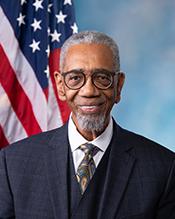
Mr. Speaker, I move to suspend the rules and concur in the Senate amendment to the bill (H.R. 556) to ensure national security while promoting foreign investment and the creation and maintenance of…
Mr. Speaker, I move to suspend the rules and concur in the Senate amendment to the bill (H.R. 556) to ensure national security while promoting foreign investment and the creation and maintenance of jobs, to reform the process by which such investments are examined
for any effect they may have on national security, to establish the Committee on Foreign Investment in the United States, and for other purposes.
Mr. Speaker, I ask unanimous consent that all Members have 5 legislative days within which to revise and extend their remarks on this legislation and to insert extraneous material thereon.
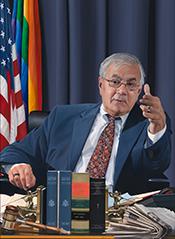
Mr. Speaker, I yield as much time as he may consume to the chairman of the committee, Chairman Frank, from the great State of Massachusetts.
Mr. Speaker, I reserve the balance of my time and inquire how much time remains on my side.
Mr. Speaker, I yield myself as much time as I may consume.
Mr. Speaker, I hope that my colleagues who voted for this bill unanimously are as delighted as I am to see H.R. 556, the CFIUS reform bill, once again on this floor, this time headed for the President's desk.
Strengthening the system of review of foreign direct investment in this country is, as this body has recognized repeatedly, an important national and strongly bipartisan interest.
When the Dubai Ports World matter became front page news a year and a half ago, most Americans had no idea that the Committee on Foreign Investments in the United States existed or what it did.
The Dubai Ports World debacle made clear that the CFIUS process needed strengthening and oversight, both to ensure that foreign investment here does not jeopardize our national security in a post-9/ 11 world and to encourage and support safe foreign investment in this country to create jobs and boost our economy. This bill is designed to accomplish both of these important goals.
As my colleagues will remember, one of the first bills passed by the Financial Services Committee in this Congress and brought to the floor was the original version of this legislation. I am delighted to say that the Senate adopted our bill with very few changes, and it is back here for final passage.
This has been a long and consistently bipartisan effort in which several Members played key roles and deserve special recognition.
I would like to especially thank Chairman Frank and the Democratic leadership, Speaker Nancy Pelosi and Majority Leader Steny Hoyer, for their support. They made this bill a priority and quickly moved it forward for passage.
I also thank Minority Whip Roy Blunt for his work, both in this Congress and in the last, in putting together a coalition to build support for CFIUS reform. Congressman Joe Crowley and Congressman Luis Gutierrez played a key role in that coalition, and I thank them.
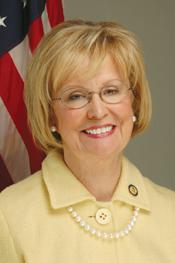
My former colleague on the Monetary Policy Subcommittee, Congresswoman Pryce of Ohio, worked with me to hold hearings on this bill in the last Congress. Those hearings built on the seminal report from the GAO on the weaknesses in the CFIUS process.
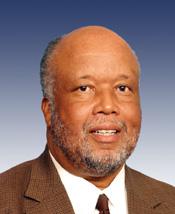
I also thank Congressman Thompson of Mississippi and Congressman King of the Homeland Security Committee, who encouraged this bill from the start.
I would like to thank those Members' staff, particularly Scott Morris, Joe Pinder, Kevin Casey, Peter Freeman, Kyle Nehvins; my subcommittee staff director, Eleni Constantine and Ed Mills for their tireless work on this bill over the past 2 years.
I would also like to thank the Senate for moving forward promptly on this key issue and for adopting our bill and our bill number.
In particular, I thank Chairman Dodd and Senator Shelby for their bipartisan work in moving this forward and their staffs for the careful dedication they gave to every detail of this legislation.
Finally, I would like to the thank Secretary Paulson, Deputy Secretary Kimmitt, Undersecretary Steel and Assistant Secretary Lowery. It is they and their successors who will ensure that the CFIUS process works under Congress's oversight. I have appreciated the dialogue we have had over the past 2 years on how the reforms we propose will be implemented, and in some cases, they already have been.
This bill is necessary now more than ever. As the Wall Street journal reported this week, a growing number of countries are imposing new restrictions on foreign investment that go well beyond the strict focus on national security concerns embodied in this legislation.
The story indicates that the new hostility to foreign acquirers reflects a perception that the United States is erecting new barriers to foreign capital. Today's legislation establishes in unequivocal terms that this perception is false.
By strengthening and clarifying the national security review process and maintaining a strict focus on national security, the CFIUS reforms embodied in H.R. 556 clearly endorse the open investment policy of the United States while enhancing our national security protections. In the name of national security, the President can intervene in any transaction, and, similarly, CFIUS can condition approval of a deal on being able to reopen a review. But this bill provides clarity and certainty for investors by requiring a finding by CFIUS that all other remedies have been exhausted before CFIUS can reopen a review.
I would note that the certain and transparent CFIUS procedures in this bill stand in stark contrast to actions by some foreign governments where expropriations of assets have occurred arbitrarily without justification and without recompense for U.S. investors. By passing this bill, we continue our long-standing efforts to ensure that U.S. investors are treated with the same certainty and fairness in foreign markets as we give foreign investors in this bill.
This bill makes several necessary reforms. First, it creates CFIUS by statute, so that its operations, membership and procedures have a sound basis in law, and we are reviewable by Congress.
Second, it requires a full 45-day investigation of foreign government investment, in addition to the 30-day review, which can only be waived by the Secretary or the Deputy Secretary of Treasury. While many foreign governments' transactions are harmless, they also pose certain inherent risks. Governments have more assets and resources than private sector participants and may have nonmarket motives.
Third, it requires review and sign-off on every transaction, by a high-level official. When the Ports World deal became public, no senior official could be found who knew about the approval before it happened. The House bill required all approvals to be made by the Secretary or Deputy Secretary. The Senate bill allows a Deputy Secretary to make a decision, but it also mandates the creation of a special assistant secretary at Treasury whose portfolio would be CFIUS matters. By restricting the additional decision-making ability to one out of the many assistant secretaries at the Treasury, this preserves the accountability and high-level review that motivated the original delegation provision.
Fourth, the bill requires reporting to Congress after the conclusion of reviews. While we do not want to politicize the process of security review, we also want to assure proper oversight.
Fifth, it creates and places and puts in place the importance of review by the National Intelligence Director.
Six, it requires tracking of transactions that are withdrawn from the process. Since deals are often withdrawn because they hit a snag in the initial course of review, it is necessary to make sure that appropriate steps are taken to prevent whatever potential risk was spotted.
For example, this was the case with a Smartmatic transaction that I brought to the attention of Treasury last summer as a matter requiring CFIUS review. As you may recall, press reports indicated that Smartmatic, which had just bought the second largest voting machine company in the United States, Sequoia Voting Systems, had ties to the Venezuelan government.
I thought those allegations needed to be investigated by the body with the power to really get into the tangled ownership of the company, which is CFIUS. Under the broad and flexible definition of national security that the bill puts in place, certainly the ownership of voting machines is a potential national security issue.
A CFIUS review began of the deal. But before it was completed, Smartmatic withdrew and agreed to sell Sequoia. Certainly, this is an agreement that I would want CFIUS to track and make sure actually was followed.
I think we have struck the right balance in this bill in protecting the national security interests of our country, first and foremost, but also providing a certain and clear procedure to encourage safe foreign investment that will create jobs and boost the economy.
I urge my colleagues to once again give this bill their unequivocal support and send it to the President with a bipartisan vote.
Mr. Speaker, I reserve the balance of my time.
Mr. Speaker, I appreciate the gentleman's hard work on this bill and his statements, but I would like to clarify that CFIUS is a consensus body, so each member does and will continue to have an effective veto. This bill does not affect that ability in any way. Chairman Frank of the committee made that very clear in his statements in committee and on the floor today.
Mr. Speaker, I include in the Record a list of important organizations in our country, including the Chamber of Commerce, that have issued letters and statements in support of this legislation.
July 10, 2007.
To the Members of the U.S. House of Representatives: On
behalf of the Financial Services Forum, a trade association
comprised of the CEOs of 20 of the largest and most
diversified financial institutions, I write in strong support
of H.R. 556, the ``Foreign Investment and National Security
Act of 2007.'' This bipartisan legislation would ensure that
proposed foreign investments in the U.S. meet national
security objectives while preserving an open, fair and non-
discriminatory investment environment.
Passage of this bill indicates to international investors
and trade partners that the U.S. remains open for foreign
investment and signals to other countries that they should
follow suit by keeping their doors open to U.S. foreign
direct investment.
The Forum believes that the legislation strikes the
appropriate balance between keeping Americans safe and
growing the economy. The included reforms make clear that
every Administration will devote time and resources to
foreign investment deals that require higher levels of
scrutiny, while allowing acquisitions that do not present
national security concerns to move forward swiftly.
Foreign direct investment supports employment for over 5
million Americans, who typically earn compensation well above
the national average. Investment from abroad supports 19% of
all U.S. exports. In 2005, a number of foreign-owned
companies reinvested $59 billion in profits back into the
U.S. economy. At a time when the competitiveness of the
United States is so important, H.R. 556 will help maintain
America's global advantage and grow the U.S. economy.
The Forum applauds the bipartisan leaders who worked
swiftly and productively to move this bill. H.R. 556 will
restore Congressional confidence in the CFIUS process and the
Forum urges Members to support this critically important
bipartisan bill.
Sincerely,
Robert S. Nichols,
President and COO,
The Financial Services Forum.
Mr. Speaker, I yield back the balance of my time.
Mr. Speaker, on that I demand the yeas and nays.