Mr. Speaker, I thank my friend from New York, the distinguished Chair on the Committee of Rules for yielding me the time, and I yield myself such time as I might consume. Mr. Speaker, I rise in the…
Mr. Speaker, I thank my friend from New York, the distinguished Chair on the Committee of Rules for yielding me the time, and I yield myself such time as I might consume.
Mr. Speaker, I rise in the strongest possible opposition to this rule and the underlying legislation. I could start this debate by quoting my Democratic colleagues on the Rules Committee when they decried Republican tactics over the last few years, how they railed against closed rules and chided me personally. I am a big guy, I can handle it. But they attacked me personally constantly for denying amendments that were offered by both Democrats and Republicans. I could quote every instance that they promised to do better, to have the most open and fair Congress in the history of this country, and to not have late- night meetings. But today, Mr. Speaker, I am not going to do that. I am going to recognize that that would simply distract from this very, very important issue. Instead, I
am going to simply provide the House, Mr. Speaker, and you witnessed much of this last night, with a factual account of what took place in the wee hours of this morning.
Shortly before 1 a.m., the Rules Committee on party-line votes reported out two self-executing closed rules, and denied the consideration of some 70 amendments submitted to the Rules Committee from both Republicans and Democrats as well. That is what happened. There is no denying it. You, Mr. Speaker, witnessed it yourself when you were upstairs in the Rules Committee.
So regardless of the process, this supplemental appropriations bill is a constitutionally dubious attempt at micromanaging the Iraq war into what I believe would be inevitable defeat if it succeeds. It enjoys such limited support on the other side of the aisle that it had to be ladened with unrelated pork in order to win enough votes to have any hope of passing. It is a cynical ploy that will leave dire consequences for the region, and for our own security, in its wake.
The Constitution lays out a very clear system of checks and balances derived from the ideas of the Framers of our Constitution. By giving the three branches of government distinct roles, we guard ourselves against tyranny; we guard ourselves as individuals against tyranny in each branch.
The President cannot wage war without authorization or funding from Congress. But if authorization and funding are granted, the President serves as the Commander in Chief with the authority to execute the war.
Mr. Speaker, this bill ignores the intentions of those Framers, and it attempts to turn the Constitution on its head. James Madison, Father of the Constitution, the author of the Constitution in Federalist No. 51, wrote, and I quote, ``In framing a government that is to be administered by men over men, the great difficulty lies in this: You must first enable the government to control the governed, and in the next place oblige it to control itself.''
Mr. Speaker, Madison recognized the inherent challenges in designing a government that is both effective and limited. He knew that, without checks and balances, tyranny would, in fact, ensue.
This bill attempts to diminish these checks and balances. It tries to turn Congress into a collection of 535 Commanders in Chief. This legislation of micromanagement is based on a disastrous strategy. Its authors fund the war, and then mandate its failure. They seek to tie the hands of our military commanders, and then force them to retreat when they are unable to meet impossible timetables. They mandate the withdrawal with no regard for the situation on the ground, and then they sweeten the deal with $15 billion in money that is unrelated spending that has got a little something in there for practically everyone: $283 million for the milk income lost contract program; $74 million for peanut storage costs; $1.3 billion for the Army Corps of Engineers. Billions and billions of dollars for these projects, some worthy, some not.
But none of them related to the troops, and what this is, this is a war funding supplemental. None of these are emergency items.
Their only connection to emergency supplemental appropriations for the war, Mr. Speaker, in Iraq, is that they are necessary to build support for this bill, a bill that trades victory for electoral gains. Make no mistake, this legislation is a political solution for Democrats, not a strategy for winning in Iraq.
And what would the consequences of defeat be? The National Intelligence Estimate, the 9/11 Commission, and our people on the ground have all made it very clear that a precipitous withdrawal would have catastrophic consequences. The carnage of the battle of Baghdad that we are witnessing today will be just the beginning. Violence will spill out across the country and spread to the entire region.
In our absence, Iran and Syria will be utterly unfettered in their ability to incite a regional war that threatens global security, with enormous casualties suffered by the people of the region.
Proponents of a policy of defeat often point to our diminished standing in the international community. But what about our standing with the Iraqi people? Terrorist attacks on our own soil have demonstrated that our security and their security are directly linked.
And, Mr. Speaker, Operation Iraqi Freedom has bound us even more closely. We have a commitment to help the Iraqi people establish lasting security through democracy. We have a commitment not to abandon them to be slaughtered by terrorists.
And if we retreat, we not only abandon the Iraqi people, we draw terrorism back to our own doorstep. Have we so soon forgotten the tragedy of attacks on our homeland?
We took the war on terror to the terrorists and have suffered not one attack since September 11 of 2001.
With this bill, we would bring the war on terror back home. Only this time we will have strengthened the terrorists ourselves with a road map for success. We will have demonstrated precisely what it takes to defeat the United States of America. We will have clearly signaled to them that they must simply bide their time until the mandated retreat, at which time they will be able to terrorize with impunity.
I, like many Americans, Mr. Speaker, have been discouraged by this war. We all feel the toll that it has taken. And we are keenly aware of the price that we are paying, especially in a human sense. Every one of my colleagues, Mr. Speaker, has, as I have, looked in the faces of constituents whose family and friends have made the ultimate sacrifice in this war. Their pain is very real, and their loss is profound.
I regularly talk to a man called Ed Blecksmith whose son J.P. was tragically killed 2 years ago this past November in the very famous battle of Fallujah. And he has, time and time again, said to me, if we don't complete this mission, my son J.P. will have died in vain.
But we do not honor those who have sacrificed by abandoning their mission. We do not honor those in the field who are fighting, as we speak, by tying their hands and depriving them of the means to succeed. We will honor them by winning the war in Iraq so that our men and women come home having completed their mission.
We know that their mission will not be complete in the immediate future. As President Bush and General David Petraeus have both acknowledged, success will take months, not days or weeks. But there are signs of hope that the President's new plans, under General Petraeus, are working.
As Brian Williams of NBC reported from the field in Iraq, he said, ``This change in policy, getting out, decentralizing, going into the neighborhoods, grabbing a toehold, telling the enemy we are here, talking to the locals, that is having an obvious and palpable effect. There are hopeful signs.'' That was said by the NBC news anchor, Brian Williams.
Mr. Speaker, to abandon our mission now would be disastrous. I urge my colleagues to reject the policy of defeat, reject the return of terrorism to our homeland, and reject this unconstitutional power grab whose sole purpose is to cede victory to our enemies.
Mr. Speaker, I reserve the balance of my time.
Mr. Speaker, at this time I am happy to yield 2\1/2\ minutes to a very hardworking member of the Committee on Rules, the gentleman from Pasco, Washington (Mr. Hastings).
Mr. Speaker, at this time I am happy to yield 2 minutes to another hardworking member of the Committee on Rules, the gentleman from Miami (Mr. Lincoln Diaz-Balart).
Mr. Speaker, at this time I am happy to yield 2 minutes to
another hardworking member of the Rules Committee, the gentleman from Dallas (Mr. Sessions).
Mr. Speaker, at this time I am very pleased to yield 2 minutes to my good friend, member of the Appropriations Committee, the gentleman from Goddard, Kansas (Mr. Tiahrt).
Mr. Speaker, at this time I am happy to yield 2 minutes to the gentleman from Marietta, Georgia (Mr. Gingrey), a former member of the Committee on Rules, who works hard on the Armed Services Committee now.
Mr. Speaker, I am happy to yield 3 minutes to the ranking Republican on the Committee on the Budget, the gentleman from Janesville, Wisconsin (Mr. Ryan).
Mr. Speaker, at this time I am happy to yield 2 minutes to the gentleman from Bridgeport, Connecticut (Mr. Shays), the former chairman of the National Security Subcommittee, who has made 15 trips to Iraq.
Mr. Speaker, I am happy to yield 1 minute to the distinguished gentleman from Lafayette, Louisiana (Mr. Boustany).
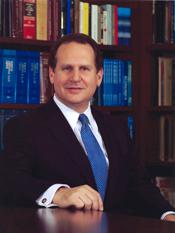
Mr. Speaker, I am very happy to yield 2 minutes to the former attorney general of California, my friend from Folsom, a hardworking member of the Judiciary Committee, Mr. Lungren.
Mr. Speaker, I yield 1 minute to the very distinguished gentleman from Indianapolis, Mr. Burton.
Mr. Speaker, I am happy at this time to yield 1 minute to my friend from Cherryville, North Carolina (Mr. McHenry).
Mr. Speaker, I would like to inquire of the gentlewoman if there are any further speakers on her side.
Mr. Speaker, I yield myself the balance of my time.
Mr. Speaker, in 1859 that great philosopher and religious leader John Stuart Mill wrote: ``War is an ugly thing, but not the ugliest of things. The decayed and degraded state of moral and patriotic feeling which thinks that nothing is worth war is much worse.''
We have yet to hear from the other side of the aisle about how we are going to win the global war on terror. We haven't heard, as my friend, Mr. Lungren, just said to me, the ``V'' word. How are we going to be victorious in this war?
I urge my colleagues to vote ``no'' on this rule. This is the largest supplemental spending bill in the history of this planet; and it is being brought up under a closed rule.
Our colleagues in the other body will have an opportunity to amend and discuss and debate this. Only a few Members of the Democratic leadership fashioned this measure, Mr. Speaker. It is unfair. It sends the wrong message to our troops. We must be victorious in this war.
With that, I urge a ``no'' vote on the rule and if they pass this rule, a ``no'' vote on the underlying legislation.
Mr. Speaker, I object to the vote on the ground that a quorum is not present and make the point of order that a quorum is not present.