Worker Protection Against Combustible Dust Explosions and Fires Act of 2008
 Rep. George Miller (D-CA)
Legislative Activity
Stay on top of the latest movement without scrolling through every action
Received in the Senate and Read twice and referred to the Committee on Health, Education, Labor, and Pensions.
May 1, 2008
View full timeline
Introduced in House
March 4, 2008
Referred to the House Committee on Education and Labor.
March 4, 2008
Committee Consideration and Mark-up Session Held.
April 9, 2008
Ordered to be Reported (Amended) by Voice Vote.
April 9, 2008
Referred to the Subcommittee on Workforce Protections.
April 17, 2008
Reported (Amended) by the Committee on Education and Labor. H. Rept. 110-601.
April 22, 2008
Placed on the Union Calendar, Calendar No. 374.
April 22, 2008
Rules Committee Resolution H. Res. 1157 Reported to House. Rule provides for consideration of H.R. 5522 with 1 hour of general debate. Previous question shall be considered as ordered without intervening motions except motion to recommit with or without instructions. Measure will be considered read. Specified amendments are in order. All points of order against consideration of the bill are waived except those arising under clause 9 or 10 of rule XXI. It shall be in order to consider as an original bill for the purpose of amendment under the five-minute rule the amendment in the nature of a substitute recommended by the Committee on Education and Labor now printed in the bill.
April 29, 2008 • 6:54 PM
Rule H. Res. 1157 passed House.
April 30, 2008 • 4:35 PM
Considered under the provisions of rule H. Res. 1157. (consideration: CR H2909-2922)
April 30, 2008 • 4:45 PM
Rule provides for consideration of H.R. 5522 with 1 hour of general debate. Previous question shall be considered as ordered without intervening motions except motion to recommit with or without instructions. Measure will be considered read. Specified amendments are in order. All points of order against consideration of the bill are waived except those arising under clause 9 or 10 of rule XXI. It shall be in order to consider as an original bill for the purpose of amendment under the five-minute rule the amendment in the nature of a substitute recommended by the Committee on Education and Labor now printed in the bill.
April 30, 2008 • 4:45 PM
House resolved itself into the Committee of the Whole House on the state of the Union pursuant to H. Res. 1157 and Rule XVIII.
April 30, 2008 • 4:46 PM
The Speaker designated the Honorable Donna M. Christensen to act as Chairwoman of the Committee.
April 30, 2008 • 4:46 PM
GENERAL DEBATE - The Committee of the Whole proceeded with one hour of general debate on H.R. 5522.
April 30, 2008 • 4:47 PM
DEBATE - Pursuant to the provisions of H. Res. 1157, the Committee of the Whole proceeded with ten minutes of debate on the George Miller amendment.
April 30, 2008 • 5:18 PM
POSTPONED PROCEEDINGS - At the conclusion of debate on the George Miller amendment, the Chair put the question on adoption of the amendment and by voice vote, announced that the ayes had prevailed. Mr. George Miller demanded a recorded vote and the Chair postponed further proceedings on the question of adoption of the amendment until later in the legislative day.
April 30, 2008 • 5:22 PM
DEBATE - Pursuant to the provisions of H. Res. 1157, the Committee of the Whole proceeded with ten minutes of debate on the Wilson (SC) amendment.
April 30, 2008 • 5:23 PM
POSTPONED PROCEEDINGS - At the conclusion of debate on the Wilson (SC) amendment, the Chair put the question on adoption of the amendment and by voice vote, announced that the noes had prevailed. Mr. Wilson (SC) demanded a recorded vote and the Chair postponed further proceedings on the question of adoption of the amendment until later in the legislative day.
April 30, 2008 • 5:39 PM
UNFINISHED BUSINESS - The Chair announced that the unfinished business was the question of adoption of amendments which had been debated earlier and on which further proceedings had been postponed.
April 30, 2008 • 5:40 PM
The House rose from the Committee of the Whole House on the state of the Union to report H.R. 5522.
April 30, 2008 • 6:17 PM
The previous question was ordered pursuant to the rule. (consideration: CR H2919)
April 30, 2008 • 6:17 PM
The House adopted the amendment in the nature of a substitute as agreed to by the Committee of the Whole House on the state of the Union. (text: CR H2913-2914)
April 30, 2008 • 6:17 PM
Mr. Walberg moved to recommit with instructions to Education and Labor. (consideration: CR H2919-2921; text: CR H2919)
April 30, 2008 • 6:19 PM
DEBATE - The House proceeded with ten minutes of debate on the Walberg motion to recommit. The instructions contained in the motion seek to require the bill to be reported back to the House with an amendment to require an exemption for grain pending determination of impact on the prices.
April 30, 2008 • 6:19 PM
On motion to recommit with instructions Failed by recorded vote: 187 - 225 (Roll no. 232).
April 30, 2008 • 6:49 PM
Passed/agreed to in House: On passage Passed by recorded vote: 247 - 165 (Roll no. 233).
April 30, 2008 • 6:56 PM
On passage Passed by recorded vote: 247 - 165 (Roll no. 233).
April 30, 2008 • 6:56 PM
Motion to reconsider laid on the table Agreed to without objection.
April 30, 2008 • 6:56 PM
The Clerk was authorized to correct section numbers, punctuation, and cross references, and to make other necessary technical and conforming corrections in the engrossment of H.R. 5522.
April 30, 2008 • 6:56 PM
Received in the Senate and Read twice and referred to the Committee on Health, Education, Labor, and Pensions.
May 1, 2008
Voting History
4 votes recorded • Roll call available
HOUSE
Roll Call AvailableApril 30, 2008 at 6:56 PM
On Passage
Majority required: 1/2 (50%)
247 - 165
HOUSE
Roll Call AvailableApril 30, 2008 at 6:48 PM
On Motion to Recommit with Instructions
Majority required: 1/2 (50%)
187 - 225
HOUSE
Roll Call AvailableApril 30, 2008 at 6:15 PM
On Agreeing to the Amendment
Majority required: 1/2 (50%)
178 - 237
Floor Debate
22 membersWhat members said about H.R. 5522 on the floor

 +17
+17
Floor Debate
22 membersWhat members said about H.R. 5522 on the floor
Madam Chairman, I yield myself such time as I may consume. I rise today in strong support of H.R. 5522, the Combustible Dust Explosion and Fire Prevention Act of 2008. On February 7 of this year, a…
Mr. Speaker, by direction of the Committee on Rules, I call up House Resolution 1157 and ask for its immediate consideration. Mr. Speaker, for the purposes of debate only, I yield the customary 30…
Mr. Speaker, I would like to thank the gentleman from Massachusetts (Mr. McGovern) for the time, and I yield myself such time as I may consume. On February 7, 2008, a terrible explosion occurred at…
Madam Chairman, I yield myself such time as I may consume. I rise in opposition to the bill at this time and in this form. Consideration of this bill is a somber occurrence. It reminds us that less…
Madam Chairman, I have an amendment made in order under the rule. Madam Chairman, I yield myself such time as I may consume. While I share the majority's commitment to ensuring workplace safety, I…
Show 8 more

I thank the Republican whip. On Monday, the House is not in session. On Tuesday, the House will meet at 12:30 p.m. for morning hour and 2 p.m. for legislative business. On Wednesday and Thursday, the…
I thank the ranking member and I thank the chairman of the committee, and my colleagues, Mr. Barrow and Ms. Woolsey, for their work on this. While I support many of the points of the ranking member,…

Madam Chairman, I rise today in strong support of H.R. 5522, requiring the Secretary of Labor to issue interim and final occupational safety and health standards regarding worker exposure to…
I yield to my friend, the gentleman from Maryland, the majority leader, for information about the schedule. I thank the gentleman for that information. Will the Combustible Dust Explosion and Fire…
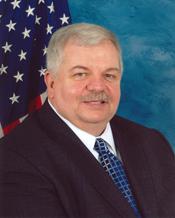
Madam Chairman, I rise today in strong support of H.R. 5522, the Combustible Dust Explosion and Fire Prevention Act and commend Chairman George Miller for his tireless efforts on behalf of America's…
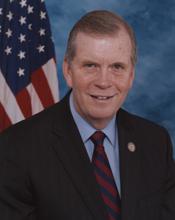
Madam Speaker, I offer a motion to recommit. Yes, I am, in its present form. Thank you, Madam Speaker. This motion to recommit is simple and straightforward. It maintains our commitment to safety.…

Madam Chairman, I rise today in strong support of H.R. 5522, the Combustible Dust Explosion and Fire Prevention Act. This legislation would require the U.S. Occupational Safety and Health…
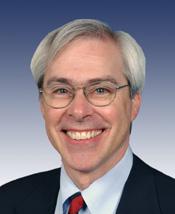
I thank Chairman Miller. Madam Chairman, what we have learned in my community since the Imperial disaster hit us is the experts have known about this problems for decades. There have been voluntary…
Show 11 more
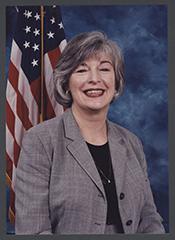
This past Monday was Workers Memorial Day. Workers Memorial Day is the day when we remember those who have lost their lives or have been injured as a result of unsafe health and safety conditions in…

I thank the gentleman for yielding. Madam Chairman, I rise in support of workplace safety, but in opposition to H.R. 5522, the Combustible Dust Explosion and Fire Prevention Act. We all share, I…
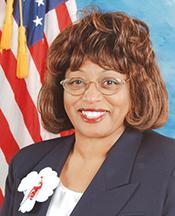
Madam Chairman, I rise in support of H.R. 5522, the Worker Protection Against Combustible Dust Explosion and Fire Act of 2008. This bill would require the U.S. Occupational Safety and Health…
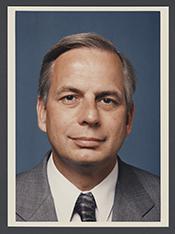
Madam Chairman, I rise in strong support of this bill to improve worker protections. The Combustible Dust Explosion and Fire Prevention Act would force the U.S. Occupational Safety and Health…
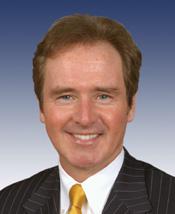
Madam Speaker, I regrettably missed a number of votes to attend to a family emergency. Had I been present for these votes I would have votes as follows: On rollcall No. 224, Motion to Suspend the…
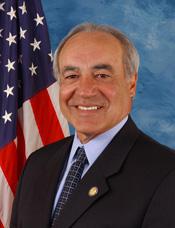
Madam Chairman, I rise today to speak in support of H.R. 5522, the Combustible Dust Explosion and Fire Prevention Act of 2008. H.R. 5522 would direct OSHA to improve engineering controls, and worker…

Madam Speaker, I would like to offer a personal explanation of the reason I missed rollcall Vote No. 146 on March 14, 2008. I was meeting off Capitol Hill with over 100 World War II veterans from my…
Madam Speaker, on Wednesday, April 30, 2008, I missed the first vote in a series of two votes. I missed rollcall votes Nos. 230, 231, 232, and 233. Had I been present and voting, I would have voted…
Madam Speaker, I ask unanimous consent that, in the engrossment of the bill, H.R. 5522, the Clerk be authorized to correct the table of contents, section numbers, punctuation, citations, and…
Madam Speaker, I ask unanimous consent that Members may have 5 legislative days to revise and extend their remarks and insert extraneous material on H.R. 5522.

Madam Speaker, on rollcall No. 232, I was unavoidably detained. Had I been present, I would have voted ``no.''
Bill Text
4 versions available
        [Congressional Bills 110th Congress]
[From the U.S. Government Printing Office]
[H.R. 5522 Referred in Senate (RFS)]

2d Session
H. R. 5522

_______________________________________________________________________

IN THE SENATE OF THE UNITED STATES

May 1, 2008

Received; read twice and referred to the Committee on Health,
Education, Labor, and Pensions

_______________________________________________________________________

AN ACT

To require the Secretary of Labor to issue interim and final
occupational safety and health standards regarding worker exposure to
combustible dust, and for other purposes.

Be it enacted by the Senate and House of Representatives of the
United States of America in Congress assembled,

SECTION 1. SHORT TITLE.

This Act may be cited as the ``Worker Protection Against
Combustible Dust Explosions and Fires Act of 2008''.

SEC. 2. FINDINGS.

Congress finds the following:
(1) An emergency exists concerning worker exposure to
combustible dust explosions and fires.
(2) 13 workers were killed and more than 60 seriously
injured in a catastrophic combustible dust explosion at
Imperial Sugar in Port Wentworth, Georgia on February 7, 2008.
(3) Following 3 catastrophic dust explosions that killed 14
workers in 2003, the Chemical Safety and Hazard Investigation
Board (CSB) issued a report in November 2006, which identified
281 combustible dust incidents between 1980 and 2005 that
killed 119 workers and injured 718. The CSB concluded that
``combustible dust explosions are a serious hazard in American
industry''.
(4) A quarter of the explosions occurred at food industry
facilities, including sugar plants. Seventy additional
combustible dust explosions have occurred since 2005.
(5) Material Safety Data Sheets (MSDSs) often do not
adequately address the hazards of combustible dusts, and the
OSHA Hazard Communication Standard (HCS) inadequately addresses
dust explosion hazards and fails to ensure that safe work
practices and guidance documents are included in MSDSs.
(6) The CSB recommended that OSHA issue a standard designed
to prevent combustible dust fires and explosions in general
industry, based on current National Fire Protection Association
(NFPA) dust explosion standards.
(7) The CSB also recommended that OSHA revise the Hazard
Communication Standard (HCS) (1910.1200) to clarify that
combustible dusts are covered and that Material Safety Data
Sheets contain information about the hazards and physical
properties of combustible dusts.
(8) OSHA has not initiated rulemaking in response to the
CSB's recommendation.
(9) OSHA issued a grain handling facilities standard (29
C.F.R. 1910.272), in 1987 that has proven highly effective in
reducing the risk of combustible grain dust explosions,
according to an OSHA evaluation.
(10) No Occupational Safety and Health Administration
standard comprehensively addresses combustible dust explosion
hazards in general industry.
(11) Voluntary National Fire Protection Association
standards exist which, when implemented, effectively reduce the
likelihood and impact of combustible dust explosions.

SEC. 3. ISSUANCE OF STANDARD ON COMBUSTIBLE DUST.

(a) Interim Standard.--
(1) Application and rulemaking.--Notwithstanding any other
provision of law, not later than 90 days after the date of
enactment of this Act, the Secretary of Labor shall promulgate
an interim final standard regulating combustible dusts. The
interim final standard shall, at a minimum, apply to
manufacturing, processing, blending, conveying, repackaging,
and handling of combustible particulate solids and their dusts,
including organic dusts (such as sugar, candy, paper, soap, and
dried blood), plastics, sulfur, wood, rubber, furniture,
textiles, pesticides, pharmaceuticals, fibers, dyes, coal,
metals (such as aluminum, chromium, iron, magnesium, and zinc),
fossil fuels, and others determined by the Secretary, but shall
not apply to processes already covered by OSHA's standard on
grain facilities (29 C.F.R. 1910.272).
(2) Requirements.--The interim final standard required
under this subsection shall include the following:
(A) Requirements for hazard assessment to identify,
evaluate, and control combustible dust hazards.
(B) Requirements for a written program that
includes provisions for hazardous dust inspection,
testing, hot work, ignition control, and housekeeping,
including the frequency and method or methods used to
minimize accumulations of combustible dust on ledges,
floors, equipment, and other exposed surfaces.
(C) Requirements for engineering controls (which
requirements shall be effective 6 months after the date
on which the interim standard is issued),
administrative controls, and operating procedures, such
as means to control fugitive dust emissions and
ignition sources, the safe use and maintenance of dust
producing and dust collection systems and filters,
minimizing horizontal surfaces where dust can
accumulate, and sealing of areas inaccessible to
housekeeping.
(D) Requirements for housekeeping to prevent
accumulation of combustible dust in places of
employment in such depths that it can present
explosion, deflagration, or other fire hazards,
including safe methods of dust removal.
(E) Requirements for employee participation in
hazard assessment, development of and compliance with
the written program, and other elements of hazard
management.
(F) Requirements to provide written safety and
health information and annual training to employees,
including housekeeping procedures, hot work procedures,
preventive maintenance procedures, common ignition
sources, and lock-out, tag-out procedures.
(3) Procedure.--The requirements in this subsection shall
take effect without regard to the procedural requirements
applicable to regulations promulgated under section 6(b) of the
Occupational Safety and Health Act of 1970 (29 U.S.C. 655(b))
or the procedural requirements of chapter 5 of title 5, United
States Code.
(4) Effective date of interim standard.--Except as
specified in paragraph (2)(C) with regards to engineering
controls, the interim final standard shall take effect 30 days
after issuance. The interim final standard shall have the legal
effect of an occupational safety and health standard, and shall
apply until a final standard becomes effective under section 6
of the Occupational Safety and Health Act (29 U.S.C. 655).
(b) Final Standard.--
(1) Rulemaking.--Not later than 18 months after the date of
enactment of this Act, the Secretary of Labor shall, pursuant
to section 6 of the Occupational Safety and Health Act (29
U.S.C. 655), promulgate a final standard regulating combustible
dust explosions.
(2) Requirements.--The final standard required under this
subsection shall include the following:
(A) The scope described in subsection (a)(1).
(B) The worker protection provisions in subsection
(a)(2).
(C) Requirements for managing change of dust
producing materials, technology, equipment, staffing,
and procedures.
(D) Requirements for building design such as
explosion venting, ducting, and sprinklers.
(E) Requirements for explosion protection,
including separation and segregation of the hazard.
(F) Relevant and appropriate provisions of National
Fire Protection Association combustible dust standards.
(3) Procedure.--The final standard required by this
subsection shall be promulgated in accordance with the
procedural requirements for rulemaking under section 6(b) of
the Occupational Safety and Health Act of 1970 (29 U.S.C.
655(b)) and under title 5, United States Code, including the
requirements relating to small businesses in chapter 6 of such
title.

SEC. 4. REVISION OF THE HAZARD COMMUNICATION STANDARD.

(a) Revision Required.--Notwithstanding any other provision of law,
not later than 6 months after the date of enactment of this Act, the
Secretary of Labor shall revise the hazard communication standard in
section 1910.1200 of title 29, Code of Federal Regulations, by amending
the definition of ``physical hazard'' in subsection (c) of such section
to include ``a combustible dust'' as an additional example of such a
hazard.
(b) Effect of Modifications.--The modification under this section
shall be in force until superseded in whole or in part by regulations
promulgated by the Secretary of Labor under section 6(b) of the
Occupational Safety and Health Act of 1970 (29 U.S.C. 655(b)) and shall
be enforced in the same manner and to the same extent as any rule or
regulation promulgated under section 6(b).
(c) Effective Date.--The modification to the hazard communication
standard required shall take effect within 30 days after the
publication of the revised rule.

Passed the House of Representatives April 30, 2008.

Attest:

LORRAINE C. MILLER,

Clerk.