Chesapeake Bay Gateways and Watertrails Network Continuing Authorization Act
Legislative Activity
Stay on top of the latest movement without scrolling through every action
Read twice. Placed on Senate Legislative Calendar under General Orders. Calendar No. 930.
August 1, 2008
View full timeline
Introduced in House
March 5, 2008
Sponsor introductory remarks on measure. (CR E310-311)
March 5, 2008
Referred to the House Committee on Natural Resources.
March 5, 2008
Referred to the Subcommittee on National Parks, Forests and Public Lands.
March 6, 2008
Committee Consideration and Mark-up Session Held.
April 30, 2008
Subcommittee on National Parks, Forests, and Public Lands Discharged.
April 30, 2008
Reported by the Committee on Natural Resources. H. Rept. 110-667.
May 22, 2008
Placed on the Union Calendar, Calendar No. 419.
May 22, 2008
Rules Committee Resolution H. Res. 1233 Reported to House. Rule provides for consideration of H.R. 5540 with 1 hour of general debate. Previous question shall be considered as ordered without intervening motions except motion to recommit with or without instructions. Measure will be considered read. A specified amendment is in order. All points of order against consideration of the bill are waived except those arising under clause 9 or 10 of rule XXI.
June 3, 2008 • 7:26 PM
Rule H. Res. 1233 passed House.
June 5, 2008 • 12:47 PM
Considered under the provisions of rule H. Res. 1233. (consideration: CR H5004-5016; text of measure as reported in House: CR H5004)
June 5, 2008 • 1:12 PM
Rule provides for consideration of H.R. 5540 with 1 hour of general debate. Previous question shall be considered as ordered without intervening motions except motion to recommit with or without instructions. Measure will be considered read. A specified amendment is in order. All points of order against consideration of the bill are waived except those arising under clause 9 or 10 of rule XXI.
June 5, 2008 • 1:12 PM
DEBATE - The House proceeded with one hour of debate on H.R. 5540.
June 5, 2008 • 1:12 PM
DEBATE - Pursuant to the provisions of H. Res. 1233, the House proceeded with twenty minutes of debate on the Bishop (UT) amendment.
June 5, 2008 • 2:18 PM
Mr. Sali moved to recommit with instructions to Natural Resources. (consideration: CR H5014; text: CR H5014)
June 5, 2008 • 2:56 PM
DEBATE - The House proceeded with ten minutes of debate on the Sali motion to recommit with instructions. The instructions contained in the motion seek to enhance public education and access to the Chesapeake Bay.
June 5, 2008 • 3:01 PM
The previous question on the motion to recommit with instructions was ordered without objection. (consideration: CR H5015)
June 5, 2008 • 3:06 PM
On motion to recommit with instructions Failed by the Yeas and Nays: 181 - 223 (Roll no. 385).
June 5, 2008 • 3:22 PM
Passed/agreed to in House: On passage Passed by the Yeas and Nays: 321 - 86 (Roll no. 386).
June 5, 2008 • 3:30 PM
Motion to reconsider laid on the table Agreed to without objection.
June 5, 2008 • 3:30 PM
On passage Passed by the Yeas and Nays: 321 - 86 (Roll no. 386).
June 5, 2008 • 3:30 PM
Received in the Senate.
June 6, 2008
Read twice. Placed on Senate Legislative Calendar under General Orders. Calendar No. 930.
August 1, 2008
Voting History
3 votes recorded • Roll call available
HOUSE
Roll Call AvailableJune 5, 2008 at 3:29 PM
On Passage
Majority required: 1/2 (50%)
321 - 86
HOUSE
Roll Call AvailableJune 5, 2008 at 3:22 PM
On Motion to Recommit with Instructions
Majority required: 1/2 (50%)
181 - 223
HOUSE
Roll Call AvailableJune 5, 2008 at 2:54 PM
On Agreeing to the Amendment
Majority required: 1/2 (50%)
178 - 232
Floor Debate
23 membersWhat members said about H.R. 5540 on the floor
 RBJPS
RBJPS MAA
MAA LD
LD DH+18
DH+18
Floor Debate
23 membersWhat members said about H.R. 5540 on the floor
Mr. Speaker, before I give my opening statement, I would like to yield 3 minutes to the gentleman from South Carolina (Mr. Brown). Mr. Speaker, I yield 6 minutes to the gentleman from Idaho (Mr.…
Mr. Speaker, before I give my opening statement, I would like to yield 3 minutes to the gentleman from South Carolina (Mr. Brown).
Mr. Speaker, I yield 6 minutes to the gentleman from Idaho (Mr. Sali).
Mr. Speaker, I yield 3 minutes to the gentleman from Maryland (Mr. Gilchrest).
Mr. Speaker, I yield myself such time as I may consume.
So here we are debating a bill under a rule which we all know should have best been under a suspension. It's not a perfect bill. If they accept an amendment later on, it will be a perfect bill. But for any imperfections that are here, this bill has far better drafting, far better intent, far more bipartisanship than perhaps some illogical partisan gamesmanship that produced vociferous debate under suspensions yesterday.
But one would wonder why we are taking time on the floor to consider a bill which was passed out of the Resources Committee by a voice vote and a bill in which I intend to vote in favor? What is it about this bill that is actually so important that we are talking about it rather than other more pressing national issues such as an energy crisis? Why does such a relatively innocuous bill take precedence over finding solutions to gas prices that are now around $4 a gallon and probably going higher?
It must be that this bill accomplishes something so dramatically important that we are foolish to consider other issues, such as national security or our deepening dependence on foreign oil.
This bill deals with an area that includes no Federal waters. There are no Federal assets that are a part of it. It could easily be done with an inter-local cooperating agreement, which many States in the West use. Instead, the Federal Government is involved in that. Despite that fact, I still intend on voting for this particular bill.
This is a recreational bill. This bill provides moneys for trails, maps, signs, and all the nice things in the quest of healthy outdoor recreation in the Chesapeake Bay region. This program was originally authorized in 1998 as a 5-year program, and then reauthorized for another 5 years in 2002. And now the authorization, not for the program but for the appropriations for this program, are set to expire and the proponents are offering this legislation to authorize funding this program for eternity.
There will be no caps on the funds that can be appropriated for this program, no time limit. Maybe this is such a big priority for the Democratic majority because the National Park Service testified this program has received $7.7 million in earmarks since its creation. Maybe the Democrats wish to preserve a conduit for earmarks masquerading as a recreation bill. This is what takes precedence over national security and the energy crisis here on the floor of the House.
Yet, I don't object to the earmarks that were made for this particular bill, even though some of them are different. Part of the money that goes to this particular bill or has been earmarked in the past has been $20,000 dollars for a Native American interpretive brochure. I don't oppose that. Funds go into this for a Dino-Mania! Camp-In so that people can delve into the world of dinosaurs as your family spends the night in a Virginia Living Museum, explore how big some dinosaurs were, find out what might have caused their extinction, and it also comes with an evening snack and a breakfast.
My favorite, the Tree Spirits. The ancients believed the trees had spirits, and if you look hard enough, you see them in this woody bark. This workshop will focus on the old beliefs to trees, their meaning, their practical purposes. Fathers and sons will join the rangers on a hike as we scavenge the materials to make our own Tree Spirits for you all.
I actually don't object to that. I still intend to vote for this particular bill.
Nature hikes, picnics in the park, learning about ecology are causes to champion, and I'd be happy to support those things, but this bill doesn't solve the major threat to those activities. How will one be able to afford to get to these outdoor locations, enjoy these earmarks when the gas is too expensive to allow them to travel anywhere. At this point, Americans are not working to live, they are working to pay for the gas to get to work and back home. With gas at $4 a gallon, weekend family visits to the Chesapeake are becoming less and less of a possibility.
Unfortunately, our unwillingness to address the dramatic spike in energy prices today hurts American families, not only by putting some recreational activities beyond their reach, but by wrecking the household budget for basics, such as food, electricity, and medicine. Some people talk about our goal should be to get revenge on companies that produce energy, but such a program does not add one barrel of energy to meet the demands of the present time.
The Resources Committee, from which this legislation originated, is the same committee that has jurisdiction over domestic resources, resources on public lands, such as the Outer Continental Shelf and ANWR. It's past time for the Resource Committee to stop in its quest to become merely a ``Recreation Committee.'' This country has locked up more resources in America than other nations have in their entire country. America is blessed with a wealth of natural resources and historically we have had the unique ability to develop and continuously improve the technology needed to use these resources.
We have faced and overcome bigger challenges in the past, but we in Congress must act now to meet the critical energy needs of today. We need to stop creating obstacles to domestic energy production so the American people can get to work and solve the problem. That should be the priority of the people, that should be our priority as well.
I reserve the balance of my time.
I am happy to yield 4 minutes to the newest member of the Virginia delegation, the gentleman from Virginia (Mr. Wittman).
Mr. Speaker, I reserve the balance of my time.
Mr. Speaker, if you recall back to the movie ``The Natural,'' if you remember there is that one wonderful scene where this mythical team, the New York Knights, have called in a psychologist to talk to the team to try to get them out of their losing slump. And as they are sitting there, talking to these ballplayers he says, ``The mind is a strange thing, men. We must begin by asking, what is losing? Losing is a disease that is as contagious as syphilis. Losing is a disease as contagious as the bubonic plague, attacking one, but infecting all. But curable. Now I want you to imagine you are on a vast ocean. You are on a ship at sea gently rocking, gently rocking, gently rocking, gently rocking.''
In that scene Roy Hobbs, now in disgust, breaks out of that and leaves this therapy session, because he recognizes that the solution to their losing season is not sitting there talking philosophically about it, but actually going out on the field and doing something.
We today in the issue of energy are in the mode of simply talking about it. All we are doing is coming here and talking about these theoretical approaches, gently rocking, gently rocking. We are talking about building straw men that we can then knock about, whether it is big oil or a so-called bubble, or yesterday someone said the reason we are paying so much at the pump is because of Enron. Ken Lay has somehow reached up from the dead and somehow hiked up the price of gasoline. And our only solution to this entire situation so far is we have passed a piece of legislation that allows lawyers to go out and sue OPEC, in the hopes that maybe they might give us some more energy money.
It is almost as if what we are trying to say is we are going to have everyone sit down and listen to a psychologist that will try and convince us that freezing in the dark can be an enjoyable thing if we just have the right attitude towards it, because losing is simply a mind game and it is contagious.
What Roy Hobbs did is the exact opposite. He left that stuff. He went out on the field, he knocked the cover off the ball, and when they actually started doing something, that is when this mythical New York Knights team started to win.
If we want to solve the problem of energy for American citizens, we have got to stop, quit talking about it and our secret plans and coming up with these mythical enemies which we want to attack, and we simply have to go out and do something. And that means production now. We cannot sit here simply idly by while American people are suffering without actually doing something in reality. And that means yes on conservation, but it also means we have to increase production. If we don't do that, recreational opportunities like this particular bill have no purpose and have no meaning. There is nothing left for them to do.
If I could give a few statements that have been given by people who live in this area and who will be impacted by this particular bill and what they are
saying about the energy issues and how it impacts and affects them.
``Repercussions,'' a quote here, ``from the escalating price of fuel are felt everywhere. Sportsfishing is no exception. Neither is the business of chartering, headboating or commercial fishing. The same applies to businesses associated with fishing. One big tackle shop proprietor told the other day, `I have four people and myself working now and not a single customer in the shop. Haven't seen one in 10 minutes.'''
``Alex DeMetrick reports gas prices are soaring, having an impact on those who depend on boats and the Bay to make a living. Naming a work boat the `Last Penny,' which may have been a stab at some kind of subtle humor, it is striking a little too close to reality at the fuel docks around the bay as diesel is now at $4.50 a gallon and climbing. `Gas is doubling and the price of seafood is going down,' said one of the watermen who works there. `Working the water takes constant moving, but with crabs spotty and fuel high, watermen are trying to conserve. They are hurting us bad,' he says. `It's almost double in the past year, so it is taking a right good bite out of us,' says another one of the watermen who works there.''
Over at Dredge Harbor, New Jersey, another one of those people who work there said high gas prices are also affecting his customers. ``Instead of taking four trips down the Chesapeake Bay, they now might take two trips this year, and most of their customers use their boats as homes afloat so they can conserve as much fuel as possible. High prices are somewhat affecting the sales.''
Another one of the reports from this area, ``Elevated prices are causing some charter fishing captains to want to jump overboard.'' As one said who owns a yacht yard, he is selling gas for $4.20 per gallon at his fuel dock, and he has noticed fewer and fewer small power boats on the water.
What we are simply doing as we go along with this, there are other people that simply say, ``Now I can see no way of getting over the hump of fuel costs. We have got good fishing, but we have fewer and fewer customers. With gas prices going this way, we are simply losing the opportunity of using this resource for the purpose in which it was therefore designed. High costs not only affect the fishing industry on the water, local businesses are also feeling the gas price pinch. A local tackle shop simply said, `I still got people working there and no one is coming in there.' Gas prices are dipping into his resources and his ability to make a living.''
Mr. Speaker, may I inquire how much time I have?
One of the things we have to deal with if we are actually going to deal in a proper way with the reauthorization of this entire program is to understand that if we are going to have these types of opportunities, either for people to recreate, people to learn, people to enjoy, people to enhance their entire environment, we have got to be able to get them there. Kind of like today. We seem to be needing to get people up from the White House, in which case they are walking because we can't afford the fuel to put them on buses to get them here. Therefore, things change because of those circumstances, and it is one of those concepts in which we are working.
If we really need to be serious about this, we have to realize that our energy crisis today is limiting the ability to experience this type of an environment, this type of attitude and this process. And if we want to make full use of the Chesapeake Bay resources that are there, we have to make sure that real people have the opportunity of going there and experiencing it. Because when we talk about oil prices, we are not simply talking about some concept, some ethereal project that is out there. We are talking about real people, how they live, how their jobs work, how they get to the chance to recreate and make their lives fuller and better. And that has to be an integral part of this discussion, ought to be an integral part. In fact, it is a more significant part of this discussion on a bill that still is a decent bill that should have been done as a suspension, not as a rule here on the floor.
Mr. Speaker, I reserve the balance of my time.
Mr. Speaker, one of the things I would still like to try and reemphasize as we are talking about this particular bill is this bill deals with the reauthorization of the appropriations concept. This is not about cleaning up the environment. Several of the speakers who have spoken today talked about the necessity of environmental protection. This is not the EPA's program. This is a wholly separate issue and a separate concept.
One of the things that we should keep in mind is the purpose and the concept of an authorizing committee, is an authorizing committee should be reviewing what we are trying to do at periodic bases. That is our purpose.
One of the things in this particular bill that is a problem, is problematic to the future, is that it rejects the ability of Congress to take periodic reviews of this particular program. When it was first initiated in 1998, there was a 5-year statute in which we would then review it. In 2002 we reviewed it. We are now looking at a bill that I think we are all going to agree is needed to go forward, but there still should be some kind of review.
It should not be forgotten that when we voted this particular bill in the Resource Committee on a voice vote, there were six other bills at that time similar in scope, similar in fashion, similar in funding, but each of them had a periodic review attached to it. So a bill by Mr. Udall, a bill by Ms. Baldwin, a bill by Mr. Bilbray, by Mrs. Bono Mack and Ms. Bordallo, all of them had the responsibility of allowing Congress to do what it is supposed to do and try to take some kind of review at regular basic intervals.
That still is the wisest approach to it. It is one of the few flaws that I actually find in this particular bill, and it is one of those flaws that probably should be addressed.
We talked about the kinds of grants that have been awarded in the past. There are $7.7 million worth of earmarks not asked by the agency that have been added to this. We have added grants in certain years that have been, for example, $34,000 for the Chesapeake Bay Marine Museum, $21,000 for the Stratford Hall Plantation; $12,000 for the Mason Neck State Park; and $18,000 for the Annapolis Maritime Museum. I am not objecting to these as being inappropriate. In fact, I could probably argue they were appropriate and they were needful. They are useful. But I am
saying that what Congress should do if we actually fulfill our responsibility is make sure that we look at these on a periodic basis, and that should be part of the statute. That is what we commonly do in most pieces of legislation, and it all should be part of this legislation at the same time.
I reserve the balance of my time.
Mr. Speaker, one more time, if we can try and emphasize the point of this.
This is still a decent bill. There are a few flaws, but it is a decent bill and I support it going forward with this particular bill. There are still some changes I would like to see in that bill.
Also, we must realize, though, that if we are talking about the overall use of this bill, we are taking time on the floor when we should be talking about much more significant and vital issues than this particular bill.
Having a rule on this bill is a strange use of the time of Congress, especially when there are much more significant issues that need to be debated and discussed at this particular time. And even though I plan on voting for this bill, it is one of those things that is still sad that we are as a Congress not addressing the core issues for which the people have sent us here and not looking at what should be the core issues for which the people have sent us here.
Mr. Speaker, I yield back the balance of my time.
Mr. Speaker, I have an amendment at the desk made in order under the rule.
Mr. Speaker, the amendment that I proposed here was actually proposed in the committee as well, and it is an amendment which in all sincerity is an effort to try and make a good bill into a very, very good bill. It has no intentions whatsoever of trying to derail the path of successful completion of this particular bill, but actually solve a problem and present a sense of comfort that might not necessarily be there as the bill proceeds to the other body.
We are dealing, obviously, as some people have--not here on the floor, for all of us here on the floor who are Members, but some people have said that this is simply a sunsetting provision. It is not that. This program is not going to be sunsetted. But there is an authorization of appropriations which desperately needs that time to be looked at.
My amendment is designed to bring this bill in line with all the other bills that we have passed out of the Resources Committee this year. Typically
in the Resources Committee we review authorizations on specific periods of time. For this reason, I anxiously anticipate the support of Democratic colleagues, because this is good government. It is a fiscally responsible amendment.
My amendment reauthorizes the review of this program after 5 years. This is a compromise between the National Park Service request, which was no authorization at all. They were fine about technical assistance, but they suggested there should be no more grants given to this program, as they said this program has matured enough and don't need any more, and the bill's sponsor who was asking for an eternal unending authorization of appropriations. Five years was good enough the first time this program was authorized, it was sufficient when this program was reauthorized, and it ought to be a sufficient time for Congress not to abrogate our responsibility but do our responsibility to review the programs that we authorize and how they are being funded.
There is a reason we add these positions to bills. As I told you in the committee, the very committee that sent this bill out, there were six other bills in a similar status; and on each of those six bills we put in this process so that the committee could review that authorization and the funding source and what those programs were doing at 5-year intervals. Some bills we have passed out have no time limits, but in every situation they have funding limitations that are put on them. This particular bill in the course it is drafted right now has no funding limitation nor any review process to it. And that is where it can be improved.
There is a reason we add these provisions to bills. Without them, programs have a tendency of languishing, depending upon Federal funds, where we want them to encourage recipients of these funds to use them wisely and to have an incentive to produce results. When programs expire, we have a chance to reevaluate them and conduct this oversight. That is our responsibility as an authorizing committee and as Congress as a whole, and we should not abrogate that responsibility. Without my amendment, we are relinquishing our oversight and leaving it simply to appropriators.
Already this program has received, as I said earlier, $7.7 million in unrequested earmarks. This bill also eliminates the annual cap on the funds that are eligible to be received. I understand that this has been an excellent conduit for earmarks, but let us not lose the fiscal responsibility that we have to do and get away from simply handing out a blank check.
I mentioned earlier parts of the program that are funded, somewhat sarcastically, I admit. They do sound on the surface humorous. I am not opposed to what they are doing; I am not opposed to those programs. I am simply saying that Congress should have the responsibility of looking at those at a regular period. That is our job.
It is nearing impossibility for the average family to drive to any of these recreation areas; much of the responsibility for that lies here in Congress as well. Despite that fact, the other side of the aisle is unwilling to increase oil and gas reductions. I hope they will cut the taxpayers at least a small break by accepting this good government amendment, and allow us to review how the money is spent on a periodic basis as we traditionally do in most bills that come out of this committee.
Mr. Speaker, I reserve the balance of my time.
Mr. Speaker, I appreciate one more time the opportunity of talking about this.
It is one of the fundamental elements that we have as the concept of good government that Congress should exercise its right of oversight on programs. Even if we authorize a program, however good it should be, there still should be at a regular basis an oversight. It is not threatening to a program. It is the responsibility of Congress.
We do have a bunch of programs that simply run without that kind of oversight. Some programs whose authorization has lapsed still function on. That is not the concept of good government. We have things especially in our area, Coastal Zone Management, Endangered Species Act whose reauthorization has lapsed, still functions on under their authorization by the appropriators, but it needs to be reviewed by the Appropriations Committee. That is its purpose.
We have some programs that are permanent, that have no oversight whatsoever: Defense, food stamps, child health care, school lunches. But, once again, in each of those areas what Congress should be doing is exercising our responsibility, and simply saying there is nothing that we should pass that shouldn't ask Congress to relook at a bill and relook at a program, and evaluate the essence of that program if it is still the most significant thing we should be doing. Or perhaps our priorities have changed. That should not be seen as an attack on the bill, it should not be seen as something that is negative or unfriendly. It should be seen as something simply as reauthorizing and re-recognizing what we are supposed to be doing. That is our job as representatives of the people, is to constantly be looking at what we have authorized, reevaluate, and reappropriate. And we are doing something in this particular amendment in an effort to do that at a 5- year basis. That is not illogical. In fact, that is the norm. That is rational. That is what usually happens in these particular situations, and it is what should happen in this particular situation. Again, it is nothing again to try to harm the bill in any way; it is simply an effort to try to move us forward to make sure that Congress does its job, and does its job on a regular, appropriate level. That is why we are here. We should not abrogate that responsibility. We should accept that. We should embrace it. And we should try to move forward from that position.
I apologize for trying to elongate this in some particular way. I think I have said repeatedly what the crux of this issue is. This is not a proposition from Liechtenstein; this is simply the concept of, do we periodically review what we authorize. It is a plus thing that we should be doing.
I yield back the balance of my time.
Mr. Speaker, on that I demand the yeas and nays.
Mr. Speaker, pursuant to House Resolution 1233, I call up the bill (H.R. 5540) to amend the Chesapeake Bay Initiative Act of 1998 to provide for the continuing authorization of the Chesapeake Bay…
Mr. Speaker, pursuant to House Resolution 1233, I call up the bill (H.R. 5540) to amend the Chesapeake Bay Initiative Act of 1998 to provide for the continuing authorization of the Chesapeake Bay Gateways and Watertrails Network, and ask for its immediate consideration.
Mr. Speaker, I rise today in support of H.R. 5540, legislation that will reauthorize the Chesapeake Bay Gateways and Watertrails Network which will otherwise expire at the end of 2008.
First, Mr. Speaker, I would like to thank Chairman Rahall and Chairman Grijalva for their leadership in getting this bill to the floor. They've been stalwart advocates in this effort.
The Chesapeake Bay has a tremendous tale to tell.
The Chesapeake Bay Gateways Program connects those who live in the Chesapeake Bay watershed to the natural, cultural and historic resources of the bay, and thereby encourage individual and citizen stewardship of these resources.
I guess the best way to describe the Gateways program is an insurance policy on our larger investment in the Chesapeake Bay. There are three parts to cleaning up the Chesapeake Bay; there is funding, which of course is extremely critical, there is regulatory guidance, and then there is citizen stewardship. Without individual responsibility, without widespread engagement by the 16 million people that reside in the watershed, it would be impossible to achieve and maintain the goal of cleaning up the bay. For a very modest investment, the Gateways program helps to foster the citizen stewardship that will be necessary to advance bay clean-up and maintain the gains that we hope to make.
As many of my colleagues know, the Chesapeake Bay is our Nation's largest estuary. It is a national environmental treasure and an economic catalyst as it pertains to the region's tourism and seafood industries. Unfortunately, as many also know, the bay's health in recent years has been significantly and negatively impacted by multiple factors, such as increased nutrient runoff, chemical contaminants, and other forms of pollution. As a result, there has been a severe deterioration in the bay's water quality in recent years and a rapid loss of living resources and natural habitat.
To combat these trends, in 1983 the Chesapeake Bay Program was created. It is a partnership between the States of Maryland, Virginia and Pennsylvania, the District of Columbia and the Federal Government, which is dedicated to restoring and protecting the bay. I am also committed to reversing these trends and restoring the bay's water quality and natural habitats, and that is why I have introduced this legislation to continually reauthorize the Chesapeake Bay Gateways Network.
The Gateways program is the National Park Service's component of the greater Chesapeake Bay program. The Park Service has entered into a memorandum of understanding under the Chesapeake Bay program that tasks the Park Service with ``conserving the Chesapeake Bay's national and cultural heritage for the benefit and enjoyment of future generations.'' It goes on to say that the Park Service will provide assistance to the bay program through resource planning and grants management, rivers and trails conservation assistance, public education, interpretation, and cooperative heritage planning support.
That is precisely the purpose of the Gateways program. It provides grants and technical assistance to parks, volunteer groups, wildlife refuges, historic sites, museums, and water trails throughout the Chesapeake Bay watershed. It also provides assistance to the critical volunteer groups that have stepped forward to support the Gateway sites.
The network ties these sites together to provide meaningful experiences and to encourage individual citizens to invest their own time and energy in the clean up of the Chesapeake Bay. Since 2000, the network has grown to include 156 gateways in six States and the District of Columbia. That is why the Park Service has repeatedly praised the Gateways program.
In September of 2004, the Service released a special resource study recommending that Gateways be a permanent Park Service program. It goes on to say that an enhanced version of the Chesapeake Bay Gateways Network would be the most effective and efficient way for the National Park Service to help protect and tell the story of the Chesapeake Bay.
In 2005, the White House Conference on Cooperative Conservation recognized Gateways as ``a cooperative conservation success story.'' And therefore, Mr. Speaker, it is critical that we act now to reauthorize this program so that the network and its partners can continue to educate residents of the Chesapeake Bay watershed about the natural, cultural, historic and recreational sites throughout the bay region, and how their communities relate directly to the health of our largest estuary and a national treasure, the Chesapeake Bay.
By maintaining the network and providing access to these sites, we can help develop the next generation of environmental stewards, which is one of the best ways to truly save the bay.
Mr. Speaker, I reserve the balance of my time.
Mr. Speaker, it is my pleasure at this time to yield 3 minutes to Representative Scott, who is a leader on the Chesapeake Bay Watershed Task Force.
Mr. Speaker, I just want to note a couple of things. First, that this is a bipartisan bill, and I want to salute, as Representative Scott did, the partnership of Congressman Wittman from Virginia in helping to marshal support for this bill.
I also want to point out that the annual appropriation process will determine the funds that go to support this authorization. Otherwise, the claims that it's sort of breaking through the cap or not are not correct.
Mr. Speaker, at this time I would like to yield such time as he may consume to the gentleman from Maryland (Mr. Van Hollen), who is another leader with respect to the Chesapeake Bay and co-chairs the Chesapeake Bay Watershed Task Force.
I want to thank the gentleman from Maryland (Mr. Gilchrest) for his career's work on behalf of the environment and the Chesapeake Bay and thank him for his support.
Mr. Speaker, it is my extreme pleasure now to yield 1 minute to the majority leader, another champion of the Chesapeake Bay.
How many minutes remain?
Thank you, Mr. Speaker.
I am gratified that Representative Bishop intends to vote for the bill. I did want to point out that this is about as far as from an earmark as you can get. The projects under this particular
Gateways program are determined at the discretion and based on application to the agency by the National Park Service.
At this time, I would like to yield such time as he may consume to another champion of the Chesapeake Bay and someone who understands the importance of reaching out to partners throughout the watershed, and that is the gentleman from Maryland (Mr. Cummings).
I want to thank, again, Congressman Wittman for his support and his lifelong commitment to the Chesapeake Bay.
Congressman Dutch Ruppersberger has been a champion of the Chesapeake Bay throughout his career, earlier in his career as county executive for Baltimore County, Maryland, and now as a Congressman from the Second District of Maryland. I yield such time as he may consume to the gentleman from Maryland (Mr. Ruppersberger).
Mr. Speaker, just a couple of other points I wanted to make. First of all, I am pleased to indicate that we have a letter that came to Chairman Rahall and to Ranking Member Young from the six Governors of the six States that make up the watershed and from the Mayor of the District of Columbia. So that is the Governors of Maryland, Virginia, Delaware, Pennsylvania, New York and West Virginia, and the Mayor of the District of Columbia, who have written to indicate their very, very strong support for this legislation.
June 5, 2008.
Hon. Nick J. Rahall,
Chairman, Committee on Natural Resources, Longworth House
Office Building, Washington DC.
Hon. Don Young,
Ranking Minority Member, Committee on Natural Resources,
Longworth House Office Building, Washington, DC.
Dear Chairman Rahall and Ranking Member Young: We are
writing to express our strong support for H.R. 5540, the
Chesapeake Bay Gateways and Watertrails Network Continuing
Authorization Act.
The Chesapeake Gateways Program (``program'') plays a
vitally important role in our efforts to restore the
Chesapeake Bay by improving public access, enhancing public
education, and fostering citizen stewardship of the many
natural, cultural and historical resources of the Bay region.
Since its establishment in 1998, more than 150 sites and
water trails have been designated as Gateways throughout the
watershed in Virginia, Maryland, Pennsylvania, Delaware, West
Virginia, New York, and the District of Columbia. These
Gateway sites are helping to promote a greater understanding
and appreciation of the Chesapeake Bay and a greater
commitment to the Bay's restoration. The relatively modest
federal investment in the program has leveraged substantial
matching contributions--both financial and in-kind--from our
States, community organizations and other partners. For these
reasons, among others, the program was recognized by the
White House Conference on Cooperative Conservation in 2005 as
a cooperative conservation success story.
However, there is still a tremendous need for improved on-
site interpretation, enhanced public access, and additional
strategies to engage visitors and residents alike in the
Chesapeake Bay restoration and protection effort. In 2004,
the National Park Service completed a Chesapeake Bay Special
Resources Study which recommended, as its preferred
alternative, that the Gateways Program be made permanent and
expanded. The Chesapeake Bay Gateways and Watertrail Network
Continuing Authorization Act would codify this recommendation
as well as enable implementation and fulfillment of the
original vision for an expansive Gateways and Watertrails
Network. It is critical that the Congress reauthorize this
important program and reject efforts to weaken the
legislation or sunset the Network. Doing so will pay
significant dividends in the years ahead by helping to
preserve and enhance our nation's largest estuary.
Thank you for your consideration of this important matter.
Sincerely,
Martin O'Malley,
Governor, Maryland.
Timothy M. Kaine,
Governor, Virginia.
Ruth Ann Minner,
Governor, Delaware.
Edward G. Rendell,
Governor, Pennsylvania.
David A. Paterson,
Governor, New York.
Joe Manchin III,
Governor, West Virginia.
Mayor Adrian Fenty,
Mayor, District of Columbia.
Mr. Speaker, I did want to just mention one site, because we talked about the 156 sites and I wanted to bring that to life a little bit. The Patuxent Wildlife Refuge, which is not far from here, located in Maryland between Baltimore and Washington, is the oldest and really only National Wildlife Refuge that conducts wildlife research. It is 13,000 acres. It is the largest contiguous block of forest in the Baltimore-Washington corridor and it is the site of a tremendous amount of environmental education.
Not too long ago we had the opportunity in connection with some other environmental education legislation that I have sponsored to do a field hearing at the Patuxent Wildlife Refuge, and in the morning we had six schools represented from Maryland that came there with busloads of children to participate in activities of environmental education. If you could have seen the look on their faces and how excited they were to be outdoors and engaged in this kind of learning you would have I think been very, very impressed with the resource that exists there.
That is just one site of 156 sites across the bay watershed that are providing a tremendous opportunity to our citizens to connect not just to the environment, but to the heritage and cultural history of this area.
I reserve the balance of my time.
Mr. Speaker, a couple of points.
First of all, the gentleman from Utah spoke to the livelihood of people who work on the Chesapeake Bay, but the biggest threat to those who make their living on the Chesapeake Bay is the decline in the health of the Chesapeake Bay and the fisheries in particular that are in the Chesapeake Bay. So if we have the interests of those people at heart, we ought to be committing ourselves wholeheartedly to this continuing authorization of the Chesapeake Bay Gateways and Watertrails Network, because it is designed to enhance and improve and protect over the long term the health of the Chesapeake Bay.
To address another point, one of the reasons that the Democratic majority has been so steadfast in urging the pursuit of alternatives to fossil fuels in terms of energy sources is to reduce our dependence there, which obviously could go a long way towards the concern over fuel prices and gas prices. But another reason is because it will reduce these greenhouse gas emissions, which, again, impact the environment. If we don't take steps to do that, then there is not going to be any environment for us to enjoy.
The Chesapeake Bay Gateways Program, it has been alluded to the fact that this is noncontroversial bill, that it should have come up on suspension. I agree. The minority resisted our desire to have it permanently authorized, and that is why we are in the process we are in today. But that permanent authorization I think is very much a part of the strong statement that we are seeking to make to the citizens in the watershed and to the many millions of visitors who come to the watershed every year, that our national government stands steadfast in this partnership with our citizenry.
Mr. Speaker, I reserve the balance of my time.
Mr. Speaker, again, I am gratified the gentleman from Utah plans to vote for this bill. I do note that the reason that we are here, the reason this was under a rule in part was to allow the gentleman to present an amendment, which I guess is going to be coming next.
In terms of safeguards, the appropriations process provides that on an annual basis in terms of looking at the program and deciding what kind of support ought to be given to it. The permanent authorization is about making a statement, making a statement to the citizen partners that we are asking to step up and be part of this effort to preserve the Chesapeake Bay.
The way we are going to save the bay, the way we are going to enhance its health over time is not by turning it over to experts, but by taking ownership at the community level, having every citizen understand what they can do in their own backyard, working with nonprofit groups, working with museums, with wildlife refuges, with historic sites, et cetera, to stake a claim in the future of the bay. And that is what the Chesapeake Bay Gateways program is all about; it is a gateway to this national treasure, 156 sites, 1,500 miles of water trails, and a tremendous investment on the part of ordinary citizens in the future of this national treasure. That is why we sought a permanent authorization. That is why we continue to seek it. That is at the heart of H.R. 5540, and I urge my colleagues to support it when it comes to the vote.
I yield back the balance of my time.
Mr. Speaker, I claim the time in opposition to the Bishop amendment.
Mr. Speaker, the gentleman indicated some anxiety that the program would languish if it was permanently authorized. And I can assure him that this is one program that will not languish, because it has so stimulated the interest and the engagement of so many citizens and volunteer groups across the six States and the District of Columbia that make up the Chesapeake Bay watershed. And that is the point. That is the point of permanently authorizing it, because the citizenry has stepped up and they have shown that they are ready to work in partnership with their national government, and it is time for the national government to make an equally powerful statement to the citizenry that, when it comes to the Chesapeake Bay, we are going to be here as a steadfast ongoing supporter of that partnership.
Gateways has a proven track record. Initially authorized in 1998 and reauthorized in 2002, the Park Service conducted a special resource study on the program in 2004, and it concluded that Gateways should be made permanent and expanded. That is because the program is tested and proven. Park Service has already made the Gateways network a permanent unit of the Park System. Again, another reason it certainly will not languish, and a reason why the kind of oversight that the gentleman from Utah is concerned about will be there in terms of the agency's responsibility.
The appropriations process, which he dismissed as a significant way of overseeing the program and providing scrutiny to it, is there on an annual basis and can certainly serve that purpose.
So it is the essence of this bill in fact that we permanently authorize it, because we want to make the statement to those volunteers and citizens who stepped into this tremendous partnership to preserve the Chesapeake Bay that we understand the commitment they have made, and we are prepared to make an equal commitment from our side.
I reserve the balance of my time.
Mr. Speaker, I am new to Congress, but I have already sat through a number of hearings in the
Natural Resources Committee where we scrutinize the appropriations requests and presentation of various agencies that are under our jurisdiction. So I have high confidence that the congressional oversight that is needed for this kind of program will be there through the annual appropriation process.
And I say again that this is about making a statement to all of those citizens who stepped forward and have supported the Gateways program, that are there to back these sites, to preserve our environment and the Chesapeake Bay, its heritage, its cultural legacy. And if we vote today as I hope we will, to permanently authorize this program, we will be saying to all of those citizen stewards that we are thankful for the commitment that they are making, and that their national government is ready to step up and make an equal commitment to protecting and preserving the Chesapeake Bay.
I yield back the balance of my time.
Mr. Speaker, I rise to oppose the motion.
Mr. Speaker, this is an odd motion as you read it and one that I don't think takes full account of how aware people are of the effect of gas prices, which is the issue that the other side has talked about all day. It says that there will be education of the public regarding the effect of high fuel prices. I think the public is fully able to educate itself with respect to that impact.
This is a distraction. It doesn't really connect to the underlying bill. It was not offered in committee. It was not offered as part of the rules process. But more importantly than that, this is styled, as was just indicated, as a ``promptly'' motion and, therefore, effectively would kill the bill. And I can't imagine why anybody would want to kill this bill.
What this is designed to do is to recognize the incredible commitment that has been made by ordinary citizens on behalf of the Chesapeake Bay. It would reauthorize on a permanent basis the Chesapeake Bay Gateways Program and Watertrails Network, which was first enacted in 1998. This is a successful, efficient and effective program. The White House Conference called it ``a cooperative conservation success story.''
It includes 156 sites across six States and the District of Columbia, parks, wildlife refuges, museums, historic sites, watertrails, and most importantly, it reaches out to volunteer groups that have stepped forward to take stewardship of the Chesapeake Bay, millions of visitors from around the country and around the world every year.
It's an efficient and effective program, and this reauthorization makes an important statement. And that's why I object to the motion because the ``promptly'' nature of it would effectively kill this bill, and we need to make a statement now to those citizens that have stepped forward, that just as they have made an important and steadfast commitment to the health of the Chesapeake Bay, so their national government will make a similar commitment to the Chesapeake Bay and the watershed by stepping forward and permanently authorizing this outstanding program.
I urge my colleagues on both sides to vote ``no'' on the motion to recommit.
Parliamentary Inquiry
Mr. Speaker, by direction of the Committee on Rules, I call up House Resolution 1233 and ask for its immediate consideration. Mr. Speaker, for purposes of debate only, I yield the customary 30…
Mr. Speaker, by direction of the Committee on Rules, I call up House Resolution 1233 and ask for its immediate consideration.
Mr. Speaker, for purposes of debate only, I yield the customary 30 minutes to the gentleman from Washington (Mr. Hastings). All time yielded during consideration of House Resolution 1233 is for debate only.
General Leave
Mr. Speaker, I ask unanimous consent that all Members have 5 legislative days within which to revise and extend their remarks and insert extraneous materials into the Record.
Mr. Speaker, I yield myself such time as I may consume.
Mr. Speaker, House Resolution 1233 provides a structured rule for consideration of H.R. 5540, the Chesapeake Bay Gateways and Watertrails Network Continuing Authorization Act. The resolution provides 1 hour of debate, controlled by the Committee on Natural Resources, and makes in order all amendments submitted to the Rules Committee for consideration.
Mr. Speaker, let me begin by congratulating my freshman class colleague from Maryland (Mr. Sarbanes) for his leadership on behalf of the Chesapeake Bay. Mr. Sarbanes has worked diligently and tirelessly in a bipartisan fashion to transcend partisan politics and ensure the Chesapeake Bay remains a vibrant recreational and economic network for many years to come.
Mr. Speaker, this rule and the legislation which it provides for consideration of will continue the important restoration and conservation of the Chesapeake Bay watershed by permanently authorizing the Chesapeake Bay Gateways and Watertrails Network.
The Chesapeake Bay is our Nation's largest estuary. Many people often think of the Bay only as Maryland and Virginia, but the Bay's watershed covers 64,000 square miles in five States and the District of Columbia. In fact, the watershed's most northern part, or what we in upstate New York would call the starting point, extends into a significant portion of my congressional district and actually starts in Cooperstown, New York.
As a result of its size and location, the Chesapeake Bay has played a role in the development of American history, from early settlement and commerce to military battles and transportation development, as well as recreational uses. It truly is worthy of preservation, both for its natural beauty and the impact on our Nation's cultural evolution.
First established in 1998, the Chesapeake Bay Network is a comprehensive protection program for the Bay. The programs authorized serve to identify, conserve, restore and interpret the natural, historical, cultural and recreational resources within the watershed. These programs can also educate local communities on the significant sites in their region and how their community impacts the overall health of the Bay. The law requires the National Park Service to award grants to State and local agencies and nonprofit organizations with a full matching requirement for such projects.
The resulting network is a system of over 150 parks, museums, historic communities, scenic roadways, watertrails and water access points located within the vast Chesapeake Bay watershed. Each of these sites tells a piece of a vast Chesapeake story while providing Federal support for the preservation and improvement of these sites, to enhance both the historical and recreational experience. The network is overseen by the National Park Service, but the Park Service only manages about 10 of the network's sites. Other gateways are managed by local, State and nongovernmental organizations.
The Chesapeake Bay Network has always been a bipartisan program. The legislation that created it in 1998 passed the House on suspension by voice vote and was agreed to by unanimous consent in the Senate and signed into law by President Clinton. In 2002, a clean 5-year reauthorization received similar unanimous support in Congress and was signed into law by President Bush.
The White House Conference on Cooperative Conservation headed by the Department of the Interior has called the network a success story. The legislation this rule provides for consideration of will permanently extend the authorization for this bipartisan program. It is worth noting that the National Park Service has also recommended permanent reauthorization of the network.
I encourage all my colleagues to vote for this rule and the underlying bill and to continue to support the Chesapeake Bay Gateways and Watertrails Network.
I reserve the balance of my time.
I thank my friend from Washington for his comments and just point out, Mr. Speaker, that on the one hand my colleague from Washington says that we are not allowing anyone to make any amendments, that we have closed the rule, and yet we have allowed every amendment in the Rules Committee that was offered including the one amendment from the gentleman from Utah. And then he criticizes in saying that we allow debate for 2 hours on this bill. You can't have it both ways. We have allowed debate on this bill, we have allowed for people to bring their amendments if that is what they choose to do and have an open Congress just the way we talked about.
I yield 3 minutes to the gentleman from New York (Mr. Hall).
I yield the gentleman 1 additional minute.
Mr. Speaker, it is interesting that my colleague from North Carolina talks about inaction. And he would have the American people believe that inaction means not drilling. They are two distinctly different things. Just simply because I don't advocate drilling doesn't mean that I am not for alternative energy. We cannot drill our way to energy independence. It just doesn't make sense.
Yes, I will yield.
Reclaiming my time, it is not about drilling. That is what some people in this House want to talk about. It is not. It is about developing alternative energy. In my district, we are developing cellulosic ethanol. In my district, we are developing geothermal power. We are heating schools, we are heating buildings, we are heating offices with geothermal. It is about developing alternative energy. It is not about drilling, drilling, drilling. Because in the end, what is going to happen is in 10 years or in 15 years we are going to defer this problem to our children. It is not something that we should just dump on their laps by just moving the problem to them.
We can drill today, we can drill tomorrow. And then in 10 years and in 15 years our children and our grandchildren will have to deal with this. It is time to deal with it today. Mr. Speaker, it is time to deal with it today and to deal with it now, not to defer it to our children. That is not what a good parent does.
I reserve the balance of my time.
I thank the gentleman for the history lesson and for the lesson on what drilling means. I really appreciate that. I know we don't have a lot of domestic oil in New York, but I appreciate having him tell me what drilling means.
But when people in my district talk to me about what are we doing about gas, and we get those very same questions, I tell them that we have done some things. We have passed the Strategic Petroleum Reserve Fill Suspension Consumer Protection Act. I tell them we've passed the Renewable Energy and Job Creation Act. I tell them we've passed the OPEC and big oil companies accountability bill. I tell them we've passed the Energy Independence and Security Act of 2007. I tell them we've passed the Renewable Energy and Energy Conservation Tax Act. I tell them we've passed the Energy Price Gouging Prevention Act. I tell them we've passed the No Oil Producing and Exporting Cartels Act. I tell them we've passed the Energy Market Manipulation Prevention Act.
Mr. Speaker, America is tired of the same old rhetoric. They want new solutions. When I talk about geothermal projects that we have in our district, when I talk about cellulosic ethanol plants, when I talk about wood pellet plants, that is new strategies. Those are new philosophies. Those are the kind of strategies that we need in this country for real, long-term change in direction, the kind of direction that will make it easier for our children and our grandchildren to live and to function and not to be dependent on foreign oil.
Mr. Speaker, I reserve the balance of my time.
I'll reserve my time, Mr. Speaker.
We have no further speakers.
Mr. Speaker, I continue to reserve.
I have no further speakers.
Mr. Speaker, I don't think there is a person in America today that hasn't been affected either personally or through their business by the high cost of energy, by the high cost of gas. You know, we all go to the gas pumps. Just last weekend when I was home, I was pumping the gas, and you could see the look on people's faces as they watched the amount and as they went inside to pay the bill. And we all know, whether you're in New York or whether you're in the State of Washington or whether you're in Texas, no matter where you are here in this country, we all know and experience the same thing.
However, the strategy of finger-pointing and blaming just will not get this country to where we need to be. We talk about here whose fault it is. We constantly have people pointing the finger. The fact of the matter is in 2002 when this President took over in the White House, the price of oil was $25 a barrel. Today it's nearly $130 a barrel. The cost of gas per gallon has tripled.
We could point the finger. We could blame. We could do a lot of things. The fact of the matter is we cannot drill our way to energy independence. And people here would have you think that there is no drilling and there is no exploration going on in this country. Right now in my State, in fact, in my district, in the southern part of New York State, the northern part of Pennsylvania, there are huge amounts of exploration going on for natural gas.
Huge natural gas fields there. They are looking for gas. They are searching for gas. They are finding it in this country. It is going on. The American people will have all of the energy that they need.
However, if we are going to get to where we need to be as a country, we cannot depend on a finite resource. We can't depend on gas and oil. It will be gone. It will eventually deplete, and our children will be right where we are now paying double, triple, quadruple what we are paying now for energy.
It is time to look toward alternative energy, and that's what we advocate; Not stopping drilling. No one wants to see us stop drilling or stop exploration. Just to be practical in terms of how we develop our alternative energy in the next step that we take.
Mr. Speaker, allow me to bring us back here to the discussion, just for a moment, of the real reason that we're here today, and that is the reauthorization of the Chesapeake Bay Gateways and Watertrails Network. I think it's sad that this bill seems to have been trivialized today because this is a very important bill. This means a great deal to many people that live in the States that the Chesapeake Bay watershed is in but more importantly to this country.
It is such an important part of our history and a critical part of our future. This is a program that did not have even a single Member of Congress oppose its creation or its subsequent reauthorization. Over a decade that the program has existed, it has been heralded as a success by the administration and Congress alike.
The program was unanimously reauthorized by Congress 5 years ago. The legislation this rule provides for consideration would now permanently extend the authorization for this bipartisan program. And the National Park Service has recommended this permanent reauthorization of the network. Everyone agrees that the Chesapeake Bay Gateways and Watertrails Network is a good program. That's had a positive impact on the preservation and recreation within the Chesapeake Bay watershed.
I would also like to point out, Mr. Speaker, that we on the Rules Committee have made every amendment on this legislation submitted by the Republican minority for consideration. This will allow for both a full debate and a vote on every item of legislation with which the Republican minority has issue.
With that, Mr. Speaker, I urge a ``yes'' vote on the previous question and on the rule.
I yield back the balance of my time, and I move the previous question on the resolution.
Mr. Speaker, I would like to thank the gentlewoman from Ohio (Ms. Sutton) for the time, and I yield myself such time as I may consume. Today, the House is set to consider H.R. 3021, the 21st Century…
Mr. Speaker, I would like to thank the gentlewoman from Ohio (Ms. Sutton) for the time, and I yield myself such time as I may consume.
Today, the House is set to consider H.R. 3021, the 21st Century Green High-Performing Public School Facilities Act. This bill will direct the Secretary of Education to make grants and loans to local educational agencies for the construction, modernization or repair of public educational facilities. It also would require the funds to be used only for projects that meet certain green standards such as Leadership in Energy and Environmental Design, Energy Star, or an equivalent State or local standard.
Tomorrow, we are scheduled to consider H.R. 5540, to reauthorize the Chesapeake Bay Gateways and Water Trails Network.
I spent last week, Mr. Speaker, meeting and speaking with constituents in my district about the issues that matter to them, and no one mentioned anything closely related to these two bills. Both of these bills may be important in their own right, but I believe there are other issues that are much more pressing, issues we should be debating.
When Americans are paying $4 a gallon for gasoline, we should be working on legislation to lower the cost of gasoline, increasing domestic energy exploration, reducing our reliance on unstable foreign energy.
France produces over 80 percent of its electricity from nuclear power, and there's a strong environmental movement in France. And yet the United States hasn't built a nuclear power plant in 30 years.
When our military forces are running out of personnel, operation and maintenance funds, we should be working to bring bipartisan legislation to the President's desk that he can quickly sign and fund the troops.
When the intelligence community is stripped of one of their key tools in the fight against international terrorism because the majority let the Protect America Act expire, we should be working to give our intelligence officials the tools they need to stop terrorist attacks.
Instead, the majority has decided to work on a green schools bill and a water trails network reauthorization. These are not exactly the pressing issues facing Americans every day. These are not the issues our constituents want us working on today.
One of the central tenets of the Democrats' campaign in 2006, Mr. Speaker, was that they would run Congress in a more open and bipartisan manner. On December 6, 2006, the distinguished Speaker, Ms. Pelosi, reiterated her campaign promise. She said, ``we promised the American people that we would have the most honest and open government, and we will.''
However, that promise has yet to come to fruition as the majority has consistently blocked an open process through the Rules Committee. A prime example of how they've consistently stymied openness and bipartisanship is by the number of open rules that they've allowed in the 110th Congress. We're three-quarters of the way through the 110th Congress, and so far the majority has allowed only one open rule. One open rule, Mr. Speaker, in 18 months.
They had a chance to double to two the open rules last night, but by a party line vote they decided that they would once again use a restrictive rule process in making only four Republican amendments in order. They struck down 15 Republican amendments that had been introduced, including one from the ranking member of the Education and Labor Committee, Mr. McKeon. So much for the open process they promised.
I reserve the balance of my time.
Mr. Speaker, it's my privilege to yield 3 minutes to the distinguished gentleman from Washington (Mr. Hastings).
Mr. Speaker, it is my privilege to yield 3 minutes to the distinguished gentleman from Delaware (Mr. Castle).
Mr. Speaker, it's my privilege to yield 3 minutes to the distinguished gentleman from Georgia (Mr. Gingrey).
Mr. Speaker, I yield 3 minutes to the distinguished lady from Minnesota (Mrs. Bachmann).
I yield the gentlewoman 1 additional minute.
Mr. Speaker, it is my privilege to yield 3 minutes to the distinguished ranking member from California (Mr. McKeon).
Mr. Speaker, I yield 3 minutes to the distinguished gentleman from Georgia (Mr. Price).
Mr. Speaker, first it's important to set the record straight. Ten years ago, this Congress passed drilling in the ANWR, and it faced a Presidential veto by then- President Clinton, and imagine if it hadn't faced a veto how much of a difference we would have been able to make.
Now we're seeing the consequences of that, as Mr. Price of Georgia pointed out. Effort after effort that we've engaged in to try to increase the production of energy, the supply of energy has been opposed by the other side of the aisle and I think nowhere more dramatically than when we were able to pass legislation to have production in Alaska, and it was vetoed by the last President, a Democratic President.
So these things have to be put on the record, Mr. Speaker, because now with $4 gas the record counts, and the record is of interest to all Americans, and it will be more and more of interest every day.
Mr. Speaker, back on April 24, 2006, just over 2 years ago, now- Speaker Pelosi issued the following statement:
``With skyrocketing gas prices it is clear that the American people can no longer afford the Republican rubber stamp Congress and its failure to stand up to Republican big oil and gas company cronies. Americans are paying $2.91 a gallon on average for regular gasoline, 33 cents higher than last month, and double the price than when President Bush first came into office.''
Mr. Speaker, most Americans would be happy if they were paying $2.91 a gallon today. Yet here we are this week debating bills on green schools and watertrails network instead of working on legislation to reduce the price of gasoline and increase supply. Now, the price of gasoline is at $4 gallon now.
Reinforcing the fact that the majority has yet to confront that issue, just over a month ago the newspaper Investors Business Daily in an editorial said that this Congress ``is possibly the most irresponsible in modern history. This is especially true when it comes to America's dysfunctional energy policy.''
[From Investor's Business Daily, Apr. 29, 2008]
Congress Vs. You
We've said it before, but we'll say it again: This Congress
is possibly the most irresponsible in modern history. This is
especially true when it comes to America's dysfunctional
energy policy.
The media won't call either the House or the Senate on its
failures, for one very obvious reason: They mostly share an
ideology with the Democrats that keeps them from
understanding how free markets and supply and demand really
work. Sad, but true.
So we were happy to hear the president do the job, calling
out Congress for its inaction and ignorance in his wide-
ranging press conference Tuesday.
``Many Americans are understandably anxious about issues
affecting their pocketbook, from gas and food prices to
mortgage and tuition bills,'' Bush said. ``They're looking to
their elected leaders in Congress for action. Unfortunately,
on many of these issues, all they're getting is delay.''
Best of all, Bush didn't let the issue sit with just
generalities. He reeled off a bill of particulars of
congressional energy inaction, including:
Failing to allow drilling in ANWR. We have, as Bush noted,
estimated capacity of a million barrels of oil a day from
this source alone--enough for 27 million gallons of gas and
diesel. But Congress won't touch it, fearful of the clout of
the environmental lobby. As a result, you pay at the pump so
your representative can raise campaign cash.
Refusing to build new refineries. The U.S. hasn't built one
since 1976, yet sanctions at least 15 unique ``boutique''
fuel blends around the nation. So even the slightest problem
at a refinery causes enormous supply problems and price
spikes. Congress has done nothing about this.
Turning its back on nuclear power. It's safe and, with
advances in nuclear reprocessing technology, waste problems
have been minimized. Still, we have just 104 nuclear plants--
the same as a decade ago--producing just 19% of our total
energy. (Many European nations produce 40% or more of their
power with nuclear.) Granted, nuclear power plants are
expensive--about $3 billion each. But they produce energy at
$1.72/kilowatt-hour vs. $2.37 for coal and $6.35 for natural
gas.
Raising taxes on energy producers. This is where a basic
understanding of economics would help: Higher taxes and
needless regulation lead to less production of a commodity.
So by proposing ``windfall'' and other taxes on energy
companies plus tough new rules, Congress makes our energy
situation worse.
These are just a few of Congress' sins of omission--all
while India, China, Eastern Europe and the Middle East add
more than a million barrels of new demand each and every
year. New Energy Department forecasts see world oil demand
growing 40% by 2030, including a 28% increase in the U.S.
Americans who are worried about the direction of their
country, including runaway energy and food prices, should
keep in mind the upcoming election isn't just about choosing
a new president. We'll also pick a new Congress.
The current Congress, led on the House side by a speaker
who promised a ``common sense plan'' to cut energy prices two
years ago, has shown itself to be incompetent and
irresponsible. It doesn't deserve re-election.
Today, I will be asking each of my colleagues to vote ``no'' on the previous question to this rule. If the previous question is defeated, I will amend the rule to make it in order for the House to consider any amendment that would actually do something to reduce gas prices for consumers, such as H.R. 5905, the CARS Act, which would give commuters a tax break on their commuting expenses and require the Speaker of the House to submit a plan to lower gas prices.
Mr. Speaker, I ask unanimous consent to insert the text of the amendment and extraneous materials immediately prior to the vote on the previous question.
I am so pleased that our colleague Dr. Price pointed out on issue after issue, whether it's ANWR exploration or coal-to-liquid or oil shale exploration or refinery increased capacity or on the issue of nuclear power. There is a strong environmental movement in France, but over 80 percent of their electricity is generated from nuclear power. Yet we haven't built a nuclear power plant in this country in over 30 years.
It's time to face the issue of energy independence in this country.
Mr. Speaker, at this time, I would reserve the balance of my time.
Mr. Speaker, I yield 2 minutes to the distinguished gentleman from Texas (Mr. Conaway).
Again, Mr. Speaker, we're asking for a ``no'' vote on the previous question to be able to address the energy issue. If we're ever going to address it, it's time to start doing so with $4 a gallon gasoline.
Members can take a stand against high fuel prices and insist that the energy issue be addressed seriously by voting ``no'' on the previous question. I encourage a ``no'' vote on the previous question.
Mr. Speaker, I yield back the balance of my time.
Mr. Speaker, on that I demand the yeas and nays.
Mr. Speaker, I want to thank my friend the gentleman from New York (Mr. Arcuri) for yielding me the customary 30 minutes, and I yield myself such time as I may consume. (Mr. HASTINGS of Washington…
Mr. Speaker, I want to thank my friend the gentleman from New York (Mr. Arcuri) for yielding me the customary 30 minutes, and I yield myself such time as I may consume.
(Mr. HASTINGS of Washington asked and was given permission to revise and extend his remarks.)
Mr. Speaker, the House of Representatives is currently spending 1 hour debating what rules will be used to consider the underlying Chesapeake Bay Watertrails bill. This is legislation that has passed the House in prior years with little or no dissent and without controversy. So the question must be asked, Mr. Speaker, why are the Democrat leaders going through all of this trouble of having the House consider this bill under this special rule? Why is the House going to spend 2 hours today discussing a bill that could have been handled in just 20 minutes under suspension and ultimately passed by an overwhelming number of votes in this House? And why, if the House is going to such lengths and dedicating 2 hours to consider watertrails on the Chesapeake Bay, are Members being blocked from a true, meaningful debate on the issue?
This rule allows only one amendment to be offered, and that amendment would simply limit the extension of this existing Chesapeake Bay law for another 5 years, instead of extending it forever as the bill is currently written. If we are going to go through all the trouble of bringing this noncontroversial bill to the floor, why don't we have a real debate that allows every Member who has an amendment or an idea to improve this legislation to come to the House floor and have it discussed and voted on?
When the Democrat leaders took control of the Congress after the 2006 election, they promised the American people that they would run the House in a more open and honest manner. But ever since they made that promise, Democrat leaders have been doing just exactly the opposite. The Congressional Record shows that this Democrat Congress actually has the worst record, Mr. Speaker, the worst record on openness in the history of our country. In the past year-and-a-half, they have only allowed one bill, one bill, to come to the House floor and be debated under an open rule. As we see today on this Chesapeake Bay bill, they are even shutting down debate on even the most noncontroversial pieces of legislation.
Now, I might point out also that the Democrat leaders today convened the House early. Normally when you get to work early it is either because you have a lot to do or you want to go home early. Let's consider that the only two things the House is scheduled to do today is to spend 2 hours debating watertrails and the Chesapeake Bay and one hour of debate on a final budget that was supposed to have been done, Mr. Speaker, 2 months ago, and it is a budget that raises taxes by the largest amount in American history. At any rate, that is just 3 hours of time.
So why did we convene early? What are we going to do the rest of the day? It seems pretty clear that the House didn't get to work early today because they had so much to do, but rather it
is, I believe, so the House can leave early and go home.
Mr. Speaker, I have another idea, and that is that this House get serious about the rising price of gasoline in our country.
So I urge my colleagues to vote no against the previous question when they bring that up at the end of the debate to allow the House to debate ``an amendment to a bill which the proponents assert if enacted would have the effect of lowering the national average price per gallon of regular unleaded gasoline.''
Mr. Speaker, I first proposed this action on a similar previous question rule back on April 23. In the 44 days since, this liberal Congress has done nothing to address rising gas prices. According to information gathered by the AAA, the citizens of Washington State, my home State, who buy gas are paying the highest reported price for gasoline that has ever been paid in that State. It is at $4.19 per gallon.
Speaker Pelosi promised the American people that Democrats had ``a commonsense plan to bring down skyrocketing gas prices.'' Speaker Pelosi also said that the Democrats have ``real solutions'' that would ``lower the price at the pump.'' Despite this promise of a plan and lower prices, since Democrats took control of the Congress, they have put forward no plan and prices have gone up, up and up to record levels.
And Democrats have blocked every try after try by Republicans to allow the House to debate, just simply to debate legislation to lower the price of gasoline. The only bill that Democrats have brought to the floor and passed was to file lawsuits against OPEC countries in the Middle East and to try to get them to produce more oil and to reduce prices. That is all, Mr. Speaker.
Democrats may believe that suing Middle Eastern countries and raising taxes is a plan to lower gas prices here in America, but common sense says that is just wrong. It is Republicans that have a plan to produce American made gas and energy and it is the Democrats who are standing in the way of these solutions.
Prices go up when demand goes up, and around the world the demand for oil and gas is going way up. Our country can either continue to sit here and be at the mercy of overseas Nations for our energy needs, or we as Americans can start taking matters into our own hands and start accessing the millions of barrels of known reserves right here within the United States. Our Nation's energy reserves have been put off- limits, and Democrats continue to block even exploring the possibility of producing more energy here in America.
With record gas prices at gas stations across the country, Americans can't afford to continue to rely on other countries in volatile parts of the world to sell us the gas and oil that we need. We need to produce this energy ourselves, Mr. Speaker.
So, Mr. Speaker, I am going to urge my colleagues to vote against the previous question so this House can debate the serious issue of rising gas prices confronting Americans in our country and so we can start producing, producing, Mr. Speaker, American-made gasoline.
If the House is going to spend 2 hours debating authorizing the Chesapeake Bay Watertrails law for 5 years or not, we certainly I think, Mr. Speaker, can afford to dedicate some time to considering ways to reduce the rising price of gasoline.
I reserve the balance of my time.
Mr. Speaker, I am pleased to yield 4 minutes to the gentleman from North Carolina (Mr. McHenry).
Before I yield to the gentleman from California, I yield 1 minute to the gentleman from North Carolina (Mr. McHenry) to respond.
Mr. Speaker, I want to yield 4 minutes to the gentleman from California (Mr. Daniel E. Lungren).
I yield the gentleman 1 additional minute.
I yield the gentleman 30 seconds.
Mr. Speaker, I'm pleased to yield 3 minutes to the gentlewoman from Tennessee (Mrs. Blackburn).
I yield the gentlewoman 30 additional seconds.
Mr. Speaker, could I inquire how much time remains on both sides.
Mr. Speaker, if I could inquire of my friend from New York if he has any further speakers.
I now yield 2 minutes to the gentleman from Georgia (Mr. Kingston).
Mr. Speaker, I yield the gentleman an additional 30 seconds.
Mr. Speaker, I am pleased to yield 2 minutes to the gentleman from Pennsylvania (Mr. Peterson).
I yield the gentleman an additional 15 seconds.
Mr. Speaker, I am pleased to yield 1 minute to the gentleman from Texas (Mr. Conaway).
Mr. Speaker, could I inquire of my friend
from New York if he's the last speaker still.
Mr. Speaker, I yield myself the balance of the time.
Mr. Speaker, the Democrat leaders today have put a noncontroversial Chesapeake Bay watertrails bill on the House floor, but what is first and foremost on the minds of Americans is gas prices, as we have talked about today. And it's also a huge concern in the Chesapeake Bay communities.
I venture to guess the citizens and families living around the Chesapeake Bay don't wake up in the morning worried about watertrails but they do worry in the Chesapeake Bay and the Chesapeake basin about the price of gasoline.
I would like to submit, Mr. Speaker, for the Record, several news releases here talking about the price of gasoline. This is from WJZ, a local Maryland station. And it says here, ``Watermen Feeling Pain At the Pump.'' It talks about the beautiful weather, but it also says that the price of gas is doubling and the price of seafood is going down, and that's a bad combination.
Here is another one: ``Gas prices force business owners to clamp down.'' And there's talk about a gentleman who has to spend $4,000 a month on gasoline.
And here is another one regarding the Chesapeake Bay community. It says, ``Gas prices fuel dip in fishing.''
[From WJZ--a local Maryland station, May 30, 2008]
Watermen Feeling Pain At The Pump
(By Alex DeMetrick)
The weather is beautiful on the Chesapeake Bay. But things
are downright ugly at fuel docks.
Alex DeMetrich reports gas prices are soaring and that's
having an impact on those who depend upon boats and the bay
to make a living.
Naming a work boat the ``Last Penny'' may have been a stab
at humor once, but it's striking a little too close to
reality at fuel docks around the bay. Diesel is at $4.50 a
gallon and climbing.
``The gas is doubling and the price of seafood is going
down,'' said Waterman Bucky Murphy.
Working the water takes constant moving. But with crabs
spotty and fuel high, watermen are trying to conserve.
``They're hurting us bad. Its almost double in the past
year, so it's taking a right good bite out of us.'' said
waterman Wendell Lednun.
Joe Spurry buys crabs on Tilghman Island, but his truck
might carry them as far away as New York.
Right now, crabs are selling for around $90 a bushel
dockside. By the time they get to a seafood market in
Baltimore, they could cost around $200 a bushel.
Mr. Speaker, I urge again my colleagues to defeat the previous question so this House can get serious about rising gas prices and so we can start producing American-made energy and gasoline.
With that, Mr. Speaker, I yield back the balance of my time.
Mr. Speaker, on that I demand the yeas and nays.
Show 8 more

Mr. Speaker, I rise in strong support of H. Res. 1233 and the underlying bill, H.R. 5540--Chesapeake Bay Gateways and Watertrails Network Continuing Authorization Act. I believe this is a fair rule…
Mr. Speaker, I rise in strong support of H. Res. 1233 and the underlying bill, H.R. 5540--Chesapeake Bay Gateways and Watertrails Network Continuing Authorization Act. I believe this is a fair rule that provides ample time for debate on this important matter and also makes in order the only amendment that was submitted to the Rules Committee on this bill.
But I also want to take this opportunity to set the record straight on the claims made on energy policy during this debate by the other side of the aisle. I would like to submit for the Record the following statement released by Speaker Pelosi talking about the significant action taken by this Congress to address the energy concerns of our Nation and also about the recordbreaking profits of oil companies in these times of rising fuel prices.
Oil Companies Reap Billions in Royalty Relief
Americans are paying record high prices at the pump and the
price of oil continues to skyrocket. But thanks to energy
policies put forward by President Bush and the previous
Republican-led Congresses, oil companies are making tens of
billions of dollars in record profits. According to news
reports, a new draft report from the Government
Accountability Office estimates oil companies will avoid
paying roughly $53 billion in royalty payments to taxpayers
for deep water drilling contracts on public lands in the Gulf
of Mexico. These contracts were awarded between 1996 and 2000
after the Republican-led Congress passed the ``Deep Water
Royalty Relief Act'' in 1995.
$17.82: Price of barrel of oil in 1995 [EIA, Historical
Tables, 11/8/95].
$124.33: Price of barrel of oil yesterday [6/3/08].
598%: Percent increase from 1995 to today.
$1.07: Gallon of regular unleaded gasoline in 1995 [EIA
Historical Tables, 11/8/95].
$3.98: Gallon of regular unleaded gasoline today [AAA, 6/4/
08].
272%: Percent increase from 1995 to today.
$123.3 billion: Oil Company profits, 2007.
$36.9 billion: Oil Company profits--1st Quarter this year.
For years, Democrats in Congress have fought to roll back
some of the royalty relief given to Big Oil companies, while
Republicans have blocked these efforts. In the first 100
hours of the New Direction Congress, the House passed H.R. 6
to require oil companies, which have not paid royalties for
deepwater drilling contracts in the Gulf region as a result
of the 1998 and 1999 leases, to pay their fair share in order
to be eligible for new federal leases for drilling. That
provision was also included in the House version of the
Energy Independence bill but did not make it into the final
House-Senate passed package due to Republican opposition.
This ``holiday'' from paying royalties was supposed to end
when the price of oil reached about $40 a barrel. Instead,
the Bush Administration has continued to provide royalty-free
oil from public lands, as the price of oil has now risen to
over three times the intended trigger.
The New Direction Congress is committed to bringing real
relief to hardworking Americans struggling with high gas
prices and putting the needs of families before the interests
of the oil companies. Below is a list of action the
Democratic-led Congress has taken so far:
passed this spring
Strategic Petroleum Reserve Fill Suspension and Consumer
Protection Act--Congress has enacted legislation to suspend
the fill of the Strategic Petroleum Reserve, starting June
30th and through the end of the year, as long as the price of
crude oil remains above $75 per barrel. This is a critical
first step for hardworking families, businesses and the
economy, which in the past has brought gas prices down. The
President, who was previously opposed, suspended shipments
and signed the bill because of overwhelming bipartisan
support in Congress.
Renewable Energy and Job Creation Act--This legislation
will extend and expand tax incentives for renewable energy,
retain and create hundreds of thousands of green jobs, spur
American innovation and business investment, and cut taxes
for millions of Americans. These provisions are critical to
creating and preserving hundreds of thousands of good-paying
green collar American jobs. A recent study showed that
allowing the renewable energy incentives to expire would lead
to about 116,000 jobs being lost in the wind and solar
industries alone through the end of 2009.
The OPEC and Big Oil Companies Accountability Bill--This
bill will combat record gas prices by authorizing lawsuits
against oil cartel members for oil price fixing, and creating
a an Antitrust Task Force to crack down on oil companies
engaged in anticompetitive behavior or market manipulation.
President Bush has threatened to veto this bill.
other recent action
Energy Independence and Security Act in 2007--Historic
energy legislation with provisions to combat oil market
manipulation, increase fuel efficiency to 35 miles per gallon
in 2020--the first congressional increase in more than three
decades, and promote the use of more affordable American
biofuels. The initial version of this bill included a
provision to rollback the royal relief given to Big Oil
companies for deepwater drilling contracts in the Gulf
region. Unfortunately, this provision did not make it into
the final House-Senate passed package. Signed into law on
December 19, 2007. Under new requirements in the Energy
Independence Law and pressure from Congress, the FTC
announced in May it would begin the rulemaking process to
implement-the market manipulation provision.
Reduces our dependence on foreign oil--cutting our
consumption of oil by 2.9 million gallons per year in 2030--
more than what we currently import from all Persian Gulf
countries combined.
Lowers energy costs for consumers with oil prices projected
to decline from more than $100 per barrel to $57 per barrel
in 2016 (in 2006 dollars) in part due to the new energy law.
The new fuel standard for cars and trucks will save
American families $700 to $1,000 per year at the pump.
Reduces global warming emissions by 2030 by up to 24
percent of what the U.S. needs to do to help save the planet.
Building, appliance, and lighting efficiency standards will
save consumers $400 billion through 2030.
Renewable Energy and Energy Conservation Tax Act--This
legislation would end unnecessary subsidies to Big Oil
companies, invest in clean, renewable energy and energy
efficiency, and help reduce global warming. The bill includes
provisions that will generate hundreds of thousands of green
jobs including an estimated 70,000 solar energy jobs, more
than 20,000 biodiesel jobs, and protect an additional 75,000
wind industry jobs. President Bush has threatened to veto
this bill
Energy Price Gouging Prevention Act--This bill will provide
immediate relief to consumers by giving the Federal Trade
Commission (FTC) the authority to investigate and punish
those who artificially inflate the price of energy. It will
ensure the Federal Government has the tools it needs to
adequately respond to energy emergencies and prohibit price
gouging--with a priority on refineries and big oil companies.
President Bush has threatened to veto this bill.
No Oil Producing and Exporting Cartels (NOPEC) Act--
Legislation to enable the Department of Justice to take legal
action against foreign nations for participating in
oil cartels that drive up oil prices globally and in the
United States. President Bush has threatened to veto this
bill.
Energy Market Manipulation Prevention--The new Farm Bill
increases Commodity Futures Trading Commission oversight
authority to detect and prevent manipulation of energy
prices. President Bush vetoed this bill, but the Congress has
overridden that veto.
The material previously referred to by Mr. Hastings of Washington is as follows:
Amendment to H. Res. 1233 Offered by Mr. Hastings of Washington
At the end of the resolution, add the following:
Sec. 3. Notwithstanding any other provision of this
resolution or the operation of the previous question, it
shall be in order to consider any amendment to the bill which
the proponent asserts, if enacted, would have the effect of
lowering the national average price per gallon of regular
unleaded gasoline. Such amendments shall be considered as
read, shall be debatable for thirty minutes equally divided
and controlled by the proponent and an opponent, shall not be
subject to amendment, and shall not be subject to a demand
for division of the question in the House or in the Committee
of the Whole. All points of order against such amendments are
waived except those arising under clause 9 of rule XXI. For
purposes of compliance with clause 9(a)(3) of rule XXI, a
statement submitted for printing in the Congressional Record
by the proponent of such amendment prior to its consideration
shall have the same effect as a statement actually printed.
Mr. Speaker, by direction of the Committee on Rules, I call up House Resolution 1234 and ask for its immediate consideration. For the purpose of debate only, I yield the customary 30 minutes to the…
Mr. Speaker, by direction of the Committee on Rules, I call up House Resolution 1234 and ask for its immediate consideration.
For the purpose of debate only, I yield the customary 30 minutes to the gentleman from Florida (Mr. Lincoln Diaz-Balart). All time yielded during consideration of the rule is for debate only.
I yield myself such time as I may consume. I also ask unanimous consent that all Members be given 5 legislative days in which to revise and extend their remarks on H. Res. 1234.
Mr. Speaker, H. Res. 1234 provides for consideration of H.R. 3021, the 21st Century Green High-Performing Public Facilities Act, under a structured rule. The rule provides 1 hour of general debate controlled by the Committee on Education and Labor. The rule makes in order eight amendments which are printed in the Rules Committee report. The rule also provides one motion to recommit, with or without instructions.
Mr. Speaker, I am proud to rise today in strong support of H.R. 3021, the 21st Century Green High-Performing Public Schools Facilities Act. This legislation is important and groundbreaking because it simultaneously addresses important issues confronting our Nation in the 21st century, improving our education system, modernizing our buildings and infrastructures to be environmentally sustainable, and creating jobs to grow our economy.
Mr. Speaker, our Nation's school districts are struggling to make essential improvements during these lean economic times. According to recent estimates, America's schools are hundreds of billions of dollars short of the funding needed to ensure that every student attends a high quality facility. Too many parents across this country are forced to drop off their children at schools that are falling apart, schools with leaking roofs and faulty electrical systems, schools with outdated technology which compromises their ability to achieve and succeed.
Our bill provides $33.2 billion over 5 years for schools across the country for projects to modernize, renovate, and repair their facilities. This funding is crucial to improve our schools so that
the students have a healthy and safe environment in which to learn and develop the knowledge and the skills necessary to compete in today's workforce.
H.R. 3021 also addresses disparities in school facilities funding. It directs the Secretary of Education to distribute funds to school districts according to the same need-based formula used under title I of the Elementary and Secondary Education Act which provides funding for low income school districts. Funding provided in this bill can be used for energy efficiency and technology improvements, asbestos removal and lead abatement, and for ensuring that schools are prepared for emergencies. The funding is provided with few restrictions, which will allow individual schools to satisfy their individual needs.
Renovating schools so that they are environmentally sustainable will provide numerous health and educational benefits for students. Increasing air quality and lighting will enhance our students' ability to focus and learn, while reducing student sick days and improving the health of students with asthma and other respiratory problems.
Green schools also cost about 2 percent less than conventional schools, while providing financial benefits that are 20 times as large, utilizing 33 percent less energy and 32 percent less water than traditional schools.
Enabling students to attend environmentally sustainable schools not only insures a healthy learning environment. It will also naturally facilitate environmental literacy in our youth. This will help our children grow into stewards of our environment and natural resources that we must treasure and preserve for future generations.
Unfortunately, many schools in my district and across the Nation are also forced to address difficult security challenges. For example, Brunswick High School in my district is the largest single-level high school building in Ohio, stretching a quarter of a mile from end to end with 60 entrances. As you can imagine, this presents a formidable security challenge for teachers and administrators.
For these reasons, Congresswoman McCarthy and I have worked to include a provision in the manager's amendment for this legislation that will allow schools to improve building infrastructure to accommodate security measures and security doors.
This bill authorizes $100 million a year through 2013 specifically for public schools in the gulf coast that are still working to rebuild from the devastation that Hurricanes Katrina and Rita wrought three years ago.
Families in the gulf coast are still fighting to recover and to put their lives back together. Mr. Speaker, we must continue to devote extra resources so that those schools and those communities can rebuild.
School modernization is the central purpose of 3021. Equally important and necessary is the essential economic stimulus that this bill will provide by creating more than 100,000 new jobs for American workers who design and build schools, from roofing contractors, construction workers and electricians, to architects and engineers. It's estimated that this bill will result in the creation of nearly 4,000 jobs in my home State of Ohio in 2009 alone.
Mr. Speaker, in these challenging economic times, important and innovative legislation such as this bill will go a long way to creating new opportunities for America's workforce. Passing this bill will enable school districts to upgrade their facilities and lead our Nation's students towards a brighter and healthier future while addressing the job crisis we face today.
I reserve the balance of my time.
Mr. Speaker, at this point I yield 3 minutes to the distinguished gentleman from California, the chairman of the Committee on Education and Labor, Mr. Miller.
(Mr. GEORGE MILLER of California asked and was given permission to revise and extend his remarks.)
Mr. Speaker, I yield 3 minutes to the distinguished gentleman from Oregon (Mr. Blumenauer).
Mr. Speaker, I reserve the balance of my time.
Mr. Speaker, I am going to reserve my time until the gentleman has closed for his side and has yielded back his time.
Mr. Speaker, I reserve my time.
I continue to reserve my time.
Mr. Speaker, I want to remind my colleagues who may be listening to this debate that this rule and this bill are about repairing and improving our Nation's schools.
I also want to remind the people at home that, of course, those who are railing now about the effects of energy policy over the past 6 or so or 8 or 10 years were in charge, most of that time with a Republican President, and this is what we get.
So this Congress, of course, is a new majority, and we have taken bold steps to put incentives in place that will lead to historic change and will turn the corner to renewable sources of energy in this country being developed.
We have 30 million acres on which oil drilling can take place right now, and those are just sitting idle. Those on the other side of the aisle don't tell us the whole story when they're talking about these issues.
But I just want to repeat, I want to remind my colleagues who may be listening to this debate, that this rule and this bill is about the very important business of repairing and improving our Nation's schools.
With that, I reserve my time.
Mr. Speaker, at this time, I yield 3 minutes to the distinguished gentleman from California (Mr. George Miller).
Mr. Speaker, as we lead this country in the 21st century, we must work creatively to form policies that address the intertwining nature of the challenges we face.
I've heard that this isn't important legislation from the other side of the aisle, and that is concerning to me because safe and healthy schools are important. Environmentally sustainable schools are important. Creating 100,000 jobs in this country is important. Acting to instill environmental stewardship in students and our youth is important.
One out of five Americans attends school each day. A 2006 report concluded that, despite significant State and local expenditures on school construction and renovation from 1996 to 2004, there continues to be millions of students in substandard and overcrowded school conditions. This bill will set our 60 million school children on a path to a better education and a healthier future by providing a Federal investment to help renovate, prepare, and modernize thousands of public schools.
I urge a ``yes'' vote on the previous question and on the rule.
I yield back the balance of my time, and I move the previous question on the resolution.
I thank the gentleman. Mr. Speaker, I rise today on H.R. 5540, permanent authorization for the Chesapeake Bay Gateways and Watertrails Network. As my colleague pointed out, today's bill would…
I thank the gentleman.
Mr. Speaker, I rise today on H.R. 5540, permanent authorization for the Chesapeake Bay Gateways and Watertrails Network.
As my colleague pointed out, today's bill would permanently reauthorize these Federal funds and remove the $3 million annual cap.
When we held a hearing on this bill in committee, the administration testified that there have been some successes with this program, and consequently Federal funds are no longer necessary to subsidize this partnership. So I rise with serious concerns over the permanent authorization of this program.
In committee, I offered an amendment that would strike a compromise limiting this authorization to 5 years. Today's legislation, however, proposes to put the taxpayer, including taxpayers in Idaho, on the hook permanently funding this program, and that in spite of the administration's claim that no Federal funds are even needed.
This comes on the heels of the vote of this body we just took approving the largest tax increase in American history, a tax increase of some $683 billion, as well as action raising the national debt to an all-time record high of $10.5 trillion. This, together with skyrocketing fuel prices and increases in fuel cost, has the American taxpayer, the American family, and everyone across this country, including my great home State of Idaho, under a tremendous burden.
Idahoans are considering the reality that they may not have enough money to pay their bills, let alone enjoy the majestic beauty of Idaho's outdoors this summer. Notably, however, this is not a problem limited to weekend excursions or vacations. The price pinch is hitting folks who have a job, but wonder if they can afford the fuel to get to work, those people that have called my office to complain. In addition, schools across this country are cutting programs and moving to four-day school weeks to address rising fuel costs.
People being hit the hardest by these high gas prices don't even drive, they're our parents and our grandparents, those seniors who rely on services like Meals on Wheels to deliver the food they eat each day. In Idaho, it was reported on Tuesday that five volunteers had quit because they couldn't afford the gas they needed to complete their routes and deliver meals to seniors.
This is a moral issue, an issue which for many senior citizens and low-income, hardworking families affects their access to food as well as to education and even doctors. It's time for Congress to act on that moral obligation, to make provision so the needs of the poor and the elderly will be met. It's time for Congress to lift the restrictions on America's energy-rich public lands, to responsibly increase exploration for production of American crude, and to increase American supply and bring down prices of gas and diesel.
Increasing the supply of crude oil and ultimately lowering its price is the single most effective thing Congress can do to lower gas prices. Today, 73 percent of every dollar we pay for gasoline is the price of producing crude oil. Almost two-thirds of it comes from foreign countries, including OPEC nations and dictatorships like Hugo Chavez's Venezuela.
Congress could vote today to unlock huge American onshore oil and natural gas reserves on public lands in the United States. In a study just released by the Bureau of Land Management, while onshore public lands in the United States are estimated to contain 31 billion barrels of oil and 231 trillion cubic feet of natural gas, some 60 percent of these lands are completely closed to leasing because of the actions of Congress.
Once such example is the oil reserves in Alaska, where in 1980 President Jimmy Carter set aside 2,000 acres specifically for energy production. According to the U.S. Energy and Information Administration, the mean estimate of technically recoverable oil on those section 1002 lands is 10.4 billion barrels. That's more than twice the proven oil reserves in all of Texas and almost half of the total U.S. proven reserves of 21 billion barrels. The recoverable oil within these lands represents a possible 50 percent increase in total U.S. proven reserves.
Congress must act to lift the restrictions on America's energy-rich public lands and increase exploration and production of American crude oil and natural gas. We can do this in an environmentally friendly manner. But we have to act and we have to act now. Of that there can be no dispute.
With those pressing needs before us, why would Congress act on this bill to give a permanent authorization and increase the amount of money to go to the subject of this legislation when the administration has told us that no Federal funds are even needed? Mr. Speaker, we can and we must do better.
I have a motion to recommit at the desk.
In its current form I am.
Mr. Speaker, this motion is a straightforward one and one that I hope we can all support.
Because the underlying bill is a permanent authorization of appropriations for this regional program, it is suitable that the Secretary of the Interior should use some of these funds to help the residents of the Chesapeake Bay better understand exactly how their recreational opportunities, their livelihoods and even their everyday lives are affected by the shocking gas prices affecting the country, prices which have skyrocketed over 71 percent since the current majority was installed in the House of Representatives.
I have read several news reports that show exactly how high boat fuel prices have affected the watermen of the bay. They cannot afford to run their boats to catch seafood we all enjoy. In the meantime, the price of those delicious crabs is climbing almost as fast as gas prices just so these fishermen can make their costs.
While this program creates popular Chesapeake Bay watertrails, tour operators have shuttered their boats because they cannot afford to fill up their tanks. Families are forced to stay home rather than vacationing on the Chesapeake Bay shore to enjoy its historic sites, education programs and Chesapeake Bay gateway sites supported by the authorization in this bill. This is a shame because the area has much to offer.
I wish I could offer a motion to actually decrease these prices, but the majority won't allow a vote on a measure to open up secure, American supplies of oil and natural gas, or oil shale, on our public lands. In the meantime, we are occupying hours of our legislative day with this minor program.
Our constituents, including the millions who live near, use, and enjoy the Chesapeake Bay, deserve better.
Mr. Speaker, we all know that we're going to hear from the other side of this body that there's a problem with this motion being made ``promptly.'' As we also know, the majority controls the work of this committee and schedules the House. Just as they have scheduled this bill today, they can bring this bill back early next week. This motion is made promptly so that, in addition to the matters that are considered within this motion to recommit, that the committee can take up all of the matters and make sure that we have fully addressed all of these issues as they affect the people who live and work in the Chesapeake Bay area.
Mr. Speaker, on that I demand the yeas and nays.

Mr. Speaker, I want to thank my colleague from Ohio (Ms. Sutton) for agreeing to handle this rule on this piece of legislation, and for her strong support of this legislation to provide for green…
Mr. Speaker, I want to thank my colleague from Ohio (Ms. Sutton) for agreeing to handle this rule on this piece of legislation, and for her strong support of this legislation to provide for green high-performing public schools and the facilities in which our children learn.
This legislation comes along at a time when the record is very clear that in far too many instances our Nation's school buildings are literally crumbling around the students that we send to them every day. They're in desperate need of renovation; they're in desperate need of remodeling; they're in desperate need of modernization, so that our students who attend those schools every day can have a safe learning environment.
Not only will this bill help improve student achievement by providing students and teachers with modern, clean,
safe and healthy learning environment, but it will also give a boost to our economy and help make schools a part of the solution to the global warming crisis.
It is this kind of forward thinking and innovative policy that is needed to strengthen our Nation and help build a brighter future. By addressing a number of key challenges at once, this bill is a clear win for our children, for the workers and for our planet.
I would like to thank my colleagues who were instrumental in drafting this legislation and working on it many years. I want to thank Congressman Ben Chandler, the author of this bill, for the hard work and dedication of moving this legislation through the House.
I would also like to thank Congressman Dale Kildee, the Chair of the Subcommittee on Early Childhood, Elementary and Secondary Education for his work on this bill. Mr. Kildee has been a longtime champion of efforts to improve the physical conditions of our Nation's schools, and he deserves great credit for his leadership in this area.
I also want to thank Congressman Dave Loebsack, who joined the fight the moment he stepped foot into the Congress. Like Mr. Kildee, Mr. Loebsack is a former teacher, and he understands firsthand the difference that a top-notch facility, that a modern facility, that a safe facility, that a clean facility can mean to a child's education. That's the promise of this legislation.
And I would like to recognize the efforts of Congressmen Rush Holt, Charlie Rangel, Bob Etheridge and Congresswoman Darlene Hooley, who is the head of the Green Schools Caucus.
As study after study has told us, we don't have a choice when it comes to rebuilding our schools. We simply won't be able to provide every child with the world-class education they need and deserve unless we're willing to help the States and school districts improve the conditions of these buildings and facilities. It's not a question of if we should modernize and repair our Nation's schools; it's a matter of when. It's simply a decision that we have to make and we can make it today.
Today we have that opportunity to begin this investment, an investment that will yield great results for our children, our economy and our future.
Finally, I want to thank all of the members of the Rules Committee for the consideration of this rule, for the reporting of this rule, and to Chairwoman Slaughter for her diligence in making sure that this rule came to the floor.
Mr. Speaker, Members of the House, it's interesting that my colleagues on the other side railed against this legislation in the name of energy.
It doesn't do a lot of good to pump more energy into these schools, more air conditioning into these schools, more heat into these schools when the schools are such inefficient users of energy. It makes no sense to pump more and more electricity into the schools, to use lighting that's outdated, outmoded, harmful to the learning of these children.
The purpose of this legislation is to take a major institution in our country, our elementary secondary education system, and have the Federal Government lend some support to local efforts that are struggling now, trying to accelerate their programs to cut their energy costs in the running of their schools.
That's what this bill allows us to do. It allows us to put in place as they renovate, as they repair, as they remodel these schools, trying to recover, as all businesses are all across the country, as homeowners are all across the country, to reduce their energy costs. It allows us to partner up with them and to provide some assistance in doing that.
It's rather interesting that all they can talk about on the other side is somehow that they didn't get to go to Alaska. If they'd gone to Alaska, it probably would have made a penny or 2 cents or 3 cents a difference in a gallon of gasoline today.
But the fact of the matter is why would you go to Alaska and put it into cars that are getting 12 and 13 miles a gallon? But you never went to the question of efficiencies. You never went to the question of better automobiles.
We did. The first time in 30 years, this Congress improved the mileage standard for automobiles. Just think if we had done it when George Bush said he wanted it done. Today, it would have been an entire different industry.
But no, you listened to the oil industry and you listened to the automobile industry. Well, listen to them today as the chairman of General Motors has to admit that they didn't see it coming, they didn't see it was going to happen. They laid off 20,000 workers. They shut down four plants making SUVs and trucks. Why are we listening to those people?
If we continue to listen to them, we'll be the only people in the world that are listening to them. They've made one bad business decision, one bad energy decision after another for the last two decades, and it cost them almost 450,000 jobs to the workers. It cost them market share, it cost them productivity, it cost them profit. Now what are they doing? They're trying to play catch-up.
Well, we don't think the school districts in this country should play catch-up like General Motors. We think the school districts in this country ought to have an opportunity to make these facilities more efficient in the use of the energy, more efficient in the conservation of energy so that they can come into the modern age and they can make the changes that all of the studies indicate to us not only will save them energy, not only will make the facilities safer, cleaner and better for the learning environment that these children need, it will also dramatically change the cost of running these school districts.
It's happening, but too many school districts in too many areas don't have sufficient funds. We think the Federal Government ought to put its shoulder to the wheel and help these school districts conserve their energy.
Will the gentleman yield?
What would you prefer that they do, have the schools do nothing when they know that they have a waiver? Every business in America is investing in energy conservation.
This doesn't take anything away from local responsibility.
Mr. Speaker, I would just say to my friend from New York, I don't have any geothermal cars in my district. Perhaps the gentleman does in New York. For me to answer the folks back home that are saying…
Mr. Speaker, I would just say to my friend from New York, I don't have any geothermal cars in my district. Perhaps the gentleman does in New York.
For me to answer the folks back home that are saying what are we going to do about gas prices with well, we're studying geothermal, frankly, it just doesn't cut it.
You know, I remember the week before we got out for Memorial break, that we had 55, 55, count them, 55 suspensions in 2 days. I can't recall all of them, but when I had a tele-town hall this last Sunday in my district, I had 4,200 people on the line, and not one of them asked a question about one of those 55 suspension bills.
What did they ask about? They asked about what are you in Congress going to do, not just about gas prices, but about increasing energy production in this country?
So I come back here this week anticipating legislation that perhaps will deal with those kinds of issues. And what do we have?
The first 2 days, we had 22 suspensions; supporting National Men's Health Week, a worthy cause, but not a single person asked me about that. But almost everybody asked me about gas prices.
We recognized the State of Minnesota's 150th anniversary, a worthy goal. But not a single person asked me about that. Not one of the 4,200 people asked me about that. But many of them asked me about gas.
We supported the goals and ideals of Arbor Day Foundation and the National Arbor Day, a nice thing to do,
but not a single person asked me about National Arbor Day. Many asked me about gasoline prices.
We designated a post office to be named after someone in Portland, Oregon. We designated another post office to be named after someone in San Gabriel, California, again a nice thing to do, but not a single person of the 4,200 that were on my tele-town hall asked me about that. But they did ask me about gas prices.
We had the Federal Food Donation Act of 2008, not a bad idea, but not a single person asked me about that. But they asked me about gas prices.
We had the Senior Executive Service Diversity Assurance Act on the floor that we talked about and passed, but no one asked me about that back home. They all asked me about gas prices.
We had the Telework Improvements Act of 2008. No one asked me about that, but they asked me about gas prices.
We voted on the Federal Agency Data Protection Act this week. Not a single person asked about that. But almost everybody asked about gas prices.
We had the Government Accountability Office Act of 2008. No one asked me about that, but they asked me about the accountability of this Congress in not doing a single thing for more energy production.
We had a bill authorizing the use of the Capitol Grounds for the Greater Washington Soap Box Derby. That's like mother and apple pie. But no one asked me about the Soap Box Derby in Greater Washington. They all asked me about their cars which don't run downhill by gravity, but they do run on gasoline. And they said, what is Congress going to do about that?
We authorized the use of the Capitol Grounds for a celebration of the 100th anniversary of Alpha Kappa Alpha Sorority. Now, I'm sure that's a wonderful sorority, but not a single person of the 4,200 that were on my tele-town hall asked me about that sorority. But most of them asked about gasoline prices.
We had the James Ashley and Thomas Ashley United States Courthouse Designation Act. And I remember Tom Ashley, a good man. But nobody asked me about him on my tele-town hall. But they almost all asked about gas prices.
I thank the gentleman for an additional minute. I would need about 4 minutes to go through all the other suspensions we got through this week, this week, that is legislative time that we have spent on this floor, those without rules.
Now we're going to have a rule on this bill, the Chesapeake Bay Gateways and Watertrails Network Continuing Authorization Act, probably a worthy act. But, believe me, I know it may surprise the gentleman from New York, but not a single person in my district asked me about that. But they asked about gas prices.
And perhaps the reason why the gentleman from New York is loath to talk about this is that on every single vote we have had over the last number of years on increased oil production, 91 percent of the Republicans have voted for increased American energy production, American energy production, and over 85 percent of the Democrats have voted against it.
What has resulted from that? A stalemate in which the American people are held hostage because we will not allow, yes, drilling. I know that's a dirty word over there. Drilling. That's usually how you bring oil up out of the ground.
Usually you have to drill to bring the oil out of the ground because that's where it is. It may be a dirty word in the gentleman's district, but frankly, you have to drill before you refine, before you have it available so that you can increase supply so that people can have their prices go down so they can drive to work and drive to recreational facilities, not in thermoenergy, geothermal cars, but actually in cars with gasoline, which is what happens in my district. Perhaps the gentleman from New York's district is different.
Maybe we should take some attention from the concerns of the American people and do something about gas prices here.
I thank the gentleman for yielding. Mr. Speaker and ladies and gentlemen of the House, I had the great privilege of being elected to the Maryland State Senate in 1966. There were two other…
I thank the gentleman for yielding.
Mr. Speaker and ladies and gentlemen of the House, I had the great privilege of being elected to the Maryland State Senate in 1966. There were two other individuals--there were a lot of other individuals, but there were two other individuals who were elected with me. The other two were elected to the House of Delegates. One of those was Benjamin Cardin, who is now Maryland's junior United States Senator. The other individual elected that had same year was Paul Sarbanes.
Paul Sarbanes served for 4 years, then was elected to the House in 1970, served in the House for 6 years, and in 1976 was elected to the United States Senate. I was in the State Senate and had the privilege of working hard for his election that year. He served longer than any other individual representing our State, and one of the programs that he fostered was the program that we are reauthorizing today.
He can swell with pride not only on the substance of this legislation but also on the fact that his extraordinary son, who now represents a district that he used to represent, the Third Congressional District of our State, is now sponsoring and shepherding this legislation through the House of Representatives.
My colleagues have spoken about the substance of this legislation. John Smith in 1607 came up a bay that was pristine and essentially unspoiled. In the next 400 years, man, in his somewhat irresponsibility, has not husbanded that asset that God gave us as he should or as she should.
This legislation, sponsored by Senator Sarbanes many years ago, now shepherded by his son, Congressman John Sarbanes, was an effort to ensure that we understood what Congressman Gilchrest talked about and the importance of this asset we call the Chesapeake Bay, not just to Maryland, not just to Pennsylvania or Delaware or Virginia, but to our country. An extraordinary ecological resource.
So I rise simply not to recite what my colleagues have already recited but to congratulate John Sarbanes, to say how proud we are, as I know he is as well, of the extraordinary service given to our State by his father, Senator
Paul Sarbanes, the original author of this legislation, and to thank him for carrying this torch forward on behalf of a resource that is priceless, as the ad says.
So I thank him for yielding this time, congratulate him for his efforts, and urge my colleagues to strongly support this legislation.
Mr. Speaker, I rise today to express my strong support for H.R. 5540, legislation introduced by Representative John Sarbanes which seeks to permanently reauthorize the National Park Service's Chesapeake Bay Gateways and Watertrails Network Program.
Those of us fortunate to live in this region have been blessed with a multitude of magnificent natural resources, not the least of which is our Nation's largest estuary--the Chesapeake Bay, a body of water that has played such an important role in shaping the cultural, economic, political, and social history of our region.
Unfortunately, the Chesapeake Bay of 2008 is not the pristine body that Captain John Smith first charted on his expeditions some 400 years ago. Indeed, earlier this year, the EPA Chesapeake Bay Program released the Chesapeake Bay 2007 Health and Restoration Assessment which found the overall health of the bay remains significantly impaired.
In the 110th Congress, I have joined with my colleagues in successfully advocating legislation to improve the health of the bay.
We've strengthened the ability of the Army Corps of Engineers to undertake bay oyster restoration, water pollution control, and environmental infrastructure projects in the 2007 WRDA bill. And, we've included approximately $438 million in mandatory funding to help Chesapeake Bay watershed farmers in their ongoing efforts to implement practices to prevent runoff and control shoreline erosion.
H.R. 5540, the legislation we consider today, takes another important step forward in our efforts by permanently authorizing a program that has already done so much to raise awareness of the fragile health of the bay and directly engage our region's citizens and visitors to take an active role in fulfilling our shared goal of restoring the Chesapeake.
The Chesapeake Bay Gateways Network, which includes more than 156 museums, State parks, wildlife refuges and other sites in 6 States and the District of Columbia, was established to link together these wonderful places in the hopes of enabling visitors to better understand and appreciate the role they can play in the bay's survival.
The program enables sites to compete for grant funding--which must be fully matched--for projects that will help conserve, restore and interpret their roles in the bay's natural, cultural, and social history.
The Gateways Program is a critical component to fostering a commitment among our citizens to restore the bay and I encourage my colleagues to join me in supporting this legislation.

I thank my colleague from Washington State for yielding. The question today is about the rule dealing with the Chesapeake Bay. Well, this is a piece of legislation that is not controversial. The…
I thank my colleague from Washington State for yielding.
The question today is about the rule dealing with the Chesapeake Bay. Well, this is a piece of legislation that is not
controversial. The House can deal with this measure very quickly and move on. Instead, the Democrat leadership has chosen a very cumbersome process that locks out amendments, that locks out new ideas dealing with the Chesapeake Bay, and takes up a significant amount of time in the people's House.
What we should be spending our time on, however, in this House of Representatives is not a piece of noncontroversial legislation which will take up over 2 hours of our day. Instead, we should devote this time to bringing down the cost and the price of gasoline at the pumps. That is what the American people want. That is what my constituents in Western North Carolina are demanding, that we take action on high gas prices.
We have a need and necessity for oil in this country. It is not something that I sought, but this is a life I was born into. We have had our economy powered by oil for about the last 100 years. It is just a fact. I think there will be a day when we can move to some other type of power to move our automobiles and trucks and planes. I am hopeful for that day. That day will happen and I will be fighting for policies to bring it about. But until that time comes, we must have sources of American energy, and we must be energy independent in America. We can't be beholden to the Saudi royal family for our price at the pumps; but, unfortunately, we are.
And why is that? Well, it is because of a significant number of policies that this Congress has put in place, very cumbersome regulations that we need to streamline when we come to the issue of building new refineries. And let's face it, we need new refineries to get diesel and unleaded fuel to the pumps. That also equals jobs. Unfortunately, in this country we have to import refined products. That means we have outsourced jobs. That means we have also sent our wealth overseas to these Nations that are refining product.
But beyond refineries which we must build, we also have to increase domestic production, American energy sources. And we have got significant American energy resources. The known reserves that we have in this country of oil will power 60 million automobiles for 60 years. Now, that is not a long-term solution, but it is certainly good for the next 60 years while we are building alternatives and different types of power sources.
So we also need that American energy production, whether it is oil, natural gas, coal. We have more coal in this United States, enough power source out of that coal than Saudi Arabia has. Actually, we have three times the amount of coal in this country as Saudi Arabia has oil. So these are not perfect solutions, but they will work in the short term.
But why are we at this state? Why are we at this place where we are paying almost $4 at the pump?
I will be happy to yield.
This is what I am talking about, and I appreciate the gentleman from Georgia asking. The reason we have high gas prices is because there is inaction by Democrat leadership. They don't want new refineries. They don't want American energy production. They want to simply conserve our way into energy independence. That is not possible. The American people know it is not possible, and I ask the Democrat leadership to yield to common sense and ask us to create more American energy so we can be energy independent.
Will the gentleman yield?
What pieces of legislation have been brought up this Congress to increase American energy production? Name one.
I appreciate the gentleman from Washington yielding me time so I can answer the gentleman's question.
I think this is a very interesting argument, alternatives. Well, so far in our power resources in the United States, 1 percent of our current power is produced by the types of things the gentleman is talking about. They are very expensive currently. The technology is very expensive.
So the gentleman is saying we can take that 1 percent, and let's say we can double it in the next 10 years, which is an ambitious proposal that some on your side have advocated and actually I am for. That takes us to 2 percent of American energy production.
What we need while we are doing that is actually reasonable solutions, and that means increasing supply.
The American people understand basic economics, unlike some on the other side of the aisle. They understand basic economics, that it is supply and demand that control price.

Mr. Speaker, let me begin by commending my colleague from Maryland (Mr. Sarbanes) for taking the initiative on this important piece of legislation and for all his leadership in our effort to clean up…
Mr. Speaker, let me begin by commending my colleague from Maryland (Mr. Sarbanes) for taking the initiative on this important piece of legislation and for all his leadership in our effort to clean up the Chesapeake Bay and to Mr. Wittman for joining him in this bipartisan effort.
Before I say a few words about this bill, I do think it's important to point out that this body has now passed numerous pieces of legislation to try to address the energy crisis and the rise in gas prices around this country, including legislation to reduce our dependence on foreign oil by diversifying our energy portfolio. One of the things we passed out of this body to do that was to say we shouldn't be giving taxpayer subsidies, giveaways, to the oil and gas industry at a time when they're already making record profits and Americans are facing record prices at the pump. We should instead be using those resources to invest in renewable energy and energy efficiency. That's the direction this country needs to go.
The President was in Saudi Arabia recently having tea with the leaders of the Saudi Royal Family asking them to reduce prices. They said no. We need a long-term strategy. We passed that out of this House, and, unfortunately, the President said he's going to veto it
because he wants to keep giving those subsidies to the oil and gas industry rather than taking a new and different approach to our energy crisis. That's what this House did. Unfortunately, the President continues to block those efforts.
Now, we do need, as a country, to protect our beautiful and vital natural resources like the Chesapeake Bay. The Chesapeake Bay, as my colleague Mr. Sarbanes has pointed out, is the Nation's largest estuary. It is a national treasure; it's a natural treasure. And that's what this bill is about because the Chesapeake Bay is currently under assault from a whole host of sources of pollution. Point sources of pollution like the kind of pollution that comes out of a sewage pipe when it's not being adequately treated before it gets into the tributaries, like the Potomac River, the Anacostia River, the Susquehanna River; and nonpoint sources of pollution, the kind of pollution that washes off our driveways from oil dripping from cars or the pollution that comes off of fields that are under agricultural production.
Now, not long ago we passed in this legislature, in this Congress, the farm bill, and that farm bill provided vital additional help to our farmers, who are good stewards of our land. It provided them with vital new tools to help prevent that kind of nonpoint source pollution. And that will give them a vital boost in the years ahead in our effort to clean up the Chesapeake Bay and meet the goals that have been set.
But the other key element to sustain that support is to engage the public. And we mean not just the Department of Agriculture but the other departments and agencies of the United States Government like the Department of Interior and the National Park Service, who has played such an important role in raising the understanding of the public that we all need to be part of this effort to clean up the Chesapeake Bay.
In our State of Maryland, when you go down your roads and you see the systems where the water dumps into the pipes to take it out to rivers, it says this drains into the Chesapeake Bay. We have done a good job of trying to raise that public support. But this system, this whole effort, the Gateways effort that we are talking about in this bill, has also been a vital component of that to let people know what the Chesapeake Bay means to our region and to our country.
And it would be very shortsighted to end this program. What we need to do instead is to say, as has been said by others, that this program has worked in raising that public awareness, enlisting the support of students and adults, young children and senior citizens in this big effort to protect this vital estuary. And this Gateways program has been a very important component in that effort. We need to keep it going, and we need to make it permanent.
I salute my colleague from Maryland, John Sarbanes, for his tremendous effort in this region and for reaching out and making this a bipartisan effort along with Mr. Wittman, and I urge adoption of this legislation.
Show 11 more
I'd like to thank the gentleman from Utah (Mr. Bishop) for yielding time to me on this important issue. I rise in support of H.R. 5540, legislation to reauthorize the Chesapeake Bay Gateways and…
I'd like to thank the gentleman from Utah (Mr. Bishop) for yielding time to me on this important issue.
I rise in support of H.R. 5540, legislation to reauthorize the Chesapeake Bay Gateways and Watertrails Network. I represent Virginia's First Congressional District, which is largely defined by the Chesapeake Bay. My constituents live, work, and play in the Chesapeake Bay watershed. My district also includes many components of the Gateways Network, including historic Yorktown, Colonial Williamsburg, historic Jamestown, all the way to Washington's birthplace in Westmoreland County.
This is a fantastic effort here that, as you have heard, was spawned by lots of great ideas and leaders in the past, and one of those that was part of this effort was the late Congresswoman Jo Ann Davis. She did a tremendous amount of work to put together the ideas to help in creating this network. She had a passion for the Chesapeake Bay and all the assets that are there in the Chesapeake Bay and passion to make sure people knew about those so they could appreciate the bay, they could appreciate the culture that it brings to our region, that folks could appreciate the natural resources there, and that they could understand how all of those parts are interrelated to understand the importance of the bay to our region.
The Gateways Network links together over 100 parks, museums, wildlife refuges, and other cultural and historic sites into a comprehensive system so that people can understand it and so that they realize the parts of the things that make the Chesapeake Bay important.
This Gateways program connects visitors with the natural beauty, rich history, and the recreational opportunities there within the Chesapeake Bay watershed. That's extraordinarily important so that folks can make the effort to understand the bay and be part of the effort to preserve and protect the bay.
Mr. Speaker, as you know, my constituents, like everybody else, are dealing with the cost of rising prices for gasoline. These increasing cost are impacting their budgets and cutting into their planned summer vacations. I am strongly in support of this bill. But I do join Mr. Bishop and many of my colleagues to call on Congress to take action on a comprehensive plan to rein in gas prices.
We should take a number of steps to promote American-made energy. We need to encourage next-generation technologies, we need to promote conservation, we need to look at bridging from the present and the use of fossil fuels to the future. But, let's face it folks, fossil fuels is going to be part of that bridge to the future. So we need to make sure that we have them available for us to get to this next generation of energy.
We need to make sure that we, as part of that, look at our dependence on foreign oil, while keeping in mind the environment that we must protect in all parts of that puzzle in creating a comprehensive energy policy.
Unfortunately, unless gas prices come down soon, I am concerned that families that may want to come to the Chesapeake Bay and enjoy the Chesapeake Bay watershed and enjoy the Chesapeake Bay network may not have the opportunity to do so. That means it's incumbent upon us to put together a responsible, comprehensive energy policy the make sure that folks can indeed enjoy the Chesapeake Bay, enjoy the network that this program provides so they can understand the importance of the different cultural and environmental and economic aspects of the Chesapeake Bay.
So let's not miss this opportunity as we work to extend this particular network system to make sure that we also use this as a conduit to talk about energy policy, energy issues that are important to this Nation and to the Chesapeake Bay. Let's face it, the bay these days is being affected by the impact of man, and energy is part of that. So let's make sure that across the board we address these particular issues and make sure that we provide some relief to our hardworking American families that are dealing with these high energy prices. Again, it needs to be a long-term energy solution to make sure that we are able to address this in a way that is important for our future.

Mr. Speaker, as the author of an amendment that was not made in order under this rule, I rise in opposition to this rule. My amendment would have prohibited taxpayer funds authorized by this bill…
Mr. Speaker, as the author of an amendment that was not made in order under this rule, I rise in opposition to this rule. My amendment would have prohibited taxpayer funds authorized by this bill from being used to purchase mercury-laden compact fluorescent light bulbs, also known as the CFL.
Mr. Speaker, it is not my intention to take the choice away from public schools as to how to meet their lighting needs. In fact, I believe that Congress already makes, too often, decisions for our citizens. But it is Congress' single-minded dangerous pursuit of this environmental fad that has gotten us all to this point of silliness today.
Congress must ensure that mercury-laden light bulbs are safe before we encourage their use in our child's classrooms. There are very serious health concerns about these light bulbs that are filled with mercury. They pose problems to humans precisely because of their high mercury content, and we must be sure of their safety before we force them on our public school children through this ill-conceived law.
When mercury light bulbs break, let's remember, extensive cleanup is needed. That's what these regulations show us. This is very highly selective and very detailed clean-up regulations.
What does this mean for school children that could be exposed to light bulbs of the broken mercury latent light bulbs? On the EPA's own Web site
are these eight pages of instructions about how to deal with a mercury spill, specifically including spills due to broken mercury light bulbs.
Let me run you through just some of the steps for cleaning up just one broken mercury light bulb.
Before the clean-up ever begins, people must leave the room for 15 minutes as the room airs out putting a halt to the learning that's taking place in the classroom. The school then is told to shut off their central air-conditioning system, or, in Minnesota's case, central heating system, and then they're told not to use a broom to sweep up the broken light bulb as they could come in contact with mercury at a later time.
This should give Congress pause to think about this next rule that says if clothing comes in contact with a broken light bulb and the mercury, it must be disposed of immediately. Imagine that. Children or teachers or the janitorial staff would have to remove their clothing immediately, and we're told that you are not allowed to wash your clothes. That's what the EPA rules say. You're not allowed to wash your clothes. That won't do the trick because mercury fragments in the clothing might contaminate the washing machine and also pollute sewage.
Let's get this straight. Congress is worried about harming sewage and yet we're rushing to place these mercury light bulbs in our classrooms next to our children. That step alone should be a warning to the dangers of mercury-laden light bulbs.
But the kicker of them all is the disposal process. Immediately a person must place all of the clean-up materials in an outdoor trash can or protected area for normal trash pickup. But make sure that you check with your local government.
In Minnesota, my home State, it does not allow for normal trash disposal for mercury. Instead, they require that broken and unbroken mercury bulbs be taken to a local recycling center.
There are so many rules that are contained on the EPA Web site that I don't have time to address them all, but while these clean-up guidelines are important and should be followed, the harm that just one broken light bulb can have on a child, senior citizen, or an animal is very real, which is why Congress should not embark on these fads.
I hope none of us will have to respond to the news story of a girl or a boy or a senior citizen or an animal who is poisoned by a broken mercury-ladened light bulb. That would be horrible.
I speak today to alert this body and the American people of this yet considerable loss of liberty.
I thank the gentleman from New York. In the Hudson Valley, in my district, gas prices have reached crisis levels where commuting is a daily part of life and small businesses need to move their…
I thank the gentleman from New York.
In the Hudson Valley, in my district, gas prices have reached crisis levels where commuting is a daily part of life and small businesses need to move their products. The record-setting spikes in gas prices have been a drain on family budgets and our entire economy.
There is, unfortunately, no silver bullet solution to our gas and oil challenge, but I am proud that Congress has taken aggressive action to provide desperately needed relief. We have passed a once in a generation increase in fuel economy standards, pushed for more development of cellulosic biofuels, and continue to advance legislation that would provide tax incentives for people to purchase fuel incentive vehicles and help us break the grip of OPEC on our economy.
The need for relief is real and urgent, and we have also taken steps to provide near-term assistance. The House has passed a bill to beef up the Department of Justice's ability to pursue antitrust action in the oil sector, and we have also passed legislation that requires the President to stop taking oil off the market to put in the Strategic Petroleum Reserve, so that more supply is available on the market to lower prices. That was 70,000 barrels of oil a day that was being taken off the market that we passed in a bipartisan way. I am sure my friends across the aisle remember voting with us on that bill.
When market relief does arrive, however, we need to make sure that the individual American driver benefits, not just the oil companies. There is the old proverbial question about whether a tree falling in the woods with no one to hear it actually makes a sound. I don't know about that, but I do know a drop in oil prices that doesn't cut prices at the pump is the same as no price drop at all.
Unfortunately, that is what we have been seeing. Over the past week, the price of crude oil has actually dropped by several dollars per barrel, offering the hope that the edge would be taken off the record high gas prices we have been facing. One look at the local price figures at your gas station is enough to know it has not happened.
On April 1, the price of crude oil was just over $100 per barrel and kept soaring, reaching $135 per barrel during trading on May 22. Over the same period of time, the national average price of gasoline rose from just under $3.29 to just over $3.83 a gallon. In New York, prices increased by over 60 cents from just over $3.40 to almost $4.02 a gallon.
Despite the fact that as of 2 days ago crude prices had dropped below $123 a barrel, retail gasoline prices are still at record levels. Nationwide, the average price of regular gasoline stayed at $3.98, and in New York the average price remained at the astronomical level of $4.17 per gallon. These represent increases of about 15 cents per gallon at the pump during the same period in which crude oil prices were declining.
Apparently, the old adage that what goes up must come down does not apply for the oil companies. That is a cause of great concern, and I have asked the Federal Trade Commission and the Commodity Futures Trading Commission to investigate this disconnection between the price of oil on the world market and the price of refined product at the pump.
Drivers are expected to share, in fact are forced to share, in the pain of oil and gas increases immediately, and they should have the expectation that they will also share in the relief just as quickly when the world oil price comes down. In a market this complex, it is imperative for the government to be an active protector of consumer rights and take swift measures to ensure that conditions are not exploited to the detriment of working families. By doing so, I believe we can make sure that any drop in crude prices will also mean real relief at the pump.
Mr. Speaker, I thank the distinguished gentleman for yielding, and I do rise in opposition to the rule and the bill. I don't think in my entire time in Congress I have ever opposed anything that…
Mr. Speaker, I thank the distinguished gentleman for yielding, and I do rise in opposition to the rule and the bill. I don't think in my entire time in Congress I have ever opposed anything that provides additional funding for education, but I think this bill has many underlying elements we have to pay some attention to.
I don't disagree with virtually anything I've heard from the other side of the aisle in terms of what this might do. There is, as Mr. Miller indicated, a desperate need for rebonding and renovation. We do need good schools. I think it would help our children. I'm in full agreement with all of that.
I'm also in full agreement with the gentlewoman from Ohio who said there's hundreds of billions of dollars of these kinds of renovations which are needed out there in the referenda for many of those things which are going on.
The issue is what else is needed to be done in education and what can we afford to do at the public government level.
If you look carefully at this bill and analyze the bottom-line expenditures, it's $6.4 billion for the first year of fiscal year 2009. It sets some thereafter for the basic renovations. There's $100 million for each of 5 years for emergency help in those States which were so devastated by storms which perhaps could be done separately, and I would have no problems with them, Louisiana, Mississippi, et cetera.
The title III provision is the green provision which calls for a percentage of this money to be spent for green aspects of our schools, as we should be doing. This is something the Federal Government has not done heretofore. We have had certain responsibilities either assigned to us or done by statute in some way or another, and one of those is an amendment which I introduced saying that before we do this, we should fully fund the authorization of title I. It is very arguable that if we have good schools, our students will do better. I think it's even more arguable that if we have the necessary teachers and other personnel to make absolutely sure the kids are going to be well-educated, they will do even better than that.
In title I last year, we appropriated $13.9 billion, but we have authorized $25 billion for title I. IDEA is not a part of this bill in particular, but again, we're not up to the statutory mandate of that which is up to 40 percent of contribution by the Federal Government; and if we were to add the $6.4 billion to that, we would get very close to that number which would be $17.3 billion.
This is money that we should be spending, and we can't afford to for one reason or another. I've heard the old saw about spending on the war, or whatever it may be. But the bottom line is there's going to be so much spending on education and other resources this year, and my judgment is that we are really opening the door here. If we open this door at $6.4 billion without hundreds of billions of dollars that are needed, we're going to find that that's going to double almost overnight when they find out there is a Federal resource for it.
The pressure in this place to take that up to $10 billion, $15, $20 billion a year is going to be overwhelming, and all of a sudden, the education programs which we have a responsibility to be funding, which was so important to the basic instruction of kids, will fall by the wayside.
I would urge all of the Members oppose this rule.
Mr. Speaker, I thank my friend from Florida for yielding me the time. I rise today in opposition to this rule and the underlying bill. Mr. Speaker, last night the Rules Committee voted along party…
Mr. Speaker, I thank my friend from Florida for yielding me the time.
I rise today in opposition to this rule and the underlying bill.
Mr. Speaker, last night the Rules Committee voted along party lines to not allow the U.S. House of Representatives, this body, to even consider two amendments that I offered that would have helped school districts whose tax bases are significantly reduced by the presence of tax-exempt Federal lands.
This bill would drastically expand the Federal Government's role in school construction and maintenance, activities historically funded at the State and local level before. But they're doing this before the Federal Government meets its existing responsibilities to schools that are impacted by Federal land ownership.
Mr. Speaker, over 33 percent of my district in Central Washington is owned by the Federal Government; making 11 school districts eligible for Impact Aid programs. I know all too well the consequences of Federal land ownership and the impact it has on the ability of schools to make needed improvements.
In the Grand Coulee Dam area in my district, students attend classes in buildings that are more than half a century old and that are literally falling apart. While the local residents in those districts have agreed to pay one of the highest school levies to maintain current levels in the State of Washington, the school district remains unable to secure a bond to make improvements on physical facilities because the community is surrounded by Federal lands and, therefore, has a limited tax base.
The Federal Government has a responsibility to ensure that no child's education is shortchanged because of Federal land ownership. And, in my view, it's only fair that the Federal Government take care of federally impacted schools before launching a brand new spending program costing billions of dollars that's aimed at schools that aren't federally impacted.
I offered two amendments in the Rules Committee. The first would have required that our commitment to federally impacted schools be met through full funding in the Impact Aid program before funding is spent on new Federal spending in this bill.
My second amendment, which I offered along with my colleague, Robin Hayes of North Carolina, would have simply given preference, preference, to federally impacted schools as the new construction and maintenance funds were distributed.
Unfortunately, Democrat leadership blocked both of my amendments from being debated or voted on today on the House floor.
Mr. Speaker, if the Federal Government cannot meet its current responsibilities to federally impacted schools, then it certainly has no business creating a brand new $20 billion spending program for other schools. Rather than passing this massive expansion of the Federal Government's role in school construction, we should refocus our efforts on fulfilling existing obligations to schools and children impacted by Federal actions.
Mr. Speaker, I urge my colleagues to vote ``no'' on the previous question and against the underlying bill.

Mr. Speaker, it's so interesting listening to this debate this morning. And I think that the gentleman was rattling off some bills that they have passed. The problem is they're all talk and no…
Mr. Speaker, it's so interesting listening to this debate this morning. And I think that the gentleman was rattling off some bills that they have passed. The problem is they're all talk and no action. They don't do anything to get the price down at the pump; don't actually accomplish the goal of producing any more oil.
What the American people want to see is not right now a debate on a bill which could go through on a voice vote, the Chesapeake Bay Gateways and Watertrails Network. What they want is for us to take the time to address the price at the pump and the cost of energy.
My constituents in Tennessee ask me every week, what did you all do to address the price at the pump? They know that we, as Americans, are the greatest innovators that there are. American ingenuity can solve all sorts of problems. They know that we have the resources on American soil to address this issue. They also know that we need a short-term, a mid-range and a long-term strategy.
Now, to my colleagues, I will say no is not an energy strategy, and no is not an energy policy. No is a roadblock to a sustainable, predictable energy source.
Now, we can go in and look at what was happening with the price of a barrel of oil, and we're using about 21 million barrels of oil in America today to get the 420 million gallons of gasoline that you are pumping when you go to fill up your car.
Now, when the Democrats took the gavels in the House and in the Senate, and they're the ones that are setting the legislative agenda, they are the ones that are saying no to getting this price down, they are the ones who are making decisions that continue to drive it up. $123.85 a barrel. That's where it was yesterday. That is where it was.
What has caused this to happen?
Mr. Speaker, I would say it is because of the history of action. When you look at ANWR exploration, House Republicans have supported this 91 percent of the time. House Democrats have opposed it 86 percent of the time.
Coal-to-liquid. There's another innovative source. 97 percent of the Republicans have supported it. 78 percent of the Democrats have opposed it.
Oil shale exploration. House Republicans have supported it 90 percent of the time. House Democrats have opposed this American solution to American resources and American energy 86 percent of the time.
The Outer Continental Shelf. We know that Cuba is letting China drill 50 miles off our shores. What are we doing with the Outer Continental Shelf? 81 percent of the time House Republicans support that. Democrats oppose that 83 percent of the time.
Mr. Speaker, actions speak louder than words. Rhetoric is what the Democrats have given us on the issue of the price at the pump, on the issue of home heating oil.
The American people want answers and they want solutions. And what they are getting from the Democrat leadership is prices that are going up and up and up and up, in my district, from $2.20 a gallon to $3.99. $3.99. That is what Democrat leadership of this body has given you.
I thank my good friend from Florida for his leadership on this issue and so many others. Mr. Speaker, I came to the floor today. I wanted to talk about the amendments that I had offered to this bill…
I thank my good friend from Florida for his leadership on this issue and so many others.
Mr. Speaker, I came to the floor today. I wanted to talk about the amendments that I had offered to this bill that would have provided some accountability to the spending that's incorporated in this bill, but as we have heard, those amendments weren't made in order.
So, in addition to the majority not wanting to have accountability for the bill that we're talking about on school construction, the first time Federal moneys have been used for school construction, no accountability, what I thought I would do then is address the issue that we ought to be talking about today. That's the issue that we all heard about last week when we went home.
When I went home, what did I hear from my constituents? I didn't hear about school construction. I heard about gas prices. And I heard that people are tired, sick and tired, and fed up with inaction in Washington. They want solutions.
Mr. Speaker, there are three ways to address this issue. One is conservation, and we all can do more.
The second is to make certain that we put appropriate incentives in place for alternative fuels so that we can bridge to the next generation and American genius can be unleashed. This majority isn't doing anything about that.
But the way that we bridge to the next generation is to increase supply, and so I asked some folks on our side of the aisle to get the information that said what has the majority party, what have the Democrats, done in order to increase supply of American energy.
It won't surprise you, Mr. Speaker, to know that 91 percent of the folks on our side of the aisle, 91 percent, supported exploration in Alaska over the last 15 years; 86 percent on the other side opposed it to increase supply.
Coal-to-liquid technology, 97 percent on our side of the aisle supported increasing supply in coal-to-liquid technology; 78 percent on the other side opposed it.
How about oil shale exploration? Ninety percent on our side of the aisle support oil shale exploration increasing supply; 86 oppose it on the other side.
Deep sea exploration, Mr. Speaker, 81 percent on our side support it; 83 percent on the other side oppose it.
How about increasing refining capacity? There hasn't been a new refinery built in this Nation in over 30 years. Ninety-seven percent on this side of the aisle support it; 96 percent on the majority side oppose increasing refining capacity in vote after vote after vote.
Mr. Speaker, my constituents and I know Americans across this Nation are sick and tired, sick and tired of a majority that's keeping us dependent on Middle Eastern oil. So I call on this majority and I call on the Speaker to bring forward a positive bill that will increase conservation, increase incentives for alternative fuel, and make certain that we can use American resources, American energy for Americans.
Mr. Speaker, I thank the gentleman for yielding. I rise in strong opposition to both this restrictive rule and the underlying bill brought forward today by the Democratic majority. As a former…
Mr. Speaker, I thank the gentleman for yielding.
I rise in strong opposition to both this restrictive rule and the underlying bill brought forward today by the Democratic majority.
As a former chairman of the Marietta City School Board in my district, I strongly believe that there needs to be more of an emphasis on public school construction but at the State and local level. However, H.R. 3021, the 21st Century Green High-Performing Public School Facilities Act, sends the wrong message of how the Federal Government should be involved in local education decisions.
With limited exception in the 1930s and 1940s, the Federal Government has rightly left the responsibility of public school construction up to the State and local governments. State and local governments know the construction needs in schools much better than bureaucrats in Washington. And the Federal Government has promoted the autonomy and flexibility of local control over education in this matter. However, this bill would negate much of this work and would only expand the size and scope of the Federal Government, as my good friend from Delaware, Mr. Castle, just pointed out.
Furthermore, Mr. Speaker, H.R. 3021 would cost $20 billion over 5 years for a brand new Federal program to compete for the already precious Federal assistance dollars for education. Currently these funds are focused on the curriculum needs of States through our title I grants to provide assistance to low-income and disadvantaged students, as well as funding for the Individuals With Disabilities Education Act, IDEA, for special education.
Mr. Speaker, I can remember when I was on the Education and Workforce Committee in the 108th Congress when we were in the majority. There was this outcry constantly from the Democrats about not funding fully to the 40 percent level of IDEA, and of course the trajectory of spending in the Bush administration under Republican majority was a geometric progression. We spent much more money than the Democrats have spent in the previous 10 or 12 years when they were in control.
But now we're going to take this money that should be spent on these programs like title I and IDEA and create a whole new program. It makes no sense. If enacted, it will create abundant squeeze, make it less likely the Federal Government will be able to fulfill financial commitments that have already been made for student achievement.
Mr. Speaker, we need to continue promoting local control over education decisions while providing Federal assistance for student achievements. The best and most immediate way that we can do that is by defeating the previous question and the rule for H.R. 3021. For these reasons, I ask that all of my colleagues oppose the rule and the underlying legislation.

I thank the gentleman for yielding and I rise in opposition to this rule. Schools around the Nation are facing an immediate funding shortfall, but it's not a lack of funds for green facilities…
I thank the gentleman for yielding and I rise in opposition to this rule.
Schools around the Nation are facing an immediate funding shortfall, but it's not a lack of funds for green facilities maintenance. Mr. Speaker, like the rest of us, they're struggling with gasoline prices.
For local school systems, energy represents a significant share of their budget. They pay for the fuel to operate the buses that drive children to and from school. They pay to heat their schools in the winter and cool them in the summer. They pay for electricity to light their classrooms and power their computers. And with the national average for a gallon of regular gasoline reaching $3.98 today--now, that might have been at the start of debate. It could be $3.99 or $4 now the way it's going up. In California, it's much higher than this already--these energy costs are consuming an increasing share of overall school budgets.
For schools, rising energy costs don't stop with school buses and utilities. The cost of fuel makes almost everything more expensive, from books and supplies to the food that goes into school lunches. So, yes, our schools do have an immediate need, and we ought to be on the floor addressing that need today. We should be taking action on comprehensive energy legislation that will increase production, drive innovation, and promote conservation. Unfortunately, that's not what we're going to do today.
Instead, the House will consider a bill that fundamentally changes the Federal role in education. I'm talking about legislation that begins the process of Federalizing the building and maintenance of individual schools in communities across this Nation. Agree or disagree with what this bill is trying to accomplish, no one can deny that what's being proposed is a significant, perhaps even monumental, shift in education policy.
In keeping with the pattern established by the majority, it is no surprise then that this bill is being brought up with limited opportunity for debate and amendment, after being rushed through an abbreviated committee process.
Of the 20 amendments submitted by Republicans, just four were made in order. That's one in five.
Not surprisingly, members of the majority party fared a little better. Of the eight amendments they offered and did not withdraw, fully half of them were made in order. Several others were combined with amendments that were accepted or added to the manager's amendment, making sure that in the end virtually all of their concerns are going to be addressed.
We can do better than this. We should do better than this, but after a year-and-a-half under this iron-fisted majority, I know better than to expect better.
So much for the most open Congress in history. I urge a ``no'' vote on the rule.
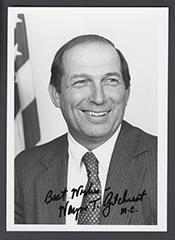
I thank the gentleman from Utah for yielding. I want to thank the gentleman from Maryland, the other gentleman from Maryland, for working on this project, the Gateways and Watertrails system. It is a…
I thank the gentleman from Utah for yielding.
I want to thank the gentleman from Maryland, the other gentleman from Maryland, for working on this project, the Gateways and Watertrails system. It is a system, Mr. Speaker, that provides, as the gentleman from Maryland described, public education about the ecology of the Chesapeake Bay and what an individual can do not only to enjoy the landscape, not only to explore and paddle the landscape, but to understand the landscape.
Now, a lot of discussion here recently has been about energy, fossil fuels, should we drill for more oil? The issue of the Gateways is about education. A quote from Norman Cousins, the editor of the Saturday Evening Post some 30 or 40 years ago, said, ``Knowledge is the solvent for danger.'' So let's focus on a little bit of information, knowledge. The United States can never become energy independent if it continues to be dependent on fossil fuel. There is simply not enough here. We peaked in the 1970s. Energy from fossil fuels has created the situation we now call ``climate change'' or ``global warming.'' Global warming creates a transition for the Chesapeake Bay. This is not a geologic transition. This is not a natural forces transition from a changing ecology. This is a human-forced transition for the Chesapeake Bay that will continue to degrade the water. What can we do about it? One of the things is a source of education, a source of knowledge.
The Gateways program involves the public in understanding some amazing things. Number one, the geology of the Chesapeake Bay Watershed. Why is the Chesapeake Bay here? Why is the Delmarva Peninsula here? An understanding of how geologic forces created this magnificent estuary over millions of years.
Number two, Gateways helps people understand the ecological evolution of the Chesapeake Bay. Why are there forests here? Why is there a whole range of song birds or water foul or marine life? It is a magnificent place unknown anywhere else on the continent but the Chesapeake Bay. The ecological evolution of the Chesapeake Bay.
And the other thing the Gateways program does is help us understand human history, when the first Native Americans got here about 10,000 years ago, to John Smith 400 years ago, to the transition that we see today in the Chesapeake Bay. The Gateways and Watertrails program is an educational program.
To understand the transition that the bay is now going through is not a geological change. It's not an ecological change. It's that human activity is not compatible with nature's design. And this program helps us understand those views so we can be a part of the solution and not part of the problem.
I urge my colleagues to vote for the bill.

Mr. Speaker, we are tasked with finding solutions that are innovative and multifaceted, to secure a better future for America. Part of that responsibility is ensuring that young Americans have access…
Mr. Speaker, we are tasked with finding solutions that are innovative and multifaceted, to secure a better future for America.
Part of that responsibility is ensuring that young Americans have access to safe, constructive environments to learn in.
H.R. 3021 will help give our children and grandchildren the sound, healthy classrooms they need and deserve. It is clear that our schools are aging and in need of repairs . . . repairs that must be made to allow students to focus on learning and reaching their full potential.
Not only will we be investing in future generations of Americans, we will provide thousands of much-needed, high-quality jobs.
With the bill before us today, we are taking steps that will help address so many of the challenges we face.
The improvements made to schools will encourage green building techniques and help reduce our greenhouse gas emissions. These standards will save school districts money on utilities for years to come.
In my district, the Natomas Unified School District, the state's only ``Climate Action Leader,'' recently received the Clean Air ``Government Award'' for its dedication to air quality and energy-saving techniques. It is innovative approaches like this that H.R. 3021 will encourage across the country.
I cannot help but think of my grandchildren, Anna and Robby; they are approaching school age, and I want them to be in a healthy environment that will enable them to reach their full potential.
I ask my colleagues to support the Rule and final passage of H.R. 3021.
The material previously referred to by Mr. Lincoln Diaz-Balart of Florida is as follows:
Amendment to H. Res. 1234 Offered by Mr. Lincoln Diaz-Balart of Florida
At the end of the resolution, add the following:
Sec. 3. Notwithstanding any other provision of this
resolution or the operation of the previous question, it
shall be in order to consider any amendment to the bill which
the proponent asserts, if enacted, would have the effect of
lowering the national average price per gallon of regular
unleaded gasoline. Such amendments shall be considered as
read, shall be debatable for thirty minutes equally divided
and controlled by the proponent and an opponent, shall not be
subject to amendment, and shall not be subject to a demand
for division of the question in the House or in the Committee
of the Whole. All points of order against such amendments are
waived except those arising under clause 9 of rule XXI. For
purposes of compliance with clause 9(a)(3) of rule XXI, a
statement submitted for printing in the Congressional Record
by the proponent of such amendment prior to its consideration
shall have the same effect as a statement actually printed.
Bill Text
4 versions available
        [Congressional Bills 110th Congress]
[From the U.S. Government Printing Office]
[H.R. 5540 Placed on Calendar Senate (PCS)]

Calendar No. 930
110th CONGRESS
2d Session
H. R. 5540

_______________________________________________________________________

IN THE SENATE OF THE UNITED STATES

June 6, 2008

Received

August 1, 2008

Read twice and placed on the calendar

_______________________________________________________________________

AN ACT

To amend the Chesapeake Bay Initiative Act of 1998 to provide for the
continuing authorization of the Chesapeake Bay Gateways and Watertrails
Network.

Be it enacted by the Senate and House of Representatives of the
United States of America in Congress assembled,

SECTION 1. SHORT TITLE.

This Act may be cited as the ``Chesapeake Bay Gateways and
Watertrails Network Continuing Authorization Act''.

SEC. 2. AUTHORIZATION OF APPROPRIATIONS.

Section 502 of the Chesapeake Bay Initiative Act of 1998 (16 U.S.C.
461 note; Public Law 105-312) is amending by striking subsection (c)
and inserting the following:
``(c) Authorization of Appropriations.--There are authorized to be
appropriated such sums as are necessary to carry out this section.''.

Passed the House of Representatives June 5, 2008.

Attest:

LORRAINE C. MILLER,

Clerk.
Calendar No. 930

110th CONGRESS

2d Session

H. R. 5540

_______________________________________________________________________

AN ACT

To amend the Chesapeake Bay Initiative Act of 1998 to provide for the
continuing authorization of the Chesapeake Bay Gateways and Watertrails
Network.

_______________________________________________________________________

August 1, 2008

Read twice and placed on the calendar