To extend for 5 years the EB-5 regional center pilot program, and for other purposes.
Legislative Activity
Stay on top of the latest movement without scrolling through every action
Read twice and referred to the Committee on the Judiciary.
August 1, 2008
View full timeline
Introduced in House
March 10, 2008
Referred to the House Committee on the Judiciary.
March 10, 2008
Referred to the Subcommittee on Immigration, Citizenship, Refugees, Border Security, and International Law.
March 11, 2008
Subcommittee Consideration and Mark-up Session Held.
March 12, 2008
Forwarded by Subcommittee to Full Committee by Voice Vote .
March 12, 2008
Reported by the Committee on Judiciary. H. Rept. 110-698.
June 5, 2008
Placed on the Union Calendar, Calendar No. 441.
June 5, 2008
Ms. Lofgren, Zoe moved to suspend the rules and pass the bill, as amended.
June 9, 2008 • 3:29 PM
Considered under suspension of the rules. (consideration: CR H5060-5063)
June 9, 2008 • 3:29 PM
DEBATE - The House proceeded with forty minutes of debate on H.R. 5569.
June 9, 2008 • 3:29 PM
Passed/agreed to in House: On motion to suspend the rules and pass the bill, as amended Agreed to by voice vote.(text: CR H5060-5061)
June 9, 2008 • 3:48 PM
On motion to suspend the rules and pass the bill, as amended Agreed to by voice vote. (text: CR H5060-5061)
June 9, 2008 • 3:48 PM
Motion to reconsider laid on the table Agreed to without objection.
June 9, 2008 • 3:48 PM
The title of the measure was amended. Agreed to without objection.
June 9, 2008 • 3:48 PM
Received in the Senate.
June 10, 2008
Read twice and referred to the Committee on the Judiciary.
August 1, 2008
Floor Debate
12 membersWhat members said about H.R. 5569 on the floor
 PJL
PJL JS
JS SK
SK JC
JC RM+7
RM+7
Floor Debate
12 membersWhat members said about H.R. 5569 on the floor
Mr. President, today the Senate is poised to confirm two more nominations for lifetime appointments to the Federal bench: Cathy Seibel for the Southern District of New York and Glenn T. Suddaby for…
Mr. President, today the Senate is poised to confirm two more nominations for lifetime appointments to the Federal bench: Cathy Seibel for the Southern District of New York and Glenn T. Suddaby for the Northern District of New York. These nominees each have the support of the New York Senators, who worked with the White House to identify a slate of consensus nominees. I thank both Senator Schumer and Senator Clinton for their work in connection with these nominees.
When these nominees are confirmed, that will bring the number of judicial nominees confirmed by the Senate during the slightly more than three years I have served as the Chairman of the Judiciary Committee to 158. Coincidentally, the number of President Bush's judicial nominees confirmed by the Senate during the almost four and one-half years of Republican control totaled 158.
I have always said that we would treat this President's nominees more fairly than Republicans treated President Clinton's. And we have. Indeed, we have matched the confirmation record that Republicans achieved for a President from their own party. We have not pocket filibustered more than 60 of this President's nominees. We are not going to return 17 circuit court nominees without action to this President as the Republican-led Senate did to President Clinton. We have not doubled the judicial vacancies and forced them above 100 nationwide, nor have we doubled the number of circuit court vacancies. To the contrary, we have cut judicial vacancies by more than half, and reduced circuit court vacancies by more than two-thirds from a high point of 32, to a low of just nine throughout all 13 Federal circuits.
The 100 nominations we confirmed in only 17 months in 2001 and 2002, while working with a most uncooperative White House, reduced the vacancies by 45 percent by the end of 2002. With 40 additional confirmations last year, and another 18 this year, the Senate under Democratic leadership has now confirmed 158 lifetime appointments to the Federal bench nominated by President Bush. Nearly half of the judicial nominees the Senate has confirmed while I have served as the chairman of the Judiciary Committee have filled vacancies classified by the Administrative Office of the Courts as judicial emergency vacancies. Eighteen of the 27 circuit court nominees confirmed while I have chaired the committee filled judicial emergency vacancies, including nine of the 10 circuit court nominees confirmed this Congress. This is another aspect of the problem created by Republicans that we have worked hard to improve. When President Bush took office there were 28 judicial emergency vacancies. Those have been reduced by more than half.
In the 2 full years that preceded my returning as chairman of the Judiciary Committee in 2007, with a Republican chairman and a Republican Senate majority working to confirm the judicial nominees of a Republican President, 54 nominations were confirmed. After the two confirmations today, we will reach 58 judicial confirmations for this Congress. Truth be told, President Bush's judicial nominees have been confirmed faster by the Democratic majority than by the previous Republican majority of the Senate.
Judicial vacancies have been reduced from 10 percent as we made the transition to the Bush administration to 4.5 percent today. I wish we could say the same about unemployment, the cost of gasoline, food prices, health care costs, about inflation and the national debt, but all those indicators have been moving in the wrong direction, as is consumer confidence and the percentage of Americans who see the country as on the wrong track.
Republican critics ignore the progress we have made on judicial vacancies. They also ignore the crisis that they had created by not considering circuit nominees in 1996, 1997 and 1998. They ignore the fact that they refused to confirm a single circuit nominee during the entire 1996 session. They ignore the fact that they returned 17 circuit court nominees without action to the White House in 2000. They ignore the public criticism of Chief Justice Rehnquist to their actions during those years. They ignore the fact that they were responsible for more than doubling circuit court vacancies during their pocket filibusters of Clinton nominees or that we have reduced those circuit court vacancies by more than two thirds.
In fact, as the Presidential elections in 2000 drew closer, and when the judicial vacancy rate stood at 7.2 percent, then-Judiciary Committee Chairman Orrin Hatch declared that ``There is and has been no judicial vacancy crisis,'' and that 7.2 percent was a ``rather low percentage of vacancies that shows the judiciary is not suffering from an overwhelming number of vacancies.'' As a result of Republican inaction, the vacancy rate continued to rise, reaching 10 percent when the Democrats took over the Senate majority in 2001.
Democrats have reversed course. We have cut circuit court vacancies by more than two-thirds, from a high of 32. With the confirmation of two nominees today, the judicial vacancy rate will be just 4.5 percent.
I have yet to hear praise from a single Republican for our work in lowering vacancies. I also have yet to hear in the Republican talking points any explanation for their actions during the 1996 congressional session, when the Republican Senate majority refused to allow the Senate to confirm even one circuit court judge. I have yet to hear explanations for why they did not proceed with the nominations of Bonnie Campbell, Allen Snyder and so many others.
I hope the American people will not witness another week in which Senate Republicans attempt to make a partisan, election-year issue out of the confirmation of judicial nominations. This is the one area where the numbers have actually improved during the Bush presidency while the life of hardworking Americans has only gotten more difficult. The Treasury Secretary has been quite sobering about the financial difficulties still ahead. Inflation is now on the rise, jobs are being lost, gas prices have skyrocketed, food prices have soared, health care is unaffordable and yet Republicans want come to the floor to pick a partisan fight about the pace of judicial confirmations while the Senate proceeds to confirm two more judges.
Americans have seen the unemployment rate rise to 5.5 percent and trillions of dollars in budget surplus have turned into trillions of dollars of debt. Last week General Motors announced layoffs. The annual budget deficit is in the hundreds of millions of dollars, the dollar has lost half its value, and the costs of the Iraq war and interest on the national debt amounts to $1.5 billion a day.
When President Bush took office, the price of gas was $1.42 a gallon. Today, it is over $4.00 a gallon. The housing crisis and mortgage crisis threatens the economy. The stock market dropped 2,000 points in the first six months of the year and went under 11,000.
Hardworking Americans trying to do the best they can for their families are more concerned about critical issues they face in their lives each day. They are concerned about affording to heat their homes this winter. They are concerned about gas prices that have skyrocketed so high they do not know how they will afford to drive to work. They are concerned about the steepest decline in home values in two decades. More and more Americans are affected by rising unemployment, with job losses for the first six consecutive months of this year tallying over 438,000. Americans are worried about soaring health care costs, rising health insurance costs, the rising costs of education and rising food prices. The partisan, election-year rhetoric over judicial nominations, at a time when judicial vacancies have been significantly reduced, is a reflection of misplaced priorities.
Our progress today in confirming two more nominations for lifetime appointments shows that when the President works with home State Senators to identify consensus, well-qualified nominees, we can make progress, even this late in an election year. I congratulate the nominees and their families on their confirmations today.
The Federal judiciary is the one arm of our Government that should never be political or politicized, regardless of who sits in the White House. I will continue in this Congress, and with a new President in the next Congress, to work with Senators from both sides of the aisle to ensure that the Federal judiciary remains independent and able to provide justice to all Americans, without fear or favor.
Last week the Senate Judiciary Committee was scheduled to consider a number of bipartisan measures. Several are important items on which Republicans had already delayed consideration since June. They include the bipartisan bill to reauthorize the Juvenile Justice and Delinquency Prevention Act, a bipartisan OPEN FOIA bill and the bipartisan William Wilberforce Trafficking Victims Protection Reauthorization Act. In addition, we had before us the Fairness in Nursing Home Arbitration Act, the Fugitive Information Networked Database Act, the Methamphetamine Production Prevention Act and the National Guard and Reservists Debt Relief Act.
I had hoped that last week we would be able to report these measures. A few words about one of them--the legislation to reauthorize the William Wilberforce Trafficking Victims Protection Act. This bill would strengthen our efforts to stop the abhorrent practice of human trafficking around the world. Our bill enhances protections for victims of these terrible crimes. Human trafficking is a modern-day form of slavery, involving victims who are forced, defrauded or coerced into sexual or labor exploitation. These practices continue to victimize hundreds of thousands around the world, mostly women and children, and we must do all that we can to be more effective in confronting this continuing problem. I thank Senator Biden for his leadership. Unfortunately, Republican partisan antics have gotten in the way of progress on this front and delayed the Judiciary Committee and the Senate from acting on this measure.
Rather than meet and work on the human trafficking bill and the others, a number of the Republican Senators who serve on the Judiciary Committee came to the Senate floor while Republicans objected to the committee meeting. That was too bad. It set back our legislative agenda.
Republicans previously boycotted business meetings for the month of February when we were trying to report judicial nominations. That only slowed our progress. Then, when we tried to expedite consideration of two circuit court nominations in May, they objected. Those judicial nominations were finally confirmed late in June.
I look forward to a time when Senators from the other side of the aisle return to work with us on the important legislative business of the Judiciary Committee and the Senate. It would be refreshing if they recognized the progress we have made on filling judicial vacancies.
When they do, when they show cooperation, when we are able to make progress on our legislative agenda, at that point I will be able to turn my attention from concentrating on that legislative agenda and consider, along with the majority leader, whether there are additional judicial nominees we might be able to consider and confirm this year. It will be difficult to do so, especially in connection with nominees recently received for whom we do not have an ABA peer review rating at this time.
Let me give you some flavor of how petty the obstructionism from Republicans has become. I introduced at the request of the Chief Justice a bill to extend authorization for the Supreme Court police to remain in operation, S. 3296. I have been trying to clear this measure for passage since June 19. Although our Ranking Republican on the Committee cosponsored, he has not been able to clear it on his side of the aisle.
I have been seeking for months to find a way to extend the EB-5 investor visa pilot program that brings benefits
not only to Vermont but to Pennsylvania and Iowa, and elsewhere. Authority for this worthwhile program that leads to investments here in the United States expires in September. My efforts to clear H.R. 5569, a bill to extend the program for 5 years, have been stymied by Republicans who insist on using this bill as a vehicle for other immigration-related matters and have ensnarled it in a series of competing concerns.
More broadly, the Judiciary Committee has worked throughout this Congress to advance the priorities of Americans. We have reported legislation to support local law enforcement to make our cities and towns safe from crime that has now gone back up after consistent declines in the 1990s, like the COPS Improvements Act, S. 368, and my bill to extend the Bulletproof Vest Partnership Grant Act, S. 2511. We have reported legislation to combat fraud and corruption, like the War Profiteering Prevention Act, S. 119, and the Public Corruption Prosecution Improvements Act, S. 1946. We have reported legislation to protect the civil rights and voting rights of Americans, like the Emmett Till Unsolved Civil Rights Crime Act, S. 535, and Senator Obama's Deceptive Practices and Voter Intimidation Prevention Act of 2007, S. 453. We have reported legislation to protect Americans' data privacy like my Personal Data Privacy and Security Act, S. 495. We have reported measures to provide the Federal judiciary with increased resources both in terms of salary restoration and additional judgeships, S. 1638 and S. 2774. We have reported intellectual property measures like the Shawn Bentley Orphan Works Act, S. 2913. And, of course, we have reported the bill to confront the OPEC cartel, NOPEC, S. 879. I look forward to a time when Republicans work with us on these matters instead of obstructing us at every turn.
Legislation with broad bipartisan support that I have managed to move through the Judiciary Committee has then been stalled on the Senate floor by the obstruction of a few Republicans. Of the bills that have been reported from the Judiciary Committee this Congress, Republicans have blocked legislation to support runaway and homeless young people, S. 2982; to help law enforcement cope with mentally ill offenders, S. 2304; to support the investigation and prosecution of civil rights era murders left unsolved for too long, S. 535; and to protect our children from the scourges of drugs, child pornography, and child exploitation, such as S. 1210, S. 1738 and S. 2344. I joined the Majority Leader in introducing a measure yesterday that combines some of these Committee- approved and House-passed bipartisan measures into one bill, S. 3297. These should have been consent items and already been considered and passed by the Senate.
The list goes on. I say, again, Republican obstructionists have blocked legislation to ensure that law enforcement officers can obtain bulletproof vests, to give much needed resources to State and local law enforcement, to break the grip of the OPEC cartel on oil prices, to prohibit war profiteering, to train prosecutors, and to teach children to use the internet safely, just to reiterate a few examples. And that is just legislation reported by the Judiciary Committee. Every Committee in the Senate has seen simple legislation intended to help the American people in difficult times stymied by Republican obstruction.
Republicans have become masters of true obstruction, boycotting business meetings of the Judiciary Committee and cutting short important hearings, including a hearing at which two courageous women from Pennsylvania were testifying about severe injuries they suffered to help us understand the plight of hardworking Americans whose legitimate grievances have been rejected by a pro-business Supreme Court. When Republicans obstructed a meeting last week where we could have made progress on reducing youth violence, protecting women and children from human trafficking, and helping those who serve our country to cope with unmanageable debt, that was just the latest example of a pattern that has become all too familiar.
Sadly, we have seen Republican obstructionism since the beginning of this Congress, with Republicans using filibuster after filibuster to thwart the will of the majority of the Senate from doing the business of the American people. Republican filibusters prevented Senate majorities from passing the climate change bill; the Employee Free Choice Act; the Lilly Ledbetter Fair Pay Act; the DC Voting Rights Act; the Renewable Fuels, Consumer Protection, and Energy Efficiency Act of 2007; the Renewable Energy and Job Creation Act of 2008; the Medicare Improvements for Patients and Providers Act of 2008; and the Consumer- First Energy Act.
These are critical pieces of legislation to address urgent priorities like the energy crisis, the environment, voting rights, health care, and fair wages for working men and women. All of them had the support of the majority of the Senate. And all were blocked by a minority of Republican Senators bent on preventing us from making progress. Republicans have now filibustered more than 80 pieces of legislation in this Congress. We can only imagine what we could have accomplished in this Congress with cooperation rather than obstruction.
This long list of priorities unaddressed because of the Republicans in Congress would be even longer if we were to include the many important bills President Bush has vetoed since the beginning of this Congress. This list includes legislation to fund stem cell research to fight debilitating and deadly diseases, to extend and expand the successful State Children's Health Insurance Program that would have provided health insurance to more of the millions of American children without it, to set a timetable for bringing American troops home from the disastrous war in Iraq, and to ban waterboarding and help restore America as a beacon for the rule of law.
The American people are going through increasingly difficult times, and their Congress should be working to make their lives better. Time is running short in this Congress. It is past time for Republicans to stop their foot stomping and work with us to get things done. That is what I have been trying to do throughout this Congress. I hope, despite their recent antics, that Republicans will reconsider and join with me to make progress on legislative matters of concern to the American people.
Mr. Presdient, earlier this week, I joined the majority leader in the introduction of S. 3297, the Advancing America's Priorities Act. The majority leader selected 35 legislative items from the…
Mr. Presdient, earlier this week, I joined the majority leader in the introduction of S. 3297, the Advancing America's Priorities Act. The majority leader selected 35 legislative items from the jurisdiction of seven Senate committees, including eight bills from that of the Senate Judiciary Committee, for this effort. These are all measures with bipartisan support and, we believe, the support of a strong bipartisan majority of the Senate. I have moved several through the Judiciary Committee, and several have already passed the House. All have the support of all Democratic Senators, and all were cleared for unanimous Senate passage, but each has been stalled on the Senate floor by Republican objection.
One key bill included in this package is the Emmett Till Unsolved Civil Rights Crime Act. I thank Senator Dodd and Congressman Lewis for their tireless work on this bill over the last 4 years. It will strengthen the ability of the Federal Government to investigate and prosecute unsolved murders from the civil rights era. It would create new cold case units in the Justice Department and FBI dedicated to investigating and prosecuting unsolved cases involving violations of criminal civil rights statutes which resulted in death and occurred before January 1, 1970. The Senate legislation was introduced on February 8, 2007. I was proud to cosponsor Senator Dodd's bill. The Judiciary Committee reported it by unanimous consent as amended on June 20, 2007, more than a year ago. The House legislation passed the House on June 20, 2007, more than a year ago, by a vote of 422 to 2. Its Republican cosponsors include Senator Cochran,
Senator Hatch, Senator Alexander, and Senator Cornyn.
Yesterday I had the privilege of meeting Emmett Till's cousin, Simeon Wright, who was with him that terrible night. The brutal killing of Emmett Till galvanized this Nation. I want to acknowledge Mr. Wright's courage and his commitment to fight for justice for all these years.
The primary purpose of the Till bill is to track down those whose violent acts during a period of national turmoil remain unpunished. By passing this legislation, we honor Emmett Till and all those who sacrificed their lives advancing civil rights. It is disgraceful that it has taken us so long to take this basic step to pursue justice too long delayed. It is incredible to me that some continue to obstruct these efforts. It reminds me of those who so adamantly opposed a national holiday to recognize the contributions of Dr. Martin Luther King, Jr., and the progress this country has made toward equal justice.
Another important piece of legislation in this bill is the reauthorization of the Runaway and Homeless Youth Act. Many Vermonters have told me how much that act is needed to help young people in Vermont and around the country. I held a hearing in Rutland this year on crime in small cities and towns, which emphasized the need for programs to help young people in difficult circumstances, and held another here in Washington on this measure before the Judiciary Committee reported it in April. The companion House bill passed in June.
In addition, the eight Judiciary Committee related bills include several concerning child pornography, exploitation and drugs. The Effective Child Pornography Prosecution Act passed the House 409 to 0 last November; the Enhancing the Effective Prosecution of Child Pornography provision passed the House 416 to 0 last November; the PROTECT Our Children Act passed the House 415 to 2 last November; the Drug Endangered Children Act passed the House last September 389 to 4. All of these bills have been cleared by all Democratic Senators.
Thus, the Judiciary Committee components in S. 3297 are all measures that should have passed the Senate long ago. Two of the eight have Republican Senators as their lead sponsors. Others have Republican cosponsors.
People are rightly worried about keeping their communities safe and protecting their children. The Judiciary Committee has worked throughout this Congress to advance these priorities of Americans. Sadly, these important efforts have been obstructed by Republican objections. I hope that all Senators will join together tomorrow to pass S. 3297 without further delay.
The bill we will consider tomorrow contains eight Judiciary Committee-related pieces. There were selected from many more bills that have been reported favorably by the Senate Judiciary Committee and that have passed the House. All these bills have the support of every Democratic Senator, and it is Republican objections, usually anonymous objections, that are keeping them from passing.
Let me mention some of the others:
S. 879, No Oil Producing and Exporting Cartels Act of 2007--this bill would make it illegal for any foreign state or any instrumentality or agent of a foreign state to act collectively with another foreign state to limit the production, set the price, or take any other action to restrain trade of oil, natural gas, or any petroleum product. The actions of OPEC to limit production of oil, natural gas, and other petroleum products result in higher prices of crude oil and, thus, gasoline in the United States. These actions are having a harmful effect on American consumers. This legislation will make clear that the actions of nations and their agents to limit supply and fix prices of oil, natural gas, and other petroleum products to affect the U.S. market violates U.S. antitrust law, and it will authorize the Attorney General to enforce antitrust law against such nations and prevent technical legal doctrines such as sovereign immunity and act of state from preventing actions for redress.
S. 368, COPS Improvements Act of 2007--this bill would reauthorize and improve the Department of Justice's Office of Community Oriented Policing Services, COPS. Since 1994, the programs created by the COPS initiative have helped drive down crime rates. The COPS Program would restore vital programs that have been cut at a time when our law enforcement officers need it most. S. 368 would authorize $600 million to hire officers to engage in community policing, intelligence gathering and antiterror initiatives, and to serve as school resource officers. It would authorize $350 million per year for technology grants and $200 million per year to help local district attorneys hire community prosecutors. Also, it would establish the COPS office as an entity within the Department of Justice to carry out these functions and activities under the COPS Program in order to eliminate duplication of efforts.
S. 119/H.R. 400, War Profiteering Prevention Act of 2007--this legislation would strengthen the tools available to Federal law enforcement to combat contracting fraud during times of war, military action, or relief or reconstruction activities. It would also extend extraterritorial jurisdiction in an attempt to reach fraudulent conduct wherever it occurs. The bill would create a new criminal fraud offense in title 18 of the U.S. Code to prohibit fraudulent acts involving the provision of goods or services in connection with a war, military action, or relief or reconstruction activities.
S. 185, Habeas Corpus Restoration Act of 2007--this bill would repeal provisions of the Military Commissions Act of 2006 that eliminated the jurisdiction of any court to hear or consider applications for a writ of habeas corpus filed by aliens who have been determined by the United States to have been properly detained as enemy combatants. Passage of this bill would restore the basic and essential right to challenge arbitrary detention by the Government to noncitizens, including the 12 million lawful permanent residents currently in this country, who under current law may be held forever with no recourse to challenge their detention in court. This legislation will contribute to renewed global respect for American values and the rule of law.
S. 2511, a bill to amend the grant program for law enforcement armor vests to provide for a waiver of or reduction in the matching funds requirement in the case of fiscal hardship--this bill would amend the Omnibus Crime Control and Safe Streets Act of 1968 to authorize the Director of the Bureau of Justice Assistance to waive, in whole or in part, matching fund requirements applicable to the grant program for the purchase of armor vests for law enforcement officers.
S. 2344, Internet Safety Education Act of 2007--this bill would create a competitive grant program for eligible organizations to carry out free, age-appropriate programs that promote Internet safety for children. This would give educators and parents the tools necessary to teach proper online interactions and promote safe Internet usage to their students and children in an age-appropriate manner.
H.R. 3095, to amend the Adam Walsh Child Protection and Safety Act of 2006 to modify a deadline relating to a certain election by Indian tribes--this bipartisan bill would provide Indian tribes a 1-year extension in which to decide how to comply with the requirements of the Adam Walsh Child Protection and Safety Act of 2006. The Adam Walsh Act enacted new requirements for States and Indian tribes to maintain sex offender registration information, post such information on the Internet, and share such information among States and other Indian tribes. The Justice Department proposed detailed regulations for States and Indian tribes to comply with the Adam Walsh Act, but those regulations are not yet final. The Indian tribes cannot make an informed decision on how to comply with the act until those regulations are final. This 1-year extension would give Indian tribes sufficient time to make appropriate choices.
S. 267/H.R. 545, Native American Methamphetamine Enforcement and Treatment Act--this bill would ensure that Indian tribes are able to apply for grant programs authorized by the Combat Methamphetamine Epidemic Act. When Congress passed the Combat Methamphetamine Epidemic Act, tribes were unintentionally left out as eligible applicants in some of these programs. This bill would clarify that
territories and Indian communities are eligible to receive the resources they need to fight methamphetamine use.
S. 877, Controlling the Abuse of Prescriptions Act of 2007--this bill seeks to crack down on performance-enhancing drugs by putting human growth hormone on the same list of controlled substances as anabolic steroids. Classifying human growth hormone, HGH, as a schedule III controlled substance would subject the drug to more Government regulation and stiffer penalties for illegal distribution.
S. 1027, PACT Act--this bill would help combat cigarette trafficking by updating existing antitrafficking laws and introducing new tools to combat illegal remote sales, such as those conducted over the Internet. The legislation closes loopholes in current tobacco trafficking laws, enhances penalties for violations, and provides law enforcement with new tools to combat the innovative new methods being used by cigarette traffickers to distribute their products. By strengthening criminal laws governing cigarette trafficking and empowering Federal, State, and local law enforcement with the powers to investigate and prosecute the cigarette traffickers of the 21st century, the PACT Act can help disrupt terrorist groups and other organized criminal enterprises.
S. 627, Safe Babies Act of 2007--this bill would amend the Juvenile Justice and Delinquency Prevention Act of 1974 to require the Office of Juvenile Justice and Delinquency Prevention to award a grant to a national early childhood development organization to establish a National Court Teams Resource Center. The goals of the Center would be to promote the well-being of maltreated infants and toddlers and their families, help prevent the recurrence of abuse and neglect of children, and promote timely reunification of families.
H.R. 5569, to extend for 5 years the EB-5 Regional Center Pilot Program, and for other purposes--this bill would extend the EB-5 Regional Center Program for 5 years. This program allows entrepreneurs from around the country to apply for Regional Center designation with the U.S. Citizenship and Immigration Services, which in turn allows project managers to attract foreign investment to discrete projects within specified geographic areas, many of which are rural areas in need of economic stimulation. Over the years, this program has resulted in foreign capital investment of billions of dollars and the creation of thousands of jobs in American communities. This important program is set to expire on September 30, 2008, and its reauthorization is critical for the many Americans who depend upon this program to make positive economic changes to their communities.
S. 442, John R. Justice Prosecutors and Defenders Incentive Act of 2007--this bill would establish a student loan repayment program for qualified attorneys who agree to remain employed for at least 3 years in certain public sector employment. This targeted student loan repayment assistance program will bolster the ranks of attorneys in the criminal justice system, enhancing the quality of that system and the public's confidence in it.
S. 3296, to extend the authority of the U.S. Supreme Court Police to protect court officials off the Supreme Court grounds and change the title of the Administrative Assistant to the Chief Justice--this bill would extend for 5 years the authority of the U.S. Supreme Court Police to protect Supreme Court Justices when they leave the Supreme Court grounds. In January of this year, the Court Security Improvement Act was signed into law to authorize additional resources to protect Federal judges, personnel, and courthouses. This additional legislation would extend the authority of the U.S. Supreme Court Police to protect the Supreme Court Justices on and off Court grounds. It would also change the title of the Chief Justice's senior advisor from ``Administrative Assistant'' to ``Counselor.''
S. 3106, a bill to amend chapter 13 of title 17, United States Code, relating to the vessel hull design protection, to clarify the definitions of a hull and a deck--this bill would give the Department of Defense full assurance that Government and defense designs will not be subject to unwarranted restrictions. In 1998, Congress passed the Vessel Hull Design Protection Act to recognize the significant time, effort, and innovation that figure into ship design. Recent action in the courts has made it clear that in order to be effective, this law needs to be clarified and refined. This bill does exactly that by clarifying the definition of ``hull'' and ``deck,'' to ensure that the intellectual property rights of vessel hull designers would be protected.
H.R. 6344, Responsive Government Act of 2008--this bill would provide the Federal courts and the Director of the Patent and Trademark Office, PTO, with needed emergency authority to delay judicial proceedings or statutory deadlines in the event of a natural disaster or other emergency situation which makes it impractical for parties, including the United States, to comply with certain filing conditions or to protect the rights and privileges of people affected by certain emergencies or a major disaster. We have recently observed how the ravages of natural disasters disrupt the lives of our fellow citizens, which can impede the ability to comply with strict statutory deadlines. Thus the Responsive Government Act provides critical flexibility to the courts and the PTO to help ameliorate the practical difficulties caused by these emergency situations.
S. 621, Wartime Treatment Study Act--this bill would establish two factfinding commissions to supplement the work done in the 1980s by the Commission on Wartime Relocation and Internment of Civilians, which studied the treatment of Japanese Americans during World War II. The act would create one commission to review the U.S. Government's treatment of German Americans, Italian Americans, and European Latin Americans during World War II, and another commission to review the U.S. Government's treatment of Jewish refugees fleeing Nazi persecution during World War II.
S. 2942, a bill to authorize funding for the National Advocacy Center--this bill would authorize the National District Attorneys Association to use the National Advocacy Center in Columbia, SC, for a national training program to improve the professional skills of State and local prosecutors and to enhance the ability of Federal, State, and local prosecutors to work together.
I hope that those Republican Senators who are holding up these measures will work with me by coming forward and letting me know what it is in the bill that they find objectionable. That way, we might be able to work something out to accommodate them. But when they object anonymously and do not come forward to work with us, it seems they are only interested in obstruction.
Mr. President, I will offer something at some point. There is not a Democrat here. I am not trying to pull a fast one on anybody. I understand there is an objection to the bipartisan agreement called…
Mr. President, I will offer something at some point. There is not a Democrat here. I am not trying to pull a fast one on anybody. I understand there is an objection to the bipartisan agreement called the Legal Immigration Extension Act of 2008 by one, perhaps, Senator. I want to share some thoughts about that and how we got where we are today.
There are four pieces of legislation that are expiring or are about to expire. After a good bit of work in the Senate Judiciary Committee, we reached an accord that we would not offer any changes in immigration law before we try to recess this year. A lot of us have some real firm views about some things that need to be done, but everybody has basically agreed not to push that. But it is important that a number of things get passed. The most important thing that needs to be passed-- and it would be unthinkable were it not to pass--would be the extension of the E-verify program.
It is a voluntary Web-based system operated by the Department of Homeland Security, in partnership with the Social Security Administration. It allows participating employers to electronically verify the employment eligibility of people they would hire, to see if they are presenting a legitimate Social Security number.
More than 84,000 employers voluntarily participate in E-verify and we would get--get this--a thousand new enrollments by employers each week. It is growing in popularity. Because it was a limited program, it is set to expire in November of this year. So the agreed-upon legislation would be to extend the program for 5 years. I note that this program, under the Kennedy-McCain bill, and the subsequent comprehensive bill that was offered on the
floor, which was voted down, would have made E-verify mandatory on all employers. This does not do that. This just keeps it as it is.
Presumably, we are going to have to have a real serious talk about what to do next year. Also in the package I just mentioned would be an extension of the ED-5 regional center program. This is a program that says if someone comes to America--and it has been in effect since 1990--and they are willing to invest $1 million in hiring at least 10 Americans, they would be able to get a visa. That program is set to expire, and we have agreed that it would continue for 5 years--not be permanent, but it would be extended for 5 years. It is an additional group of people on top of the 1 million or so we allow in the country every year. It is an additional group on top of that.
Then there is Senator Conrad's 30 J-1 visa program. Senator Conrad, in 1994, passed a provision that would allow foreign medical graduates to waive the mandatory return to their foreign residence, and if they were going to practice in a State for 3 years before they return to their home country, they could stay here. Many States have found that to be an advantage.
Again, that is on top of the others. I am a little bit concerned that every time we do one of these programs it is just on top. We are not choosing and prioritizing the people who would best flourish in America, but we are just adding on top. But I have agreed to go along with that and extend that program for 5 years.
There is also the nonminister religious worker visa program. It was passed in 1990, and it allows up to 5,000 workers on top of the people who are already able to come here and be a part of America, and people believe that should be extended. I am prepared to agree to that as part of the package. So that would be what we would do there.
Those were the pieces of legislation that Senator Leahy and, I think, the entire Judiciary Committee agreed that we should move forward on.
Now, let me mention why the E-verify program is critical.
I have to say to my colleagues that I cannot agree and this Congress and this Senate should not agree to an additional expansion of immigrants into this country as a price to continue the current law. If we are going to do that, then we need to have a full debate about immigration and a full debate about the numbers that should be admitted, and properly so, into our country, and what standards should be utilized. That is the situation we are facing.
E-verify, as included in this bipartisan package, would not be changed in any way. It will remain the program it is today, but it expires on November 30 of this year. It was originally established in 1996, and it must not be allowed to expire. If this Congress allows E- verify to expire, then we will have made a statement to this Nation that the one system that is working today and could be expanded in the future to create a lawful system of immigration is being abandoned. It would rightly cause every American who has been hearing Members of the Senate and the House promising to do something about restoring the rule of law to immigration--they would know we were not serious at all. They would know this is one more flimflam that would be carried out.
I feel very strongly about this issue. The total number of users in corporations today are 84,000, representing 438,985 hiring sites. It is being used quite a bit today in a voluntary fashion.
So far in 2008, there have been over 5.8 million queries run through the system compared to a total of 3.2 million in fiscal year 2007. If you do not want the law enforced, that makes you nervous. Look, it has increased maybe 50 percent in 1 year. More and more people are using it. It is having some sort of impact in the country. If you want the lawlessness to continue, you don't want E-verify to be extended. The growth now continues at 1,000 new users and participants each week.
More and more people are finding it to be a good system. It is voluntary. Companies are finding it works, and it is not burdensome. It helps deter the use of fraudulent documents. Businesses have a difficult time examining documents. They are not document examiners. They are concerned if they deny somebody without a good basis they may sue them. If they don't deny somebody, the Government might fuss at them. This is a way they can do a quick check to determine whether someone is in the country legally.
Both in the 2006 and 2007 comprehensive immigration legislation, this proposal, as I said, would have been made mandatory. However, the legislation we are talking about today certainly is not that; it is only a temporary extension of the existing program. I want to make that clear.
No system is perfect, but we have invested millions of dollars to improve this system. Many of the kinks have been worked out. The system, I think, could and should be enhanced substantially, and I would like to see it made better, but by all means it should not be killed. We must not let it expire. The employers are relying on it. We must not pull the rug out from under them and undermine the rule of law.
To give a brief background on the E-verify system, the Immigration Reform Act of 1986 made it unlawful for employers to knowingly hire or employ aliens who are not eligible to work in the United States. It required employers to examine the identity and work eligibility documents of all new employees.
Employers are required to participate in a paper-based employment eligibility verification system, commonly referred to as the I-9 system, in which they examine documents presented by the newly hired workers to verify identity and work eligibility and to complete and retain I-9 forms.
Under the current law, if the documents provided by an employee reasonably appear on their face to be genuine, the employer has met his document review obligation. However, the easy availability of counterfeit documents and fake identification has made this a mockery of law. It is not working.
In 1996, Congress authorized a basic pilot program to help employers verify the eligibility of their workers. Participants would verify a new hire's employment authorization through the Social Security Administration and, if necessary, through the Department of Homeland Security databases.
The basic pilot of E-verify was authorized in five States until an expansion of the program was agreed to by Congress in 2003. Now all States and all employers can take advantage of this voluntary and free program.
Let me give some facts on the statistics. There has been a lot of concern that the program does not work fairly. I dispute that most strongly. Mr. President, 94.5 percent of individuals whose numbers are checked are authorized to go to work. There is not a problem. It is done routinely within 3 seconds. One-half of 1 percent are final nonconfirmations. That is, they are identified as not being eligible to work right off the bat. So an employer should not hire them and could commit an offense if they do. Five percent come out of the computer check as tentative nonconfirmations. If a person has that happen to them, they have an opportunity to step forward and show that the computer is wrong and find out what the problem is and fix it. However, the facts are that the vast majority of people who are shown to be tentative nonconfirmations do not contest the matter. What that indicates is they know they are not legal, they know they are not entitled to go to work, and they don't contest it, which proves, I think, that the system is working.
President Bush's Executive order requires contractors of the Federal Government to use the system. It is only right that the Government do business with companies that are not violating our immigration laws. We don't need to let somebody bid on a contract and submit a low bid because they are able to use low-cost illegal labor and defeat the bid of a legitimate American contractor who is using legitimate labor, paying insurance, paying retirement benefits, paying decent wages.
I have had a personal example in the last few weeks in which a businessman told me his company has been losing bids to an out-of-State corporation. This corporation just appeared. He is convinced, and there is evidence apparently, that the corporation is using large numbers of illegal workers, and he cannot win any bids. He said: My people have been working for me for 10 and 15 years. I pay them good wages and good benefits. I want to keep them.
I cannot compete. What are you going to do about it? This is one way.
States are on board with the E-verify, and they are beginning to take a look at it. In fact, many of them are encouraging their businesses to use it. Arizona, Arkansas, Colorado, Idaho, Minnesota, Mississippi, Missouri, North Carolina, Pennsylvania, Rhode Island, South Carolina, Tennessee, Utah, and some others, have passed legislation requiring either explicitly or implicitly that certain employers within those States participate with E-verify.
On Wednesday of this week, the Ninth Circuit, the most liberal circuit in the country and the most favorable circuit to----
Mr. President, I ask for 1 additional minute.
The Ninth Circuit upheld an employer law in Arizona that revokes a business license of employers caught knowingly hiring illegal immigrants. Businesses in that State do rely on the E-verify program. Killing this program would undermine their law. This is the right thing for us to do.
It is not possible for us at this late date, in light of the agreement we have reached, to have Members of the Senate ask for an expansion, a dramatic expansion of a half a million people to come into our country as a price that must be paid to extend E-verify. That is my concern.
Mr. President, I ask unanimous consent that the Senate proceed to the immediate consideration of Calendar No. 875, S. 3257; that the bill be read a third time and passed, the motion to reconsider be laid upon the table; and that any statements relating to the bill be printed in the Record.
Mr. President, reclaiming the floor under the regular order.
I will be glad to share with the Senator my thoughts about it. The House did pass it 407 to 2, I believe. We are not expressing any pride of authorship. Will the Senator accept the bill as passed by the House? I think we can perhaps do that and we can reach an agreement. Just accept the bill passed by the House.
Mr. President, I ask unanimous consent for an additional 5 minutes.
I would be pleased to modify and ask unanimous consent that the Senator from New Jersey be recognized after my 5 minutes.
Mr. President, I thank Senator Menendez for his courtesy, and I think we have an opportunity to reach an agreement. On the House version there are some things he says he likes better than the bill we agreed on in our committee, which I think passed our committee unanimously here in the Senate, but I would be prepared to go forward with that.
I urge my colleague from New Jersey to recognize the proposal he is making would add about 550,000 more people. It would allow that many more to enter the country on a legal basis. We have a million now who enter our country each year, and this would be a huge increase--I think a one-time increase--but it is a huge increase and it is not acceptable. We had sort of reached a stalemate last year when the American people rejected the comprehensive bill. They rang our phones off the hooks. The switchboard of the Senate shut down. There was a general recognition that we needed to do an enforcement system before we started granting amnesty and expanding immigration. That was, I think, a pretty national sentiment. Even Senator McCain, who proposed the legislation, stated that the American people, he understands now, expect us to create a lawful system before we start expanding the system we have and giving amnesty to those who violated the law.
This is a big change from what the Senator has been proposing. I submit that the choice is simple. We will either go forward with the agreement that we reached in committee, without the changes Senator Menendez offers, or we will have to have a real debate. And that would be all right with me, but I don't think it is what our leadership desires at this point in time.
So I say that I would be delighted to continue to discuss this with Senator Menendez, but I feel pretty firmly, I feel very firmly that although I could accept, I am confident, the House version that he has made some comments about, I cannot accept a major alteration of existing immigration policy because that is not the right way for us to go at this point.
It is something I guess we are going to have to talk about next year. I see no alternative to ignoring it any longer than next year. It is time for this Senate to get busy and to create a system that ends the mockery that exists for our legal system today and creates a lawful system that will serve our national interest.
Mr. President, I yield the floor.
Mr. Speaker, I yield myself so much time as I may consume. Mr. Speaker, the investor visa program is designed to attract entrepreneurial talent and capital to the United States and to create American…
Mr. Speaker, I yield myself so much time as I may consume.
Mr. Speaker, the investor visa program is designed to attract entrepreneurial talent and capital to the United States and to create American jobs. Under this program, permanent resident visas are available each year to aliens who establish a new business in the United States and invest between $500,000 and $1 million in the business and eventually create at least 10 full-time jobs for American workers.
Once the Department of Homeland Security approves an alien business plan, the alien receives conditional permanent residence status. Two years later, the Department of Homeland Security determines whether the above requirements have, in fact, been met. If they have, the alien receives permanent residence.
To further encourage economic development, back in 1993, Congress created a temporary pilot program that set aside 3,000 investor visas each year for aliens who invested at least $500,000 in designated regional centers.
A regional center is any economic unit, public or private, which is involved with the promotion of economic growth, including increased export sales or improved regional productivity or job creation or increased domestic or capital investment.
Further, a regional center shall have jurisdiction over a limited geographical area which shall be described in the proposal and consistent with the purpose of concentrating pooled investment in defined economic zones.
The establishment of a regional center may be based on jobs that will be created, directly or indirectly, as a result of such capital investments and the other positive economic effects such capital investments will have.
I should acknowledge, Mr. Speaker, that one of the operating pilot projects is the Iowa New Farm Family Project, under which host communities are inviting farm families to establish modern dairy farms in Iowa.
And according to Iowa State University, which is our resident authority on the subject matter, ``The project has the potential to enrich Iowa communities with young families who establish value-added agricultural businesses . . . and foster healthy economic development . . . The . . . project,'' which is the Iowa New Farm Family Project, Mr. Speaker, ``creates opportunities to increase the population of rural communities, support agriculture, expand value-added agriculture, and maintain Iowa's existing dairy processing industry.'' That's as described by Iowa State University, the Iowa New Farm Family Project.
I want to point out that it has been successful, and it's not just agriculture. It can be urban, too, depending on the region and the zone as it's defined. It has been quite helpful to us in Iowa, and I am grateful for the initiatives that have been taken by Members of this House, Members of the Senate who have not just reached out in support of this legislation but reached out to individuals and helped pave the way through the bureaucratic nightmare to get investors to come into the United States and establish themselves here, where often they will find their economic opportunities have been dried up because of, let's say, capital exchange or regulation.
It happens to be the case with our dutch dairy families that come in, that the regulations have gotten so heavy in The Netherlands that they want to continue their skill, their family tradition.
I note that the individual that stood at this particular microphone ahead of me was the gentleman from California who has a dairy tradition in his family, and you look back through generations. This establishes a generational linkage, Mr. Speaker, that I'm very grateful for, and it comes at a particularly good time, especially in the Midwest where we are a center for renewable energy.
Some 6 or 7 years ago, we had almost no industry to produce ethanol, and yet it began back in about 1978 and it began in my neighborhood in my region. And as the first gallon of ethanol was pumped, it became part of an alternative fuel that had been initiated in the late 1970s, came to fruition about 6 or 7 years ago, and since the time I've come to Congress, it has built such an
industry in my region that we now, the Fifth District of Iowa, are the number one renewable energy producing congressional district in America out of all 435.
Because we have the ethanol industry in Iowa, it has been very helpful to our dairy farmers because a byproduct of corn ethanol is the dried distiller strain, or the mash if it comes in a wet form. And the dairy farms have been able to utilize this, as well as anyone has, and it's added value to all of our feed. It's added value to our rough feed, and it's provided a high quality feed which makes it more attractive for our dairy producers to move into the region.
So, the pressure that we're under today with $4 gas, and, by the way, I just happened to check a receipt here, and I paid $141 for a tank of gas, $141.52 on Saturday, Mr. Speaker. That's enough money to put into a gas tank, and that was at $3.85. The folks on the west coast that are over $4 a gallon feel this.
But what we've done is created a renewable energy industry in the Midwest to help take on some of that burden of providing energy for America. And when we do that, and as of the 2007 crop it hasn't really brought forward the food versus fuel argument. We have produced more corn than ever before, exported more corn than ever before, and still left more corn for domestic consumption than ever before, and we have produced over 9 billion gallons of ethanol. And the byproduct of that 9 billion, you get about a third of the weight of corn out into ethanol. You get a third of the weight of corn that goes into feed for these dairy cows, for example, and about a third of it goes off in CO2. That's the simple breakdown, which I'll go into more detail with perhaps a Special Order that I can get into the details, Mr. Speaker.
But I want to point out that we need these dairy farmers in Iowa. The energy situation is actually a plus because $4 gas holds up the price of corn and holds up the price for ethanol and helps make these systems work, and they're feeding the byproduct in a fashion that's producing more milk in the Midwest. We are still today a net importer of milk in a rural State like Iowa. So we can use some more.
But the regional center program expires in September. The bill will extend the program an additional 5 years. I think this is a very valuable program, and I support the passage of this bill.
I reserve the balance of my time.
Mr. Speaker, I yield myself so much time as I may consume.
Mr. Speaker, I want to pick up on the point made by the gentlelady from California about this is, of course, not by any means a complete solution to the immigration circumstances, but we agree on some of these points, and on this point of attracting investors to the United States who will invest in businesses that create jobs and create wealth, more importantly create wealth. Without the creation of wealth, there's no money to pay the wages. Companies have to make money. It takes capital of course and it takes labor, it takes ideas, it takes energy, it takes a free market environment and a low regulatory environment. The United States looks better than some of these other countries in the world.
This sends the right message here today that this Congress is interested in opening up and laying out the welcome mat, at least in this specific case, where we ask investors to come into the United States under this EB-5 program.
Then I would add that there are other interests that we at least philosophically agree on, and one of those is highly skilled immigrants coming into the United States and those that are highly educated. When we can do the calculation on what kind of return we get from someone who comes into the United States as a legal immigrant to work here, to invest here, to start and run a business here, and we can see what they will do from a prosperity perspective, what their contribution will be to the economy and to the society, there are many records that help support that.
What we do see, though, Mr. Speaker, is that between 89 and 93 percent of the legal immigration in America isn't based upon merit like this program is.
Most of it is based on familial connections, who are you related to, as opposed to what can you do for the United States of America?
And I have said for years, we need an immigration policy that's designed to enhance the economic, the social, and the cultural well- being of the United States of America. Every Nation has to have an immigration policy that is for them. And we held a hearing a year or two ago about the point system that some of the countries have established. Canada has one established; the United kingdom is implementing a point system; New Zealand has one; and I believe Australia is looking at one. Those countries come to mind, where they give certain points for certain categories that demonstrate how a person can contribute to society.
For example, higher education is one category that offers significant merit. The next one is job skills; so that's earning capacity. Another one is language skills, which says how easily they will be able to assimilate in a society. It's not a barrier not having the language, but it's easier to assimilate, of course, if you are fluent in the language of the host country.
And another component is youth. If we bring people in here that are 65 years old, that qualify right away for Social Security and Medicare, of course they're not going to be contributing to our economy. And so I plugged myself into the Canadian equation and found out--I don't think the welcome mat is open for me in Canada because I'm a little over the hill, Mr. Speaker.
Youth is a big, important thing because, if you come in at age 22 with a college education, you can contribute to the economy for, let's just say, 43 years before you retire. So youth is an important criteria, as is education, as is job skills, as are language skills. These things are all things that a wise country should reach out for and craft an immigration policy that will enhance the economic, the social, and the cultural well-being of the United States of America, where 89-93 percent of our legal immigrants are not measured that way; about seven to 11 percent are measured that way.
This is a measure on merit. It is strictly a capital investment, and then meeting the other criteria about establishing the jobs in the business. But I fully support it. It is a bipartisan effort. And it is something that we agree on the theme and the philosophy. I wanted to point out that I believe that we need to set a hard cap on our overall immigration, and then start to shift within those visa allotments so that we get a higher percentage of merit coming in legally into the United States. And of course control the border, stop the bleeding there; none of this matters unless we can do that, Mr. Speaker.
With that, Mr. Speaker, I yield back the balance of my time.
Mr. President, earlier the majority leader came to the floor and propounded a unanimous consent request on the tax extenders package, and I told him that while I supported the legislation, there are…
Mr. President, earlier the majority leader came to the floor and propounded a unanimous consent request on the tax extenders package, and I told him that while I supported the legislation, there are a lot of good things in the bill, I still had some concerns about the disparate treatment of the State of Texas, especially related to Hurricane Ike.
I am pleased to report that as a result of discussions with the Finance Committee--Senator Grassley, Senator Baucus, and their staff--I believe we have achieved our goal of getting fair treatment for the State and the victims of Hurricane Ike. I wanted to come to the floor and express my gratitude to Senator Baucus and Senator Grassley. We are reviewing the final language, but subject to that, I think, as far as I am concerned, there is no objection to proceeding to the bill.
As I toured the hurricane-damaged area last weekend----
Mr. President, I appreciate the generous comments of the distinguished chairman of the Finance Committee. I especially enjoyed the part where he said we may come back later for more once we have been able to do further assessments. That is an important part of the rationale for agreement on this bill. We understand we can't do everything that needs to be done in this bill because the hurricane only hit this last weekend. There are a lot of people who have yet to be able to get back to their homes, a lot of folks without power, a lot of damage that is ongoing that cannot be fully calculated.
I had the chance, when traveling around the damaged area, to witness the destructive capacity of this huge hurricane and hear from a lot of my constituents, a lot of displaced Texans who were trying to find the necessities of life, including food, water, and shelter. Of course, they were very anxious to know about their homes, whether they would be able to return home, when they would be able to return home, and what they would find when they got there.
I appreciate that the chairman of the Finance Committee has included in the extenders package things such as bonus depreciation and expensing. These may seem like arcane subjects, but they actually mean a lot. They will mean a lot to the people of my State when it comes to rebuilding and getting back on their feet and getting back to work.
I understand the unique circumstances we find ourselves in and the need to get the extenders package passed, which, as I said earlier, I support. I offer my congratulations to Senator Cantwell, who is on the floor, and Senator Ensign for their leadership. They have been working hard and long at trying to get this done, and I know we are almost over the goal line.
Included in the package is an extension of the State and local sales tax deduction. This is something that is important to my State and to the other States that do not have an income tax. Because, of course, you can deduct your Federal income tax from your--or your State income tax from your Federal income tax, but if you don't have a State income tax, as Texas does not and, I might add, never will, this provides a level playing field by allowing the deduction of State and local tax.
This also includes an extension of the very important research and development tax credit which helps many companies in Texas and around the country be competitive in the globalized economy.
This measure also includes the extension of several renewable energy tax credits that have helped grow the Texas renewable energy industry. I know my colleagues get a little tired of Texans always bragging about Texas, but I am not going to stop now. We are No. 1 in the production of electricity from wind energy. Many people think of Texas as an oil and gas State, and we are that, but we are much more. We are an energy State. Credits for wind, solar, geothermal, biomass, hydropower, clean renewable energy bonds, fuel cell, and credits for residential energy efficiency home improvements are helping to diversify our Nation's energy portfolio and are a significant contribution toward answering the energy crisis we find ourselves in today.
This measure also supports the clean use of coal. Coal, of course, is cheap. It is domestic. We have a lot of it. We are sometimes called the Saudi Arabia of
coal here in the United States. Its use is essential to helping reduce our dependence on imported energy from abroad. Of course, coal can burn dirty, and we need to continue to do the research and development that is so important to finding ways to use that energy with which we have been endowed here in this country in a way that results in not only good and inexpensive energy use, but also a good, clean environment. We need to spur the advanced technology market to capture carbon and sequester it. Of course, the Federal Government has sort of been involved in a start-and-stop effort to try to do that kind of research. As a matter of fact, two cities in Texas, Jewett and Odessa, were finalists in the Federal Department of Energy effort to do an extensive research project into clean coal technology. Unfortunately, that got so big and expensive that the Secretary of Energy decided to basically go another way.
The fact is we have the geology in Texas because of a lot of old oil wells that could sequester carbon dioxide, and we also know that the capture of carbon dioxide has many beneficial uses, particularly when it comes to secondary recovery and tertiary recovery in old oil fields.
Another key part of solving our energy crisis is the transformation of our transportation sector through the use of plug-in electric vehicles and other alternative fuels. This package establishes a new credit for consumers who purchase plug-in electric vehicles. Now, I am still a little bit skeptical of how many people in my State of 24 million people are going to decide to trade in their pickup truck for a plug-in hybrid vehicle that has a battery that will go maybe 40 miles. That won't get you very far, particularly out in west Texas. But I think in a lot of places, that kind of technology, hopefully, will come to the market as soon as 2010. I know GM is going to introduce the Volt and I know other car manufacturers will be introducing their own models of these plug-in electric hybrids, and I think this new credit will provide that choice and that option to consumers in Texas.
So I thank, again, Senator Grassley, Senator Baucus, and the Finance Committee staff. I wish to extend my appreciation to my colleague, the senior Senator from Texas, Senator Hutchison, for all of her hard work. We have tried to work together, and have worked together, in the best interests of our State, but also in a way that I think creates a win/ win for the people of America. I believe this effort is the first step to making Texas whole again, and I trust that our colleagues who have expressed so much sympathy and concern for the people of Texas who were affected by this terrible hurricane will have long memories.
When we come back after this bill is passed, we will continue to work together on other important measures to make sure that each of our States affected by natural disasters, wherever they may be, will be treated in a fair and evenhanded sort of way. Senator Hutchison, of course, has been taking the lead when it comes to working on what I anticipate will likely be a supplemental appropriation request. But as I said at the outset, this hurricane is very recent. There are still a couple million people without power, and the assessments are still being done. But we will be back and we will be seeking the further--not only words of support from our colleagues, but something real and tangible in terms of support for the people of our State.
I see my colleague, the senior Senator from Texas on the floor, and I certainly yield the floor to her.
I reiterate my thanks to the Senator from Montana, the chairman of the Finance Committee. He described what I had understood, and we are reading the fine print to make sure that is how it is written. I anticipate that we will be able to be satisfied with that. As Senator Hutchison knows because she and I traveled the affected area, the two areas most affected were Galveston and Orange County. The fact that specific counties were listed does not limit relief to areas that may have been, as a matter of fact, disproportionately impacted, such as Orange. So I am glad to hear that confirmed for the record because it is very important.
As we have all said, it is still very early and there is a lot of work to be done in just assessing the damage. As a matter of fact, before the storm, there was a projection that the surge of water that would be pushed up by the storm could reach a level of 25 feet--a wall of water being pushed up the Houston ship channel. It was projected that 125,000 homes would be destroyed.
According to the computer models, there was a projection that as much as $81 billion in damage would be done. At that time, we were principally concerned with making sure that lives were saved and, of course, in the immediate aftermath with the search and rescue operation. But that assessment, of course, fortunately, is going to be a lot lower than the computer models projected because the surge was not quite as bad as predicted. The storm hit in a way that didn't push that 25-foot wall of water up the Houston ship channel.
As I said, we are grateful for all of the cooperation. I hope we will be able to come back when we have firmer numbers and a more detailed assessment, and we will experience a similar sort of cooperative spirit in trying to make sure the people of Texas are treated on the same basis that other victims of natural disasters in other parts of the country have been treated.
Show 8 more
Mr. President, reserving the right to object, I appreciate what my colleague, Senator Sessions, is trying to accomplish. But I think there is another view. That view in large part is expressed by the…
Mr. President, reserving the right to object, I appreciate what my colleague, Senator Sessions, is trying to accomplish. But I think there is another view. That view in large part is expressed by the House of Representatives that sent over in a vote of 407 to 2 a much different and obviously very bipartisan approach toward E-verify. It is one that does what Senator Sessions wants to do, which is extend the program for 5 years. But it also had some other critical protections.
No. 1, the protection of the Social Security Administration programs, and in that vote of 407 to 2, realizing there are only 435 Members of the House of Representatives--that is how overwhelming it was--it, in fact, also made sure that funds would be provided for the Commissioner of Social Security by the Secretary of Homeland Security to administer this program. When it is costless--it is not costless to the taxpayers, and in reality it is not costless to the Social Security funds.
The bottom line is these provisions that were passed by the House to extend the life of E-verify 4 or 5 years also have a protection of the Social Security programs. It is one that I believe makes a lot of sense.
It also had to ensure, if you are an American and you get--I know Senator Sessions downplayed the percentage of people who get kicked out--but in fact if you are totally eligible to work but somehow through computer error are denied that ability in the first instance, now the burden shifts. The burden goes to an American citizen to prove, in fact, that they have a right to work in the first place.
We might say it is only 5 percent, but 5 percent of millions of people in this country is a lot of people. So the House of Representatives passed in their proposals, in addition to extending E- verify for 5 years and making sure that Social Security funds were held whole, they also passed provisions having a GAO study of this program and ensuring that, in fact, it was improved in a way so that we could understand the magnitude of those individuals who are totally U.S. citizens or legal permanent residents with the full right to work but who are being denied because of computer error.
Those provisions which passed 407 to 2 are ones that I would like to see in an E-verify extension.
I object.
I urge the Senator to consider, and I will make a unanimous consent request when the Senator is finished, that S. 3414, which includes all of the House provisions, as well as H.R. 5569 which would be the EV5 extension, as well as all of the other items the Senator spoke about--the Conrad State 30, the religious workers would be included.
Reserving the right to object, and I will not object, but I do, in that reservation, want to be recognized next after the Senator finishes his 5 minutes.
I would ask the Senator to modify his request so that I be recognized immediately after his 5 minutes.
Mr. President, I appreciate the comments of my distinguished colleague from Alabama, but I have to correct some things.
First, we do, under the unanimous consent that I will ask for briefly, under S. 3414, extend E-Verify. We extend it for 5 years. We do it, as the House did, protecting Social Security and protecting U.S. citizens who get rejected by the system and yet have every right to work. So that is one thing.
The second thing is, I heard my colleague talk about extending current law. We heard a lot of business-related elements--investors who have a lot of money and who are going to get visas, businesses are going to have these checks and all these things are going to happen. Well, current law allows a U.S. citizen to claim their immediate family. And as far as family values, it seems to me that the core of what our immigration policy has been and the core of what Members of this body have talked about time and time again in the context of family values is that family reunification is the core of those family values. You can't have family values if you don't have a family in the first place. And the family in the first place is the core essence of that family. That is, in essence, what the current law provides.
So what is simply done, as we look to solve businesses' challenges and problems, and bring in investors who have a lot of money, who now get a visa because they have a lot of money, is to say to a current U.S. citizen that we are going to recapture and use, for the purposes of absolutely legal immigration, under the current law, visas that exist but don't get used because of the way our system is working. This would allow a U.S. citizen to claim their relative using those visas, or a portion of them.
By the way, I would urge my distinguished colleague to look at the numbers. We are not talking anywhere near the number he throws around of half a million. It is more like 300,000. And we have even talked about working on that number and narrowing the universe. So this is about using the existing legal system to have U.S. citizens be able to claim their relatives under the existing system and make sure the visas that exist under the existing system are used in a way that meets the goal of legal immigration.
Now, I don't know why we are so hell bound on giving businesses everything they need and then saying to U.S. citizens they do not have the opportunity to be able to meet some of their challenges. In my mind, that is promoting a lawful system. I know it is very easy to slap up the word ``amnesty'' every time somebody wants to talk about immigration. You can become famous by claiming everything is amnesty, but it doesn't necessarily make it true.
The bottom line is what we are talking about is making sure that U.S. citizens who are presently torn apart from their families, and who under existing law have the right to claim that immediate family, have the wherewithal to be reunified using visas that don't get used but which should be used for this family reunification under existing law. So it seems to me we can do E-Verify, and do it the way the House did it, so Social Security is not hurt in terms of funds; and we can make sure that we improve upon a system that right now rejects a percentage of American citizens who have legal eligibility to work and yet now have the burden of proof shifted upon them.
It changes the whole legal precedent where in our country you are considered innocent until proven guilty. Under E-Verify you are guilty until proven innocent. I would be outraged as a citizen if I had to be challenged about my ability to work when I have every right to work but some system is barring me from that right to work. And that situation exists under E-Verify. Now, it doesn't mean we should do away with E- verify, but we need to make it better, and the House provisions do that.
We also say: OK, you want to give those people who have a lot of money to come here and make investments a visa? OK, we will do that. You want the religious workers, of course, who are not necessarily clergy members, but religious workers? OK, we will do that. You want to bring in doctors? OK, we will do that. But at the same time let's have a smaller universe of those whose families have been waiting and who followed the law.
This is the interesting part. We can't even seem to incentivize people who follow the law. These are people who didn't come crossing a border, whether it is the southern or northern border. These are people waiting. They have waited and they are still waiting. Yet their U.S. citizen husband or wife or mother and father can't get reunified in what is a core family. We seem to have lost sense of that core value.
So in that respect, I think we are being very reasonable here. And this is not about a broad comprehensive immigration reform. This is not about amnesty. It is not about all those things people like to throw up on the wall and suggest ultimately that is the case and paint it as one big swath. I don't know when U.S. citizens became second-class citizens in terms of being able to be reunified with their families.
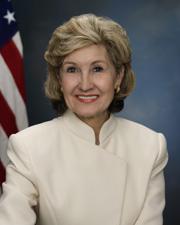
Mr. President, I wish to say to my colleague from Texas that we have been working together all day on the tax extender package, because there are many facets that affect Texas in this tax extender…
Mr. President, I wish to say to my colleague from Texas that we have been working together all day on the tax extender package, because there are many facets that affect Texas in this tax extender package. Then, on a separate note, I am certainly working with our whole delegation on the appropriations part of the continuing resolution we expect to see next week.
I so appreciate working with the chairman of the Finance Committee, as well as Senator Grassley. Both Senator Baucus and Senator Grassley have been very helpful in trying to fashion an addition, actually, to the tax extender bill because, of course, as Senator Cornyn has said, this hurricane hit our State last weekend. We have seen the pictures-- all America has seen the pictures--of the streets of Galveston, the former streets of many of our areas, and the residents who still cannot get back into their homes, including 2 million people who still don't have power. So we know the devastation that has hit our area, but we don't know yet what the total cost is going to be, because we can't even get into Galveston to start making assessments. Certainly Port Arthur, Orange, Beaumont, the lower parts of Harris County--all the way through our area, we are seeing the effects of this storm that are not yet calculable.
The Finance Committee has agreed to add into the bill, that was already on the way, the help that Texas and Louisiana are going to need because of Ike in the tax part of the extender package. The disaster part that will be added in is going to be very helpful to the private sector and the ability to start getting the housing up and going in these areas that have been completely wiped out. I think that later, when Senator Baucus comes to the floor, we will want to talk about it to make sure it is clearly understood exactly what the effects will be on Texas and Louisiana. But our delegations have worked very closely together with Senator Baucus and Senator Grassley to achieve what I think is a good result.
In addition to the disaster part of the bill, there are important parts of the tax extender package that will affect all of our communities. Certainly in Texas, the sales tax extension that is a matter of equity for States that don't have income tax, to be able to have the same deduction for our sales taxes that income tax State taxpayers have for theirs is a very important component of the tax extender package. Then, again, since Senator Baucus has just walked on the floor, I wish to say that I think what has been worked out on the oil and refinery tax issue from the manufacturing standpoint, along with the additional two years of the expansion of refinery tax credit, we are going to be able to continue to build out the refineries that will affect the price of gasoline all over our country, because as we are seeing right now, due to Hurricane Ike, the shutting down of refineries affects the price of gasoline everywhere. If we can add to the capacity of our refineries all over the country--this is not only Texas and Louisiana; this is Michigan and everywhere where there are refineries--if we can add to that capacity, it adds to supply, and it will bring down the price of gasoline. The extension of 2 years is going to be very helpful for refineries to have an incentive to do even more than they have already been committed to do.
Certainly, I think the addition of the manufacturing tax credit, even at the lower level, will also add to the capability as these Gulf of Mexico rigs and refineries are spending millions of dollars, not only on cleaning up the damage and trying to get back up and operating, but they are also helping their employees at a time such as this with the problems they are having with their homes being gone and their living conditions being unable to be sustained.
I thank the Senator from Montana, the chairman of the Finance Committee, for working with us on that. I ask if the Senator is ready to go with a colloquy, or should we wait. I don't know what the status of the tax extender package is at this point, but perhaps he would be able to tell us.
Mr. President, the key provisions that the Senator outlined are exactly what we have agreed to in that we would get extra amounts that would be allocated for the five coastal counties in Texas and into Louisiana. Because the amount is higher, the Governor would have discretion, within the other disaster areas, to allocate that excess. That is indeed part of this because there are areas in Houston, Harris County, Galveston, Port Arthur, and Beaumont that will be in the main bill. There are counties such as Orange, Tyler, Polk, and others in the disaster-declared areas that could make the added excess, and so it would be allocated throughout the area according to the discretion of the Governor.
The tax-exempt bonding authority, as well, and the low-income housing tax credits will bring that housing back on line, which is so important.
Senator Cornyn had mentioned earlier that he might want to address the additional potential, since we all know this happened just a week ago, and we don't have final actual numbers. I ask him if he wants to speak on something that he had been very active in doing.
Mr. President, I want to just say to Senator Cornyn and to Senator Baucus, as we said earlier, there are actually 29 counties that will be in this affected area. What I appreciate so much is that Senator Baucus realized that it would be very difficult for us to pass a disaster package and leave out Texas and Louisiana when the devastation is so bad. It is the beginning, and I am sure there will be more. But the fact that Senators Baucus and Grassley have understood the enormity of our situation, it gives us great comfort. I talked to the mayor of Houston, also, about this issue. We have been talking to the other mayors, and they so appreciate the Senator's accommodation. We are all going to be able to continue to work together, just as we have in so many of these disasters that keep on having issues, and we want to do it in the right way because that is the American way.
I thank the Senator from Montana. I also thank the Senator from Iowa, Mr. Grassley. We will continue to work with them.
I think he understands exactly where we are now. He told me he had a good conversation with the Senator from Montana. We are all working on this together and taking 1 day at a time. We appreciate it.
Mr. Speaker, I move to suspend the rules and pass the bill (H.R. 5569) to extend for 5 years the EB-5 regional center pilot program, as amended. Mr. Speaker, I ask unanimous consent that all Members…
Mr. Speaker, I move to suspend the rules and pass the bill (H.R. 5569) to extend for 5 years the EB-5 regional center pilot program, as amended.
Mr. Speaker, I ask unanimous consent that all Members have 5 legislative days to revise and extend their remarks and to include extraneous material on the bill under consideration.
Mr. Speaker, I yield myself such time as I may consume.
Today, we move to extend an immigration program proven to promote investment and to create jobs for American workers. H.R. 5569 would extend the EB-5 regional center pilot program for 5 years. Unless Congress acts, the regional center pilot program will sunset on September 30 of this year.
Congress created the fifth employment-based preference, known as EB- 5, immigrant visa category in 1990 for immigrant investors. To qualify for a green card, the investor must prove that the investment is in a commercial enterprise that will benefit the United States economy and create at least 10 full-time jobs.
In general, investors must invest at least $1 million. However, that amount can be reduced to $500,000 if the investment is made in a rural or high unemployment area.
Approximately 10,000 visas have been made available in the EB-5 green card category each year. But the category has been underutilized ever since it came into being.
To help further encourage this program, Congress created a temporary pilot program in 1993. The regional center pilot program allocates 3,000 visas each year, out of the 10,000 available, for EB-5 investors who invest in so-called designated regional centers.
Under the immigrant investor pilot program, an applicant seeking EB-5 status must make the qualifying investment within an approved regional center. The requirement to create at least 10 new jobs, however, can be met by showing that, as a result of the new enterprise, such jobs will be created either directly or indirectly.
The regional center program is vital for our economy. For example, in fiscal year 2007, a total of 806 investors and family members immigrated to the United States in the EB-5 category.
That is not very many people, but even at that level, the EB-5 immigrant investor program is expected this year to generate an annual rate of $1 billion in aggregate immigrant investment, creating more than 20,000 new direct and indirect jobs. Usage of the program is expanding as new regional centers get approved.
The regional center program helps get investment money to some of the Nation's poorest communities, creating jobs and revitalizing communities. In Vermont's poorest county, for example, a regional center investment has put $17.5 million into a ski resort at Jay Peak. This project is expected to create close to 2,000 jobs in the area, according to the New York Times.
It is important that Congress reauthorize the EB-5 regional center program. The pilot program has been renewed several times, and is currently due to expire, as I said earlier, on September 30 of this year. This bill would extend the EB-5 regional center pilot program for 5 years, until September 30, 2013.
When the subcommittee reviewed this bill, we had a discussion about looking at the level of investment and also the possibility of including venture capital-driven investments, where it's really the patents and ideas that are creating the jobs. We hope to be able to work with the minority to further pursue those ideas at a subsequent date. It should not deter us from proceeding today with this program that has proven to be valuable to our Nation by creating jobs for Americans.
I reserve the balance of my time.
Mr. Speaker, I'm sure that we will pass this bill. We have broad bipartisan support for it. But one of the values of debating these bills is not just to enact law but to let the public know of opportunities that the law provides to them.
And it might be instructive to citizens who are observing our proceedings to know that these projects that are being investment- driven through this program are in rural, as well as urban, communities. The regional center staff--actually, it seems to me this pilot project has proven--make this thing work.
And so there are areas in the country today that are having economic problems. I would encourage those areas, through their local governments, to look very carefully at whether they may want to utilize this program as one piece of putting their economy on the road to recovery.
I note that our colleague Sheila Jackson-Lee expressed her interest in making sure that urban disadvantaged areas be looked at, and I note that Houston, Texas, has actually one of the largest applications of all. It is expected that they will have 7,000 jobs and a $350 million investment.
So this is a great opportunity for America. I would hope that we will pass this expeditiously. It is part of getting our economy on the move again.
I would reserve the balance of my time.
Mr. Speaker, I appreciate that we will likely have an extended debate next year when we visit again the issue of comprehensive immigration reform. I don't
want to get into a debate today, I will just say a core principle of immigration law has always been that the United States Government doesn't tell American citizens who they get to fall in love with and marry. And a second core principle is, when our U.S. citizen marries somebody from another country, the American doesn't have to move to France, his wife gets to move here. So that's something that we will protect as this debate goes forward.
This bill has bipartisan support, and I urge its adoption.

Mr. President, I rise in support of two nominees to be district judges in the Southern and Northern Districts of New York. I was pleased last week that the Senate voted unanimously to confirm two…
Mr. President, I rise in support of two nominees to be district judges in the Southern and Northern Districts of New York.
I was pleased last week that the Senate voted unanimously to confirm two other excellent New York nominees, Kiyo Matsumoto and Paul Gardephe.
Like last week's candidates, both of the nominees before us today-- Cathy Seibel and Glenn Suddaby--were rated unanimously well qualified by the American Bar Association, and both were unanimously recommended out of the Judiciary Committee.
I am particularly pleased to support Ms. Seibel to be a judge in the Southern District of New York because I personally recommended her to the President.
The Judges in her district respect her, the defense bar knows her to be fair and reasonable. and I myself found her to be thoughtful, modest, and blessed with a perfect judicial temperament.
These are the qualities that compelled me to recommend her to the bench.
Ms. Seibel has been a Federal prosecutor for 21 years and has long ties to the Southern District of New York where she has served as both the deputy U.S. attorney and the first assistant.
During her time as a prosecutor, she has earned a reputation for fairness and effectiveness.
Indeed, she is described as the very model of grace under pressure.
And while at the Southern District, she has trained several generations of young prosecutors, who also sing her praises.
She has prosecuted a number of high-profile tax fraud cases, as well as the very first case where the Violence Against Women Act was used for a murder charge--a subject obviously very close to my heart since I was the chief author of the Violence Against Women Act when I was in the House.
She is the recipient of numerous well-deserved honors, including the prestigious Stimson Medal for federal prosecutors in New York.
Despite the demands on her time as a prosecutor, Ms. Seibel has also found time to teach a course on trial practice at Columbia Law School, and previously has taught courses at Fordham.
Ms. Seibel graduated magna cum laude from Princeton and received her J.D. cum laude from Fordham University, where she was editor-in-chief of the Fordham Law Review. Ms. Seibel also clerked for Judge Joseph McLaughlin in the Eastern District after graduation.
Additionally, Ms. Seibel's confirmation will help to rectify the serious underrepresentation of women in our Federal judiciary.
In the Southern District today, only a paltry 25 percent of district court judges--11 of 44--are women. I believe that our Federal bench should reflect the same broad diversity of experience as America writ large.
Glass ceilings are abhorrent, but they especially have no place in our Federal courthouses, where every citizen is held as equal before the law.
Ms. Seibel's confirmation will be an important step to remedying an unfortunate gender gap in one of the country's most important courts.
Finally I would like to say a few words in favor of Mr. Glenn Suddaby, a nominee for the Northern District of New York.
Mr. Suddaby has been a U.S. attorney since 2002, but his ties to the Northern District go back much further than that. He received his B.A. from State University of New York at Plattsburgh, then received his law degree from Syracuse University. Mr. Suddaby then began his long career as a prosecutor in Onondaga County before joining the U.S. attorney's office.
Between college and law school, Mr. Suddaby even spent time as a legislative aide in the New York State Assembly, so he also has experience shaping the law from inside the halls of a legislature. I think its a good idea to have more judges with a little experience writing the law, and not only enforcing it and interpreting it.
Mr. Suddaby has worked especially hard to target corruption in his district, and has demonstrated his commitment to placing the rule of law ahead of ideology.
Both of these nominees will make excellent judges who will be impartial and thoughtful guardians of our legal tradition. I urge my colleagues to support them.

Mr. President, if the Senator would briefly pause, I wish to thank the Senator from Texas. The Senator has been great to work with as we worked out some provisions to help that State, especially the…
Mr. President, if the Senator would briefly pause, I wish to thank the Senator from Texas. The Senator has been great to work with as we worked out some provisions to help that State, especially the Galveston area, and the coastal States in getting additional disaster assistance. I thank the Senator as well as his colleague from Texas. We will come back to do more at a later date, but we are doing what we can on this bill, and I say thanks to my colleague for working so well with us.
Mr. President, I think someone is getting the colloquy together. We don't have it at the moment. However, I think we can basically have an impromptu colloquy right here to handle most of it, and if we want to do more later, we can do so.
Essentially, the Senator from Texas very correctly and appropriately called me and said we need to do more for Texas, including Galveston, and some other coastal counties. I said to the Senator, if the disaster provisions in the tax bill, which were somewhat patterned--basically patterned--after the Katrina provisions, many of those would apply to Texas. With the consequences of Ike and Gustav, we went back and looked so we could do more.
The slight problem we faced is it takes some time to pinpoint and to write precise tax provisions that affect
the areas that are hit by disaster. We don't want to give relief to counties or portions of counties where there is no disaster. That would not be the correct thing to do. In fact, we ran into that problem back during the time of Katrina when the initial request, which was, on the surface, appropriate, but when we looked more closely, there were too many dollars spent inappropriately and not enough spent appropriately. It takes a little time to work that out.
After about 2 months, we talked to mayors, local people, and disaster people to make sure we tailored it well. We ended up with a result that was quite good and appropriate. It wasn't as large as the initial estimate, but the initial estimate was way overblown. It was not well tailored. I mentioned this to the Senator from Texas, and she said she understood. On the other hand, she said, ``We need help here.'' I appreciated that and said: You bet.
I tried to find some ways to provide additional disaster assistance in the bill that I hope we take up on Tuesday. Essentially, what we worked out is an increase in the allocation of low-income housing tax credits, as well as an increase in the allocation of private activity bonds. The total amount is geared for those counties on the coast. I think there are four or five coastal counties which were hit the most.
But to make sure we are not too locked in, we also give the Governor the right to reallocate the benefit of these provisions to other areas in Texas but under the total amount. The thought is that we are helping, that way, tailor the assistance most appropriately and specifically.
I say to my friend from Texas, it was good to work with her to find the combination, as I said to the junior Senator from Texas, and there would be an opportunity to come back later for more if that is appropriate.
The Senator is correct. That is my understanding, and that is what we intend to provide.
The Senator is correct. Allocations for both, that is correct.
Mr. President, I might say to the Senator from Texas that I had a nice conversation with the mayor this afternoon, too. He was helpful in explaining what needed to be done. He appreciated the efforts both Senators from Texas have undertaken. I think he would like more, but he understands where we are.

Mr. Speaker, I rise today in support H.R. 5569. I am proud to join my colleagues in cosponsoring this timely legislation. I would like to thank my colleague, Congresswoman Zoe Lofgren, Chairwoman of…
Mr. Speaker, I rise today in support H.R. 5569. I am proud to join my colleagues in cosponsoring this timely legislation. I would like to thank my colleague, Congresswoman Zoe Lofgren, Chairwoman of the Immigration Subcommittee, for her leadership on sponsoring this legislation. I would also like to thank Mr. Blake Chisam, counsel on the Immigration Subcommittee, and Mr. Arthur Sidney, of my staff, for their important work in including my amendment in the bill.
By way of background and explanation, H.R. 5569 extends for five years the EB-5 regional center pilot program. Congress created the fifth employment-based preference, EB-5, immigrant visa category in 1990 for immigrants seeking to engage in a commercial enterprise that will benefit the U.S. economy and create at least 10 full-time jobs.
The basic amount required to invest is $1 million, although that amount may be $500,000 if the investment is made in a ``targeted employment area.'' Of the approximately 10,000 numbers available for this preference each year, 3,000 are reserved for entrepreneurs who invest in targeted employment areas. A separate allocation of 3,000 visas is set aside for entrepreneurs who immigrate through a regional center pilot program.
In 2003, Congress asked the U.S. Government Accountability Office, GAO, to study the EB-5 program. The GAO report concluded that the program has been under-used for a variety of reasons, including the rigorous application process and the failure to issue regulations implementing the 2002 law. The report found that even though few people have used the EB-5 category, EB-5 participants have invested an estimated $1 billion in a variety of U.S. businesses.
My amendment expresses the sense of Congress that, to the extent possible, qualifying investments should be made in targeted employment areas, including rural areas and areas of high unemployment. My amendment defines rural areas as an area other than an area within a metropolitan statistical area within the outer boundary of any city or town having a population of 20,000 or more based upon the most recent decennial census of the United States. My amendment also defines an area of high unemployment as an area that has experienced unemployment of at least 150 percent of the national average rate.
The purpose of my amendment is to ensure that all of America will benefit from greater development and investment. The amendment is a bold first step in ensuring that all Americans have a seat at the table and are able to progress and advance as a result of foreign investment as Americans in the wealthy cities and suburbs. I have long championed the rights of Americans in the rural areas and in underserved communities. These Americans are our brothers and sisters. To be sure, no Americans should be left out from investment. My amendment makes sure that these groups that are often forgotten are not left out.
Ms. ZOE, LOFGREN of California. Mr. Speaker, I yield back the balance of my time.
In pursuit of meeting these goals, redoing E-verify, giving it a 5-year life, doing it the right way, doing those other things, as well as trying to help this small universe of American citizens, I…
In pursuit of meeting these goals, redoing E-verify, giving it a 5-year life, doing it the right way, doing those other things, as well as trying to help this small universe of American citizens, I ask unanimous consent that the Judiciary Committee be discharged from further consideration of S. 3414, the Visa Efficiency and E-Verify Extension Act of 2008, the Senate proceed to its immediate consideration and to the consideration of H.R. 5569, the E-V-5 extension, which was received from the House, en bloc; further, that the bills be read a third time and passed, en bloc; and the motions to reconsider be laid upon the table, en bloc, with no intervening action or debate.
Mr. President, I regret my colleague's objection. At the end of the day, I understand how passionately he feels. I hope he understands how passionately I feel. The reality is I find it very difficult when my constituents, U.S. citizens, paying their taxes, being good citizens, come to me and say: We cannot get reunified with our spouse. We cannot get reunified with our mother and father. We cannot get reunified with our son and daughter. That is the universe we are talking about.
If we do not stand for the very core value of family reunification, while we talk about those who have money to invest and who get visas because they have money, well, we have seen what has happened with our system around here when everything is about money, and it is a huge failure. The proposition is that if you have money, yes, you can get a visa. But God forbid we give a U.S. citizen who is claiming their family a visa as well.
I feel very passionately about this. I understand Senator Sessions feels very passionately about the way he views it, and I hope we can reconcile our passions and be able to have a little less heat, a little more light, and create an opportunity to be able to move forward in the days ahead. We have time until the end of November, and I certainly look forward to working constructively to make that happen.
Mr. President, I yield the floor, and I suggest the absence of a quorum.
Reserving the right to object, Mr. President, I note that we are talking about some sort of capture of unused visas in the past, which we calculate at about 550,000. Maybe it is 300,000. This is a…
Reserving the right to object, Mr. President, I note that we are talking about some sort of capture of unused visas in the past, which we calculate at about 550,000. Maybe it is 300,000. This is a major alteration of current law that has a certain number of family members, a large number, actually, who can come in every year. This would be a major expansion of that.
Those are the kinds of things I think the Senate has gotten to the point we know we don't need to have a full debate on before we recess this year. Therefore, I consider that addition to the House bill that Senator Menendez wishes to see become law as a nonstarter and would have to object.
Show 2 more
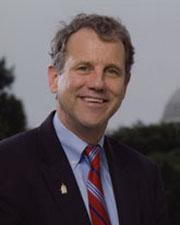
Mr. President, I ask unanimous consent that the Senate proceed to executive session to consider the following nominations: Calendar Nos. 689 and 690, and that the Senate proceed to vote on…
Mr. President, I ask unanimous consent that the Senate proceed to executive session to consider the following nominations: Calendar Nos. 689 and 690, and that the Senate proceed to vote on confirmation of the nominations; that upon confirmation of the nominations, the motions to reconsider be laid upon the table, en bloc, the President be immediately notified of the Senate's action, with no further motions in order, that any statements relating to the nominations be printed in the Record, and that the Senate then resume legislative session.
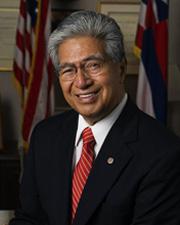
Mr. President, I ask unanimous consent that the order for the quorum call be rescinded. I thank the Chair. (The remarks of Mr. AKAKA pertaining to the introduction of S. 3527 are located in today's…
Mr. President, I ask unanimous consent that the order for the quorum call be rescinded.
I thank the Chair.
(The remarks of Mr. AKAKA pertaining to the introduction of S. 3527 are located in today's Record under ``Statements on Introduced Bills and Joint Resolutions.'')
Bill Text
4 versions available
        [Congressional Bills 110th Congress]
[From the U.S. Government Printing Office]
[H.R. 5569 Referred in Senate (RFS)]

2d Session
H. R. 5569

_______________________________________________________________________

IN THE SENATE OF THE UNITED STATES

June 10, 2008

Received

August 1, 2008

Read twice and referred to the Committee on the Judiciary

_______________________________________________________________________

AN ACT

To extend for 5 years the EB-5 regional center pilot program, and for
other purposes.

Be it enacted by the Senate and House of Representatives of the
United States of America in Congress assembled,

SECTION 1. EXTENSION OF EB-5 REGIONAL CENTER PILOT PROGRAM.

Section 610(b) of the Departments of Commerce, Justice, and State,
the Judiciary, and Related Agencies Appropriations Act, 1993 (8 U.S.C.
1153 note) is amended by striking ``shall set aside'' and all that
follows through ``eligible for admission'' and inserting ``shall set
aside 3,000 visas annually for 20 years to include such aliens as are
eligible for admission''.

SEC. 2. SENSE OF CONGRESS.

It is the sense of the Congress that, to the extent practicable,
qualifying investments under section 610 of the Departments of
Commerce, Justice, and State, the Judiciary, and Related Agencies
Appropriations Act, 1993 (8 U.S.C. 1153 note) should be made in
targeted employment areas (as defined in section 203(b)(5)(B)(ii) of
the Immigration and Nationality Act (8 U.S.C. 1153(b)(5)(B)(ii))),
including rural areas (areas other than an area within a metropolitan
statistical area or within the outer boundary of any city or town
having a population of 20,000 or more (based on the most recent
decennial census of the United States)) and high unemployment areas
(areas that have experienced unemployment of at least 150 percent of
the national average rate).

Passed the House of Representatives June 9, 2008.

Attest:

LORRAINE C. MILLER,

Clerk.