Mr. Speaker, I want to thank you. It is always an honor to come before the House and the 30-Something Working Group, running some 5 or 6 years strong now, coming to the floor on behalf of the…
Mr. Speaker, I want to thank you. It is always an honor to come before the House and the 30-Something Working Group, running some 5 or 6 years strong now, coming to the floor on behalf of the American people with fact not fiction. We know that in this day and time it is easy to be misled. And I don't know if it is something that someone means to do or doesn't mean to do, but it happens sometimes. We take great pride in not only having footnotes for what we do and what we say, but making sure that we have the facts to back up what we are sharing with the Members.
Every 30-Something Working Group we start off by sharing with the Members what is happening in Iraq. As of today, July 16, 2008, by 10 a.m., total casualties in Operation Iraqi Freedom is 4,121; total number wounded in action returned to duty, 16,901; and total number wounded in action not returning to duty is 3,508.
I think it is very important that we continue to pay close attention to that issue of what is happening right now in Iraq and what is happening in many of the American families that we cherish and celebrate and honor that are military families that are having to worry about their loved ones in harm's way. We have to keep that at the forefront.
As you know, over the past 2 weeks Members have been coming to the floor speaking on the issue of energy. I am happy to not only report but continue to say it wasn't until this Democratic Congress when it was elected, Mr. Speaker, and Members, to lead on behalf of the American people that once upon a time in the 108th Congress and 109th Congress, we talked about if given the opportunity to lead what we would do.
It is one thing in politics to talk about if you give me a chance, this is what I will do. I will go to Washington, DC, and make this or that happen. It is a good thing because we have actually moved in that direction.
I couldn't help but hear my colleagues who I have a great deal of respect for, but I may disagree with from time to time. I can tell you in light of me disagreeing with them, I am just so happy that I do have fact on my side and on the side of the American people because we have been trying to move this Congress and we have done so with the American people's help in electing a Democratic majority Congress.
But we have not been able to overcome the executive branch which is the Bush White House. I think it is also important for us to understand that this whole issue of how we got to $4.30-something gas was not engineered by anyone on the Democratic side of the aisle. I think the policies, the energy policies that were set forth by the Bush administration, the 2001 meeting which took place in Vice President Cheney's part of the White House, the working group on energy, the 108th Congress and the 109th Congress who worked very hard to, and the Congress before that, the Republican-led Congresses which worked hard to follow this policy that the Bush administration set out to please oil companies that has led us into the prices that we are paying here today.
I have to lay that out, Mr. Speaker, to get to what Democrats have done. I am going to do that very quickly because I think I am on the side of solutions versus argument. But for the Members to understand what the solutions should be and the direction that we should be running in at a very fast pace or run or sprint is one of fact and not fiction.
You would have a number of Members in this Congress believe and the American people believe that with two
oil men in the White House we would have some sort of solution as it relates to this issue of oil, but that is not the case.
As we continue to deal with this issue of oil only, because it seems like that is what the Republican side is talking about, it seems to be a part of the problem and not the solution.
If you want to resolve something, you have to start looking at doing things differently. You can't do the same thing expecting different results. When you look at oil and you look at the number of those who have given their life in Iraq, and the reason why Iraq is so important to this country is based on energy. If we had action when the Bush administration took over the executive branch and when the Republicans had the opportunity to lead, well, it was already there according to economists and others, but if they would have had the courage to stand up against Big Oil and say no, we know what you want, but the studies have shown we need to start looking toward alternative fuel, we need to start being innovative and deal with cafe standards and make sure that our vehicles get more mileage. We have to incentivize through tax incentives Detroit and other auto-making parts of America, that we want vehicles that run on less fuel. But no, that was not the argument. That was not what the Republican majority pushed towards. They kept pushing towards this kind of cake and ice cream experience with the oil industry.
I have nothing against the oil industry. Some neighborhoods they may say I am not mad at the oil industry, but I think it is important to note that the only way they could have gotten away with what they have gotten away with is with the help of individuals that were in those Congresses previous to this Congress, the Democratic-led Congress. The only way they got what they are celebrating now is because there is two oil men in the White House. It is well-documented. It is not just me saying that. Anyone can go on the Internet and get this information because that's where their history has been.
I have a couple of charts here: 8 years of Bush, two oil men in the White House, $4 a gallon gas. I mean, I just leave it up to your imagination. I am just one Member of Congress that has a theory, not a theory, but following fact.
What are some of the great ideas on the other side? Well, let's drill in the Arctic wildlife refuge. Let's do that. I think that's important. Yes, let's drill. That was last Congress' argument. Some have said this Congress has a solution. I am not talking fiction, I am talking fact.
That would only bring about 1.8 cents per gallon savings in 2025. Now that's 2025. That's not talking about right now, Members. That's not talking about how families are trying to figure out how they are going to, when they are looking at their vehicles and knowing they are no longer going to be able to afford to take their kids to extracurricular activities, in some cases not even being able to take them to school, in some cases having to walk to make it to religious events, whichever their religion may be, because they can't afford fuel.
Some have had to turn off certain things like cable television or had to do away with certain activities that their children were involved in or philanthropic contributions, at their own level, but it was just $10 or $50 a month to make the world better. They had to cut back on that, put it in the tank.
But this is what the Republicans were talking about and Democrats fought them back. I talked about the 2001 meeting that took place in the White House. It is well documented, well documented.
I can tell you, when I come back to the floor, I am going to bring my chart out that I used to bring, actually the letter that talked about, and the news report, from the Washington Post, it talked about the meeting that took place in 2001.
I know this is hard to see for many of the Members, but in 2002, that meeting started to pay off for Big Oil. Meanwhile, our Republican colleagues, who were in the majority, just stood idly by, and turned the other cheek. There was no problem with oil. There was no problem.
The alternative, why do we have to deal with that when we have oil? Why do we have to deal with that when we have over 143 troops that are in Iraq that's protecting the Iraqi oil, and we have our Commander in Chief holding the hand of the Saudi Arabian king. We have those relationships.
Meanwhile, our constituents, Members, people here in America are not celebrating what these oil companies are celebrating. Again, I have nothing against oil companies, they are doing what they do in a capital society, but they are only allowed to do this because of the Republican past Congress. Remember, I want to make sure the Members know. I'm coming to what we did in this Congress and what role you played in that solution towards bringing gas prices down, or, what I may add, energy prices.
In 2000, the record-breaking profits of some $30 billion; 2003, again, breaking records, $59 billion; 2004, $82 billion for the oil companies and profits; 2005, $109 billion in profits; 2006, $118 billion. It's, again, climbing, and in 2007, $23.3 billion in profits for oil companies based on the Republican-led energy initiatives.
Now they are in the minority, they are now saying, well, we can't get what we want on the table. They have already voted to drill in not only environmentally sensitive places, but places that the oil companies have not even started to drill in yet. We just gave out a whole bunch of leases to the oil companies. They are not even using 80-some odd percent of those leases that have been allowed, they have been allowed to drill. They haven't done it.
So it's almost like having a full plate of food. Imagine you at home, okay, and sitting around the table, Big Oil with food just falling off all ends of the plate, something real heavy like a big steak or something, and mashed potatoes and beans, you know, rolling all over the table, saying we need more. That's what they are saying as it relates to more leases, more drilling. We need more. Okay.
Imagine the individual that's going there to fill the tank with very little on their plate, because they can't afford to put food on their plate because they are too busy paying what we are looking at in these record-breaking profits for these oil companies, with very little on their plate, if anything at all. When you start talking about more drilling, more drilling, you know, it doesn't add up because you have talked about some of these issues.
Let me just mention something here. I am so glad that I got this because I asked for it. I couldn't happen but see the President yesterday quoted in his press conference. We started talking about issues as it relates to oil, I mean, drilling. The President says a lot, so it's kind of hard to try to deal with what he is saying. But he said that, in so many words, and I will go ahead, because it's a lot of words here that he used to describe one thing, in his remarks, he said that drilling will not deal with the oil prices tomorrow. It won't give us the relief that we're looking for.
That's what the President said yesterday on his press conference. Now you can go on pretty much to cnn.com, any other Web site that would have the transcript, but basically we pull these remarks from the transcript. I want to make sure that we get a chart so that people can see it, and we may want to put it on our Web site.
Now, on the Democratic side, we have talked about a number of initiatives. Our comprehensive strategy has been about not only incentivizing wind, solar, geothermal, hydro and American-grown biofuels, but also promote energy, like I mentioned, energy efficiency, efficient cars, buildings. The greening of the Capitol is already under way and has happened. Actually, I wrote a piece this month in the Capital File Magazine talking about what we are doing here in the Capitol to green the Capitol and save our environment and lead by example.
The Speaker is leading that in a very special way, making homes and appliances more energy efficient, boosting American innovation and research, reward conservation, expedite responsible American drilling and also telling Big Oil to use it or lose it. Basically, when you are looking at all the leases that are out there, all the opportunities that Big Oil has right now, but, better yet, it's almost like what we
call the Potomac two-step, because I think that's what the Republican side is doing and the White House is doing.
They are saying drill, drill, drill, because, guess what, that's what's been putting gas in their tank, I think, politically, because the oil companies believe that they are our friends.
The Democrats, they are the problem, because we are talking about alternative fuel. We are talking about conserving. We are talking about investing in the Midwest versus the Middle East. So we are disrupting, when I say we, the American people who voted for this new Congress that we celebrate now, voted for this fact-not-fiction Congress, voted for this new-direction Congress, they voted for change. Republicans are still here singing a song that these oil companies have put on a sheet and started talking about we need to drill to create jobs.
Well, guess what, why haven't they done it with all of the leases that are out there right now and all of the jobs that need to be created. If Big Oil, based on the profits that they have made, can turn this whole economy around and take us out of this recession that some speak of, just with the snap of their fingers, but, guess what, there is something that we call stockholders. They want their money.
They want those dollars to be placed. They don't want to employ people. That will have something to do with my bottom line. So when folks start coming to the floor and start talking about oh, we drill $2 gas, I look forward to that. But we are going to get there doing the same thing, doing the same thing expecting different results.
It's almost like going to the refrigerator, pulling out a carton of milk and saying oh, wow, it's spoiled, put it back in, maybe it will be fresh tomorrow. That doesn't make sense. It doesn't make sense to keep doing the same thing.
Now, let me just mention here what we have done, and this is, as I understand, on the Speaker's Web site, www.speaker.gov. I think this is important because this is in the Congressional Record and also Congressional Action. Now law because of what the Democrats have done here. The farm bill which is an historic investment in affordable biofuel and also beefed up oversight on market manipulation. House bill 2419. The President's veto was overridden.
Now this is the President. You would think, you out there paying this gas, you are paying this big-time deal for gas. We are trying to find some competition for Saudi Arabia and other OPEC countries saying, guess what, we're not going to have to hold your hand walking down some park, our Commander in Chief. We're not going to have to go to war in the Middle East because we have to protect the oil so that we can continue to run our vehicles. We're going to come up with our own bill. We're going to come up with our own way of building energy in a clean way.
And to those that believe in shipping jobs overseas, we're going to create green jobs while we're at it. We are going to make sure that Americans have jobs from those that just have a GED or no high school diploma at all, to those that are architects and have postgraduate studies and who have gone on to do so many things in our society, everyone gets to work in a green society. That's what we are creating, and that's what that farm bill moved, but we had to override the President on May 21, 2008, with a vote of 316-108, and the Democrats moved in that direction.
I think it's important that everyone understand what's taking place here, because when folks come to the floor and talk about they have the answer, many of these individuals have not even voted for the bills that would do exactly what they are talking about doing. This is fact. That's not fiction. Thanks to the Members, we did override with some Republican support. But if it wasn't for the Democratic leadership, this would have never, never happened.
The veto threat, Renewable Energy and Jobs Act, H.R. 6049, passed on May 21. The Democrats, we voted 263-160. I think it's important that everyone understands that that vote came about with 228 Democrats voting in the affirmative versus 35 Republicans voting in the affirmative with 159 Republicans voting against it.
Another veto threat, which is Gas Price Relief for Consumers Act holding OPEC, which is, you know, the oil companies accountable for price fixing, H.R. 6074, again. We have the President that has put out a veto threat. That bill passed the House on May 20, this year, 324 voting in the affirmative, 84 Republicans voting against it, now law. This is the legislation that we put forth, never would have been law if we wouldn't have put it forth. When I say we, I'm saying the Democrats here in Congress.
The Strategic Petroleum Reserve Fill Suspension and Consumer Protection Act, H.R. 6022. I think it's important that you look at this. It passed May 13, 2008, some 385-25. I think it's important that we look at the fact that all Democrats voted for it, 223 voting, Republicans voted in the affirmative, 162-25. That issue, that's now law.
Repeal subsidies to profit-rich big oil companies, invest in renewable energy and fuel efficiency, H.R. 5351, passed February 27. It passed by a 236 vote, 182 voting against the legislation. 219 Democrats voted in the affirmative, 8 voted against. The Republicans, 17 voted for, 174 voted against. You have got to think about that, you have got to think about the whole issue, and that has been threatened by the President that he is going to veto it.
Now, we start talking about the profits that we use, because the real issue is that we need money to come up with alternative fuel. But, again, when it comes down to standing up to Big Oil, cricket sounds on the other side. You know, all bold when it's talking about what Democrats won't let us do. That's interesting, because I have been in Congress under Republican leadership for 4 years, and I have only been in Congress for a year and some change under the Democratic leadership and I can't believe some of the arguments that are coming out on the other side about what they can't do when they've had all of these years to do it.
The American people, I am not talking about Democrats, I am talking about Republicans. I am talking about independents. I am taking about first-time voters, and say, guess what, if you are going to do what you do for Big Oil, then we're going to find somebody else to represent us, and they did.
And the numbers within the double digits on the Republican side are now watching me here on the floor, talking to the Members, Mr. Speaker, because they made the wrong decisions because they followed leadership. We're going to talk about that in a minute right after this chart. They followed their Republican leadership that led them into a hole, and that hole is right in the La-Z-Boy at home, checking this fact-not fiction piece that I'm giving here on the floor. When you look at that vote, that's telling in itself.
Now law. Energy independence law and market manipulation banned and new vehicle mileage standards: H.R. 6. It was passed on December 18 of 2007. 314 votes. The Democrats voted in the affirmative. 100 voted against, Republicans. 219 Democrats voted in the affirmative. Only 4 Democrats voted against it. Republicans were 95 voting in the affirmative and 96 voting against it. That's now law. It never would have been if it weren't for a Democratic-led Congress bringing about that kind of justice on behalf of the American people.
The America Competes Act with energy, research and the development of clean energy and technologies: H.R. 2272. It passed into law--it is now law--on August 2, 2007. 369 Democrats voted in the affirmative. There was an overall vote of 369 to 57 Republicans who voted against it.
Veto threat. Crack down on gas price gouging. Like my pastor would say, I'm going to read that again. Crack down on gas price gouging: H.R. 1252. It passed on May 23 of 2007 with 284 voting in the affirmative and 141 voting against it. On the Democrat side, 228 voting in the affirmative, 1 Democrat voting against it. On the Republican side, 56 Republicans voting for it, 140 against it.
That's part of the solution there. I think that's something we need to look at and something that the President has said that he's going to veto.
Veto threat, holding OPEC accountable, oil price fixing, again, that's standing up to Big Oil. That's standing up to the Middle East, saying we're no longer going to let you lead us by the
nose. We're going to take responsibility for our own energy. It passed May 22, 2007 with 345 voting in the affirmative and 72 voting against. The President has said that he's going to veto it.
Now, when we start talking about who's doing what and who's not, you may see these pieces of paper here, but basically, we just covered up the names of the Republican leadership because that's just a personal policy of mine, Mr. Speaker. I just don't want to, you know, ``out'' these individuals because, I think, the record speaks for itself, but I'm still making the point, and they know who they are.
This is the Republican leadership from top to bottom, and I think that it's important that everyone pays attention to this. As to some of the legislation that I read off, these very individuals voted against it, and I think that's the reason we see the kind of discourse from the other side of the aisle in talking about the old direction versus the new direction. They will throw some new direction stuff in there, knowing that, you know, they really don't mean it. You know, we had the opportunity to do it, but we didn't do it, but we're going to criticize the other side and say they haven't done it.
We have done it. It is the body of several pieces of legislation that have not only become law but that are in the process of becoming law if there were a President in the White House who would allow it to become law.
You remember that old bill on Capitol Hill. This goes down to the majority leader. This goes all the way down to the whip and to the Republican Conference Chair. We have the policy Chairs and all. If you will look at when it came down to OPEC price fixing, the two top leaders on the Republican side voted against that legislation. The No. 5 leadership, No. 6 and No. 7 voted against it.
When you look at the price-gouging legislation that we passed, when we were looking for that leadership of coming together in a bipartisan way, the top Republican leader voted against it. The whip voted against it. The third in charge voted against it. The fifth in charge voted against it. The sixth, seventh, eighth, and ninth voted against it and on down the line. This is not fiction. This is fact, okay? This is the Congressional Record.
Renewable energy. The first man voted against it over on the Republican side and the second, third, fourth, fifth, sixth, seventh, eighth, and ninth, all the way down. Now, if I'm wrong, somebody come and tell me I'm wrong. I don't think so. This is in the Congressional Record.
Energy security. The top voted against it. If you jump down, No. 4 voted against it as well as No. 5, No. 6, No. 7, and No. 8.
So, when folks come to the floor and start talking about ``we have a plan'' and ``we know the answer,'' show me the beef, like that Wendy's commercial used to go. You know, it used to say, ``Now show me the beef.'' I want to know where it is. I don't see it.
I've just come to the floor just to share a little bit because I'm glad that my constituents in the 17th Congressional District from South Florida federalized me to come here to provide this kind of representation and to be able to shed light on the action that has taken place. It's not over yet. We don't have everything that we need to be able to do the things that we need to do on behalf of our constituents because we still have some rules over in the other body across the hall, and we still have the issue in the White House as it relates to the two architects, if I could put it that way, of our energy plan now, who are defending that plan to the end. They have talked about they're not going to do some of the things that we feel should be done now, things that a number of people have said that would help.
We talked about a number of issues as they relate to our passage of legislation, but one thing I left out on that chart that I think we need to share with the Members tonight is the Drill Responsibly in Leased Lands Act, which is called the DRILL Act. It mandates annual lease sales in the Alaska National Petroleum Reserve. It also has more oil than the Arctic National Wildlife Refuge, and the oil can be brought to the market more quickly.
It requires the Bush administration to facilitate the competition of oil pipeline infrastructure in the Reserve and to facilitate the construction of the Alaskan natural gas pipeline, and it bans the export of Alaskan oil outside of the U.S.
It also incorporates the ``use it or lose it'' legislation. I can tell you that it is compelling oil companies to start drilling on the 68 million acres of undeveloped Federal oil reserves which they are currently warehousing or they are losing the ability to obtain the new leases. I think that it's important that we deal with those issues sooner rather than later.
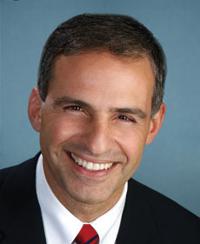
Before I get into another part of my talk, here is my good friend, Representative Arcuri, from the great State of New York. We have been to a number of places together. We've been to Iraq, and we've also been on some other defense-related visits. I'm so glad that he's here to share a little bit about this issue of energy.
No problem. Anytime you're ready, Mr. Arcuri. I'm no longer 30, but I'm part of the ``Something'' part. So you're always welcome in the 30-Something Working Group. And I want to thank you for bringing those facts to the floor. I think it's important the more Members we get from different parts of the country sharing what they know, what their constituents share with them when they go back home, I think it's important for the Members to hear that. The diversity of ideas makes this body great.
We do have some great ideas coming from the other side of the aisle, too, but it's important that we don't do an us-against-them kind of atmosphere. I believe in bipartisanship. We've had more bipartisanship votes on major pieces of legislation in the 110th Congress than we have had in the previous Congresses. I think that's what the American people are looking for, Mr. Speaker, and I think that's what the Members would like to have.
But in a time of crisis, the last thing that we need to do is to have the kind of dragging down of efforts that we're trying to carry out, of saying, Well, the Democrats won't allow us to do this; they will not allow us to do that. If it's a body of a piece of legislation, just because one of your Members doesn't need that legislation doesn't mean that it's bad legislation.
We're in the majority just like the Republicans were in the majority once upon a time. And we're leading on behalf of the American people. A number of the votes that we've taken on energy, we celebrate a number of Republican votes being with us on those votes. That's the reason some of them become law. That's the reason why we are able to override the President.
So we cannot defend the actions of the President when he's wrong, and I commend some of my colleagues on the other side of being a part of that, but there are a number in double digits, and sometimes, you know, into the hundreds that defend the President to protect the White House. We're not up here to protect the White House. If it's a Democrat or Republican there, we weren't sent up here to say, ``Oh, we're here to protect the White House.'' We're here to protect the American people. So I think that's important.
I want to mention a few things of what we've done as Democrats.
I'm going to read, Mr. Speaker, from the 2008 letter on July 8 that the Speaker sent the President about the Strategic Petroleum Reserve, which we call the SPR, signed bipartisan legislation into law that I talked about earlier to urge the President to release some of the oil, that refined fuel, from the Strategic Oil Reserve. Now this is not the first time. This is not something that the Speaker said, Oh, let's just do this because of the first time that we would have ever done it in the country. That's not the case. Desert Shield, Desert Storm drawdown by George W. Bush I, withdraw from the Strategic Oil Reserve on January 17, 1991. That brought gas prices down.
Also, we started looking at President Bill Clinton in 2000, released 30 million barrels from the Strategic Oil Reserve, and I will talk about what it did to gas prices. It happened then.
And in 2005, this President, President Bush, after Hurricane Katrina drew down, offered some 30 million gallons out of there which brought prices down. I think that it's important that everyone understands that.
The President can make a decision that can bring gas prices down now. Will it be forever? No, it will not be forever. Is the Reserve at 97 percent full? Yes, it is. Authorities said that it should be at 85 percent. But we're at 97 percent.
What's happening right now, probably not to the Members of this Chamber because we're paid beyond what the average Americans would be paid, over some $160,000, and a lot of our travel is per diem travel as we move around our districts, reimbursement for gas. The Members here are probably not affected. But for those individuals who don't have per diem reimbursement, for those individuals who know what it means to punch in every day and punch out every day, for those individuals that are trying to make it from point A to point B, who have a family member with a health care crisis and have to make the decision whether you're going to make that hour-long trip or not based on the price of gas, being able to release fuel from the Strategic Oil Reserve would be the right thing to do.
What happens? We're talking fact, not fiction. Using the Strategic Petroleum Reserve, it brings down prices of oil. In 1991, did I mention earlier? It brought it down 33.4 percent. In 2000, it brought it down 18.7 percent. In 2005, it brought it down 9.1 percent. And it
would even bring it down even more if we were to do it now.
I say all of that, Mr. Speaker and Members, that as we start looking at alternative fuel, as we start looking at what Big Oil should be doing versus trying to say this is the last day of school, let's get more leases and push this kind of drill thing as though that's the answer--because if that was the answer, we wouldn't be at over $4 a gallon that individuals are paying for gas. If you are fortune enough to have a Pontiac Grand Prix, it costs $62.74 for you to fill it up, leave alone someone that may have a Honda Accord. An Accord, it costs $68.26. If you happen to have a Chevy Impala, lucky enough to have one, $62.73 and $2,798 a year.
A Chevy Suburban, many small businesses have to be able to move around big loads. You have $124 at the pump, some $4,391 that one may spend a year. A Ford Escape costs $60.88 to be able to fill up, and many small businesses have Ford F10 trucks that cost $113.83 to be able to fill that up.
I think that's important. For those individuals who are paying through the nose right here, right now understand what it means.
I'm going to close with this. A lot of air travel. A lot of people want to take trips this summer. Cannot take those trips, cannot reunite with family, cannot go on that business trip that they needed to go on to be able to keep that small business going because of the prices of flying on airlines right now, leave alone trying to take something with you. You get to the airport, now that's $35, sometimes $50, sometimes $100 to carry a bag on the plane to check it, to get on the plane.
You better get some water because if you're trying to get water on the plane, that's $5, leave alone a bag of mixed nuts or some sort of potato chips. They even sell them now, I mean it's almost like $10 a pack, okay. Leave alone the price of the ticket.
And what we find out from the chairman of Transportation, if we were to go into the Strategic Petroleum Reserve, it would be a $10 drop in the price per barrel of oil as a result. It would save $420 million per year for Northwest Airlines. You got folks getting laid off because folks walking around here talking about drilling only and not talking about some of the things we could do now to be able to save this economy.
It would bring about also a $840 million saving per year to United Airlines, a $900 million savings for American Airlines, another airline that's laid off thousands of people.
So when we look at this, we're looking at what we're paying because of the inaction of the White House. All we can do is put pressure on the White House. We ask our friends on the other side to join us on that. Some have. We're asking for more to do so. We're asking for the American people to not only work in a way of moving in a more greener way, but we also want to incentivize you in doing that.
Mr. Speaker, with that, it's always a great honor to come before the House. I'm glad that Mr. Arcuri joined me for a short while tonight, and we want to thank not only the Democratic leadership but all the Members of Congress that are about the solution as it relates to these gas prices, as it relates to moving in the direction, a new direction we look at in alternative energy; and it will be a brighter day not only for this country but also as it relates to the whole military issue that I will talk about the next time we come to the floor. I'm talking about what the military spends, which is the largest consumer of energy and which may save fuel on the face of the earth when it comes down to one entity.
With that, we yield back the balance of our time.