Merida Initiative to Combat Illicit Narcotics and Reduce Organized Crime Authorization Act of 2008
 Rep. Howard L. Berman (D-CA)
Legislative Activity
Stay on top of the latest movement without scrolling through every action
Received in the Senate and Read twice and referred to the Committee on Foreign Relations.
June 11, 2008
View full timeline
Introduced in House
May 13, 2008
Referred to the Committee on Foreign Affairs, and in addition to the Committee on the Judiciary, for a period to be subsequently determined by the Speaker, in each case for consideration of such provisions as fall within the jurisdiction of the committee concerned.
May 13, 2008
Committee Consideration and Mark-up Session Held.
May 14, 2008
Reported (Amended) by the Committee on Foreign Affairs. H. Rept. 110-673, Part I.
May 22, 2008
House Committee on Judiciary Granted an extension for further consideration ending not later than June 6, 2008.
May 22, 2008
Placed on the Union Calendar, Calendar No. 445.
June 6, 2008
Mr. Berman moved to suspend the rules and pass the bill, as amended.
June 10, 2008 • 11:41 AM
Considered under suspension of the rules. (consideration: CR H5126-5139)
June 10, 2008 • 11:41 AM
DEBATE - The House proceeded with forty minutes of debate on H.R. 6028.
June 10, 2008 • 11:41 AM
At the conclusion of debate, the Yeas and Nays were demanded and ordered. Pursuant to the provisions of clause 8, rule XX, the Chair announced that further proceedings on the motion would be postponed.
June 10, 2008 • 12:29 PM
Considered as unfinished business. (consideration: CR H5142-5143)
June 10, 2008 • 1:22 PM
Passed/agreed to in House: On motion to suspend the rules and pass the bill, as amended Agreed to by the Yeas and Nays: (2/3 required): 311 - 106 (Roll no. 393).(text: CR H5126-5132)
June 10, 2008 • 1:31 PM
On motion to suspend the rules and pass the bill, as amended Agreed to by the Yeas and Nays: (2/3 required): 311 - 106 (Roll no. 393). (text: CR H5126-5132)
June 10, 2008 • 1:31 PM
Motion to reconsider laid on the table Agreed to without objection.
June 10, 2008 • 1:31 PM
Received in the Senate and Read twice and referred to the Committee on Foreign Relations.
June 11, 2008
Voting History
1 vote recorded • Roll call available
Floor Debate
20 membersWhat members said about H.R. 6028 on the floor


 +15
+15
Floor Debate
20 membersWhat members said about H.R. 6028 on the floor
Let me associate myself with the words of our chairman. This is in the interests of the American people. I thank Chairman Berman for introducing this legislation and the ranking member, as well, for…
Madam Speaker, I move to suspend the rules and pass the bill (H.R. 6028) to authorize law enforcement and security assistance, and assistance to enhance the rule of law and strengthen civilian…
Madam Speaker, I yield myself such time as I may consume. Madam Speaker, I rise as a proud cosponsor of the Merida Initiative to Combat Illicit Narcotics and Reduce Organized Crime Authorization Act…
Mr. Speaker, I move to suspend the rules and agree to the resolution (H. Res. 1063) marking the 225th anniversary of the Treaty of Paris of 1783, which ended the Revolutionary War with the Kingdom of…
Mr. Speaker, I rise reluctantly in opposition to this bill. I applaud the Chairman of the House Foreign Affairs Committee, my friend and colleague Congressman Berman, for asserting the role of the…
Show 8 more
Madam Speaker, I rise today in strong support of H.R. 6028. And I would like to commend Chairman Berman for his leadership on this important legislation that authorizes full funding for the Merida…
Mr. Speaker, I yield myself such time as I may consume. Mr. Speaker, while the positive relationship enjoyed by the United States and Great Britain is certainly historic, enduring and merits…
I thank the gentlelady for yielding. Mr. Speaker, I appreciate the work that the chairman and the ranking member have done on this initiative. However, I rise in opposition to this legislation before…

Mr. Speaker, I rise in support of this important initiative, the Merida Initiative, to combat illicit narcotics and reduce organized crime authorization legislation. I commend Chairman Berman,…
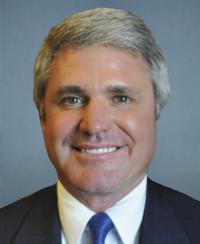
I thank the gentlelady from Florida. Mr. Speaker, let me say first that I support a military strategy to deal with the drug cartels. Having come from Texas, having worked counterterrorism with the…
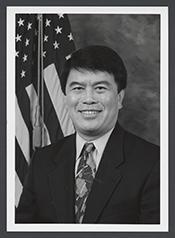
Mr. Speaker, I thank the chairman for his many kindnesses. Thomas Jefferson once said that ``no two countries upon Earth have so many points of common interest and friendship'' as the United States…
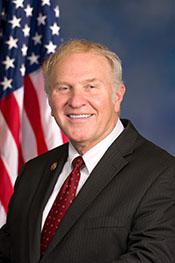
I thank the gentlelady for yielding. Mr. Speaker, I'll be brief. Let me just start by saying that I appreciate both the chairman's and the ranking member's work on this critical issue. Drugs and…
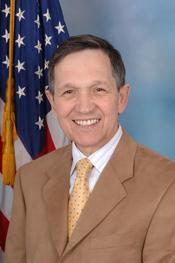
Mr. Speaker, I rise today in opposition of H.R. 6028 and the program it would authorize, Merida Initiative. I would like to thank Chairman Berman for his efforts to ensure that the Merida Initiative…
Show 10 more
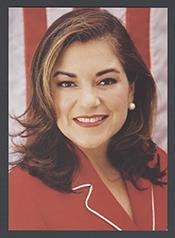
Mr. Speaker, I rise in support of H.R. 6028, the Merida Initiative to Combat Illicit Narcotics and Reduce Organized Crime Authorization Act of 2008. H.R. 6028 creates a foundation for future…
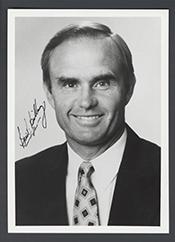
Mr. Speaker, FDR made a statement about why he was giving aid to England to fight Nazi Germany, and that statement was, when your neighbor's home is burning, only a fool would not let them borrow…
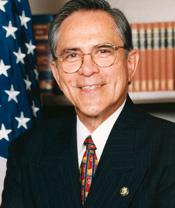
Mr. Speaker, I rise today in support of an issue of great importance to both the Nation and my congressional district in south Texas. As a life-long resident of the southern border region, America's…

Mr. Speaker, I rise today to discuss HR 6028, ``The Merida Initiative to Combat Illicit Narcotics and Reduce Organized Crime Authorization Act of 2008.'' This bill would fund, train and equip Mexican…
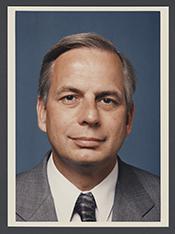
Mr. Speaker, I want to thank my chairman of the Foreign Affairs Committee. This is my first term on the Foreign Affairs Committee. But I am not here necessarily as a committee member. I am here as a…

Madam Speaker, I was unable to be present for votes on June 9 or 10. For the information of my constituents and my colleagues, I want the Record to reflect how I would have voted on the following…
Mr. Speaker, I rise today in opposition to H.R. 6028. With our economy facing serious, mounting challenges, and Americans facing unprecedented energy prices, I cannot support sending money to Mexico…

Mr. Speaker, at a time of record national debt and deficit, at a time when gasoline prices are now well over $4, when oil is over $130 a barrel and Mexico is sitting on one of the largest oil…
Mr. Speaker, on that I demand the yeas and nays.
I yield back the balance of my time.
Bill Text
4 versions available
        [Congressional Bills 110th Congress]
[From the U.S. Government Publishing Office]
[H.R. 6028 Referred in Senate (RFS)]

2d Session
H. R. 6028

_______________________________________________________________________

IN THE SENATE OF THE UNITED STATES

June 11, 2008

Received; read twice and referred to the Committee on Foreign Relations

_______________________________________________________________________

AN ACT

To authorize law enforcement and security assistance, and assistance to
enhance the rule of law and strengthen civilian institutions, for
Mexico and the countries of Central America, and for other purposes.

Be it enacted by the Senate and House of Representatives of the
United States of America in Congress assembled,

SECTION 1. SHORT TITLE AND TABLE OF CONTENTS.

(a) Short Title.--This Act may be cited as the ``Merida Initiative
to Combat Illicit Narcotics and Reduce Organized Crime Authorization
Act of 2008''.
(b) Table of Contents.--The table of contents for this Act is as
follows:

Sec. 1. Short title and table of contents.
Sec. 2. Definitions.
TITLE I--ASSISTANCE FOR MEXICO

Sec. 101. Findings.
Sec. 102. Declarations of policy.
Subtitle A--Law Enforcement and Security Assistance

Sec. 111. Purposes of assistance.
Sec. 112. Authorization of assistance.
Sec. 113. Activities supported.
Sec. 114. Limitation on assistance.
Sec. 115. Authorization of appropriations.
Subtitle B--Assistance to Enhance the Rule of Law and Strengthen
Civilian Institutions

Sec. 121. Sense of Congress.
Sec. 122. Authorization of assistance.
Sec. 123. Activities supported.
Sec. 124. Authorization of appropriations.
TITLE II--ASSISTANCE FOR COUNTRIES OF CENTRAL AMERICA

Sec. 201. Findings.
Sec. 202. Declarations of policy.
Subtitle A--Law Enforcement and Security Assistance

Sec. 211. Purposes of assistance.
Sec. 212. Authorization of assistance.
Sec. 213. Activities supported.
Sec. 214. Limitation on assistance.
Sec. 215. Authorization of appropriations.
Subtitle B--Assistance to Enhance the Rule of Law and Strengthen
Civilian Institutions

Sec. 221. Authorization of assistance.
Sec. 222. Activities supported.
Sec. 223. Authorization of appropriations.
TITLE III--ADMINISTRATIVE PROVISIONS

Sec. 301. Conditions on provision of assistance.
Sec. 302. Limitations on provision of assistance.
Sec. 303. Limitation on monitoring.
Sec. 304. Exemption from prohibition on assistance for law enforcement
forces.
Sec. 305. Relationship to other authority.
Sec. 306. Rule of construction.
TITLE IV--SUPPORT ACTIVITIES IN THE UNITED STATES

Sec. 401. Report on reduction of drug demand in the United States.
Sec. 402. Reduction of southbound flow of illegal weapons.
Sec. 403. Reduction of southbound flow of illegal precursor chemicals
and bulk-cash transfers.
Sec. 404. Report.
TITLE V--MISCELLANEOUS PROVISIONS

Sec. 501. Coordinator of United States Government Activities to
Implement the Merida Initiative.
Sec. 502. Metrics and oversight mechanisms.
Sec. 503. Report.
Sec. 504. Sense of Congress.
Sec. 505. Sunset.

SEC. 2. DEFINITIONS.

In this Act:
(1) Appropriate congressional committees.--The term
``appropriate congressional committees''--
(A) means--
(i) the Committee on Appropriations and the
Committee on Foreign Affairs of the House of
Representatives; and
(ii) the Committee on Appropriations and
the Committee on Foreign Relations of the
Senate; and
(B) for purposes of titles IV and V, includes the
Committee on the Judiciary of the House of
Representatives and the Committee on the Judiciary of
the Senate.
(2) Countries of central america.--The term ``countries of
Central America'' means Belize, Costa Rica, El Salvador,
Guatemala, Honduras, Nicaragua, and Panama and includes Haiti
and the Dominican Republic.
(3) Merida initiative.--The term ``Merida Initiative''
means the program announced by the United States and Mexico on
October 22, 2007, to fight illicit narcotics trafficking and
criminal organizations throughout the Western Hemisphere.

TITLE I--ASSISTANCE FOR MEXICO

SEC. 101. FINDINGS.

Congress finds the following:
(1) The drug crisis facing the United States remains a
significant national security threat.
(2) The Government Accountability Office (GAO) estimates
that 90 percent of illegal drugs that enter the United States
come through the Mexico-Central America corridor.
(3) The same smuggling routes that are used to bring
illegal narcotics north are utilized to illegally distribute
arms, precursor chemicals, and bulk cash transfers south.
(4) Drug gangs that operate in the United States, Mexico,
and Central America have become sophisticated and vertically-
integrated operations expert at penetrating the United States-
Mexico border.
(5) Narcotics-related activity and expanding cross-border
trafficking is dangerously undermining the security environment
for our neighbors to the South, as well as in the United
States.
(6) Mexico can and has served as a critical ally and
partner in stemming the flow of illegal narcotics into the
United States. Under the leadership of Mexican President Felipe
Calderon, the United States and Mexico have initiated an
approach of joint responsibility to confront the threat of
illicit narcotics trafficking and organized crime in the
Western Hemisphere.
(7) The spread of illicit narcotics through United States
borders and the violence that accompanies it cannot be halted
without a comprehensive interdiction and security strategy
planned and executed jointly with our southern neighbors.
(8) In March 2007, President George W. Bush and Mexican
President Calderon held a summit in the Mexican City of Merida
and agreed that the United States and Mexico must expand
bilateral and regional cooperation to fight violence stemming
from narcotrafficking and regional criminal organizations.
(9) On October 22, 2007, the United States and Mexico
issued a joint statement announcing the Merida Initiative, a
program to fight illicit narcotics trafficking and criminal
organizations throughout the Western Hemisphere.
(10) In the joint statement--
(A) Mexico pledged to ``strengthen its operational
capabilities to more effectively fight drug-traffickers
and organized crime'';
(B) the United States pledged ``to intensify its
efforts to address all aspects of drug trafficking
(including demand-related portions) and continue to
combat trafficking of weapons and bulk currency to
Mexico''; and
(C) both nations pledged to ``augment cooperation,
coordination, and the exchange of information to fight
criminal organizations on both sides of the border''.
(11) A long-term strategy to adequately contain the
northbound and southbound flows of illicit narcotics along the
United States-Mexico border, as well as protect the vast and
free flow of trade, will require the United States to partner
with its southern neighbors in their efforts to build the
capacity of their own law enforcement agencies and enhance the
rule of law, as well as to fortify United States illicit
narcotics reduction efforts.

SEC. 102. DECLARATIONS OF POLICY.

Congress makes the following declarations:
(1) The Merida Initiative is a critical part of a growing
partnership and strategy of cooperation between the United
States and its southern neighbors to confront the illegal flow
of narcotics as well as violence and organized crime that it
has spawned.
(2) The United States needs to ensure the free flow of
trade between the United States and its critical neighbor,
Mexico, while ensuring that the United States border is
protected from illegal smuggling into the United States.
(3) The United States must intensify efforts to stem the
flow of precursor chemicals, bulk cash, and the so-called
``iron-river'' of arms illegally flowing south, as well as
demand-related aspects of the illicit narcotics phenomenon.
(4) The United States should provide its expertise to meet
immediate security needs along the United States-Mexico border,
fight the production and flow of illicit narcotics, and support
Mexico in its efforts to do the same.
(5) The United States should support the Government of
Mexico's work to expand its own law enforcement to
independently conduct successful counternarcotics and organized
crime-related operations.
(6) The Merida Initiative reflects the belief that Mexican
military involvement is required in the short-term to stabilize
the security situation, but that most aspects of this problem
fall into the realm of law enforcement.
(7) In implementing the Merida Initiative, the United
States should work with its southern neighbors to mitigate the
so-called ``balloon effect'' in which successful
counternarcotics efforts shift narcotics-related activities to
other areas.
(8) The United States should coordinate with the Congress
of the Union of Mexico to ensure full partnership on the
programs authorized under this Act.

Subtitle A--Law Enforcement and Security Assistance

SEC. 111. PURPOSES OF ASSISTANCE.

The purposes of assistance under this subtitle are to--
(1) enhance the ability of the Government of Mexico, in
cooperation with the United States, to control illicit
narcotics production, trafficking, drug trafficking
organizations, and organized crime;
(2) help build the capacity of law enforcement forces of
Mexico to control illicit narcotics production, trafficking,
drug trafficking organizations, and organized crime;
(3) aid the support role that the armed forces of Mexico is
providing to law enforcement agencies of Mexico as the security
situation in Mexico is initially stabilized;
(4) protect and secure the United States-Mexico border, and
control illegal activity going south as well as north;
(5) strengthen the bilateral and regional ties of the
United States with Mexico and the countries of Central America
by assuming shared responsibility and offering concrete
assistance in this area of great mutual concern;
(6) strengthen respect for internationally recognized human
rights and the rule of law in efforts to stabilize the security
environment relating to illicit narcotics production and
trafficking and organized crime; and
(7) support the judicial branches of the Government of
Mexico and the countries of Central America, as well as support
anti-corruption efforts in those countries; and
(8) respond to the direct requests of the Government of
Mexico that the United States reduce the demand for illicit
narcotics in the United States, stem the flow of illegal arms
into Mexico from the United States, stem the flow of illegal
bulk-cash transfers into Mexico from the United States, and
stem the flow of illegal precursor chemicals into Mexico from
the United States.

SEC. 112. AUTHORIZATION OF ASSISTANCE.

To carry out the purposes of section 111, the President is
authorized to provide assistance for Mexico to support the activities
described in section 113.

SEC. 113. ACTIVITIES SUPPORTED.

(a) In General.--Activities that may be supported by assistance
under section 112 include the following:
(1) Counternarcotics and countertrafficking.--To assist in
building the capacity of law enforcement and security forces of
Mexico to eradicate illicit narcotics trafficking and reduce
trafficking-fueled violence, including along the United States-
Mexico border, including assistance such as--
(A) radar and aerial surveillance equipment;
(B) land and maritime interdiction equipment and
training, including--
(i) transport helicopters and night-
operating capabilities;
(ii) surveillance platform planes; and
(iii) maintenance and training relating to
maintenance of aircraft; and
(C) training of security and law enforcement units
to plan and execute counternarcotics operations.
(2) Port, airport, and related security.--To assist in
monitoring and controlling the United States-Mexico border and
the border between Mexico and Central America to combat illicit
narcotics trafficking, including assistance such as--
(A) computer infrastructure and equipment;
(B) secure communications networks; and
(C) nonintrusive monitoring technology.
(3) Operational technology.--
(A) Assistance objectives.--To assist in
investigation and collection of intelligence against
illicit drug trafficking organizations, including--
(i) expansion of intelligence databases;
and
(ii) hardware, operating systems, and
training for updating the communications
networks of security agencies.
(B) Sense of congress.--It is the sense of Congress
that--
(i) operational technology transferred to
the Government of Mexico for intelligence or
law enforcement purposes should be used solely
for the purposes for which the operational
technology was intended; and
(ii) the United States should take all
necessary steps to ensure that use of
operational technology described in clause (i)
is consistent with United States law, including
protections of freedom of expression, freedom
of movement, and freedom of association.
(4) Public security and law enforcement.--To assist in the
modernization of law enforcement entities and prevent crime,
including assistance and activities such as--
(A) law enforcement training and equipment,
including--
(i) transport helicopters;
(ii) surveillance aircraft, including
Cessna Caravan light utility aircraft;
(iii) nonintrusive inspection equipment;
and
(iv) human rights training for law
enforcement units;
(B) enhancement of the Government of Mexico's
financial intelligence unit;
(C) safety-related equipment for law enforcement
officers and prosecutors, including protective vests
and helmet sets;
(D) reduction of drug demand in Mexico, including
activities such as--
(i) assistance to the National Council
Against Addictions (CONADIC) to establish an
Internet web-based support network;
(ii) establishment of a national data
center to support the CONADIC; and
(iii) training of CONADIC and other agency
staff in best practices and outreach and
treatment programs, and design of a methodology
to implement best practices in conjunction with
the National Network for Technological
Transfers in Addiction.
(b) Provision of Helicopters.--Funds made available to carry out
this subtitle to provide helicopters to the Government of Mexico,
shall, to the extent possible, be used to procure or provide
helicopters that are of a similar manufacture to those helicopters
already in the possession of the Government of Mexico in order to
facilitate integration of those assets into Mexico's existing air
fleet.
(c) Sense of Congress.--It is the sense of Congress that the United
States shall ensure, to the extent possible, that assistance under this
subtitle is made available and cross-utilized by the armed forces of
Mexico and relevant law enforcement agencies of the Government of
Mexico, including the Mexican Office of the Attorney General.

SEC. 114. LIMITATION ON ASSISTANCE.

(a) Limitation.--No assistance may be provided under this subtitle
to any unit of the armed forces of Mexico or any unit of the law
enforcement agencies of Mexico if the Secretary of State determines
that, consistent with section 620J of the Foreign Assistance Act of
1961 (22 U.S.C. 2378d), there is credible evidence that such unit has
committed gross violations of human rights.
(b) Exception.--The limitation in subsection (a) shall not apply if
the Secretary of State determines and reports to the appropriate
congressional committees that the Government of Mexico is taking
effective measures to bring the responsible members of the unit of the
armed forces or law enforcement agencies, as the case may be, to
justice.

SEC. 115. AUTHORIZATION OF APPROPRIATIONS.

(a) In General.--To carry out this subtitle, there are authorized
to be appropriated to the President $350,000,000 for fiscal year 2008,
$390,000,000 for fiscal year 2009, and $40,000,000 for fiscal year
2010.
(b) Limitation.--
(1) In general.--Of the amounts appropriated pursuant to
the authorization of appropriations under subsection (a)--
(A) not more than $205,000,000 may be provided as
assistance for the armed forces of Mexico for 2008;
(B) not more than $120,000,000 may be provided as
assistance for the armed forces of Mexico for 2009; and
(C) not more than $9,000,000 may be provided as
assistance for the armed forces of Mexico for 2010.
(2) Additional limitation.--None of the funds appropriated
pursuant to the authorization of appropriations under
subsection (a) for fiscal year 2009 may be provided as
assistance for the Mexican Secretariat of Public Security until
the President determines that the Mexican National Registry of
Police Personnel (Registro Nacional de Personal Policial) is
operational at the federal, state, and local levels.
(c) Availability.--Amounts appropriated pursuant to the
authorization of appropriations under subsection (a) are--
(1) authorized to remain available until expended; and
(2) in addition to funds otherwise available for such
purposes, including funds available under chapter 8 of part I
of the Foreign Assistance Act of 1961 (22 U.S.C. 2291 et seq.).

Subtitle B--Assistance to Enhance the Rule of Law and Strengthen
Civilian Institutions

SEC. 121. SENSE OF CONGRESS.

It is the sense of Congress that, as a critical part of a joint,
comprehensive security, counternarcotics, and organized crime
initiative, the United States should support--
(1) programs of the United States Agency for International
Development and other United States agencies focused on
strengthening civilian institutions and rule of law programs in
Mexico at the federal, state, and local levels; and
(2) anti-corruption, transparency, and human rights
programs to ensure due process and expand a culture of
lawfulness in Mexico.

SEC. 122. AUTHORIZATION OF ASSISTANCE.

The President is authorized to provide assistance for Mexico to
support the activities described in section 123.

SEC. 123. ACTIVITIES SUPPORTED.

Activities that may be supported by assistance under section 122
include the following:
(1) Institution building and rule of law.--To assist
Mexico's efforts to expand the rule of law and build the
capacity, transparency, and trust in government institutions,
including assistance such as--
(A) rule of law and systemic improvements in
judicial and criminal justice sector institutions,
including--
(i) courts management and prosecutorial
capacity building;
(ii) prison reform activities, including
those relating to anti-gang and anti-organized
crime efforts;
(iii) anti-money laundering programs;
(iv) victim and witness protection and
restitution; and
(v) promotion of transparent oral trials
via training for the judicial sector;
(B) police professionalization, including--
(i) training regarding use of force;
(ii) human rights education and training;
(iii) training regarding evidence
preservation and chain of custody; and
(iv) enhanced capacity to vet candidates;
(C) support for the Mexican Office of the Attorney
General, including--
(i) judicial processes improvement and
coordination;
(ii) enhancement of forensics capabilities;
(iii) data collection and analyses;
(iv) case tracking and management;
(v) financial intelligence functions; and
(vi) maintenance of data systems.
(2) Anti-corruption, transparency, and human rights.--To
assist law enforcement and court institutions in Mexico to
develop mechanisms to ensure due process and proper oversight
and to respond to citizen complaints, including assistance such
as--
(A) enhancement of polygraph capability in the
Mexican Police agency (SSP);
(B) support for greater transparency and
accountability in the Mexican legal system, including--
(i) establishment of a center in the
Mexican Office of the Attorney General for
receipt of citizen complaints;
(ii) establishment of clerk of the court
system to track cases and pretrial detentions;
(iii) reorganization of human and financial
resources systems; and
(iv) equipping and training of criminal
investigators; and
(C) promotion of human rights, including--
(i) support for human rights organizations,
bar associations, and law schools; and
(ii) training for police, prosecutors, and
corrections officers.
(3) Prevention.--To assist in the prevention of individuals
from participating in illicit narcotics-related violent
activities, such as--
(A) establishment of programs that address domestic
violence and increase school attendance rates; and
(B) expansion of intervention programs, including
after-school programs and programs for at-risk and
criminal involved youth.
(4) Development.--To assist in the development of areas
where lack of jobs breeds illicit narcotics-related violence,
including--
(A) expansion of alternative livelihood programs,
including job creation programs and rural development
programs and the provision of microenterprise
development assistance under title VI of chapter 2 of
part I of the Foreign Assistance Act of 1961 (22 U.S.C.
2211 et seq.); and
(B) establishment of gang reeducation and training
programs.

SEC. 124. AUTHORIZATION OF APPROPRIATIONS.

(a) In General.--To carry out this subtitle, there are authorized
to be appropriated to the President $120,000,000 for fiscal year 2008,
$100,000,000 for fiscal year 2009, and $110,000,000 for fiscal year
2010.
(b) Availability.--Amounts appropriated pursuant to the
authorization of appropriations under subsection (a) are--
(1) authorized to remain available until expended; and
(2) in addition to funds otherwise available for such
purposes, including funds available under chapter 8 of part I
of the Foreign Assistance Act of 1961.

TITLE II--ASSISTANCE FOR COUNTRIES OF CENTRAL AMERICA

SEC. 201. FINDINGS.

Congress finds the following:
(1) A May 2007 report by the United Nations Office on Drugs
and Crime (UNODC) argues that countries of Central America are
particularly vulnerable to violent crimes fueled by illicit
narcotics trafficking and corruption because such countries are
geographically located between the world's largest drug
producing and drug consuming countries.
(2) According to Assistant Secretary of State for Western
Hemisphere Affairs Thomas Shannon, ``[T]he nations of Central
America have committed to collective action to address these
common security concerns. Through the Central American
Integration System (SICA), the governments have expressed the
political resolve to join forces to strengthen regional
security; however they lack sufficient tools and capacity to
execute such will.''.
(3) Crime and violence in Central America has increased in
recent years.
(4) In 2005, the estimated murder rate per 100,000 people
was roughly 56 in El Salvador, 41 in Honduras, and 38 in
Guatemala.
(5) Youth gang violence has been one of the major factors
contributing to increased violence in Central America, with the
United States Southern Command estimating that there are 70,000
gang members in Central America.
(6) Many Central American youth gangs are transnational and
negatively impact both Central America and the United States.
(7) Youth gang violence cannot be curbed only through
enforcement, but must also include a substantial investment in
prevention, rehabilitation, and reintegration.
(8) Deportees sent from the United States back to Central
America, while not a central cause of crime and violence, can
contribute to crime and violence in Central America.
(9) Guatemala has experienced a surge in murders of women
in recent years, many of which have been committed by illicit
narcotics traffickers and other organized criminals.
(10) Violence between partners, particularly violence by
men against their wives or girlfriends, is widespread in
Central America, and an international violence against women
survey comparing selected countries in Africa, Latin America,
Europe, and Asia found that 60 percent of women in Costa Rica--
often considered the least violent country in Central America--
reported having experienced domestic violence during their
lives.
(11) Weak justice systems in the countries of Central
America have led to a high level of impunity in Central
America.
(12) The United Nations International Commission against
Impunity in Guatemala (CICIG) was recently created to begin to
address impunity related to illegally armed groups in
Guatemala.
(13) The United States and the Central American Integration
System (SICA) signed an agreement in July 2007 to improve
intelligence sharing and policing and to institutionalize
dialogue on regional security.

SEC. 202. DECLARATIONS OF POLICY.

Congress makes the following declarations:
(1) A long-term United States strategy to curb illicit
narcotics trafficking must include Central America, which is
the corridor for 90 percent of the cocaine that transits from
South America to the United States.
(2) It is in the interest of the United States to support a
long-term commitment to assisting the countries of Central
America to improve security by combating illicit narcotics
trafficking, investing in prevention programs, increasing
intelligence sharing, improving regional security coordination,
improving border and customs capabilities, professionalizing
police, justice, and other government officials, and funding
programs to reintegrate deportees from the United States.
(3) The countries of Central America are committed to
combating illicit narcotics trafficking and its related
violence and crime, including gang violence, and the United
States must seize the opportunity to work in partnership with
Central America.

Subtitle A--Law Enforcement and Security Assistance

SEC. 211. PURPOSES OF ASSISTANCE.

The purposes of assistance authorized by this subtitle are to--
(1) enhance the ability of governments of countries of
Central America to control illicit narcotics production,
trafficking, illicit drug trafficking organizations, and
organized crime;
(2) help build the capacity of law enforcement agencies of
the countries of Central America to control illicit narcotics
production, trafficking, illicit drug trafficking
organizations, and organized crime;
(3) strengthen the bilateral ties of the United States with
the countries of Central America by offering concrete
assistance in this area of great mutual concern;
(4) strengthen respect for internationally recognized human
rights and the rule of law in efforts to stabilize the security
environment relating to illicit narcotics production and
trafficking and organized crime; and
(5) support the judicial branch of governments of the
countries of Central America, as well as to support anti-
corruption efforts in such countries.

SEC. 212. AUTHORIZATION OF ASSISTANCE.

To carry out the purposes of section 211, the President is
authorized to provide assistance for the countries of Central America
to support the activities described in section 213.

SEC. 213. ACTIVITIES SUPPORTED.

Activities that may be supported by assistance under section 212
include the following:
(1) Counternarcotics, countertrafficking, and related
security.--
(A) Assistance objectives.--To assist in the
following:
(i) Investigation and collection of
intelligence against illicit narcotics
trafficking.
(ii) Combating illegal trafficking in arms.
(iii) Prevention of bulk currency
smuggling.
(iv) Collection of information on crime and
establishment of a regional database.
(B) Assistance.--Activities under subparagraph (A)
may include--
(i) automated fingerprint identification
systems (AFIS);
(ii) vetting sensitive investigative units
to collaborate on counternarcotics at the
federal, state, and local levels;
(iii) technical assistance to develop
strong and effective financial crimes
investigation units;
(iv) maritime security support, including
refurbishing and procuring patrol boats;
(v) firearms interdiction training; and
(vi) illicit narcotics demand reduction
programs.
(2) Public security and law enforcement.--To assist in
building the capacity of the police in countries of Central
America, supporting efforts to combat transnational gangs,
investing in gang prevention and rehabilitation programs, and
programs for the reintegration of deportees, including
assistance such as--
(A) funding to continue the United States-Central
American Integration System (SICA) Dialogue;
(B) youth gang prevention activities, including
targeted education for at-risk youth, vocational
training and funding of community centers in areas with
high youth gang violence rates and other risk factors;
(C) programs to reintegrate deportees from the
United States back into the societies of their home
countries to avoid further criminal activity;
(D) transnational anti-gang initiatives;
(E) police professionalization, including--
(i) training regarding use of force;
(ii) human rights education and training;
(iii) training regarding evidence
preservation and chain of custody; and
(iv) enhanced capacity to vet candidates;
(F) utilization of the International Law
Enforcement Academy (ILEA) in El Salvador consistent
with traditional respect for human rights and
professional police practices;
(G) police training programs of the Organization of
American States (OAS );
(H) police equipment, including communications
equipment; and
(I) anti-domestic violence education programs and
women's shelters.

SEC. 214. LIMITATION ON ASSISTANCE.

(a) Limitation.--No assistance may be provided under this subtitle
to any unit of the armed forces of a country of Central America or any
unit of the law enforcement agencies of a country of Central America if
the Secretary of State determines that, consistent with section 620J of
the Foreign Assistance Act of 1961 (22 U.S.C. 2378d), there is credible
evidence that such unit has committed gross violations of human rights.
(b) Exception.--The limitation in subsection (a) shall not apply if
the Secretary of State determines and reports to the appropriate
congressional committees that the government of the relevant country of
Central America is taking effective measures to bring the responsible
members of the unit of the armed forces or law enforcement agencies, as
the case may be, to justice.

SEC. 215. AUTHORIZATION OF APPROPRIATIONS.

(a) In General.--To carry out this subtitle, there are authorized
to be appropriated to the President $60,000,000 for fiscal year 2008,
$80,000,000 for fiscal year 2009, and $80,000,000 for fiscal year 2010.
(b) Availability.--Amounts appropriated pursuant to the
authorization of appropriations under subsection (a) are--
(1) authorized to remain available until expended; and
(2) in addition to funds otherwise available for such
purposes, including funds under chapters 2 and 8 of part I of
the Foreign Assistance Act of 1961 (22 U.S.C. 2166 and 2291 et
seq.).
(c) Limitation.--Of the amounts appropriated pursuant to the
authorization of appropriations under subsection (a) for any fiscal
year, at least $15,000,000 should be made available to carry out
section 213(2)(B).

Subtitle B--Assistance to Enhance the Rule of Law and Strengthen
Civilian Institutions

SEC. 221. AUTHORIZATION OF ASSISTANCE.

The President is authorized to provide assistance for the countries
of Central America to support the activities described in section 222.

SEC. 222. ACTIVITIES SUPPORTED.

Activities that may be supported by assistance under section 221
include assistance in building the capacity, transparency, and trust in
the justice system of the countries of Central America and reducing
high impunity rates in the countries of Central America, including
assistance such as--
(1) improved police academies and entry level training on
crime investigations;
(2) courts management and prosecutor capacity building;
(3) witness and victim protection programs, including in
Guatemala in coordination with the United Nations International
Commission Against Impunity in Guatemala (CICIG);
(4) programs to enhance transparency in the procedures to
designate and remove personnel in the recipient country's
judicial system;
(5) prosecutor and judge protection programs, including in
Guatemala and in coordination with the CICIG;
(6) short-term assignment of United States Government
personnel to the CICIG to provide technical assistance for
criminal investigations, specifically but not limited to
investigations involving money laundering so long as this
assignment does not negatively impact United States domestic
operations;
(7) regional juvenile justice reform;
(8) prison management;
(9) programs to rehabilitate gang members released from
prison, including job training; and
(10) community policing, including human rights and use of
force training for community policing projects.

SEC. 223. AUTHORIZATION OF APPROPRIATIONS.

(a) In General.--To carry out this title, there are authorized to
be appropriated to the President $40,000,000 for fiscal year 2008,
$50,000,000 for fiscal year 2009, and $95,000,000 for fiscal year 2010.
(b) Availability.--Amounts appropriated pursuant to the
authorization of appropriations under subsection (a) are--
(1) authorized to remain available until expended; and
(2) in addition to funds otherwise available for such
purposes, including funds available under chapters 2 and 8 of
part I of the Foreign Assistance Act of 1961 (22 U.S.C. 2166
and 2291 et seq.).

TITLE III--ADMINISTRATIVE PROVISIONS

SEC. 301. CONDITIONS ON PROVISION OF ASSISTANCE.

(a) In General.--The President may not provide assistance under
title I or II to a foreign country for a fiscal year until the end of a
15-day period beginning on the date on which the President transmits to
the appropriate congressional committees a determination that the
requirements described in subsection (b) have been met with respect to
the government of such foreign country for such fiscal year.
(b) Required Determination.--The requirements referred to in
subsection (a) are the following:
(1) The provision of assistance will not adversely affect
the human rights situation in the foreign country.
(2) Vetting procedures are in place to ensure that members
and units of the armed forces and law enforcement agencies of
the foreign country that may receive assistance under title I
or II have not been involved in human rights violations.
(3) The civilian authority in the foreign country is
investigating and prosecuting any member of any government
agency or entity receiving assistance under title I or II who
has been credibly alleged to have committed human rights
violations on or after the date of the enactment of this Act.
(4) Equipment and material provided as support is being
used only by officials and employees of the government of the
foreign country who have been approved by such government to
perform counternarcotics activities, including on the basis of
the background investigations by such government.
(5) The government of the foreign country has cooperated
with the Secretary of State to ensure that--
(A) the equipment and material provided as support
will be used only by the officials and employees
referred to in paragraph (4);
(B) none of the equipment or material will be
transferred (by sale, gift, or otherwise) to any person
or entity not authorized by the United States to
receive the equipment or material; and
(C) the equipment and material will, to the extent
possible, be used for the purposes intended by the
United States Government and will be utilized by those
agencies for which such assistance is intended.
(6) The government of the foreign country has implemented,
in consultation with the Secretary of State, a system that will
provide an accounting and inventory of the equipment and
material provided as support.
(7) The government of the foreign country will, along with
United States personnel, conduct periodic observation and
review of the use of the equipment and material provided as
support under terms and conditions similar to the terms and
conditions imposed with respect to such observation and review
under section 505(a)(3) of the Foreign Assistance Act of 1961
(22 U.S.C. 2314(a)(3)).
(8) To the extent the foreign country has received
equipment in the past, it has utilized the equipment properly
and in a manner that warrants additional provision of equipment
or assistance.

SEC. 302. LIMITATIONS ON PROVISION OF ASSISTANCE.

(a) Sense of Congress.--It is the sense of Congress that--
(1) activities undertaken under titles I and II of this Act
should be performed wherever possible by official employees,
personnel, or officers of the federal, state, or local
government of the recipient foreign country; and
(2) the United States should limit, to the maximum extent
possible, the number of United States civilians and foreign
nationals retained as contractors in a recipient country.
(b) Limitations.--Except as provided in subsection (c)--
(1) none of the funds made available to carry out title I
may be available for the employment of any United States
individual civilian retained as a contractor in Mexico or any
foreign national retained as a contractor if that employment
would cause the total number of individual civilian contractors
employed in Mexico in support of the Merida Initiative who are
funded by United States funds to exceed 50;
(2) none of the funds made available to carry out title II
may be available for the employment of any United States
individual civilian retained as a contractor in a country of
Central America or any foreign national retained as a
contractor if that employment would cause the total number of
individual civilian contractors employed in all countries of
Central America in support of the Merida Initiative who are
funded by United States funds to exceed 100; and
(3) none of the funds made available under this Act shall
be made available for budget support or cash payments.
(c) Exception.--The limitations contained in subsection (b) shall
not apply if the President determines that it is in the national
interest of the United States that such limitations shall not apply and
transmits to the appropriate congressional committees a notification
thereof.

SEC. 303. LIMITATION ON MONITORING.

Beginning on October 1, 2009, no surveillance-related equipment may
be transferred under this Act to any entity of Mexico or a country of
Central America unless the President determines that the recipient
country has cooperated with the United States to ensure that such
equipment will be used principally for the purposes for which it is
provided.

SEC. 304. EXEMPTION FROM PROHIBITION ON ASSISTANCE FOR LAW ENFORCEMENT
FORCES.

Notwithstanding section 660 of the Foreign Assistance Act of 1961
(22 U.S.C. 2420; relating to the prohibition on assistance to foreign
law enforcement forces), the President may provide assistance under
title I or II if, at least 15 days before providing the assistance, the
President notifies the Committee on Foreign Affairs of the House of
Representatives and the Committee on Foreign Relations of the Senate,
in accordance with the procedures applicable to reprogramming
notifications pursuant to section 634A of the Foreign Assistance Act
(22 U.S.C. 2394-1), that (1) it is in the national interest to provide
such assistance, and (2) the recipient country is making significant
progress to eliminating any human rights violations.

SEC. 305. RELATIONSHIP TO OTHER AUTHORITY.

(a) Assistance Under Title I.--The authority to provide assistance
under title I is in addition to any other authority to provide
assistance for Mexico.
(b) Assistance Under Title II.--The authority to provide assistance
under title I is in addition to any other authority to provide
assistance for the countries of Central America.

SEC. 306. RULE OF CONSTRUCTION.

Nothing in title I or II shall be construed to alter, modify, or
otherwise affect the provisions of the Arms Export Control Act (22
U.S.C. 2751 et seq.) unless otherwise specified in this Act.

TITLE IV--SUPPORT ACTIVITIES IN THE UNITED STATES

SEC. 401. REPORT ON REDUCTION OF DRUG DEMAND IN THE UNITED STATES.

(a) Sense of Congress.--It is the sense of Congress that--
(1) supply-side drug reduction strategies when executed
alone are not an effective way to fight the phenomenon of
illegal narcotics;
(2) the Government of Mexico has identified reduction of
United States drug demand as among the most important
contributions the United States can make to a joint strategy to
combat illicit narcotics trafficking; and
(3) the United States pledged in the United States-Mexico
October 2007 Joint Statement on the Merida Initiative, to
``intensify its efforts to address all aspects of drug
trafficking (including demand related portions)'' here in the
United States.
(b) Report.--Not later than 180 days after the date of the
enactment of this Act, the President shall transmit to the appropriate
congressional committees a report on the measures taken to intensify
United States efforts to address United States demand-related aspects
of the drug-trafficking phenomenon in accordance with the Joint
Statement on the Merida Initiative announced by the United States and
Mexico on October 22, 2007.

SEC. 402. REDUCTION OF SOUTHBOUND FLOW OF ILLEGAL WEAPONS.

(a) Sense of Congress.--It is the sense of Congress that--
(1) much of the increased violence in Mexico is perpetrated
using firearms and ammunition smuggled illegally from the
United States into Mexico;
(2) the Bureau of Alcohol, Tobacco, Firearms and Explosives
(ATF) has told Congress of an ``iron river of guns'' with
thousands of weapons per week illegally crossing into Mexico
from the United States;
(3) more than 90 percent of the guns confiscated yearly in
Mexico originate in the United States and approximately 40
percent of the total trafficked weapons are linked to drug
trafficking organizations;
(4) along the 2,000 mile border from Brownsville, Texas, to
San Diego, California, there are 6,700 licensed gun sellers,
but only 100 Bureau of Alcohol, Tobacco, Firearms, and
Explosives (ATF) special agents to investigate allegations of
weapons trafficking and only 35 inspectors to ensure compliance
with United States laws;
(5) on January 16, 2008, ATF announced that it will add 25
special agents and 15 inspectors to their Project Gunrunner
along the Southwest Border. And, the ATF budget request for
fiscal year 2009 includes funding for another 12 inspectors;
and
(6) an effective strategy to combat these illegal arms
flows is a critical part of a United States contribution to a
jointly executed anti-narcotics strategy with Mexico.
(b) Project Gunrunner Initiative.--
(1) In general.--The Attorney General shall, to the extent
amounts are made available to carry out this subsection
pursuant to paragraph (4), use such amounts for the Project
Gunrunner initiative (hereafter in this subsection referred to
as the ``initiative'') of the Bureau of Alcohol, Tobacco,
Firearms, and Explosives to expand the resources provided to
identify, investigate, and prosecute individuals involved in
the trafficking of firearms across the United States-Mexico
border.
(2) Activities.--In carrying out paragraph (1), the
Attorney General shall--
(A) assign additional agents of the Bureau of
Alcohol, Tobacco, Firearms, and Explosives to the area
of the United States adjacent to the United States-
Mexico border to support the expansion of the
initiative;
(B) establish not fewer than 1 initiative team in
each State along the United States-Mexico border; and
(C) coordinate with the heads of other relevant
federal law enforcement agencies and State and local
law enforcement agencies to address firearms
trafficking in a comprehensive manner.
(3) Additional staff.--The Attorney General may hire
additional persons to be Bureau of Alcohol, Tobacco, Firearms,
and Explosives agents for, and may use such other resources as
may be necessary to adequately support, the initiative.
(4) Authorization of appropriations.--To carry out this
subsection, there are authorized to be appropriated to the
Attorney General $15,000,000 for each of the fiscal years 2008
through 2010.
(c) Enhanced International Cooperation.--
(1) In general.--In carrying out this subsection, the
Attorney General, in cooperation with the Secretary of State,
is authorized and encouraged, as appropriate, to--
(A) assign agents of the Bureau of Alcohol,
Tobacco, Firearms, and Explosives to the United States
mission in Mexico, specifically in areas adjacent to
the United States-Mexico border, to work with Mexican
law enforcement agencies in conducting investigations
relating to firearms trafficking and other criminal
enterprises;
(B) provide the equipment and technological
resources necessary to support investigations and to
trace firearms recovered in Mexico; and
(C) support the training of vetted Mexican law
enforcement officers in serial number restoration
techniques and canine explosive detection.
(2) Authorization of appropriations.--To carry out this
subsection, there are authorized to be appropriated to the
Attorney General $9,500,000 for each of the fiscal years 2008
through 2010.

SEC. 403. REDUCTION OF SOUTHBOUND FLOW OF ILLEGAL PRECURSOR CHEMICALS
AND BULK-CASH TRANSFERS.

It is the sense of Congress that--
(1) a significant quantity of precursor chemicals used in
the production of illegal narcotics flows south from the United
States to Mexico;
(2) the Government of Mexico has identified reduction of
southbound flows from the United States of precursor chemicals
and bulk-cash transfers as a critical component of its anti-
narcotics strategy; and
(3) an effective strategy to combat these illegal flows is
a critical part of a United States contribution to a jointly
executed anti-narcotics strategy with Mexico.

SEC. 404. REPORT.

Not later than 180 days after the date of the enactment of this
Act, the President shall transmit to the appropriate congressional
committees a report on the measures taken to combat the southbound flow
of illegal precursor chemicals and bulk cash transfers into Mexico.

TITLE V--MISCELLANEOUS PROVISIONS

SEC. 501. COORDINATOR OF UNITED STATES GOVERNMENT ACTIVITIES TO
IMPLEMENT THE MERIDA INITIATIVE.

(a) Declaration of Policy.--Congress declares that the Merida
Initiative is a Department of State-led initiative which combines
programs of numerous United States Government departments and agencies
and therefore requires a single individual to coordinate and track all
Merida-related efforts government-wide to help avoid duplication and
facilitate accountability to Congress.
(b) Designation of High-Level Coordinator.--
(1) In general.--The President shall designate, within the
Department of State, a Coordinator of United States Government
Activities to Implement the Merida Initiative (hereafter in
this section referred to as the ``Coordinator'') who shall be
responsible for--
(A) designing an overall strategy to advance the
purposes of this Act;
(B) ensuring program and policy coordination among
agencies of the United States Government in carrying
out the policies in Mexico and Central America set
forth in this Act;
(C) ensuring that efforts of the United States
Government under this Act in Mexico and Central America
are in full consonance with the efforts of the
Government of Mexico and the governments of Central
America in implementing the Merida Initiative;
(D) tracking all United States Government
assistance which fulfills the goals of the Merida
Initiative or is closely related to the goals of the
Merida Initiative, including information required under
section 620J of the Foreign Assistance Act of 1961 (22
U.S.C. 2378d) with respect to Mexico and the countries
of Central America;
(E) coordinating among agencies of the United
States Government on all United States assistance to
Mexico and the countries of Central America, including
assistance from other relevant government agencies,
which fulfills the goals of the Merida Initiative to
avoid duplication or conflict among programs; and
(F) consulting with the Attorney General with
respect to the activities of Federal, State, and local
law enforcement authorities in the United States
related to the goals of the Merida Initiative,
particularly along the United States-Mexico border.
(2) Rank and status of the coordinator.--The Coordinator
shall have the rank and status of ambassador.

SEC. 502. METRICS AND OVERSIGHT MECHANISMS.

(a) Sense of Congress.--It is the sense of Congress that--
(1) to successfully support building the capacity of
recipient countries' civilian security institutions, enhance
the rule of law in recipient countries, and ensure the
protection of human rights, the President should establish
metrics and oversight mechanisms to track the effectiveness of
activities undertaken pursuant to this Act;
(2) long-term solutions to Mexico and Central America's
security problems depend on strengthening and holding
accountable civilian institutions;
(3) it is difficult to assess the impact of United States
assistance towards these goals absent specific oversight and
monitoring mechanisms; and
(4) the President, in developing metrics, should consult
with Congress as well as the Government of Mexico and the
Central American Integration System (SICA).
(b) Requirement.--The President shall develop metrics to identify,
track, and manage the progress of activities authorized pursuant to
this Act and use these metrics to determine the allocation of resources
for such activities.
(c) Initial Report.--
(1) In general.--Not later than 60 days after the date of
the enactment of this Act, the President shall transmit to the
appropriate congressional committees a report that specifies
metrics of achievement for each activity to be undertaken under
this Act.
(2) Contents of report.--The report shall be divided into
two sections, the first addressing those activities undertaken
pursuant to subtitle A of title I and subtitle A of title II,
and the second addressing those activities undertaken pursuant
to subtitle B of title I and subtitle B of title II. Metrics
may include the following:
(A) Indicators on long-term effectiveness of the
equipment and training provided to Mexican and Central
American security institutions.
(B) Statistics of counter narcotics-related
arrests.
(C) Number of interdictions of drug shipments.
(D) Specific progress on police reform.
(E) Counternarcotics-related arrests.
(F) Quantification of reduction of supply of
illicit narcotics into the United States.
(G) Cross-utilization, if any, of equipment among
the armed forces and law enforcement entities.
(H) Increased school attendance rates.
(I) Attendance in primary prevention programs
(J) The level of cooperation among United States,
Mexican, and Central American law enforcement agencies.

SEC. 503. REPORT.

(a) In General.--The President shall transmit to the appropriate
congressional committees a report concerning the programs and
activities carried out under this Act during the preceding fiscal year.
The first report shall be transmitted not later than 180 days after the
date of the enactment of this Act and subsequent reports shall be
transmitted not later than October 31 of each year thereafter.
(b) Matters to Be Included.--The report required under subsection
(a) shall include the following:
(1) Metrics.--A general description of the progress in
stabilizing the security situation in each recipient country as
well as combating trafficking and building its capacity based
on the metrics developed under section 502.
(2) Coordination.--Efforts of the United States Government
to coordinate its activities pursuant to section 501,
including--
(A) a description of all counternarcotics and
organized crime assistance provided to recipient
countries in the previous fiscal year;
(B) an assessment of how such assistance was
coordinated; and
(C) recommendations for improving coordination.
(3) Transfer of equipment.--A description of the transfer
of equipment, including--
(A) a description of the progress of each recipient
country toward the transfer of equipment, if any, from
its armed forces to law enforcement agencies;
(B) a list of organizations that have used the air
assets provided to the government of each recipient
country, and, to the extent possible, a detailed
description of those agencies that have utilized the
air assets, including a breakdown of the percentage of
use by each agency; and
(C) a description of training of law enforcement
agencies to operate equipment, including air assets.
(4) Human rights.--Consistent with sections 116(d) and
502B(b) of the Foreign Assistance Act of 1961 (22 U.S.C.
2151n(d) and 2304(b)) and section 504 of the Trade Act of 1974
(19 U.S.C. 2464), an assessment of the human rights impact of
the equipment and training provided under this Act, including--
(A) a list of accusations of serious human rights
abuses committed by the armed forces and law
enforcement agencies of recipient countries from the
date of enactment of this Act; and
(B) a description of efforts by the government of
recipient countries to investigate and prosecute
allegations of abuses of human rights committed by any
agency of the recipient countries.
(5) Effectiveness of equipment.--An assessment on the long-
term effectiveness of the equipment and maintenance packages
and training provided to each recipient country's security
institutions.
(6) Mexico public security strategy.--A description of
Mexico's development of a public security strategy, including--
(A) an update on the effectiveness of the Mexican
federal Registry of Police Personnel to vet police
recruiting at the National, state, and municipal levels
to prevent rehiring from one force to the next after
dismissal for corruption and other reasons; and
(B) an assessment of how the Merida Initiative
complements and supports the Mexican Government's own
public security strategy.
(7) Flow of illegal arms.--A description of efforts to
reduce the southbound flow of illegal arms.
(8) Use of contractors.--A detailed description of
contracts awarded to private companies to carry out provisions
of this Act, including--
(A) a description of the number of United States
and foreign national civilian contractors awarded
contracts;
(B) a list of the total dollar value of the
contracts; and
(C) the purposes of the contracts.
(9) Central american regional security plan.--A description
of implementation by the countries of Central America of the
Central American Regional Security Plan, including an
assessment of how the Merida Initiative complements and
supports the Central American Regional Security Plan.
(10) Phase out of law enforcement activities.--A
description of the progress of phasing out law enforcement
activities of the armed forces of each recipient country.
(11) Displacement and diversion of drug trafficking
patterns.--A description of any displacement effect and
diversion of drug trafficking patterns from Mexico and the
countries of Central America to other routes, including through
potentially vulnerable Caribbean countries.
(12) Impact on border violence and security.--A description
of the impact that activities authorized under this Act have
had on violence against United States and Mexican border
personnel and the extent to which these activities have
increased the protection and security of the United States-
Mexico border.

SEC. 504. SENSE OF CONGRESS.

It is the sense of Congress that--
(1) the United States Government requires an effective
public diplomacy strategy to explain the purposes of the Merida
Initiative; and
(2) to the extent practicable, the Secretary of State, in
coordination with other relevant heads of agencies, shall
design and implement a public diplomacy campaign regionally
regarding the Merida Initiative.

SEC. 505. SUNSET.

The authority of this Act shall expire after September 30, 2010.

Passed the House of Representatives June 10, 2008.

Attest:

LORRAINE C. MILLER,

Clerk.