Veterans' Health Care Policy Enhancement Act of 2008
Legislative Activity
Stay on top of the latest movement without scrolling through every action
Received in the Senate and Read twice and referred to the Committee on Veterans' Affairs.
July 31, 2008
View full timeline
Introduced in House
July 9, 2008
Referred to the House Committee on Veterans' Affairs.
July 9, 2008
Forwarded by Subcommittee to Full Committee by Unanimous Consent .
July 10, 2008
Committee Consideration and Mark-up Session Held.
July 16, 2008
Ordered to be Reported (Amended) by Voice Vote.
July 16, 2008
Reported (Amended) by the Committee on Veterans' Affairs. H. Rept. 110-786.
July 29, 2008
Placed on the Union Calendar, Calendar No. 505.
July 29, 2008
Mr. Filner moved to suspend the rules and pass the bill, as amended.
July 29, 2008 • 4:47 PM
Considered under suspension of the rules. (consideration: CR H7240-7244)
July 29, 2008 • 4:47 PM
DEBATE - The House proceeded with forty minutes of debate on H.R. 6445.
July 29, 2008 • 4:47 PM
At the conclusion of debate, the chair put the question on the motion to suspend the rules. Mr. Moran (KS) objected to the vote on the grounds that a quorum was not present. Further proceedings on the motion were postponed. The point of no quorum was withdrawn.
July 29, 2008 • 5:05 PM
Considered as unfinished business. (consideration: CR H7531)
July 30, 2008 • 2:56 PM
Passed/agreed to in House: On motion to suspend the rules and pass the bill, as amended Agreed to by the Yeas and Nays: (2/3 required): 421 - 0 (Roll no. 541).(text: CR 7/29/2008 H7240)
July 30, 2008 • 3:09 PM
On motion to suspend the rules and pass the bill, as amended Agreed to by the Yeas and Nays: (2/3 required): 421 - 0 (Roll no. 541). (text: CR 7/29/2008 H7240)
July 30, 2008 • 3:09 PM
Motion to reconsider laid on the table Agreed to without objection.
July 30, 2008 • 3:09 PM
The title of the measure was amended. Agreed to without objection.
July 30, 2008 • 3:09 PM
Received in the Senate and Read twice and referred to the Committee on Veterans' Affairs.
July 31, 2008
Voting History
1 vote recorded • Roll call available
Floor Debate
21 membersWhat members said about H.R. 6445 on the floor
 BF
BF DH
DH KC
KC DKA
DKA SB+16
SB+16
Floor Debate
21 membersWhat members said about H.R. 6445 on the floor
Mr. Speaker, I move to suspend the rules and pass the Senate bill (S. 2162) to improve the treatment and services provided by the Department of Veterans Affairs to veterans with post-traumatic stress…
Mr. Speaker, I move to suspend the rules and pass the Senate bill (S. 2162) to improve the treatment and services provided by the Department of Veterans Affairs to veterans with post-traumatic stress disorder and substance use disorders, and for other purposes, as amended.
Mr. Speaker, I yield myself such time as I may consume.
We are considering two bills. This first one, S. 2162, as amended, the Veterans' Mental Health and Other Care Improvements Act of 2008, and the next one is going to be about the Veterans' Benefits Improvement Act of 2008. These are two bills which passed the Senate, and is an omnibus bill that includes legislation from the Senate and from the House.
Many of our Members have legislation in this bill. And they are two bills that are really going to be great for veterans, greatly enhance the benefit in both the health field and on the benefit field.
As we have discussed these bills, we have learned much about the needs of our Nation's veterans, and this bill goes a long way to address them. Rates for post traumatic stress disorder, for example, amongst Operation Enduring Freedom and Operation Iraqi Freedom veterans has been estimated to be higher than 30 percent. Additionally, as we have tragically learned, suicide is on the rise. The Army reports, in fact, rates as high as they were during the Vietnam War. And the rate of homelessness among this cohort is also tragically growing. We must act now to address these issues before it's too late.
We know from past wars that some veterans will struggle with substance abuse, homelessness, and PTSD. And we can see the same patterns emerging as a result of the stress of repeated deployments to OEF and OIF.
This bill expands and improves the health care services available to veterans fighting substance use disorders and requires that all VA medical centers provide veterans access to the full continuum of care for substance use disorders.
I would like to recognize both the leadership of the chairman of the Subcommittee on Health, Mr. Michaud, and Ms. Berkley for their strong advocacy for veterans who suffer with substance use disorder and for their contributions to this very important provision in the bill.
As a way to honor the memory of Justin Bailey, a brave veteran that we lost to the horrors of war, this bill would ensure that the VA conduct more research about the often tragic relationship between PTSD and substance use disorders. The bill allows
community mental health centers in rural areas to work with the VA to provide peer outreach and support services as well as readjustment and mental health services.
We now know that PTSD not only affects the veteran, but also has a profound effect on their family. Thanks to the leadership of Mr. Hare from Illinois, this bill makes necessary changes to the law to allow the VA to provide needed counseling to families of veterans.
In addition to addressing the mental health challenges facing our veterans, many also experience homelessness. While the VA continues to be the largest provider of direct services to homeless veterans, we must ensure that it remains postured to assist the growing number of homeless veterans and veterans at risk for homelessness. To this end, the bill increases the authorization for homeless programs to $150 million.
It also expands and extends a valuable joint VA and Department of Labor program of referral and counseling services, ensures that the VA domiciliary program is capable of meeting the needs of the growing female population, and provides necessary support to low-income veteran families that have made the transition to permanent housing. I want to thank Mr. Murphy and Ms. Herseth Sandlin for their focus on this issue and ensuring that these provisions are in the bill.
Aside from mental health and homelessness, many veterans struggle to cope with chronic and acute pain. This pain lingers long after the physical wounds of war have healed and affects the quality of life of many veterans. Thanks to Mr. Walz of Minnesota's leadership, this bill would require the VA to develop and implement a system-wide policy on pain management.
S. 2162 also improves the health care for certain groups of especially vulnerable populations within the VA. It establishes Epilepsy Centers of Excellence to care for the 89,000 veterans with epilepsy, provides comprehensive health care to children of Vietnam veterans born with spina bifida, and updates VA policies regarding HIV testing. This would not have been possible without the hard work of Mr. Perlmutter of Colorado, Mr. Ellsworth of Indiana, and Mr. Doyle of Pennsylvania.
Next, this bill would reduce the financial burden placed on our veterans. It requires the VA to reimburse veterans for the cost of emergency treatment received in non-VA facilities, prohibits the collection of copayments for all hospice care furnished by the VA, and increases the beneficiary travel mileage reimbursement rate to the current government employee rate. I want to thank Mr. Space of Ohio for his contribution on the emergency treatment provision. And I would like to thank Mr. Miller from Florida for his work on prohibiting copayments for hospice care.
Another challenge facing the VA is rural health. Today, nearly 39 percent of veterans enrolled in the VA health care system live in rural areas. Despite the expansion of community-based outpatient clinics and vet centers, many rural veterans still have problems of access. Thanks to Mr. Moran of Kansas' leadership, this bill requires the VA to conduct a 3-year pilot program in five Veterans Integrated Service Networks to allow highly rural veterans to seek covered health services from non-VA health care providers.
The VA is currently authorized to collect third-party payments from veterans' insurance companies, but due to ineffective procedures, over $1 billion go uncollected annually. This legislation would require the VA to establish no more than seven other Consolidated Patient Account Centers to enable it to improve its billing performance. And I want to recognize and thank my ranking member, Mr. Buyer of Indiana, for his contributions to this issue.
The bill also gives the VA the legal authorities it needs to move forward in major facility construction projects and leases so that it can continue to provide world-class health care to veterans in world- class facilities.
The bill also extends or makes permanent a number of important expiring authorities.
Finally, the bill would name the VA Spinal Cord Injury Center in Tampa, Florida, after our former colleague, Michael Bilirakis. It was through former Congressman Bilirakis' efforts that this center came into being. He served in the Air Force in the 1950s and served in Congress for 24 years. It is fitting that we recognize his efforts in naming the center after him.
I want to recognize and thank Mr. Miller of Florida for his leadership on this issue, and also the younger Mr. Bilirakis from Florida for carrying on his father's tradition.
Mr. Speaker, both Republican and Democratic Members of this committee made major contributions to this bill. And I want to thank the staff from both sides of the aisle for putting together such a comprehensive package. It takes care of the men and women who have given so much to defend this Nation, provides our veterans with the quality health care programs and services they need and they so richly deserve.
I hope my colleagues will support S. 2162, as amended.
Mr. Speaker, I reserve the balance of my time.
Mr. Speaker, I would like to yield 4 minutes to an incredibly active and important new Member from New York, John Hall, who chairs our Subcommittee on Disability Assistance and Memorial Affairs. I thank you for all your efforts on behalf of our veterans.
Mr. Speaker, I would recognize another great and new member of our committee, the gentleman from Illinois (Mr. Hare), also for 4 minutes.
Mr. Speaker, I would like to recognize for 5 minutes the dynamic gentlelady from Florida who has served with me and fought with me for 16 years on this committee, Ms. Brown.
Mr. Speaker, I yield such time as he may consume to the gentleman from Texas (Mr. Rodriguez), another Member who has served on our committee for almost a decade.
Madam Speaker, I ask unanimous consent that all Members may have 5 legislative days in which to revise and extend their remarks and include extraneous material on S. 2162, as amended.
Madam Speaker, I yield myself such time as I may consume.
Madam Speaker, I want to say to Congressman Buyer, the ranking member, and really all the Members on both the Republican and Democrat side of this committee, we have had some ups and downs in this year, but these two bills that we are doing today are great bills. I think we, and I say ``we'' meaning all of us, have a great deal to be proud of. We are going to touch millions of veterans with these bills, millions, and their families, and we are doing it on behalf of people that we know deserve no less.
We have traveled around the country. We have met thousands of veterans in different States. I think both of us get more and more impressed with both the newer veterans and the older veterans and what they have accomplished and how they have carried out their lives. So we are very proud to have worked together to produce these bills.
Joint Explanatory Statement For S. 2162, as Amended
Veterans' Mental Health and Other Care Improvements Act of 2008
The ``Veterans' Mental Health and Other Care Improvements Act of 2008'' reflects a compromise agreement that the Senate and House of Representatives' Committees on Veterans' Affairs reached on certain provisions of a number of bills considered by the House and Senate during the 110th Congress, including: S. 2162, to improve the treatment and services provided by the Department of Veterans Affairs to veterans with post-traumatic stress disorder and substance use disorders, and for other purposes, passed by the Senate on June 3, 2008 [hereinafter, ``Senate Bill'']; H.R. 5554, to expand and improve health care services available to veterans from the Department of Veterans Affairs for substance use disorders, and for other purposes, passed by the House on May 20, 2008 [hereinafter, ``House Bill'']; S. 1233, to provide and enhance intervention, rehabilitative treatment, and services to veterans with traumatic brain injury, and for other purposes, placed on the Senate calendar on August 29, 2007.
H.R. 1527, to conduct a pilot program to permit certain highly rural veterans enrolled in the health system of the Department of Veterans Affairs to receive covered health services through providers other than those of the Department, passed by the House on September 10, 2008; H.R. 2623, to prohibit the collection of copayments for all hospice care furnished by the Department of Veterans Affairs, passed by the House on July 30, 2007; H.R. 2818, to provide for the establishment of epilepsy centers of excellence in the Veterans Health Administration of the Department of Veterans Affairs, passed by the House on June 24, 2008; H.R. 2874, to make certain improvements in the provision of health care to veterans, and for other purposes, passed by the House on July 30, 2007; S. 2969, to enhance the capacity of the Department of Veterans Affairs to recruit and retain nurses and other critical health care professionals, and for other purposes, placed on the Senate calendar on September 18, 2008.
H.R. 3819, to reimburse veterans receiving emergency treatment in non-Department of Veterans Affairs facilities for such treatment until such veterans are transferred to Department facilities, and for other purposes, passed by the House on May 21, 2008; H.R. 4264, to name the Department of Veterans Affairs spinal cord injury center in Tampa, Florida, as the ``Michael Bilirakis Department of Veterans Affairs Spinal Cord Injury Center, passed by the House on June 26, 2008; H.R. 5729, to provide comprehensive health care to children of Vietnam veterans born with Spina Bifida, and for other purposes, passed by the House on May 20, 2008; H.R. 6445, to prohibit the Secretary of Veterans Affairs from collecting certain copayments from veterans who are catastrophically disabled, and for other purposes, passed by the House on July 30, 2008; H.R. 6832, to authorize major medical facility projects and major medical facility leases for the Department of Veterans Affairs for fiscal year 2009, to extend certain authorities of the Secretary of Veterans Affairs, and for other purposes, passed by the House on September 11, 2008; S. 2969, to enhance the capacity of the Department of Veterans Affairs to recruit and retain nurses and other critical health care professionals and for other purposes, which was placed on the Senate legislative calendar on September 18, 2008.
The House and Senate Committees on Veterans' Affairs have prepared the following explanation of the compromise bill, S. 2162 (hereinafter referred to as the ``Compromise Agreement''). Differences between the provisions contained in the Compromise Agreement and the related provisions in the bills listed above are noted in this document, except for clerical corrections and conforming changes made necessary by the Compromise Agreement, and minor drafting, technical, and clarifying changes.
Title I--Substance Use Disorders and Mental Health Care
Tribute to Justin Bailey (sec. 101)
The Senate bill contained a provision (sec. 306) to specify that this title is enacted in tribute to Justin Bailey, who, after returning to the United States from service as member of the Armed Forces in Operation Iraqi Freedom, died in a domiciliary facility of the Department of Veterans Affairs while receiving care for post-traumatic stress disorder and a substance use disorder.
Section 6 of the House bill contained the identical provision.
The Compromise Agreement contains this provision.
Findings on Substance Use Disorders and Mental Health (sec. 102)
The Senate bill contained a provision (sec. 301) that would express the sense of the Congress that:
(1) More than 1,500,000 members of the Armed Forces have been deployed in Operation Iraqi Freedom and Operation Enduring Freedom. The 2005 Department of Defense Survey of Health Related Behaviors Among Active Duty Personnel reports that 23 percent of members of the Armed Forces on active duty acknowledge a significant problem with alcohol use, with similar rates of acknowledged problems with alcohol use among members of the National Guard.
(2) The effects of substance abuse are wide ranging, including significantly increased risk of suicide, exacerbation of mental and physical health disorders, breakdown of family support, and increased risk of unemployment and homelessness.
(3) While veterans suffering from mental health conditions, chronic physical illness, and poly trauma may be at increased risk for development of a substance use disorder, treatment for these veterans is complicated by the need to address adequately the physical and mental symptoms associated with these conditions through appropriate medical intervention.
(4) While the Veterans Health Administration has dramatically increased health services for veterans from 1996 through 2006, the number of veterans receiving specialized substance abuse treatment services decreased 18 percent during that time. No comparable decrease in the national rate of substance abuse has been observed during that time.
(5) While some facilities of the Veterans Health Administration provide exemplary substance use disorder treatment services, the availability of such treatment services throughout the health care system of the Veterans Health Administration is inconsistent.
(6) According to the Government Accountability Office, the Department of Veterans Affairs significantly reduced its substance use disorder treatment and rehabilitation services between 1996 and 2006, and has made little progress since in restoring these services to their pre- 1996 levels.
The House bill contained no similar provision.
The Compromise Agreement contains the Senate provision but modifies finding (6) to include the year of the Government Accountability report and cites the National Mental Health Program Monitoring System report.
Expansion of Substance Use Disorder Treatment Services Provided by the
Department of Veterans Affairs (sec. 103)
The Senate bill contained a provision (sec. 302) that would require that the Secretary of Veterans Affairs ensure the provision of services and treatment to each veteran enrolled in the health care system of the Department who is in need of services and treatments for a substance use disorder, and the bill included a specific list of services. The Senate bill would also authorize that the services and treatments may be provided to a veteran: (1) at Department of Veterans Affairs medical centers or clinics; (2) by referral to other facilities of the Department that are accessible to such veteran; or (3) by contract or fee- for-service payments with community-based organizations for the provision of such services and treatments.
The House bill contained a similar provision (sec. 2) that would require the Secretary to provide a full continuum of care for substance use disorders to veterans in need of such care and included a specific list of services, including three services not included in the Senate bill: marital and family counseling, screening for substance use disorders, and coordination with groups providing peer to peer counseling. The House bill (sec. 3) would also require the Secretary to ensure that the amounts made available for care, treatment, and services are allocated evenly throughout the system, including an annual reporting requirement.
The Compromise Agreement includes the listing of substance use disorder services included in both the Senate and House bills, and follows the Senate bill with respect to the locations of where services would be provided. The Compromise Agreement follows the House bill with respect to ensuring the equitable distribution of resources for substance abuse services but does not include the annual reporting requirement.
Care for Veterans with Mental Health and Substance Use Disorders (sec.
104)
The Senate bill contained a provision (sec. 303) that would ensure that if the Secretary of Veterans Affairs provides a veteran inpatient or outpatient care for a substance use disorder and a comorbid mental health disorder, that the treatment for such disorders be provided concurrently: (1) through a service provided by a clinician or health professional who has training and expertise in treatment of substance use disorders and mental health disorders; (2) by separate substance use disorder and mental health disorder treatment services when there is appropriate coordination, collaboration, and care management between such treatment services; or (3) by a team of clinicians with appropriate expertise.
The House bill contained no similar provision.
The Compromise Agreement contains the Senate provision.
Pilot Program for Internet-based Substance Use Disorder Treatment for
Veterans of Operation Iraqi Freedom and Operation Enduring Freedom
(sec. 105)
The House bill contained a provision (sec. 4) that would express the sense of the Congress that:
(1) Stigma associated with seeking treatment for mental health disorders has been demonstrated to prevent some veterans from seeking such treatment at a medical facility operated by the Department of Defense or the Department of Veterans Affairs.
(2) There is a significant incidence among veterans of post- deployment mental health problems, especially among members of a reserve component who return as veterans to civilian life.
(3) Computer-based self-guided training has been demonstrated to be an effective strategy for supplementing the care of psychological conditions.
(4) Younger veterans, especially those who served in Operation Enduring Freedom or Operation Iraqi Freedom, are comfortable with and proficient at computer-based technology.
(5) Veterans living in rural areas find access to treatment for substance use disorder limited.
(6) Self-assessment and treatment options for substance use disorders through an Internet website may reduce stigma and provides additional access for individuals seeking care and treatment for such disorders.
This provision would also require the Secretary of Veterans Affairs to carry out a pilot program to test the feasibility and advisability of providing veterans who seek treatment for substance use disorders access to a computer-based self-assessment, education, and specified treatment program through a secure Internet website operated by the Secretary.
The Senate bill contained no similar provision.
The Compromise Agreement contains the House provision.
Report on Residential Mental Health Care Facilities of the Veterans
Health Administration (sec. 106)
The Senate bill contained a provision (sec. 305) that would require the Secretary of Veterans Affairs, acting through the Office of Mental Health Services of the Department of Veterans Affairs, not later than six months after the date of the enactment of this Act, conduct a review of all residential mental health care facilities, including domiciliary facilities, of the Veterans Health Administration; and not later than two years after the date of the completion of the first review conduct a follow-up review of such facilities to evaluate any improvements made or problems remaining since the first review was completed. Not later than 90 days after the completion of the first review, the Secretary would be required to submit to the Committee on Veterans' Affairs of the Senate and the Committee on Veterans' Affairs of the House of Representatives a report on such review.
The House bill (sec. 5) contained a similar provision, except there was no provision for a two-year follow-up review, and the six-month review would be carried out by the Office of the Medical Inspector.
The Compromise Agreement includes the Senate provision which specifies the two-year follow-up review, but would have the Inspector General carry out the reviews.
Pilot Program on Peer Outreach and Support for Veterans and Use of
Community Mental Health Centers and Indian Health Service
Facilities (sec. 107)
The Senate bill contained a provision (sec. 401) that would require the Secretary of Veterans Affairs to carry out a pilot program to assess the feasibility and advisability of providing the following to veterans of OIF/OEF in at least two Veterans Integrated Service Networks: 1) peer outreach services; 2) peer support services provided by licensed providers of peer support services or veterans who have personal experience with mental illness; 3) readjustment counseling services; and other mental health services. Services would be provided through community mental health centers or other entities under contracts or other agreements and through the Indian Health Service pursuant to a memorandum of understanding entered into by the Secretary of Veterans Affairs and the Secretary of Health and Human Services.
Section 6 of H.R. 2874 required the Secretary to carry out a program to provide peer outreach services, peer support services, and readjustment and mental health services to covered veterans. This provision was not a pilot program and did not provide for the means to collaborate with the Indian Health Service.
The Compromise Agreement contains the Senate provision with an amendment that would authorize at least three pilot sites.
Title II--Mental Health Research
Research Program on Comorbid Post-traumatic Stress Disorder and
Substance Use Disorders (sec. 201)
The Senate bill contained a provision (sec. 501) that would require the Secretary of Veterans Affairs to carry out a program of research into comorbid post-traumatic stress disorder (PTSD) and substance use disorder. This research program shall be carried out by the National Center for Posttraumatic Stress Disorder. In carrying out the program, the Center shall: 1) develop protocols and goals with respect to research under the program; and 2) coordinate research, data collection, and data dissemination under the program.
The House bill contained no similar provision.
The Compromise Agreement contains the Senate provision.
Extension of Authorization for Special Committee on Post-Traumatic
Stress Disorder (sec. 202)
The Senate bill contained a provision (sec. 502) that would modify section 110(e)(2) of the Veterans' Health Care Act of 1984, P.L. 98- 528, to extend the reporting requirement for the Special Committee on Post-Traumatic Stress Disorder. Currently, the reporting requirement is set to expire in 2008; this provision would extend it through 2012.
Section 209 of H.R. 6832 contained an identical provision.
The Compromise Agreement contains the provision.
Title III--Assistance for Families of Veterans
Clarification of Authority of Secretary of Veterans Affairs to Provide
Mental Health Services to Families of Veterans (sec. 301)
The Senate bill contained a provision (sec. 601) that would amend section 1701(5)(B) of title 38, United States Code, to clarify the authority of the Secretary of Veterans Affairs to provide mental health services to families of veterans.
Section 3 of H.R. 6445 contained a provision that would modify section 1782(b) of title 38 so as to eliminate the requirement that family support services be initiated during the veteran's hospitalization and deemed essential to permit the veteran's discharge.
The Compromise Agreement follows the House bill with respect to the provision eliminating the need for services to be initiated during a veteran's hospitalization and essential to the veteran's discharge, but follows the Senate bill with respect to the provision to clarify the authority of the Secretary of Veterans Affairs to provide mental health services to families.
Pilot Program on Provision of Readjustment and Transition Assistance to
Veterans and Their Families in Cooperation with Vet Centers (sec.
302)
The Senate bill contained a provision (sec. 402) that would establish a pilot program to assess the feasibility and advisability of providing additional readjustment and transition assistance to veterans and their families in cooperation with Readjustment Counseling Centers. The pilot would be similar to family assistance programs previously conducted at ten Army facilities around the country.
The House bill contained no similar provision.
The Compromise Agreement contains the Senate provision with an amendment to begin the pilot program no later than 180 days after the enactment of the Act.
Title IV--Health Care Matters
Veterans Beneficiary Travel Program (sec. 401)
The Senate bill contained a provision (sec. 101) that would direct the Secretary to reimburse qualifying veterans at the rate authorized for Government employees under section 5707(b) of title 5. The Senate provision would also strike a provision that allows the Secretary to raise or lower the deductible for reimbursements in proportion to a change in the mileage rate. Finally, the Senate provision would reinstate the amount of the deductible for the beneficiary travel reimbursement program to the amount in effect prior to the Secretary's February 1, 2008, decision on beneficiary travel.
The House bill contained no similar provision.
The Compromise Agreement contains the Senate provision.
Mandatory Reimbursement of Veterans Receiving Emergency Treatment in
Non-Department of Veterans Affairs Facilities until Transfer to
Department Facilities (sec. 402)
The Senate bill contained a provision that would amend section 1725 of title 38 in subsections (a)(1) and (f)(1). Subsection (a)(1) would be amended by replacing `may reimburse' with `shall reimburse.' This change would make reimbursement for emergency care received at non-VA facilities mandatory for eligible veterans, rather than at the discretion of the Secretary. Subsection (f)(1) would be amended to provide greater specificity regarding the termination of VA's obligation to reimburse. The Senate bill would also amend section 1728 of title 38 so as to make that section, which relates to reimbursement for the emergency treatment of service-connected conditions, consistent with section 1725, as amended. Thus, reimbursement would also be made mandatory under Section 1728. The existing criteria, defining veteran eligibility for reimbursement for emergency care services, would be carried over in the revised statutory language. In addition, the Senate bill would further amend section 1728 so as to strike the phrase `care and services' in current subsection (b) of section 1728, and replace that phrase with `emergency treatment.' This proposed change is designed to promote consistency between sections 1725 and 1728.
H.R. 3819 contained similar provisions.
The Compromise Agreement contains these provisions.
Pilot Program of Enhanced Contract Care Authority for Health Care Needs
of Veterans in Highly Rural Areas (sec. 403)
H.R. 1527 (sec. 2) would require the Secretary to conduct a pilot program which permits highly rural veterans who are enrolled in the system of patient enrollment established under section 1705(a) of title 38, and who reside in Veterans Integrated Service Networks (VISNs) 1, 15, 18, and 19, to elect to receive covered health services for which such veterans are eligible, through a non-Department health care provider.
The Senate bill contained no similar provision.
The Compromise Agreement follows the House bill, with an amendment that specifies that the pilot program will be carried out in 5 VISNs, four of which shall include at least three highly rural counties (as determined by the Secretary based upon the most recent census data), and one of which shall include one highly rural county. All VISNs selected must include an area within the borders of at least four states, and not be already participating in Project HERO. Eligibility for participation in the pilot program would be limited to those veterans already enrolled in the VA health care system at the time of commencement of the program, as well as OIF/OEF veterans who are eligible for VA health care under section 1710(e)(3)(C) of title 38.
Epilepsy Centers of Excellence (sec. 404)
The Senate bill contained a provision (sec. 103) that would require that the Secretary, upon the recommendation of the Under Secretary for Health, designate not less than six Department health care facilities as locations for epilepsy centers of excellence.
H.R. 2818 (sec. 2) would require the Secretary to designate an epilepsy center of excellence at each of the 5 centers designated under section 7327 of title 38 (Centers for research, education, and clinical activities on complex multi-trauma associated with combat injuries).
The Compromise Agreement specifies that the Secretary shall designate at least four but not more than six Department health care facilities as locations for epilepsy centers of excellence. Not less than two of these centers shall be collocated with centers designated under 7327 of title 38.
Establishment of Qualifications for Peer Specialist Appointees (sec.
405)
The Senate bill contained a provision (sec. 104) that would amend section 7402(b) of title 38 so as to define qualifications for peer specialist positions employed by the Veterans Health Administration. Specifically, in order to be eligible to be appointed to a peer specialist position, a person must be a veteran who has recovered or is recovering from a mental health condition; and be certified by a not- for-profit entity engaged in peer specialist training by having met such criteria as the Secretary shall establish for a peer specialist position; or a State by having satisfied relevant State requirements for a peer specialist position. The Senate bill would also amend section 7402 of title 38 so as to add a new subsection providing authority for the Secretary to enter into contracts with not-for-profit entities to provide peer specialist training to veterans and certification for veterans.
The House bill contained no similar provision.
The Compromise Agreement contains the Senate provision.
Establishment of Consolidated Patient Accounting Centers (sec. 406)
Section 5 of H.R. 6445 contained a provision that would amend chapter 17 of title 38 to insert a new section mandating that not later than 5 years after the date of enactment of this bill, the Secretary of Veterans Affairs shall establish not more than seven consolidated patient accounting centers for conducting industry-modeled regionalized billing and collection activities of the Department.
The Senate bill contained no comparable provision.
The Compromise Agreement contains the House provision.
Repeal of Limitation on Authority to Conduct Widespread HIV Testing
Program (sec. 407)Section 217 of S. 2969 would repeal section 124 of Public Law 100-322, which permits VA to test a patient for HIV infection only if the veteran receives pre-test counseling and provides written informed consent for such testing. Eliminating this section from the law would bring VA's statutory HIV testing requirements in line with current guidelines issued by the Centers for Disease Control and Prevention.
Section 6 of H.R. 6445 contained an identical provision.
The Compromise Agreement contains the provision.
Provision of Comprehensive Health Care by Secretary of Veterans Affairs
to Children of Vietnam Veterans Born with Spina Bifida (sec. 408)
H.R. 5729 would amend section 1803(a) of title 38 so as to expand the existing VA Spina Bifida Health Care Program and provide a comprehensive health benefit to beneficiaries.
The Senate bill contained no comparable provision.
The Compromise Agreement contains the House provision.
Exemption from Copayment Requirement for Veterans Receiving Hospice
Care (sec. 409)
Section 309 of S. 1233 would amend section 1710 of title 38 so as to exempt hospice care provided in all settings from the copayment requirement for VA long-term care. Under current law, only hospice care provided in a VA nursing home is exempted from copayment.
H.R. 2623 contained a similar provision.
The Compromise Agreement contains the provision.
Title V--Pain Care
Comprehensive Policy on Pain Management (sec. 501)
The Senate bill contained a provision (sec. 201) that would require the Secretary of Veterans Affairs to develop and implement a comprehensive policy on the management of pain experienced by veterans enrolled for VA health care services no later than October 1, 2008.
The policy would be required to cover the following: the Department- wide management of acute and chronic pain experienced by veterans; the standard of care for pain management to be used throughout the Department; the consistent application of pain assessments to be used throughout the Department; the assurance of prompt and appropriate pain care treatment and management by the Department, system-wide, when medically necessary; Department programs of research related to acute and chronic pain suffered by veterans, including pain attributable to central and peripheral nervous system damage characteristic of injuries incurred in modern warfare; Department programs of pain care education and training for health care personnel of the Department; and Department programs of patient education for veterans suffering from acute or chronic pain and their families.
Section 4 of H.R. 6445 contained identical provisions.
The Compromise Agreement contains the provisions, but would require the Secretary of Veterans Affairs to develop and implement a comprehensive policy on pain management no later than October 1, 2009.
Title VI--Homeless Veterans Matters
Increase in Authorization of Appropriations for the Homeless Grant and
Per Diem Program (sec. 601)
Section 506 of S. 2969 would amend section 2013 of title 38, to increase the authorization of appropriations for the Homeless Grant and Per Diem Program from $130 million to $200 million.
The House bill contained no comparable provision.
The Compromise Agreement contains the Senate provision but changes the authorization amount to $150 million.
Expansion and Extension of Authority for Program of Referral and
Counseling Services for At-risk Veterans Transitioning from Certain
Institutions (sec. 602)
Section 403 of S. 1233 would amend section 2023 of title 38 so as to extend and expand the authority for a program to aid incarcerated veterans in their transition back to civilian life. The program would be extended until September 30, 2011, and would be expanded from six to twelve sites.
Section 7 of H.R. 2874 contained identical provisions.
The Compromise Agreement contains the provision, but would extend the program until September 30, 2012.
Permanent Authority for Domiciliary Services for Homeless Veterans and
Enhancement of Capacity of Domiciliary Care Programs for Female
Veterans (sec. 603)
Section 405 of S. 1233 would amend section 2043 of title 38 to make permanent an existing authority to expand domiciliary care for homeless women veterans.
Section 8 of H.R. 2874 contained identical provisions.
The Compromise Agreement contains the provisions.
Financial Assistance for Supportive Services for Very-low Income
Veteran Families in Permanent Housing (sec. 604)
Section 406 of S. 1233 would amend title 38 so as to add a new section 2044, relating to supportive services for very low-income veterans and their families occupying permanent housing. Proposed new section 2044 would direct VA to provide grants to eligible entities to provide and coordinate the provision of a comprehensive range of supportive services for very low-income veteran families occupying permanent housing, including those transitioning from homelessness to such housing.
Those families may be occupying permanent housing, moving into permanent housing within 90 days, or moving from one permanent residence to another to better suit their needs. Entities eligible to receive grants under this provision are public or private non-profit organizations which have demonstrated the capacity and experience necessary to deliver the services outlined in the proposed new section. Under the provisions of the proposed new section 2044, grants would be provided for a wide range of services, so as to give families a broad set of tools to maintain a permanent residence. To this end, providers could receive grants to furnish outreach, case management, assistance in obtaining and coordinating VA benefits, and assistance in obtaining and coordinating other public benefits provided by federal, state, or local agencies or organizations.
Section 9 of H.R. 2874 contained similar provisions but provided a more expansive list of supportive services, and authorized for appropriations a different funding level.
The Compromise Agreement contains the Senate provision.
Title VII--Authorization of Medical Facility Projects and Major Medical
Facility Leases
Authorization for Fiscal Year 2009 Major Medical Facility Projects
(sec. 701)
Section 701 of S. 2969 would authorize:
$54,000,000 to construct a facility to replace a seismically unsafe acute psychiatric inpatient building in Palo Alto, California.
$131,800,000 for an outpatient clinic in Lee County, Florida.
$225,900,000 to make seismic corrections at a VA Medical Center in San Juan, Puerto Rico.
$66,000,000 to construct a state-of-the-art polytrauma health care and rehabilitation center in San Antonio, Texas.
Section 101 of H.R. 6832 contained the same provisions, except for Lee County, Florida. Instead, H.R. 6832 authorizes the Lee County project under a different section.
The Compromise Agreement contains the House provision.
Modification of Authorization Amounts for Certain Major Medical
Facility Construction Projects Previously Authorized (sec. 702)
Section 702 of S. 2969 would modify previous authorizations by providing $625,000,000 for restoration, new construction, or replacement of the medical care facility for the VA Medical Center at New Orleans, Louisiana.
Section 102 of H.R. 6832 contained the same provisions and the following additional provisions:
$769,200,000 for the replacement of the VA Medical Center at Denver, Colorado.
$131,800,000 for an outpatient clinic in Lee County, Florida.
$136,700,000 to correct patient privacy deficiencies at the VA Medical Center in Gainesville, Florida.
$600,400,000 to build a new VA Medical Center in Las Vegas, Nevada.
$656,800,000 to build a new medical center in Orlando, Florida.
$295,600,000 to consolidate the campuses at the University Drive and H. John Heinz III Divisions in Pittsburgh, Pennsylvania.
The Compromise Agreement contains the House provision with an amendment to provide $568,000,000 for the replacement of the VA Medical Center at Denver, Colorado.
Authorization of Fiscal Year 2009 Major Medical Facility Leases (sec.
703)
Section 703 of S. 2969 would authorize fiscal year 2009 major medical facility leases as follows:
$4,326,000 for an outpatient clinic in Brandon, Florida.
$10,300,000 for a community-based outpatient clinic in Colorado Springs, Colorado.
$5,826,000 for an outpatient clinic in Eugene, Oregon.
$5,891,000 to expand an outpatient clinic in Green Bay, Wisconsin.
$3,731,000 for an outpatient clinic in Greenville, South Carolina.
$2,212,000 for a community-based outpatient clinic in Mansfield, Ohio.
$6,276,000 for a satellite outpatient clinic in Mayaguez, Puerto Rico.
$5,106,000 for a community-based outpatient clinic in Southeast Phoenix, Mesa, Arizona.
$8,636,000 for interim research space in Palo Alto, California.
$3,168,000 to expand a community-based outpatient clinic in Savannah, Georgia.
$2,295,000 for a community-based outpatient clinic in Northwest Phoenix, Sun City, Arizona.
$8,652,000 for a primary care annex in Tampa, Florida.
Section 102 of H.R. 6832 included the same provisions, except that it provided $3,995,000 for Colorado Springs.
The Compromise Agreement includes the Senate provisions.
Authorization of Appropriations (sec. 704)
Section 704 of S. 2969 would authorize for appropriations:
$477,700,000 for the aforementioned list of major medical facility projects authorized for fiscal year 2009.
$625,000,000 for the aforementioned list of major medical facility construction projects previously authorized.
$66,419,000 for the aforementioned list of major facility leases authorized for fiscal year 2009.
S. 2969 also identified funding sources which may be used to carry out major medical facility projects authorized for fiscal year 2009 and for those projects previously authorized.
Section 105 of H.R. 6832 would authorize for appropriations:
$345,900,000 for the aforementioned list of major medical facility projects authorized for fiscal year 2009.
$1,694,295,000 for the aforementioned list of major medical facility construction projects previously authorized.
$54,475,000 for the aforementioned list of major facility leases authorized for fiscal year 2009.
The Compromise Agreement includes the House provision, with amendments to provide $1,493,495,000 for major facility construction projects previously authorized and $70,019,000 for major facility leases authorized for fiscal year 2009. The Agreement also includes the provision in S. 2969 on allowable funding sources to carry out major medical facility projects.
Increase in Threshold for Major Medical Facility Leases Requiring
Congressional Approval (sec. 705)
Section 705 of S. 2969 would increase the threshold for major medical facility leases requiring Congressional approval from $600,000 to $1,000,000.
H.R. 6832 contained no comparable provision.
The Compromise Agreement contains the Senate provision.
Conveyance of Certain Non-Federal Land by City of Aurora, Colorado, to
Secretary of Veterans Affairs for Construction of Veterans Medical
Facility (sec. 706)
Section 706 of S. 2969 would allow the city of Aurora to donate non- Federal land for use by the Secretary of Veterans Affairs no later than 60 days after the enactment of this section.
H.R. 6832 contained no comparable provision.
The Compromise Agreement contains the Senate provision.
Report on facilities administration (sec. 707)
Section 106 of H.R. 6832 would require the Secretary of Veterans Affairs to submit a report on facilities administration no later than 60 days after the date of the enactment of this section.
S. 2969 contained no comparable provision
The Compromise Agreement includes the House provision.
Annual report on outpatient clinics (sec. 708)
Section 107 of H.R. 6832 would require an annual report on outpatient clinics no later than the date on which the budget for the next fiscal year is submitted to the Congress under section 1105 of title 31.
S. 2969 contained no comparable provision.
The Compromise Agreement includes the House provision.
Name of Department of Veterans Affairs Spinal Cord Injury Center,
Tampa, Florida (sec. 709)
H.R. 4264 would name the VA spinal cord injury center in Tampa Florida, ``Michael Bilirakis Department of Veterans Affairs Spinal Cord Injury Center.''
S. 2969 contained no comparable provision.
The Compromise Agreement includes the House provision.
Title VIII--Extension of Certain Authorities
Repeal of Sunset on Inclusion of Non-institutional Extended Care
Services in Definition of Medical Services (sec. 801)
Section 201 of S. 2969 would amend section 1701 of title 38 to repeal the December 31, 2008, sunset on the inclusion of non-institutional extended care services in the definition of medical services.
Sec. 201 of H.R. 6832 contained an identical provision.
The Compromise Agreement contains the provision.
Extension of Recovery Audit Authority (sec. 802)
Section 202 of S. 2969 would amend section 1703(d)(4) of title 38 to extend the recovery audit authority for fee-basis contracts and other medical services contracts in non-VA facilities from September 30, 2008, to September 30, 2013.
Sec. 202 of H.R. 6832 contained an identical provision.
The Compromise Agreement contains the provision.
Permanent Authority for Provision of Hospital Care, Medical Services,
and Nursing Home Care to Veterans who Participated in Certain
Chemical and Biological Testing Conducted by the Department of
Defense (sec. 803)
Section 203 of S. 2969 would amend subsection (e)(3) of section 1710 of title 38 to provide permanent authority for the provision of hospital care, medical services, and nursing home care to veterans who participated in certain chemical and biological testing conducted by the Department of Defense.
Section 203 of H.R. 6832 contained an identical provision.
The Compromise Agreement contains the provision.
Extension of Expiring Collections Authorities (sec. 804)
S. 2969 contained no comparable provision.
Section 204 of H.R. 6832 would extend the expiring collections authorities for the following: a) amend section 1710(f)(2)(B) of title 38 to extend health care copayments from September 30, 2008, under current law, to September 30, 2010; and b) amend section 1729 (a)(2)(E) of title 38 to extend the medical care cost recovery from October 1, 2008, to October 1, 2010.
The Compromise Agreement contains the House provision.
Extension of Nursing Home Care (sec. 805)
Section 202 of S. 2969 would amend 1710A(d) of title 38 to provide nursing home care to veterans with service-connected disability, which expires on December 31, 2008, to December 31, 2013.
Section 205 of H.R. 6832 contained an identical provision.
The Compromise Agreement contains the provision.
Permanent Authority to Establish Research Corporations (sec. 806)
Section 607 of S. 2969 would strike section 7368 of title 38 to provide permanent authority to establish research corporations
Section 207 of H.R. 6832 contained an identical provision.
The Compromise Agreement contains the provision.
Extension of Requirement to Submit Annual Report on the Committee on
Care of Severely Chronically Mentally Ill Veterans (sec. 807)
Section 210 of H.R. 6832 would amend section 7321(d)(2) of title 38 to extend the requirement to submit an annual report on the committee on care of severely chronically mentally ill veterans through 2012.
S. 2969 contained no comparable provision.
The Compromise Agreement contains the House provision.
Permanent Requirement for Biannual Report on Women's Advisory Committee
(sec. 808)
Section 211 of H.R. 6832 would amend section 542(c)(1) of title 38 to provide for a permanent requirement for a biannual report by the women's advisory committee on the needs of women veterans including compensation, health care, rehabilitation, outreach, and other benefits and programs administered by the VA.
S. 2969 contained no comparable provision.
The Compromise Agreement contains the House provision.
Extension of Pilot Program on Improvement of Caregiver Assistance
Services (sec. 809)
Section 222 of S. 2969 would extend the pilot program on improvement of caregiver assistance services for a three-year period through fiscal year 2009.
H.R. 6832 contained no comparable provision.
The Compromise Agreement includes the Senate provision.
Title IX--Other Matters
Technical Amendments (sec. 901)
Section 303 of H.R. 6832 would provide for technical amendments for the following sections of title 38: 1712A; 2065(b)(3)(C); 4110(c)(1); 7458(b)(2); 8117(a)(1); 1708(d); 7314(f); 7320(j)(2); 7325(i)(2); and 7328(i)(2). It also would provide for technical amendments to the table of sections at the beginning of chapter 36 and chapter 51, as well as amend section 807(e) of the Veterans Benefits, Health Care, and Information Technology Act of 2006 (Public Law 109-461) to replace the phrase `Medical Care' with `Medical Facilities.'
S. 2969 contained no comparable provision.
The Compromise Agreement contains the House provision.
Madam Speaker, I yield back the balance of my time.
Mr. Speaker, I want to thank my colleague from Florida (Ms. Castor) for yielding me the customary 30 minutes, and I yield myself such time as I may consume. (Mr. HASTINGS of Washington asked and was…
Mr. Speaker, I want to thank my colleague from Florida (Ms. Castor) for yielding me the customary 30 minutes, and I yield myself such time as I may consume.
(Mr. HASTINGS of Washington asked and was given permission to revise and extend his remarks.)
Mr. Speaker, I have to say that it is astonishing to me to what lengths this liberal Congress will go to shut down debate and close the legislative process.
This House, Mr. Speaker, has become far more dictatorial and far less deliberative in the last 19 months than ever before. In this Congress, there have been 59 closed rules, which is more than in any Congress in the history of our country.
Mr. Speaker, as you well know, a closed rule means Members are prohibited from coming to the House floor and offering an amendment to the bill that is being considered on the floor. An open rule allows Members to offer amendments to a bill that's being considered on the House floor. Mr. Speaker, it is simply as simple as that.
But Mr. Speaker, there hasn't been one single, solitary open rule this entire year in this body. For this entire Congress, going back to January of last year, there has been only one open rule on bills that were not appropriations bills. These facts present a stark picture of just how closed and restrictive this liberal Congress has become.
Yet the Speaker and Democrat-controlled Rules Committee aren't satisfied with having the worst, most closed record in history. They've decided to go even further to undermine the rules and traditions of the U.S. House of Representatives. With this rule, they've reached an absolute new low. They have chosen to breach the long-standing, bipartisan process of an open rule for the consideration of appropriations bills.
On what has been an open process on the House floor not just for years, not for decades, but dating back to the creation of the Appropriations Committee itself, this process is being closed down by this oppressive, liberal Congress.
This rule provides for consideration of the Military Construction and Veterans Affairs funding bill for the next fiscal year. It is a bill that has always, Mr. Speaker, had strong bipartisan support. For example, last year it passed by a recorded vote of 409 in favor and only two against. And during that debate last year, there were just 15 amendments that were offered. And the total debate on the House floor was just 5 hours, which is a short time for appropriations bills.
Mr. Speaker, there is no part of this record that justifies what is being proposed today to decimate this open process. There is simply no excuse for what is being done and proposed by this rule.
I can only conclude that this is a blatant political attempt to stifle debate on the House floor in order to hold onto political power. Sadly, Mr. Speaker, it is being done at the expense of the rules and traditions of the People's House, the U.S. House of Representatives.
Additionally, Mr. Speaker, the new fiscal year begins on October 1; that's just 62 days away. Yet this House hasn't passed one single appropriations bill. At the end of the week, it will probably have passed one. By comparison, Mr. Speaker, in 2006, the Republican House had passed every bill except one by this point of the year.
It is a troubling, disappointing, and dangerous situation when those who control this liberal Congress are punting on their duty to pass the 12 annual appropriations bills while simultaneously undermining the open consideration of these very same appropriations bills, an open process that has been a bipartisan hallmark of this House since the inception of the Appropriations Committee.
And why is this being done, Mr. Speaker? Again, I can only conclude that it is because this liberal Congress refuses to allow open debate and votes on producing more American-made energy. Those who control this Congress have refused to allow a vote on lifting the ban on offshore drilling, at ANWR in Alaska, and on other Federal lands.
Nancy Pelosi, Harry Reid and Barack Obama oppose offshore drilling and in ANWR, but they refuse to let Congress vote on this important issue while gas prices, Mr. Speaker, are at record levels and Americans are hurting.
Mr. Speaker, I will submit for the Record three articles, one from the New York Times regarding Speaker Pelosi, one from the McClatchy Washington Bureau regarding Speaker Pelosi's position on offshore drilling, one in the House of nearly 6 weeks ago from The Hill regarding Mr. Obama's opinion on drilling, and one from the Las Vegas Review Journal regarding Majority Leader Reid's position on drilling in the Senate.
As you know, Speaker Pelosi has repeatedly insisted that this House won't ever vote, is not going to be permitted to vote, and that she will do everything possible to block a vote on lowering gas prices by producing more American-made energy by drilling for our own Nation's gas and oil. Americans can't afford this head-in-the-sand approach. Congress needs to stand up and vote on the Republicans' ``all of the above'' energy plan that simply says, let's do everything that we can to produce more American-made energy, including pursuing more clean alternatives like wind and solar, more nuclear power, more biodiesel, improving conservation, more investment in new technology research, and of course, immediately more drilling and refining of oil and gas from America's huge underground reserves.
Mr. Speaker, the choice is clear: we can continue with this ``drill nothing'' approach, or we can decide to act, to change course and to debate and vote on the Republicans ``all of the above'' plan to lower gas prices by producing more energy here in America and finding ways, at the same time, to use less.
Mr. Speaker, I believe our ``all of the above'' approach to lowering gas prices would pass. It would pass, I believe, Mr. Speaker, if it were permitted to have a vote on this House floor. I believe there is a majority that would vote for it in this U.S. House. But such a vote has yet to be allowed and is not being allowed today. And next week, we're going on a 5-week vacation. Mr. Speaker, I think that is intolerable.
The House is being shut down in new, bolder ways to block a vote on producing American-made energy. And as a matter of fact, Mr. Speaker, this rule is proof of it.
The long-standing, bipartisan practice of considering appropriations bills under an open process is being trampled on by this rule. The actions that are being taken to restrict and shut down Members' ability to offer amendments and debate spending bills--which I might add, Mr. Speaker, is the very job that the American people elected us to do--is being undermined by this appropriations process, and it creates a very dangerous and volatile situation in this House.
Mr. Speaker, the leaders and the chairmen who've made this decision may well rue the day that they chose to go down this path.
By their actions, bipartisanship is being diminished, but more importantly, Mr. Speaker, the traditions of this House are being diminished. One cannot trample on the rules and practices of traditions of this House with impunity and then expect no long-term damage to result.
This is a sad and shameful rule. So I urge my colleagues to oppose it and demand this House uphold open rules for consideration of appropriations bills, which is one of the best practices historically of this institution. If we do not correct the closed rule course that is being set by this rule, it will do a great deal of long-term harm to this House that will prove, in my opinion, more difficult to reverse in the future.
[From the New York Times, July 17, 2008]
For Pelosi, a Fight Against Offshore Drilling
(By Carl Hulse)
Washington.--Upon entering Congress in 1987, Representative
Nancy Pelosi quickly became part of the solid California
front against oil drilling along much of the nation's coast.
The Santa Barbara oil spill in 1969 and the steady push to
tap the potential reserves off the state's rugged coast had
galvanized Californians and made opposition to offshore
drilling part of the political DNA of up-and-coming figures
like Ms. Pelosi.
She repeatedly resisted oil drilling in marine sanctuaries
near her San Francisco district and, after joining the
Appropriations Committee, was an advocate of reinstating the
ban on coastal drilling through spending restrictions each
year.
``We learned the hard way that oil and water do not mix on
our coast,'' Ms. Pelosi told a crucial committee in 1996 as
she argued for keeping the ban before a Congress then
controlled by Republicans.
Now, with gasoline prices soaring, those drilling
restrictions are facing their most severe test in years as
calls intensify to pursue
domestic oil more forcefully. Yet despite increasing pressure
from President Bush, a full-bore assault by Congressional
Republicans and some anxiety among her own rank-and-file
Democrats, Ms. Pelosi is not budging.
``The president of the United States, with gas at $4 a
gallon because of his failed energy policies, is now trying
to say that is because I couldn't drill offshore,'' Ms.
Pelosi said in an interview. ``That is not the cause, and I
am not going to let him get away with it.''
Her voice carries considerable weight because Ms. Pelosi,
who is now House speaker, can prevent a vote on expanded
drilling from reaching the floor.
And she and Senator Harry Reid of Nevada, the majority
leader, appear intent on holding the line against calls to
approve drilling in areas now off limits. They argue that the
oil and gas industry is not aggressively exploring large
expanses it has already leased on land and offshore. They
have also urged Mr. Bush to pour some fuel from national
reserves into the commercial supply chain in an effort to
lower prices.
Trying to demonstrate that Democrats are not opposed to
drilling in acceptable locales, the House is scheduled to
vote on Thursday on a proposal that would deny oil companies
any new leases unless they can show they are diligently
exploring existing holdings. The measure would also require
annual lease sales from lands in Alaska set aside as a
National Petroleum Reserve, and direct the Interior
Department to make sure a pipeline is linked to the reserves.
Democrats, not subtly, are calling the measure the Drill
Responsibly in Leased Lands, or Drill, Act.
In the Senate, Democrats are pushing a measure to curb
speculation in oil markets.
But Representative John A. Boehner of Ohio, the Republican
leader, who is escorting a delegation to the Arctic National
Wildlife Refuge in Alaska this weekend, said the Democrats'
approach was woefully insufficient. Mr. Boehner said Ms.
Pelosi, in insisting on preserving the drilling ban, was
putting Democrats in the crosshairs of voters furious about
gas prices.
``I think Speaker Pelosi is walking her Blue Dogs and other
vulnerable Democrats off a cliff, and they know it,'' said
Mr. Boehner, referring to the coalition of Democrats
representing more conservative districts.
He accused the speaker of using procedural maneuvers to
thwart votes on expanded drilling, a position that he said
would prevail if the moment arrived. ``Harry Reid and Nancy
Pelosi are standing in the way of what the American people
want,'' Mr. Boehner said.
In both the House and Senate, small groups of Democrats
have begun meeting informally with Republicans to try to
reach a bipartisan response to higher oil prices, and opening
up new areas to drilling is part of the mix. Leaders of the
Blue Dog coalition are openly pressing for drilling in the
Arctic refuge and elsewhere.
Backers of the drilling ban have pushed back furiously and
appear to have bolstered some of their colleagues. Senator
Barbara Boxer, a California Democrat who has been fighting
offshore drilling since the 1970s, has been cornering fellow
senators to impress upon them the importance of the ban to
Californians, comparing it to a mainstay of farm-state
senators.
``This is our ethanol,'' Mrs. Boxer said of protecting the
coast from oil drilling.
Since taking over as speaker, Ms. Pelosi has asserted
herself on energy policy, which she sees as an overarching
cause that encompasses national security, climate change, the
economy, health care and the environment.
``This captures everything,'' said Ms. Pelosi, who last
year broke a deadlock that had lasted for decades over
increasing automotive fuel economy standards.
In a private meeting last week, according to some in
attendance, Ms. Pelosi told members of her leadership team
that a decision to relent on the drilling ban would amount to
capitulation to Republicans and the White House, and that she
was having none of it. She attributes today's energy problems
to a failure of the Bush administration to develop a
comprehensive approach, to its ties to the oil industry and
to a mishandling of the economy.
With the drilling restrictions under such scrutiny, backers
of the ban say they are heartened that Ms. Pelosi wields the
power she does.
``It is really important to have a Californian as speaker
on this topic,'' said Representative Lois Capps, a Democrat
who represents Santa Barbara.
Ms. Pelosi has shown a willingness on issues like terror
surveillance and spending on the Iraq war to look past her
personal views and allow legislation she opposes to move
through the House. But on the drilling ban, it is clear she
sees her position as the one that should carry the day. She
said national policy had to move beyond the long dispute over
the ban.
``This is part of the fight we are in,'' she said. ``We
have to get to a place where one day my grandchildren will
say, `Do you believe our grandparents had to go with their
car and fill up?' It will be like going with a barrel on our
head to a well to get water. That will be the equivalent.''
Will the gentlewoman yield?
I appreciate the gentlewoman's yielding.
Let me ask this question: Would a Member be able to come down to the floor when this bill is being taken up and offer a second-degree amendment to an amendment that is being offered by another Member?
Mr. Speaker, I am pleased to yield such time as he may consume to the distinguished ranking member of the Appropriations Committee and the former chairman of the Appropriations Committee, the gentleman from California (Mr. Lewis).
Mr. Speaker, I am pleased to yield 2 minutes to the distinguished ranking member of the subcommittee dealing with this issue, the gentleman from Tennessee (Mr. Wamp).
Mr. Speaker, just for purposes of trying to plan the time, could I inquire of my distinguished colleague how many speakers she has left.
I thank her for that information, and am pleased to yield 2 minutes to the gentleman from Florida (Mr. Keller).
Mr. Speaker, I am pleased to yield 2 minutes to the gentleman from Oklahoma (Mr. Lucas).
Mr. Speaker, I yield the gentleman 30 additional seconds.
Mr. Speaker, I am pleased to yield 2 minutes to the gentleman from Kansas (Mr. Moran).
Mr. Speaker, by direction of the Committee on Rules, I call up House Resolution 1384 and ask for its immediate consideration. Mr. Speaker, for the purpose of debate only, I yield the customary 30…
Mr. Speaker, by direction of the Committee on Rules, I call up House Resolution 1384 and ask for its immediate consideration.
Mr. Speaker, for the purpose of debate only, I yield the customary 30 minutes to the gentleman from Washington (Mr. Hastings). All time yielded during consideration of the rule is for debate only. I yield myself such time as I may consume. I also ask unanimous consent that all Members be given 5 legislative days in which to revise and extend their remarks on House Resolution 1384.
Mr. Speaker, House Resolution 1384 provides an open rule with a preprinting requirement. The rule provides 1 hour of general debate, equally divided and controlled by the chairman and ranking minority member of the Committee on Appropriations.
The rule waives all points of order against consideration of the bill except those arising under clause 9 or 10 of rule XXI.
The rule waives points of order against provisions of the bill for failure to comply with clause 2 of rule XXI.
The rule provides that any amendment to the bill must be printed in the Congressional Record by July 30. Each amendment so printed may be offered only by the Member who caused it to be printed or his designee and shall be considered as read.
The rule provides one motion to recommit, with or without instructions.
Finally, the rule provides that the Chair may postpone further consideration of the bill to a time designated by the Speaker.
Mr. Speaker, I am pleased to rise today to stand with my colleagues in support of H.R. 6599, the 2009 Military Construction and Veterans Affairs Appropriations Act and this rule.
Mr. Speaker, the New Direction Congress has made the lives of America's veterans one of our top priorities. Years from now, history will reflect that it was this Democratically led 110th Congress, in the middle of two wars, that renewed the country's commitment to veterans and their health.
Our commitment simply is a reflection of the pride and appreciation the American people have for the service of their brave men and women in uniform, who have served so greatly in recent conflicts and wars.
Now, just weeks ago, after months of perseverance in the face of opposition from the White House, this Congress, in a bipartisan way, adopted the new 21st century GI Bill that provides a full 4-year college tuition to veterans of the Iraq and Afghanistan wars. The new GI Bill for our veterans was adopted by a vote here in the House of 256-156.
Last year, we adopted the largest reform and investment in veterans' health care in the history of the Veterans Administration. And just yesterday, Mr. Speaker, the Congress adopted additional reforms to the Veterans Administration process that will improve the lives of veterans across this country.
Congressman Cazayoux from Louisiana brought H.R. 6445, that prohibits the collection by the Department of Veterans Affairs of copayments or other fees for hospital or nursing home care when they are catastrophically disabled.
Congressman Paul Hodes of New Hampshire also brought H.R. 2192, that establishes in the Department of Veterans Affairs an Office of the Ombudsman to act as a liaison to veterans and their families with respect to VA health care and their benefits.
I also salute my colleague, Congressman John Hall of New York. We adopted his bill yesterday, H.R. 5892, the Veterans Disability Benefits Claims Modernization Act, that directs the Department of Veterans Affairs to modernize the disability benefits claims processing system to ensure that our veterans are served in a timely and accurate way.
Now, in this appropriations bill that is before the House today, the American people, through the actions of this Congress, will provide the necessary resources for veterans and facilities and the infrastructure for the Armed Forces. This includes training facilities, housing, and equipment for our troops in their ongoing fight to defend our great Nation here and overseas.
While our brave servicemembers are overseas, most military families remain at home on bases, and we are committed to an excellent standard of living for them and quality of life. That includes convenient child care, and a safe and affordable place to live. I know this because I have conversations with the men and women who serve on the MacDill Air Force Base in my hometown of Tampa, Florida. They tell me that they feel much more safe and secure knowing that their families are well taken care of and well served back home on the base.
So Members should be proud that we have gone above and beyond the White House's initial budget offering. We provide nearly $4 billion more than the President in additional resources, particularly for our veterans health care programs.
Just last week, a panel testified before the Congress that returning soldiers still are not receiving the health care they deserve at Walter Reed and across the country, and this is unacceptable. And that is why in this appropriations bill we fund the VA health care system to try to get it back on track because we've asked everything of these great men and women, the ultimate sacrifice, and the least we can do as their government is support them when they return and ensure that they have the health care they need. When our troops go off to fight valiantly for our country, we're going to ensure that they have the best health care when they return.
Now, the signature injuries of the wars in Iraq and Afghanistan are the traumatic brain injury and post-traumatic stress disorder. Oftentimes, these injuries will require a lifetime of continuing medical care. In fact, the Veterans Health Administration estimates that just next year, in 2009, they will treat more than 5.8 million patients. I'm very fortunate, Mr. Speaker, that in my hometown of Tampa, we have an outstanding VA hospital, the James Haley VA Center. It is known as the busiest VA hospital in the country. We are also fortunate to have one of only four polytrauma units there that serve the most critically wounded veterans from Iraq and Afghanistan.
So I've seen directly how oftentimes medical staff is overworked, they don't have the facilities that they need. That's why we provide above and beyond the President's request and reject his $38 million cut for medical and prosthetic research. We will continue to invest in medical military construction to improve the aging and outdated medical treatment facilities so they have access to the best medical care.
Now, to help the VA get a head start on helping those hundreds of thousands of new patients in the VA system, we're going to ask that they bring on additional VA claims processors because there is a terrible backlog in this country, and that's the last thing that our veterans should have to face after their service. Currently, in my State, there are over 25,000 pending cases, and nearly 19 percent of those have been in a holding pattern for over 180 days. We can and we must do better for our veterans.
We also oppose, through this appropriations bill, the Bush administration's squeeze on veterans' wallets. The Bush administration has proposed increases in enrollment fees and doubling of prescription drug copayments. How sensible is it to add to the already large number of uninsured in America by making it harder for those who have sacrificed in service to this Nation to get the care they need? Well, this New Direction Congress can and will do better for our veterans.
Mr. Speaker, I want to particularly applaud the leadership of Chairman Chet Edwards, who held numerous hearings in an open, bipartisan process that gave Members and the many military families and veterans groups an opportunity to review and weigh in, in a thoughtful and responsible way, to ensure that our current and past military troops and their families get the much-needed funding for various programs that they have earned by way of their service.
Mr. Speaker, I know the American people will appreciate that this is a bipartisan effort for our country's sons and daughters, who put their lives on the line for us every day. We will fulfill our promise to help them lead whole and healthy lives in honor of their sacrifice.
Mr. Speaker, I reserve the balance of my time.
Mr. Speaker, I want to make sure that the record reflects and that it is very clear that on this very important appropriations bill relating to veterans affairs and military construction, every Member out of 435 in this House had the opportunity to submit an amendment if they chose to do so.
I would be happy to yield.
Reclaiming my time, Mr. Speaker, I am fairly new in this Congress. I was proud to be part of a class that ushered in the strongest ethics reform since Watergate, and it seems to me that it is entirely fair and proper for Members to be able to offer an amendment to this bill, this very important bill, but it's also important that it is done in a responsible way so that there are no ambushes.
And I would like to point out that the Republican member from the Appropriations Committee that came to the Rules Committee did state, and I took notes that afternoon, that Chairman Edwards did a great job. We've had 18 hearings. This has been an open and bipartisan process, a very open process. It has served as a model of bipartisanship.
With that, Mr. Speaker, I am pleased to yield 2\1/2\ minutes to the distinguished gentleman from Oregon (Mr. Blumenauer).
I reserve the balance of my time, Mr. Speaker.
Mr. Speaker, I am prepared to close after the gentleman from Washington has made his closing statement.
I would also like to join with my colleague from Florida (Mr. Keller) in saluting Chairman Obey and the other members of the Appropriations Committee and the Military Construction-Veterans Affairs Subcommittee because as that new VA hospital goes to Orlando, it will relieve a great deal of pressure in Tampa, in my hometown, at the Haley VA Center, the busiest VA Center in the country, and the Bay Pines Medical Center in St. Petersburg.
So I thank the gentleman for expressing his opinion on this, and I join with him.
With that, I will reserve the balance of my time.
Mr. Speaker, I am very pleased to yield 4 minutes to the distinguished Chair of the Appropriations Committee, the gentleman from Wisconsin (Mr. Obey).
Mr. President, I rise today to urge swift Senate passage of S. 2162, the proposed Veterans' Mental Health and Other Care Improvements Act of 2008, as amended. This is an omnibus health care measure,…
Mr. President, I rise today to urge swift Senate passage of S. 2162, the proposed Veterans' Mental Health and Other Care Improvements Act of 2008, as amended. This is an omnibus health care measure, which responds to the burgeoning mental health concerns of veterans and their families. The bill, as it comes before the Senate, is a compromise agreement developed with our counterparts on the House Committee on Veterans' Affairs. I thank Chairman Filner and Ranking Member Buyer of the House committee for their cooperation in this endeavor. I also thank my good friend, the committee's ranking member, Senator Burr, for his great energy and cooperation as we have developed this bill.
This compromise agreement is also focused on addressing homelessness among veterans, increasing VA's efforts on pain management, promoting excellence in VA's efforts relating to epilepsy, and improving access to care in rural areas. It also includes a series of necessary programmatic authorization extensions as well as major medical facility construction authorizations.
The framework for this bill is my legislation, S. 2162 as originally introduced. This bill represents a bipartisan approach and was cosponsored early on by the ranking member, Senator Burr, along with Senators Mikulski, Ensign, Rockefeller, Smith, Bingaman, Dole, Clinton, Collins, Sessions, and Stevens.
Mr. President, I want to share how we began this process. The legislation did not stem from a lobbyist or an interest group. It came about because of one letter--a letter to me from the parents of Justin Bailey--Mary Kaye and Tony Bailey.
Justin Bailey was a war veteran who survived Iraq only to die while receiving care from VA for PTSD and substance use disorder. A week after his death last year, Justin's parents were naturally heartbroken by the death of their only son, but even more than that, they were concerned that other veterans might share his fate if VA mental health care did not improve.
In their own words, they asked, ``Everyone talks about the costs of sending troops to Iraq--what about the cost of caring for their injuries, both physical and psychological, when they return?''
From this first letter, the Committee on Veterans' Affairs held various hearings on the mental health needs of veterans. The media carried so many stories of veterans who were suffering, and various studies showed how prevalent mental health difficulties are in those who return from duty in Iraq and Afghanistan.
We worked with experts in the mental health field and others who were advocating for veterans, including those at the Disabled American Veterans, to craft a bill that responded to the problem. This legislation responds to the concerns of the Baileys and many others who have come to the committee to tell their stories, and does so with the clear understanding that veterans care is a cost of war. If we neglect to pay these costs when the service members first return from deployment, we as a nation will suffer incalculable human costs that can never be repaid.
Provisions included in this compromise agreement are drawn from various bills which have all been reported favorably by the Senate Committee on Veterans' Affairs, including S. 1233 as ordered reported on August 29, 2007; S. 2004, S. 2142, S. 2160, S. 2162, as ordered reported on November 14, 2007; and S. 2969, as ordered reported on June 26, 2008.
I will briefly outline some of the key provisions in the compromise agreement.
This legislation would make comprehensive changes to VA mental health treatment and research. Most notably, it would ensure a minimum level of substance use disorder care for veterans who need such care. It would also require VA to improve treatment of veterans with PTSD co- occurring with substance use disorders. Additionally, in order to determine if VA's residential mental health facilities are appropriately staffed, this bill would mandate a review of such facilities. It would also create a vital research program on PTSD and substance use disorders, in cooperation with, and building on the work of, the National Center for PTSD.
It is not uncommon for veterans with physical and mental wounds to turn to drugs and alcohol to ease their pain. Many experts believe that stress is the primary cause of drug abuse and of relapse to drug abuse. Sixty to eighty percent of Vietnam veterans who have sought PTSD treatment have alcohol use disorders. VA has long dealt with substance abuse issues, but there is much more that can be done. This legislation would provide a number of solutions to enhance substance use disorder treatment, including an innovative approach to substance use treatment via Internet-based programs.
Furthermore, the inclusion of families in mental health and substance use disorder treatment is critical. To that end, the compromise agreement would fully authorize VA to provide mental health services to families of veterans and would set up a program to proactively help veterans and their families to transition from deployment to civilian life.
Beneficiary travel reimbursements are essential to improving access to VA health care for veterans in rural areas. This legislation would increase the beneficiary travel mileage reimbursement rate from 11 cents per mile to 28.5 cents per mile and permanently set the deductible to the 2007 amount of $3 each way. Senator Tester has been a leader on this issue, and I thank him for that.
Too often, veterans suffer from lack of care not only because they reside in rural areas but also because they are unaware of the services available to them. This legislation would enhance outreach and accessibility by creating a pilot program on the use of peers to help reach out to veterans. It would also encourage improved accessibility for mental health care in rural areas through coordination with community-based resources. Mental Health America and Iraq and Afghanistan Veterans of America brought to the committee the concept of using peers to help veterans, and I think it is a good one.
It is crucial that all veterans have access to emergency care. This bill would make corrections to the procedure used by VA to reimburse community hospitals for emergency care provided to eligible veterans to ensure that both veterans and community hospitals are not unduly burdened by emergency care costs. This provision is based on legislation introduced by Senator Brown in response to a situation in his own State of Ohio, where community hospitals were not being reimbursed timely from VA.
The compromise agreement also addresses homelessness among veterans, a far too prevalent problem. The bill would create targeted programs to provide assistance for low-income veteran families. It would also increase the total amount that VA is authorized to spend on its successful Grant and Per Diem Program, which assists community-based entities that serve homeless veterans. Finally, the bill would expand a program to help formerly incarcerated veterans reintegrate into life and ensure facilities are up to par for women veterans who are homeless.
Epilepsy is often associated with traumatic brain injury. This legislation would establish six VA epilepsy centers of excellence, focused on research, education, and clinical care activities in the diagnosis and treatment of epilepsy. These centers would restore VA to the position of leadership it once held in epilepsy research and treatment. Senators Murray and Craig worked together to bring this critical legislation to the forefront. I also add that the Epilepsy Foundation of America and the American Academy of Neurology were very helpful to the committee on this issue.
The medical community has made impressive advances in pain care and management, but VA has lagged behind in implementing a standardized policy. S. 2162 would establish a pain care program at all VA inpatient facilities, to prevent long-term chronic pain disability. It also provides for education for VA's health care workers on pain assessment and treatment and would require VA to expand research on pain care. We relied on the Pain Care Forum and their many organizations devoted to the relief of pain, and I thank them for their efforts on behalf of veterans.
Finally, S. 2162 contains extensions of authorities for VA to provide some essential services to veterans, such as both institutional and non-institutional long-term care and caregiver assistance. It would also authorize a series of major medical facility construction projects and clinic leases in California, Texas, Puerto Rico, Florida, Louisiana, Colorado, Nevada, Pennsylvania, Wisconsin, South Carolina, Ohio, Arizona, Georgia, and Illinois.
Mr. President, before I close, I recognize and thank the individuals involved in putting together this comprehensive measure. Specifically, I thank Cathy Wiblemo and Dolores Dunn from the House committee and Jon Towers from the minority on the Senate committee. I also thank my own staff who assisted me in forging this bill. Kim Lipsky and Alex Sardegna heard the needs of veterans, sought creative solutions to some very complex problems, and worked tirelessly to make this bill a reality.
In closing, I thank Mary Kaye and Tony Bailey, who set aside their own grief about Justin and fought for better mental health care for all veterans. We all owe the Baileys a debt of gratitude for so many reasons.
I urge all of my colleagues to support swift passage of S. 2162, as amended. It would bring relief, support, and needed services to so many veterans and their families across the country.
I ask unanimous consent to have the Joint Explanatory Statement printed in the Record.
Mr. Speaker, I yield myself such time as I may consume. Mr. Speaker, I rise in support of S. 2162, the Veterans' Mental Health and Other Care Improvements Act of 2008, as amended. I would like to say…
Mr. Speaker, I yield myself such time as I may consume.
Mr. Speaker, I rise in support of S. 2162, the Veterans' Mental Health and Other Care Improvements Act of 2008, as amended. I would like to say up front how very pleased I am with the overall bill, as well as S. 3023, as amended, the Veterans' Benefits Improvement Act, which will follow this bill.
Before us, this bill incorporates almost 50 veterans' health care provisions that have passed either the House or the Senate this Congress in 15 bills listed in the joint explanatory statement accompanying this legislation.
I would like to thank Chairman Filner and our esteemed colleagues in the Senate, Chairman Akaka and Ranking Member Richard Burr, for their bipartisan efforts to bring the compromise to the floor here tonight.
I would also like to commend Health Subcommittee Chairman Mike Michaud and Ranking Member Jeff Miller for their leadership and spirit of cooperation that enabled us to reach this compromise agreement with the Senate.
This comprehensive bill includes an array of substantive initiatives, and I would like to highlight just a few of them.
The chairman just mentioned the construction bill. And in particular, I'm very pleased that we have the $66 million to fund for the fifth polytrauma center. And at these polytrauma centers, very dedicated individuals do amazing work to help save America's most precious assets. And so funding for the fifth polytrauma center is extremely important.
I am also pleased that we have not only the facilities in Palo Alto, but also in Puerto Rico with regard to seismic corrections. We have increases in previous authorizations, not only in New Orleans, but also in Denver. And I'm most hopeful that the initiatives in Denver can be worked out satisfactorily that also please the Secretary of the VA. We also have increases with Orlando. So these three ongoing projects, New Orleans, Denver and Orlando, are extremely important to me.
I also recognize and I want to thank the chairman. At the last moment--out-of-scope revisions are always difficult for us, and the VA brought us one of the out-of-scope provisions that dealt with the outpatient clinic in Peoria. And I want to thank the chairman for taking this up, and I also want to thank the Senate for accepting this, because that facility in Peoria, there were some miscalculations. And had we not acted, the VA could have proceeded, but in the end it would have cost us more money.
Acting and taking care of this outpatient clinic in Peoria was the right thing to do. I want to thank the chairman for taking up this out- of-scope provision and also for the leadership of Ray LaHood of Illinois.
I also want to comment on the VA substance-use disorder and mental health programs. A full continuum of care for substance-use disorder will go a long way I believe to help at-risk veterans obtain care and overcome the stigma that may prevent them from seeking the services that they in fact need.
In order to ensure that VA implements a patient-centered pain care strategy that is effective and consistent system-wide, the bill will require the VA to develop and implement
a comprehensive pain management policy.
The bill will also establish a pilot program to allow veterans in certain highly rural areas to obtain care from their local community providers. This provision originated from legislation introduced by my good friend and long-time member of the VA Committee, Jerry Moran of Kansas. Jerry Moran is a real champion of rural veterans, and I applaud him for his hard work and dedication to this cause. This is a cause that has lasted now for several Congresses.
I am pleased that this bill also includes a measure I introduced, H.R. 6366, to help the VA secure collections from third-party insurance companies. This is an issue that I have been working on now for the last four sessions of Congress. Specifically, it would require the VA to establish seven Consolidated Patient Accounting Centers, or CPACs, modeled after the successful Mid-Atlantic CPAC over the next 5 years. I would like to thank Chairman Filner for working with me in a bipartisan fashion to make sure that this was included in the bill, and I also want to applaud the leadership of Mike Michaud and Mr. Miller.
This measure comes from a bill I introduced to help the VA better manage third-party collections and provide additional fiscal responsibility for the department. The Consolidated Patient Accounting Center was established as a demonstration project back in 2005. It proved to be very successful in enhancing revenue by more than $12.5 million in fiscal year 2007 in the demonstration project alone and more than $22 million over and above the goal as of August for fiscal year 2008.
Building on this success would enable the VA to secure hundreds of millions of dollars that currently go uncollected. What we did is we did a pilot. We found how successful that pilot project was over and above the projected revenue that we would get. And so we looked at this and said, well, this is something that needs to be rolled out across the country, and when we do this, we in fact are going to be receiving hundreds of millions of dollars. Those dollars then can be poured back in to further improve veterans' health care.
I want to thank subcommittee Chairman Mike Michaud and Ranking Member Jeff Miller for having joined me as cosponsors on this initiative along with the leadership of Chairman Filner.
Also, Mr. Speaker, there are a number of other important provisions in this bill that are omitted from my remarks simply because of the result of the constraints on time. But I would like to conclude by mentioning a notable provision that would designate the spinal cord injury center at the VA Medical Center in Tampa, Florida, as the Michael Bilirakis Department of Veterans Affairs Spinal Cord Injury Center that the chairman spoke of. All of us have a great deal of respect for Michael Bilirakis, and I am very, very pleased that my good friend and this great public servant is going to be recognized.
Mr. Speaker, I would like to acknowledge at this time the hard work of the staff of both sides of the aisle here in the House Committee on Veterans' Affairs for their work on this legislation, in particular not only the individuals of the House majority health subcommittee but also that in the House and the Senate.
With that, I want to reserve my time.
Mr. Speaker, I would like to yield to the gentleman from Kansas who actually represents 69 counties in the State of Kansas, which is about the size of the State of Indiana. But before he gets too excited, you could probably take five Kansases and put it in the State of Alaska. I bring that to your attention, Mr. Speaker, because this gentleman is a champion of rural America.
With that, I yield as much time as the gentleman from Kansas (Mr. Moran) may consume.
Reclaiming my time, I want to thank the gentleman for his leadership. He went through several Congresses with this. This is a testimonial really to your persistence and your dedication to the issue. I want to thank you. You never gave up on it. I want to thank you for your leadership.
With that, I reserve my time.
The first thing I would like to do, Mr. Speaker, is I want to thank Mr. Hare for his leadership in mental health. You're a great addition to the committee, and I want to thank the gentleman.
With that I reserve my time.
Madam Speaker, I yield myself such time as I may consume.
I would like to comment on a provision from the ranking member in the Senate, Richard Burr, the provision to require the VA to provide financial assistance grants to very low income veterans families residing in permanent housing for supportive services, including outreach, case management, assistance in obtaining VA benefits and assistance in obtaining other forms of public benefits.
As we transition veterans from homelessness into permanent housing, these are provisions that in the last Congress Senator Burr was working very hard on, but did not come out as a result of the conference. He hung in there and we were able to get this done, and I want to thank Chairman Filner, who also accepted these provisions, and I want to extend my appreciation.
I also want to extend appreciation to the leadership and to some Members who worked very hard on Orlando in making sure that that becomes a reality. These are Members that seem to never leave me alone. In particular, Tom Feeney, Cliff Stearns, Corrine Brown, Ginny Brown- Waite and Ric Keller, working very hard to make sure that Orlando becomes a reality.
The last thing I would like to thank Chairman Filner for was accepting the provisions along with Chairman Michaud, and that was Ranking Member Jeff Miller of the Health Subcommittee sought to eliminate all copayments for hospice care. Those of us that have had to deal with a loved one that goes through hospice care understand how difficult and challenging that moment is in all of our lives. So for us to waive those copayments during that time period I think was the right thing to do, and I want to thank the gentleman for his leadership on that.
With that, I encourage all Members to support this legislation.
Madam Speaker, I yield back my time.
General Leave
Show 8 more
Mr. Speaker, I yield myself such time as I may consume. Mr. Speaker, I would like to thank the gentleman from Minnesota, the chairman of the committee, and the gentleman from North Carolina, for…
Mr. Speaker, I yield myself such time as I may consume.
Mr. Speaker, I would like to thank the gentleman from Minnesota, the chairman of the committee, and the gentleman from North Carolina, for their hard work, particularly the gentleman from Minnesota. He thought that, following the passage of the farm bill earlier this year, that he would have a lighter burden. And instead, we have devoted a substantial amount of time to this legislation. Six hearings were held, more than 30 witnesses were invited before the committee, and literally, dozens of meetings took place as well to reach the point we are at. And I want to commend him for that work.
And I think that he has done a very good job in fending off some very bad ideas that the committee heard about from other Members and from others who wanted the committee to do a whole lot more than we are doing in this legislation.
But I will tell you that I think, quite frankly, the whole process is one that is not complete. We really shouldn't be bringing this up the day before the Congress recesses for August. We should take it up in September, after this particular bill has been examined more closely by more people and has, perhaps even held a hearing on the legislation itself.
Nonetheless, I understand the constraints he is under. He has been advised that we have to take this legislation up now. And that is what is really troubling to me the most about the legislation. I am going to support it. I think it is a modest improvement in the oversight of our commodity markets. And certainly, if there is excessive speculation in the energy markets, we all favor curbing that abuse.
But quite frankly, what we really are not getting to do is what took place in the last vote we just cast, the decision to adjourn this Congress this week without anything on the calendar this week to deal with the problem that is most concerning the American people, and that is the fact that we do not have a program to increase the domestic supply of American energy.
And we, on the Republican side, just last week, introduced legislation that already has 120 cosponsors or more, the American Energy Act, that would do all of the above. It would increase production of oil and natural gas, which we badly need, given the price that we are facing at the pump. It would have incentives for the development and expansion of nuclear power, clean burning coal technology. It would have incentives for the development of exciting new prospects for new types of energy, it would promote solar and wind power and renewable fuels and hydrogen technology. It would promote conservation, which the American people are already being forced to do because of the high price of energy they are facing at the gas pump today.
And I talked to a woman just last week who informed me that to fill the tank at her home with kerosene that will heat her home next winter she has been told will cost her $2,400.
We need to be producing increased production, American production of energy. That is what we should be debating here today. That is what should be on the floor today. And I do not understand why the leadership on the other side of the aisle will not allow us to have a vote on this.
It is very clear that the overwhelming majority of the American people want to see us take action on this. It is very clear that the significant number of Members on the other side of the aisle would join with virtually all of the Republicans on this side of the aisle in supporting legislation to make America energy independent. But we are not getting that vote, and the reason we are not getting that vote is because the leadership on the other side will not allow it.
What do they have to be afraid of in an American democracy that we can't vote on the American Energy Act?
That is what this is really all about. They want to go home and say they have done something about energy, when, in point of fact, they have done nothing about the supply of energy in this country because they will not allow us to vote on increasing the supply. That is what this legislation should be addressing, but instead, we are going to address legislation that simply reforms what is being done in the commodity futures trading markets. Certainly, that is a good thing and an important thing for us to look at, but it does not get at the crux of the problem we are facing.
Mr. Speaker, I support this legislation, but I would urge my colleagues to point out that this is not what we need to be debating here today at the end of July just before we go home for the August recess.
I reserve the balance of my time.
Mr. Speaker, at this time it is my pleasure to recognize the Republican leader, the gentleman from Ohio (Mr. Boehner) for 1 minute.
Mr. Speaker, at this time I am pleased to yield 2\1/2\ minutes to the gentleman from Kansas (Mr. Moran) who is the ranking Republican on the subcommittee of jurisdiction.
Mr. Speaker, at this time I would like to yield 2 minutes to the gentleman from Texas (Mr. Conaway) who wishes to engage in a colloquy with the chairman on an issue in which I share the concerns raised by the gentleman from Texas.
Mr. Speaker, it is my pleasure to yield 2 minutes to the gentleman from California (Mr. Campbell).
Mr. Speaker, at this time, it is my pleasure to yield 1\1/2\ minutes to the gentleman from Connecticut (Mr. Shays).
Mr. Speaker, at this time, I'm pleased to yield 2 minutes to the gentleman from Texas (Mr. Gohmert).
Mr. Speaker, at this time, it's my pleasure to yield 2 minutes to the gentleman from Georgia (Mr. Westmoreland).
Mr. Speaker, I'd ask the chairman how many speakers he has remaining. I'm the only one right now on the floor on our side.
I reserve my time.
Mr. Speaker, I reserve the balance of my time.
Mr. Speaker, I yield myself the balance of my time.
Mr. Speaker, I appreciate the comment of the gentleman from Georgia about the fact that he favors drilling. I favor drilling. Most of the people over here who have had the opportunity to speak favor drilling.
We favor doing a whole lot more than drilling, too. We would like to see increased incentives for nuclear production. We would like to see incentives for coal liquefaction and clean burning coal technology, coal sequestration technology. We would like to see legislation to encourage hydrogen fuel cell technology, solar technology, wind technology to be expanded to make America energy independent.
But instead, today we're voting on legislation--which I support, which does a good job of enhancing the ability of the Commodity Futures Trading Commission to oversee futures trading, brings more transparency to that, and I support it. But it is not going to solve the problem that the American people face, with the high cost of gasoline going into their tanks, of fuel oil that they're going to have to purchase to heat their home this winter, the higher cost of electricity that they're facing because this Congress refuses to allow us to vote on the American Energy Act and other good pieces of legislation that have been offered here in this Congress to increase the domestic supply of energy.
That's what we should be spending our time doing, not voting to go home for the August recess and leaving that very, very serious problem--which is having a very significant impact on our economy-- unaddressed. We should have a vote on the American Energy Act.
I think it is a very serious mistake for the Democratic leadership to deny this Congress and bipartisan Members on both sides of the aisle the opportunity to vote on what the American people want us to vote on. That's the problem that they see here in Washington. They don't understand it. And I don't understand why the Democratic leadership is afraid of allowing democracy to work and have the vote that we need to have here in the Congress.
I urge my colleagues to support this legislation, but I urge them to continue to fight for the legislation we need to have on this floor.
Mr. Speaker, I object to the vote on the ground that a quorum is not present and make the point of order that a quorum is not present.
Mr. Speaker, I move to suspend the rules and pass the bill (H.R. 6604) to amend the Commodity Exchange Act to bring greater transparency and accountability to commodity markets, and for other…
Mr. Speaker, I move to suspend the rules and pass the bill (H.R. 6604) to amend the Commodity Exchange Act to bring greater transparency and accountability to commodity markets, and for other purposes, as amended.
Mr. Speaker, I yield myself such time as I may consume.
Mr. Speaker, H.R. 6604, the Commodity Markets Transparency and Accountability Act of 2008, will strengthen oversight of the commodity and futures markets for energy and agriculture commodities. It toughens position limits on oil and other futures markets as a way to prevent potential price distortions caused by excessive speculative trading. It extends CFTC oversight to previously exempt over-the-counter markets and calls for new full-time CFTC staff to improve enforcement, prevent manipulation, and prosecute fraud.
I want to thank my friend and ranking member, Mr. Goodlatte of Virginia, for the work that he has done on this legislation, not only in committee, but in the many meetings that we have had. We have worked I think and done our work in the best bipartisan fashions, and I thank him for that.
I also want to thank the gentleman from North Carolina, the chairman of the General Farm Commodities and Risk Management Subcommittee, Mr. Bob Etheridge of North Carolina, for taking the lead on CFTC oversight on our committee and for his work on this legislation.
If it is all right with the gentleman from Virginia, in light of the work Mr. Etheridge has done, I will yield to him to do his presentation now and then I will finish mine later. I want to recognize Mr. Etheridge for 3 minutes. He has been a real leader on our side on this issue.
Mr. Speaker, I am pleased to now recognize the gentleman from Michigan (Mr. Stupak) for 2 minutes. He has been a leader, had, I think, numerous hearings, and his subcommittee has done a lot of work on this issue, along with his staff, so I recognize the gentleman for 2 minutes.
Mr. Speaker, I am now pleased to yield the majority leader 1 minute, and appreciate his work with us on this legislation.
Mr. Speaker, I am now pleased to recognize the gentleman from Maryland (Mr. Van Hollen), who has been a leader and introduced bills and worked with us on this legislation, for 1 minute.
I thank the gentleman from Texas and assure him that it is not my intent or the intent of this bill to bar conventional hedgers from receiving a hedge exemption.
Section 8 requires the Commodity Futures Trading Commission to define a bona fide hedge exemption, and I trust the Commission will use all of its expertise to strike the appropriate balance allowing for price discovery and risk management.
The gentleman has my commitment.
Mr. Speaker, I am now pleased to recognize the gentleman from Virginia (Mr. Boucher) for 1 minute.
I would be pleased to do so.
H.R. 6604 is not intended to affect FERC's current jurisdiction over regional transmission organizations or independent system operators. I appreciate the gentleman from Virginia's concern about this legislation's impact on FERC. As with the CFTC reauthorization in the farm bill, we do not see any impact in that area.
I look forward to continuing to work with my friend and the Committee on Energy and Commerce regarding matters of mutual interest.
I thank the gentleman.
Mr. Speaker, I'm now pleased to yield 1 minute to the gentlelady from Connecticut (Ms. DeLauro), the Chair of the House Agriculture Appropriations Subcommittee, and also a leader on this issue, that's worked with us over this period of time.
Mr. Speaker, could I inquire how much time is left on each side?
I'm now pleased to recognize the gentleman from Connecticut (Mr. Larson), who is the Vice Chair of our caucus and has introduced bills in this area and
been one of the leaders in working with us to come up with this compromise legislation, for 1 minute.
I yield the gentleman an additional 30 seconds.
Mr. Speaker, I ask unanimous consent that all Members may have 5 legislative days in which to revise and extend their remarks and include extraneous material on H.R. 6604, as amended.
Mr. Speaker, I'm now pleased to yield 1 minute to the gentleman from North Dakota (Mr. Pomeroy).
Mr. Speaker, I'm pleased to yield 1 minute to the gentleman from Washington (Mr. Inslee).
(Mr. INSLEE asked and was given permission to revise and extend his remarks.)
I've got one additional speaker here right now and potentially maybe one more.
Mr. Speaker, I'd be pleased to yield 1 minute to the gentleman from Vermont (Mr. Welch).
Mr. Speaker, I am now pleased to yield 2 minutes to the gentleman from Georgia, a member of our committee who has worked long and hard on this issue, and we appreciate his involvement.
Mr. Speaker, I yield myself the balance of my time.
Again, I want to thank Mr. Goodlatte and assure him that there is one more person over here that agrees with him, that we should do everything we can to exploit all of our domestic energy sources, whatever they might be. And I would agree with him on that. I would add one other thing. In addition to that, we ought to promote conservation because we can probably save more energy with that than anything else that we do. So I'm for all of that. But we have this issue and we are addressing this, and I hope we can keep the focus on that. But again, I want to thank him for his help, and all the members of my committee.
Our interest on the Agriculture Committee has been to make sure that we maintain these markets for our agriculture producers. This is where the commodity futures business started is in agriculture. We are much smaller markets now than energy and than financials. And we're concerned about what's going on with this additional money that's coming into the markets, in terms of the agriculture markets.
We are lacking convergence in some of our ag markets. We have a situation where the basis is $2 difference between the future price of what somebody can get at the elevator. So we have issues
here that we are very concerned about, and we have taken the steps that we think we have the information to be able to address. We're closing the London loophole. We're taking the look-alike contracts that are just a substitute for something that's on the regulated market and we're giving the CFTC some authority to put position limits on that part of the OTC market.
But in the areas where we don't have enough information--which is considerable in the OTC market--in terms of how much of this is pension funds, how much is index funds, how much is hedge funds? Are they long or are they short? What's going on within that market? We don't have that information.
So in this bill we are requiring the CFTC to come up with this information, bringing it back to us so that we can sort this out and figure out exactly what is going on with all this additional money that's coming into the marketplace.
We've also asked the regulated market, the CME, to look into why we don't have convergence of the wheat market, why we had a problem with cotton here a few months ago.
We are, we think, doing a responsible effort here to address a concern that's been raised by a lot of people, and we are looking forward to getting the rest of this information. We have a good bill, a responsible bill. I encourage my colleagues to support it.
I thank the gentleman for yielding. This is not a sham. And I would say to the leader, as he knows, he had an opportunity to vote on a DRILL Bill, Drill Responsibly in Currently Leased Land. He voted…
I thank the gentleman for yielding.
This is not a sham. And I would say to the leader, as he knows, he had an opportunity to vote on a DRILL Bill, Drill Responsibly in Currently Leased Land. He voted against that bill. A number of people in this Chamber voted against that bill. What that said is let's produce more product here in America.
What this bill says is, let's make sure that prices aren't being driven up artificially. No more, no less.
This summer the Democratic majority in this body has produced bill after bill after bill to address record oil prices that have exploded on this administration's watch. $1.46 to over $4 during the 7\1/2\ years of this administration.
Every one of us here, Democrats and Republicans, acknowledge that curbing our Nation's addiction to foreign oil, which is how President Bush himself characterized the situation, requires short-term solutions, and long-term strategy. And thus, this body has considered a bill that would increase production of more bio fuels here at home, and a second to incentivize the use of nonfood commodities to meet that goal. The chairman has been a leader in that effort, Chairman Peterson, along with Mr. Goodlatte. Appreciate both of their leadership.
We have considered a bill to hold OPEC accountable for price fixing, bills to address retail and wholesale price gouging, a bill to crack down on energy market manipulation, a bill to increase supply by suspending shipments to the Strategic Petroleum Reserve, and then another one to release oil from the Reserve; a bill to expedite the production of 10.6 billion barrels of Alaskan oil, to keep all oil produced in Alaska as well in the United States, and encourage diligent development of existing leases on Federal lands.
I tell my friends on the Republican side, when I use that phrase, ``diligent development'' that is lifted from their 2005 bill. We said ``use it or lose it,'' which was essentially the same thing, and they voted against it.
We have also considered a bill to bring down commuter rail and bus fares, and a bill to provide tax credits for renewable and alternative energy.
None of these bills, none of these bills, alone is a panacea. We all recognize that. And we all recognize that there will be no immediate solution.
But all of them, together, constitute a vital step towards confronting our oil dependency and our energy independence.
Many of these Democratic energy initiatives have passed the House. Some have become law. However, unfortunately, some have been blocked by our colleagues on the other side of the aisle who seem to have one answer and one answer only to America's energy crisis, drill in places that are not now authorized.
I want to remind my colleagues there are currently some 88 million acres available for drilling. Experts tell us there are 107 billion barrels of oil available under those acres. We use, that would be a 14\1/2\ year supply. And what we have said is, pursue that. Drill. Produce that energy here in America for our use here in America.
Unfortunately, that bill was rejected by the overwhelming majority of the Republican Party. It is ironic, but Democrats generally agree with our Republican friends that increasing domestic production of our energy sources is critical. Both sides agree that we ought to get more energy from America. We agree that we ought to get more oil from America.
And unfortunately, when some of my Republican colleagues speak, they say, Democrats don't want to drill. That is absolutely not true, false, a misrepresentation said, in my opinion, for political purposes to accomplish an objective for politics, not for policy or for energy independence.
We must drill more, but we believe the oil companies which today have 68 million acres of land to drill on that is leased and open for drilling, must drill there first. Let's see if it is available there. If it is not, well perhaps let's look at alternatives.
In total, there are 311 million acres available for drilling, including 20 million in the National Petroleum Reserve in Alaska. If they are serious about domestic production, they should be bringing these resources to market that we have leased in the public trust to produce oil and gas for the American people.
Today, I'm hopeful that Members on both sides of the aisle will again come together and support this legislation.
I want to congratulate Chairman Peterson. Chairman Peterson has had some of the biggest challenges in this year in the Congress of the United States, last year as well. The farm bill went a long period of time. The farm bill--which had significant energy components in it--and this bill, the Commodity Markets Transparency and Accountability Act. This bill is designed to control the market speculation that is artificially inflating the price of gas.
Among other things, this bill builds upon what we did in the farm bill, and closes overseas loopholes that allow speculation to go on unregulated; increases market transparency with strict reporting standards for traders; sets position limits to prevent individual speculators from dominating the market; and strengthens the Commodity Futures Trading Commission, which is operating at its lowest ever staffing levels.
I tell my friends on both sides of the aisle if you take the referee off the field, the players are going to take an unfair advantage. You take the referees off the field, I guarantee the split ends are going to start down the field before the ball is hiked because he wants to get that advantage.
We've taken the referees off the field. This bill tries to put the referees back on the field. Even as trading volumes have increased 8,000 times since the Commodity Futures Trading Commission was first established--8,000 times--we have decreased their number of employees, their number of referees, if you will. Expert economists agree that unchecked, unregulated speculation is inflating the oil bubble and costing American consumers billions at the pump.
I urge my colleagues not for political reasons but for reasons of giving relief to our constituents, men and women trying to support their families who drive up to the pump and say to themselves, ``I can't afford this. I have got
to spend it but I can't afford it,'' let's put a stop to out-of-control speculation in the oil markets that is fueling this run-up in the cost of petroleum and harming consumers and the economy. Let's come together, as we have before, and pass this important energy legislation.
I have said something about Mr. Peterson. I want to say something about Mr. Goodlatte. I want to congratulate him for working together with Mr. Peterson to come up with a bill that can have bipartisan support, a bill which tries to effect reasonable, measured policy. I congratulate them both on this bill, and I urge my colleagues to pass this bill. It is not the only answer, but it is one of the pieces of the puzzle that we need to solve for all of our people.
Mr. Speaker, I move to suspend the rules and pass the bill (H.R. 6445) to amend title 38, United States Code, to prohibit the Secretary of Veterans Affairs from collecting certain copayments from…
Mr. Speaker, I move to suspend the rules and pass the bill (H.R. 6445) to amend title 38, United States Code, to prohibit the Secretary of Veterans Affairs from collecting certain copayments from veterans who are catastrophically disabled, as amended.
I yield myself such time as I may consume.
We have a number of bills on the floor today, all of which will go to improving both the health and the benefits of our veterans, to whom we owe so
much. The bill on the floor now comes to us from Mr. Cazayoux of Louisiana, one of our newest Members, but who has already taken an active role on the Veterans' Committee. In addition, the bill includes elements of bills from Mr. Doyle of Pennsylvania, Mr. Walz from Minnesota, Mr. Buyer from Indiana, and Mr. Hare from Illinois, and addresses a number of policies in the VA which directly affect our Nation's veterans.
Within the care the VA gives, there is a small population of veterans who suffer from nonservice-connected but catastrophically disabling injuries. These veterans are stuck in an extreme paradox. They have injuries so severe that it prevents them from maintaining employment and causes them to utilize many more health services than other veterans. Yet, because of the nonservice-connected nature of their injuries, they are forced to bare the burden of copayments, which many of them are ill-equipped to pay. This bill will eliminate the injustice by prohibiting the VA from collecting copayments from this particularly vulnerable population of veterans.
The bill also addresses VA's ability to provide counseling, training, or mental health services to family members of veterans who are seeking treatment for nonservice-connected disabilities. Currently, VA is unable to provide these essential family support services unless the veteran is an inpatient and these services are needed for his or her discharge.
The policy is out of date and is a remnant from the days when the VA was primarily an inpatient system. This bill removes those restrictive requirements and will allow the VA to provide those services to families in need. This is particularly important for our newest generation of veterans, many of whom are struggling with PTSD and depression.
Section 4 of this bill addresses an issue that many veterans face on a daily basis. It is a battle against chronic and acute pain. The pain lingers long after the physical wounds of war have healed and affects the quality of life of many veterans. Although the VA has worked on a national pain management strategy, its implementation remains uneven across our system. This bill will require the VA to develop and implement a systemwide policy on pain management. We thank Mr. Walz from Minnesota for bringing this to us.
The VA is also currently authorized to collect third-party payments from veterans' insurance companies, but due to ineffective procedures, over a billion dollars go uncollected annually. This is money the VA can reuse for providing medical services to veterans. To address this issue, the VA began a demonstration project of a Consolidated Patient Accounting Center in 2005, and has some success in improving revenue collections. In Section 5 of this bill, we require the VA to establish no more than seven other CPACs, (Consolidated Pain Accounting Centers) to enable it to improve its billing performance.
This service, Mr. Speaker, has been outsourced for the last 5 or 6 years on a sole-source contract. I would urge the VA right now, on the floor, I am urging them in letters and, if necessary, legislation, to open that bidding process to a wider variety of contractors, many of whom have systems to save almost a billion and a half dollars per year, that is not collected for the VA. That money would go directly back to the services of our veterans.
The VA is also the largest provider of HIV/AIDS care in the United States, but its policies regarding HIV testing are based on best practices that date back to the 1980s. The CDC revised their HIV testing guidance in 2006. It now recommends that HIV testing be a part of routine clinical care and that separate written consent for HIV screening should no longer be required.
Section 6 of the bill brings the VA care in this area up to current standards of practice and provides VA the flexibility to update their screening standards in the future without congressional intervention.
Every provision of this bill, we believe, will improve the quality of health care of our veterans. It comes to us on a unanimous basis from the Committee on Veterans' Affairs. I urge my colleagues to support it.
I would reserve the balance of my time.
Mr. Speaker, I would yield 3 minutes to a new Member from Illinois, but has been very aggressive, coming from the district which give us Lane Evans, former ranking member of the Veterans' Committee, and has been a leader in the search for better mental health care for our veterans.
I yield 3 minutes to the gentleman from Minnesota (Mr. Walz), the highest ranking enlisted Member ever elected to the United States Congress, Command Sergeant Major Walz, who I am tempted to say gave us part of this legislation on pain. You've been a great pain, Mr. Walz, but we love you on our committee.
Mr. Speaker, I ask unanimous consent that all Members may have 5 legislative days in which to revise and extend their remarks and include extraneous material on H.R. 6445, as amended.
Mr. Speaker, I yield myself such time as I may consume.
Mr. Speaker, the next bill on our agenda was supposed to be a bill by Mr. Moran, who is managing the bills today. Due to some bureaucratic delays, we have not been able to put that bill on the floor, but I assure the gentleman from Kansas that we will. He has been a leader in rural health care to veterans. It is a problem that faces many of us all over the country, and we will address these issues that you have raised.
I will yield to the gentleman from Kansas.
Mr. Speaker, I urge my colleagues to support the bill before us, H.R. 6445, as amended, and yield back the balance of my time.
I rise in support of H.R. 6445, as amended, the Veterans' Health Care Policy Enhancement Act of 2008, a bill that amends title 38 to the United States Code to prohibit the Secretary of Veterans…
I rise in support of H.R. 6445, as amended, the Veterans' Health Care Policy Enhancement Act of 2008, a bill that amends title 38 to the United States Code to prohibit the Secretary of Veterans Affairs from collecting certain copayments from veterans who are catastrophically disabled, and a number of other purposes. H.R. 6445 includes the text of four other bills introduced by Members, both Republican and Democrat, and all provisions have bipartisan support.
Section 2 of the bill would ensure that veterans who have been determined to be catastrophically disabled from nonservice-connected would not be required to pay any copayment for their inpatient, outpatient, and long-term care needs. These veterans, because of their very complex medical needs, depend heavily upon the VA for their health care.
There are currently about 25,000 seriously disabled veterans who would benefit from this provision, and I thank our new colleague, the gentleman from Louisiana, Representative Cazayoux, for introducing this bill.
Section 3 of the bill would eliminate an outdated statutory requirement that a veteran being treated for a nonservice-connected condition be hospitalized in order for the VA to provide counseling services to the family members. In today's delivery of health care, this makes no sense. We must ensure that all families, regardless of the nature of the veteran's condition, are eligible for needed and valuable support services that will aid in the treatment of that veteran patient. I want to thank my friend and colleague from the committee, the gentleman from Illinois (Mr. Hare) for bringing this provision forward.
Section 4 of the bill would require the VA to maintain current pain management policy and ensure that the policy is both effective and implemented in a consistent manner throughout the VA health care delivery system. The VA has long recognized the importance of providing early and appropriate care for management of pain.
In 1998, the VA developed a strategy of ``Pain Assessment, the Fifth Vital Sign,'' which established procedures for pain assessment, treatment, and outcomes at all VA clinical settings. The VA further enhanced its efforts in 2003, and issued a new directive establishing the National Pain Management Strategy. This legislation would support those VA efforts. I thank the gentleman, Mr. Walz, for introducing this measure to ensure the VA maintains a national standard to reduce the suffering of our veterans experiencing acute and chronic pain associated with a wide range of illnesses.
Section 5 of the bill would improve effectiveness of the VA's process for securing reimbursements from third-party insurance companies. This measure was introduced by our ranking member, the gentleman from Indiana (Mr. Buyer). Mr. Buyer has long been at the forefront of this issue. Every dollar that goes uncollected is one less additional dollar that can be used to enhance the care of our veterans.
The Government Accounting Office has consistently reported the VA's processes and procedures for billing and collecting third-party payments are ineffective and limit the revenue received from those third-party payers. However, in the latest GAO report, June of 2008, the GAO found that the Mid-Atlantic Consolidated Patient Accounting Center, CPAC, achieved better billing performances and reduced billing time, leading to improved collections. The GAO also noted the VA may be leaving over $1.4 billion in uncollected care.
In 2005, the VA created the Mid-Atlantic CPAC in Asheville, North Carolina, to maximize its collections by using a private sector model tailored to VA billing and collection needs. Last Congress, we directed the VA to establish a Revenue Demonstration Project to improve its collections and develop a systemwide model to improve its performance. In fiscal year 2007, CPAC achieved 110 percent of its expected collections, a $20.3 million increase from its performance in the previous fiscal year.
Approximately $12 million for the fiscal year 2007 in additional collections was generated as a result of the Revenue Improvement Demonstration Project. Expanding this project will
continue to improve the VA's collections. Mr. Buyer's measure would require VA to establish no more than seven CPACs within 5 years, modeled after the successful Asheville, North Carolina project.
Improving collections is a win-win for our Nation's veterans, and I want to commend the ranking member for his continued work in this regard.
Finally, Section 6 of the bill would repeal outdated statutory language that requires the VA to provide separate written informed consent for HIV testing, as well as pre-and post-test counseling. Since the requirements were codified almost 20 years ago, there is a better understanding of HIV and its transmission.
The administration in its FY 2009 budget proposal requested this change in law so that veteran patients receive the same standard of HIV care that is recommended by the Centers for Disease Control and Prevention.
Ensuring veterans receive the best care possible requires effective use of VA authorities and resources for the provision of that medical care. I urge my colleagues to support the Veterans' Health Care Policy Enhancement Act.
I now reserve the balance of my time.
Mr. Speaker, I reserve the balance of my time.
Mr. Speaker, I yield back the balance of my time.
General Leave
I appreciate the gentleman from California's comments. I appreciate him yielding me time. I am delighted to hear what he has to say. This is an important piece of legislation that affects many veterans across the country and has the strong support of many Members of Congress. I know we are working to see if we can get it on the suspension calendar tomorrow. I appreciate the gentleman's comments and assurances.
Mr. Speaker, I object to the vote on the ground that a quorum is not present and make the point of order that a quorum is not present.

I very much appreciate my colleague's yielding. It is really a most interesting commentary, your presentation, which summarizes in this rule what appears to be the dominant leadership of the liberal…
I very much appreciate my colleague's yielding. It is really a most interesting commentary, your presentation, which summarizes in this rule what appears to be the dominant leadership of the liberal Democratic leadership in the House. That is, in the quest of power, the ends justify the means. Indeed, at this point in our history when the people's House finds itself dominated by leadership who will exercise the ends justifying the means to maintain power, indeed the public ought to be most concerned about their people's House.
Mr. Speaker, I in turn, though, want to congratulate, myself, both Chairman Edwards and Mr. Wamp for producing a truly bipartisan fiscal year 2009 Military Construction appropriations bill in the longstanding tradition of this committee. Their work is a demonstration to the House that the Democrats and Republicans can work together to create legislation the majority of our Members can support.
As we all know, the Appropriations Committee has steered off course this year because of one single issue which is critical to the American public and which has significant bipartisan support in the House. I do not fault my friend Chairman Obey for the breakdown of the appropriations process this year. While we have had our share of disagreements over the years on overall funding levels and policy issues, he and I have historically worked well together to move our spending bills through the House in a timely fashion.
However, this year the largely bipartisan work of the Appropriations Committee has ground to a virtually standstill because of the energy issue. For reasons I do not fully understand, given present pressures on our economy and the increased worldwide demand for oil, the majority leadership has decided to put on the shelf most of the annual spending bills as well as any and all meaningful bipartisan efforts to lower the price of oil and gas. I don't understand this decision nor do I agree with it. We have had an opportunity and we have an obligation to work on a bipartisan basis to develop and pass long-term energy solutions that involve a combination of conservation, alternative and renewable energy sources, and the development of proven resources both onshore and offshore in the United States.
This effort to bolster our energy resources would create thousands of well-paying union and nonunion jobs across the United States. The overwhelming majority of Americans favor increased domestic energy production. So what is the downside if we develop energy resources in a responsible, environmentally safe manner? Why is the Democratic leadership standing in the way?
Just yesterday a dedicated group of Members, led by our colleagues John Peterson and Neil Abercrombie, introduced sweeping bipartisan energy legislation in an attempt to break the current energy gridlock in the House. I applaud their efforts. We ought to debate their bill openly in the Appropriations Committee and on the House floor before we leave this town for an August break.
The mere message that Congress was actually debating energy policy, in meaningful, bipartisan debate, would send a signal to the markets and to the foreign suppliers of oil that the United States is serious about addressing its energy future. That powerful message would send oil prices down almost overnight. I believe that an honest energy debate on the floor of the House would be, in itself, a stimulus package that would have a tremendously positive ripple effect throughout our economy, touching every American business and consumer.
Let me respectfully remind my colleagues that it was our Speaker, then the minority leader, in 2006 who outlined the new Democrat majority's governing philosophy, and I quote: ``Bills should come to the floor under a procedure that allows open, full, and fair debate. Bills should be developed following full hearings and open subcommittee markups.'' Mr. Speaker, that's important enough. Let me repeat. The Speaker: ``Bills should come to the floor under a procedure that allows open, full, and fair debate. Bills should be developed following full hearings and open subcommittee markups.''
As the body knows, we have not had an open, full, and fair debate on energy policy in committee nor have we had any open amendment process on the House floor. In fact, the House Appropriations Committee has not moved any bills through the full committee since June 25 because of a pending energy production amendment supported by a bipartisan majority of the committee members but opposed by the majority leadership.
I would remind our colleagues that most of the challenges facing us today have little or nothing to do with partisan politics. At a time when our country is facing daunting challenges at home and abroad, my constituents and your constituents are looking for real leadership. Rather than providing the leadership our constituents deserve, the body is now in a state of paralysis.
Again, I remind my colleagues that it was then a minority leader, the gentlewoman from San Francisco, who wrote in an October 20, 2007, letter to Speaker Hastert: ``The voice of every American has a right to be heard. No Member of Congress should be silenced on this floor.''
I encourage each of my colleagues to remind the Speaker of these words so we can return to regular order in our committee work and restore civility and open debate to the legislative process in the House. It is time to set aside partisan politics and get to work. We can do better. We must do better. Let's support our veterans funding bill today and then move quickly to support our constituents by openly debating potentially energy solutions.
Again, the House should not leave town for the August recess until it votes to lower gas prices, increase the supply of American-made energy, and promote energy independence.
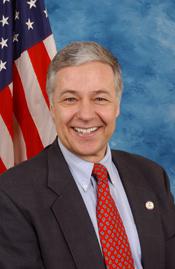
Mr. Speaker, I rise today in support of H.R. 6445, the Veterans Health Care Policy Enhancement Act. I would like to thank Mr. Cazayoux for this progressive piece of legislation, and Representatives…
Mr. Speaker, I rise today in support of H.R. 6445, the Veterans Health Care Policy Enhancement Act. I would like to thank Mr. Cazayoux for this progressive piece of legislation, and Representatives Doyle, Walz, Buyer and Hare for their significant contributions. Thank you also Chairman Filner and Ranking Member Buyer for your support of this measure. Finally, I would like to acknowledge the great effort of the House Veterans' Affairs Committee staff in compiling this bill and achieving it's strong bi-partisan nature.
Over the past few decades, VA has transformed the way it delivers care to our veterans. This transformation has significantly increased their efficiency, increased veterans' access to care, and aligned the VA with the health care industry at large.
Unfortunately, certain policies that are relics of the previous era of health care delivery remain. This bill will modernize VA policies regarding copayments for nonservice-connected, catastrophically disabled, Category Group 4 veterans; pain care; counseling services for family members; and HIV testing. Additionally, this legislation enhances the VA's ability to collect third party payments.
Currently, there are approximately 25,000 non-service connected catastrophically disabled veterans enrolled in Priority Group 4. These veterans have a permanent, severely disabling injury, disorder, or disease that compromises their ability to carry out many activities of daily living.
The very nature and severity of their disabilities precludes them from employment. Yet current VA policy requires these veterans to pay copayments for their care.
Section 2 of this bill prohibits VA from collecting copayments from these vulnerable veterans.
Another legacy policy of the VA states that families of veterans being treated for non-service connected disabilities are only eligible for family support services, such as counseling, training or mental health services, if they are necessary for the veteran's treatment and they are initiated during the veteran's hospitalization and they are essential for the discharge of the veteran from the hospital.
Since the VA has transformed to a predominantly outpatient-based system, this policy is no longer effective.
Section 3 of this bill removes these restrictions on the provision of family support services. This is essential for our newest generation of veterans and their families.
Veterans suffer from acute and chronic pain in proportions far exceeding the general population. In fact, pain is the leading cause of disability among veterans.
To address the issue, the VA developed a ``National Pain Management Strategy'' and issued a directive to make pain management a national priority. However, this directive expired May 31, 2008 and reports from the field suggest that implementation has been far from consistent.
Section 4 of this bill mandates that the VA develop and implement a comprehensive policy on the management of pain experienced by veterans. It requires the VA to develop the policy in consultation with veterans service organizations and other 7137 organizations with expertise in the assessment, diagnosis, treatment, and management of pain.
Current law authorizes the VA to bill veterans' insurance companies (third-party collections) for non-service connected care provided to veterans enrolled in the VA health care system. A June 2008 report from the Government Accountability Office (GAO) estimated that $1.2 to $1.4 billion dollars go uncollected annually by VA due to improper coding, delays in billing, and collections follow-up.
In 2005, VA created the Mid-Atlantic Consolidated Patient Accounting Center (CPAC) in Asheville, North Carolina which has been tremendously successful.
Section 5 of this bill would require the VA establish no more than seven other CPACs to help maximize its collections by using industry best-practices to improve timely and accurate billing and enhance collections.
The VA is the largest, single provider of HIV/AIDS care in the United States with over 22,800 patients with HIV/AIDS. In 1988, Congress passed legislation that required the VA obtain a veteran's written informed consent before being tested for HIV. This was based on the best practice in 1988.
However, since then our knowledge of HIV/AIDS has increased significantly and treatments have advanced significantly. As a result, in 2006, the CDC revised their recommendations regarding diagnostic HIV testing. CDC now recommends HIV testing be a part of routine clinical care and recommends that separate written consent for HIV screening should no longer be required.
Section 6 of this bill brings VA HIV/AIDS care up to current standards of practice.
All the provisions in this bill are intended to enhance current VA policies to bring them into the 21st century.
The improvements in these policies will have a direct and positive impact on improving the quality of healthcare our veterans receive.
I urge my colleagues to support H.R. 6445.

Madam Speaker, I am grateful for the opportunity to be part of this important legislation which expands mental health services for PTSD and substance use disorders, among other initiatives, for the…
Madam Speaker, I am grateful for the opportunity to be part of this important legislation which expands mental health services for PTSD and substance use disorders, among other initiatives, for the brave men and women who have selflessly served our nation.
Nationally, one in five veterans returning from Iraq and Afghanistan suffers from PTSD. Twenty-three percent of members of the Armed Forces on active duty acknowledge a significant problem with alcohol use. It is vital that our veterans receive the help they need to deal with these conditions.
The effects of substance abuse are wide ranging, including significantly increased risk of suicide, exacerbation of mental and physical health disorders, breakdown of family support, and increased risk of unemployment and homelessness. Veterans suffering from mental health issues are at an increased risk for developing a substance abuse disorder.
A constituent of mine, Lance Corporal Justin Bailey, was a 1998 graduate of Las Vegas High School. Upon returning from a tour of duty in Iraq, he was diagnosed with PTSD, and was discharged from the Marines in 2004. He developed a substance abuse disorder and checked himself into a VA facility in West Los Angeles. After being given 5 medications on a self-medication policy, Justin overdosed and died on January 26, 2007.
Justin's parents were treated with indifference and apathy at the West LA facility. They were even handed Justin's belongings in a trash bag. Last August, 8 months after Justin's death, the Baileys returned to Los Angeles to meet with the Chief of Staff at the West LA VA Hospital. They came away from the meeting feeling the Chief of Staff had been completely unprepared and seemed out of touch with the needs of veterans. He even went so far as to state his staff does not know how to treat veterans of Iraq and Afghanistan because they are young and the staff is not tough enough on the younger veterans--giving them anything they ask for.
I introduced the House companion bill to S. 2162--the Mental Health Improvements Act, H.R. 4053--because it is imperative that we provide adequate mental health services for those who have sacrificed for this great nation and those who continue to serve. I am so thankful that the House is considering S. 2162 today.
Passage of this bill will help to ensure that we have the mental health resources and substance abuse treatment programs needed to care for our veterans.
The assessments of residential mental health facilities required by the bill will help tell us how well the VA is performing and what we can do to improve these services, including expanding availability at VA hospitals.
The availability of treatment for PTSD, including substance use disorder counseling, literally saves lives--so this must remain a top priority. A review of the services provided to our veterans is needed to ensure that what happened to Justin does not happen to anyone else.
I am grateful that this bill also contains the final authorization for the new Las Vegas VA Medical Complex that is so desperately needed in Southern Nevada. The complex will feature a 90-bed inpatient hospital, 120-bed nursing home for veterans, and an outpatient clinic. The complex will be over 900,000 square feet and is scheduled to open by mid-2011.
I want to thank both the Chairmen and Ranking Members of the House and Senate Veterans' Affairs Committees for working together to come to a
compromise on a bill that contains many vital initiatives for our veterans. I whole-heartedly support S. 2162 and I urge my colleagues to
do the same.
Show 11 more
I thank the gentleman from Indiana for yielding me the time, and I am very grateful for the efforts that he and our chairman, the gentleman from California (Mr. Filner) have made on this entire…
I thank the gentleman from Indiana for yielding me the time, and I am very grateful for the efforts that he and our chairman, the gentleman from California (Mr. Filner) have made on this entire legislation. But I'm here tonight to express my gratitude for the inclusion of provisions that for a long time have been a high priority for me as a Member of Congress from a very rural part of America. I have always thought that our veterans should not be discriminated against based upon where they live. And while we've made progress in regard to caring for all our veterans, we've made progress in regard to caring for our rural veterans, we still have a lot of effort that needs to be made. This bill tonight takes one additional step that I think is very important.
The Department of Veterans Affairs, through our encouragement, has increased the number of outpatient clinics in this country so that those who live long distances from a VA hospital can access routine health care closer to home. We also have significantly increased the mileage reimbursement rate for veterans who live long distances. That is a major undertaking on our part, particularly with the ever rising cost of gasoline. And so we are making some steps that I think benefit rural veterans.
But still, despite that effort, many veterans, including many who live in my congressional district in the State of Kansas, drive up to 5 hours to access a VA outpatient clinic or a VA hospital. And so what a portion of this bill does tonight, the part I want to commend and bring forth for the Members of the House of Representatives to know and to understand, is this bill requires the Department of Veterans Affairs to create a 3-year pilot project that gives our highly rural veterans living in rural regions of this country the choice to receive health care at home. What this says is that the veteran can have the opportunity to see his or her hometown physician, be admitted to his or her hometown hospital, and that the Department of Veterans Affairs must enter into a contract to provide those services.
So while I am very appreciative of the outpatient clinics and I appreciate the service and care that our VA hospitals provide, we have the opportunity for our veterans, particularly those who are aging, and many of our rural veterans are older every day, many of them are World War II veterans in their eighties and nineties, and a trip that is miles away and hours from home requires a significant undertaking. This allows those who are that distance, and that distance being about 60 miles from a VA clinic, 120 miles from a VA hospital or 240 miles from a specialized care facility, to have those services provided at home.
It's also a good thing for the rural health care provider. I always describe it this way: Our hospitals, the infrastructure that surrounds the delivery of health care in rural America, is a lot like schools. We need every student we can get in a rural school to keep the school going, just as our hospitals and physicians need every patient that they can get in order to keep the hospital alive and well.
So I'm here to commend my colleagues for their support of this legislation. I am very grateful to Delores Dunn, the staff director of the subcommittee, who has shepherded this effort on my behalf but really on behalf of veterans across rural America, and I commend our chairman and ranking member for their strong efforts on behalf of rural American veterans.
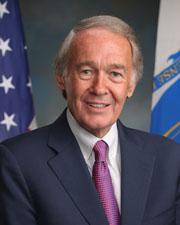
Mr. Speaker, I rise in support of this bill, and I commend Chairman Peterson and Chairman Etheridge for their leadership in bringing this measure to the House floor. When we have mounting evidence…
Mr. Speaker, I rise in support of this bill, and I commend Chairman Peterson and Chairman Etheridge for their leadership in bringing this measure to the House floor.
When we have mounting evidence that today's high oil prices are due in part to excessive futures and derivatives market speculation, we must take action to help the American consumer who is struggling to pay $4 for a gallon of gas. We must stand up to speculators who are aiding and abetting big oil companies that continue to rake in record profits and laugh all the way to the bank.
In 2000, a regulatory black hole was created that took the cop off the beat when it comes to energy commodities. This law allowed energy commodities to be exempted from virtually all of the laws that we have had in place for agricultural and financial commodities.
At the time this bill passed the House, I argued that this loophole was not in the public interest and that it needed to be fixed in conference in order to prevent harm to energy markets and consumers. But it was not fixed.
The Enron loophole allowed speculators and financial operators to hide their actions from regulators and the public.
In May, Congress took the first step towards closing the Enron loophole when it passed, over President Bush's veto, the farm bill. That bill contained language that will help bring these commodities trades under greater federal oversight.
In June, this House took the next step, when it approved legislation that directed the Commodity Futures Trading Commission to examine excessive oil speculation and use their emergency powers to take corrective action.
But the Congress needs to take further actions to address excessive speculation in these markets.
The bill before us today does that.
It would close the so-called London Loophole that has allowed traders to evade U.S. regulation by offshoring their trades.
It would require additional information to be made public regarding the trading activities of index funds--and other investors--in energy commodities markets.
It would subject over-the-counter energy derivatives transactions to regulatory reporting and recordkeeping requirements, including position reporting.
It positions limits for certain contracts on energy commodities, and mandates position limits for energy commodity speculators.
It requires the Commission to appoint at least 100 new full time employees.
It requires the Commission to mandate routine reporting of certain OTC energy transactions, determine whether such agreements have the potential to disrupt market liquidity and price discovery, cause severe market disturbance, or prevent prices from reflecting supply and demand. If the Commission finds that they have caused problems in these areas, it is authorized to impose and enforce position limits on the involved agreements.
The energy, economic and the environmental crisis we face are all connected. It is time for Congress to stop playing favorites to Big Oil. Cracking down on speculation will not only help families with skyrocketing gas prices, it will give needed relief to the airline industry, the trucking industry and small businesses across my district in Massachusetts. This is a good bill. It is a necessary bill, and I urge its adoption.
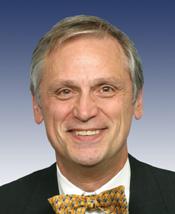
I appreciate the gentlewoman's courtesy in permitting me to speak. Mr. Speaker, I rise in support of the rule and the underlying bill. This is a critical piece of legislation that speaks to the…
I appreciate the gentlewoman's courtesy in permitting me to speak.
Mr. Speaker, I rise in support of the rule and the underlying bill.
This is a critical piece of legislation that speaks to the quality of life of our men and women in uniform. One of the consequences of having the most effective, powerful military force in the world is that we have a great deal of activity that takes place training and operating military facilities across the country. And, sadly, Mr. Speaker, one of the areas that we have not been quite as good as we should is dealing with the consequences of those military operations. The American landscape are littered with the residue of past military operations, base operations, and training exercises. There are bombs, explosives, military toxins and environmental hazards in every State of the union, over 3,000 sites across America.
One of the things I have worked on since I came to Congress was to have the Department of Defense and, most important, we in Congress do a better job of helping the military clean up after itself. I have come to this floor repeatedly with examples where bombs have turned up in people's backyards. I see the former chairman of the committee from California on the floor and am reminded of the three young children in San Diego who discovered bombs in a subdivision, and two of them were killed. Over 60 more people have been killed according to my research here in the United States.
It is time for us to take responsibility to clean up that explosive and toxic legacy, in part because it's not going to get any cheaper. Over the years it's going to cost more and more. Failure to do this right puts innocent children's lives at risk. Remember when we came to the floor with a coloring book that told children what they should do when they found unexploded ordinances near their schools. The Pentagon had Larry the Lizard trying to tell them what to do, when they found a shell . . . rather than spending money to clean it up and remove that hazard.
I am pleased that this year we are fully funding the--the 2005 BRAC account. I am pleased with the leadership from Chairman Edwards, Ranking Member Wamp and my good friend Mr. Farr from California, who has been struggling with this issue for years in his district, they were able to put an
additional $80 million to clean up the legacy of BRAC sites.
I appreciate that this is a difficult budget year but it's always a difficult budget year, and we never seem to quite have enough to deal with the environmental problems that face our Department of Defense. I hope that this is a start in the right direction for a renewed commitment to clean up this toxic legacy that risks American lives here in this country and will develop new technology that will actually save American lives overseas in places like Iraq and Afghanistan if we do it right. I hope it makes possible more progress in the future, and I urge support.
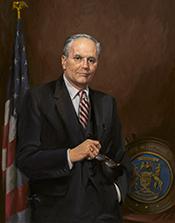
Mr. Speaker, I rise to support H.R. 6604, the ``Commodity Markets Transparency and Accountability Act of 2008.'' This legislation will ratchet back the excessive speculation which has undermined the…
Mr. Speaker, I rise to support H.R. 6604, the ``Commodity Markets Transparency and Accountability Act of 2008.''
This legislation will ratchet back the excessive speculation which has undermined the ability of the commodity markets to enable price discovery, while ensuring a means for legitimate hedgers, such as airlines, to lock in future prices as a way to protect their business from price volatility.
Experts testified before the Committee on Energy and Commerce that commodity index speculators, such as pension funds, endowments, and sovereign wealth funds, have poured more than a quarter trillion dollars into purchases of a basket of essential commodities such as oil, natural gas, corn, and wheat. Investments tied to the two most popular commodity indexes have skyrocketed 1,900 percent in the past 5 years.
This is the one factor that has turbocharged oil prices far above their underlying supply and demand. This bill works to plug three loopholes that have allowed speculation to get out of hand, in markets immune largely from public disclosure, regulation, and transparency.
First, the ``London loophole,'' allows foreign boards of trade such as the London-based ICE-Futures, to offer futures contracts in this country for U.S.-delivered energy commodities, such as the West Texas Intermediate Crude Oil Contract, but operate free from equivalent U.S. regulatory oversight.
This legislation requires electronic exchanges in London or Dubai to comply with key market integrity requirements as a condition of doing business in the U.S. I will be watching closely to see if this approach works or if stronger medicine is needed.
Second, the swaps loophole, allows large investment banks to exceed speculative trading limits on the futures markets. This loophole has been plugged.
Third is the Enron loophole that has enabled massive trading on over- the-counter (OTC) markets which are completely dark to regulators. It also involves another loophole for swaps transactions on the OTC.
These dark markets have grown so rapidly that the Bank of International Settlements estimates they now involve about $9 trillion in commodities. This is estimated to be about nine times what is traded on the regulated markets. This bill shines light on these dark markets for the first time.
It takes a large and important first step towards putting a cop back on the beat. My hope is that this bill will bring prices back in line with underlying supply and demand. Further, I am comforted by Chairman Peterson's commitment to consider additional measures in the dark markets as more data is available from the CFTC.
I want to commend Representatives Stupak, Van Hollen, DeLauro, and Larson, for their excellent work and want to recognize Chairman Collin Peterson, Ranking Member Bob Goodlatte, and their staffs for their leadership in bringing this bill to the floor. I look forward to working with them in conference.
Mr. Speaker, I rise today in support of H.R. 6445, which will provide important relief to veterans who are catastrophically disabled. I would like to mention that this bill also contains legislation…
Mr. Speaker, I rise today in support of H.R. 6445, which will provide important relief to veterans who are catastrophically disabled.
I would like to mention that this bill also contains legislation that I originally introduced as a freestanding bill--H.R. 6114, the Simplifying and Updating National Standards to Encourage Testing of the Human Immunodeficiency Virus Act of 2008--or the SUNSET Act. I introduced this legislation several months ago to modernize the HIV testing policies of the U.S. Department of Veterans Affairs.
The current HIV testing policies used by the VA were mandated in the Veterans Benefits and Services Act of 1988. These policies are now 20 years old, and they fail to reflect everything we've learned about HIV testing and treatment over the last two decades.
Twenty years ago, it took a long time for patients and health care providers to get the results of HIV tests. Today, safe non-invasive tests are available that can provide reliable results in only 20 minutes. Moreover, under the current testing policies, half of all HIV- positive veterans in the VA health care system don't get diagnosed until they've already suffered significant damage to their immune systems. Many of these veterans are already receiving health care services through the VA--diagnosing these veterans earlier would enable the VA to provide them with medical care that could extend their life expectancy and improve their quality of life.
Consequently, I believe that the VA should adopt a more modern policy on HIV/AIDS testing, including the testing of all incoming patients for HIV/AIDS unless a patient specifically opts out.
The VA wants to adopt such policies--while maintaining its counseling and data privacy policies--but since the VA's HIV testing policies are mandated by law, Congress must enact a new law to change them. That's why I introduced the Simplifying and Updating National Standards to Encourage Testing of the Human Immunodeficiency Virus Act of 2008.
This legislation would simply repeal the section of the 1988 law that set out the HIV testing policy the VA must use. This would allow the VA to adopt up-to-date policies that would improve the health care provided to veterans with HIV/AIDS.
I want to thank my friends and former colleagues on the Veterans Committee, Chairman Filner and Chairman Michaud, for supporting the SUNSET Act and moving it expeditiously through the Committee. I'm also grateful to my friend Representative Cazayoux for his eagerness to include this provision in his bill. H.R. 6445 deserves our consideration and swift enactment into law with or without the SUNSET Act, but this bill, which includes the SUNSET Act as well, will do even more to help some of our most afflicted veterans.
I urge my colleagues to support this important legislation.

Mr. Speaker, I simply want to respond to one theme that we have heard here in the last 20 minutes or so. We have heard complaints about the ``outrage'' that is being perpetrated by the passage of…
Mr. Speaker, I simply want to respond to one theme that we have heard here in the last 20 minutes or so. We have heard complaints about the ``outrage'' that is being perpetrated by the passage of this rule because it is alleged that this rule closes up consideration of this bill and in fact prevents Members from offering legitimate amendments.
Let me point out this rule does one thing and one thing only. It simply says that if a Member wants to offer an amendment, that that Member should notice the House 1 day ahead of time in the Congressional Record so that we do not legislate by ambush. The only thing that is required for an amendment to be considered on this floor is that it be printed in the Congressional Record the day before it is considered so that no Member of the House is blind-sided by any amendment.
We believe that the bill managers on both sides of the aisle have a right to know in an orderly way which amendments are going to be offered to bills. We also believe that any individual Member who happens to have a project in his district which is going to be challenged by another Member, that that Member has the right to notice of that challenge. And we believe that every single Member of this House has a right to know ahead of time what they are going to be called upon to vote on by way of amendments. So this rule simply says any amendment is in order so long as it was printed the day before.
Now, the gentleman managing the bill on the other side of the aisle asked the question, ``Will secondary amendments be allowed?'' My understanding is yes. My understanding is that this rule provides--or that this rule does not in any way get in the way of the ability of Members to offer secondary amendments.
So, very simply, this bill is attempting to meet the military needs of the country. It's attempting to meet the needs of our veterans in terms of health care. It's meant to meet the needs of our communities in terms of construction on military bases all around the country.
This bill builds upon the fact that in the last 2 years we have provided the largest increase in veterans' health benefits in the history of the country. This bill continues in that tradition. It is a terrific bill for veterans. It is a terrific bill for the communities that host military facilities around the country. And instead of having a sham debate about legislation which is not before us today, I think we would do well to confine our comments to the bill at hand, which is the military construction bill.
It's a good bill, and I would predict it will be supported on a huge bipartisan basis. It was reported unanimously by the subcommittee. What we ought to do, instead of pretending that there's a procedural problem, when in fact there is none, we ought to get to the subject at hand.
Mr. Speaker, I rise today to express a serious concern with H.R. 6604. With the demand of rising energy costs, we're bringing to the floor a bill that will, in my opinion, do little to bring down the…
Mr. Speaker, I rise today to express a serious concern with H.R. 6604. With the demand of rising energy costs, we're bringing to the floor a bill that will, in my opinion, do little to bring down the price of energy. In fact, certain provisions of this bill may lead to an increase in prices and may reduce market transparency and increase market volatility.
I want to be clear. I favor changes at the CFTC and believe we can change the act to improve market transparency, oversight, and enforcement activities. I have been working with CFTC and market participants to create a bill that will enhance those functions while giving regulators the necessary tools to prevent market manipulation and fraud. This bill, however, was put together, in my opinion, too quickly and goes too far.
When changing the Commodity Exchange Act, Congress must proceed in a deliberate manner and take into account the advice of industry users, the CFTC, the President's Working Group, and other experts. This bill should be referred back to the Committee on Agriculture so that we can refine provisions to actually enhance transparency and not exclude legitimate market participants.
One of the problems of this legislation is that it will likely reduce market transparency. This is because of certain provisions like the one dealing with the Foreign Board of Trade that seek direct access to U.S. and provisions that require reporting for certain over-the-counter and exempt commercial markets. That will push traders to foreign markets. Rather than giving the CFTC a better picture of the market, it will reduce the picture that the CFTC has and potentially increase fraud and manipulation. It restricts the CFTC's ability to see the market.
Second, this bill attempts to define a ``bona fide hedging transaction.'' In its current form, section 8 will exclude legitimate commercial market participants from properly hedging risk. This will cause an immediate disruption in the markets as the legitimate market participants are forced out. It will reduce market liquidity and increase price volatility.
I am also concerned with provisions in this bill that require routine reporting and potential use of position limits in over-the-counter transactions that are fungible. ``Fungible'' is not defined and suggests that a significant amount of OTC transactions could be implicated by this section. I am especially concerned about the authority given in section 14 to CFTC to impose position limits on OTC trades.
Finally, Mr. Speaker, not only should this bill be returned to committee because of these provisions so that we can take more time and develop a better product, I also recognize that this bill needs to address the root problem of high energy prices, and this will not do so.
Madam Speaker, let me take this opportunity once again to thank Chairman Filner and the ranking member for this opportunity. Let me just say that the 110th Congress will be seen as the Congress that…
Madam Speaker, let me take this opportunity once again to thank Chairman Filner and the ranking member for this opportunity.
Let me just say that the 110th Congress will be seen as the Congress that has done the most for veterans in the history of this House in terms of the funding of over $13 billion from the 2007-2008 budget, in addition to the supplementals. This will be the largest amount of resources for the VA since its inception in any one session. So the 110th Congress is going to be seen as one of those Congresses that provided the resources, but also provided the programs that were needed and the accountability that needs to occur in order to make it happen. The result of that is because of the leadership in the form of Congressman Bob Filner, and I want to once again personally thank him for his leadership.
Let me just say this particular bill has language that begins to make services permanent for those soldiers that participated in what was referred to as Project 112, or Project SHAD, which were the studies during the Cold War that this country did on our soldiers from the use of nerve gas to other items to see how our soldiers reacted.
Now we know these soldiers are in need of services, and this language extends that opportunity for thousands of these soldiers to get those services that they are entitled to. So I want to thank the leadership for that. I know it was a struggle with the Department of Defense in just identifying these projects.
Secondly, I also want to signify that we have four major polytrauma centers throughout this country. The fifth one is going to be built in San Antonio. This particular center allows an opportunity for those soldiers that are out there that come back as veterans that have a multitude of problems, and this will allow the opportunity for returning servicemembers to be able to get the help they are entitled to and the construction of this facility, referred to as the fifth polytrauma center.
In closing, let me also just say that I have one of the largest districts in the Nation. My district runs in a straight line 650 miles and 785 miles along the border, over 20 large counties. Some of the counties are larger than some of the States in the country. I have an area where not a single clinic exists in the Rural Health Initiatives that are out there to provide access for these soldiers and veterans.
It is also important and essential, as indicated earlier, the fact that we have raised the amount of resources for reimbursement rates per mile for gasoline, and we know we might have to come back and revisit this because of the cost of gasoline.
So, once again I thank the chairman and the ranking member for allowing us to pass these pieces of legislation.
Mr. Speaker, I rise today in support of H.R. 6445. I'd like to thank the members of the Veterans' Affairs committee-- especially Chairman Filner, Ranking Member Buyer, Subcommittee Chairman Michaud,…
Mr. Speaker, I rise today in support of H.R. 6445. I'd like to thank the members of the Veterans' Affairs committee-- especially Chairman Filner, Ranking Member Buyer, Subcommittee Chairman Michaud, and Ranking Member Miller--for not only supporting my legislation, but also for adding provisions that go even further in improving health care for our veterans.
My original legislation prohibits the VA from collecting co-payments for hospital and nursing home care from veterans who are catastrophically disabled. This provision aims to ease the burden on veterans who have a permanent, severely disabling injury, disorder, or disease that compromises their ability to carry out the activities of daily living. Currently, those veterans must make co-payments for non- service related injuries at VA facilities. This includes veterans who suffer with, among other things, spinal cord injuries, stroke, diseases such as Parkinson's and ALS, and multiple amputees.
As you could imagine, these disabled veterans are oftentimes some of the poorest of the poor and cannot afford adequate health care, much less the enormous cost that these burdens place on them and their families. This bill hopes to change that and make a positive impact on the 25,000 veterans with catastrophic disability that receive care through VA.
H.R. 6445 incorporates other meaningful provisions authored by some of my colleagues on the committee. It contains a provision that expands the authority of the Secretary of Veterans Affairs to provide counseling for families of veterans receiving non-connected treatment. It directs the VA to develop and implement a comprehensive policy on the management of pain experienced by veterans receiving VA care. It improves billing and accounting procedures at the Veterans Administration by regionalizing the process. Finally, this legislation makes it easier for veterans to get HIV testing if they choose.
Mr. Speaker, we have no greater duty as Members of Congress than to take care of those who have sacrificed life and limb in service to their country. We need to instill faith in the public that when we ask you to serve we will take care of you when you return.
This often repeated quote from George Washington still rings true today: ``The willingness with which our young people are likely to serve in any war, no matter how justified, shall be directly proportional to how they perceive the Veterans of earlier wars were treated and appreciated by their nation.'' This legislation helps us fulfill this most sacred duty.
I again thank my colleagues for their excellent contributions to this legislation, and I ask my colleagues in the House to pass this bill without delay.
Thank you to the chairman, the gentleman from California (Mr. Filner) and thank you to Ranking Member Moran who is here today. I rise in strong support of H.R. 6445, but I rise proudly amongst this…
Thank you to the chairman, the gentleman from California (Mr. Filner) and thank you to Ranking Member Moran who is here today.
I rise in strong support of H.R. 6445, but I rise proudly amongst this committee of what the American people I think would be proud to know, this is one committee where both Republican and Democrats are here for a single purpose, and that is to serve our veterans in the best way possible. So I thank the ranking member and the chairman for doing exactly that.
I rise to speak on the portion of this bill that I introduced as the Veterans Pain Care Act of 2008. I was moved to introduce this bill after listening to countless stories, as many Members have, of problems of chronic and acute pain among our veterans.
The single largest cause of disability claims among veterans is acute pain. It erodes the quality of life, it makes work very difficult, and it does not allow our veterans to get back to the point in their life where their quality of life is as high as it possibly could be.
This bill requires the Secretary of the VA to develop and implement a comprehensive policy of pain management for veterans who are enrolled in the VA health care system, and more importantly, or equally important, is to carry out a program of research, training and education on chronic pain.
By directing the VA to update its pain management policies and in light of experience, research and evolving practices, this bill will lay a foundation for ongoing improvements in pain care management for our veterans. In that way, we can work to fulfill what I believe is an absolute moral obligation to care for these veterans with the most innovative, best practices and pain management possible.
This bill has broad support from a large number of pain care organizations that include patients, providers and numerous veterans service organizations. I thank all of them for their indispensable support and hard work in moving this bipartisan piece of legislation.
I would also like to express deep appreciation for the Veterans' Affairs Committee staff on both the majority side and the minority side for working out this piece of legislation. It truly is a compromise. It truly is a piece of legislation, the entire bill, H.R. 6445, that transcends politics and gets at the heart of what the public wants us to do, come together as Americans to pass good legislation that prioritizes this Nation's veterans at the top and cares for them in a fiscally responsible manner that allows them to return to their daily lives after they have served us. It is the very least our country can do, and I am proud to be associated with it.
Mr. Speaker, I rise in strong support of S. 2162, the Veterans' Mental Health and Other Care Improvement Acts of 2008. I want to commend Chairman Akaka, Chairman Filner, Ranking Member Buyer and all…
Mr. Speaker, I rise in strong support of S. 2162, the Veterans' Mental Health and Other Care Improvement Acts of 2008. I want to commend Chairman Akaka, Chairman Filner, Ranking Member Buyer and all the members of the Senate and House Veterans' Affairs Committee for their leadership and hard work on this bill.
S. 2162 is a bill that improves a variety of health care services provided by the Department of Veterans Affairs. First, it improves the treatment and services provided by the VA to veterans suffering from post traumatic stress disorder. Second, it provides more treatment for veterans battling substance-use disorders, and it directs the VA to develop and implement a comprehensive policy on the management of pain care.
The bill also authorizes medical facility projects and major medical facility leases which are crucial to the improvement of health care for our veterans. And it takes on the unacceptable plight of homelessness, which thousands of our veterans face each and every night.
S. 2162 also improves access to health care for veterans living in rural areas. It allows highly rural veterans to get services closer to home, and it provides a fair reimbursement rate to those who have to drive considerable distances. We have been working on this issue tirelessly throughout the 110th Congress. As someone who represents a district in Illinois that is very rural, I appreciate the progress that has been made on this issue. I want to commend my friend, Congressman Moran from Kansas, for his hard work and dedication on this issue.
Finally, S. 2162 expands mental health care for the families of our heroes. The psychological toll that war brings also extends to the brave family members of our servicemembers. That is why I am encouraged to see that a bill I introduced, the Mental Health For Heroes' Family Act of 2008, has been included in S. 2162. Specifically, my bill removes the requirement that counseling must be initiated during the veteran's hospitalization, and is essential to permit the discharge for the veteran from the hospital. It also directs the Secretary of the Veterans Administration to carry out a 3-year pilot program to assess the feasibility and advisability of providing readjustment and transition assistance to veterans and their families.
Mr. Speaker, I again thank Chairman Akaka, Chairman Filner and Ranking Member Buyer for their leadership on this bill and I want to commend both the Senate and House Veterans' Affairs Committee staff for their tireless work on this bill. I urge all of my colleagues to support this incredibly important piece of legislation.
Bill Text
4 versions available
        [Congressional Bills 110th Congress]
[From the U.S. Government Printing Office]
[H.R. 6445 Referred in Senate (RFS)]

2d Session
H. R. 6445

_______________________________________________________________________

IN THE SENATE OF THE UNITED STATES

July 31, 2008

Received; read twice and referred to the Committee on Veterans' Affairs

_______________________________________________________________________

AN ACT

To amend title 38, United States Code, to prohibit the Secretary of
Veterans Affairs from collecting certain copayments from veterans who
are catastrophically disabled, and for other purposes.

Be it enacted by the Senate and House of Representatives of the
United States of America in Congress assembled,

SECTION 1. SHORT TITLE.

This Act may be cited as the ``Veterans' Health Care Policy
Enhancement Act of 2008''.

SEC. 2. PROHIBITION ON COLLECTION OF CERTAIN COPAYMENTS FROM VETERANS
WHO ARE CATASTROPHICALLY DISABLED.

(a) Prohibition on Collection of Copayments and Other Fees for
Hospital or Nursing Home Care.--Section 1710 of title 38, United States
Code, is amended--
(1) by redesignating subsection (h) as subsection (i); and
(2) by inserting after subsection (g) the following new
subsection (h):
``(h) Notwithstanding any other provision of this section, a
veteran who is catastrophically disabled shall not be required to make
any payment otherwise required under subsection (f) or (g) for the
receipt of hospital care or nursing home care under this section.''.
(b) Effective Date.--Subsection (h) of section 1710 of title 38,
United States Code, as added by subsection (a), shall apply with
respect to hospital care or nursing home care provided after the date
of the enactment of this Act.

SEC. 3. EXPANSION OF AUTHORITY OF SECRETARY OF VETERANS AFFAIRS TO
PROVIDE COUNSELING FOR FAMILY MEMBERS OF VETERANS
RECEIVING NONSERVICE-CONNECTED TREATMENT.

Section 1782(b) of title 38, United States Code, is amended by
striking ``if--'' and all that follows and inserting a period.

SEC. 4. COMPREHENSIVE POLICY ON PAIN MANAGEMENT.

(a) Comprehensive Policy Required.--Not later than October 1, 2008,
the Secretary of Veterans Affairs shall develop and implement a
comprehensive policy on the management of pain experienced by veterans
enrolled for health care services provided by the Department of
Veterans Affairs.
(b) Scope of Policy.--The policy required by subsection (a) shall
cover each of the following:
(1) The systemwide management of acute and chronic pain
experienced by veterans.
(2) The standard of care for pain management to be used
throughout the Department.
(3) The consistent application of pain assessments to be
used throughout the Department.
(4) The assurance of prompt and appropriate pain care
treatment and management by the Department, systemwide, when
medically necessary.
(5) The Department's program of research related to acute
and chronic pain suffered by veterans, including pain
attributable to central and peripheral nervous system damage
characteristic of injuries incurred in modern warfare.
(6) The Department's program of pain care education and
training for health care personnel of the Department.
(7) The Department's program of patient education for
veterans suffering from acute or chronic pain and their
families.
(c) Updates.--The Secretary shall revise the policy developed under
subsection (a) on a periodic basis in accordance with experience and
evolving best practice guidelines.
(d) Consultation.--The Secretary shall develop the policy developed
under subsection (a), and revise such policy under subsection (c), in
consultation with veterans service organizations and organizations with
expertise in the assessment, diagnosis, treatment, and management of
pain.
(e) Annual Report.--
(1) In general.--Not later than 180 days after the date of
the completion and initial implementation of the policy under
subsection (a) and on October 1 of every fiscal year thereafter
through fiscal year 2018, the Secretary shall submit to the
Committee on Veterans' Affairs of the Senate and the Committee
on Veterans' Affairs of the House of Representatives a report
on the implementation of the policy developed under subsection
(a).
(2) Contents.--The report required by paragraph (1) shall
include the following:
(A) A description of the policy developed and
implemented under subsection (a) and any revisions to
such policy under subsection (c).
(B) A description of the performance measures used
to determine the effectiveness of such policy in
improving pain care for veterans systemwide.
(C) An assessment of the adequacy of the
Department's pain management services based on a survey
of patients managed in Department clinics.
(D) An assessment of the Department's research
programs relevant to the treatment of the types of
acute and chronic pain suffered by veterans.
(E) An assessment of the training provided to
Department health care personnel with respect to the
diagnosis, treatment, and management of acute and
chronic pain.
(F) An assessment of the Department's pain care-
related patient education programs.
(f) Veterans Service Organization Defined.--In this section, the
term ``veterans service organization'' means any organization
recognized by the Secretary for the representation of veterans under
section 5902 of title 38, United States Code.

SEC. 5. ESTABLISHMENT OF CONSOLIDATED PATIENT ACCOUNTING CENTERS.

(a) Establishment of Centers.--Chapter 17 of title 38, United
States Code, is amended by inserting after section 1729A the following:
``Sec. 1729B. Consolidated patient accounting centers
``(a) In General.--Not later than 5 years after the date of
enactment of this section, the Secretary of Veterans Affairs shall
establish not more than seven consolidated patient accounting centers
for conducting industry-modeled regionalized billing and collection
activities of the Department.
``(b) Functions.--The centers shall carry out the following
functions:
``(1) Reengineer and integrate all business processes of
the revenue cycle of the Department.
``(2) Standardize and coordinate all activities of the
Department related to the revenue cycle for all health care
services furnished to veterans for nonservice-connected medical
conditions.
``(3) Apply commercial industry standards for measures of
access, timeliness, and performance metrics with respect to
revenue enhancement of the Department.
``(4) Apply other requirements with respect to such revenue
cycle improvement as the Secretary may specify.''.
(b) Clerical Amendment.--The table of sections at the beginning of
such chapter is amended by inserting after the item relating to section
1729A the following:

``1729B. Consolidated patient accounting centers.''.

SEC. 6. SIMPLIFYING AND UPDATING NATIONAL STANDARDS TO ENCOURAGE
TESTING OF THE HUMAN IMMUNODEFICIENCY VIRUS.

Section 124 of the Veterans' Benefits and Services Act of 1988 (38
U.S.C. 7333 note; 102 Stat. 505) and

the item relating to such section in the table of contents of such Act
(102 Stat. 487) are repealed.

Passed the House of Representatives July 30, 2008.

Attest:

LORRAINE C. MILLER,

Clerk.