Mr. Speaker, I want to thank my good friend and namesake, Mr. Hastings, for yielding me the customary 30 minutes, and I yield myself such time as I may consume. (Mr. HASTINGS of Washington asked and…
Mr. Speaker, I want to thank my good friend and namesake, Mr. Hastings, for yielding me the customary 30 minutes, and I yield myself such time as I may consume.
(Mr. HASTINGS of Washington asked and was given permission to revise and extend his remarks.)
Mr. Speaker, yesterday the Rules Committee held a hearing to consider a rule for H.R. 3773, the RESTORE Act. At the outset of the hearing, the chairwoman of the Rules Committee did something that Republicans would not have even contemplated when we were in the majority.
Before Members of Congress even had an opportunity to testify before the Rules Committee, the chairwoman announced that the rule would be closed. She further went on to say no notice was sent out seeking amendments from Members, yet at least 27 amendments on a bipartisan basis were submitted to the committee. I guess, Mr. Speaker, we know now that no amendment announcement is code for no opportunity for meaningful, open debate. While surprising, this action is, unfortunately, not unprecedented for this Democrat-controlled Rules Committee.
I would like to thank all Members for submitting their thoughtful amendments on behalf of those they represent. And I especially would like to thank the Members who chose to stay and testify despite learning from the very start that their amendments would not be made in order.
It is sad that yesterday the minds and ears of the Democrat members of the Rules Committee were closed to even allowing for the consideration of amendments and alternatives to legislation, important legislation aimed at closing loopholes and strengthening our national intelligence capabilities.
Mr. Speaker, in 1978 Congress enacted the Foreign Intelligence Surveillance Act, or FISA, to establish a procedure for electronic surveillance of international communications. As enacted into law, FISA had two principle purposes: First, to protect the civil liberties of Americans by requiring the government to first obtain a court order before collecting electronic intelligence on U.S. citizens in our country. Second, the law specified how intelligence officials, working to protect our national security, could collect information on foreign persons in foreign places without having to get a warrant.
The intent of the original FISA law was to enhance American security while at the same time protecting American privacy. Recognizing that no
responsibility of the Federal Government is more important than providing for the defense and security of the American people, Congress should be doing all it can to ensure that FISA continues to reflect the intent of the original law.
In the nearly 30 years since FISA became law, we have seen tremendous advances in communication technology such as the Internet, cell phones and e-mail. However, under the original FISA law, our intelligence officials are not free to monitor foreign terrorists in foreign countries without a court order because of advances in communication technology. It is clear that our FISA laws are outdated and must be modernized to reflect changes in communication technology over the past three decades.
In August, Congress in a bipartisan manner took an important first step forward to close our Nation's intelligence gap; but, unfortunately, only for a 6-month period. The Protect America Act passed only after repeated attempts by Republicans to give our Nation's intelligence professionals the tools and the authority they need to protect our homeland. This action was long overdue and this law marked a significant step towards improving our security.
Now Congress must act again to renew this law by early next year before it expires or our national security will once again be at risk. Unfortunately, the legislation before us today, the RESTORE Act, does not provide the security we need to protect our troops and our Nation from a potential future terrorist attack. The bill also weakens Americans' privacy protections and fails to permanently close our Nation's intelligence gap.
Specifically, Mr. Speaker, the RESTORE Act does not go far enough to reform outdated FISA regulations that burden our troops in the battlefield. It contains no provision for third parties to challenge FISA court orders. The bill also creates a centralized database that could actually increase the risk of privacy violations. Another major concern is that the RESTORE Act contains yet another sunset provision that forces the bill to expire on December 31, 2009, unnecessarily leaving our intelligence officials without the tools they need to protect Americans.
It is alarming to me that this rule brings a bill to the House floor that goes so far as to weaken American privacy provisions while at the same time strengthening protections of our enemies in times of war.
Mr. Speaker, as I mentioned earlier, nearly 30 amendments were submitted by Members on both sides of the aisle to address these and other concerns with the Democrat majority's failed attempt to update our current FISA laws. However, none of these amendments, which ranged from permanently strengthening our FISA laws to acquiring communications of foreign terrorists in foreign countries without a FISA court order, were allowed to be considered on the House floor today under this rule.
Mr. Speaker, it is truly disappointing to me that every Member of this House is prohibited from offering changes to this bill that could make it more effective in our constant battle to prevent a future terrorist attack against our Nation. After all, if we cannot come together and work in a bipartisan manner on issues as important as improving our national security, then what can we work together on.
Sadly, because the Democrat majority has chosen to consider the RESTORE Act under this closed process, working together in a bipartisan manner will not be possible. Instead, if this rule is adopted, Members will only have a choice to vote for or against a seriously flawed bill that threatens, not improves, our national security. Sadly, this closed process shuts out all American voices from being heard and, ultimately, every American could suffer consequences if this rule and bill are adopted. Therefore, I urge my colleagues to vote against the rule.
Mr. Speaker, I reserve the balance of my time.
Mr. Speaker, how much time is there on both sides?
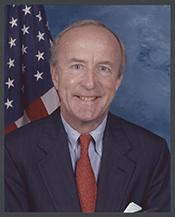
Mr. Speaker, I'm pleased to yield 4 minutes to the distinguished ranking member of the Rules Committee, Mr. Dreier of California.
(Mr. DREIER asked and was given permission to revise and extend his remarks.)
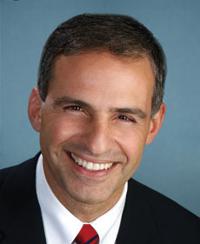
Mr. Speaker, I'm pleased to yield 3 minutes to the gentleman from New Jersey (Mr. Frelinghuysen).
(Mr. FRELINGHUYSEN asked and was given permission to revise and extend his remarks.)
Mr. Speaker, I'm pleased to yield 4 minutes to the gentleman from California (Mr. Royce), a member of the Foreign Affairs Committee.
Mr. Speaker, I yield 3 minutes to the gentleman from Kansas (Mr. Tiahrt), a member of the Intelligence Committee.
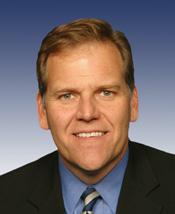
Mr. Speaker, I am pleased to yield 3 minutes to another member of the Intelligence Committee, Mr. Rogers of Michigan.
Mr. Speaker, once again, how much time is remaining on both sides?
Mr. Speaker, at this time I am pleased to yield 2 minutes to a member of the Judiciary Committee, Mr. Gohmert of Texas.
Mr. Speaker, I am pleased to yield at this time 2\1/2\ minutes to a member of the Judiciary Committee, Mr. Franks of Arizona.
Mr. Speaker, I know my friend has more time than I have, and I have more requests for time than I have time for. And so, Mr. Speaker, I would ask unanimous consent that each side get an additional 5 minutes so I can accommodate the requests on my side.
Mr. Speaker, I wonder then if I could inquire of my friend, since he has more time, if maybe he would yield me at least enough time so I can close on my
side, and I'd ask my friend from New York if he would do that for me.
Mr. Speaker, I yield for a unanimous consent request to the gentleman from Florida (Mr. Mack).
(Mr. MACK asked and was given permission to revise and extend his remarks.)
Mr. Speaker, how much time do I have left, and how much time does the other side have?
Mr. Speaker, I ask the gentleman from New York if he has any more speakers.
Mr. Speaker, I'll reserve my time.
I would inquire of my friend from New York if they have any additional speakers.
How much time do I have on my side?
Mr. Speaker, I yield myself the balance of the time.
Today, Mr. Speaker, I will be asking my colleagues to vote ``no'' on the previous question so that I can amend the rule to allow for a substitute amendment to be offered by Mr. Hoekstra of Michigan or Mr. Smith of Texas. This will give the House an opportunity to consider additional views that were denied with this closed rule in the Rules Committee last night.
And, Mr. Speaker, September 28, 2006, we had a debate on this issue last year, and I'd like to quote a Member and what he said on the House floor. And I quote: ``You beat with rulemaking that which you know you cannot beat with reason.''
And he goes on to say, ``I know what you say: Do as you say, not as we do. For today, in the people's House democracy has been eviscerated by those who recommend it to others. I have said it before. The way the majority runs the House is shameful. It is undemocratic. It happens every single day that we have a closed rule.''
The speaker was my good friend from Florida (Mr. Hastings).
Mr. Speaker, I ask unanimous consent to have the text of the amendment and extraneous material inserted into the Record prior to the vote on the previous question.
Mr. Speaker, I urge my colleagues to oppose the previous question and the closed rule.
I yield back the balance of my time.
Mr. Speaker, on that I demand the yeas and nays.