Mr. Speaker, I rise today in support of House Resolution 109, recognizing the historical significance of the Pinedale Assembly Center located in Fresno, California. The history of this internment…
Mr. Speaker, I rise today in support of House Resolution 109, recognizing the historical significance of the Pinedale Assembly Center located in Fresno, California.
The history of this internment center is a reflection of the 65th anniversary of Executive Order 9066, which reminds us of a dark chapter in U.S. history.
On February 19, 1942, President Franklin Roosevelt signed the order authorizing the forced internment of over 120,000 Japanese Americans, placing tremendous hardship on the innocent that, in many cases, resulted in a loss of jobs, businesses, property and ultimately, in some cases, their dignity.
Further, the internment was a violation of their constitutional rights. Internees were denied their liberty, their civil rights, the right to due process, and equal protection under the law. Yet, no Japanese American, before or after their internment, was ever accused or convicted of espionage or sabotage.
In fact, over 14,000 Japanese Americans served valiantly and on a voluntary basis in our Armed Forces during World War II with great distinction. One could only imagine what went through their minds, the members of our military, as they defended our Nation's freedoms, while their own families were languishing back in American internment camps.
Pinedale, then, following the order, was a relocation center, and the Japanese Americans throughout the West were asked to report to these relocation centers. This relocation center handled over 4,823 individuals.
Numbers are just numbers, ladies and gentlemen. But let me tell you some of the stories that passed through this camp.
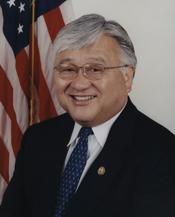
A dear friend of mine, and a beloved Member of this body, the late Congressman Bob Matsui, arrived at the Pinedale Assembly Center at age two. Congressman Matsui fought against all odds, as did all of those, and despite the prejudice and the hardships, rose to be a great leader of our Nation.
Another story, James Hirabayashi, interned there at age 17. And he wrote, and you can imagine hearing the words: ``My parents and three siblings and myself occupied a single barrack at the Pinedale detention camp. However, we were soon to be split further apart and never regained the unified family life during the war.''
Later, James received his Ph.D. at Harvard, became a professor of anthropology at San Francisco State and now chairs the Asian Studies program.
Another story: Jack Hata was evacuated to Pinedale on his 21st birthday. He recalled: ``The assembly center was made up of rows of tarpapered black barracks enclosed by barbed wire fencing with armed guard towers. The most vivid recollection of the Pinedale experience had to be that of a strong, hot wind picking up every mid-afternoon blowing dust over the entire camp and making seeing and breathing very difficult.''
Today, ladies and gentlemen, much has changed. Pinedale is a part of our history, a place of loss, of hatred and fear. But now it will be transformed into a place of remembrance for healing and hope.
The Pinedale Assembly Center Memorial Project Committee cosponsored by the Central California District of Japanese American Citizens and the California Nikkei Foundation is establishing a memorial. The memorial would not have been possible without the dedication and diligence of all those who have supported this effort, including Judge Dale Ikeda, chairman of the memorial project.
I am one of those that serves on the Project Advisory Committee. But Dale says it best: ``By preserving the Pinedale Assembly Center story, we hope to teach a lesson in history, that it takes people to ensure `justice for all.' And rather, it is the duty of each generation to strive to form a more perfect union for ourselves and for the sake of our children.''
The memorial groundbreaking will take place next week, February 19, on the 65th anniversary of the executive order.
Today, over 5,000 Japanese Americans, many former World War II internees and their families, live in Fresno County, and the Pinedale Memorial will honor these and those who suffered during that period.
The memorial sends a message that we are committed to healing historical wounds and replacing the prejudice and fear with the American values of equality and justice.
It has been said that those who cannot learn from history are doomed to repeat it. Let's make sure this memorial helps us learn.
Allow me to close by reading the parts of the memorial plaque inscription that will be dedicated next week:
``This Memorial is dedicated to over 4,800 Americans of Japanese ancestry who were confined at the Pinedale Assembly Center. This was an early phase of a mass incarceration of over 120,000 Japanese Americans. They were detained without charges, trial or establishment of guilt. May such injustices and suffering never recur.''