Let me thank the chairman of the full committee for his leadership and the consistency of the methodical pathway to securing America. That is what we are doing here today. I want to acknowledge the…
Let me thank the chairman of the full committee for his leadership and the consistency of the methodical pathway to securing America. That is what we are doing here today. I want to acknowledge the ranking member of the committee and my ranking member, Mr. Lungren of California, because we have worked together as a committee to focus on a number of issues, including chemical security and an overview of infrastructure protection and now this legislation.
I also think it is important to note that we have committed, as the chairman has indicated, that we will look at the security measures needed for the trucking industry.
But we should get a sense of the roadmap that is being created here on the floor today. And as we look at the bills that we have discussed, each one of them are building blocks toward the response to the 9/11 families, who, day after day after 9/11 told this Congress to get its act together, starting first, of course, with the bill of Congresswoman Clarke that emphasizes that if we have a watch list, that watch list should be a watch list that is both accurate and secure, and that hard working Americans have to have their civil liberties protected, so if they are on the list by mistake we must avoid or find a process of appeal for the mistakes that are being made.
Then, of course, I think it is noteworthy, as the chairman brought forward his bill on biometric, that we found incidences in Chicago where these cards that are being used by airport employees were fraudulently produced and large numbers of them found, a cache of them found in the hands of employees, so that people who are not credentialed can get on the airport surface because of this fraudulence. So this biometric study is extremely important.
Having just come back from Boston Logan Airport, we also note that the bill by Congresswoman Lowey is very important, so that we are on our toes about ensuring that those who are working at these airports are not tipped off about testing or having them go through security, so that the four corners of airports are secure.
Now we come full circle, and this legislation, H. Res. 1150, goes back again to the heart of the purpose of the 9/11 Commission. It was a holistic approach to security, for we have seen the tragedy of being lax on airport security.
And I might imagine that those of you who are visiting the United States Congress who might have taken airplanes have gone through security, and it might have been a crowded line. But you are adhering to the rules because you know that we are working together to secure the homeland.
But the homeland is more than just aviation. It is also rail. And this legislation is part of the approach that the Homeland Security Committee is taking, and seriously taking, as its responsibilities of oversight.
Each weekday, 11,300,000 passengers depend on our Nation's mass transit
lines as a means of transportation. Our Nation's mass transit lines serve as a target for terrorist attacks, as evidenced by the March 11, 2004, attack on the Madrid, Spain, mass transit system; the July 7, 2005, attack on the London, England, mass transit system; and the July 11, 2006, attack on the Mumbai, India, mass transit system.
These systems are vulnerable, and the TSA Administration through the development of its National Explosive Detection Canine Team Program furthered its ability to provide security against terrorist attacks on the Nation's transportation systems by preventing and protecting our explosive threats.
However, it is important for the administration and the Transportation Security Administration to be reminded of the Nation's rail and mass transit lines, that they should remain secure from terrorist attack, as they are critical in the functioning of our Nation's economy and they serve as a means of transportation on a daily basis for millions of hard working Americans.
So this legislation is a wake-up call. It is in fact to remind the administration that we have to do more work on transportation security inasmuch as we have seen done by others.
In 1995, the Irish Republican Army waged a long-running terrorist campaign against the London Underground.
Palestinian terrorists have carried out suicide bombings on Israeli buses. And so this legislation is to emphasize again that attacks on mass transit are possible and therefore we should look seriously at providing the security necessary.
Just recently I held a field hearing in New York to look at the ways of the New York transit system and how they were securing their particular system, one of the largest in the Nation. We learned that the National Explosive Detection Canine Team Program was very important, and therefore we want the TSA to continue that. We need TSA to continue to develop training programs for frontline workers and fulfill the other mandates Congress put in place in the 9/11 bill to increase security on rail and mass transit. This resolution is to provide that roadmap and to emphasize to TSA how important mass transit security is.
Might I just conclude by suggesting as my colleagues have discussed this whole question of energy, just think about a secure mass transit that will allow us to engage in a transit system that actually works.
I thank the distinguished chairman.
A secure mass transit will encourage more Americans to utilize our transit and our transportation system that is a public transit system. That is what those of us on this side of the aisle believe, a green economy, conservation, efficiency. And coming from Texas I would say to my good friend from California, we have happily lived with safe and secure and environmentally safe drilling and we encourage our very strong companies to continue to do so. But, at the same time, the word ``energy'' is a broad term. Green energy, efficiency, conservation. That is what this Congress has to preach to the American public, and safe and secure mass transit, of which all of these legislative initiatives are planning to do.
I would ask my colleagues in particular to support the legislation presently under consideration dealing with the mass transit resolution and all the other bills that have been able to come forward out of Homeland Security and under the Subcommittee on Transportation Security and Infrastructure Protection.
Madam Speaker, I rise today to urge my colleagues to support H. Res. 1150, Expressing the sense of the House of Representatives that the Transportation Security Administration should, in accordance with the congressional mandate provided for in the Implementing Recommendations of the 9/11 Commission Act of 2007, enhance security against terrorist attack and other security threats to our Nation's rail and mass transit lines, introduced by myself. I rise today to offer this Resolution regarding the role of the Transportation Security Administration in securing our Nation's rail and mass transit lines.
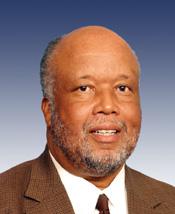
This Resolution reaffirms the congressional mandate provided for in the Implementing Recommendations of the 9/11 Commission Act of 2007 that the Transportation Security Administration enhance security against terrorist attack and other security threats to our Nation's rail and mass transit lines. I am pleased to have Homeland Security Committee Chairman Bennie Thompson, as an original cosponsor of this resolution. Chairman Thompson has been a leader in our efforts to secure against terrorist threats to our Nation's rail and mass transit lines.
Madam Speaker, each weekday 11,300,000 passengers depend on our Nation's mass transit lines as a means of transportation. Our Nation's mass transit lines serve as a target for terrorist attack as evidenced by the March 11, 2004, attack on the Madrid, Spain, mass transit system, the July 7, 2005, attack on the London, England, mass transit system, and the July 11, 2006, attack on the Mumbai, India, mass transit system. The Transportation Security Administration has, through the development of its National Explosives Detection Canine Team Program furthered its ability to provide security against terrorist attacks on the Nation's transportation systems by preventing and protecting against explosives threats.
It is imperative that our Nation's rail and mass transit lines remain secure from terrorist attack as they are critical to the functioning of our Nation's economy and serve as a means of transportation on a daily basis for millions of hard working Americans. Successful attacks against rail and mass transit targets have been carried out worldwide by terrorist looking to create havoc, economic harm, and kill innocent people.
Throughout the world, mass transit systems have long been targets of terrorist attacks. Algerian extremists set off bombs on the subways of Paris in 1995 and 1996; the Irish Republican Army waged a long-running terrorist campaign against the London Underground; Palestinian terrorists have carried out suicide bombings on Israel's buses; Chechnyan terrorists killed 40 people by bombing the Moscow subway in 2004; and, in the first terrorist use of a chemical weapon, a Japanese cult--Aum Shinrykyo--released sarin gas on a Tokyo subway in 1995.
Recent events make it clear that the threat continues. On the morning of March 11, 2004, ten explosions occurred at the height of the Madrid rush hour aboard four commuter trains. On July 7, 2005, during the morning peak travel hours, three separate explosions ripped through the London Underground and a fourth explosion occurred on a double-decker bus. These four explosions, the result of coordinated suicide-bombings by British-born Islamic extremists, claimed the lives of 56 people and seriously injured hundreds more. Two weeks later, on July 21, 2005, another group of terrorists unsuccessfully attempted to attack London's mass transit system again. On July 11, 2006 a series of seven bomb blasts against the Suburban Railway in Mumbai, formerly known as Bombay, capital city of the Indian state of Maharashtra and India's financial capital resulted in 207 lost lives and over 700 injured.
The recent attacks serve as a harsh reminder of mass transit and rail security vulnerabilities. Both mass transit and rail systems are public and used by millions of people daily. Because of their size, openness, and highly-networked character, there are no obvious checkpoints, like those at airports, to inspect passengers and parcels. Passengers are strangers, promising attackers anonymity and easy escape.
And attacks on mass transit--the circulatory systems of urban areas-- can cause widespread fear, severely disrupt economic activity, kill or injure large numbers of people, and alter our way of life. An attack on our freight rail, either the material being transported, such as hazardous materials, or vital commodities, or merely the system itself, could severely impact our national economy.
As a result, both mass transit and rail systems are attractive targets. Since September 11, 2001, according to the Memorial Institute for the Prevention of Terrorism, mass transit systems have been the target of more than 145 terrorist attacks.
Due to their existence in high-population, high-risk urban areas, mass transit systems are also inevitably affected by any terrorist attack that may occur within that jurisdiction--regardless of whether the transit system was the
target of the attack. For example, during September 11, 2001, two of New York City's busiest transit stations were lost and considerable damage occurred to the tunnel structures, endangering hundreds of lives underground. Great care was required to evacuate passengers, locate and rescue trapped transit cars, and communicate instructions. The damage in New York City was so great that in the immediate aftermath of 9/11, Congress appropriated $1.8 billion to rebuild the subway infrastructure that was damaged in the attacks. I am hopeful that through this legislation we can prevent such attacks rather than face the tragic consequences of 9/11 again.
I refuse to sit idly by and allow another 9/11 or Madrid, London, or Mumbai bombing to disrupt our Nation and its critical infrastructure-- it is with that conviction that I seek to address these issues. The recent world events should serve as a wake-up call that we must do more to secure our transportation systems and we must act quickly and responsibly. I firmly believe that the legislation before us today will take an important step in securing our transportation systems.
Pursuant to the Aviation and Transportation Security Act of 2001, ATSA, the Transportation Security Administration, TSA, is responsible for the security of all modes of transportation including rail and mass transit. TSA, however, has focused the majority of its resources and assets on aviation security in the past five years. I could go on with other examples, but what these instances show is that clearly it is imperative that TSA value rail and mass transit security on equal footing with aviation security. We are satisfied with the progress that TSA has made with the National Explosion Detection Team Program, but more is needed to train frontline employees.
Congress, recognizing TSA's lack of progress in developing a security strategy for all modes of transportation, mandated the development of a National Strategy for Transportation Security in the Intelligence Reform and Terrorism Prevention Act of 2004, 9/11 Act. This strategy, although due April 1, 2005, was not finalized by TSA until September 2005. Moreover, the document provided by the Department of Homeland Security (DHS) did not meet the requirements set out by Congress, especially with regards to rail and mass transit security. Furthermore, subsequent congressionally mandated updates were also not met by TSA, resulting in the 9/11 Discourse Project giving the TSA a C- for its efforts.
TSA's failure to assume a leadership position on surface transportation security is plainly evident. It is time that we take action and leadership to help protect the more than 11.3 million passengers in 35 metropolitan areas and 22 states who use commuter, heavy, or light rail each weekday. There must be substantial penalties for those who do not follow the security plans, vulnerability assessments, and regulations set out in this legislation.
H. Res. 1150 is a straightforward resolution, but a very important one. Recognizing that TSA is the lead agency for transportation security, and all of the hard work Congress did last year to make rail and mass transit security programs more robust in the enactment of the 9/11 bill, we must continue to push TSA to fulfill the mandates for rail and mass transit security required by Congress.
Last month, the Subcommittee on Transportation Security and Infrastructure Protection, which I have the privilege of chairing, held a field hearing in New York City on efforts to secure rail and mass transit. It was a truly edifying experience. We learned much about what is being done to secure the New York Transit system and other systems across the Nation, and what TSA can do in its leadership role at the federal level, to facilitate these efforts. I want to commend TSA on its progress with the National Explosives Detection Canine Team Program, since most successful attacks on rail and mass transit are carried out using IEDs. However, we need TSA to continue to develop training programs for frontline workers, and fulfill the other mandates Congress put in place in the 9/11 bill to increase security on rail and mass transit.
TSA should reinvigorate their efforts to fulfill the mandates of the 9/11 bill. TSA has not submitted to the Committee on Homeland Security the National Strategy for Public Transportation Security which was mandated by the 9/11 bill, along with other deadlines including training regulations for frontline workers. TSA must submit this to both comply with the law and more importantly to protect Americans.
I find it completely appalling that this Administration seems to be unwilling to act on rail and mass transit security until we are faced with another disaster. I shudder to think that if the Washington, DC or New York subway systems were attacked, and mass casualties resulted, that we would be thinking that more could have been done to prevent such a tragedy. We will be desperately trying to figure out how to prepare for a disaster that has already happened and holding hearing after hearing to find out where we dropped the ball. The time to prepare is now, and I am committed to securing our Nation's rail and mass transit system expeditiously. We have been blessed thus far that our rail and public transportation systems have not been attacked. We should make our best efforts to ensure that we do not overlook this blessing.
From the terrorist attacks that have occurred around the world, we know that terrorists will target our rail and public transportation systems. Despite this admonition, the agency created and funded by Congress to address the issue of transportation security has consistently dropped the ball when it comes to rail and public transportation. We cannot let the lessons of Madrid, London, and Mumbai go unheeded. For the sake of the millions of Americans who use our rail and mass transit systems everyday to go to work, school, and visit friends and family, we have to take charge on this security risk.
We owe it to the public to safeguard the modes of transportation that allow them to carry on with their lives and drive this economy. Millions of men and women ride our Nation's rail and public transportation systems everyday; we owe it to them to ensure that they can do so safely and securely. I hope that through today's hearing and our continued efforts on the issue of rail and mass transit security, we can resolve the asymmetric way in which we treat aviation versus rail security and resolve the substantial threat posed by inadequate security on our rail and mass transit system.
I want to thank my colleagues for all of their hard work and dedication to these important issues.