


H.Res. 120House110th Congress (2007-2009)Passed Congress

Recognizing the African American spiritual as a national treasure.

Introduced January 31, 2007

Legislative Activity

Stay on top of the latest movement without scrolling through every action

9 earlier actions
HouseFloor Latest Action

Motion to reconsider laid on the table Agreed to without objection.

February 7, 2007 • 2:30 PM

View full timeline
HouseIntro Referral

Introduced in House

January 31, 2007

HouseIntro Referral

Referred to the House Committee on Education and Labor.

January 31, 2007

HouseFloor

Mrs. Davis (CA) moved to suspend the rules and agree to the resolution.

February 7, 2007 • 11:26 AM

HouseFloor

Considered under suspension of the rules. (consideration: CR H1288-1291)

February 7, 2007 • 11:26 AM

HouseFloor

DEBATE - The House proceeded with forty minutes of debate on H. Res. 120.

February 7, 2007 • 11:26 AM

HouseFloor

At the conclusion of debate, the Yeas and Nays were demanded and ordered. Pursuant to the provisions of clause 8, rule XX, the Chair announced that further proceedings on the motion would be postponed.

February 7, 2007 • 11:46 AM

HouseFloor

Considered as unfinished business. (consideration: CR H1302-1303)

February 7, 2007 • 2:22 PM

HouseFloor

Passed/agreed to in House: On motion to suspend the rules and agree to the resolution Agreed to by the Yeas and Nays: (2/3 required): 426 - 0 (Roll no. 79).(text: CR H1288)

February 7, 2007 • 2:30 PM

HouseFloor

On motion to suspend the rules and agree to the resolution Agreed to by the Yeas and Nays: (2/3 required): 426 - 0 (Roll no. 79). (text: CR H1288)

February 7, 2007 • 2:30 PM

HouseFloor

Motion to reconsider laid on the table Agreed to without objection.

February 7, 2007 • 2:30 PM

Floor Debate

10 members

What members said about H.Res. 120 on the floor

2 Republicans8 Democrats
Rosa L. DeLauro
Rep. Rosa L. DeLauroD-CT-3 · Feb 7, 2007

Mr. Speaker, I rise today in support of legislation that would recognize the African American spiritual as a national treasure, and would like to say thank you to my colleague from Georgia (Mr.…

Vernon J. Ehlers
Rep. Vernon J. EhlersR-MI-3 · Feb 7, 2007

Mr. Speaker, I yield myself such time as I may consume. Mr. Speaker, I rise today in support of House Resolution 120, recognizing African American spirituals as a national treasure. Simply defined,…

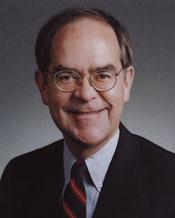
Jim Cooper
Rep. Jim CooperD-TN-5 · Feb 7, 2007

Mr. Speaker, I thank the gentlewoman from California for yielding. I would like to lend my voice and praise of the African American spiritual and a group that I consider to be the leading…

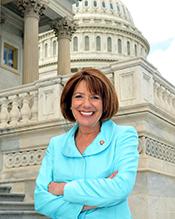
Susan A. Davis
Rep. Susan A. DavisD-CA-53 · Feb 7, 2007

Mr. Speaker, I move to suspend the rules and agree to the resolution (H. Res. 120) recognizing the African American spiritual as a national treasure. Mr. Speaker, I request 5 legislative days during…

Sheila Jackson Lee
Rep. Sheila Jackson LeeD-TX-18 · Feb 7, 2007

Mr. Speaker, I rise in support of H. Res. 120, to recognize the African American spiritual as a national treasure. When slavery was introduced into the European colonies in 1619, the dark days that…

Show 5 more
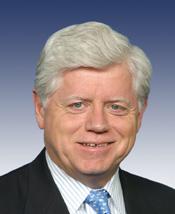
John B. Larson
Rep. John B. LarsonD-CT-1 · Feb 7, 2007

Mr. Speaker, I rise today to express my strong support for H. Res. 120, which recognizes the African American spiritual as a national treasure. The African American spiritual is both an expression of…

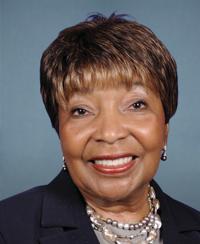
Eddie Bernice Johnson
Rep. Eddie Bernice JohnsonD-TX-30 · Feb 7, 2007

Mr. Speaker, I rise today in strong support of this resolution to recognize the African American spiritual as a national treasure. Till the passage of the 13th Amendment, African Americn slaves were…

Danny K. Davis
Rep. Danny K. DavisD-IL-7 · Feb 7, 2007

Mr. Speaker, I want to thank the gentlewoman from California for yielding. I rise in strong support of H. Res. 120, recognizing the African American spiritual as a national treasure. Growing up in…

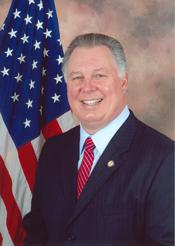
Albio Sires
Rep. Albio SiresD-NJ-13 · Feb 7, 2007

Mr. Speaker, I rise in support of H. Res. 120, which recognizes the African American spiritual as a national treasure. The slave Africans who came to the European colonies were forbidden to speak…

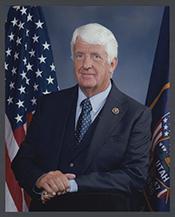
Rob Bishop
Rep. Rob BishopR-UT-1 · Feb 7, 2007

Mr. Speaker, on rollcall No. 79 I was unavoidably detained. Had I been present, I would have voted ``yea.''

Bill Text

2 versions available

Reading Mode
Latest
Engrossed in HouseIssued February 7, 2007

H. RES. 120

In the House of Representatives, U. S.,

February 7, 2007

RESOLUTION

Whereas beginning in 1619, when slavery was introduced into the European colonies, enslaved Africans remained in bondage until 1865, when the United States ratified the 13th amendment to the Constitution;

Whereas during that period of the history of the United States, the first expression of that unique American music was created by enslaved African Americans who—

(1)

used their knowledge of the English language and the Christian religious faith, as it had been taught to them in the New World; and

(2)

stealthily wove within the music their experience of coping with human servitude and their strong desire to be free;

Whereas, as a method of survival, enslaved African Americans who were forbidden to speak their native languages, play musical instruments they had used in Africa, or practice their traditional religious beliefs, relied on their strong African oral tradition of songs, stories, proverbs, and historical accounts to create this original music, now known as spirituals;

Whereas Calvin Earl, a noted performer and educator on African American spirituals, remarked that the Christian lyrics became a metaphor for freedom from slavery, a secret way for slaves to communicate with each other, teach their children, record their history, and heal their pain;

Whereas the New Jersey Historical Commission found that some of those daring and artful runaway slaves who entered New Jersey by way of the Underground Railroad no doubt sang the words of old Negro spirituals like Steal Away before embarking on their perilous journey north;

Whereas African American spirituals spread all over the United States, and the songs we know of today may only represent a small portion of the total number of spirituals that once existed;

Whereas Frederick Douglass, a fugitive slave who would become one of the leading abolitionists of the United States, remarked that the spirituals told a tale of woe which was then altogether beyond my feeble comprehension; they were tones loud, long, and deep; they breathed the prayer and complaint of souls boiling over with the bitterest anguish. Every tone was a testimony against slavery and a prayer to God for deliverance from chains. …; and

Whereas the American Folklife Preservation Act (Public Law 94–201; 20 U.S.C. 2101 note) finds that the diversity inherent in American folklife has contributed greatly to the cultural richness of the nation and has fostered a sense of individuality and identity among the American people: Now, therefore, be it

That the House of Representatives—

(1)

recognizes that African American spirituals are a poignant and powerful genre of music that have become one of the most significant segments of American music in existence;

(2)

expresses the deepest gratitude, recognition, and honor to the former enslaved Africans in the United States for their gifts to our Nation, including their original music and oral history; and

(3)

requests that the President issue a proclamation that reflects on the important contribution of African American spirituals to American history, and naming the African American spiritual a national treasure.

Clerk.