Mr. Chairman, the United States now confronts the most complex array of threats in many decades, if not the entire history, of our Nation. Afghanistan and Pakistan, Iran, North Korea, terrorism,…
Mr. Chairman, the United States now confronts the most complex array of threats in many decades, if not the entire history, of our Nation.
Afghanistan and Pakistan, Iran, North Korea, terrorism, nuclear proliferation, drug trafficking and climate change all pose major challenges to our national security. And we must confront these threats in the midst of a global financial crisis with enormous ramifications both at home and around the world.
Our brave men and women in uniform are making unbelievable sacrifices to
protect our security interests around the globe. They and their families deserve our deepest respect and gratitude. But we should not expect the military to shoulder the entire burden.
The State Department and our other civilian foreign affairs agencies have a critical role to play in protecting U.S. national security. Diplomacy, development, and defense are the three key pillars of our U.S. national security policy. By wisely investing resources to strengthen our diplomatic capabilities, we can help prevent conflicts before they start and head off conditions that lead to failed states.
For years we have failed to provide the State Department with the resources it desperately needs to pursue its core missions. With the expansion of U.S. diplomatic responsibilities in the 1990s, and the more recent demands of Iraq and Afghanistan, the Foreign Service has been strained to the breaking point. Sixteen percent of all positions are currently unfilled. One in nine positions overseas is vacant.
As Secretary of Defense Robert Gates recently stated: ``It has become clear that America's civilian institutions of diplomacy and development have been chronically undermanned and underfunded for far too long.''
The legislation before us today, Mr. Chairman, takes an important first step in correcting that situation. It supports President Obama's request for funding to hire over 1,000 new staff, including at least 750 Foreign Service officers; 332 of these positions will be used to immediately expand our diplomatic presence in Afghanistan, Pakistan and other strategic areas. A further 213 positions will be dedicated to improving and expanding training in critical needs languages such as Arabic, Chinese, Hindi, and Urdu.
The bill also provides resources requested by the administration for significant numbers of new public diplomacy officers, arms control experts, counterterrorism specialists.
And the bill has important provisions to promote more strategic thinking in the State Department and help the Foreign Service transition from traditional diplomatic framework to a more expeditionary one.
To help ensure the Department can continue to attract the best and brightest and retain these professionals over the long term, H.R. 2410 closes the pay gap that currently results in a 21 percent pay cut when junior Foreign Service officers leave Washington on assignment.
The bill also authorizes funds to pay our full dues and all recognized arrearages to the United Nations.
The legislation supports a significant expansion of the Peace Corps, an increase in international broadcasting activities, a vigorous public diplomacy effort, and a strengthened arms control and nonproliferation bureau at the State Department, which will soon be under the head of our dear colleague, Mrs. Tauscher.
In addition, the bill creates a new foundation to significantly increase the number of American students studying abroad, enhances U.S. efforts to help Mexico and other Latin American countries reduce drug violence, and addresses a number of key human rights and democracy issues around the world.
H.R. 2410 also reforms our system of export controls for military technology, improves oversight of U.S. security assistance, and requires a report to Congress on actions taken by the United States to maintain Israel's qualitative military edge.
This legislation is supported by a wide range of organizations, from the United States Chamber of Commerce and the National Association of Manufacturers, on one hand, to Human Rights Watch and Amnesty International on the other. From the Aerospace Industries Association, the Satellite Industry Association, on one hand, to CARE, Oxfam, the Peace Corps Association, Refugees International, and the Genocide Intervention Network on the other, the Save Darfur Council, Church World Service, and the American Council on Education, a coalition of all the major public and private universities in this country all strongly support this legislation.
I urge all my colleagues on both sides of the aisle to support this important legislation.
I reserve the balance of my time.
Mr. Chairman, I am very pleased to yield 3 minutes to the vice chair of the House Foreign Affairs Committee, the chairman of the Subcommittee on the Middle East and South Asia, Mr. Ackerman.
(Mr. ACKERMAN asked and was given permission to revise and extend his remarks.)
Mr. Chairman, I am very pleased to yield 1 minute to one of the new members of the committee who has been of tremendous assistance on a variety of issues, the gentleman from Virginia (Mr. Connolly).
Mr. Chairman, I am very pleased to yield to another new Member of the House and of the committee, a great Member, Mr. McMahon, for 1 minute.
Mr. Chairman, I am now pleased to yield 1 minute to a good friend from California who has been on the committee and has returned, the gentlewoman from California (Ms. Woolsey).
Mr. Chairman, I am very pleased to yield 1 minute to the gentleman from North Carolina (Mr. Miller), the chairman of the Science and Technology Subcommittee on Investigations and Oversight and a member of the Foreign Affairs Committee.
Mr. Chairman, I am very pleased to yield 1 minute to the gentleman from Illinois (Mr. Jackson), a member of the Committee on Appropriations.
Mr. Chair, I am pleased to yield 1 minute to my colleague from California (Mr. Schiff), a former member of the Foreign Affairs Committee and a member of the Appropriations Committee.
(Mr. SCHIFF asked and was given permission to revise and extend his remarks.)
Mr. Chairman, I am pleased to yield 1\1/2\ minutes to the very active and distinguished member of the committee, the gentlewoman from Texas, Ms. Sheila Jackson-Lee.
(Ms. JACKSON-LEE of Texas asked and was given permission to revise and extend her remarks.)
Mr. Chairman, I am very pleased to yield 1 minute to a great member of the committee, the gentleman from Missouri (Mr. Carnahan).
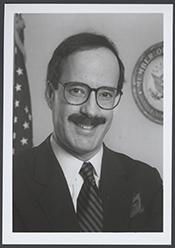
Mr. Chairman, I am very pleased to yield 2 minutes to the very distinguished chairman of the Foreign Affairs Subcommittee on the Western Hemisphere, my friend, the gentleman from New York (Mr. Engel).
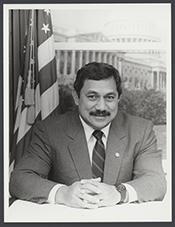
Mr. Chairman, I am very pleased to yield 2 minutes to the gentleman from American Samoa. He's chairman of the Subcommittee on Asia, the Pacific and the Global Environment, my friend, Eni Faleomavaega.
(Mr. FALEOMAVAEGA asked and was given permission to revise and extend his remarks.)
I yield the gentleman an additional 15 seconds.
Mr. Chairman, for purposes of a colloquy, I'm pleased to yield 1 minute to a former member of the committee, a member of the Budget Committee and the Ways and Means Committee, the gentleman from Oregon (Mr. Blumenauer).
I want to manifest very clearly my intention to take up a major rewrite of foreign assistance legislation later this year, and we will address the issues raised in the Water For the World Act as part of that effort.
Mr. Chairman, I am pleased to yield 1 minute to a friend of a very, very long time, a member of the committee as well as the Agriculture Committee, the gentleman from California (Mr. Costa).
Mr. Chairman, I am pleased to yield 1 minute to a member of the Foreign Affairs Committee--she was, then she wasn't, and now she is--and my friend from Nevada (Ms. Berkley).
Mr. Chairman, I am pleased to yield 1 minute to a great member of our committee, also a member of the Science and Technology Committee, the gentlelady from Arizona (Ms. Giffords).
Mr. Chairman, I am now pleased to yield to another excellent member of the committee, former colleague in the legislature in California, the gentlelady from California (Ms. Watson), 1 minute.
I am pleased to yield an additional 15 seconds.
Mr. Chairman, I am now pleased to yield 1 minute to the gentleman from New Jersey (Mr. Holt) for purposes of a colloquy.
I thank the gentleman for yielding.
I thank him for his suggestion. I agree completely that science constitutes an untapped and undertapped resource in America's diplomatic toolbox, and I can assure the gentleman that I am committed to enhancing our capacity in this area, collaborating with him on this effort, including further legislation as well as a role in the foreign assistance reform process that we are working on.
Will the gentleman yield?
I appreciate it.
The answer is, I certainly do agree. In the case of China, under our legislation, all satellites and related components must remain on the United States munitions list.
Will the gentleman yield further?
The gentleman's remarks are worth elaborating on. The whole notion of a domestic commercial satellite industry is very much at stake if we can't, in appropriate situations, export and arrange for those kinds of transfers, and I think it is part of what the gentleman pointed out. That is why both the Satellite Industry Association and the Aerospace Industries Association support this legislation.
Mr. Chairman, I would like to include in the Congressional Record an exchange of letters between the Committee on Foreign Affairs and the Committee on Oversight and Government Reform.
House of Representatives, Committee on Oversight and
Government Reform,
Washington, DC, June 9, 2009.
Hon. Howard L. Berman,
Chairman, Committee on Foreign Affairs,
Washington, DC.
Dear Chairman Berman: I am writing about H.R. 2410, the
``Foreign Relations Authorization Act for Fiscal Years 2010
and 2011.'' The Committee on Foreign Affairs reported this
legislation to the House on June 4, 2009.
I appreciate your effort to consult with the Committee on
Oversight and Government Reform regarding those provisions of
H.R. 2410 that fall within the Oversight Committee's
jurisdiction. These provisions address issues related to the
federal civil service and government contractors.
In the interest of expediting consideration of H.R. 2410,
the Oversight Committee will not request a sequential
referral of this bill. I would, however, request your support
for the appointment of conferees from the Oversight Committee
should H.R. 2410 or a similar Senate bill be considered in
conference with the Senate. Moreover, this letter should not
be construed as a waiver of the Oversight Committee's
legislative jurisdiction over subjects addressed in H.R. 2410
that fall within the jurisdiction of the Oversight Committee.
Please include our exchange of letters on this matter in
the Congressional Record during consideration of this
legislation on the House floor. Again, I appreciate your
willingness to consult the Committee on these matters.
Sincerely,
Edolphus Towns,
Chairman.
I yield back the balance of my time.
Mr. Chairman, I have an amendment made in order by the rule and ask for its immediate consideration.
Mr. Chairman, I yield myself as much time as I may consume.
My amendment makes a number of changes. Many of these are minor or technical amendments. Others address issues raised by other committees that have a jurisdictional interest in the bill. However, there are a number of other changes in my bill that are more substantive. For example, the amendment takes care of requests by Members that are generally unobjectionable even though substantive.
For example, the bill adds a provision that would allow the State Department's growing Civilian Response Corps to enhance its capability by drawing on locally employed staff who have significant expertise in unstable environments.
It includes provisions to assist in the compensation for victims of terrorism from the 1998 Nairobi bombing, drawing from a bill that we passed last year on a bipartisan basis and supported by Mr. Jesse Jackson, Mr. Roy Blunt, and our ranking member, Ileana Ros-Lehtinen.
The amendment also updates language currently in the bill, welcoming the end of Sri Lanka's 26-year civil war between the government and the Liberation Tigers of Tamil Ealam. These are provisions pushed particularly by the gentleman from New York (Mr. McMahon), a member of the committee. The United States, standing with the international community, eagerly looks forward to the government of Sri Lanka's putting forward a timely and credible proposal to engage its Tamil community and address the legitimate grievances of its Tamil citizens so that peace and reconciliation can be achieved and sustained. It also includes two requests by Republican members of the Committee on Foreign Affairs, including an amendment by Mr. Wilson from South Carolina, who I agreed to work with during the markup at the committee. It also increases the amount of funds for the State Department Inspector General and the National Endowment For Democracy, as suggested by the minority in their views on the bill.
This continues my efforts to include sensible Republican ideas into H.R. 2410, even though I recognize that very few Republicans appear to be prepared to support the legislation at this time.
In addition, my amendment would also begin the process of modernizing our foreign assistance program by establishing a rigorous system to monitor and evaluate the effectiveness and efficiency of U.S. foreign assistance.
One of the greatest weaknesses of the current U.S. foreign aid program is that it lacks a clear set of goals and objectives, and there's no systematic plan for measuring results. Under my amendment, the Secretary of State would coordinate the monitoring and evaluation activities of the various agencies carrying out foreign aid activities, and would report to the Congress on the findings and lessons learned from such evaluations.
Finally, in recent days--and this is important--there has been significant concern expressed that a provision in the bill authorizing the Office of Global Women's Issues, an existing office at the State Department that focuses on issues like education for women and girls, political empowerment, and violence against women, somehow is a basis for promoting or lobbying for abortion. That is simply not true. The bill as reported out by the committee does not refer to abortion in any way, nor does the office work on abortion issues. That office is focused particularly on women in Iraq and in Afghanistan on the issues of education and political empowerment that I just mentioned.
To reassure my colleagues, however, I have included in my amendment the following new subsection:
``Nothing in this section, and in particular the duties of the office described in subsection (c)''--that is the Office of Global Women's Issues--``shall be construed as affecting in any way existing statutory prohibitions against abortion or existing statutory prohibitions on the use of funds to engage in any activity or effort to alter the laws or policies in effect in any foreign country concerning the circumstances under which abortion is permitted, regulated, or prohibited.''
This language makes it very clear that existing prohibitions on lobbying for or using funds to promote abortion--including the Helms amendment, the Leahy amendment and the Siljander amendment--remain in effect and will continue to apply to the actions of the office. I believe this confirms that the bill does not undermine current law in any way and will reassure my colleagues on this issue.
I think this manager's amendment is a good amendment. I urge all my colleagues to support it.
I reserve the balance of my time.
They cannot. If the gentleman is yielding on his time to me, they cannot. You know, Abe Lincoln used to tell this story: If you call a tail a leg, how many legs does a sheep have? And the answer is four, because calling a tail a leg doesn't make it one.
No matter how many times the specter is raised, this office cannot do and has no intention and no plans of doing anything to promote abortions, coerce abortions, fund abortions or lobby for an abortion policy.
It is an office that is focused generally on the issues of women's political empowerment: should women have the right to vote, should they be able to run for office, are they treated as equal citizens under the law. It serves as a promoter of better education for women and girls and a series of causes that you are known for caring about. And it does not. It does not.
If the gentleman will continue to yield, my view is that that office cannot do through indirection, that is by going through some agency, anything that it is not allowed to do on its own. And it is not allowed to do the things that you are concerned about. And the purpose of the manager's amendment----
I will yield more time to discuss this, if you want, but first I am going to yield 2 minutes to the gentleman from Maryland (Mr. Ruppersberger), who has been waiting patiently. Then, if you want, we can come back to this.
(Mr. RUPPERSBERGER asked and was given permission to revise and extend his remarks.)
I yield myself 2 minutes, Mr. Chairman.
Let me just lay out this Office of Global Women's Issues. First of all, by law, by virtue of the Helms amendment and the Siljander amendment and the Leahy amendment, it cannot and, by practice, it does not and has no intention of serving as a vehicle for either abortion policy or coercive abortion.
What does it do? It is dedicated to ensuring that women around the world can realize their potential by fully participating in the political, economic and cultural lives of their societies.
Women around the globe, and the gentleman from New Jersey knows this, women are bought and sold like commodities and trafficked across international borders for sexual exploitation. Young children are married off to men old enough to be their grandfathers and have their education and childhood abruptly ended. Girls have their bodies mutilated in the name of culture or tradition, leading to complication in childbearing and lifelong pain and incontinence. Young women are slain by their own families for perceived and sometimes fictitious infractions, simply because they are viewed less as human beings and as symbols of human honor.
Women who become infected with HIV, often because of the infidelity of their spouses, are shunned, lose their livelihoods or do not have access to the medicines that could prolong their lives and prevent transmission of the virus to their children.
I say to the gentleman, these causes and these concerns that I have mentioned have always been at the forefront of the gentleman's own concerns, and to hold this entire bill and this office hostage to a desire to change abortion law I think is unfair.
I scrupulously avoided and the committee Democrats scrupulously avoided any effort to change that law in the other direction, and I think it is wrong to try to hijack this bill to hold it hostage for those purposes.
I yield back the balance of my time.
Mr. Chairman, could I ask if the gentlelady is finished.
Our side has the right to close. Then since I'll be the only speaker and I have the right to close--
I do.
Mr. Chairman, I yield myself such time as I may consume, up to 5 minutes.
I rise in opposition to the amendment. I share a lot of the ranking member's concerns, fundamentally, about the countries named in her amendment and about the issue of proliferation. But there are sort of three different levels on which I think her amendment raises serious doubts and causes me to want to oppose it.
The first is the assumption that withholding assessed contributions produces the actions we want. We've had test cases of this.
Wouldn't it have been great if the money we withheld from the U.N. population planning account had stopped coercive abortions in China?
Wouldn't it be great if the dues we are assessed to pay to the United Nations had resulted in the kinds of reforms that eliminated the questionable contact that the minority rightfully points to? There is a real challenge to this assumption that the withholding is what achieves the goal. We can wish it a lot, but it didn't always happen.
Secondly, there are some specific categories of programs here that are involved and should be mentioned because, in some cases, they make some sense. The technical assistance provided by IAEA is constructive and supportive of a number of humanitarian needs, such as the eradication of the tsetse fly in numerous African countries, the fruit fly in Panama, improving cancer diagnosis and treatment in Tanzania, Niger, Mali, Zambia and the Central African Republic, improvements in agriculture in groundwater tracing. These are the kinds of programs that are involved.
Once in a while there may be a project such as in Iran or Syria that may provide a small amount of useful experience in general nuclear science and radiology. But the most important part is to the extent that some of these programs are about enhancing safety.
The U.S. is totally free on the board to vote against those projects at the Board of Governors, and does so. The U.S. already denies extra budgetary funding for technical cooperation projects for state sponsors of terrorism, which the countries the gentlelady mentioned are.
However, the proposed amendment mandates the withholding, not of the voluntary contributions, not of the extra budgetary support, but of the U.S. regular dues to the IAEA.
So what does it do?
It hampers the Agency's primary function, which is the inspecting and safeguarding of nuclear material in foreign countries. This is cutting off your nose to spite your face.
The IAEA's technical assistance program is funded entirely from voluntary contributions. The program that, understandably, concerns the gentlelady is not from the assessed contributions. It's from the voluntary contributions. The amendment is not focused on the voluntary contributions. It's focused on the assessed contributions.
So what will we do? We'll end up cutting the funds that would otherwise be used by the IAEA to ensure that states are not diverting nuclear material from peaceful to military purposes--pretty serious concern--inspections that are in the direct national security interest of the United States. That's what we're cutting.
So that's why I think the amendment, not by its intention, and not even by its focus on these programs, we could live without those programs, but its focus on cutting the assessed dues to the most important functions for the United States of the IAEA makes no sense, and I urge a ``no'' vote.
Mr. Chairman, I thank the gentleman for yielding. I thank him for his excellent amendment. I strongly support it because it basically works to encourage the development of the fundamental skills of the Foreign Service.
It seeks to broaden the skill set of the Foreign Service by requiring this plan to increase career incentives provided to Foreign Service officers to serve in the bureaus and offices of the Department not primarily focused on regional issues, including the Bureau of Democracy, Human Rights and Labor, Bureau of Oceans and International Environment, and the Bureau of Population, Refugees and Migration.
It asks the Secretary to consider requiring all Foreign Service officers to serve at least 2 years in a bureau office of the Department not primarily focused on regional issues. And it takes a look at the whole issue of changing the composition of the Selection and Promotion Board to increase the participation of those Foreign Service officers with extensive experience in the nonregional bureaus. Very important. There was a tendency in the past that gets entrenched that the way you get ahead in the Foreign Service is you work in the regional bureaus, you work in the political or the economic aspect of that. And the result is that critical issues involving functional programs and these other bureaus are neglected. We want the best and the brightest in all these different areas, and we should look to remove any internal biases that disincentivize that activity.
I thank the gentleman.
Would the gentleman yield?
I thank the gentleman for yielding.
While the gentleman may have broken the podium, his amendment does not break the task force; it improves it. The Secretary of Defense should be a member of that task force, and this amendment simply establishes that rather than leave it to the Secretary of State's discretion. That's fine with me.
I support the amendment and urge its adoption. I thank the gentleman for yielding.
I thank the gentleman for yielding, and I thank him for his amendment. I strongly support it.
A number of immigrants to the United States from the former Soviet Union worked for decades in the Soviet-run industries, contributed to the state's social security system, and expected to receive their rightful pensions when they reached the requisite age. For a variety of reasons beyond their control, they haven't received their pensions. And some of these workers were forced to renounce their citizenship when they moved to the United States.
As many of the former Soviet states refuse to pay pensions to those who are no longer citizens, these elderly individuals face a bureaucratic nightmare in seeking to reclaim their rights. This amendment expresses our sense of Congress that we should work with the former Soviet states to establish a workable system that enables the
workers to claim pensions that are rightfully theirs. It is appropriate. It's right. And I support the amendment and urge its adoption.
Mr. Chairman, I rise to claim the time in opposition even though I don't oppose the amendment.
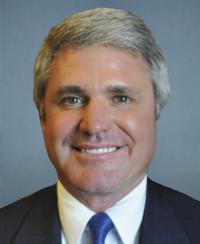
Mr. Chairman, the gentleman's amendment encourages the administration to create a Comprehensive Interagency Strategy and Implementation Plan for Sudan. I have spoken with Mr. McCaul about his proposal and agree that developing a coherent approach to the situation in Sudan is critical. The United States must make every effort to address the ongoing and interrelated crises in Sudan. The U.S. should work towards a stable and lasting peace in a region that has seen so many tragedies in recent years.
I have no objection to this amendment, and I look forward to working with Mr. McCaul on this provision as the bill moves through the process.
Mr. Chairman, I reserve the balance of my time.
Mr. Chairman, I am pleased to yield the balance of my time to the gentleman from California (Mr. Farr).
Mr. Chairman, I thank the sponsor of the amendment for yielding.
It's really an excellent amendment. If we want to encourage the international cooperation that's needed in this area, I'm telling you you've got to ensure that the entrepreneurs and the innovators know that their cutting-edge breakthroughs and innovations are protected. This isn't even as much about fair return for the inventors as it is ensuring that people will keep innovating and researching and advancing the technologies because they know that ultimately they will be compensated. So it's a symbiotic relationship. The more we ensure and protect intellectual property, the more we will be able to do in achieving our very important goals with respect to the development and deployment of new energy and environmental technologies.
Last year, the United Nations reported that the global market for environmental technologies could double to $2.74 trillion by 2020 from the $1.37 trillion today because of growth in areas
like energy-efficient technologies, sustainable transport systems, and water supply and efficiencies markets.
This is a very important amendment. Again, I think it is essential to the development and deployment of these new technologies, and I urge its adoption.
Mr. Chairman, I ask unanimous consent to claim time in opposition to this amendment, although I am not opposed to this amendment.
Mr. Chairman, I yield myself such time as I may consume.
I don't know that we needed to say this, but I'm glad we are saying it. It goes almost without saying that any sovereign country has an inalienable right to defend itself in the face of an imminent nuclear or military attack or threat. Nothing in this amendment prohibits or constrains Israel or the United States from discussing the nature of a threat, the logic of the timing or the nature of the response. So I find this amendment a useful contribution. In a way, it states the obvious, but sometimes stating the obvious is worth doing. I plan to support the amendment.
I yield back the balance of my time.
Mr. Chairman, I ask unanimous consent to reclaim the remainder of my time.
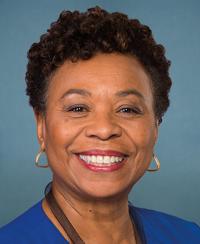
Mr. Chairman, I am pleased to yield 2 minutes to a member of the Foreign Affairs Committee, my friend, the gentlewoman from California (Ms. Lee).
I am pleased to yield the remainder of my time to the gentlelady from Nevada (Ms. Berkley).
I yield back my time.