Mr. Speaker, I rise to express my great appreciation to my very distinguished friend from Rochester, New York, the Chair of the Committee on Rules, Ms. Slaughter, and I yield myself such time as I…
Mr. Speaker, I rise to express my great appreciation to my very distinguished friend from Rochester, New York, the Chair of the Committee on Rules, Ms. Slaughter, and I yield myself such time as I may consume.
Mr. Speaker, I rise this morning in strongest opposition to this rule and the underlying legislation, House Resolution 202, which provides for the expenses of certain committees of the House of Representatives in the 110th Congress. While I consider the funding of the committees of the House a very, very important priority, I, unfortunately, Mr. Speaker, oppose this rule since the resolution goes far beyond, far beyond the very important task in one respect, and, unfortunately, it falls extraordinarily short in another task.
Mr. Speaker, on March 1, the Committee on House Administration ordered reported House Resolution 202, a clean committee funding resolution. If passed by the full House, the resolution will provide approximately a 2.6 percent across-the-board increase in House committee budgets between the last session of the 109th Congress and the first session of the 110th Congress. While most committees can make do with that very modest increase, we have one committee that absolutely cannot. It is called the Committee on Standards of Official Conduct.
Mr. Speaker, on the opening day of the 110th Congress, Ms. Slaughter and I both stood here as we debated and then ended up supporting a very important part of the opening day rules package. On that day, we asked the Ethics Committee to take on substantial new responsibilities.
They are now responsible, Mr. Speaker, the Ethics Committee, based on what the passage of the opening days rules package imposed on them, they are now required to pre-approve all trips. They are required to issue guidance on rules that they were not involved in drafting at all. As I said, we imposed that on them. They are required to provide training for every employee of the House on the new ethics rules that we have just put into place and forced them to implement. And they are still in a position where they have to now provide timely advice to every single Member who makes a request for the application of this rule.
On top of that, Mr. Speaker, they have the responsibility of investigating allegations of wrongdoing whenever they do occur.
Now already, I understand, the Committee on Ethics, the Committee on Standards of Official Conduct, is falling behind. Appropriation season is well under way, and we have absolutely no guidance whatsoever about the new ethics standards for earmarks. We have new travel and gift rules, but those regulations created as many questions as they answered; and the Ethics Committee is already months behind in its correspondence with Members.
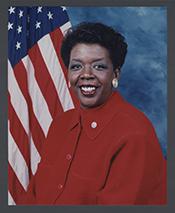
We are going to hear from a number of our colleagues who have been dealing with this very difficult situation. The chairman and the ranking member, the chairman and the ranking member of the Committee on Ethics appeared before the Committee on House Administration. In fact, Ms. Slaughter and I were both there because our testimony followed them. Mr. Hastings and Mrs. Tubbs Jones, Republican and Democrat in a bipartisan way, they came to plead their case to provide an increase beyond that 2.6 percent so they can deal with this massive new mandate imposed upon them. It was a large request, but the members of the Ethics Committee need it because they want to do their job and they need the resources to do it.
What the House Administration Committee did, and we were there during that testimony, they expressed great sympathy with their plight. And at the end, they felt they could do a little more. That decision leaves every single Member of this House in jeopardy, and it is one that we cannot let stand.
That is why, as I said, Mr. Hastings, the former chairman of the Ethics Committee and Mrs. Tubbs Jones, the new chairman of the Ethics Committee, took the very unusual step of just yesterday appealing to us up in the Rules Committee to correct this problem.
Now my Rules Committee colleague, Mr. Hastings, has the dual responsibility of serving not only as the distinguished ranking member of the Ethics Committee, but also he serves on the Rules Committee, and he sat before us and asked that we simply allow the House to debate this issue. He didn't argue that we have to do it. I happen to believe we do have to do it, but he simply was making the request that the Rules Committee make in order a chance for this House to discuss this very important ethics issue, one with which we are all very familiar. He was joined in this request by the distinguished Chair of the committee. She wasn't there, but I know she has supported his request for us to have an opportunity to debate this issue, and I know she strongly supports the effort, as she did in her testimony before the Administration Committee asking for the additional resources so the Ethics Committee, Mr. Speaker, can in fact do their job.
This is particularly important given the other aspect of this rule. This rule self-executes an amendment establishing the new Select Committee on Energy Independence and Global Warming, about which the distinguished Chair of the Rules Committee was just speaking.
Without impugning the necessity or desire to establish that select committee, my colleagues got to hear me explain at the Rules Committee yesterday exactly why this process was so outrageous and why this is the wrong way to go about establishing a select committee.
Mr. Speaker, never mind that the minority was never given the language creating this select committee until we literally walked into the room yesterday at 2 p.m., and never mind the fact the Democratic majority is denying us a motion to recommit with instructions which would have been made in order if the privileged resolution came to the floor, never mind that the Rules Committee never held a hearing or produced an original jurisdiction committee report on the establishment of this select committee, something I believe is totally unprecedented.
With all of the committees established in the history of this institution, I am convinced that never before has this process been used, and never mind that the House is completely side-stepping regular order by self-executing this amendment.
Mr. Speaker, never mind all of those horrible procedural outrages that have been imposed. I am not going to talk about those. The most troubling part of this whole episode is that this self-executing amendment grants the new select committee some $3.7 million over the course of this Congress. So if we can find an additional $3.7 million to fund this new select committee that will have no legislative power whatsoever, I don't understand why we can't fund a mere $1 million to fully fund the bipartisan request that was made before the Rules Committee to provide the necessary funding for our very hardworking colleagues, Mr. Hastings, Mrs. Tubbs Jones and their colleagues on the Ethics Committee.
Mr. Speaker, at the end of this debate on this rule, I will be asking Members to oppose the previous question so I may amend the rule to make in order the bipartisan Tubbs Jones-Hastings amendment so that the 430 Members that supported the new ethics rules may live up to the commitment that they made right here on opening day.
Mr. Speaker, if you think we needed new ethics standards, if you believe that the Ethics Committee should do its job, then you have a moral obligation to defeat the previous question and allow the House to work its will by at least considering the chance to make sure that Mrs. Tubbs Jones, the distinguished Chair of the Ethics Committee, and Mr. Hastings, the ranking member, have the resources they need to do what we, 430 Members, told them they had to do.
Mr. Speaker, I reserve the balance of my time.
Mr. Speaker, will the gentleman yield?
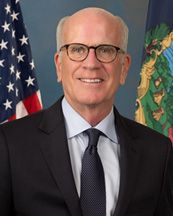
I would just like to say that I do look forward, Mr. Speaker, to working with my friend from Vermont on this very, very important issue. And we are at this moment, in fact, going through his legislative initiative. I hope to work closely with him on it.
I thank the gentleman.
Mr. Speaker, I am very happy to yield 3 minutes to my very good friend, the former chairman of the Committee on Standards, the gentleman from Pasco, Washington (Mr. Hastings).
Mr. Speaker, let me say, we are all concerned about global warming. At this time, I would like to yield 2 minutes to my very distinguished friend from Miami (Mr. Lincoln Diaz-Balart).
Mr. Speaker, I am very pleased to yield 2 minutes to my very good friend from Dallas (Mr. Sessions), a hardworking member of the Rules Committee.
Mr. Speaker, may I inquire of the distinguished Chair of the Committee on Rules how many speakers she has remaining.
Would the gentlewoman like to yield me some of the time because we have got loads of people here who want to talk?
Well, I just wondered if you wanted to give us some of your time.
Mr. Speaker, in light of that, I am very happy to yield 2 minutes to the gentleman from Kiron, Iowa (Mr. King) who came before the Rules Committee offering a very thoughtful amendment last night, our good friend.
Mr. Speaker, I appreciate my friend from Iowa quoting Governor Schwarzenneger. He can do it any time.
Mr. Speaker, I am happy to yield 3 minutes to the distinguished former Governor of the State of Delaware, the gentleman from Wilmington (Mr. Castle), who is back.
Mr. Speaker, I am happy to yield 3\1/2\ minutes to a thoughtful former member of the Committee on Rules, the gentleman from Moore, Oklahoma, (Mr. Cole).
Mr. Speaker, will the gentlewoman yield?
I thank my friend for yielding.
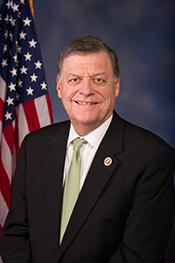
First, let me say I have utmost respect for both Ohioans, Mr. Boehner and Mrs. Jones, as well as the ranking member of the Ethics Committee, Mr. Hastings.
Mr. Speaker, on the opening day, we did, in fact, establish unprecedented ethics rules. Since that time, we have continued to hear complaints from Members about the lack of ability for the Committee on Standards to provide Members with information that is needed.
Mr. Speaker, we are trying to get the resources necessary.
With that, I am happy to yield 4 minutes to my very good friend, my California colleague who serves on the House Administration Committee, Mr. Lungren.
Mr. Speaker, I yield myself the balance of my time.
Mr. Speaker, obviously there has been a great deal of thought and talk, and it has been understandable about the issue of ethics and lobbying reform. Last year, Speaker Hastert and I initiated a package that we passed through the House but, unfortunately, we were not able to come to an agreement in the Senate. On the opening day, 430 Members voted to put into place unprecedented ethics reform, unprecedented ethics reform.
Why? Because the American people know we should be held to the highest possible standards. Now, there is an expression that I think is a very important one, and that is ``put your money where your mouth is.'' Now the very distinguished Chair of the committee on ethics, my good friend Mrs. Jones, talked about the fact that she wants to address this as concerns come forward.
Mr. Speaker, this is the committee funding measure that we are bringing to the floor. We are doing some other things to it, self- executing establishment of a committee, but we are providing for that committee that will have no legislative authority whatsoever, $3.7 million. All we are asking, Mr. Speaker, is that we have a chance, a chance to debate the issue of funding for the Ethics Committee here on the floor.
That is why I am going to urge my colleagues to vote ``no'' on the previous question. Why? Because while this new committee that will have no legislative authority whatsoever will receive $3.7 million, we are simply asking for what is being denied, and that is a chance for $1 million to be provided so that our Members will not be facing the weekend situation that Mr. Lungren just described where he sent a letter to the Ethics Committee, asked for a response about going on a trip, and he didn't receive approval until a week after the trip was to take place.
Mrs. Jones and Mr. Hastings came before the House Administration Committee and made this request for additional funding; and Mr. Hastings, representing Mrs. Jones before the Rules Committee, asked that this amendment be made in order.
Mr. Speaker, any Member who votes for the previous question is denying this institution the opportunity to consider implementing the resources that are necessary to hold us to the highest possible ethical standards. Vote ``no'' on the previous question.
Amendment to H. Res. 219 Offered by Rep. Dreier of California
At the end of the resolution, add the following:
Sec. 2. Notwithstanding any other provision of this
resolution, after conclusion of the time for debate on the
resolution it shall be in order without intervention of any
point of order to consider the amendment in section 3, if
offered by Mr. Hastings of Washington or his designee. The
amendment shall be considered as read, shall be separately
debatable for one hour equally divided and controlled by the
proponent and an opponent, and shall not be subject to
amendment or demand for division of the question.
Sec. 3. The amendment referred to in section 2 is as
follows:
In section l(b), strike ``Committee on Standards of
Official Conduct, $4,994,181;'' and insert ``Committee on
Standards of Official Conduct, $6,119,301;''.
In section 2(b), strike ``Committee on Standards of
Official Conduct, $2,460,915;'' and insert ``Committee on
Standards of Official Conduct, $2,996,561;''.
In section 3(b), strike ``Committee on Standards of
Official Conduct, $2,533,266;'' and insert ``Committee on
Standards of Official Conduct, $3,122,740;''.
Mr. Speaker, I yield back the balance of my time.
Mr. Speaker, I object to the vote on the ground that a quorum is not present and make the point of order that a quorum is not present.