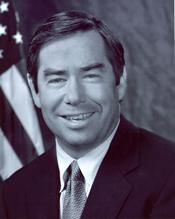
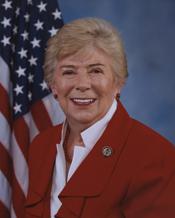
Mr. Speaker, I rise in strong support of House Resolution 273 that the gentlewoman from Illinois (Mrs. Biggert) and I introduced earlier this year. The legislation supports the ideas and goals of…
Mr. Speaker, I rise in strong support of House Resolution 273 that the gentlewoman from Illinois (Mrs. Biggert) and I introduced earlier this year. The legislation supports the ideas and goals of Financial Literacy Month, which falls in April of each year.
Before I proceed, I want to take this opportunity to thank my good friend and colleague, Congresswoman Watson from California, for managing time on this resolution for our side of the aisle. I also want to take this opportunity to thank all of my Democratic colleagues who cosponsored this important resolution this year.
Together with the tremendous number of cosponsors Congresswoman Biggert obtained, we broke our old record of 91 cosponsors and garnered the support of 118 Members of Congress for this bill.
I am very pleased with this development. It shows that an increasing number of Members of Congress are beginning to see the light and come on board
the financial literacy cause with me and Congresswoman Biggert.
It is imperative that we, in Congress, pay more attention to the financial literacy rates of our citizens from pre-kindergarten all the way to retirement. The sooner that a person begins to learn good saving habits, the better off he or she will be in the future.
I am especially pleased and honored to inform you that 18 cities and three counties in my congressional district have issued proclamations honoring April 22-28, 2007, as National Financial Literacy Awareness Week.
The cities, in alphabetical order, include the following: Beeville, Combes, Cuero, Donna, Edcouch, Edinburg, Falfurrias, Goliad, Harlingen, La Feria, La Villa, Mathis, McAllen, Mercedes, Pharr, Primera, Santa Rosa, Weslaco. It also includes three counties, which are as follows: Duval County, Jim Wells County and Karnes County.
Mr. Speaker, I also want to take this opportunity to thank several State legislatures for realizing the importance of financial literacy by taking action to address the diminishing understanding of basic finance by U.S. high school students.
A study completed in 2006 by the Jump$tart Coalition for Personal Financial Literacy found that high school seniors know less about principles of basic personal finance than high school seniors did 7 years earlier, and the average scores in both years were failing. Our high school seniors are failing basic finance.
Add to that the fact that 55 percent of college students acquire their first credit card during their first year in college, and 92 percent of college students acquire at least one credit card by their second year in college, yet only 26 percent of people between the ages of 13 and 21 reported that their parents actively taught them how to manage money. Add all that together, and you have got a recipe for serious financial troubles down the road for college graduates.
Luckily, in recent years State legislatures around the country have increasingly recognized the importance and effectiveness of financial education. As a result, an increasing number of States now require financial education during high school. I hope my colleagues and their staff are taking note of this because the following States now require high school students to pass some form of financial education or literacy courses before they can graduate. Those States include the following: Alabama, Georgia, Idaho, Illinois, Kansas, Kentucky, Louisiana, Missouri, New York, North Carolina, Ohio, South Carolina, my great State of Texas, Utah, Virginia, and West Virginia.
I strongly recommend that my colleagues contact their State legislators and encourage them to impose similar requirements.
Mr. Speaker, every day consumers deal with money from balancing a checking account to shopping for a mortgage or auto loan, researching a way to pay for a college education, checking credit card statements, saving money for retirement, understanding a credit report, or simply deciding whether to pay cash or charge a purchase. The list goes on and on and on. Many consumers do not really understand their finances.
Now that we know that high school students are failing basic financial literacy exams, it is even more disconcerting to learn that adults are not faring much better. High bankruptcy rates, foreclosures on homes, increased credit card debt, data security breaches, and identity theft make it imperative that all of us take an active role in providing financial and economic education during all stages of one's life.
Every year we here in Congress discuss the future insolvency of Social Security, Medicare, and Medicaid; and that concerns me considerably. But now that I have done some additional research into the demographics and financial standing of the baby boomers, I was shocked to learn that the personal savings as a percentage of income dropped a negative 1 percent in 2006, the lowest since the Great Depression. Even worse, the average baby boomer has only $50,000 in savings for retirement apart from equity in their homes.
These are very serious and disturbing facts that we and our State counterparts must address, and soon. To address these problems and others, I cofounded and currently cochair the Congressional Financial and Economic Literacy Caucus with Congresswoman Judy Biggert. The caucus seeks to address these issues head on by increasing public awareness of poor financial literacy rates and working to find the ways and means to improve those rates. The caucus has provided a forum for my colleagues to promote policies that advance financial literacy and economic education.
It is my hope that through the Financial and Economic Literacy Caucus we can continue to further educate Americans about financial and economic topics ranging from the importance of saving, reducing credit card debt, obtaining a free annual credit report, avoiding payday lenders, check cashers, and especially these days predatory lenders. Hopefully the caucus can teach individuals to take care of their finances, to lead them down the path to the American Dream of homeownership.
Mr. Speaker, I include for printing in today's Record letters in support of this resolution. They include letters from JA Worldwide; National Council on Economic Education; Financial Planning Association, Independent Bankers Association of Texas; MasterCard; the American Institute of Certified Public Accountants; the National Association of Mortgage Brokers; Networks Financial Institute; North American Securities Administrators Association. It includes HSBC, the Independent Community Bankers of America; Housing Assistance Council; National Association of Federal Credit Unions. It includes Capital One; as well as Visa; Charles Schwab Foundation; Financial Services Forum; Financial Services Roundtable, National Association of Realtors; Girls, Incorporated; AFSA Education Fund; Countrywide, First Nations Oweesta Corporation, Native Americans. It includes National Association of Affordable Housing Lenders; America's Community Bankers; Community Bankers Association; Consumer Mortgage Coalition; Texas Credit Union League; State Farm Insurance Company, Freddie Mac; Wells Fargo; and the National Youth Involvement Board.
Mr. Speaker, several of these groups will be participating in the Financial Literacy Day Fair that will take place April 24 from noon to 4 p.m. here on the Hill at the Cannon Caucus Room. It is my understanding that over 50 different groups will present their financial literacy products, their programs, and ideas during the fair. The last time we hosted the event, over 500 people attended the event not only to take advantage of the free financial literacy advice but also to enjoy a wonderful buffet. I encourage my colleagues and their staff to attend the Financial Literacy Day Fair. Again, I repeat, it will be held April 24 from noon to 4 p.m. in the Cannon Caucus Room and lunch will be served.
On the same day, April 24, at 3 p.m. in room 2220 of the Rayburn House Office Building, the Financial and Economic Literacy Caucus is collaborating with Visa on a different financial literacy event. Visa is bringing Jean Chatzky to the Hill to provide some financial advice and respond to questions. Both Members and staff are invited to this event at 2220 Rayburn from 3:30 to 5 p.m., which I believe will be beneficial and a huge success.
In closing, Mr. Speaker, our country is suffering financially, and our constituents are not armed with the tools they need to provide for a good future. For these reasons and more, I encourage my colleagues to support this resolution.
Junior Achievement
Worldwide Headquarters,
Colorado Springs, CO, April 9, 2007.
Hon. Ruben Hinojosa,
Rayburn House Office Building, House of Representatives,
Washington, DC.
Hon. Judy Biggert,
Longworth House Office Building, House of Representatives,
Washington, DC.
Dear Representatives Hinojosa and Biggert: On behalf of JA
WorldwideTM and our 1,400 associates and 138,700
classroom volunteers around the country, I want to express
our full-fledged support for H. Res. 273. This resolution
supporting the goals and ideals of Financial Literacy Month
once again demonstrates your leadership in promoting
financial literacy and economic education.
With personal bankruptcies and debt continuing to soar, we
believe that it is critical
that financial literacy education continue to place a high
priority on targeting America's youth. According to the 2007
JA Worldwide Poll on Personal Finance, more than 75 percent
of teens nationwide say they influence their parents' buying
decisions, while nearly 29 percent of 18- and 19-year olds
say they already own and use their own credit cards. The
earlier we can provide youth with tools, tips, and strategies
to help them successfully manage their finances, the better
off our country will be.
I also would like to congratulate you both for your
continued leadership of the Financial and Economic Literacy
Caucus, and for your commitment to events such as this
month's Financial Literacy Day on the Hill. As the nation's
oldest and largest organization dedicated to promoting
economic education and financial literacy, JA Worldwide
stands ready to assist you and the caucus in advancing the
goals of H. Res. 273.
Thank you again for your resolve in championing the
importance of a financially literate society. We look forward
to working with you in the future to advance this critical
issue.
Sincerely,
David S. Chernow,
President and CEO, JA Worldwide.
Mr. Speaker, I submit the following letters regarding H. Res. 273, ``Supporting the Goals and Ideals of Financial Literacy Month'':
MasterCard Worldwide,
Washington, DC, April 13, 2007.
Hon. Ruben Hinojosa,
House of Representatives, Washington, DC.
Hon. Judy Biggert,
House of Representatives, Washington, DC.
Dear Representatives Hinojosa and Biggert: I am writing to
communicate MasterCard Worldwide's strong support for House
Resolution 273, which highlights the goals and promotes the
spirit of financial literacy month.
MasterCard Worldwide shares your vision of increasing
financial literacy, illustrated by our various consumer
education programs. Specifically, MasterCard has developed
two programs called Debt Know How and Are You Credit Wise?
which target consumers at different stages of their financial
lives and aims to increase successful financial planning.
By offering consumers easy-to-understand tips and resources
to increase their financial planning efforts, MasterCard's
Debt Know How program helps consumers successfully manage
debt. The program was developed in conjunction with the
University of Minnesota Extension Service and is available in
both English and Spanish. Debt Know How is offered in both a
``trainer the trainer'' format for community leaders as well
as in a direct-to-consumer format design to reach families
currently struggling with debt.
Are You Credit Wise? is MasterCard's consumer education
program which aims to increase financial literacy rates among
America's college students by teaching successful financial
planning skills. The program employs a peer-to-peer teaching
model to maximize its effectiveness, as college students are
more inclined to listen and act upon information coming from
their peers than from parents, teachers or counselors. In its
eighth year, the Are You Credit Wise? program has reached
more than 420,000 students on 58 college and university
campuses in the U.S. and Canada.
We once again applaud your leadership and your tireless
efforts to improve the lives of the American people through
increased financial literacy.
Sincerely,
Joshua Peirez,
Group Executive, Global Public Policy.