Mr. Speaker, I move to suspend the rules and agree to the resolution (H. Res. 42) recognizing Ann Richards' extraordinary contributions to Texas and American public life. Mr. Speaker, I ask unanimous…
Mr. Speaker, I move to suspend the rules and agree to the resolution (H. Res. 42) recognizing Ann Richards' extraordinary contributions to Texas and American public life.
Mr. Speaker, I ask unanimous consent that all Members may have 5 legislative days in which to revise and extend their remarks.
Mr. Speaker, I yield myself such time as I might consume.
Mr. Speaker, at the memorial service of Ann Richards, the former mayor of Dallas, Texas, Ron Kirk, the mayor's lifelong friend said, ``Ann Richards was as fierce a warrior and advocate for justice as any public servant I've ever known. She embraced every person she met, no matter their station in life, with dignity, and love, and compassion.''
The former Governor of Texas was a witty, flamboyant and outspoken homemaker who captured the hearts and minds of the people of Texas, as well as the Nation. She burst into national prominence as a keynote speaker to the 1988 Democratic National Convention when she uttered the famous line about the wealthy, then-Vice President George H.W. Bush, and she said, ``Poor George, he can't help it; he was born with a silver foot in his mouth.'' The speech set the tone for her political future as the first woman elected to treasurer, a statewide office, in Texas in 50 years.
In 1990, Ann Richards won the Democratic gubernatorial nomination against attorney general and former Congressman Jim Mattox and former Governor Mark White. Her Republican opponent was multimillionaire rancher Clayton Williams, Jr. The campaign between the two was brutal, but Richards prevailed in the election on November 6, 1990, by a margin of 49-47 percent.
As Governor, Ann Richards wanted a more inclusive Texas. She called it the ``New Texas,'' where she made nearly 3,000 appointments, 46 percent were female, 15 percent were African American, 20 percent were Hispanic and 2 percent were Asian Americans. Among Governor Richards' appointment of firsts are: the first African American to the University of Texas regent; the first crime victim to join the State criminal justice board; the first disabled person to serve on human services board; and the first teacher to lead the State board of education. During her tenure, she oversaw the fabled Texas Rangers pin stars on their first African American and female officers.
Richards implemented an economic revitalization program to address the Texas economy that was in a slump since the mid-1980s, compounded by a downturn in the U.S. economy. Her policy initiatives yielded a 2 percent growth in 1991 for the Texas economy, while the U.S. economy as a whole shrank.
Ann Richards reformed the Texas prison system by establishing a substance abuse program for inmates in prison and reduced the number of violent offenders released back into society. She was a supporter of proposals to reduce the sale of semiautomatic
firearms and cop killer bullets in the State.
She vetoed legislation that would allow people to carry concealed handguns and automatic weapons inside public establishments without the owner's permission. Some political analysts believe that this veto cost her her reelection bid for Governor in 1994. Richards lost her reelection bid to George W. Bush. After her unsuccessful bid for reelection, someone asked her, ``What would you have done differently if you knew you would be a one-term Governor?'' Richards grinned and said, ``Oh, I would probably have raised more hell.''
Mr. Speaker, I urge all my colleagues to support this resolution.
Mr. Speaker, I reserve the balance of my time.
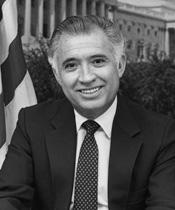
Mr. Speaker, it is now my pleasure to yield 3 minutes to the distinguished gentleman from Texas and the author of this legislation, Representative Solomon Ortiz.
(Mr. ORTIZ asked and was given permission to revise and extend his remarks.)
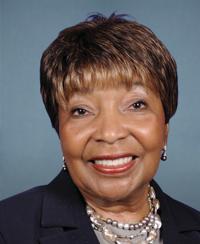
Mr. Speaker, it is my pleasure to yield 3 minutes to the gentlewoman from Texas with whom I had the good fortune to spend Saturday with at Paul Quinn College where we were discussing the issues related to African American males, Representative Eddie Bernice Johnson.
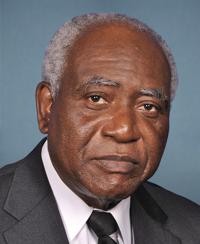
Mr. Speaker, it is my pleasure now to yield 3 minutes to an individual who had the good fortune to be a close neighbor of Governor Richards, Representative Lloyd Doggett of Texas.
Mr. Speaker, it is my pleasure to yield 2 minutes to the gentleman from Texas (Mr. Lampson).
Mr. Speaker, may I inquire as to how much time I have left.
I want to thank the gentleman from Connecticut.
Mr. Speaker, I yield myself such time as I might consume.
Mr. Speaker, all of us come in contact with individuals who have a way to connect one way or another. Sometimes it is from near, and sometimes it is from afar. I shall never forget the speech that Governor Richards made at the Democratic convention in 1988. You know, speeches are things that you hear a lot of when you are involved in public activity and public office, and you don't always look for anything special when you see another one coming. I mean, sometimes, it is another speech.
But the amount of wit and charm that Ann Richards had and her ability to convey it in such a way that she could make a humorous point that was not always so humorous, but you still got the humor out of it, and whoever it was directed to and at didn't necessarily view it as being offensive, she had the ability to do that.
We have heard speaker after speaker talk about the fact that she appointed this large number of individuals to boards and commissions and made regents out of people and gave them positions that people just didn't sort of expect, because it had not been done before.
Then she took on a real tough question that some people feel caused her to lose an election, but she probably knew the risk that she was taking, because it had to do with the right of individuals to keep and bear arms, dealing with semiautomatic weapons that the normal average person wouldn't necessarily carry.
I mean, you wouldn't walk around, even if you wanted to go hunting, with a semiautomatic weapon to shoot rabbits or deer or whatever it is that you would shoot, although I have never believed in shooting that many things any way, unless they were shooting back. Therefore, I was never much of a hunter, because the animals didn't have anything to shoot back with. That was about the only way that I would see myself shooting at them.
But she knew the great political risk that she was taking, and not withstanding that risk, held to her guns, held to her position, did not waver, did not back up. That is what real leaders are made of. They don't take positions just to get elected or just to be in office. But they take them based upon principles upon which they believe, ideas and ideology that govern their lives.
That was the kind of woman that Ann Richards was, and that is why I think she was able to mean so much to so many people, not only in Texas; but she was a great advancement for the women's movement, for enticing more women to run for public office, and, of course, to be elected to public office, and to reach another level of equity, another level of having arrived at a point in history where a woman, a little girl growing up, can believe that she has the possibility of moving not only to Governor of the State of Texas, but to Speaker of the House of the United States House of Representatives.
Mr. Speaker, it is my pleasure to yield such time as she might consume to our distinguished Speaker, Nancy Pelosi.
I want to thank the distinguished Speaker for her remarks.
Mr. Speaker, I want to thank Mr. Shays for his accommodation and would urge passage of H. Res. 42.
Mr. Speaker, I yield back the balance of my time.