Mr. Speaker, pursuant to House Resolution 531, I call up the bill (H.R. 2669) to provide for reconciliation pursuant to section 601 of the concurrent resolution on the budget for fiscal year 2008,…
Mr. Speaker, pursuant to House Resolution 531, I call up the bill (H.R. 2669) to provide for reconciliation pursuant to section 601 of the concurrent resolution on the budget for fiscal year 2008, and ask for its immediate consideration.
Mr. Speaker, I yield myself 5 minutes.
Mr. Speaker, I rise in strong support of H.R. 2669, the College Cost Reduction Act of 2007, which was reported by the Committee on Education and Labor pursuant to the reconciliation instructions of the budget resolution. The committee was tasked to decrease the deficit by $750 million without reducing the assistance that makes college more affordable to students.
In keeping with that policy, this bill will significantly reduce the costs that place college out of reach for far too many students today. This bill represents the largest effort to help students and families pay for college since 1944, when the Congress passed the GI Bill, which helped millions of veterans go to college, the first generation to do so under that legislation.
For years, college costs are rising rapidly and are far outstripping families' ability to pay for them. Students are graduating with more debt than ever before and are working harder to pay back the loans which they borrowed to pay for their college education.
Several hundred thousand students a year now decide to forego a college education, even though they are completely qualified, fully prepared to go to college, because they don't know how they'll pay for it or how they'll manage the debt that they will inherit when they graduate.
Recognizing this need, H.R. 2669 demonstrates our commitment to growing and strengthening America's middle class by making college more affordable and accessible for all qualified students. It also recognizes our commitment to those who are less fortunate, for low- income families, to make sure that we increase the Pell Grants that are available to the students, and also low-cost loans to those same students who need to borrow beyond the Pell Grant.
The College Cost Reduction Act, which passed the Committee on Education and Labor with bipartisan support, boosts the college financial aid by roughly $18 billion over the next 5 years. And this bill does so in a fiscally responsible way. We are committed to the pay-as-you-go budget rules, and we honor that commitment with this legislation.
H.R. 2669 recognizes that we have an obligation to make sure that students have the maximum opportunity to take advantage of a college education and that they need access to that education, they need preparation for that education, they need success while they're there, and they need completion of their education. To do that we've made sure that, regardless of their background, that they will be prepared for college, they will have access to higher education, they will graduate to achieve their goals, and they will not be so burdened with unmanageable debt that that becomes a failure.
The bill does that by, for low-income students, increasing the Pell Grant $500 over the next 4 years. This is a very significant increase in the Pell Grant. As many know, the President promised many years ago that he would have it up to $5,100, and the fact of the matter is it was at $4,050. They failed to increase the Pell Grants.
It cuts in half the interest rates for subsidized loans for hardworking families that are going to borrow money, students that are borrowing money. We will cut their interest rates in half from 6.8 percent to 3.4 percent. This will save the average student graduating with about $13,000 in debt, $4,400 over the life of that loan. We guarantee that those students who borrow this money, when they begin their time in the work world, they will not have to commit more, if they decide not to, to commit more than 15 percent of their income to pay back the loans so that they can enter those professions that may not have great starting wages, but over time in that career, they will build up income.
We also provide, in keeping with the mandate, to try to provide highly qualified teachers in every classroom for students who are excelling in college and want to teach, if they make a commitment to teach in difficult public schools, we will provide $4,000 a year in tuition assistance while they're in school, not after they graduate, while they're in school, to a maximum of $16,000.
For those students who go to college and they get their degrees and they want to enter professions and serve the public, they want to be first responders, they want to be nurses, they want to be firefighters and public defenders and prosecutors and special education teachers and early childhood teachers, we offer them a $5,000 forgiveness of their loans if they stay in that field for 5 years. We know that in each one of these areas there is a crisis in attracting people to those fields. Many in Congress, hundreds of Members of Congress, have co-authored legislation to provide loan forgiveness for some of these professions. This bill, in fact, funds that loan forgiveness for those individuals.
We also increase the loan limits so that students will have greater access to more money to pay for the increasing cost of college and not have to go to the private market, where they will be able to continue to take advantage of the subsidies provided in the Federal loan program.
Mr. Speaker, I ask unanimous consent to proceed for 2 additional minutes.
We also make a landmark investment in minority-serving institutions to make sure that those institutions that serve a disproportionate number of minority students are able to provide the services, to make sure that those students who are fully qualified to go to college, who are prepared to go to college, in fact, stay in college, so we don't have a continuation of the situation we had today where, all too often, because services aren't provided in college to help those students stay in college, those students end up out of college, no diploma and a lot of debt. And we want to make sure that that, in fact, doesn't happen.
So today this legislation provides a great deal of promise and a great deal of assistance and a great deal of resources to those students and their families who are sitting down figuring out how they're going to pay for this college education that is so incredibly valuable today if you're going to fully participate in the American economic system, if you're going to participate in our democratic society.
This is a very, very important piece of legislation. This is legislation that is designed to help these students be able to pay for that education.
We do something else in this legislation. We set up a partnership where we go to the private sector, to wealthy individuals, to corporations, to foundations, and we tell them for every dollar that they'll put up to pay for essentially a Pell-eligible student to complete their education without going into debt, we will match them 50 cent on the dollar.
We are told by those individuals who have actively been participating in raising money for these students that this should allow them to raise hundreds of millions of dollars additionally because of that match; to have that public/private partnership pursuing one of the great goals of this great democratic society, which is to make sure that a student from any part of American society who's prepared to go to college can, in fact, go to college.
So we not only have the government helping them out, we also have private citizens, corporations, philanthropic organizations, and in some cases even local governments if they decide this is good for their economy, and we will provide a match to help them do that.
This is a comprehensive bill. It recognizes the complex needs of families and students to gain access to college, to pay for college, and to succeed in their employment afterwards; and I would urge my colleagues to support this legislation.
Mr. Speaker, I reserve the balance of my time.
Mr. Speaker, I yield 1 minute to the gentleman from Iowa (Mr. Loebsack).
Mr. Speaker, I yield for the purpose of making a unanimous consent request to the gentleman from Texas (Mr. Gene Green).
(Mr. GENE GREEN of Texas asked and was given permission to revise and extend his remarks.)
Mr. Speaker, I yield 1 minute to the gentleman from Maryland (Mr. Sarbanes).
I yield myself 15 seconds to say, it's most interesting to sit here and be lectured by people who, when they controlled every department of government, every branch of government, they took a $5 trillion surplus that they inherited from the Clinton administration and immediately turned it into a $3 trillion debt that this Nation now is carrying around as it tries to compete in the world. To be lectured by mindless spenders like that is really a treat on this floor.
Mr. Speaker, I yield 1 minute to the gentleman from New York (Mr. Bishop).
I yield 1 minute to the Democratic leader.
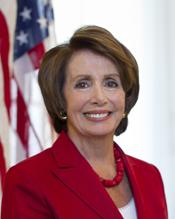
Mr. Speaker, I yield 1 minute to the gentlewoman from California (Ms. Pelosi), the Speaker of the House.
Mr. Speaker, I yield 1 minute to the gentleman from New Jersey (Mr. Andrews).
(Mr. ANDREWS asked and was given permission to revise and extend his remarks.)
Mr. Speaker, I yield 1\1/2\ minutes to the gentleman from Illinois (Mr. Emanuel).
Mr. Speaker, I yield 1 minute to the gentleman from Pennsylvania (Mr. Altmire).
Mr. Speaker, I yield myself 15 seconds
to say that I find it unbelievable that Republicans would decide that families that are making every sacrifice to borrow money, and students that are making every sacrifice to borrow and pay back money, that somehow they are called welfare recipients. These are hardworking American families who are struggling to educate their children, and I want to disassociate myself from that kind of characterization of these families or these students.
Mr. Speaker, I yield 1 minute to the gentleman from Rhode Island (Mr. Kennedy).
Mr. Speaker, will the gentleman yield?
I want to thank the gentleman for bringing this to our attention, and we look forward to continuing to work with him on this issue.
As he has pointed out to this committee and many Members of Congress, we in fact have a workforce crisis, and that is what we have tried to address in the loan forgiveness program in those professions that are not necessarily the highest paying in our society but are essential to the well-being of our society. We will work with the gentleman as this bill proceeds through the legislative process on this matter.
I thank the gentleman from Rhode Island and look forward to continuing to work with him on this issue in this conference and also on the Higher Education Act.
Mr. Speaker, I yield 1 minute to the gentleman from Illinois (Mr. Hare), a member of the committee.
Mr. Speaker, I yield 1 minute to the gentleman from Massachusetts (Mr. Tierney).
Mr. Speaker, I yield 1 minute to the gentlewoman from California (Mrs. Davis), a member of the committee who had a major amendment in this legislation.
Mr. Speaker, I thank the gentlewoman for her amendment, and I yield 1 minute to the gentlewoman from California (Ms. Woolsey) a member of the committee.
(Ms. WOOLSEY asked and was given permission to revise and extend her remarks.)
Mr. Speaker, I yield 1 minute to the gentleman from New Jersey (Mr. Holt), a member of the committee.
Mr. Speaker, I yield 1 minute to the gentlewoman from Hawaii (Ms. Hirono), a member of the committee.
(Ms. HIRONO asked and was given permission to revise and extend her remarks.)
Mr. Speaker, I yield 1 minute to the gentlewoman from New York (Ms. Clarke), a member of the committee.
(Ms. CLARKE asked and was given permission to revise and extend her remarks.)
Mr. Speaker, I yield 1 minute to the gentleman from Illinois (Mr. Davis), a member of the committee.
Mr. Speaker, I yield 1 minute to the gentleman from Connecticut (Mr. Courtney), a member of the committee.
Mr. Speaker, I yield 1 minute to the gentlewoman from California (Ms. Linda T. Sanchez), a member of the committee.
Mr. Speaker, I yield 1 minute to the gentlewoman from New Hampshire (Ms. Shea-Porter), a member of the committee.
Mr. Speaker, I yield 1\1/2\ minutes to the gentleman from New Jersey (Mr. Payne).
Mr. Speaker, I want to thank all of the members of the committee for their work on this legislation on both sides of the aisle. I certainly want to thank the staff as we finish general debate.
Mr. Speaker, we said when we gained the majority in this Congress that we wanted to take America in a new direction. This legislation, in fact, does that.
For 6.8 million students who take out need-based loans, this legislation will allow for cutting the interest rate in half over the next 5 years for those students. That will save them almost $4,400 on the average debt that they graduate with. For almost 5.5 million students who rely on a Pell Grant for the basic cost of their education, this means that over the next 4 years that grant will increase by some $500, definitely a new direction.
Because what we saw in the past was the Republicans made it more expensive to pay for your student loans. They provided little or no contribution to the Pell Grant over the last 4 or 5 years. That is a new direction.
What does it mean to America? It means that we are investing in the students and the talent of the future. It means that these are the young people that will take their talents and provide the next generation of discovery, the next generation of innovation, the next generation of jobs in America, the next generation of economic activity here at home. That's the investment that was made by our grandparents back in 1944, in that generation, the first generation to go to college in such great numbers with the GI Bill, and that's the investment that we have the courage and the vision to make in this generation of young people for the future of this country.
That's what this legislation is about. It's about making sure that the doors of a higher education that every employer tells us is now necessary to come to the American workplace if you want a career and you want a decent wage and you want to be able to provide for your family. The doors to those higher education institutions, be they community colleges, State colleges, universities or elite universities, however you want to characterize them, that those doors will not be closed to people who are talented and ready and qualified to go to college.
This legislation provides the means to ensure their access to help them pay for it and to help them make sure that they don't have to make choices against their best interest because of
that debt and later in life that they can choose to go into the professions that serve us as a society. This is a dramatic departure, a dramatic departure from the status quo, a dramatic departure.
What the Republicans did, when they had a chance, they had $20 billion. They decided they would help pay for the tax cuts to the wealthiest people in the country. That's what they did with a big chunk of the money that they took from these excess subsidies, the subsidies that we are taking a way from the banks.
The entitlement program that the banks have today as we stand here will be changed. Yes, it will become an entitlement program for America's families, America's students, those most at need in this country. That's what this Congress ought to be doing. That's what this society wants us to do, and we're going to do it today when we pass this legislation.
Mr. Speaker, I claim the time in opposition to the amendment.
Mr. Speaker, I yield 2 minutes to the gentleman from Oregon (Mr. Wu), a member of the committee.
Mr. Speaker, I recognize the gentleman from New York (Mr. Bishop) for 5 minutes.
Mr. Speaker, I yield 2 minutes to the gentleman from Kentucky (Mr. Yarmuth).
Mr. Speaker, I yield 2 minutes to the gentlewoman from Florida (Ms. Wasserman Schultz).
Mr. Speaker, I yield 2\1/2\ minutes to the gentlewoman from Texas (Ms. Jackson-Lee).
(Ms. JACKSON-LEE of Texas asked and was given permission to revise and extend her remarks.)
Mr. Speaker, I am the only remaining speaker.
Mr. Speaker, if I can inquire how much time I have.
Mr. Speaker, I yield myself such time as I may consume.
Mr. Speaker and members of the committee, I think this has been a very good debate because this has been a debate about which direction this country should go in and I believe will go in and the direction that the American people want this country to go in.
Parents all over this Nation hear every day from business leaders, from educational leaders, from the media, they hear that for America to be competitive, we have got to have a smarter workforce, a better skilled workforce, a better equipped workforce so that we can continue America's leadership in the world in the economics of the world and in the national security of this country. The key to that workforce, the key to that competitiveness, again, the very people who are hiring those individuals say that you must have a college education. What used to be good enough, which was graduation from high school, is no longer good enough today. You have to have advanced learning. It may be in a professional school. It may be in a trade school. It may be in a community college. It may be in a 4-year college. You may get some of it now and some of it later. But the fact of the matter is, you need those skills.
But what has happened over this time is that college education has increased as rapidly as anything else in society, in fact, more rapidly than many other indicators in our economy, over 35 to 40 percent over the last 5 years above inflation. What has that meant? That meant that families who thought they could afford that education now find that they have to squeeze harder. That meant that people who thought they weren't going to have to borrow money are now going to have to borrow money. That meant that people who thought they were going to be able to go to college are now deciding that they can no longer go to college. They are going to postpone it or maybe not go at all.
That's not good for America. That's not good for America's economy. That's not good for America's democratic institutions. And it's not good for our society. We need those young people to go to college.
What this legislation does today is it says to those individuals who are fully qualified to go to college, we will not deny you access to the college of your choice, to the education of your choice, to the career of your choice, and to the curriculum of your choice because you can't afford to pay for it. We're going to help you. We're not going to give you everything you need. Your family is still going to have to sacrifice, you're still going to have to pay back loans, but we're going to give you greater access to the ability to do that.
We're going to take this country in a new direction. We're going to take this country in a direction where we place a priority, a focus and a vision for education in America today because we know we must.
We're told again by the leaders of all of the new technologies, the new companies, the people who are investing in the future that we were the beneficiaries of when John Kennedy said that he wanted to send a person to the Moon and bring them back safely. It was more than a Moon shot. John Kennedy captured our imagination; he captured world leadership with that decision. And over the next decade, we did exactly as he directed.
But you know what else they did? They give 28,000 high-performing college students a grant to go to graduate school so they didn't have to borrow money, they didn't have to walk around with a tin cup, they didn't have to put themselves into debt, so they could use their best skills and talents to create the space program. You know what they created after they created the space program? They created Intel, they created Microsoft, they created Hewlett Packard. They created the infrastructure of this Nation. Now, did we whine and moan because they got a grant and the taxpayers used their money? They created millions of jobs in this country over the next four decades. That's what this is about.
Those are the investments that my grandparents made in my education before they ever met me. Those are the investments that my parents made in my education after they met me. They still thought it was worth something. And those are the investments that have made this country the greatest and strongest Nation in the world, have made us an economic leader, and have given us the ability to lead the world. Do we want to turn our back on it now? If you accept this substitute, you're turning our back on that idea.
The Republicans say, well, we're just going to take a little less money, but we're going to put it all in the Pell Grant. The Republicans, after flatlining Pell Grant all of these years when they had the opportunity to do something, did nothing. Now they want to love this bill to death by putting all the money in the Pell Grant.
This is what this legislation will do for Pell recipients; it will take them up to $5,200 in a Pell Grant. That may or may not pay for their education for that year, but it's a big leap forward.
But we also recognize something else, that this isn't the only constituency struggling to pay for education in this country. No, there are millions of students who will take out a subsidized student loan. And for those students, and their parents who will help them pay it back if they're that fortunate, for those students they will be paying for it by themselves, we're saying we will cut the interest rate in half when you graduate and you start to repay your loan. You borrow the money today, you pay your tuition, and when it comes time to pay your loan, your interest rate is half of what it is today.
Because we know that those middle-income families in this country are struggling as hard as anybody. They have the same vision, the same hope and the same aspiration for their children. So that's why we're doing this, because it's the best investment we can make in this country in that talent of our children, in the brilliance and the excitement and the vision of those children. That's what this legislation is about. But that's not what this substitute legislation is about. You cannot walk away from them.
I find it interesting that just 4 months ago, 5 months ago, 124 Republicans voted to cut those interest rates for middle-income families and their children, and now they're going to vote against it today. So they voted for it then, and now they're going to vote against it today. What was going on? Did they believe it then, or they don't believe it now? Which is it? But the fact of the matter is, this is about whether or not those families that struggle, they may be single parents, they may be two in their family, they may be families that find themselves with one, two or three kids in college at the same time. This government should help them because those children will return that gift of this Nation back to this Nation time and time again over the life of their earnings, over their careers. They will give back to this Nation because we made that investment as my parents and grandparents made in us.
If you vote for this substitute, you get rid of the interest rate cuts for those middle-income families. And also, for these very same Pell recipients, over half of these students will have to borrow money because a Pell Grant isn't enough. So they participate also in that interest rate cut.
You fail to participate in the loan forgiveness for the teacher, for the firefighter, for the policeman, for the special education teacher, for first responders. For those people in critical occupations that give so much to this society, but they're not the highest paying jobs, we're telling them if you stay on the job 5 years, we will give you $5,000 in loan forgiveness. For a student that graduates with an average debt of around $13,000, $14,000, that's a significant amount of loan forgiveness. What do we get? We get an educated firefighter, an educated policeman, a school teacher. We get these people.
For high-performing college students who are willing to go into teaching and go into math, science and engineering, and then go to the most difficult schools to teach, we're saying we will give you $4,000 a year in tuition assistance while you're in school, not later,
up to $16,000; again, an investment, because we now know that a highly qualified teacher can dramatically change the educational outcomes and the future for the children in ways that we can only dream about. That's an important investment, because that investment in that teacher will be invested in all of those students that come across his or her line of vision in those classes.
That's why this legislation is about a vision for America. That's why this legislation goes in a different direction. We stop today when we flatline aid to education in this country. We want to invest in young people. We want their families to be able to invest with us. And that's the importance of this legislation.
And, clearly, the commitment that we make to minority-serving institutions so that those students who are fully qualified to go to school go to school, receive the kind of help to keep them in school so they don't end up dropping out with a debt on the loans that they took. We want that success. It's a problem that's recognized across the country; we address it.
We raise the cap on the amount of money that families can borrow. It's not great news to hear we let you borrow more, but it's a lot cheaper than if you have to borrow it in the private loan market. It's 3.8 percent here, and it's 10, 12, 13, 14, 15 percent in the private market. That means a lot to families. That means a lot to students. That's what this legislation is about.
I would ask all of my colleagues on both sides of the aisle to reject this substitute, to vote for the passage of the final bill. Let's take America to a new future. Let's take America to new heights. Let's take America to new greatness on the next generation of discoverers, of innovators, and of economic creators.
Mr. Speaker, I yield back the balance of my time.
Mr. Speaker, I rise in opposition to the motion.
Mr. Speaker, this motion to recommit says this will not allow a public officeholder or a lobbyist to get loan forgiveness. This has never been raised, and if you don't want them to get it, write me a letter and we will take care of it.
But what this does is this says that you must report this back promptly, so this kills this bill. This kills this bill. The greatest contribution to helping families pay for education since the GI bill, they want to kill it. Cutting interest rates in half for middle-income families, they want to kill it. You could have written the motion another way. You deliberately wrote it this way so you could kill this bill.
What is it you don't like about this bill? You don't like the fact that while you were in power, after years of flatlining the Pell Grant, we finally have given the biggest increase in decades for the poorest kids in the country. You don't like that, so you want to kill the bill. You don't like the fact that we are going to take 5 million middle- class kids and extend to them a loan with an interest rate that is cut in half while their families are struggling to get them through college. They are making sacrifices every year. You are going to do this. You are going to kill this bill? Are you proud of this amendment that you are going to try to kill this bill? Say it louder, that you are proud.
What about loan forgiveness? This amendment supposedly is about loan forgiveness, but in the process, they kill loan forgiveness to firefighters and policemen and nurses and teachers of special education and people who hold our society together and make it work, they kill that. What is it they don't like about having a society that can help its children? What is it they don't like about partnering up with families who want to help pay their kids' education, that borrow money, that are told every day they have to save more for this education, and here we are giving them loan forgiveness. We are giving them loan forgiveness because they have chosen to go into a career that doesn't pay very well. We are giving them an interest rate cut that will save them $4,000. That loan forgiveness will save them $5,000.
We are raising the amount of money that they can borrow, no great gift to their parents, money that they can borrow, but they don't have to go to the private market and pay 15 percent. They can pay 3.8 percent.
That's what this legislation is about. What is it you don't understand about the American people's vision? Mr. Speaker, what is it they don't understand about the American people's vision for this country? What is it you don't understand that America wants to go in a new direction? What is it you don't understand about this vision of the future where we have faith in our children, where they have the confidence of their parents; they have the vision that their kids can succeed, that they can be the next generation of discoverers, of innovators, of those who create economic opportunities and hire other people or get hired?
That's the vision America wants, and it needs help to pay for that education, and this is what this legislation does. That's what this legislation does.
Yes, we help those minority-serving institutions. I guess you don't like that either.
And yes, we thought we would partner up with some of the richest people in the world who said that if you partner up, we think we can raise hundreds of millions of dollars for poor children. So we said, you raise $1, we'll match it with 50 cents. They're now telling us they think they can raise hundreds of millions of dollars of private money. Sounds kind of Republican to me, but what the hell, I don't know.
Announcement by the Speaker Pro Tempore
We've even got a multiplier in this bill. We tell high-achieving college students who are studying math, science and engineering, if you will commit to going in and teaching in the most difficult schools in this Nation, you will bring those talents to those kids, we'll give you $4,000 tuition relief while you're in school, not later. We know that that is a multiplier because we know the kids that are exposed to highly qualified and effective teachers can learn things that we can't believe of, and that's what gives back to this society.
At the end of the day, maybe Speaker Pelosi said it best: The dollars we invest in this legislation, the dollars we invest in these young people, that we invest in their families, in their futures, in their competencies, comes back to us every year from the same group of people as they graduate. They return the gifts. They return this gift of the Nation.
We're trying to do for this next generation, what my grandparents did for me, what my parents did for me. And those investments that they made in the college systems of this country, in the GI bill in this country, what did they do? They took America to the premier position in the world in economic leadership, in national security, in foreign affairs, took us to the first place in the world and has been there for 50 years based upon that investment.
America knows now that they need a new investment, and that's what this legislation is about. It's about a new investment for the next generation, the next generation of talent and competency and fearless and beautiful young people, beautiful young people who want their future to be as rewarding as all of ours have been. I ask you to vote ``no'' on this amendment.
Parliamentary Inquiries
Kills the legislation today.
The Chair responded to the parliamentary inquiry that it is not forthwith, that it precludes action on the bill today. Thank you.
Mr. Speaker, I demand a recorded vote.