Mr. Speaker, pursuant to the rule, I call up the conference report on the bill (H.R. 2272) to invest in innovation through research and development, and to improve the competitiveness of the United…
Mr. Speaker, pursuant to the rule, I call up the conference report on the bill (H.R. 2272) to invest in innovation through research and development, and to improve the competitiveness of the United States.
Mr. Speaker, I ask unanimous consent that all Members have 5 legislative days to revise and extend their remarks.
Mr. Speaker, I yield to the gentleman from California (Mr. George Miller) for the purpose of making a unanimous consent request, and also to thank him for his help on this bill we are going to be taking up.
(Mr. GEORGE MILLER of California asked and was given permission to revise and extend his remarks.)
Mr. Speaker, I yield myself such time as I may consume.
Mr. Speaker, I recognize that we have had differences of opinion, differences of policy and differences concerning procedure for the last couple of days. You have that at the end of a session before you go into a work period, and I am afraid we are going to have some more, and that is unfortunate. But we have an opportunity, at least for the next hour, to have a little window of civility, a little window to work together on a bill, a conference report that is bipartisan and bicameral. It is a competitiveness bill. It is a bill that is going to make America a better place for all of our kids and grandkids. I want to take just a little time to tell you about it.
This bill is a compilation of five bills that we passed out of the Science Committee on a bipartisan basis that came to the House floor, none of which received more than 23 votes against them. Then we piled them all together as a suspension and it passed unanimously.
Lamar Alexander in the Senate did yeoman's work by going to the Senators and getting 70 cosponsors. It passed in the Senate 88-8. Truly this is a bipartisan, bicameral bill.
The reason is, it is a good bill that is going to help manufacturers and businesses, it is going to help workers, it is going to help teachers, it is going to help students, to be able to help America to be in the lead in the world in terms of manufacturing, research, technology and innovation.
Again, I want to tell you how this bill came about. Three years ago, Sherry Boehlert, then the chairman of the Science Committee; Lamar Alexander, who was chairman of the Science Committee in the Senate; myself and Jeff Bingaman, we all asked the National Academies to do a report on the competitiveness of America in the 21st Century. It was a sobering report.
Norm Augustine, the former chairman of Lockheed, Craig Barrett, the chairman of Intel, and several noted scholars and other business individuals came together and said America was on a losing track, which meant that my 6-year-old daughter, many of your children and grandchildren, these two children right here, could be the first generation of Americans to inherit a national standard of living less than their parents, a complete reversal of the American dream. That is why so many of us came together to try to do something.
This is not a Democratic bill. It is not a Republican bill. This simply is a compilation of the recommendations of the report ``Rising Above the Gathering Storm.''
Let me tell you a little bit about this bill. It really composes three general areas.
The first is they said we have got to lead the world in terms of our science and our research, our innovation. So this bill is an authorization that is going to double over the next 7 years the National Science Foundation, the Office of Science and the Department of Energy, as well as the National Institute of Standards and Technology.
Let me remind you, because I know there are some folks who are going to say this is going to be too much money. This is an authorization. My friend from Tennessee and the other appropriators will determine whether it is going to be too much. We will work together to make that determination. This is a responsible, I think, 7-year increase.
Then they came back to us and they said that American manufacturers and American workers have to work at a higher skill level. There are 7 billion people in the world right now, and half of them make less than $2 a day. We don't want to compete like that. We can't compete like that. So that means if they are making one widget in India or China, we have got to make 50 widgets here in America. And we need to be not only making the widgets, we need to be inventing the widget maker and manufacturing that widget maker here in this country.
If we are going to do that, then whether you are a high school graduate, a junior college graduate, a college graduate, you have got to work at a higher level, which means you are going to have to have science and math skills.
But the report tells us we are not doing very well in that area. As a matter of fact, right now, only Cyprus and
South Africa have lower scores than we do in the science and math areas.
So what do we do about this? Well, they looked around and tried to figure out what the problem is. Are Americans just not as smart? No, that is not the problem. Do we need maybe smaller classrooms or more equipment? Those things would help. But the real problem is this, and listen to this: The fact is 67 percent of the teachers that teach in middle school in this country have neither a major nor a certification to teach math. And 87 percent of the physical science teachers in this country have neither a certification nor a major to teach those subjects. So it is very difficult to teach or inspire if you haven't had an opportunity to really understand those courses. This is not a slur to those good teachers. I want to give you a personal story.
My father was a farmer. World War II comes along. He enlists, comes back, and he wants to be even a better farmer. So he takes advantage of the GI bill and goes to college at Middle Tennessee State University. He gets a degree in agriculture. Well, a few years later I come along and my mother had to give up her job. She was working at a high school cafeteria. So my father applied to be a teacher in addition to being a farmer. He was the last person hired to teach at Smyrna High School in my home county. So since he was the last person hired, you might imagine, he was assigned to teach high school science and to coach girls basketball. I am not sure which he knew the least about, which really wasn't fair to him or his students.
And so we want to take care of those good smart people, those good smart teachers, and help them do a better job. So we are going to bring those kinds of teachers during the summer and, with stipends, allow them to get their certifications, hopefully AP, IB. Hopefully they will get a master's.
We are also going to have a whole new corps of teachers. We want to provide competitive scholarships for 10,000 students a year that will go into math, science and education and agree to teach for 5 years. And 5 years is important, because we find that half the teachers quit teaching in the first 5 years. We have to get them over that hump.
Next they said, and this may sound familiar, they said that America needs to be energy independent. This was before we started talking about the price of oil going up. This was before that. They gave us a way to do that. They suggested we look at the Department of Defense, DARPA, for a model. There is something in the Department of Defense called DARPA. It is an advanced research operation that takes high risk, high rewards. It is where the Internet was discovered and developed, and it is where stealth technology was developed.
They said this is a proven model. Take it over to the Department of Energy and set up a high-risk, high-reward agency there, but have very narrow management. Have a few employees and let them manage programs. Take the seven or eight most cutting-edge types of technologies, those that can really jump us ahead, and let's crash on them. Let's bring in the national labs, the private sector, the public sector and our universities, and let's make some real breakthroughs. Now, if one doesn't work, fine; pull the plug. But let's not be afraid to fail because we have to make these types of jumps in technology so we can have not only energy independence, but we will also have new jobs and new exports for America.
That is what we did. We brought all of these things together, and that is why we have a bipartisan, bicameral bill. I encourage my colleagues to support this bill.
I reserve the balance of my time.
Mr. Speaker, first I want to thank my friend and ranking member for the work that he did in bringing this bill before us today. I also want to thank him on all of the good things that he said about this bill. It sounds like we almost got him.
We did have a conference, and when you have a conference, you have to make compromises. This is probably not a perfect bill, but as Dr. Ehlers said earlier, he has never seen that perfect bill. But I will remind everyone that every Senator, Democrat and Republican, signed the conference report, and it was bipartisanly signed in the House.
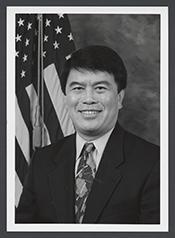
Mr. Speaker, I yield 3\1/2\ minutes to the gentleman from Oregon (Mr. Wu).
Mr. Speaker, I certainly understand my friend from Wisconsin's concerns. In the House, we did pass a 10-year doubling of the National Science Foundation. In the Senate, they passed an authorization for 5 years. Seven was a compromise, I think a reasonable compromise, and I remind everyone that we're in a pay-as- you-go budget, and the appropriators know they have to pay for what they appropriate. So I think that was a good and fair compromise.
Mr. Speaker, I yield 1 minute to the gentlewoman from Oregon (Ms. Hooley), a very valued member of the Science Committee.
Mr. Speaker, I want to concur with the eloquent remarks of Mr. Ehlers. He's a great addition to our committee.
Mr. Speaker, would you report on the time remaining?
Mr. Speaker, I yield 2 minutes to the vice chairman of the Science Committee, Mr. Lipinski.
I thank my friend from Georgia, Dr. Gingrey, for not only his support for this bill but his very active, passionate work on the Science Committee. He is a valued member.
Also let me point out that I think the endorsements of this bill, by the National Chamber of Commerce, by the National Association of Manufacturers, by Business Roundtable indicate very well that this bill very much is in the economic scope.
Mr. Speaker, I yield 2 minutes to a valued member of the Science Committee, the gentlewoman from Texas (Ms. Eddie Bernice Johnson).
Mr. Speaker, I will remind my friend from Illinois that there is nothing, nothing in this bill that says that the Department of Energy, the Office of Science, or RPE cannot do research on coal-to-liquid. Nothing in this bill stops that.
Mr. Speaker, I yield 2 minutes to the chairman of the Subcommittee on Energy and Science, Mr. Lampson from Texas.
Mr. Speaker, I know the minority leader is very sincere about his concerns here. I wish I had the time to address them one by one.
Let me just quickly remind everyone that we look at this bill, the American Chamber of Commerce thinks it is a good investment, the National Association of Manufacturers thinks it is a good investment, the Business Roundtable thinks it is a good business. Virtually every business major in America thinks this is a good investment. All the universities and research agencies thinks it is a good investment. But there can be sincere differences of opinion.
Mr. Speaker, could you report to me the time I have left?
Mr. Speaker, I yield 1\3/4\ minutes of those to my friend and colleague from the Energy and Commerce Committee, Ms. Eshoo.
Mr. Speaker, I yield 1 minute to my friend from North Carolina (Mr. Etheridge).
(Mr. ETHERIDGE asked and was given permission to revise and extend his remarks.)
I say to my friend from Tennessee, ``Well said.''
And now I am pleased to yield 30 seconds to the great Speaker of the House of Representatives (Ms. Pelosi).
Mr. Speaker, I yield 1 minute to a new but valued member of our committee, Mr. McNerney from California.
Mr. Speaker, I yield 3 minutes to one of our very able subcommittee chairmen, Mr. Baird.
Mr. Speaker, Mr. Hall earlier in the presentation said that he was going to have a motion to recommit on coal to liquid. Let me just remind all of my colleagues there is not one word, not one single word, in this bill that would stop any investment, any research in coal to liquid.
Finally, Mr. Speaker, I want to say thank you to the Democratic and Republican Members that attended all those meetings where we could develop this good bill. I want to say thank you to subcommittee Chairmen Baird, Lampson, Udall, and Wu; Ranking Members Ehlers, Inglis, Feeney, and Gingrey for their effort in putting this bill together.
Let me also say we have 70 Democratic and Republican staff members that have worked on this bill, and that is basically what we have been doing for the last few months. I would like to thank every one of them personally, but there is not going to be the time. So let me just say thanks to Chuck Atkins, our chief of Staff; Leslie Gilbert; and Mr. Hall's chief of staff for all the work they have put together. I hope that the staff's thank you is seeing this bill enacted, seeing the good work that is going to come from this, knowing that their kids and grandkids are going to live in a better America. I don't know a better thank you.
Mr. Speaker, I yield back the balance of my time.