Madam President, it is with great sadness that I rise today to bid a final goodbye to one of Vermont's most distinguished public servants. On Saturday, December 23, just before Christmas, former…
Madam President, it is with great sadness that I rise today to bid a final goodbye to one of Vermont's most distinguished public servants. On Saturday, December 23, just before Christmas, former Senator Bob Stafford from Vermont passed away at the venerable age of 93. He leaves behind a tremendous legacy of which he and his family and fellow Vermonters and all Americans should be exceptionally proud. I take this opportunity to pay tribute to Robert Stafford, an extraordinary Vermonter, and especially a very dear and close friend.
He will be greatly missed by me, my wife Marcelle, and by so many other Americans all across our country. We send our condolences to his wife Helen and his family.
Born in Rutland in 1913, Senator Stafford attended his hometown's public schools. He completed his undergraduate work at one of our Nation's finest undergraduate institutions, Middlebury College. He briefly attended the University of Michigan Law School but ultimately earned his law degree from Boston University School of Law in 1938.
Bob was a remarkable person not only because of his service as a statesman but also for his service in the military. He is a prime example of what has been so aptly named the ``greatest generation.''
Senator Stafford courageously stepped forward to serve our Nation during not one but two foreign wars. In 1942, he enlisted in the U.S. Navy and served on active duty from 1942 to 1946. Again, when the Korean war began, he served from 1951 to 1953 as an officer in the Navy. Bob later became the first commander of the Navy Reserve Center in Burlington, VT. The center later moved to White River Junction in 1995, and I was pleased to recommend to the Navy that the new facility be named the Robert T. Stafford Naval Reserve Center. They happily obliged. Throughout his life, Bob remained extremely proud of his Navy career. I still remember that beautiful day when we opened the new Naval Reserve facility named in honor of his leadership.
Indeed, the recently completed Lake Champlain Navy Memorial was dedicated in his honor by the unanimous recommendation of its founding committee, made up of Navy veterans, retirees, and reservists.
Bob Stafford was an absolute giant in Vermont politics. He spent almost 30 years representing our great State, first in the U.S. House of Representatives, and then in the U.S. Senate. Prior to his arrival in Washington in the early 1960s, he served his fellow Vermonters closer to home, holding a number of prominent State positions.
He served as Rutland County State's attorney and deputy State attorney general, and finally as our State attorney general. From 1957 to 1959, Bob Stafford held the post of Lieutenant Governor. In 1959, he went on to become Governor.
In 1960, Bob Stafford was elected to Vermont's sole seat in the U.S. House of Representatives. He won five successive reelections. In September of 1971, he resigned his House seat to accept an appointment to the U.S. Senate following the death of Senator Winston Prouty.
After he won a special election in January 1972, Bob proceeded to represent Vermont in the Senate during the next 17 years. I had the distinct privilege of serving with him during all but 2 of those years. He also had serving with him from the time he was Governor through the House and the U.S. Senate a most remarkable Chief of Staff, Neal Houston. He and Neal Houston were like brothers. They could almost complete each other's sentences. When I spoke to Neal and heard the sad news about Senator Stafford's passing, I knew he felt that he had lost a member of his own family.
When I first came to Washington as a young man in 1974, I was a 34- year-old junior Senator from Vermont. We didn't have any kind of orientation for new Senators at that time. Bob Stafford was an indispensable mentor to me. I will never forget the leadership and friendship he offered me during that challenging time.
Interestingly enough, Senator Stafford was sort of the epitome of a Vermont Republican in the proudest tradition. I was the only Democrat ever elected. He took me under his wing during those early years. He was enormously helpful to me, his younger, far less experienced junior colleague. I will never forget that he even allowed me the use of his office before I was assigned a space of my own, where we could interview people for positions in my office and where telephone calls could be answered. He brought me around and introduced me to both Republicans and Democrats and basically vouched for me.
But Bob and his wife Helen's kindness extended far beyond the confines of the Senate office buildings. Helen was kind enough even to offer to babysit our children when Marcelle and I were so new in town that we had nowhere to turn for childcare while we were house-hunting. This is a remarkable couple.
To this day, Marcelle and I hold enormous gratitude for the friendship the Staffords offered during our early years in Washington. That friendship has continued throughout the years, and we have many fond memories of visiting their home on Sugar Hill Road. Even after Bob left the Senate, we would drop by and visit. We had some most remarkable conversations--some political, some family, and after all of them I would leave with a smile on my face.
Bob was an extremely well liked member of the Republican Party. He served at one time in the Republican leadership, but he also formed many close friendships with Senators on the Democratic side. Always respectful, always polite, Bob Stafford consistently recognized the importance of moderation and compromise. He, better than most, knew how to form bipartisan alliances.
In his quiet and unassuming manner, Bob Stafford fought hard for the issues that mattered most to him. He believed passionately that higher education should be more accessible to all Americans, regardless of their socioeconomic status, and he was instrumental in creating the student loan program which today bears his name. The Stafford Student Loan Program has made higher education more accessible for millions of Americans, even for some who work in my office today. Bob was a champion of vocational education. Today the Stafford Technical Center, located in his hometown of Rutland, serves the needs of hundreds of students in Rutland County.
Bob showed tremendous leadership in blocking President Reagan's attempts to slash health and education funding. Thanks to Bob Stafford's hard work, programs for disabled Americans and legal aid were left largely intact during much of the 1980s when other programs were starkly scaled back. His chairmanship made sure they were protected.
Bob Stafford also played an important role in another issue of enormous relevance today, Federal emergency assistance. In 1988, President Reagan signed into law the Robert T. Stafford Disaster Relief and Emergency Assistance Act, a bill which provides the statutory authority for Federal disaster response activities pertaining to FEMA programs.
While his achievements in the areas of education and Federal disaster relief were certainly superb, I believe his most enduring legacy will be for the work he did in protecting the environment and public health. He helped
shape and strengthen some of our Nation's most critical environmental laws for over two decades.
As chairman of the Environment and Public Works Committee from 1981 to 1986, Bob Stafford was instrumental in persuading Congress to expand and strengthen the Superfund toxic waste cleanup law in the mid-1980s. It was in large part due to Robert Stafford's unwavering commitment to this bill in 1980 that the Superfund Act became law at all. As many of us know, this law has been indispensable in forcing industry polluters to contribute money to finance cleanup and restoration of contaminated wastesites.
Bob Stafford believed passionately in the Federal Government's commitment to improving the quality of our Nation's air. This was never more evident than in his steadfast work to uphold the Clean Air Act when it was under attack during the 1980s. He did not shirk from taking on his friend President Reagan as well as auto manufacturers and other industry groups in refusing to roll back this critical air pollution law.
In fact, I remember talking to him once. They were so anxious to get him to change and let these rollbacks go through that they invited him down to the White House, to spend some one-on-one time with President Reagan. The Reagan administration amazed many of their members afterward that Bob didn't back off at all. He came back and kept on protecting the environment.
I said to him: Bob, what happened when you went down there to talk with President Regan?
He said: Well, the President had notes of what he was supposed to say and he said it. Then he looked at me and he said: Bob, you're probably not going to give in, are you? Bob said: No, no, I'm not, Mr. President, but I certainly appreciate the time to be with you.
I said then: What did you talk about the rest of the time?
Oh, we talked about our kids, we talked about sports, we talked about a lot of other things. He said: I had a wonderful conversation with President Reagan. But he did not budge on the environment, something no Vermonter would do.
His concern about the contamination of our air was truly remarkable. The consistent and clear manner in which he spoke about the danger of ozone depletion, acid rain, and the release of greenhouse gases related to global warming, during a very difficult period, was a source of inspiration to so many of his colleagues on both sides of the aisle. It certainly was an inspiration to me.
As EPW chairman, Senator Stafford also led the fight to improve the quality of our water. Working closely with Senator John Chafee and others on both sides of the aisle, his leadership was critical in reauthorizing the Clean Water Act in 1987. Bob cited the passage of this act as the culmination of one of the greatest bipartisan efforts in protecting our Nation's environment. It really was. Republicans and Democrats came together. It gave me enormous pride to see him appear 3 years ago before the Senate in celebrating the act's 30-year anniversary. Thanks to Bob's leadership during those difficult years of deregulation, our Nation was able to make great strides in reducing the levels of pollutants and contaminants in our water.
Even after he retired from Congress, he served Vermont in many ways. He was a member of the University of Vermont's School of Natural Resources Advisory Committee and attended the day-long hearings with his wife Helen up to just a few years ago. He also lectured at UVM, Norwich University, and Castleton State College. In 2003, his old alma mater, Middlebury College, honored both Bob and his wife Helen, also a Middlebury graduate, by inaugurating the Robert and Helen Stafford Professorship in Public Policy. Two people who had been together almost all their lives are together in this professorship.
Also in retirement, Bob continued to fight for clean air. In 1995, he joined forces with his friend and former colleague, Senator Edmund Muskie, in incorporating the Clean Air Trust, a nonprofit organization dedicated to upholding and enforcing clean air legislation.
He leaves so many impressive achievements for his lifelong work in public service. But outside these public accomplishments, Senator Stafford was also a man of many personal hobbies and interests. It kind of reflects who he is. On weekends, he liked to slip out of Washington with his wife Helen and enjoy time on his boat, a full Moon, cruising down the Chesapeake Bay. Marcelle and I were fortunate enough to join them on occasion. He loved the water. He loved everything about sailing. You can tell why the Navy holds him in such high regard back home.
He took flying lessons as a young man. He eventually got his pilot's license in the early sixties. In fact, he would pilot a leased Cessna back and forth between Washington and Vermont.
It was a mark of this unique Senator that he welcomed and helped the first Senator of the other party to be elected in Vermont. I will always remember and cherish the walks we took down the halls and the times we would sit and talk at lunch. People thought we were talking so much about politics. We were talking about Vermont. We were talking about whether the foliage season was going to start early or late, and we would make a determined judgment when it would be. Heck, we had not the foggiest idea but, boy, we had fun determining when it would start.
No Senator could have learned as much from his fellow Senator as I did, nor could a senior Senator be so patient and understanding with his junior. Throughout our time together, when I had been inclined to move impulsively, it would be Bob Stafford who would help me decide what was truly in the best interest of the country and Vermont. He was the most unflappable person I have ever known.
I remember flying to Vermont with him once on a commercial airline. The plane hit a tremendous amount of turbulence. We suddenly dropped thousands of feet. At least one person was airborne in the cabin, and things were flying around. I know my pulse raced ever so fast. When the pilot finally got control of the plane with a shuddering, banging maneuver, I sat there stunned. I had sweat soaking through my shirt. Bob simply folded his paper--which he never stopped reading--turned to me and in a quiet voice said: Patrick, just think if this plane had gone down. Tomorrow morning there would have been a long line outside the Governor's office. Everybody would be saying what a terrible tragedy that we have lost our Senators, but, Governor, I am willing to be appointed to either one of the seats. I found that I was not so frightened, and I was able to laugh until it hurt, and I did laugh.
Bob Stafford was a man who dedicated his entire adult life to public service because he deeply believed in the value of public service. And no matter where life took him, Bob stayed close to his Vermont roots. He never forgot the people he served. While many younger Vermonters and Americans may not know much about Bob Stafford, his public service and leadership are examples for all of us. Our country would do well to stop and take notice of his life and reflect on how we should all serve our Nation better with his bipartisan leadership style.
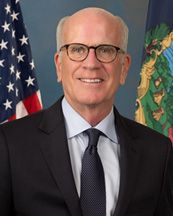
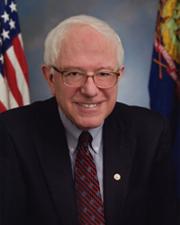
It is with tremendous sadness that I say goodbye to this truly distinguished American, more importantly to an exceptionally dear friend. To honor Robert Stafford's legacy, Senator Sanders and I, along with Congressman Peter Welch from Vermont, introduced a bill to rename the White Rocks National Recreation Area. This is an area Senator Stafford created in 1984. We are naming it after him. White Rocks was among his most beloved natural areas in our State. We know that he and Helen could actually see the towering white cliff face of White Rocks Mountain from their home. This will remind generations of future Vermonters of Senator Stafford's towering achievements and the humanity of his spirits.
I hope all my colleagues will support this legislation.
 Sen. Patrick J. Leahy (D-VT)